Data sources
Host and operational data
One automated processing model for multiple collection categories.
Enterprise Cyber Automation Case Study
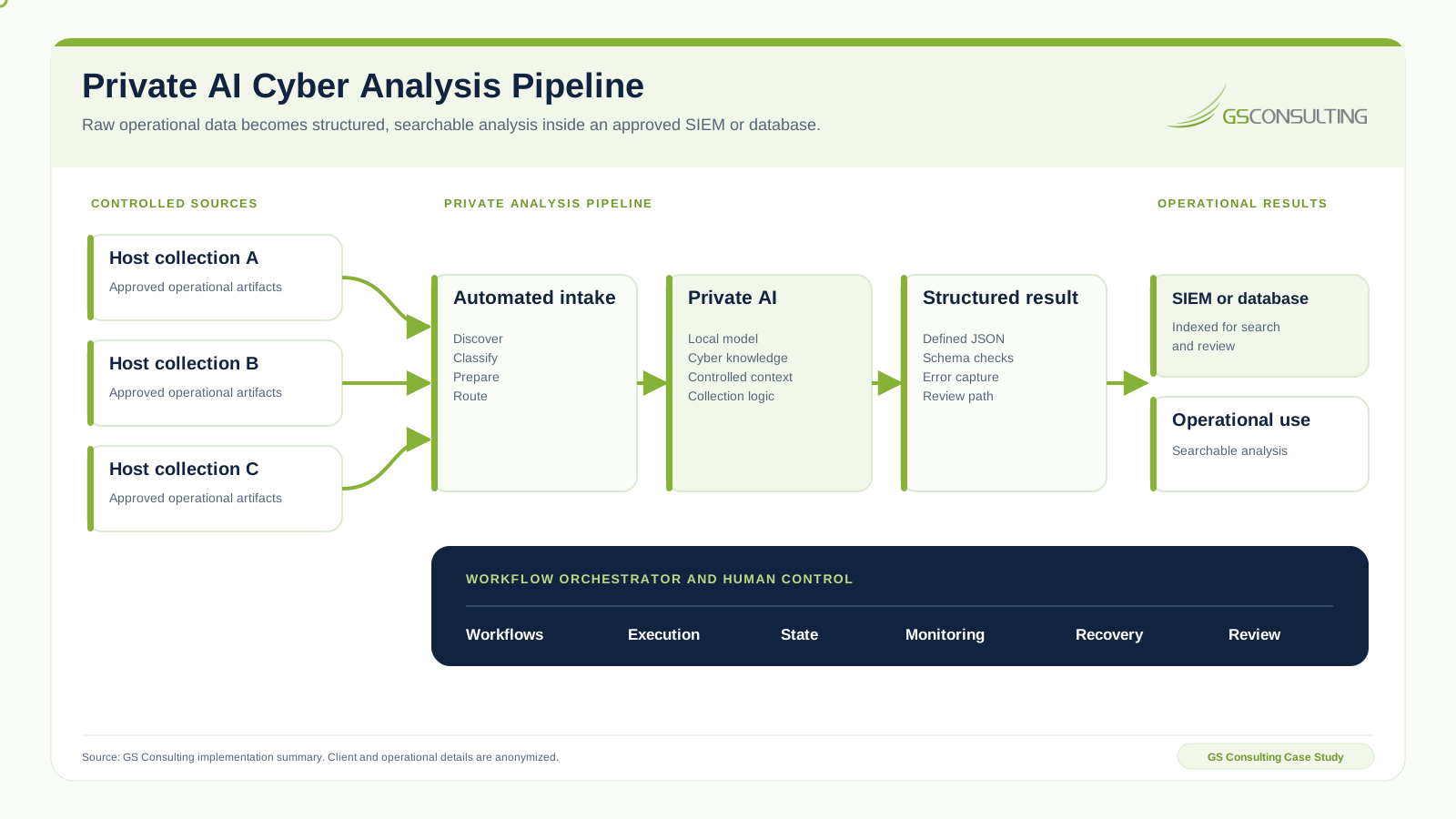
A large organization needed a faster and more consistent way to analyze host and operational data without sending sensitive information to a public AI service. GS Consulting designed and implemented the complete private AI automation pipeline.
Practitioner perspective featured by ZDNET. Chris Seymour discussed using Codex across secure AI, cybersecurity software, testing, research automation, and deployments. Opens in a new tab.
Executive snapshot
The model mattered. The operating system around it made the analysis usable.
Data sources
One automated processing model for multiple collection categories.
AI deployment
Applications access open source models through LiteLLM and four vLLM serving systems.
Domain intelligence
Organizational methods became repeatable analysis instructions.
Automation
Discovery, preparation, model interaction, output handling, and routing were automated.
Operational integration
AI analysis became searchable inside an existing enterprise platform.
Orchestration
The organization gained greater control and visibility into processing.
The challenge
The organization did not have one clean data source or one analysis step. It had multiple collection categories, many artifacts, sensitive information, specialized methods, and an operational platform that expected structured data.
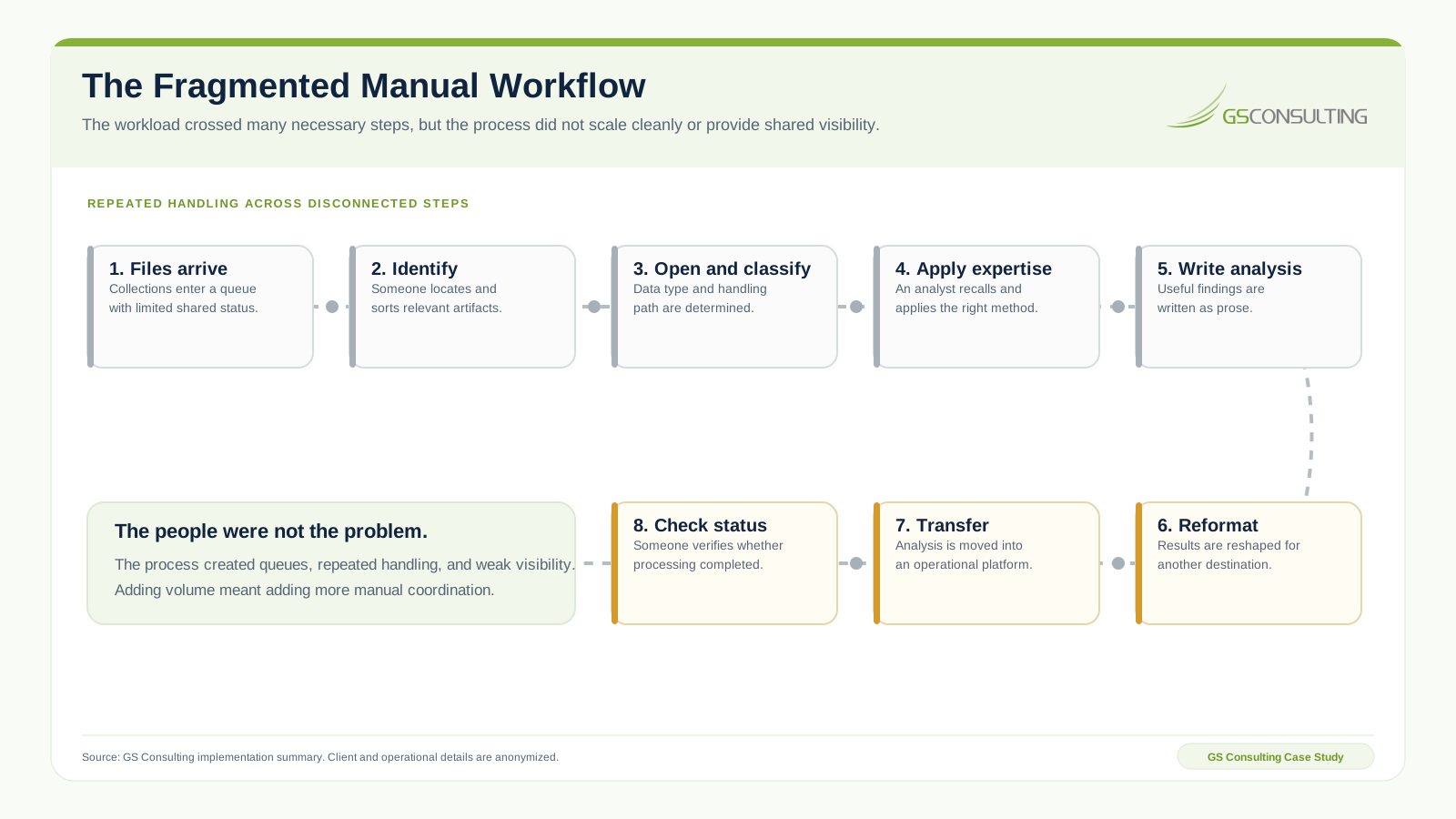
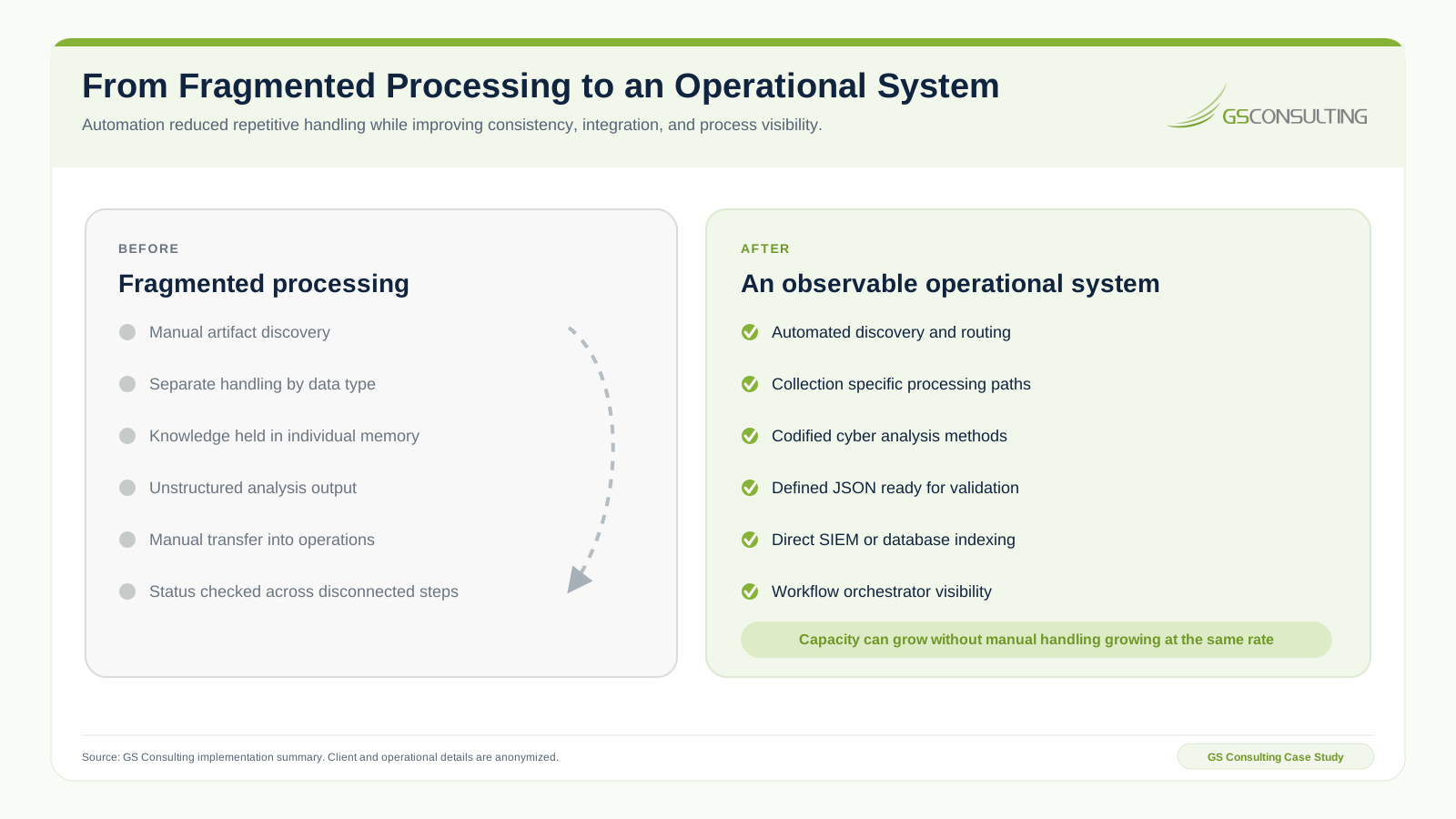
The existing process depended on people to locate files, identify the collection type, prepare the material, apply domain knowledge, write an analysis, reshape the result, move it into another system, and verify that processing completed. Each step served a purpose. Together, they created repeated handling and limited shared visibility.
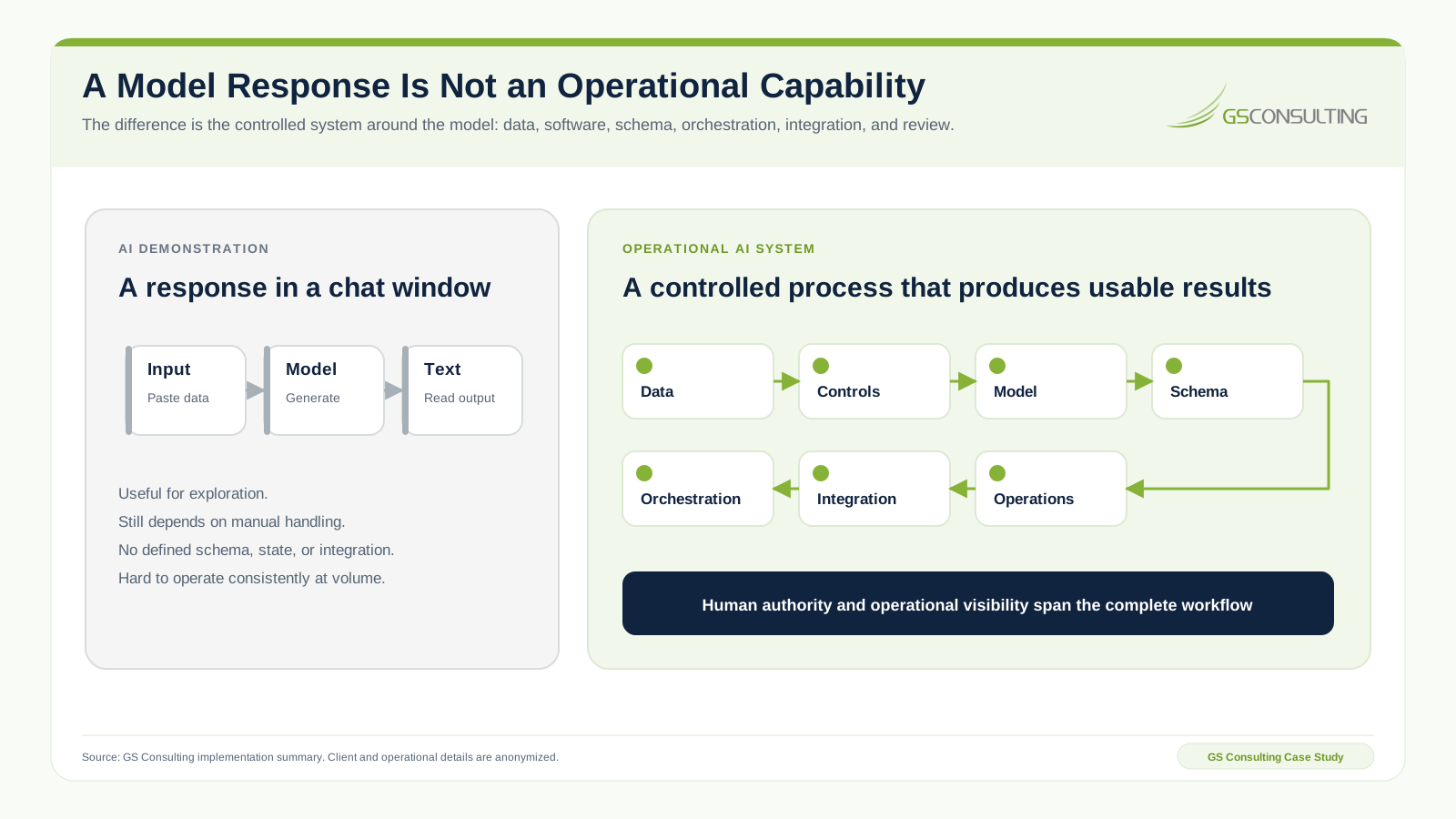
Installing a language model would not solve that operating problem. The system also had to preserve institutional cyber knowledge, keep processing inside an approved environment, return predictable data, expose failures, and put the result where analysts already worked.
“A model response is not an operational capability. The capability comes from everything surrounding the model.”
Chris Seymour, Co-Founder and Principal
Beyond the proof of concept
The difficult work was not getting the model to produce text. It was turning model output into a controlled enterprise process.
Not enough
Required
Configure it for the environment, task, hardware, context, and operating constraints.
Not enough
Required
Codify repeatable cyber analysis methods for different collection categories.
Not enough
Required
Return defined data that can be checked and ingested by another system.
Not enough
Required
Manage workflows, execution state, failures, visibility, and human control.
Solution architecture
One GS Consulting technical principal owned the architecture from raw collection through indexed analysis.
The implementation crossed cyber analysis, Python automation, local model deployment, model configuration, knowledge design, structured data generation, SIEM or database integration, workflow orchestration, and operational controls. Treating those as separate purchases would have created more handoffs around a workflow that already had too many.
The design treated orchestration and human oversight as layers spanning the entire pipeline. They were not final boxes added after the model. That distinction is what made the system observable and useful.
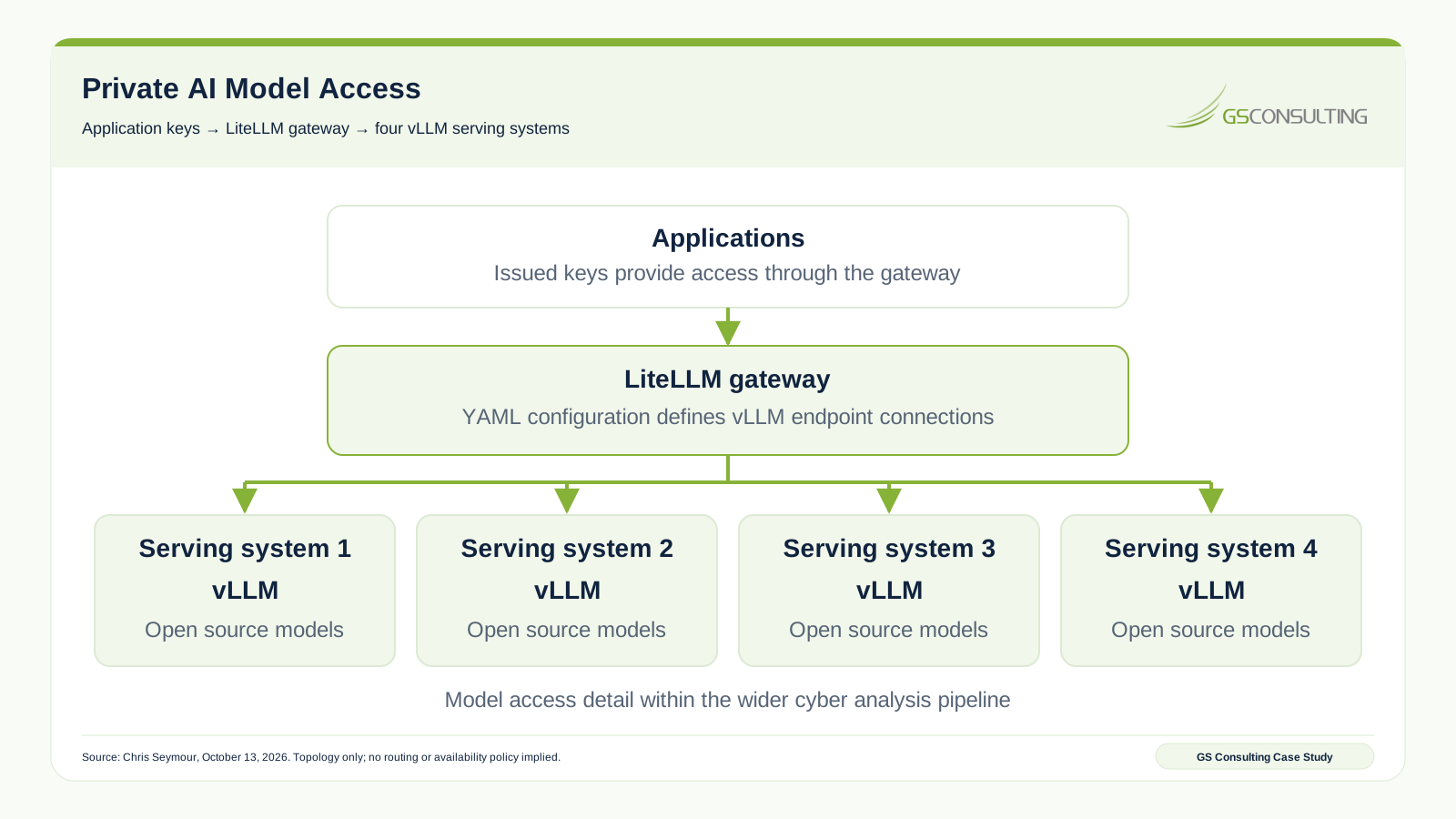
GS Consulting designed the model access layer around a LiteLLM gateway. Applications receive access keys and submit model requests through LiteLLM. The gateway proxies requests to four systems hosting open source models served with vLLM.
A YAML configuration defines LiteLLM's connections to the vLLM endpoints on those hosts. Applications connect through the gateway, while the model serving runs on the four separate systems. This describes the model access layer within the wider cyber analysis pipeline; structured output, validation, SIEM or database integration, and human review remain separate responsibilities.
Layer 01
The system identifies relevant collection artifacts, determines the appropriate processing path, and reduces the need to locate and organize every input by hand. Different infrastructure categories can enter one controlled intake model without being treated as identical data.
Layer 02
Python moves data through the workflow. It reads approved inputs, prepares model context, manages model interactions, captures responses, and routes structured results. This software layer provides the precise control that a chat interface cannot.
Layer 03
Applications use issued access keys to send model requests through a LiteLLM gateway. LiteLLM proxies requests to four systems hosting open source models served with vLLM. A YAML configuration defines the gateway's connections to the vLLM endpoints. The gateway and model serving are distinct layers within the controlled environment; output validation, operational integration, and human review remain part of the surrounding workflow.
Layer 04
Cyber analysis methods for diverse host and operational data were translated into reusable instructions. Each collection category required its own analysis logic. The goal was not to expose sensitive tradecraft. It was to make approved methods repeatable instead of leaving them only in individual memory.
Layer 05
Free form prose could not support downstream automation. The model returned a defined JSON structure so the result could be checked, ingested, indexed, searched, and used by other systems. The schema connected model analysis to the operational data platform.
Layer 06
GS Consulting created a custom integration that reads the structured JSON and moves the results into an approved SIEM or database for indexing and search. Analysts can work with the analysis inside a platform already used for operations instead of checking another disconnected AI tool.
Layer 07
A workflow orchestrator provides the control plane around processing. Workflow definitions govern behavior, execution services run workloads, and state shows what completed, failed, or remains in progress. That visibility becomes more important as volume, data categories, and processing paths grow.
Execution
Each stage has a defined job. No single stage carries the complete capability.
Identify relevant collection artifacts.
Select the correct collection path.
Read and prepare content for analysis.
Apply private model execution and cyber instructions.
Return the analysis in defined JSON.
Check the structure and capture exceptions.
Track workflows, execution state, and failures.
Ingest and index the result in a SIEM or database.
Control and observability
The goal was not to remove human control. It was to remove repetitive handling while improving visibility into the complete process.
Moves each collection category into the correct processing path.
Keeps model behavior aligned to the environment and task.
Controls how approved content is prepared for each interaction.
Makes output usable by systems, not only readable by a person.
Makes a failed artifact visible without hiding the rest of the workflow.
Separates workload execution from the logic that defines the workflow.
Shows what completed, failed, or still requires attention.
Provides evidence for troubleshooting and workflow review.
Preserves human authority over interpretation and consequential decisions.
{
  "collection_category": "host",
  "analysis_status": "review_ready",
  "summary": "Synthetic example only",
  "observations": [
    { "type": "configuration", "priority": "review" }
  ],
  "review_required": true
}Operating model
The improvement came from connecting the process, not from treating the model as the product.
Operational outcomes
These are confirmed qualitative outcomes. No unsupported time, cost, accuracy, or workforce numbers are used.
More collection material can move through the system without repetitive handling increasing at the same rate.
Collection specific instructions help apply approved methods consistently across repeated tasks.
Analysis methods became a reusable system asset rather than remaining only in individual experience.
Structured results can move into a SIEM or database without extensive reformatting and manual transfer.
Workflows, execution state, and failures can be observed from a shared control plane.
Model processing remained inside the approved local environment.
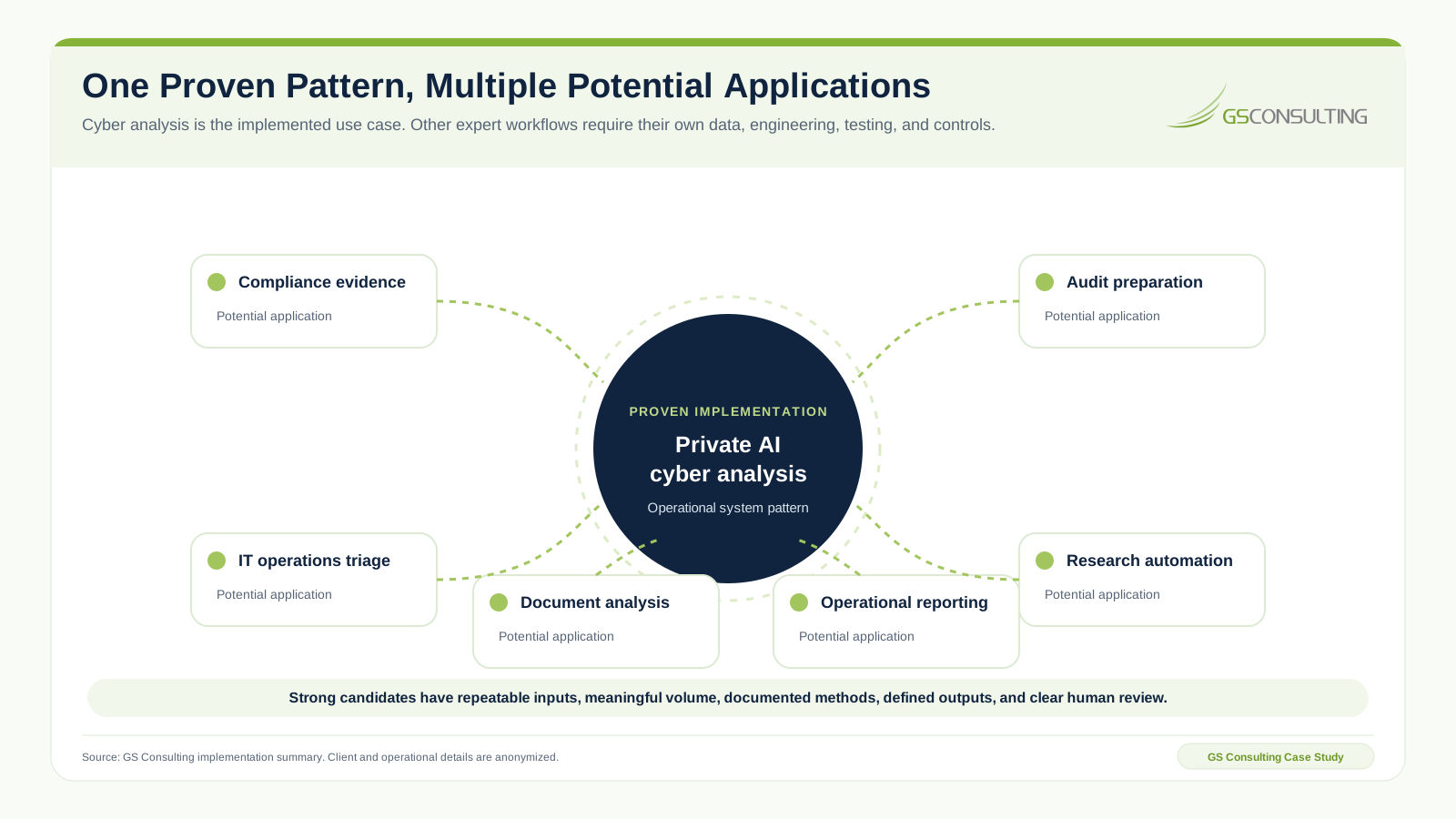
The pattern can be extended to additional approved data sources, workflows, and destinations.
The system increased analyst capacity. It did not remove human responsibility for review, investigation, exceptions, or consequential decisions.
Implementation depth
Most organizations can find specialists in one or two of these areas. This implementation required one coherent architecture across all five.
Useful logic for different host and operational data categories.
Model selection, deployment, configuration, and control.
Custom Python, data handling, structured output, and error management.
Operationally useful analysis inside a SIEM or database.
Workflow definitions, execution state, and shared visibility.
Apply the pattern
Cyber analysis is the proven implementation. Other applications still require their own engineering, domain methods, testing, data approval, and control design.
Independent media recognition
ZDNET included Chris Seymour’s perspective in its comparison of Claude Code and OpenAI Codex. He described using Codex for secure AI, cybersecurity software, testing, research automation, and deployments, particularly when the work crosses code and infrastructure.
“The most useful AI engineering work crosses application code, infrastructure, testing, security controls, deployment, and operations.”Read the ZDNET Article opens in a new tab

Designed and implemented by GS Consulting
Chris Seymour is Co-Founder and Principal of GS Consulting. He works across secure AI, cybersecurity software, automation, infrastructure, testing, deployment, and enterprise integration. He independently designed and implemented the system described in this case study.
“I did not approach this as a model deployment project. I approached it as an operational system that happened to use a language model.”
A practical first step
GS Consulting helps organizations identify, design, build, and operationalize secure AI automation systems. The first step is determining whether the workflow, data, controls, and expected value justify a pilot.
Frequently asked questions
Applications receive access keys and submit model requests through a LiteLLM gateway. LiteLLM proxies those requests to four systems hosting open source models served with vLLM. A YAML configuration defines its connections to the vLLM endpoints. The gateway handles the model access path; the surrounding pipeline handles structured output, validation, integration, and human review.
No. The architectural pattern can integrate with an organization’s approved SIEM, database, analytics, workflow, or case management system.
Not in every situation. The deployment model should be based on data sensitivity, policy, performance, security, cost, and operational requirements. This implementation used a locally hosted model because control over the processing environment was important.
The system automates repetitive processing and analysis steps so analysts can handle greater volume and focus on review, exceptions, investigation, and consequential decisions.
Yes, provided the source can be lawfully accessed, prepared, analyzed, checked, and mapped to a defined operational output. New sources still require engineering, domain instructions, testing, and controls.
The recommended first step is an Automation Opportunity Review. GS Consulting maps the current process, evaluates data and security constraints, identifies required human controls, estimates potential value, and defines a practical pilot.
GS Consulting builds systems around the organization’s workflow, data, infrastructure, platforms, and control requirements. Reusable architectural patterns can accelerate delivery, but the implementation must fit the actual operating environment.