Less manual handling
Move discovery, formatting, and transfer work into a defined pipeline so your team can spend more time on analysis.
SIEM integration & cyber analysis automation services
Put useful findings inside the systems your team already uses. GS Consulting connects security data, private AI analysis, and operational platforms through structured events, reliable workflows, and human review.
Start with a 20-minute fit check. Define a focused assessment or pilot.
Approved logs, artifacts, and API data
Domain logic + optional private AI
Event schema, evidence, and analyst gates
SIEM · SOAR · API · database
Trace every handoff. Keep permissions, exceptions, and human decisions visible.
Turn disconnected analysis into usable work
SIEM integration and cyber analysis automation connect approved security data to the tools where analysts investigate and act. GS Consulting engineers ingestion, enrichment, event schemas, connectors, orchestration, and review controls so findings arrive in a usable form, with evidence and a clear owner.
Move discovery, formatting, and transfer work into a defined pipeline so your team can spend more time on analysis.
Agree fields, types, and destination behavior so results can be indexed, searched, routed, and reviewed.
Make incomplete work, rejected results, and human decisions visible to the people who own the workflow.
Built by GS Consulting
Our published case study describes a locally hosted AI system that turns approved host and operational data into structured JSON for an approved SIEM or database.
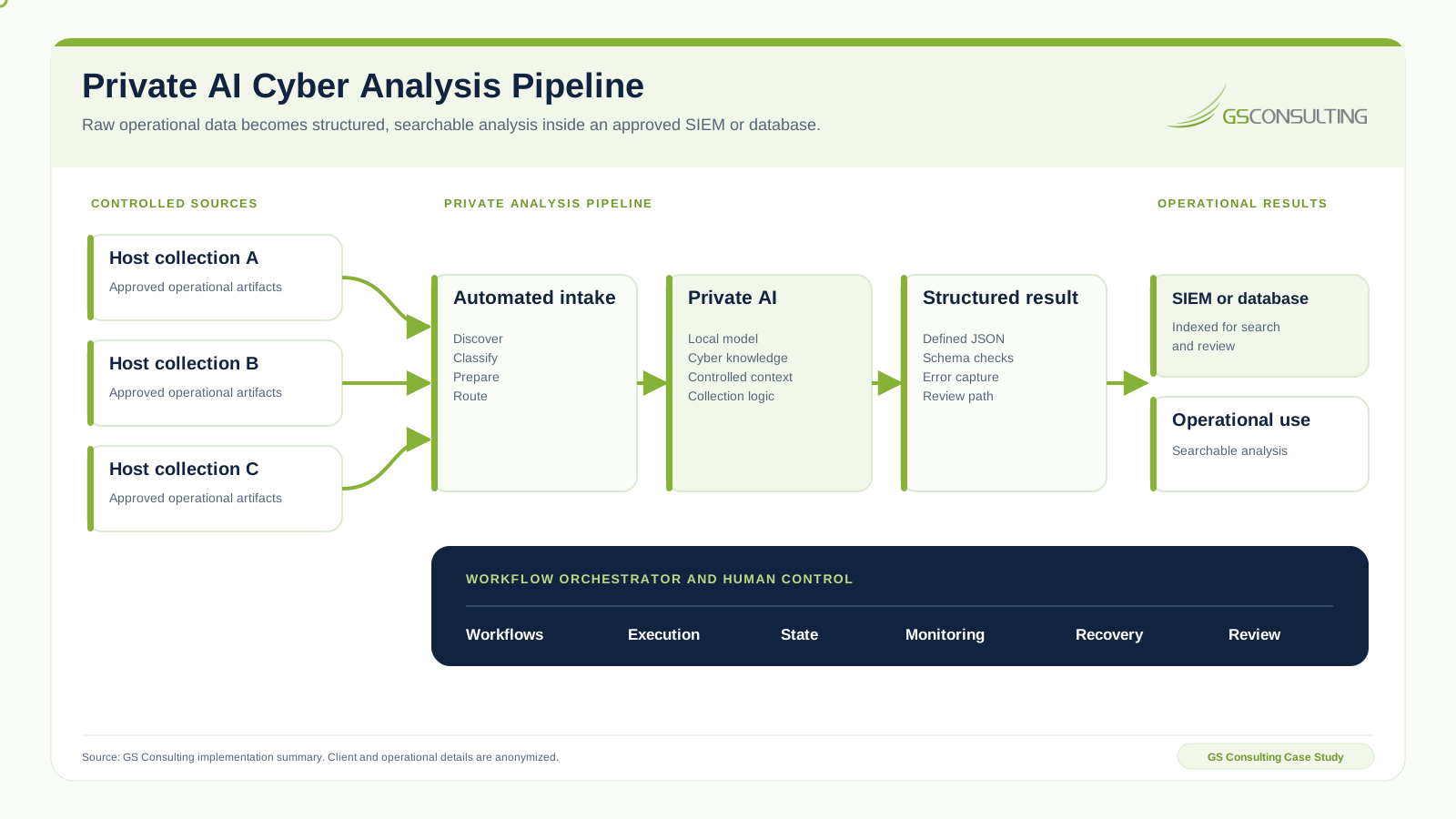
A starting point for scoping your workflow. Platforms, controls, and acceptance criteria are agreed for each new engagement.
What the service covers
Choose the work your environment needs. Each part has a defined output, an operating owner, and a testable result.
Bring approved logs, host artifacts, exports, and API data into a consistent intake path. Map fields and timestamps, handle duplicates and missing data, and retain references to the source.
Add approved asset, identity, or domain context. Apply private AI where interpretation or summarization helps, supported by task-specific instructions, representative evaluation, and a defined data boundary.
Agree the data contract with the receiving team: identifiers, timestamps, evidence references, finding types, review state, and versioning. Keep model observations distinguishable from analyst decisions.
Build the connector and transformation work that makes results usable in existing tools. Assess authentication, indexing, field types, rate limits, and delivery acknowledgments for each target.
Coordinate triggers, dependencies, processing state, and handoffs. Design retry limits, timeouts, duplicate handling, and exception queues so operators can see and recover failed work.
Define what automation can prepare, what an analyst must review, and who handles uncertainty or a high-impact finding. Capture approvals, rejections, overrides, and escalation ownership.
Scope identities, permissions, secrets handling, logging, and retention around the workflow. Trace a result back to its input, processing version, integration status, and review history.
Start with one workflow, an agreed source and destination, and measurable acceptance criteria. Use approved test data to establish feasibility before committing to a wider implementation.
Event design that supports decisions
Define how a finding will be understood before sending it downstream. A valid JSON object still needs traceable evidence, content checks, and the right review state.
{
  "schema_version": "1.0",
  "event_type": "analysis.finding",
  "source_ref": "sample-042",
  "analysis_version": "pilot-v1",
  "review_status": "pending",
  "action_authorized": false
}
Illustrative fields only. The actual schema and destination mapping are defined with your team.
Begin with the bottleneck
Bring the source, the destination, and the work analysts repeat between them. We will help define the smallest useful integration.
A bounded starting point
A short fit check establishes whether there is a useful project. Assessment and pilot work have an agreed scope, price, dependencies, and milestones before delivery begins.
Map one workflow and resolve the questions that determine feasibility.
Build the agreed integration with approved test data and a named reviewer.
These are illustrative acceptance checks, not reported client results. Agree the actual test cases, source coverage, quality thresholds, latency and effort targets, and operating owner against your baseline before the build. Production rollout, additional sources, and ongoing support are scoped after the pilot decision.
Related capabilities
Trace the complete path from approved sources through validation, delivery, and reconciliation.
Read the guide →Secure AISecure AI automationDesign the broader operating system around your AI workflow.
Explore the service →Private modelsPrivate LLM & secure RAGChoose a deployment and retrieval architecture that fits your data.
Explore implementation →Security operationsSOC automation & threat detectionConnect alert enrichment, triage, analyst decisions, and controlled response workflows.
Explore SOC automation →System integrationLegacy system integrationConnect operational software, enterprise data, and existing platforms.
Explore integration →Before an engagement
What we build, how we begin, and where your team stays in control.
GS Consulting designs and builds the workflow that moves approved security data through ingestion, normalization, enrichment, analysis, schema validation, and integration. Results can go to a SIEM, SOAR platform, API, database, or case management system, with orchestration, access controls, audit records, and defined human review. The engagement is scoped to the systems and outcomes your organization needs.
We start with your existing stack and assess its supported interfaces, schemas, permissions, licensing, deployment restrictions, and throughput limits. The public case study demonstrates a custom JSON integration into an approved SIEM or database. Compatibility with a specific platform or version is confirmed during assessment; a new integration may require a connector, transformation layer, or custom API work.
AI is optional. Parsing, normalization, validation, and routing often use conventional software. Private AI can assist with interpretation, enrichment, or summaries where evaluation shows value. The case-study implementation used a locally hosted model; a new project may use local hosting, a dedicated environment, or an approved API, depending on the data and operating requirements.
We define required fields, allowed values, source references, schema versions, and rejection rules with the receiving team. Structural validation checks whether an event meets the data contract; it does not prove the analysis is correct. Content evaluation, source evidence, analyst review, and escalation criteria address that separate question. Invalid or unresolved results follow an explicit exception path.
An assessment maps one workflow, its source and destination, access and data constraints, schema requirements, and acceptance criteria. It produces an integration brief and a proposed pilot scope. A separately agreed pilot builds a limited integration using approved test data, exercises success and failure paths, and provides test evidence, a runbook, and a recommendation for the next step.
The scope explicitly defines which actions can be automated and which require approval. Read-only enrichment or preparation of findings can be a sensible starting point. Actions such as disabling an account, changing a rule, or isolating a host require a separately agreed authorization model, testing, and recovery plan. Human review and escalation are designed into the workflow.
This page describes project-based integration and automation engineering. It does not include continuous SOC monitoring, vulnerability testing, or emergency incident response by default. We can discuss related cyber requirements during the fit check and define any additional scope separately. Your operating team retains responsibility for security decisions unless the engagement expressly assigns it otherwise.
Scope depends on source variety, interface access, data quality, event volume, model requirements, deployment constraints, and the amount of validation and review needed. Start with a high-level description of the workflow, platforms, desired outcome, and timing. We agree deliverables, dependencies, price, and milestones before implementation. Do not send raw logs, credentials, vulnerability details, or restricted information through the website.
Make the next integration useful
Tell us which data needs to reach which system, who reviews the result, and what needs to improve. We will help scope an integration assessment or pilot.