Connect the real workflow
Map the trigger, inputs, systems of record, manual decisions, outputs, handoffs, exceptions, and operating owner before choosing the automation pattern.
Secure AI & Cybersecurity Workflow Automation Consulting
GS Consulting designs and implements secure AI systems for organizations that need practical automation without losing operational control. We connect approved data, private or controlled models, Python automation, human review, and SIEM, database, API, or legacy-system integrations.
Start with the workflow—not sensitive data. Do not submit CUI, classified information, credentials, vulnerability details, or other restricted data.
 OpenAI Select PartnerOpenAI Partner Network (opens in a new tab)
The real implementation problem
A secure AI automation system is a controlled operational workflow—not a chatbot dropped beside the work. It connects approved sources, domain logic, model behavior, structured outputs, existing systems, human authority, exception handling, monitoring, and evidence. If any of those pieces are missing, the demonstration is not ready for consequential use.
Map the trigger, inputs, systems of record, manual decisions, outputs, handoffs, exceptions, and operating owner before choosing the automation pattern.
Define which data, users, models, tools, actions, destinations, retention rules, and approval thresholds are allowed—and which are not.
Validate representative outputs, permissions, failure modes, traceability, operating cost, and measurable workflow value before production authorization.
Implementation evidence
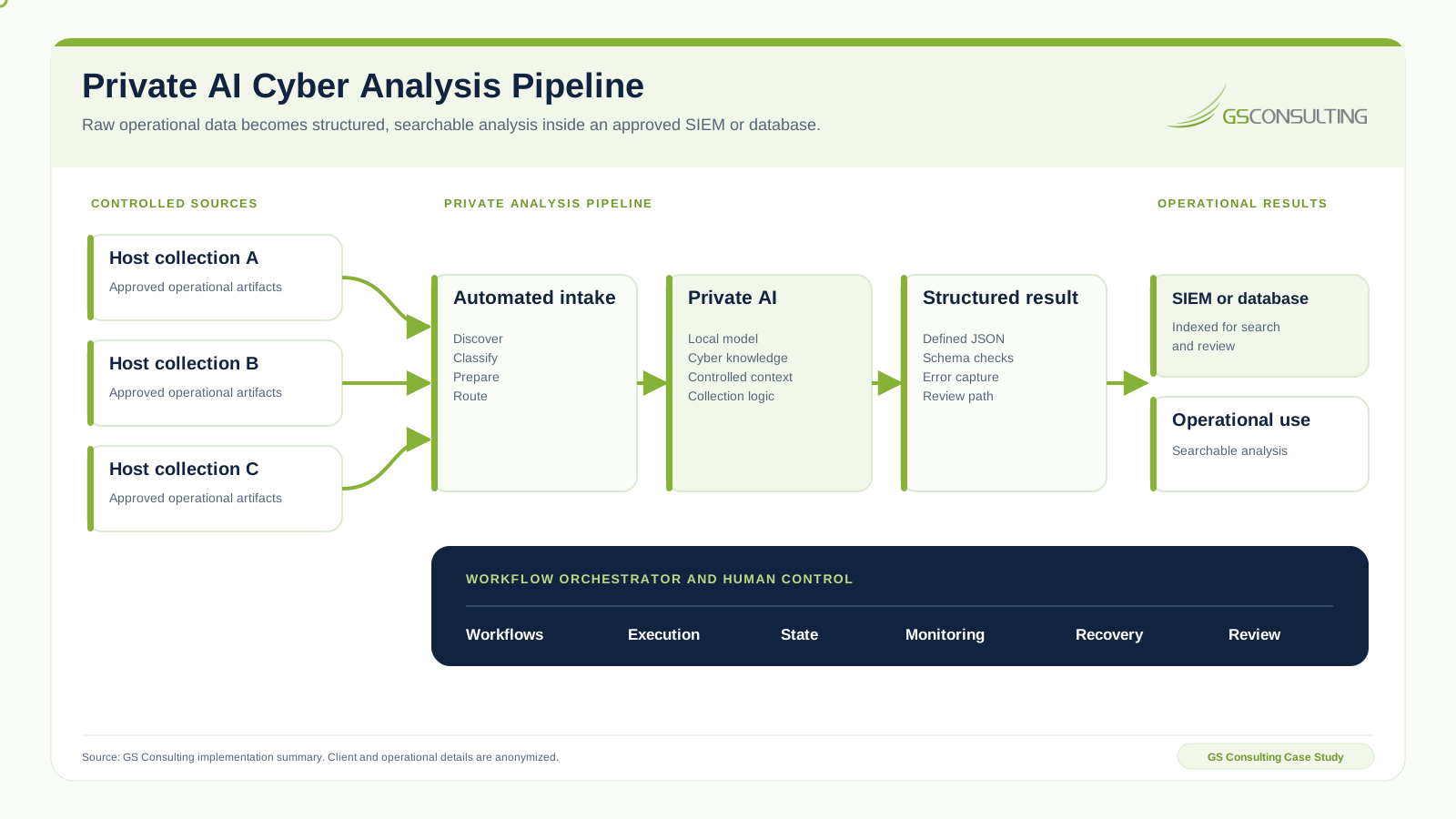
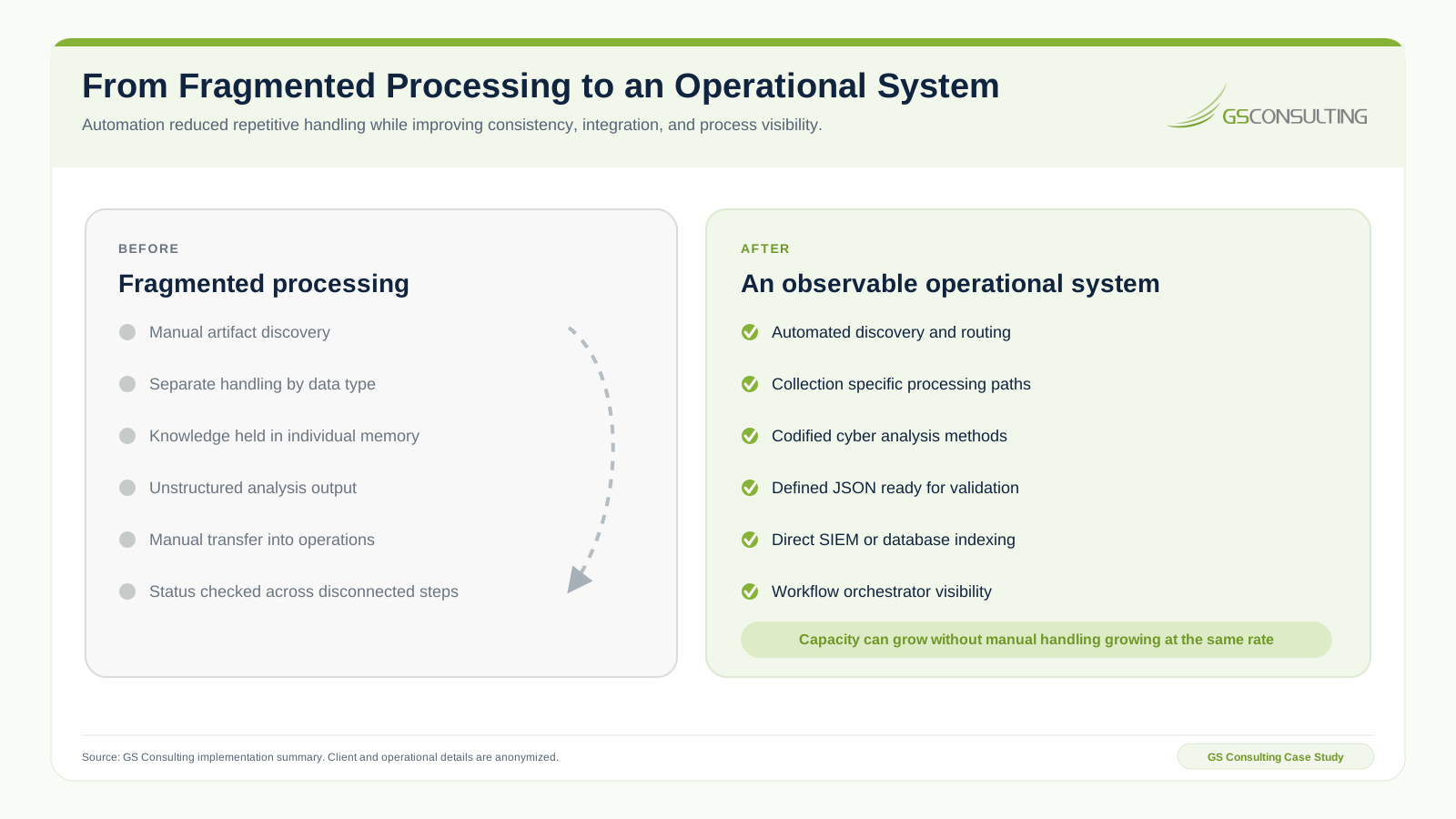
GS Consulting designed and implemented a locally hosted AI workflow that turned raw host and operational data into validated, structured JSON for an approved SIEM or database.
“Huge shout out to you for transforming this project from a theoretical discussion into a proof of concept and beyond in such a short timeframe.”
Customer feedback excerpt
What we design and implement
A scoped engagement can cover the complete path from workflow discovery through production handoff. The exact deliverables depend on the workflow, data boundary, target systems, and operating risk.
Workflow
Document triggers, inputs, decisions, handoffs, current effort, exceptions, systems of record, owners, and the outcome worth measuring.
Private AI
Select a controlled API, dedicated tenant, self-hosted, or on-premises lane with explicit retrieval, access, and data handling rules.
Explore private AI implementationCyber operations
Design alert enrichment, triage, summarization, structured findings, workflow routing, and analyst review around existing security operations.
Explore SIEM integration & cyber automationIntegration
Connect models to approved repositories, databases, SIEMs, ticketing platforms, APIs, and workflow tools without creating a shadow process.
Explore system integrationHuman authority
Define what AI can prepare, recommend, or execute; what a person must approve; and how exceptions, overrides, and high-risk decisions move.
Operational proof
Build evaluation sets, output validation, audit trails, failure handling, runbooks, release criteria, monitoring, and change-control evidence.
Start with one bounded problem
You do not need a polished requirements document or a model selected. Bring the workflow, the users, the systems it touches, and the result that needs to improve.
A practical engagement path
The work advances only when the evidence supports the next decision. A useful assessment can stop a bad AI idea before it becomes an expensive pilot.
Fit
Clarify the problem, desired result, users, data, systems, constraints, urgency, and likely automation pattern.
Decision: investigate, defer, or reject.Blueprint
Map the current workflow, target state, data boundary, human authority, architecture, testing plan, and business baseline.
Decision: approve a bounded pilot.Pilot
Build the smallest useful workflow, integrate representative approved data, test failure modes, and measure workflow fit.
Decision: revise, stop, or authorize production.Production
Harden access, logging, exceptions, monitoring, runbooks, support ownership, recovery, and controlled change.
Decision: operate and improve.Buyer’s test
A convincing model response is not production evidence. Use these differences to evaluate an internal pilot, a platform, or an implementation partner.
| Decision area | Typical AI demo | Secure operational system |
|---|---|---|
| Data | Files or prompts are manually supplied. | Approved sources, classifications, permissions, retention, and data paths are explicit. |
| Output | A person reads a free-form response. | A defined schema is validated before the result moves downstream. |
| Integration | Copy and paste connects the demonstration to work. | APIs, databases, SIEMs, ticketing, or workflow systems receive controlled outputs. |
| Human authority | Review expectations are assumed. | Approval, escalation, override, and prohibited-action boundaries are documented. |
| Failure handling | The happy path is the test. | Status, exceptions, retries, validation failures, rollback, and recovery are designed. |
| Evidence | The proof is a screenshot or a successful prompt. | Logs, source versions, tests, decisions, approvals, and operating metrics can reconstruct what happened. |
Engagement fit
Plan the next decision
These guides explain the architecture, readiness, governance, and operating evidence behind a secure implementation.
Pressure-test value, process, data, controls, ownership, and integration.
Use the assessment → Free Excel templateWork through an AI readiness assessmentUse the editable worksheet and completed example to connect answers, evidence, scores and next actions.
Get the template → Executive overviewWhat is secure AI automation?Separate operational automation from chatbots, RPA, and generic AI tools.
Read the guide → Integration architecturePrivate AI and SIEM integrationConnect approved sources, private analysis, validation, SIEM delivery, review, and recovery.
Read the guide → Cost architecturePrivate AI integration costEstimate data, connector, identity, evaluation, observation, operations, hosting, support, and change work.
Read the guide → SIEM data guideSIEM ingestion and normalizationPreserve source meaning through parsing, schema mapping, delivery, reconciliation, and replay.
Read the guide → Case integration guideSecurity case management integrationPreserve identity, state, authority, evidence, delivery proof, recovery, and closure across systems.
Read the guide → Security workflow guideWhat to automate, review, and approveCompare fourteen tasks by preparation fit, approval need, evidence, and recovery.
Read the guide → Sourcing guideSOC automation build vs buyCompare native, commercial, custom, and hybrid patterns by workflow fit and ownership burden.
Read the guide → Value evidenceAnalyst workflow automation ROIMeasure effort, queue age, quality, adoption, captured capacity, full cost, and the scale decision.
Read the ROI guide → Readiness guideSecure AI automation readinessIdentify the evidence needed before an AI workflow moves toward production.
Read the guide → CMMC scopeCMMC Security Protection AssetsTrace protection functions, Security Protection Data, provider duties, relevant requirements, and operating proof.
Read the scope guide → NIST identityIdentification and AuthenticationConnect identity populations, authentication paths, lifecycle records, parameters, and allowed and denied tests.
Read the identity guide → NIST evidenceAssessment and continuous monitoringConnect control tests, corrective action, current signals, information exchange, and risk decisions.
Read the evidence guide → NIST integritySystem and Information IntegrityConnect flaws, malicious code, alerts, monitored paths, CUI retention, response, and verified evidence.
Read the integrity guide → FedRAMP findingsPOA&M ownership and closureSeparate provider and agency records, control official clocks, plan reductions, and prove closure.
Read the management guide → FedRAMP assessmentAnnual assessment scope and proofConnect annual controls, three year coverage, technical tests, prior findings, and package evidence.
Read the assessment guide → FedRAMP supplier riskSupply chain scope and proofConnect external dependencies, due diligence, contract duties, monitoring, incidents, renewal, and exit evidence.
Read the supplier guide → GCC High postureSecure Score priorities and proofTurn posture recommendations into scoped decisions, tested changes, current exceptions, retained history, and evidence.
Read the operations guide → GCC High privilegePrivileged access activation and proofConnect role eligibility, approval, use, expiration, recovery, review, audit, and durable evidence.
Read the privileged access guide → GCC High recordsRecords management and disposition proofTranslate record authority into tested labels, holds, lifecycle controls, review, and final action.
Read the records guide → CMMC evidenceCMMC Access Control evidenceConnect identities, effective rights, operating records, interviews, and tests across all 22 requirements.
Read the evidence guide → CMMC protectionCMMC System and Communications ProtectionConnect CUI paths, boundary rules, cryptographic modules, sessions, devices, operating records, and tested results.
Read the protection guide → Production guideMove from pilot to productionTurn a working demonstration into an owned, observable, supportable service.
Read the guide →Frequently asked questions
Clear answers about scope, architecture, integration, and the safest way to begin.
Secure AI automation consulting helps an organization select, design, build, integrate, and operate AI-enabled workflows with controls for data, access, output quality, human review, logging, exceptions, security, and measurable value. The work addresses the complete operating system around the model, not only model selection or prompt design.
No. A chatbot primarily creates a conversational interface. Secure AI automation connects approved data and model capabilities to a defined workflow, structured outputs, systems of record, human decision points, exception paths, monitoring, and audit evidence. A chatbot can be one interface inside that system, but it is not the system itself.
Not automatically. The correct deployment lane depends on the data, contract and customer restrictions, users, integrations, latency, model capability, security controls, operating capacity, and exit requirements. Options can include a controlled API, dedicated cloud environment, self-hosted model, or on-premises deployment. GS Consulting starts with the boundary before recommending the stack.
Yes, when the target system and access path support an approved integration. GS Consulting has implemented a private AI cyber-analysis pipeline that produced validated JSON for an approved SIEM or database. A new engagement begins by examining source and destination interfaces, permissions, schemas, error handling, support ownership, and the operational boundary.
Start with one bounded workflow, a named owner, known users and systems, an initial data classification, and a result that can be measured. A short fit check should determine whether the opportunity deserves deeper discovery. If it does, map the workflow and controls before selecting the model or building the pilot.
No. Do not submit classified information, CUI, FCI, export-controlled information, credentials, vulnerability information, customer-confidential data, or other restricted material through the website or general email. Describe the workflow and data categories at a high level. Any later exchange of sensitive information requires an expressly approved channel and authorization.
One workflow. One clear next decision.
We will discuss the operational problem, the systems and data categories involved, the human decisions that must remain protected, and the smallest responsible next step.