Digital Transformation | | 23 min read
Automation Integration Assessment Checklist: Scope, Deliverables, and Pilot Criteria

Key Takeaways
An assessment must answer three questions
Can it connect?
Prove the exact systems, versions, interfaces, data, limits, and dependencies.
Can it fail safely?
Define permissions, transaction rules, detection, recovery, reconciliation, and evidence.
Can it be owned?
Name delivery, operating, support, change, vendor, and decision responsibility.
Not a discovery workshop. A decision package. This automation integration assessment checklist must prove whether one workflow can connect, fail, recover, and be owned before anyone hardens a pilot estimate. The minimum scope covers twelve workstreams: workflow boundary, system inventory, interface proof, data contract, volume and latency, security, transaction rules, failure recovery, ownership, vendor limits, cost and schedule, and pilot acceptance.
Most assessments sound productive because the room agrees on a broad opportunity. Then delivery starts and the team discovers that the write interface is unavailable, the data meaning differs by system, a service identity cannot perform the action, or no one owns reconciliation. The estimate was precise. The evidence was not.
A useful assessment resolves facts that can invalidate the architecture or pilot. It leaves a reviewable trail from business outcome to interface evidence, control design, adverse cases, acceptance criteria, cost range, and owner. This guide pairs with the API vs middleware vs RPA decision guide, the change data capture vs batch extraction guide, the legacy integration pilot acceptance guide, the legacy integration guide, and the Enterprise AI and Process Transformation hub.
Turn uncertain integration scope into a bounded delivery decision.
GS Consulting can assess one workflow, prove its interfaces and controls, define a pilot, and produce the evidence needed for a credible implementation decision.
Explore Integration Assessment ServicesScope the Assessment Around One Business Result
“Assess our automation platform” is too broad. “Determine whether approved threat findings can be delivered into the case system with human review, target confirmation, and a recoverable failure path” is bounded enough to test. The assessment charter should name:
- The current result, desired result, business decision, users, and operating owner.
- The trigger, source facts, target action, confirmation, exceptions, and prohibited behavior.
- The systems, environments, products, versions, data classes, and organizational boundaries in scope.
- Explicit exclusions, assumptions, dependencies, schedule constraints, and decision authority.
- The decision the assessment will support: pilot, redesign, product comparison, hold, or stop.
Keep the first assessment narrow enough to reach evidence. A cross enterprise inventory may be useful later, but it rarely proves whether one transaction can succeed and recover. Depth on one representative flow creates a stronger planning baseline than shallow coverage of twenty systems.
Public Guidance Makes the Assessment Evidence Based
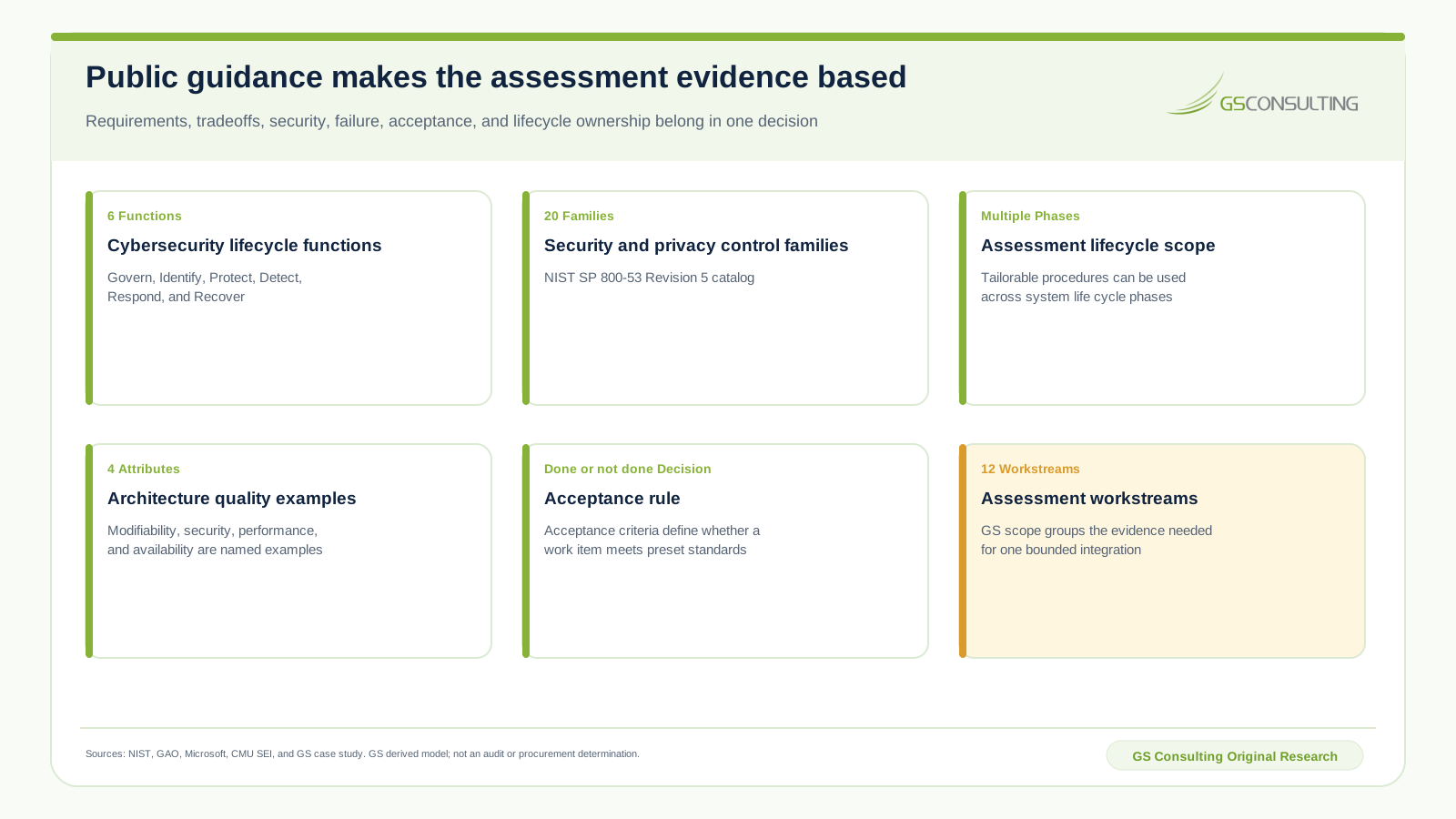
NIST SP 800-160 treats requirements, architecture, integration, verification, validation, and resilience as connected lifecycle concerns. NIST SP 800-53 Revision 5 organizes security and privacy controls across twenty families and addresses both control functionality and assurance. NIST SP 800-53A provides assessment procedures that can be tailored across the system lifecycle. These sources support an assessment that asks how a requirement will be implemented and proven, not only whether a control name appears in a document.
The NIST Cybersecurity Framework 2.0 uses six functions: Govern, Identify, Protect, Detect, Respond, and Recover. That structure is useful for lifecycle coverage, but it does not prescribe an integration architecture. The GAO Agile Assessment Guide emphasizes preset acceptance criteria for deciding whether work meets standards. The Carnegie Mellon Software Engineering Institute Architecture Tradeoff Analysis Method evaluates competing quality attributes. Microsoft failure mode analysis guidance decomposes a flow into components, dependencies, failure points, effects, blast radius, and mitigation.
Those sources are not a universal checklist for a specific engagement. They provide structures that GS used to build a transparent planning model. Contractual, legal, privacy, security, and regulatory requirements still need organization specific interpretation.
Original GS Research: The Integration Assessment Evidence Priority Index
GS Consulting built the Integration Assessment Evidence Priority Index to decide which questions must be resolved earliest. Twelve workstreams are rated from one through five across five factors: consequence of error, decision leverage, downstream dependency, uncertainty reduction, and pilot gate value. Factor weights total 100. The weighted rating is divided by five to produce a zero through 100 priority score.
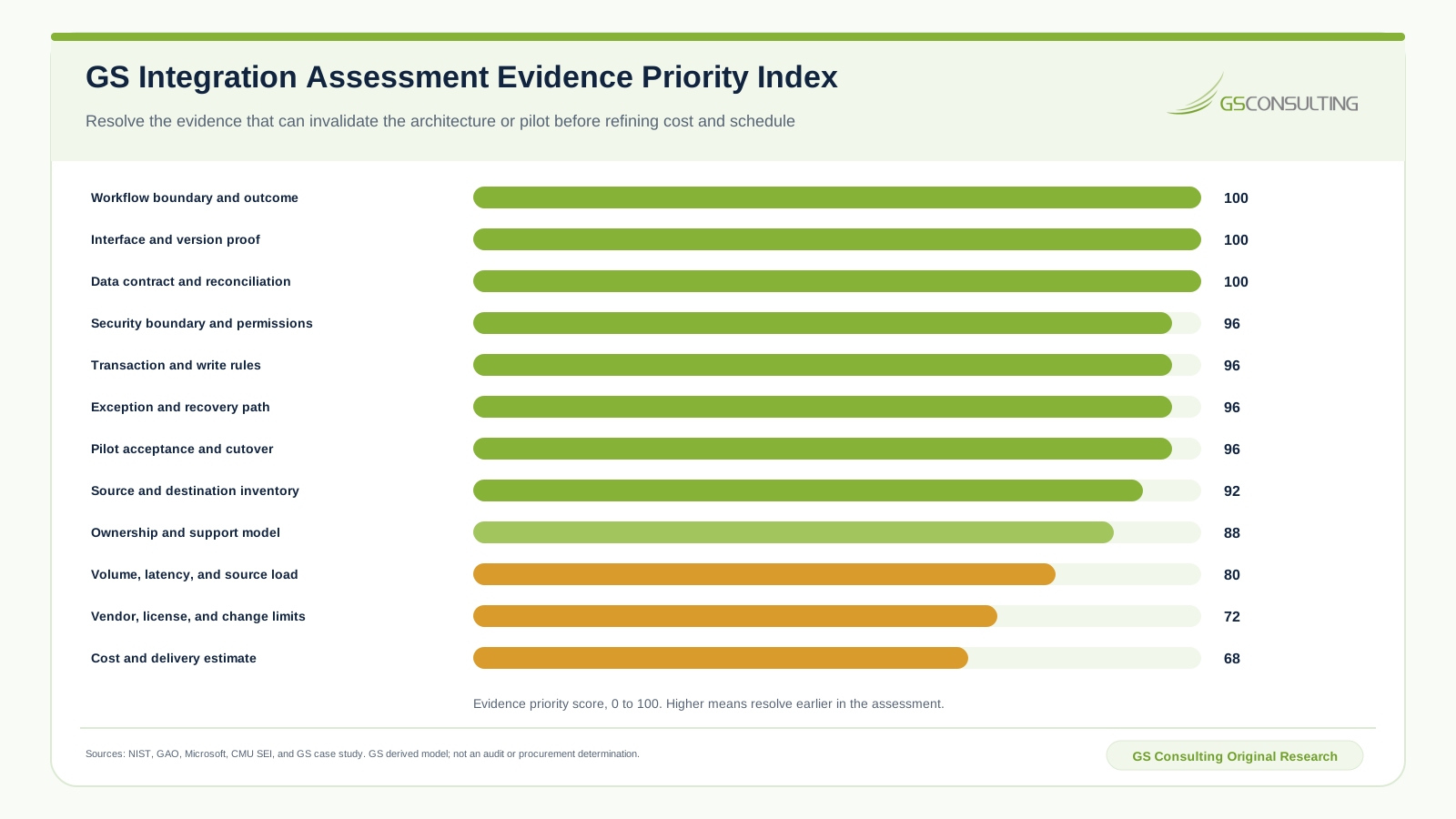
Workflow boundary, interface proof, and data contract each score 100. Security boundary, transaction rules, exception recovery, and pilot acceptance each score 96. System inventory scores 92. Those eight workstreams form the model's pilot gate tier. Ownership scores 88 and should be resolved during the assessment. Volume and latency score 80, vendor limits 72, and cost and schedule 68. Lower does not mean optional. It means the evidence becomes more useful after the architecture shaping facts are known.
The sensitivity case moves five weight points from consequence of error to uncertainty reduction. No workstream changes tier and no score moves by more than one point. That limited test shows the sequence is stable under one alternate weighting. It is not empirical validation.
This is a GS Consulting derived planning model based on cited public sources and documented assumptions. It is not an audit, procurement determination, legal opinion, security approval, NIST assessment, GAO assessment, Microsoft recommendation, or regulatory finding.
Automation Integration Assessment Checklist: Twelve Workstreams
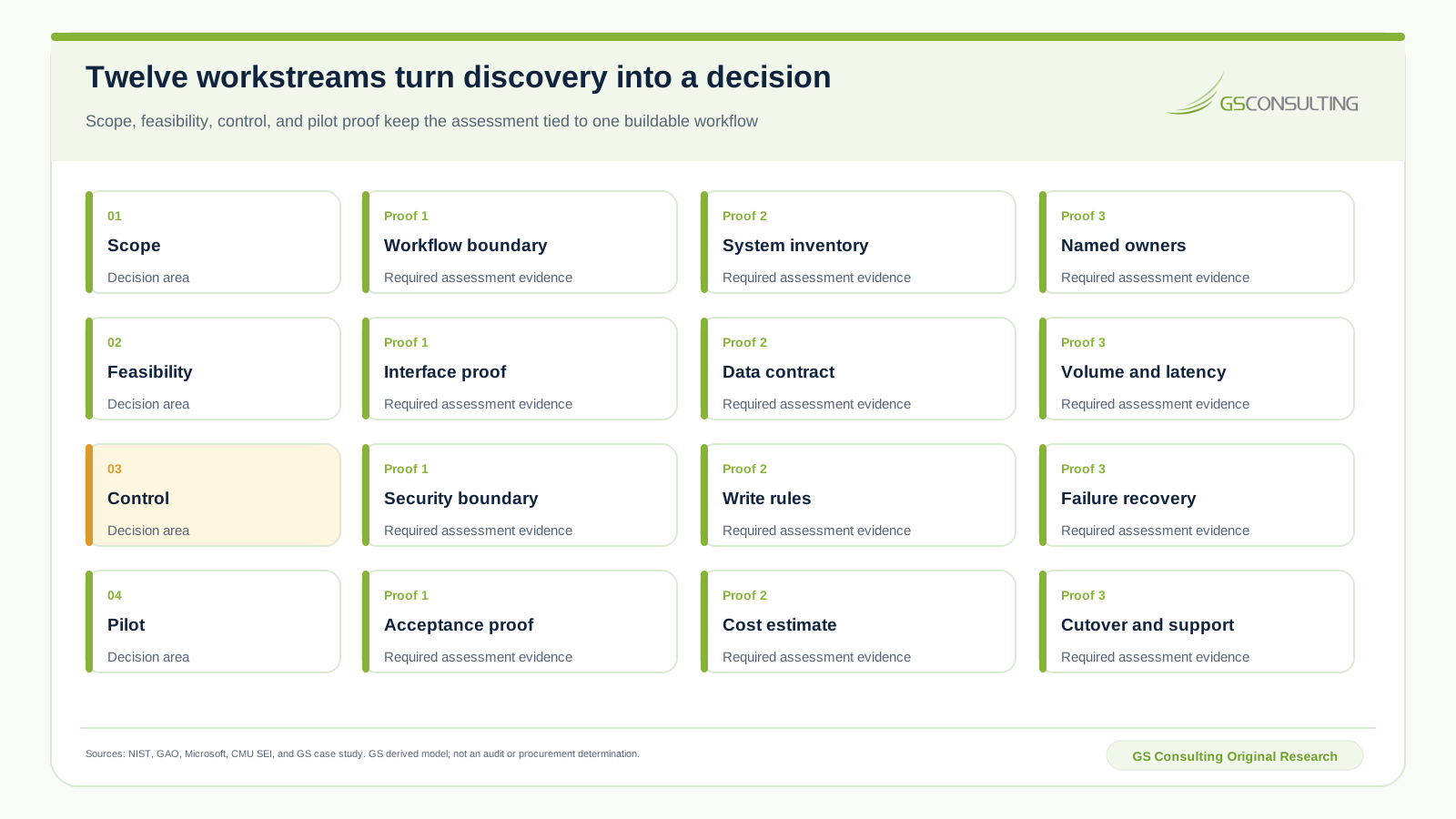
- Workflow boundary and outcome: prove the current result, desired result, trigger, decision, action, users, owner, exceptions, and exclusions.
- Source and destination inventory: record products, versions, environments, owners, data stores, dependencies, and planned changes.
- Interface and version proof: verify exact APIs, events, files, databases, screens, operations, permissions, limits, errors, licenses, and support statements.
- Data contract and reconciliation: define fields, keys, meaning, quality, validation, transformation, lineage, retention, and authoritative sources.
- Volume, latency, and source load: measure normal and peak rates, payloads, timing, concurrency, queueing, and safe load on source and target systems.
- Security boundary and permissions: map identities, secrets, data classes, allowed actions, environments, logs, retention, review, and administrative access.
- Transaction and write rules: define ordering, safe repetition, duplicate handling, atomicity, compensation, approval, and target confirmation.
- Exception and recovery path: identify dependencies, timeouts, partial effects, blast radius, detection, pause, repair, replay, reconciliation, and escalation.
- Ownership and support model: name delivery, product, data, security, operating, vendor, support, release, recovery, and decision owners.
- Vendor, license, and change limits: verify commercial rights, limits, release behavior, support, roadmap dependence, portability, and exit.
- Cost and delivery estimate: state ranges, drivers, assumptions, dependencies, confidence, operating cost, contingency, and the evidence needed to narrow uncertainty.
- Pilot acceptance and cutover: define representative cases, adverse tests, measures, thresholds, stop rules, approvers, handoff, rollback, and the next decision.
Require Interface and Version Proof
An interface inventory is not a list of product logos. Capture the exact product, version, environment, endpoint or screen, operation, fields, authentication method, permission, rate limit, error behavior, license condition, and owner. Link the claim to a specification, vendor statement, configuration export, test result, or observed behavior.
Test both read and write paths. A system may expose search but not the required update. A connector may support one product edition but not another. A database view may be readable but unsupported for operational use. A screen may be reachable but unstable under resolution, session, or permission changes.
Classify each interface claim as verified, assumed, unavailable, or blocked. An assumption can remain in the assessment, but it must have an owner, impact, resolution date, and effect on the recommendation. Never let “the vendor has an API” stand in for operation proof.
Write the Data and Transaction Contract
For each field, record the source, business meaning, type, allowed values, null behavior, transformation, sensitivity, retention, destination, and validation. Name the business key that connects records across systems. Identify which system is authoritative when values conflict.
Then describe the transaction. What creates, updates, or closes the record? Which actions must be ordered? What prevents duplicates? What happens when a response is lost after the target changed? Which effects can be compensated? Who approves irreversible or high consequence actions? What evidence confirms the actual target result?
Reconciliation belongs in the design, not the operations appendix. Define how the team will find missing, duplicate, stale, partial, or mismatched records. Set a frequency, threshold, owner, repair procedure, and retained record. For database preparation details, use the legacy database extraction guide.
Map Controls to Evidence and Operators
A control statement should identify the requirement, system component, implementation, configuration or procedure, evidence source, collection method, reviewer, frequency, exception, and owner. Avoid vague statements such as “access is restricted.” Name the identities, allowed operations, approval path, logs, review cadence, and response to unauthorized or ambiguous behavior.
Cover at least data boundaries, service identities, secret handling, access separation, input validation, allowed actions, environment separation, logging, evidence retention, change approval, deployment, pause authority, recovery, and administrative access. Add privacy, contractual, records, safety, and sector obligations where applicable.
The NIST sources can organize questions and evidence, but they do not establish compliance for a particular system. Preserve that distinction in the recommendation. Be firm about proof and cautious about legal or regulatory conclusions.
Design Failure and Recovery Before the Pilot
Draw the workflow from trigger through confirmed target result. Mark every dependency and state transition. For each point, ask what happens under denial, timeout, slow response, malformed input, stale input, duplicate input, out of order input, partial effect, unavailable dependency, operator error, interface change, and wrong target.
Record the detection signal, blast radius, automatic action, human action, pause condition, repair, safe replay rule, compensation, reconciliation, escalation, evidence, and recovery target. A plan that says “retry three times” is incomplete. It must explain whether the action is safe to repeat and how the team knows the prior attempt did not already change the target.
Test recovery in the representative environment. A runbook that has never been executed is a hypothesis. Measure time to detect, time to stop, time to identify affected records, time to repair, and manual correction effort.
Define Pilot Acceptance Before Building
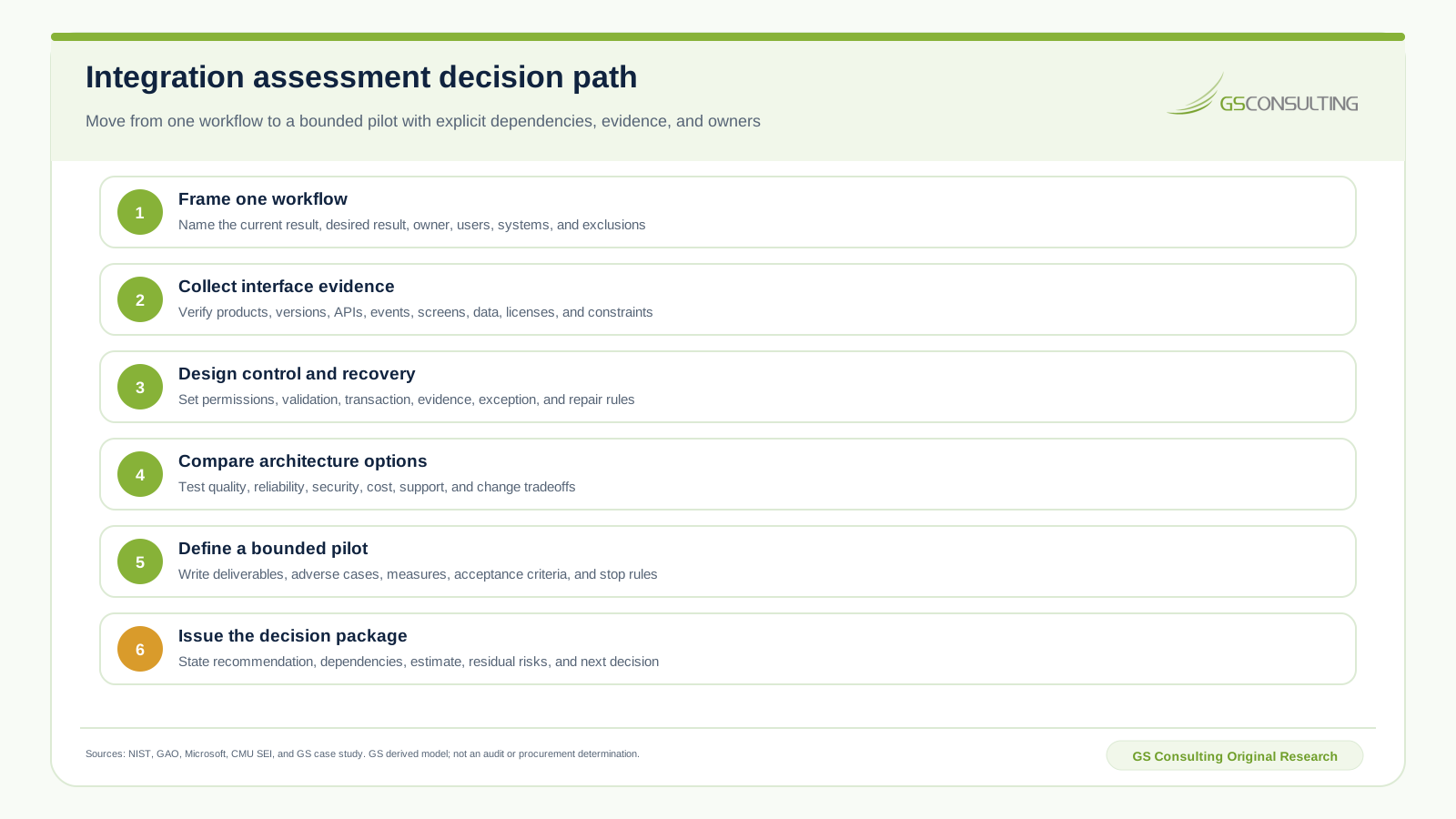
A pilot is ready when the team can write preset acceptance criteria in plain language. At minimum, define:
- Representative cases: normal, edge, and adverse examples drawn from the real workflow.
- Quality measures: correct records, missed records, false actions, field accuracy, and target confirmation.
- Operating measures: latency, throughput, queue depth, source load, manual review, correction effort, and recovery time.
- Control measures: permission use, prohibited action attempts, evidence completeness, exception visibility, and approval behavior.
- Thresholds: explicit pass conditions for each measure, with no averaging that hides a mandatory failure.
- Stop rules: conditions that pause the pilot immediately, including unsafe writes, missing evidence, unbounded load, or unrecoverable state.
- Decision rights: the named people who accept results, approve exceptions, authorize expansion, or stop the work.
The pilot should answer one delivery decision. It should not become a small production system with vague completion criteria and permanent temporary support.
Demand Eight Assessment Deliverables
- Assessment charter: question, workflow, outcome, exclusions, owners, schedule, evidence plan, and decision authority.
- System and interface inventory: products, versions, environments, operations, limits, licenses, support evidence, and owners.
- Data and transaction contract: fields, keys, meanings, validation, ordering, write rules, target confirmation, and reconciliation.
- Architecture tradeoff record: options, scenarios, quality goals, assumptions, risks, scores, mandatory gates, and rejected paths.
- Security and audit design: boundaries, identities, permissions, secrets, logs, retention, review, and evidence.
- Failure and recovery model: dependencies, failure points, blast radius, detection, mitigation, compensation, reconciliation, and repair.
- Pilot acceptance plan: representative cases, adverse tests, measures, thresholds, stop rules, approvers, and handoff.
- Delivery decision: recommendation, dependencies, estimate range, confidence, operating owner, residual risks, and next step.
Each deliverable should link claims to sources or tests. Mark assumptions visibly. Include an open issue register with owner and decision impact. A polished slide deck without those links is a presentation, not an assessment record.
Earn the Cost and Schedule Estimate
Estimate after the gate evidence is visible. Break the work into interface delivery, data preparation, controls, workflow logic, testing, environments, observability, documentation, training, handoff, support, and contingency. Add vendor license, platform, data, and operating drivers where relevant.
Use a range. State what drives the low and high case. Separate known facts from assumptions. List exclusions and external dependencies. Show which unresolved evidence could move the estimate materially. A narrow number based on an unverified interface is false precision.
Include operating cost and change cost. Integration work continues after launch through product upgrades, schema changes, credential rotation, access reviews, incident recovery, vendor changes, test maintenance, documentation, and support. The SIEM integration and cyber analysis automation service is one commercial path when the workflow connects security data and specialized analysis to existing operational platforms.
Reject Six Assessment Failures
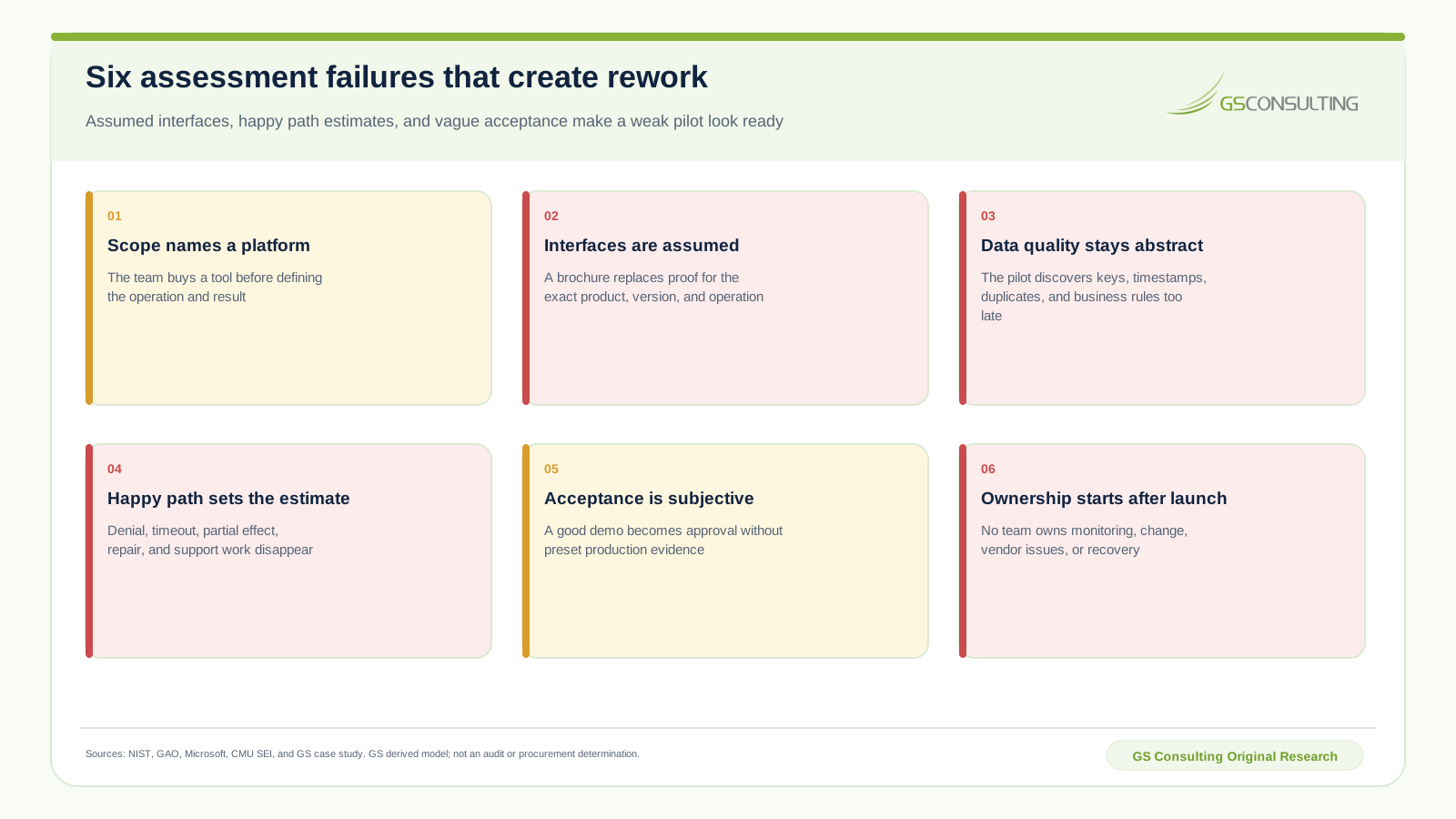
These failures are common because they allow a team to appear decisive before the facts are known. The correction is simple but demanding: name one result, test the exact operation, inspect representative data, model adverse cases, preset pass conditions, and bring operating owners into the assessment.
Do not hide a blocker in a risk appendix. If a missing interface, prohibited data path, unavailable owner, or unrecoverable action invalidates the current architecture, state that in the main recommendation. A decision package should make the consequence visible.
Keep the Minimum Assessment Evidence Packet
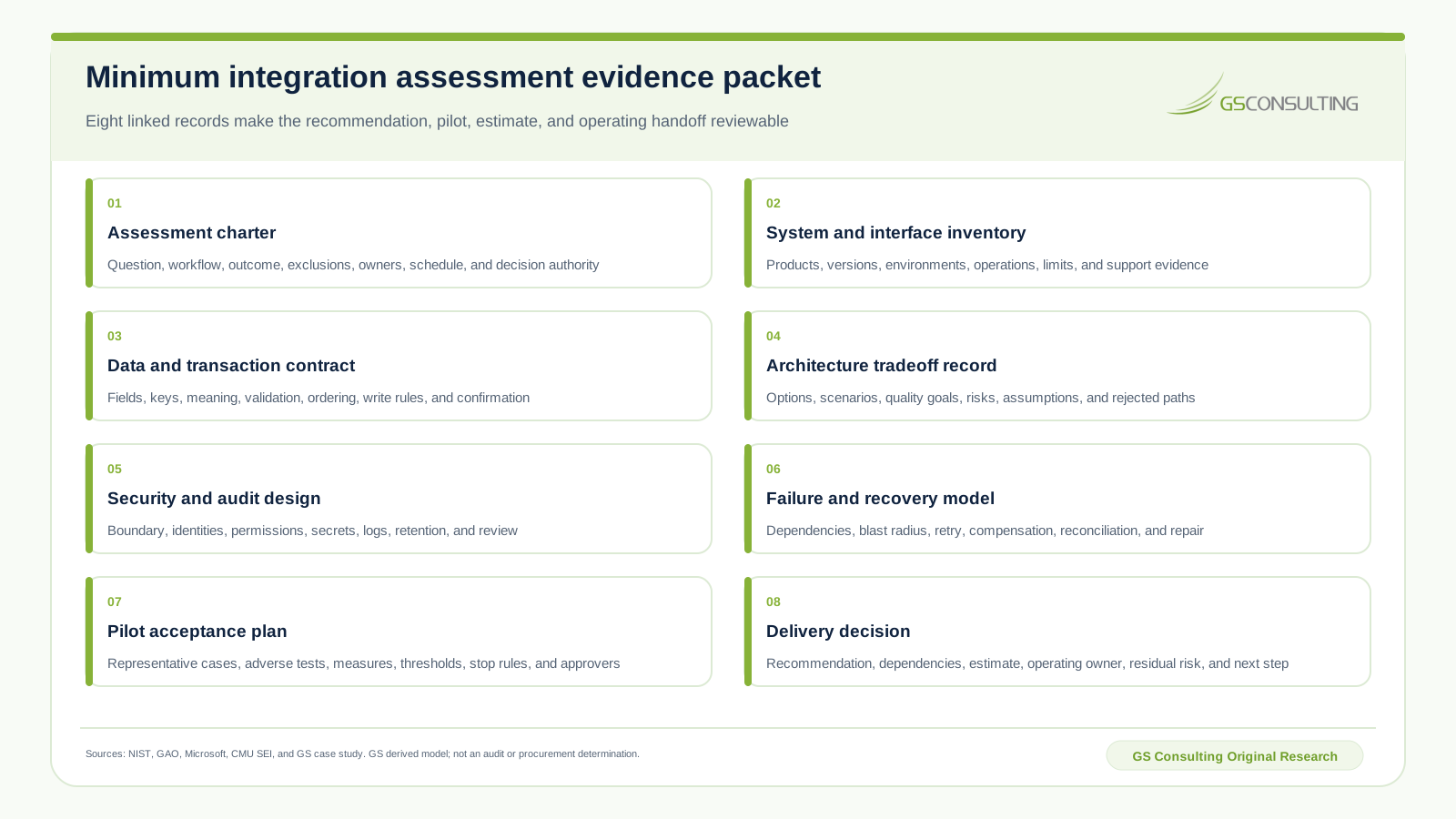
Store the assessment charter, inventory, data and transaction contract, tradeoff record, control design, failure model, acceptance plan, and delivery decision together. Use stable identifiers to connect interface claims, data fields, risks, tests, controls, owners, and estimate assumptions.
Preserve source access dates, product versions, test environments, evidence locations, unresolved issues, and decision history. That record allows the team to revisit the recommendation when a version, vendor, interface, policy, data source, or business rule changes.
A Six Week Assessment Plan
Week 1: Charter and Workflow
Confirm the decision, current and desired result, scope, exclusions, users, owners, systems, evidence access, schedule, and decision authority. Walk one real case from trigger to target result.
Week 2: Systems, Interfaces, and Data
Verify products, versions, operations, permissions, limits, licenses, schemas, business keys, meanings, quality, load, timing, and authoritative sources. Test representative reads and writes where authorized.
Week 3: Architecture, Security, and Transactions
Compare viable patterns against explicit quality goals and mandatory gates. Map data paths, identities, secrets, allowed actions, state, ordering, duplicates, target confirmation, and reconciliation. For any production update, apply the legacy automation write back and reconciliation guide to the exact destination operation.
Week 4: Failure, Recovery, and Operations
Run adverse cases. Define detection, pause, repair, safe replay, compensation, escalation, evidence, release, support, vendor, change, recovery, and exit ownership.
Week 5: Pilot, Estimate, and Evidence Review
Write representative cases, measures, thresholds, stop rules, approvers, deliverables, work breakdown, cost and schedule ranges, dependencies, assumptions, residual risks, and confidence.
Week 6: Decision and Handoff
Issue the recommendation and rejected options. Resolve material challenges with evidence. Choose pilot, redesign, hold, or stop. Obtain written acceptance from delivery and operating owners.
For an existing business application or database, the integration architecture assessment shows the deliverables and a worked example of turning one workflow into a pilot scope.
The GS private AI cyber analysis case study shows why this sequence matters: architecture, human review, controlled interfaces, and delivery into approved systems were part of the implementation, not cleanup after a model demo.
The operating standard: no automation integration moves into a pilot until the workflow boundary, exact interfaces, data contract, transaction rules, permissions, failure recovery, acceptance thresholds, and operating owner are explicit and testable.
Primary Sources and Method Notes
- NIST SP 800-160 Volume 1 Revision 1, Engineering Trustworthy Secure Systems
- NIST SP 800-53 Revision 5, Security and Privacy Controls
- NIST SP 800-53A Revision 5, Assessing Security and Privacy Controls
- NIST Cybersecurity Framework 2.0
- U.S. Government Accountability Office, Agile Assessment Guide
- Carnegie Mellon Software Engineering Institute, Architecture Tradeoff Analysis Method
- Microsoft Azure Well Architected Framework, Failure Mode Analysis
- Microsoft Azure Architecture Center, Minimize Coordination
- GS Consulting, Private AI Cyber Analysis Platform Case Study
The research package records source access dates, findings, limitations, model inputs, weights, formulas, sensitivity results, workstream data, decision path, failure modes, evidence records, and editable figures. Use the workbook to replace planning assumptions with engagement evidence.
Frequently Asked Questions
What is an automation integration assessment?
It is a bounded evidence gathering and architecture decision effort for one workflow. It defines the outcome, systems, interfaces, data, transaction rules, permissions, failure paths, operating owner, pilot acceptance criteria, delivery estimate, and recommended next decision.
What should an integration assessment deliver?
It should deliver an assessment charter, system and interface inventory, data and transaction contract, architecture tradeoff record, security and audit design, failure and recovery model, pilot acceptance plan, and a delivery decision with dependencies, estimate, residual risks, and owners.
How long should an automation integration assessment take?
A focused assessment for one workflow often fits a four to six week structure when system owners and representative environments are available. The calendar should be driven by evidence access and interface testing, not by a fixed workshop count.
What makes a workflow ready for an automation pilot?
The workflow is ready when its boundary, exact interfaces, data contract, security permissions, transaction behavior, failure recovery, measures, acceptance thresholds, stop rules, and operating ownership are explicit and testable.
Should the assessment choose a product?
Only after it defines the operating problem and mandatory gates. A product comparison can be one deliverable, but the assessment should first prove the required operation, data, controls, recovery, support, and lifecycle obligations. Otherwise the product list drives the scope.
How should an integration assessment estimate cost?
Estimate a range tied to documented scope, interfaces, data conditions, controls, test cases, dependencies, assumptions, and operating duties. Separate assessment facts from planning assumptions and show what evidence would narrow the range.