Enterprise AI | | 25 min read
Legacy Database Extraction Workflows Using AI

Key Takeaways
Legacy extraction is a control problem before it is an AI problem.
Inventory First
Name the source systems, owners, sensitivity, access paths, dependencies, and business value before extraction begins.
Lineage Builds Trust
Keep raw and clean layers, transformation rules, exception logs, reconciliation reports, and release approvals tied together.
AI Suggests, Humans Approve
Use AI for profiling, mapping, and triage, then require accountable review for rules, exceptions, sensitivity, and production release.
Legacy databases are business bottlenecks with login screens.
Many GovCon firms want AI workflow automation, better reporting, faster compliance evidence, contract intelligence, and proposal reuse. The problem is that the data needed for those workflows is often trapped inside older databases, on premise applications, custom ERP extensions, access controlled shared drives, and departmental tools that were never designed for modern AI data pipelines.
That does not mean every legacy system must be replaced before AI can help. It means the organization needs a controlled extraction model that can turn legacy data into usable, governed, traceable data products without losing the evidence, permissions, or business meaning that make the data trustworthy.
Need to unlock legacy GovCon data for AI workflows?
GS Consulting helps GovCon teams inventory legacy sources, design secure extraction pipelines, classify sensitive data, build lineage and reconciliation evidence, and connect clean data to workflow automation.
Request a Legacy Data AssessmentThis guide supports our main AI workflow automation service and connects to integrating AI with legacy GovCon ERPs, legacy system integration for AI automation, secure AI document processing for CUI, NIST SP 800 171 evidence automation, and AI federal contract management workflows.
Why Legacy Data Blocks Automation
AI automation depends on reliable context. If contract records, cost history, deliverable status, employee certifications, CUI markings, supplier performance, help desk records, or project data are scattered across legacy systems, AI workflows cannot answer with confidence or act with control.
The visible problem is usually slow reporting. The deeper problem is that legacy data often lacks clear ownership, complete field definitions, current permissions, sensitivity tags, data quality rules, change history, and trusted reconciliation back to the source system.
That matters for GovCon because a wrong answer can become a bad proposal commitment, an incomplete compliance package, a contract management error, or an unauthorized data exposure.
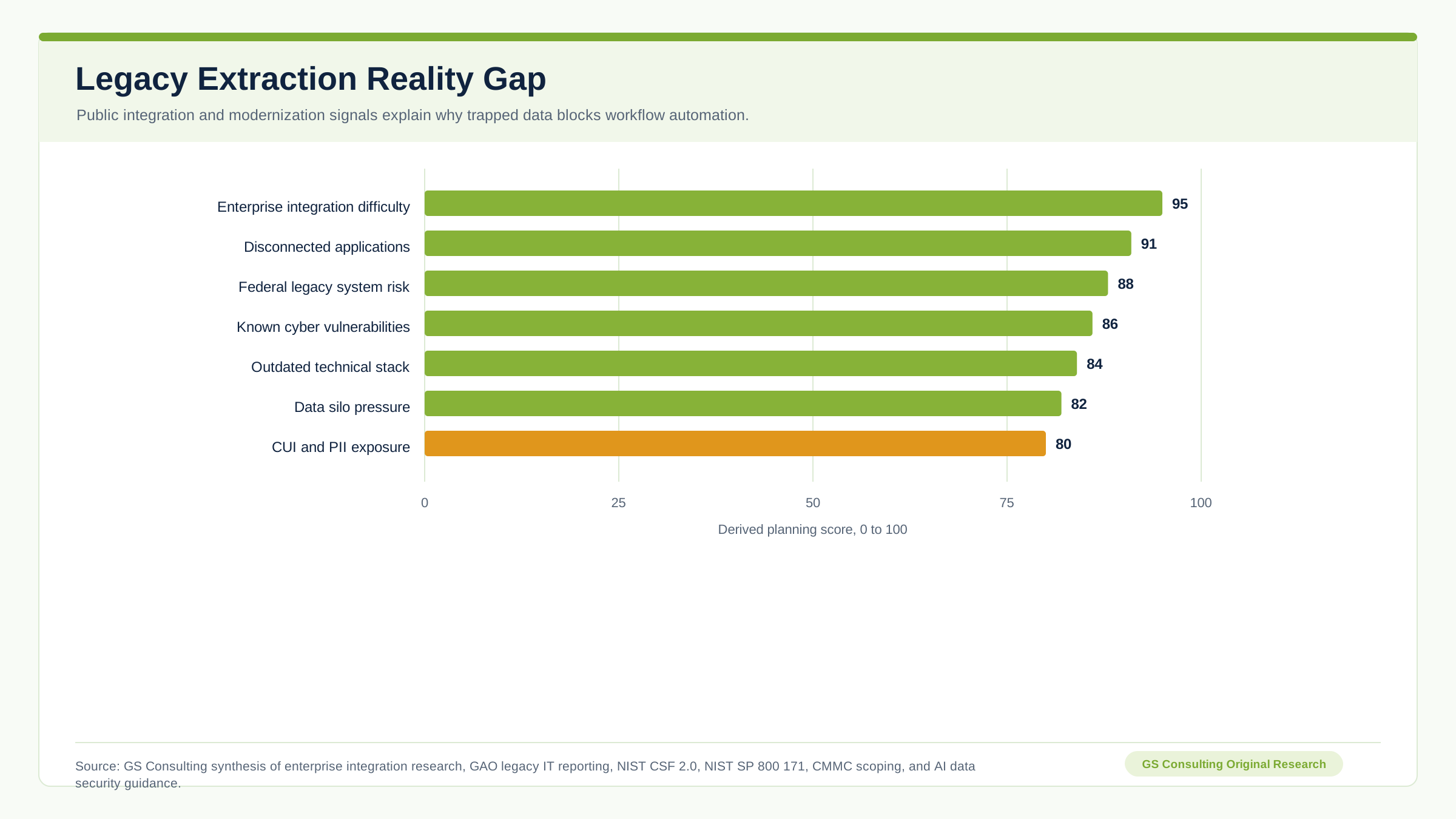
The Bad Assumption: We Can Just Migrate Everything
Large data migration programs often start with an attractive promise: move all legacy data into a modern platform, then automate from there. That can be the right answer for some systems, but it is rarely the right first move.
Old databases usually contain duplicate entities, stale records, abandoned fields, local workarounds, undocumented codes, missing keys, sensitive fields, and business rules that live in employee memory rather than documentation. Moving everything without understanding those conditions simply transfers confusion into a more expensive environment.
Extraction is different from migration. Extraction asks what data should be accessed, what it means, who owns it, how sensitive it is, how it will be validated, what clean version should exist, and which workflow should consume it.
Start With a Data Source Inventory
The first deliverable is not a connector. It is a source inventory that gives engineering, security, compliance, and business owners a shared view of the legacy estate.
- SystemName the database, application, owner, vendor, hosting model, and technical contact.
Include on premise systems, custom applications, reporting replicas, exports, shared drives, and old access databases.
- DataList tables, files, entities, date ranges, record counts, field definitions, quality concerns, and known gaps.
Note which fields are authoritative and which ones are copied from another system.
- RiskIdentify CUI, PII, export controlled data, contract restrictions, retention rules, permissions, and access paths.
Extraction planning should know sensitivity before movement, not after.
- ValueTie each source to reporting, compliance, proposal, contract, delivery, finance, or operations outcomes.
High value workflows should drive sequencing.
This inventory becomes the foundation for automating data migration, un siloing legacy GovCon data, and building AI data pipeline automation that can survive security review.
Map Data Before Moving It
Data mapping is where legacy extraction becomes an operating model problem. A field named Status may mean project status in one system, invoice status in another, clearance status in another, and obsolete workflow state in a fourth. AI can suggest likely meanings, but business owners must confirm them.
Useful mapping work includes entity definitions, field meanings, code tables, ownership, sensitivity, duplicate logic, match rules, transformation rules, exception rules, and downstream consumers. This is where the future data dictionary and business glossary begin.
A good data map also names what should not move. Some legacy data is obsolete, unsupported, legally sensitive, duplicated, or too poorly understood for early automation.
The Extraction Workflow Should Be Controlled
A secure legacy extraction workflow should not give AI direct access to every legacy database. It should create a governed pipeline with clear gates.
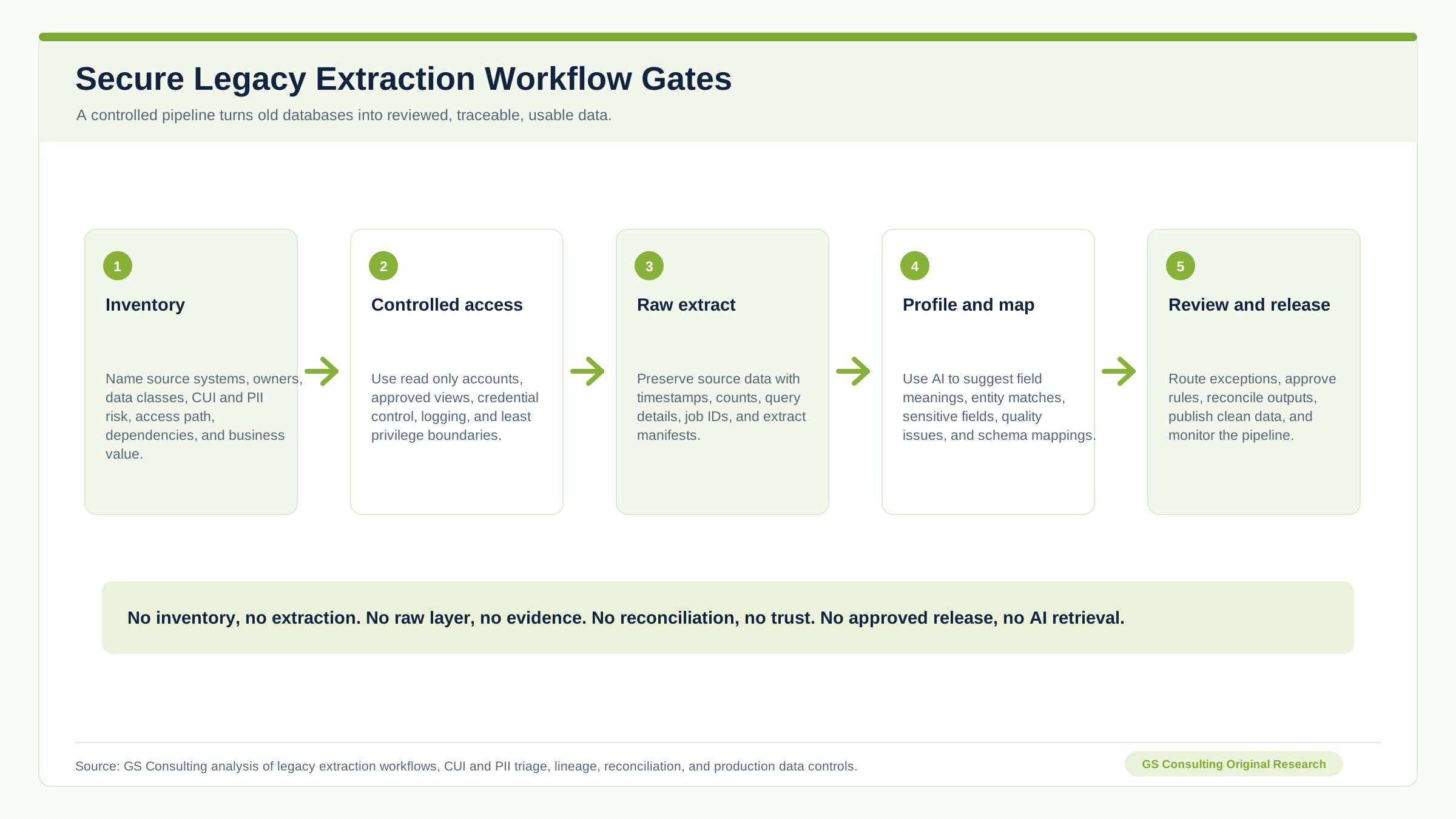
- Inventory gate: No extraction begins until source ownership, sensitivity, access method, and intended use are documented.
- Access gate: Use read only service accounts, approved database views, credential control, network restrictions, and logs.
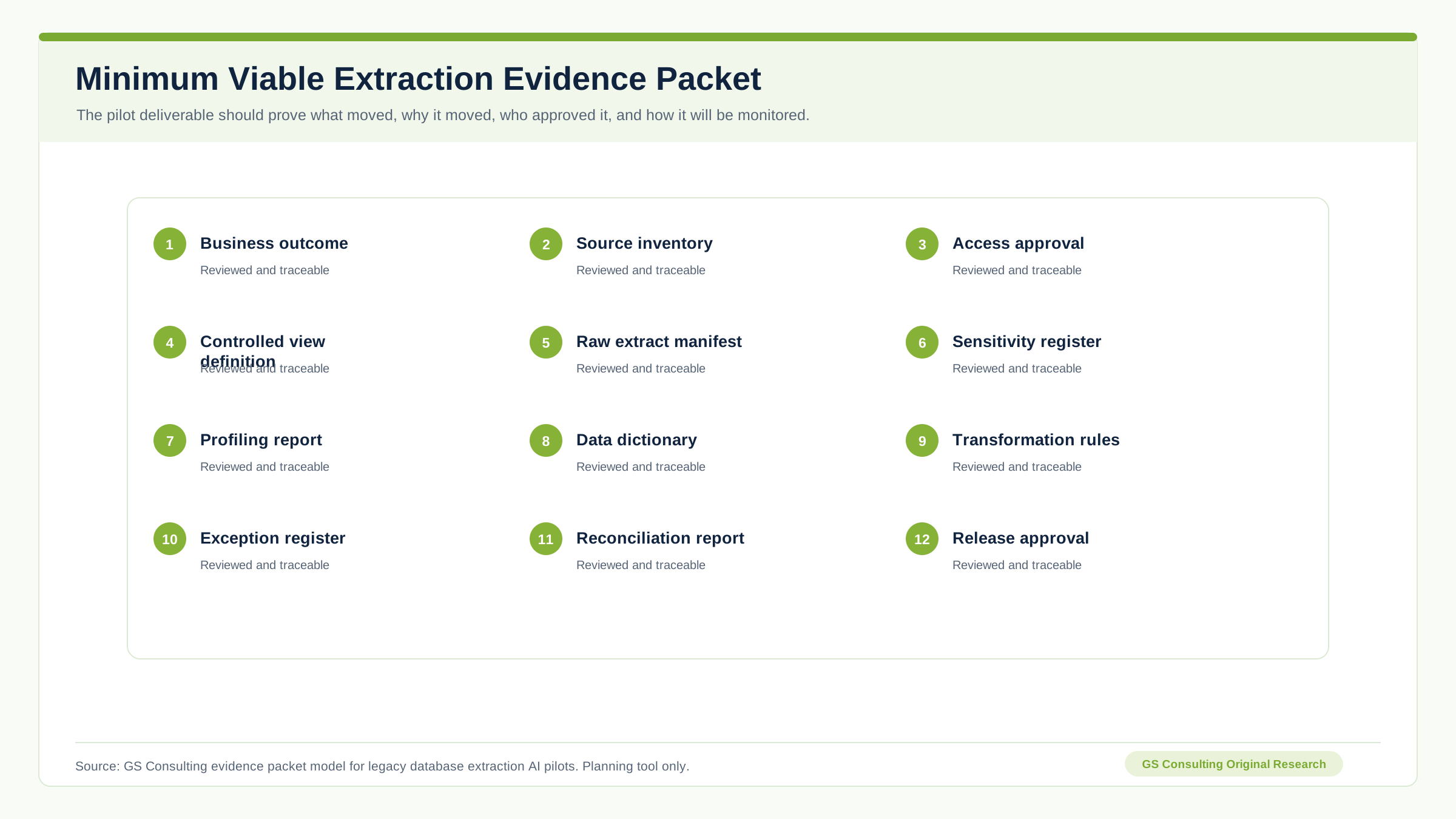
- Raw gate: Preserve source extracts with timestamps, row counts, query details, job IDs, and extract manifests.
- Mapping gate: Use AI for profiling and mapping suggestions, then require human review for business meaning.
- Release gate: Publish clean data only after rules, exceptions, sensitivity, and reconciliation are approved.
Original Research: The Legacy Data Escape Control System
GS Consulting developed a Legacy Data Escape Control System to help GovCon leaders prioritize which extraction controls matter most before AI workflows consume legacy data. The model evaluates source trust, sensitivity exposure, evidence burden, automation leverage, dependency risk, and feasibility.
The highest priority controls were source inventory, raw and clean lineage, CUI and PII sensitivity triage, read only controlled views, reconciliation, transformation rules, exception routing, data dictionaries, AI profiling findings, schema mapping suggestions, retrieval permission gates, and pipeline monitoring logs.
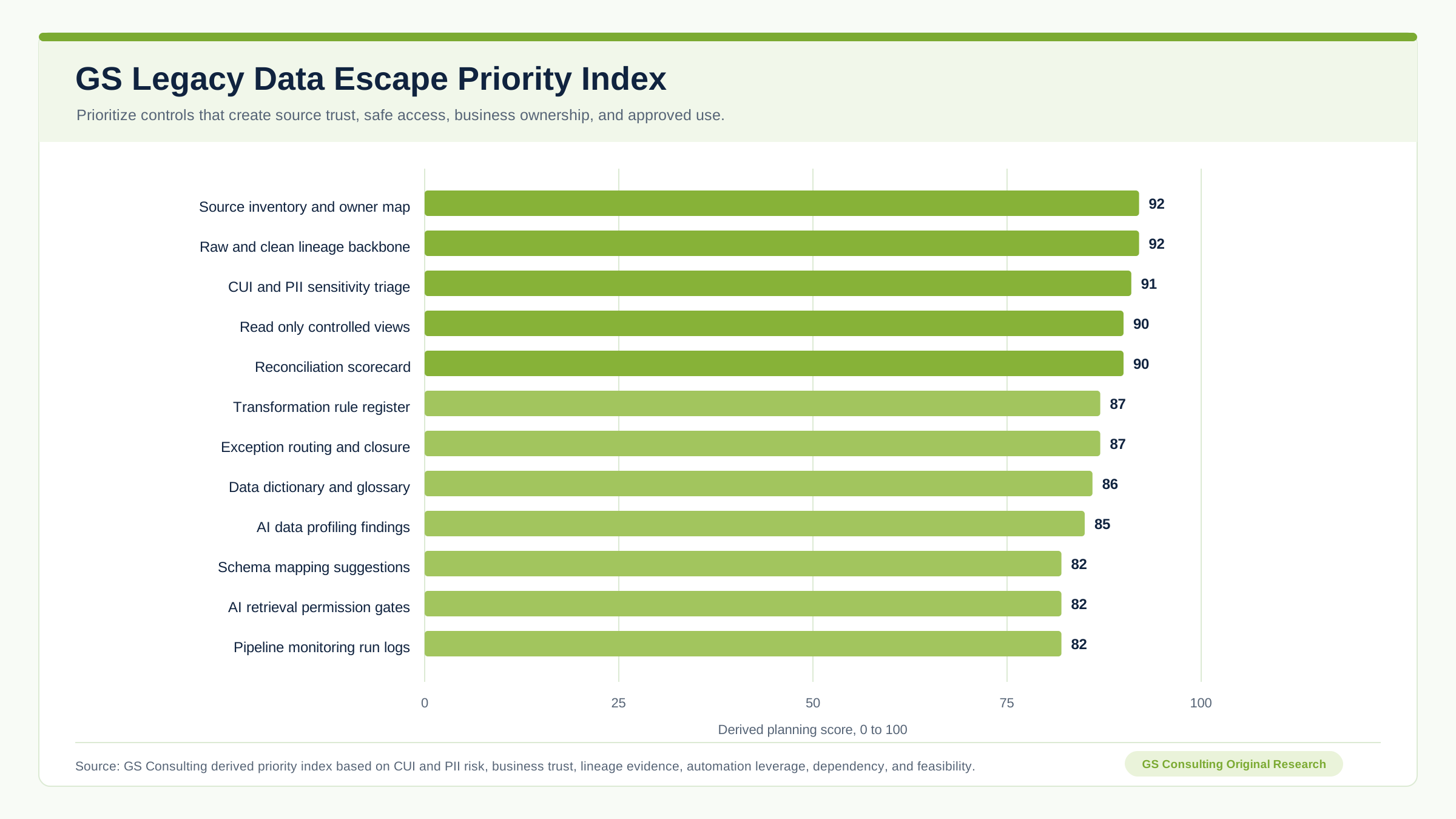
The model is a planning tool, not an official benchmark, certification, compliance determination, legal conclusion, or guarantee of project performance. Actual readiness depends on contract requirements, system architecture, data quality, CUI scope, user permissions, network design, retention policy, vendor limits, and the level of automation being introduced.
Raw and Clean Data Are Both Needed
Teams often want to skip directly to clean data. That creates a problem later when someone asks why a number changed, which rule was applied, which source record was used, who approved the mapping, or whether sensitive data was handled correctly.
The raw layer preserves what came from the legacy source. The clean layer supports reporting, AI retrieval, workflow automation, and integration after approved rules are applied. Both layers need ownership, access control, monitoring, and retention rules.
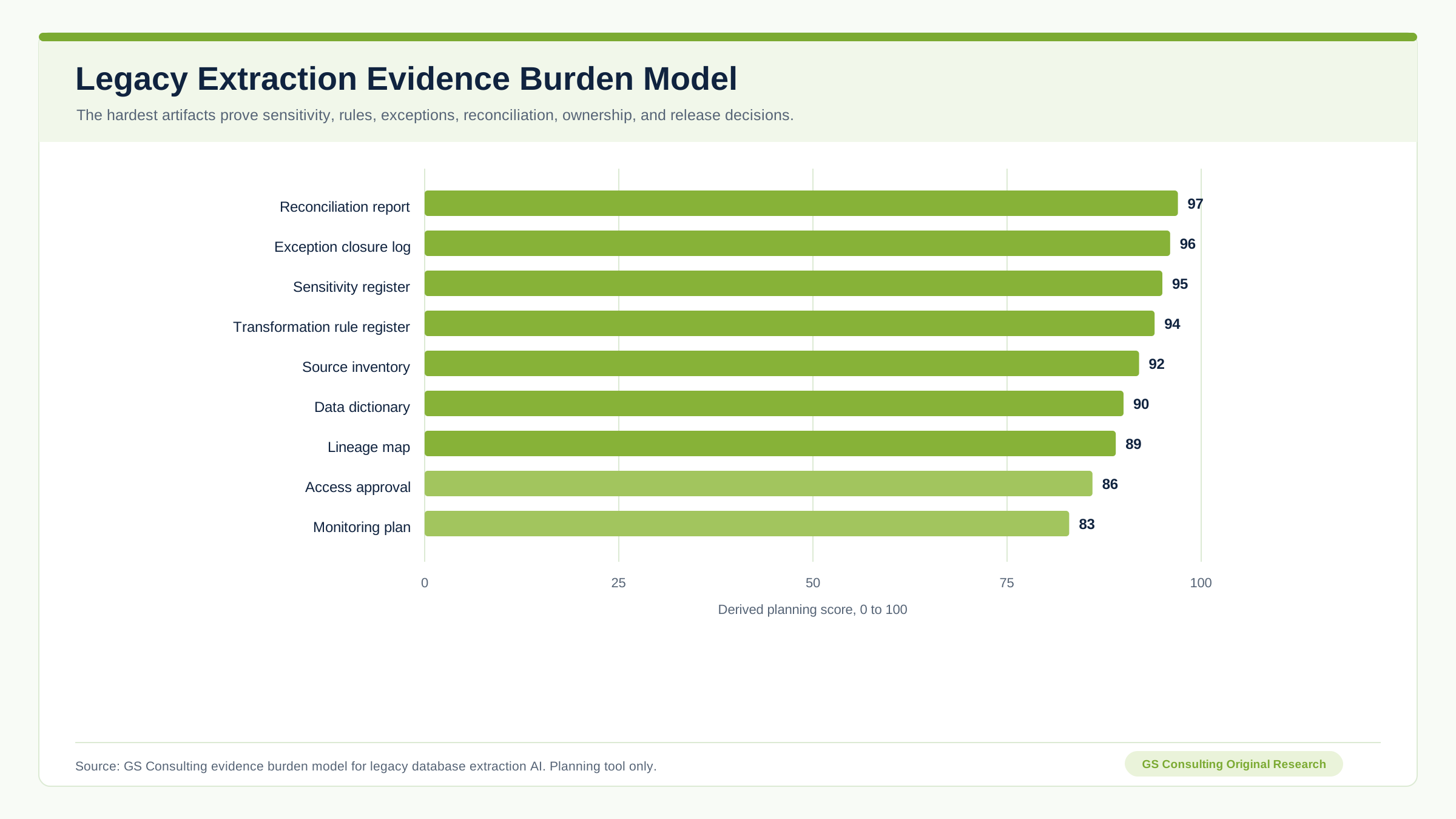
Data Lineage Is Not Optional
Lineage answers five questions: where did the data come from, what changed, who approved the change, where did it go, and what workflow uses it now. For GovCon, lineage is also a security and compliance control because it helps prove how CUI, PII, contract data, and compliance artifacts moved through the environment.
A practical lineage model should include source query or export definition, raw extract location, transformation rules, mapping approvals, exception decisions, clean data location, consumer systems, retrieval indexes, workflow dependencies, and monitoring records.
Where AI Helps in Legacy Database Extraction
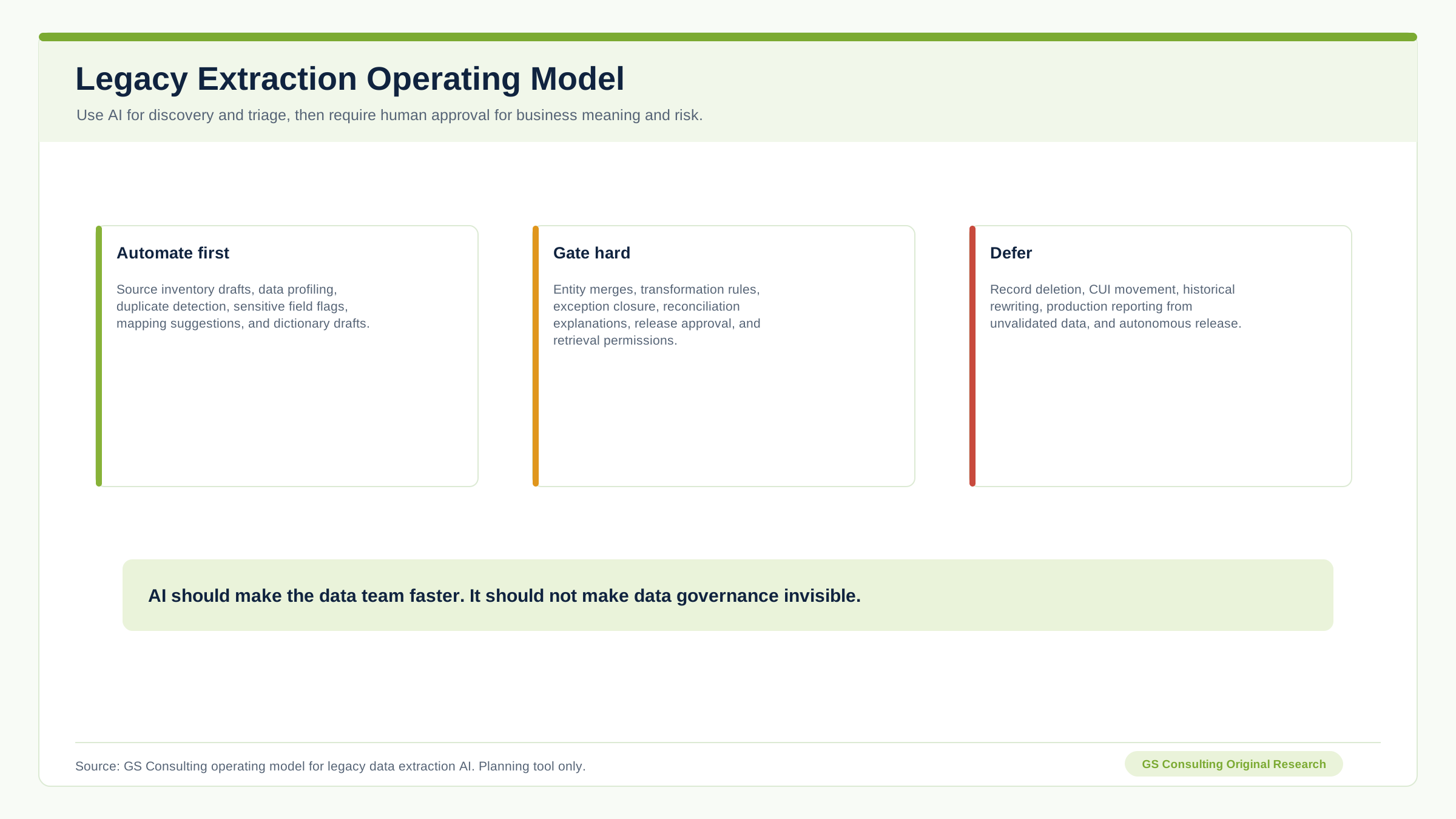
AI is useful when it shortens the discovery and triage work that makes extraction slow. It should not silently decide business meaning or move sensitive data without review.
Use the results to focus data engineering review.
Require business owner approval before rules are used.
Use security review to confirm handling rules.
Keep closure decisions traceable.
Build the Security Boundary Before the Pipeline Scales
Legacy extraction can increase risk if it creates new copies of sensitive data without matching controls. The security boundary should be defined before broad extraction begins.
- Use least privilege access and separate extraction identities from administrator accounts.
- Prefer controlled views over broad table access when feasible.
- Encrypt raw, clean, and temporary data stores.
- Apply retention rules to extracts, logs, model inputs, and outputs.
- Keep AI prompts, summaries, embeddings, and retrieval indexes inside approved environments.
- Log source access, pipeline runs, review decisions, release approvals, retrieval access, and downstream use.
- Align CUI handling with contract requirements, NIST SP 800 171, CMMC scoping, and internal policy.
This is why secure AI document processing for CUI and database extraction planning should be designed together. The same data can appear in structured tables, documents, exports, reports, and AI retrieval indexes.
Do Not Trust Legacy Reports Blindly
Legacy reports often encode hidden business rules. A report may exclude inactive records, collapse duplicate projects, convert codes into labels, apply fiscal calendars, or filter out rows that do not pass old validation logic. Recreating the report from database tables without understanding those rules can produce numbers that look precise but are wrong.
Reconciliation should compare source counts, key totals, sample records, exception categories, report outputs, and business owner expectations. Differences should be logged, explained, approved, or corrected before clean data is released.
Extraction, Migration, Integration, Archive, or Decommissioning?
Legacy data work should separate five decisions that are often blurred together.
- ExtractMove selected data into a controlled pipeline for reporting, retrieval, or automation.
- MigrateMove authoritative records into a new system with approved transformation and cutover plans.
- IntegrateLeave the source in place while approved interfaces provide current data to workflows.
- ArchivePreserve historical data for retention, audit, or research with limited operational use.
- RetireShut down a system after ownership, records, retention, access, and continuity needs are resolved.
For many GovCon firms, the right first move is selective extraction for a high value workflow, not a full migration of every legacy table.
AI Data Pipeline Automation Architecture
A practical AI data pipeline automation architecture has layers that keep old systems stable while giving modern workflows trusted data.
- Source layer: Legacy databases, ERP modules, custom applications, shared drives, reporting replicas, and exports.
- Access layer: Approved accounts, database views, connectors, network controls, logging, and secrets management.
- Raw layer: Immutable extracts with manifests, timestamps, row counts, and retention controls.
- Profile layer: AI supported profiling, sensitive data flags, duplicate detection, quality checks, and mapping suggestions.
- Clean layer: Approved transformations, normalized entities, data dictionary, exception handling, and reconciliation reports.
- Use layer: Dashboards, AI retrieval, workflow automation, compliance evidence, contract intelligence, and proposal support.
- Control layer: Identity, permissions, monitoring, approval records, audit logs, risk review, and change management.
What Usually Breaks
Legacy extraction projects rarely fail because one connector did not work. They fail because no one agreed on what the data means, which copy is authoritative, which fields are sensitive, which rules are valid, which exceptions matter, who approves release, and what evidence proves the output can be trusted.
Other common failure modes include over broad service accounts, temporary files that become permanent, AI summaries that cannot cite source records, clean tables without raw lineage, undocumented transformation logic, business owners who review too late, and dashboards that disagree with legacy reports without an explanation.
How to Use AI Without Losing Control
The safest approach is to assign AI specific jobs and keep decision rights explicit.
Use AI to create reviewable work products faster.
Use named owners for approval.
Keep these actions behind formal governance.
The First 90 Days
A useful first 90 days should produce a controlled pilot, not a vague data modernization roadmap.
- Days 1 to 30Select one workflow and inventory the sources.
Choose a reporting, compliance, contract, or proposal use case with a clear business owner and measurable pain.
- Days 31 to 60Build the controlled extraction path.
Create approved access, raw extract manifests, profiling reports, sensitivity review, mapping drafts, and exception routing.
- Days 61 to 90Release a clean data product with evidence.
Validate reconciliation, document rules, approve access, connect the workflow, and monitor usage, errors, and business impact.
Metrics Leadership Should Track
- Percent of priority sources inventoried with owners and sensitivity labels.
- Percent of extracted records tied to raw lineage and approved transformation rules.
- Exception rate by source, field, workflow, and owner.
- Reconciliation variance between legacy reports and clean outputs.
- Time to produce a trusted report, evidence package, proposal data view, or workflow input.
- Number of AI workflow answers with traceable source records.
- Security findings related to extracts, access, storage, retrieval, and retention.
Questions Leadership Should Demand Before Production
- Which source is authoritative for each entity?
- Who owns the data and who approved its use?
- What CUI, PII, contract, or export controlled data is included?
- Where is the raw extract and how is it protected?
- Which rules changed the data and who approved them?
- How were exceptions closed?
- How do clean outputs reconcile to legacy reports?
- Which AI workflows can retrieve or use the data?
- How are access, prompts, outputs, and downstream actions logged?
- What happens if the pipeline fails or produces bad data?
How GS Consulting Helps
GS Consulting helps GovCon leaders turn legacy data into controlled AI workflow assets. Our work includes source inventories, extraction readiness assessments, CUI and PII handling models, data dictionaries, pipeline architecture, raw and clean data layer design, reconciliation controls, AI profiling workflows, exception routing, audit evidence, and integration planning.
For teams building process automation, legacy extraction is often the missing foundation. It helps RFP shredding workflows retrieve reusable past performance data, helps compliance teams automate evidence packaging, helps contract teams reason over obligations, and helps operations teams turn old records into current workflow context.
The Bottom Line
Legacy database extraction AI is not about letting an AI tool scrape old systems. It is about building a governed data pipeline that makes trapped data usable without losing ownership, permissions, sensitivity, lineage, reconciliation, or trust.
The firms that win will not be the ones that move the most data fastest. They will be the ones that extract the right data, protect it correctly, prove where it came from, explain how it changed, and connect it to high value workflows with human accountability.
Research Sources and Caveats
The original research in this article uses GS Consulting planning metrics. The Legacy Data Escape Priority Index and Evidence Burden Model are not official benchmarks, compliance determinations, legal conclusions, audit findings, or guarantees of project performance.
They are planning tools for prioritizing extraction controls. Each organization should validate the model against its own contracts, system architecture, data sensitivity, user permissions, CMMC scope, retention policy, risk tolerance, and workflow goals.
- Salesforce MuleSoft Connectivity Report announcement
- GAO report on modernizing critical legacy systems
- NIST Cybersecurity Framework 2.0
- NIST SP 800 171 Revision 3
- Code of Federal Regulations CMMC Program rule
- Federal Register CMMC Program final rule
- NSA Artificial Intelligence Security Center guidance on AI data security
- OWASP Top 10 for Large Language Model Applications
Ready to turn legacy data into controlled AI workflow inputs?
GS Consulting can help you inventory sources, design extraction controls, build lineage, reconcile clean data, and connect legacy information to secure AI workflow automation.
Contact GS ConsultingFrequently Asked Questions About Legacy Database Extraction AI
What is legacy database extraction AI?
Legacy database extraction AI uses AI to profile older databases, suggest field meanings, flag sensitive data, draft mappings, and group exceptions while a governed pipeline preserves raw extracts, clean outputs, lineage, approvals, and reconciliation evidence.
Is AI a replacement for data migration engineering?
No. AI can accelerate profiling, mapping, and triage, but data engineers and business owners still need to approve access, define transformations, protect sensitive data, reconcile outputs, and decide what should move, integrate, archive, or stay in place.
What should be automated first in legacy database extraction?
Start with low risk work such as source inventory drafts, data profiling, duplicate detection, field classification, sensitivity flags, mapping suggestions, dictionary drafts, and exception clustering. Keep transformation rules, entity merges, release approval, and production use behind human review.
Why do raw and clean data layers both matter?
The raw layer preserves what came from the source system and creates evidence for audit, reconciliation, and troubleshooting. The clean layer supports reporting, retrieval, workflow automation, and integration after approved rules have been applied.
How should GovCon firms handle CUI in legacy extraction workflows?
GovCon firms should identify CUI and PII before broad movement, use least privilege access, control extraction views, log pipeline activity, retain lineage, review AI outputs, protect storage and retrieval layers, and align handling with NIST SP 800 171, CMMC scoping, contract clauses, and internal security policy.
Suggested Future Reading
- Integrating AI Automations with Legacy GovCon ERPs
- Legacy System Integration for Enterprise AI Automation
- Secure AI Document Processing for CUI
- Automating NIST SP 800 171 Compliance Evidence Collection
- AI Federal Contract Management Workflows
- Automating Federal RFP Shredding with AI
- Business Process Mapping for GovCon
- Enterprise AI Process Automation Framework