Enterprise AI | | 25 min read
Automating Federal RFP Shredding with AI

Key Takeaways
RFP shredding automation should build control before prose.
Structure Comes First
The first deliverable is a source referenced operating view of instructions, evaluation factors, deadlines, attachments, risks, and owners.
Amendments Need Workflow
A useful system does not just say an amendment was processed. It shows what changed, which rows moved, and who must act.
Security Is Part of Capture
Cyber, CUI, restricted attachments, and proposal work product need approved processing, access control, review states, and audit trails.
RFP shredding is one of the most hated jobs in GovCon because everyone knows how important it is and nobody wants to do it manually.
That is the perfect automation candidate.
A federal solicitation lands. It comes with the main RFP, attachments, amendments, pricing templates, technical exhibits, past performance instructions, security requirements, representations, certifications, labor category details, small business requirements, and sometimes hundreds of pages of dense government language.
Then the capture and proposal team starts the ritual. Find Section L. Find Section M. Build the compliance matrix. Pull out deliverables. Track page limits. Identify volumes. Assign writers. Flag mandatory clauses. Catch security requirements. Check every amendment. Hope nothing was missed.
That last part is the problem. Hope is not a proposal process.
Automating federal RFP shredding is not about letting AI write the proposal. The serious use case is building a secure, repeatable workflow that turns a large solicitation package into structured capture intelligence: compliance matrix, required responses, evaluation factors, deadlines, attachments, volumes, risks, assumptions, and task assignments.
The proposal team still owns strategy. The automation handles the document grind.
Turn solicitation packages into proposal execution data.
GS Consulting helps GovCon firms design secure RFP shred workflows that extract requirements, build compliance matrices, route review, track amendments, and protect sensitive proposal work product.
Discuss RFP Shred AutomationWhy RFP Shredding Matters So Much
An RFP shred is not just document review. It is the foundation of the proposal.
If the shred is wrong, everything downstream is weaker. The solution may be strong, but the proposal can still lose because the team missed an instruction, ignored a required attachment, exceeded a page limit, failed to map to an evaluation factor, or did not respond to a small but mandatory requirement.
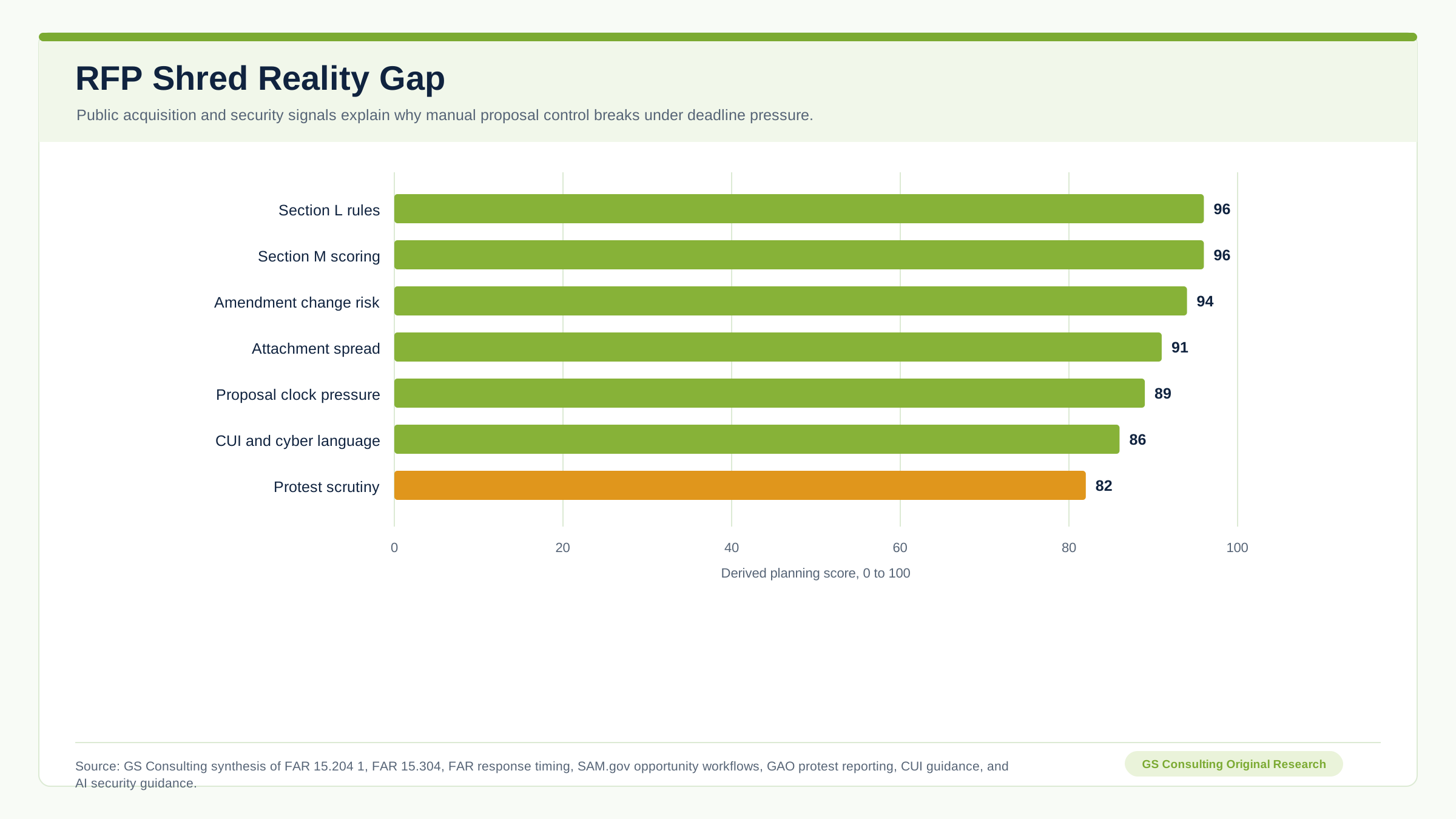
FAR 15.204 1 identifies the uniform contract format and lists Section L as instructions, conditions, and notices to offerors or respondents, and Section M as evaluation factors for award. FAR 15.304 states that award decisions are based on evaluation factors and significant subfactors tailored to the acquisition.
That means Section L and Section M are not background reading. Section L tells you how to submit. Section M tells you how you will be judged.
If the shred does not capture both cleanly, the proposal team is already operating with partial visibility.
The Bad Assumption: A Compliance Matrix Is Just a Spreadsheet
A compliance matrix is not a spreadsheet. A spreadsheet is only the container.
A real compliance matrix is a control system for proposal execution. It should tell the team what must be answered, where the requirement came from, which volume it belongs in, which section owns it, which writer is responsible, which reviewer must verify it, which evaluation factor it supports, which attachments are required, which due date applies, which page limit applies, which formatting rules apply, which risks need attention, which assumptions need clarification, and which amendment changed the requirement.
If the matrix is only a list of paragraph numbers, it is not enough. If the matrix cannot tell leadership what is missing, what changed, who owns it, and what risk exists, it is not operating as a management tool.
That is why AI workflow automation for GovCon capture management should focus first on structure and control. Not writing.
The Proposal Clock Is Brutal
RFP work is usually compressed. Even when the team has been tracking the opportunity for months, the final solicitation often changes details that matter. Deadlines move. Instructions change. Attachments differ from drafts. Evaluation language shifts. Small business rules appear. Cyber requirements are clarified. Pricing templates change. Amendments arrive after the team already started writing.
FAR 15.208 states that offerors are responsible for submitting proposals, revisions, and modifications so they reach the designated Government office by the time specified in the solicitation.
You do not get credit for almost understanding the RFP. You do not get credit for finding a requirement after submission. You do not get credit for a strong technical approach that violated a formatting rule.
The proposal clock rewards teams that turn solicitation language into action quickly. That is exactly where automation creates value.
What RFP Shredding Actually Includes
A proper RFP shred should extract more than requirements. It should identify the full proposal operating picture.
- Solicitation number, agency, contract vehicle, and submission deadline.
- Question deadlines, proposal volumes, page limits, format rules, file names, and submission method.
- Required attachments, forms, certifications, tabs, and volume order.
- Evaluation factors, significant subfactors, mandatory requirements, and risk language.
- Technical, management, past performance, staffing, key personnel, pricing, and small business requirements.
- Security, CUI, cyber, data rights, organizational conflict, subcontractor, and flow down language.
- Amendment changes, clarification questions, assumptions, and proposal task assignments.
This is why manual shredding is painful. The information is scattered across sections, attachments, references, and amendments. An automated proposal compliance matrix should bring those items into one controlled view.
SAM.gov Is Only the Starting Point
SAM.gov is the official public place many teams use to find federal opportunities. SAM.gov describes contract opportunities as procurement notices from federal contracting offices, including presolicitation notices, solicitation notices, award notices, and sole source notices.
That helps with discovery. It does not solve RFP analysis.
Once the opportunity package is downloaded, the work becomes internal. Your capture team still needs to parse the documents, understand the instructions, assign work, and track compliance. A good automation workflow can start with files from SAM.gov or other official portals, but the real value comes after intake.
What Secure RFP Analysis Tools Should Do
A serious secure RFP analysis workflow should not be a loose chat tool over proposal files. It should perform defined steps.
- Step 1Intake the solicitation package.
Ingest the full package from an approved source, including the main solicitation, attachments, amendments, questions and answers, pricing templates, statements of work, security attachments, technical exhibits, past performance forms, and evaluation criteria.
- Step 2Build the document inventory.
For each file, record file name, document type, version, date, source, page count, attachment number, amendment association, sensitivity level, owner, and processing status.
- Step 3Extract instructions.
Extract volume structure, page limits, font requirements, margins, submission portal, file names, required forms, Section order, oral presentation rules, question deadline, due date, resume format, and certification requirements.
- Step 4Extract evaluation factors.
Capture factor, subfactor, relative importance, pass fail items, technical approach priorities, management items, past performance criteria, price method, risk language, key personnel review, and small business review.
- Step 5Build the compliance matrix.
Tie every requirement back to the source document, source section, source page, requirement text, response volume, proposal section, owner, reviewer, status, due date, evidence needed, factor mapping, risk level, notes, and amendment impact.
- Step 6Identify risks and ambiguities.
Flag conflicting page limits, inconsistent due dates, missing attachments, unclear submission rules, repeated requirements with different wording, CUI references, flow down concerns, and pricing template mismatches.
- Step 7Track amendments.
Compare amendments against prior versions and flag new requirements, removed requirements, changed deadlines, changed attachments, changed evaluation factors, changed forms, changed pricing instructions, and changed security language.
- Step 8Create proposal tasks.
Turn approved matrix rows into tasks for proposal, capture, technical, pricing, contracts, security, past performance, recruiting, subcontract management, graphics, and review teams.
Original Research: The RFP Shred Control System
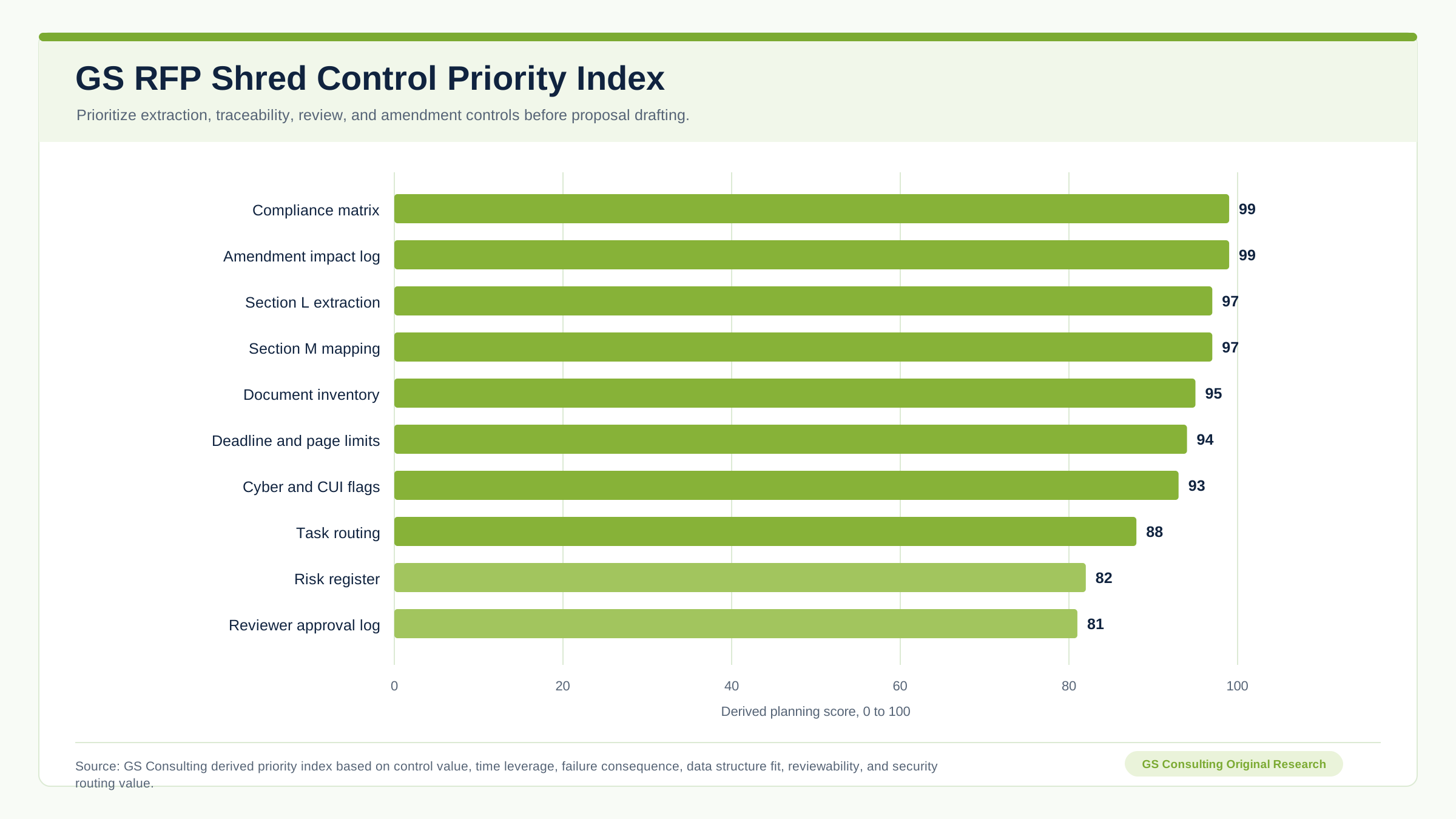
GS Consulting analyzed the RFP shred workflow as a control system, not a writing exercise. The result is the RFP Shred Control Priority Index, a planning model that ranks automation candidates by control value, time leverage, failure consequence, data structure fit, reviewability, and security routing value.
The highest scoring automation targets were not final proposal writing or autonomous bid decisions. They were the controls that make proposal execution reliable: a source referenced compliance matrix, amendment impact log, Section L instruction extraction, Section M evaluation factor mapping, document inventory, deadline and page limit tracking, and cyber and CUI routing.
That matters because a proposal team does not need more AI generated text before it understands the bid. It needs a reviewed operating picture: what must be submitted, how it will be evaluated, what changed, who owns each response, what evidence is needed, what security issues must be routed, and which matrix rows have been approved.
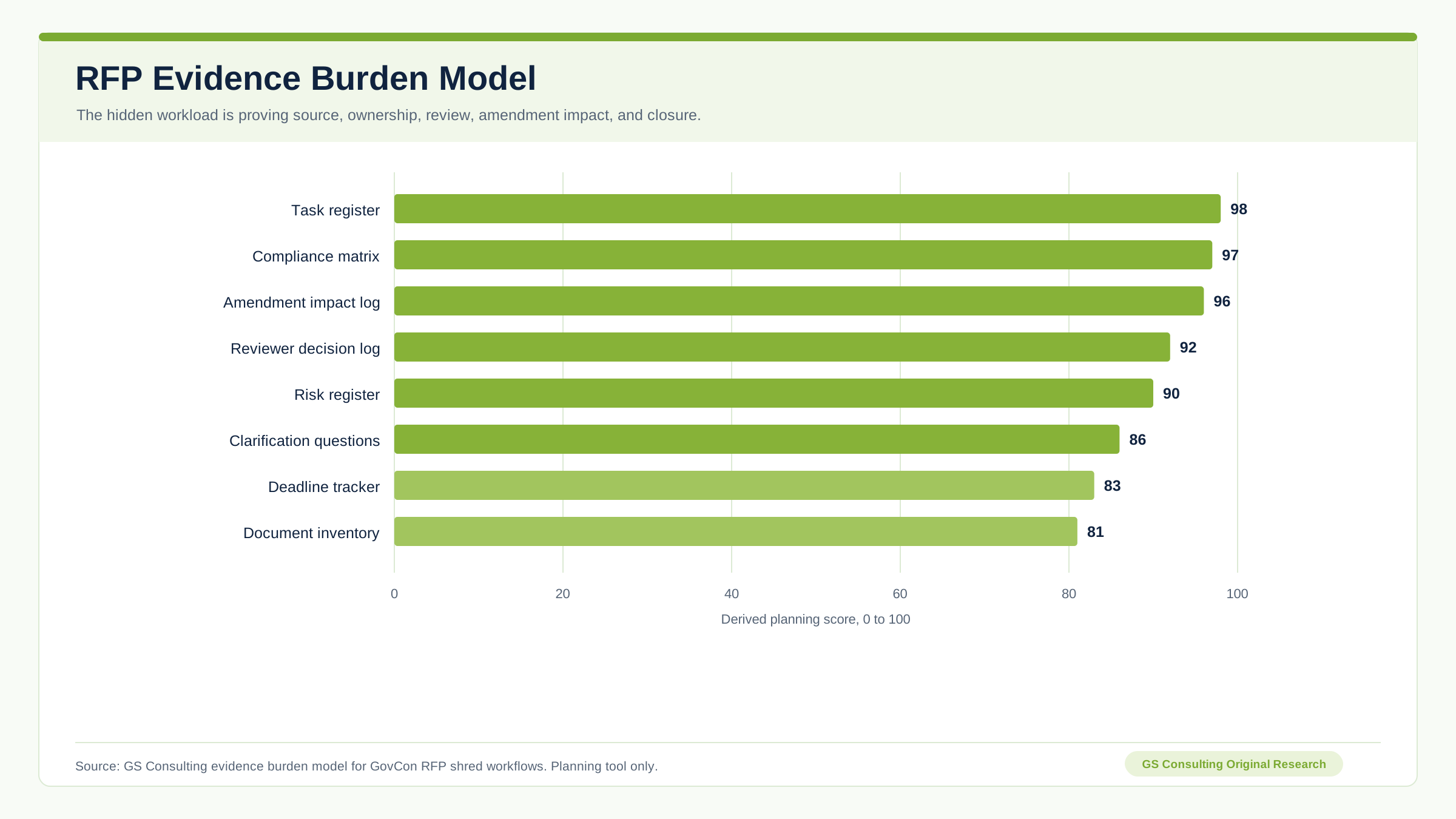
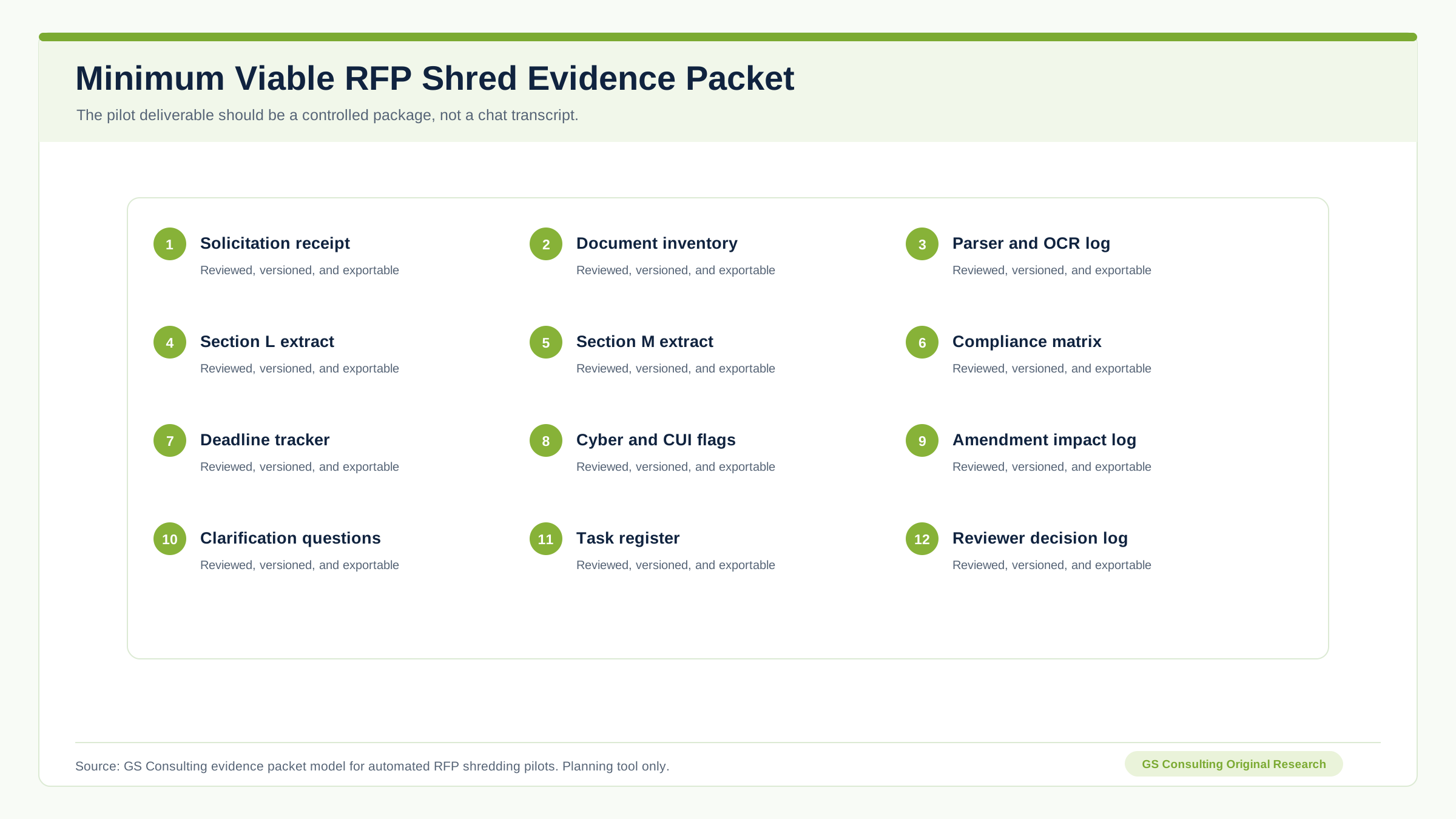
A secure RFP shred workflow should produce a minimum viable evidence packet before drafting ramps. That packet should include the solicitation receipt, document inventory, parser and OCR log, Section L extract, Section M extract, source referenced compliance matrix, deadline tracker, cyber and CUI flag log, amendment impact log, clarification question list, task assignment register, reviewer decision log, and final matrix approval snapshot.
The goal is not to replace capture judgment. The goal is to give capture, proposal, pricing, contracts, technical, and security teams the same source referenced view of the bid before the writing sprint starts.
Why AI Is a Good Fit for RFP Shredding
AI is good at pattern recognition across large text. Federal RFPs are large text with patterns: instructions, requirements, dates, clauses, evaluation factors, attachments, cross references, tables, lists, definitions, and mandatory language.
A good AI workflow can scan and structure that material faster than a human starting from a blank spreadsheet. But this is not a one prompt problem.
A serious workflow should combine OCR, document parsing, section detection, clause extraction, requirement extraction, date extraction, table extraction, source citation, rules validation, human review, task routing, version comparison, and secure storage.
The value comes from the workflow, not the model alone.
Why Security Matters in RFP Shredding
Many teams assume RFPs are public, so security is not a big issue. That assumption is dangerous.
Some solicitations are public. Some are restricted. Some attachments may contain sensitive information. Some may involve CUI. Some may be accessible only through controlled portals. Some may include technical details, facility requirements, clearance requirements, system descriptions, network information, or government furnished information.
The CUI program standardizes the way the executive branch handles unclassified information that requires safeguarding or dissemination controls. If a solicitation package includes CUI or sensitive controlled attachments, then the analysis workflow must be approved for that data.
Do not let capture teams upload restricted documents into public AI tools because the deadline is tight. Urgency is not a control.
This connects directly to secure AI document processing for CUI. The workflow needs approved storage, access control, logging, retention, model selection, and output handling before sensitive solicitation material enters the process.
DFARS and Cyber Requirements Need Special Attention
Defense RFPs often contain cybersecurity language that affects proposal strategy and contract performance.
DFARS 252.204 7012 includes safeguarding covered defense information and cyber incident reporting requirements. The clause also addresses subcontractor flow down and requires incident report information to move up the contractor chain in certain cases.
That means the RFP shred should not treat cyber clauses as legal boilerplate. Cyber requirements can affect solution architecture, CUI boundary, hosting model, staff qualifications, incident response obligations, subcontractor selection, evidence requirements, cost estimate, compliance schedule, technical risk, and win strategy.
An automated shred should flag cyber and CUI related language for the right reviewers. Capture should not discover after award that the proposal promised something operations cannot support. For adjacent contract obligation workflows, see AI for federal contract management workflows.
The Difference Between RFP Search and RFP Shredding
Search helps you find words. Shredding turns words into work.
A search tool can answer where the RFP mentions CUI, where Section L appears, where page limits are listed, or where key personnel are discussed. Useful. But shredding should produce a compliance matrix, evaluation matrix, attachment inventory, deadline list, risk register, question list, task assignments, amendment impact log, proposal outline, and reviewer checklist.
If the output does not change how the proposal team executes, it is not real shredding. It is document search with a better interface.
The Proposal Compliance Matrix Should Be Built for Review
A compliance matrix should be reviewable by humans. It should not be a mysterious AI output.
For each extracted requirement, the reviewer should see source text, source location, AI extracted requirement, suggested response location, suggested owner, suggested risk level, confidence level, reviewer decision, reviewer notes, and approved status.
This design does two things. It speeds up the work. It also protects against AI mistakes. The model may miss a requirement, split a requirement incorrectly, combine two requirements that should stay separate, misread a table, miss an amendment change, or classify an instruction as optional when it is mandatory.
That is why human review is part of the workflow. The automation creates the first draft of the matrix. The proposal team approves the matrix.
Do Not Let AI Write Before It Understands
A lot of teams want to jump straight to proposal drafting. Bad move.
Writing before shredding is how teams create polished noncompliance. The first value of AI is not generating prose. The first value is understanding the bid.
Before drafting, the workflow should answer what must be submitted, how the proposal will be evaluated, what requirements must be addressed, what risks exist, what assumptions need clarification, what deadlines matter, what changed in amendments, who owns each section, what proof is required, and what themes should align to evaluation factors.
Once that structure exists, AI can assist with outlines, draft language, review checklists, and compliance checks. But writing without a shred is a shortcut to rework.
How AI Can Support Capture Strategy
RFP shredding is not only proposal management. It also supports capture decisions.
A strong workflow can help identify incumbent signals, unusual requirements, staffing burden, certification requirements, security posture needed, past performance fit, pricing pressure, subcontractor needs, teaming gaps, questions to ask, no bid concerns, high risk obligations, and differentiation opportunities.
If the RFP heavily weights key personnel and the company lacks qualified candidates, that is not just a proposal issue. That is a capture risk. If the RFP includes CUI handling and the team lacks a compliant environment, that is not just a security issue. That is a bid strategy issue.
Automated shredding should surface those signals quickly.
What an RFP Shred Workflow Should Produce
A complete automated RFP shred should produce a package, not just a summary.
The package should include solicitation overview, document inventory, deadline calendar, question deadline list, submission instruction summary, volume structure, page limit tracker, format rules, required forms list, attachment list, compliance matrix, evaluation matrix, risk register, assumption list, clarification question list, cyber and CUI review flags, past performance requirement summary, pricing instruction summary, key personnel requirement summary, subcontractor requirement summary, amendment tracker, proposal outline, task assignment list, and reviewer checklist.
That package should be reviewed and approved before the writing process ramps. This is where operational discipline pays off.
Where Manual Shredding Usually Fails
The failure patterns are predictable.
- Requirements are extracted but not assigned. The team knows something must be answered. Nobody owns it. That requirement becomes a late scramble.
- Section L is followed but Section M is ignored. The proposal is compliant but weak. It answers instructions without aligning to evaluation factors.
- Amendments are tracked in email. Someone says an amendment was reviewed. Nobody knows exactly what changed or which proposal sections were updated.
- Attachments are treated as secondary. Important requirements often hide in security attachments, pricing templates, data item descriptions, labor details, technical exhibits, and reporting requirements.
- Page limits are handled too late. Writers draft too much, then proposal management cuts important content in the final week.
- Cyber requirements do not reach security early. Security sees the RFP after the solution is already shaped.
- Questions are not captured systematically. The team notices ambiguities but fails to capture them before the question deadline.
Secure Architecture for RFP Automation
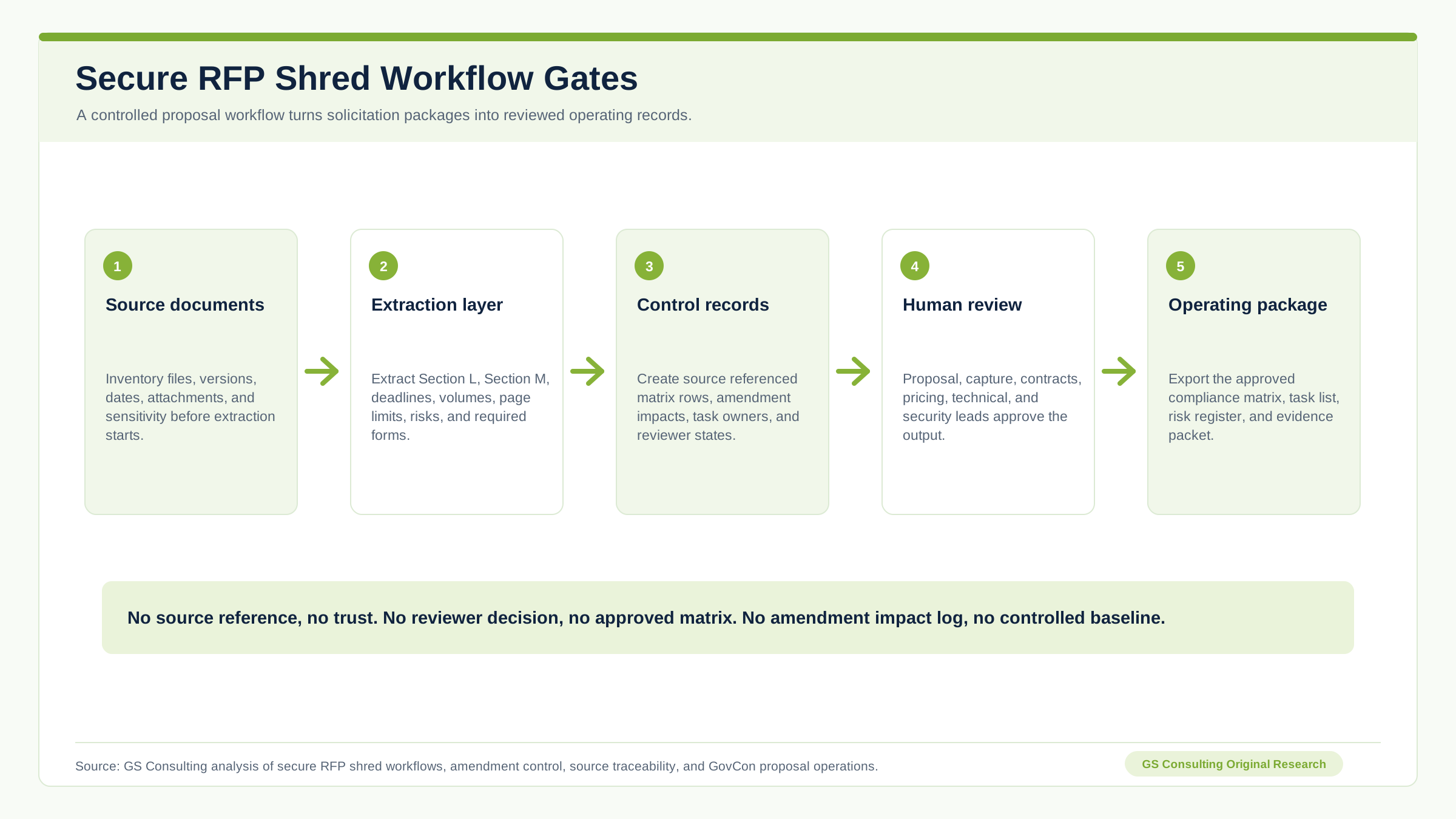
A serious RFP automation workflow should have a controlled architecture. Files enter from approved sources and are stored in a controlled repository. The system creates a file inventory and checks for missing or changed documents. Scanned documents and PDFs are converted into structured text inside the approved environment. The workflow extracts instructions, requirements, deadlines, evaluation criteria, and risks with source references. Proposal managers, capture leaders, contracts, pricing, security, and technical leads review outputs tied to their roles. Approved requirements become tasks, matrix rows, review items, and deadlines. New amendments trigger comparison, change detection, and owner notification. The workflow logs document versions, extracted requirements, reviewer decisions, changes, and approvals.
This architecture is not overkill. It is what allows speed without losing control.
Access Control Is Still Required
Even if an RFP is public, the proposal response is not.
The workflow may contain win strategy, pricing assumptions, technical approach, partner details, bid decision notes, staffing strategy, past performance selection, executive reviews, risk decisions, customer analysis, security architecture, and proprietary solution details.
That information needs access control. Do not focus only on protecting the solicitation. Protect the analysis and response work too. A proposal workspace can contain some of the most sensitive business information a company has.
The AI Output Should Be Treated as Work Product
AI outputs are not casual notes. They can become proposal work product: compliance matrix rows, risk summaries, clarification questions, task assignments, draft outlines, evaluation factor summaries, cyber requirement flags, and amendment impact reports.
Those outputs should be stored, versioned, reviewed, and controlled. If the team cannot tell which AI output was approved and which was just a draft, confusion follows.
The workflow needs status labels: draft, needs review, approved, rejected, superseded, changed by amendment, and closed. Simple labels prevent chaos.
How to Handle Amendments
Amendment processing should be a dedicated workflow.
When a new amendment arrives, the system should add it to the document inventory, identify changed sections, identify changed attachments, compare deadlines, compare page limits, compare evaluation factors, compare submission instructions, flag deleted requirements, flag new requirements, update affected matrix rows, notify owners, create reviewer tasks, and record approval.
This is one of the strongest use cases for AI in proposal operations. Manual amendment review is error prone because changes can be small and scattered. Automation can help catch them. Humans should still approve the impact.
How to Build the Clarification Question List
Good proposal teams ask good questions. But many teams manage the question list informally. That creates risk.
A secure AI workflow can suggest clarification questions when it detects conflicting instructions, undefined terms, missing attachments, unclear page limits, inconsistent dates, ambiguous evaluation language, security requirements without enough detail, pricing template mismatch, conflicting labor category descriptions, unclear deliverable ownership, and unclear subcontractor requirements.
The capture team should review, edit, and approve the final questions. The workflow should track question source, affected section, risk if unanswered, proposed wording, owner, submission status, government response, and impact on proposal.
How to Support Color Team Reviews
A good RFP shred should improve color team reviews. Reviewers should not waste time asking whether the proposal responded to the requirement.
The workflow should provide requirement traceability, evaluation factor mapping, compliance status, open gaps, owner notes, review checklist, amendment impact, risk items, unanswered questions, and section status. This lets reviewers focus on quality, persuasiveness, and scoring, not basic compliance detective work.
What to Automate First
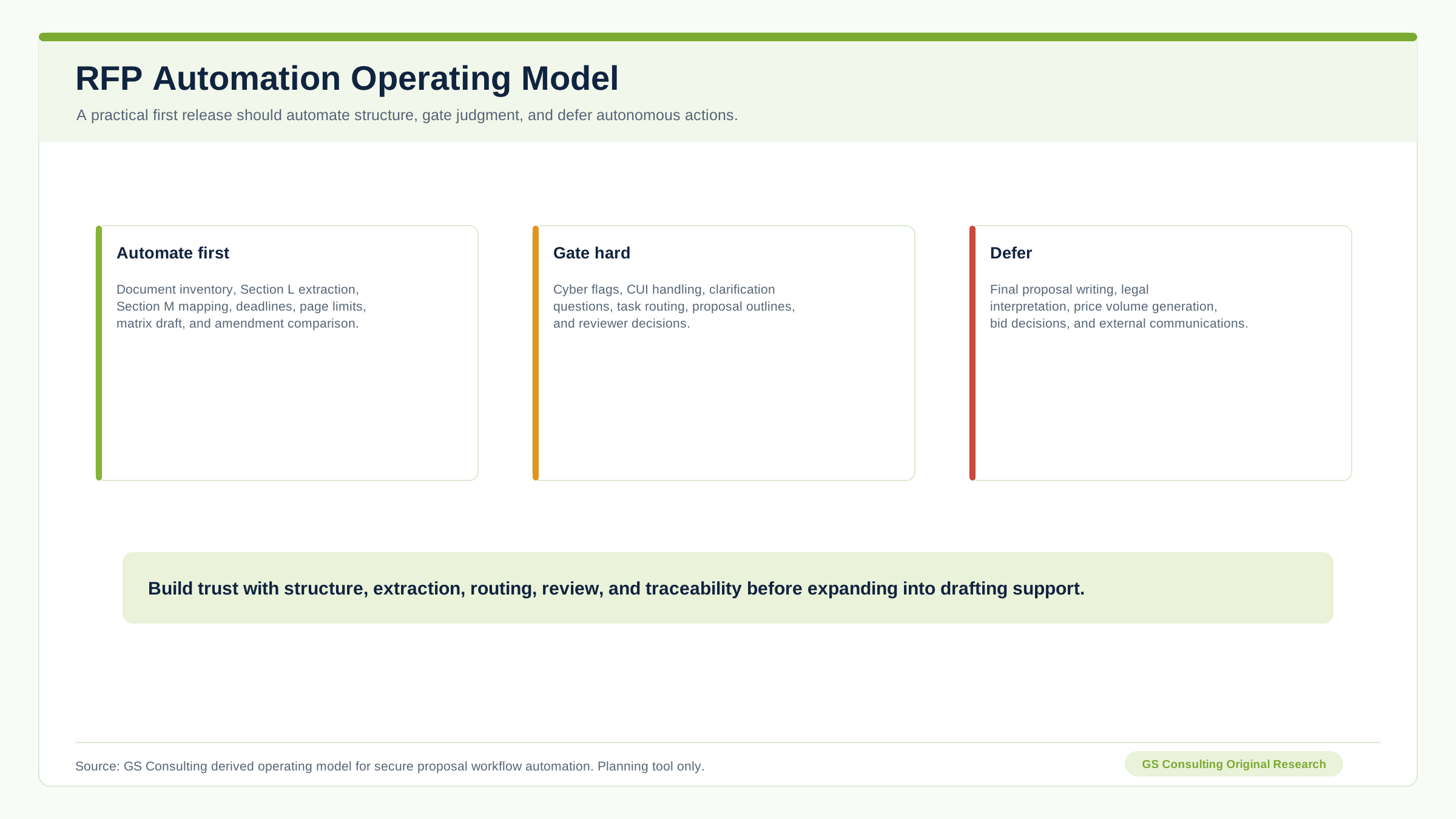
Do not try to automate the entire proposal operation in one release. Start with the highest pain step.
Good first targets include document inventory, Section L extraction, Section M extraction, deadline extraction, volume and page limit extraction, compliance matrix draft, evaluation factor matrix draft, amendment comparison, clarification question draft, cyber and CUI flagging, and task list generation.
The fastest win is usually a first draft compliance matrix with source references. That saves hours immediately and gives the team a strong review artifact.
What Not to Automate First
Do not start with final proposal writing, price volume generation, legal interpretation, autonomous bid decisions, automatic customer question submission, or external communications.
Those steps carry too much risk for a first automation. Build trust with document structure, extraction, routing, and review. Then expand into drafting support and review support.
A Practical First Ninety Days
A focused first phase is enough to prove whether the workflow can save time and improve quality.
- Days 1 to 30Map the current shred process.
Identify how RFPs are downloaded, where files are stored, who creates the matrix, how past matrices were built, where errors appear, how amendments are handled, what security and CUI concerns exist, which fields are required, and which contract type or business unit should go first.
- Days 31 to 60Build the shred workflow.
Create secure intake, build document inventory, add OCR and parsing, extract Section L instructions, extract Section M factors, draft compliance matrix rows, add source references, add human review fields, create basic task assignments, and store outputs in the proposal workspace.
- Days 61 to 90Test with real solicitations.
Run the workflow against prior RFPs, compare AI output to human matrices, measure missed requirements and false positives, review amendment handling, tune extraction prompts and rules, validate access controls, train proposal staff, and prepare production rollout.
Metrics That Matter
Do not measure how many pages AI processed. That is a vanity metric.
Measure time to first compliance matrix, missed requirements, false requirement rows, time to identify evaluation factors, time to identify page limits, time to process amendments, amendment impacts caught, time to create proposal task list, open compliance gaps at red team, late discovered requirements, reviewer confidence in matrix accuracy, proposal manager hours saved, clarification questions generated, and security requirements routed early.
These metrics show whether the workflow improves proposal execution. Processing volume does not matter if the output is wrong.
What Leadership Should Demand
Before relying on automated RFP shredding, leadership should ask direct questions.
- Does every extracted item have a source reference?
- Can humans approve or reject matrix rows?
- Can the workflow handle amendments and attachments?
- Can it flag conflicts and protect restricted or sensitive solicitation files?
- Can it prevent proposal work product from leaking?
- Can it route cyber requirements to security?
- Can it show what changed after an amendment?
- Can it export to the team's existing proposal tools?
- Can it preserve an audit trail of review decisions?
If the answer is no, the workflow may still be useful as a pilot. But it is not ready to become the proposal team's control system.
What GS Consulting Builds
GS Consulting helps GovCon firms turn federal solicitation packages into secure, structured proposal workflows.
That means RFP shred process mapping, secure solicitation intake, document inventory workflows, OCR and parsing design, AI requirement extraction, automated proposal compliance matrix design, evaluation factor mapping, amendment comparison workflows, clarification question generation, cyber and CUI requirement flagging, proposal task routing, human review design, audit trail design, integration with proposal tools, secure AI architecture, and production support planning.
This is not a generic AI writing tool. It is capture operations engineering. The goal is to help proposal teams find requirements faster, assign work sooner, catch risks earlier, and spend more time on win strategy.
This page is part of our Enterprise AI Process Transformation cluster and supports our main AI workflow automation service. It connects directly to secure AI document processing for CUI, legacy database extraction AI, AI federal contract management workflows, business process mapping for GovCon, workflow automation security risk assessment, automating NIST 800 171 evidence, and AI audit trails and activity logging.
The Bottom Line
Automating federal RFP shredding is one of the clearest high value AI use cases in GovCon. The work is manual. The documents are dense. The clock is tight. The risk of missing something is real. The output drives revenue.
That does not mean AI should write the proposal and call it done. It means AI should help the team understand the RFP faster and more accurately.
A secure workflow can build the document inventory, extract instructions, map evaluation factors, draft the compliance matrix, flag cyber and CUI requirements, process amendments, create task lists, and preserve source traceability. Humans still own strategy, judgment, solution design, pricing, and final proposal quality. That is the right division of labor.
Do not use AI to create more proposal noise. Use it to turn the solicitation into a clear operating plan before the team starts writing.
Stop shredding RFPs with brute force.
GS Consulting helps GovCon firms automate federal RFP shredding without turning proposal operations into a risky AI experiment.
Build a Secure RFP Shred WorkflowResearch Sources and Caveats
The original research in this article uses GS Consulting derived planning metrics based on FAR solicitation structure, evaluation factor guidance, response timing, SAM.gov opportunity workflows, bid protest signals, CUI handling guidance, DFARS cyber requirements, proposal control patterns, and AI security design guidance.
The RFP Shred Control Priority Index, RFP Evidence Burden Model, workflow gates, operating model, and evidence packet are planning tools. They are not official legal, audit, compliance, NIST, CMMC, DoD, CISA, OWASP, FAR, DFARS, contracting officer, or regulatory determinations.
- FAR 15.204 1, Uniform contract format
- FAR 15.304, Evaluation factors and significant subfactors
- FAR 15.208, Submission, modification, revision, and withdrawal of proposals
- FAR 5.203, Publicizing and response time
- SAM.gov Contract Opportunities
- GAO Bid Protest Annual Report to Congress for Fiscal Year 2025
- National Archives, Controlled Unclassified Information
- DFARS 252.204 7012, Safeguarding Covered Defense Information and Cyber Incident Reporting
- OWASP Top 10 for Large Language Model Applications
- GS Consulting analysis of RFP shred automation, proposal compliance matrices, amendment workflows, source traceability, human review design, and GovCon capture operations.
Frequently Asked Questions About Automating Federal RFP Shredding
What is automated RFP shredding?
Automated RFP shredding uses secure document processing, AI extraction, source references, review workflows, and task routing to turn a federal solicitation package into structured proposal execution data such as a compliance matrix, evaluation matrix, deadline tracker, risk register, and amendment impact log.
Should AI write the proposal before the RFP is shredded?
No. AI should first help the team understand the solicitation, extract instructions, map evaluation factors, identify risks, process amendments, and build the compliance matrix. Drafting support comes later, after the proposal team has approved the source referenced operating picture.
What should an automated proposal compliance matrix include?
A strong automated proposal compliance matrix should include requirement ID, source document, source section, source page, requirement text, response volume, proposal section, owner, reviewer, status, due date, evidence needed, evaluation factor mapping, risk level, notes, and amendment impact.
Why does security matter for RFP shred automation?
Solicitations, attachments, proposal work product, pricing assumptions, win strategy, customer analysis, cyber requirements, and CUI related material may be sensitive. RFP automation should run inside approved environments with access control, logging, review states, retention rules, and source traceability.
What is the best first RFP automation pilot?
The best first pilot is usually a first draft compliance matrix with source references, paired with Section L extraction, Section M mapping, deadline and page limit extraction, document inventory, amendment comparison, and human review fields.
Suggested Future Reading
- AI Workflow Automation
- Enterprise AI Process Transformation
- Secure AI Document Processing for CUI
- AI for Federal Contract Management Workflows
- Business Process Mapping for Government Contractors
- Workflow Automation Security Risk Assessments
- Automating NIST SP 800 171 Compliance Evidence Collection
- AI Audit Trails and Activity Logging