Cybersecurity | | 24 min read
SOC Automation Build vs Buy: Native, Commercial, Custom, or Hybrid?

Key Takeaways
The sourcing decision in three rules
Start with one workflow
Define evidence, decisions, actions, owners, and recovery before comparing products.
Model full ownership
Count license, data, engineering, operations, testing, support, change, and exit.
Choose the smallest fit
Select the least burdensome pattern that passes every required control gate.
Short answer: use native SIEM or SOAR automation for common workflows inside one primary platform, use a commercial orchestration platform when supported coordination across many tools is the main need, build custom automation only for bounded logic that creates a real operating advantage, and use a hybrid control layer when unique decisions must coexist with broad platform integration. The right choice is the least burdensome pattern that passes the workflow's data, permission, test, recovery, evidence, and support gates.
SOC automation build vs buy is often framed as a contest between product features and engineering freedom. That frame misses the decision that determines long term success: what operating burden is the organization willing and able to own? A platform can reduce coding while increasing license, data, configuration, supplier, and exit obligations. Custom code can preserve control while creating a permanent connector, test, support, and succession obligation.
This guide evaluates native, commercial, custom, and hybrid sourcing patterns. It complements the cybersecurity workflow automation use case guide, which decides what should be automated, and the private AI and SIEM integration architecture, which defines a controlled model handoff. The SOC Automation Guides hub connects the full design sequence.
Choose an automation boundary your team can operate.
GS Consulting can define one workflow, test the real stack, compare sourcing patterns, build the integration, and leave your team with the evidence and recovery path needed for production.
Explore SOC Automation ServicesBuild vs Buy Is an Operating Boundary
The buying decision does not end when a license is signed. The organization still owns workflow definition, data approval, service identities, local configuration, and test cases. It also owns exception handling, release decisions, target confirmation, evidence retention, and operating review. A vendor can provide capabilities and support, but it cannot silently inherit local accountability.
The building decision is equally broad. A useful prototype is not yet a platform. Production automation needs durable state, safe retries, idempotency, credential controls, and rate handling. It also needs version control, visible failure, human intervention, recovery, support coverage, documentation, and a release process. If the original builder remains the only reliable operating manual, the organization has not bought flexibility. It has accepted concentration risk.
Define the boundary around one workflow, not an abstract automation program. Name the trigger, accepted evidence, decisions, permitted actions, and target systems. Add the owner, exception path, recovery, and retained record. Then ask which sourcing pattern satisfies that contract with the lowest sustainable burden.
Public Guidance Makes Sourcing an Operating Decision
The joint practitioner guidance from the NSA and international partners organizes SIEM and SOAR work into procurement, establishment, and maintenance. Its eleven principles cover scope, architecture, cost, training, testing, support, governance, and upkeep. The same guidance warns that product license is only part of the investment and that integration and switching choices can create lasting cost.
NIST incident response guidance connects preparation and response across all six Cybersecurity Framework functions, rather than treating automation as a stand alone tool. CISA playbooks make roles, handoffs, procedures, and evidence visible. NIST supply chain guidance adds due diligence for the products and services that enter the control path. OASIS CACAO defines structured playbook objects and lifecycle concepts. Together, these sources support a full lifecycle comparison.
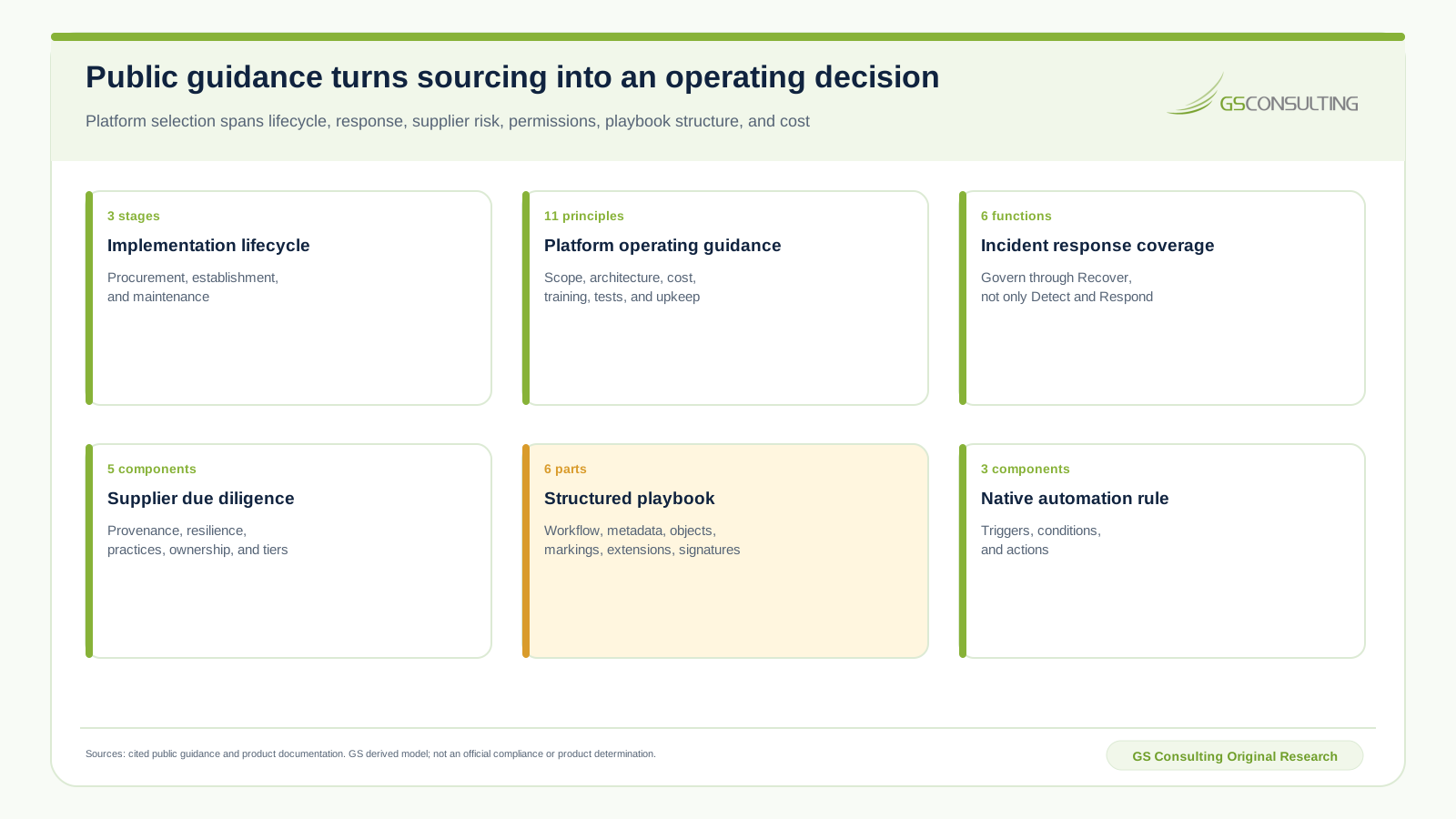
Official product documentation confirms the practical surfaces. Microsoft Sentinel automation rules use triggers, conditions, and actions and can invoke playbooks under defined permissions. Splunk SOAR apps and assets connect actions to credentials and products, with administrative controls and explicit warnings about app access. Google Security Operations documents cases, alerts, playbooks, integrations, APIs, software development kits, and release changes. These are capability examples, not independent measures of product quality.
Original GS Research: The SOC Automation Sourcing Utility Index
GS Consulting built the SOC Automation Sourcing Utility Index to compare four patterns across four representative workflow scenarios. The model does not rank vendors. It tests whether a sourcing pattern's capability fit is worth the ownership burden under explicit assumptions.
The capability model rates nine factors from one through five:
- Workflow specificity, connector coverage, and data control.
- Permission control, testability, and recovery visibility.
- Maintainability, evidence visibility, and delivery speed.
Each scenario supplies weights totaling 100. Scenario fit is the weighted rating divided by five, producing a zero through 100 score.
The burden model rates seven factors:
- License and data cost plus integration engineering.
- Platform operations, connector upkeep, and change testing.
- Vendor governance and scarce skills exposure.
Those weights also total 100. Utility combines scenario fit with the inverse of ownership burden. Fit receives 70 percent weight for the common scenarios, 85 percent for a proprietary high consequence workflow, and 80 percent for a mixed stack with custom logic.
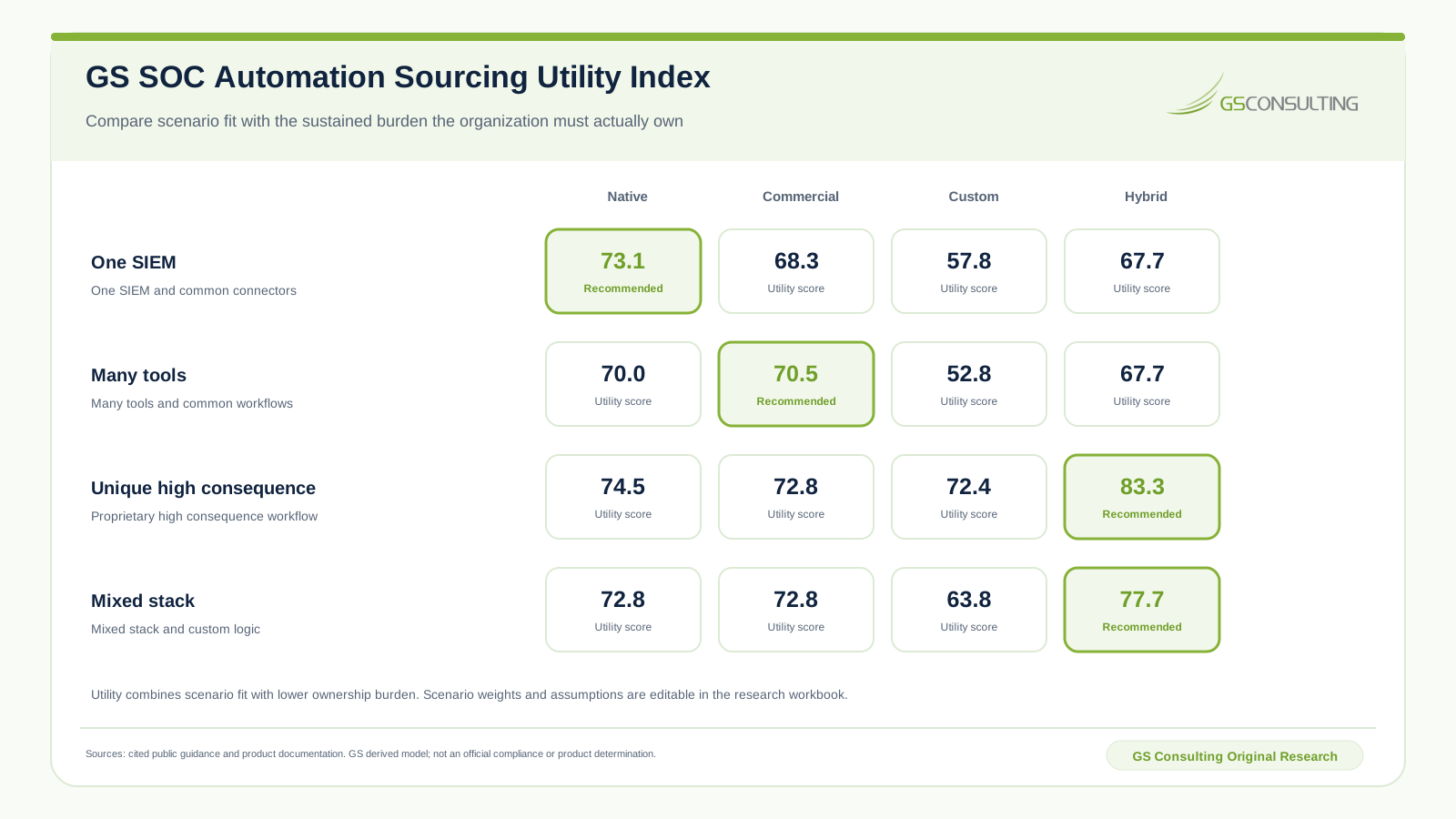
For one SIEM and common connectors, native SIEM or SOAR capability leads with 73.1 utility points. For many tools and common workflows, the commercial platform leads with 70.5. For a proprietary high consequence workflow, the hybrid control layer leads with 83.3. For a mixed stack and custom logic, hybrid leads with 77.7.
Custom orchestration does not lead a scenario. Its flexibility is real, but the assumed engineering, platform operation, connector, testing, and scarce skill burden outweighs that flexibility. This is a planning result, not a universal rule. An organization with a mature internal platform, unusual constraints, or strong reusable components may enter different ratings and reach a different answer.
The alternate case increases fit share by five percentage points. No scenario changes its recommended pattern and the largest utility movement is 4.3 points. This limited sensitivity check tests recommendation stability only. It is not market validation. Every rating, weight, fit share, scenario, decision path, failure mode, and evidence record is an explicit GS assumption available in the research workbook.
Understand the Four Sourcing Patterns
Native SIEM or SOAR Capability
Native capability keeps cases, data, rules, playbooks, permissions, and operations close to the primary security platform. It can be the smallest useful pattern when the workflow uses supported products and common actions. Delivery can be faster because the team avoids another control plane.
The tradeoff is reach. A native workflow may become awkward when business systems, several security products, custom data services, or unique approval logic sit outside the platform. Test whether the platform exposes the required version, action, credential boundary, failure state, execution order, target result, and exportable evidence. A connector label alone does not answer those questions.
Commercial Orchestration Platform
A commercial platform can provide broad integrations, a playbook environment, case coordination, permissions, operational support, and a change stream shared across customers. It is strongest when the differentiation lies in the security decisions, not in rebuilding common coordination.
The tradeoff moves into license and data drivers, product configuration, supplier dependence, connector semantics, release behavior, support, and exit. Compare actual workflows and product versions. Ask where data travels, which identities execute, how secrets are isolated, whether partial action is visible, how rollback works, and whether cases and evidence can be exported in usable form.
Custom Orchestration Layer
A custom layer can encode unique policy, preserve local data control, use precise interfaces, and avoid forcing a differentiated process into a generic playbook. It is justified when the workflow itself creates material value or when policy and architecture cannot be represented safely in available platforms.
The organization then becomes the product team. It owns service levels, connector certification, dependency updates, state, retries, and observability. Deployment, documentation, support rotation, recovery, and succession also stay inside the organization. Build the smallest layer that expresses the difference. Do not rebuild case management, scheduling, secrets, queues, or common connectors unless evidence shows that available components cannot meet the contract.
Hybrid Control Layer
A hybrid pattern buys common coordination and builds a bounded control layer for unique validation, routing, evidence, or policy. This can preserve differentiation without reproducing an entire platform. It is often the strongest fit for proprietary or mixed workflows.
Hybrid also carries the highest burden score in the model because it combines supplier and integration duties. Avoid a vague middle. Document which component owns state, identity, decision, action, and confirmation. Assign retry, evidence, change, and recovery as well. If two components can both advance the workflow without a single authoritative record, the boundary is not controlled.
Test Workflow Fit, Not Feature Volume
- Workflow specificity: can the pattern represent the real trigger, evidence, decision, approval, action, exception, and recovery without hidden manual work?
- Connector coverage: are the required products, versions, operations, limits, and failure states supported?
- Data control: can approved fields remain inside required boundaries with traceable transformation?
- Permission control: can read, write, approve, administer, rotate, pause, and recover authority be separated?
- Testability: can normal, stale, missing, malformed, conflicting, denied, duplicate, partial, and recovery cases run before release?
- Recovery visibility: can operators stop execution, find affected targets, reverse safe actions, and preserve evidence?
- Maintainability: can named owners update connectors, rules, models, and documentation without one person's memory?
- Evidence visibility: can the workflow prove its inputs, version, decision, approval, action, target result, exception, and recovery?
- Delivery speed: can the pattern enter safe operation within the required time, including tests and owner readiness?
A numeric score helps expose tradeoffs; it does not replace a gate. One unsupported critical permission or unrecoverable action can disqualify the highest total score. Record mandatory gates separately from weighted preferences.
Model the Full Ownership Burden
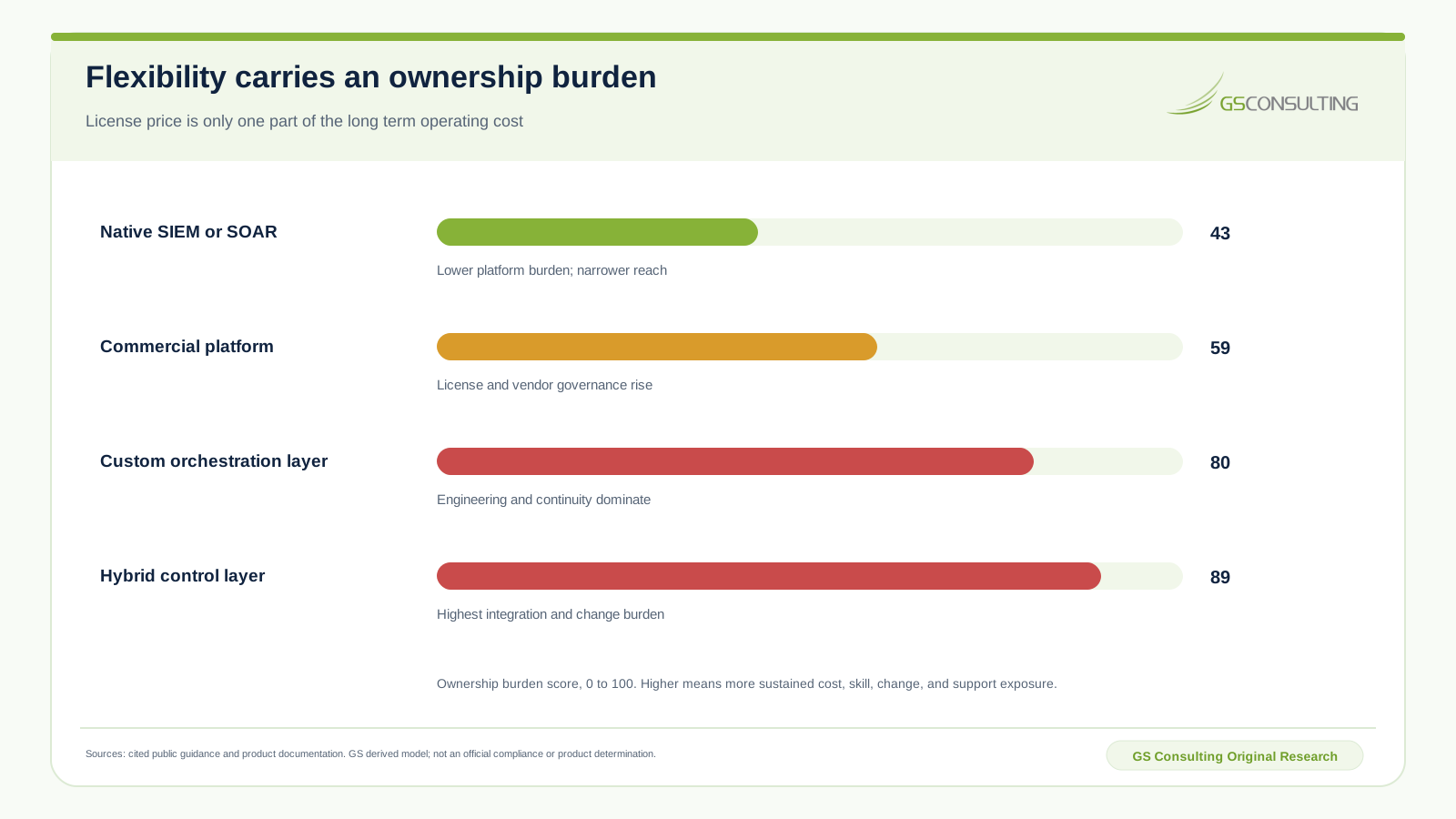
The model assigns burden scores of 43 to native capability, 59 to a commercial platform, 80 to custom orchestration, and 89 to hybrid. Higher means more sustained cost, skill, change, and support exposure under the assumptions. The scores are deliberately separate from capability fit.
Create a cost register with four sections:
- License metrics, data ingestion, retention, and infrastructure.
- Implementation, internal engineering, configuration, testing, and training.
- Support, incident response, connector change, product change, and evidence retention.
- Renewal, migration, exit, unavailability, and unsafe partial completion.
Use ranges where prices or effort are uncertain. Record the driver and evidence behind every range. Compare at the same scope and service level. A custom option that excludes support rotation cannot be compared with a platform subscription that includes support. A platform estimate that excludes internal configuration and governance is equally incomplete.
Follow a Six Stage Decision Path
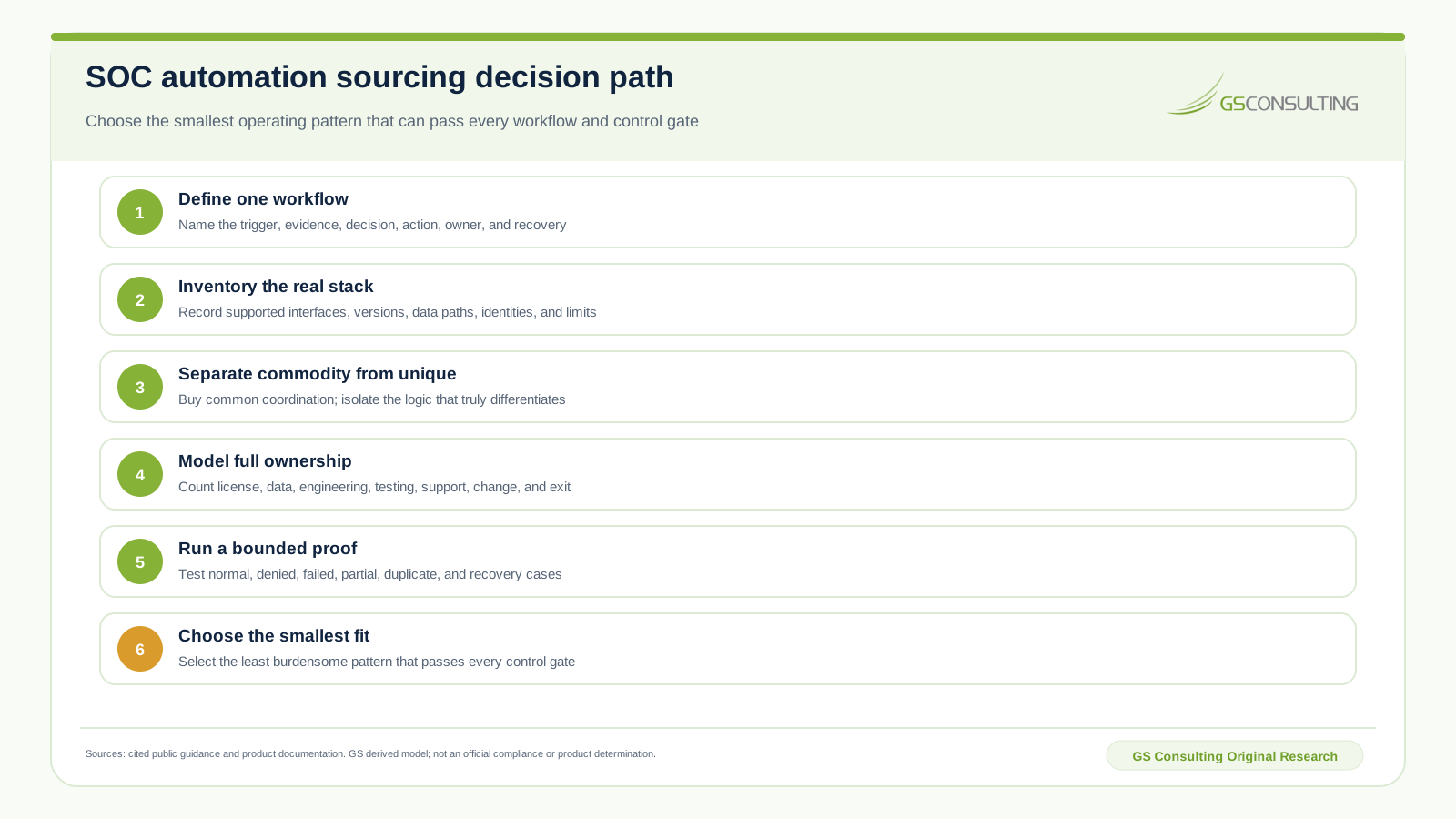
- Define one workflow. Write the trigger, evidence, decision, permitted action, owner, prohibited behavior, exception, confirmation, and recovery.
- Inventory the real stack. Record products and versions, then map interfaces, data paths, identities, limits, dependencies, and owners.
- Separate commodity from unique. Buy common scheduling, queuing, secrets, connectors, case updates, and coordination when they pass the gates. Isolate logic that reflects a material local policy, mission, data boundary, or operating advantage.
- Model full ownership. Compare license and data cost with engineering, operations, training, support, change, risk, and exit at a consistent service level.
- Run a bounded proof. Test the production shaped workflow with real interfaces and controlled data. Exercise normal and adverse cases, including partial action and recovery.
- Choose the smallest fit. Reject patterns that fail mandatory controls, then select the lowest burden option that passes.
Make the Proof a Production Rehearsal
A product demonstration proves that a prepared path can work. A sourcing proof must show how the path fails, recovers, changes, and transfers to operators. Use one bounded workflow with representative data and supported product versions. Do not start with a catalog of hypothetical use cases.
Define acceptance criteria before implementation:
- Permitted data, maximum privilege, and expected completion.
- Failure visibility, analyst correction, duplicate behavior, and partial execution.
- Target confirmation, recovery objective, and evidence completeness.
- Release effort, support ownership, and projected operating cost.
Record every deviation. Decide whether configuration, bounded custom logic, product change, or process change resolves it.
Test the exit during the proof. Export the workflow definition, cases, evidence, identities, configuration, dependencies, and versions. Identify what cannot move and what would need to be rebuilt. An exit test makes switching cost visible before the organization depends on the pattern.
Avoid Six Sourcing Failures
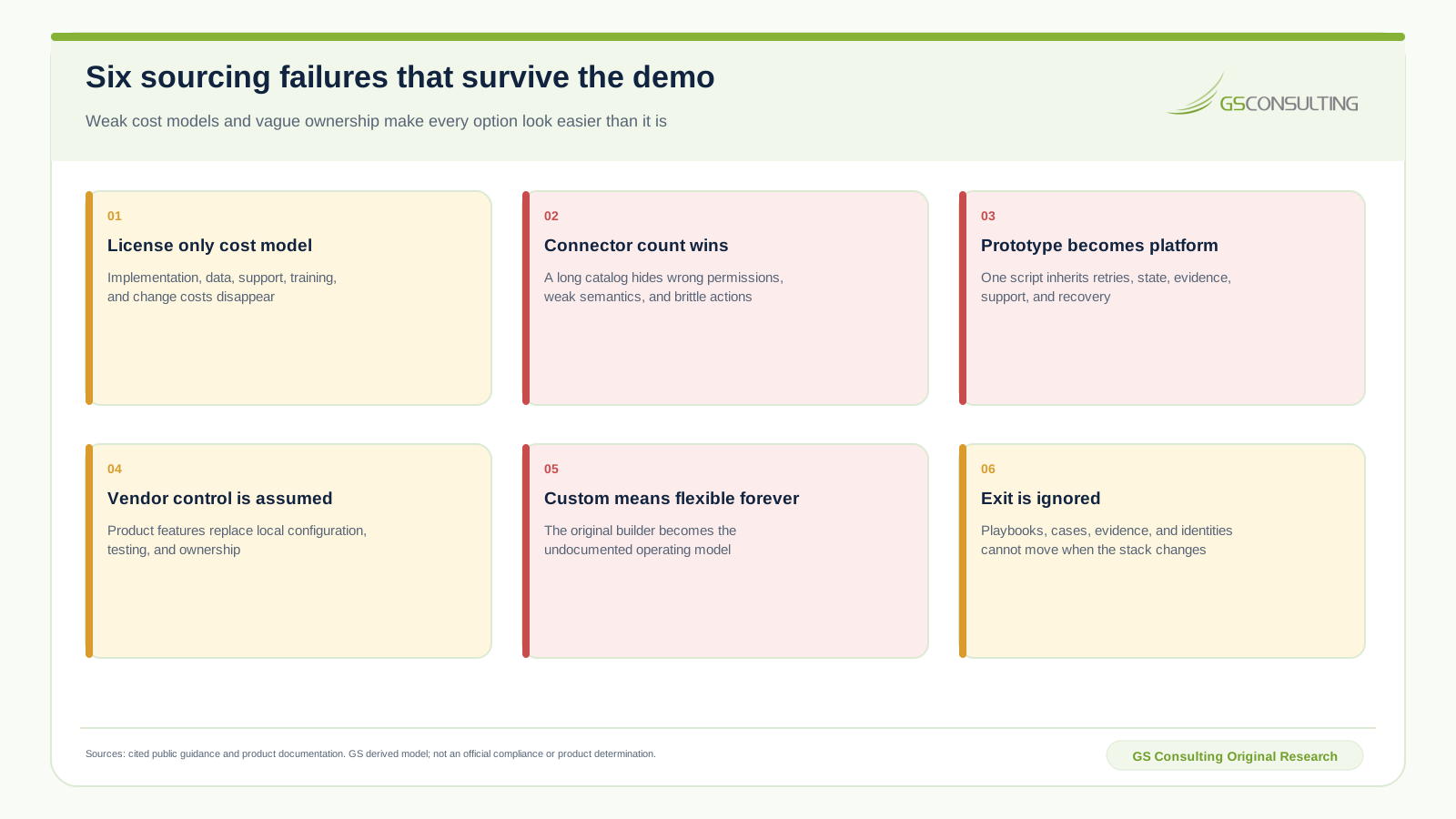
License only cost model: implementation, data, support, training, and change disappear from the comparison. Connector count wins: a long catalog hides wrong permissions, weak semantics, unsupported versions, and brittle actions. Prototype becomes platform: one script quietly inherits state, retries, evidence, recovery, and support.
Vendor control is assumed: product features replace local configuration, tests, governance, and ownership. Custom means flexible forever: the original builder becomes the undocumented operating model. Exit is ignored: playbooks, cases, identities, and evidence cannot move when architecture, cost, or product risk changes.
Assign each failure a detection signal and an owner. Track unplanned manual work, connector defects, broad credentials, configuration drift, and repeated exceptions. Review support concentration, delayed releases, unrehearsed recovery, and export gaps. A sourcing decision remains open until operating evidence supports renewal.
Retain a Minimum Sourcing Evidence Packet
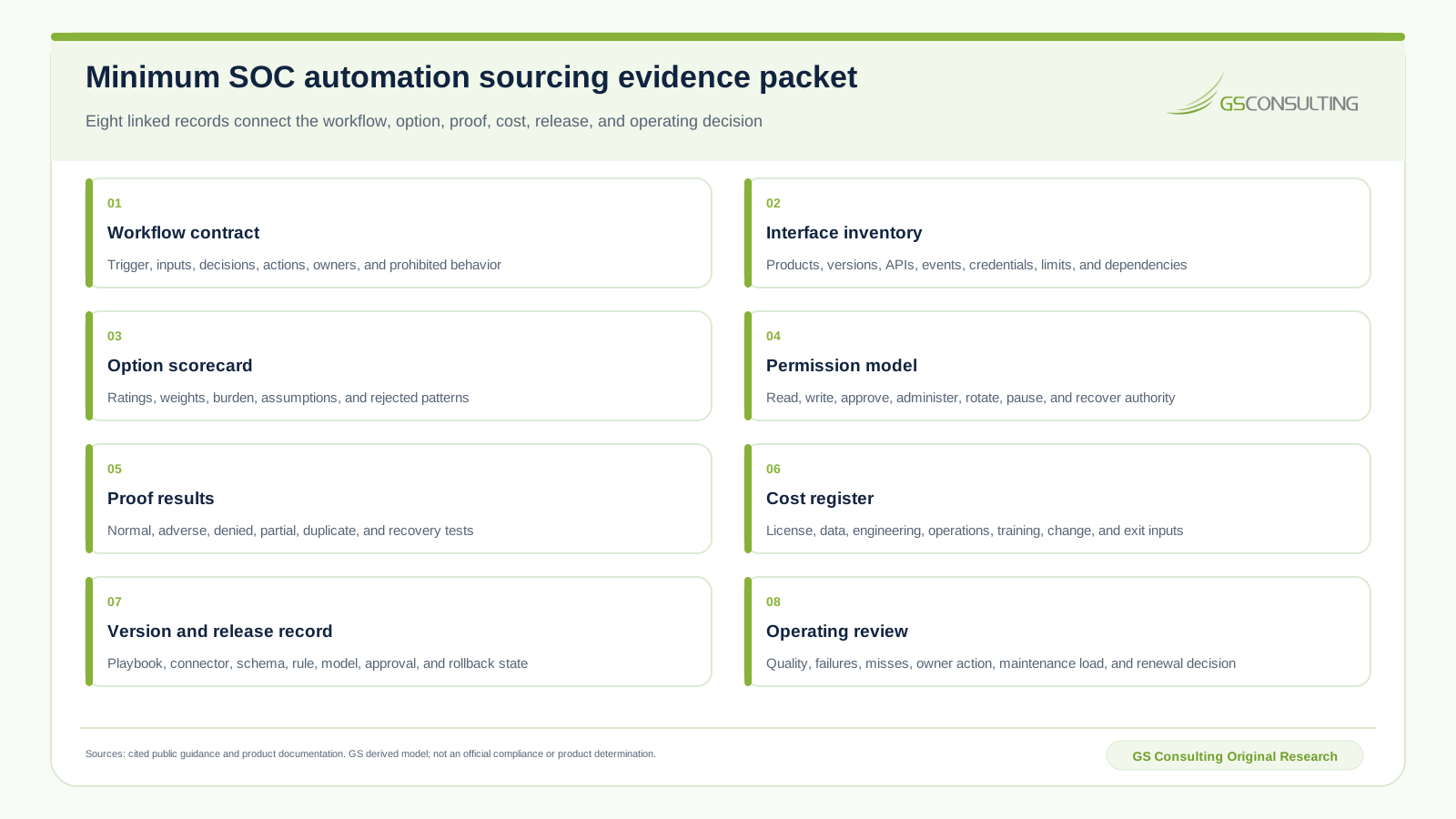
Keep eight linked records:
- The workflow contract and interface inventory.
- The option scorecard and permission model.
- The proof results and cost register.
- The version and release record plus the operating review.
Use stable identifiers to connect the chosen pattern to its workflow and exact product versions. Carry those identifiers into connector versions, credentials, tests, exceptions, approvals, and recovery records.
The option scorecard should preserve rejected patterns and assumptions, not only the winner. The cost register should show drivers and ranges. The release record should show playbook, connector, schema, rule, model, approval, and rollback state. The operating review should evaluate quality and failures, including misses found later. It should also cover owner action, maintenance load, cost change, supplier change, and renewal.
This evidence packet is an operating aid, not a universal procurement, audit, or compliance checklist. Map legal, contractual, security, privacy, records, and supply chain duties with qualified owners.
A 90 Day Implementation Plan
Days one through 15: select one workflow, name its owner, write the contract, inventory the stack, and identify mandatory gates. Days 16 through 30: collect native, commercial, custom, and hybrid evidence; score capability fit and burden; document assumptions and disqualifiers.
Days 31 through 50: implement the bounded proof with narrow identities, representative data, stable identifiers, explicit failure, target confirmation, and recovery. Days 51 through 65: run adverse tests, measure analyst work, exercise support and exit, and update the cost register.
Days 66 through 80: select the smallest passing pattern, document rejected options, resolve material exceptions, and prepare production ownership. Days 81 through 90: release within the approved boundary, review evidence daily, correct defects, exercise pause and recovery, and set the renewal review.
Use the SIEM integration and cyber analysis automation service when the core problem is a controlled data and model handoff. Use the cyber threat detection and analytics service when the work spans detection, investigation, response, and operating workflow. The private AI cyber analysis case study shows one hybrid implementation pattern with analyst judgment retained.
Primary Sources and Research Limits
- NSA and international partners, Implementing SIEM and SOAR Platforms, accessed September 8, 2026.
- NIST SP 800 61 Revision 3, accessed September 8, 2026.
- CISA, Federal Government Cybersecurity Incident and Vulnerability Response Playbooks, accessed September 8, 2026.
- NIST SP 800 161 Revision 1 Update 1, accessed September 8, 2026.
- NIST SP 1326, Cybersecurity Supply Chain Risk Management Due Diligence Assessment Quick Start Guide, accessed September 8, 2026.
- OASIS Open, CACAO Security Playbooks Version 2.0, accessed September 8, 2026.
- Microsoft, Automate Threat Response with Automation Rules, accessed September 8, 2026.
- Splunk, Add and Configure Apps and Assets to Provide Actions, accessed September 8, 2026.
- Google Cloud, Security Operations SOAR Documentation, accessed September 8, 2026.
- GS Consulting, Private AI Cyber Analysis Platform case study, accessed September 8, 2026.
The complete research package contains source provenance, public observations, a data dictionary, capability and burden inputs, scenario weights, formula outputs, sensitivity analysis, figure data, editable figures, and a workbook. The GS model is a planning tool based on cited public sources and documented assumptions. It is not an official legal, audit, compliance, NIST, CISA, NSA, supplier, product, security certification, price, or regulatory determination.
Buy commodity coordination. Build only the difference.
GS Consulting can turn one SOC workflow into a tested sourcing decision, production integration, evidence packet, and operating review without forcing your team into a platform it cannot sustain.
Plan Your SOC AutomationFrequently Asked Questions
Should a SOC build or buy automation?
Buy common coordination when supported connectors, permissions, testing, recovery, evidence, and operations meet the workflow. Build only bounded logic that expresses a material local difference. A hybrid pattern is often appropriate when a platform provides coordination and a small custom control layer owns unique decisions.
When is native SIEM or SOAR automation enough?
Native automation is often enough when one primary platform holds the case, most interfaces are supported, workflows use common patterns, permissions can be narrowed, adverse cases can be tested, and the team can prove execution and recovery without a separate control plane.
What makes custom SOC automation expensive?
Custom automation owns more than code. The team inherits connector changes, credentials, retries, state, schemas, testing, release controls, observability, evidence, support, recovery, documentation, succession, and exit. Those recurring duties can dominate the initial implementation effort.
How should commercial SOC automation platforms be compared?
Test one real workflow against required products and versions, permission depth, credential isolation, data paths, playbook semantics, failure handling, target confirmation, evidence export, change process, support, pricing drivers, and exit. Connector count and a successful demo are not sufficient evidence.
What is a hybrid SOC automation pattern?
A hybrid pattern uses native or commercial services for common coordination while a bounded custom layer handles unique policy, validation, evidence, or routing. The boundary must be explicit because hybrid designs can also accumulate the highest integration and change burden.
What should a SOC automation proof of concept measure?
Measure normal and adverse completion, analyst correction, permission use, connector failure, duplicate handling, partial execution, target confirmation, recovery, evidence completeness, change effort, support effort, and projected operating cost. The proof should also show how the organization exits or replaces the pattern.