Cybersecurity | | 25 min read
Private AI and SIEM Integration Architecture

Key Takeaways
The architecture in three decisions
Approve every source and destination
Name purpose, owner, data class, service identity, allowed fields, retention, and target before the first run.
Separate model judgment from data mechanics
Use deterministic preparation, a versioned event contract, and distinct structure and content gates.
Reconcile at the destination
A model response is not delivery. Prove receipt, indexing, duplicates, analyst review, and repair.
Short Answer
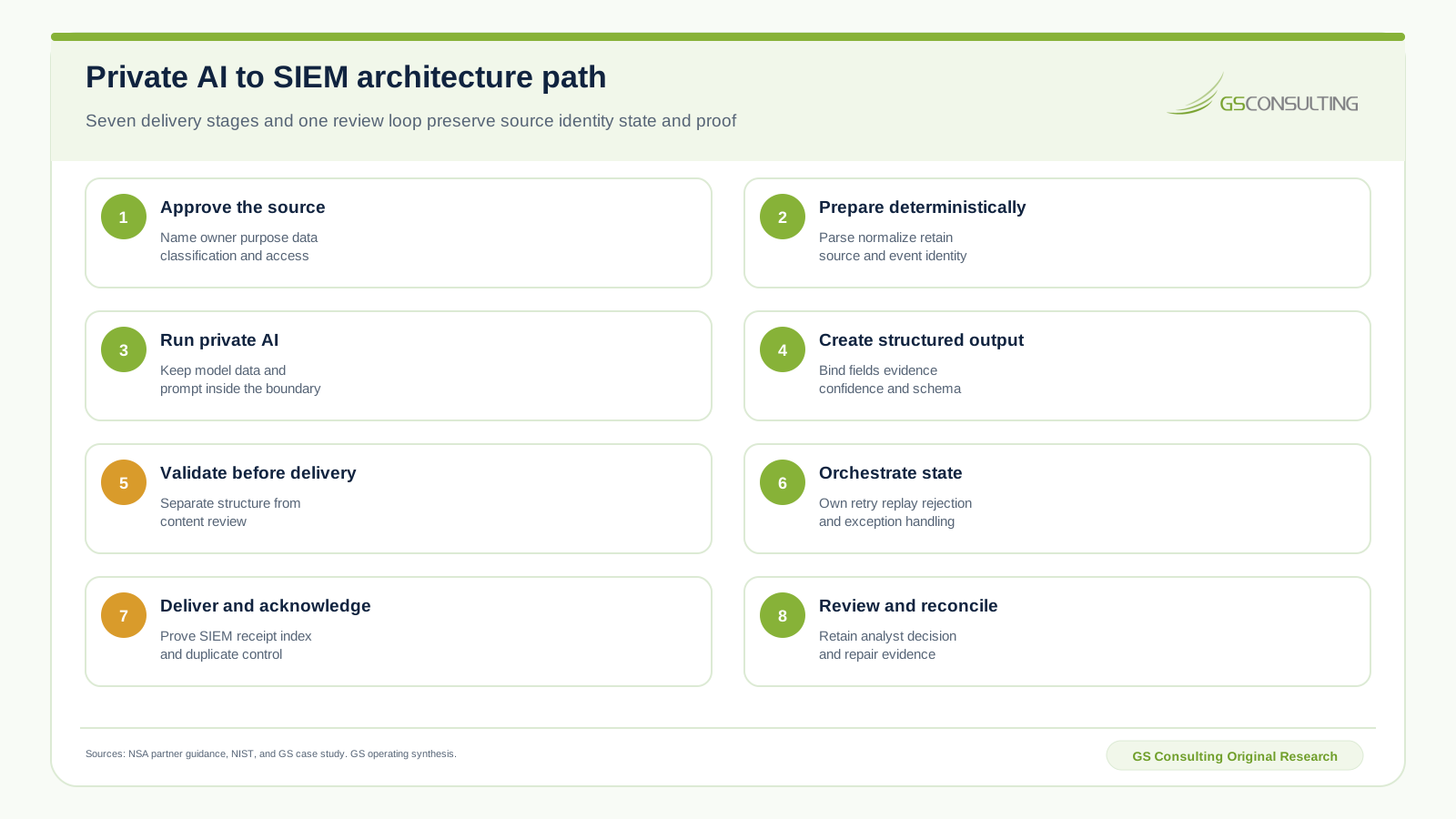
Private AI SIEM integration is not a model call with a connector attached. It is a controlled source to destination system. Approved telemetry must be prepared without losing identity, analyzed inside an accepted data boundary, converted into a strict event contract, validated for structure and content, delivered with duplicate protection, reconciled in the SIEM, and reviewed by an accountable operator.
The common weak assumption is that private hosting solves the hard part. It does not. Private hosting can improve control over where data and model processing occur. The difficult operational risk still lives in the handoffs: a missing source, a quiet field conversion, an unsupported finding, a retry that creates duplicates, a target record that never appears, or an analyst decision that stays outside the system.
The architecture should therefore make every transformation, authority decision, exception, and receipt visible. If the team cannot trace one SIEM record back to the exact source events, preparation version, model version, output schema, validation result, delivery attempt, and reviewer decision, the integration is not ready to carry trusted security findings.
When a validated finding becomes an analyst case, use the security case management integration guide to preserve case identity, mapped state, approval, destination proof, recovery, and closure across the handoff.
That traceability has a budget. The private AI integration cost and architecture guide separates data, connector, identity, evaluation, observation, exception, support, and hosting work so the estimate follows the whole operating path.
Define the Architecture Boundary Before Choosing Tools
Start with one bounded path. Name the source systems, data classes, fields, identities, processing environment, model, workflow engine, target index, analyst group, retention rules, and response authority. Do not begin with every log source and every detection use case. A broad first scope makes source quality, access, cost, and acceptance failures hard to isolate.
NIST SP 800-207 rejects implicit trust based only on network location. Apply that logic to the integration. A private network is not an authorization decision. Each user and service identity still needs an approved purpose, allowed resources, least privilege, credential protection, logging, review, and revocation path.
The destination matters as much as the model. Define which SIEM or approved database owns the delivered record, which index or table accepts it, how duplicates are identified, how the target acknowledges receipt, and how the team verifies that the record is searchable. The SIEM ingestion and normalization guide defines the upstream source, parser, schema, replay, and reconciliation controls. For more on the larger operating system around enrichment and analyst authority, use the SOC Automation Guides hub.
What Public Guidance Says About the Handoff
Joint NSA and partner guidance on SIEM and SOAR implementation describes eleven principles across procurement, establishment, and maintenance. The same guidance warns that centralizing logs does not by itself create useful analysis. Parsing, normalization, source correlation, architecture, training, detection evaluation, preprocessing, and performance testing still matter.
Companion guidance identifies endpoint, operating system, network device, and cloud sources as priority groups. NIST log management guidance frames the lifecycle through generation, transmission, storage, access, and disposal. NIST CSF 2.0 spans Govern, Identify, Protect, Detect, Respond, and Recover. Joint AI data security guidance adds supply chain risk, poisoning, drift, provenance, encryption, signatures, and trusted infrastructure.
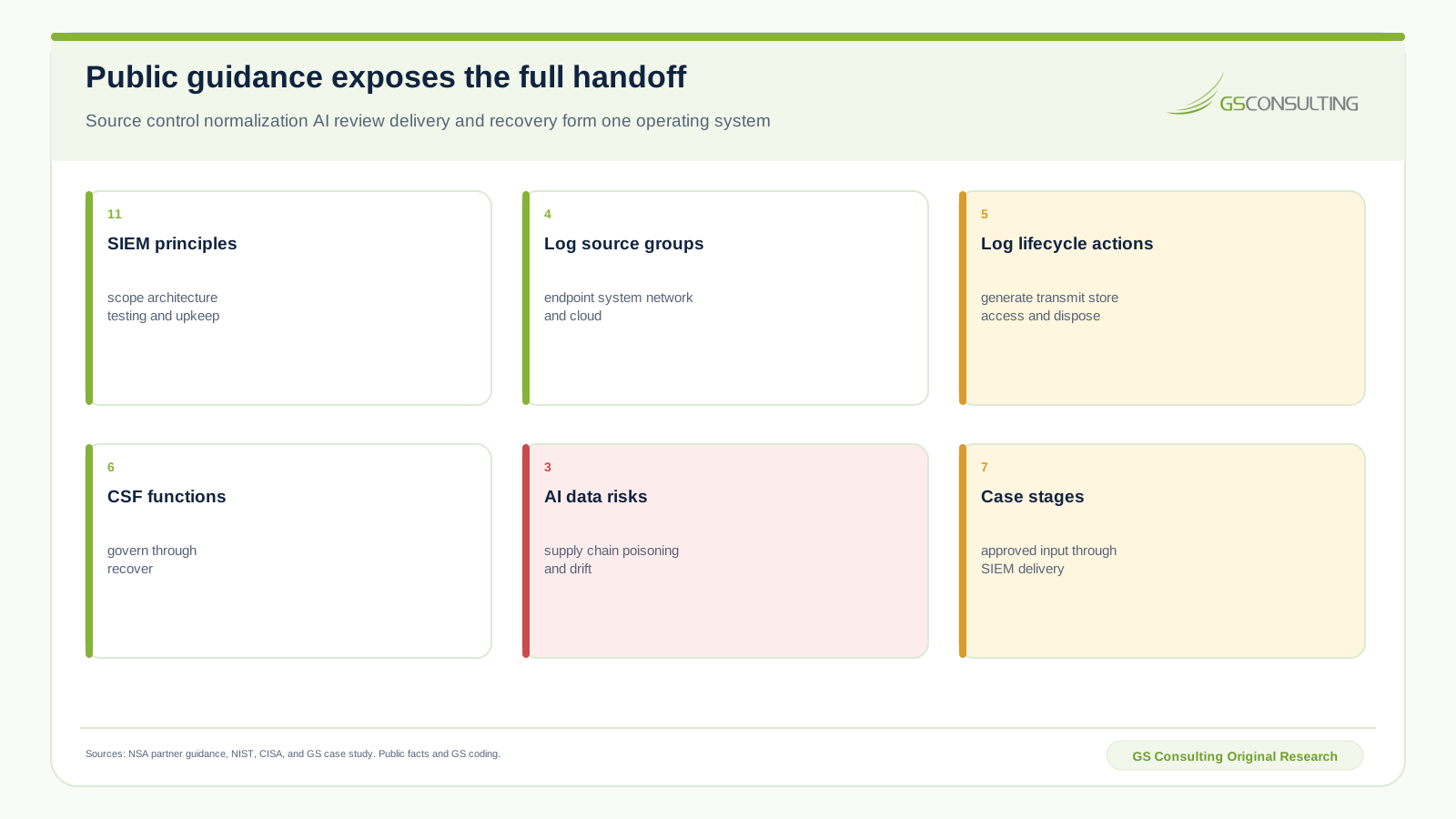
These counts describe published structures and one documented implementation path. They do not measure the success rate of private AI integrations. The architecture and control priorities below are GS Consulting planning tools built from those public signals and explicit assumptions.
Original GS Research: The Handoff Integrity Index
GS Consulting built the Private AI SIEM Handoff Integrity Index to answer one operating question: which controls need the strongest gate, test, owner, and recovery proof before private AI findings reach a SIEM?
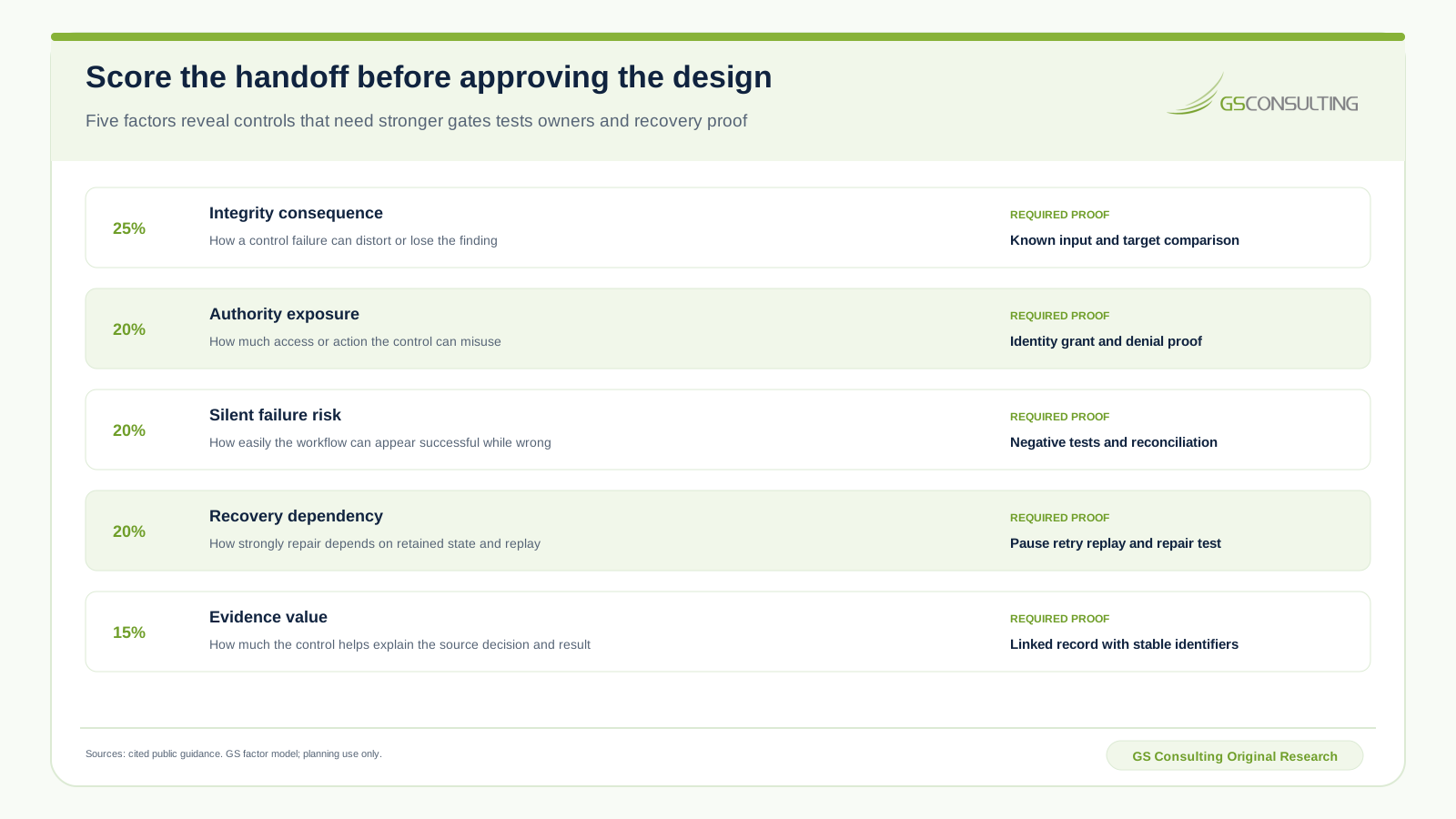
The unit is one control domain in a bounded source to SIEM workflow. Each control receives an ordinal rating from one through five on integrity consequence, authority exposure, silent failure risk, recovery dependency, and evidence value. The base weights are 25, 20, 20, 20, and 15 percent. Ratings are divided by five, multiplied by each weight, and summed to a score from zero through 100.
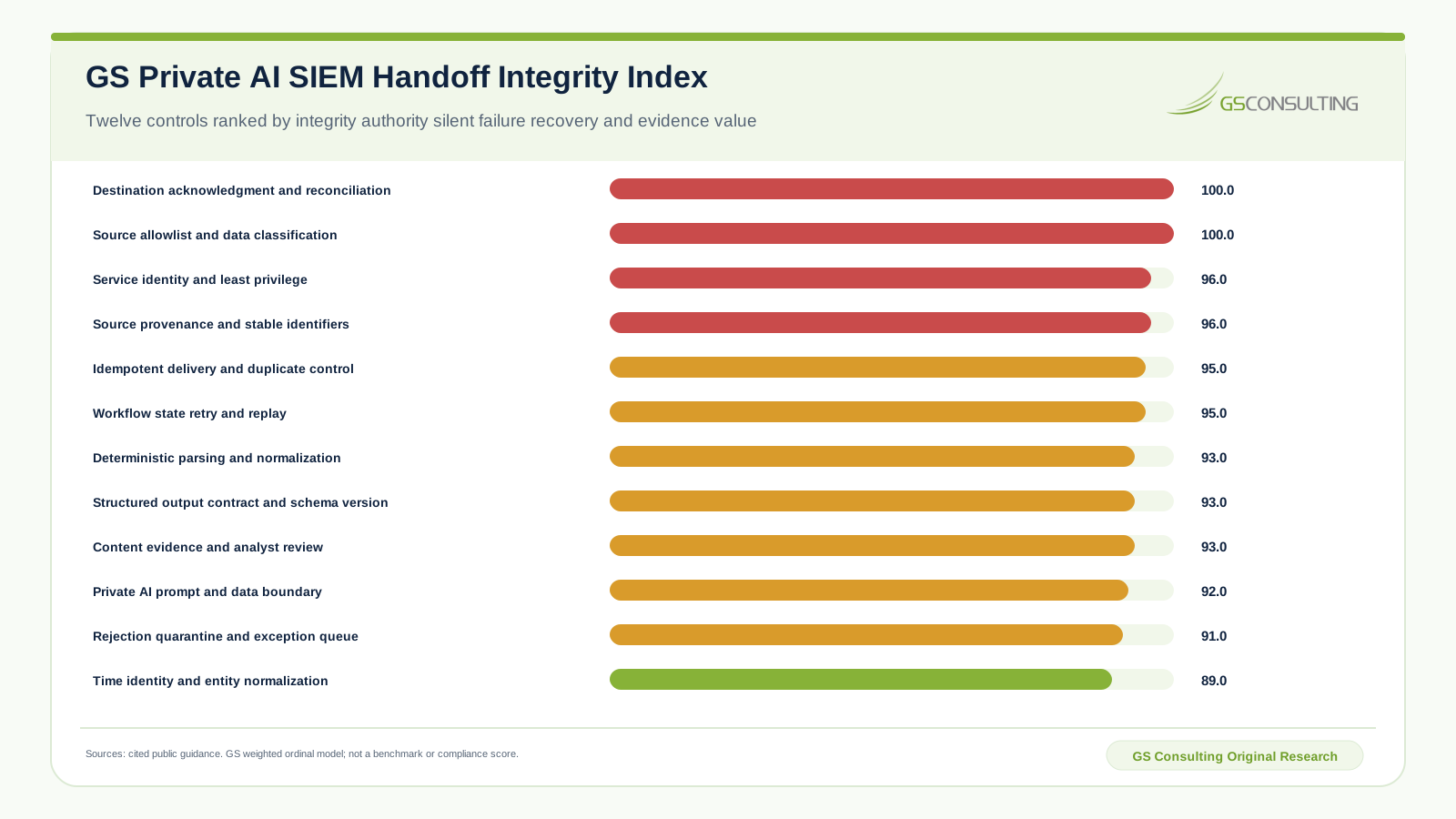
Destination acknowledgment and reconciliation and source allowlisting both score 100. Service identity and least privilege and source provenance each score 96. Idempotent delivery and workflow state control score 95. Deterministic preparation, the structured output contract, and content review each score 93. The private AI boundary scores 92, rejection handling scores 91, and time and entity normalization scores 89.
The result challenges a model centered architecture. The model boundary is important, but it is not the highest score. Approved input, target proof, identity, provenance, duplicate control, and replay can decide whether the final security record is trustworthy even when model output looks strong.
The sensitivity case moves five weight points from integrity consequence to silent failure risk. No control moves by more than one point. That is a directional stability check, not external validation. The ratings, weights, and tiers are GS assumptions. Replace them with local source quality, architecture facts, test results, incident history, target records, and approved risk criteria.
Approve Sources Before Ingestion
Create a source inventory with system owner, business purpose, data class, contract or program context, event types, collection method, service identity, retention, expected volume, time source, known loss, and destination. Record why each field is needed. More data can increase cost and exposure without improving an analyst decision.
Preserve the original event and assign stable identifiers before transformation. Keep source system, event identifier, collection time, source time, parser version, checksum where appropriate, and raw record location. That lineage makes later correction possible when a parser, clock, or mapping rule is wrong.
Protect the source boundary. Use approved secrets storage, narrow read access, transport protection, credential rotation, access review, and alerting for unexpected sources or volume. A connector that quietly starts reading a new tenant, program, host group, or repository has changed the operating boundary even when the model and code remain unchanged.
Keep Preparation Deterministic
Parsing, validation, field mapping, time conversion, entity resolution, deduplication, and schema version checks should use deterministic code when the rule can be stated. The rule can then be tested against known input and inspected when output changes.
Do not ask a model to silently repair missing fields or invent a canonical value. Preserve the original value, the mapped value, the mapping rule, and any loss or ambiguity. Reject or quarantine records that do not meet the input contract. An exception queue is better than a plausible event that cannot be traced.
Time requires its own control. Record source time, collection time, processing time, model time, delivery time, and SIEM index time where relevant. Normalize zones and formats, but keep the original. Late arrival and clock drift should be visible because sequence changes can alter an analyst conclusion.
Run Private AI Inside an Explicit Boundary
The private AI component should have a narrow task: analyze approved prepared input and produce a defined result. Record the model, runtime, prompt, retrieval sources, configuration, output limits, and version. Limit network paths, tools, data access, and storage to the accepted purpose.
Private does not mean correct. It also does not mean isolated by default. Operators still need to verify model files, dependencies, data movement, logs, caches, support access, updates, and monitoring. Joint AI data security guidance makes provenance and trusted infrastructure part of the data protection problem, not an optional appendix.
The public GS Consulting Private AI Cyber Analysis Platform case study documents a bounded pattern. Approved host and operational data is prepared, analyzed with a locally hosted model, converted to structured JSON, validated, routed through a custom integration, and delivered to an approved SIEM or database. The implementation increased analyst capacity; it did not remove human responsibility. The public case study does not disclose client data or interfaces and should not be read as a universal result.
Use a Versioned Event Contract
The model output should conform to a contract written for downstream use. Required fields commonly include a stable finding identifier, source event identifiers, analysis type, schema version, model and prompt version, generated time, evidence references, conclusion, confidence basis, uncertainty, recommended disposition, reviewer state, and destination routing data.
Keep free text bounded. A narrative can help an analyst, but machine decisions should use named fields with allowed values. If a confidence value appears, define what it measures and how it was tested. Do not let a number imply probability unless the evaluation supports that interpretation.
Version the contract independently from the model. A model update can preserve the schema but change content. A schema update can break delivery even when the model is unchanged. Both need compatibility tests, deployment records, monitoring, and a rollback or migration plan.
Separate Structure Validation From Content Validation
Schema validation asks whether the output can be processed. It checks required fields, types, lengths, allowed values, identifiers, versions, and relationships. Content validation asks whether the output is supported. It checks source evidence, factual consistency, required context, conclusion quality, uncertainty, and the need for analyst review.
A valid JSON object can still be wrong. Never use structural success as a substitute for content acceptance. Run known case tests, negative cases, malformed input, missing source, conflicting evidence, time drift, unsupported conclusions, and adversarial content. Track misses, false positives, reviewer corrections, rejection, exceptions, source coverage, and target reconciliation.
Write acceptance criteria before the pilot. Name which failures block delivery, which route to review, which can retry, and which require a pause. The AI Security Alert Triage guide provides a companion model for evidence gates, analyst review, and measuring misses after findings enter the security workflow. The cybersecurity workflow automation use cases separate automatic preparation, analyst review, and explicit human approval across fourteen bounded tasks.
Orchestrate State and Prove SIEM Delivery
The workflow engine should own states such as received, prepared, analyzed, rejected, awaiting review, approved, delivery pending, delivered, reconciled, failed, repaired, and closed. Record every transition, actor, reason, time, version, and related event. A queue depth chart is useful, but it cannot replace the state history of one finding.
Use idempotency keys so a retry cannot create a second target record. Set attempt limits, delay rules, dead letter handling, owner clocks, and replay controls. Protect payloads and credentials. When the SIEM rejects a record, preserve the exact response and route it to a named exception owner.
Delivery is complete only after the destination acknowledges the event and the workflow verifies the expected index or record. Reconcile source count, accepted count, rejected count, duplicate count, delivered count, and searchable count for the accepted window. Sample content, not only totals. A matching row count can still hide the wrong records.
Do not let enrichment authority become response authority by accident. Automatic isolation, blocking, account change, or notice requires separate approval, tests, limits, monitoring, and recovery. The broader SOC Automation guide defines which repeated preparation can move first and which consequential actions should remain under explicit human authority.
Six Integration Failures to Eliminate
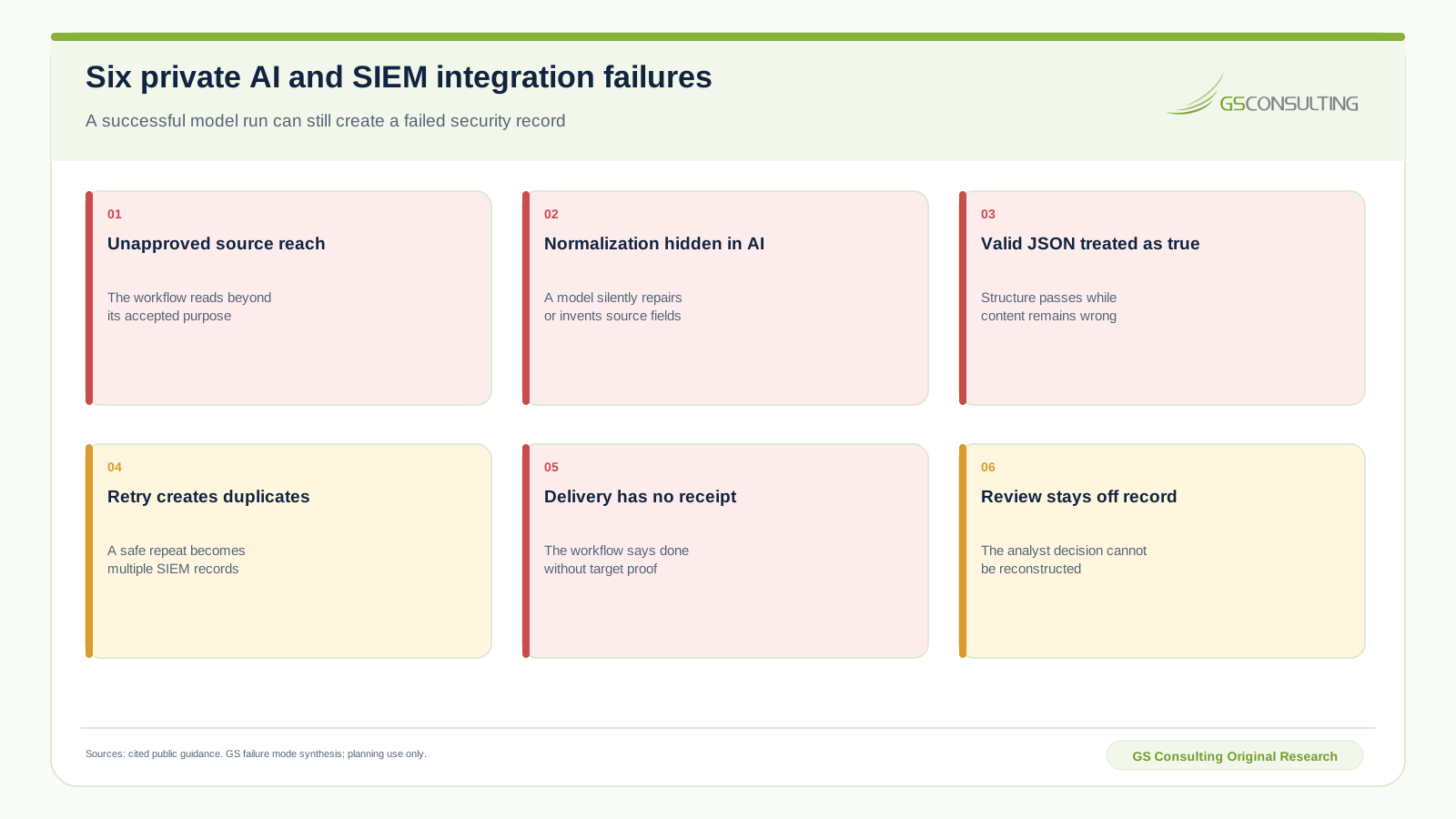
- Unapproved source reach. A connector reads data outside the accepted purpose, program, tenant, or classification.
- Normalization hidden inside AI. The model silently repairs fields, erasing the distinction between source fact and generated interpretation.
- Valid JSON treated as truth. The schema passes while the conclusion lacks source support.
- Retry creates duplicates. A temporary delivery error causes multiple SIEM records or repeated downstream action.
- Delivery has no receipt. The workflow reports success without proof that the target accepted and indexed the finding.
- Review stays off record. An analyst corrects or rejects the result in chat or email, leaving the system history incomplete.
Build the Evidence Packet With the System
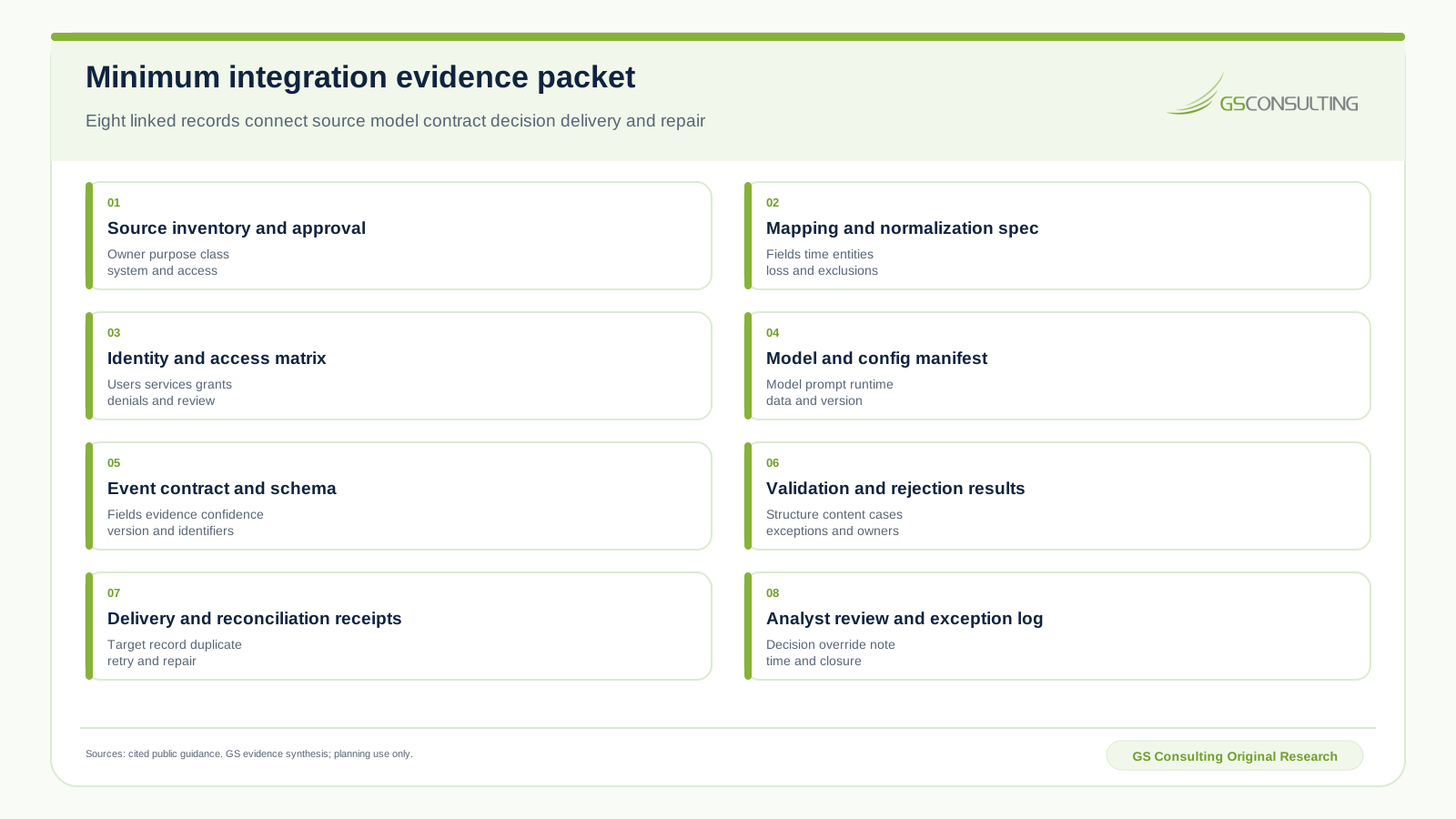
Keep eight linked records: source inventory and approval; mapping and normalization specification; identity and access matrix; model and configuration manifest; event contract and schema; validation and rejection results; delivery and reconciliation receipts; and the analyst review and exception log.
Use stable identifiers across them. The evidence should answer what entered the system, what changed, which version acted, what the output claimed, which source supported it, what validation found, who reviewed it, whether the target received it, whether a retry created another record, and how any error was repaired.
Do not build this packet by collecting screenshots before an assessment. Generate it through the workflow. A manual evidence scramble usually signals that the operating design does not retain the decisions it expects others to trust.
A Practical Implementation Plan
- Choose one path. Select one source, one analysis task, one target index, and one analyst group. Name business, data, security, platform, SIEM, and operating owners.
- Approve the boundary. Document purpose, data class, source fields, identities, retention, model environment, target, and prohibited use.
- Build deterministic preparation. Preserve raw events and stable identifiers. Test parsing, time, mapping, entity, duplicate, and loss behavior.
- Define the event contract. Version required fields, evidence, uncertainty, routing, reviewer state, and compatibility.
- Test the full path. Use known cases, bad input, missing evidence, target rejection, duplicate retry, queue failure, analyst correction, pause, replay, and reconciliation.
- Run a limited pilot. Use approved test data or a controlled production slice, real support, daily exception review, and written stop criteria.
- Prove delivery and review. Reconcile every accepted input to the target, retain analyst decisions, and repair gaps before expanding sources or authority.
SIEM Integration and Cyber Analysis Automation is the implementation path for teams that need to assess, pilot, integrate, validate, and operationalize this architecture. Review the pilot deliverables and illustrative acceptance evidence to see what validates one source to destination handoff. Secure AI Automation covers the wider data, access, approval, evidence, and operating controls around the model and workflow.
Primary Sources
- NSA and partners, Implementing SIEM and SOAR Platforms
- NSA and partners, Priority Logs for SIEM Ingestion
- NIST SP 800-92 Revision 1 initial public draft
- NIST SP 800-53 Revision 5
- NIST SP 800-207 Zero Trust Architecture
- NIST Cybersecurity Framework 2.0
- NIST AI 600-1
- NIST AI Risk Management Framework Playbook
- NSA and partners, AI Data Security
- CISA, Use Logging on Business Systems
Related Reading
- SOC Automation Guides
- AI Security Alert Triage
- SOC Automation
- Private AI Cyber Analysis Platform Case Study
- SIEM Integration and Cyber Analysis Automation
- Secure AI Automation
Frequently Asked Questions
What is private AI SIEM integration?
Private AI SIEM integration is a controlled workflow that moves approved security data through deterministic preparation, private model analysis, structured output, validation, orchestration, and delivery into an approved SIEM or database while preserving source identity, review, exceptions, and recovery evidence.
Should an AI model normalize SIEM data?
Use deterministic code for parsing, time conversion, field mapping, entity normalization, and schema enforcement when the rule can be stated. Use private AI for bounded interpretation. Hiding data repair inside a model makes source loss and invented fields harder to detect.
Does valid JSON prove that an AI finding is correct?
No. Schema validation proves that required fields and types are present. Content validation must separately test source support, allowed values, evidence links, confidence rules, and analyst review. A record can be structurally valid and factually wrong.
How should a private AI workflow deliver findings to a SIEM?
Use an explicit event contract, stable identifiers, an idempotency key, authenticated delivery, target acknowledgment, indexing verification, retry limits, duplicate control, and reconciliation. The workflow is not complete until the destination result is proved.
Does private AI remove the need for security analysts?
No. Private hosting can improve processing control, but it does not create decision authority or prove accuracy. Analysts still need to review consequential findings, handle ambiguity, investigate exceptions, approve response, and correct source or model failures.
What evidence should a private AI SIEM integration retain?
Retain source approval, mapping rules, identity and access records, model and configuration versions, the event contract, validation and rejection results, delivery receipts, duplicate and retry records, analyst decisions, exceptions, repairs, and closure evidence linked by stable identifiers.
Bottom Line
A private model can improve control over processing. It cannot make weak inputs, hidden transformations, unsupported content, lost workflow state, or unproved delivery trustworthy.
The operating standard is direct: no unapproved source, no hidden normalization, no content decision from schema alone, no retry without duplicate control, and no completed finding without target reconciliation and retained analyst evidence.
Build the path that your analysts can trust.
GS Consulting helps teams design private AI security analysis, structured event contracts, validation gates, SIEM delivery, operating evidence, and recovery.
Start the Conversation