AI Workflow Automation | | 25 min read
Legacy Data Mapping and Normalization: Build the Translation Layer

Key Takeaways
A mapping is an acceptance contract, not a spreadsheet of arrows
Identity resolution scores 100
Stable keys and entity resolution lead the acceptance priority index because every later control depends on correct identity.
Meaning can change by history
Historical field reuse and many to one code conversion both score 92 in the transformation burden model.
Totals are not enough
Acceptance needs record identity, field values, relationships, aggregates, protection metadata, and closed exceptions.
Legacy data mapping is not a field matching exercise. It is the operating contract that decides what old data means, how it changes, where exceptions go, and whether the target can be trusted.
A source column can have the right name and the wrong meaning. Two customer records can describe one organization. A zero can mean none, unknown, not collected, or system default. A status code can change meaning by year or operating unit. A clean target table can pass every schema check and still be wrong.
The answer is a versioned translation layer. It connects business definitions, source profiles, and identity rules. It also connects transformations and reference data to acceptance tests, lineage, exception ownership, protection metadata, and release evidence. Data engineering implements the rules. Business owners decide meaning. Review authorities decide the obligations within their scope.
Use this guide with the Enterprise AI Process Transformation hub, Legacy Database Extraction for AI Automation, Integration Observability and Reconciliation, and Legacy API Contract Testing for Automation. GS Consulting connects the work through AI Workflow Automation and Legacy System Integration.
Turn legacy data rules into a release decision.
GS Consulting helps teams define business meaning, build source to target specifications, test normalization, reconcile results, close exceptions, and preserve the evidence behind accepted data.
Request a Legacy Data Mapping ReviewLegacy Data Mapping: The Short Answer
Start with the business record, not the target schema. Name the source of authority, the intended target use, the owner, the material fields, the identities that connect records, and the outcomes that must never be accepted. Profile representative source data before writing rules. Documentation alone will miss reused codes, historical quirks, duplicate entities, hidden defaults, and values that violate the declared type.
Write one source to target specification that a business owner, engineer, tester, and reviewer can all read. For every material target field, record the source and business definition. Then record the condition, transformation, reference set, null behavior, and precision. Finish with the owner, exception path, approval, and mapping version. Link the executable rule to that specification instead of letting code become the only record.
Test the mapping at record and population level. Compare identity and field values first. Then compare counts, relationships, totals, classifications, and boundary cases. Keep failed records in quarantine. Route each exception to a named owner. Retest the repaired result. Release only when the accepted target can be reproduced from the source snapshot, mapping version, code version, and decision record.
Do not average away hard failures. An unknown business definition, unresolved identity collision, unreconciled consequential record, unowned exception, mapping change without a version, or source and target classification mismatch remains open until the responsible authority accepts specific evidence or a documented alternative.
Mapping Preserves Meaning. Normalization Makes Meaning Consistent.
Data mapping answers where a target value comes from and which rule creates it. Normalization makes values consistent enough for the target use. The two overlap, but they are not interchangeable. A direct copy still needs a mapping. A normalization rule can standardize text without deciding which target field owns the result.
The work has six connected concerns. Meaning defines what the field represents. Identity decides which records refer to the same thing. Transformation converts values and structures. Quality tests whether the output meets an accepted rule. Lineage shows how the output was produced. Governance decides who can approve use, change, exception, and release.
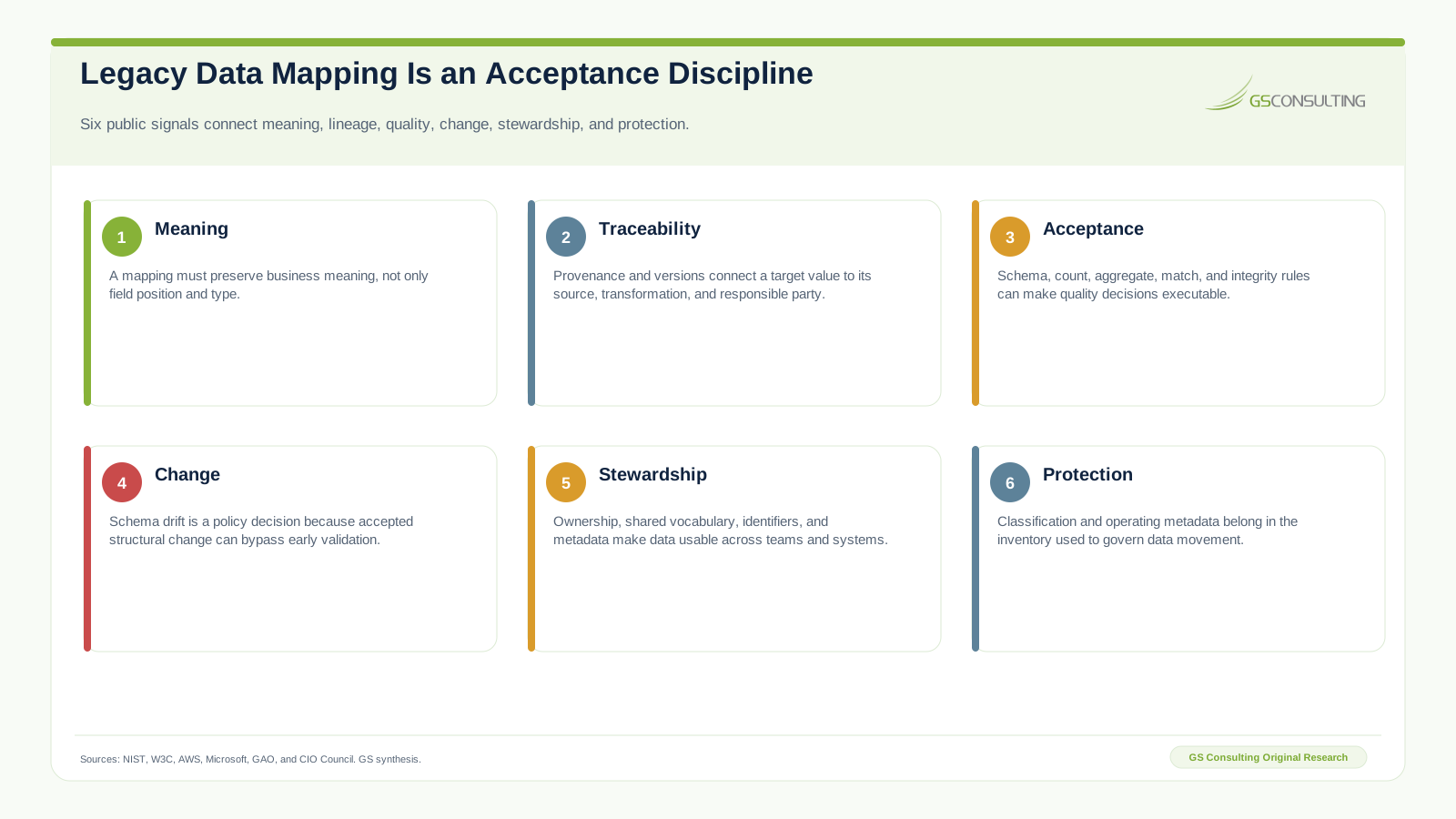
A strong mapping keeps these concerns in one reviewable system. The source profile can show that a field contains four hidden date formats. The mapping can specify the conversion. The test can reject an invalid date. The lineage record can identify the rule version. The exception register can show who corrected the failed record. The release record can show why the resulting target was accepted.
A weak mapping scatters the same truth across a workbook, ticket, code branch, chat thread, and operator memory. That fragmentation is the main reason mapping changes become hard to test and harder to defend.
What Public Standards and Guidance Support
NIST Research Data Framework Version 2.0 connects data quality, provenance, versioning, verification, validation, and interoperability. It describes data as fit for purpose when quality supports the intended use and explains how provenance and versions help a reviewer reconstruct the result. That supports a mapping process that records rules and tests instead of treating the target table as self proving.
The W3C R2RML Recommendation provides a formal way to map relational logical tables to a target vocabulary. The exact language applies to relational data and RDF, but the useful operating lesson is broader: make source selection, target meaning, and value construction explicit. The W3C PROV Ontology supports interoperable provenance through entities, activities, and agents. A target value should be connected to the source entity, transformation activity, and responsible party that produced it.
AWS Glue Data Quality guidance documents checks such as referential integrity, data set match, schema match, row count match, and aggregate match. It also supports row level results and job failure. Those capabilities show what executable acceptance can look like. The exact service is optional. The discipline is not.
AWS Glue Schema Registry guidance treats schema versions and compatibility as producer and consumer contracts. Schema compatibility is necessary but incomplete. Two fields can remain structurally compatible while their business meaning changes.
Microsoft guidance on schema drift makes the tradeoff plain. Accepting drift is a design choice, and late binding gives up early schema enforcement. Its source transformation guidance shows that schema validation can fail a mismatch while drift handling can accept changed columns. The team must decide which behavior is safe for each route.
GAO report GAO-21-152 addresses federal data governance, quality, availability, milestones, and responsibility. NIST FAIR data guidance emphasizes rich metadata, identifiers, shared vocabularies, and provenance. The Federal Zero Trust Data Security Guide calls for a data inventory that joins technical, operational, and business metadata. Together, these sources support owned definitions, controlled vocabularies, reviewable lineage, and preserved protection context.
GS Original Research: Legacy Mapping Acceptance Priority
GS Consulting built the Legacy Mapping Acceptance Priority Index to answer one practical question: which controls should a team design first when old data must become an accepted target? We scored twelve controls from one through five across semantic ambiguity, transformation complexity, integrity consequence, lineage dependence, and exception burden.
The base weights are 25 percent for semantic ambiguity, 20 percent for transformation complexity, 20 percent for integrity consequence, 20 percent for lineage dependence, and 15 percent for exception burden. Each score is the sum of a factor rating divided by five and multiplied by its weight. The alternate case moves five points from semantic ambiguity to transformation complexity.
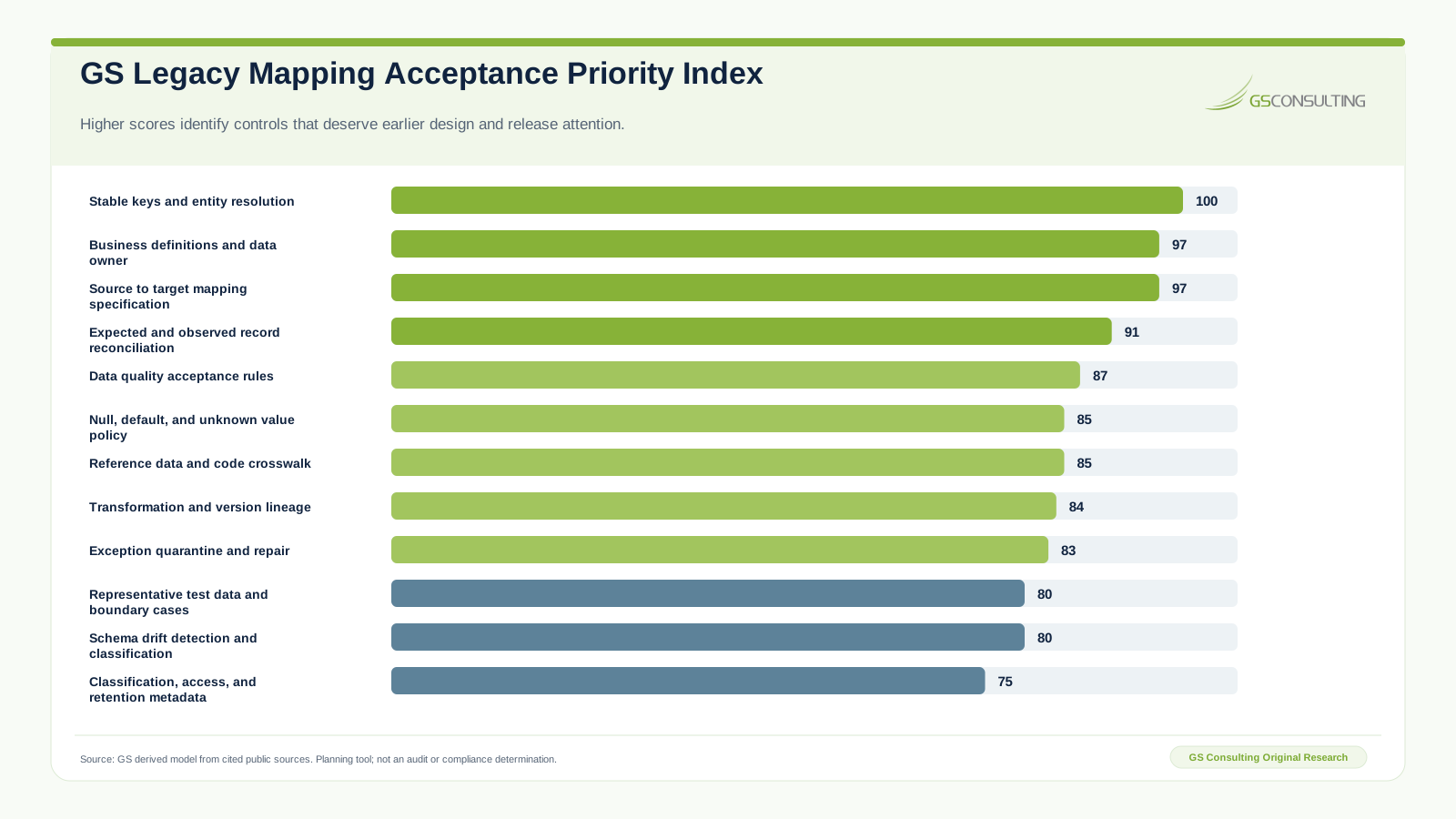
Stable keys and entity resolution score 100. That result is not glamorous, but it is decisive. A team cannot prove quality, lineage, reconciliation, or exception closure if it cannot prove which source and target records describe the same entity.
Business definitions and data ownership score 97. The source to target specification also scores 97. Expected and observed record reconciliation scores 91. These four controls form the release gate. Data quality acceptance rules score 87. Reference data crosswalks and the null policy score 85. Transformation lineage scores 84, and exception quarantine scores 83.
Representative test data and schema drift control each score 80. Classification, access, and retention metadata score 75. Lower priority does not mean optional. It means the model places those controls after the basic meaning, identity, specification, and reconciliation foundation. A known security, legal, records, contract, or privacy obligation can raise any control into a hard gate.
The alternate weighting changes only two controls, and each moves by one point. No control changes its build lane. The conclusion is stable under the tested weight change: identity, meaning, specification, and reconciliation deserve the earliest design attention.
This index is a GS Consulting derived planning tool based on cited public sources and documented analyst assumptions. It is not an official legal, security, audit, or compliance determination. It is not an official NIST, W3C, cloud provider, or regulatory determination. Replace the ratings with evidence from the actual systems, records, target use, and review authorities before using the model for release.
Transformation Burden Changes by Mapping Pattern
A rename is not the same job as entity resolution. The mapping inventory should classify transformations because the pattern predicts what evidence, review, and exception handling will be needed.
GS Consulting scored ten representative patterns across meaning ambiguity, rule complexity, identity and integrity risk, traceability burden, and exception volume. Composite keys and entity merge score 100. Historical field reuse and many to one code conversion each score 92. Free text standardization and null conversion each score 84. Unit, currency, or time conversion scores 80.
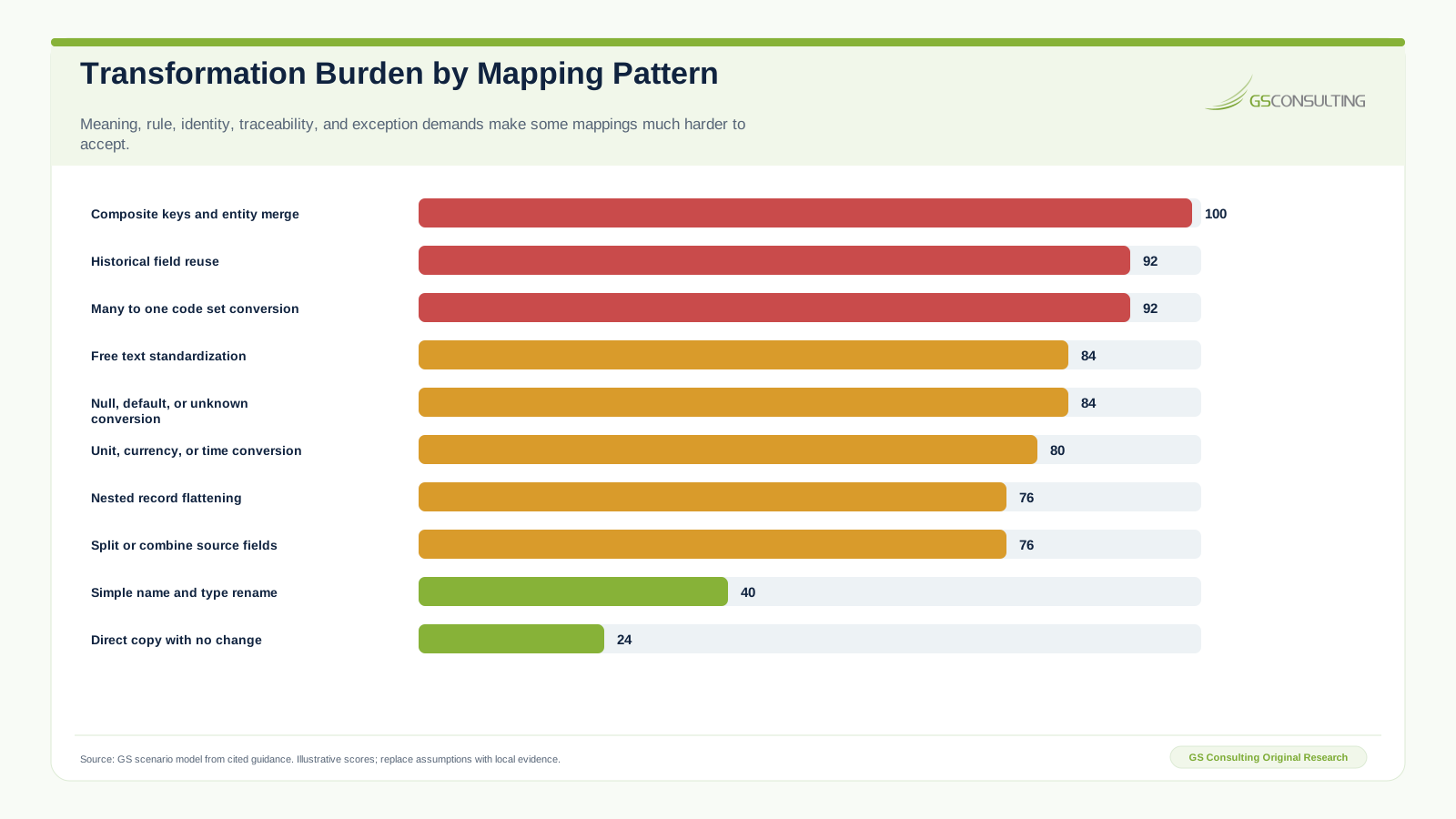
Nested record flattening and field split or combination each score 76. A simple controlled rename scores 40. A direct copy scores 24. Even direct copy needs proof of identity, completeness, classification, and transfer. The lower score only says that the transformation itself is less demanding.
Use this classification to scale review. A direct copy can use a compact specification and standard reconciliation. Entity merge needs source evidence, matching features, collision review, survivorship rules, reversible decisions, and a record of unresolved cases. A historical field needs rules by effective date, program, or source version. A code conversion needs crosswalk ownership and a policy for values with no valid target.
Write a Mapping Specification That Can Be Tested
A mapping specification should be readable without opening the transformation code. Give every mapping a stable ID, then make these decisions explicit.
- Source, target, and rule. Record the source system, table, field, or expression. Record the target entity and field. State the business definition on both sides. Classify the rule as direct copy, rename, split, combine, derive, look up, aggregate, parse, standardize, merge, exclude, or hold for review.
- Conditions. A source value can map differently by date, program, region, contract, product, or record state. Give conditions a clear priority and define the result when several rules match or none matches.
- Precision. State date interpretation, timezone, unit, currency, exchange date, scale, rounding, encoding, case, whitespace, locale, and allowed loss of detail. If a rule reduces precision, the owner should accept that loss before cutover.
- Missing and special values. Blank, zero, false, unknown, not collected, not applicable, withheld, invalid, and source default are different states. Preserve each necessary distinction or document why the target does not need it.
- Identity. State the keys, match features, normalization, collision rule, merge rule, split rule, survivorship rule, manual review threshold, and reversal method. A confidence score is one input to a governed decision, not an approval.
- Evidence and change. Link the rule to tests, source evidence, reference sets, owner, approver, effective date, code version, and exception path. A mapping change should create a new version and identify which records require a new run.
The Legacy Data Mapping Acceptance Path
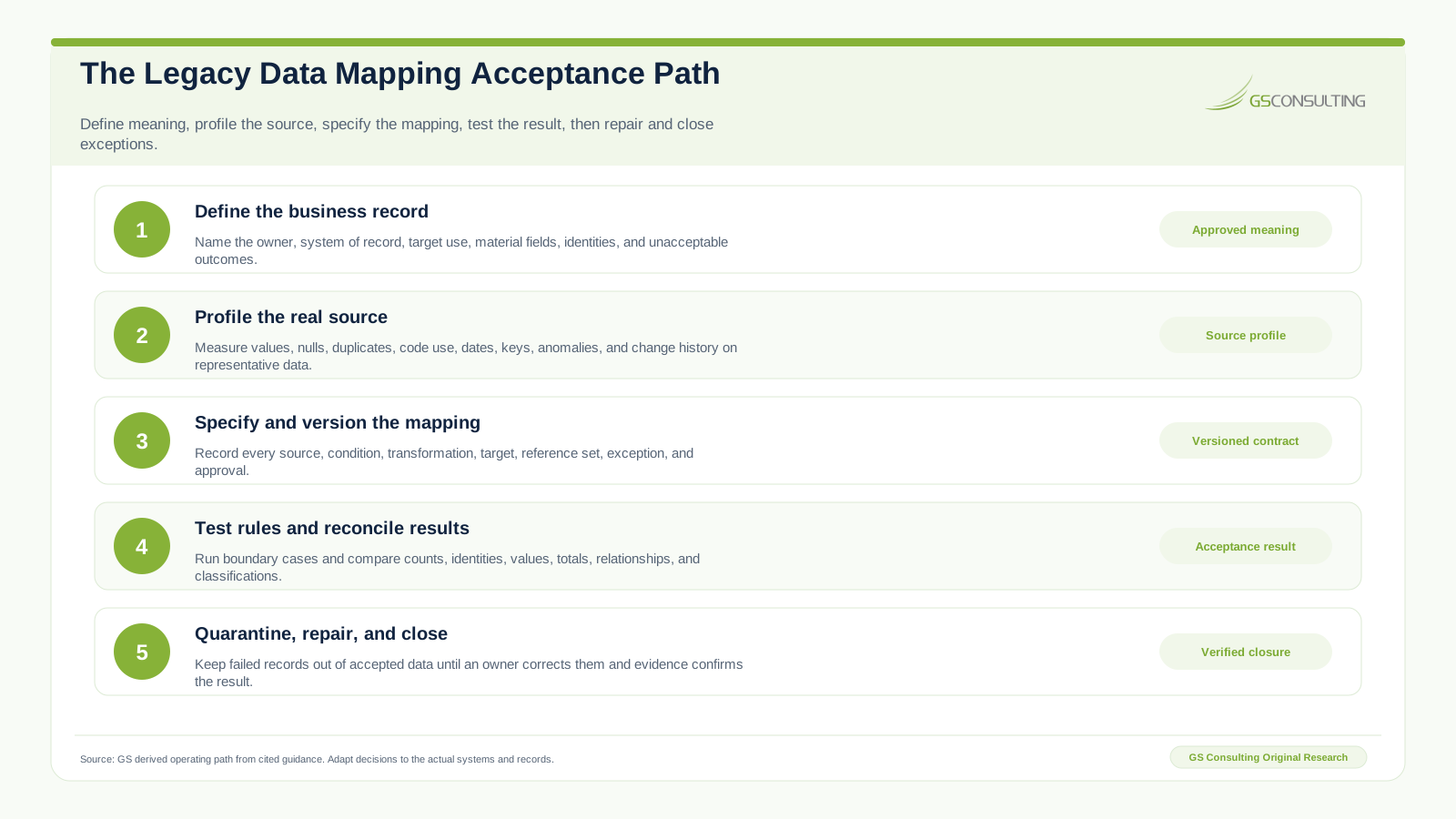
- 1Define the business record.
Name the owner, system of record, target use, material fields, identities, and unacceptable outcomes. Resolve competing meanings before engineering starts.
- 2Profile the real source.
Measure values, nulls, duplicates, code use, dates, keys, distributions, anomalies, and change history. Include old periods and difficult cases.
- 3Specify and version the mapping.
Record each source, condition, transformation, target, reference set, exception, owner, and approval. Link the readable rule to the code and tests.
- 4Test rules and reconcile results.
Test schema, counts, identities, values, domains, ranges, relationships, totals, classification, and boundary cases. Compare source and target through an independent path.
- 5Quarantine, repair, and close.
Keep failed records out of the accepted data set. Give each exception an owner, reason, decision, repair, retest, and closure.
Six Mapping Failures That Look Plausible
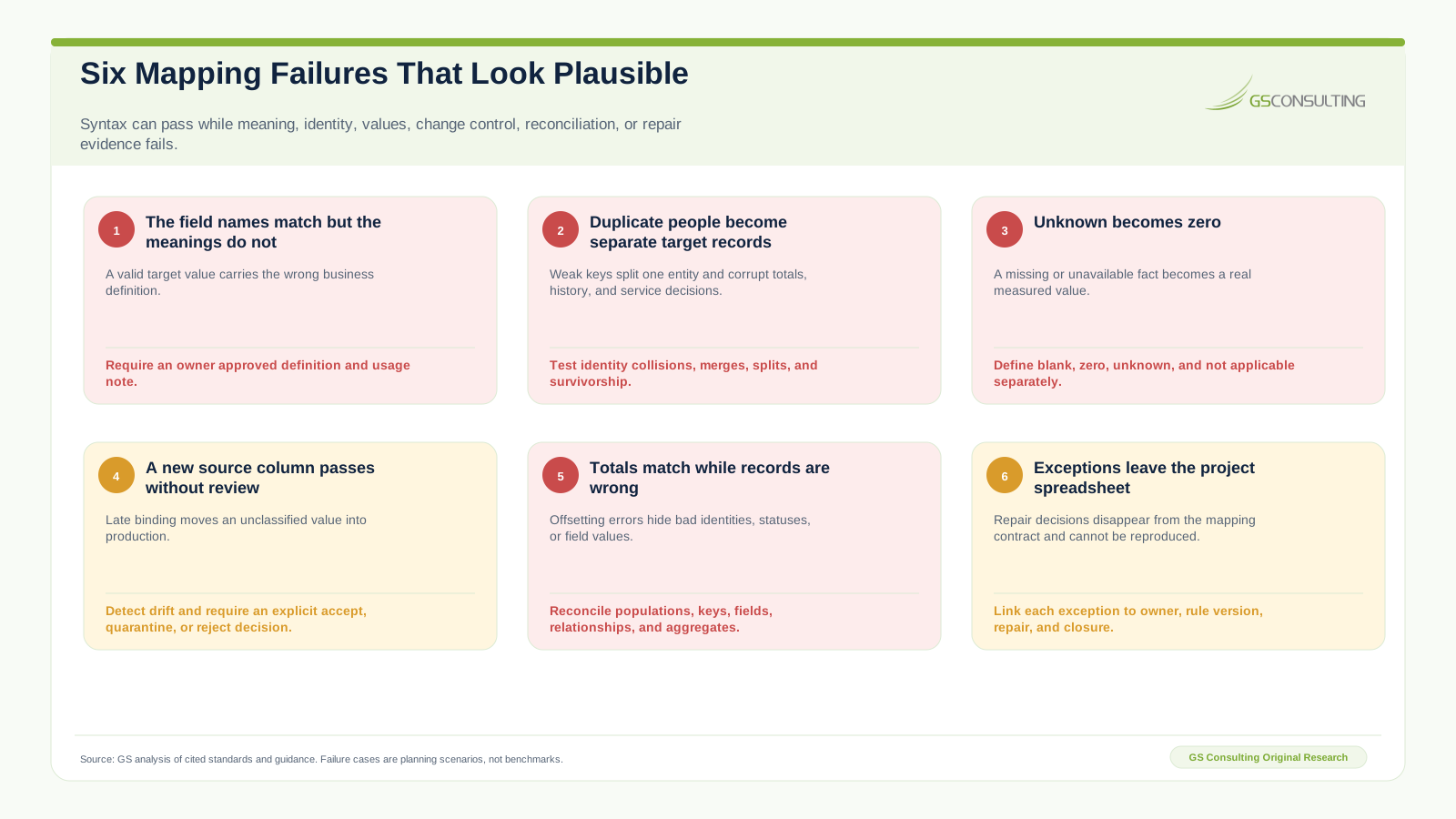
The field names match but the meanings do not. The target receives a valid value under the wrong business definition. Require an owner approved definition and intended use for every material field.
Duplicate people become separate target records. Weak keys split one entity and corrupt totals, history, eligibility, or service decisions. Test collisions, merges, splits, and survivorship on known difficult cases.
Unknown becomes zero. A missing or unavailable fact becomes a real measured value. Define blank, zero, unknown, not applicable, withheld, and invalid separately.
A new source column passes without review. Late binding moves an unclassified value into the target. Detect drift and require an explicit accept, quarantine, or reject decision.
Totals match while records are wrong. Offsetting errors hide bad identities, statuses, or values. Reconcile populations, keys, fields, relationships, and aggregates.
Exceptions leave the project spreadsheet. Repair decisions disappear from the mapping contract and cannot be reproduced. Link every exception to the owner, rule version, repair, retest, and closure.
The Legacy Mapping Evidence Packet
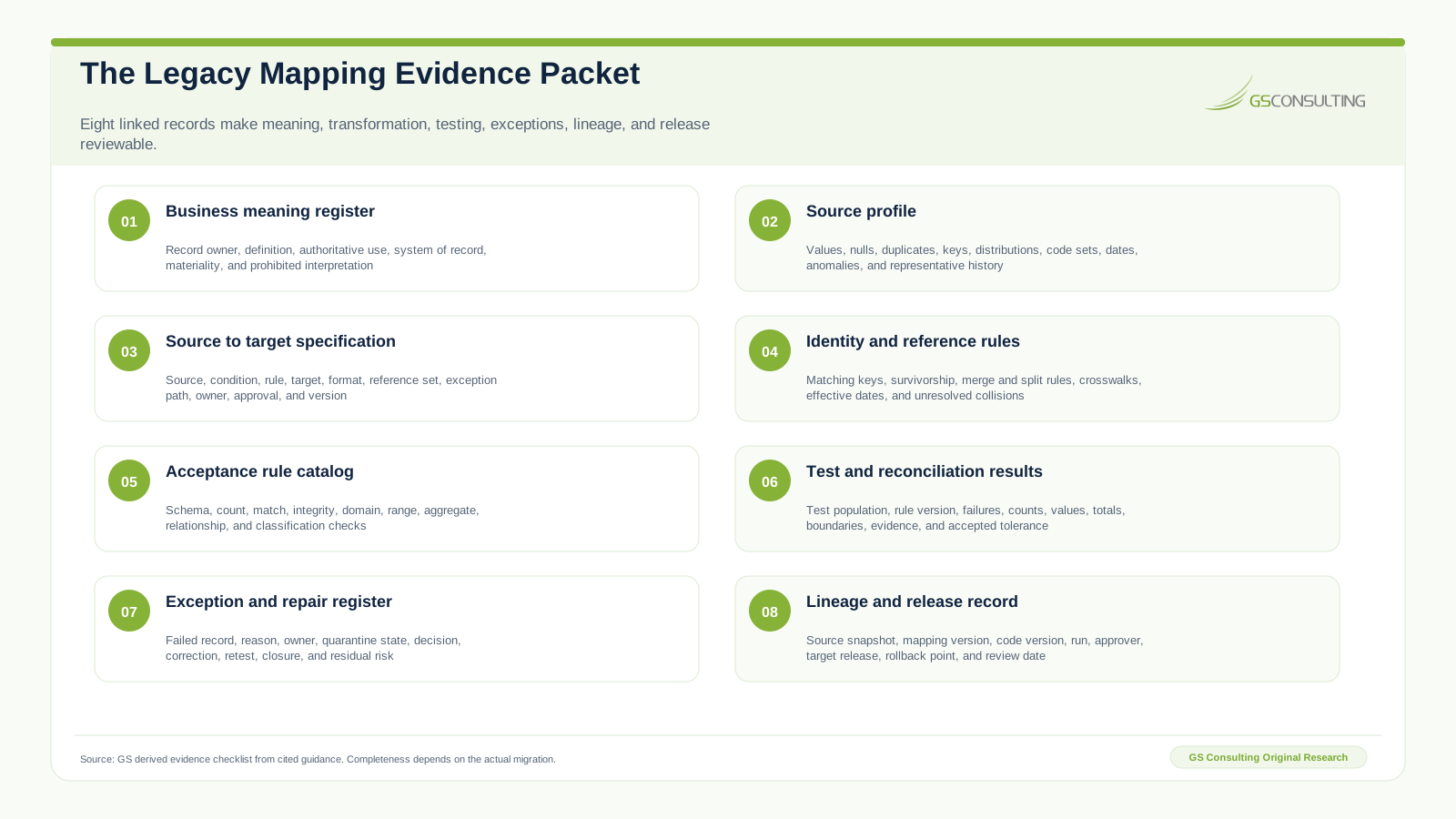
- Business meaning register. Record owner, definition, authoritative use, system of record, materiality, and prohibited interpretation.
- Source profile. Preserve values, nulls, duplicates, keys, distributions, code sets, dates, anomalies, and representative history.
- Source to target specification. Connect source, condition, rule, target, format, reference set, exception path, owner, approval, and version.
- Identity and reference rules. Record matching keys, survivorship, merge and split rules, crosswalks, effective dates, and unresolved collisions.
- Acceptance rule catalog. Define schema, count, match, integrity, domain, range, aggregate, relationship, and classification checks.
- Test and reconciliation results. Preserve the test population, rule version, failures, counts, values, totals, boundaries, evidence, and accepted tolerance.
- Exception and repair register. Record the failed record, reason, owner, quarantine state, decision, correction, retest, closure, and residual risk.
- Lineage and release record. Connect source snapshot, mapping version, code version, run, approver, target release, rollback point, and review date.
A 30 Day Plan for One Consequential Data Set
- Days 1 through 5Define the target use.
Select one data set tied to a real workflow, decision, report, or migration. Name the owner, consumers, material fields, protection needs, and unacceptable outcomes.
- Days 6 through 10Profile representative source data.
Measure values, nulls, duplicates, key stability, code use, dates, relationships, historical periods, and known anomalies. Preserve the source snapshot and query.
- Days 11 through 15Write the mapping contract.
Specify source, meaning, condition, rule, target, null policy, reference set, identity rule, exception path, owner, test, and approval. Version every rule.
- Days 16 through 20Automate acceptance.
Implement schema, count, identity, domain, range, integrity, relationship, aggregate, classification, and boundary checks. Make failures visible by record.
- Days 21 through 25Reconcile and repair.
Compare source and target through an independent query. Quarantine failures, assign owners, correct the rule or data, rerun records, and preserve each decision.
- Days 26 through 30Run the release review.
Confirm definitions, identities, versions, tests, reconciliations, exceptions, protection metadata, rollback, and evidence. Release only the accepted population.
Sources and Research Method
This analysis uses NIST Research Data Framework Version 2.0, the W3C R2RML Recommendation, the W3C PROV Ontology, AWS Glue Data Quality guidance, and AWS Glue Schema Registry guidance.
It also uses Microsoft schema drift guidance, Microsoft source transformation guidance, GAO report GAO-21-152, NIST FAIR data guidance, and the Federal Zero Trust Data Security Guide. Sources were accessed October 3, 2026.
GS Consulting separated public observations from analyst assumptions and recorded a source identifier for every input. We calculated base and alternate control scores plus representative transformation burden. The research package retains source notes, model inputs, formulas, and sensitivity results. It also retains the figures, workbook, and data dictionary. The model sequences mapping work. It does not replace business or engineering authority. It also does not replace security, records, legal, or privacy authority. Audit, compliance, and release authority remain separate too.
Frequently Asked Questions
What is legacy data mapping?
Legacy data mapping is the controlled specification that connects each source field and business meaning to a target field and transformation. It also records the reference value, exception rule, owner, version, and acceptance test. It preserves what the data means and how the result can be proven.
What is the difference between data mapping and data normalization?
Data mapping defines how source data becomes target data. Data normalization applies agreed rules so names, dates, units, codes, and identities are consistent enough for the target use. It also addresses null values and relationships. A mapping can include normalization. It also covers direct copies, derivations, exclusions, exceptions, lineage, and approvals.
Who should approve a legacy data mapping?
A business data owner should approve meaning and acceptable use. Data engineering should approve the technical rule and testability. Security, privacy, records, legal, or compliance owners should review fields within their authority. Release approval should require reconciliation and closed exceptions, not only a completed mapping sheet.
How should a team handle schema drift?
Detect every structural change, classify its business effect, and make an explicit accept, quarantine, or reject decision. Update the mapping version and tests before the changed data enters the accepted target. Automatic acceptance is appropriate only where the team has defined a narrow safe class and can prove the result.
What tests should a data mapping include?
Test schema, count, identity, and uniqueness. Then test domain, range, and format. Add reference integrity, null policy, aggregate, relationship, classification, and representative boundary tests. Reconcile the source and target at record and population level. Matching totals alone can hide wrong records.
When is mapped data ready for release?
Release when material definitions are approved, identities resolve, and the mapping and code versions are fixed. Acceptance rules must pass, and source and target results must reconcile. Exceptions must be closed or explicitly accepted. Protection metadata and the evidence packet must reproduce the decision.
Operating Standard
Do not accept mapped data because the load completed or the totals match. Accept it when meaning and identity agree with transformation and reconciliation. Protection, exceptions, and release evidence must agree too.