Enterprise AI | | 25 min read
AI Document Processing: A Practical Implementation Guide

Key Takeaways
The operator view
Bound the output
Name the fields, labels, routes, and actions the system may propose. An open ended task cannot have a clear approval boundary.
Start with traceable work
Invoice intake scores 96.8 on implementation fit. Public release redaction scores 81.2 on fit and 92.8 on control burden.
Review before commit
Confidence is a routing signal. It is not authority to change a contract record, release a document, or make a legal decision.
Not an OCR purchase. AI document processing is an operating system for turning source documents into controlled decisions.
For the controls surrounding extraction, use AI automation for document heavy processes to connect source versions, reviewer authority, and the final business record.
That distinction decides whether the implementation removes work or creates a faster error path. A demo can read a clean invoice, pull a clause, or summarize a report in seconds. Production has to handle the damaged scan, the rotated page, the handwritten note, the duplicate packet, the missing attachment, the sensitive field, and the reviewer who changes the answer.
The practical question is not whether a model can read a document. It is whether the workflow can preserve the source, validate each material output, route exceptions, limit authority, commit only approved data, and show what happened later.
This guide covers that implementation path. The new AI Document Processing hub organizes related guidance. Teams handling controlled records should also use the companion guide to secure AI document processing for CUI. Release workflows need the separate controls in automated data redaction with AI. GS Consulting delivers this work through AI workflow automation.
Choose the document and the authority boundary first.
GS Consulting helps teams map the current queue, select a bounded use case, build review and evidence into the workflow, and measure the result before expansion.
Request a Document Workflow ReviewWhat AI Document Processing Actually Includes
AI document processing combines several jobs that vendors often compress into one label. OCR turns pixels into text. Layout analysis identifies pages, tables, reading order, and regions. Classification identifies the document type. Extraction locates fields, clauses, entities, and relationships. Validation checks format, business rules, source anchors, and related records. Workflow logic routes clean results and exceptions. Integration writes approved data to a system of record.
No one model needs to perform every job. In fact, the safer design often combines deterministic rules, OCR, a document model, a language model, and human review. Use each component for the task it can perform and test. A tax identifier format check should not depend on a language model. A contract clause summary may need one. A release decision still belongs to the named authority.
The NIST Generative AI Profile calls for documented scope, evaluation, human oversight, monitoring, and risk treatment. The joint AI Data Security guidance from NSA and partner agencies emphasizes provenance, integrity checks, access, storage, and monitoring. Those are not side controls. They are the production design.
The Document Processing Control Chain
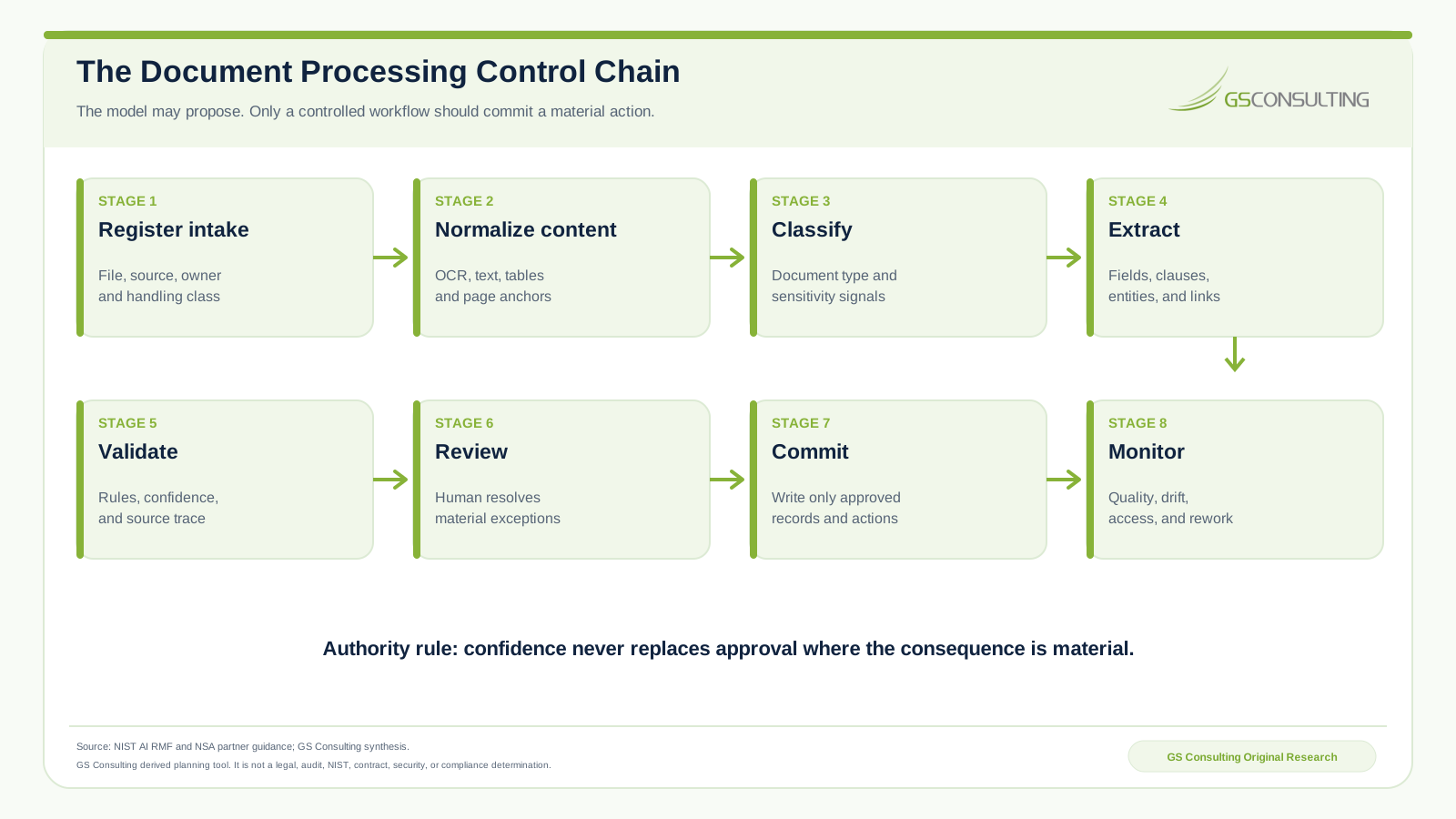
- Register intake. Assign a source, owner, handling class, file identifier, checksum, and receipt time before processing begins.
- Normalize content. Preserve the original while OCR, layout parsing, page rotation, table detection, and text cleanup create a working representation.
- Classify. Identify document type and sensitivity signals. Unknown types move to review rather than the closest familiar class.
- Extract. Produce fields, clauses, entities, relationships, and page anchors. Keep the exact source region for every material value.
- Validate. Apply format rules, related record checks, confidence thresholds, cross field logic, and duplicate detection.
- Review. Send material exceptions to a named role with the source, proposed value, rule result, and reason for review.
- Commit. Write only approved values or actions. Record the target, accepted change, user or service authority, and result.
- Monitor. Measure quality, drift, queue age, reviewer changes, bad commits, access events, and model or rule changes.
The chain must fail safely. A missing page anchor is not a minor metadata issue when the output changes a contract record. A low confidence score is not permission to guess. An unavailable reviewer is not permission for the system to inherit authority.
Measure the Current Queue Before Selecting Software
Most business cases start with labor estimates and vendor accuracy claims. Both can mislead. Measure the current process for four weeks before building the target design. Count documents, pages, document types, attachments, duplicates, exception reasons, review minutes, queue age, rework, downstream corrections, and seasonal peaks.
Then define the unit of value. It may be a document processed, a field accepted, a case routed, a requirement traced, or a release packet completed. One broad accuracy number hides the actual operating risk. A workflow can reach 98 percent field accuracy and still fail if the remaining 2 percent includes bank accounts, delivery dates, or release restrictions.
Use a field and action register:
- Field or action. What exactly is produced or changed?
- Source. Which page, region, attachment, or related record supports it?
- Consequence. What happens when it is wrong, missing, late, or disclosed?
- Validation. Which deterministic, comparative, or human check applies?
- Authority. May the system draft, route, recommend, or commit?
- Evidence. What record proves the input, output, review, and final action?
GS AI Document Processing Implementation Fit Index
GS Consulting built a derived planning model across ten common document workflows. The implementation fit score uses repeatability at 20 percent, source traceability at 18 percent, field stability at 16 percent, human review fit at 16 percent, integration value at 14 percent, consequence safety at 10 percent, and data readiness at 6 percent. Each use case receives a documented analyst rating from 1 to 5.
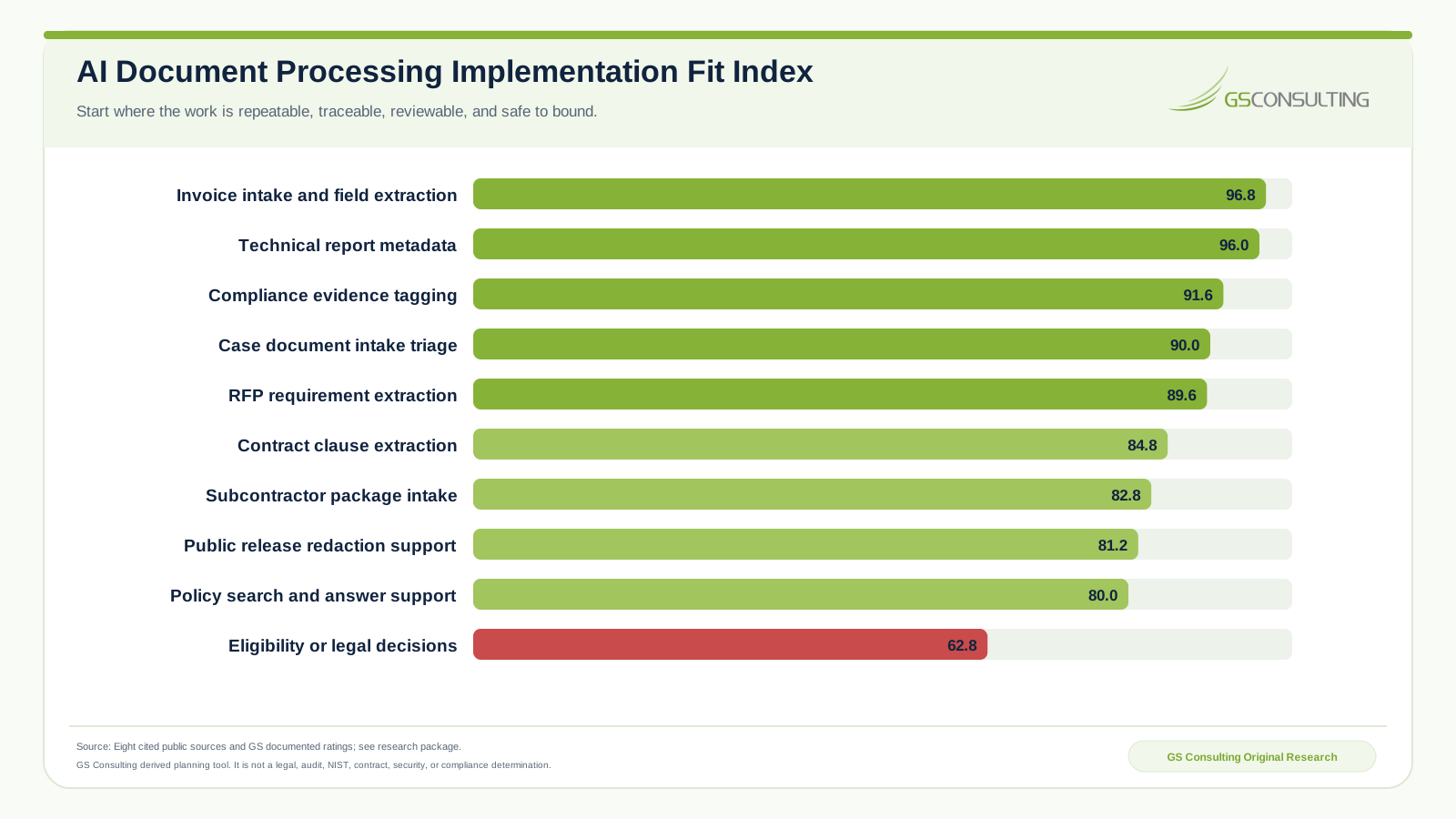
Invoice intake and field extraction leads at 96.8. Technical report metadata scores 96.0. Compliance evidence tagging scores 91.6. Case document intake triage scores 90.0, and RFP requirement extraction scores 89.6. These use cases have repeated inputs, reviewable outputs, and clear value when the system removes preparation rather than final authority.
Contract clause extraction scores 84.8. Subcontractor package intake scores 82.8. Public release redaction support scores 81.2. Policy search and answer support scores 80.0. Eligibility or legal decisions score 62.8 because consequence safety and human review fit are materially weaker.
The values are planning scores, not measured accuracy or return. The ratings must be replaced with the organization's baseline and risk decisions. An alternate weight set increases source traceability, human review fit, and consequence safety. It moves no use case by more than 0.8 points and changes no tier in this limited sensitivity check.
Implementation Fit Does Not Cancel Control Burden
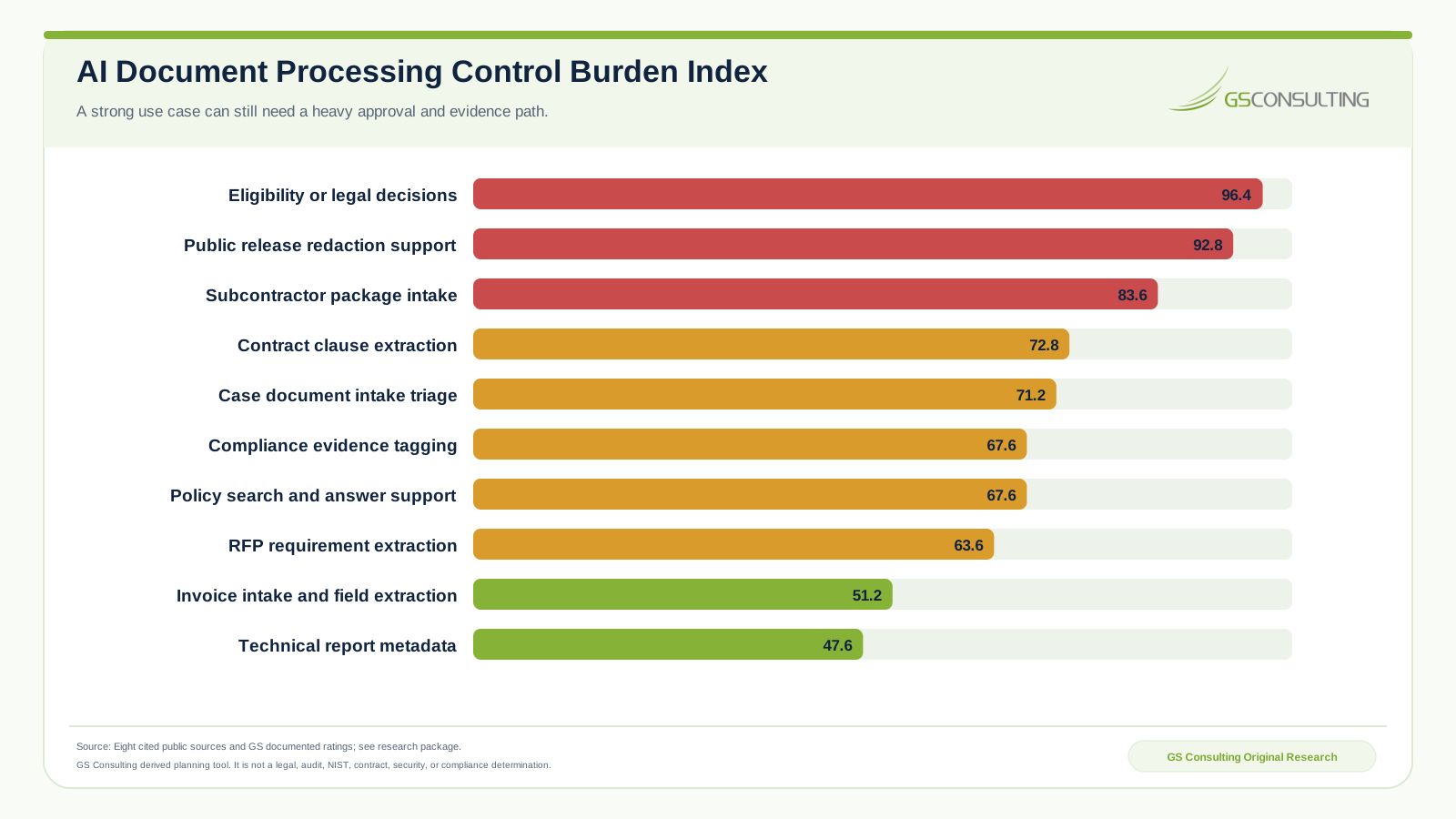
The burden model weights document variability at 20 percent, data sensitivity at 20 percent, authority consequence at 24 percent, integration breadth at 18 percent, and exception rate at 18 percent. Eligibility or legal decisions reach 96.4. Public release redaction support reaches 92.8. Subcontractor package intake reaches 83.6. Contract clause extraction reaches 72.8.
Invoice intake is a high fit use case with a moderate 51.2 burden score. Technical report metadata combines a 96.0 fit score with the lowest burden at 47.6. That makes it a strong first pilot when the destination fields are bounded. Public release redaction presents the opposite pattern: credible assistance value with a 92.8 burden score. It needs source preservation, sensitive data rules, reviewer authority, quality checks, and final release approval. The detailed AI redaction guide covers that path.
Build the Architecture Around Evidence and Authority
A practical architecture has five planes. The intake plane receives files, verifies type and integrity, records source facts, and quarantines unsupported content. The content plane performs OCR, layout parsing, classification, and extraction while preserving page anchors. The control plane applies access, handling, validation, confidence, duplicate, and business rules. The workflow plane assigns reviewers, tracks exceptions, and enforces approval. The evidence plane records versions, inputs, outputs, decisions, commits, quality, and change.
Do not use the model response as the record. Store structured outputs separately with source anchors and validation results. Keep the original file immutable. If a reviewer changes a value, preserve both the proposed and accepted value with the reason. If the system writes to an enterprise application, record the exact destination and response.
For controlled information, architecture follows the data boundary. The current NIST SP 800-171 Revision 3 publication applies requirements to components that process, store, transmit, or protect CUI. The NARA CUI Registry supplies category context, while agency policy and the governing contract supply specific handling rules. Use the CUI document processing guide for the regulated design.
Integration also needs a narrow contract. Define allowed destinations, fields, create or update behavior, duplicate rules, retry behavior, rollback, service authority, and change ownership. A document service with broad write rights can cause more damage than the extraction model.
Use Four Gates Before a Controlled Pilot
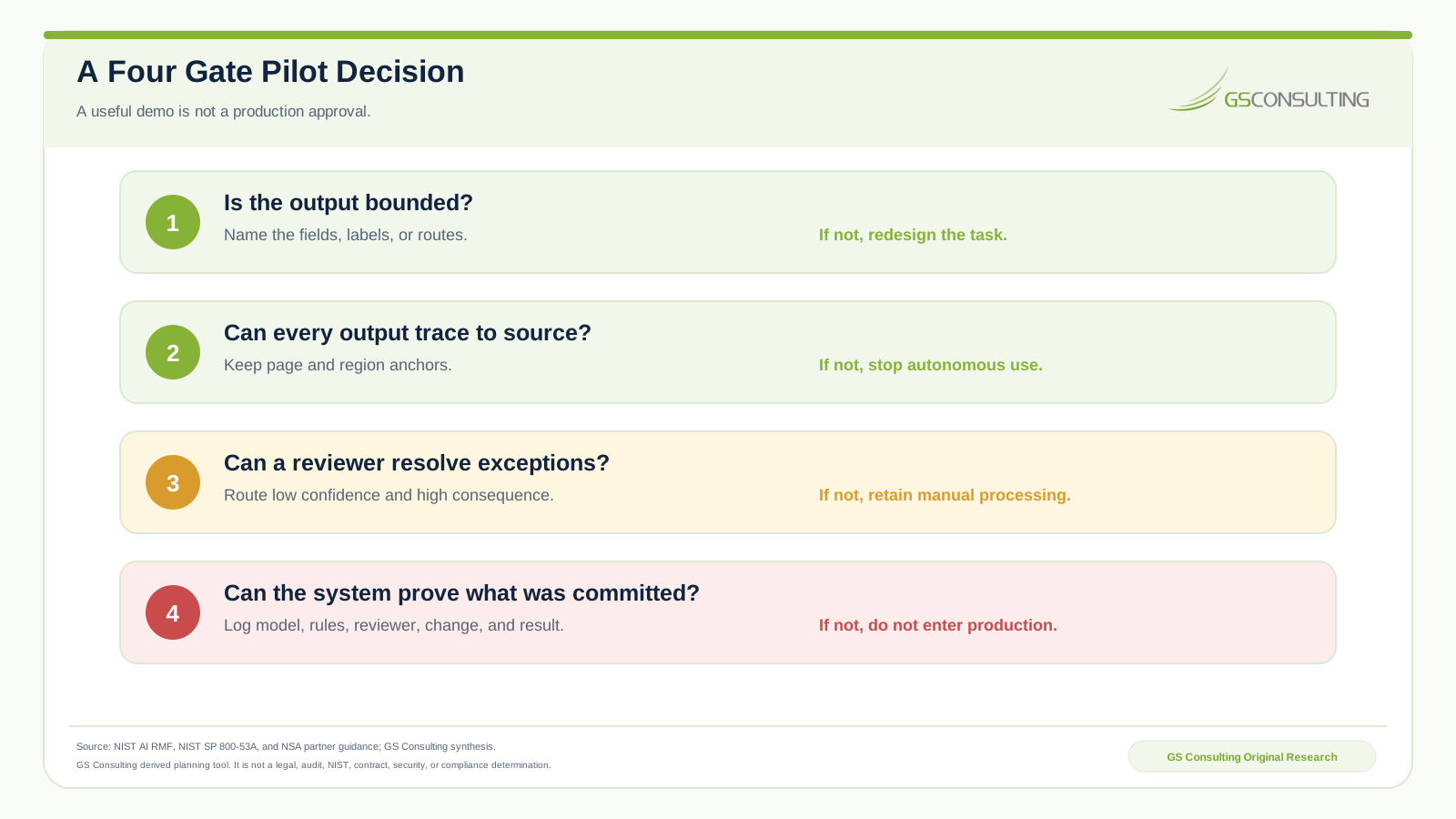
Gate 1: Is the output bounded?
Name the fields, labels, routes, or draft content the system may produce. If the target keeps expanding during the pilot, the task is not ready.
Gate 2: Can every material output trace to source?
A reviewer should open the original page and see the exact region behind the proposed value. If the value comes from inference across documents, identify each source and the rule that combines them.
Gate 3: Can a reviewer resolve exceptions?
The queue needs reason codes, priority, age, source context, proposed output, and a clear decision set. Review should resolve uncertainty, not recreate the entire process.
Gate 4: Can the workflow prove what was committed?
Record the model and rule versions, reviewer, accepted change, destination, result, and any later correction. If that record cannot be produced, the workflow is not ready to write.
Six Failure Modes That Break the Business Case
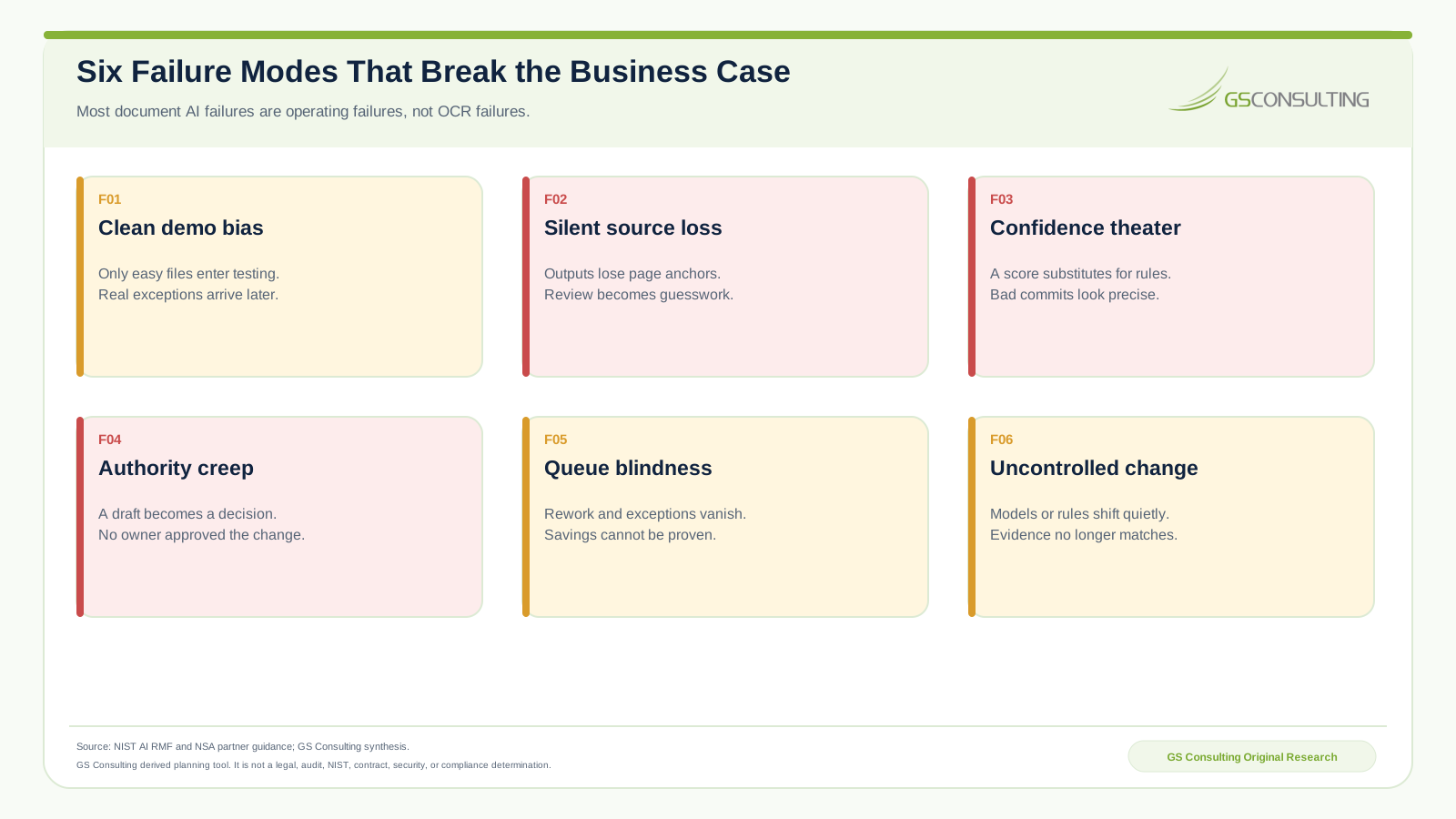
Clean demo bias appears when testing excludes the files that consume real labor. Silent source loss leaves values without page anchors. Confidence theater treats a model score as a quality proof. Authority creep lets a draft quietly become a decision. Queue blindness hides rework and aged exceptions. Uncontrolled change changes models, prompts, OCR, rules, or integrations without another evaluation.
Build the adverse set early. Include poor scans, mixed page sizes, handwriting, tables across pages, repeated headers, missing pages, duplicate files, conflicting attachments, sensitive content, unknown document types, and fields that look plausible but violate the related record. Test denial and review as seriously as clean extraction.
A 90 Day AI Document Processing Plan
Days 1 through 30: queue and baseline
- Choose one queue, one owner, one destination, and one measurable result.
- Inventory document types, sources, data classes, fields, actions, reviewers, exceptions, and downstream corrections.
- Measure volume, page count, review time, queue age, rework, bad data, and seasonal peaks.
- Build representative and adverse test sets with approved handling.
- Define which outputs may be drafted, routed, recommended, and committed.
Days 31 through 60: controlled build
- Register every input and preserve the original document.
- Implement OCR, classification, extraction, source anchors, and deterministic validation as separate observable steps.
- Build the exception queue around reason, consequence, and reviewer action.
- Use a test destination or draft state. Do not grant broad production write access.
- Record model, prompt, rule, data, and integration versions.
Days 61 through 90: proof and limited operation
- Run the representative set, adverse set, access tests, retry tests, and rollback tests.
- Compare precision, recall, reviewer change rate, exception rate, bad commit rate, queue age, and time per accepted document against baseline.
- Review errors by field and consequence rather than one average score.
- Operate with a limited volume, named support owner, and daily exception review.
- Expand only when the evidence shows stable quality and the team can explain every commit path.
Measure Outcomes That an Operator Can Verify
Track straight through rate, but do not turn it into the only target. A team can improve the rate by widening thresholds and creating bad data. Pair it with reviewer change rate, bad commit rate, downstream correction rate, source trace coverage, exception age, access violations, and recovery time.
Calculate value from accepted work, not proposed outputs. Use minutes removed from clean processing, time added to exception review, downstream rework avoided, queue delay reduced, and service cost. Keep model and platform charges visible, but include integration, support, review, quality analysis, and change control. The cheapest extraction call can be the most expensive workflow when it creates review noise.
The Minimum Document Processing Evidence Packet
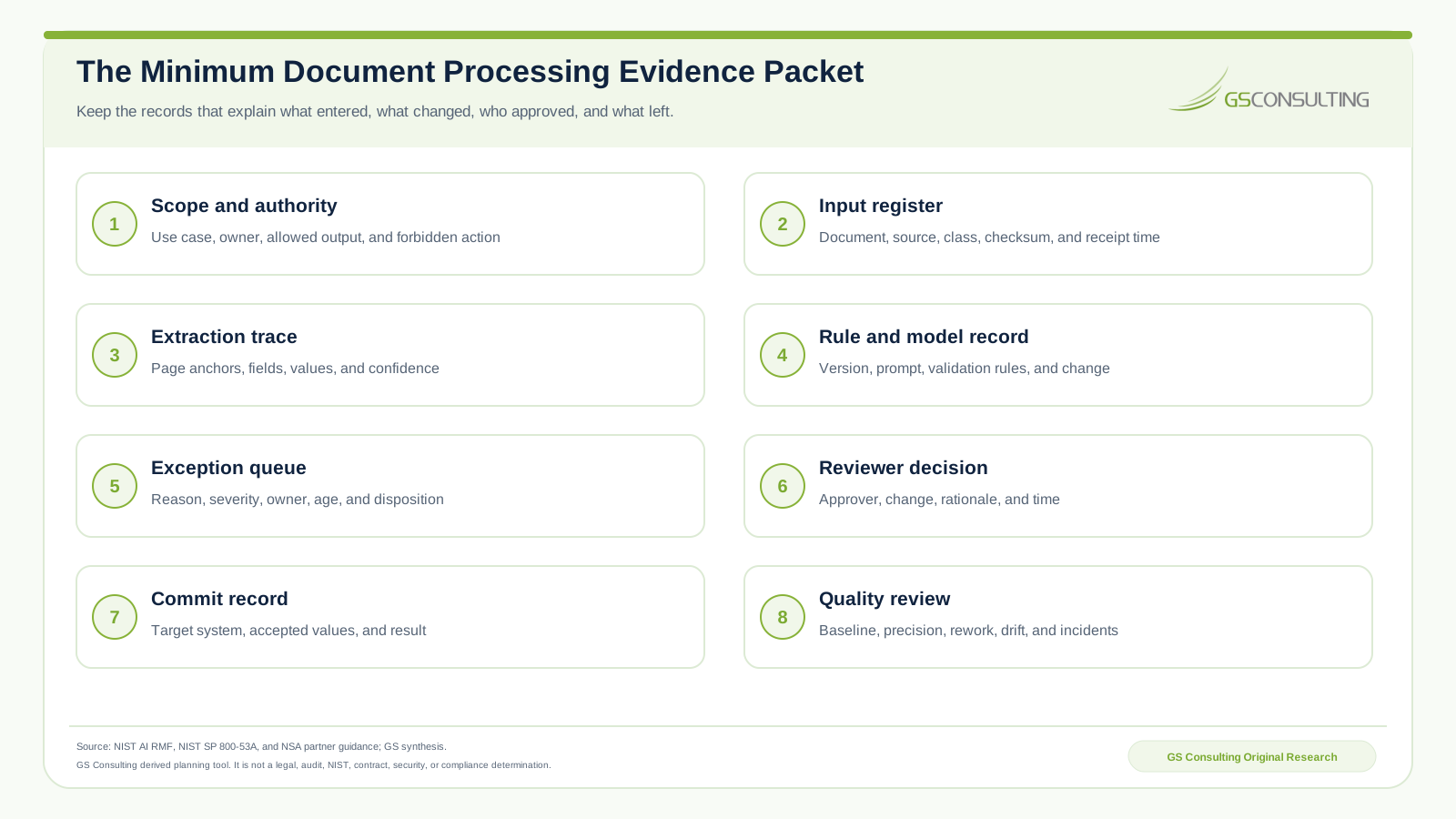
The packet should answer eight questions. What use case and authority were approved? Which document entered and how was it handled? Which source supported each output? Which model, prompt, OCR, and rules ran? Which exception was raised? Who accepted or changed the proposal? What reached the destination? What does periodic quality review show?
Keep the evidence by workflow version and operating period. A screenshot of a dashboard is not enough. The NIST SP 800-53A assessment approach is useful because it separates records that can be examined, people who can be interviewed, and mechanisms that can be tested. That same separation makes a document workflow easier to operate and investigate.
Bottom Line
AI document processing works when it removes repeated reading and data preparation without hiding source, uncertainty, or authority. The system should make the clean path faster and the exception path clearer. It should not turn confidence into permission or a model response into a system record.
That is the operating standard: registered inputs, source anchored outputs, explicit validation, human authority at material decisions, controlled commits, and evidence that survives the demo.
Sources and Method Note
- NIST Artificial Intelligence Risk Management Framework
- NIST Generative Artificial Intelligence Profile
- NSA and partner agencies, AI Data Security
- NIST SP 800-171 Revision 3
- NARA Controlled Unclassified Information Registry
- NIST SP 800-53A Revision 5
- DFARS 252.204-7012
- NIST Secure Software Development Framework
GS Consulting Original Research. The implementation fit and control burden scores are derived planning tools based on cited public sources and documented analyst assumptions. They are not measured accuracy, savings, legal advice, security approval, compliance determinations, or deployment authorization. Replace the inputs with your baseline, data, contracts, architecture, and risk decisions before use.
Frequently Asked Questions
What is AI document processing?
AI document processing uses OCR, classification, extraction, validation, and controlled workflow logic to turn documents into reviewable data or actions while preserving source, exceptions, authority, and evidence.
What documents should a team automate first?
Start with repeated documents that have stable fields, clear source records, measurable volume, an available reviewer, and a reversible destination.
How accurate must AI document processing be?
There is no universal threshold. Set field level rules from the consequence of error and measure precision, recall, exception rate, reviewer changes, and bad commits separately.
Where should human review occur?
Route low confidence fields, rule conflicts, missing source anchors, sensitive data, unknown document types, and consequential actions to a named reviewer.
What evidence should an AI document processing workflow keep?
Keep the scope and authority record, input register, extraction trace, rule and model version, exception queue, reviewer decision, commit record, and quality review.
Related Reading
- AI Document Processing Hub
- Secure AI Document Processing for CUI
- Automated Data Redaction with AI
- Automating Federal RFP Shredding with AI
- Business Process Mapping for GovCon
- Legacy Database Extraction Workflows Using AI
- AI Workflow Automation
Make the document decision path visible.
GS Consulting helps teams convert a document queue into a controlled workflow with measurable quality, named authority, and evidence that holds up in operation.
Plan a Controlled Document Pilot