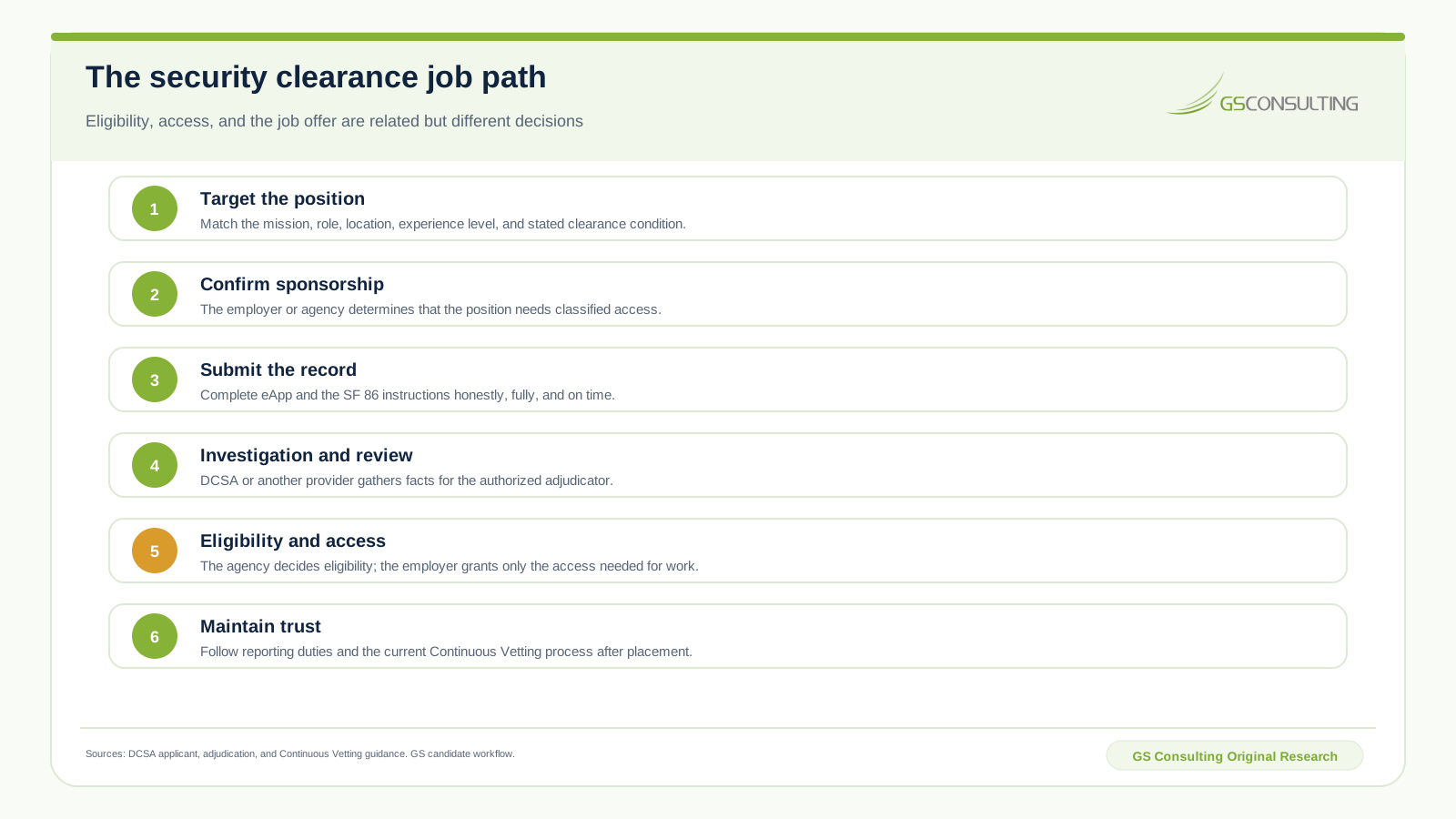
Security clearance jobs are not ordinary jobs with a badge. The position creates the need, the employer sponsors the process, the government decides eligibility, and the program grants access.
That sequence matters. Candidates waste months searching for a way to “get a clearance” without a position, calling themselves clearable, or applying to every role that contains TS/SCI. Recruiters then have to guess at the current status, level fit, mission fit, and start risk.
This guide turns the cleared market into an operating plan. It explains sponsorship, status language, role families, the SF 86, search filters, resume evidence, current maintenance, and the questions that should be answered before an application goes out.
What Security Clearance Jobs Actually Are
A national security position may require Confidential, Secret, or Top Secret eligibility. Some roles also require access to Sensitive Compartmented Information, a polygraph, a special access program, or customer specific processing. Those conditions are not interchangeable. The job announcement and recruiter should state what is required at application, offer, start, and program access.
For positions that use TS/SCI shorthand, treat Top Secret eligibility, SCI access, sponsorship, need to know, and program approval as separate conditions. Confirm the exact requirement and current status through the recruiter and authorized security office.
Public Trust is different. It is a suitability or fitness determination for a position with a public trust risk level, not a national security clearance. It can still involve substantial investigation. Do not list Public Trust as Secret or Top Secret, and do not assume that a prior background check creates classified eligibility.
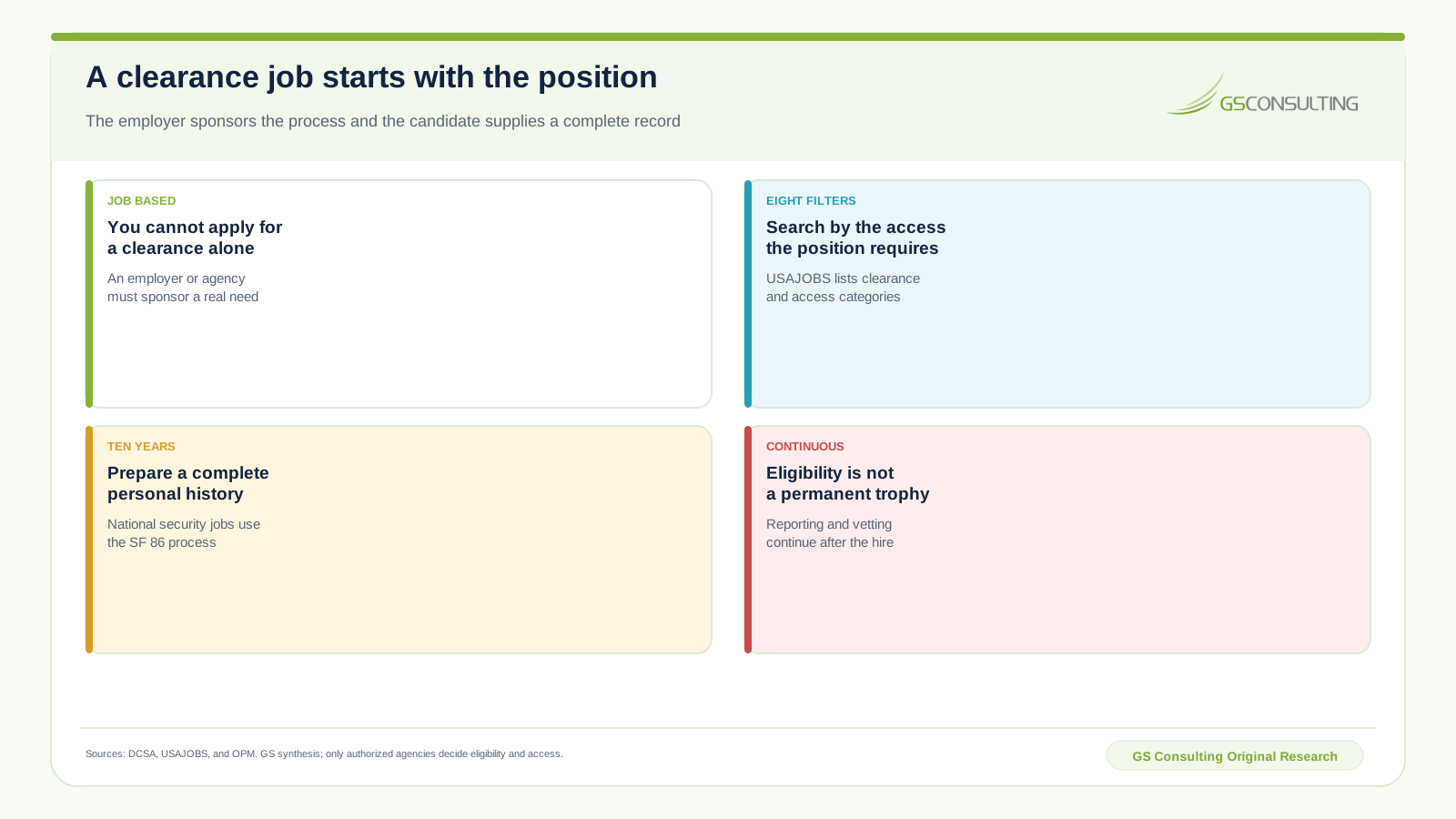
USAJOBS currently provides eight security clearance filter choices, including not required, Confidential, Secret, Top Secret, Sensitive Compartmented Information, Q, L, and Other. The filter is useful for discovery. It does not replace the announcement. Some positions sponsor after hire. Others require current status because the program needs immediate access.
Sponsorship Comes From a Real Position
DCSA is direct: an individual cannot apply for a clearance alone. A company or government organization initiates processing when a position requires classified access. That makes “how do I get sponsored?” a job search question, not a form submission question.
There are four common routes:
- Military service. The service sponsors eligibility and access needed for the assigned role.
- Federal employment. An agency selects a candidate for a position and initiates the required vetting.
- Cleared contracting. A contractor hires against a classified requirement and submits the candidate through the authorized security process.
- Internship or early career program. Some agencies and contractors sponsor selected candidates for roles with a future access need.
Search announcements for plain language such as “must be able to obtain,” “must possess,” “active required,” or “sponsorship available.” If the language is unclear, ask whether the employer can sponsor an initial investigation, whether the role can start before access, and whether customer processing adds another gate.
GS Original Research: The Cleared Job Search Leverage Index
GS Consulting built the Cleared Job Search Leverage Index to answer one question: which candidate actions remove the most hiring uncertainty earliest?
The model scores ten actions from 0 to 100. The formula assigns 30 percent to hard gate effect, 25 percent to recruiter signal, 20 percent to lead time reduction, 15 percent to portability, and 10 percent to candidate control. Each factor uses a one to five GS analyst rating grounded in current DCSA, USAJOBS, OPM, and ODNI guidance.
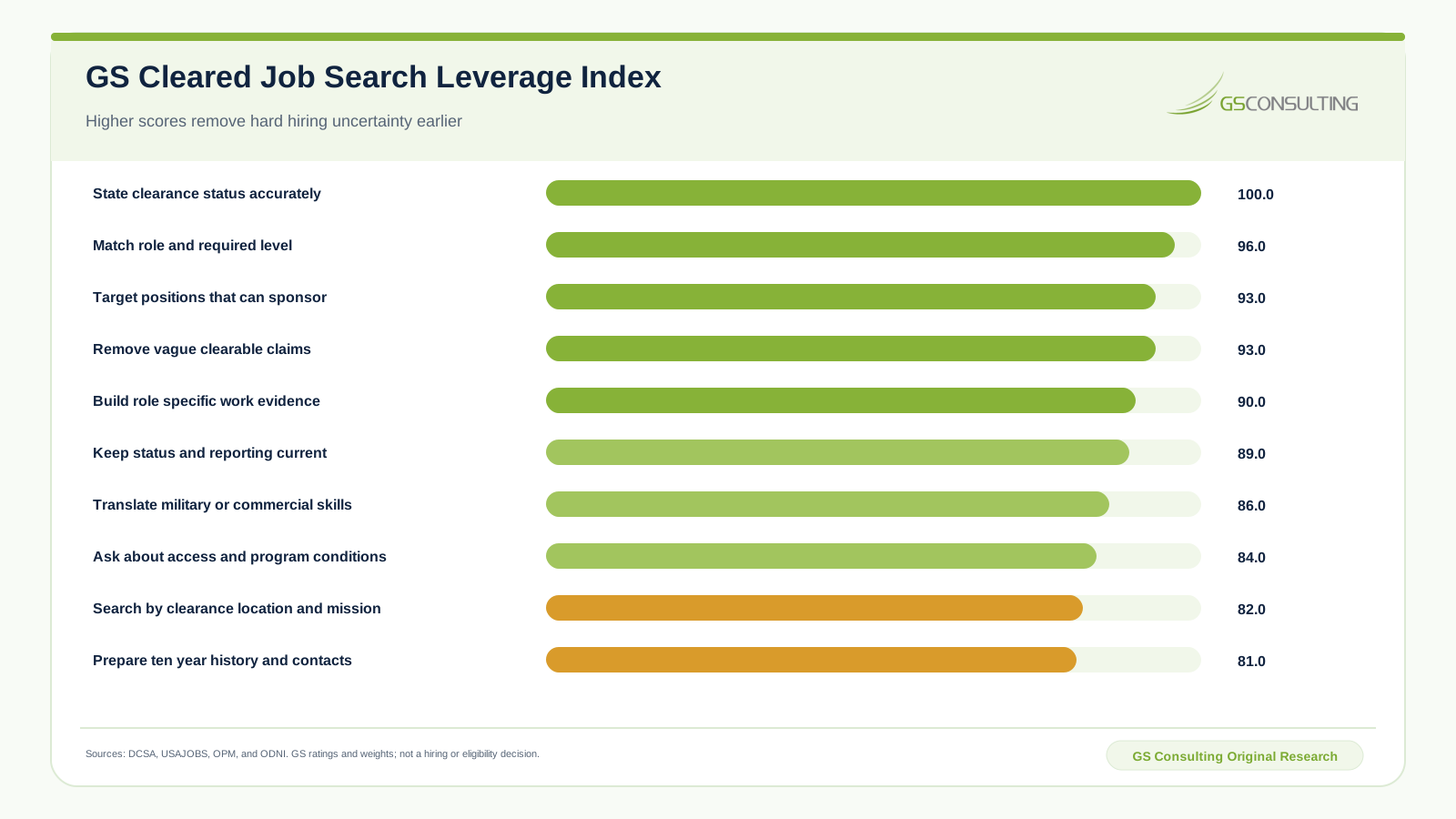
Stating clearance status accurately scores 100. Matching the role and required level scores 96. Targeting positions that can sponsor and removing vague clearable claims both score 93. Preparing ten years of history and contacts scores 81 because it can reduce later scramble but does not create a job need or recruiter fit by itself.
We shifted five percentage points between hard gate effect and portability. The main priority order stayed stable, and no action moved enough to reverse the operating conclusion: status accuracy, role fit, and sponsor fit come before application volume.
The research package preserves the source register, public signals, scored inputs, formula output, sensitivity file, figure data, dictionary, and methodology. The index is a GS Consulting derived planning model. It is not an official hiring, eligibility, access, legal, employment, security, or adjudicative determination.
Six Cleared Career Families
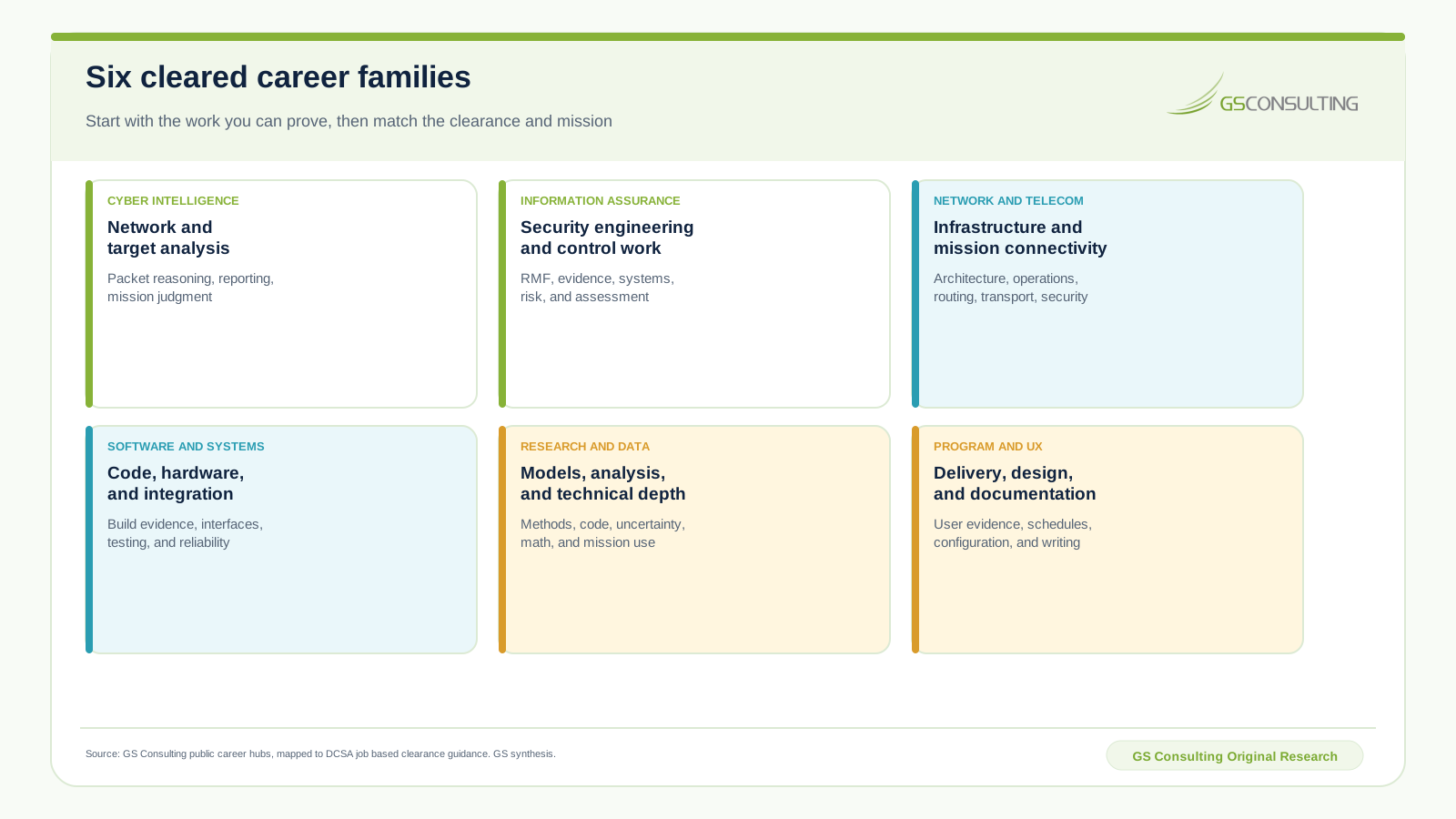
Network analysis, target analysis, exploitation, threat reporting, signals analysis, and mission judgment.
Explore cyber intelligence rolesSecurity engineering, RMF, authorization, control evidence, architecture, operations, and risk.
Explore security rolesInfrastructure, routing, transport, mission connectivity, installation, operations, and design.
Explore network rolesSoftware, hardware, systems integration, DevSecOps, mission applications, and platform work.
Explore engineering rolesData science, AI, mathematics, operations research, modeling, evaluation, and technical depth.
Explore research rolesProgram management, configuration, writing, design, documentation, and user evidence.
Explore delivery rolesA clearance can open a smaller labor market. It cannot repair a role mismatch. A network engineer resume sent to a target analysis billet still needs proof of the target work. A commercial developer pursuing mission software should use the cleared software engineer guide. Analysts should use the intelligence analyst guide. Candidates weighing open market and mission work should read the commercial technology and mission career comparison.
Use Clearance Status Language Recruiters Can Trust
State facts you know and name the source of the fact. A useful status line can include:
- The eligibility level shown by the security office or authorized record.
- Whether you currently have access to a classified program.
- The sponsoring organization or security contact when appropriate.
- The last investigation or vetting milestone you can accurately confirm.
- Polygraph or compartment access only when current and relevant.
Avoid “clearable,” “should be active,” “used to have one,” or “TS eligible” when you cannot explain the exact basis. DCSA says a first clearance or one terminated for more than 24 months is treated as initial processing in its applicant guidance. Current status can be more nuanced than a resume label, so verify it with the facility security officer or authorized security contact before applying.
Eligibility and access are different. Eligibility is the government trust determination for a level. Access is the employer or agency decision to grant entry to specific information for the work. A program can also require extra processing. Ask recruiters which fact they need.
For the application itself, use the TS/SCI resume guide to write a status line that can survive verification and turn protected experience into public mission evidence.
Prepare for the SF 86 Without Inventing Answers
USAJOBS tells candidates for national security positions to expect at least ten years of personal history and the SF 86. The published OPM form is 136 pages and covers identity, citizenship, residence, education, employment, relationships, travel, finances, police history, drug history, and other areas. Section reporting periods differ. Read every current instruction provided by the sponsor.
Preparation is administrative work:
- Build a dated address, education, and employment history with no unexplained gaps.
- Collect names and contact details for people who can verify residences, work, and other facts.
- Reconcile passports, travel, foreign contacts, financial records, court records, and prior submissions where applicable.
- Keep notes about corrections and context so answers remain consistent and complete.
- Ask the assigned security professional when a question or reporting period is unclear.
Do not use a career guide to decide whether a personal fact is disqualifying. Only authorized adjudicators make eligibility decisions. Your operating standard is complete, accurate, candid, and timely disclosure under the current instructions.
Continuous Vetting Means the Duty Continues
Eligibility is not a permanent trophy. DCSA Continuous Vetting regularly checks records after the initial determination. DCSA also announced in May 2026 that National Industrial Security Program contractor personnel submit an updated personnel vetting questionnaire every five years under the current process. Reporting duties and program procedures still apply between submissions.
Keep the security office informed about reportable changes, follow travel and contact rules, and update the record when instructed. Do not wait for a job search to discover that the resume, security system, and personal understanding disagree.
Build a Security Clearance Job Search That Can Be Decided
- Write the status line first. Verify eligibility, access, polygraph, sponsor, and any customer condition you can state accurately.
- Choose one role family. Lead with the work you can prove, not a broad desire to support the mission.
- Match the required level. Compare years, education, tools, seniority, clearance, location, and customer conditions.
- Target sponsor fit. Apply to roles that match your current status or explicitly permit sponsorship after selection.
- Show evidence. Use decisions, systems, scale, outcomes, mission context, and artifacts that can be discussed outside classified boundaries.
- Prepare the fact packet. Keep availability, location, compensation range, work setting, status contact, education proof, and history notes ready.
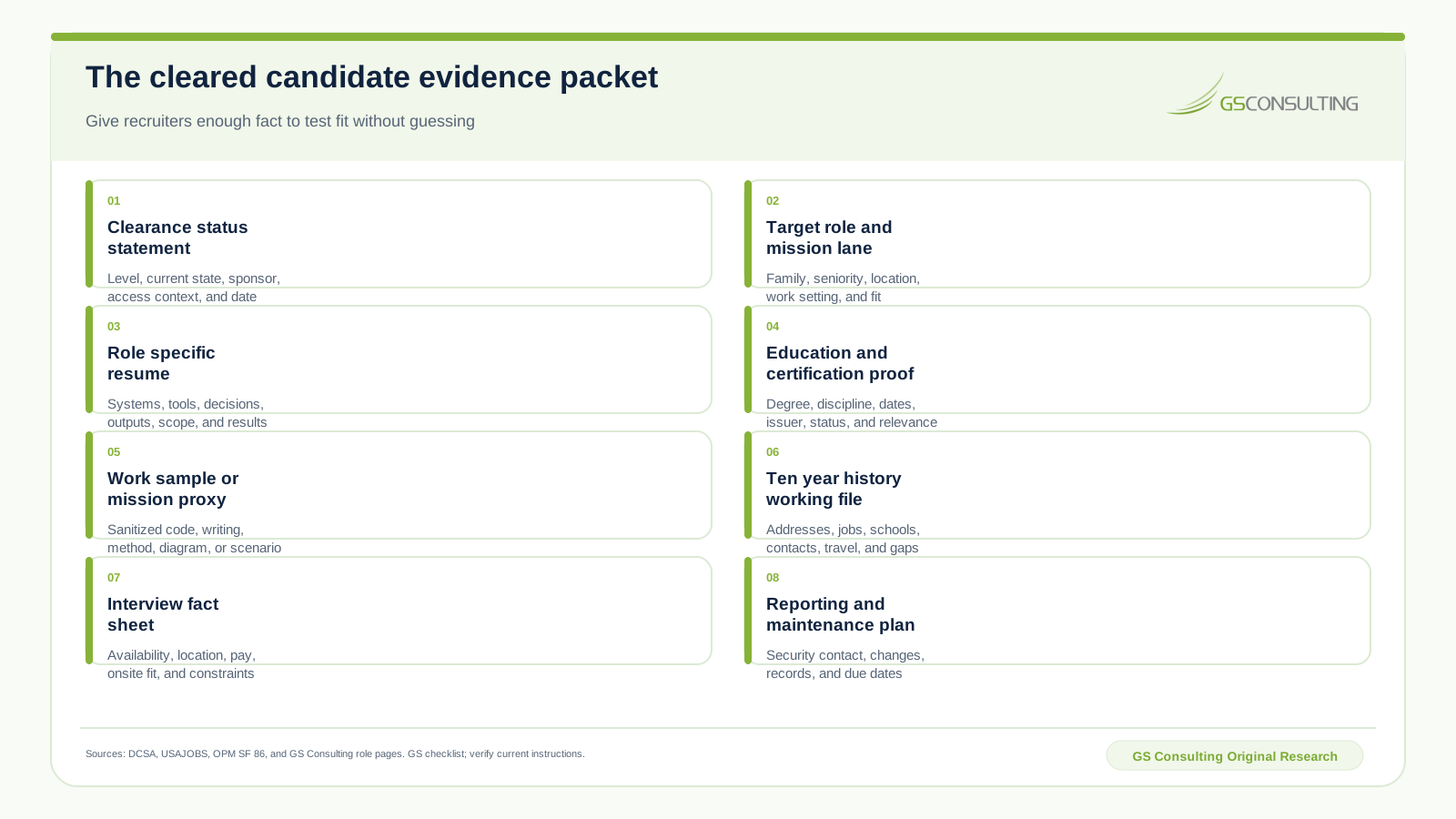
Resume bullets should show what you owned, the environment, the decision, and the result. “Supported cyber operations” is weak. “Triaged network alerts, documented findings, and briefed incident priorities to mission operators” is testable. Stay inside classification and program rules. Proof does not require disclosure of protected facts.
Six Search Failures That Keep Repeating
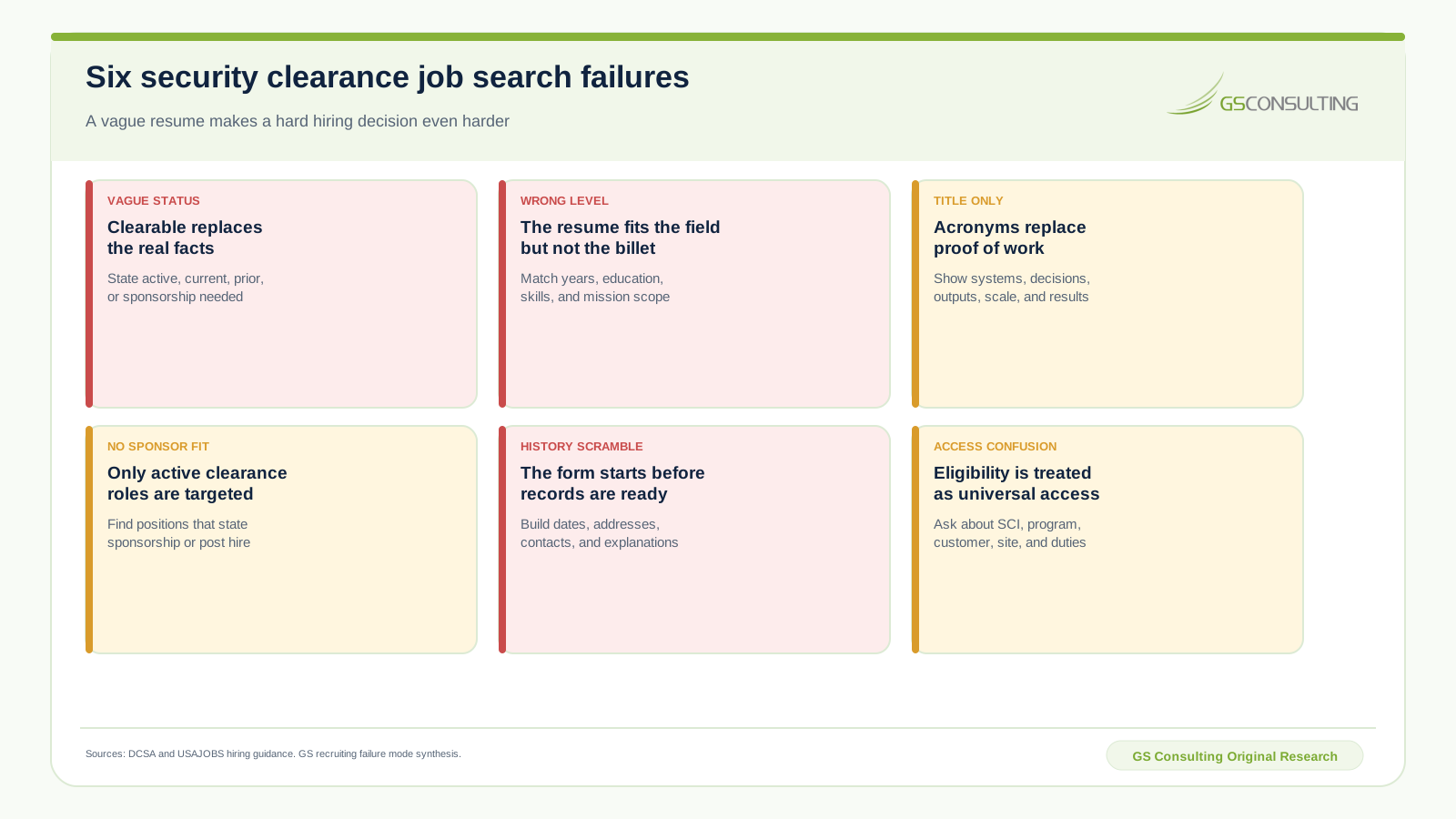
- “Clearable” replaces the real facts. The recruiter still does not know the current gate or sponsor path.
- The resume fits the title but not the billet. Seniority, years, education, tools, customer, and mission scope do not match.
- Acronyms replace proof. The document names programs and tools without showing decisions or outcomes.
- Only active clearance roles are targeted. An uncleared candidate never searches for positions that explicitly sponsor after selection.
- The history scramble starts after an offer. Addresses, dates, contacts, travel, and prior records are not ready.
- Eligibility is treated as universal access. Customer processing, compartments, polygraph, or specific program access are ignored.
Where to Find Security Clearance Jobs
Use USAJOBS for federal roles and its security clearance filters. Use contractor career sites for program roles, and search by role, clearance condition, location, customer, and mission. Around Fort Meade, Annapolis Junction, Columbia, Hanover, Laurel, and the wider Maryland corridor, cleared demand spans cyber, intelligence, networks, software, data, information assurance, research, and delivery.
Start with the GS Consulting careers hub and the cleared career role matcher. The matcher helps identify the closest role family. The hub shows current paths and guides. Then read the actual role page before sending a resume.
Sources and Method Note
This guide uses current public guidance from the Defense Counterintelligence and Security Agency on applicant processing, adjudication, Personnel Vetting, and Continuous Vetting; USAJOBS guidance on clearance filters and background checks; the OPM Standard Form 86; and ODNI Security Executive Agent Directive 4. Processes and program conditions can change. Verify current instructions with the employer, agency, and authorized security office.
- DCSA: Processing Applicants
- DCSA: Trust Decision Adjudications questions
- DCSA: Personnel Vetting
- DCSA: Continuous Vetting
- DCSA: 2026 contractor Continuous Vetting update
- USAJOBS: Security clearance search filters
- USAJOBS: Background checks and security clearances
- OPM: Standard Form 86
- ODNI: Security Executive Agent Directive 4
Planning caveat: The Cleared Job Search Leverage Index is a GS Consulting derived planning model based on cited public sources and documented analyst assumptions. It is not an official hiring, eligibility, access, legal, employment, security, or adjudicative determination.
The Bottom Line
Do not market a badge. Make the hiring decision easier.
The operating standard is exact status, exact role, exact level, exact sponsor fit, and concrete evidence of the work. If a recruiter has to guess at any of those facts, fix the application before sending another one.
Frequently Asked Questions
What are security clearance jobs?
Security clearance jobs are positions that require access to classified national security information. The position creates the access need, an authorized employer or agency sponsors the process, the government decides eligibility, and the employer grants only the access needed for the work.
Can I apply for a security clearance on my own?
No. DCSA states that an individual cannot apply for a security clearance on their own behalf. A government agency, military organization, or cleared employer must initiate the process for a position that requires classified access.
Can I apply for a security clearance job without a clearance?
Yes when the job announcement says the employer can sponsor or the applicant can obtain the required clearance after hire. Other roles require current eligibility or access because the program cannot wait. Read the stated requirement and ask the recruiter what status is truly required.
Is Public Trust a security clearance?
No. Public Trust is a suitability or fitness determination for positions with a public trust risk level. It is not Confidential, Secret, or Top Secret national security eligibility, even though both processes can involve detailed background investigation.
What is the difference between eligibility and access?
Eligibility is a government determination that a person may be trusted for a stated level of classified access. Access is the separate employer or agency decision to let that person reach specific information needed for a job. A person can retain eligibility without current access to a program.
What information does the SF 86 request?
The SF 86 requests extensive identity, citizenship, residence, education, employment, relationship, travel, financial, police, drug, and other history. USAJOBS tells applicants to expect at least ten years of personal history for national security positions. Follow the current instructions from the sponsor for every section.
Does one past problem automatically prevent a clearance?
Not necessarily. SEAD 4 directs adjudicators to use the whole person concept and weigh favorable and unfavorable information together. Only authorized adjudicators decide eligibility. Candidates should be complete, accurate, candid, and ready to explain context and mitigation.