Careers | | 24 min read
TS/SCI Resume Guide: State Status and Prove Mission Fit

Key Takeaways
Clearance opens the gate. Evidence wins the role.
Two pages for federal resumes
USAJOBS now limits a standard federal resume to two pages and tells candidates to put the main credentials in the first scan.
Role evidence scores 97
Role matched technical evidence outranks every other resume element in the GS priority model.
Verify status before wording
Use only clearance and access language that an authorized security office can confirm today.
A TS/SCI resume is not a clearance billboard. It is a short evidence file that states status accurately and proves you can do the mission work.
Most weak cleared resumes fail in one of two ways. Some lead with a bold clearance label and never show the judgment, technical depth, or results behind it. Others contain strong experience but bury it under acronyms, duty lists, and vague language. Both force a recruiter to guess.
Do not make the recruiter guess. Put the verified gate near the top. Then spend the rest of the page proving fit. Every major claim should connect to a requirement, show what you personally did, and use detail that is approved for the hiring channel.
This guide covers how to place a security clearance on a resume, how to describe TS/SCI status without conflating eligibility and access, how to translate protected work into public evidence, and how to tailor the result for a federal or contractor application. It connects to the broader GS Consulting Careers hub, the security clearance jobs guide.
Make the resume easy to verify and hard to ignore.
Start with the exact role, confirm the clearance language, and build every remaining line from public evidence of mission performance.
Explore GS CareersTS/SCI Resume Guide: The Short Answer
For a cleared role, place one accurate clearance line below your name and contact information or at the start of a compact qualifications section. State only what an authorized security office can verify. Separate Top Secret eligibility from SCI access when the distinction matters. Do not imply that prior access, an investigation, or a willingness to be processed equals current eligibility or current access.
After that line, prove mission fit. Use recent examples that begin with a problem and your action. Show the method, an approved measure, and the operating consequence. Match the vocabulary of the announcement where it accurately describes your experience. Remove program names, compartment names, and targets. Omit exact locations and customer identifiers. Leave out capabilities and other details that are not approved for release.
The best TS/SCI resume is specific about the candidate and restrained about the protected environment. That balance creates trust.
TS/SCI Status and Access Are Not the Same Fact
DCSA defines a security clearance as an eligibility determination. DCSA also states that classified access requires eligibility and a need to know. A position and organization start the chain. A program, briefing, and authorized access decision complete it. A resume should not collapse that chain into one vague claim.
TS/SCI is common hiring shorthand, but it can hide several different facts. A person may have Top Secret eligibility with or without current SCI access. The person may instead have prior SCI access, interim eligibility, or processing underway. Those conditions are not interchangeable. The employer will verify them through authorized channels.
Do not diagnose your own status from an old badge, an investigation date, a prior contract, or a memory of being read into a program. Ask the facility security officer, security manager, or other authorized contact what can be confirmed and what wording is permitted for the intended audience.
Public Rules Define the Resume Boundary
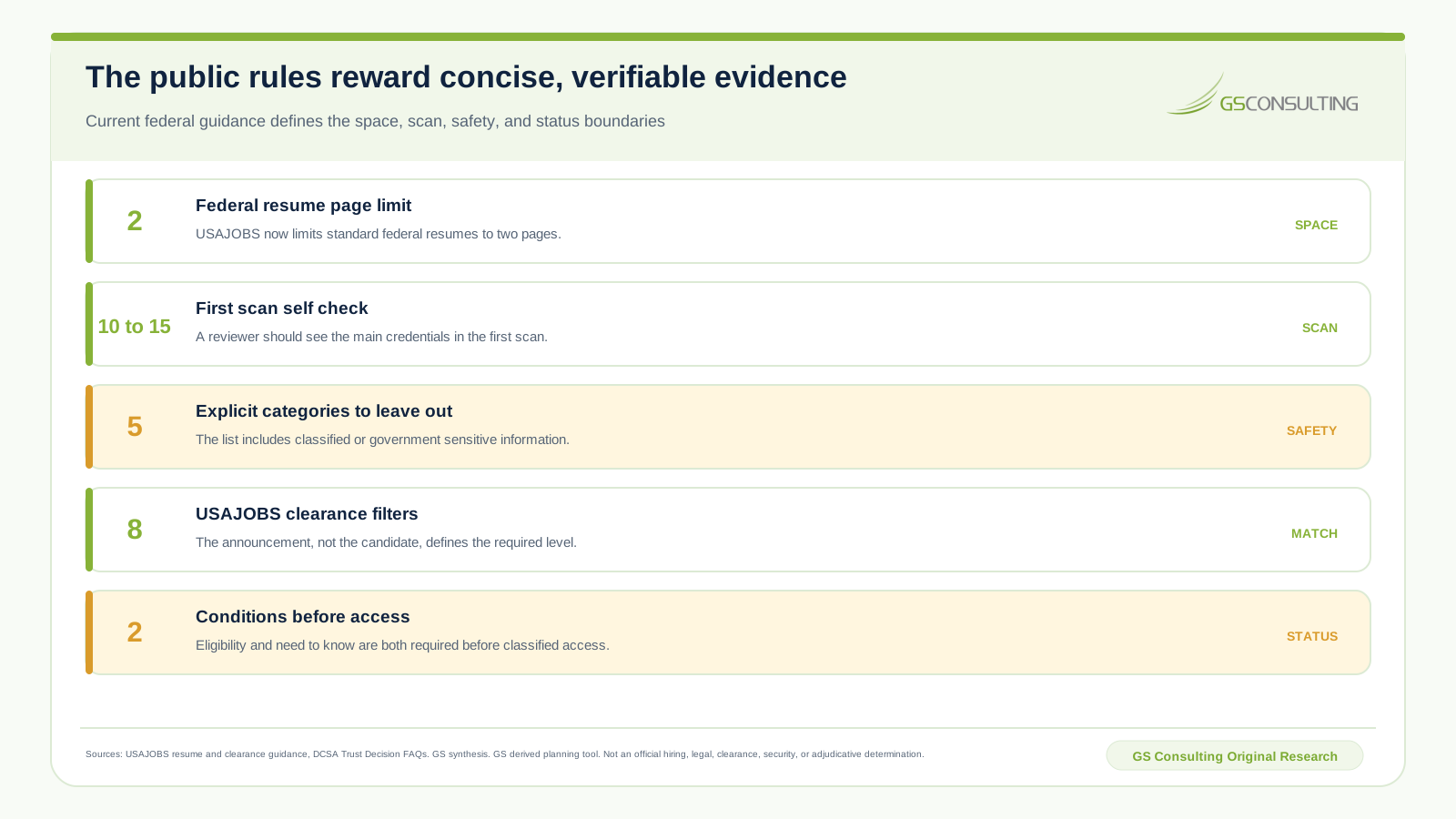
USAJOBS limits a standard federal resume to two pages. It tells applicants to tailor experience to the announcement, use plain language, and show results. The main credentials should be visible within 10 to 15 seconds. The guidance also says to leave out classified or government sensitive information and Social Security numbers. Photos, certain personal information, and encrypted or digitally signed documents also stay out.
The same USAJOBS guidance asks federal applicants to include the employer, title, and month and year dates. It also requires hours per week and evidence that the applicant performed work at the required level. Federal series and grade belong on federal experience. Education, licenses, and certifications belong when the announcement requires them.
USAJOBS lists eight clearance filters, including Sensitive Compartmented Information. The announcement defines the required level. A clearance label alone does not show technical fit, schedule fit, worksite fit, or the ability to perform the actual duties.
Original Research: The GS Cleared Resume Evidence Priority Index
Not every resume element deserves equal space. Put the highest decision value evidence first.
GS Consulting scored 12 resume evidence elements across five factors. Gate clarity and mission relevance each carry 25 percent. Evidence strength carries 20 percent. Verification readiness and disclosure discipline each carry 15 percent. Each factor receives an ordinal rating from one to five. The weighted result is multiplied by 20 and reported on a zero to 100 scale.
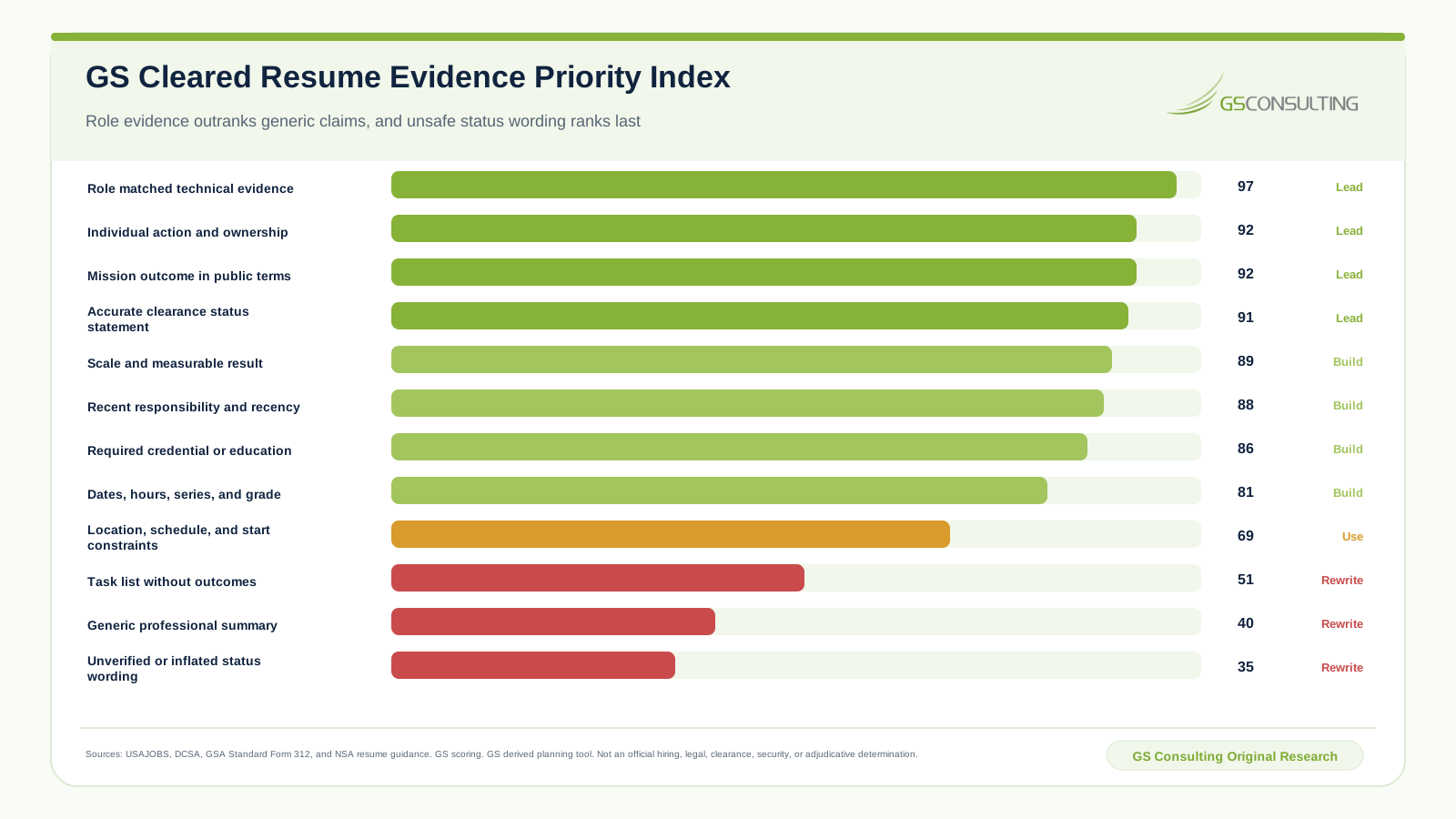
Role matched technical evidence scores 97. Individual action and mission outcome each score 92. An accurate clearance status statement scores 91. These elements lead because they help a recruiter resolve the role gate, understand the candidate's contribution, and test the claim through normal hiring channels.
Unverified or inflated status wording scores 35. A generic professional summary scores 40. A task list without outcomes scores 51. Those elements occupy scarce space but provide little safe, verifiable evidence. The low score for inflated wording is deliberate. A strong sounding claim that cannot survive verification is worse than a modest, precise statement.
A sensitivity test shifts five percentage points from gate clarity to evidence strength. The leading elements remain at the top and every score changes by three points or less. That stability suggests the sequence is useful even when a team values proof slightly more than initial qualification.
Write the Clearance Line From Verified Facts
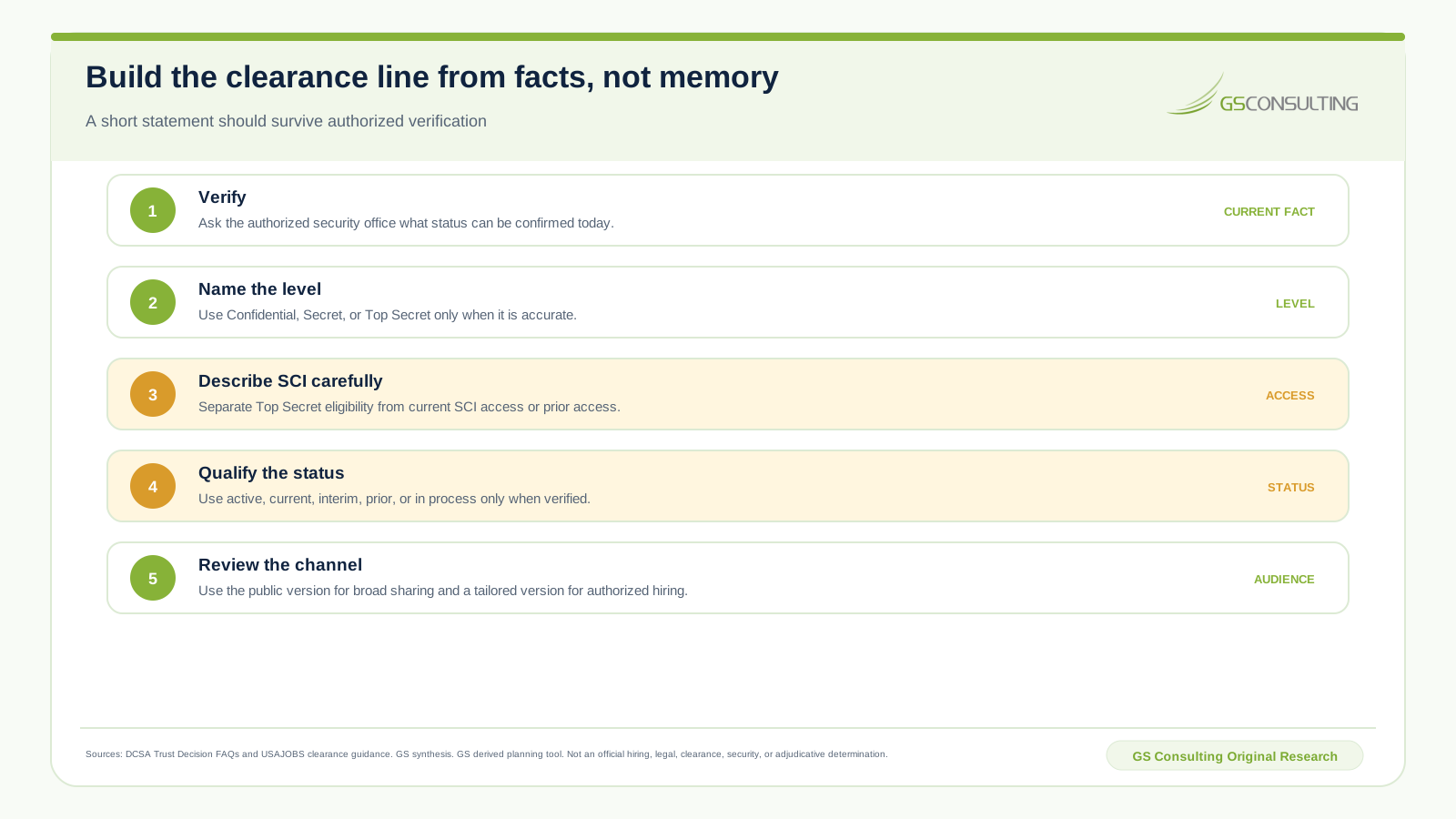
The line should be short because its job is narrow. It tells a recruiter what to verify. It does not explain the investigation, prove trustworthiness, replace a security check, or guarantee access on a new program.
Use this sequence:
- Verify today. Ask the authorized security office for the current level, status, and public wording.
- Name the level precisely. Use Confidential, Secret, or Top Secret only when that is the verified eligibility.
- Separate SCI access. Distinguish current access, prior access, and eligibility for consideration where the distinction is material.
- Qualify the status. Use active, current, interim, prior, or in process only when the term is accurate in the relevant system and context.
- Review the audience. A public profile, recruiter submission, and direct authorized application do not have the same exposure.
A polygraph type or sponsor should not appear by default. The same applies to an adjudication date, investigation detail, or access history. Include one only when the role requires it, the fact is current, and the security office confirms that it is appropriate for that channel. More detail is not automatically more credible.
Clearance Status Examples That Preserve the Distinction
These are planning patterns, not universal approved phrases. Replace them only with facts your authorized security contact confirms.
Current eligibility and current access
Security clearance: Top Secret eligibility with current SCI access. Status subject to verification through authorized channels.
Current Top Secret eligibility without a current SCI access claim
Security clearance: Current Top Secret eligibility. SCI access depends on position need, authorization, and briefing.
Prior access
Security clearance: Previously held Top Secret eligibility and SCI access. Current status to be verified through authorized channels.
Interim status
Security clearance: Interim Top Secret eligibility, if that exact status is current and verified. Do not remove the word interim.
Do not write “clearable,” “eligible for TS/SCI,” or “TS/SCI pending” unless a real sponsor and authorized process support the exact statement. DCSA makes clear that an individual cannot apply for a clearance alone. The job requirement and sponsoring organization drive the process.
Prove Mission Fit Without Exposing the Mission
A cleared recruiter needs enough context to judge transferability. That does not require classified detail. The candidate can often describe the system type and operating constraint in public terms. Then the candidate can explain a personal decision, approved method, measurable result, and mission consequence.
Start with the announcement. Mark every required competency, tool, duty, and credential. Then mark the location, shift, travel condition, and experience threshold. Beside each item, add one public example that proves it. If no example exists, do not hide the gap behind an acronym. Decide whether adjacent experience is genuinely transferable and explain the connection.
Replace organization language with action language. “Supported cyber operations” says little. “Diagnosed authentication failures across a large enterprise environment, isolated the fault to certificate validation, restored service, and documented the check that prevented recurrence” gives an interviewer something to test. The public version may omit numbers or system names that are not approved, but it still shows method and result.
Use approved measures. Time saved, incident duration, availability, and defect reduction can show scale. Review volume and response time can do the same. Delivery accuracy, cost avoidance, and risk reduction also work when those numbers are authorized for release. If an exact number is sensitive, ask whether a range, relative change, or qualitative scale is approved. Never invent precision.
Build One Evidence Claim at a Time
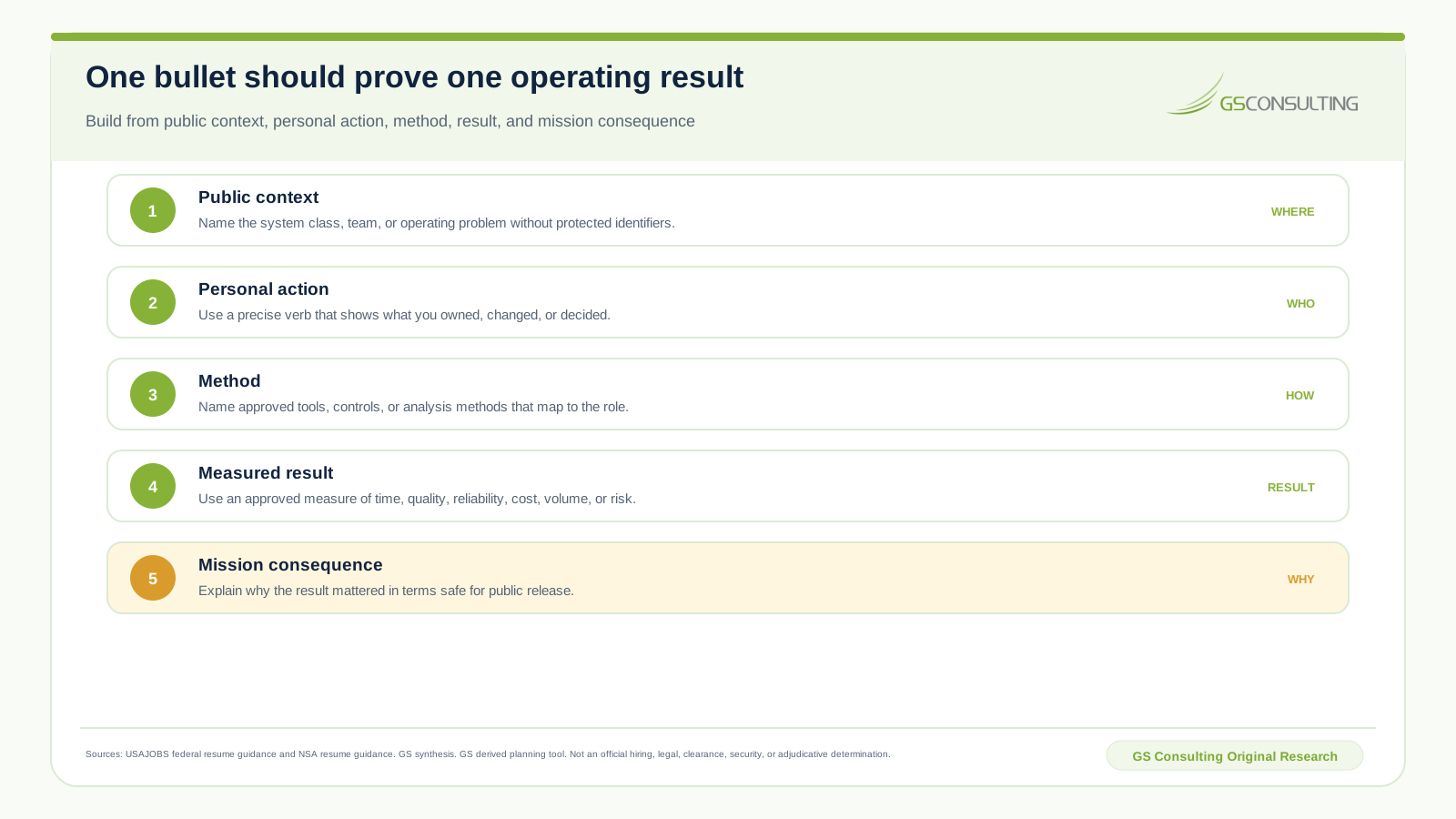
Use the five parts as a drafting tool, not a rigid sentence formula. The final bullet can be one or two sentences. What matters is that the reader can identify the candidate, the work, and the result.
Weak: Responsible for network security tools and incident response on classified systems.
Stronger public version: Led diagnosis for recurring authentication failures in a restricted enterprise environment, used approved log and certificate checks to isolate the fault, restored service within the operating window, and added a validation step that reduced repeat incidents.
Weak: Supported intelligence analysis and briefed senior leaders.
Stronger public version: Synthesized multiple approved data sources into concise assessments, documented confidence and information gaps, and briefed senior decision makers on options and operating consequences.
The stronger versions still need review against the actual facts and applicable security guidance. The point is the structure: personal action, observable method, and consequence. No secret sauce is required.
Federal and Contractor Resumes Need Different Packaging
A standard USAJOBS resume is now limited to two pages. Federal reviewers also need facts that a private employer may not request, including month and year dates, hours per week, and federal series and grade for federal experience. Read the required documents, qualifications, specialized experience, and evaluation sections closely. The agency will not infer missing facts.
A contractor resume usually gives more weight to immediate role fit and customer environment familiarity. Worksite availability, shift fit, technical depth, and a verifiable clearance gate also matter. Format expectations vary. Keep the first page decisive even when the employer accepts more than two pages.
Do not use one file unchanged for both channels. Keep a controlled evidence inventory, then create a federal version and a contractor version from it. The facts stay consistent. The selection and order change.
What Not to Put on a Cleared Resume
Standard Form 312 makes the disclosure rule plain: when classification status is uncertain, obtain an authorized determination before treating information as unclassified. A resume is not the place to test the boundary.
Remove these categories before a cleared resume leaves your control:
- Compartment names, code words, and classified program names.
- Targets, sources, methods, and mission locations.
- Customer identities that are not public, detailed capabilities, and vulnerabilities.
- Operating schedules, access details, and sensitive tool configurations.
Also remove controlled information that the employer or contract does not permit for public release.
NSA resume guidance permits candidates to include appropriate clearance information while warning against identifying classified projects. Your current employer, agency, contract, or nondisclosure agreement may impose more specific review rules. Follow the stricter applicable instruction.
Maintain two controls. First, keep a public evidence inventory with only approved facts. Second, record who reviewed sensitive phrasing and when. Do not store classified or restricted source material inside the resume packet.
Fix the Six Common Failure Modes
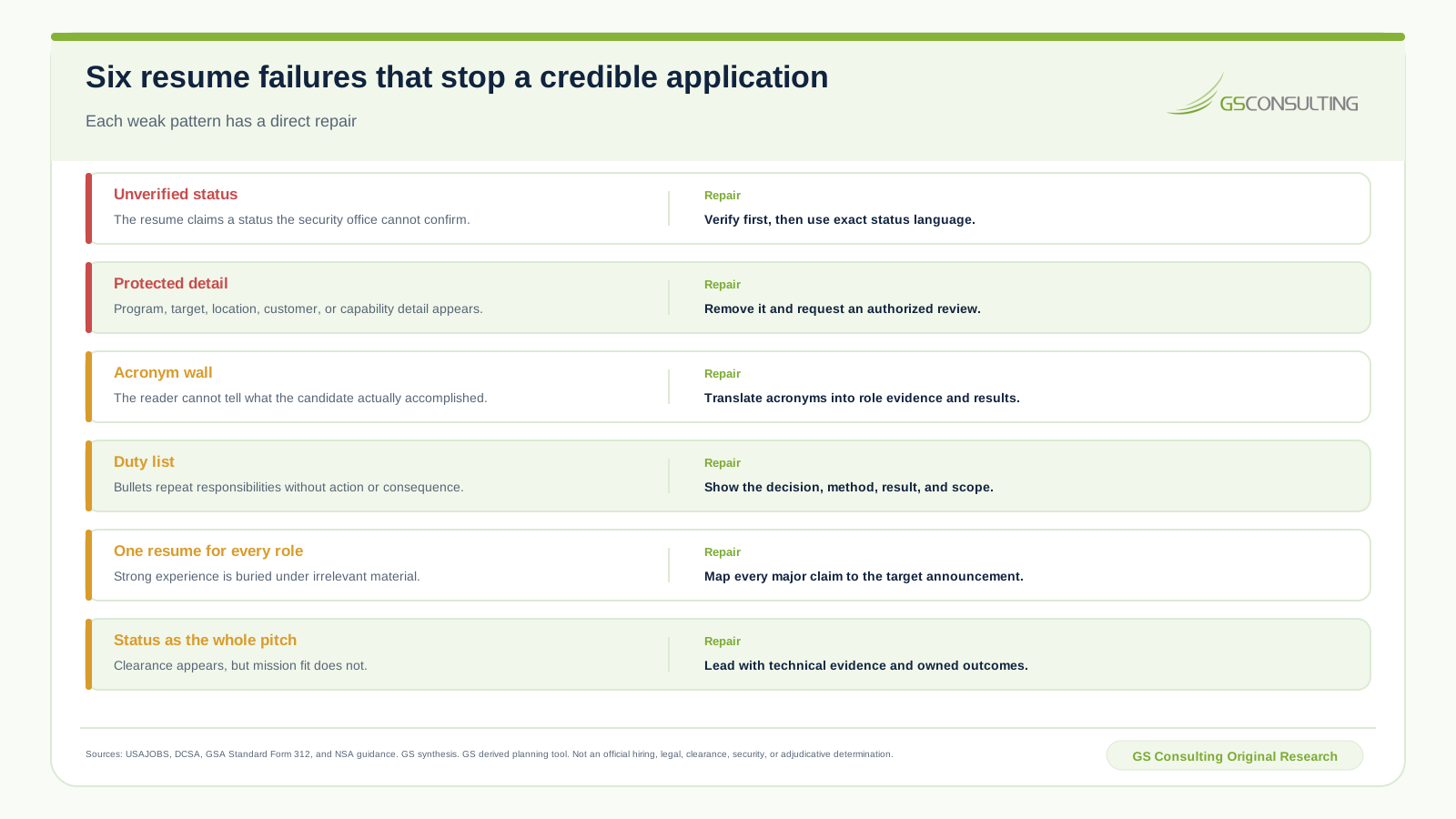
The status error is the most serious because it damages trust before the technical discussion begins. The protected detail error is serious because the application itself can create risk. Acronym walls, duty lists, and generic summaries are less dangerous, but they still lose interviews by hiding what the candidate can actually do.
Run a simple test on every line. What decision does this fact help the recruiter make? Can an authorized person verify it? Does it show the candidate's action? Is the detail approved for this audience? If the answer is no, rewrite or remove it.
Build the Cleared Resume Evidence Packet
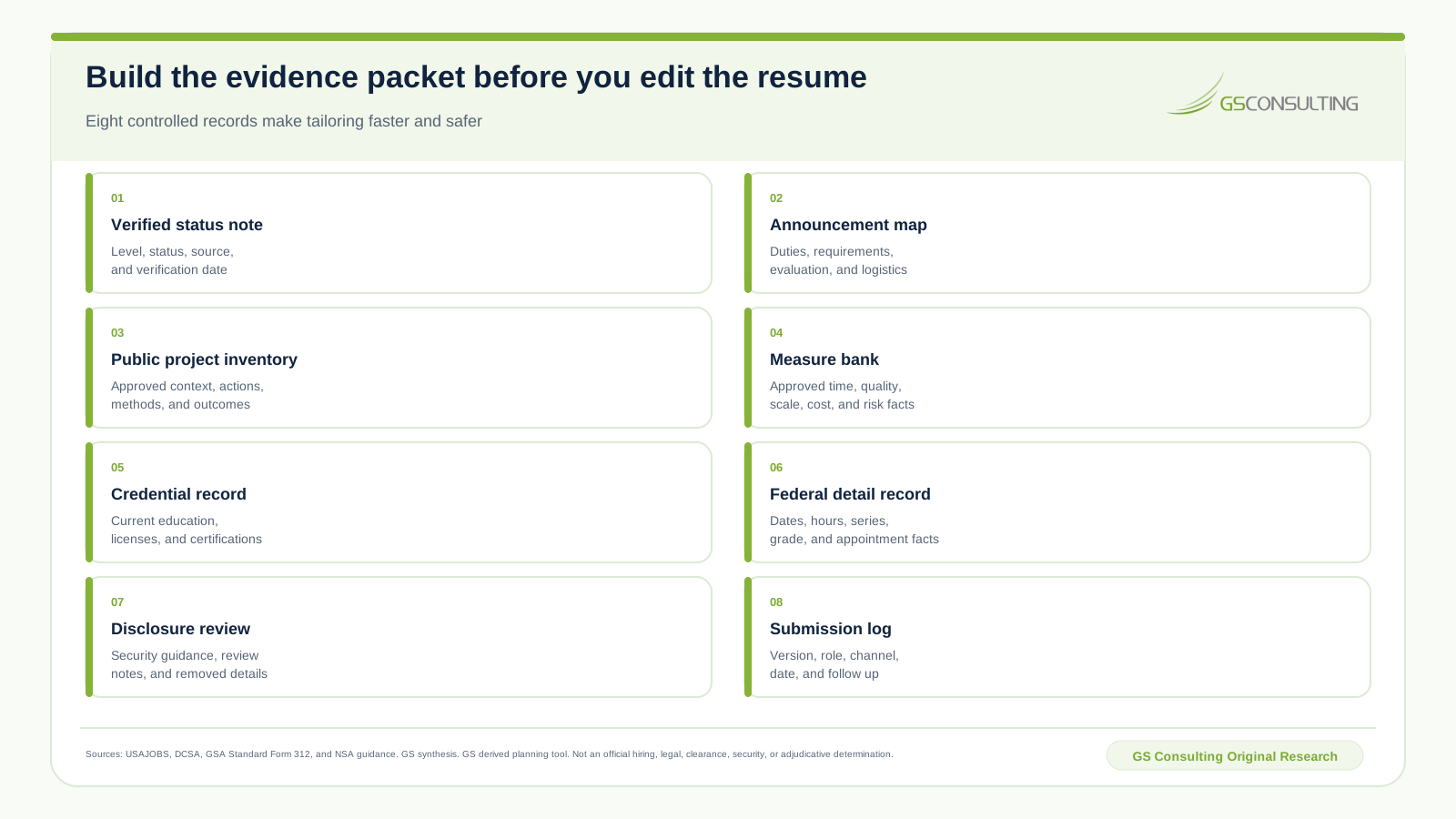
The packet is a controlled working set, not a document to send wholesale. Start with the verified status note, announcement map, public project inventory, and approved measure bank. Add the credential record, federal employment detail, disclosure review record, and submission log.
The announcement map prevents generic tailoring. The public project inventory prevents frantic memory work. The measure bank makes results concrete. The submission log preserves which version went to which organization. Together they reduce both inconsistency and accidental over disclosure.
Keep sensitive personal data and any nonpublic source material out of the packet unless an approved system and real business need require it. A clean working record should help you answer an authorized request, not create a new repository of risk.
The Final 15 Minute Review
- Compare the clearance line with the latest authorized verification.
- Read the first quarter of page one. Confirm the role, technical evidence, and required credential are obvious.
- Match each major bullet to a requirement or mission responsibility.
- Circle the verb in each bullet. Confirm it describes your action, not the team's existence.
- Underline each result. Replace unsupported adjectives with observable evidence.
- Search every acronym and expand or remove the ones a reviewer may not know.
- Run the disclosure review for programs, customers, locations, capabilities, configurations, and dates.
- Check the required federal details or contractor logistics for the target role.
- Save the exact submitted version and record the role, date, and channel.
Then stop editing. A resume is ready when it resolves the hiring decision with accurate, safe evidence. It is not improved by another paragraph of generic confidence.
The Bottom Line
A clearance can make a candidate eligible for a conversation. It does not prove mission fit. The resume must do that work with public, specific, verifiable evidence.
The operating standard is plain: verify the status, protect the boundary, and make every remaining line prove the role.
Turn the resume into a mission evidence file.
GS Consulting hires people who can explain their judgment, protect sensitive work, and connect technical action to mission results.
Explore Current OpportunitiesResearch Sources and Caveats
The GS Cleared Resume Evidence Priority Index and status statement sequence are derived planning tools. The same applies to the bullet builder, failure analysis, and evidence packet. These are not official hiring or legal determinations. They do not represent a clearance or security determination. They do not speak for DCSA or USAJOBS. They also do not speak for NSA, an agency, or an adjudicative authority.
- USAJOBS Federal Resume Guidance
- DCSA Trust Decision FAQs
- GSA Standard Form 312
- USAJOBS Background Checks and Security Clearances
- USAJOBS Security Clearance Filters
- USAJOBS Job Announcement Overview
- NSA Resume Guidance
Frequently Asked Questions
Should I put TS/SCI on my resume?
You may state an accurate clearance level and status when the role calls for it and your security office permits public disclosure. Verify the current wording first. Do not name compartments or programs. Leave customers, operations, and other protected details out.
How do I list TS/SCI on a resume?
Use a short clearance line near the top for a cleared role. Separate Top Secret eligibility from SCI access and qualify the current status accurately. Include a polygraph or date only when it is verified, relevant, and approved for that hiring channel.
What if my TS/SCI is inactive or from a prior role?
Do not describe it as active. Use prior status language that an authorized security office can verify, or state that current status must be confirmed through authorized channels. A past access decision is not a promise of current access.
Can I name classified projects on a cleared resume?
No. Describe approved public context and your action. Explain the method, result, and mission consequence without naming classified programs or compartments. Leave targets and locations out. Do the same for customers, capabilities, and sensitive operating facts.
How long should a TS/SCI resume be?
USAJOBS limits a standard federal resume to two pages. A contractor application can use a different format, but the same discipline applies: keep only evidence that resolves a role requirement, proves mission fit, or clarifies a material condition.
What makes a cleared resume strong?
A strong cleared resume starts with an accurate status statement and role matched technical evidence. It adds personal ownership and approved measures. Relevant credentials, recent responsibility, and disclosure discipline complete the record. Clearance opens a gate. Evidence wins the role.