Cybersecurity | | 23 min read
SOC Automation: What to Automate First and What to Keep Human

Key Takeaways
The security operations view
Remove repeated preparation
Enrichment, grouping, routing, and evidence capture score highest because they are repeatable, reversible, and useful without broad action authority.
Protect consequence decisions
Containment, account disablement, production blocking, external notice, and reportability need named authority and visible approval.
Every action needs recovery
If the team cannot explain, reverse, and review an automated action, the action is not ready for unattended execution.
SOC automation is not about removing analysts. It is about removing repeated preparation while keeping consequential authority visible.
The distinction decides whether automation makes a security operations center faster or merely less observable. A workflow that adds reputation, asset, identity, and case context can return hours to analysts. A workflow that disables the wrong account or isolates the wrong production host can turn an alert into an outage.
Good SOC automation separates evidence preparation from judgment and judgment from action. It applies machine speed where the work is repeatable, constrained, reversible, and easy to verify. It preserves human authority where uncertainty, consequence, external duty, or business context changes the decision.
The SOC Automation hub connects this guide to incident response, IT security operations, audit evidence, and workflow risk. Our Corporate Cyber Disclosure Index adds original research on the public gap between cyber oversight, operating metrics, and escalation evidence. Use the AI security alert triage guide to design the evidence and authority gates inside the queue, then use the analyst workflow automation ROI guide to measure quality protected capacity, full cost, and the scale decision. The cybersecurity workflow automation use cases compare fourteen bounded tasks, and the SOC automation build vs buy guide compares native, commercial, custom, and hybrid sourcing patterns. The SIEM ingestion and normalization guide defines the event controls those tasks depend on. The private AI and SIEM integration architecture maps approved sources, deterministic preparation, structured output, validation, delivery, and reconciliation. GS Consulting applies the same approach through cyber threat detection and analytics.
Automate the preparation before the consequence.
GS Consulting helps security teams map tasks, authority, evidence, exceptions, and recovery before expanding SOC automation.
Request a SOC Automation ReviewWhat SOC Automation Actually Means
SOC automation is the controlled use of rules, workflows, analytics, and AI assistance to move security work from signal to verified action. It can collect context, group related events, create a case, assign an owner, preserve evidence, recommend a runbook, request approval, execute a bounded response, and confirm the result.
SOAR platforms can orchestrate some of this work. Endpoint, identity, cloud, ticketing, threat intelligence, and case systems also include automation. The platform is not the operating model. The operating model names the trigger, evidence, decision rule, owner, approval, action boundary, event record, exception, and recovery path.
NIST SP 800-61r3 connects incident response to preparation, detection, response, recovery, and broader risk management. The CISA incident and vulnerability response playbooks emphasize consistent procedures and coordination. Neither says that every repeated step should run without people. They support disciplined, tested, and documented response.
Three Authority Lanes for SOC Automation
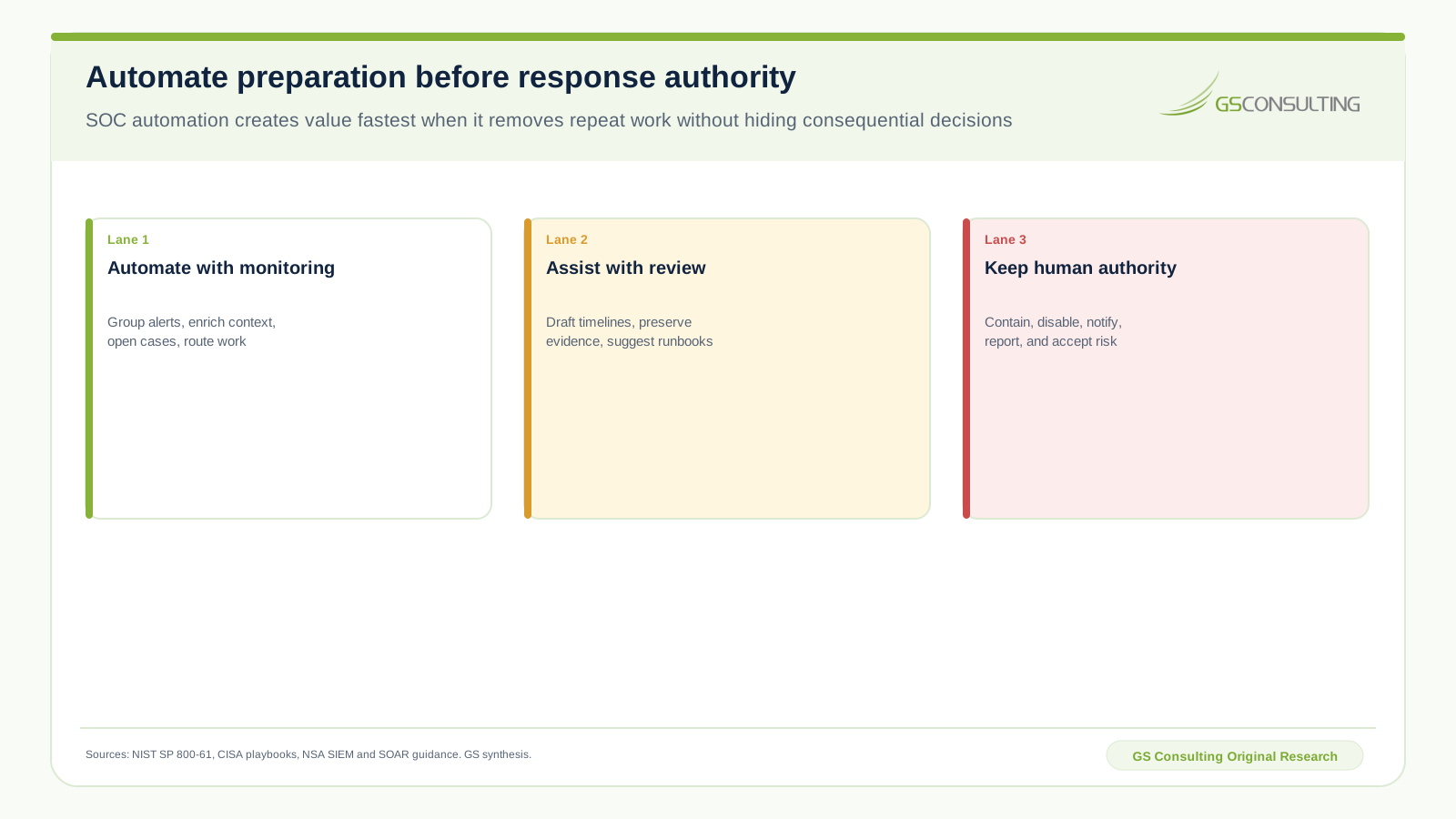
Lane 1: automate and monitor
Use unattended execution for deterministic preparation with bounded inputs, low consequence, clear evidence, and reliable retry. Common examples include reputation lookup, alert grouping, duplicate suppression, asset context, identity context, case creation, ownership routing, and evidence preservation.
Lane 2: assist and review
Use automation to assemble a decision packet, draft a timeline, recommend a runbook, or propose a response. An analyst confirms the evidence, chooses the action, and records the reason. This lane suits variable evidence or meaningful exceptions where machine preparation is still valuable.
Lane 3: human decision and controlled execution
Keep explicit authority for actions with broad consequence, legal or customer implications, uncertain scope, or hard recovery. The system can prepare and execute after approval, but it should not silently make the decision.
The lanes should be assigned per task, not per incident. One incident may use unattended enrichment, reviewed timeline drafting, and human approval for containment. That separation keeps useful automation from inheriting authority it does not need.
GS SOC Automation Suitability Index
GS Consulting built a derived planning model for ten common SOC tasks. The suitability score weights repeatability at 22 percent, evidence quality at 18 percent, reversibility at 18 percent, inverse consequence at 18 percent, inverse decision sensitivity at 14 percent, and inverse exception rate at 10 percent. Each rating uses a 1 to 5 analyst scale.
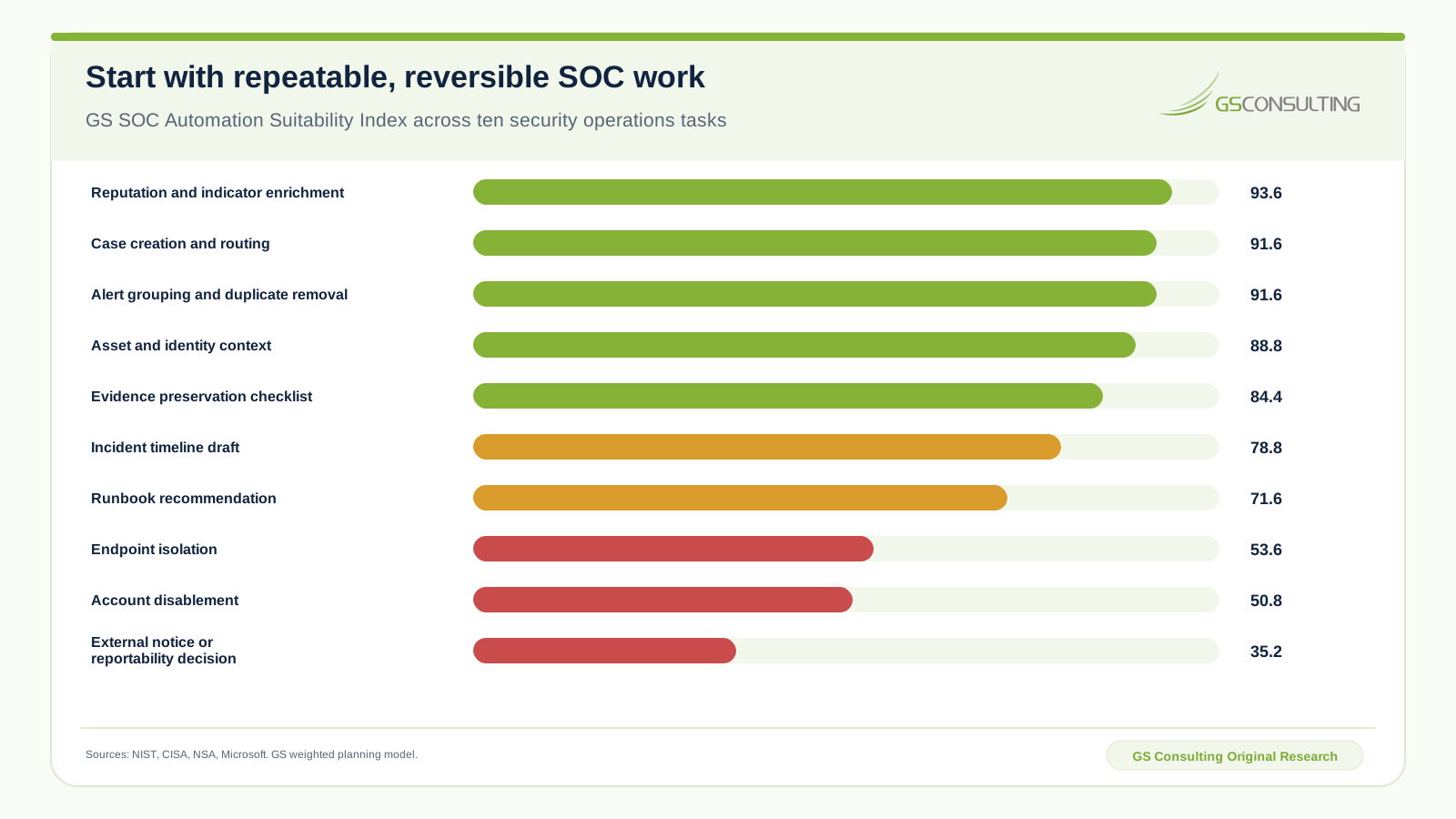
Reputation and indicator enrichment scores 93.6. Case creation and routing scores 91.6. Alert grouping and duplicate suppression also scores 91.6. Asset and identity context scores 88.8. Evidence preservation checklists score 84.4. Those five tasks clear the model threshold for automate and monitor.
Timeline drafting scores 78.8, and runbook recommendation scores 71.6. They belong in assist and review. Endpoint isolation scores 53.6, account disablement scores 50.8, and external notice or reportability determination scores 35.2. Those tasks stay in the human authority lane.
The scores are derived planning values, not measured performance or universal rules. The model uses public guidance and stated analyst assumptions. Organizations should change ratings and weights for their environment. An alternate weight set moves each task by a limited amount and does not change the broad lane assignment.
What to Automate First
Reputation and indicator enrichment
Query approved sources for domains, internet addresses, file hashes, certificates, users, devices, and known campaigns. Normalize the result, record source time, preserve uncertainty, and attach it to the case. Do not let one reputation value become an automatic verdict.
Alert grouping and duplicate suppression
Group repeated signals that share a user, asset, process, indicator, or time window. Preserve the original events and grouping logic. Analysts need to see why events were combined and be able to separate them.
Asset and identity context
Add business owner, criticality, environment, exposure, identity role, privilege, recent changes, and open vulnerabilities. Context should come from named systems with freshness recorded. An empty field should remain unknown, not silently become low risk.
Case creation and routing
Create the case, assign severity from defined rules, select the queue, start the timer, and notify the owner. Route failures should be visible. A case without an accepted owner is still unowned.
Evidence preservation checklist
Collect event identifiers, time range, query, source, case version, analyst notes, approval, action record, and recovery result. The workflow can prompt and validate. A person still decides whether the evidence is sufficient for the incident and any external duty.
The NSA guidance for SIEM and SOAR implementation stresses architecture, logging, enrichment, playbooks, and measurable outcomes. CISA has also described information centered automation and orchestration. The practical lesson is to automate around trustworthy information, not around alert volume alone.
What to Keep Human
Containment with business consequence
Endpoint isolation, network blocking, account disablement, credential reset, cloud session revocation, and production service restriction can stop an attacker. They can also stop the business. Use automation to prepare the target, reason, confidence, affected services, recovery step, and approval request. Keep a named person accountable for the decision unless the scenario is narrowly preapproved and repeatedly tested.
External notice and reportability
Contract, law, regulation, insurance, customer commitments, and incident facts can affect notice duties. Automation can collect clauses, time, affected data, systems, and contacts. Counsel, compliance, contract, privacy, or other authorized owners should determine whether a duty exists and approve the communication.
Scope and severity judgment
Automation can calculate a proposed severity from known facts. A person should handle conflicting evidence, executive impact, mission consequence, incomplete scope, and novel attacker behavior. A severity label is a decision about response authority and attention, not a cosmetic ticket field.
Destructive remediation and public communication
File deletion, host rebuild, broad rule changes, evidence destruction risk, law enforcement coordination, customer statements, and public messages need explicit authority. The system should preserve the request, approver, action, result, and recovery.
Microsoft documents how automated investigation and response can investigate alerts and take remediation actions, while Microsoft Sentinel playbooks can orchestrate responses. Those capabilities still require environment specific authority, testing, configuration, monitoring, and owner review.
Automation Suitability Is Not Control Burden
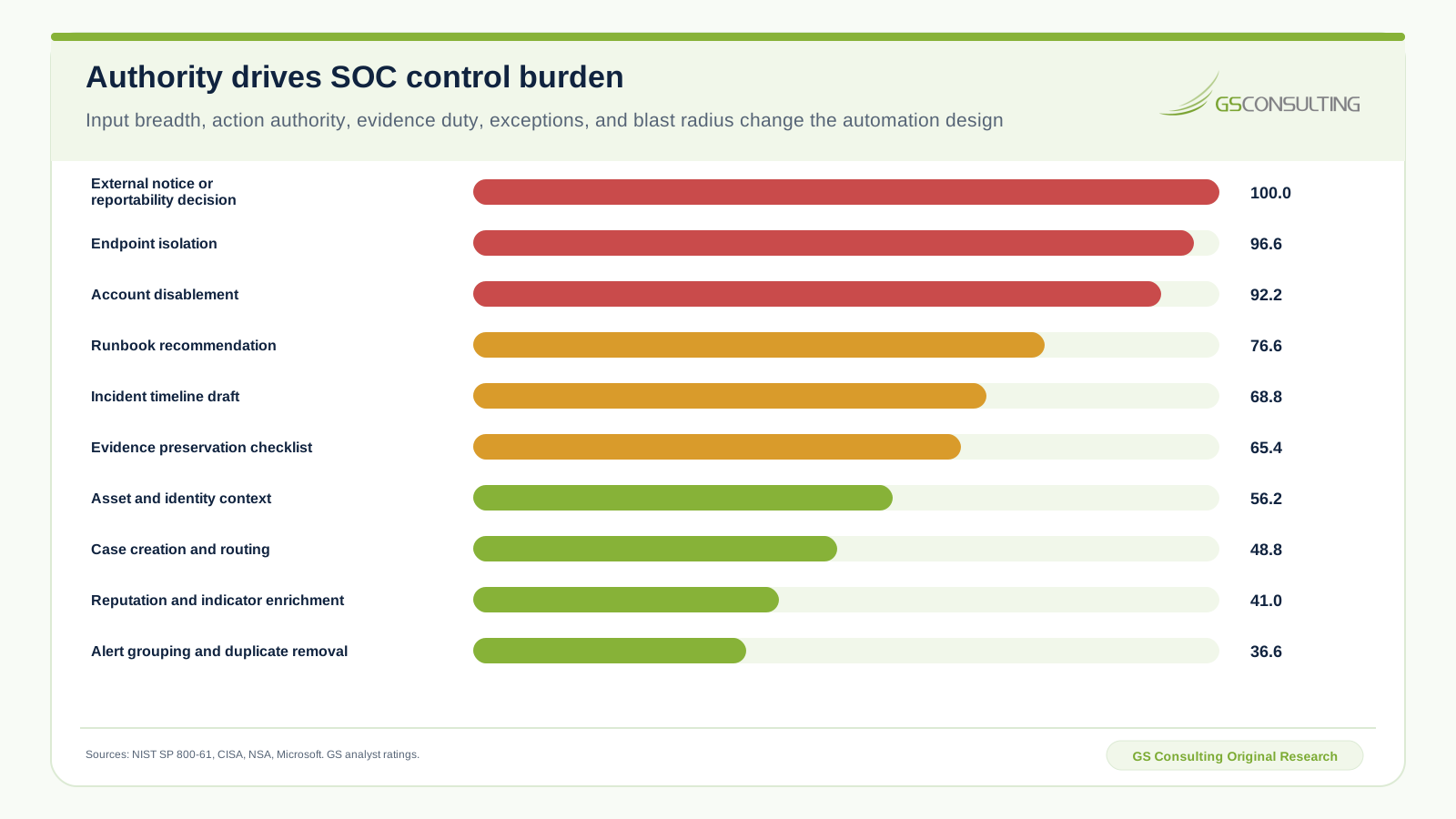
The burden model weights input breadth, action authority, evidence, exceptions, and blast radius. External notice or reportability reaches 100.0. Endpoint isolation reaches 96.6. Account disablement reaches 92.2. Runbook recommendation reaches 76.6, timeline drafting 68.8, and evidence preservation 65.4.
At the other end, alert grouping scores 36.6, reputation enrichment 41.0, and case routing 48.8. Those are good starting points because teams can improve speed and consistency while keeping the most consequential decisions separate.
A SOC Automation Decision Path
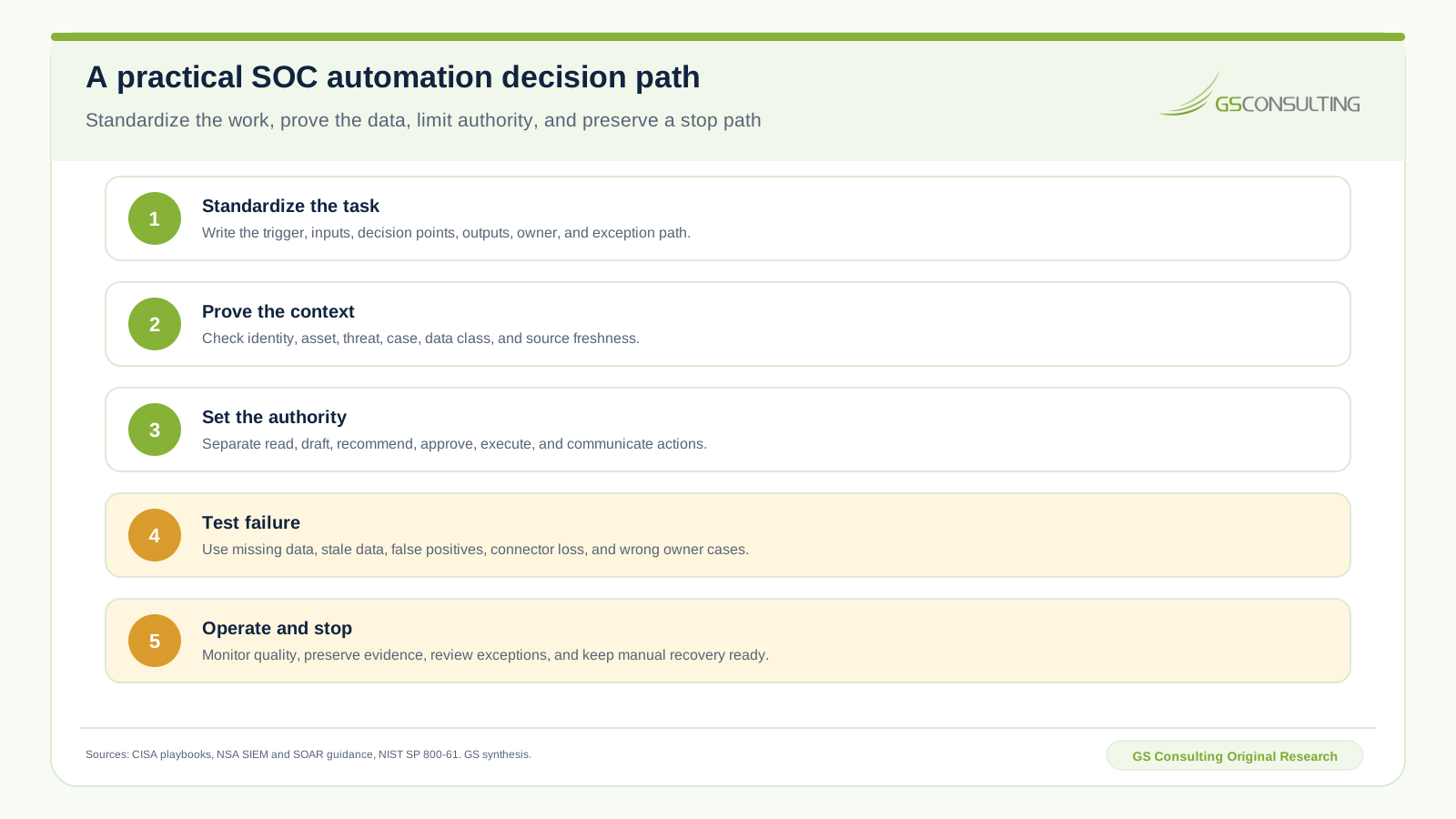
- Define the task. Separate enrichment, decision, action, confirmation, and recovery into distinct steps.
- Rate consequence and reversibility. Ask what happens when the action is wrong and how quickly the team can recover.
- Resolve evidence and exceptions. Name required inputs, unknown states, conflict rules, and the path for cases that do not fit.
- Assign an authority lane. Automate and monitor, assist and review, or retain human decision with controlled execution.
- Test and prove operation. Run normal, adverse, incomplete, duplicate, delayed, unavailable, and recovery cases before expansion.
Six SOC Automation Failure Modes
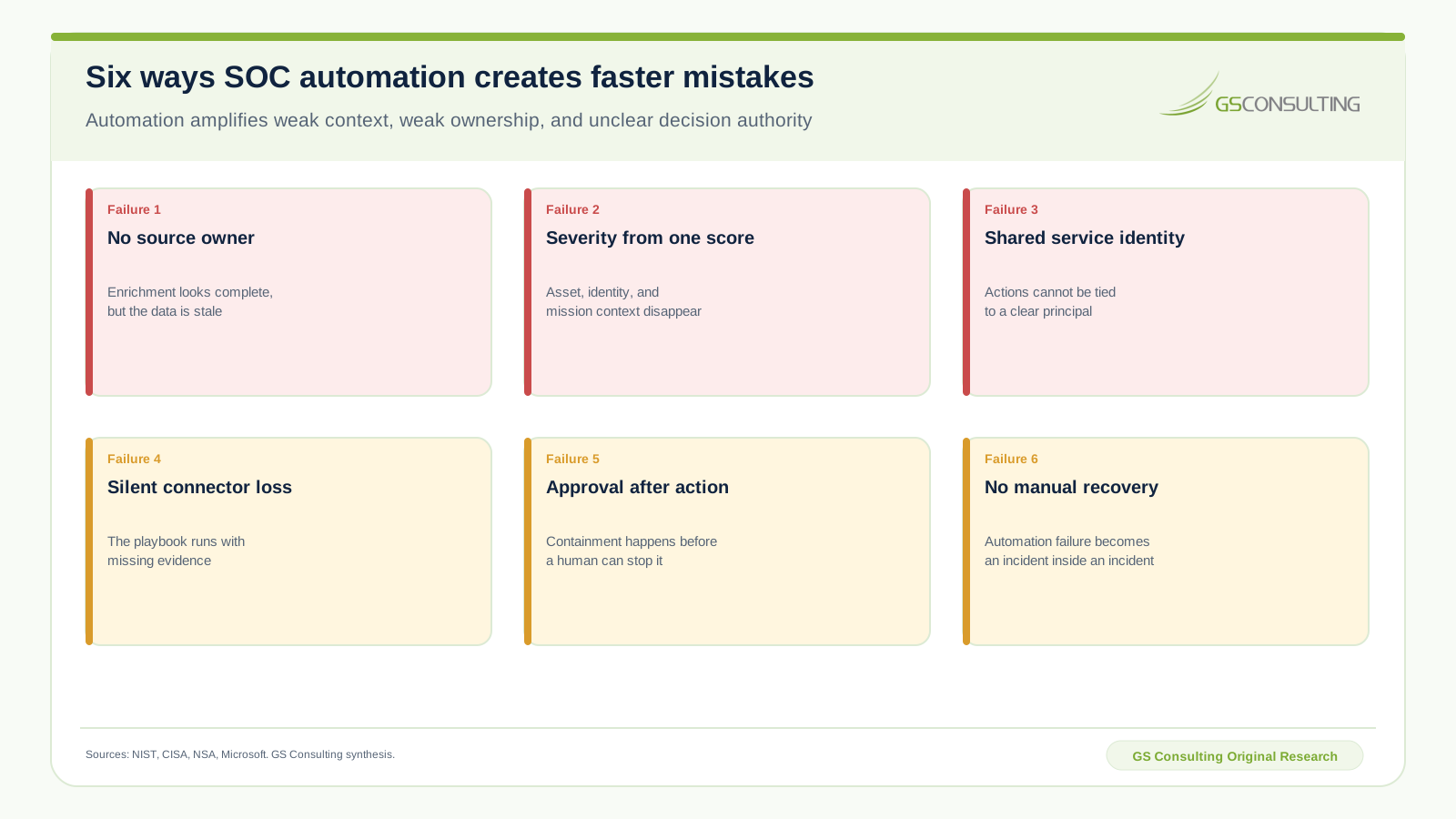
No accepted owner leaves cases in a queue. Unknown becomes safe hides missing context. Confidence becomes authority turns a score into an action. Scope expands silently lets a playbook touch more assets or identities than intended. Recovery is untested makes containment harder to reverse. Closure becomes the metric rewards volume instead of useful risk reduction.
A 90 Day SOC Automation Plan
Days 1 through 30: baseline and boundaries
- Measure repeated analyst steps, wait time, case quality, false positive handling, ownership gaps, and evidence gaps.
- Decompose ten candidate workflows into trigger, inputs, decision, action, confirmation, and recovery.
- Name data and action owners, including identity, endpoint, cloud, network, ticketing, legal, privacy, and customer roles.
- Choose two Lane 1 tasks with reliable inputs and low consequence.
Days 31 through 60: controlled pilot
- Implement enrichment and case routing with clear unknown states, logs, retry, and owner acceptance.
- Run in observation mode and compare automated results with analyst decisions.
- Test duplicate, stale, missing, conflicting, delayed, and unavailable inputs.
- Record time returned, correction rate, missed context, evidence completeness, and operator feedback.
Days 61 through 90: assist and prove
- Add one Lane 2 task such as timeline drafting or runbook recommendation.
- Require an explicit review decision and reason before any consequential action.
- Test rollback, loss of a connected system, queue failure, and emergency stop.
- Approve expansion only when the evidence shows useful time returned without hidden authority or weaker case quality.
The Minimum SOC Automation Evidence Packet
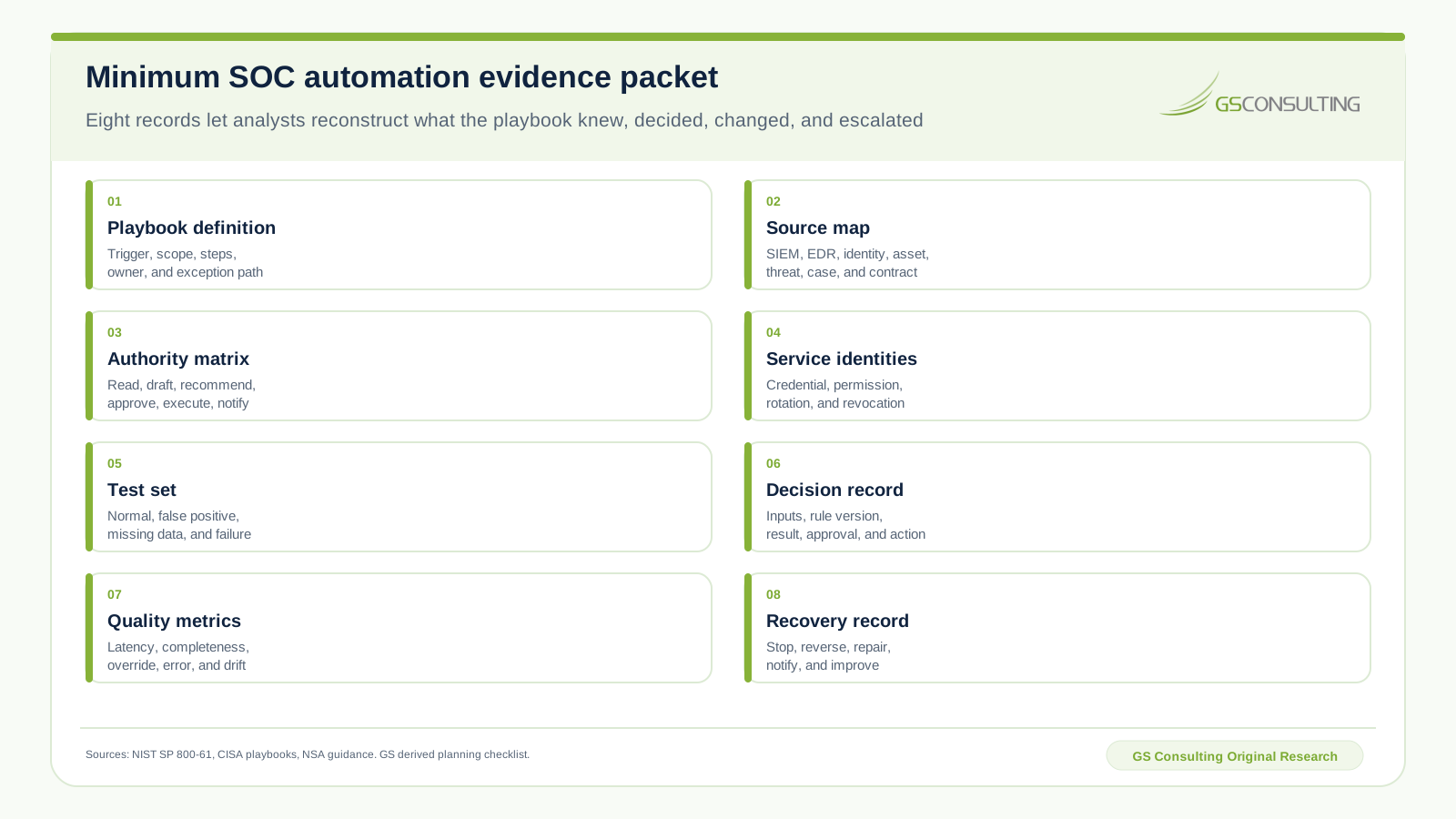
Preserve eight records: workflow definition, input and source register, authority matrix, test suite, playbook version, execution event, exception and recovery record, and owner review. The evidence should connect the alert to the context collected, decision made, approval obtained, action executed, result confirmed, and recovery completed.
The draft NIST SP 800-92r1 log management planning guide is useful for log management planning, but teams should verify its publication status before treating it as final guidance. The operating need remains clear: logs must support investigation, ownership, retention, protection, and reliable review.
Measure Outcomes, Not Automation Volume
Count time returned to analysts, enrichment completeness, duplicate reduction, routing accuracy, review latency, action error, rollback success, evidence completeness, exception volume, and detection or response outcome. Track workload shifted to maintenance too. A playbook that saves triage time but creates constant connector failures has moved the burden, not removed it.
Do not use percent of alerts closed automatically as the main success measure. That metric can reward aggressive suppression, shallow investigation, and hidden errors. The better question is whether the automation produced a faster, better supported, more recoverable decision.
Bottom Line
SOC automation works when it removes repeated preparation, improves evidence, shortens handoffs, and makes ownership clearer. It fails when speed hides judgment, consequence, or recovery.
That is the operating standard: automate evidence preparation, expose every authority decision, constrain every action, test recovery, and expand only from observed results.
Sources and Method Note
- NIST SP 800-61r3, Incident Response Recommendations and Considerations
- CISA Federal Incident and Vulnerability Response Playbooks
- NSA SIEM and SOAR Practitioner Guidance
- CISA Information Centered Automation and Orchestration
- Draft NIST SP 800-92r1, Cybersecurity Log Management Planning Guide
- Microsoft Defender Automated Investigation and Response
- Microsoft Sentinel Playbook Automation
GS Consulting Original Research. The suitability and burden scores are derived planning tools based on public sources and stated analyst assumptions. They are not measured security outcomes, legal advice, compliance determinations, or product endorsements. Validate the model against your environment, authority, incident process, data, and risk process before use.
Frequently Asked Questions
What is SOC automation?
SOC automation uses rules, workflows, analytics, and controlled AI assistance to collect context, group alerts, create cases, preserve evidence, recommend actions, and sometimes execute bounded response.
What SOC tasks should be automated first?
Start with reputation enrichment, alert grouping, asset and identity context, case creation, routing, and evidence checklists.
Which security response actions should stay human?
Keep people in control of broad containment, account disablement, production blocking, external notice, reportability, public communication, and destructive remediation decisions.
Is SOAR the same as SOC automation?
No. SOAR is a technology category. SOC automation is the wider operating system of inputs, rules, ownership, approvals, actions, evidence, exceptions, metrics, and review.
How should a SOC measure automation success?
Measure useful time returned, enrichment completeness, duplicate reduction, routing accuracy, review latency, action error, recovery success, evidence completeness, exception volume, and security outcome.
Related Reading
- SOC Automation Hub
- AI Cybersecurity Incident Response Workflows
- AI Automation for IT and Security Operations
- Building Audit Trails for Automated Workflows
- Workflow Automation Security Risk Assessment
- Cyber Threat Detection and Analytics
Keep speed and authority in the same design.
GS Consulting helps teams prioritize SOC automation, constrain response authority, and prove operation before expansion.
Request a SOC Automation Working Session