Cybersecurity | | 24 min read
SIEM Ingestion and Normalization Pipeline Design

Key Takeaways
The pipeline in three operating decisions
Preserve the raw fact
Keep source identity, original time, raw value, mapping rule, and explicit unknowns so every normalized field can be challenged.
Test the contract
Validate fields, types, entities, parser versions, rejection, duplicates, and the detections that consume the schema.
Reconcile the destination
Count acceptance, rejection, duplicates, delivery, searchable records, and replay results. A sent event is not a proved event.
Short Answer
SIEM ingestion and normalization is not a log shipping problem. It is a meaning preservation problem. A production pipeline must know which sources are allowed, retain the original event, validate the incoming structure, map fields and types into a versioned schema, preserve time and entity context, quarantine bad records, prevent duplicates, prove destination receipt, and replay corrected data without guessing.
The dangerous failure is not always a stopped connector. It is a healthy looking pipeline that delivers the wrong fact. A source username becomes a target username. A local timestamp is treated as UTC. A missing value becomes zero. A parser update shifts an event class while dashboards continue to load. The SIEM remains available, but detections, investigations, and reports now depend on distorted evidence.
Design the pipeline around one operating standard: no normalized field should outrun its source, rule, version, test, and recovery record. The sections below turn that standard into a build sequence, a control model, and an evidence packet.
Why SIEM Ingestion and Normalization Pipelines Fail
Most teams can connect a source. Fewer can explain what happened to one event after collection. That gap appears because collection, parsing, normalization, enrichment, delivery, and detection are often owned by different people and products. Each handoff can change meaning, and no single dashboard shows the complete path.
Volume creates another trap. A rising event count can look like better coverage even when high value sources are missing, low value sources dominate capacity, or duplicate events inflate the total. Joint guidance from the NSA and international partners recommends gradual source onboarding and asks teams to consider purpose, priority, volume, analytical value, and source health. That is an operating sequence, not an invitation to ingest everything at once.
The third failure is schema optimism. A parser can produce all required fields and still be wrong. Structural validity only proves that the record matches a shape. It does not prove that the source field meant what the mapping says, that the time is correct, that an identity match is sound, or that a detection should act on the result.
What Public Guidance Establishes
The 2025 joint practitioner guidance on SIEM and SOAR platforms presents eleven implementation principles and treats normalization, collection coverage, analysis, response risk, architecture, preprocessing, testing, and maintenance as connected concerns. Its companion priority log guide groups endpoint, operating system, network, and cloud sources and recommends deliberate onboarding rather than uncontrolled volume.
NIST SP 800-92 Revision 1 is still an initial public draft. It is useful as lifecycle context because it follows log information through generation, transmission, storage, access, and disposal. Microsoft documents twelve event schemas in the current Advanced Security Information Model, with parsers between varied telemetry and source independent analytics. OCSF provides another open schema structure through categories, event classes, data types, objects, profiles, extensions, and a shared attribute dictionary.
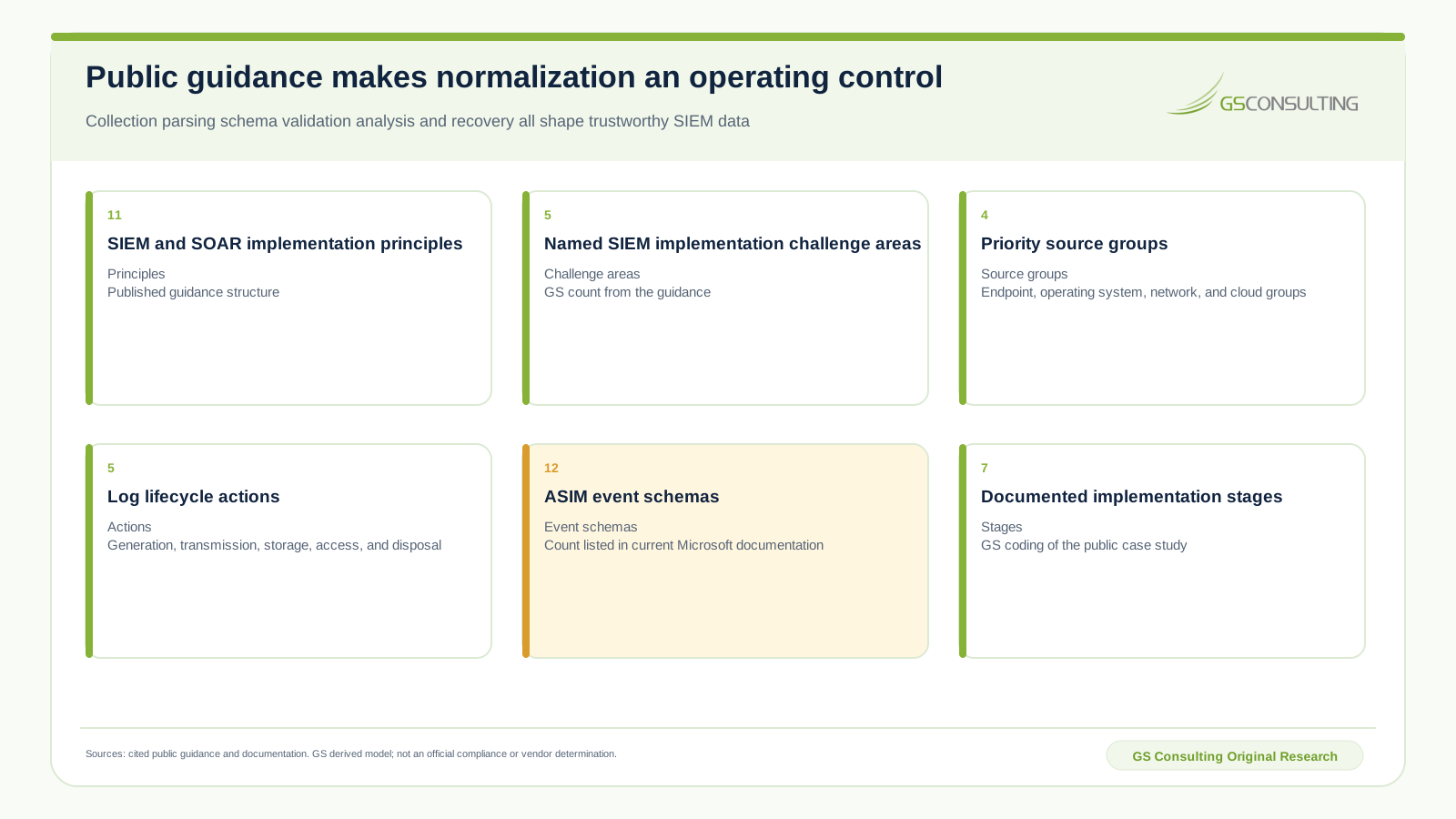
These published structures support the control categories in this guide. They do not supply a representative dataset for predicting pipeline reliability. The ratings, weights, thresholds, sequence, failure modes, and evidence packet below are GS Consulting assumptions for planning. Replace them with local source samples, parser tests, detection dependencies, incidents, and approved risk criteria.
Original GS Research: The Normalization Reliability Priority Index
GS Consulting built the SIEM Normalization Reliability Priority Index to answer a narrow question: which controls need the strongest design, test, monitoring, and recovery proof before detections depend on normalized data?
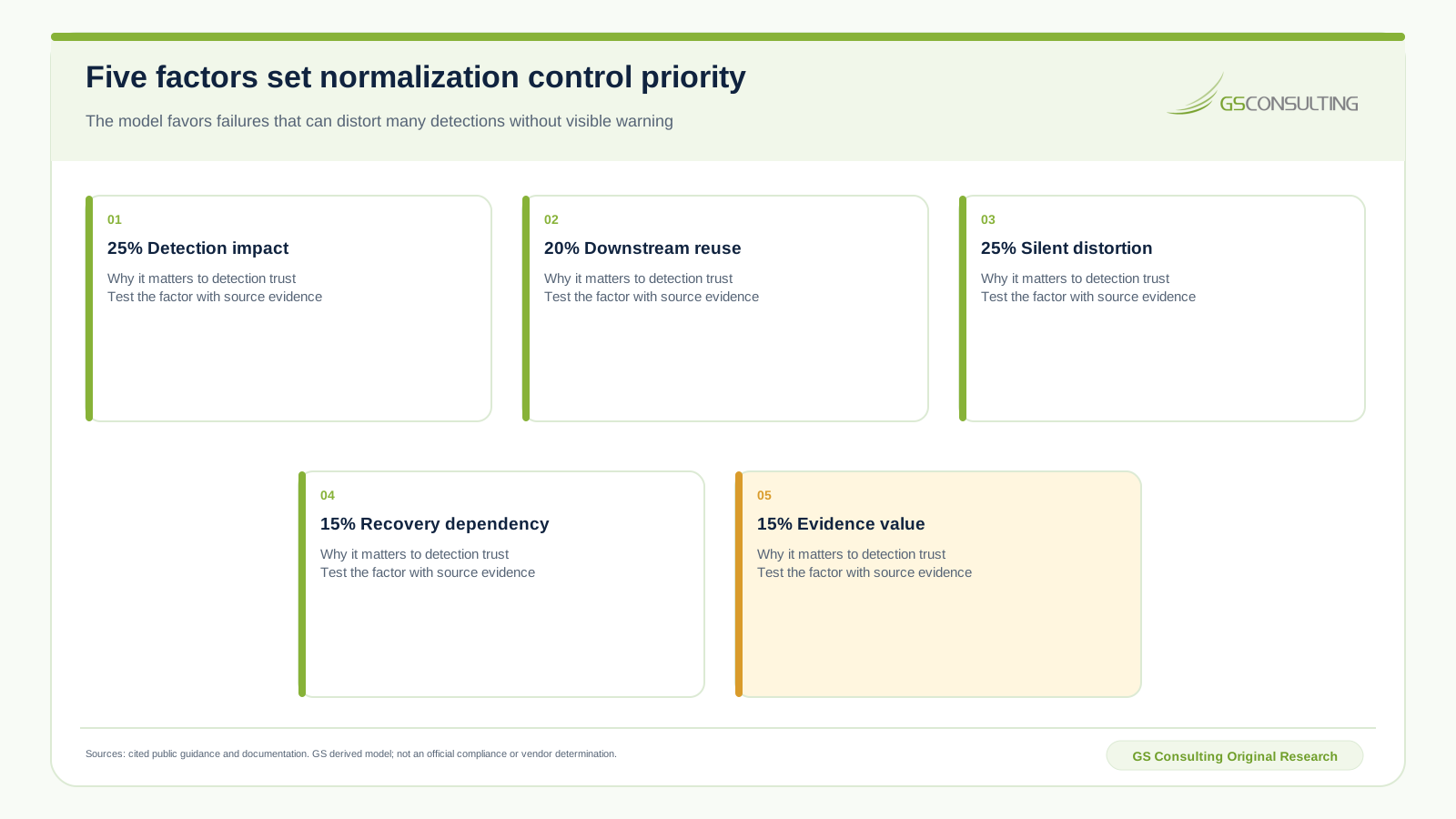
The unit is one control domain in a bounded ingestion and normalization pipeline. Each domain receives a rating from one through five for detection impact, downstream reuse, silent distortion, recovery dependency, and evidence value. The base weights are 25, 20, 25, 15, and 15 percent. Each rating is divided by five, multiplied by its weight, and summed to a score from zero through 100.
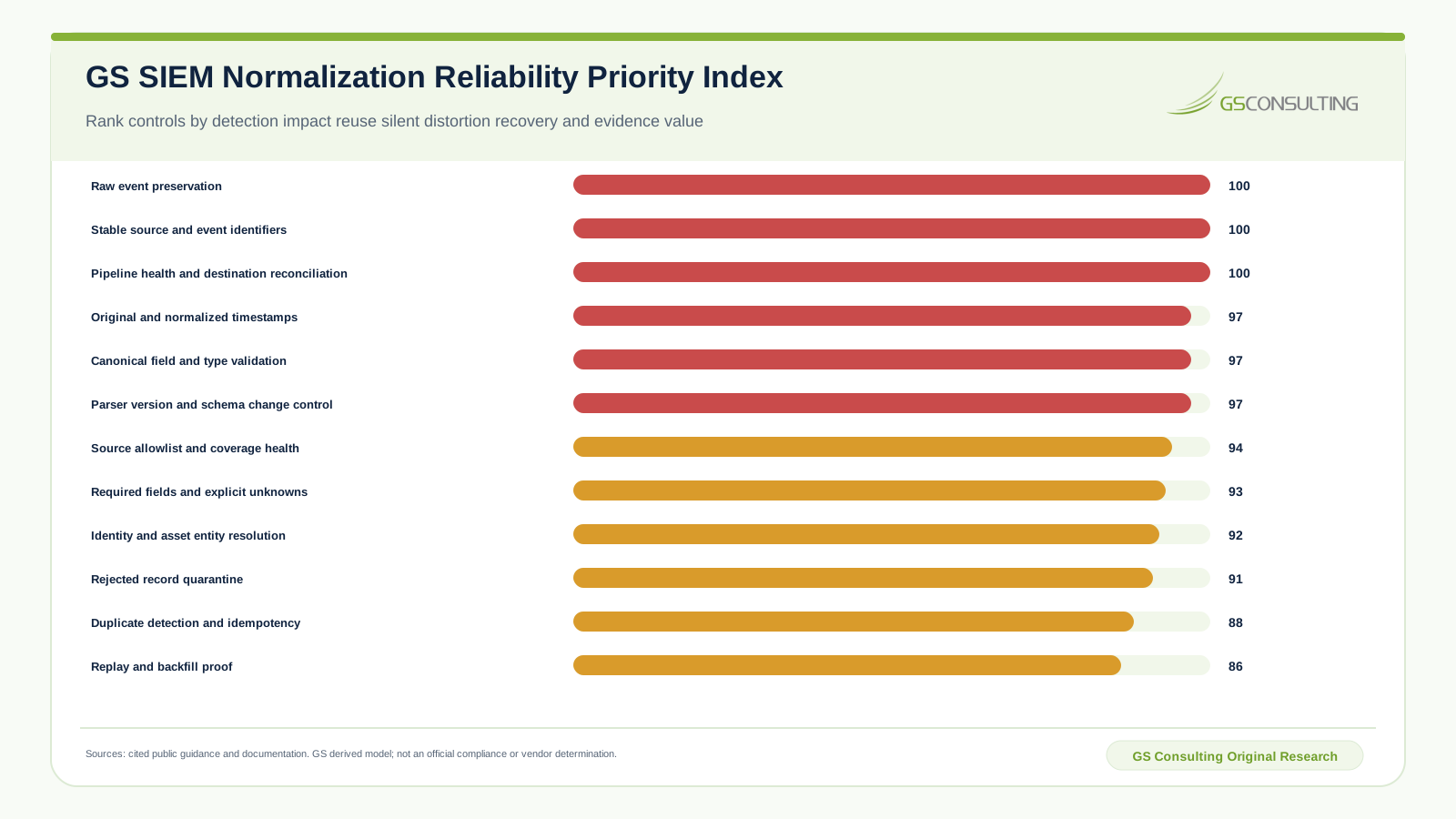
Five controls fall in the model's gate before use tier. Raw event preservation, stable source and event identifiers, and pipeline health with destination reconciliation score 100. Original and normalized timestamps, canonical field and type validation, and parser version with schema change control each score 97. Source coverage health scores 94. Required fields with explicit unknowns score 93. Entity resolution scores 92, rejected record quarantine scores 91, duplicate control scores 88, and replay proof scores 86.
Do not read small score differences as measured performance. The model is ordinal and directional. Its useful result is the order of work: protect source truth and recovery before allowing downstream detections to treat the normalized record as fact.
The sensitivity case shifts five percentage points from detection impact and silent distortion toward downstream reuse and recovery dependency. No control moves by more than two points, and no control leaves its planning tier. That stability does not validate the model. It shows that this stated weight change does not overturn the planning order.
Define the Pipeline Boundary Before the Schema
Start with a bounded detection or investigation purpose. Name the source systems, event families, owners, data classes, collection method, expected volume, allowed fields, retention, identities, parser, canonical schema, enrichment sources, target index, consuming detections, and support team. A field has no justification merely because a connector can collect it.
Create an approved source register. Each entry should state the purpose, owner, interface, credentials, collection scope, expected event rate, source time behavior, version, known gaps, and health check. Treat an unexpected tenant, host group, region, event family, or account as a boundary change. Route it to review instead of silently expanding collection.
Keep collection and analytical readiness separate. A source can be connected without being safe for detection. Mark its state explicitly: observed, sampled, parsed, normalized, tested, reconciled, and approved for named consumers. This stops a new source from entering production logic simply because records appeared in an index.
Use Seven Controlled Stages
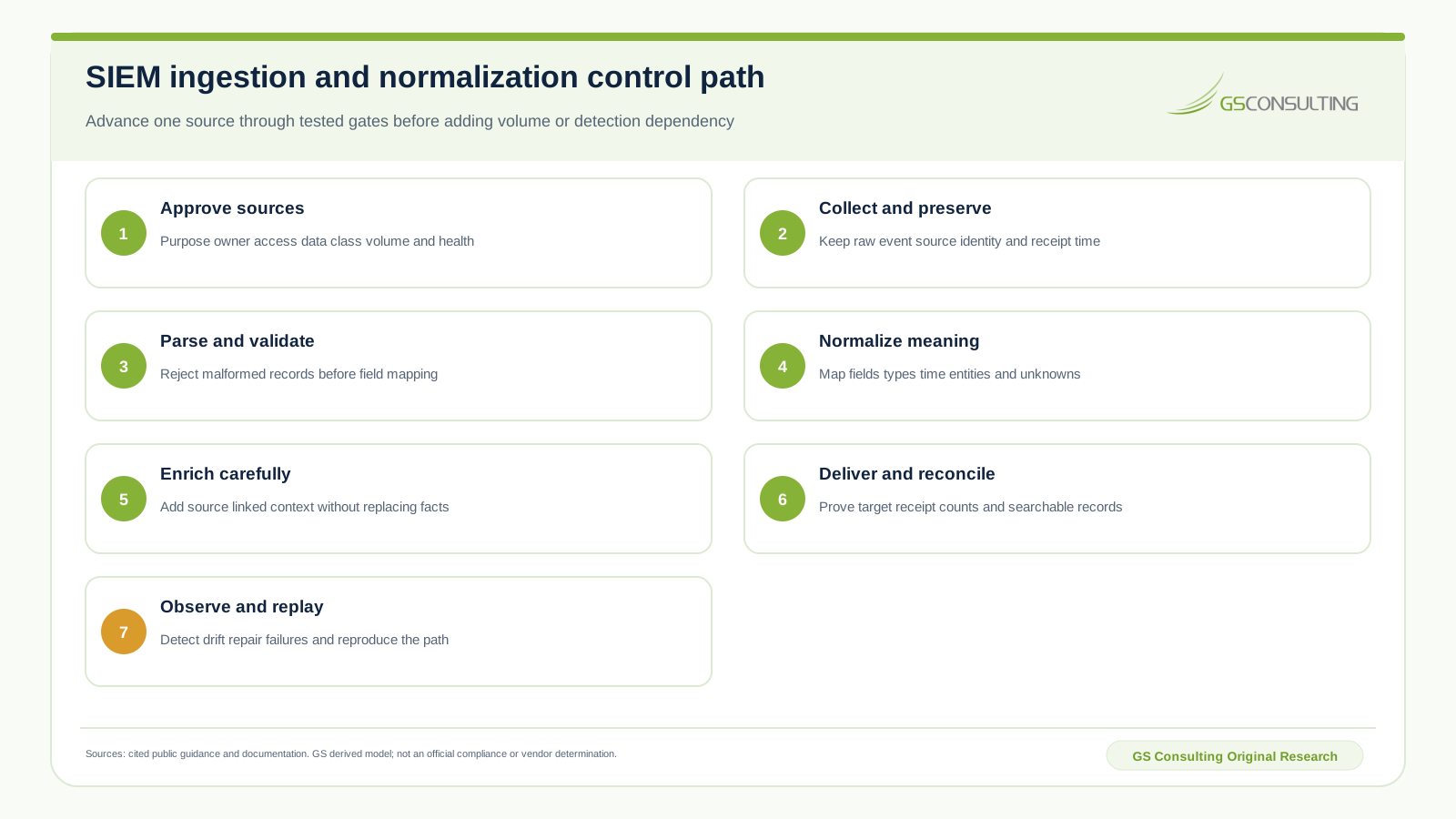
Approve sources. Record why the source exists, who owns it, what it may expose, how much data is expected, and how health will be proved. Collect and preserve. Assign source identity and receipt time before transformation. Parse and validate. Reject malformed records before field mapping. Normalize meaning. Map fields, types, time, entities, and unknowns under a versioned contract.
Enrich carefully. Add context with its own source and freshness record. Never overwrite the original fact. Deliver and reconcile. Prove accepted, rejected, duplicate, delivered, indexed, and searchable counts. Observe and replay. Detect drift, repair failed records, and reproduce the path with the relevant parser and schema versions.
This sequence is intentionally source centered. Tool choice follows the contract. Whether the implementation uses native SIEM connectors, an event bus, custom code, a commercial pipeline, or a mix, the same traceability and recovery questions remain.
Preserve Raw Events and Stable Identity
Retain the raw event when policy, customer direction, privacy, storage, and retention rules allow it. Record a stable source identifier, source event identifier where available, collector receipt time, original source time, source version, parser version, and a reference to the preserved record. If raw retention is restricted, document the approved substitute and what investigative capability is lost.
Stable identity supports duplicate control and replay. Create an idempotency key from source facts that remain stable across retry. Do not use only arrival time or a pipeline generated sequence if the same source record can return later. The exact construction varies by source, so test collisions, missing identifiers, reordered fields, and batch retransmission.
Preservation does not mean unrestricted access. Raw logs can contain personal data, secrets, query text, file paths, message content, and other sensitive material. Apply access, encryption, retention, deletion, and audit rules to the raw store. Traceability and minimization have to coexist.
Write a Normalization Contract That Admits Uncertainty
A canonical schema needs more than field names. Define the event class, required and optional fields, data type, allowed values, units, time basis, identity role, asset role, source lineage, transformation rule, default prohibition, explicit unknown representation, rejection behavior, schema version, and parser compatibility.
Preserve both original and normalized time. A record may need source time, receipt time, processing time, and destination index time. Convert formats and zones deterministically, but keep the original value and the rule used. Late arrival and clock drift must remain observable because they can change sequence, correlation, and investigation windows.
Entity resolution deserves caution. The same text can refer to a user, service account, host, workload, tenant, domain, or application. Store the source entity, the normalized entity, the match method, confidence basis, and ambiguity. If the match is not strong enough for the intended decision, preserve an unknown or candidate state instead of forcing one identity.
A shared schema such as ASIM or OCSF can reduce repeated work and make source independent analytics possible. It does not remove the need for a local mapping specification. The pipeline still has to prove how each source field enters the common model and what meaning, precision, or context was lost.
Test Parsers Against Meaning, Not Only Syntax
Build a representative sample set for every source version. Include common valid events, rare valid events, malformed records, missing required fields, empty optional fields, new values, unexpected types, late arrival, duplicate delivery, unusual characters, large fields, time zone changes, clock drift, and records that should be rejected.
Write field assertions against the raw record. The test should prove the canonical field, type, value, unit, time, entity role, and unknown state. Add negative assertions for fields the parser must not infer. Then run consumer tests. A parser release is incomplete until the team knows which detections, dashboards, searches, reports, and response rules changed.
Microsoft's current ASIM parser guidance uses representative records, field mapping, type conversion, schema validation, automated tests, and code review. Those are sound mechanics beyond one product. Add local approval, version control, release records, compatibility tests, and a rollback or replay plan so a parser change is an owned production change.
Reconcile Delivery and Prove Replay
Track counts by source, parser version, schema version, and bounded time window. At minimum, distinguish received, malformed, accepted, rejected, duplicate, enriched, delivered, indexed, searchable, and replayed records. A single success rate hides where loss occurred.
Prove the destination record. A successful API response, queue acknowledgment, or connector status does not guarantee that an analyst can find the event in the intended index with the expected fields. Sample destination records, reconcile counts, check delay, and link the target identifier back to the pipeline record.
Replay is a designed capability, not an emergency script. Define the source window, parser and schema version, idempotency rule, destination behavior, approval, capacity limit, comparison method, and closure evidence. Replaying corrected records without duplicate protection can repair one detection while corrupting another.
Measure Quality, Drift, and Recovery
Monitor the source allowlist and expected event families first. Then track parse rejection by reason, unknown field rate, type conversion failure, late arrival, source and pipeline delay, duplicate rate, enrichment failure, entity ambiguity, destination mismatch, replay volume, exception age, and consumer test results.
Set thresholds by source and purpose. A quiet domain controller, endpoint fleet, cloud account, or identity provider may mean very different things. Baselines need owners and known operating periods. Treat threshold changes as controlled decisions and preserve the reason.
Connect pipeline incidents to detection outcomes. Ask which alerts were missed, delayed, duplicated, or misclassified; which investigations used the wrong fields; and which reports or response actions depended on the affected data. Pipeline health is useful only when it reaches the analyst decision.
Six Failures That Look Like Success
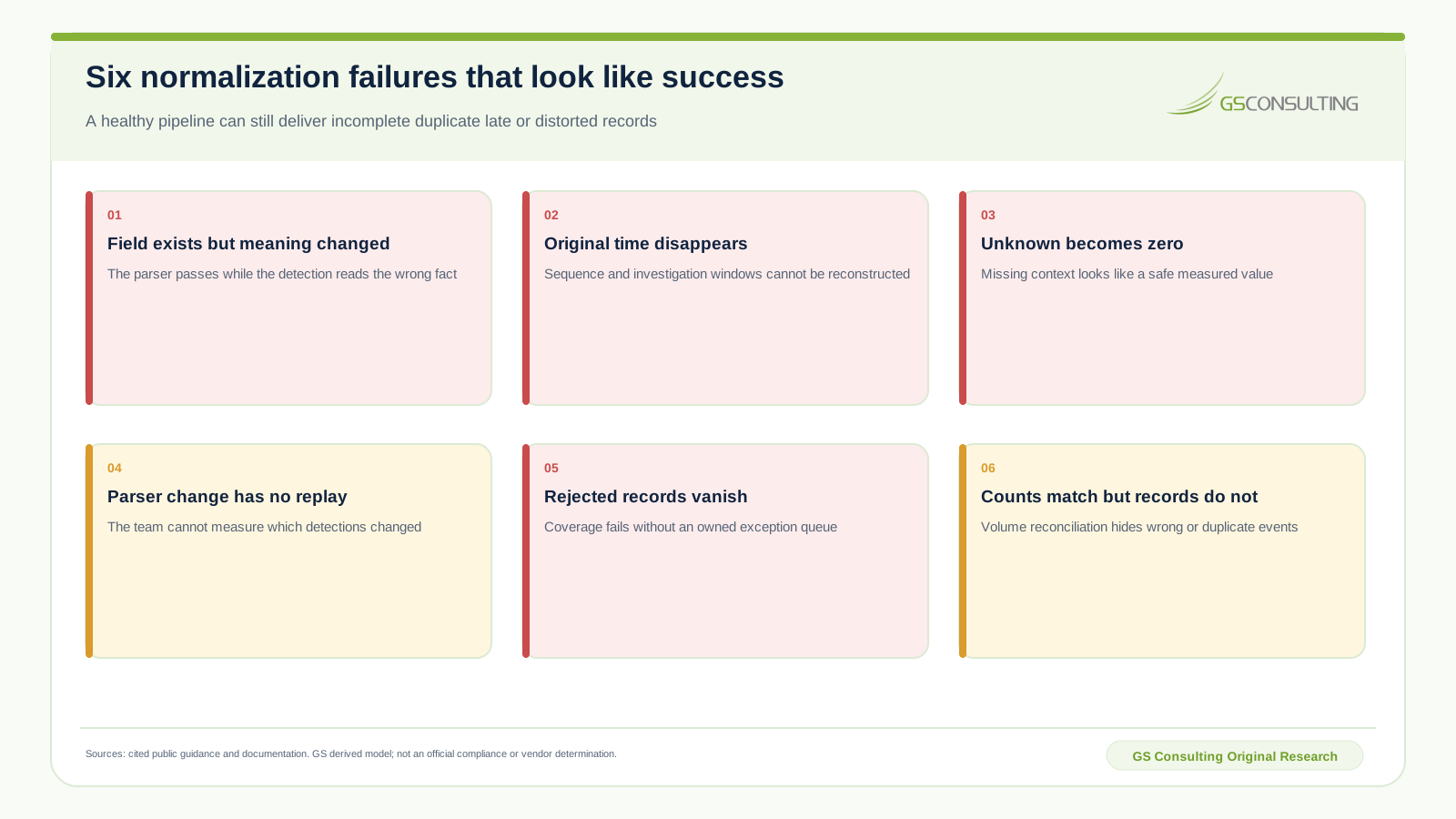
A field can exist while its meaning changed. Original time can disappear. An unknown can become a safe looking zero. A parser change can ship without replay. Rejected records can vanish without an owned queue. Counts can match while wrong or duplicate records reach the destination.
Each failure needs a named signal, owner, containment action, correction path, and proof of recovery. If the team cannot say which detections consumed the affected record, the failure boundary is still too vague.
Retain a Minimum Evidence Packet
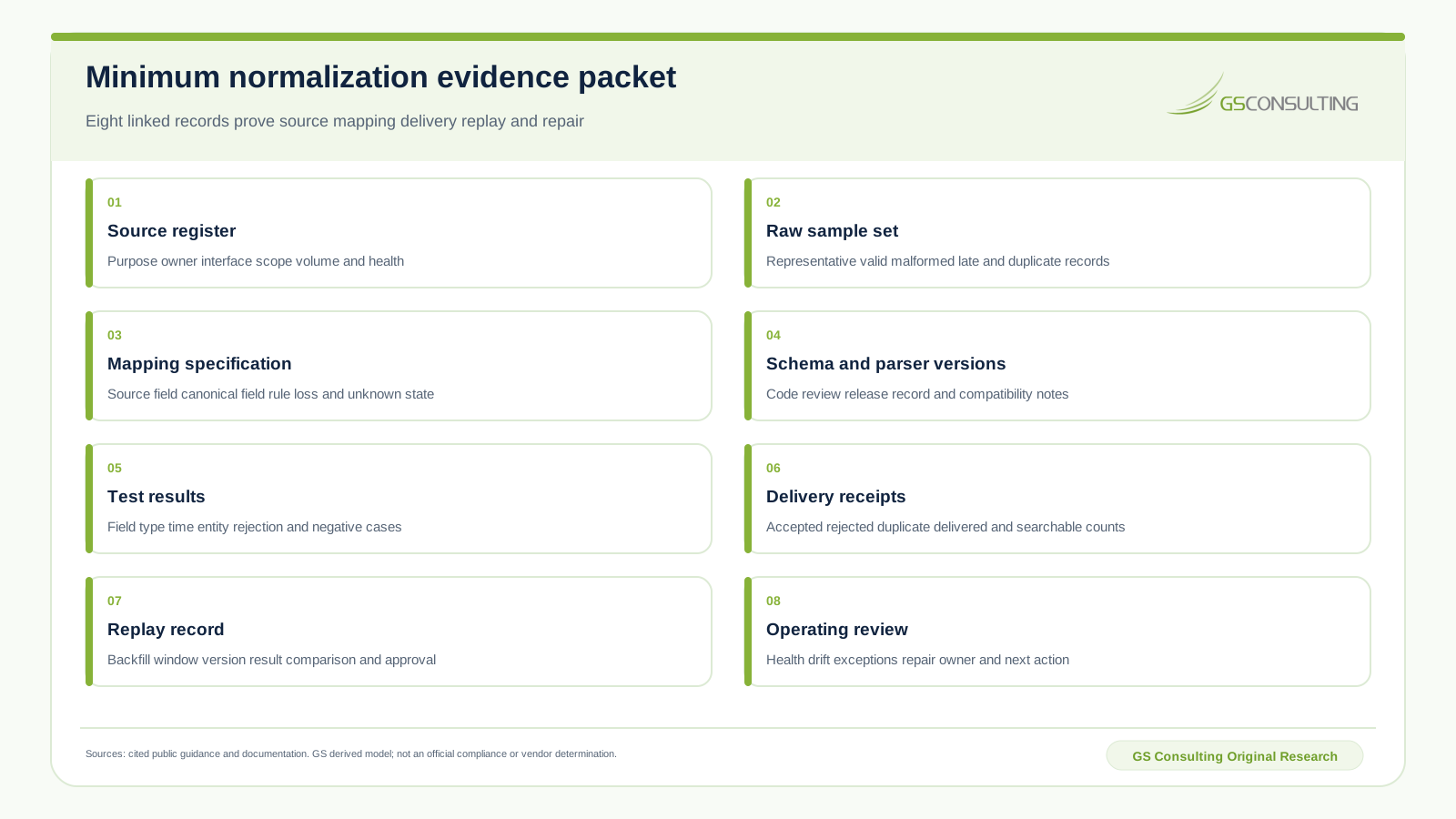
The packet should contain the source register, representative raw sample set, mapping specification, schema and parser versions, test results, delivery receipts, replay record, and operating review. Link them with stable identifiers. A reviewer should be able to move from a normalized field to the raw fact and from an operating exception to the repair and retest.
This packet is not a universal compliance checklist. Contract, customer, legal, privacy, sector, and regulatory obligations vary. Use the package to expose operational evidence, then map it to the obligations that actually apply.
A Twelve Week Implementation Plan
Weeks one and two: choose one detection purpose, approve the source boundary, collect representative samples, and document the existing path. Weeks three and four: write the mapping contract, explicit unknown states, rejection behavior, version rules, and consumer dependencies.
Weeks five and six: implement preservation, parsing, normalization, validation, and quarantine. Build normal and adverse tests. Weeks seven and eight: deliver to a test destination, verify searchable records, reconcile counts, and exercise duplicate behavior.
Weeks nine and ten: run replay, parser rollback, schema compatibility, source loss, delay, and destination failure exercises. Connect failures to detection impact. Weeks eleven and twelve: set health measures, assign exception owners, approve the consumer boundary, and review the first operating evidence.
Use the private AI and SIEM integration architecture when normalized data enters a private model path. Use the AI security alert triage guide when the data enters automated alert review. The SOC Automation Guides hub connects both to the larger operating model, and GS Consulting's SIEM integration and cyber analysis automation service covers implementation.
Primary Sources and Research Limits
- NSA and international partners, Implementing SIEM and SOAR Platforms, accessed September 7, 2026.
- NSA and international partners, Priority Logs for SIEM Ingestion, accessed September 7, 2026.
- NIST SP 800-92 Revision 1 initial public draft, accessed September 7, 2026.
- Microsoft, Normalization and the Advanced Security Information Model, accessed September 7, 2026.
- Microsoft, Develop Advanced Security Information Model Parsers, accessed September 7, 2026.
- Open Cybersecurity Schema Framework, OCSF Schema, accessed September 7, 2026.
- GS Consulting, Private AI Cyber Analysis Platform case study, accessed September 7, 2026.
The complete research package contains the source register, public signals, data dictionary, model inputs, formula outputs, sensitivity analysis, figure data, editable figures, and workbook. The GS model is a planning tool based on cited public sources and documented assumptions. It is not an official legal, audit, compliance, NIST, CISA, NSA, vendor, or regulatory determination.
Build a SIEM pipeline your detections can trust.
GS Consulting can assess one source to detection path, define the event contract, build the integration, test adverse cases, and leave your team with the evidence and recovery records needed to operate it.
Explore SIEM Integration ServicesFrequently Asked Questions
What is the difference between parsing and normalization?
Parsing extracts fields from the source record and validates its structure. Normalization maps those fields, types, time values, entities, and event classes into a canonical contract used by downstream analytics. The activities can occur in one component, but they should remain separately testable.
Which SIEM data should be normalized first?
Start with data required by a bounded, high value detection or investigation and with sources whose ownership, meaning, access, volume, and health can be proved. Priority depends on local threats and mission. Public source lists help frame the decision but do not replace it.
Can enrichment overwrite normalized fields?
It should not overwrite source facts silently. Store enrichment as a distinct value with source, time, version, and match basis. Preserve the original and normalized values so an analyst can distinguish collected evidence from later context.
What proves a normalized event reached the SIEM correctly?
Use a stable event identity, delivery acknowledgment, destination identifier, count reconciliation, delay measurement, field comparison, and a searchability check. Sample the exact destination record and trace it back through mapping and raw source evidence.
How often should parser tests run?
Run them before every parser or schema release, after source version changes, when drift signals appear, and on a regular operating schedule. Also rerun the detections and reports that consume the changed fields.
What is the final operating standard?
No source enters detection use without an approved purpose, preserved truth, tested mapping, explicit unknown state, proved destination record, owned exception path, and exercised replay.