Cybersecurity | | 26 min read
Security Case Management Integration: Make the Handoff Prove Itself

Key Takeaways
The handoff is part of the control
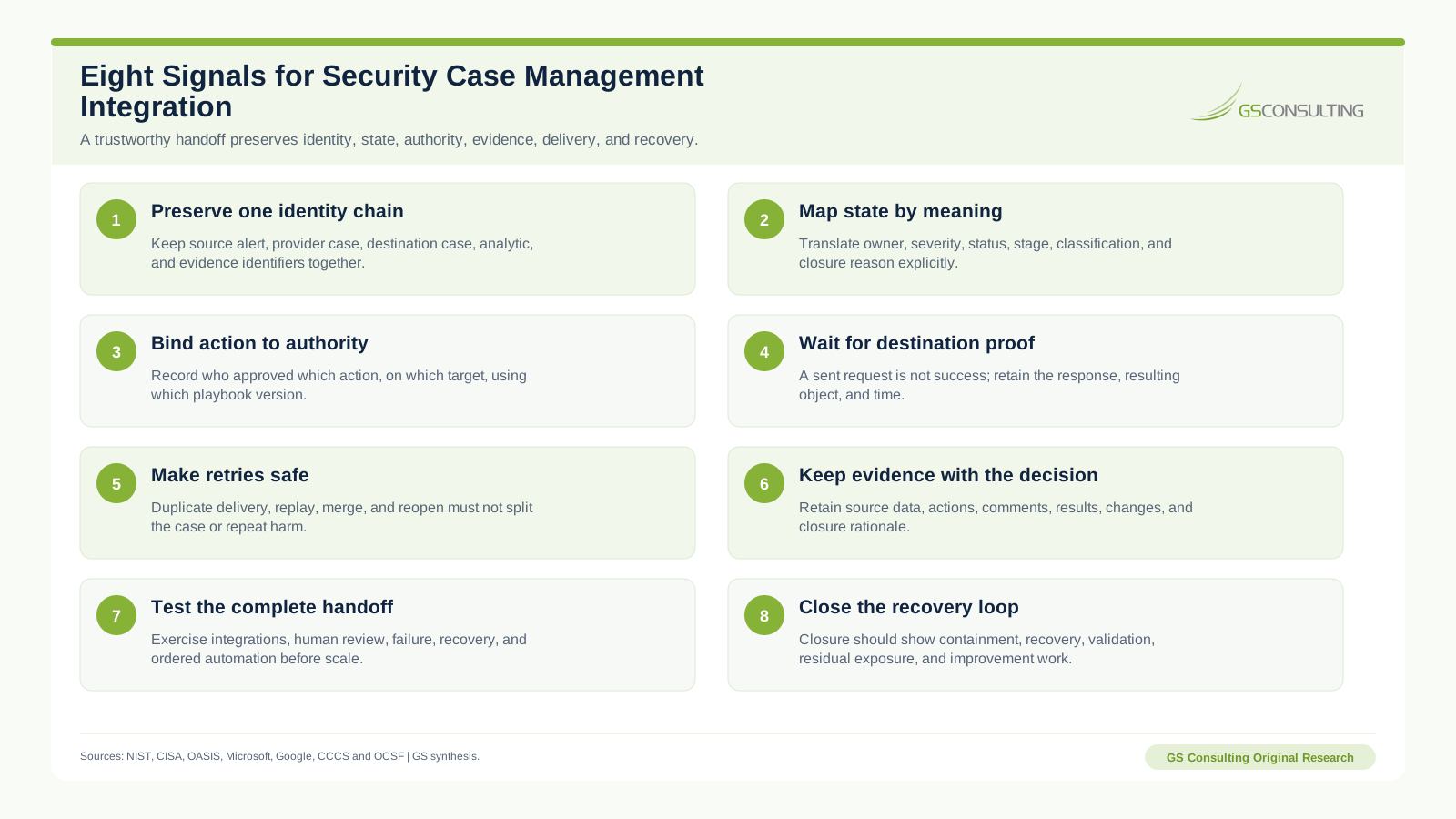
Preserve one identity chain
Keep alert, case, analytic, task, action, and evidence identifiers together from detection through closure.
Trust results, not requests
A sent command is not success. Require the destination object, observed result, timestamp, and recovery route.
Close with proof
Closure needs classification, rationale, authority, containment, recovery, verification, residual exposure, and reconciliation.
Security case management integration is not a connector project. It is an operating contract that must preserve identity, state, evidence, authority, delivery proof, recovery, and closure across systems.
Not sent. Accepted and proven.
An alert can leave the SIEM while the case platform rejects it. A response request can return success while the endpoint remains exposed. A case can close in one tool while the linked investigation stays active in another. A retry can create a second case or repeat a damaging action. These are not edge cases. They are the normal failure surface of a weak handoff.
A reliable design makes every transition observable. It names the source of truth for each field, preserves stable identifiers, binds approval to the exact action and target, waits for destination confirmation, records partial failure, and reconciles closure across every participating system.
Need a case integration that survives real incidents?
GS Consulting helps security teams define the case contract, integrate SIEM and response tools, test adverse paths, and build an evidence record leaders can defend.
Request a SOC Automation ReviewThis guide belongs to the SOC Automation hub and the SOC Automation service. Use it with the SIEM ingestion and normalization guide to protect the data path, the private AI and SIEM architecture guide to control analytic delivery, and the AI security alert triage guide to govern analyst decisions before the case moves.
Define the Security Case Management Integration Boundary
Start with the decision, not the connector. Name the systems that detect, enrich, create, assign, investigate, approve, act, verify, close, report, and retain evidence. Then name which system controls each field and which role controls each decision.
A practical boundary usually includes the alert source, SIEM, case platform, SOAR or workflow engine, identity service, asset and vulnerability sources, threat intelligence, endpoint or network controls, evidence store, notification channel, ticketing system, and reporting layer. It also includes the people who can assign, approve, execute, close, reopen, merge, and accept residual exposure.
Do not declare one platform the universal source of truth unless it truly controls every material field. A SIEM may own the analytic and raw event pointers. A case platform may own assignment, comments, tasks, and closure. An endpoint tool may own the observed action result. An evidence store may own retained artifacts. Write that authority down field by field.
The boundary also needs time. Record source event time, first observation, case creation, assignment, approval, action start, action finish, verification, closure, reopen, and reconciliation. Without those times, a team cannot distinguish slow work from lost work or stale state from a current decision.
Public Guidance Points to One Complete Record
Public standards and product references do not publish one universal case schema. They do agree on the operating ingredients.
NIST connects incident response to preparation, detection, response, recovery, and improvement. The CISA playbook carries an incident through analysis, containment, recovery, post incident activity, and coordination. The Canadian Centre for Cyber Security tells teams to define use cases, identify critical sources, test representative conditions, monitor collection failure, conduct regular reviews, and maintain an incident response plan. OASIS CACAO makes workflow steps, commands, agents, targets, authentication, markings, and signatures explicit. STIX preserves identifiers, references, creator identity, time, relationships, and markings.
Product references expose the same practical need from another angle. Microsoft Sentinel incidents include owner, severity, status, classification, reason, labels, timestamps, comments, provider identity, and analytic rule references. Google SecOps cases retain identity, alerts, owner, stage, priority, actions, tasks, results, comments, and change history. These fields are not interchangeable by name. They have to be mapped by meaning.
Write the Case Contract Before Building the Connector
The case contract is the written agreement between producers, consumers, operators, and decision makers. It should be specific enough that an engineer can build it, an analyst can operate it, and a reviewer can replay it.
At minimum, define:
- Identity: source alert, provider incident, destination case, analytic, entity, task, action, evidence, and related case identifiers.
- State: allowed source and destination states, entry event, required fields, owner, next state, reverse path, merge rule, reopen rule, and closure rule.
- Version: the case version, event sequence, actor, system, change time, and conflict rule used when updates arrive out of order.
- Authority: who may assign, approve, execute, override, close, reopen, merge, or accept residual exposure.
- Evidence: source, locator, collection time, case version, integrity value, marking, retention, access, and handling rule.
- Delivery: request, durable key, attempt, response, destination object, timeout, error, retry limit, and failure owner.
- Recovery: stop control, rollback, reconciliation, replay, manual route, restoration check, and communication path.
Use a schema contract for structure and an operating contract for meaning. A valid payload can still create the wrong case, assign the wrong owner, skip approval, overwrite a newer decision, or close before recovery is proven.
Original Research: The GS Security Case Handoff Integrity Priority Index
GS Consulting built a derived model to answer one operating question: which integration controls should teams implement first so an alert becomes a trustworthy case and closes with verified evidence?
The model rates twelve controls from one through five across six factors:
- Identity continuity, 22 percent: how strongly the control prevents split, orphaned, or misjoined records.
- State fidelity, 20 percent: how strongly the control protects the meaning and order of case transitions.
- Evidence completeness, 18 percent: how much decision and action proof depends on the control.
- Authority binding, 16 percent: how strongly the control connects a decision to the authorized role, target, and version.
- Destination confirmation, 14 percent: how much the control depends on observable acceptance and result in the receiving system.
- Recovery proof, 10 percent: how strongly the control supports safe retry, reconciliation, restoration, or reopening.
Each rating is multiplied by its weight, divided by five, and summed to a score from zero through 100. The public sources establish relevant practices. The ratings and weights are GS assumptions, documented in the research package so a team can replace them with local evidence.
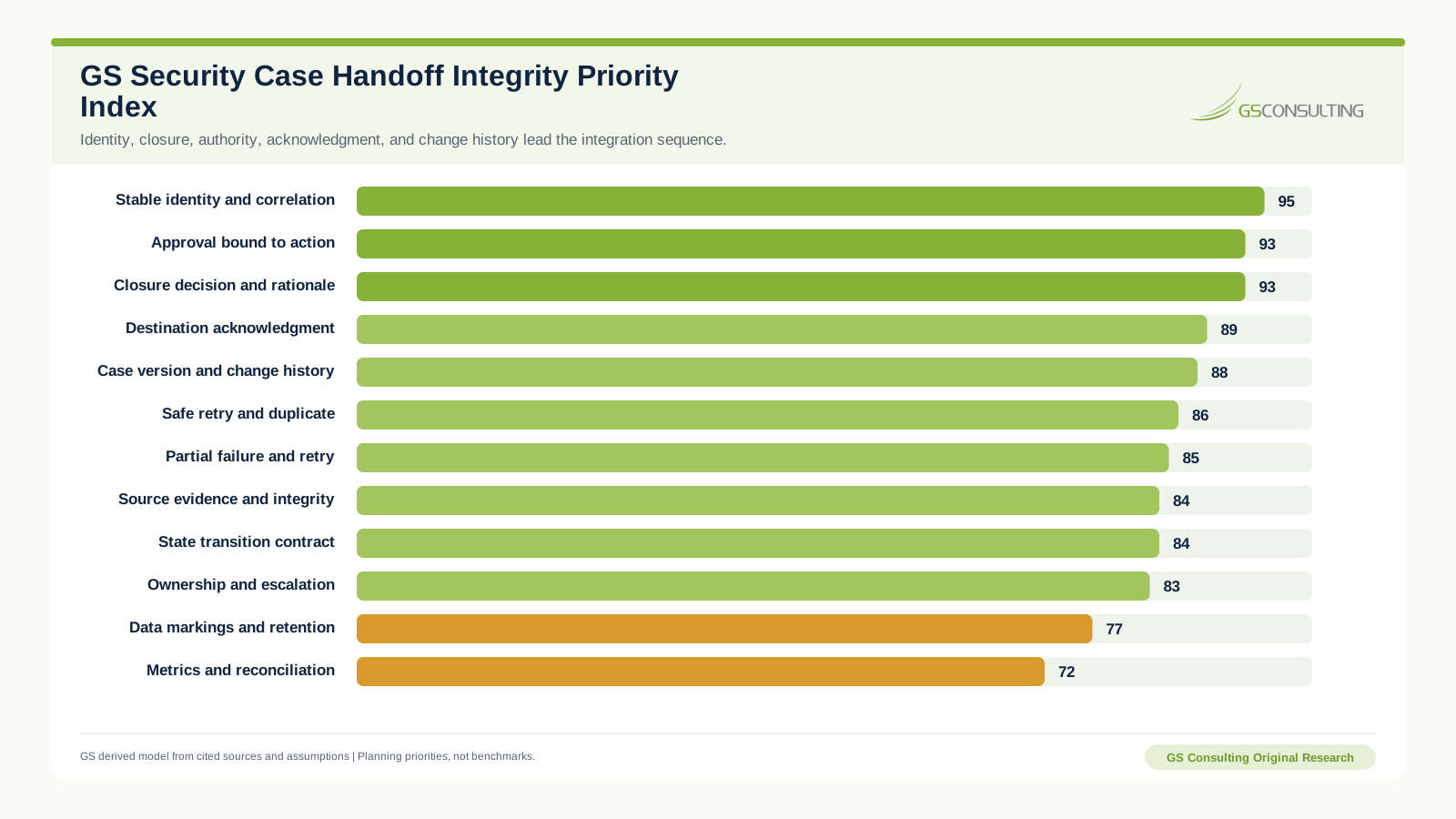
The top result is not the connector. Stable identity and correlation score 95 because every later state, action, evidence item, and closure decision depends on the team knowing which records belong together.
Approval bound to action and closure decision and rationale each score 93. A case can be technically synchronized and still be unsafe if the approval does not name the target and version or if closure loses the decision basis. Destination acknowledgment scores 89. Case version and change history score 88. Safe retry and duplicate control score 86.
Evidence led and recovery led sensitivity cases move no control more than two rank positions. Identity, approval, and closure remain the first three controls in both cases. That stability supports an integration sequence that secures identity and authority before adding more automation.
Make Every Case State Carry Proof
State names are not a control. New, active, assigned, under investigation, contained, resolved, and closed can mean different things in different products and teams. Map each state to an entry event, required data, accountable owner, observable proof, and failure route.
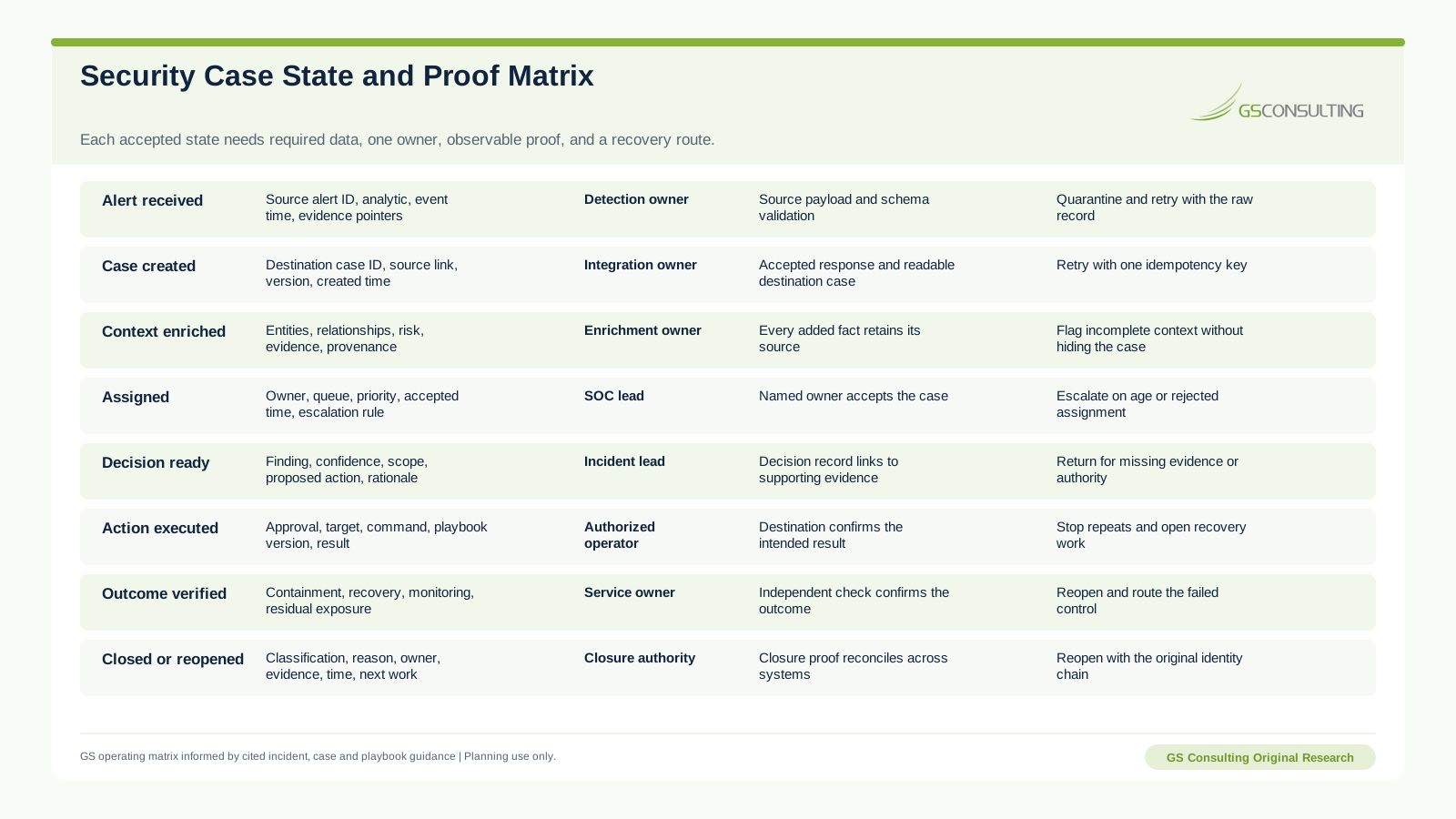
The state contract should be event driven, even when the tools expose only records. Record what caused the transition, which version was read, which version was written, which actor or rule made the change, and what the destination accepted.
Use optimistic version checks or another explicit conflict rule. A delayed enrichment result should not overwrite a newer incident decision. An analyst reopen should not be reversed by a late closure event. A merge should preserve the losing case identifiers and evidence pointers. A manual override should remain visible after the next synchronization cycle.
Closure is a state with a high proof burden. It should include classification, reason, owner, authority, containment, recovery, verification, residual exposure, linked work, and close time. If the external action or recovery check is still pending, the case is not operationally closed.
Preserve Identity, Provenance, and Evidence
Generate one durable correlation key from stable source attributes and preserve every native identifier. Do not replace the source alert ID with a destination case ID. Do not rely on a mutable title, current owner, or current status as identity.
The identity map should connect source alert, provider incident, destination case, analytic or rule, affected entity, task, approval, action, evidence object, related case, merge target, and reopen event. Store the native identifier, issuing system, namespace, creation time, and current relationship.
Evidence needs provenance. A useful manifest records the source, locator, collection time, collector, case version, relevant time range, integrity value where appropriate, data marking, retention, access rule, and the claim the evidence supports. The case can link to large evidence rather than copy it, but the link must remain durable and authorized.
Keep raw source data separate from analyst interpretation and automated enrichment. Preserve which facts came from the sensor, which came from an external source, which were inferred by a rule or model, and which were entered by a person. This distinction matters when a later decision is challenged.
Retention, privacy, records, contractual, and legal duties depend on the organization, information, incident, and jurisdiction. Use authorized counsel and records owners to set the rule. The integration should enforce the approved decision, not invent it.
Bind Authority to the Exact Action
A role name alone is weak evidence. Record the requester, approver, executor, role at the time, decision basis, target, command or playbook, version, parameters, allowed time, and resulting action ID.
Separate recommendation, approval, execution, verification, and closure when consequence warrants it. The same person may perform several roles in a small team, but the records should still show which authority was exercised. Sensitive actions such as isolating a system, blocking an identity, disabling an account, changing a policy, or notifying an external party need a deliberate boundary.
Automation can exercise delegated authority only inside a defined rule. Record the rule version, approved scope, triggering conditions, excluded targets, stop controls, test evidence, expiry or review date, and human escalation. When a case falls outside the rule, route it to the named authority instead of silently expanding the automation.
OASIS CACAO is useful here because it separates workflow steps, commands, agents, targets, authentication, markings, and signatures. Use the structure as a design aid where it fits. Do not claim conformance or local authorization simply because a playbook can be represented.
Treat Delivery, Retry, and Recovery as One Control
A successful network call proves almost nothing. The receiving system may accept the request but reject a field, create the wrong object, apply a default owner, queue the action, or fail after acknowledgment.
Use a durable idempotency key for each intended case or action. Record the request, source version, attempt, destination response, destination object ID, result, error, retry time, and final disposition. Put a limit on automatic retries. After the limit, open an owned failure record instead of leaving a silent queue.
For an action, distinguish accepted, started, completed, verified, failed, canceled, and recovered. Microsoft guidance on incident tasks makes the point plainly: completion should follow the downstream result, and a failed automated action should remain visible to the analyst. Apply that operating rule even when the selected product uses different labels.
Reconciliation is not an occasional cleanup. Run it every shift or on another risk based cadence. Find source alerts without cases, cases without source alerts, destination objects without acknowledgments, mismatched state, duplicate cases, overdue actions, stale owners, open recovery work, and closures without proof.
Design for outage. Decide what can queue, what must stop, what can continue manually, how identity is preserved, how operators see backlog age, how delivery resumes, and how replay avoids repeated action. Recovery ends after state and evidence reconcile, not when the connector process restarts.
Use a Six Stage Security Case Integration Decision Path
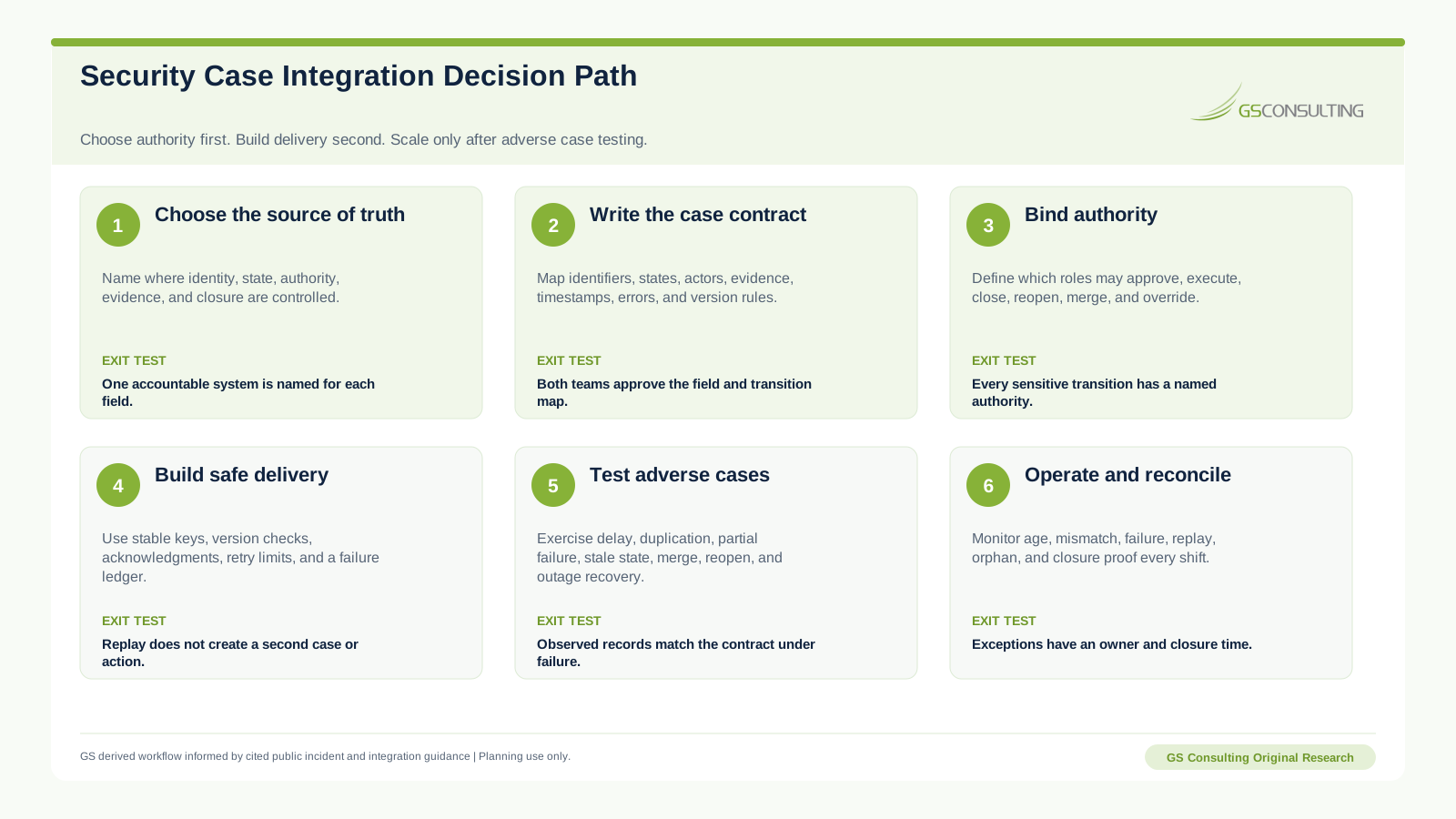
Do not start with a broad connector inventory. Choose one important workflow and take it through all six stages. A useful first scope is alert creation, enrichment, analyst assignment, one approval, one bounded response action, verification, and closure.
The exit test at each stage matters. Naming a source of truth is complete only when every material field has one accountable system. Writing a contract is complete only when both operating teams approve the field and transition map. Building safe delivery is complete only when replay produces neither a second case nor a repeated action.
Adverse case testing is the release gate. Exercise duplicate delivery, out of order updates, stale versions, timeouts, partial field rejection, destination outage, permission loss, owner removal, case merge, reopen, manual override, canceled action, failed rollback, and lost evidence access. Preserve the observed records.
Six Security Case Integration Failures to Test Directly
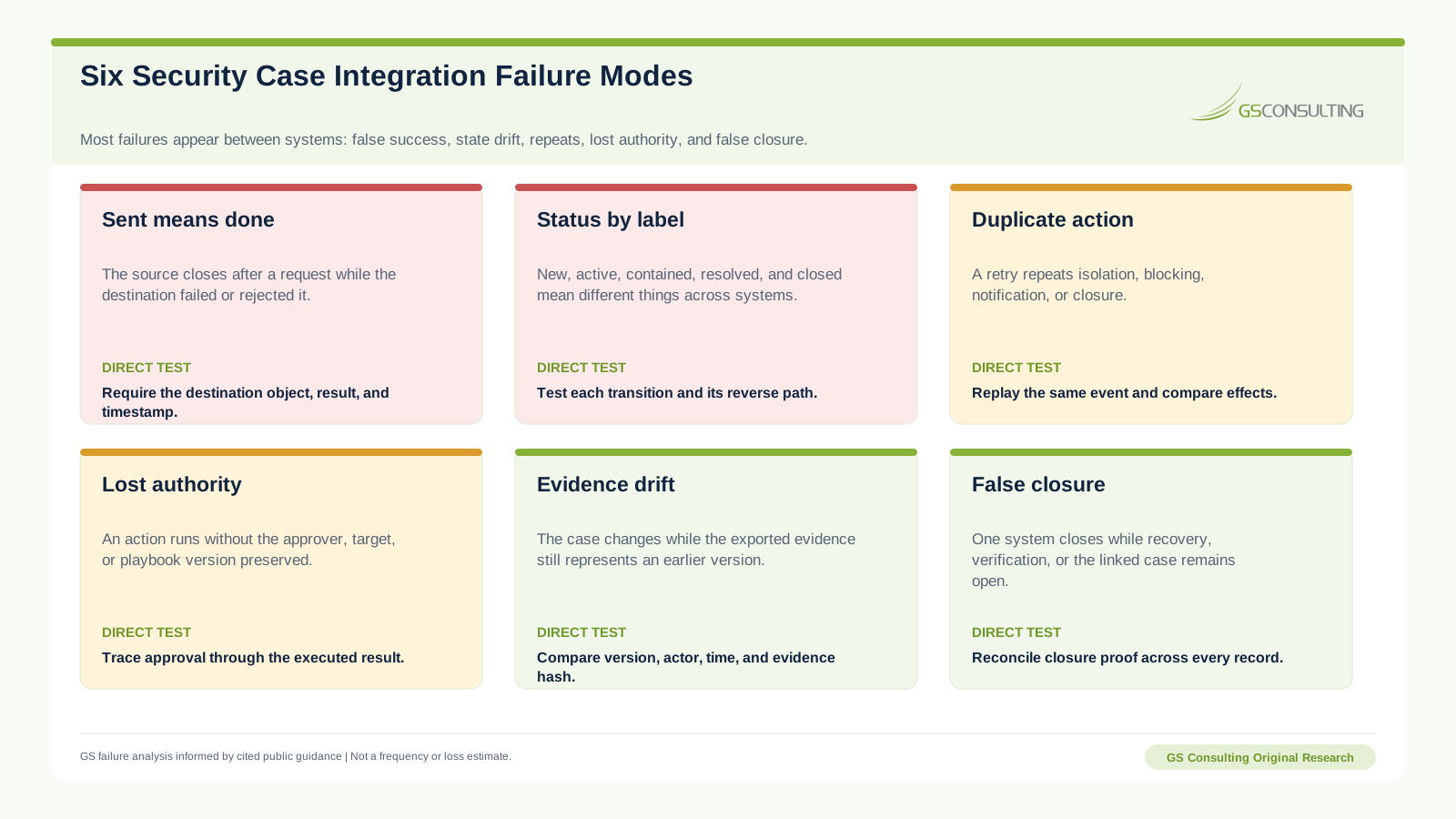
Sent means done. The source marks success after a request while the destination rejected the object or action. Require the destination identifier, resulting state, observed outcome, and timestamp.
Status by label. Teams match words instead of meaning. Test the entry condition, required proof, allowed next state, and reverse path for every mapped transition.
Duplicate action. A retry repeats isolation, blocking, notification, or closure. Replay the exact event and compare both records and real effects.
Lost authority. An action reaches the destination without the approver, target, rule version, or parameters attached. Trace the decision through the resulting action record.
Evidence drift. An export represents an earlier case version while the live case changed. Compare version, actor, time, source, and integrity values before using the evidence.
False closure. One system closes while recovery, verification, the linked case, or the action remains open. Reconcile every closure against the complete proof set.
Measure Handoff Integrity, Not Connector Activity
Message count, API success rate, and average latency are useful platform measures. They do not show whether a trustworthy case arrived or whether the intended action occurred.
Build the scorecard around operating outcomes:
- Identity: orphan alerts, orphan cases, duplicate cases, merge events, broken evidence links, and unmatched native identifiers.
- State: mismatched states, rejected transitions, stale updates, out of order events, manual overrides, and reopened cases.
- Delivery: acknowledgment time, destination creation time, retry count, dead records, partial rejection, and backlog age.
- Authority: actions without complete approval, expired delegation, target mismatch, version mismatch, override use, and separation exceptions.
- Evidence: missing provenance, inaccessible artifacts, stale exports, failed integrity checks, marking mismatch, and retention exceptions.
- Outcome: completed actions without verification, failed recovery, closures without proof, later incident links, and time to reconcile.
Use counts, rates, age, and case review together. A low percentage can still matter when the action is consequential. Keep a sample of successful cases in the review plan. Failure only testing misses incorrect success.
Every measure needs an owner, target, threshold, response, evidence source, and decision. If a metric has no action attached, it is decoration.
Keep the Minimum Integration Evidence Packet
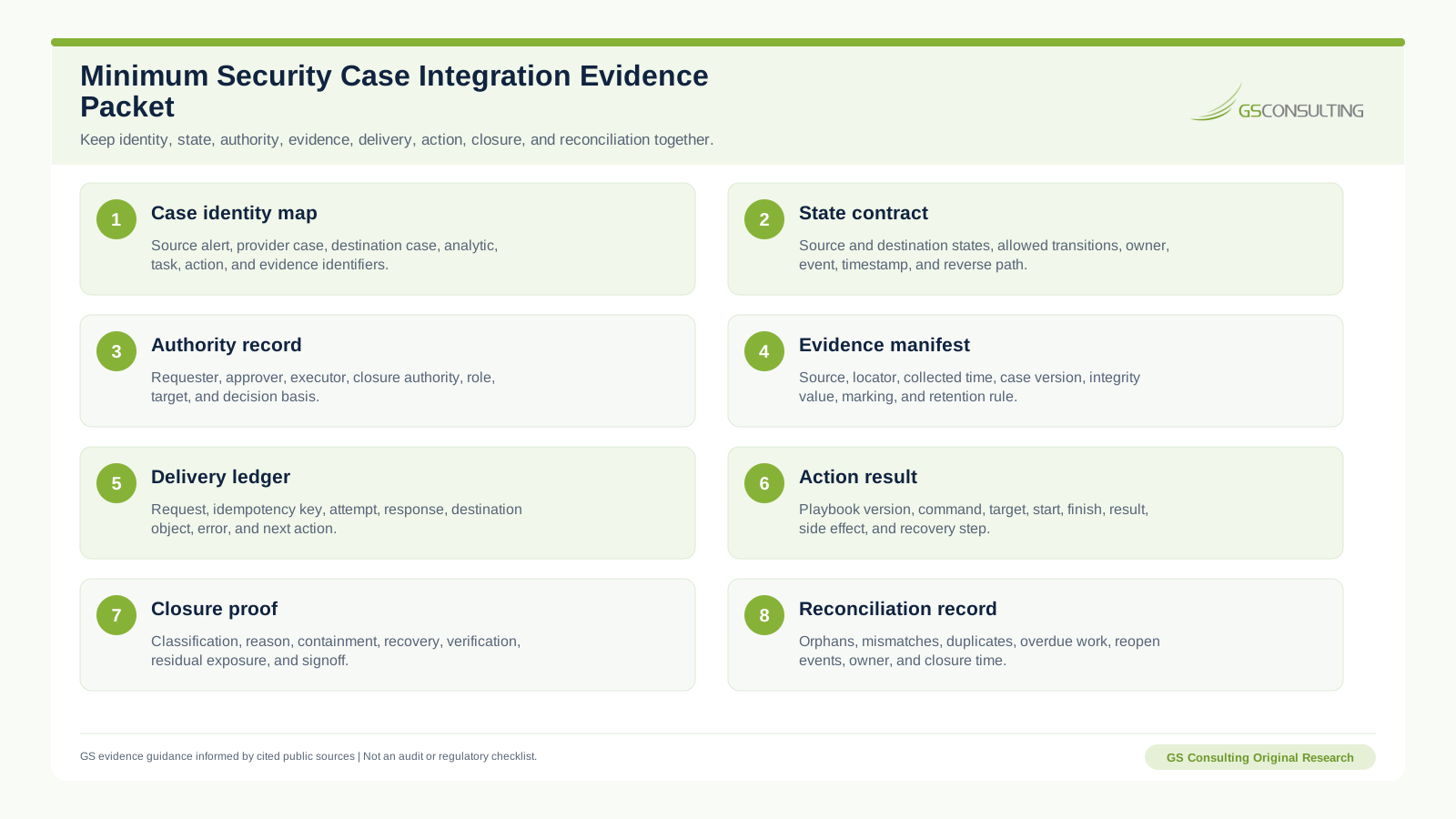
The packet is not eight separate binders. It is eight linked records that let an operator or reviewer replay the handoff. The case identity map shows which objects belong together. The state contract shows what each transition means. The authority record explains who could decide and act.
The evidence manifest preserves source and provenance. The delivery ledger shows what crossed the boundary and what the destination returned. The action result shows what actually happened. The closure proof shows containment, recovery, verification, residual exposure, and signoff. The reconciliation record shows which mismatches remained and who closed them.
Use the same durable identifiers across the packet. If a reviewer needs titles, screenshots, and memory to join the records, the integration is not preserving its own evidence.
A 90 Day Security Case Management Integration Plan
Days 1 through 30: Freeze the contract
Select one workflow with real operating value. Inventory systems, identities, fields, roles, decisions, evidence, actions, failure routes, and current workarounds. Name the authoritative system for every material field. Draft the state map, authority rules, evidence manifest, delivery ledger, closure proof, and test set.
Measure the current baseline: manual touches, case creation delay, duplicate cases, missing context, assignment delay, action delay, reopen events, reconciliation effort, and closures that require manual repair. The baseline should use observed cases, not estimates alone.
Days 31 through 60: Build the narrow path
Implement stable identifiers, explicit field translation, schema validation, version checks, durable delivery keys, destination acknowledgment, bounded retries, failure records, and manual stop controls. Preserve native payloads and decision evidence. Put one bounded response action behind named authority.
Test normal creation, enrichment, assignment, approval, action, verification, closure, and reopen. Then test duplicates, delayed events, stale versions, partial rejection, permission loss, outage, merge, override, retry exhaustion, failed action, and failed recovery.
Days 61 through 90: Operate and decide
Run the workflow with a limited analyst group and defined observation period. Review every mismatch and failed handoff. Sample successful closures. Compare outcome, time, rework, error, and evidence quality with the baseline.
At the decision gate, scale, constrain, redesign, or stop. Scale only when identity remains intact, state meaning survives translation, authority reaches the action, destination results are visible, retry is safe, recovery works, and closure reconciles.
The operating standard is simple: no case transition is complete until the receiving system, accountable owner, and evidence record agree on what happened.
Primary Sources and Research Caveat
- NIST SP 800-61 Revision 3
- CISA Federal Government Cybersecurity Incident and Vulnerability Response Playbooks
- Canadian Centre for Cyber Security SIEM Guidance
- OASIS CACAO Security Playbooks Version 2.0
- OASIS STIX Version 2.1
- Microsoft Sentinel Incidents: Create or Update
- Microsoft Sentinel Automation Rules
- Microsoft Sentinel Incident Tasks
- Google SecOps Cases Overview
- Google SecOps Case Actions
- Open Cybersecurity Schema Framework Finding Information Object
Research caveat: The GS Security Case Handoff Integrity Priority Index is a derived planning model based on cited public sources and documented assumptions. It is not an official legal, audit, compliance, vendor, incident response, or regulatory determination. It does not inspect a live integration, validate legal authority, authorize response, establish retention, or certify an incident record. Product fields and behavior can change. Verify the deployed version and replace the GS ratings with local evidence.
Security Case Management Integration FAQ
What is security case management integration?
It connects alerts, cases, analysts, automation, response tools, and evidence stores through an explicit operating contract. The contract preserves identifiers, state, ownership, authority, evidence, delivery results, recovery, and closure.
Should the SIEM or the case platform be the source of truth?
Name the authoritative system for each field and decision. One system may control the alert and analytic record while another controls assignment or closure. Do not let both systems change the same state without a conflict rule.
How should case states be mapped?
Map by operating meaning, not label. Define the entry event, required fields, owner, allowed next states, destination acknowledgment, reverse path, and closure proof. Test delay, duplication, stale updates, merge, reopen, and partial failure.
How do you prevent duplicate cases and repeated actions?
Use stable source identifiers, a durable idempotency key, version checks, bounded retries, destination acknowledgment, and a delivery ledger. Replay the same event and verify that it produces neither a second case nor a repeated action.
What evidence should the integration retain?
Retain the identity map, state contract, authority record, evidence manifest, delivery ledger, action result, closure proof, and reconciliation record. Preserve actor, time, source, version, target, result, error, and next action where applicable.
Is the GS index an official standard?
No. It is a GS Consulting derived planning model built from cited public sources and documented assumptions. It sequences integration controls. It does not certify an integration or replace product testing.