AI Workflow Automation | | 24 min read
Legacy API Contract Testing for Automation: Prove More Than Schema

Key Takeaways
A contract release must prove behavior, not just shape
Five changes score 93 or higher
Authorization, writes, events, errors, and field meaning lead the proof priority index.
A valid payload can still be unsafe
Wrong authority, duplicate effects, semantic drift, and failed recovery can all pass schema validation.
Every required consumer must be known
Close only when producer, consumers, versions, failures, recovery, rollback, and retirement evidence reconcile.
Legacy API contract testing is not a schema diff. It is proof that an automation can call the right interface, preserve business meaning, enforce authority, survive failure, and leave every required consumer working.
A payload can match the specification and still move the wrong amount. A successful response can arrive after a timeout and trigger a second write. An optional field can break a strict parser. A new error code can send a client into the wrong retry path. A retired route can still serve a quiet nightly job nobody put in the inventory.
That is the actual release problem. Freeze the current contract. Identify producers, consumers, versions, owners, traffic, and exceptions. Classify both shape and behavior changes. Verify each known consumer against the changed provider. Exercise authority, failure, recovery, and reconciliation. Release only with a versioned evidence packet and a usable rollback path.
Use this guide with the Enterprise AI Process Transformation hub, Secure API Development for AI Automation, Legacy Integration Pilot Acceptance, Integration Observability and Reconciliation, and Legacy Automation Write Back Reconciliation. GS Consulting connects the work through AI Workflow Automation and Legacy System Integration.
Prove the contract before automation owns the transaction.
GS Consulting helps teams inventory legacy interfaces, classify changes, verify consumers, exercise failure, reconcile state, and build release evidence.
Request an API Contract ReviewLegacy API Contract Testing: The Short Answer
Start with a contract baseline, not a test tool. Record the live route or channel, specification, schema dialect, examples, error model, security declarations, version, provider owner, consumer owner, and actual traffic. The baseline must include request and response APIs as well as messages, files, callbacks, and batch endpoints when they take part in the same automation.
Then classify the proposed change across five questions. How many consumers can it reach? Can the business meaning drift while the shape remains valid? Can it change durable state or authority? How hard is failure and recovery? How likely is an ordinary test to miss the break? Those answers decide the depth and order of proof.
Run structural tests first because they are fast. Do not stop there. Verify consumer behavior against the actual provider. Test business meaning, allowed actions, denied actions, errors, timeouts, duplicates, partial effects, replay, rollback, and repair. Observe the released version until the expected consumers and routes are visible. Retire the old version only when traffic and owner evidence agree.
Five conditions should remain hard gates regardless of any weighted score: an authorization failure, an unsafe retry, an unknown required consumer, an unreconciled write effect, or an unproved recovery path. A high average cannot make one of those conditions acceptable.
The Contract Is Larger Than the OpenAPI File
A specification is the right baseline for an HTTP interface. It can describe operations, parameters, request bodies, responses, schemas, and security requirements. That creates a shared artifact for review, code generation, linting, and structural checks. It does not prove how the system behaves once data, identity, state, time, and failure enter the exchange.
Shape is one layer. Types, required properties, enum values, lengths, ranges, and formats matter. A provider that changes a number to text or starts requiring a field can break a client immediately. These breaks belong in automated specification and schema checks.
Meaning is another layer. A field can remain a number while changing from dollars to cents. A status can keep its text while changing the decision it represents. A missing value can acquire a new default. Pagination can remain structurally valid while skipping records. Schema validation will accept all four problems.
Authority is part of the contract. The same payload can be valid for one actor and forbidden for another. Test object, property, function, action, workflow state, and environment rules. Authentication proves identity. It does not prove that the identity may perform this operation on this object with these fields.
Failure is part of the contract. Status codes, error types, machine identifiers, retry advice, timeouts, and partial effects drive client behavior. Error text is not a stable machine interface. A client needs a reliable signal for retry, rejection, correction, escalation, and manual repair.
Recovery is part of the contract. When a response is lost after a write succeeds, the consumer must know whether it can repeat the request. A stable request identifier helps only when the provider preserves the intended semantics and the team can verify the destination state. For message paths, the same issue appears as duplicates, order, replay, consumer position, and poison messages.
What Public Standards and Guidance Support
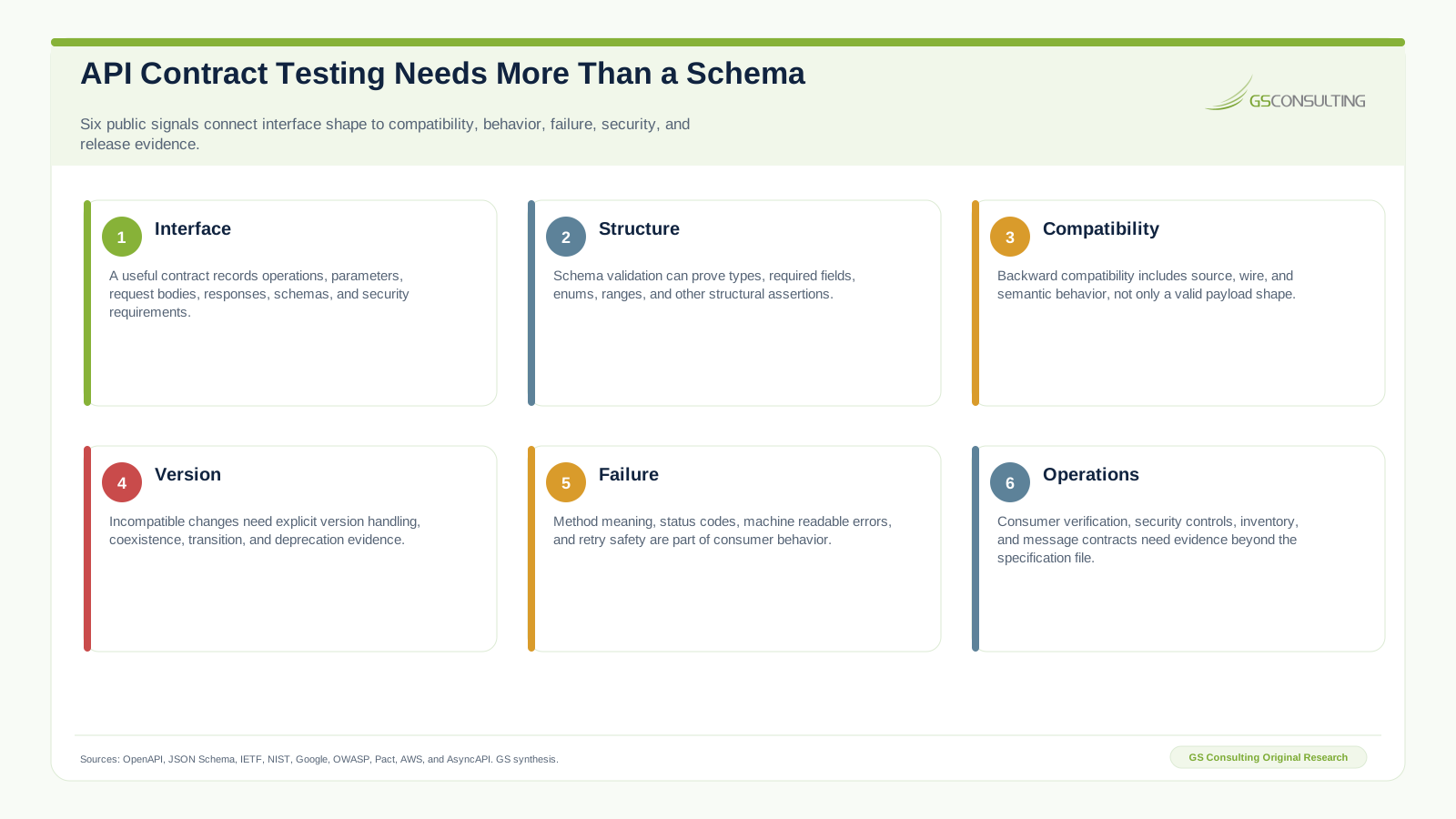
The OpenAPI Specification 3.2.1 provides a language neutral way to describe HTTP API operations, parameters, request bodies, responses, schemas, and security requirements. JSON Schema Draft 2020 12 provides structural assertions such as types, enums, ranges, lengths, and required properties. Together they create strong machine readable interface evidence. Neither claims to prove the business meaning, consumer behavior, authority, or recovery of an automation.
Google AIP 180 makes the useful distinction between source compatibility, wire compatibility, and semantic compatibility. The guidance calls out required field additions, removals, renames, type changes, format changes, and default changes. Google AIP 185 addresses incompatible versions, coexistence, transition, deprecation, and shutdown. These are design guides, not universal rules, but they show why a clean schema diff is not the full release decision.
RFC 9110 defines HTTP method semantics and status codes, including the relationship between idempotent behavior and automatic retry. RFC 9457 defines a machine readable Problem Details format. Google AIP 193 and Google AIP 194 add practical guidance for stable error identifiers and safe retry classification. The local system may use a different error model, but the consumer still needs a stable rule for what to do next.
NIST SP 800 228 Update 1 connects API protection to lifecycle risk analysis, development controls, and runtime controls. The OWASP API Security Top 10 for 2023 highlights object and property authorization, function authorization, resource consumption, sensitive business flows, inventory, and unsafe consumption. These sources support negative tests and runtime evidence alongside the interface contract.
Pact documentation shows how consumer expectations can become interactions that the provider verifies. This is powerful proof for known message expectations. Pact is clear that contract tests do not replace full functional tests. For message paths, the AsyncAPI Specification 3.0.0 describes operations, channels, messages, bindings, and payload schemas. It does not prove order, duplicate handling, replay, or consumer state.
GS Original Research: API Contract Change Proof Priority
GS Consulting built the API Contract Change Proof Priority Index to answer a narrow operating question: which representative legacy API changes deserve the earliest and strongest release proof? We scored twelve change scenarios from one through five across consumer reach, semantic drift risk, state change consequence, failure and recovery burden, and detection difficulty.
The base weights are 25 percent for consumer reach, 25 percent for semantic drift, 20 percent for state consequence, 15 percent for failure and recovery, and 15 percent for detection difficulty. The score is the sum of each rating divided by five and multiplied by its weight. A second weight set raises consumer reach and failure burden while reducing semantic and detection weights. The largest score movement is four points, and only pagination moves between adjacent proof lanes. The high priority conclusion is stable under that tested change.
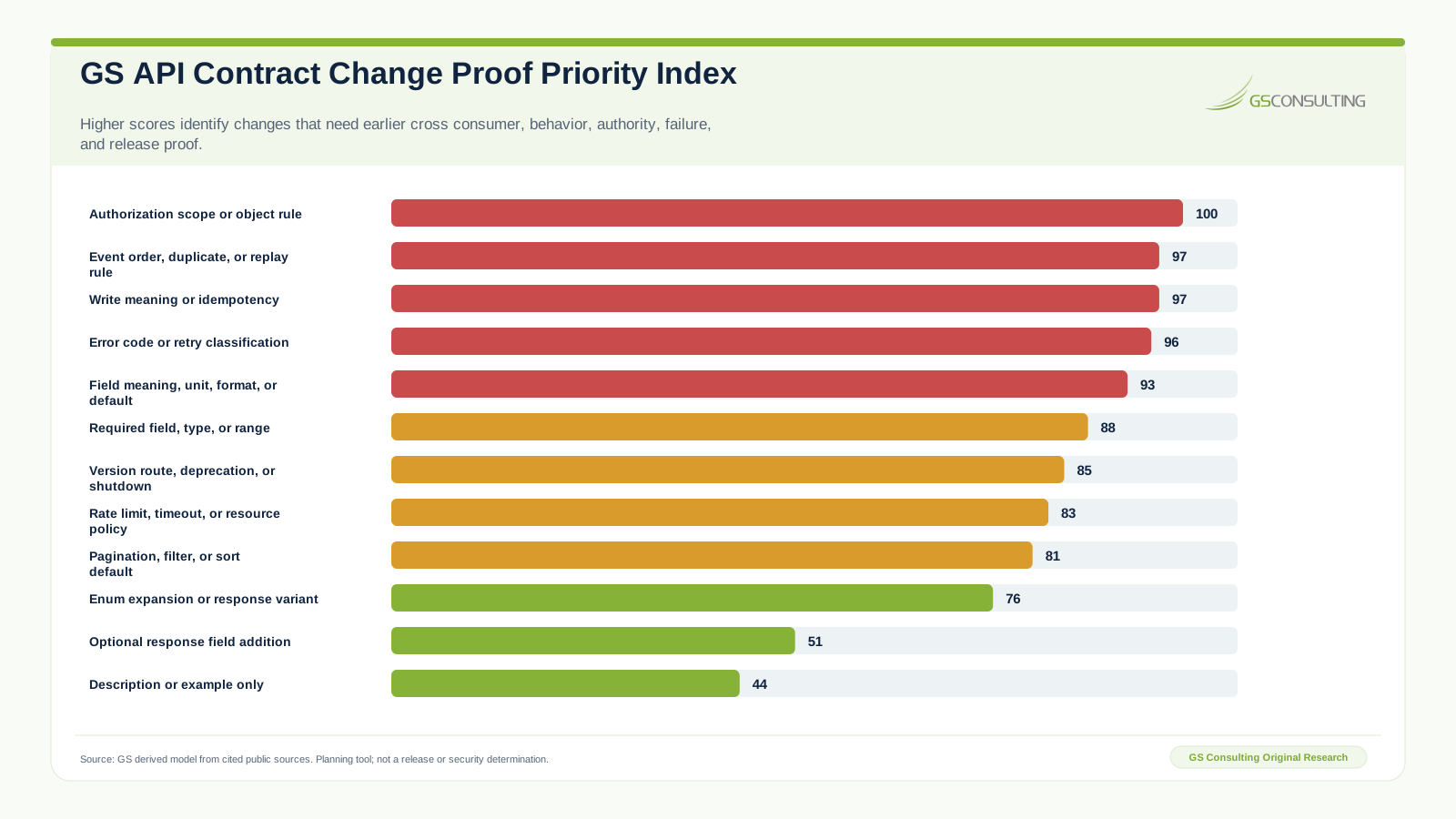
The result is blunt. Authorization scope or object rule changes rank first at 100. Event order, duplicate, or replay changes score 97. Write meaning or idempotency also scores 97. Error or retry classification scores 96. Field meaning, unit, format, or default scores 93. Every one of these changes can preserve valid syntax while causing a serious consumer or business failure.
Required field, type, or range changes score 88. Version routing, deprecation, or shutdown scores 85. Rate limits, timeouts, or resource policies score 83. Pagination, filter, or sort defaults score 81. These deserve full proof because they can affect many consumers or create incomplete work even when the core payload looks familiar.
Enum expansion scores 76, an optional response field scores 51, and a description or example only change scores 44. Those lower scores do not mean no testing. They mean targeted regression may be proportionate when the team has tolerant consumers, a complete inventory, and no evidence of a semantic change.
This index is a GS Consulting derived planning tool based on cited public sources and documented assumptions. It is not an official legal, audit, security, compliance, NIST, IETF, OpenAPI, OWASP, vendor, or regulatory determination. The actual release authority must use the real interface, consumers, data, operating impact, and contract terms.
Seven Proof Layers for a Legacy API Contract
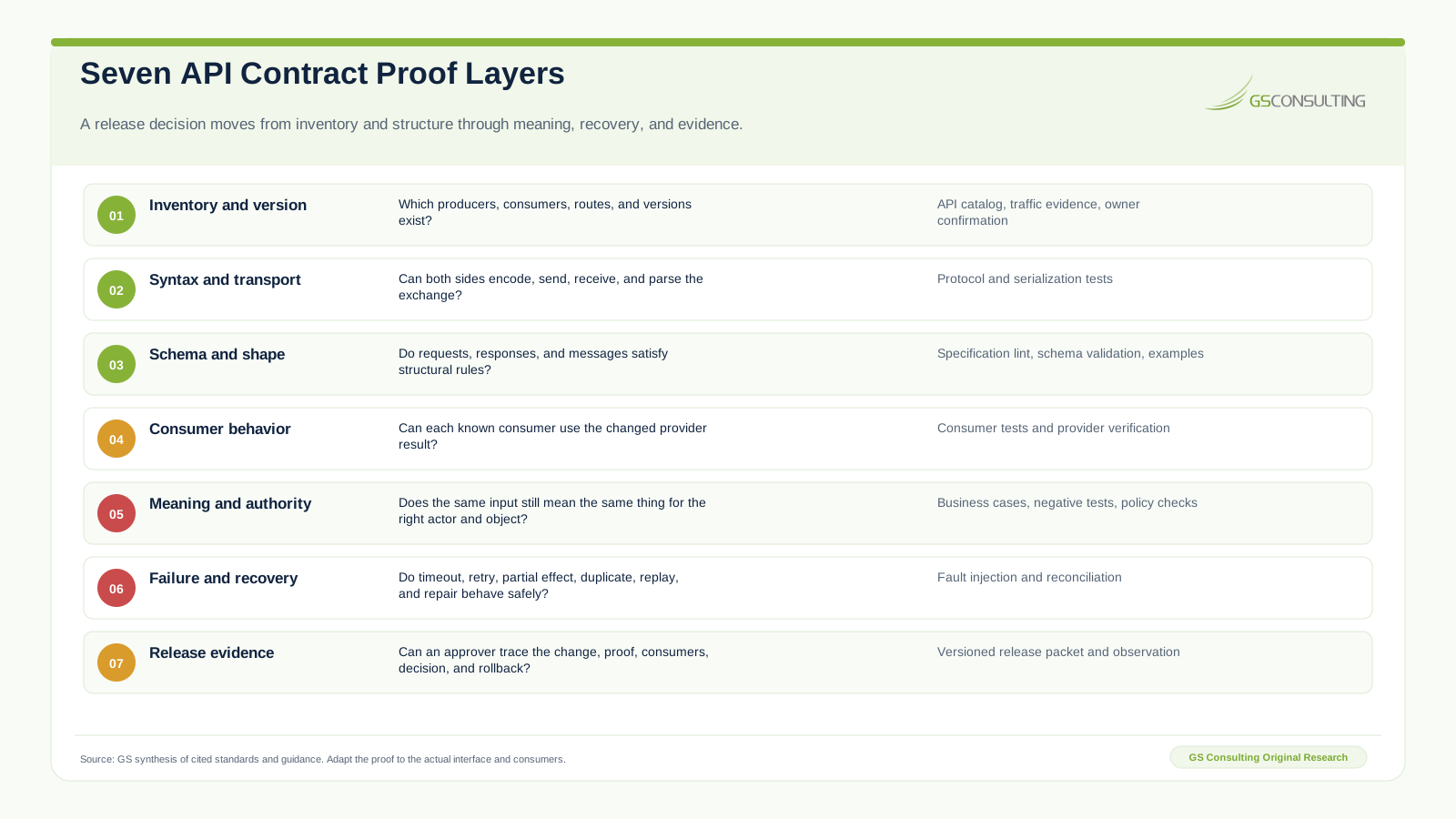
1. Inventory and version. Name the producer, operation or channel, version, owner, environment, and every required consumer. Use runtime traffic to challenge the inventory. Traffic alone is not ownership proof because quiet jobs, recovery tools, and seasonal consumers may not appear in a short window.
2. Syntax and transport. Prove that both sides can encode, send, receive, and parse the exchange. Cover protocol, serialization, content type, headers, character encoding, compression, message binding, and connection behavior that the deployed path actually uses.
3. Schema and shape. Lint the interface description. Validate positive and invalid requests, responses, and messages. Test required properties, additional properties, enum values, ranges, formats, null behavior, examples, and dialect behavior. Preserve the tool and schema versions with the result.
4. Consumer behavior. Run consumer tests against the provider version that will ship. Provider verification should replay the recorded interactions against the actual provider state. Record consumer version, provider version, interaction, provider state, result, gap, and owner.
5. Meaning and authority. Use representative business cases with explicit source truth. Assert units, defaults, decisions, state transitions, side effects, and field meaning. Add denied cases for the wrong user, object, field, action, workflow state, tenant, and environment.
6. Failure and recovery. Inject timeouts, lost responses, duplicates, partial effects, stale state, version mismatch, replay, rollback, and repair. Check both the response and the destination state. A green test log without destination reconciliation is incomplete evidence for a write.
7. Release evidence. Tie the change, contract baseline, consumers, proof, gaps, approvals, route, observation window, rollback, and retirement decision together. Version the packet so an approver can tell exactly what was tested and what remained out of scope.
Use the Test That Proves the Actual Claim
Teams waste time when one test is expected to prove something outside its reach. A specification diff can expose a removed property. It cannot prove that a retained property keeps the same meaning. A consumer test can prove one expected interaction. It cannot prove that no unknown consumer exists. A load test can measure latency and limits. It cannot prove object authority.
Use specification diff and schema conformance for structural claims. Use consumer tests and provider verification for known message expectations. Use business behavior cases for meaning, defaults, units, state, and side effects. Use negative authority tests for forbidden actors and objects. Use failure exercises for timeout, retry, duplicate, partial effect, replay, rollback, and repair. Use production observation to confirm actual consumers, versions, errors, traffic, lag, and deprecation use.
Do not turn production into the first full test. Production observation confirms assumptions after strong proof. It does not excuse a missing baseline, unknown consumer set, unsafe retry, or absent recovery path.
A Five Stage Contract Release Path
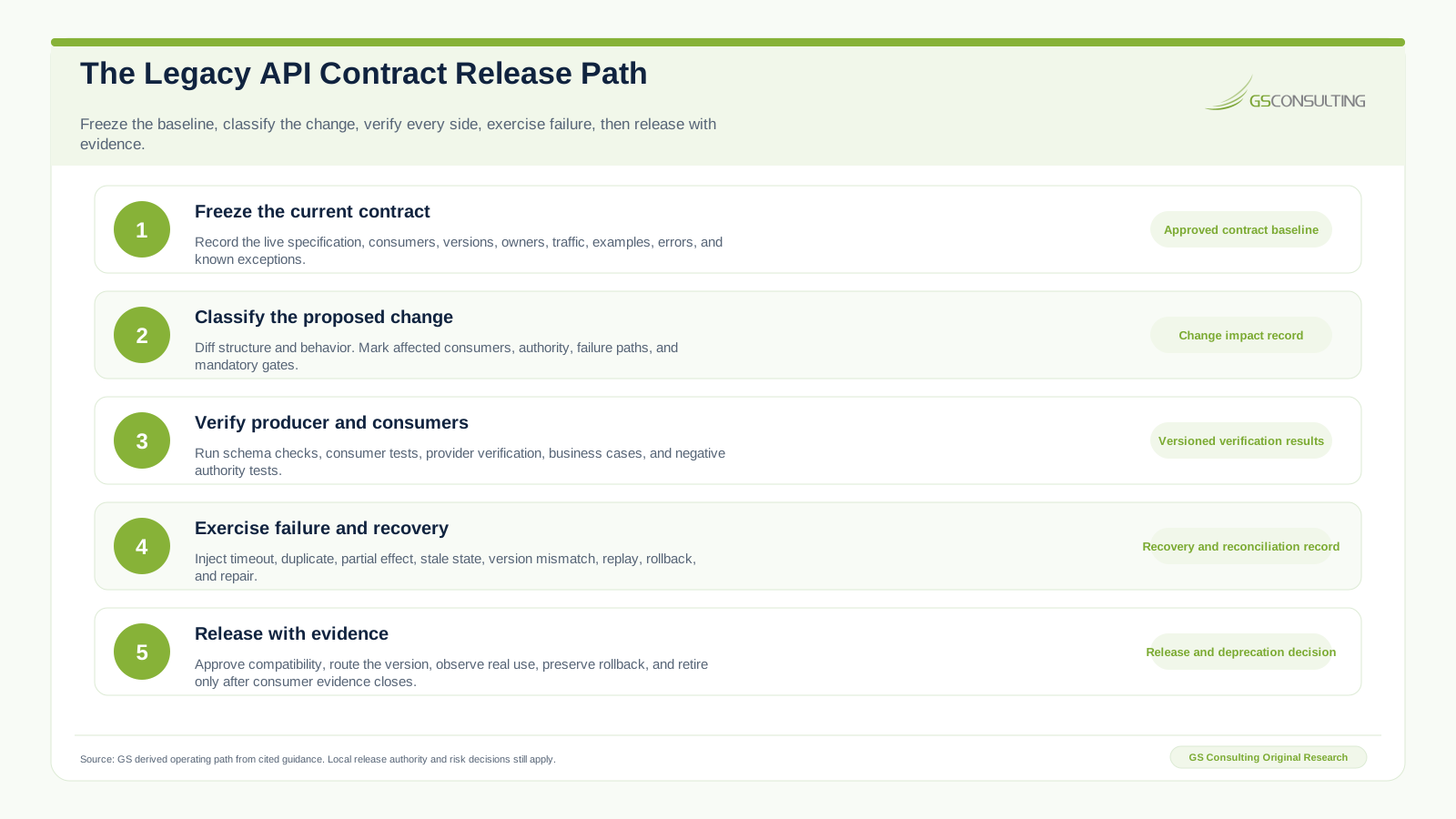
Freeze the current contract. Export the live OpenAPI or AsyncAPI file when one exists. Record traffic, routes, versions, examples, errors, security behavior, consumers, owners, and known exceptions. Hash the baseline. Capture the date and environment.
Classify the proposed change. Run a structural diff, then ask what could change in meaning, authority, state, failure, recovery, routing, or consumer action. Mark mandatory gates before implementation. A required gate should not appear for the first time in final approval.
Verify producer and consumers. Run specification linting, schema cases, consumer tests, provider verification, representative business cases, and negative authority cases. Compare failures as carefully as successes. Record every untested consumer or unsupported version as a gap with an owner.
Exercise failure and recovery. Test the conditions that a demonstration avoids: lost responses, slow dependencies, duplicate requests, partial writes, stale reads, wrong versions, replay, rollback, and manual repair. Reconcile destination state to the intended result.
Release with evidence. Approve the compatibility decision. Route the intended version. Observe consumer use, errors, duplicate effects, queue depth, and latency. Keep rollback available through the observation window. Retire the old version only after traffic evidence and consumer owner confirmation close the dependency.
Six Failures That Pass a Clean Demo
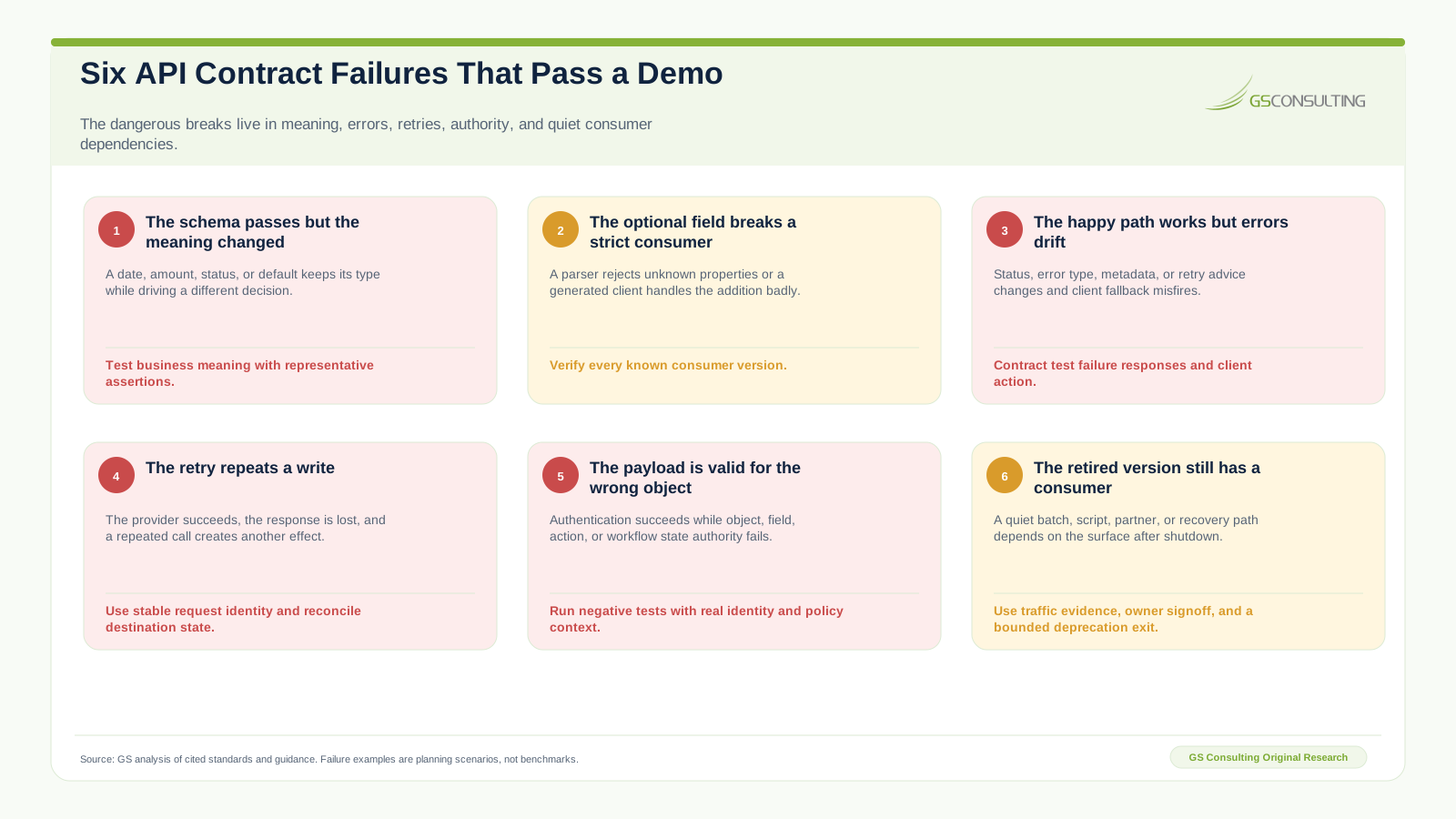
The schema passes but the meaning changed. A date, amount, status, or default keeps its type while driving a different decision. Corrective proof requires representative business assertions against a named source truth.
The optional field breaks a strict consumer. A parser rejects unknown properties, or a generated client mishandles the addition. Corrective proof requires verification of every known consumer version that matters to release.
The happy path works but errors drift. The status, error type, metadata, or retry advice changes. The client falls back, repeats work, suppresses an alert, or sends the case to the wrong queue. Corrective proof must connect the failure response to the client action.
The retry repeats a write. The provider succeeds, the response is lost, and the repeated call creates another effect. AWS guidance on idempotent APIs explains the value of unique client request identifiers and semantically equivalent responses. Local proof still needs destination reconciliation.
The payload is valid for the wrong object. Authentication succeeds while object, field, action, or workflow authority fails. Corrective proof requires real identity and policy context, including denied cases.
The retired version still has a consumer. A quiet batch, script, partner, or recovery path depends on the surface after shutdown. Corrective proof needs traffic evidence over a representative period, owner confirmation, a communicated exit, and a bounded decision for any remaining dependency.
The API Contract Acceptance Evidence Packet
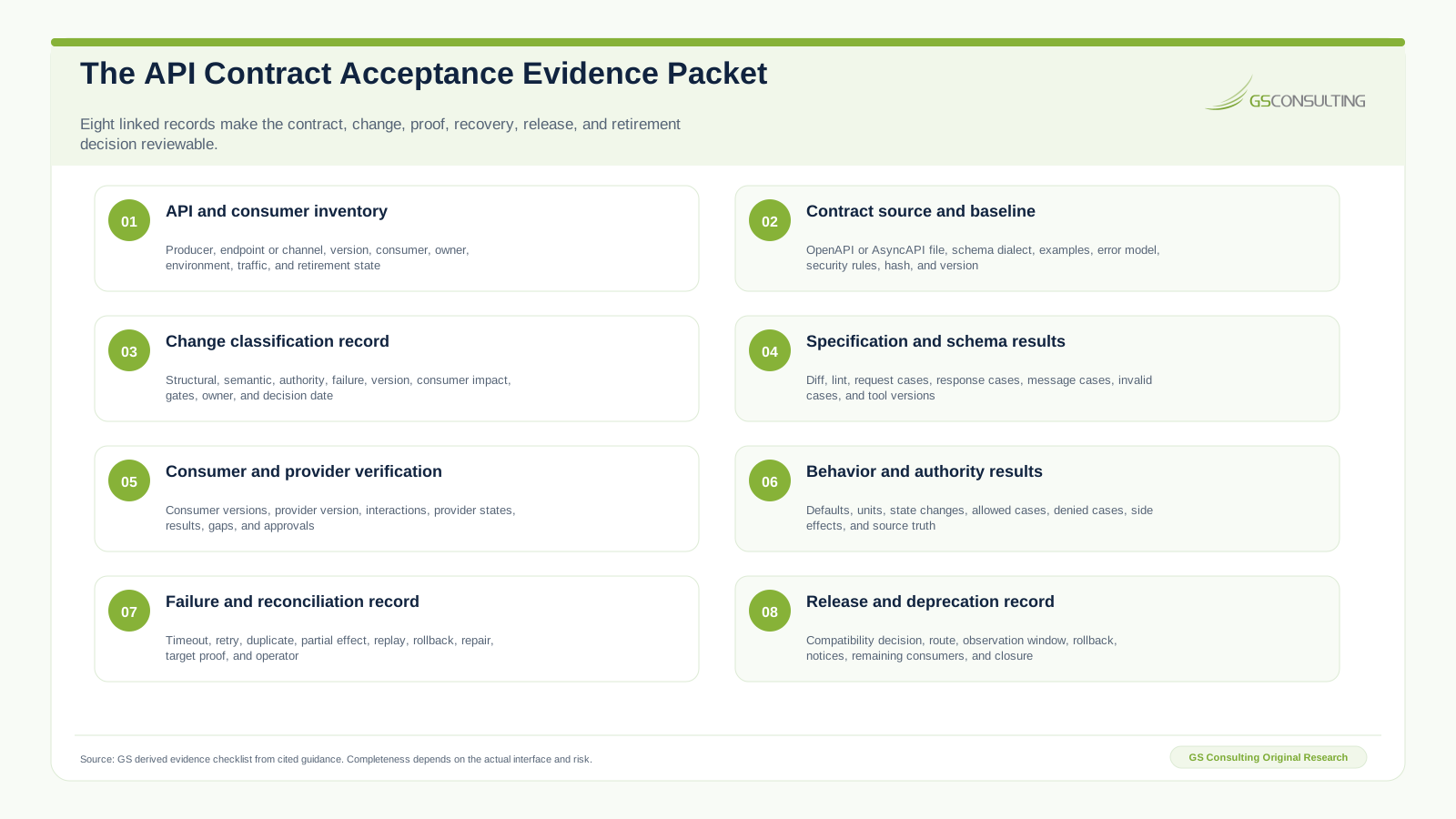
API and consumer inventory. Include producer, endpoint or channel, version, consumer, owner, environment, traffic, and retirement state.
Contract source and baseline. Include the specification file, schema dialect, examples, error model, security rules, version, hash, and capture date.
Change classification record. State structural, semantic, authority, failure, version, and consumer impacts. List the mandatory gates, owner, decision date, and any approved gap.
Specification and schema results. Preserve the diff, lint result, positive cases, invalid cases, request cases, response cases, message cases, and tool versions.
Consumer and provider verification. Preserve consumer versions, provider version, interactions, provider states, results, gaps, and approvals.
Behavior and authority results. Record defaults, units, state changes, allowed cases, denied cases, side effects, and the source truth used for the assertion.
Failure and reconciliation record. Record timeout, retry, duplicate, partial effect, replay, rollback, repair, target proof, and the operator who confirmed the result.
Release and deprecation record. Preserve the compatibility decision, route, observation window, rollback, notices, remaining consumers, approval, and closure date.
A 30 Day Plan for the First Contract Lane
Days 1 through 5: choose one consequential write path. Pick an automation that changes a durable record or triggers an external effect. Name the producer, consumers, versions, owners, environments, and recovery path. Capture the live specification and runtime traffic. Record where the inventory is uncertain.
Days 6 through 10: define the contract baseline. Add request, response, message, error, security, example, default, and version behavior. Write representative business cases and denied cases. Identify the destination fields that prove the intended write.
Days 11 through 17: automate structural and consumer proof. Add specification linting, schema validation, invalid cases, consumer tests, and provider verification to the delivery path. Pin tool versions. Make failures visible to the producer and consumer owners.
Days 18 through 23: exercise the dangerous conditions. Test lost responses, timeout, duplicate requests, partial effects, stale data, error changes, wrong authority, replay, rollback, and repair. Compare the result in the target system with the intended business effect.
Days 24 through 27: run a controlled release. Route a limited consumer set to the verified version. Watch errors, retries, duplicate effects, queue depth, duration, and data reconciliation. Keep the old route and repair path available until the observation window closes.
Days 28 through 30: approve or stop. Assemble the evidence packet. Resolve unknown consumers and failed gates. Record accepted gaps with owners and dates. Approve the version route and retirement plan only when the contract, behavior, recovery, and rollback evidence agree.
Sources and Research Method
This analysis uses the OpenAPI Specification 3.2.1, JSON Schema Draft 2020 12 validation vocabulary, Google AIP 180, Google AIP 185, RFC 9110, RFC 9457, Google AIP 193, Google AIP 194, NIST SP 800 228 Update 1, the OWASP API Security Top 10 for 2023, Pact documentation, AWS Builders Library retry guidance, and the AsyncAPI Specification 3.0.0. Sources were accessed October 1, 2026.
GS Consulting separated public observations from analyst assumptions, recorded a source identifier for each scored scenario, calculated a base and alternate weighting case, and retained the model inputs, formula outputs, sensitivity analysis, figures, workbook, and data dictionary in the article research package. The model sequences proof effort. It does not replace local engineering, security, legal, compliance, product, or release authority.
Frequently Asked Questions
What is legacy API contract testing?
Legacy API contract testing proves that a producer and every required consumer still agree on the interface and its behavior. It covers operations, payload shape, versions, meaning, authorization, errors, retries, state effects, recovery, and release evidence. A schema check is one part of that proof, not the whole test.
Is schema validation enough for API contract testing?
No. Schema validation can prove types, required fields, enums, ranges, and formats. It cannot prove that a field keeps the same business meaning, the right actor can access the right object, a retry is safe, a consumer handles an error correctly, or a partial write can be reconciled.
Which API changes need the strongest contract tests?
Changes to authorization, write meaning, idempotency, event order, duplicate handling, replay, errors, retry classification, units, defaults, and required fields need the strongest proof. Version routing, deprecation, timeouts, limits, pagination, filters, sorting, and new enum values also deserve explicit consumer evidence.
Do consumer driven contract tests replace integration tests?
No. Consumer tests and provider verification are valuable because they prove known message expectations. They do not replace business behavior tests, negative authorization tests, failure exercises, performance tests, recovery tests, destination reconciliation, or production observation.
How should a team test retries against a legacy API?
Test the actual operation under a lost response, timeout, duplicate request, partial effect, and repeated request identifier. Confirm whether repetition is safe, whether the same request returns a semantically equivalent result, and whether destination state reconciles without a second business effect.
What evidence should close an API contract release?
Keep the producer and consumer inventory, contract baseline, change classification, schema results, consumer and provider verification, behavior and authority results, failure and reconciliation record, release decision, observation window, rollback plan, deprecation status, and named approvals.
Make contract proof the release standard.
An automation is ready when every required consumer, business meaning, authority rule, failure path, recovery action, and version decision is proved against the real interface.
Plan the Contract Test Lane