AI Workflow Automation | | 25 min read
Integration Observability and Reconciliation: Prove Every Transaction

Key Takeaways
A healthy service is not the same as a correct transaction
State reconciliation scores 100
Expected and observed state reconciliation and durable workflow state lead the assurance index.
A trace can stop too early
Message receipt, process completion, business effect, and verified closure are separate facts.
Repair must end in proof
Replay or compensation is incomplete until destination truth and owner acceptance agree.
Integration observability is not a better log search. It is proof that each business operation reached the right state, every mismatch has an owner, repair was safe, and closure is real.
A queue can accept a message that never produces the intended record. Every service can report healthy while two systems disagree. A retry can repeat the business effect. A repair can correct the data but leave the exception open. A trace can describe all the code that ran and still miss the transaction that did not finish.
The operating answer is to give every business operation an identity, persist its state outside short lived telemetry, propagate execution context through every boundary, compare expected and observed truth, and keep exceptions open until repair is verified. That is integration observability and reconciliation as an operating control, not a dashboard project.
Use this guide with the Enterprise AI Process Transformation hub, Legacy Data Mapping and Normalization, Legacy API Contract Testing for Automation, Legacy Automation Write Back Reconciliation, and Legacy Integration Pilot Acceptance. GS Consulting connects the work through AI Workflow Automation and Legacy System Integration.
Make every integration transaction explainable.
GS Consulting helps teams define transaction state, connect telemetry, detect mismatches, control repair, and produce evidence that stands up to operating review.
Request an Integration Observability ReviewIntegration Observability: The Short Answer
Start with the business operation, not the tool. Name the request, source record, target record, intended action, expected result, owner, and time boundary. Give that intent one stable operation ID. Carry trace, message, conversation, batch, record, and version context under that identity as the work crosses systems.
Persist a workflow state model that distinguishes accepted, processing, waiting, completed, failed, uncertain, repair pending, repaired, and closed. The exact states can differ, but receipt must not mean completion, and repair must not mean closure. Preserve attempts and decisions instead of overwriting them with the latest status.
Reconcile expected state with observed state on a schedule and after every consequential repair. Detect missing, duplicate, late, out of order, partial, wrong version, and conflicting results. Route each unresolved mismatch to an owner with age, severity, business impact, and next action.
Close only after destination truth matches an accepted terminal state. If a residual gap is accepted, record who accepted it, why, and until when. Availability, latency, error rate, queue depth, and trace completeness remain important. None of them replaces transaction closure.
Logs Explain Events. Reconciliation Proves State.
Observability signals answer different questions. Traces show the path of an execution. Logs preserve events and decisions. Metrics show volume, duration, errors, and resource behavior. Message metadata shows destination, operation, partition, conversation, and message identity. Workflow state shows durable progress. Reconciliation asks whether the business result in the target system matches what the source intended.
Confusing those questions creates false confidence. A trace with every span present can describe a failed business decision perfectly. A green service metric can coexist with a record that never arrived. A queue depth of zero can mean every message completed, or it can mean messages were consumed and discarded. An audit log can prove an attempt without proving the final state.
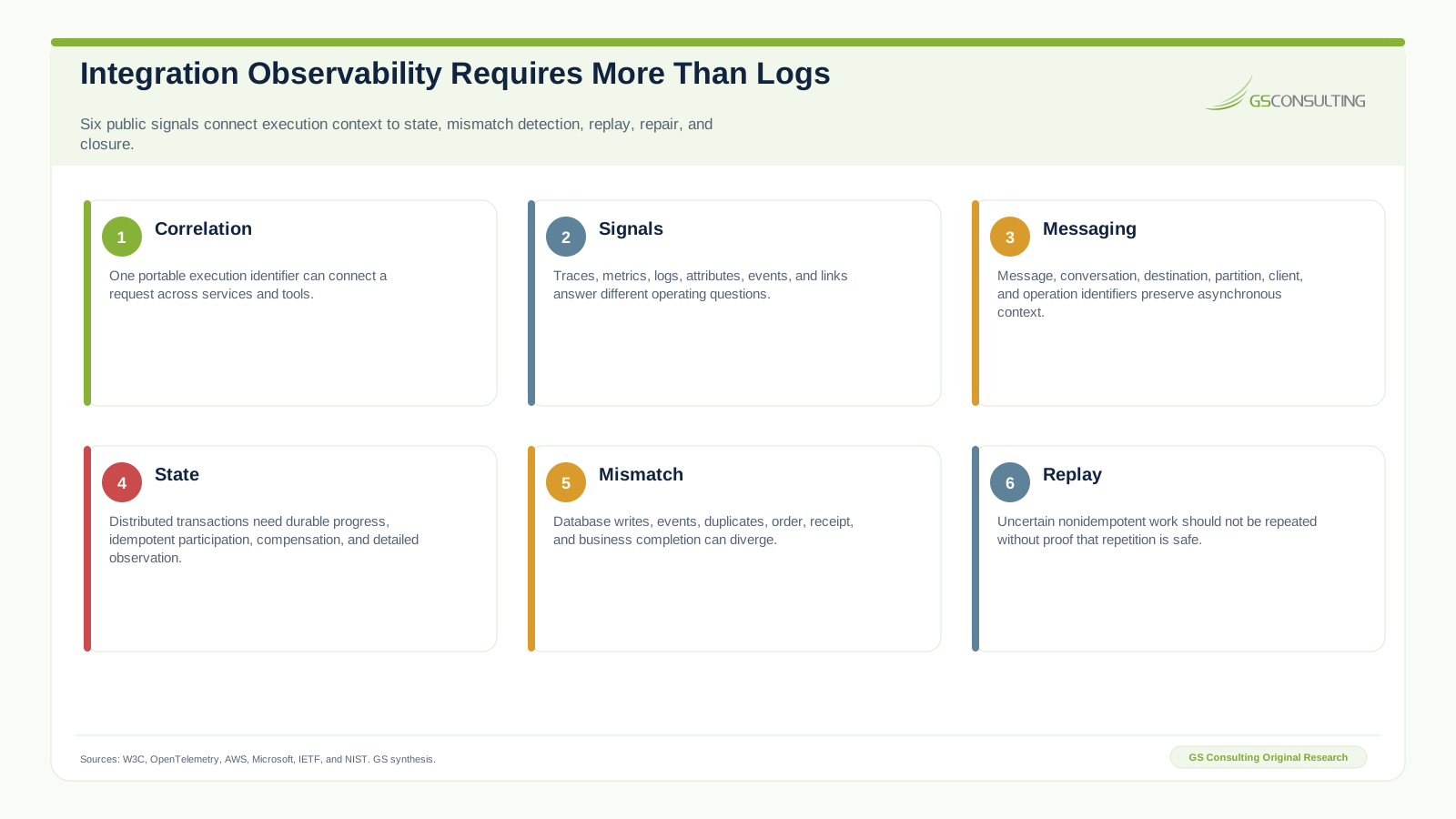
Build a layered answer. Use trace context to connect instrumented components. Correlate logs with trace and span identifiers. Preserve message identity and conversation context. Record the business operation and durable workflow state. Query the destination through a channel independent of the attempted write. Compare expected and observed truth. Keep the exception open until the repair result is verified.
This design also exposes missing telemetry. If an operation has no destination observation, that is not automatically a business failure. It is an evidence gap. The team must distinguish failure, uncertainty, and missing observation because each needs a different response.
What Public Standards and Guidance Support
The W3C Trace Context Recommendation defines portable trace identifiers and processing rules across system boundaries. That gives connected services a common execution context. It does not claim to prove business state, destination truth, or closure.
OpenTelemetry trace guidance explains how spans represent a request path. The OpenTelemetry logs specification supports correlation through trace and span identifiers. Its messaging semantic conventions cover concepts such as destination, operation, client, partition, conversation, and message identity. These signals make execution explainable when the team applies them consistently.
AWS saga orchestration guidance describes eventual consistency, compensating transactions, participant idempotency, detailed logging, tracing, and recovery across services. Its transactional outbox guidance addresses the split between a database write and event publication, while still calling out duplicate and order concerns. An outbox solves one failure class. It does not reconcile the whole business transaction.
AWS asynchronous communication guidance shows why durable receipt and actual processing are separate. Microsoft guidance on compensating transactions says the workflow must record progress, compensation can fail, manual intervention may be required, and the original action and compensation should be reviewable together.
RFC 9110 explains why automatic retry of a nonidempotent request is unsafe unless the client knows the operation is idempotent or can determine the original request was not applied. NIST SP 800 53 Revision 5 Update 1 provides relevant audit, assessment, and system integrity controls. Local legal, security, audit, and compliance owners still determine which controls apply.
GS Original Research: Integration State Assurance Priority
GS Consulting built the Integration State Assurance Priority Index to answer one operating question: which controls deserve the earliest attention when an integration can leave consequential or uncertain state? We scored twelve controls from one through five across state ambiguity, business consequence, silent failure exposure, replay and repair exposure, and detection and closure burden.
The base weights are 25 percent for state ambiguity, 25 percent for business consequence, 20 percent for silent failure exposure, 15 percent for replay and repair exposure, and 15 percent for detection and closure burden. The score is each rating divided by five and multiplied by its weight. An alternate case raises business consequence and repair exposure while reducing state ambiguity and silent failure weight.
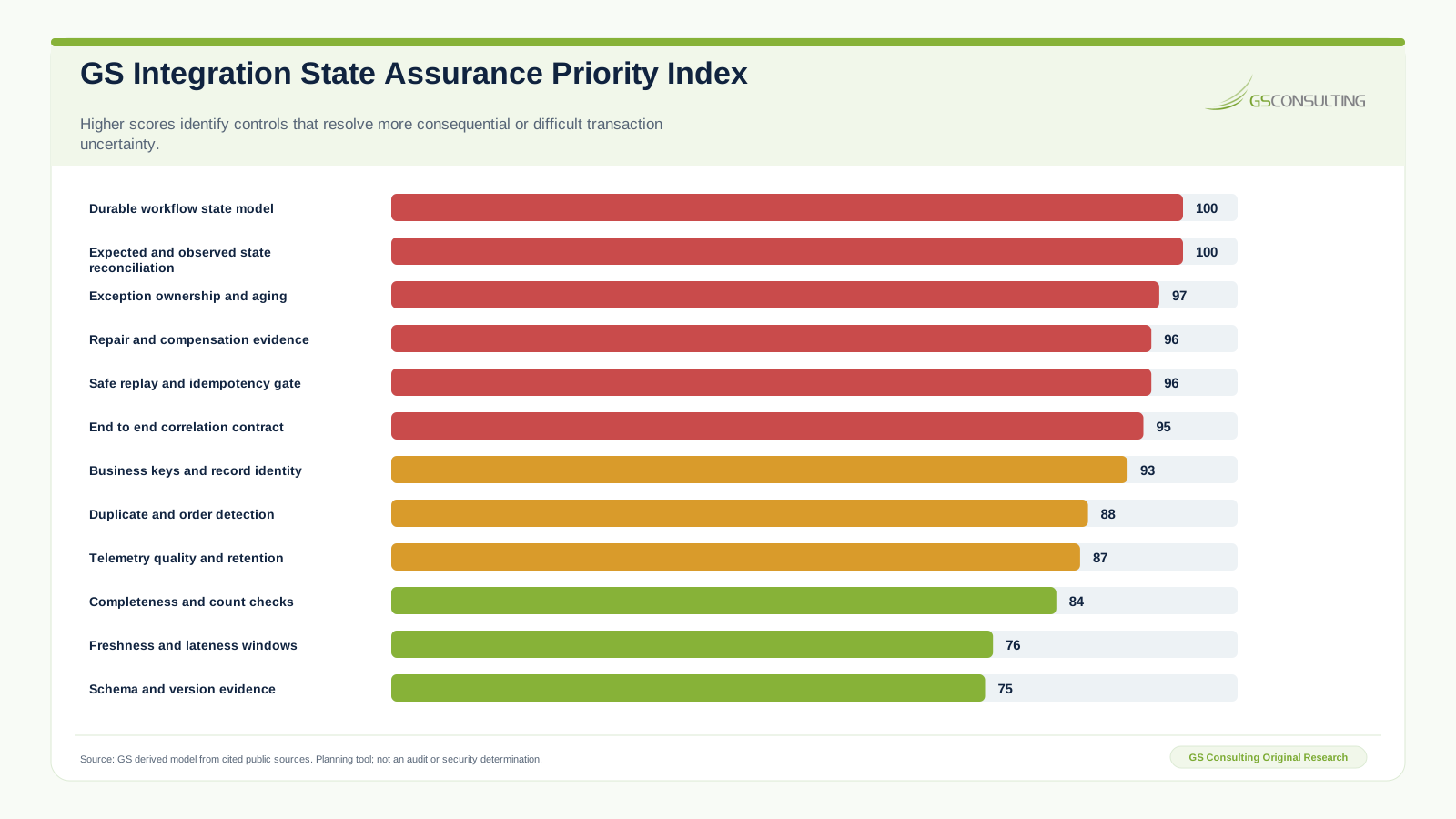
The result is direct. Expected and observed state reconciliation and a durable workflow state model both score 100. Exception ownership scores 97. Safe replay and repair evidence score 96. An end to end correlation contract scores 95. These are hard gates because a team cannot reliably explain, repair, or close uncertain work without them.
Business keys score 93. Duplicate and order detection scores 88. Telemetry quality and retention score 87. Completeness checks score 84. Freshness windows score 76, and schema and version evidence scores 75. The lower scores still matter. They sequence the build; they do not excuse a known business risk.
The alternate weighting changes each score by no more than three points. The first six controls remain the same hard gate set. That stability matters because the conclusion does not depend on one narrow choice of weights.
This index is a GS Consulting derived planning tool based on cited public sources and documented analyst assumptions. It is not an official legal, security, audit, compliance, NIST, W3C, OpenTelemetry, cloud provider, or regulatory determination. Validate the inputs against the actual integration, data, business effect, and operating environment.
Reconciliation Burden Changes by Integration Pattern
The same monitoring design should not be copied into every integration. A read only lookup has little repair burden because it does not create destination state. A long transaction across several systems can leave partial effects, disputed ownership, failed compensation, and several plausible versions of truth.
GS Consulting scored eight representative patterns across system span, state divergence, duplicate and order risk, detection delay, and repair burden. A multisystem saga scores 100. Event fanout scores 88. Change data capture and an asynchronous command queue each score 80. A batch transfer scores 79, desktop automation scores 75, a synchronous business write scores 49, and a read only lookup scores 20.
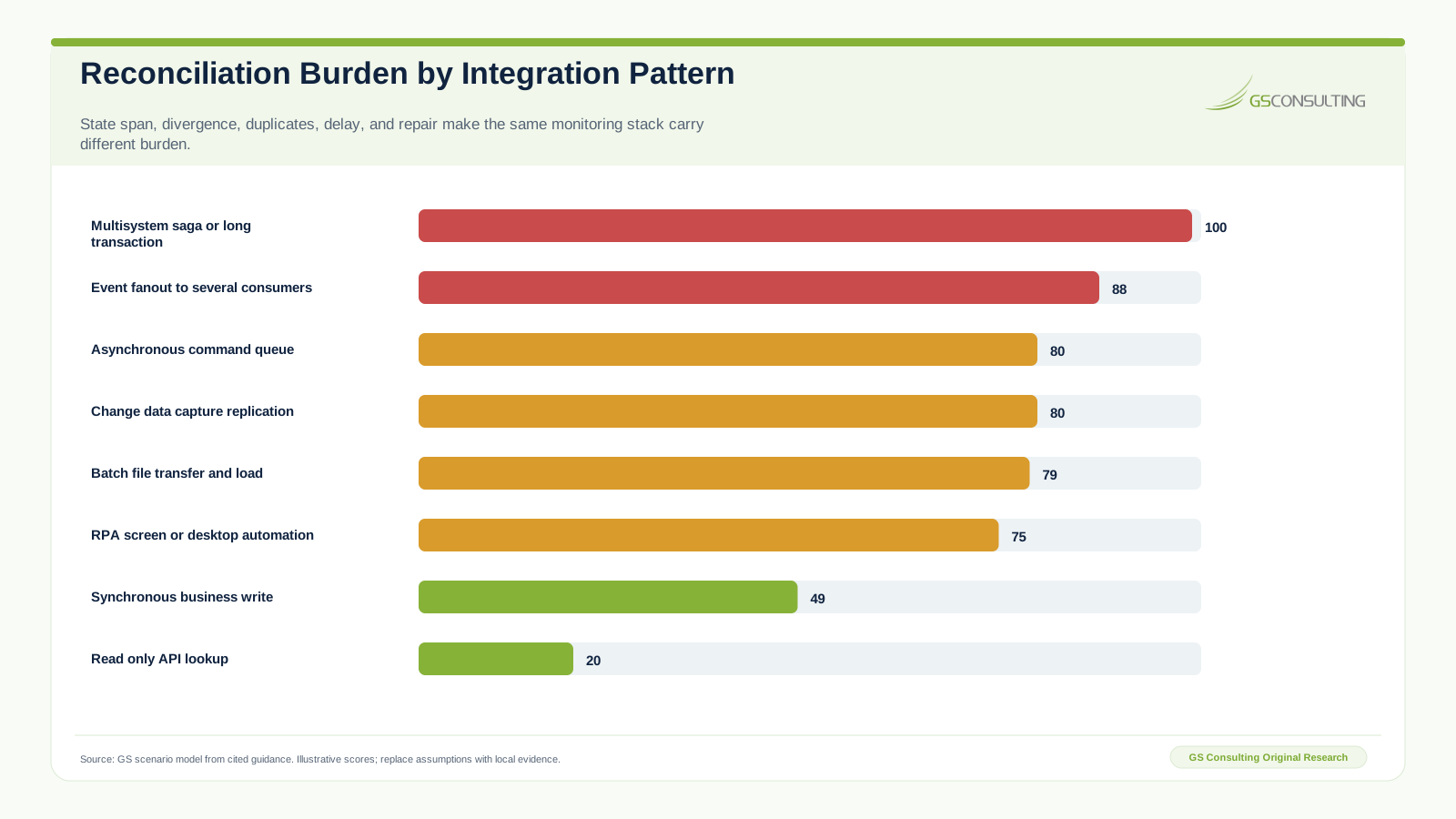
Use the scores to scale evidence, not to choose architecture by arithmetic. A synchronous write can still deserve the strongest controls when it moves money or authority. A batch file can be easy to repair when the target supports a full replace. An event path can have low business impact. Replace the representative ratings with local evidence before using the model for a release decision.
For change data capture work, pair this operating model with change data capture vs batch extraction guide. Capture position, schema, order, lag, destination application, and backfill state must be visible under the same reconciliation design.
Define a Telemetry and State Contract
A telemetry contract is the minimum evidence every transaction must emit or reference. It is not a promise that every tool stores every field. It is the rule that lets an operator reconstruct intent, execution, state, mismatch, repair, and closure without guessing.
Business operation ID. Create one stable identifier for the requested business intent. Do not generate a new identity for each retry. Link every attempt to the original operation.
Trace and span IDs. Use portable trace context where supported. Treat it as execution identity under the business operation, not as a replacement for it.
Message and batch identity. Record message ID, conversation ID, destination, operation, partition or shard, sequence or source position, batch ID, and delivery attempt when those concepts exist.
Source and destination keys. Store the record identifiers needed to query both sides. If the system cannot expose the required destination reference, say so before release and define an alternative proof.
Expected result. Record the intended target state, count, version, amount, status, decision, or effect. Without an expected result, reconciliation becomes an ad hoc search.
Observed result. Record what the target actually contains and how it was observed. Separate an acknowledgment from a later destination query.
Workflow state and terminal rule. Define allowed states, transitions, timeouts, exception classes, and the exact rule for completed, failed, uncertain, repaired, and closed.
Decision and ownership. Preserve retry, stop, compensate, correct, accept, and escalate decisions with actor, reason, timestamp, approval, and next review.
Version context. Record producer, consumer, schema, route, model, prompt, rule, and configuration versions that could change behavior. One trace that crosses versions can tell two different stories.
The Integration Observation and Closure Path
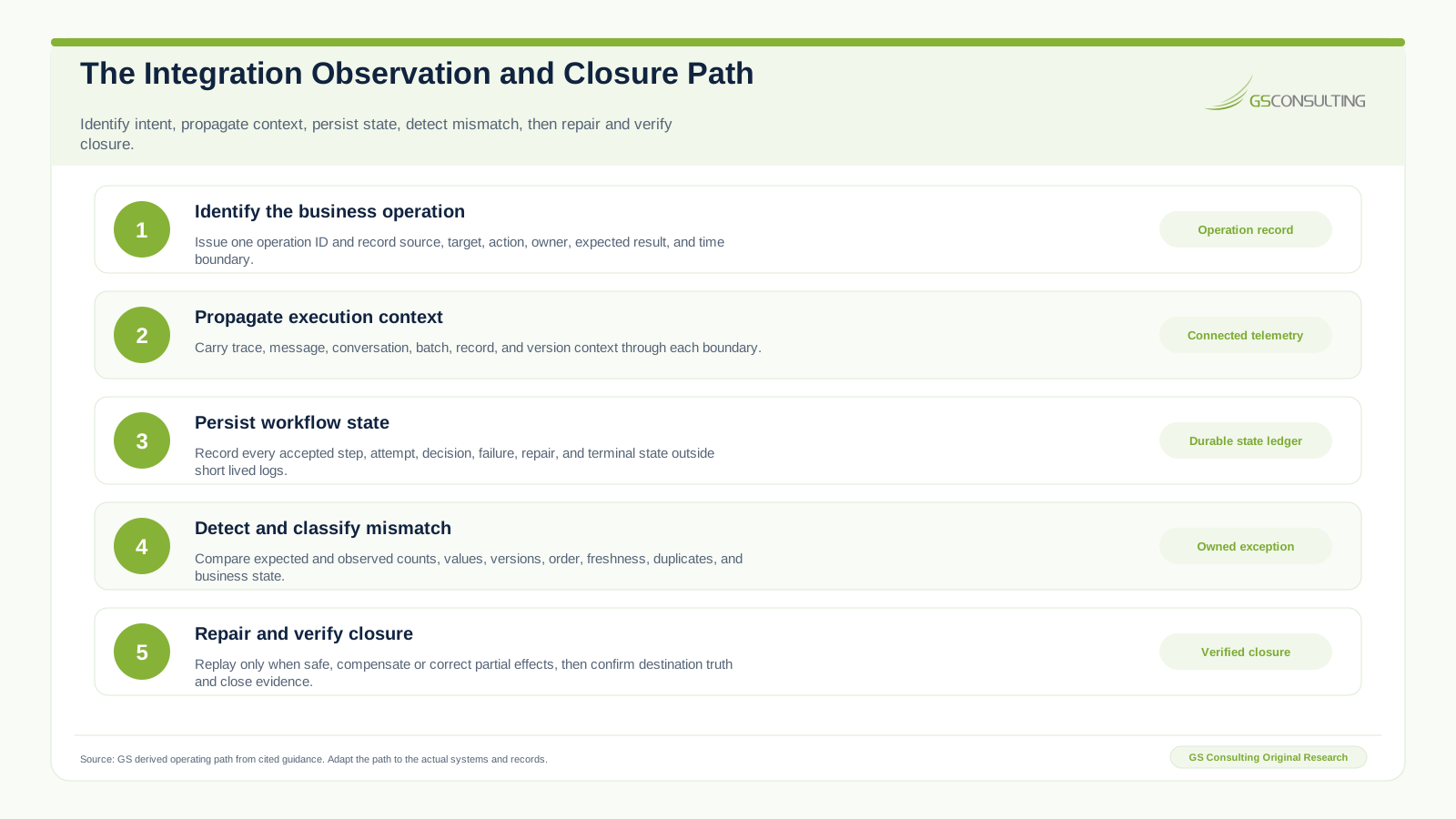
1. Identify the business operation. Record source, target, action, owner, expected result, and time boundary under one operation ID. This is the anchor for every attempt and repair.
2. Propagate execution context. Carry trace, message, conversation, batch, record, and version context through each boundary. Test propagation under retry, delay, fallback, and asynchronous processing, not only the normal path.
3. Persist workflow state. Record every accepted step, attempt, decision, failure, repair, and terminal state in a durable ledger or workflow store. Keep history. A current status field alone cannot explain how the transaction arrived there.
4. Detect and classify mismatch. Compare expected and observed counts, values, versions, order, freshness, duplicates, completion, and business impact. Route the exception to a named owner with age and next action.
5. Repair and verify closure. Replay only when safe. Compensate or correct partial effects. Query destination truth again. Record any residual gap, owner acceptance, review date, and final closure.
A transaction that cannot be verified should end as uncertain, not completed. That one distinction prevents many silent failures from being buried under a green workflow status.
Six Failures a Healthy Dashboard Can Miss
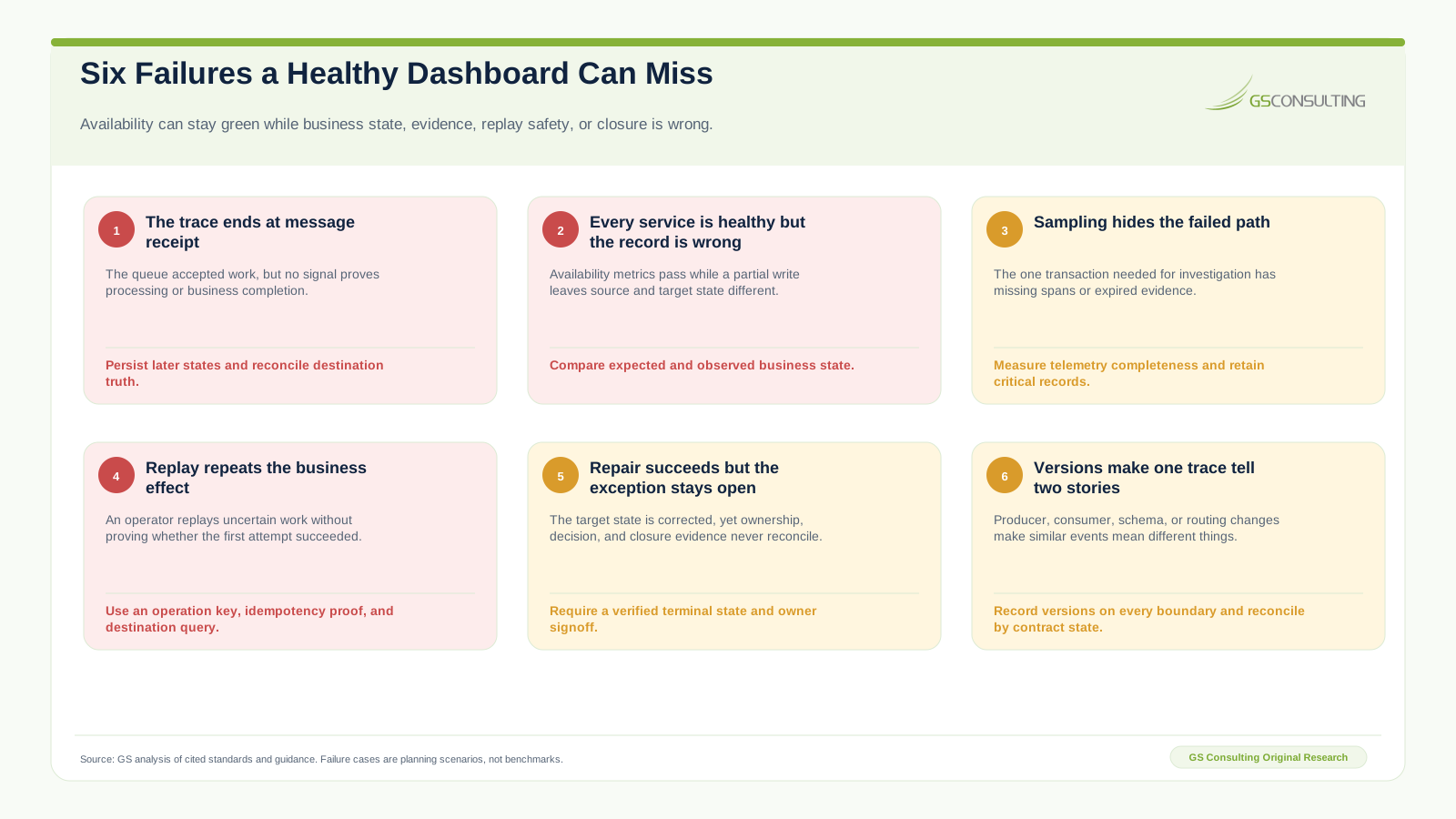
The trace ends at message receipt. The broker accepted the work, but nothing proves later processing or business completion. Persist later states and reconcile the destination.
Every service is healthy but the record is wrong. Availability metrics pass while a partial write leaves source and target state different. Compare expected and observed business state.
Sampling hides the failed path. The transaction needed for investigation has missing spans or expired evidence. Measure telemetry completeness and retain consequential records by policy.
Replay repeats the business effect. An operator retries uncertain work without proving whether the first attempt succeeded. Require operation identity, idempotency proof, destination query, and approval before replay.
Repair succeeds but the exception stays open. The data is corrected, yet ownership, decision, and closure evidence never reconcile. Require a verified terminal state and owner signoff.
Versions make one trace tell two stories. Producer, consumer, schema, routing, or model versions change while the operation is active. Record versions at every boundary and reconcile by the context that actually ran.
The Integration Assurance Evidence Packet
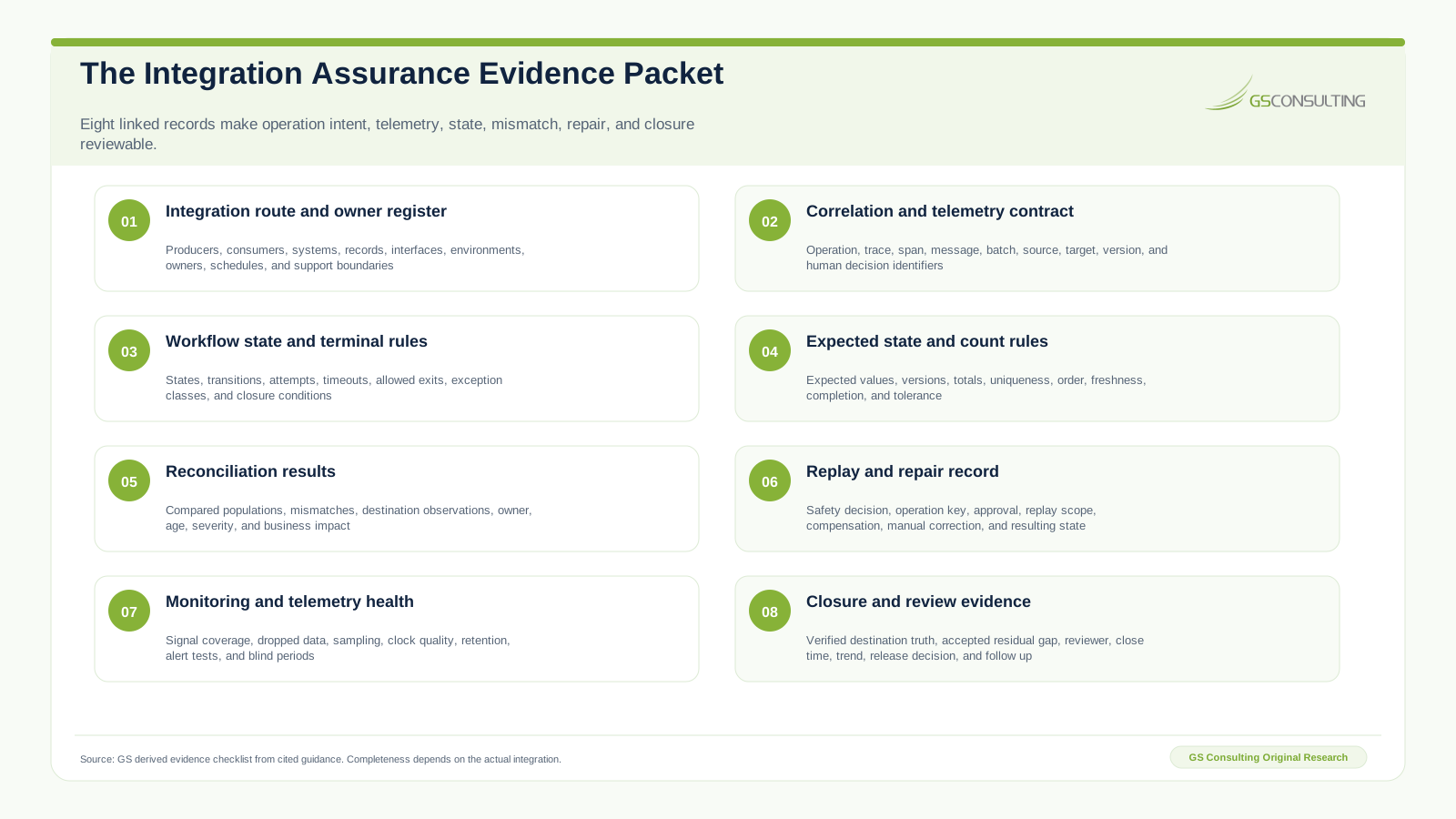
Integration route and owner register. Name producers, consumers, systems, records, interfaces, environments, owners, schedules, and support boundaries.
Correlation and telemetry contract. Define the operation, trace, span, message, batch, source, target, version, and human decision identifiers.
Workflow state and terminal rules. Preserve states, transitions, attempts, timeouts, allowed exits, exception classes, and closure conditions.
Expected state and count rules. Record expected values, versions, totals, uniqueness, order, freshness, completion, and tolerance.
Reconciliation results. Preserve compared populations, mismatches, destination observations, owner, age, severity, and business impact.
Replay and repair record. Preserve the safety decision, operation key, approval, replay scope, compensation, manual correction, and resulting state.
Monitoring and telemetry health. Track signal coverage, dropped data, sampling, clock quality, retention, alert tests, and blind periods.
Closure and review evidence. Record verified destination truth, accepted residual gap, reviewer, close time, trend, release decision, and follow up.
A 30 Day Plan for One Consequential Integration
Days 1 through 5: choose the transaction. Select one integration that changes money, authority, customer commitment, inventory, or another durable record. Name the source, target, owner, expected result, recovery path, and current evidence gaps.
Days 6 through 10: define identity and state. Create the operation identity rule. Map trace, message, batch, source, destination, and version context. Define accepted, processing, completed, failed, uncertain, repair pending, repaired, and closed states for this transaction.
Days 11 through 15: build the reconciliation query. Compare expected and observed record keys, values, counts, freshness, order, versions, and completion. Run it against known good, failed, delayed, duplicate, and partial cases.
Days 16 through 20: create the exception lane. Route mismatches by severity, age, business impact, and owner. Make uncertainty visible. Define who can approve replay, compensation, correction, and residual acceptance.
Days 21 through 25: exercise repair. Test lost acknowledgment, timeout, duplicate delivery, partial effect, version mismatch, unsafe replay, failed compensation, and manual correction. Reconcile destination truth after each action.
Days 26 through 30: run the closure review. Measure telemetry coverage, open mismatches, age, repair outcomes, repeated causes, and unverified closures. Approve the production lane only when the transaction, evidence, owner, and repair path agree.
Sources and Research Method
This analysis uses the W3C Trace Context Recommendation, OpenTelemetry trace guidance, the OpenTelemetry logs specification, OpenTelemetry messaging semantic conventions, AWS saga orchestration guidance, AWS transactional outbox guidance, AWS asynchronous communication guidance, Microsoft compensating transaction guidance, RFC 9110, and NIST SP 800 53 Revision 5 Update 1. Sources were accessed October 2, 2026.
GS Consulting separated public observations from analyst assumptions, recorded a source identifier for each input, calculated base and alternate control scores, calculated representative pattern burden, and retained source notes, model inputs, formulas, sensitivity analysis, figures, workbook, and data dictionary in the research package. The model sequences assurance work. It does not replace local engineering, security, legal, audit, compliance, product, or release authority.
Frequently Asked Questions
What is integration observability?
Integration observability is the ability to explain a business operation across every system and handoff. It connects trace, log, metric, message, batch, workflow, source record, destination record, exception, repair, and closure evidence under one operation identity.
Why are logs and traces not enough for integration reconciliation?
Logs and traces explain execution, but they do not automatically prove the intended business result. A trace can end at message receipt while later processing fails, or every service can look healthy while source and destination records disagree. Reconciliation compares expected and observed state.
What should an integration telemetry contract include?
At minimum, include a business operation ID, trace and span IDs where supported, source and destination record keys, expected result, observed result, current state, attempt number, decision, repair action, owner, timestamps, version, and closure evidence.
How should a team handle integration replay?
Replay only after the team proves whether the original business effect occurred and whether repetition is safe. Use a stable operation key, idempotency proof, destination query, bounded approval, preserved attempt history, and a second reconciliation after repair.
Which integration patterns need the strongest reconciliation?
Long transactions across several systems, event fanout, change data capture, asynchronous command queues, batch loads, and desktop automation need strong reconciliation because receipt, processing, business effect, and closure can diverge. A read only lookup usually carries less state repair burden.
When is an integration transaction closed?
Close only when the observed destination truth matches an accepted terminal state, any residual gap is explicitly accepted, the repair and replay record is complete, an owner has verified the result, and the evidence can be reviewed later.
Operating Standard
Do not close on receipt, a green dashboard, or a successful replay. Close when expected state, observed truth, repair evidence, and owner acceptance agree.