AI Workflow Automation | | 25 min read
Event Driven vs Polling Integration: Choose the Trigger That Fits

Key Takeaways
The trigger is only as good as its recovery path
Source proof scores 100
A supported change signal or query contract leads the priority index because pattern preference cannot repair an unsupported source mechanism.
No pattern wins every case
Native events lead urgent alerts and fanout. Incremental polling leads bounded status and timestamp extraction. Snapshots lead small sources without a trustworthy marker.
Reconciliation stays separate
Events and polls both need an independent route to detect gaps, replay safely, compare destination truth, and prove closure.
Event driven vs polling integration is not a contest between modern and outdated architecture. It is a source, freshness, load, ordering, and recovery decision.
An event can arrive fast and still be lost, duplicated, delayed, or applied out of order. A poll can be simple and still hammer a source, skip tied updates, or report silence when the worker has stopped. The transport does not settle the operating question. The team has to prove what the source supports, how quickly the business needs change, what happens under failure, and how current state will be reconciled.
That proof often produces a mixed design. An event announces change. A source query retrieves authoritative detail. A durable position supports replay. A scheduled comparison detects gaps that the normal path cannot see. The useful distinction is not event or poll. It is whether each route has a clear contract, bounded load, stable identity, safe recovery, and owned evidence.
Use this guide with the Enterprise AI Process Transformation hub, Legacy API vs Middleware vs RPA, Change Data Capture vs Batch Extraction, Integration Observability and Reconciliation, and Legacy API Contract Testing for Automation. GS Consulting connects the work through AI Workflow Automation and Legacy System Integration.
Choose a trigger your operators can prove.
GS Consulting helps teams test source capability, define freshness, compare event and polling patterns, control source load, exercise recovery, and build the evidence behind release.
Request an Integration Trigger ReviewEvent Driven vs Polling Integration: The Short Answer
Use a native event when the source publishes a supported, durable change signal and the business needs fast reaction, high change volume, or several independent consumers. Use incremental polling when the source exposes reliable state through a cursor, modified time, version, validator, or status resource and the accepted delay is bounded. Use snapshot polling only when the source is small, no trustworthy marker exists, or the decision requires an independent full population comparison.
Start with the business freshness window. Name the change, maximum acceptable age, expected volume, consequence of a miss, source owner, and response owner. Then prove the source mechanism. A webhook listed in a product page is not enough. Test authentication, payload identity, delivery behavior, retry, retention, rate limits, history access, and support status.
Design recovery before normal delivery. Keep the last trusted event position or poll cursor. Define how to detect a gap, how much history remains available, how to replay or backfill, and how to compare the destination with the source. If the integration cannot distinguish no change from a stopped consumer or poller, it is not ready.
Do not average away hard failures. An unsupported source mechanism, unknown freshness need, missing change identity, unsafe retry, untestable gap recovery, or absent reconciliation remains open until a named owner accepts specific evidence or a documented alternative.
Events Notify. Polling Asks. Both Need State Proof.
An event is a discrete fact published by a source. It might say that an order changed, access was revoked, a case closed, or a file became available. A webhook is one delivery method. A broker or stream can add retention, fanout, replay, and consumer independence. Those services differ, so the event contract must say what the chosen source and channel actually guarantee.
Polling asks the source for current state or for changes since a trusted position. Incremental polling reads only records beyond a cursor, time, version, or page token. Snapshot polling reads a bounded population and compares it with prior or destination state. A long running job status resource is an intentional polling pattern, not a failure to adopt events.
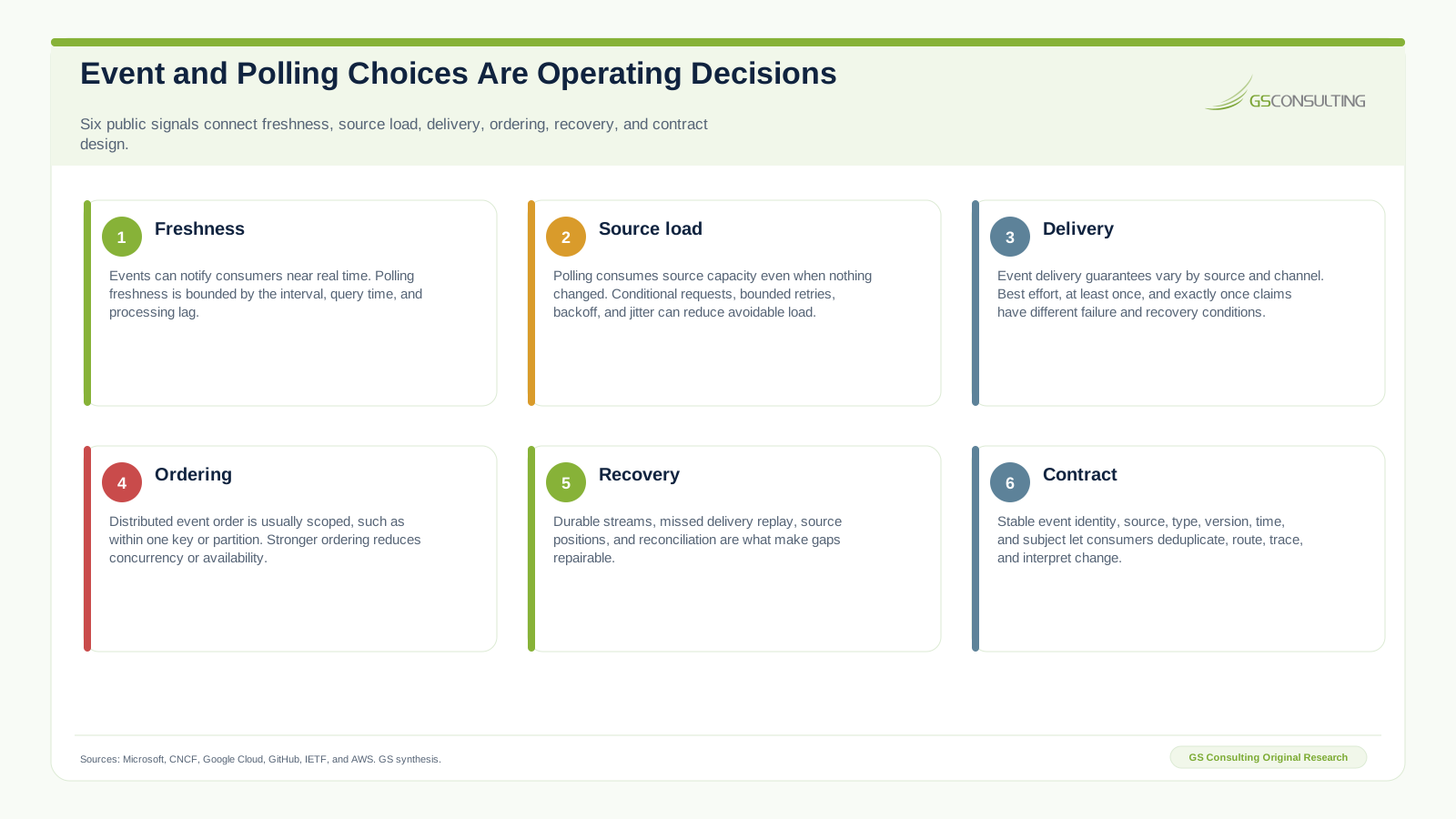
The event route often wins on detection delay and fanout. The poll route often wins on explicit state retrieval and bounded completeness. Neither route proves final business state by itself. An event can report intent before a later write fails. A poll can retrieve a row after another update has already made it stale. Reconciliation must compare expected and observed state through an independent route.
A practical design can combine all three patterns. Use events to wake the workflow, a query to obtain the current authoritative record, and a scheduled snapshot to certify completeness. Give the routes one identity and version model. Otherwise a replay, poll, and event can each create the same business effect.
What Public Specifications and Technical Guidance Support
Microsoft event driven architecture guidance describes near real time response, loose coupling, fanout, and durable stream replay. It also names the cost: eventual consistency, variable processing time, difficult monitoring, ordering concerns, error handling, and recovery. That is the right starting posture. Events exchange repeated reads for stronger delivery and consumer discipline.
Microsoft publish and subscribe guidance calls out delivery guarantees, duplicate handling, message order, dead letter processing, back pressure, schema change, correlation, and security. Its competing consumers guidance notes that order is not assured when several consumers process work. Consumers must be idempotent, and failed work needs an owned route.
Microsoft asynchronous request and reply guidance treats polling a status resource as a valid design for long running work. Long polling can reduce detection delay, but connection and timeout behavior become part of the contract. The lesson is direct: use a status resource when that is the source interface, and make repeat requests safe.
The CloudEvents specification requires an event identity, source, specification version, and type. It also defines optional time, subject, and data schema attributes. Source plus identity can support duplicate detection, but the application still has to decide how long to remember processed work and what a repeated business action means.
Google Cloud ordering guidance scopes order to an ordering key, not an entire distributed stream. Redelivery can affect later messages, and stronger order can reduce availability or throughput. Its exactly once delivery guidance applies to supported pull subscriptions and regional conditions. A delivery claim does not remove the need to track processing through acknowledgment and verify the destination effect.
GitHub webhook guidance recommends subscribing only to needed events, validating a secret over encrypted transport, responding quickly, processing asynchronously, storing a unique delivery identity, and redelivering missed work. Those controls separate receipt from business completion and make webhook loss repairable.
RFC 9110 defines conditional requests and validators such as entity tags and modification dates. They let a poller avoid transferring unchanged content and guard state updates. The AWS retry guidance adds bounded retries, exponential backoff, and jitter. Those controls protect a source when many pollers or consumers recover at once.
GS Original Research: Trigger Control Priority
GS Consulting built the Trigger Control Priority Index to answer one operating question: which controls deserve the earliest design and release attention for event driven vs polling integration? We scored twelve controls from one through five across business consequence, missed change exposure, freshness pressure, source load pressure, and recovery burden.
The base weights are 25 percent for business consequence, 25 percent for missed change exposure, 20 percent for freshness pressure, 15 percent for source load pressure, and 15 percent for recovery burden. Each result is the sum of a factor rating divided by five and multiplied by its weight. The alternate case moves five points from missed change exposure to recovery burden.
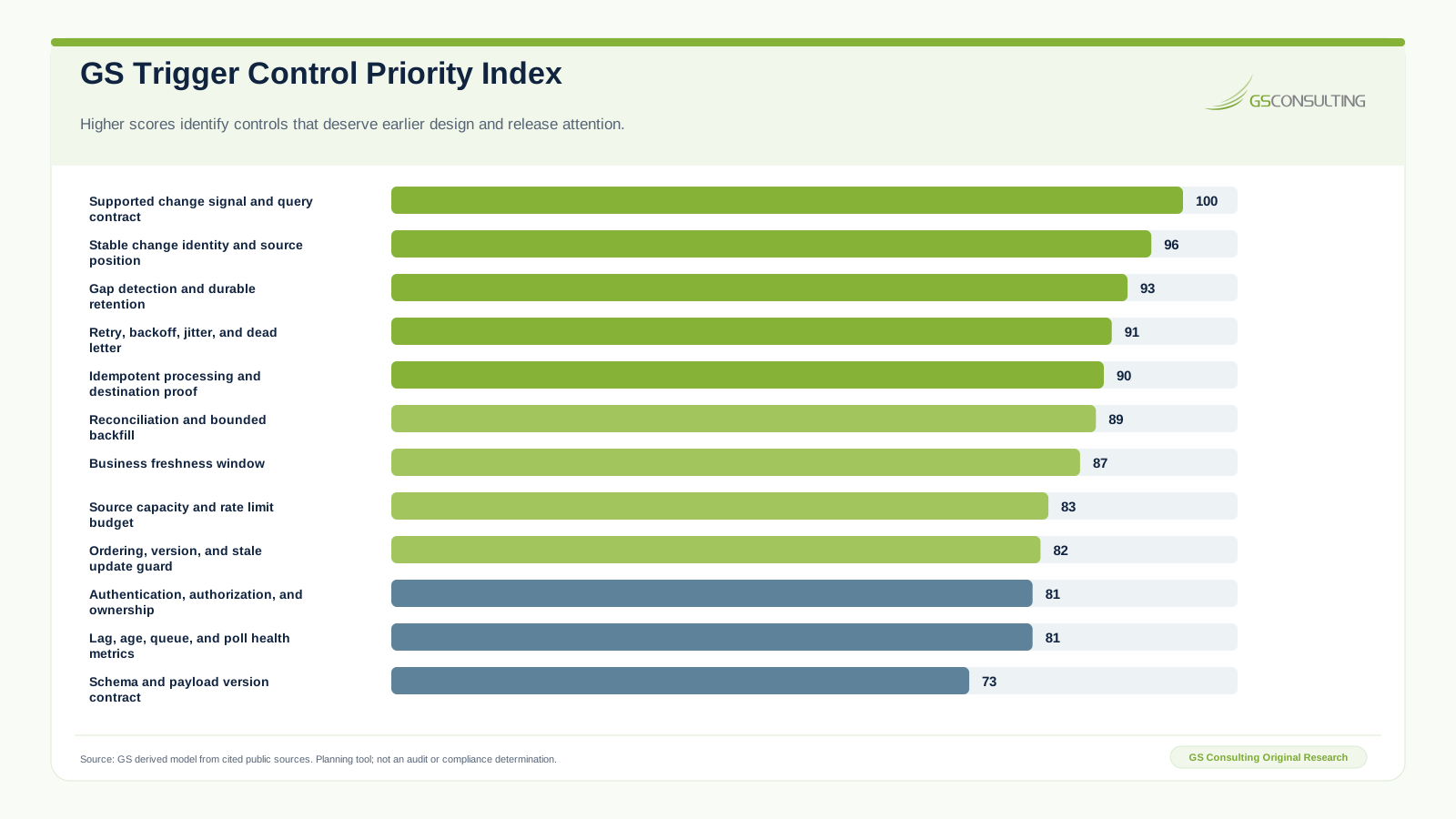
The supported change signal and query contract scores 100. That result blocks architecture by fashion. A team should not force events onto a source with no supported publication mechanism. It should not trust incremental polling where no stable cursor, version, timestamp, or bounded query exists.
Stable change identity and source position score 96. Gap detection and durable retention score 93. Retry, backoff, jitter, and dead letter control score 91. Idempotent processing and destination proof score 90. Reconciliation and bounded backfill score 89. These six controls form the release gate because they determine whether the team can detect, contain, and repair a missed or repeated change.
The business freshness window scores 87. Source capacity and the rate limit budget score 83. Ordering, version, and the stale update guard score 82. Authentication, authorization, and ownership score 81, as do lag, age, queue, and poll health metrics. The schema and payload version contract scores 73. Lower does not mean optional. It means the base model places source proof and recovery first. A known security, contract, legal, records, privacy, or safety obligation can raise any control into a hard gate.
The alternate weighting moves only the freshness window, from 87 to 88. No control changes its sequencing lane. The conclusion is stable under the tested change: prove the source, identity, gaps, retry, destination effect, and backfill before optimizing transport style.
This index is a GS Consulting derived planning tool based on cited public sources and documented assumptions. It is not an official legal, audit, security, compliance, cloud provider, CNCF, IETF, NIST, or regulatory determination.
Pattern Fit Changes with the Legacy Scenario
We also scored native events, incremental polling, and snapshot polling across eight representative scenarios. Five factors carry equal weight: freshness fit, source protection, recovery fit, ordering and state fit, and source capability fit. The scores compare patterns inside each scenario. They are not universal product grades.
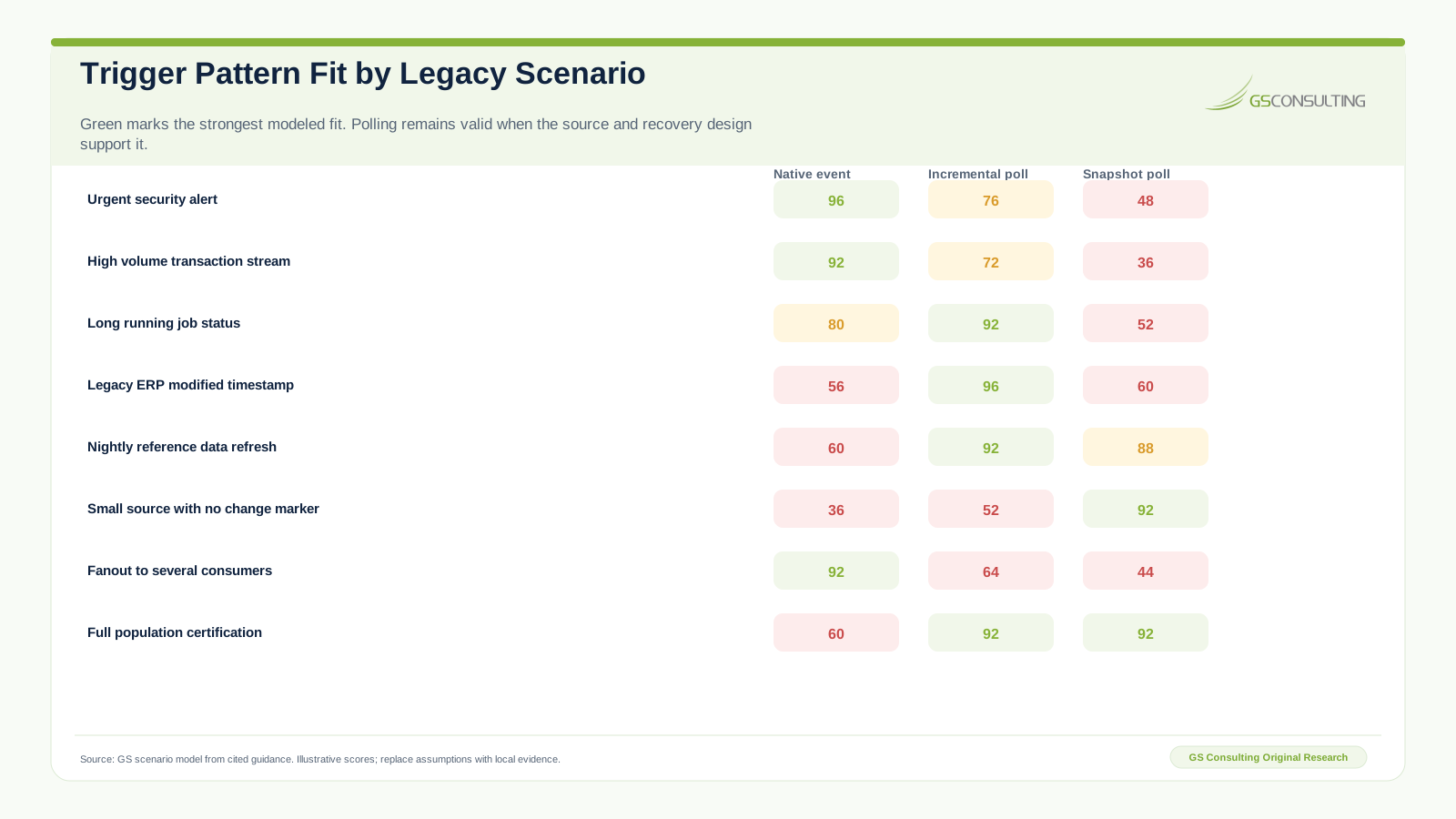
Native events score 96 for an urgent security alert, 92 for a high volume transaction stream, and 92 for fanout to several consumers. Fast supported publication avoids repeated reads and gives consumers independent work. The pattern still needs retained history, duplicate control, order scope, and destination proof.
Incremental polling scores 92 for a long running job status, 96 for a legacy ERP modified timestamp, and 92 for a nightly reference data refresh. Those scenarios have an explicit state resource or bounded change query. The interval can match the accepted freshness window without inventing an unsupported event mechanism.
Snapshot polling scores 92 for a small source with no change marker. It also ties incremental polling at 92 for full population certification. A complete comparison can be the honest choice when the source is small or the decision requires independent proof of current state. The same pattern scores 36 for a high volume transaction stream because repeated full reads create avoidable load and delay.
The matrix rejects a universal winner. Source capability is a hard gate, and reconciliation is a companion pattern. Replace the illustrative ratings with local observations before a release decision. Measure actual query cost, event loss behavior, change volume, latency, retention, order requirements, support conditions, and recovery time.
Write One Trigger Contract for Normal Work and Failure
The trigger contract should be readable without opening broker settings, scheduler configuration, or consumer code. It must cover the source, identity, selection rule, timing, load, delivery, order, retry, recovery, and closure of one business change.
- Business change and freshness. Name the change, maximum accepted age, volume, consequence of a miss, source owner, processing owner, and destination owner. Separate detection time from completion time.
- Source mechanism. Record the supported event type, webhook, stream, status resource, cursor, timestamp, entity tag, page token, or snapshot query. Preserve product version, limits, history retention, and support status.
- Identity and position. Carry an event identity and source. For polling, preserve a cursor or a compound watermark with time and a unique tie breaker. Store the last trusted position only after accepted processing.
- Selection and overlap. State which events or records qualify, which filters apply, and how late or tied updates are handled. Polling windows should overlap when clocks, commit timing, or timestamp resolution can hide a change. Deduplicate the repeated edge.
- Delivery and order. State the actual delivery promise, retained history, acknowledgment, order key, partition, source version, and stale update rule. Treat receipt, processing, business effect, and verified closure as separate states.
- Load and retry. Record expected calls, calls with no change, event burst, concurrency, rate limit, timeout, retry budget, backoff, jitter, and dead letter route. Recovery must not become a source outage.
- Replay and backfill. Name the last trusted point, replay scope, backfill query, approval, destination check, and completion evidence. A missing event and a failed poll need the same owned path to repair state.
- Reconciliation and closure. Compare expected and observed records, versions, counts, lag, gaps, duplicates, and exceptions. Keep the result, repair, owner, and closure decision under the business operation identity.
For timestamp polling, a time value alone is rarely enough. Several rows can share one time, a transaction can commit after the next query has already started, and clocks can disagree. Use a compound position such as modification time plus a unique key. Query an overlap window, sort deterministically, and deduplicate by identity and version. Test the boundary with tied and late records.
For events, the envelope is not the business result. Carry source, identity, type, time, subject, version, and trace context where available. Then record receipt, processing, destination effect, and closure separately. If an event only announces that detail is ready, the subsequent source query is part of the contract.
The Trigger Selection and Recovery Path
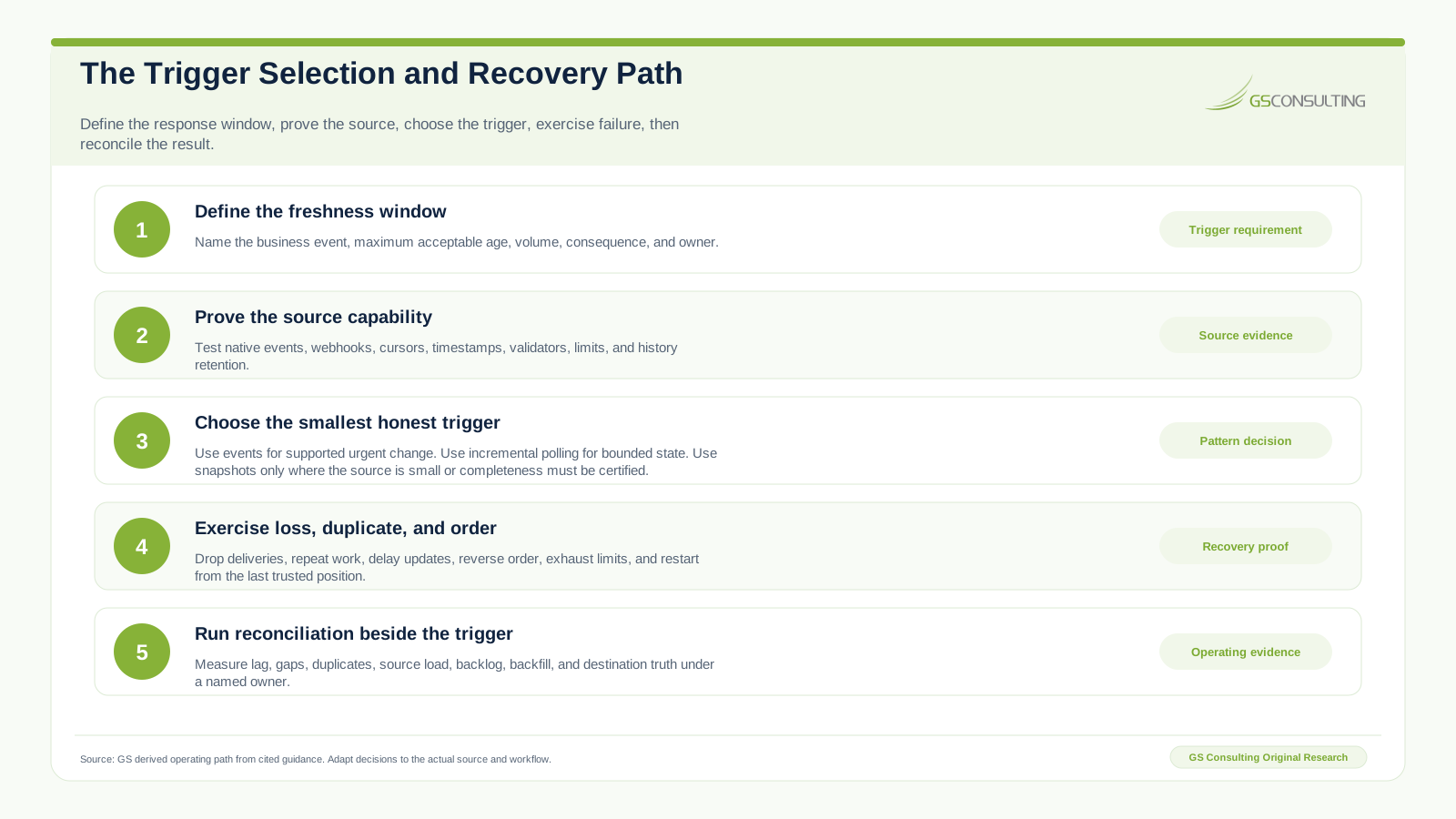
- 1Define the freshness window.
Name the business change, maximum acceptable age, expected volume, consequence, source owner, and response owner.
- 2Prove the source capability.
Test native events, webhooks, cursors, timestamps, validators, limits, retention, history, and the supported recovery interface.
- 3Choose the smallest honest trigger.
Use events for supported urgent change, incremental polling for bounded state, and snapshots where the source is small or completeness must be certified.
- 4Exercise loss, duplicate, and order.
Drop deliveries, repeat work, delay updates, reverse order, exhaust limits, restart from the last trusted position, and observe the business result.
- 5Run reconciliation beside the trigger.
Measure lag, gaps, duplicates, source load, backlog, backfill, exceptions, destination truth, and verified closure under a named owner.
Six Trigger Failures That Hide in Normal Operation
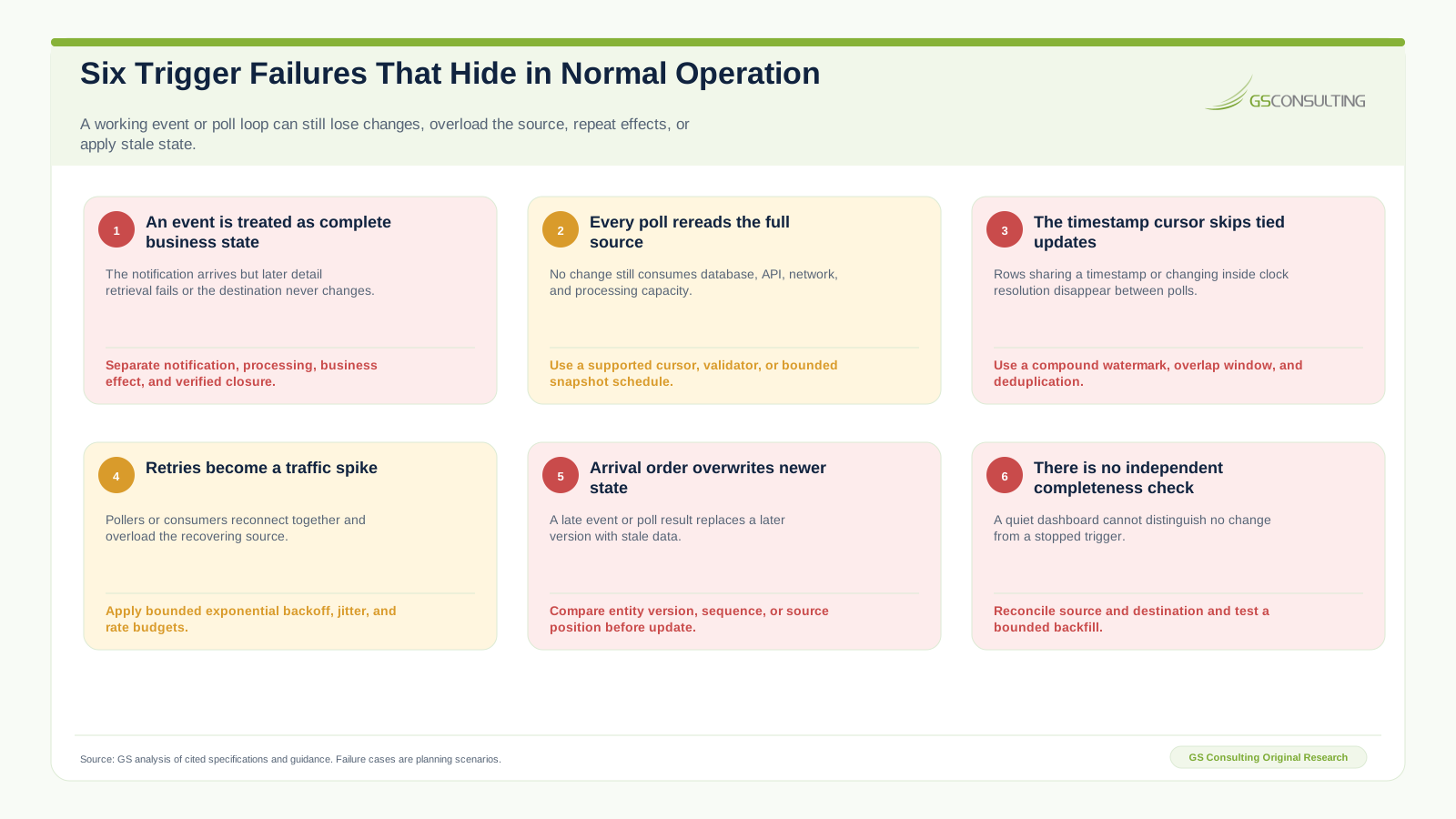
An event is treated as complete business state. The notification arrives, but later detail retrieval fails or the destination never changes. Separate notification, processing, business effect, and verified closure.
Every poll reads the full source. No change still consumes database, API, network, and processing capacity. Use a supported cursor or validator. If neither exists, bound the population and schedule honestly.
The timestamp cursor skips tied updates. Rows share a timestamp, or a commit lands inside clock resolution. Use a compound watermark, an overlap window, deterministic order, and deduplication.
Retries become a traffic spike. Pollers or consumers reconnect together and overload a recovering source. Apply bounded exponential backoff, jitter, concurrency control, and a rate budget.
Arrival order overwrites newer state. A late event or poll result replaces a later destination version. Compare an entity version, sequence, or source position before update.
There is no independent completeness check. A quiet dashboard cannot distinguish no change from a stopped trigger. Reconcile source and destination, and test a bounded backfill.
The Trigger and Recovery Evidence Packet
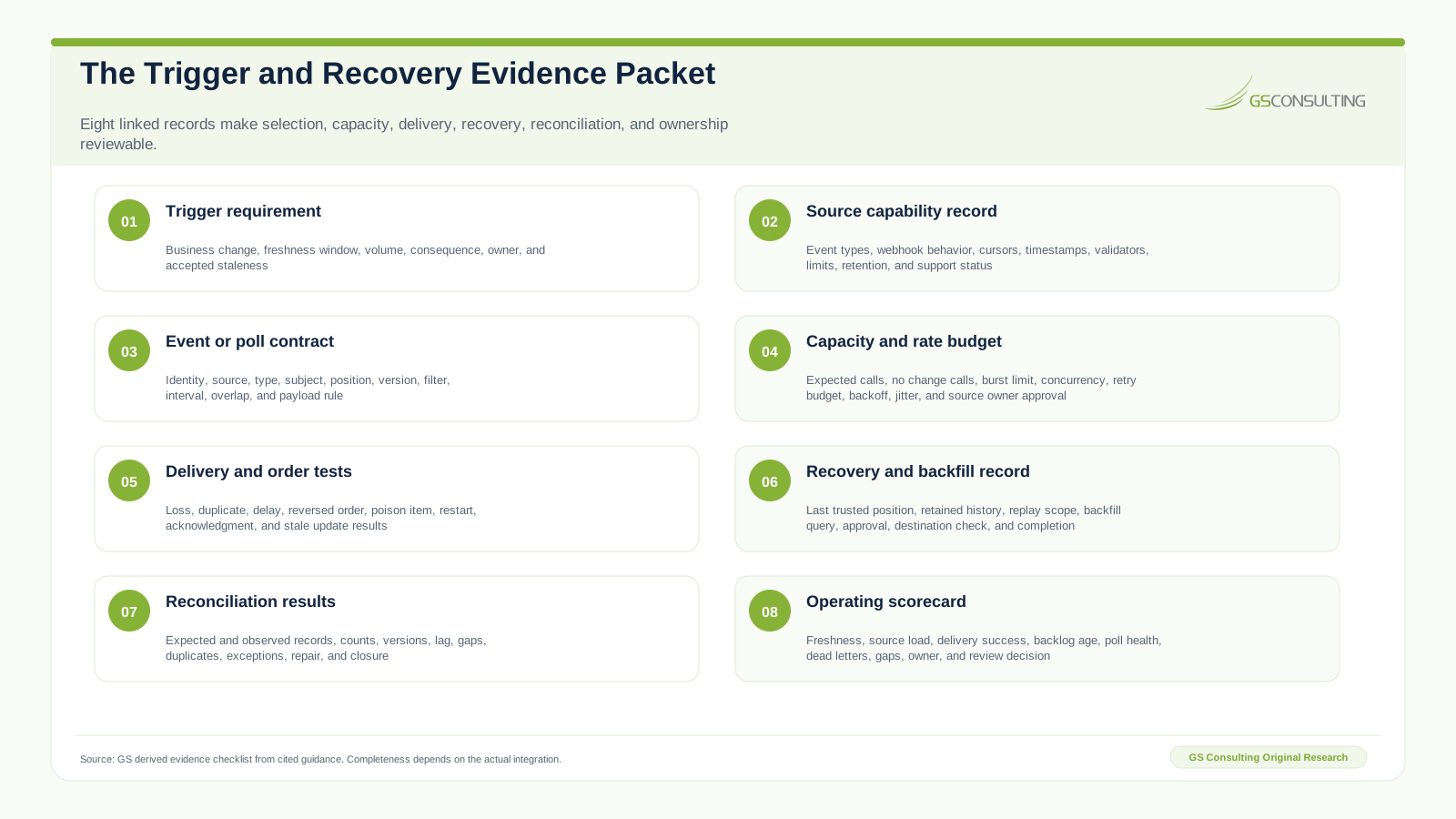
- Trigger requirement. Record the business change, freshness window, volume, consequence, source owner, response owner, and accepted staleness.
- Source capability record. Preserve event types, webhook behavior, query contract, cursors, timestamps, validators, limits, retention, history, and support status.
- Event or poll contract. Define identity, source, type, subject, position, version, filter, interval, overlap, payload rule, and accepted delivery behavior.
- Capacity and rate budget. Record expected calls, no change calls, burst limit, concurrency, query duration, retry budget, backoff, jitter, and source owner approval.
- Delivery and order tests. Preserve loss, duplicate, delay, reversed order, poison item, restart, acknowledgment, stale update, and destination effect results.
- Recovery and backfill record. Connect the last trusted position, retained history, replay scope, backfill query, approval, destination check, and completion evidence.
- Reconciliation results. Compare expected and observed records, counts, versions, lag, gaps, duplicates, exceptions, repair, and closure.
- Operating scorecard. Track freshness, source load, delivery success, backlog age, poll health, dead letters, gaps, owner, and the review decision.
A 30 Day Plan for One Consequential Trigger
- Days 1 through 5Define change and consequence.
Select one real integration. Name the business event, current source interface, freshness window, volume, destination effect, miss consequence, and owners.
- Days 6 through 10Test the source.
Exercise events, webhooks, queries, cursors, timestamps, validators, limits, retention, history, and authentication. Measure query cost and observed delay.
- Days 11 through 15Write the trigger contract.
Define identity, position, filter, interval, overlap, order scope, delivery states, source load budget, retry, replay, and backfill.
- Days 16 through 20Break the normal path.
Drop, duplicate, delay, and reverse work. Stop and restart the worker. Exhaust a retry budget. Confirm the source remains protected and the destination avoids a second effect.
- Days 21 through 25Reconcile and repair.
Compare source and destination records through an independent query. Detect gaps, run a bounded backfill, close exceptions, and preserve the result.
- Days 26 through 30Run the release review.
Confirm source support, freshness, load, identity, delivery, order, retry, recovery, reconciliation, operating metrics, evidence, and owner approval.
Sources and Research Method
This analysis uses Microsoft event driven architecture guidance, its publish and subscribe pattern, asynchronous request and reply pattern, and competing consumers pattern.
It also uses the CloudEvents specification, Google Cloud ordering guidance, Google Cloud exactly once delivery guidance, GitHub webhook guidance, RFC 9110, AWS retry guidance, AWS event delivery guidance, and the Microsoft transactional outbox sample. Sources were accessed October 4, 2026.
GS Consulting separated public observations from analyst assumptions and assigned a source identifier to each input. We calculated base and alternate control scores plus three pattern scores across eight representative scenarios. The research package retains source notes, model inputs, formulas, data dictionaries, sensitivity results, figures, and a recalculated workbook. The model supports planning. It does not replace source owner, business owner, security owner, legal, audit, compliance, release, or cloud provider authority.
Frequently Asked Questions
What is the difference between event driven integration and polling?
Event driven integration starts when a source publishes a change or business fact. Polling starts when a consumer queries the source on a schedule. Events can reduce detection delay and repeated reads. Polling can be the stronger choice when a source exposes reliable state, a cursor, or a status resource but no supported change signal.
Is event driven integration always better than polling?
No. Events are better when the source supports durable change delivery and the business needs fast action, fanout, or high change volume. Polling is better when the source contract is query based, the freshness window is bounded, or an independent state comparison is required. The stronger pattern is the one the team can recover and reconcile.
How often should an integration poll a legacy system?
Set the interval from the business freshness window, observed query duration, change volume, source capacity, and recovery budget. Add conditional requests, backoff, jitter, and rate limits where the source supports them. Do not choose an interval only because it is easy to configure.
How do you prevent polling from missing changes?
Use a stable cursor or a compound watermark that includes time and a unique tie breaker. Overlap each query window, deduplicate repeated records, preserve the last trusted position, and test updates that share a timestamp or arrive late. Reconcile the destination against the source through a separate query.
How do you preserve order in an event driven integration?
Define where order matters, usually within one entity or partition key. Carry a source version, sequence, or position. Make consumers reject stale updates and tolerate duplicates. Test delayed and reversed delivery because a broker setting alone does not prove correct business state.
Can events and polling be used together?
Yes. A common design uses events for fast notification, a source query for authoritative detail, and scheduled reconciliation or backfill for completeness. The routes must share identity, version, and deduplication rules so the repair path does not create a second business effect.
Operating Standard
Do not approve a trigger because it is fast, fashionable, or easy to configure. Approve it when the source contract, freshness window, load budget, identity, delivery, order, retry, recovery, reconciliation, and operating evidence agree.