Cybersecurity | | 25 min read
Cybersecurity Workflow Automation Use Cases: What to Automate, Review, and Approve

Key Takeaways
The authority model in three decisions
Decompose the workflow
Separate collection, preparation, judgment, action, confirmation, recovery, and closure before deciding what runs automatically.
Score preparation and consequence
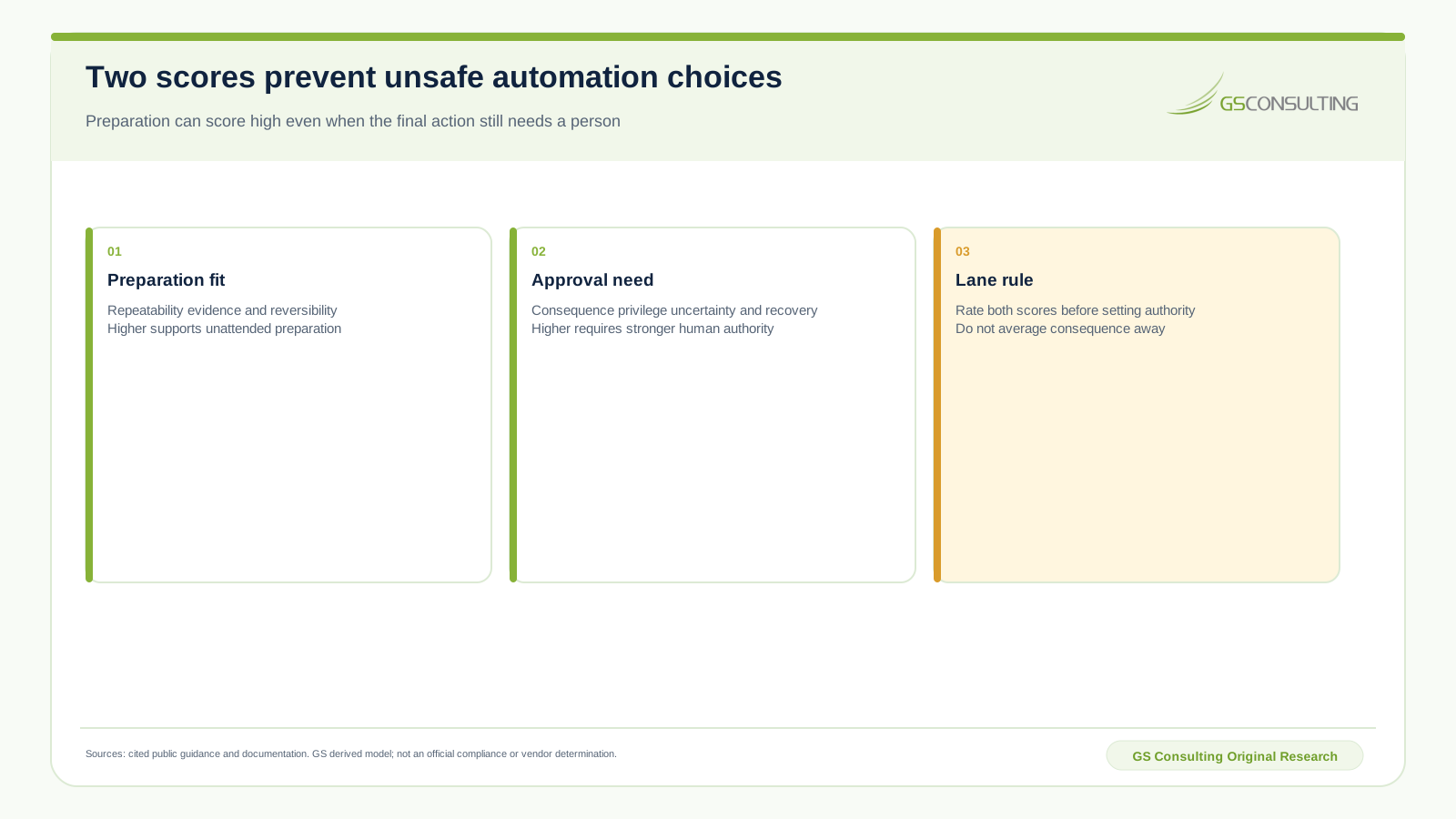
A task can be easy to prepare and still require a person because the final action changes systems, access, or external duties.
Measure misses and recovery
Retain source, decision, approval, action, exception, reversal, and review records. Fast execution is not sufficient evidence.
Short Answer
Cybersecurity workflow automation should remove repeatable preparation. It should not manufacture authority. Automate source grounded tasks that are easy to verify and reverse. Use assistance and sampling when the task still contains ambiguity. Prepare analyst decisions when judgment matters. Require explicit human approval before actions with high consequence, broad privilege, external duties, or difficult recovery.
The useful unit is not an entire incident. It is one bounded task: enrich an indicator, assemble a timeline, draft a response plan, isolate one endpoint, disable one account, or prepare an external notice. Each task has different inputs, uncertainty, privilege, consequence, and recovery cost. One playbook that owns all of them hides those differences.
This guide extends the SOC automation guide with a narrower use case matrix. It scores fourteen common tasks on preparation fit and human approval need, then turns those scores into operating lanes, tests, measures, and evidence. After choosing the task boundary, use the SOC automation build vs buy guide to compare native, commercial, custom, and hybrid sourcing patterns.
Ask What the System May Decide
Teams often start with the wrong question: can the tool automate this workflow? The tool can usually trigger, query, transform, create, notify, and call an action. Capability does not answer whether the evidence is strong enough, whether the target is correct, whether an operator owns the consequence, or whether the action can be reversed.
Ask four questions instead. What exact task is bounded? Which facts must be present? What decision authority is being exercised? What proves the result and recovery? Those questions expose the line between useful automation and hidden risk.
Separate preparation from execution. A system can gather asset context, assemble evidence, propose priority, and draft a plan without gaining authority to isolate a device. It can prepare an account action without disabling the account. It can draft a notice without deciding whether a legal or contractual notice is required.
What Public Sources Establish
NIST SP 800-61 Revision 3 connects incident response to all six Cybersecurity Framework functions: Govern, Identify, Protect, Detect, Respond, and Recover. That framing matters because automation is not confined to detection. Preparation, authority, recovery, and improvement are part of the operating system.
CISA's federal incident and vulnerability response playbooks define coordinated procedures to identify, coordinate, remediate, recover, and track work. The procedures do not transfer directly to every organization, but they show why action sequence, ownership, communication, and records matter.
Current Microsoft Sentinel documentation describes automation through triggers, conditions, and actions, with incident created, incident updated, and alert created triggers. Rules can assign incidents, add tasks, change status, and call permission controlled playbooks. Microsoft Defender documentation separates automated investigation verdicts from remediation paths that may run automatically or require security team approval. Product documentation proves capability, not effectiveness.
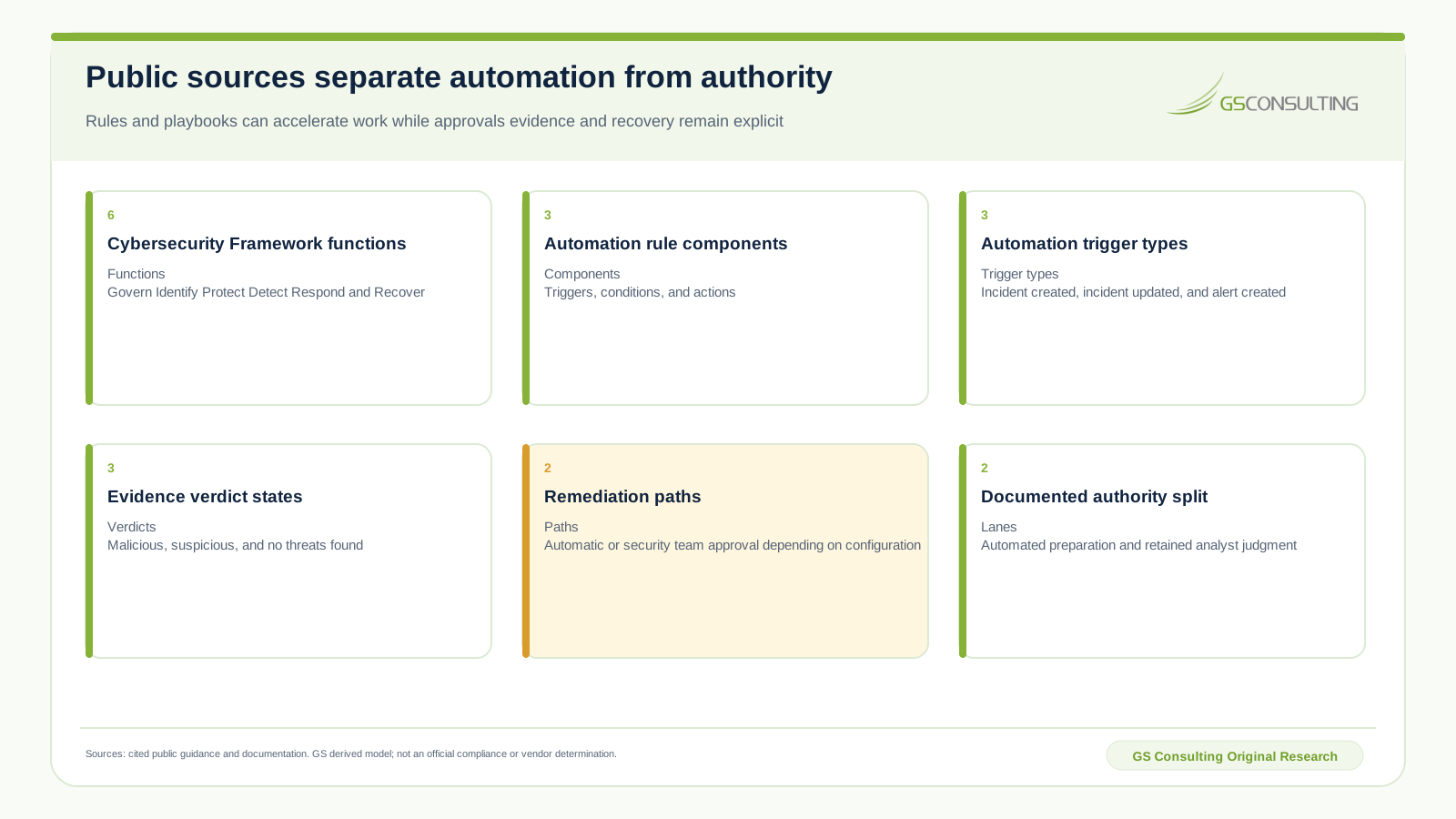
The public GS Consulting case study documents an implementation where approved security data is prepared and analyzed through a private AI workflow while analysts retain investigation and final judgment. It is evidence of one operating pattern, not a universal performance benchmark.
Original GS Research: The Workflow Automation Control Matrix
GS Consulting built the Cybersecurity Workflow Automation Control Matrix to answer one decision: which tasks can run automatically, which should prepare an analyst decision, and which require explicit human approval?
The unit is one bounded task inside an alert, investigation, response, or evidence workflow. The model scores preparation fit using repeatability, source determinism, evidence traceability, reversibility, and exception predictability. The weights are 25, 20, 20, 20, and 15 percent. It separately scores approval need using action consequence, privilege reach, uncertainty, external duty, and recovery cost. Those weights are 30, 25, 15, 15, and 15 percent.
Each factor receives an ordinal rating from one through five. The rating is divided by five, multiplied by its weight, and summed to a score from zero through 100. Approval need of 80 or more produces a human approval lane. A score from 55 through 79 produces prepare and review. Below 55, preparation fit of 85 or more produces automate and monitor; lower fit produces assist and sample.
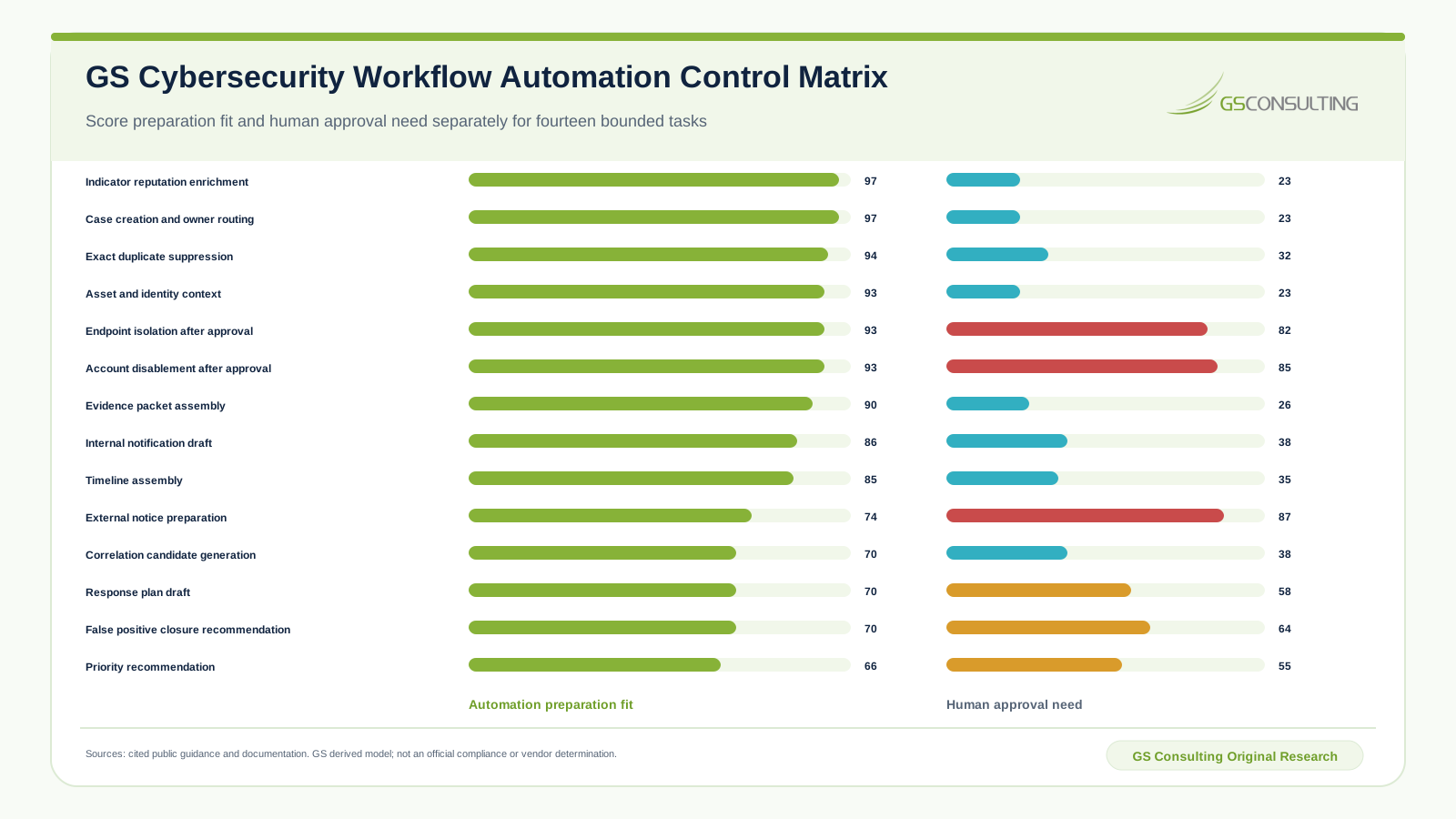
Indicator enrichment and case creation with owner routing each score 97 for preparation fit and 23 for approval need. Exact duplicate suppression scores 94 and 32. Asset and identity context scores 93 and 23. Evidence packet assembly scores 90 and 26. Timeline assembly scores 85 and 35. Internal notification drafting scores 86 and 38. These tasks enter the automate and monitor lane under the stated assumptions.
Correlation candidate generation scores 70 and 38, which places it in assist and sample. Priority recommendation scores 66 and 55, response plan drafting scores 70 and 58, and false positive closure recommendation scores 70 and 64. They enter prepare and review.
Endpoint isolation after approval scores 93 for preparation fit and 82 for approval need. Account disablement after approval scores 93 and 85. External notice preparation scores 74 and 87. They enter human approval. High preparation fit is not permission to execute.
The alternate weights shift five percentage points within both score families. No score changes by more than three points, and no task changes lanes. This is a limited sensitivity check, not external validation. The ratings, thresholds, and lane rules are GS assumptions. Replace them with local incidents, source quality, reviewer records, business impact, authority, and recovery evidence.
Use Four Operating Lanes
Automate and monitor is for repeatable preparation with known sources, strong traceability, practical reversal, and predictable exceptions. The system may complete the task, but owners still review quality, samples, misses, and drift.
Assist and sample is for useful machine preparation where ambiguity or exceptions remain material. The system produces candidates or partial work, and operators inspect a defined sample plus every exception.
Prepare and review is for recommendations, plans, and closure judgments. Automation assembles the evidence and a proposed decision. A named analyst reviews the exact packet before the workflow advances.
Human approval is for consequential action. Automation can prepare every field and run validation, but an authorized person approves the exact target, action, scope, and recovery plan. The approval should expire if evidence, target state, or action parameters change.
Use Cases to Automate and Monitor
Indicator enrichment. Query approved reputation, asset, identity, and internal history sources. Preserve each source, query time, result, confidence basis, and failure state. Do not turn an unavailable source into a benign result.
Case creation and owner routing. Create the record, apply a stable identifier, assign the queue from explicit rules, and confirm the destination. Route ambiguous ownership to an exception queue. Measure reassignments because they expose weak routing logic.
Exact duplicate suppression. Suppress only when identity and equivalence rules are proven. Keep the relationship between the retained record and suppressed records. Similar is not identical; fuzzy grouping belongs in a candidate lane.
Asset and identity context. Add approved context without replacing source facts. Record match method, freshness, ambiguity, and unknown states. Treat shared accounts, reused addresses, cloud resources, and short lived workloads carefully.
Timeline and evidence packet assembly. Gather linked events, preserve original time and receipt time, order them under a stated rule, and show missing intervals. Assembly can run automatically while interpretation remains with the analyst.
Internal notification drafting. Draft from accepted fields and approved templates, then either send within a narrow low consequence channel or require review based on audience and content. Do not place secrets, controlled data, or speculative conclusions in a broad notification.
Use Cases to Assist and Sample
Correlation candidate generation can connect records that share entities, indicators, time windows, techniques, or infrastructure. The system should preserve why the candidate exists and which evidence conflicts. Analysts need samples of accepted and rejected candidates, not only the strongest matches.
Sampling must be designed. Random samples expose general quality, while risk samples focus on low confidence, novel sources, high value assets, unusual entities, large clusters, and policy boundaries. Include later linked incidents so the team can find candidates the automation missed.
Move a task out of this lane only after source quality, exception behavior, and reviewer results support the change. A lower analyst correction rate is useful evidence. It is not enough by itself if missed correlations appear later.
Use Cases to Prepare and Review
Priority recommendation. Assemble severity, asset value, identity context, source confidence, exposure, active behavior, and known gaps. Show the rule or model version and the reasons for the proposed priority. The analyst should be able to change it with a recorded reason.
Response plan drafting. Propose containment, evidence collection, communication, recovery, and decision owners based on the accepted incident type and environment. Keep prohibited actions and prerequisites explicit. A plausible plan can still target the wrong system or violate an operational constraint.
False positive closure recommendation. Require the supporting evidence, conflicting evidence, rule version, related history, and reopen condition. Review remains important because closure errors are often discovered by later incidents, not by the closed case itself. The AI security alert triage guide provides a deeper evidence gate for this decision.
Use Cases That Require Human Approval
Endpoint isolation after approval. Automation can validate identity, current state, business context, exceptions, available recovery, and the exact isolation command. An authorized person approves the named endpoint and scope. The system then executes, confirms target state, and records reversal.
Account disablement after approval. Prepare identity evidence, account type, sessions, dependent services, privileged roles, alternate access, owner, and recovery. Human approval should bind to the exact account and action. Shared service identities and emergency accounts demand separate controls.
External notice preparation. Automation can assemble known facts, chronology, audience, and an approved template. Legal, contractual, customer, regulatory, public affairs, and law enforcement duties can vary. Qualified owners decide whether notice is required, what it says, who receives it, and when it is sent.
These examples are not universal mandates. Local contracts, law, policy, system criticality, mission, and risk acceptance govern the actual authority boundary. Strong preparation is still valuable because it gives the approver a complete, consistent packet without transferring the decision.
Design One Bounded Task at a Time
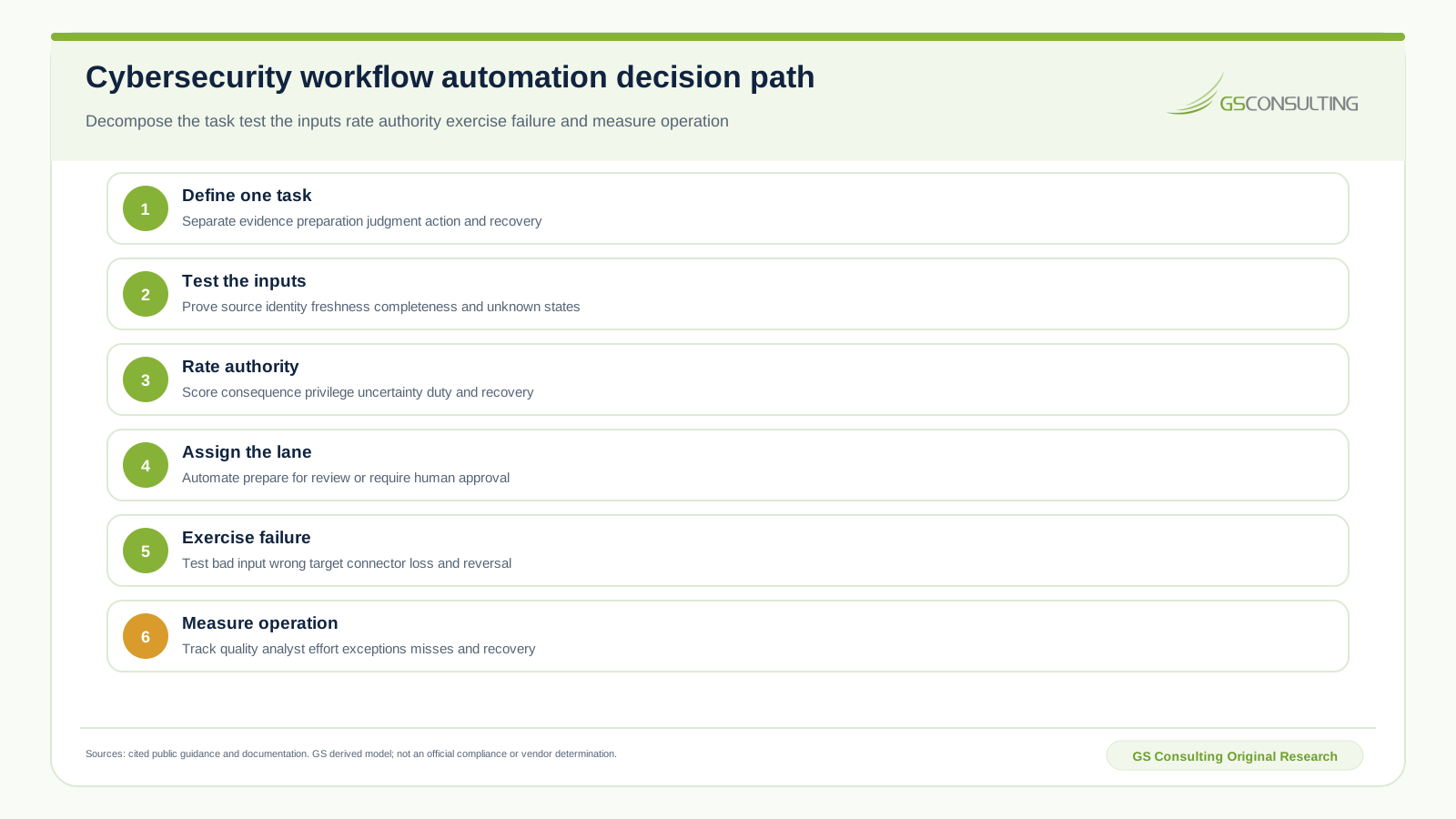
Write the task contract first. State the trigger, required evidence, source systems, allowed transformations, output, owner, destination, decision authority, prohibited actions, timeout, exception behavior, confirmation, recovery, and retained record.
Use service identities with the smallest practical privilege. Separate read access for enrichment from write access for case updates and action privileges for containment. Record which component used which identity and why. A single broad identity turns every workflow bug into an authority problem.
Bind every approval. Store the evidence version, proposed action, target, scope, approver, time, reason, expiration, rule and model versions, and recovery plan. If the target state changes before execution, invalidate the approval or route it back to the person.
Confirm outcomes at the target. A successful playbook run does not prove that an endpoint is isolated, an account is disabled, a ticket is assigned, or a notification was delivered. Query the system of record and preserve the resulting state.
Exercise Adverse Cases and Recovery
Test normal, incomplete, conflicting, stale, duplicate, delayed, malformed, and adversarial inputs. Test missing enrichment, expired credentials, connector loss, rate limits, partial execution, wrong target, concurrent analyst action, retry, approval expiration, and rollback. The test suite should include actions that must never occur.
Run recovery as a first class workflow. Define how to stop new execution, identify affected records and targets, reverse safe actions, contain unsafe state, restore service, notify owners, retest, and approve return to operation. Record what cannot be reversed.
Models add another change surface. Version prompts, retrieval sources, models, thresholds, and output schemas. Compare outputs on known cases before release. Do not let a new model version inherit production authority solely because it fits the same interface.
Measure Decisions, Misses, and Recovery
Measure task completion and analyst effort, but do not stop there. Track accepted output, reviewer correction, exception volume and age, source freshness, unavailable evidence, approval time, execution confirmation, rollback, recovery time, and repeated failure.
Look for misses later. Link reopened alerts, related incidents, threat hunts, complaints, and post incident findings back to earlier automated decisions. A high closure count can coexist with worsening detection if missed relationships never return to the metric.
Review scope by source, task, lane, target, analyst group, and rule or model version. Expansion should require evidence that the current boundary is stable. A new source, action, target class, or external audience is a new authority decision.
Six Failures That Move Faster Than Judgment
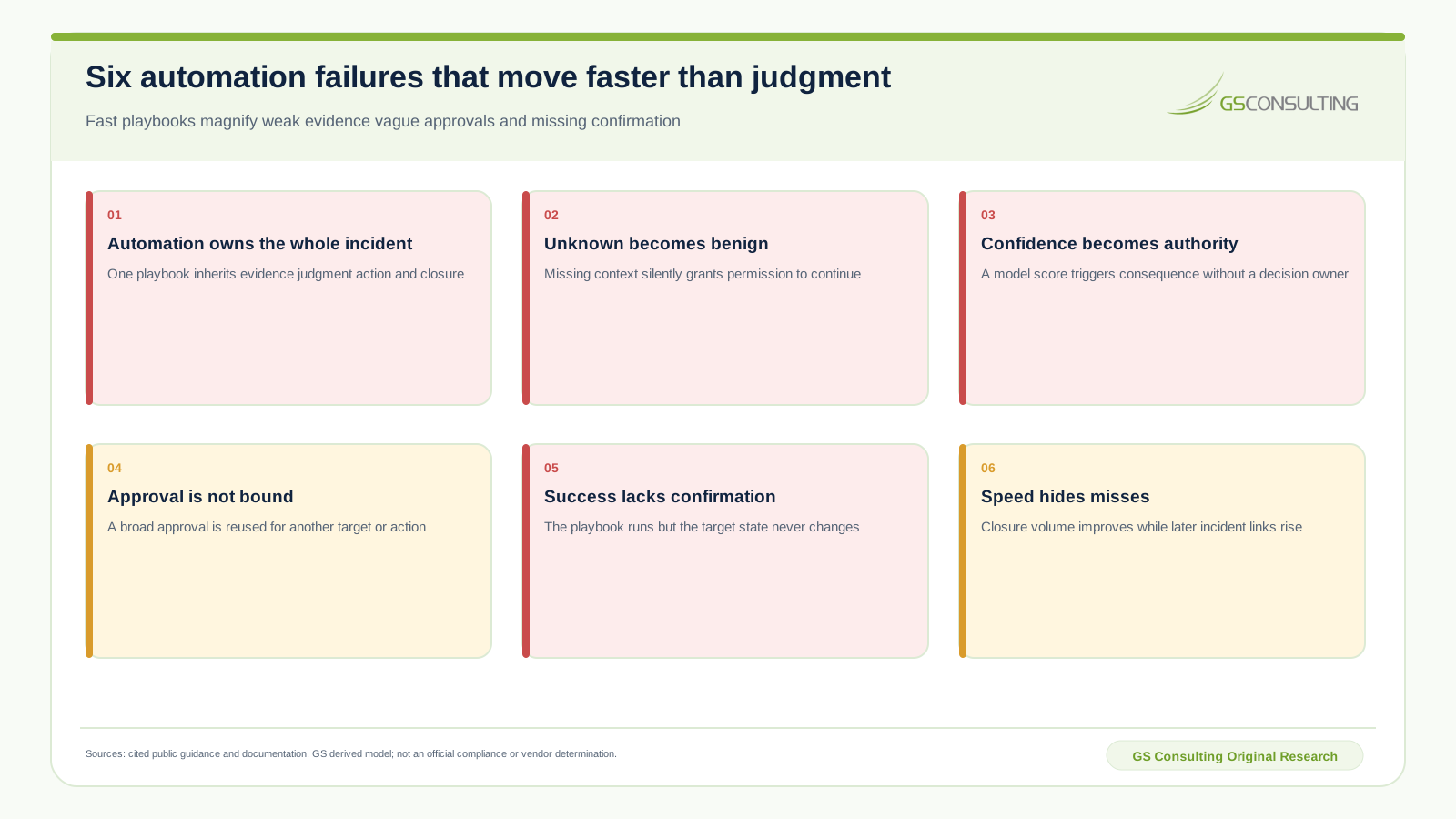
The whole incident becomes one automation unit. Missing context silently grants permission. A confidence score becomes action authority. A broad approval is reused for another target. The playbook reports success without target confirmation. Faster closure hides misses found only in later work.
Each failure needs a detection signal and an owner. It also needs a bounded response: pause the affected task, preserve state, identify impacted records and targets, reverse what can be reversed, notify the right people, correct the cause, retest, and approve return.
Retain a Minimum Automation Evidence Packet
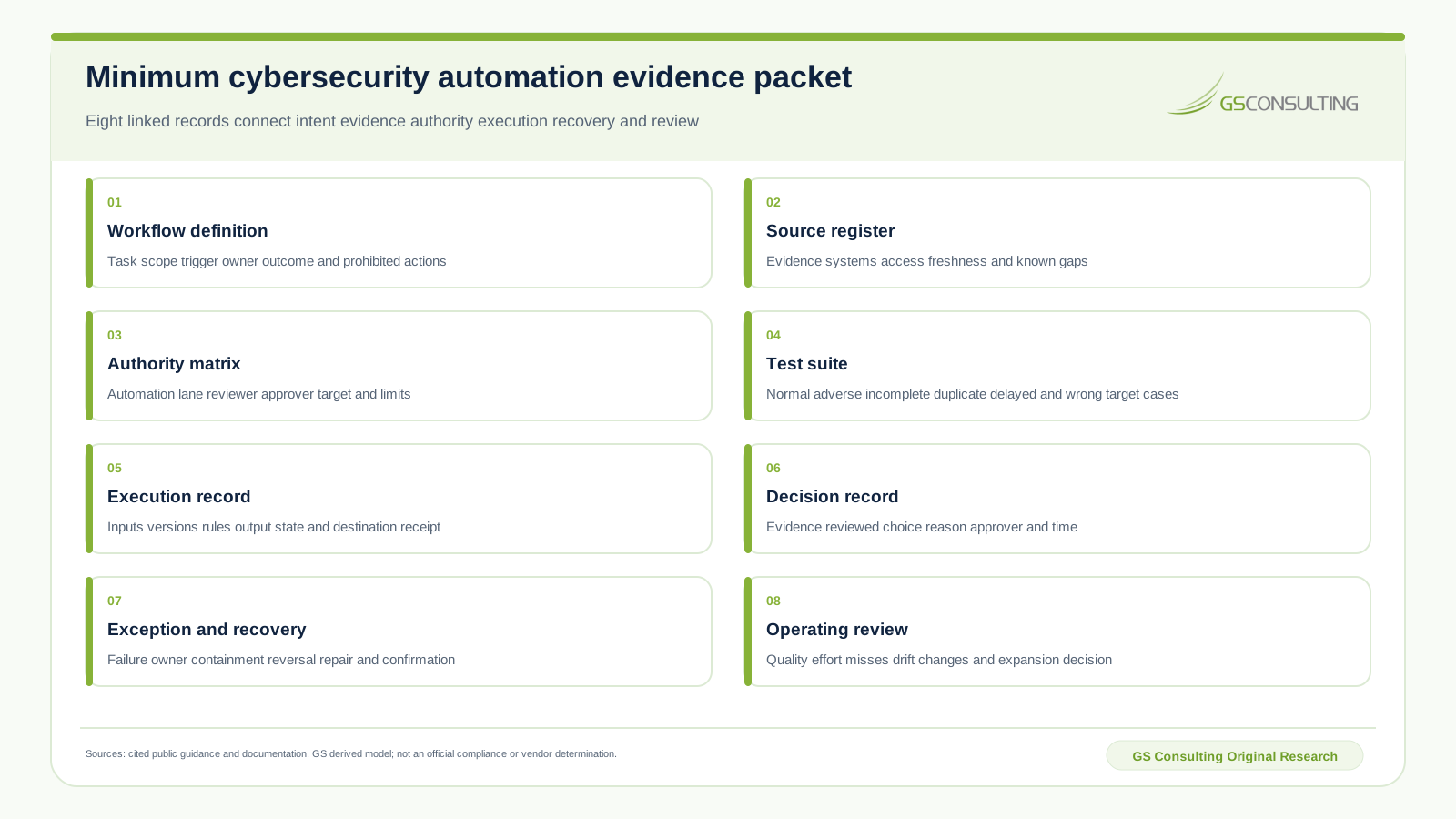
Keep the workflow definition, source register, authority matrix, test suite, execution record, decision record, exception and recovery record, and operating review. Stable identifiers should connect the original evidence to the task output, approval, target action, confirmation, exception, and closure.
The evidence packet is an operating aid, not a universal compliance checklist. Retention, access, content, approval, notification, and audit duties depend on the organization and context. Map the records to applicable requirements with qualified owners.
A Twelve Week Implementation Plan
Weeks one and two: select one bounded workflow, decompose it into tasks, map sources and destinations, and name the decision owner. Weeks three and four: score preparation fit and approval need, choose lanes, write task contracts, and define prohibited actions.
Weeks five and six: implement read access, evidence preparation, stable identifiers, output validation, and an exception queue. Weeks seven and eight: add approval binding, narrow execution permissions, target confirmation, and recovery.
Weeks nine and ten: run normal and adverse tests, sample results, trace misses, and exercise reversal. Weeks eleven and twelve: operate within the approved boundary, review evidence and analyst effort, correct failure modes, and decide whether expansion is justified.
Use the SIEM ingestion and normalization guide when workflow decisions depend on mapped event data. Use the private AI and SIEM integration architecture when a private model prepares findings. The SOC Automation Guides hub connects the full cluster, and GS Consulting's cyber threat detection and analytics service covers implementation.
Primary Sources and Research Limits
- NIST SP 800-61 Revision 3, accessed September 7, 2026.
- CISA, Federal Government Cybersecurity Incident and Vulnerability Response Playbooks, accessed September 7, 2026.
- NSA and international partners, Implementing SIEM and SOAR Platforms, accessed September 7, 2026.
- Microsoft, Automate Threat Response with Automation Rules, accessed September 7, 2026.
- Microsoft, Automate Threat Response with Playbooks, accessed September 7, 2026.
- Microsoft, Use Automated Investigations to Investigate and Remediate Threats, accessed September 7, 2026.
- GS Consulting, Private AI Cyber Analysis Platform case study, accessed September 7, 2026.
The complete research package contains source provenance, public observations, a data dictionary, model inputs, formula outputs, sensitivity analysis, figure data, editable figures, and a workbook. The GS model is a planning tool based on cited public sources and documented assumptions. It is not an official legal, audit, compliance, NIST, CISA, NSA, vendor, or regulatory determination.
Automate preparation. Keep authority visible.
GS Consulting can decompose one security workflow, define its evidence and approval boundaries, build the integration, exercise failure and recovery, and measure whether it deserves a wider operating scope.
Explore SOC Automation ServicesFrequently Asked Questions
Is SOAR the same as cybersecurity workflow automation?
SOAR platforms provide orchestration and response capabilities, but cybersecurity workflow automation is the broader operating design. It includes source evidence, task boundaries, decision authority, integrations, confirmation, exceptions, recovery, metrics, and ownership whether one SOAR product performs the work or not.
What should be the first cybersecurity automation use case?
Choose a frequent preparation task with approved sources, a clear output, low consequence, practical reversal, visible exceptions, and an owner. Case creation, routing, bounded enrichment, or evidence assembly often provides a cleaner starting point than containment.
Should endpoint isolation always require approval?
Not always. Some organizations may authorize narrow automatic isolation under tested conditions. The decision should reflect asset criticality, confidence, operational impact, privilege, exception rules, confirmation, recovery, and approved risk. The GS model places it in human approval under the stated general assumptions.
How can automation handle missing data?
Represent missing, unavailable, stale, conflicting, and not applicable states explicitly. Route material gaps to review or exception. Never translate an unknown into a safe value merely to keep the workflow moving.
When can a reviewed task become unattended?
Move it only after source quality, exception rates, reviewer corrections, later discovered misses, target confirmation, recovery exercises, and owner review support the narrower authority. Record the scope change and continue sampling.
What is the final operating standard?
No automated task receives more authority than its evidence, target precision, consequence, confirmation, and recovery record can support.