Cybersecurity | | 24 min read
AI Security Alert Triage: Cut Noise Without Missing Signal

Key Takeaways
AI alert triage earns trust by showing the evidence and limiting the authority
Remove repeated preparation
Exact duplicate grouping scores 97.2. Case creation and routing score 95.2. These tasks return time without deciding that an alert is harmless.
Use confidence as a queue signal
Timeline drafting, correlation, and priority recommendations belong in an analyst review lane when evidence is incomplete or disputed.
Protect closure and incident authority
Unattended closure carries a control burden of 100 in the GS model. A clean interface does not reduce the consequence of a wrong decision.
AI security alert triage is not a volume game. It is a decision quality problem.
A SOC can cut the queue by closing more alerts. That does not mean it found more threats. The dangerous version of automation makes the dashboard cleaner while weak telemetry, missing context, and bad closure rules disappear behind a confidence score.
The useful version does something less dramatic and more valuable. It groups exact repeats. It builds the case. It pulls asset, identity, vulnerability, and behavior context. It shows what is missing. Then it routes the consequential decision to the right person with the evidence attached.
That is the standard for AI security alert triage: faster preparation, explicit uncertainty, named authority, and a feedback path that can find the miss after the queue moves on.
The SOC Automation hub connects this guide to the wider operating model. Start with what to automate first in the SOC, use the analyst workflow automation ROI guide to connect effort and queue results to quality protected value, then use the security case management integration guide to preserve identity, state, evidence, and closure when the alert becomes a case. The companion guide for AI incident response workflows carries the decision into response. GS Consulting applies the same discipline through cyber threat detection and analytics.
Make every closure replayable.
GS Consulting helps security teams map alert logic, evidence, authority, review, recovery, and metrics before AI touches the triage queue.
Request an Alert Triage ReviewWhat AI Security Alert Triage Actually Does
Alert triage sits between detection and response. It decides whether a signal is complete enough to review, what other evidence belongs with it, how urgent it appears, who should own it, and whether it stays an event or becomes an incident candidate.
AI can help with the language and pattern work inside that path. It can summarize an event, normalize vendor fields, search related telemetry, and compare a sequence with known behavior.
It can also explain why a rule fired, draft a timeline, and propose a priority. Rules and workflow tools can handle deterministic grouping, routing, and evidence capture.
Those capabilities are not the same as decision authority. A model can say an alert resembles a known benign pattern. It cannot know that the affected account belongs to a privileged administrator unless identity context is current. It cannot know that a routine service change was unauthorized unless the change record is connected. It cannot know that a low severity endpoint hosts a high value mission function unless the asset record says so.
NIST SP 800-61 Revision 3 treats incident response as part of the full risk management cycle, not a narrow queue. NIST Cybersecurity Framework 2.0 connects governance, asset context, protection, detection, response, and recovery. That wider context is exactly what a triage score tends to hide when the implementation starts with the model.
Evidence Before Confidence
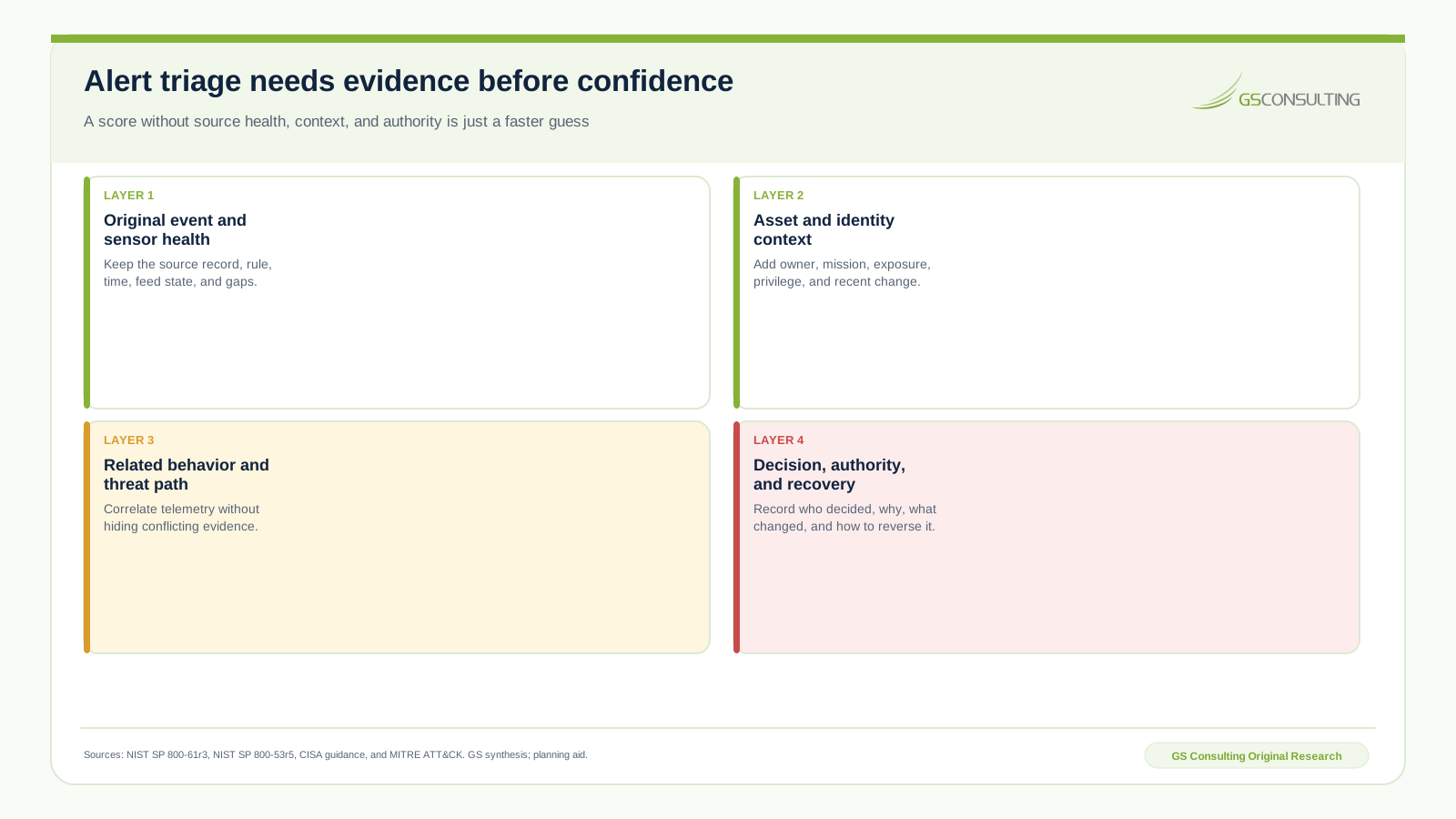
The first job is to protect the source. Keep the original event, sensor identity, parser state, rule version, collection time, event time, and feed health. A polished summary of a delayed or malformed event is still bad evidence.
The second job is to add consequence context. Asset criticality, identity privilege, internet exposure, vulnerability state, data handled, mission owner, recent change, and current maintenance activity can move an alert from routine to urgent.
The third job is correlation. MITRE ATT&CK detection strategies show why useful detection often depends on multiple data components and environment specific tuning. Correlation should preserve why events were joined, which sources disagree, and which expected source is missing. A hidden join is not evidence.
The last job is the decision boundary. Record the lane, owner, rationale, approval, action, result, and recovery path. If a tool closes the alert, the organization still owns the rule that granted that authority.
GS Alert Triage Automation Fit Index
GS Consulting built a derived planning model across ten recurring triage tasks. The base score weights repeatability at 22 percent, evidence quality at 18 percent, reversibility at 18 percent, inverse consequence at 18 percent, inverse data sensitivity at 14 percent, and inverse exception frequency at 10 percent. Each factor receives a documented rating from 1 to 5.
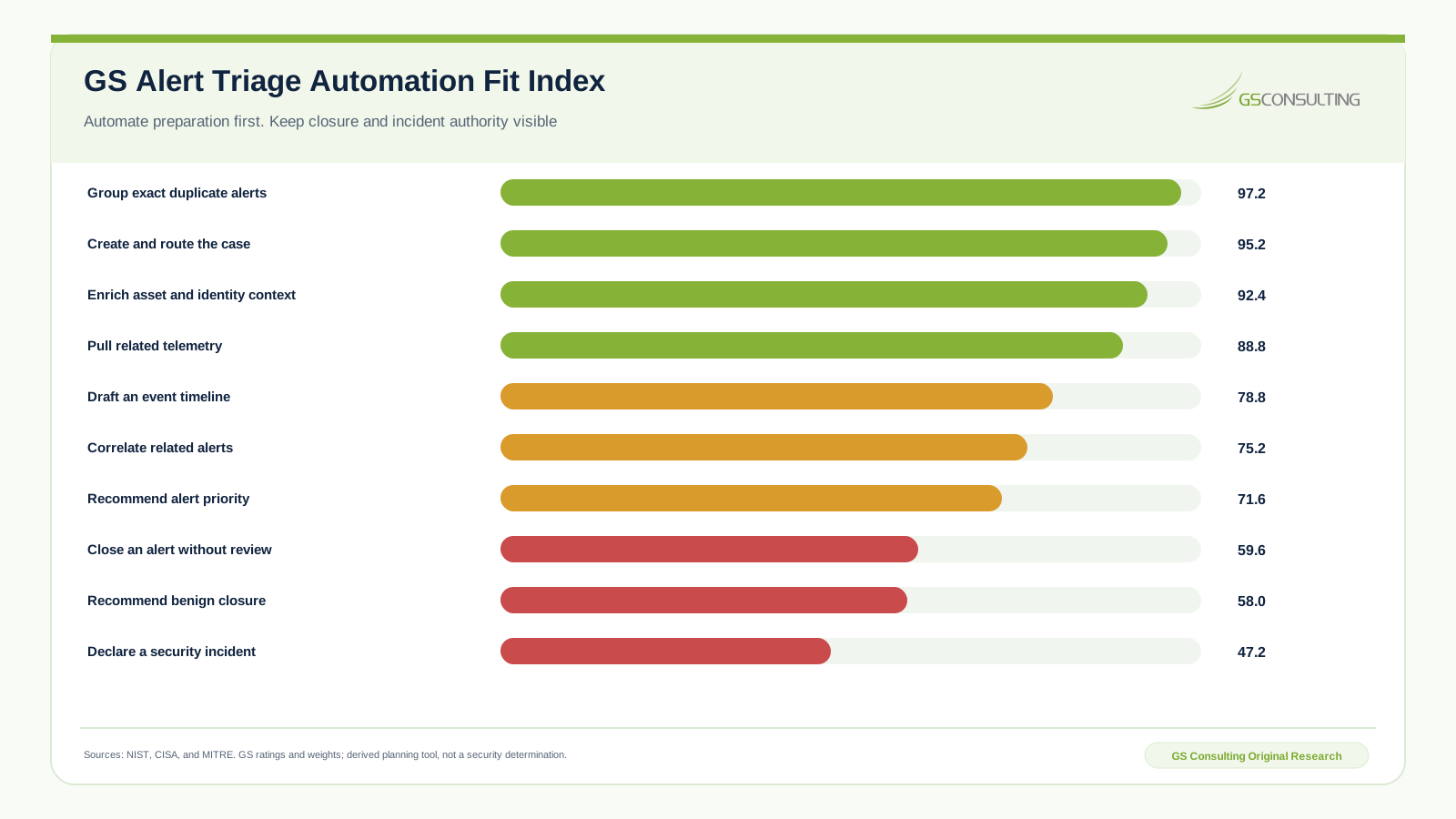
Exact duplicate grouping scores 97.2. Case creation and routing score 95.2. Asset and identity enrichment scores 92.4. Related telemetry collection scores 88.8. These are strong automation candidates because they can save analyst effort without deciding that the activity is harmless.
Timeline drafting scores 78.8. Related alert correlation scores 75.2. Priority recommendation scores 71.6. These tasks can be useful, but their output should show sources, conflicts, and missing context for analyst review.
Unattended closure scores 59.6. A benign closure recommendation scores 58.0. Incident declaration scores 47.2. These results do not say AI has no role. AI can prepare the case. The score says the decision needs visible human authority because consequence and exceptions dominate.
The sensitivity case moves four weight points from repeatability to evidence quality. No task changes lane and the largest score change is 0.8 points. That stability is useful, but it does not turn analyst assumptions into measured performance. Replace the ratings with local alert evidence before making an operating decision.
Control Burden Rises at Closure
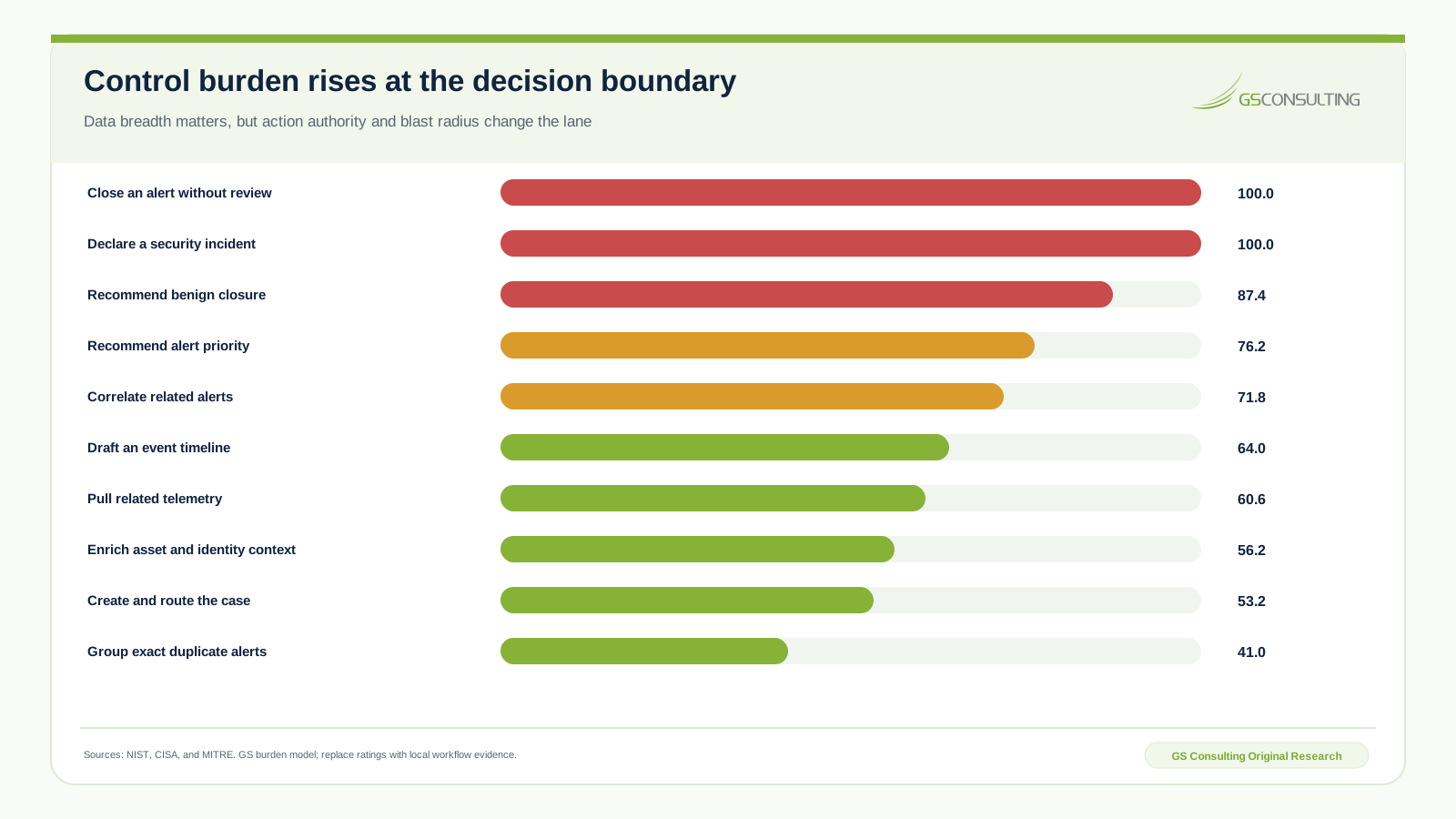
The burden model weights input breadth at 22 percent, action authority at 24 percent, evidence duty at 22 percent, exception complexity at 17 percent, and blast radius at 15 percent. Unattended closure and incident declaration each score 100. A benign closure recommendation scores 87.4. Priority recommendation scores 76.2.
This is the part product demonstrations skip. A summary can be wrong and still be corrected before action. A closure can hide a threat until a later incident reconnects the evidence. An incident declaration can trigger escalation, reporting review, customer coordination, containment, and executive attention. The interface may look similar. The operating burden is not.
Use the burden score to define required tests, review sample size, approval role, evidence retention, recovery design, and change control. Do not use it as a universal risk rating.
The Alert Triage Workflow
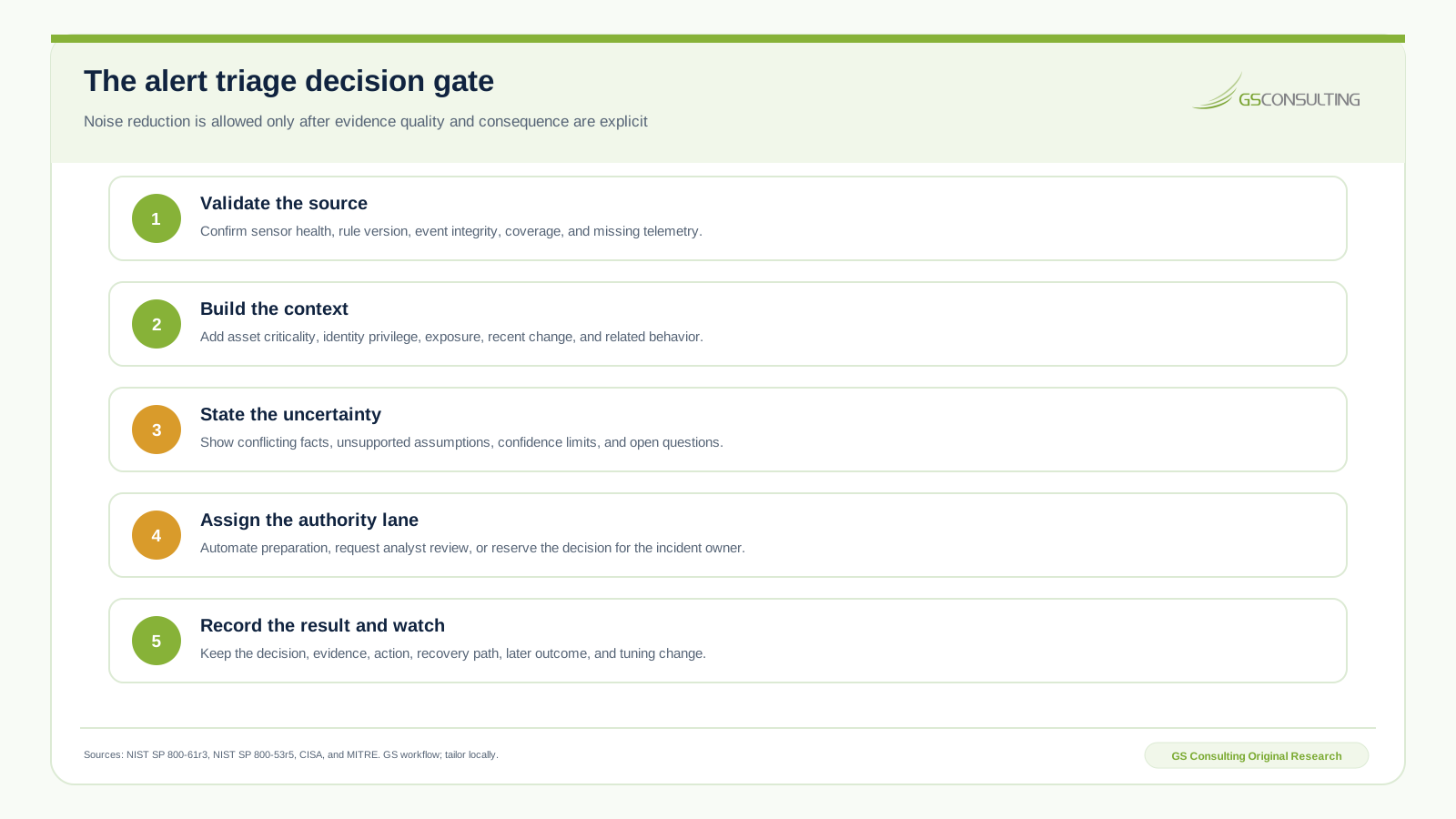
- Validate the source. Confirm that the sensor is healthy, the rule is current, the event is intact, the parser succeeded, and expected telemetry is present.
- Build the context. Add the affected asset, user, privilege, business owner, mission role, vulnerability state, exposure, data class, recent change, and related cases.
- State the uncertainty. Show missing sources, conflicting facts, unsupported fields, model limits, and questions that could change the disposition.
- Assign the authority lane. Let automation prepare deterministic work. Route variable evidence to analyst review. Reserve closure and incident decisions for the named owner when consequence or ambiguity is material.
- Record the result and watch. Keep the evidence, decision, action, recovery, later incident link, reopen, override, and tuning change.
The joint SIEM and SOAR practitioner guidance makes the sequence plain: establish effective log analysis and a normal activity baseline before expanding response automation. More orchestration does not repair weak detection.
Metrics That Expose Both Noise and Misses
Alert volume is an input. Closure volume is an activity. Neither proves that triage is working. Use a balanced measure set:
- Source health. Track feed delay, parser error, expected event coverage, sensor gaps, rule age, and last successful test.
- Queue quality. Track exact duplicate rate, context completeness, time to owner, queue age, and percentage routed without manual rework.
- Decision quality. Track analyst overturns, priority changes, closure reopens, disposition disagreements, and sampled closed cases.
- Miss signals. Track later incident links, retroactive hunt findings, known attack simulation misses, reopened cases, and post incident evidence that existed but was not connected.
- Operating value. Track analyst time returned, time to a supported decision, investigation depth, escalation quality, and action recovery.
You cannot prove the absence of missed threats from the closed alert queue. That is why sampling, simulations, hunts, incident reviews, and feed testing matter. Measure the system from more than one direction.
Six Failure Modes That Make the Queue Look Better
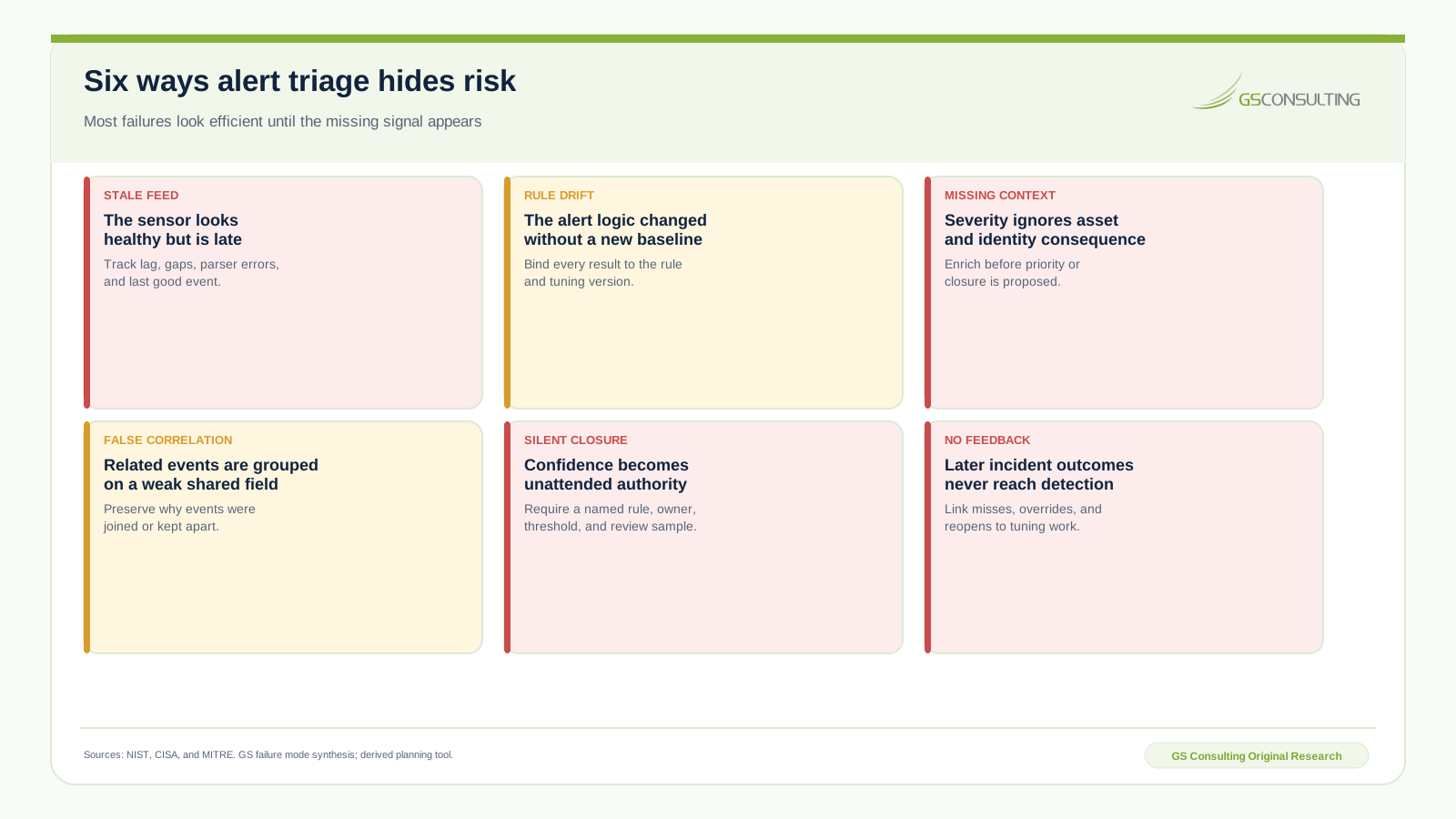
A stale feed creates false calm. Rule drift makes the old baseline meaningless. Missing asset and identity context hides consequence. Weak correlation joins unrelated events or separates a real sequence. Silent closure turns confidence into authority. Missing feedback ensures the same error repeats after an incident or reopen exposes it.
These failures need owners. Detection engineering owns rule logic and tests. Platform owners own feed health and parser change. Identity and asset owners own context quality. SOC leadership owns decision lanes and review samples. Incident leadership owns the feedback loop from confirmed events back to detection and triage.
When triage receives findings from a private model or custom connector, use the private AI and SIEM integration architecture to preserve source identity, validate content separately from structure, control retry, and prove the destination record before the alert enters an authority lane. The SIEM ingestion and normalization guide covers source mapping and replay, while the cybersecurity workflow automation use cases provide the broader authority matrix.
A 90 Day Alert Triage Plan
Days 1 through 30: baseline the queue
- Choose one alert family with enough volume and known analyst pain.
- Map the source, rule, fields, context lookups, analyst steps, decisions, closure reasons, and later outcomes.
- Measure duplicates, context gaps, queue time, analyst changes, reopens, and incident links.
- Define which facts are required before the alert can reach each authority lane.
Days 31 through 60: automate preparation
- Implement exact duplicate grouping, case creation, routing, asset context, identity context, and related telemetry queries.
- Preserve source links and show failed lookups instead of filling the gap with a guess.
- Run the workflow beside the current process and compare the evidence packet, not just speed.
- Test stale feeds, missing fields, rule changes, conflicting sources, connector failure, and retry.
Days 61 through 90: add reviewed recommendations
- Allow timeline, correlation, and priority recommendations only after evidence coverage meets the written gate.
- Record analyst acceptance, change, rejection, reason, and time.
- Sample closures and connect later incidents, hunts, and reopens to the original triage record.
- Expand only after the team can explain failure, reverse action, and measure the miss signals.
The Alert Triage Evidence Packet
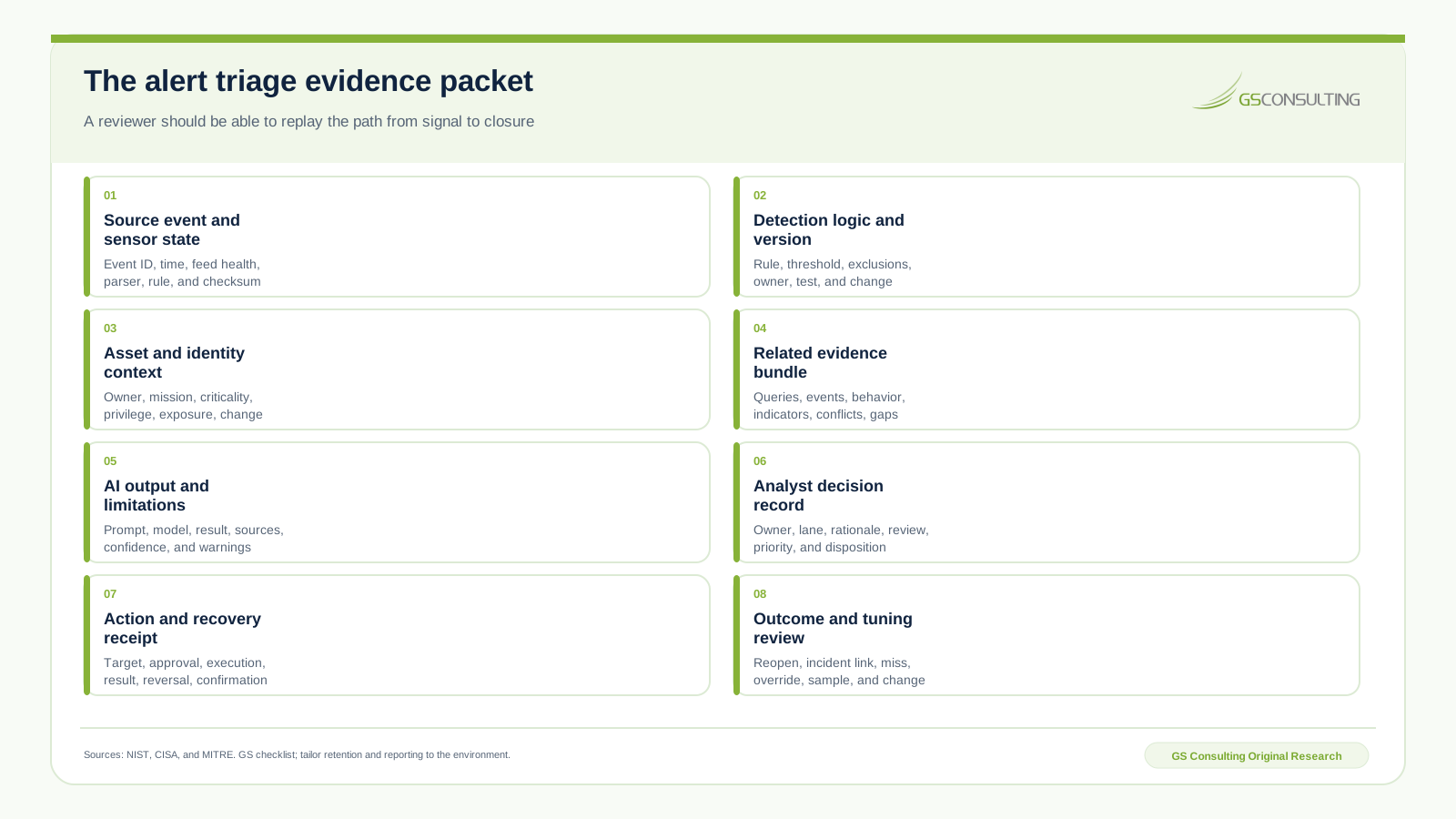
Keep the source event and sensor state, the rule and version, asset and identity context, related evidence, and AI output with its limitations. Add the analyst decision, action and recovery receipt, and outcome review.
The packet should preserve the failed lookup and conflicting fact, not only the final answer.
NIST SP 800-53 Revision 5 provides useful control context for audit review, system monitoring, incident handling, and incident monitoring.
The actual control set and evidence depend on the system, customer, and contract. Retention and reporting obligations depend on the governing requirements.
Bottom Line
AI can cut security alert noise. It can also make the wrong alerts disappear faster. The difference is whether the workflow treats confidence as evidence or as a routing signal.
That is the operating standard: validate the source, build the context, show the uncertainty, protect the decision, record the result, test the miss, and let the evidence decide what scales.
Sources and Method Note
- NIST SP 800-61 Revision 3
- NIST Cybersecurity Framework 2.0
- NIST SP 800-53 Revision 5
- Joint Implementing SIEM and SOAR Platforms Practitioner Guidance
- CISA Use Logging on Business Systems
- MITRE ATT&CK Detection Strategies
GS Consulting Original Research. The automation fit and control burden scores are derived planning tools based on cited public sources and documented analyst assumptions. They are not measured detection accuracy, product rankings, legal advice, incident determinations, security approvals, NIST or CISA findings, or guaranteed reductions in alert volume or missed threats.
Frequently Asked Questions
What is AI security alert triage?
AI security alert triage uses models, rules, search, and workflow automation to group alerts, collect context, correlate evidence, recommend priority, and prepare an analyst decision. It should not quietly turn a confidence score into authority to close an alert or declare an incident.
Which security alert triage tasks should be automated first?
Start with exact duplicate grouping, case creation, routing, asset and identity enrichment, and related telemetry collection. These tasks are repeated, reviewable, reversible, and useful before a consequential decision is made.
Can AI close security alerts automatically?
It can execute a closure rule, but the organization should first prove source health, context coverage, threshold quality, exception handling, review sampling, reopen detection, and recovery. High consequence or ambiguous closures should remain under named human authority.
How do you measure whether AI alert triage misses real threats?
Do not rely on closure volume. Track reopened alerts, later incident links, analyst overturns, retroactive hunt findings, control tests, known attack simulations, sensor gaps, and sampled closed cases. These are imperfect but useful miss signals when reviewed together.
What evidence should an AI alert triage workflow keep?
Keep the source event and sensor state; the detection rule and version; asset and identity context; related evidence; AI output and limitations; the analyst decision; the action receipt; the recovery result; and the later tuning review.
Related Reading
- SOC Automation Hub
- SOC Automation: What to Automate First
- AI Incident Response Workflows for GovCon
- AI Automation in IT and Security Operations
- Building Audit Trails for Automated Workflows
- Workflow Automation Security Risk Assessments
- Cyber Threat Detection and Analytics
Cut the noise without hiding the miss.
GS Consulting helps teams design alert triage that returns analyst time, preserves evidence, and keeps consequential security decisions under accountable control.
Build the Triage Operating Model