Enterprise AI | | 23 min read
AI for Federal Contract Management Workflows

Key Takeaways
Contract AI is obligation workflow design.
Contracts Create Work
Federal contracts create duties across legal, security, compliance, finance, procurement, operations, and subcontractor management.
Summaries Are Not Enough
The useful output is a structured obligation record with source text, owner, risk level, review status, alerts, and evidence.
Human Review Is Control
AI prepares the work. Accountable people approve interpretation, ownership, risk level, external notices, and closure.
Contract management is where GovCon operations quietly bleed time.
Not because contracts people are slow. Because the workflow is ugly.
A federal contract is not just a PDF sitting in a folder. It is a live operating document. It creates obligations for delivery, security, reporting, invoicing, subcontractor flow down, data handling, records retention, staffing, labor categories, clauses, customer communications, and program execution.
Most companies treat that contract like a file. Then they wonder why obligations get missed.
AI contract management GovCon workflows should solve that problem with secure natural language processing, controlled data access, clause extraction, obligation tracking, approval workflows, and audit trails. The goal is not to let AI replace legal judgment. The goal is to stop making highly paid people hunt through documents for work a secure system should have already organized.
Turn contract language into accountable workflow.
GS Consulting helps GovCon firms build secure AI contract management workflows that extract obligations, route reviews, track alerts, and preserve evidence.
Discuss Contract AI WorkflowsWhy Federal Contract Management Is So Painful
Federal contracts are dense because they are supposed to be. They contain requirements, clauses, references, attachments, modifications, deliverables, incorporated documents, data rights, cyber requirements, reporting terms, payment instructions, subcontractor obligations, customer instructions, and performance standards.
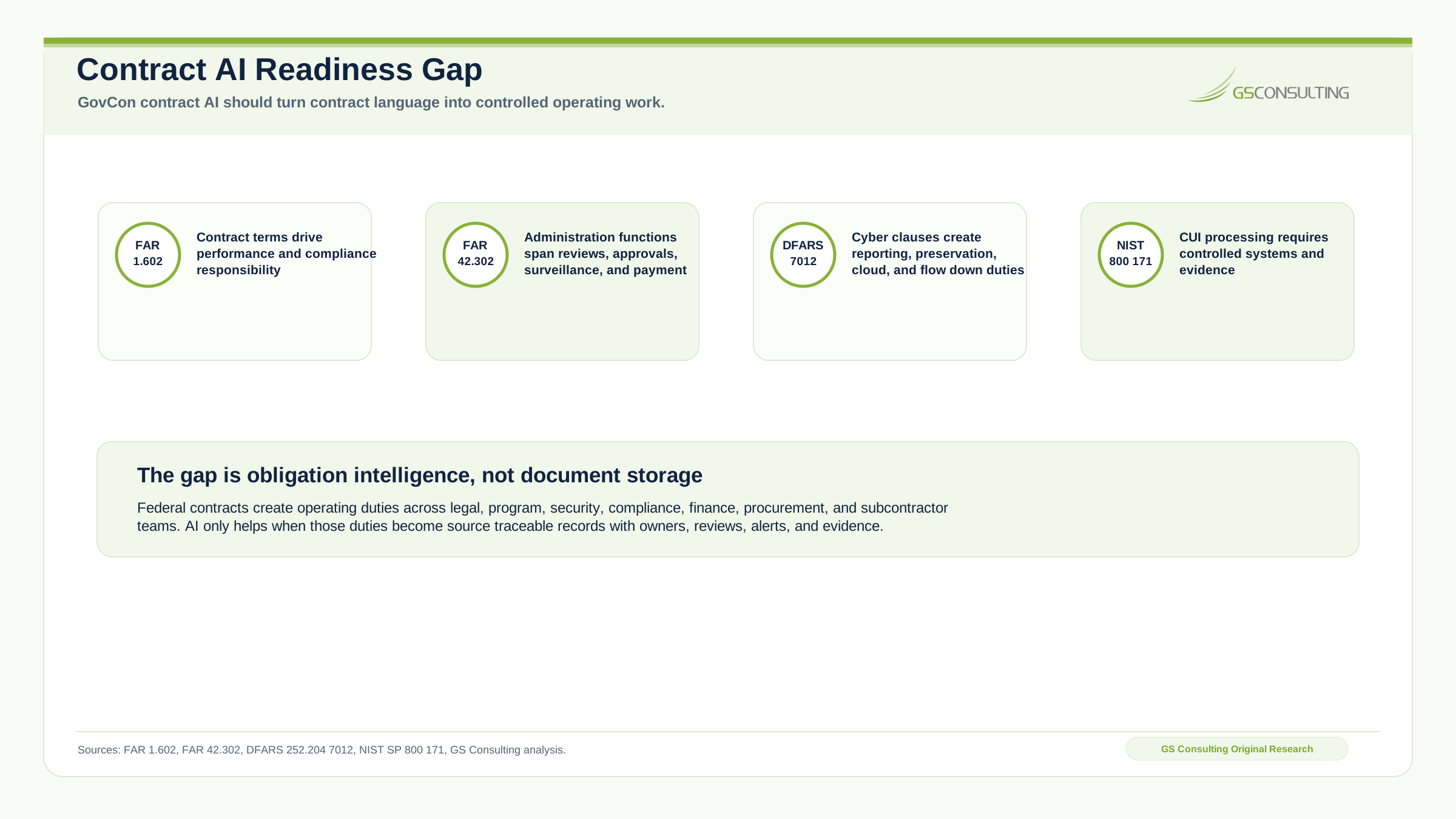
FAR 1.602 2 describes contracting officers as responsible for effective contracting, compliance with contract terms, and safeguarding the interests of the United States in contractual relationships. That means contract language is not background noise. It is the operating rule set.
The challenge is that contract obligations do not stay inside the contracts department. A cybersecurity clause may affect IT and security. A data rights clause may affect engineering. A reporting requirement may affect program operations. A labor category requirement may affect recruiting and delivery. A subcontractor flow down requirement may affect procurement. A CUI requirement may affect every system and person touching the work.
The Bad Assumption: The Contract Management System Already Solves This
A lot of companies have a contract lifecycle management tool. That does not mean they have contract intelligence.
Many CLM tools are useful for storage, routing, templates, approvals, signature tracking, metadata, and renewal reminders. Necessary. Not enough.
The real question is whether the system understands what is inside the contract well enough to help the business operate against it. Can it identify cybersecurity clauses, extract reporting obligations, flag subcontractor flow down requirements, compare a modification against the current obligation tracker, route obligations to IT, security, finance, or program operations, and prove who reviewed a flagged requirement?
If not, you do not have secure CLM implementation. You have a repository.
Where AI Actually Helps
AI helps when the contract is too large, too dense, or too frequently changing for manual review to be reliable.
- Clause extraction.
- Obligation identification.
- Deadline extraction.
- Deliverable mapping.
- Modification comparison.
- Risk flagging.
- Flow down detection.
- Compliance matrix creation.
- Owner assignment suggestions.
- Alert generation for review cycles.
AI is doing the first pass. Humans still make accountable decisions. That is the right division of labor.
What AI Should Not Do
AI should not be the final authority on contract interpretation. Do not let it decide whether a clause applies without review, approve legal positions, waive compliance requirements, send contractual notices without approval, overwrite the system of record based on a model response, process CUI in an unapproved environment, or generate alerts with no trace back to source language.
The contract is not a blog post. The output has consequences.
FAR and DFARS Compliance Is a Workflow Problem
Automating FAR and DFARS compliance does not mean the software magically understands every acquisition rule. It means the workflow can identify relevant clauses, map them to business obligations, and route them for review.
FAR 42.302 identifies contract administration functions tied to performance, payment, approvals, surveillance, review, and other actions. Contract management is operational.
DFARS clauses raise the stakes for defense contractors. DFARS 252.204 7012 covers safeguarding covered defense information and cyber incident reporting, including requirements tied to adequate security, incident reporting, malicious software, media preservation, and subcontractor flow down. DFARS 252.204 7008 points contractors back to safeguarding controls for covered defense information on covered contractor information systems.
If those clauses are buried in a contract and not operationalized, the company has a problem. Someone has to know they are there, what they require, which systems and teams are affected, and whether the obligation is being met.
Start With the Contract Obligation Map
Do not start with the model. Start with the obligation map.
- SourceWhere did the obligation come from?
Track the clause, attachment, page, section, modification, and exact source reference that supports the obligation.
- OwnerWho owns the obligation?
Assign legal, contracts, program, security, compliance, finance, procurement, engineering, subcontract management, or executive ownership.
- EvidenceWhat proves completion?
Link the obligation to a tracker, ticket, approval, deliverable, report, notice, review record, or evidence repository.
- ChangeWhat changed after the latest modification?
Compare the new contract state against the current obligation map and route deltas for review.
An obligation map converts legal text into operational accountability. AI can help build and maintain that map, but the structure has to be designed first.
A Practical Secure AI Contract Workflow
A useful AI contract management workflow for GovCon should start with safe intake, document classification, clause extraction, obligation identification, owner assignment, alerts, audit trail, and system of record integration.
- Step 1Intake the contract safely.
Classify the data before processing. Check for CUI, contract sensitive information, pricing, proprietary data, export controlled information, security requirements, and customer restrictions.
- Step 2Classify the document.
Separate awards, task orders, modifications, statements of work, security attachments, data item descriptions, quality plans, subcontracts, pricing attachments, and deliverable schedules.
- Step 3Extract clauses and references.
Create structured records with clause number, title, source page, source text reference, risk category, reviewer, status, notes, and evidence needed.
- Step 4Identify obligations.
Translate contract language into action items such as reports, notices, flow down requirements, records retention, incident reporting, and deliverable deadlines.
- Step 5Route, alert, and preserve evidence.
Assign owners, create review cycles, alert the right people, record reviewer decisions, and keep the official system as the record.
Contract Modifications Are Where the Value Gets Real
Initial contract review is useful. Modification review is where AI becomes very valuable.
Federal contracts change. Task orders change. Attachments change. Delivery dates change. Clauses are added or removed. Funding changes. Scope changes. Security language changes. Reporting, subcontractor requirements, data rights, and invoicing instructions can all shift.
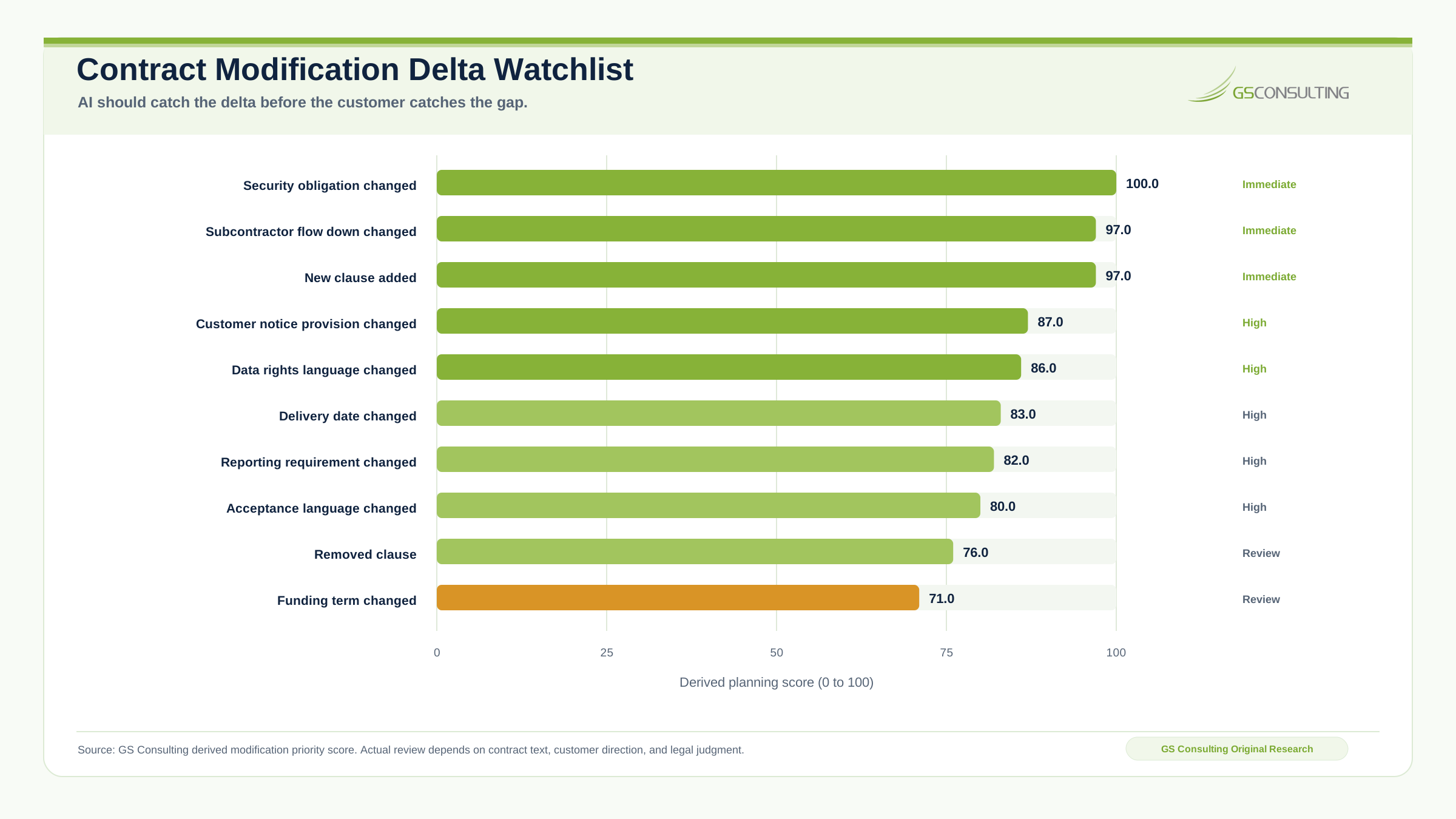
A smart workflow should ask what changed, who needs to know, what obligation is affected, and what approval is needed.
The CUI Problem Cannot Be Ignored
Contracts and attachments may contain sensitive information. Some may include CUI, covered defense information, technical designs, personnel details, facilities information, controlled data flows, customer restrictions, or pricing.
NIST SP 800 171 Revision 3 applies to components of nonfederal systems that process, store, or transmit CUI, or protect those components. If the contract workflow touches CUI, then the workflow itself must respect the controlled environment.
That means approved hosting, access control, logging, encryption, data retention, model selection, no unauthorized training, controlled outputs, audit trail, and boundary documentation. The easiest way to create a data problem is to let people upload federal contract documents into whatever AI tool feels convenient.
The Difference Between a Chatbot and a Workflow
A chatbot answers questions. A workflow creates controlled action.
A chatbot can help someone ask what the key clauses are, where deliverables appear, whether DFARS 252.204 7012 is mentioned, or which sections discuss subcontractors. Useful. But a workflow extracts clauses, creates obligation records, routes them to owners, requires review, updates the tracker, sends alerts, maintains evidence, monitors modifications, and preserves source traceability.
If all you build is a question box over contract documents, you may improve search. If you build a workflow, you improve operations.
What Usually Breaks Inside GovCon Firms
- The contract is not connected to execution. Contracts receives the award, but program operations, security, finance, procurement, and subcontract teams operate from memory, emails, and old templates.
- Clauses are reviewed once and then forgotten. Initial review happens, the contract changes, and nobody updates the obligation map after modifications.
- Subcontractor flow down is manual. The process depends on someone noticing a clause, remembering which subcontractors are affected, and confirming the package includes the right language.
- Cyber clauses are not routed to cyber teams. Contracts may see a cybersecurity clause while security never sees the operational requirement.
- Deliverables are tracked separately from obligations. Leadership sees a partial tracker that misses reporting, notice, security, records, flow down, and compliance obligations.
- Sensitive attachments are mishandled. People upload contract documents for AI summaries before checking whether the environment is approved for the data.
Build the Workflow Around Risk
Not every contract obligation needs the same treatment. A low risk internal reminder does not need the same control path as a cybersecurity incident reporting clause.
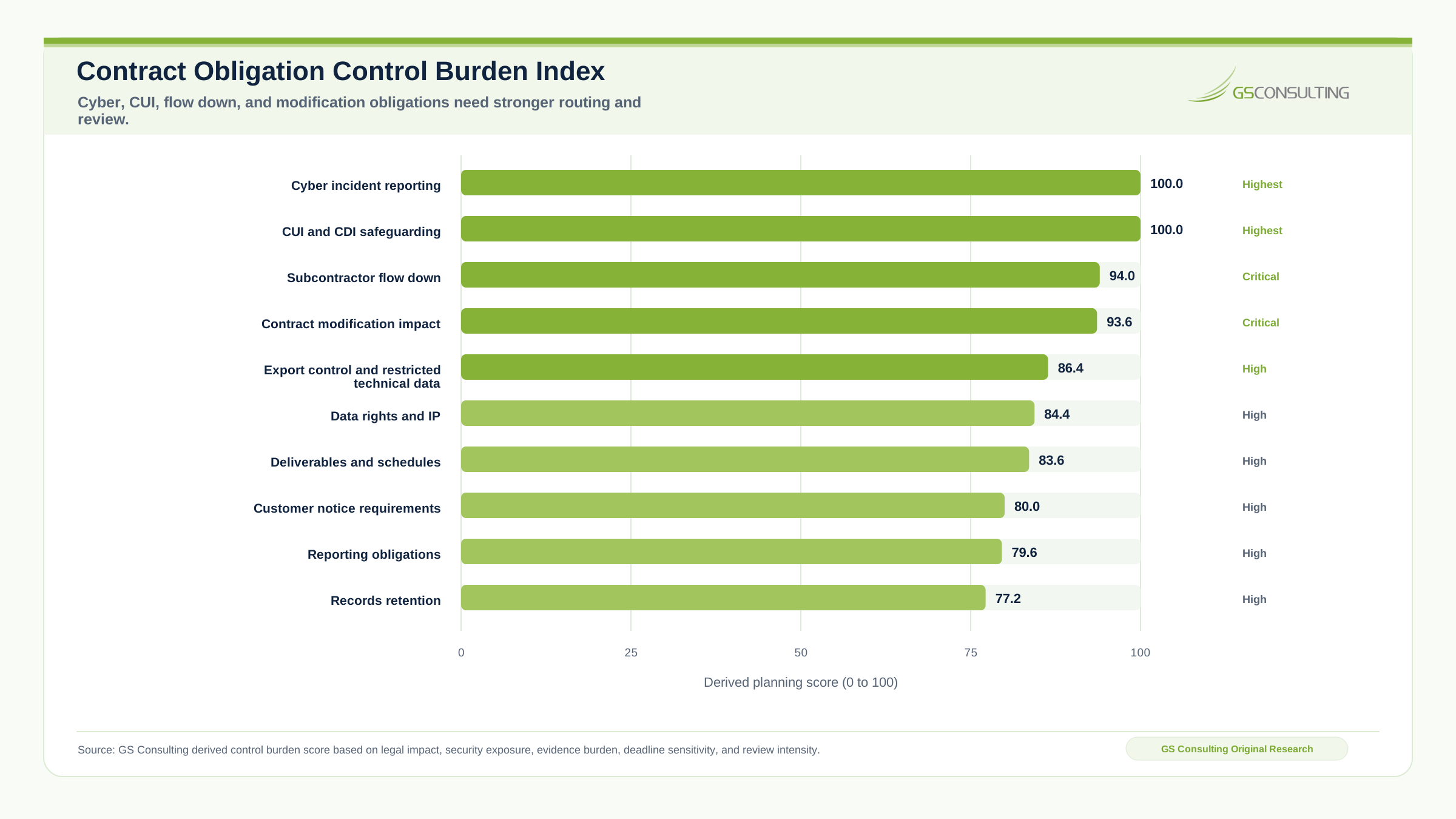
Possible categories include legal risk, security risk, compliance risk, financial risk, delivery risk, subcontractor risk, customer communication risk, data handling risk, records risk, and operational risk. Route based on risk so high impact clauses do not disappear into a generic tracker.
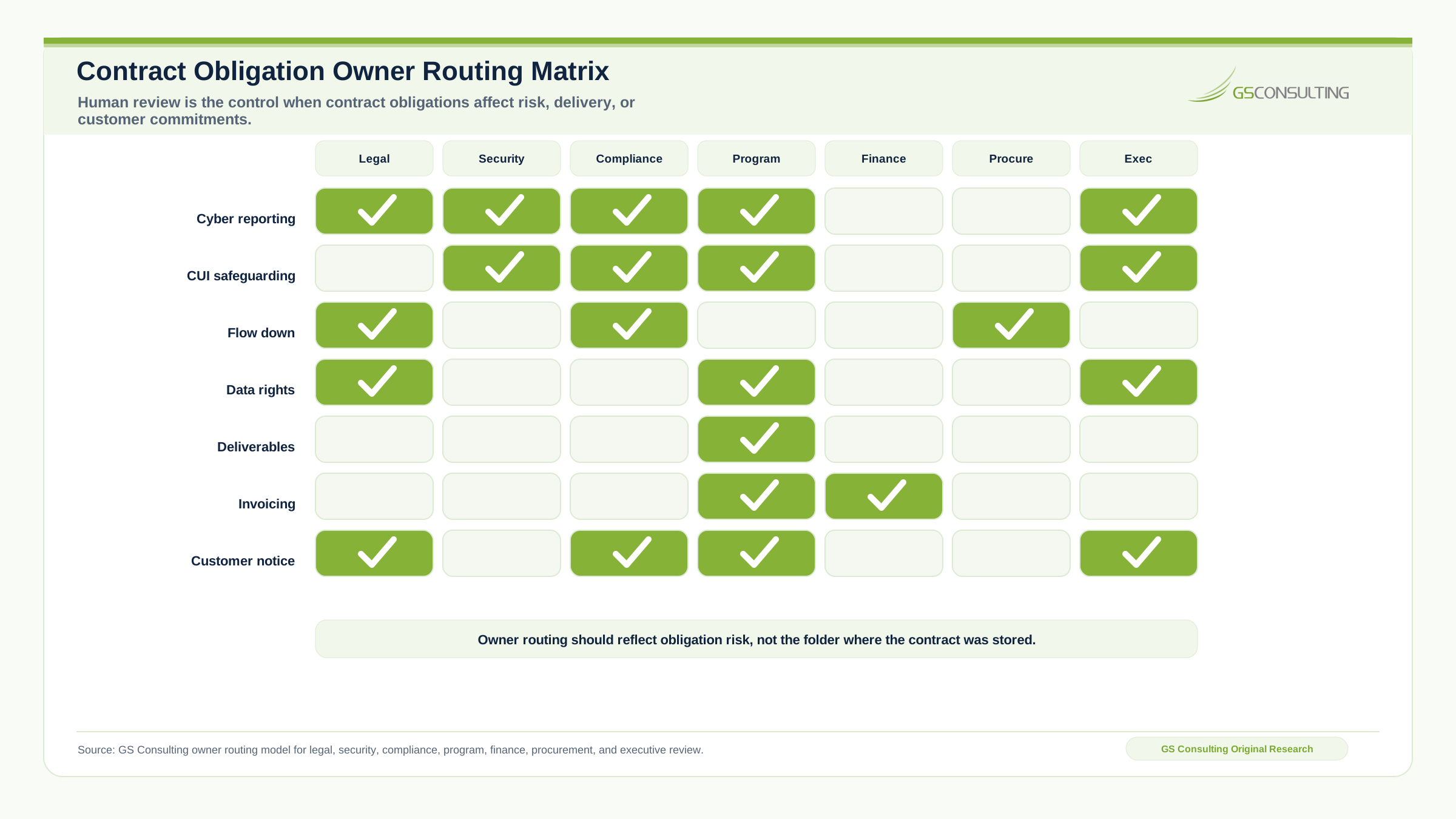
Human Review Is the Control
For contract management, human review is not a nice extra. It is the control.
The workflow should define who reviews extracted clauses, who confirms obligation meaning, who assigns ownership, who approves risk level, who accepts an obligation as satisfied, who reviews modifications, who confirms flow down requirements, who approves external notices, and who signs off on closure.
A human in the loop design only works if the loop is specific. A good workflow shows the exact review queue, required decision, due date, source text, reviewer role, and record of approval.
Data Architecture Matters
A secure AI contract workflow needs a clean architecture: contract repository, document extraction layer, AI analysis layer, structured obligation database, review workflow, notification layer, system of record integration, evidence repository, audit log, and reporting dashboard.
The obligation database is critical. Each record should include contract ID, document source, clause reference, obligation text, plain language summary, owner, risk category, due date, review status, approval history, source citation, related evidence, subcontractor impact, modification history, and alert schedule.
Without structure, you just have summaries. Summaries are helpful, but they do not run the business.
Implementation Should Start Narrow
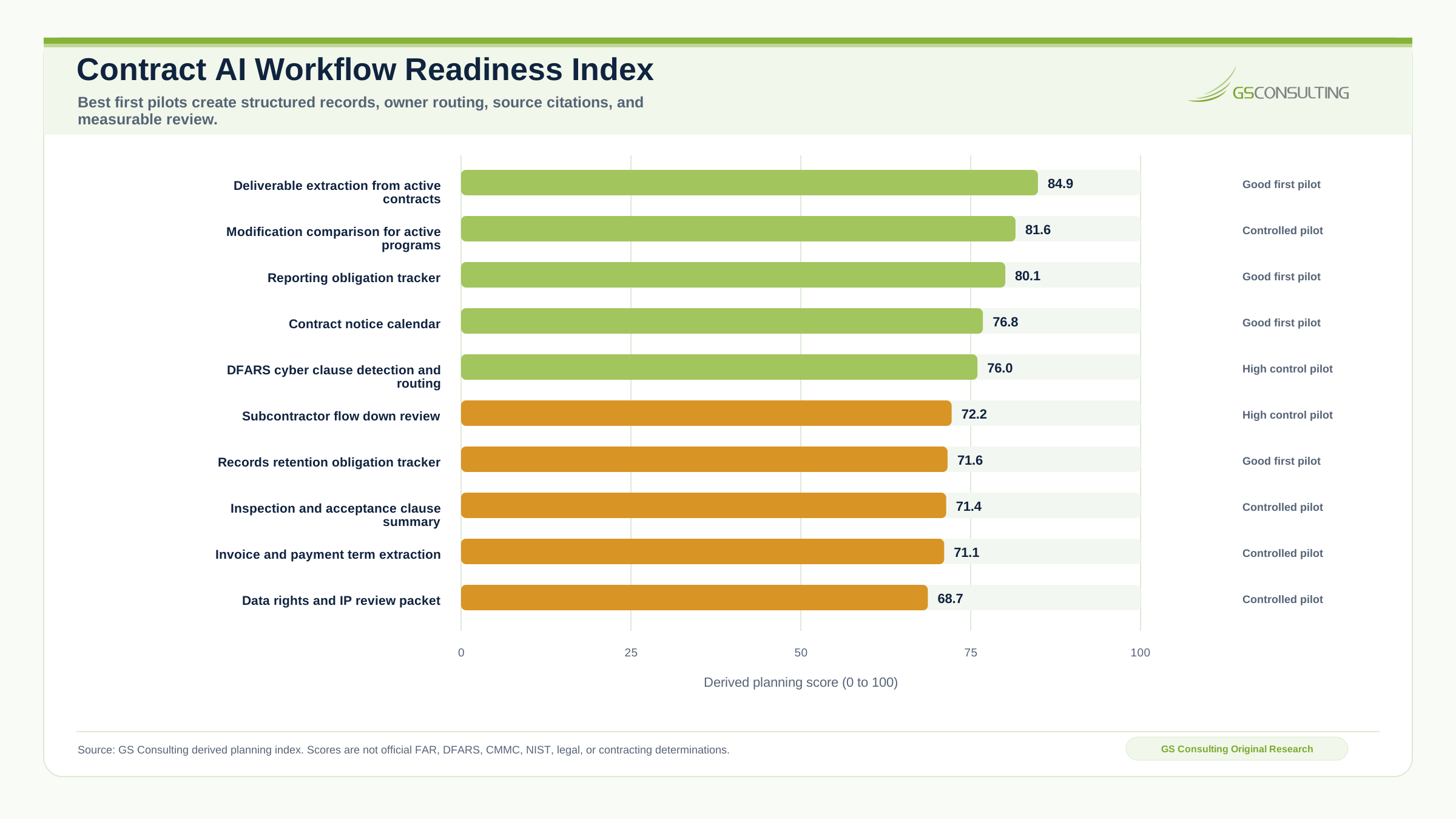
Do not start by trying to process every contract, every clause, and every historical document. Start with one high value workflow.
- DFARS cyber clause detection and routing.
- Deliverable extraction from active contracts.
- Modification comparison for active programs.
- Subcontractor flow down review.
- Cyber obligation mapping.
- Reporting obligation tracker.
- Contract notice calendar.
- CUI related obligation review.
- Invoice term extraction.
Pick one. Define success. Build the workflow. Test on real contracts. Review false positives and false negatives. Add human approval. Integrate with the system of record. Then expand.
What to Measure
Leadership should measure manual review hours reduced, time to identify key clauses, time to create obligation trackers, missed obligations found, modifications reviewed, flow down gaps detected, owner assignment completion, alert response time, contract review backlog, manual tracker maintenance, and evidence completeness for compliance obligations.
Do not measure number of AI summaries generated. Measure whether the workflow helps the business avoid missed obligations, reduce manual effort, and improve control over contract execution.
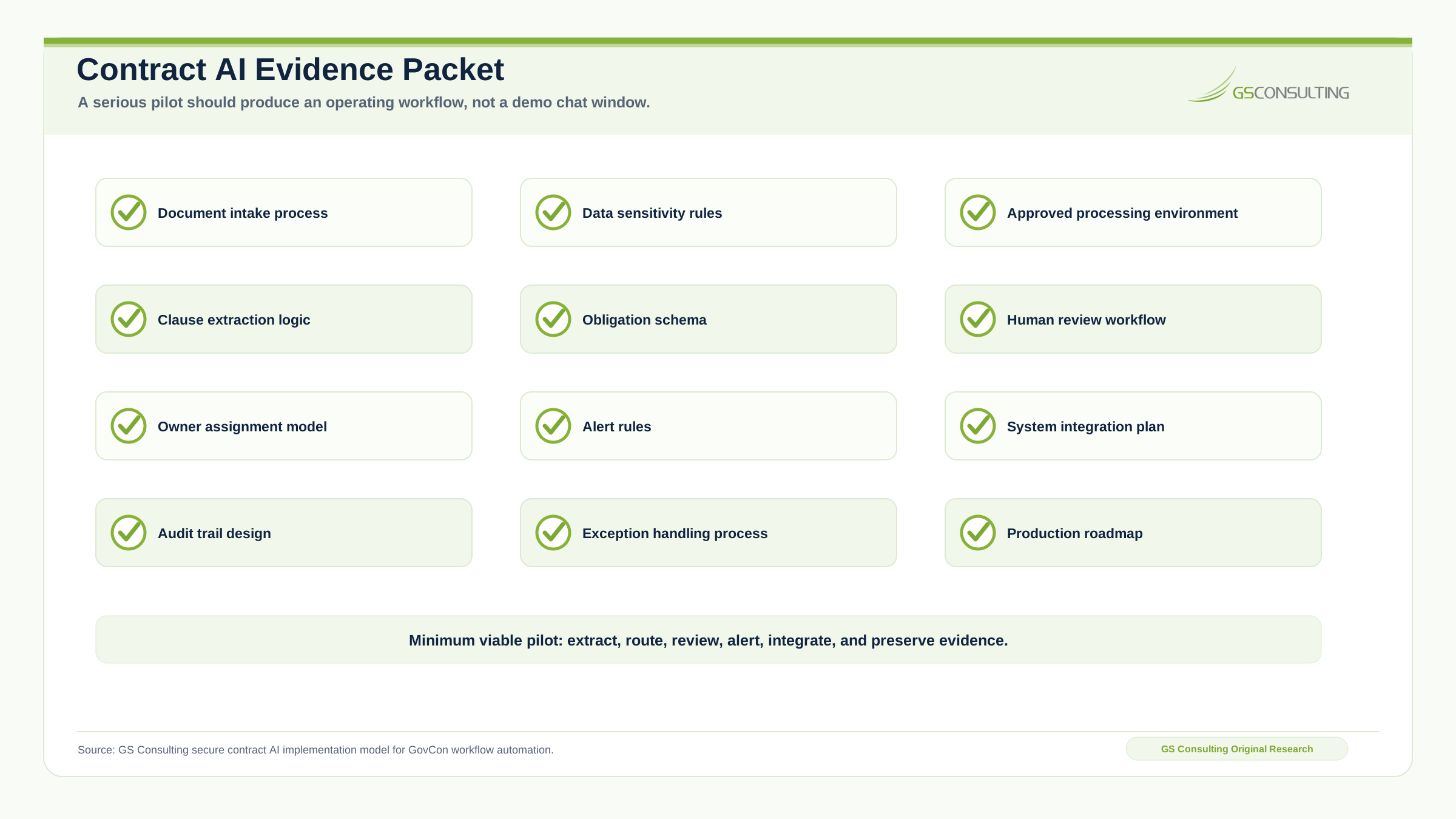
What a Strong Contract AI Pilot Should Produce
A serious pilot should produce more than a demo.
What GS Consulting Builds
GS Consulting helps regulated organizations turn contract documents into secure operational workflows. That means combining GovCon process knowledge, secure AI architecture, natural language processing, data protection, workflow engineering, system integration, human review design, audit trail design, compliance awareness, and production support planning.
This is not just a legal technology project. It is operations, security, compliance, and software engineering working together.
This page is part of our Enterprise AI Process Transformation cluster and supports our main AI workflow automation service. It connects directly to workflow automation security risk assessment, business process mapping for GovCon, automating federal RFP shredding, automating NIST 800 171 evidence, secure AI document processing for CUI, AI incident response workflows, and AI audit trails and activity logging.
The Bottom Line
AI for federal contract management workflows is not about making contracts easier to chat with. It is about making obligations visible, assignable, trackable, reviewable, and auditable.
A secure AI workflow can extract clauses, identify obligations, compare modifications, route reviews, alert owners, and preserve evidence. But it has to be built with data boundaries, human review, source traceability, and integration into the system of record.
Contract management should not depend on who remembers what page the obligation was on. Build the workflow so the obligation finds the owner before the customer finds the gap.
Stop treating federal contracts like static files.
GS Consulting helps GovCon firms design secure AI contract workflows that extract, route, track, and audit the work hidden inside federal contract documents.
Design a Contract AI WorkflowResearch Sources and Caveats
The original research in this article uses GS Consulting derived planning metrics based on FAR, DFARS, NIST SP 800 171, CMMC and GovCon contract workflow patterns, contract administration functions, source traceability, owner routing, review burden, and evidence needs.
The Contract AI Workflow Readiness Score, Contract Obligation Control Burden Score, and Contract Modification Delta Priority Score are planning tools. They are not official FAR, DFARS, CMMC, NIST, legal, audit, contracting officer, procurement, or compliance determinations.
- FAR 1.602 2, Responsibilities
- FAR 42.302, Contract administration functions
- DFARS 252.204 7012, Safeguarding Covered Defense Information and Cyber Incident Reporting
- DFARS 252.204 7008, Compliance with Safeguarding Covered Defense Information Controls
- FAR 4.703, Policy
- NIST SP 800 171 Revision 3
- GS Consulting analysis of secure contract AI workflows, obligation routing, modification review, contract data sensitivity, audit trail design, and GovCon workflow automation.
Frequently Asked Questions About AI Contract Management for GovCon
What is AI contract management for GovCon?
AI contract management for GovCon is the use of secure AI and workflow automation to extract clauses, identify obligations, assign owners, route review, track alerts, preserve source references, and maintain audit trails for federal contracts and modifications.
Can AI replace legal review of federal contracts?
No. AI can structure the first pass, compare changes, surface clauses, and prepare review packets. Legal, contracts, compliance, security, and program leaders still approve interpretation, risk level, owner assignment, customer notices, and closure.
Which federal contract workflows are good first AI pilots?
Good first pilots include deliverable extraction, modification comparison, reporting obligation tracking, contract notice calendars, DFARS cyber clause detection and routing, subcontractor flow down review, records retention tracking, invoice term extraction, and data rights review packets.
Why does CUI matter in AI contract workflows?
Federal contracts and attachments may include CUI, covered defense information, pricing, technical data, customer restrictions, or security requirements. If an AI workflow processes that data, the workflow must respect the approved boundary, access control, logging, retention, and system security requirements.
What should a secure contract AI pilot produce?
A strong pilot should produce a document intake process, data sensitivity rules, approved processing environment, clause extraction logic, obligation schema, human review workflow, owner assignment model, alert rules, system integration plan, audit trail design, exception handling process, and production roadmap.
Suggested Future Reading
- AI Workflow Automation
- Enterprise AI Process Transformation
- Workflow Automation Security Risk Assessments
- Business Process Mapping for Government Contractors
- Automating Federal RFP Shredding with AI
- Secure AI Document Processing for CUI
- AI Driven Cybersecurity Incident Response Workflows
- Automating GovCon Supply Chain Compliance Checks
- Automating NIST SP 800 171 Compliance Evidence Collection
- AI Audit Trails and Activity Logging