Enterprise AI | | 24 min read
Automating GovCon Supply Chain Compliance Checks

Key Takeaways
Supply chain compliance is a workflow problem.
Vendor Trust Needs Evidence
Static questionnaires do not prove scope, status, CAGE match, flow down, review history, or ongoing monitoring.
SPRS Needs Context
Assessment fields matter only when they are tied to the right vendor entity, covered system, subcontract scope, and decision record.
AI Supports Review
AI can classify, compare, summarize, and flag. Humans still approve vendors, exceptions, contract language, and risk acceptance.
Prime contractors love to talk about supply chain risk. Then they manage it with spreadsheets, email reminders, stale vendor forms, and a folder called sub compliance.
That is not oversight. That is hope with attachments.
In GovCon, subcontractor compliance is not a side issue. It is part of contract execution. If your subcontractor touches Federal Contract Information, Controlled Unclassified Information, covered defense information, program systems, customer data, sensitive deliverables, or security relevant workflows, their weakness can become your problem.
Automating supply chain compliance GovCon workflows is not about replacing procurement judgment. It is about making vendor risk visible before it turns into a missed requirement, bad award decision, failed assessment, customer issue, or security event.
If your supply chain compliance process depends on someone manually checking a spreadsheet once a quarter, you do not have a process. You have a delay.
Make subcontractor cyber risk visible before award.
GS Consulting helps GovCon firms build secure supply chain compliance workflows that connect procurement, contracts, security, compliance, and program operations.
Discuss Supply Chain Compliance AutomationWhy GovCon Supply Chain Compliance Is Different
Vendor management in a normal business is already messy. Vendor management in GovCon is harder because the relationship is tied to contract clauses, security requirements, data handling restrictions, customer expectations, and audit exposure.
A subcontractor may need to prove cybersecurity posture, maintain a current NIST SP 800 171 assessment, protect CUI, support an assessment boundary, use an authorized cloud service, understand flow down requirements, or help the prime prove oversight.
That is not a simple vendor list. That is a risk system.
SPRS matters because the Supplier Performance Risk System provides storage and access to NIST SP 800 171 assessment scoring information, including assessment date, score, scope, plan of action completion date, included CAGE codes, SSP details, and confidence level.
A serious GovCon supply chain workflow has to connect vendor records, contract requirements, CAGE codes, SPRS related status, subcontract scope, data sensitivity, evidence, and review ownership. Most companies do not have that. They have fragments.
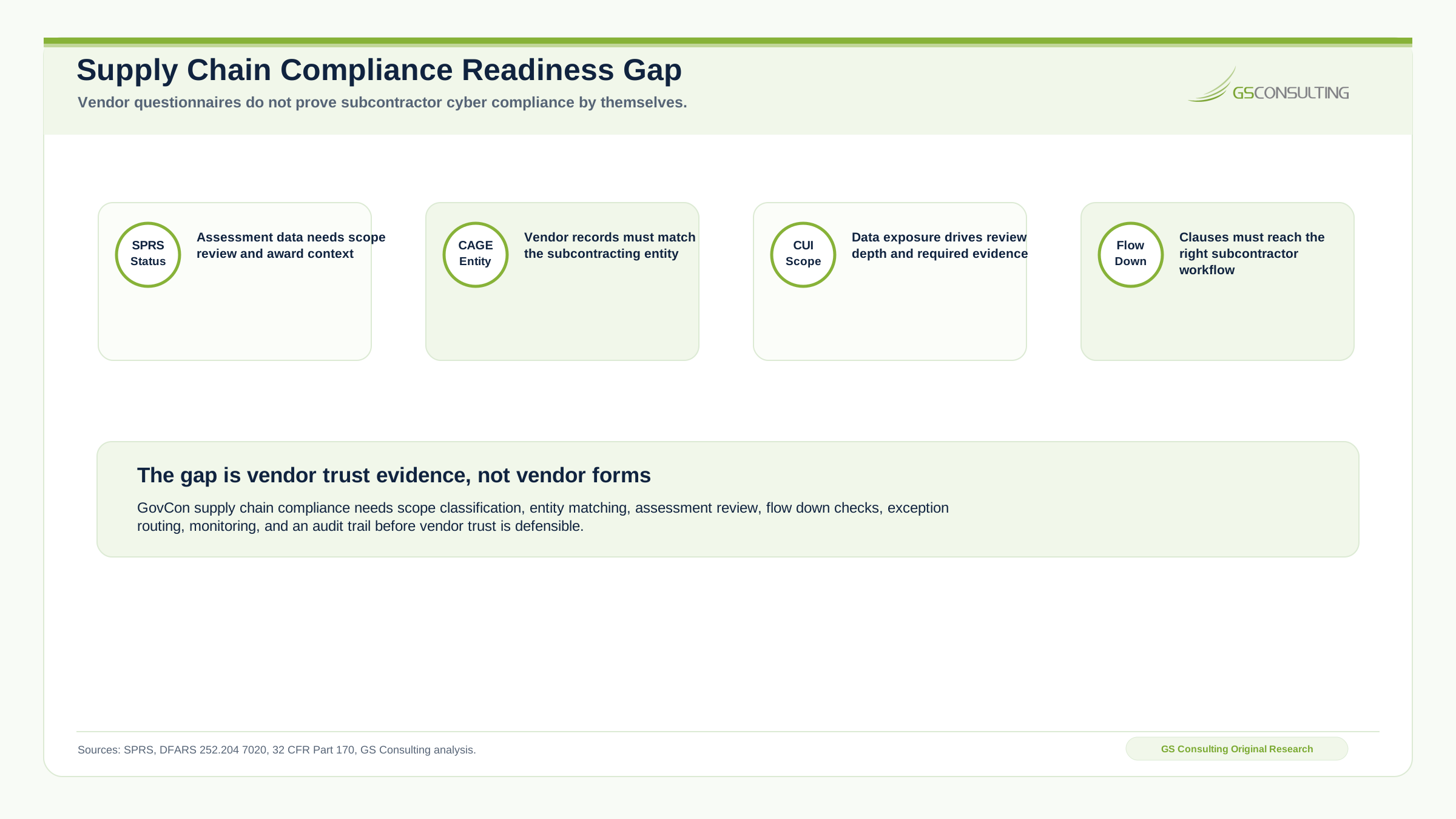
The Bad Assumption: A Vendor Questionnaire Is Enough
A vendor questionnaire is not useless. But it is not a control by itself.
A vendor can answer yes to every question and still be unprepared. A subcontractor can send a policy document and still have no evidence that the process works. A supplier can provide an SPRS score and still have missing context around scope, system security plan quality, POA items, or whether the score covers the systems supporting your subcontract.
The problem is not that vendors lie. The problem is that questionnaires are static, while compliance risk changes. People leave. Systems change. Subcontract scope changes. CUI flow changes. Cloud tools change. Security controls drift. Assessment dates expire. POA dates slip. A new contract clause changes the obligation.
A one time form does not manage that. A workflow does.
Why Primes Cannot Treat Subcontractor Cyber As Someone Else's Problem
The subcontractor may be a separate company, but the work still connects back to the prime contract.
DFARS 252.204 7020 says a contractor shall not award a subcontract subject to NIST SP 800 171 implementation requirements unless the subcontractor completed at least a Basic NIST SP 800 171 DoD Assessment within the last three years for all covered contractor information systems relevant to the offer.
That creates a practical procurement problem. Before award, someone needs to know whether the subcontractor falls under the requirement, whether the work involves CUI or covered systems, which CAGE codes apply, whether the assessment is current, whether the scope matches the work, whether POA items matter, who reviewed the evidence, and whether procurement can prove the check happened.
If that process is manual, it will eventually fail. Not because people are careless. Because there are too many moving parts.
CMMC Raises the Bar for Supply Chain Visibility
CMMC makes supply chain visibility even more important. 32 CFR Part 170 defines CMMC requirements and ties assessment scope to systems that process, store, or transmit FCI or CUI. It also connects status, CAGE codes, SSP details, POA use, and affirmations to the assessment record.
The 2025 DFARS CMMC final rule also makes flow down and CMMC unique identifiers operational concerns. It states that CMMC requirements are tied to contractor information systems that process, store, or transmit FCI or CUI during performance, and that contractors must flow down the correct CMMC level to subcontracts and other contractual instruments when applicable.
That means prime contractors need a way to see which subcontractors are in scope, what data they touch, what assessment level applies, and whether the current evidence supports award or continued performance. That should be a controlled workflow, not a rebuild for every pursuit.
What Automating Supply Chain Compliance Actually Means
Automating supply chain compliance does not mean letting AI approve vendors. That would be a bad idea.
It means building secure workflows that collect, validate, route, monitor, and escalate vendor compliance information.
- Track subcontractor CAGE codes.
- Capture vendor security attestations.
- Check required assessment dates.
- Flag missing SPRS related data.
- Track CMMC status where applicable.
- Identify subcontractors that may process CUI.
- Map subcontract scope to data sensitivity.
- Route high risk vendors to security review.
- Alert contract teams when flow down language is missing.
- Create review records before award and during performance.
That is not glamorous. It is exactly the operational plumbing that keeps GovCon firms out of trouble.
Start With the Vendor Risk Map
Do not start with a tool. Start with the vendor risk map.
- ScopeWhat work does the vendor perform?
Connect each vendor to the contract, program, subcontract, scope of work, data type, deliverables, system access, and customer access.
- DataDoes the vendor touch FCI or CUI?
Classify whether the vendor receives, processes, stores, transmits, protects, or supports environments involving FCI, CUI, covered defense information, or technical data.
- EntityWhich CAGE codes and legal entities apply?
Validate the subcontractor entity, CAGE code, UEI where relevant, parent relationship, program association, and system scope before attaching evidence.
- EvidenceWhat proof supports the decision?
Track assessments, SPRS related fields, CMMC applicability, questionnaires, flow down confirmation, exception approvals, reviewer notes, and next review dates.
Without this map, automated SPRS score checking is only a narrow piece of the picture. You may know a vendor has a score. You may not know whether that score covers the work they are about to perform for you.
SPRS Is a Data Point, Not the Whole Control
SPRS is important, but it is not the whole vendor risk program.
The SPRS NIST SP 800 171 page says SPRS stores assessment scoring information, including assessment date, score, scope, plan of action completion date, CAGE codes, SSP name, SSP version, SSP date, and confidence level. That is useful information. But the prime still has to interpret it.
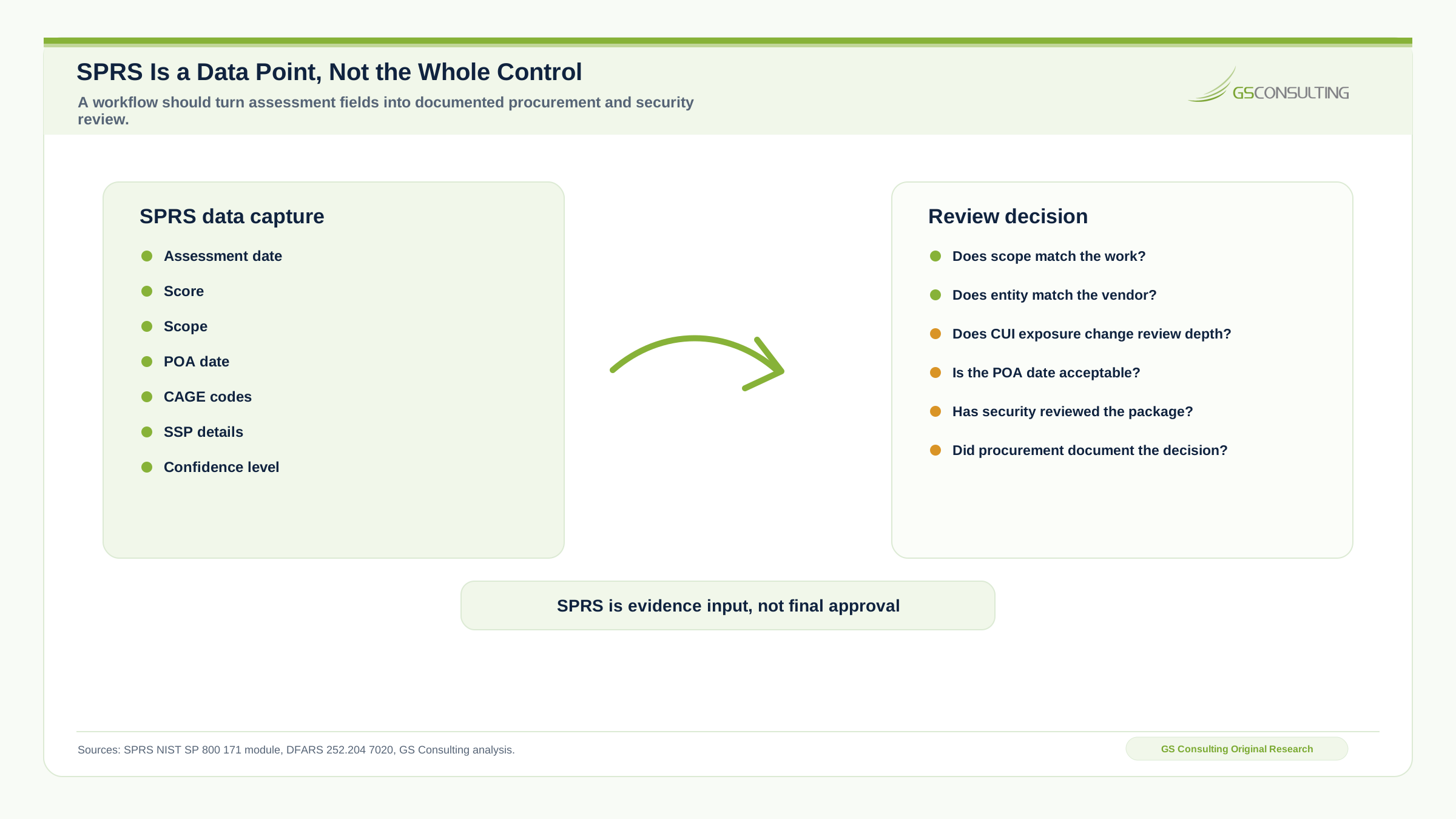
- Is the assessment current?
- Does the CAGE code match the subcontractor entity?
- Does the scope match the covered system supporting the work?
- Does the SSP name look relevant?
- Is the POA date acceptable?
- Is the confidence level appropriate?
- Does the vendor handle CUI?
- Has security reviewed the vendor?
- Has procurement documented the award decision?
The Compliance Workflow Before Award
Supply chain compliance should be part of source selection and subcontract award, not something checked after the subcontract is already signed.
- Step 1Classify the subcontract scope.
Determine whether the vendor will receive FCI, receive CUI, access covered systems, support a CUI environment, provide security protection services, host data, use its own systems, or create deliverables.
- Step 2Identify clauses and flow down language.
Check the prime contract, subcontract template, and vendor scope to flag cyber, CUI, deliverable, data handling, and security review requirements.
- Step 3Validate vendor identity.
Confirm legal entity, CAGE code, UEI where relevant, parent relationship, point of contact, program association, subcontract number, and system scope.
- Step 4Check assessment and certification status.
Capture assessment date, score, scope, confidence level, SSP details, POA date, CAGE codes included, reviewer, decision, conditions, and next review date.
- Step 5Route exceptions to the right owner.
Send missing data, unclear scope, stale assessments, POA issues, legal questions, security concerns, or executive risk acceptance to the right queue.
The Workflow During Performance
Vendor oversight does not end at award. That is another bad assumption.
Subcontractors change systems. They add personnel. Their scope grows. Their assessment dates age. Their security posture changes. The contract gets modified. New CUI may flow down. A vendor that was low risk in month one may become higher risk by month nine.
A supply chain cybersecurity workflow should monitor assessment expiration windows, POA completion dates, CMMC status changes, subcontract modifications, new data sharing events, system access requests, vendor personnel changes, new cloud tools, incident notifications, evidence review status, and subcontract closeout requirements.
The goal is not to harass vendors. The goal is to prevent invisible drift.
What AI Can Help With
AI can be useful in supply chain compliance, but only if it is used for the right jobs.
- Reading subcontract scopes and identifying data handling risk.
- Comparing vendor questionnaires to required evidence.
- Extracting key dates from vendor documents.
- Flagging missing clauses in subcontract drafts.
- Summarizing vendor security packages for review.
- Finding mismatches between vendor claims and evidence.
- Classifying vendor risk by work type.
- Creating review notes for procurement and security.
- Drafting follow up questions for subcontractors.
- Monitoring document changes across renewals and modifications.
The AI helps reduce review burden and improve consistency. It does not make the award decision.
What AI Should Not Do
AI should not approve a subcontractor, accept a cyber assessment as sufficient without review, decide CUI scope on its own, waive flow down requirements, rewrite subcontract language without contracts review, store sensitive vendor data in an unapproved platform, send vendor risk decisions to customers without approval, or make risk acceptance decisions for the company.
Use AI to organize the facts. Keep humans accountable for decisions.
A Practical Automation Architecture
A secure supply chain compliance workflow can be built with several layers.
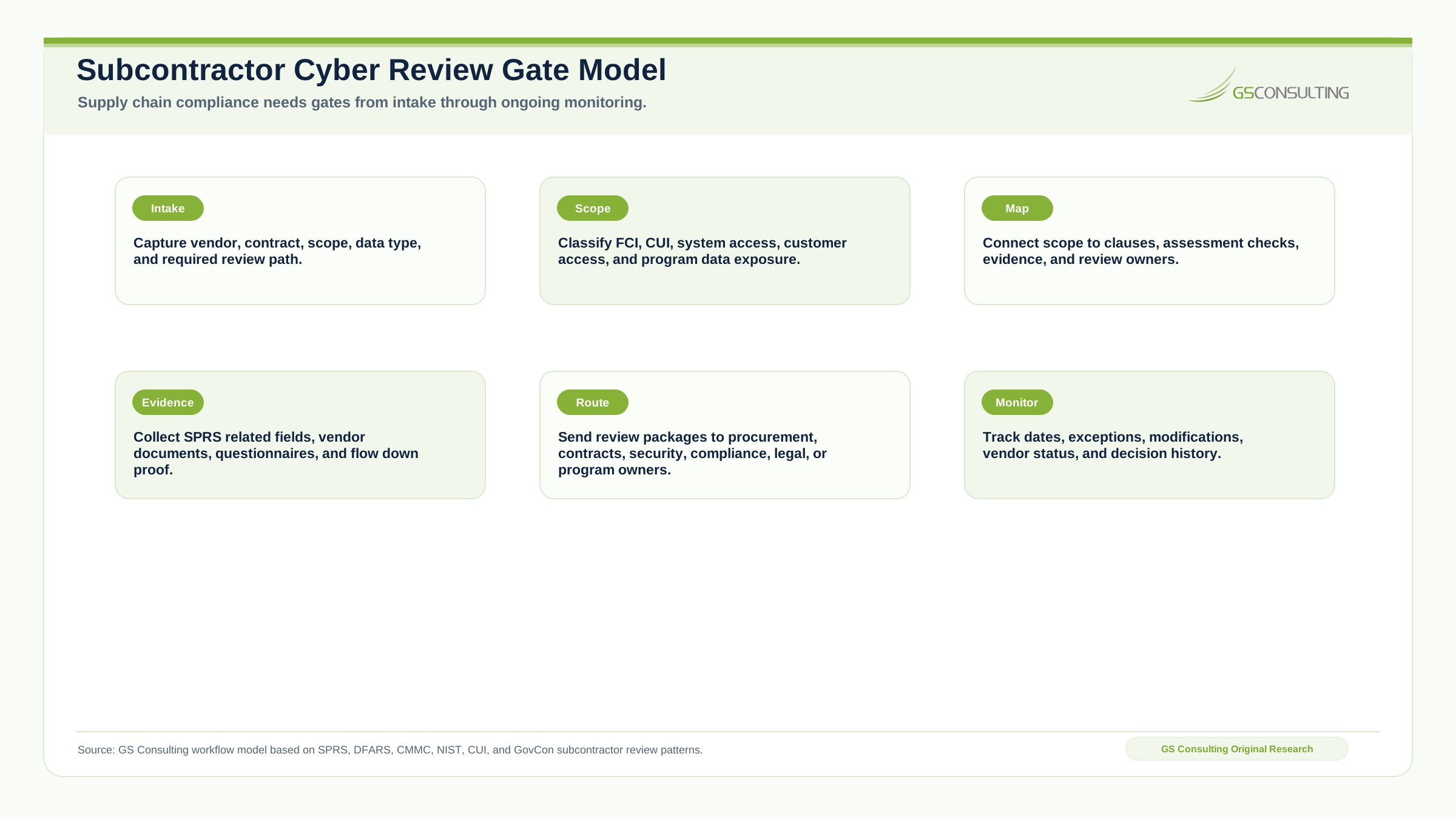
- Layer 1Vendor intake.
Capture vendor identity, contract context, scope, data type, system access, and required review path.
- Layer 2Scope classification.
Identify whether the vendor may access FCI, CUI, company systems, customer systems, security data, or program technical data.
- Layer 3Requirement mapping.
Map scope to required clauses, assessment requirements, evidence, review owners, and flow down review.
- Layer 4Evidence collection.
Collect vendor documents, assessment status, SPRS related information, CMMC information where applicable, questionnaires, and flow down confirmations.
- Layer 5Review routing and exceptions.
Route packages to procurement, contracts, security, compliance, legal, or program owners and track missing evidence, stale records, unclear scope, poor scores, POA dates, or required approvals.
- Layer 6Monitoring and audit trail.
Watch assessment dates, subcontract changes, vendor status changes, recurring reviews, decisions, evidence used, and conditions attached.
This page supports our main AI workflow automation service and connects directly to automating NIST 800 171 evidence, AI contract management workflows, and workflow automation security risk assessment.
How to Score Vendor Risk
A useful vendor risk score should not be mysterious. Score vendors across data sensitivity, CUI handling, system access, customer access, contract criticality, assessment status, evidence completeness, POA status, prior performance issues, incident history, subcontract value, replacement difficulty, flow down complexity, external service providers, cloud processing, and access to security protection data.
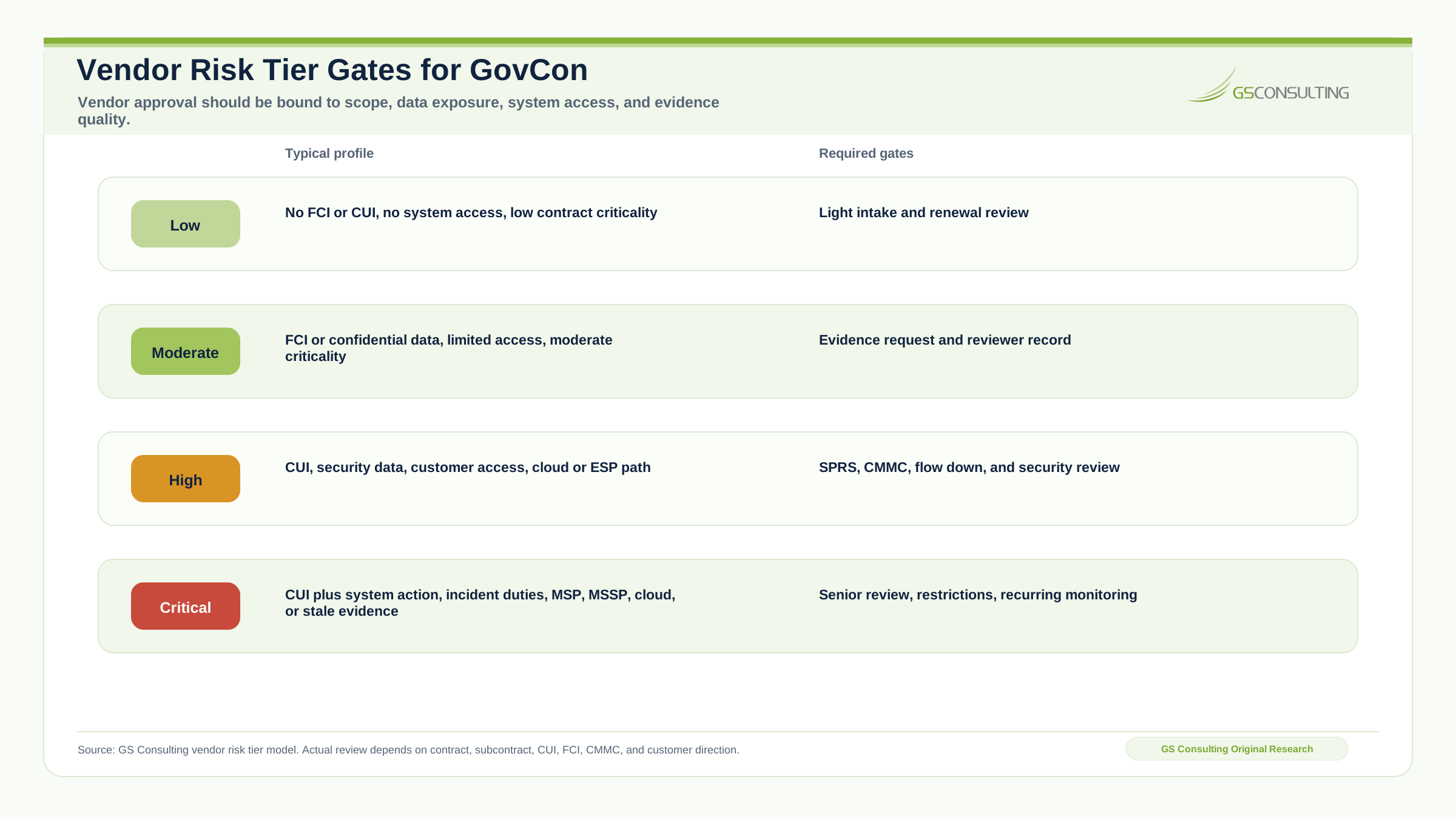
Low risk vendors may need a light process. High risk vendors need security review, compliance review, evidence validation, and leadership visibility. Giving every vendor the same process wastes time and still misses risk.
What Usually Breaks Inside GovCon Firms
- Procurement owns the vendor, but security owns the risk. The vendor gets approved before the right people see the cyber, CUI, evidence, or flow down issue.
- Vendor records are not tied to contract scope. A supplier may be approved for one program but risky for CUI engineering support, hosting technical data, or customer system access.
- SPRS status is checked once. That misses staleness, changed scope, POA dates, new requirements, and performance drift.
- Subcontract modifications are not connected to cyber review. The work changes, but security never sees the modification.
- Flow down is handled manually. Someone remembers to include the clauses. Or they do not.
- Exceptions disappear into email. Missing evidence gets normalized because there is no owner, due date, decision record, or closure.
What a First Automation Project Should Target
Do not start by trying to automate every vendor process. Start with one narrow, painful, repeatable workflow.
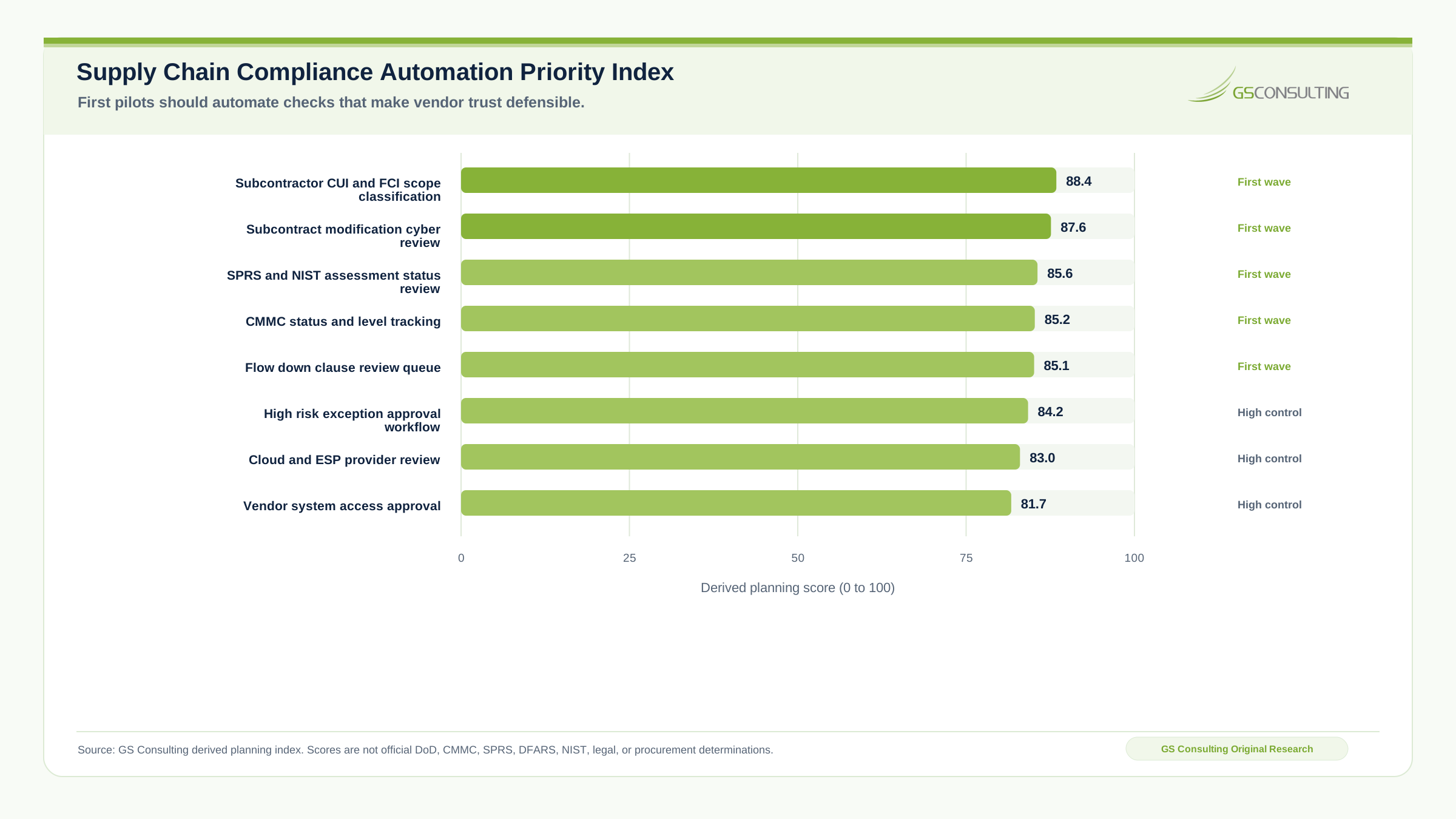
- Before award subcontractor cyber review.
- SPRS related status tracking.
- CAGE code and assessment date monitoring.
- Subcontractor CUI scope classification.
- Flow down clause review queue.
- Vendor evidence collection and reminders.
- POA date monitoring.
- High risk vendor exception tracking.
- Subcontract modification cyber review.
Pick one. Build it well. Then expand. The point is to create a repeatable operating pattern.
A Practical First Ninety Days
A realistic first phase should not boil the ocean. It should create a working review pattern that procurement, security, compliance, contracts, and program operations can actually use.
- Days 1 to 30Map the process.
Identify subcontractor types, intake steps, vendor cyber reviewers, required evidence, CUI and FCI touchpoints, source systems, current spreadsheets, exception paths, and risk categories.
- Days 31 to 60Build the workflow.
Create structured vendor intake, scope and data sensitivity fields, evidence request templates, review queues, SPRS related status fields, CAGE tracking, due dates, reminders, and exception records.
- Days 61 to 90Operationalize the pilot.
Test on active vendors, tune risk scoring, add dashboard reporting, review access controls, define retention, document the process, train users, and connect the workflow to subcontract review.
What Leadership Should Measure
Measure outcomes that matter: time to complete vendor compliance review, vendors with complete evidence, vendors with stale assessments, unresolved exceptions, vendors touching CUI, high risk vendors without security review, time from intake to approval, missing flow down reviews caught before award, subcontract modifications routed for cyber review, POA dates approaching or missed, and vendors reviewed before recompete or renewal.
Do not measure how many forms were sent. Measure whether risk is visible and decisions are defensible.
What GS Consulting Builds
GS Consulting helps GovCon firms build supply chain cybersecurity workflows that connect procurement, contracts, compliance, security, and program operations. That means vendor process mapping, CUI and FCI scope classification, SPRS related workflow design, vendor evidence automation, risk scoring design, subcontractor review workflows, flow down review support, exception handling, dashboard design, audit trail design, integration with existing systems, and secure AI support for vendor document review.
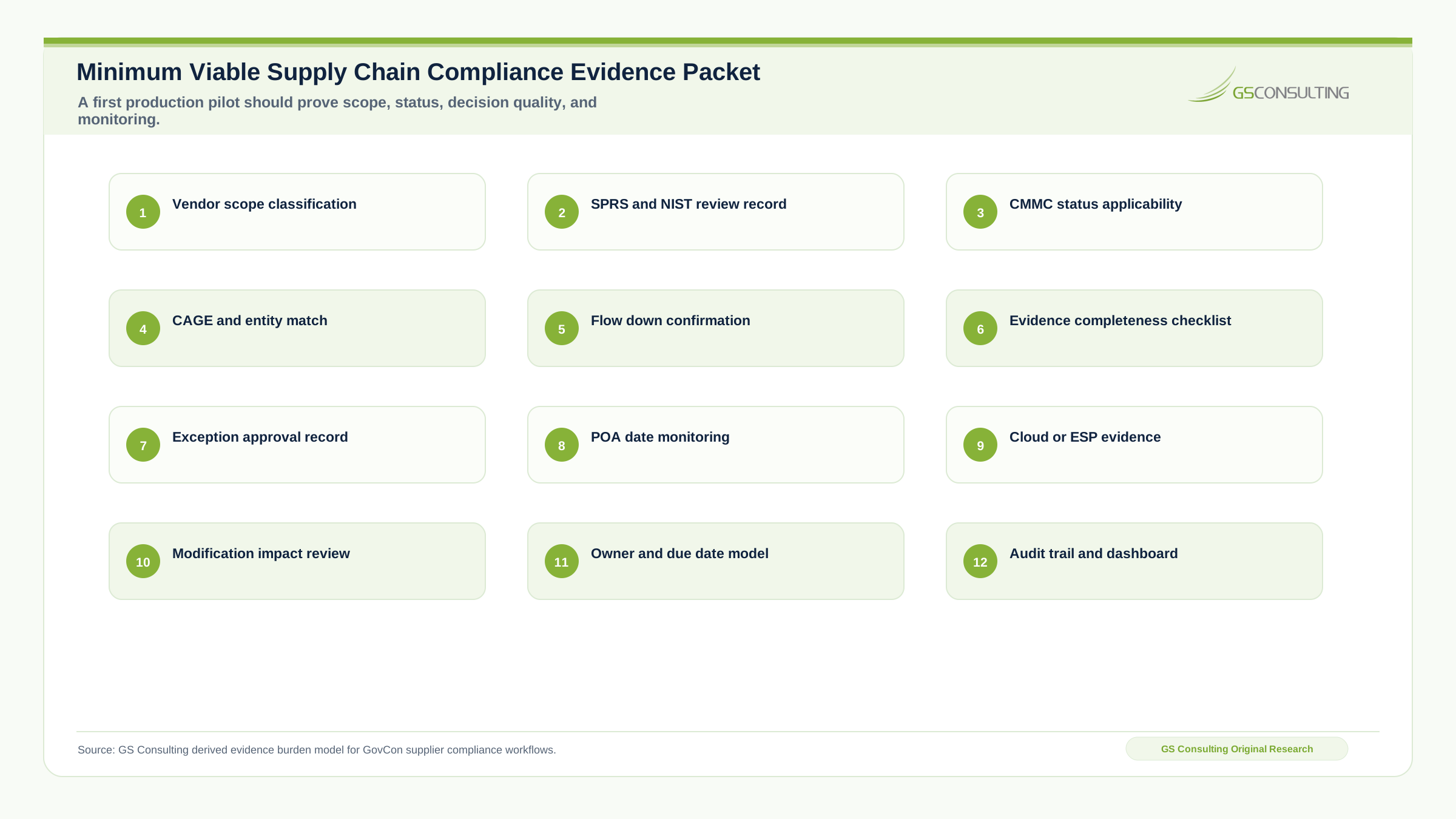
This is not a generic vendor management project. It is a GovCon operating problem with cyber, compliance, contract, and data implications. That is why it needs to be engineered carefully.
The Bottom Line
Automating GovCon supply chain compliance checks is not about making procurement look modern. It is about seeing risk before award, before performance, before assessment, and before the customer asks the uncomfortable question.
A better model uses secure workflows to classify vendor scope, track CAGE data, monitor SPRS related status, review evidence, route exceptions, check flow down requirements, and preserve an audit trail.
AI can help read, classify, summarize, compare, and flag vendor documents. Humans still own the decision.
Do not automate blind trust. Automate the checks that make trust defensible.
Stop managing supply chain compliance from inboxes.
GS Consulting helps GovCon firms map subcontractor compliance risk and build secure workflows that prove the check happened.
Build the Vendor Risk WorkflowResearch Sources and Caveats
The original research in this article uses GS Consulting derived planning metrics based on SPRS, DFARS, CMMC, NIST SP 800 171, CUI, subcontractor review patterns, evidence burden, flow down impact, award eligibility pressure, monitoring needs, and automation fit.
The Workflow Automation Priority Score, Evidence Burden Score, Vendor Risk Tier Model, and Failure Mode Priority Score are planning tools. They are not official DoD, NIST, CMMC, DFARS, SPRS, legal, procurement, contracting officer, audit, or compliance determinations.
- SPRS, NIST SP 800 171 information
- DFARS 252.204 7020, NIST SP 800 171 DoD Assessment Requirements
- 32 CFR Part 170, Cybersecurity Maturity Model Certification Program
- Federal Register, DFARS Case 2019 D041 final rule
- GS Consulting analysis of GovCon supplier compliance workflows, vendor risk review, SPRS related tracking, flow down review, exception handling, monitoring, and audit trail design.
Frequently Asked Questions About Automating GovCon Supply Chain Compliance
What is supply chain compliance automation for GovCon?
Supply chain compliance automation for GovCon is the use of controlled workflows to classify subcontractor scope, track CAGE and entity data, review SPRS related assessment status, collect vendor evidence, route exceptions, monitor changes, and preserve proof that vendor cyber risk was reviewed.
Can AI approve subcontractors for GovCon work?
No. AI can help read scopes, extract dates, compare vendor evidence, summarize security packages, flag missing flow down language, and draft review notes. Procurement, contracts, security, compliance, legal, and program leaders still own the approval and risk decision.
Why is SPRS not enough by itself?
SPRS stores useful NIST SP 800 171 assessment fields, but a prime still has to determine whether the assessment is current, whether the CAGE code matches the subcontractor entity, whether the scope matches the work, whether POA dates matter, and whether the decision was reviewed and documented.
Which supply chain compliance checks should be automated first?
Good first pilots include subcontractor CUI and FCI scope classification, subcontract modification cyber review, SPRS and NIST assessment status review, CMMC status tracking, flow down clause review queues, high risk exception approval, cloud and ESP review, and vendor system access approval.
What should a first supply chain compliance automation pilot produce?
A strong pilot should produce a vendor intake model, scope classification rules, evidence request templates, SPRS related fields, CAGE tracking, review queues, exception records, access controls, monitoring alerts, dashboard reporting, and an audit trail for award and performance decisions.