Enterprise AI | | 23 min read
AI Driven Cybersecurity Incident Response Workflows

Key Takeaways
Incident response automation is a decision system.
Context Beats Alerts
AI should enrich alerts with identity, asset, contract, data, owner, and prior incident context before responders decide.
Evidence Must Survive
A secure workflow preserves source records, approvals, timelines, prompt outputs, and action history without leaking sensitive logs.
Authority Needs Gates
Read only enrichment is different from containment, customer communication, account disablement, or reportability decisions.
Most security teams do not have an alert problem. They have a decision problem.
The tools already produce alerts. Endpoint alerts. SIEM alerts. Cloud alerts. Identity alerts. Email alerts. Vulnerability alerts. Ticket alerts. Threat intel alerts. Vendor alerts. Customer alerts.
The hard part is not getting another notification. The hard part is figuring out what matters, what changed, what systems are affected, what evidence exists, who owns the response, what must be reported, and what action should happen next.
That is where AI driven cybersecurity incident response workflows can help. Not because AI is magic. Because much of incident response is structured chaos: collecting context from five systems, comparing it against known patterns, writing the same summary in three places, chasing asset owners, escalating to the wrong queue, and rebuilding the timeline after the fact.
An automated incident response workflow GovCon teams can trust should not replace responders. It should help them see faster, decide cleaner, preserve evidence better, and avoid missing the steps that matter when the clock is running.
Use the SOC automation guide to decide which enrichment, routing, timeline, containment, account, and notice tasks belong in unattended, reviewed, or human authority lanes. The AI security alert triage guide adds the evidence gate, miss signals, and closure controls inside the alert queue. The Corporate Cyber Disclosure Index shows what public company filings reveal about escalation, incident evidence, and the measurement gap behind cyber governance. The SOC Automation hub connects this incident guide to IT security operations, evidence, and workflow risk.
Build incident response workflows that preserve judgment.
GS Consulting helps GovCon security teams design AI assisted response workflows that enrich alerts, protect evidence, define approval gates, and support contract aware incident operations.
Discuss AI Incident Response WorkflowsWhy Incident Response Automation Is Different in GovCon
In a normal commercial environment, incident response is already serious. In GovCon, it is more complicated.
The alert may involve CUI. The system may support a federal contract. The incident may trigger DFARS reporting review. The affected asset may sit inside a CMMC boundary. The logs may contain sensitive customer or mission data. The response may require legal, contracts, security, compliance, and program leadership. The subcontractor may be part of the incident. The evidence may need to be preserved for assessment, customer review, or damage assessment.
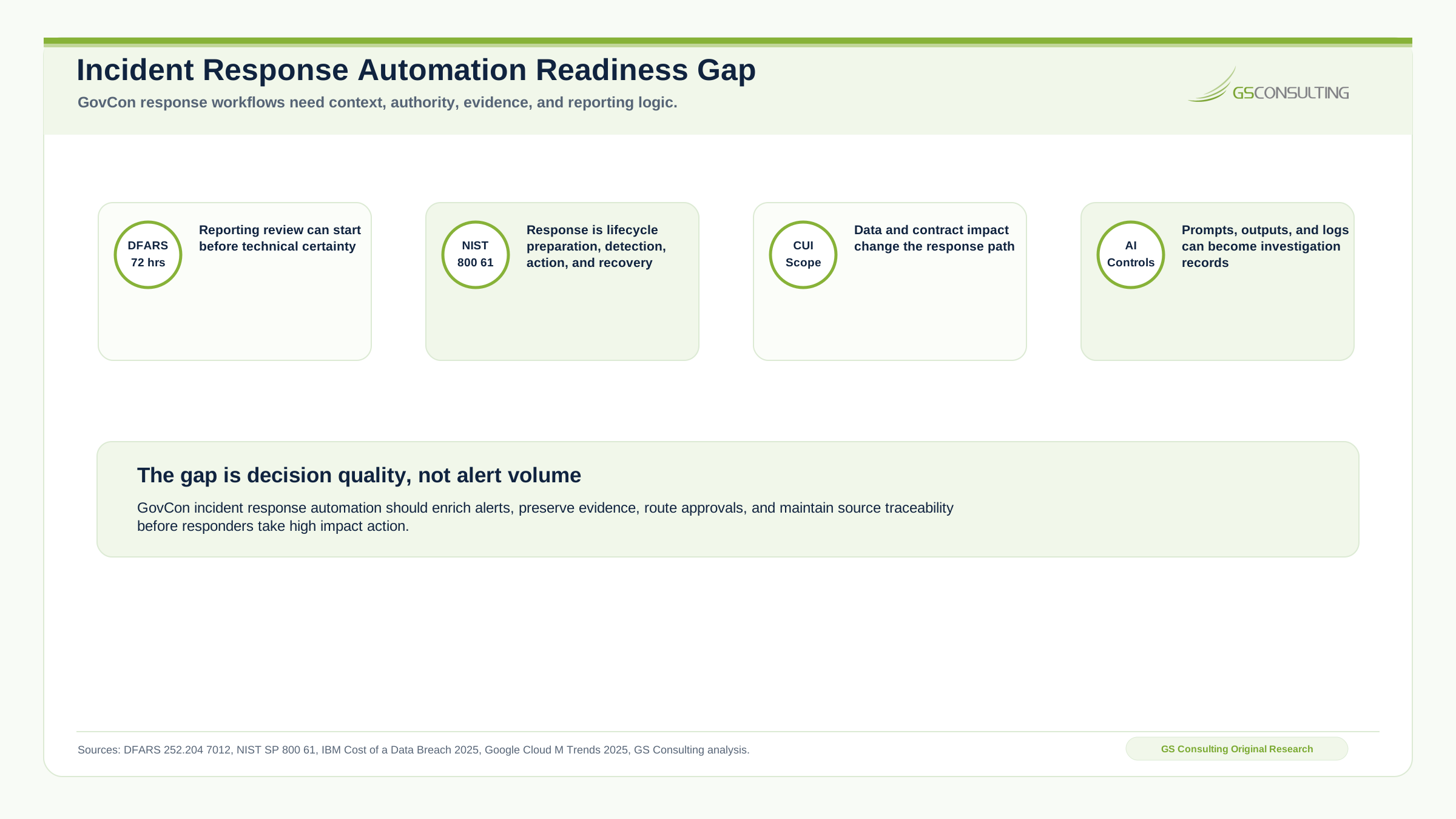
DFARS 252.204 7012 covers safeguarding covered defense information and cyber incident reporting. Acquisition.gov defines rapidly report as within 72 hours of discovery and ties reporting to cyber incidents that affect covered contractor information systems, covered defense information, or operationally critical support.
That means incident response is not just a technical activity. It is a contract activity, a compliance activity, and an operational activity. If your incident response workflow is only SIEM alert creates ticket, you are missing the real problem.
The Bad Assumption: SOAR Already Solves This
Security orchestration tools are useful, but a SOAR platform does not automatically create a good incident response process. A weak workflow automated in a SOAR tool is still weak. It just runs faster.
Many organizations wire alerts into a ticketing system, add a few enrichment steps, create canned response actions, and call it incident response automation. That is not enough.
A useful AI security orchestration workflow needs to answer what happened, what asset is affected, who owns it, what data lives there, whether CUI is involved, whether the system is inside the assessment boundary, whether the event is tied to a contract, what evidence must be preserved, who has approval authority, what action is safe to automate, what action requires human approval, what must be logged, and what must be communicated.
Start With the Incident Response Model
Do not start with AI. Start with the response model.
NIST SP 800 61 Revision 3 was released in April 2025 and helps organizations incorporate cybersecurity incident response recommendations throughout the Cybersecurity Framework functions. NIST frames response as preparation, detection, management, prioritization, containment, eradication, recovery, and improvement.
For GovCon firms, the response lifecycle should include preparation, detection, triage, enrichment, classification, containment, eradication, recovery, reporting review, evidence preservation, lessons learned, and control improvement.
AI can help in several of those areas. But the workflow needs to be designed around the lifecycle, not around whatever alert source is loudest.
Where AI Actually Helps in Incident Response
AI can help with work that is repetitive, context heavy, and time sensitive. The most useful first use cases organize facts before a human decision.
- Alert summarization.
- Log summarization.
- Ticket enrichment.
- Asset owner lookup.
- Prior incident comparison.
- Known indicator grouping.
- Timeline drafting.
- Evidence checklist creation.
- Severity recommendation.
- Runbook matching.
- Containment option drafting.
- Communication draft creation.
- Duplicate alert grouping.
- False positive pattern detection.
- Post incident report drafting.
- Control gap identification.
An analyst should not spend 20 minutes reading raw log lines just to write a basic first summary. A SOC lead should not manually compare every new alert to last month’s incident. A compliance officer should not have to ask three times whether evidence was preserved.
AI can reduce that friction. The action still needs governance.
Where AI Should Not Be Trusted Blindly
AI should not decide that an incident is not reportable. It should not close security alerts without defined rules and human review. It should not wipe machines without approval, disable accounts without a known containment policy, send customer notifications on its own, decide that CUI was not affected without a clear boundary, rewrite incident records without traceability, or summarize evidence in a way that loses source details.
AI is useful when it helps responders move faster. It is dangerous when leaders use it to avoid defining authority.
The Real Problem: Incident Context Is Scattered
A SOC alert rarely contains enough context by itself. An endpoint alert might show suspicious PowerShell activity, but the analyst still needs to know the device, user, program, contract, network segment, data type, business owner, recent change, related alerts, CUI touchpoints, privilege level, scope boundary, and contract performance impact.
That context is usually spread across the SIEM, EDR, identity provider, asset inventory, CMDB, GRC platform, ticketing system, cloud logs, network logs, vulnerability scanner, email security tool, contract records, data classification inventory, endpoint management, and program ownership records.
Humans can pull that context manually. During a real incident, manual collection burns time.
Alert Enrichment and Structured Triage
The first useful AI workflow is not autonomous response. It is structured triage.
- Step 1Collect the alert.
Capture the source event, timestamp, rule, severity, affected asset, user, indicator, and original tool record without rewriting source facts.
- Step 2Enrich the context.
Pull identity, endpoint, cloud, asset owner, vulnerability, recent change, program, contract, data sensitivity, and prior incident context from approved systems.
- Step 3Classify the event.
Recommend severity, likely incident type, affected boundary, potential CUI exposure, possible contract impact, and initial runbook using explainable criteria.
- Step 4Route for review.
Send the triage packet to the right analyst, incident commander, system owner, COMSEC, legal, contracts, compliance, or program owner based on the event type.
- Step 5Preserve the record.
Store the source links, enrichment results, AI summary, reviewer decision, approval trail, and next action in the incident record.
The workflow should make it easier for a human to decide. It should not hide uncertainty behind polished language.
Reporting Obligations Need Human Review
GovCon incident response workflows should distinguish between technical severity and reporting review. A technically contained event can still require contract, customer, legal, or compliance review. A noisy alert can be low severity if the context shows no affected system, no sensitive data, no persistence, and no contract impact.
The AI layer can identify possible reporting triggers. It can draft the review packet. It can gather evidence. It can route the question to counsel, contracts, security, compliance, and program leadership. It should not make the final reportability decision.
That is especially important when a workflow touches DFARS covered defense information, CUI, customer systems, operationally critical support, subcontractor incidents, or contract performance.
Evidence Preservation Is Part of the Workflow
Evidence preservation is not a cleanup task after the incident. It should be part of the workflow from the first triage step.
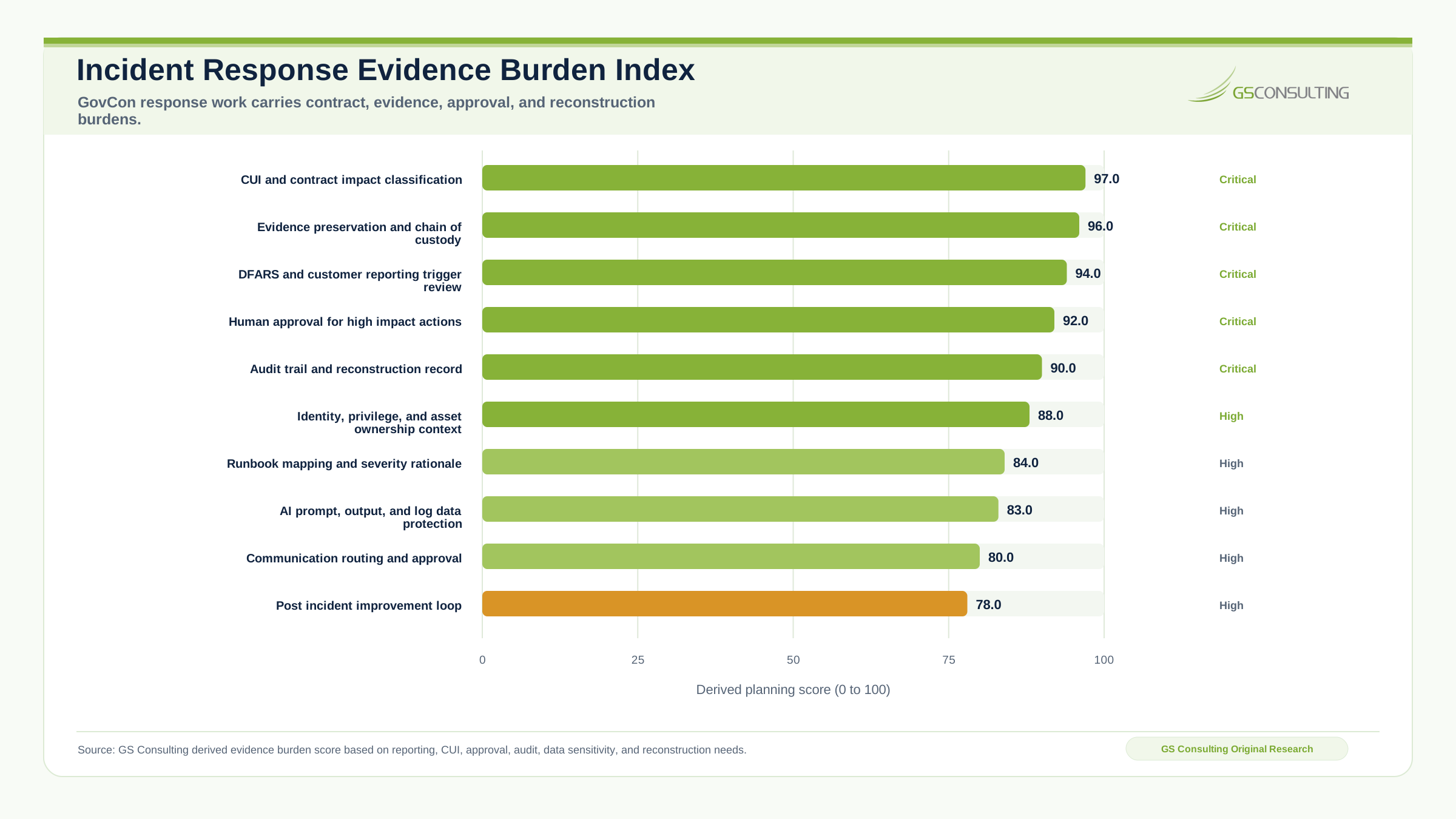
A defensible AI incident response workflow should preserve source alerts, raw logs or references, enrichment sources, who viewed the packet, what AI produced, what human changed, what actions were approved, what containment happened, what was communicated, and what follow up controls were created.
Do not let AI create a summary that becomes the only record. Preserve the source trail.
Logs Can Become Sensitive Data
Security logs can contain user names, file paths, hostnames, network ranges, vulnerability details, customer identifiers, indicators, ticket content, email content, source snippets, and sometimes CUI metadata. AI prompts and outputs can also become investigation records.
That means the AI workflow needs approved processing locations, data retention rules, access control, prompt and output logging, redaction where appropriate, and clear rules for which data types can enter the model.
NIST AI 600 1, the Generative AI Profile, is useful here because it frames generative AI risk across governance, mapping, measurement, and management. It also highlights information security, data privacy, and human AI configuration risks that matter when a model is connected to security operations.
Architecture for AI Security Orchestration
A practical architecture should be built around runbooks, not chat. The goal is controlled response support, not a free form model with broad access to the environment.
- Layer 1Approved event sources.
Define which SIEM, EDR, identity, cloud, email, network, vulnerability, asset, ticket, and contract systems can feed the workflow.
- Layer 2Context retrieval.
Use least privilege queries and connectors to pull only the context the runbook needs for that event type.
- Layer 3AI triage support.
Summarize, group, compare, classify, and draft with source references, confidence notes, and uncertainty visible to the reviewer.
- Layer 4Human approval gates.
Require approval for severity changes, reporting review, containment, account disablement, isolation, customer communication, and risk acceptance.
- Layer 5Evidence and audit record.
Preserve inputs, outputs, decisions, approvals, actions, communication, and lessons learned in a controlled incident record.
Human Approval by Action Type
Not every AI assisted action has the same risk. Reading an alert is different from disabling an account. Drafting a timeline is different from isolating a server. Recommending a runbook is different from notifying a customer.
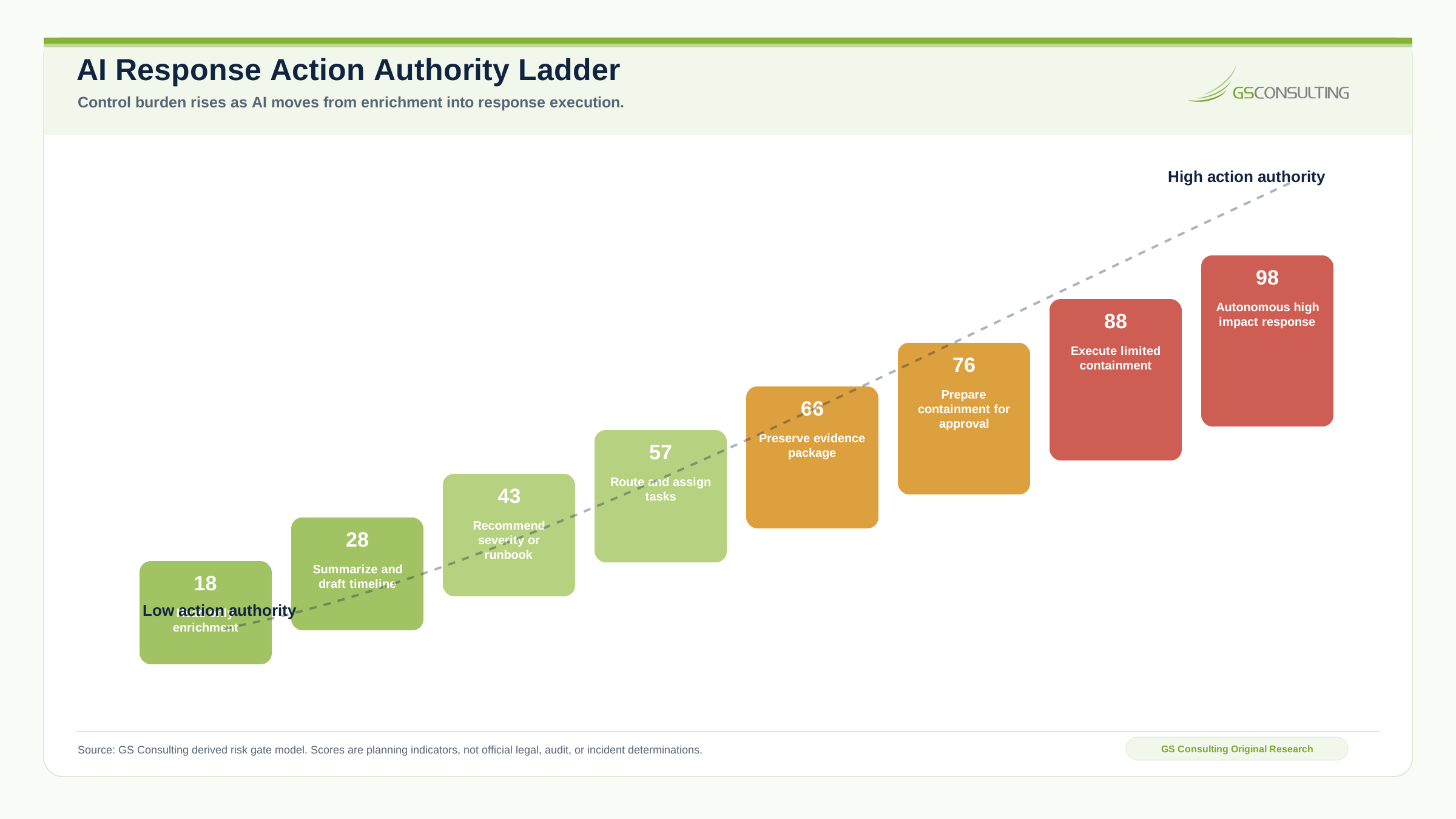
A safe model is to allow AI to enrich, summarize, compare, and draft by default. Require human review when AI recommends severity, routing, runbook, preservation, or response options. Require explicit approval for containment, account actions, evidence packaging, customer communication, reporting review, or anything that changes system state.
Risk Gates Should Be Based on Context
Severity is not just a vendor score from the alert source. Severity depends on asset criticality, user privilege, data sensitivity, CUI scope, contract impact, exploitability, persistence, lateral movement, customer visibility, operational impact, and evidence quality.
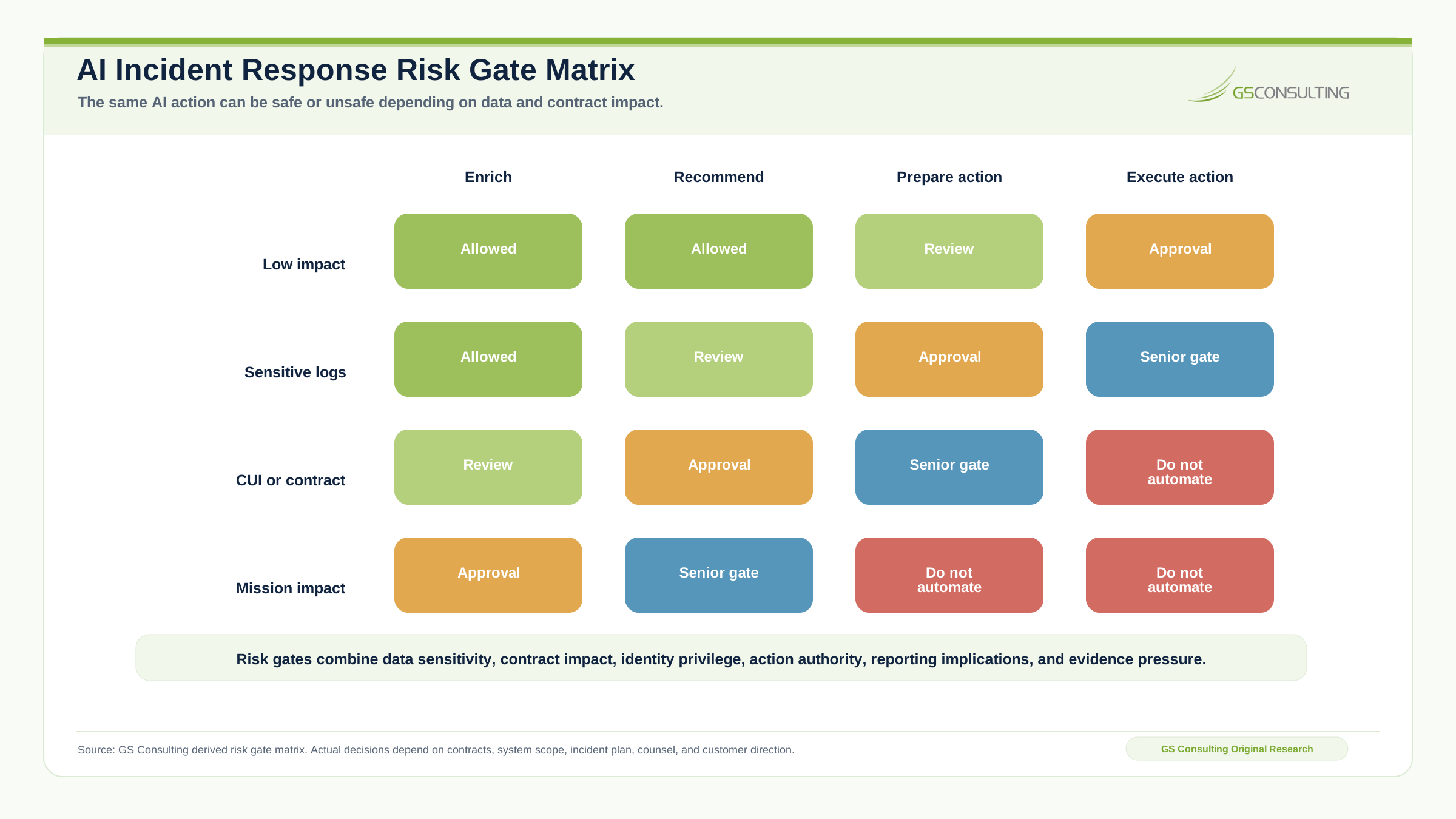
A low risk event on a general corporate laptop may allow AI assisted routing. A similar event on a privileged account touching a CUI enclave should require stronger review, preservation, and approval.
Examples of Useful AI Incident Response Workflows
- Suspicious privileged login. Enrich with identity, MFA status, location, device, recent travel, privileged groups, asset ownership, prior alerts, and recent access changes. Route to the identity owner and SOC lead with a recommended runbook.
- Malware on a CUI system. Pull endpoint details, network segment, CUI scope, last user, EDR history, backup status, related alerts, known indicators, and evidence preservation checklist. Require incident commander approval before containment.
- Phishing click by program staff. Enrich with mailbox data, URL reputation, endpoint telemetry, user role, affected program, credential use after click, similar recipients, and customer communication routing if program impact is possible.
What Metrics Matter
Do not measure automation success by alerts touched. Measure mean time to triage, context completeness, duplicate alert reduction, evidence preservation rate, approval latency, false positive reduction, incident timeline quality, reporting review latency, number of escalations routed correctly, containment actions approved, post incident controls created, and analyst time saved on repeat enrichment.
Also measure failure. Count missing context, wrong owner routing, stale asset data, over broad AI access, prompt output stored in the wrong place, unreviewed recommendations, and unresolved exceptions.
A Practical First Ninety Days
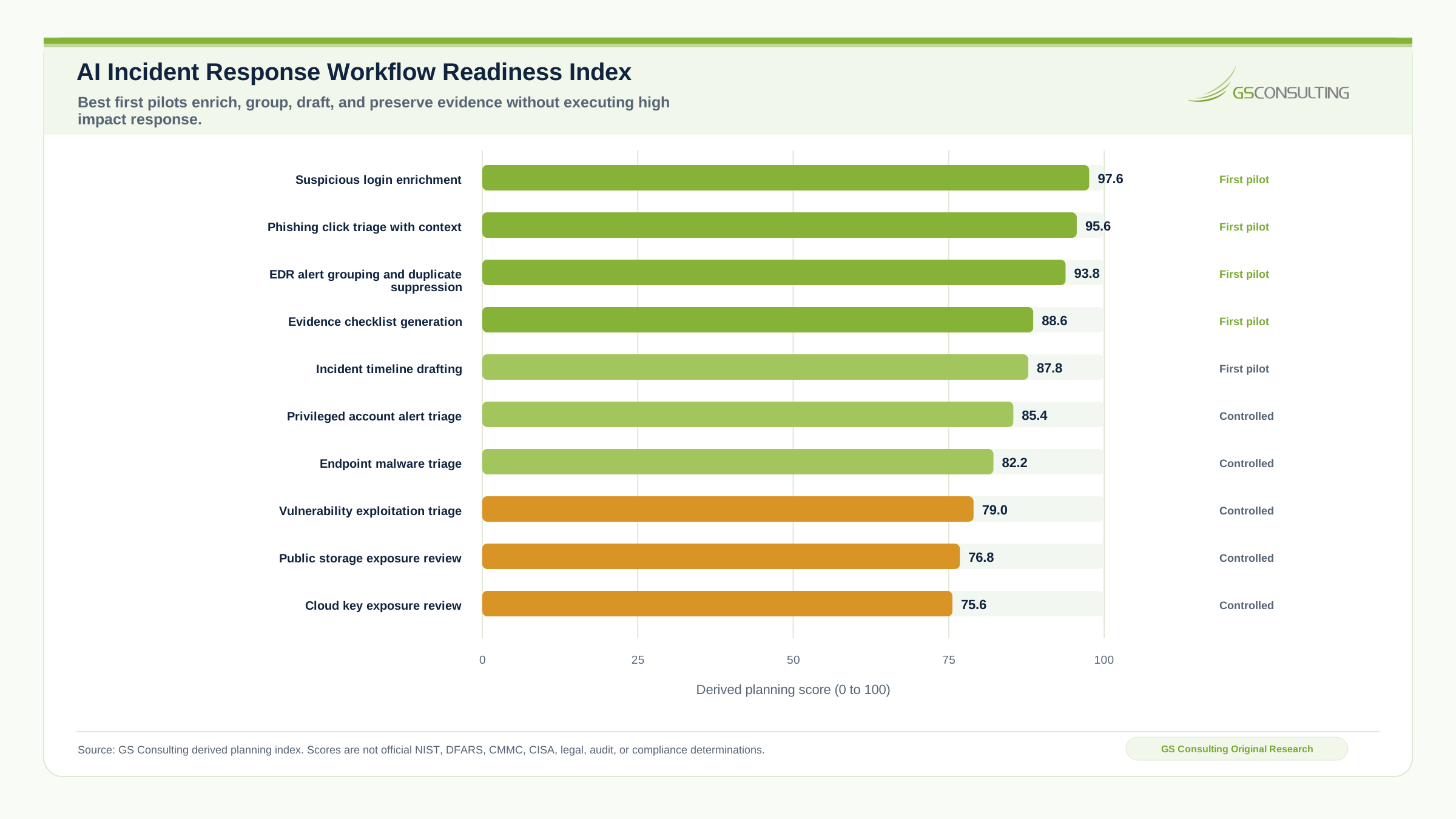
A realistic first phase should start narrow. Suspicious login enrichment or phishing click triage is usually a better pilot than autonomous containment.
- Days 1 to 30Map response decisions.
Identify event sources, triage steps, approval points, evidence requirements, CUI and contract touchpoints, system owners, and reporting review paths.
- Days 31 to 60Build one controlled pilot.
Create approved connectors, enrichment logic, triage templates, runbook mapping, reviewer queues, evidence fields, and source traceability for one event type.
- Days 61 to 90Operationalize and measure.
Test on real alerts, tune routing, add dashboard metrics, review access controls, document the workflow, train responders, and define expansion criteria.
- Next lanesExpand with gates.
Move into privileged account triage, endpoint malware triage, vulnerability exploitation triage, public storage exposure review, and cloud key exposure review only after the first pattern is stable.
What GS Consulting Builds
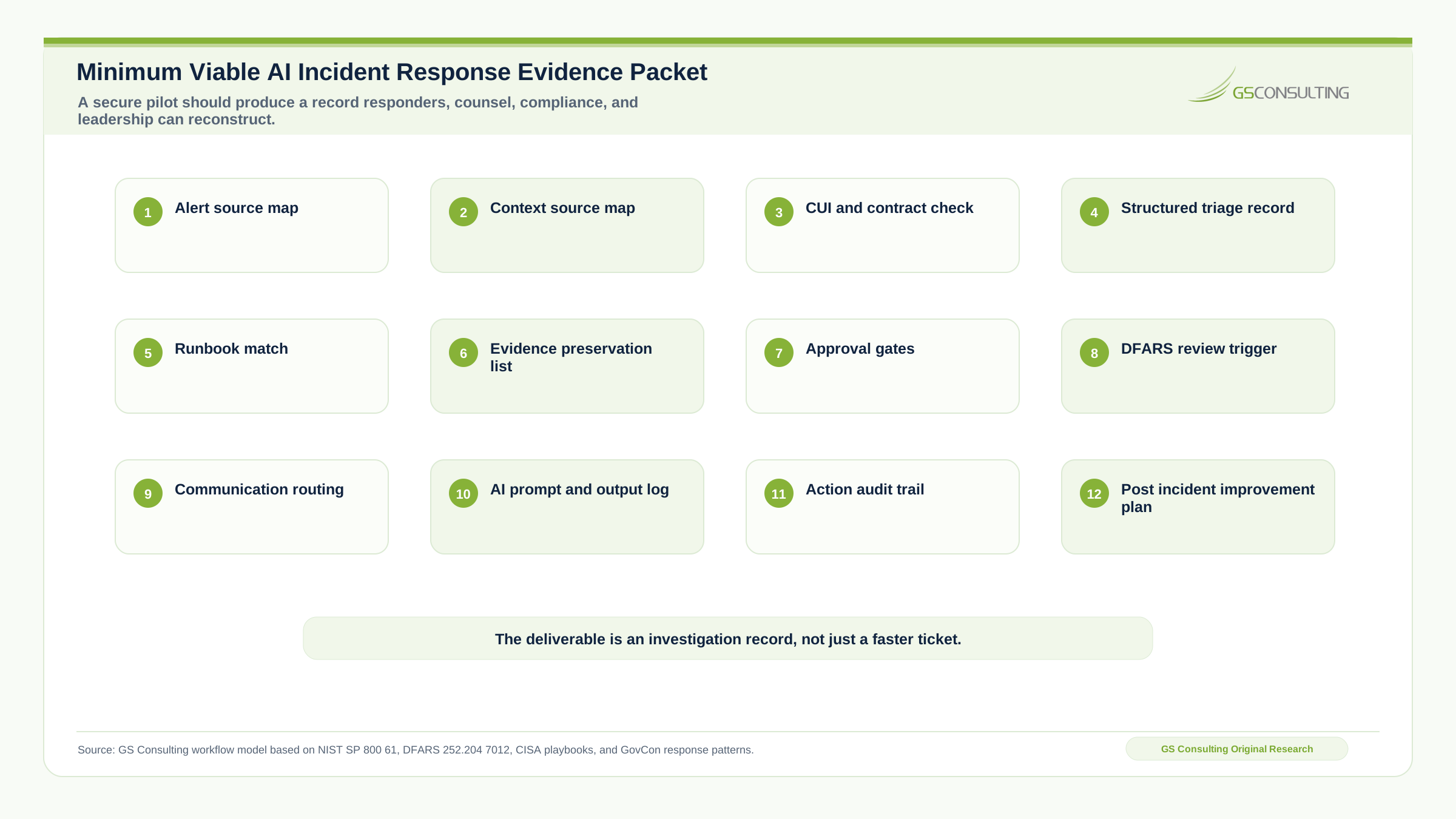
GS Consulting helps GovCon firms design AI incident response workflows that connect security operations, compliance, contracts, legal, and program leadership. A good engagement should produce an event source map, context source map, runbook model, approval gate model, data sensitivity rules, evidence preservation design, reporting review workflow, AI prompt and output control plan, dashboard metrics, pilot implementation, and production readiness plan.
This page is part of our Enterprise AI Process Transformation cluster and supports our main AI workflow automation service. It connects directly to workflow automation security risk assessment, automating NIST 800 171 evidence, automated data redaction AI, secure AI document processing for CUI, AI federal contract management workflows, GovCon supply chain compliance automation, and AI audit trails and activity logging.
The Bottom Line
Automating SOC alerts is not the goal. Better response decisions are the goal.
AI can help GovCon security teams enrich alerts, draft timelines, group related events, preserve evidence, route approvals, and prepare reporting review packets. But the workflow has to protect sensitive logs, preserve source records, define authority, and keep humans accountable for high impact decisions.
Do not automate panic. Engineer the response workflow.
Turn alert noise into controlled response work.
GS Consulting helps GovCon teams build secure AI incident response workflows with enrichment, evidence preservation, approval gates, and audit trails.
Build the Response WorkflowResearch Sources and Caveats
The original research in this article uses GS Consulting derived planning metrics based on incident response lifecycle design, NIST SP 800 61 Revision 3, DFARS cyber incident reporting review, NIST AI risk guidance, CISA playbooks, GovCon evidence preservation patterns, AI security orchestration design, and SOC workflow automation patterns.
The Workflow Readiness Score, Evidence Burden Score, Risk Gate Score, Action Authority Ladder, and Evidence Packet are GS Consulting planning tools. They are not official NIST, DoD, DFARS, CMMC, CISA, IBM, Microsoft, Verizon, Google Cloud, legal, audit, or compliance determinations. Actual readiness depends on contracts, CUI scope, covered systems, logging architecture, SIEM and EDR tooling, identity model, asset inventory, customer reporting language, incident response plan, legal review process, and risk tolerance.
- NIST SP 800 61 Revision 3, Incident Response Recommendations and Considerations for Cybersecurity Risk Management
- DFARS 252.204 7012, Safeguarding Covered Defense Information and Cyber Incident Reporting
- NIST AI 600 1, Artificial Intelligence Risk Management Framework: Generative Artificial Intelligence Profile
- NIST SP 800 171 Revision 3, Protecting Controlled Unclassified Information
- CISA, Federal Government Cybersecurity Incident and Vulnerability Response Playbooks
- IBM, Cost of a Data Breach Report 2025
- Google Cloud, M Trends 2025
- GS Consulting analysis of GovCon incident response workflows, SOC alert triage, AI security orchestration, evidence preservation, approval gates, and audit trail design.
Frequently Asked Questions About AI Incident Response Workflows for GovCon
What are AI driven cybersecurity incident response workflows?
AI driven cybersecurity incident response workflows are controlled workflows that use AI to enrich alerts, summarize logs, group related events, draft timelines, suggest runbooks, preserve evidence checklists, route approvals, and maintain audit trails while humans approve high impact response decisions.
Can AI replace a SOC analyst or incident commander?
No. AI should support triage, context collection, evidence preparation, and decision support. Humans still own reportability, containment, customer communications, evidence decisions, legal review, and risk acceptance.
Which incident response tasks are good first AI automation pilots?
Strong first pilots include suspicious login enrichment, phishing click triage, EDR alert grouping, evidence checklist generation, incident timeline drafting, privileged account triage, endpoint malware triage, and vulnerability exploitation triage.
Why is GovCon incident response different?
GovCon incidents may involve CUI, covered contractor information systems, covered defense information, DFARS reporting review, CMMC scope, subcontractors, customer data, program impact, and evidence preservation obligations.
What should a secure AI incident response pilot produce?
A secure pilot should produce approved data sources, enrichment logic, a structured triage template, runbook mapping, human approval points, an evidence preservation plan, logging, an audit trail, metrics, monitoring, and a rollout plan.
Suggested Future Reading
- AI Workflow Automation
- Enterprise AI Process Transformation
- Workflow Automation Security Risk Assessments
- Automating NIST SP 800 171 Compliance Evidence Collection
- Secure AI Document Processing for CUI
- Automating GovCon Supply Chain Compliance Checks
- AI for Federal Contract Management Workflows
- AI Audit Trails and Activity Logging