Careers | | 22 min read
TS/SCI Polygraph Guide: Prepare the Record, Not a Script

Key Takeaways
The safest preparation is accurate, ordinary, and candid.
Requirements vary by sponsor
A TS/SCI position does not create one universal public polygraph process.
Record reconciliation scores 100
Accurate forms and a dated factual chronology lead the preparation model.
Reject scripts and tactics
Prepare facts, follow official instructions, and ask when a question is unclear.
A TS/SCI polygraph is not a test you beat. It is a controlled personnel security process you enter with accurate records, candid answers, and no tricks.
That distinction matters. Internet advice often treats the event like a contest between an applicant and a machine. The official public sources describe something else: a consent based examination within a broader personnel security process, with defined topic areas, trained examiners, quality controls, and agency authority over the result.
Short Answer: Prepare the Record, Not a Performance
Follow the exact notice from the hiring agency or sponsor. Review the SF 86 and other security forms you submitted. Build a dated chronology for facts that are easy to confuse. Sleep, eat, and take regular medication as usual. Bring only what the notice requests. Ask the examiner to explain anything unclear. Answer candidly.
Do not memorize a script, search for a predicted result, change medication because of a rumor, or try a countermeasure. Those actions do not improve the official record. They can create inconsistency, confusion, or a cooperation concern.
Looking for the role first? Explore GS Consulting careers and the security clearance jobs guide before preparing for a sponsor specific security process.
Does Every TS/SCI Job Require a Polygraph?
No. The Intelligence Community security clearance process says some agencies require one. Current public career pages show why applicants should not generalize from a friend, former employer, or online forum.
- NSA: the public suitability page places a polygraph within security processing after a conditional offer and required forms.
- CIA: applicants must be able to complete a background investigation, polygraph interview, physical examination, and psychological examination.
- FBI special agents: the published special agent process lists a polygraph as part of the background investigation after a conditional appointment offer.
- NRO: the public page says all positions require a counterintelligence polygraph, while an existing clearance or examination may change the step.
- DIA: the public page says potential employees must complete a counterintelligence scope polygraph after a conditional offer and required forms.
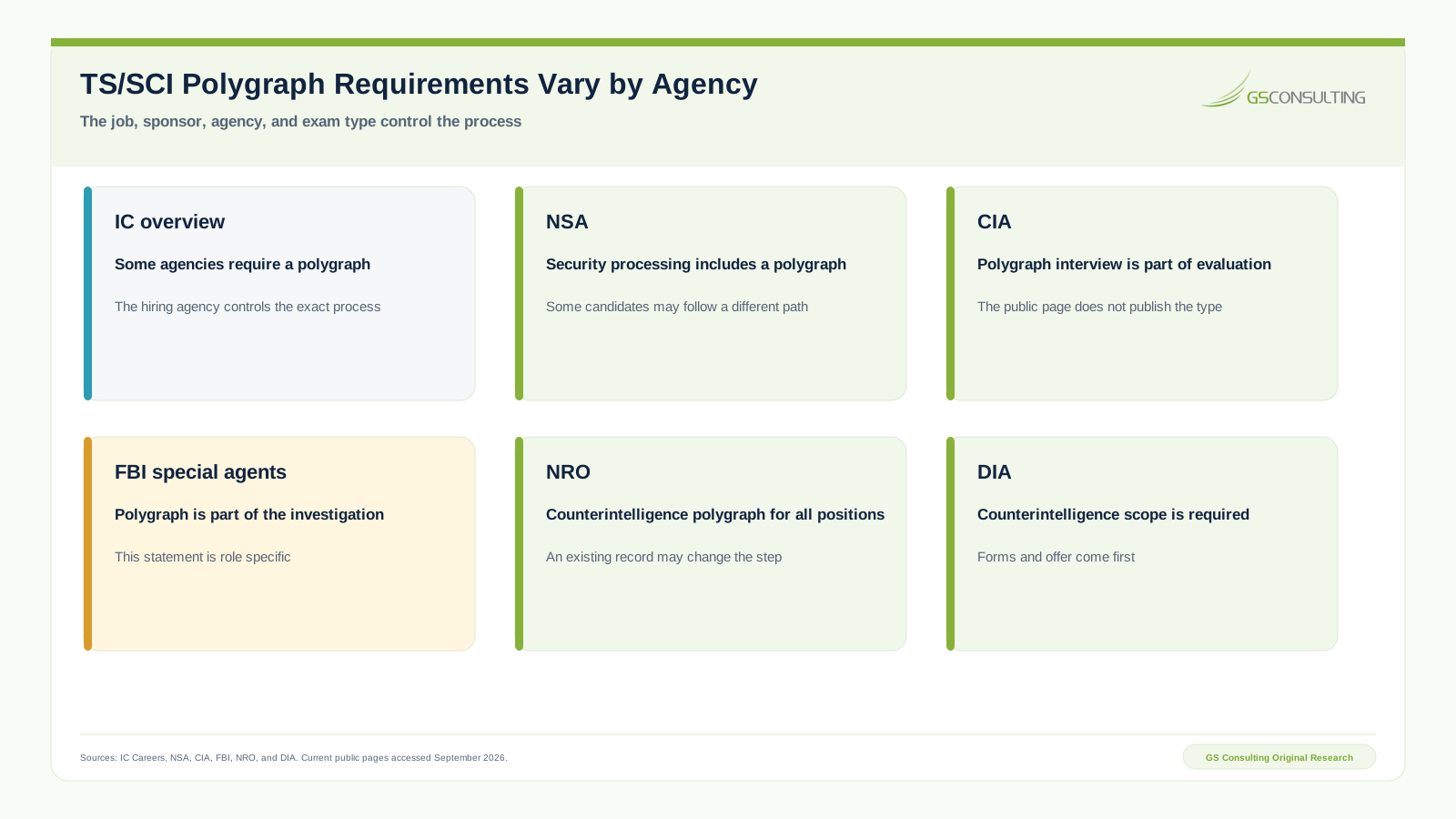
A position can involve access to Sensitive Compartmented Information without producing one uniform examination rule across government. Read the job announcement, conditional offer, security notice, and appointment instructions as one controlled set. If they conflict or leave a gap, ask the named security contact.
Three Personnel Security Polygraph Types
Security Executive Agent Directive 2 defines three types for personnel security use.
- Counterintelligence Scope Polygraph: covers espionage, sabotage, terrorism, unauthorized disclosure or removal of classified information, unauthorized or unreported foreign contacts, and malicious misuse of government information or defense systems.
- Expanded Scope Polygraph: covers every counterintelligence topic plus criminal conduct, drug involvement, and falsification of security questionnaires and forms. Some organizations call this a full scope examination.
- Specific Issue Polygraph: addresses an individual issue of adjudicative concern and may accompany another examination type.
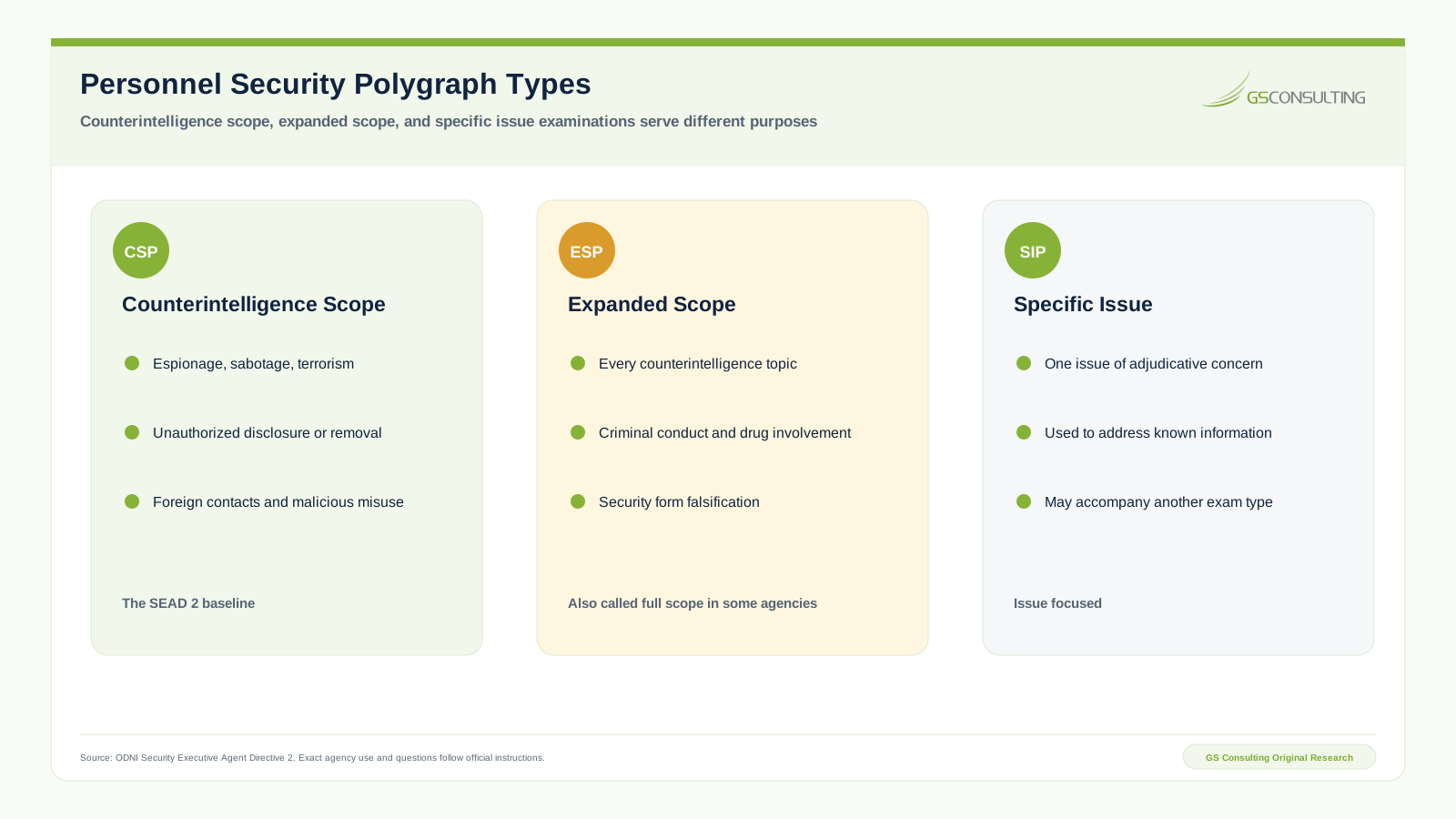
SEAD 2 establishes the counterintelligence scope as the baseline federal personnel security polygraph. It also allows agencies to use an expanded or specific issue examination under the directive. The public taxonomy helps you understand terms. It does not authorize you to decide what an examiner will ask in an individual session.
What Happens During the Session?
SEAD 2 requires written consent before each session. The consent explains the purpose of the examination and the uses of disclosed information. The directive limits nontechnical questions to relevant topic areas and requires trained examiners, program records, quality assurance, and protection of privacy and civil liberties.
The NSA applicant information card offers a useful agency example. It says the examiner reviews questions before testing, the equipment uses noninvasive sensors, and the applicant can ask questions. It also says nervousness is expected and accounted for. NSA reports an average of two to four hours, but it warns that every experience differs.
Treat that time range as an NSA planning reference, not a federal promise. Your notice controls when to arrive, where to report, what identification or records to bring, and how much time to reserve.
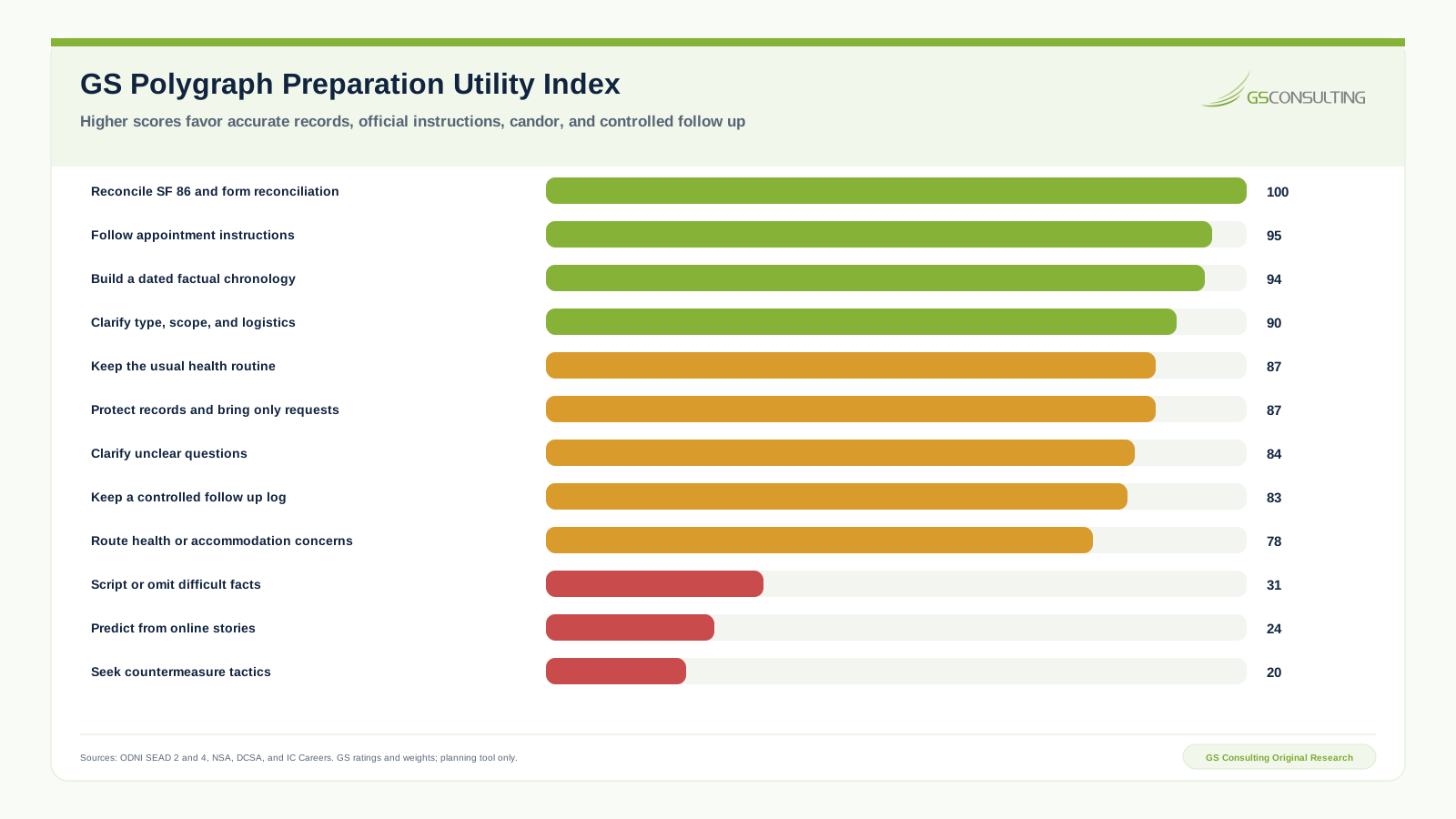
Original GS Consulting Research: Polygraph Preparation Utility Index
GS Consulting built a planning model to answer a narrow question: which candidate controlled actions most improve accuracy, process discipline, privacy, and timely cooperation before a personnel security polygraph?
Reconcile the SF 86 and security forms scored 100. Follow the exact appointment and agency instructions scored 95. Build a dated factual chronology scored 94. Clarify the exam type, scope, and logistics through the authorized contact scored 90.
At the bottom, rehearsing a polished script or omitting difficult facts scored 31. Predicting the outcome from online stories scored 24. Seeking countermeasure tactics scored 20.
How the Index Was Built
The unit of analysis is one preparation action. Each action receives a rating from one to five across five factors: official alignment, record consistency, candidate control, privacy discipline, and timing leverage.
The base model weights official alignment at 25 percent, record consistency at 25 percent, candidate control at 20 percent, privacy discipline at 15 percent, and timing leverage at 15 percent. The score equals 20 times the sum of each factor rating multiplied by its decimal weight.
The alternate case moves five percentage points from official alignment to candidate control. Every action changes by two points or fewer, so the practical order is stable under that sensitivity test. Public observations, GS ratings, formulas, source links, limitations, and exact figure data are separated in the research workbook.
Caveat: the index is a GS Consulting planning tool. It is not an official legal, employment, clearance, security, ODNI, agency, polygraph, or adjudicative determination. It does not estimate a pass rate, failure rate, physiological result, or clearance outcome.
A Five Step TS/SCI Polygraph Preparation Path
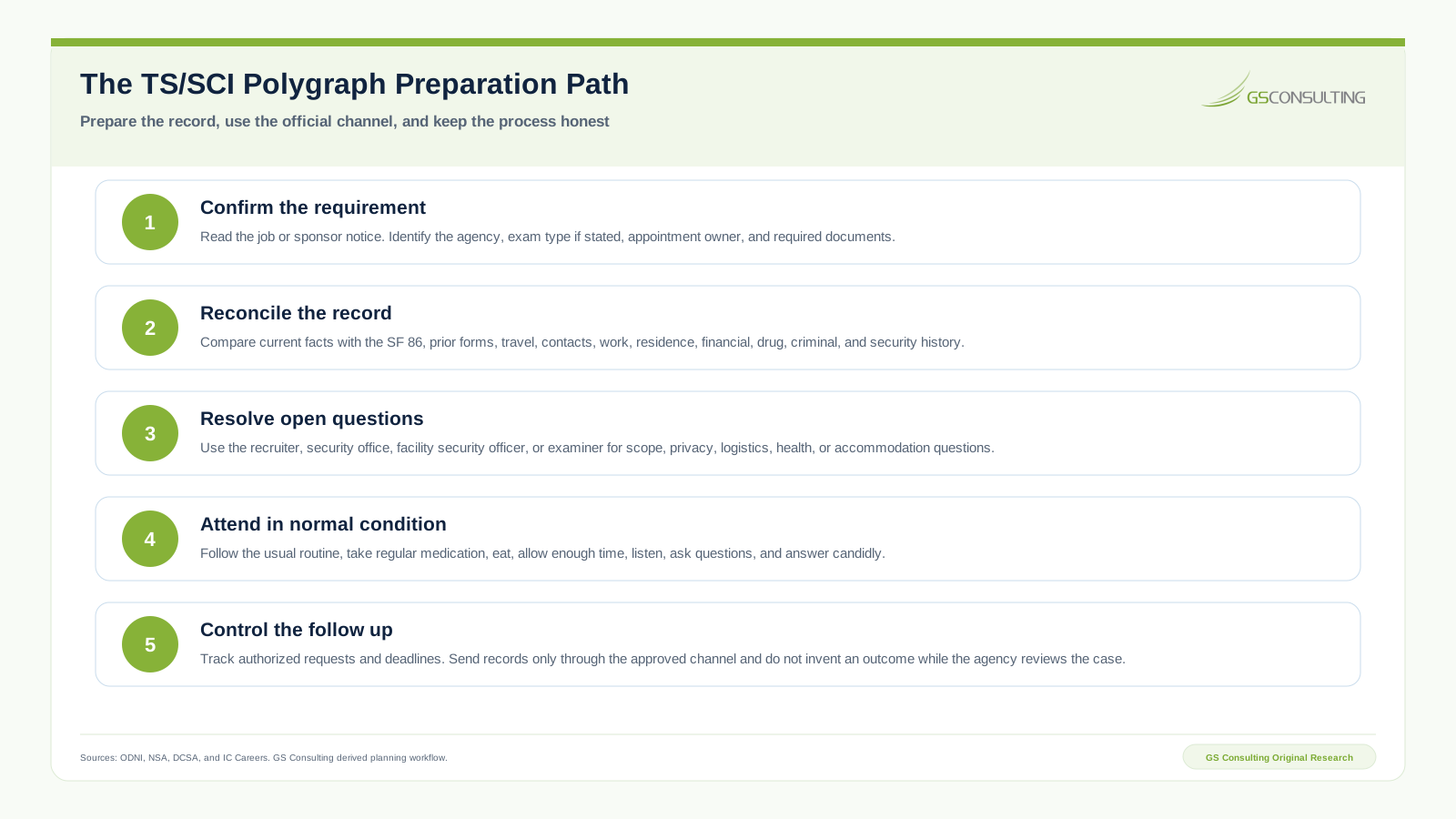
1. Confirm the requirement
Identify the hiring agency, sponsor, appointment owner, location, date, exam type if stated, required identification, requested records, and contact method. Do not substitute instructions from another agency.
2. Reconcile the record
Review the SF 86 and any other security forms available through the approved process. Check dates, names, residences, employment, travel, foreign contacts, drug history, criminal history, financial history, prior security events, and prior answers. The goal is accuracy, not a cleaner story.
3. Build a dated factual chronology
Separate verified facts from estimates. Note the source for each date or amount. Record what you disclosed before, what changed, what was resolved, and what remains open. If the form needs correction, use the authorized correction path.
4. Resolve open questions
Use the recruiter, security office, facility security officer, or examiner for process questions. Ask about scope, logistics, privacy, health, accommodations, records, and unclear terms. Do not send sensitive personal facts to people who do not need them.
5. Attend in normal condition and control follow up
Follow the usual routine. Eat, sleep, take regular medication, allow enough time, listen carefully, and ask when a question is unclear. After the appointment, track only authorized requests, due dates, approved submission channels, and receipts.
What Topics Can Be Covered?
The public topic scope depends on the examination type. A counterintelligence scope can address espionage, sabotage, terrorism, unauthorized disclosure or removal, foreign contacts, and malicious misuse. An expanded scope adds criminal conduct, drug involvement, and falsification of forms. A specific issue examination focuses on an identified adjudicative concern.
Do not turn that public list into a rehearsal script. The examiner reviews the actual questions before testing. Listen to the wording, ask for clarification, and answer the question asked. If you are uncertain about a date, say what you know and what remains an estimate.
Candor and consistency matter beyond the session. SEAD 4 treats deliberate false or misleading information and refusal without reasonable cause to cooperate with required security processing as relevant. Read the security clearance adjudicative guidelines guide for the broader whole person framework.
Medication, Health, and Accommodations
NSA tells applicants to follow their normal routine and take regular medication. Do not stop or alter medication to follow anonymous advice. If you have a health concern, consult a physician. If you need an accommodation or have a process concern, contact the authorized agency representative early enough for the agency to respond.
The public NSA card describes the sensors as noninvasive. That statement does not replace medical advice and does not decide whether an agency can accommodate an individual circumstance. Keep the question in the correct channel: medical guidance goes to a qualified clinician, while appointment and accommodation procedure goes to the agency contact.
Six Preparation Failures to Avoid
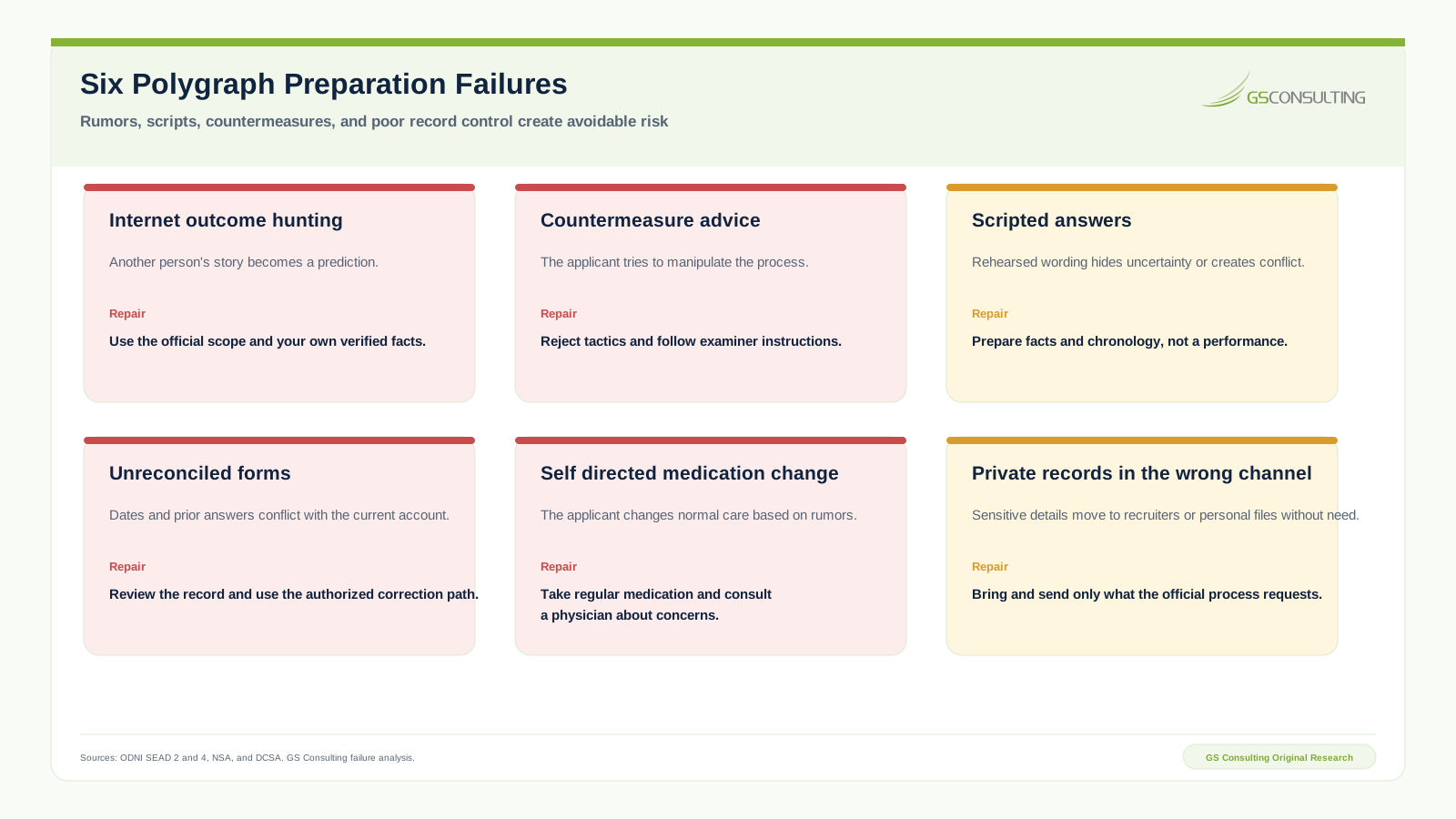
Internet outcome hunting turns another person's story into a prediction. Their agency, scope, facts, examiner, and case posture are not yours. Use official sources and your own record.
Countermeasure advice invites purposeful manipulation. SEAD 2 says refusal, noncooperation, or confirmed use of countermeasures can trigger additional review and a potential adverse determination. Reject the tactic.
Scripted answers can hide uncertainty or create conflict with a prior form. Prepare facts and chronology, not lines to recite.
Unreconciled forms leave dates, events, or prior answers in conflict. Review the record and use the official correction path.
Self directed medication changes replace normal care with a rumor. Follow regular care, consult a physician, and route process concerns to the agency.
Private records in the wrong channel expose sensitive facts without helping the case. Bring and send only what the official process requests.
Build One Controlled Preparation Record
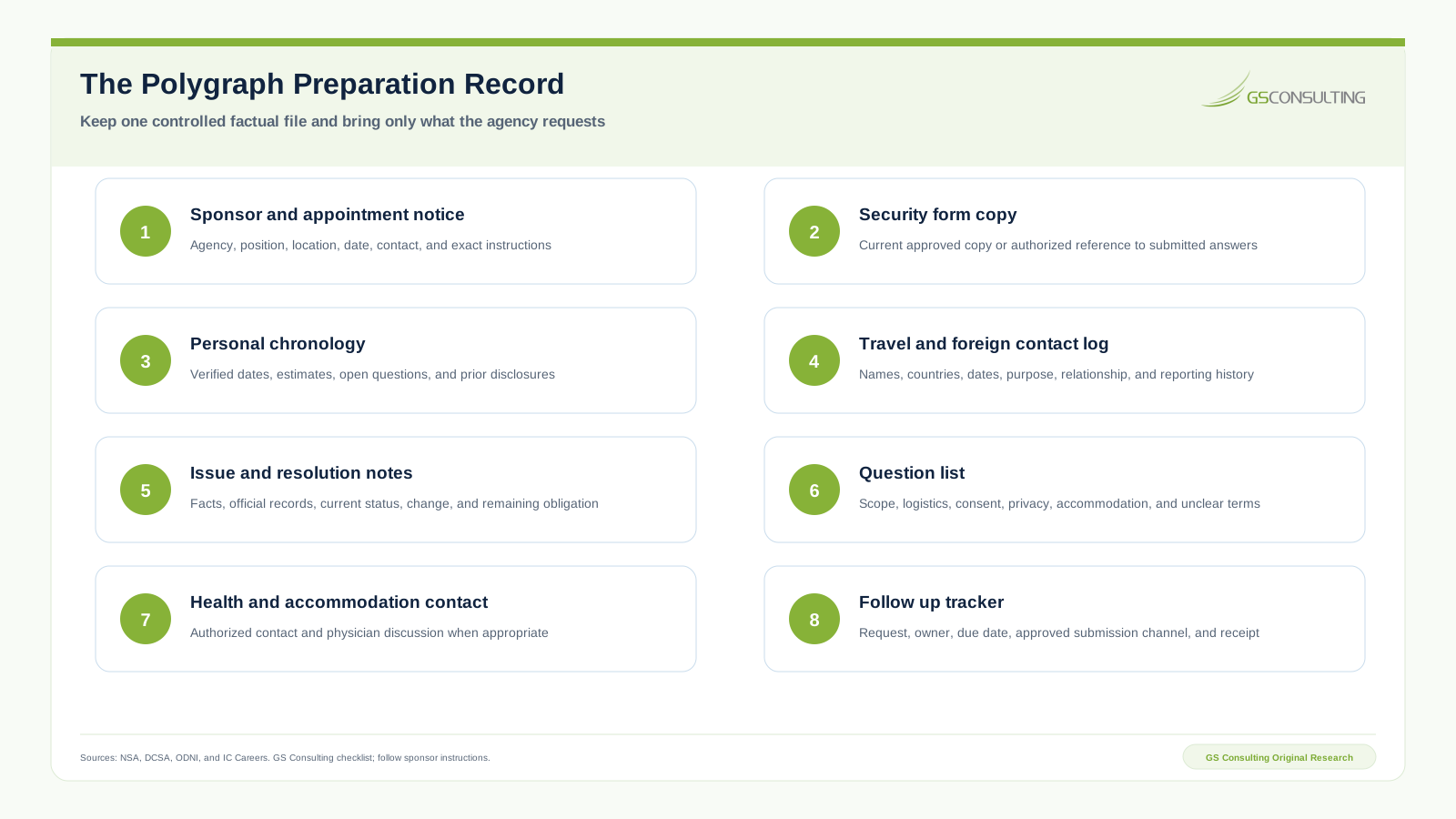
Keep the sponsor notice, an authorized copy or reference to the security form, a personal chronology, a travel and foreign contact log, issue and resolution notes, a question list, the proper health or accommodation contact, and a follow up tracker.
This is a working accuracy aid, not a package to hand over without being asked. Protect it. Avoid placing sensitive personal data in a casual cloud note, recruiter message, or personal email chain. The DCSA form guidance directs applicants to the security officer, HR representative, or facility security officer for tailored help.
Follow Up, Results, and Reciprocity
After the session, do not invent a result from the examiner's manner, the length of the appointment, or an online story. Track official requests and deadlines. Respond through the stated channel. Preserve receipts for anything submitted.
A prior examination may matter. SEAD 2 directs reciprocal acceptance of a qualifying Counterintelligence Scope Polygraph or Expanded Scope Polygraph when it is consistent with the receiving agency's type and age requirement. That is not automatic portability for every case. The receiving agency decides whether the prior examination meets the current requirement.
Keep the security event separate from the job interview. Use the TS/SCI interview preparation guide for role evidence and the TS/SCI resume guide for accurate status language. A job interview, background interview, and polygraph serve different purposes.
Sources, Method, and Limits
This guide uses primary public sources: ODNI SEAD 2, ODNI SEAD 4, the Intelligence Community security clearance process, NSA applicant and suitability guidance, CIA hiring guidance, the FBI special agent process, NRO security guidance, DIA security guidance, and DCSA form guidance. The full source register records access dates, findings, uses, and limitations.
- ODNI Security Executive Agent Directive 2
- ODNI Security Executive Agent Directive 4
- Intelligence Community Security Clearance Process
- NSA Your Polygraph Examination
- NSA Suitability Process
- CIA How We Hire
- FBI Special Agent Application and Evaluation Process
- NRO Security Clearance Process
- DIA Security Clearance Process
- DCSA Help Filling Out Forms
Public sources do not provide a comparable applicant dataset for predicting individual outcomes. GS Consulting therefore did not invent a pass rate, failure rate, physiological threshold, or probability. Agency instructions and authorized decisions always control.
Frequently Asked Questions About the TS/SCI Polygraph
Does every TS/SCI position require a polygraph?
No. The Intelligence Community says some agencies require a polygraph, and public agency pages use different requirement language. The position, sponsor, agency, exam type, and current instructions control the process.
What is the difference between a counterintelligence and full scope polygraph?
SEAD 2 defines a Counterintelligence Scope Polygraph around specified national security topics. An Expanded Scope Polygraph includes those topics plus criminal conduct, drug involvement, and falsification of security forms. Some organizations call the expanded exam a full scope polygraph.
How long does a TS/SCI polygraph take?
There is no universal public duration. NSA says its examinations average two to four hours and that every experience differs. Follow the appointment notice, allow enough time, and ask the sponsor about logistics.
Can nervousness by itself cause a person to fail a polygraph?
NSA applicant guidance says nervousness is expected and accounted for. A public guide cannot predict any result, and only the authorized agency can interpret the examination and make personnel security decisions.
Should I stop taking medication before a polygraph?
Do not change regular medication because of an internet rumor. NSA advises applicants to take regular medication. Consult a physician about a health concern and use the authorized agency contact for process or accommodation questions.
Can a prior polygraph satisfy a new agency requirement?
Sometimes. SEAD 2 directs reciprocal acceptance of a prior qualifying examination when it matches the receiving agency type and age requirement. The receiving agency decides whether the prior record satisfies the current need.
Accuracy Is the Preparation
The reliable plan is deliberately ordinary: read the notice, reconcile the forms, build the chronology, protect private records, keep normal care, ask questions, and answer candidly. There is no safe shortcut around an accurate record.
Prepare what you control. Leave the examination and adjudicative decision to the authorized agency.
Bring verified experience to mission work.
Explore GS Consulting openings and prepare accurate public evidence for the role, interview, and authorized security process.
Explore Careers