Careers | | 25 min read
TS/SCI Interview Preparation: Questions and Evidence

Key Takeaways
Prepare evidence, not a performance.
Questions should map to the job
OPM structured interviews use job related competencies, predetermined questions, and common rating standards.
Owned action scores 100
A clear personal decision and action ranks first because every strong answer needs accountable ownership.
Public proof is enough
Explain context, judgment, action, evidence, and result without offering protected detail.
A TS/SCI interview is not a test of how much sensitive detail you know. It is a test of whether you can show job judgment with evidence and protect the boundary while you do it.
Cleared candidates often overprepare the wrong thing. They memorize a career story, review a long list of tools, and plan a confident clearance answer. Then the interviewer asks for one decision under pressure, one technical failure, or one example of security judgment. The answer dissolves into “we.”
Prepare evidence, not a performance. Build a small set of public examples that show what you personally decided, did, checked, and learned. Map each example to the target role. Verify the clearance and logistics facts separately. Practice the point where the public answer stops.
This guide covers TS/SCI interview preparation for an employment interview. It does not coach answers for a background investigation or polygraph. Those are separate official processes that require complete, truthful responses under the instructions provided. For the wider career path, use the GS Consulting Careers hub, the security clearance jobs guide, and the security clearance adjudicative guidelines guide. Then read the companion TS/SCI resume guide.
Walk in with six facts you can prove.
Choose examples for technical judgment, mission outcome, and security. Add failure, collaboration, and learning. Then practice the shortest honest version.
Explore GS CareersTS/SCI Interview Preparation: The Short Answer
Read the announcement as an interview scorecard. List the duties, specialized experience, technical methods, and mission outcomes. Add the security conditions and the practical demands for worksite, shift, travel, and collaboration. Prepare one public example for each important competency.
Structure each answer around an owned decision. Establish the approved context and constraint, then explain the choice and personal action. Close with evidence, result, and lesson. Answer the question first. Use enough detail to prove the work, but stop before classified or controlled information. Customer restricted and other nonpublic information also stay out. If the interviewer presses for protected detail, state the boundary and offer the public version.
Verify clearance status before the meeting. Do not use the job interview to guess about eligibility or access. A polygraph, investigation dates, and reciprocity also belong in authorized channels. Give the exact fact you can support and direct formal verification to the authorized security channel.
Know Which Interview You Are In
A cleared hiring process can contain several conversations that sound similar but serve different decisions.
- Recruiter screen: checks broad role fit, worksite, schedule, compensation range, timing, citizenship where lawfully required, and clearance conditions.
- Hiring interview: evaluates technical competence, behavior, judgment, communication, mission fit, and team contribution.
- Security status verification: confirms eligibility and access facts through authorized systems and security staff.
- Background investigator interview: supports an official personnel vetting process and requires complete, truthful responses to the investigator's questions.
- Polygraph process: occurs only for positions and agencies that require it and follows its own official instructions.
Do not treat the hiring interview as a background investigation. A hiring manager does not need your complete personal history. Do not treat the background investigator as a hiring manager. The investigator needs accurate official answers, not a polished mission story. When the purpose is unclear, ask who is conducting the meeting and what decision it supports.
Public Guidance Favors Scorable Evidence
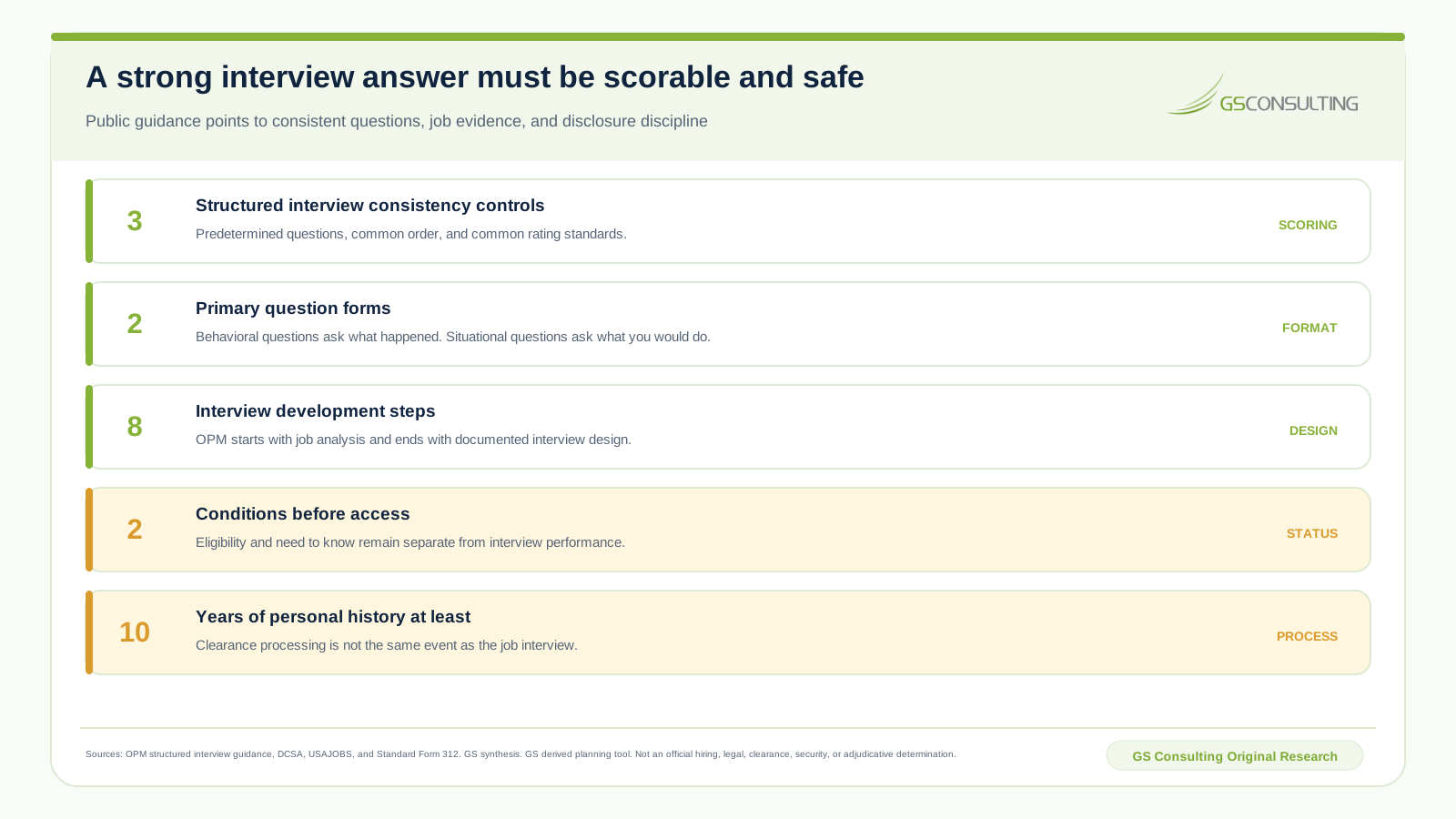
OPM defines a structured interview as a systematic assessment of job related competencies through past behavior or hypothetical situations. Candidates receive predetermined questions in the same order, and responses are evaluated against the same rating scale and acceptable answer standards.
The OPM Structured Interview Guide starts with job analysis and identifies the competencies to assess. It then develops behavioral or situational questions and creates rating scales and probes. The process ends with testing and documentation. The candidate implication is direct: a good answer gives observable evidence that maps to a real competency.
DCSA separates clearance eligibility from need to know and authorized access. USAJOBS notes that national security processing can require at least 10 years of personal history. Neither fact turns a job interview into clearance adjudication. Prepare for the decision actually in front of you.
Original Research: The GS Cleared Interview Answer Evidence Index
Confidence is not the top signal. Owned action is.
GS Consulting scored 12 answer components across five factors. Job relevance and observable evidence each carry 25 percent. Individual ownership carries 20 percent. Judgment depth and disclosure discipline each carry 15 percent. Each factor receives an ordinal rating from one to five. The weighted result is multiplied by 20 and reported on a zero to 100 scale.
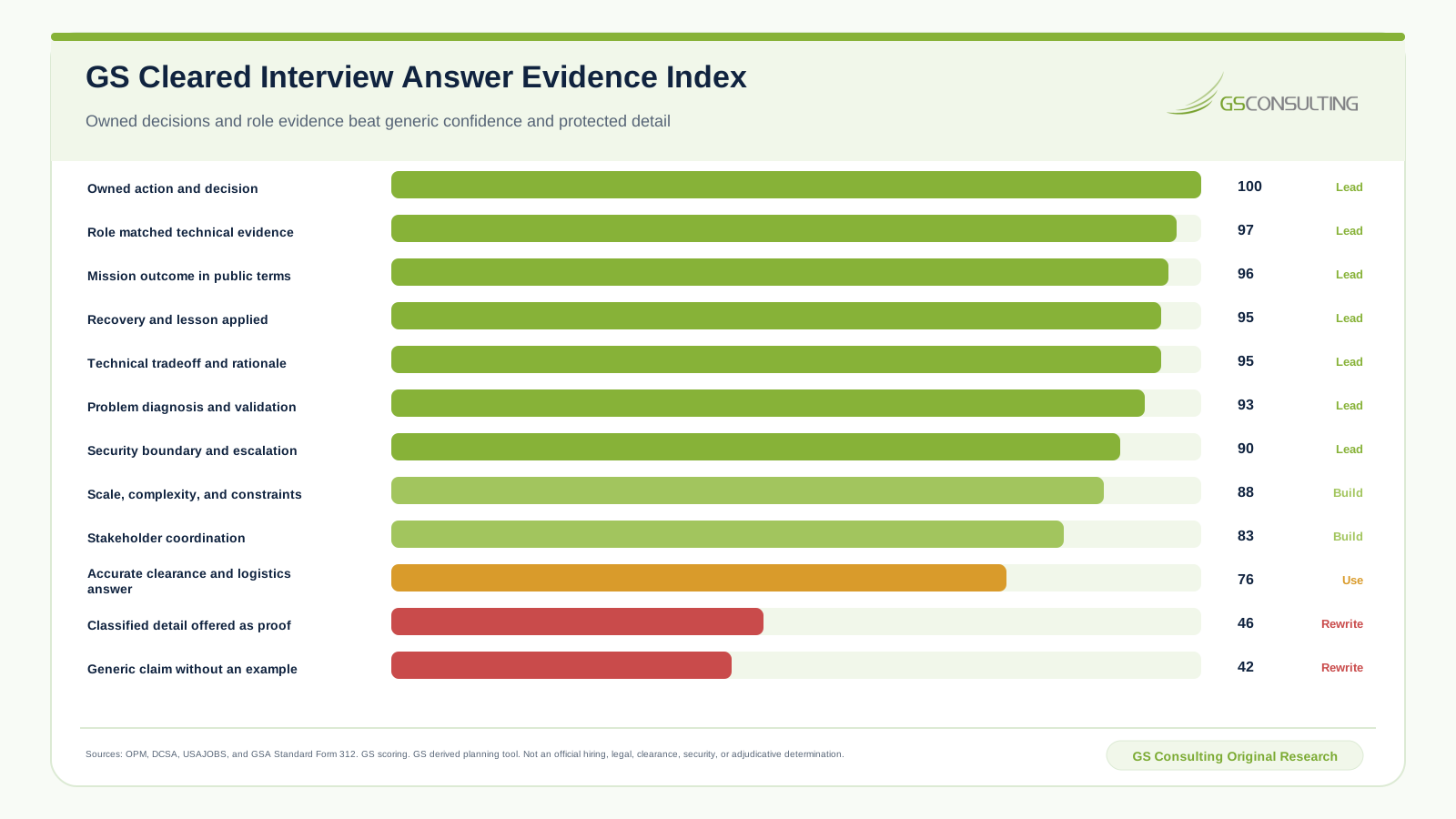
Owned action and decision scores 100. Role matched technical evidence scores 97. Mission outcome scores 96. Recovery and lesson, plus technical tradeoff and rationale, each score 95. These components rank high because they let an interviewer observe the candidate's contribution and judge whether the thinking transfers to the target role.
Classified detail offered as proof scores 46. A generic claim without an example scores 42. Protected detail does not make a legitimate answer stronger. It weakens disclosure discipline and distracts from the candidate's judgment. A generic claim is safer but still hard to score.
A sensitivity test shifts five percentage points from job relevance to individual ownership. Every result changes by two points or less except no material ordering decision changes. The model is stable enough to use as a preparation sequence, not as a prediction of any employer's score.
Use a Six Part Answer Architecture
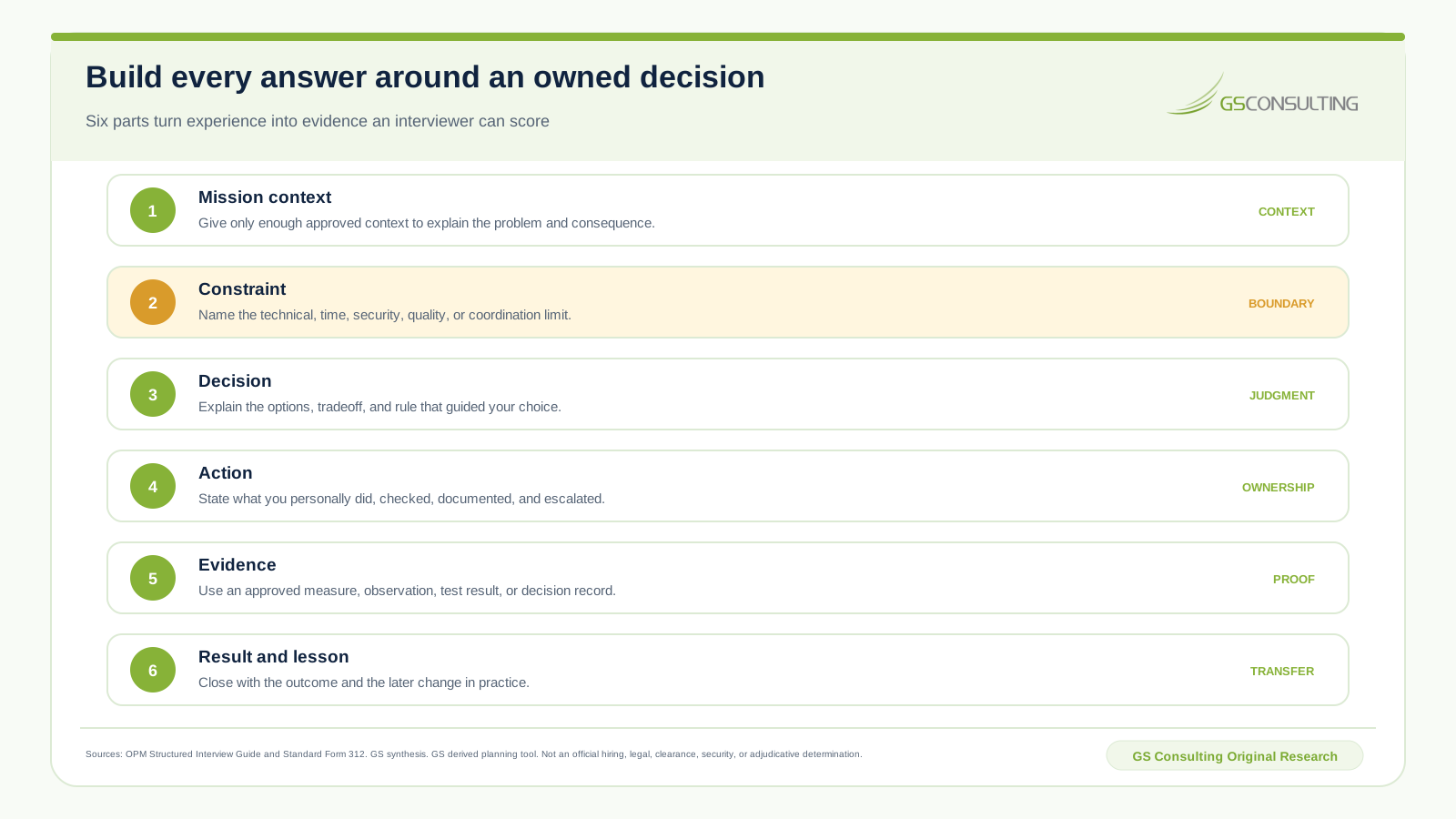
- Mission context. Give the smallest approved description of the user, system class, problem, and consequence.
- Constraint. Name the time, technical, security, quality, or coordination limit.
- Decision. Explain the options, tradeoff, and rule that guided the choice.
- Action. State what you personally did, checked, documented, changed, or escalated.
- Evidence. Give an approved observation, test, measure, review result, or decision record.
- Result and lesson. Close with the operating result and the later change in practice.
This is not a script. A direct question may need only three parts. “How did you validate the fix?” should begin with the validation method, not two minutes of context. Use the architecture to make sure the evidence exists, then answer in the order the question demands.
Practice a 45 second version and a two minute version of each example. The short version proves you can prioritize. The longer version gives room for method, tradeoff, and a follow up probe. Both should stop at the same disclosure boundary.
Prepare by Question Family
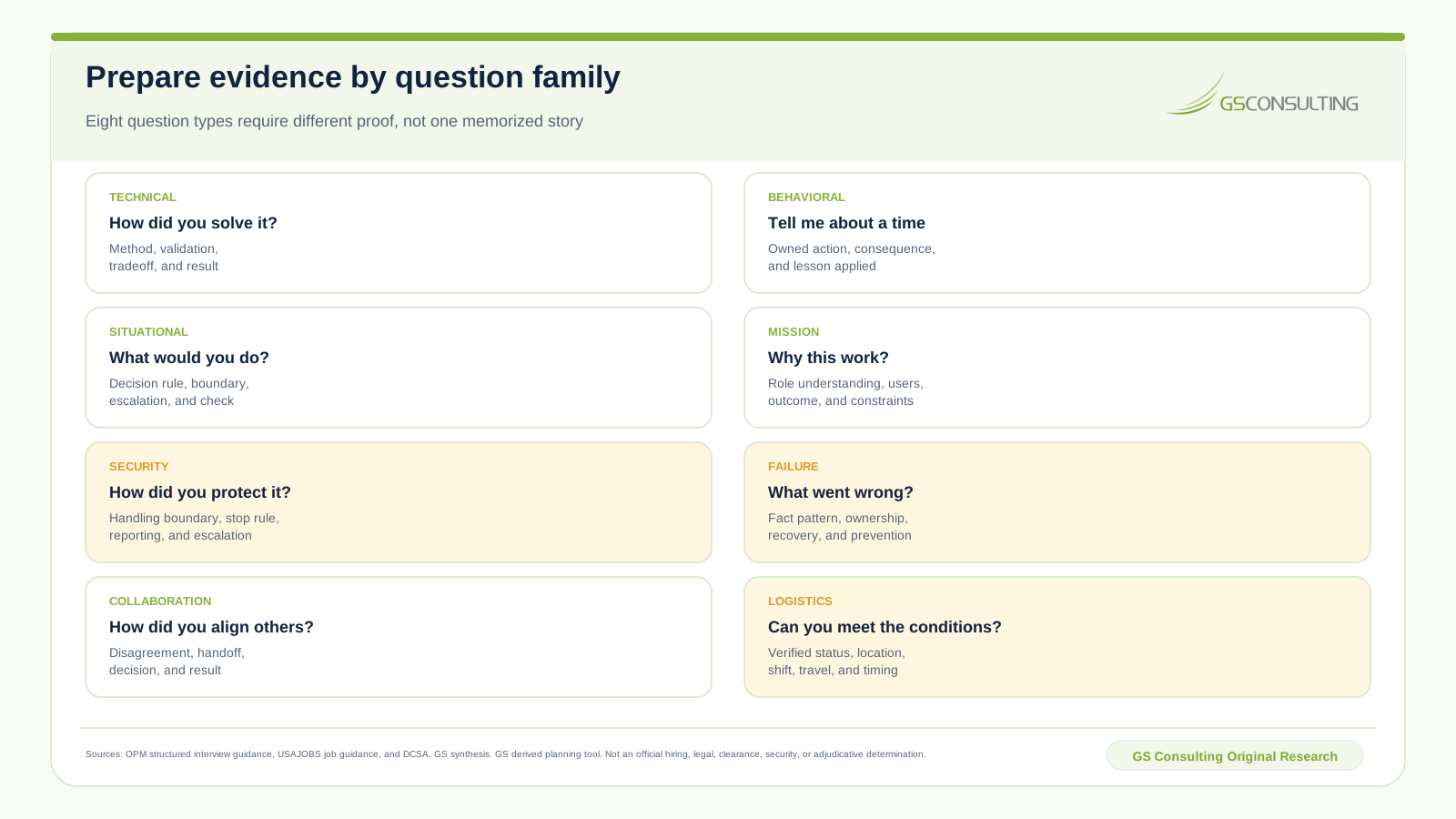
Build a question matrix from the announcement. Put the question family in the first column, the target competency in the second, your public example in the third, and the proof in the fourth. Add a boundary note for any example drawn from protected work.
Do not prepare 30 complete answers. Prepare six strong evidence stories and learn how each can answer more than one question without forcing the fit. One technical recovery may prove diagnosis, communication, security escalation, and learning. The question decides which part leads.
Technical and Mission Questions
Technical questions test how you think, not whether you can recite a product list. Expect prompts such as:
- Walk me through a difficult fault you diagnosed with incomplete information.
- How did you validate that a fix solved the real problem?
- Describe a technical tradeoff where speed, security, reliability, and cost pulled in different directions.
- How do you work when access to data or systems is limited?
- Tell me about a control, automation, query, model, or process you improved.
- How did your work change a mission outcome, user decision, or operating risk?
Answer with a method the interviewer can inspect. Name the signal and hypothesis. Then explain the test, result, and next check. If a tool mattered, explain why it was chosen and how you knew its output was trustworthy. Tool familiarity without judgment is a recital.
For mission questions, show that you understand the consequence of the work. Do not claim proximity to a prestigious customer as proof. Explain whether the work improved recovery, evidence, error rates, or analysis. Stronger access control and more reliable delivery can also change a user's decision or operation.
Behavioral, Situational, Failure, and Collaboration Questions
Behavioral questions ask for past evidence. Situational questions ask how you would respond to a hypothetical event. Prepare both.
- Tell me about a time you disagreed with a technical or mission decision.
- Describe a miss that reached a user or affected an operation.
- Tell me about a time you had to escalate a security or quality concern.
- What would you do if a leader asked you to bypass a control to meet a deadline?
- How would you respond if the available evidence did not support the requested conclusion?
- Describe a handoff that failed and what you changed.
For a past example, give the facts and ownership. Then state the result and later change. For a hypothetical example, give the decision rule and immediate containment. Name the authorized escalation, evidence you would preserve, and condition for resuming work. Do not invent policy. State where you would confirm the applicable rule.
A failure answer is not a confession ritual. It is evidence of detection, ownership, recovery, and learning. Avoid the polished weakness that was secretly a strength. Choose a real, bounded miss you can discuss publicly and show the control or practice that changed afterward.
Security and Disclosure Questions
Security questions often test judgment at the boundary:
- Tell me about a time you stopped work because the handling condition was unclear.
- How do you discuss protected work with people who do not have the same access?
- What do you do when a tool, data source, or environment is not approved?
- Describe an escalation where schedule and security were in tension.
A strong answer shows the boundary and stop rule. It identifies the authorized contact, evidence preserved, and restart condition. It does not quote classified policy, identify a restricted system, or narrate a real incident beyond the approved public facts.
Standard Form 312 requires authorized confirmation before uncertain information is treated as unclassified. Use that principle in the interview. Say, “I can explain the decision and result in public terms, but I cannot discuss the program detail.” Then continue with the public evidence. A professional interviewer should be able to assess judgment without asking for protected information.
Answer Clearance Status and Logistics Precisely
Prepare one verified status statement before the interview. Separate Top Secret eligibility from current or prior SCI access. Distinguish interim status and processing. Do not guess about a break in access, reciprocity, investigation currency, or whether a new customer will accept the record. Authorized security staff make those checks.
Answer practical conditions just as directly. State whether you can work at the listed site and schedule. Address the shift, travel level, or rotation when relevant. State a realistic start window. If relocation or notice affects timing, explain it. Do the same for reserve obligations or another material condition before the employer builds a plan around a false date.
Do not overshare personal history with a recruiter or hiring panel. A later official process may require detailed information through approved systems. The job interview needs the facts relevant to the job decision.
Questions the Candidate Should Ask
The questions you ask reveal operating judgment. Choose a few that clarify the real work:
- What mission outcome should this role improve in the first six months?
- Which decisions does this person own, recommend, or escalate?
- What technical environment and constraints can you describe publicly?
- How does the team validate quality, security, and delivery results?
- Where do handoffs fail today?
- What worksite, shift, travel, and response conditions are fixed?
- Which competency separates adequate performance from excellent performance?
- Who handles formal clearance status and access questions?
Do not ask the hiring manager to reveal classified scope. Ask for the public mission, the decision rights, the operating conditions, and the success standard. That is enough to judge whether the role fits.
Fix the Six Interview Failure Modes
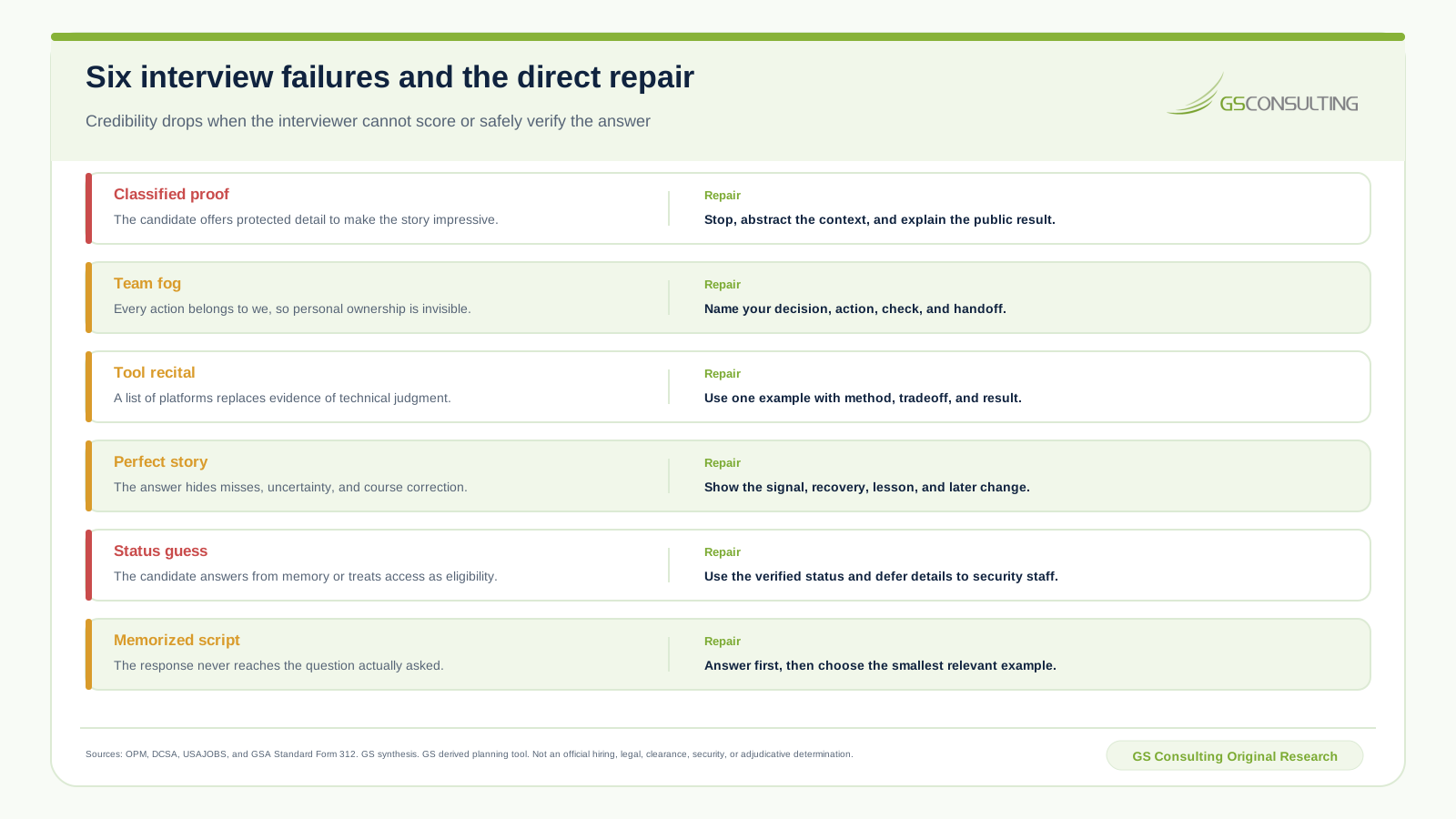
Classified proof and status guessing are the red failures because they create trust and security risk. Team fog, tool recital, perfect stories, and memorized scripts are amber failures because they hide the candidate's actual judgment.
Listen for the noun in the question and the verb in your answer. If the interviewer asks for a decision, lead with the choice. If the question asks for validation, lead with the check. If every sentence begins with “we,” repair the answer by naming your own action and the handoff to others.
Build the Interview Evidence Packet
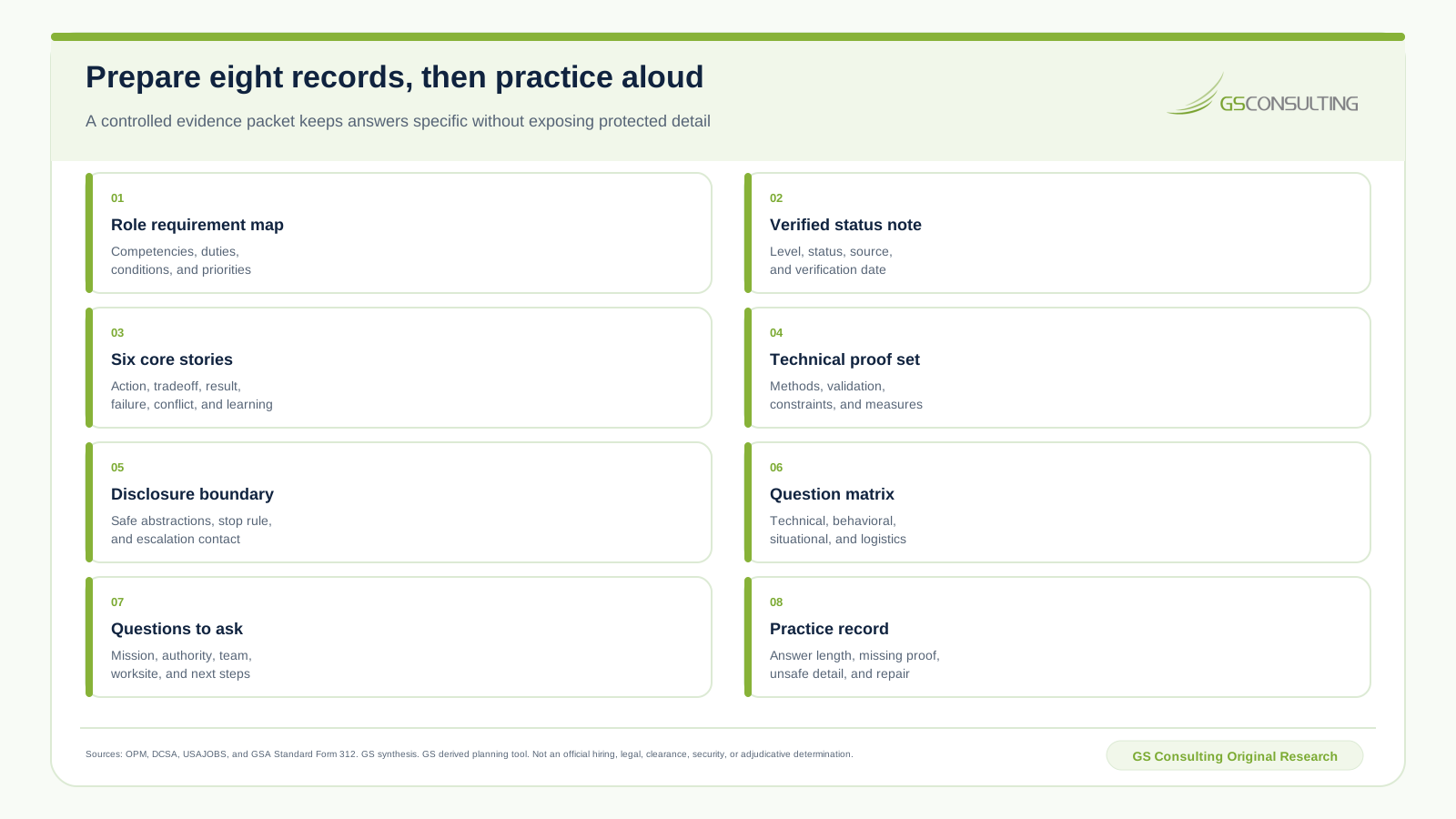
The packet starts with the role requirement map, verified status note, six core stories, and technical proof set. Add the disclosure boundary, question matrix, candidate questions, and practice record. It is a preparation aid. Bring only what the employer requests and permits.
Each story should fit on one page of notes and use public facts only. Add the question families it can support, the proof you can state, the detail you must omit, and the one sentence result. The practice record should flag answers that run long, lack ownership, miss the question, or drift toward sensitive detail.
Never copy classified or controlled source material into the packet. Proprietary, customer restricted, and other sensitive source material also stays out. The interview should rely on your approved public account, not artifacts from a protected environment.
A Five Session Practice Plan
- Map the role. Turn the announcement into eight to 12 competencies and conditions. Mark the four that likely decide the interview.
- Build the stories. Draft six examples with context, constraint, decision, action, evidence, result, and lesson.
- Run the boundary review. Remove protected identifiers and confirm any uncertain fact through the authorized process.
- Practice with probes. Ask a partner to interrupt with “What did you do?”, “How did you know?”, “What went wrong?”, and “What changed?”
- Practice the stop. State the disclosure boundary without apology, then continue with the public method and result.
Record one practice session if permitted in your own environment. Listen for filler, long setup, and team fog. Flag tool lists and conclusions without evidence. Repair one behavior at a time. Do not polish the answer into a speech.
The Bottom Line
The interview is not won by the candidate who sounds most cleared. It is won by the candidate who gives the panel enough safe evidence to trust the judgment, technical depth, ownership, and mission fit.
The operating standard is decisive: answer the question, own the action, prove the result, and protect the boundary.
Bring evidence the panel can score.
GS Consulting looks for clear judgment, public proof, responsible escalation, and people who understand why the mission work matters.
Explore Current OpportunitiesResearch Sources and Caveats
The GS Cleared Interview Answer Evidence Index and question matrix are derived planning tools. The same applies to the answer architecture, failure analysis, and evidence packet. These are not official employment or legal determinations. They do not represent a clearance or security determination. They do not speak for OPM or DCSA. They also do not speak for USAJOBS, GSA, an agency, or an adjudicative authority.
- OPM Structured Interviews
- OPM Structured Interview Guide
- DCSA Trust Decision FAQs
- GSA Standard Form 312
- USAJOBS Background Checks and Security Clearances
- USAJOBS Job Announcement Overview
- OPM Assessment and Selection
Frequently Asked Questions
What questions are asked in a TS/SCI job interview?
Expect role specific technical questions and behavioral questions about past work. Prepare for situational, mission, and security boundary questions. Failure and collaboration prompts also matter. The panel may ask about verified clearance status and practical conditions such as worksite, shift, travel, and start timing.
How should I answer a cleared interview question without sharing classified information?
Use approved public context and name the constraint. Explain your decision and personal action, then provide an approved measure or observation. Close with the result and lesson. Stop before protected detail and say that you can discuss only the public version.
Is a TS/SCI job interview the same as a security clearance interview?
No. A job interview evaluates role fit. A recruiter or security screen may verify status and logistics. A background investigator interview supports personnel vetting and requires complete, truthful answers under the official process. A polygraph, when required, is another separate event.
Should I memorize interview answers?
No. Prepare evidence and a clear answer structure, then practice aloud. Memorized scripts often miss the question and sound brittle. Know the facts, the disclosure boundary, and the few examples that best prove each competency.
How should I discuss a failure in a cleared interview?
Describe the public fact pattern and your ownership. Explain the recovery action and verification. Close with the lesson and later change in practice. Do not hide the miss and do not expose protected details to make it dramatic.
What should I bring to a TS/SCI interview?
Follow the employer's instructions. Prepare a role map, verified status note, and public evidence stories. Bring questions for the interviewer and any requested documents. Keep sensitive personal information and nonpublic material in approved channels only.