Cleared Careers | | 26 min read
TS/SCI Clearance Explained: Process, Timeline, and Jobs

Key Takeaways
A clearance is not a trophy. It is a position based trust and access decision.
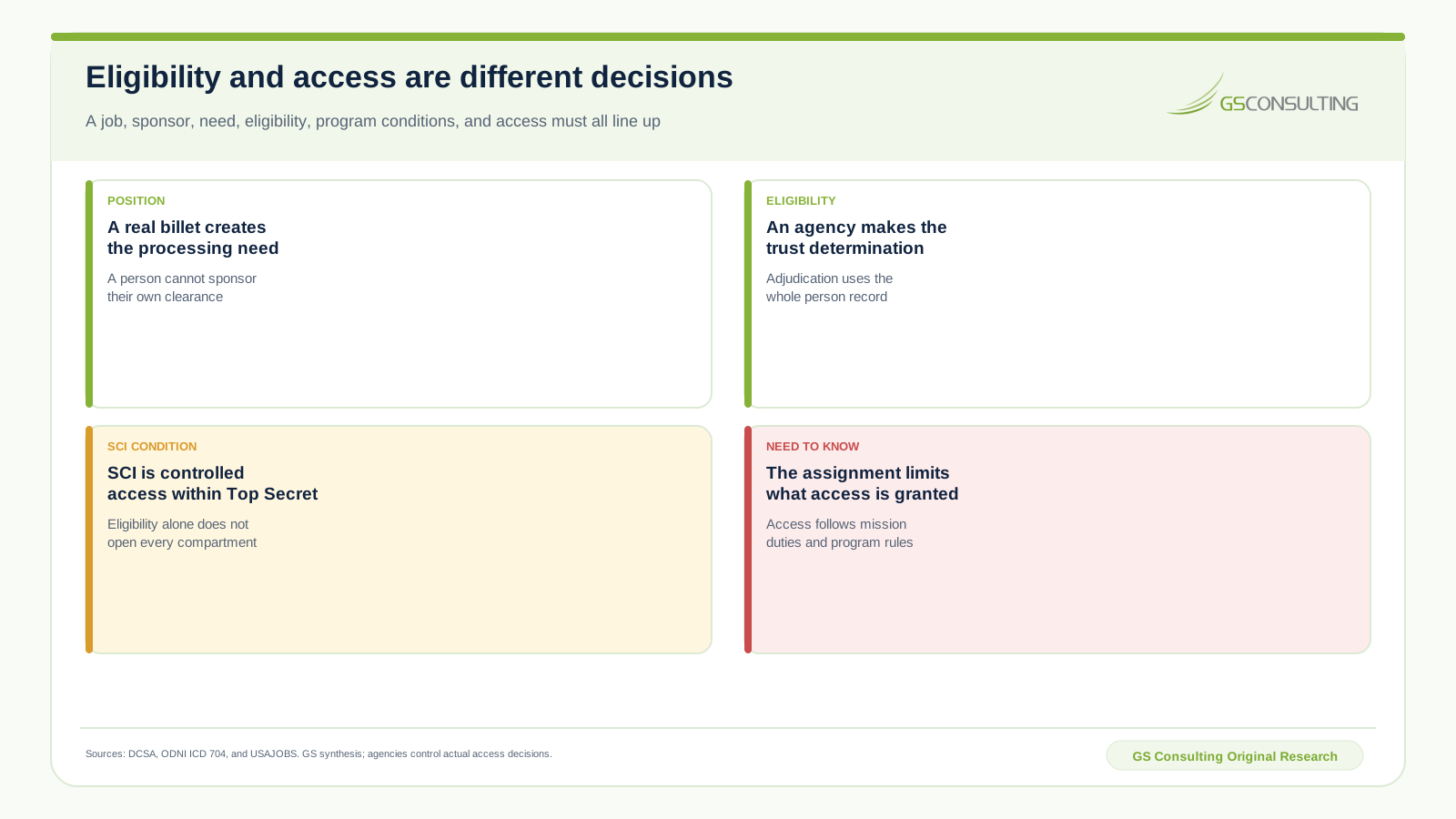
Eligibility is not access
Top Secret eligibility, SCI approval, need to know, briefing, and actual access are related but separate.
205 days is not a promise
The latest federal end to end average covers the fastest 90 percent of initial Top Secret cases.
Prepare one accurate record
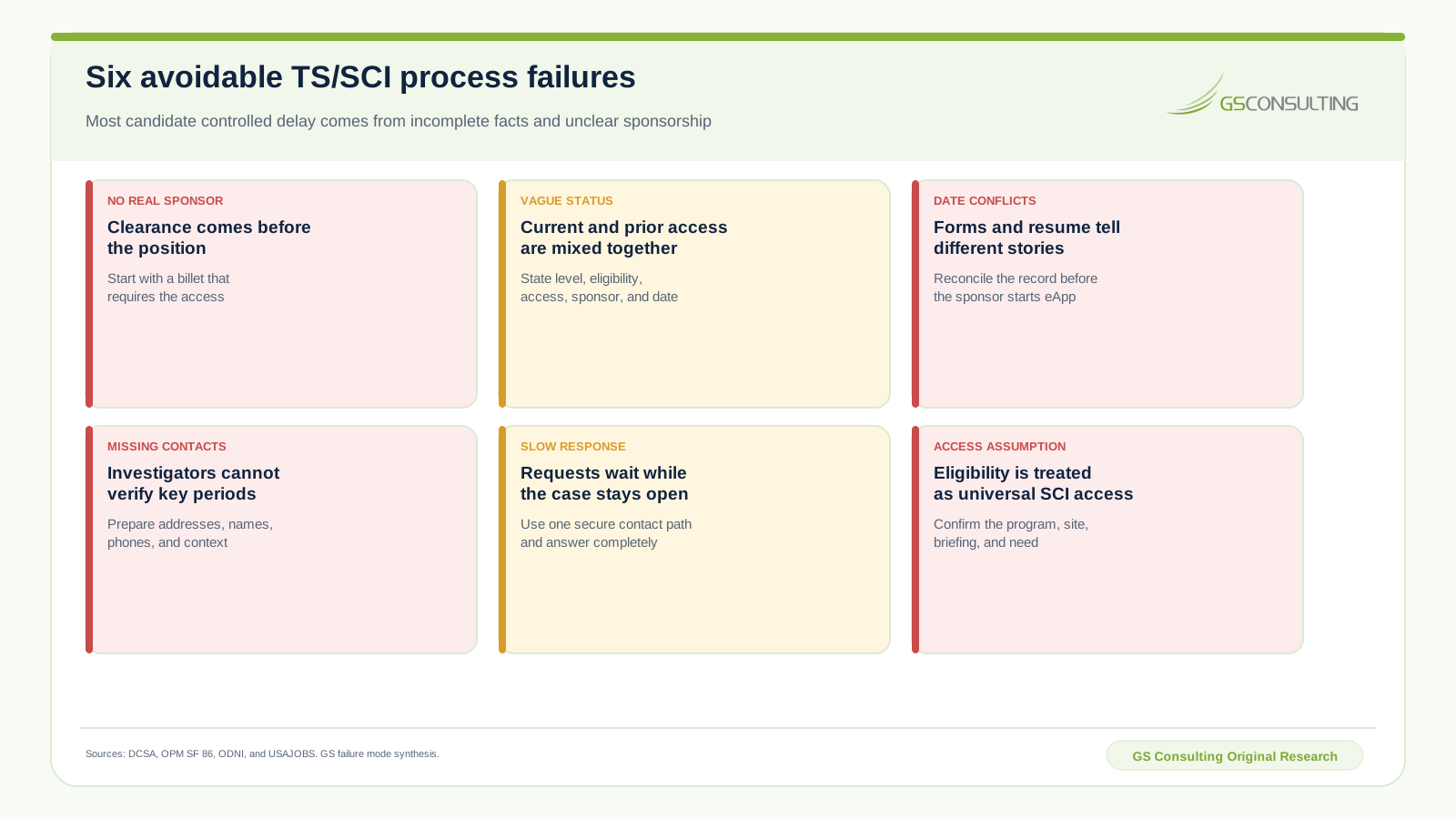
Dates, addresses, contacts, travel, work, issues, and status language should tell the same factual story.
TS/SCI clearance is not one permanent credential.
It is a chain of decisions.
A real position creates the need. An authorized agency decides Top Secret eligibility. A program decides whether the person needs access to specific Sensitive Compartmented Information. The security office completes any required briefing and access steps. Continuous Vetting and reporting duties continue after the initial decision.
That distinction matters in hiring. Candidates often say “I have TS/SCI” when they mean prior Top Secret eligibility, current eligibility without active SCI access, prior SCI access for another program, or a role that will sponsor the process. Those are not interchangeable facts.
This guide explains the TS/SCI clearance process, current public timeline data, SCI access, job search language, preparation, and what a candidate can control. It supports the GS Consulting cleared careers hub and extends the practical security clearance jobs guide.
What Does TS/SCI Clearance Mean?
Top Secret is the highest national security eligibility level commonly shown in federal job announcements. It concerns access to information whose unauthorized disclosure could cause exceptionally grave damage to national security.
Sensitive Compartmented Information, or SCI, is a control system for intelligence information. SCI is not simply a clearance level above Top Secret. A person normally needs the required Top Secret eligibility, a need to know for the assigned work, any applicable program approval, and the required briefing before access is granted.
The shorthand “TS/SCI” is useful in a job title or search filter. It is incomplete as a status statement. The USAJOBS clearance filter guide describes SCI jobs as positions that require Top Secret eligibility with SCI access. The actual announcement still controls the hiring condition.
The TS/SCI Clearance Process
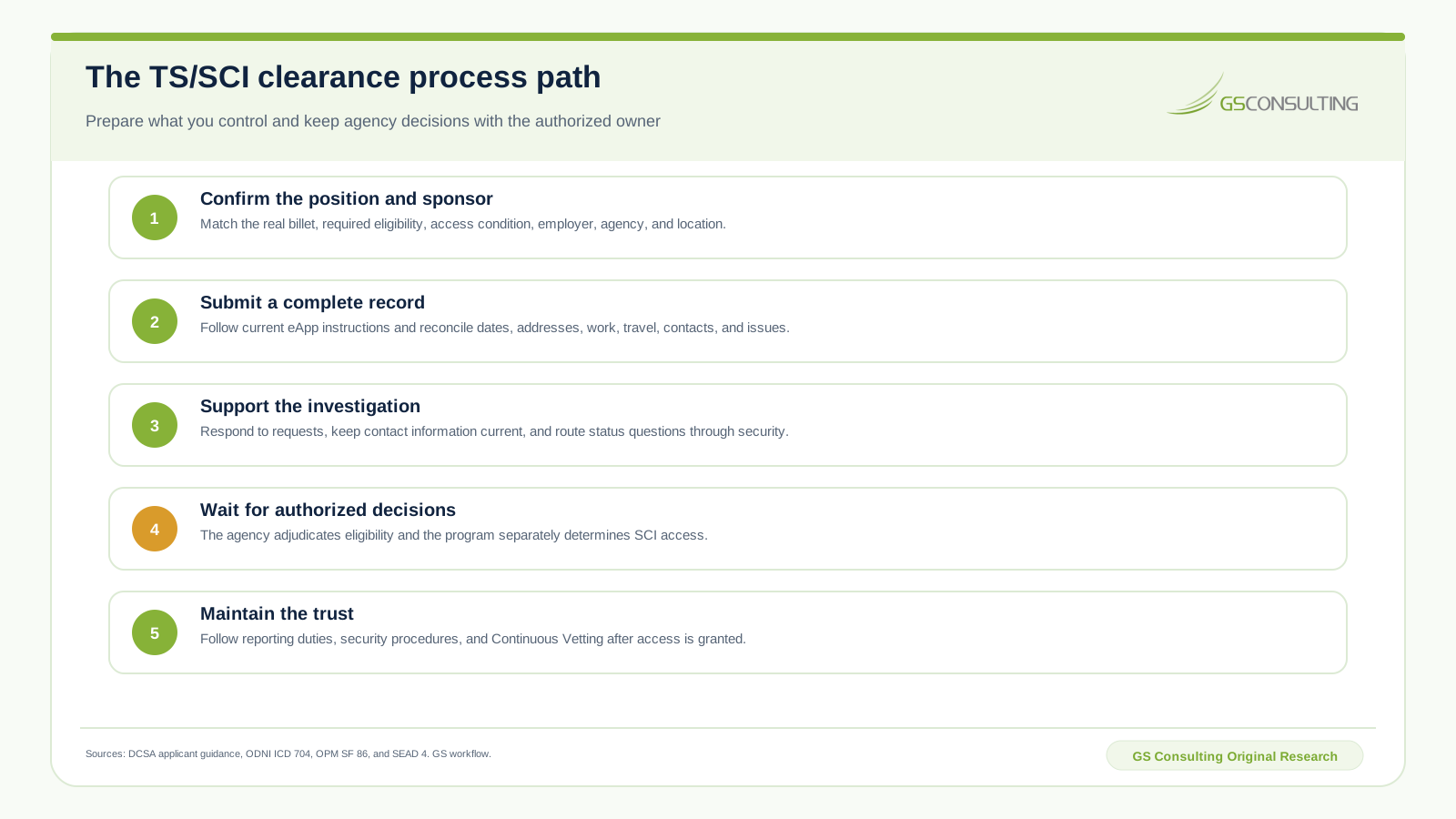
The process begins with the position, not the applicant. DCSA applicant processing guidance says a company starts processing after it determines that a real position requires access to classified information.
- Position and sponsorship. The employer or agency identifies the required eligibility and access conditions, confirms the billet need, and initiates the case.
- Questionnaire and releases. The applicant follows current eApp instructions and supplies the personal history required for the national security investigation. The official SF 86 shows the breadth of the record.
- Fingerprints and package review. The sponsoring office checks required submissions and releases the case into the investigative process.
- Background investigation. The authorized provider gathers and verifies information. Scope and contacts depend on the case and position.
- Adjudication. An authorized agency applies the national security guidelines and makes an eligibility decision.
- SCI access processing. If the position requires SCI, the agency or program confirms need to know and any added conditions, then completes the access decision and briefing.
- Ongoing trust. Reporting duties and Continuous Vetting continue while the person remains in the trusted population.
A sponsor can explain its procedure. It cannot guarantee the outcome. A recruiter can report a position condition. It cannot adjudicate the person.
How Long Does TS/SCI Clearance Take?
No honest answer is a guaranteed number of weeks.
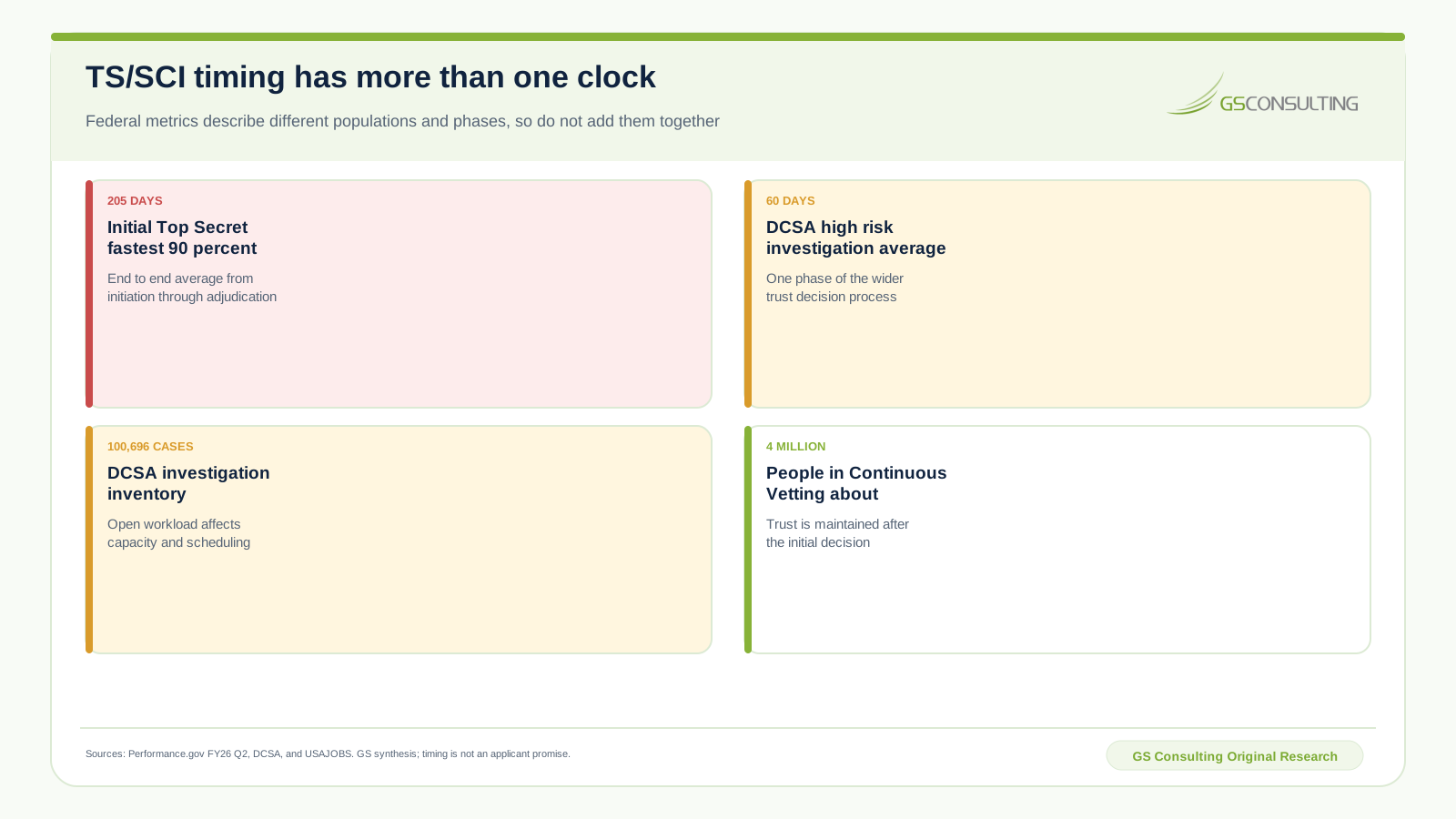
The current Trusted Workforce 2.0 FY26 Q2 performance report gives the best public federal benchmark available. For the fastest 90 percent of initial cases, the average end to end time was 92 days for Secret and 205 days for Top Secret. End to end time runs from agency initiation of applicant information collection through the adjudication reported in the federal repository.
The same report shows a 60 day average for DCSA high risk investigations. That number describes the investigation phase and a DCSA population. It is not a second timeline to add to 205 days. The report also shows a DCSA investigation inventory of 100,696 cases. Workload, case complexity, missing information, response time, agency handoffs, and program processing can all affect an individual path.
SCI access can add steps after eligibility. A customer may require program review, a polygraph, local processing, a briefing, or other conditions. Those steps are not universal and should never be advertised as if every TS/SCI case follows one clock.
Original Research: The GS TS/SCI Process Friction Index
GS Consulting built the TS/SCI Process Friction Index to answer a practical question: where should a candidate and sponsor prepare first to reduce avoidable rework without pretending to control an agency decision?
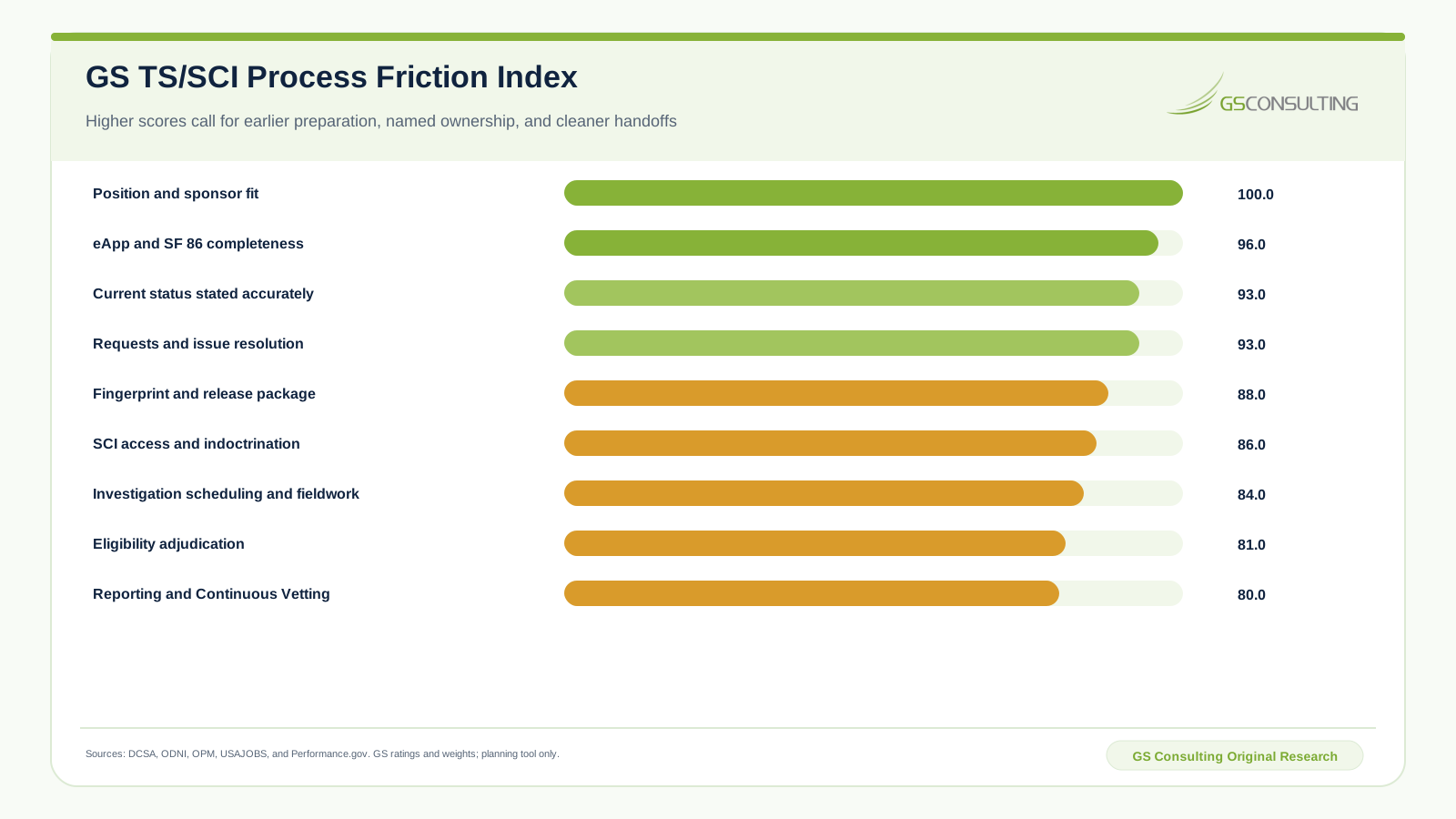
The model scores nine stages from zero to 100. The formula assigns 25 percent to hard gate effect, 25 percent to rework exposure, 20 percent to external dependency, 15 percent to elapsed time exposure, and 15 percent to preparation leverage. Each factor receives a transparent GS analyst rating from one to five based on the cited public process.
Position and sponsor fit scores 100. eApp and SF 86 completeness scores 96. Accurate current status and request resolution each score 93. These are the strongest preparation priorities because a missing billet, inconsistent record, or incomplete response can stop the case or send work backward.
Eligibility adjudication scores 81 even though it is consequential. That lower planning score does not make adjudication less important. It reflects limited candidate control after a complete case reaches the authorized decision maker. The useful action is earlier: submit accurate facts, answer requests, document mitigation, and maintain candid reporting.
A sensitivity case shifts five weight points from rework exposure to hard gate effect. No leading conclusion changes and the maximum score movement is two points. The model, CSV data, source register, and assumptions are in the published research package.
Planning caveat: The index is a GS Consulting derived planning tool based on cited public sources and documented assumptions. It is not an official legal, employment, security, adjudicative, DCSA, ODNI, agency, or regulatory determination.
Which Jobs Require TS/SCI?
TS/SCI jobs appear across intelligence analysis, cyber operations, signals work, software engineering, systems engineering, cloud and network engineering, data science, language analysis, mission support, security engineering, and program delivery. The access condition follows the information and mission duties, not the prestige of the title.
A strong search starts with the work. Match the mission lane, technical evidence, location, work setting, seniority, and sponsor condition. Then test the clearance language.
- Active TS/SCI required. The employer expects current eligibility and access that the customer can accept for the position.
- TS/SCI eligible. The announcement may focus on current eligibility, with actual SCI access processed for the assignment.
- Must obtain TS/SCI. The employer may sponsor a qualified hire, but the offer or start can depend on interim or final processing.
- Polygraph required. The customer or program adds a separate condition. Ask which type and at what stage.
- Clearable. This informal word is not a clearance status. Replace it with the exact sponsorship need and facts.
The intelligence analyst career guide explains how mission evidence, writing, research, and judgment fit the hiring decision. GS Consulting also maps specialized paths in the cyber intelligence career guide.
How to Prepare for TS/SCI Processing
Do not rehearse a perfect story. Build an accurate one.
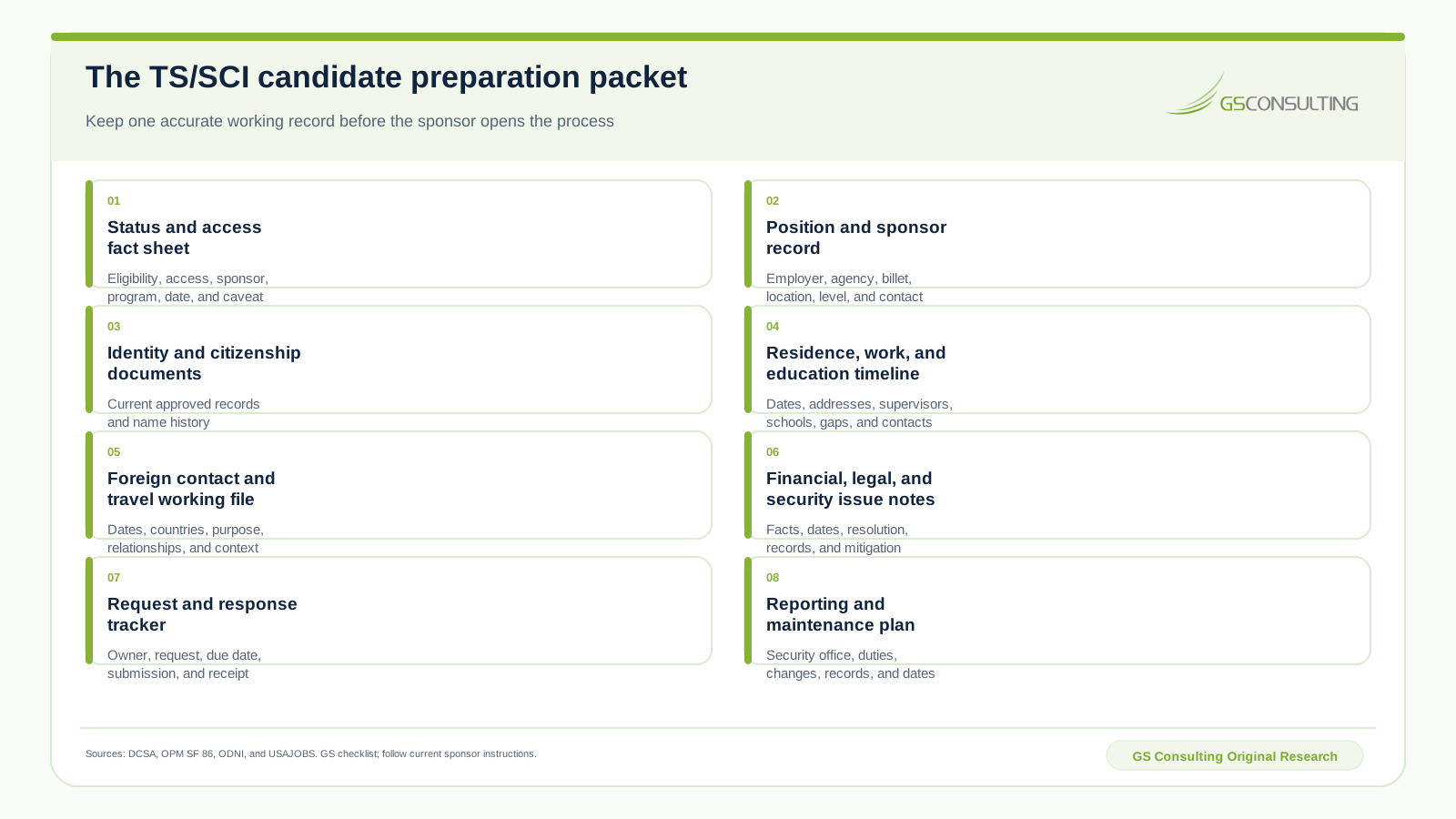
- Verify the sponsor and position. Record the employer, agency, billet, required level, SCI condition, location, security contact, and next action.
- Reconcile the timeline. Align residences, schools, employment, military service, unemployment, travel, and references across the resume and working records.
- Prepare contacts. Keep current names, relationships, addresses, phone numbers, email addresses, and the period each person can verify.
- Collect issue facts. For financial, legal, foreign, drug, alcohol, employment, or security matters, record what happened, when, the current status, and any documented resolution or mitigation.
- Follow current instructions. Use the sponsor supplied eApp process. Do not treat an old blank SF 86 as the submission system.
- Respond through approved channels. Track requests, due dates, submissions, receipts, and the security office contact. Do not send sensitive information over an unapproved channel.
What Adjudication Actually Considers
The official SEAD 4 adjudicative guidelines use the whole person concept. Authorized adjudicators consider relevant favorable and unfavorable information rather than treating one fact as the entire case.
That does not mean every issue is harmless or that mitigation guarantees approval. It means online disqualifier lists are a poor substitute for the actual framework. Pattern, recency, seriousness, circumstances, honesty, rehabilitation, resolution, and the wider record can matter.
Candor is operationally important. An issue can require review. An avoidable omission can create a separate concern and prevent the investigator from resolving the record cleanly. Answer the question asked, use the provided explanation fields, and ask the sponsoring security office how to correct an error.
After Eligibility: SCI Access and Continuous Vetting
ICD 704 governs intelligence community eligibility and access procedures for SCI. The practical lesson is simple: eligibility does not grant universal access.
A new employer or program can still need to confirm eligibility status, accept or transfer the trust decision, establish need to know, complete program processing, deliver the briefing, and grant local or technical access. A prior badge, building, or compartment does not prove access for the new work.
After placement, follow reporting duties and security guidance. DCSA reports that roughly four million people are enrolled in Continuous Vetting. Trust is maintained through current information and authorized review, not a periodic form alone.
Build the Candidate Preparation Packet
The packet is not something to send wholesale to a recruiter. It is a controlled working record that lets the candidate answer the sponsor accurately and quickly. Sensitive personal details belong only in approved systems and authorized conversations.
The Bottom Line
TS/SCI is a position based chain of trust and access decisions. The candidate cannot sponsor it, time it precisely, or decide the result. The candidate can state status accurately, match a real position, submit a complete record, answer requests, document resolution, and maintain reporting discipline.
The operating standard is plain: no vague status, no invented timeline, no assumption that eligibility equals access.
Build a cleared career case recruiters can verify.
GS Consulting connects mission roles with direct evidence, accurate clearance language, and practical candidate preparation.
Explore Cleared CareersResearch Sources and Caveats
The GS TS/SCI Process Friction Index, timeline synthesis, access matrix, process path, failure modes, and candidate packet are derived planning tools. They are not official legal, employment, security, adjudicative, DCSA, ODNI, agency, or regulatory determinations.
- Trusted Workforce 2.0 FY26 Q2 Legacy Metrics
- DCSA Personnel Vetting
- DCSA Continuous Vetting
- ODNI ICD 704
- ODNI SEAD 4
- OPM Standard Form 86
- USAJOBS Security Clearance Filters
Frequently Asked Questions
What does TS/SCI clearance mean?
TS/SCI usually means Top Secret eligibility plus approval for access to specific Sensitive Compartmented Information required by a position. Eligibility, need to know, program approval, briefing, and access are distinct decisions.
How long does a TS/SCI clearance take?
There is no reliable individual promise. Federal FY26 Q2 data reports a 205 day average for the fastest 90 percent of initial Top Secret end to end cases. Individual cases and later SCI access steps vary.
Can I apply for TS/SCI on my own?
No. A federal agency or cleared employer must sponsor processing for a real position that requires the eligibility and access.
Does TS/SCI always require a polygraph?
No. Some agencies or programs require a polygraph, but it is not universal. Check the exact position and customer conditions.
What can delay TS/SCI processing?
Incomplete or inconsistent forms, missing contacts, slow responses, case complexity, investigation workload, agency handoffs, adjudication questions, and program access steps can affect timing.
Is TS/SCI transferable?
Prior eligibility and access can help, but the new organization still confirms the position need, current status, acceptance, program conditions, need to know, and local access.