Careers | | 25 min read
Security Clearance Adjudicative Guidelines: A Practical SEAD 4 Guide

Key Takeaways
The guidelines define the questions. The record decides the review.
Thirteen guidelines, nine context factors
SEAD 4 requires a whole person review instead of a mechanical pass or fail list.
Candor and reporting score 100
Complete answers and prompt use of the authorized channel lead the GS preparation model.
Document resolution, not promises
A credible record connects the event, response, official records, durable change, and recurrence control.
Security clearance adjudicative guidelines are not a list of automatic disqualifiers. They are the questions an authorized adjudicator uses to decide whether the full record supports national security eligibility.
The weak assumption is that one fact decides the case. A debt, foreign contact, arrest, counseling visit, policy violation, or old drug use gets pulled out of context and treated like a public pass or fail rule. SEAD 4 does not work that way. It requires a review of available reliable information, favorable and unfavorable, through the whole person concept.
That nuance does not make preparation soft. Candor matters. Reporting matters. Dates matter. Official records matter. Resolution and lasting behavior change matter. A person cannot control the government decision, but the person can control whether the record is complete, timely, consistent, and supported.
This guide explains the 13 security clearance adjudicative guidelines, the nine whole person factors, common mitigation logic, reporting duties, and formal response steps. It supports the broader GS Consulting Careers hub and the security clearance jobs guide. Candidates should also use the TS/SCI resume guide and TS/SCI interview guide for the employment process.
Build the record before the deadline builds it for you.
Use the official channel, reconcile the facts, collect the records, and show what changed.
Explore GS CareersSecurity Clearance Adjudicative Guidelines: The Short Answer
Security Executive Agent Directive 4, usually called SEAD 4, establishes the common national security adjudicative criteria for covered executive branch decisions. The framework contains 13 guidelines, labeled A through M. Each guideline states a security concern, conditions that may raise that concern, and conditions that may mitigate it.
The guidelines do not produce a public point total. There is no official online calculator that can tell a person the outcome. Each case is judged on its own merits. The authorized adjudicative agency weighs the issue in the context of the whole person and resolves doubt in favor of national security.
The practical response is simple. Answer completely and truthfully. Report through the channel named in current instructions. Build a dated chronology. Collect official records. Explain resolution and any durable behavior change. Keep copies of what was submitted. If a formal notice arrives, treat the deadline and process as serious.
How SEAD 4 Actually Works
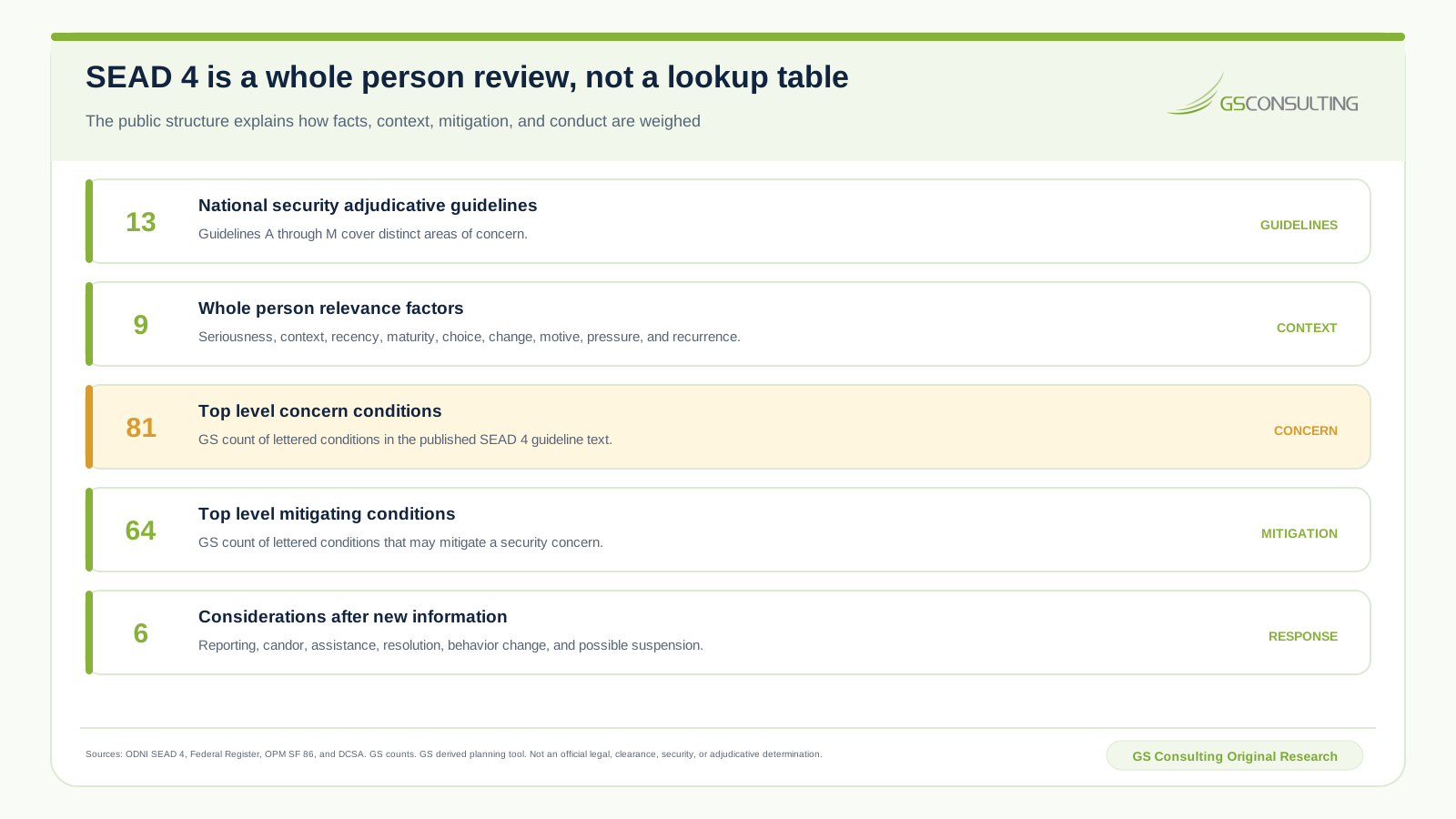
SEAD 4 starts with an affirmative decision standard. The agency must decide whether the full record shows that eligibility is clearly consistent with national security interests. The review considers reliability, trustworthiness, judgment, honesty, discretion, character, and the ability to protect classified or sensitive information.
The framework then adds structure. GS Consulting counted 81 top level concern conditions and 64 top level mitigating conditions across the published guideline text. Those counts describe the policy. They do not measure how often an issue appears, how serious it is, or how an individual case will end. Nested numbered clauses were not counted separately.
When new information becomes known about a person who already holds eligibility, SEAD 4 tells the adjudicator to consider six response facts: whether the person reported voluntarily, answered truthfully and completely, sought appropriate help, resolved or appears likely to resolve the concern, demonstrated positive behavior change, and may require suspension while the matter is reviewed.
The 13 Adjudicative Guidelines
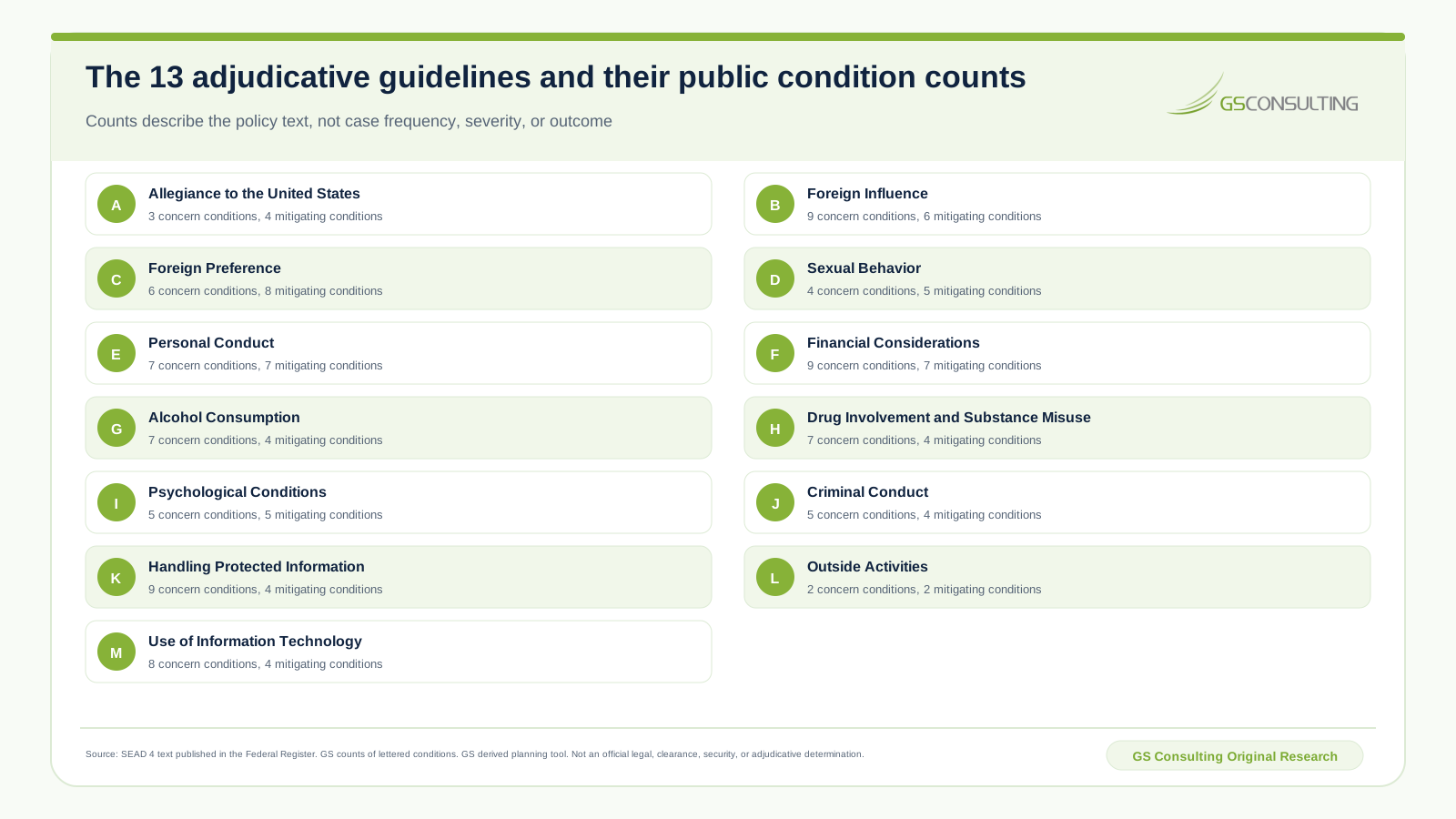
- Guideline A, Allegiance to the United States. This addresses conduct or associations that can call allegiance into question.
- Guideline B, Foreign Influence. This focuses on foreign contacts, interests, obligations, pressure, exploitation, and reporting.
- Guideline C, Foreign Preference. This examines conduct that may show a preference for a foreign country or a concealed conflict with United States interests.
- Guideline D, Sexual Behavior. This is about conduct relevant to judgment, coercion, exploitation, or abuse. Lawful private behavior is not a license for speculation.
- Guideline E, Personal Conduct. This covers candor, cooperation, judgment, reliability, and patterns of conduct. Intentional material falsification is a serious concern.
- Guideline F, Financial Considerations. This covers debt, obligations, unexplained affluence, financial responsibility, and evidence of resolution.
- Guideline G, Alcohol Consumption. This focuses on conduct, treatment, recovery, judgment, and demonstrated control.
- Guideline H, Drug Involvement and Substance Misuse. This addresses use, possession, treatment, intent, compliance, and likelihood of recurrence.
- Guideline I, Psychological Conditions. This concerns conditions or behavior that may affect judgment, reliability, or trustworthiness. Mental health counseling by itself cannot support a negative inference under SEAD 4.
- Guideline J, Criminal Conduct. This considers the conduct, pattern, circumstances, passage of time, rehabilitation, and current judgment.
- Guideline K, Handling Protected Information. This covers compliance with rules for classified, sensitive, proprietary, and other protected information.
- Guideline L, Outside Activities. This addresses outside work or activity that creates a security conflict or was not reported when required.
- Guideline M, Use of Information Technology. This covers unauthorized access, protected data movement, prohibited software or media, negligent practice, correction, and training.
Several facts can touch more than one guideline. An unreported foreign business interest can raise Foreign Influence, Foreign Preference, Personal Conduct, and Outside Activities questions. A protected information event can involve Handling Protected Information, Use of Information Technology, and Personal Conduct. Do not force a personal fact into one public category and assume the analysis is finished.
The Whole Person Concept Changes the Question
The question is not, “Did this fact ever occur?” The question is what the full record says about current reliability, trustworthiness, judgment, and willingness to protect national security.
SEAD 4 lists nine relevance factors:
- The nature, extent, and seriousness of the conduct.
- The circumstances, including knowledgeable participation.
- The frequency and recency of the conduct.
- The person's age and maturity at the time.
- The extent to which participation was voluntary.
- Rehabilitation and other lasting behavior change.
- The motivation for the conduct.
- The potential for pressure, coercion, exploitation, or duress.
- The likelihood that the conduct will continue or recur.
Whole person review is not automatic forgiveness. SEAD 4 says a recent or recurring pattern can support an unfavorable decision even when one item alone might not. It also says a single criterion can be enough in some circumstances. Context matters because it changes what the fact means, not because it erases the fact.
Original Research: The GS Clearance Issue Response Priority Index
You cannot score your way to a clearance. You can build a better record.
GS Consulting scored 12 preparation actions across five factors. Decision relevance and evidence leverage each carry 25 percent. Time sensitivity carries 20 percent. Cross guideline reach and individual control each carry 15 percent. Each action receives an ordinal rating from one to five. The weighted result is multiplied by 20 and reported on a zero to 100 scale.
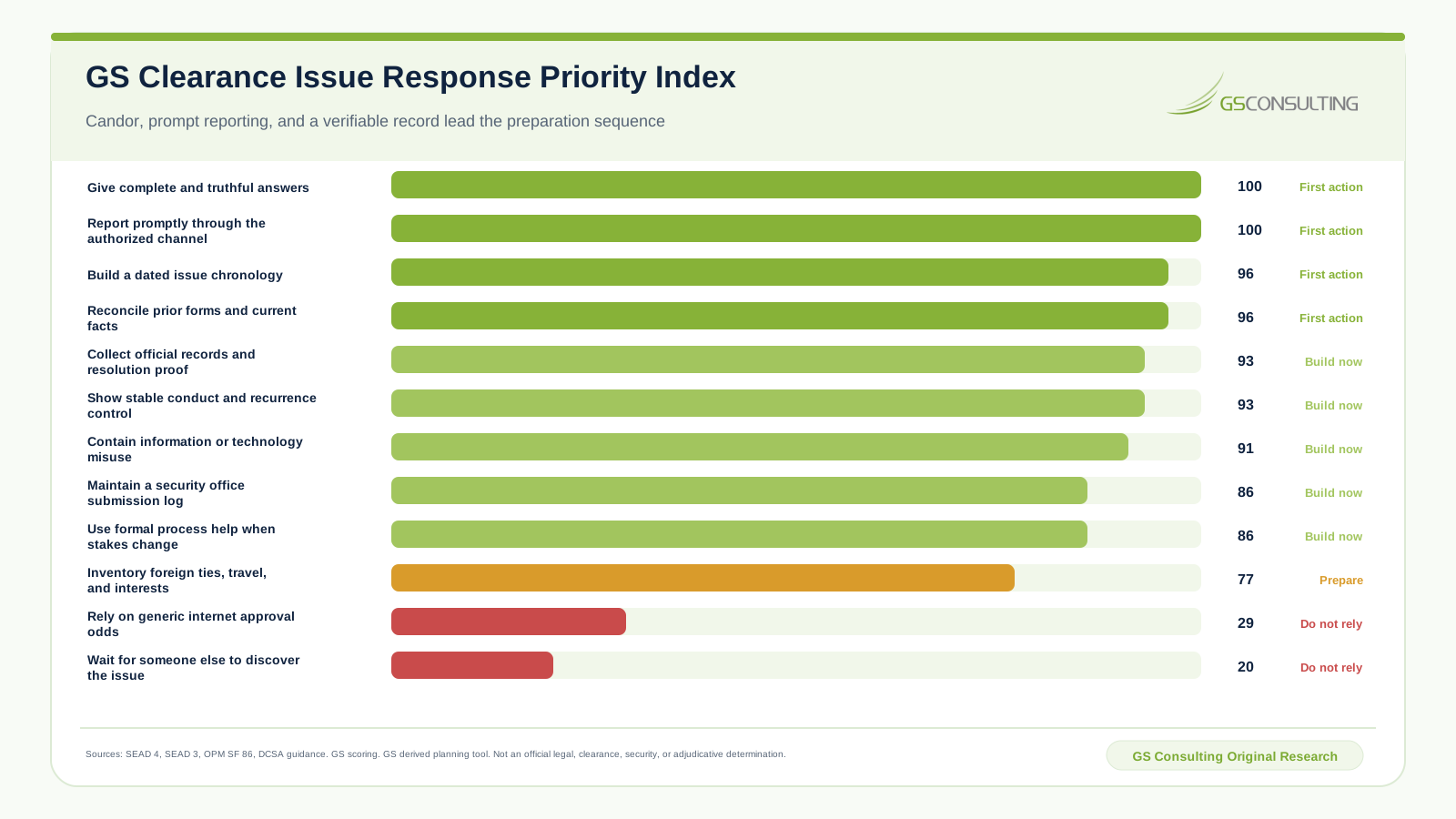
Complete and truthful answers score 100. Prompt reporting through the authorized channel also scores 100. A dated chronology and a review of prior forms each score 96. Official records and resolution proof score 93. Stable conduct and recurrence control also score 93.
Relying on generic internet approval odds scores 29. Waiting for someone else to discover the issue scores 20. Those practices are weak because they do not improve the official record and can create new questions about candor, judgment, cooperation, or reporting.
The sensitivity test moves five percentage points from evidence leverage to individual control. Every score changes by three points or less, and the preparation sequence remains stable. The model is useful for organizing work. It is not a substitute for SEAD 4, agency instructions, or qualified legal advice.
Build Records That Answer the Real Questions
A narrative without records can be hard to verify. A stack of records without a chronology can be hard to understand. Build both.
The useful record depends on the issue. Financial matters may need tax transcripts, payment histories, agreements, court records, and a current budget. Foreign context may need passports, travel dates, citizenship facts, property records, business interests, and prior reports. Criminal matters may need charging documents, dispositions, probation records, completion certificates, and evidence of later conduct.
Alcohol, drug, and psychological condition questions require particular care. Follow the form and investigator instructions exactly. Use treatment, evaluation, compliance, recovery, or support records only through the authorized process. Do not collect more private information than the process calls for. Seeking mental health care for wellness and recovery may contribute favorably to an eligibility decision, and treatment alone is not a reason to deny or revoke eligibility.
For information handling or technology misuse, preserve the facts. Record the system, data type, rule, date, discovery, containment, notification, corrective action, training, and recurrence control that can be discussed through the approved channel. Do not move protected material into a personal file to prove what happened.
Use a Five Stage Response Path
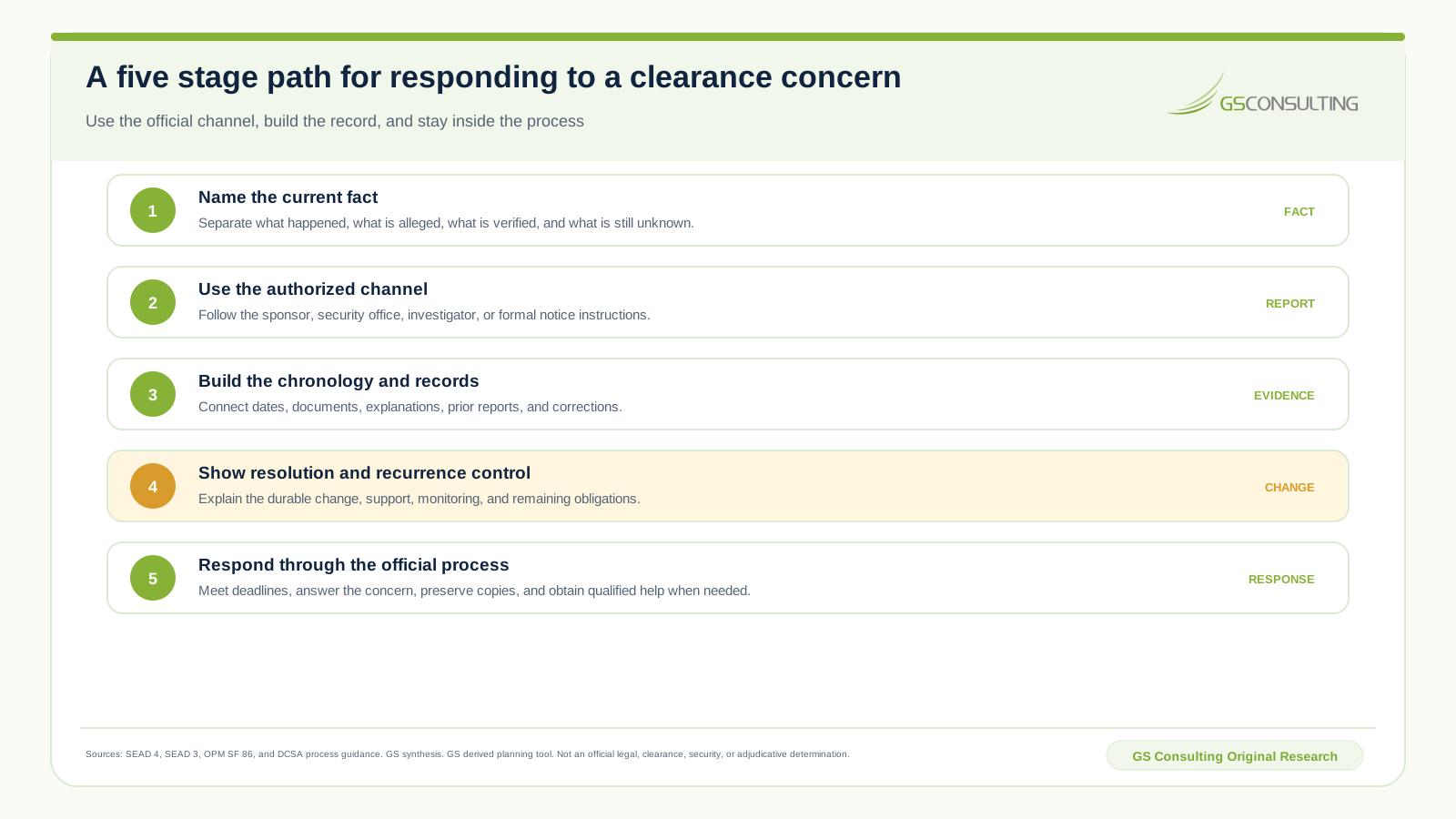
- Name the current fact. Separate what happened, what is alleged, what is verified, and what is still unknown.
- Use the authorized channel. Follow the sponsor, security office, investigator, or formal notice instructions.
- Build the chronology and records. Connect dates, documents, prior reports, corrections, and current status.
- Show resolution and recurrence control. Explain the lasting change, support, monitoring, remaining obligations, and conditions that reduce recurrence.
- Respond through the official process. Meet the deadline, answer the stated concern, preserve copies, and obtain qualified help when the stakes require it.
Do not send sensitive personal records to a recruiter, hiring manager, or public contact unless the official process directs it. The right evidence in the wrong channel can create a privacy or security problem.
Candor and Consistency Are Operating Controls
People make mistakes. Records also contain mistakes. The response to an error matters.
Review prior SF 86 submissions, security questionnaires, interview notes, travel reports, contact reports, financial records, and official notices when they are available to you. Compare names, dates, locations, employers, obligations, travel, citizenship facts, contacts, arrests, treatment, and prior explanations. If a known error exists, use the authorized correction process. Do not silently change the new answer and hope the difference goes unnoticed.
Estimate only when the form permits an estimate. Label the estimate. Explain how it was derived. Keep a copy of the source used. If a question is unclear, ask the office that issued the form. A complete answer is not the same as an invented answer.
Common Issue Areas Need Different Evidence
- Foreign relationships and interests: identify the relationship, frequency, citizenship and residence facts, obligation, business or property interest, reporting history, and any pressure or conflict. Foreign family or dual citizenship is not an automatic public verdict.
- Financial concerns: distinguish inability to pay, irresponsibility, fraud, unexplained affluence, and an isolated event. Show the cause, current amount, resolution plan, performance under the plan, and controls that prevent recurrence.
- Alcohol or drug concerns: document the conduct, recency, frequency, treatment or evaluation where relevant, compliance, support, and sustained behavior. Do not substitute a short pause for evidence of control.
- Criminal conduct: use official dispositions and completion records. Explain the conduct and later change without minimizing the fact or inventing a legal conclusion.
- Protected information and technology use: stop the behavior, contain the issue, report through the required channel, follow corrective direction, and document training and recurrence controls.
- Personal conduct: focus on candor, cooperation, accuracy, judgment, and patterns. Hiding an issue can become a separate concern even when the underlying event could have been explained.
Reporting Duties Continue After the Initial Decision
Eligibility is not a one time event. SEAD 3 establishes reporting requirements for covered individuals with access to classified information or who hold sensitive positions. Cleared contractors under the National Industrial Security Program also operate under 32 CFR Part 117 and DCSA implementation guidance.
Do not rely on a public checklist as the final reporting authority. Department, agency, SCI, SAP, customer, and contract instructions can add requirements or use different timelines. The security manager or facility security officer is the normal starting point for current guidance.
If the issue involves possible compromise, suspicious contact, foreign travel, a change in relationship, financial pressure, arrest, outside activity, or another reportable event, contact the authorized security office. Prompt reporting does not guarantee a favorable outcome. It does preserve the chance to address the issue before silence becomes part of the record.
Treat a Formal Notice as a Different Operating State
A routine clarification is not the same as a Letter of Intent, Statement of Reasons, proposed denial, revocation, personal appearance, or appeal. Once a formal notice arrives, the stated process and deadline control.
DCSA updated its Security Review Proceedings guidance in February 2026. For covered proceedings, a person may have a written response and, in some cases, an optional virtual personal appearance. Coverage differs across military members, civilian employees, SCI contractor cases, and contractor collateral eligibility. Read the notice. Do not assume another person's route applies to yours.
Qualified counsel can help identify the exact concern, organize exhibits, protect deadlines, and separate persuasive evidence from noise. This article is general education, not legal advice. It cannot interpret a notice or represent a person before an agency.
Fix the Six Preparation Failures
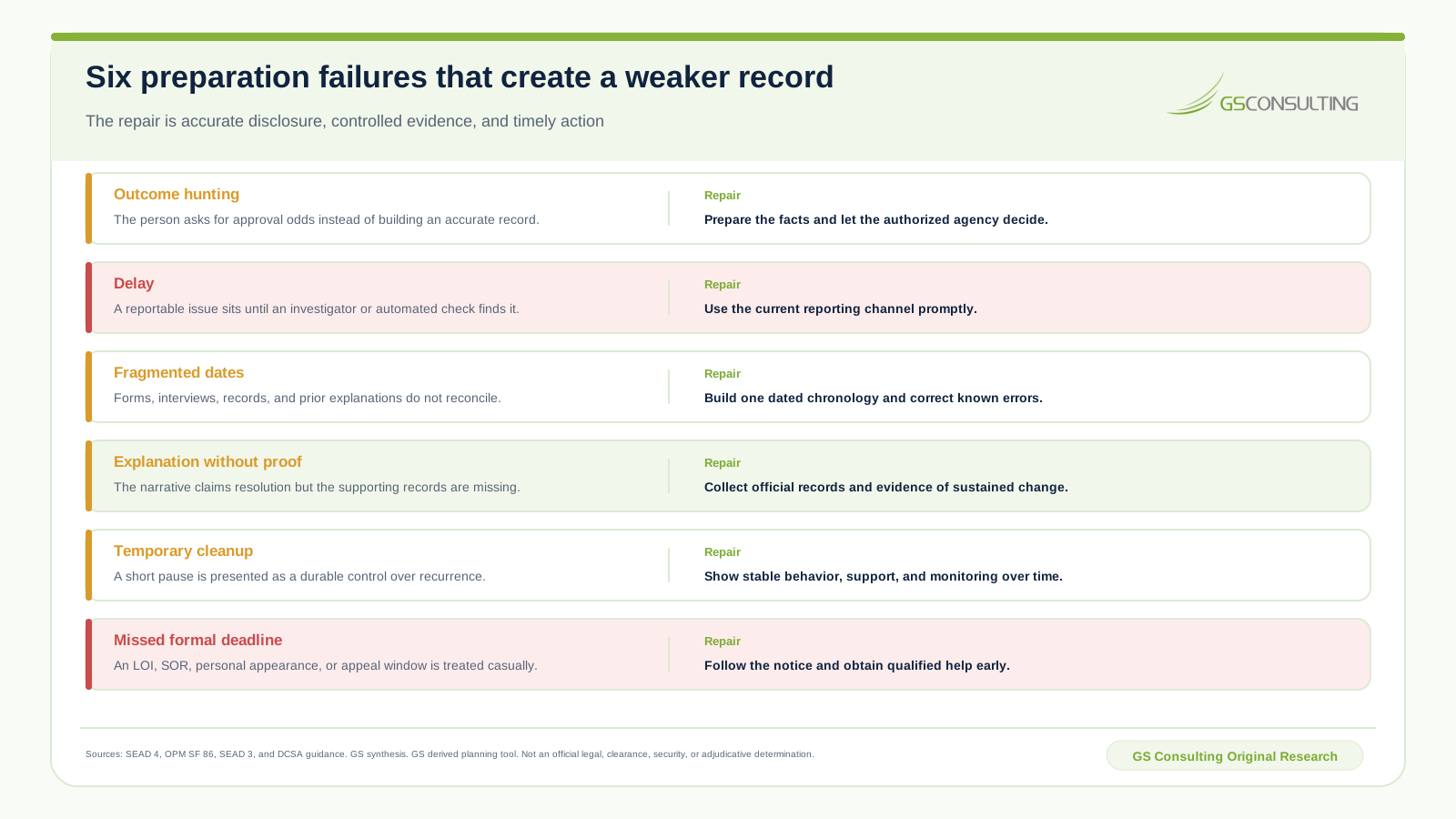
Outcome hunting is seductive because it promises certainty. A person finds a case with a similar label and treats it as a forecast. The facts, agency, record, timing, reporting, mitigation, and procedural posture may be different. Use public cases to understand reasoning, not to declare an outcome.
Temporary cleanup is another common failure. A new payment, brief period without use, training certificate, or one counseling session may be part of a response. It is not automatically proof of lasting change. The stronger record shows sustained performance and a credible recurrence control.
Build a Controlled Evidence Packet
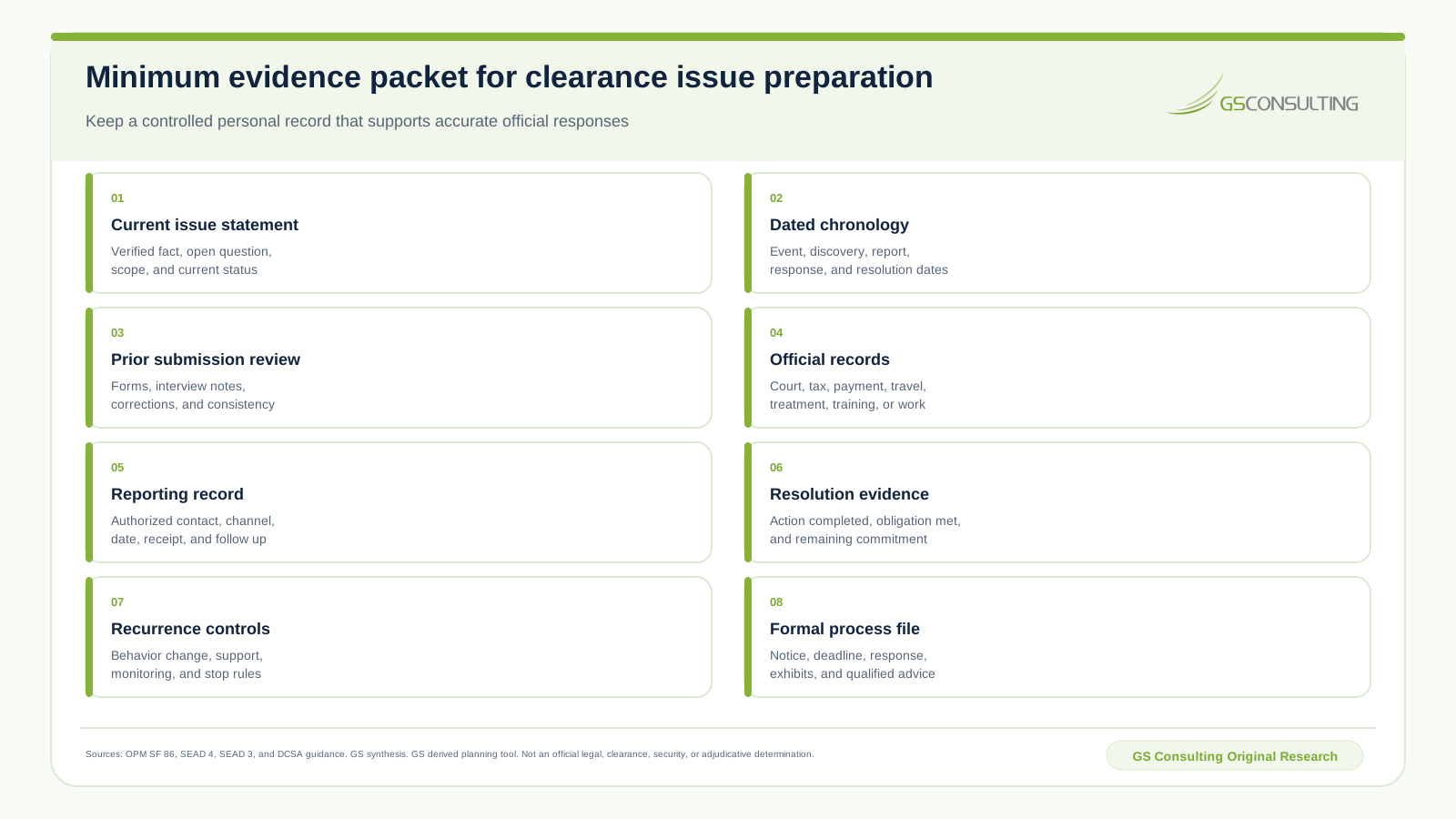
Keep the packet in an approved location with access appropriate to the records. Start with the current issue statement and dated chronology. Add the prior submission review, official records, reporting record, resolution evidence, recurrence controls, and formal process file if one exists.
Do not include classified information, protected government data, customer restricted material, or records you are not authorized to copy. The packet is an organizing tool. The official system and authorized case file remain the record that matters.
A Practical Action Plan
- Confirm the process. Identify the sponsor, security office, investigator, or notice that controls the next action.
- Protect the deadline. Put every due date, appointment, requested record, and follow up in a controlled log.
- Write the chronology. Use verified dates and label estimates. Separate fact, allegation, explanation, resolution, and open item.
- Reconcile prior records. Identify conflicts before a reviewer must discover and interpret them.
- Collect proof. Use official records and evidence of durable conduct, not character slogans.
- Review the channel. Send private or protected material only through the approved process.
- Get qualified help when needed. A formal adverse process is not the moment to learn the deadline after it passes.
The Bottom Line
The 13 adjudicative guidelines do not ask whether a person has lived a perfect life. They ask whether the complete record supports the trust required for national security eligibility.
The operating standard is direct: tell the truth, report promptly, reconcile the record, prove the change, and let the authorized agency make the decision.
Prepare for cleared work with facts that hold up.
Verify status, follow the official process, and keep employment evidence separate from sensitive personnel vetting records.
Explore Current OpportunitiesResearch Sources and Caveats
The GS Clearance Issue Response Priority Index, condition counts, response path, failure analysis, and evidence packet are derived planning tools. They are not official legal, clearance, security, DCSA, ODNI, OPM, audit, or adjudicative determinations. They do not predict whether a person will receive or retain eligibility. Agency, program, and contract instructions can change and may be more specific.
- ODNI Security Executive Agent Directive 4
- Federal Register publication of the adjudicative guidelines
- DCSA Trust Decision Adjudications FAQs
- DCSA Security Review Proceedings FAQ
- OPM Standard Form 86
- ODNI Security Executive Agent Directive 3
- DCSA security change and concern reporting guidance
- DCSA NISPOM Rule and SEAD 3 resources
Frequently Asked Questions
What are the 13 security clearance adjudicative guidelines?
SEAD 4 lists Allegiance to the United States, Foreign Influence, Foreign Preference, Sexual Behavior, Personal Conduct, Financial Considerations, Alcohol Consumption, Drug Involvement and Substance Misuse, Psychological Conditions, Criminal Conduct, Handling Protected Information, Outside Activities, and Use of Information Technology.
Does one issue automatically disqualify a person from a security clearance?
Not every issue produces an automatic result. SEAD 4 requires a whole person review of available reliable information, favorable and unfavorable. It also says a single criterion can be sufficient in some circumstances. Only the authorized adjudicative agency can decide an individual case.
What does the whole person concept mean for a security clearance?
It means the adjudicator weighs the conduct in context. SEAD 4 names nine relevance factors, including seriousness, circumstances, frequency, recency, maturity, voluntariness, rehabilitation, motive, pressure, and likelihood of recurrence.
Can mitigation guarantee security clearance approval?
No. A listed mitigating condition is not a guaranteed outcome. The person can provide complete facts, official records, evidence of resolution, and proof of durable change. The authorized agency decides how that information affects eligibility.
Should a cleared person self report a possible security concern?
Follow the current instructions from the employing agency, security manager, facility security officer, and any SCI, SAP, or contract authority. SEAD 3 and program rules define reporting duties. When unsure, use the authorized security channel promptly rather than relying on a public guide.
What should someone do after receiving an LOI or SOR?
Read the notice and deadline immediately. Preserve the complete file, identify the exact concerns, build a dated response with supporting records, and follow the stated process. Consider qualified security clearance counsel because coverage and appeal rights vary by population and type of eligibility.