Private LLM & Secure RAG | | 25 min read
Private AI Integration Cost and Architecture: What Actually Drives the Budget

Key Takeaways
The hosting line is only one part of the build
Price the full operating path
Count data, connectors, identity, workflow, review, evaluation, observation, exceptions, recovery, support, and change.
Exception handling leads at 95
The relative burden model places exceptions and reconciliation first. Model hosting and inference score 75.
Buy only the control you need
More isolated lanes shift more model, security, integration, support, and exit work inside the organization.
Private AI integration cost is not a model hosting line. It is the price of connecting data, identity, workflow, evidence, and support without losing control.
A model can answer a prompt on the first day. A production integration has a harder job. It must admit the right data, enforce current authority, preserve source identity, and produce a usable contract. It must also survive exceptions, prove delivery, measure quality, support operators, recover from failure, and change without breaking the decision. That is where much of the budget goes.
This article separates integration architecture from the private LLM cost operating model, which examines model use, capacity, labor, and cost per accepted task in more detail. Use the Private LLM and Secure RAG hub for the full topic cluster and the private AI and SIEM integration architecture for a concrete security workflow. GS Consulting applies the pattern through secure AI automation services.
For a bounded implementation example, review the private AI cyber analysis case study and the related SIEM integration and cyber analysis automation service. The public case study shows the operating pattern without disclosing client data or interfaces.
Build the budget around the workflow, not the demo.
GS Consulting helps teams define the data duty, compare architecture lanes, estimate integration work, set quality gates, and fund the operating model.
Request a Secure AI Fit CheckPrivate AI Integration Cost: The Short Answer
Estimate private AI integration cost across twelve workstreams:
- Workflow definition
- Source inventory and data preparation
- Connectors and schemas
- Identity and access
- Orchestration and human review
- Evaluation
- Audit and observation
- Exceptions and reconciliation
- Model hosting and inference
- Environment and deployment
- Support and change control
- Cost attribution and capacity management
Choose the architecture after the data duty is known. A controlled vendor API, dedicated cloud service, self operated private cloud, and on premises or isolated system place different responsibilities on the buyer. A lane with more isolation can be the correct choice and still demand more internal model operations, integration, security, evaluation, support, recovery, and exit work.
Do not use a generic dollar range as the decision. Apply local role hours and loaded rates. Add current vendor terms, measured demand, service levels, infrastructure, hardware, and licenses. Then price support coverage, evaluation, contingency, and the life of the system.
Draw the Cost Boundary Before Requesting Quotes
Name one workflow and its user, owner, decision, source set, and destination. Record expected volume, latency, availability, and quality. Then define the review rule, exception path, and stop condition. A broad “enterprise assistant” cannot be estimated because its data, authority, demand, and acceptance conditions are unknown.
Then mark every responsibility. Who prepares data? Who owns source rights? Who builds and supports connectors? Who enforces identity after indexing? Who writes evaluation cases? Who reviews consequential output? Who handles malformed records, timeouts, duplicate actions, model refusal, unsupported claims, and destination failure? Who approves change and recovery?
A vendor quote may cover part of the system. That is normal. The estimate must show what remains with the buyer, another provider, or an existing platform team. Omitted responsibility does not become free work.
What Public Guidance Adds to the Cost Boundary
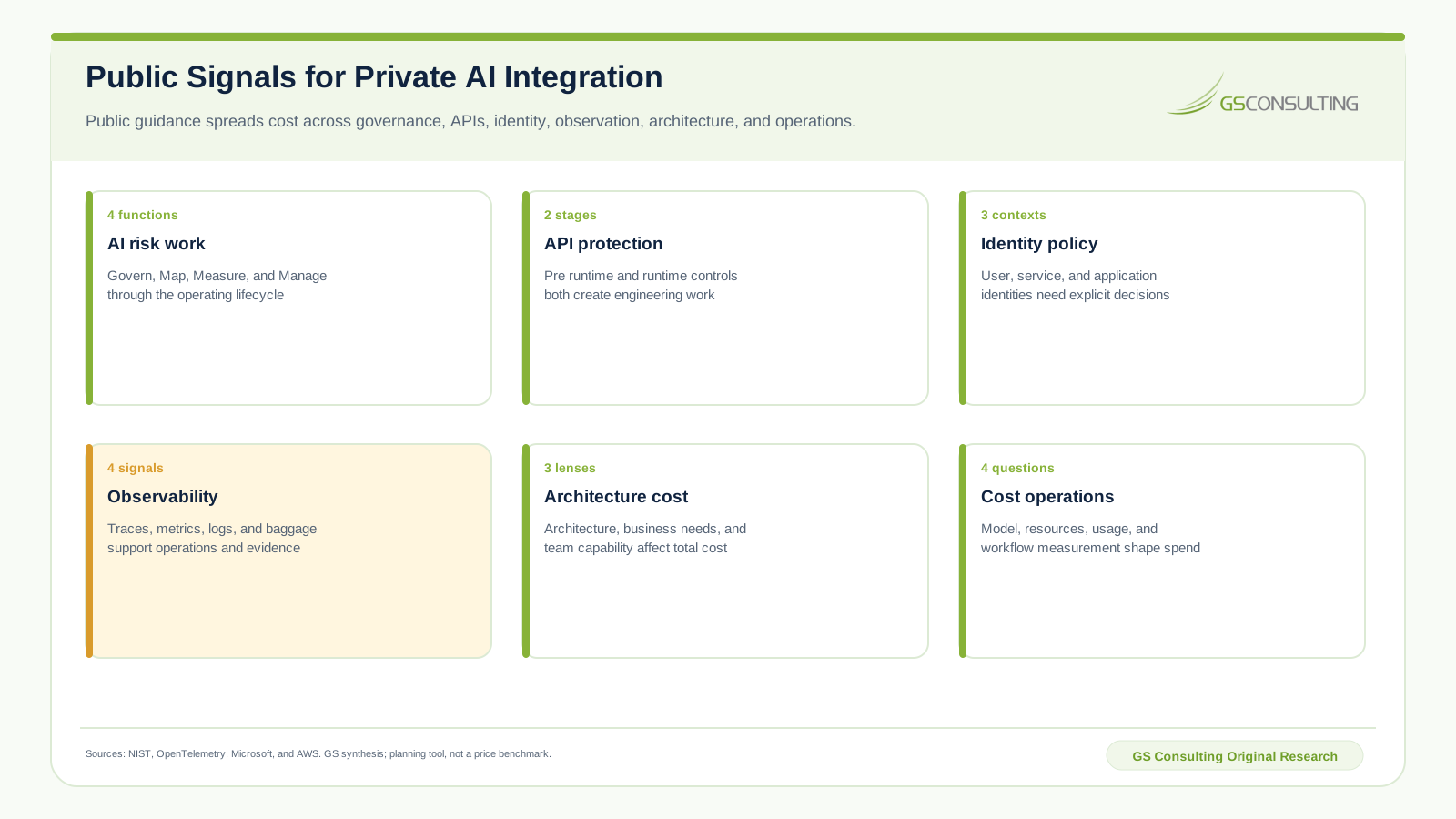
The NIST AI RMF Playbook organizes AI risk work through Govern, Map, Measure, and Manage. Those functions create real tasks: assign ownership, understand context, test and measure behavior, monitor results, and respond when the system changes or fails.
NIST SP 800-228 Update 1 addresses API protection across pre runtime and runtime stages. Integration work therefore includes design, inventory, policy, testing, monitoring, response, and recovery rather than one connector. NIST SP 800-207A makes granular user, service, and application identity central to access decisions in cloud native systems.
OpenTelemetry documents traces, metrics, logs, and baggage as observation signals. Microsoft AI design principles connect direct and indirect cost to architecture, business needs, data, testing, utilization, and team capability. The AWS Generative AI Lens adds model, resource, usage, workflow, and measurement questions. Provider guidance is useful structure, not an independent price benchmark.
Original GS Research: The Integration Cost Pressure Index
GS Consulting built a derived relative burden model for twelve private AI integration workstreams. Each receives an ordinal rating from one through five on engineering effort, security boundary, proof and recovery, operating effort, and change exposure. Base weights are 25, 25, 20, 20, and 10 percent. The result is a zero through 100 planning score, not a dollar estimate.
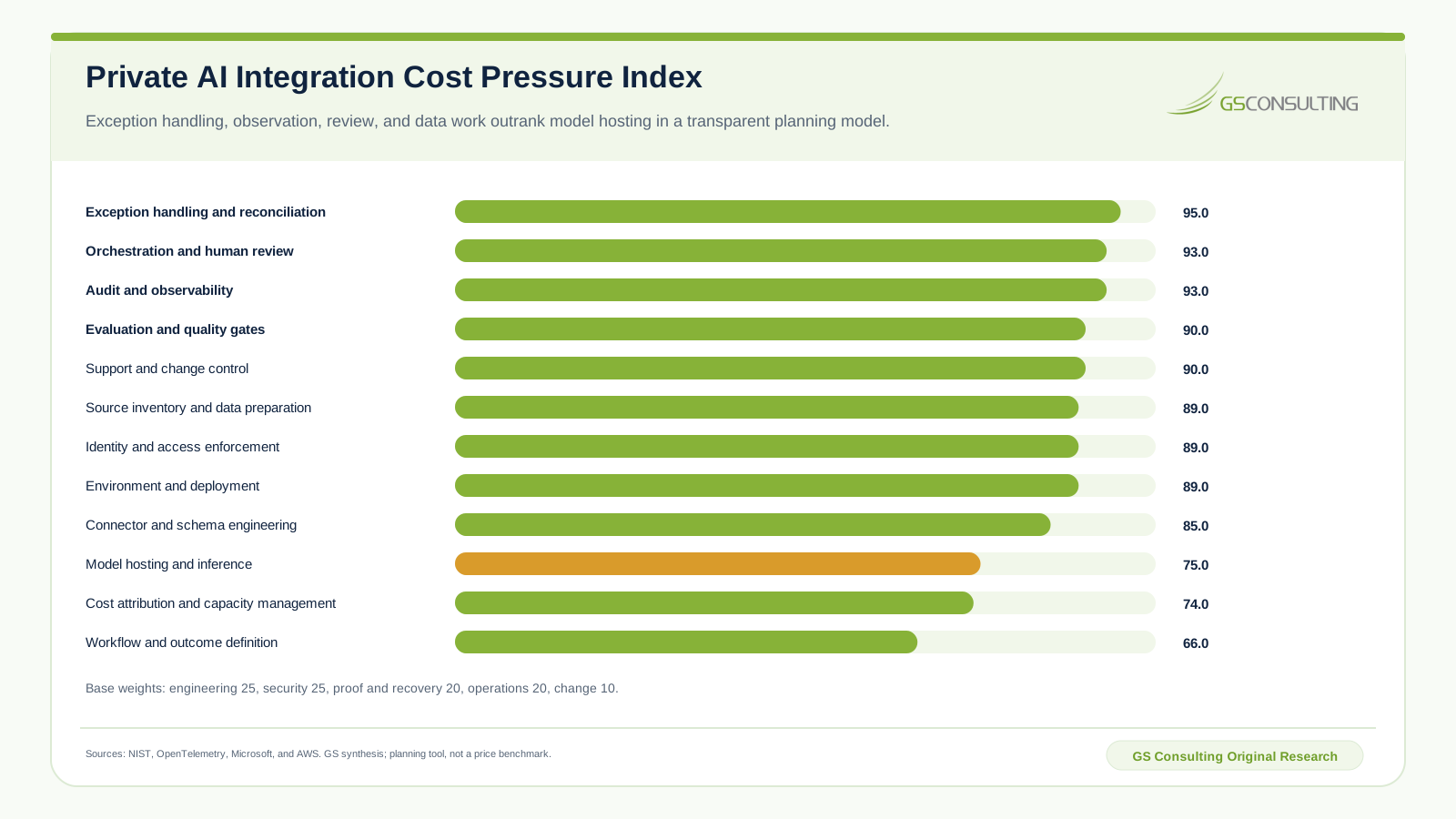
Evaluation and quality gates and support and change control each score 90. Data preparation, identity and access, and environment and deployment each score 89. Connector and schema engineering scores 85. Cost attribution scores 74, and workflow definition scores 66.
The model does not say hosting is cheap. It says hosting is an incomplete cost boundary. The integration must still manage the source, decision, output, exception, destination, reviewer, release, recovery, and evidence around the model.
The sensitivity case moves five weight points from engineering effort to operating effort. No workstream moves by more than two points. That is a limited directional test, not market validation. Ratings and weights are GS assumptions and should be replaced with observed local effort.
Compare Four Architecture Lanes by Responsibility
Controlled vendor API. The provider operates the model service while the buyer still owns data admission, identity, integration, evaluation, workflow, observation, and outcome. Review the service terms and retention policy. Confirm support access, location, model change, logs, capacity, and exit.
Dedicated cloud service. The buyer gains a more defined tenant or capacity boundary and takes on more environment, network, policy, deployment, capacity, and support coordination. Dedicated does not mean the buyer controls every layer.
Self operated private cloud. The buyer or its operator controls more model serving, environment, policy, observation, update, recovery, and capacity decisions. That control can satisfy a real duty and requires mature platform and security ownership.
On premises or isolated. The buyer carries hardware, facilities, model operations, and the software supply chain. The same team must plan deployment, patching, monitoring, redundancy, backup, recovery, performance, capacity, support, refresh, and exit. Use this lane when the data and operating duty justify it, not because private sounds safer.
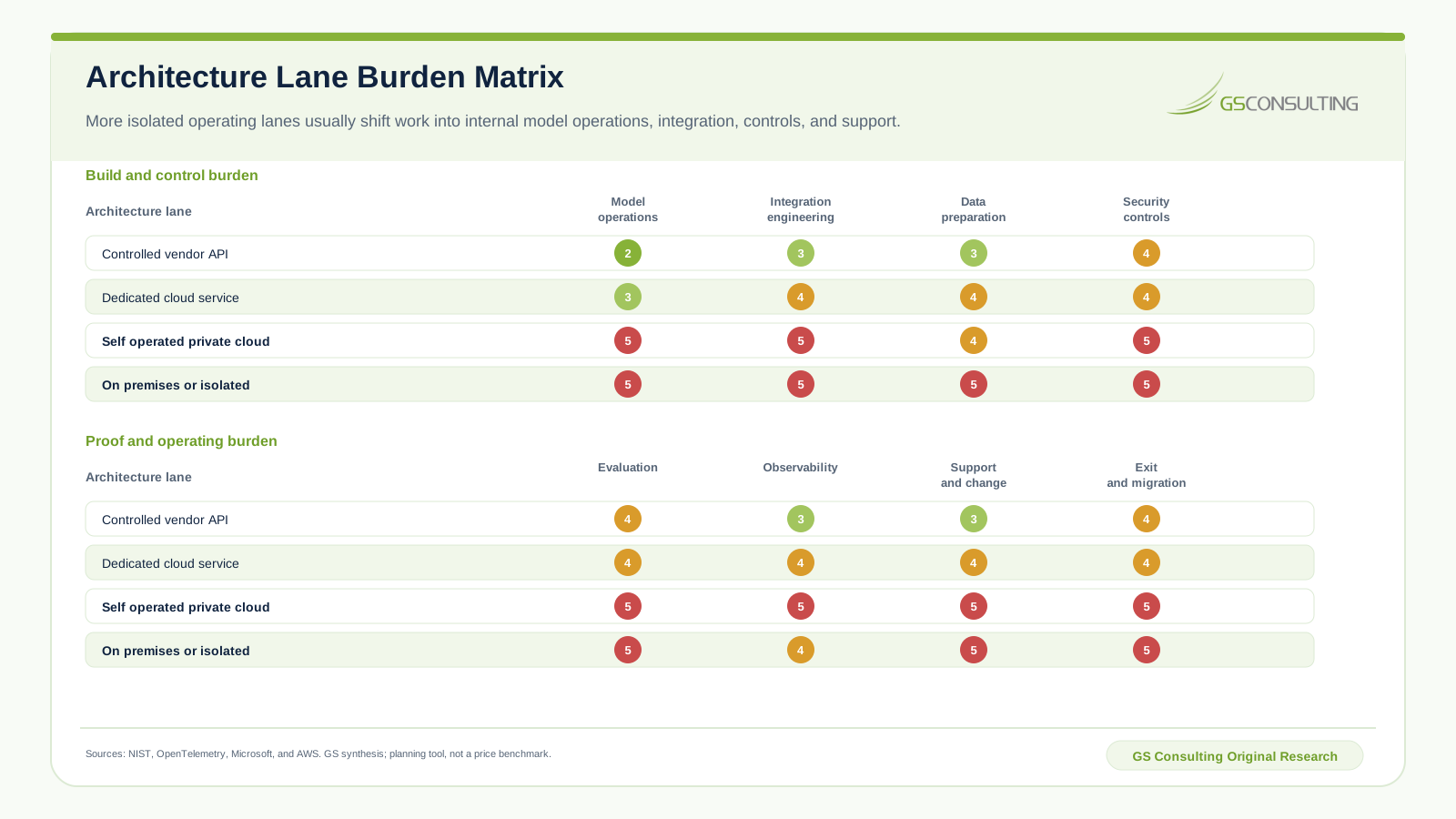
In the GS matrix, the controlled vendor API scores 65, dedicated cloud 78, self operated private cloud 97, and on premises or isolated 98. Those numbers are not prices and should not be used to select a provider. They expose where responsibility moves as control becomes more direct.
Price Data Preparation and Connectors as Product Work
Inventory every source and owner. Record its data class, rights, retention rule, location, format, volume, freshness need, quality issue, and prohibited use. Decide what the workflow actually needs. Copying every available field into the AI path raises exposure and cost without guaranteeing a better decision.
Data preparation includes extraction, parsing, cleaning, deduplication, and chunking where used. It also covers metadata, source identity, permission carry through, quality checks, rejected records, change detection, backfill, and deletion. Existing data platforms may absorb some work, but the budget should name that capacity rather than assume it.
A connector is a maintained interface. Price authentication, secrets, rate limits, pagination, schema changes, retries, and duplicate control. Add late data, source outages, test fixtures, version compatibility, destination acknowledgment, and reconciliation. The first successful transfer is a milestone, not the operating model.
Price the Security Boundary You Can Prove
Define user, service, and application identities. Enforce least privilege at source access, retrieval, model tools, workflow actions, destination writes, administration, support, and evidence. A private network does not create authorization.
Include secrets management, network paths, encryption, storage, retention, and logging. Price model and dependency integrity, vendor access, tenant separation, content controls, review, incident response, and recovery. If the workflow can take action, add transaction limits, approval, idempotency, compensation, and stop authority.
Regulated or contractual data may add assessment, documentation, customer, location, provider, flowdown, or authorization work. Do not infer that a product label satisfies those duties. Review the exact data, system boundary, contract, service terms, architecture, and approving authority.
Budget Evaluation, Human Review, and Observation
Write acceptance cases before implementation. Include normal and difficult cases, missing evidence, conflicting sources, prohibited requests, and malformed input. Test adversarial content, source loss, connector failure, model change, destination failure, and recovery. Measure useful acceptance, misses, unsupported claims, reviewer correction, rejection, exception, latency, and cost.
Human review has volume and skill. Estimate which outputs require review, how long review takes, which roles can decide, what evidence they need, how disagreements are recorded, and what happens when the queue grows. Automation that creates an invisible review backlog has moved cost, not removed it.
Observation should connect source, request, identity, policy, retrieval, and model and prompt version. Continue that record through tool use, workflow state, validation, delivery, review, exception, and outcome. Decide which records are safe to retain. Logs that copy sensitive content without need can create a second data problem.
Fund Exceptions, Recovery, Support, and Change
The happy path is cheap to demonstrate. Operations pays for malformed records, missing sources, stale permissions, timeouts, rate limits, model refusal, and unsupported output. It also pays for reviewer disagreement, duplicate action, partial delivery, destination failure, replay, repair, and reconciliation.
Set service ownership. Name support hours, escalation, incident authority, maintenance, patching, and model update duties. Assign prompt and schema changes, connector changes, capacity review, backup, recovery tests, dependency management, vendor review, and end user communication. Estimate planned work and unplanned work separately.
Every material change needs a release rule. A model or prompt update can alter behavior. So can a new source, permission, tool, connector, schema, destination, or retention rule. Budget regression tests, approval, deployment, monitoring, rollback, and evidence.
Build a Local Estimate Without Inventing a Market Price
Use a simple equation: planned role hours multiplied by loaded local rates, plus services and infrastructure, plus hardware and licenses where applicable, plus evaluation and review, plus support and recovery, plus change and exit, plus a stated contingency. Keep implementation and recurring operation separate.
| Estimate block | Inputs to collect | Evidence source |
|---|---|---|
| Workflow | Users, volume, decisions, latency, availability, quality, review, and stop rules | Observed process sample and owner acceptance cases |
| Data | Sources, fields, rights, quality, retention, movement, preparation, and deletion | Source inventory, data sample, access test, and quality profile |
| Integration | Connectors, schemas, transformations, retries, destinations, and reconciliation | Interface inventory, test transactions, and failure exercises |
| Security | Identity, network, storage, secrets, logs, vendors, response, and required evidence | Architecture, contract, risk review, and control test |
| Quality | Evaluation cases, human review, corrections, release gates, and monitoring | Blind test results, reviewer time, and acceptance trend |
| Platform | Model service, compute, storage, network, environments, capacity, and utilization | Current quote, measured traces, load test, and service terms |
| Operations | Support, exceptions, incidents, recovery, maintenance, change, migration, and exit | Duty roster, exercise result, backlog, roadmap, and exit test |
Run at least three demand cases and three accepted quality cases. Fixed capacity can be expensive under uneven use. Provider use fees can rise with sustained demand. Review labor can dominate when quality is low. A more capable model can lower total cost if it reduces corrections and retries, while a cheaper model can win when the task is narrow and deterministic controls carry most of the work.
Use a Six Stage Cost and Architecture Decision
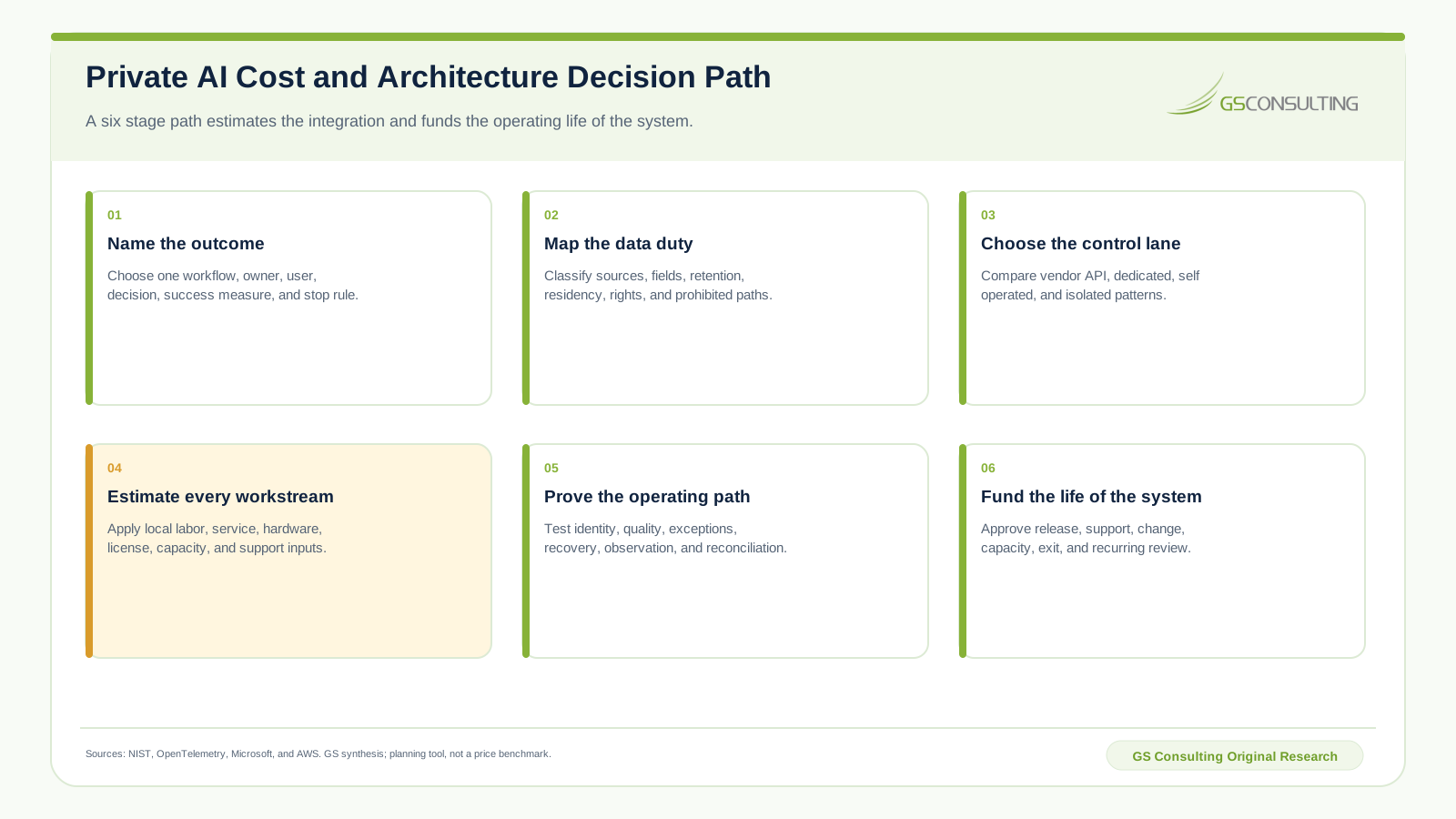
Begin with one bounded outcome and measured work. Map the data and control duty before selecting a product. Compare lanes by responsibility. Build a local work estimate. Prove the full source to outcome path under normal and failure conditions. Approve recurring ownership only when the team can operate, measure, recover, change, and exit.
A pilot should retire the largest uncertainty in the estimate. If data condition is unknown, test data preparation. If reviewer time is unknown, run a blind sample. If service performance is unknown, load test. If recovery is uncertain, break the path and restore it. A pilot that only proves the model can respond does not validate the integration budget.
Avoid Six Budget Failures
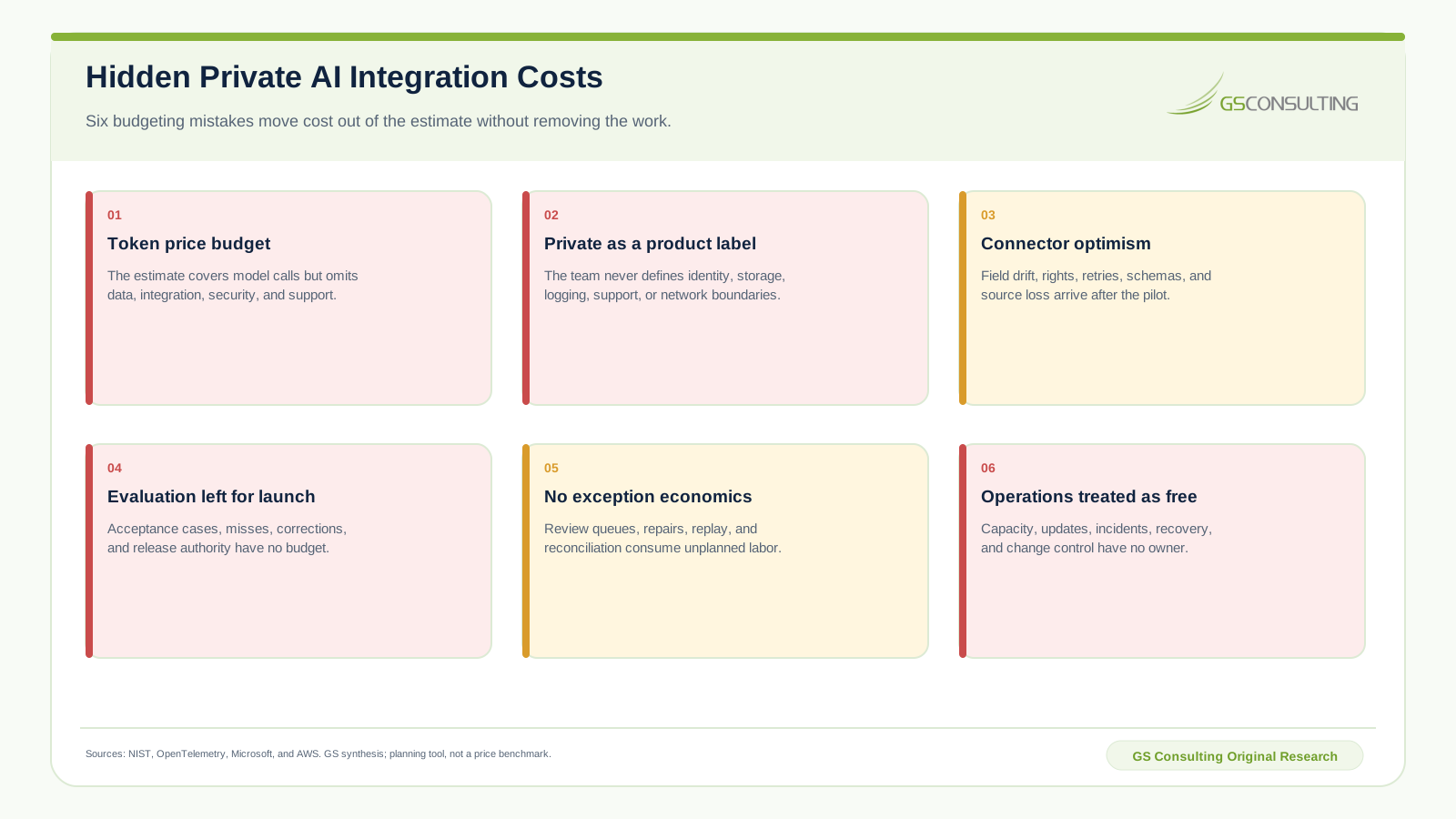
These failures have the same root cause: the estimate follows the product line instead of the operating path. Correct them by assigning each responsibility, input, output, owner, evidence source, and failure mode to a funded workstream.
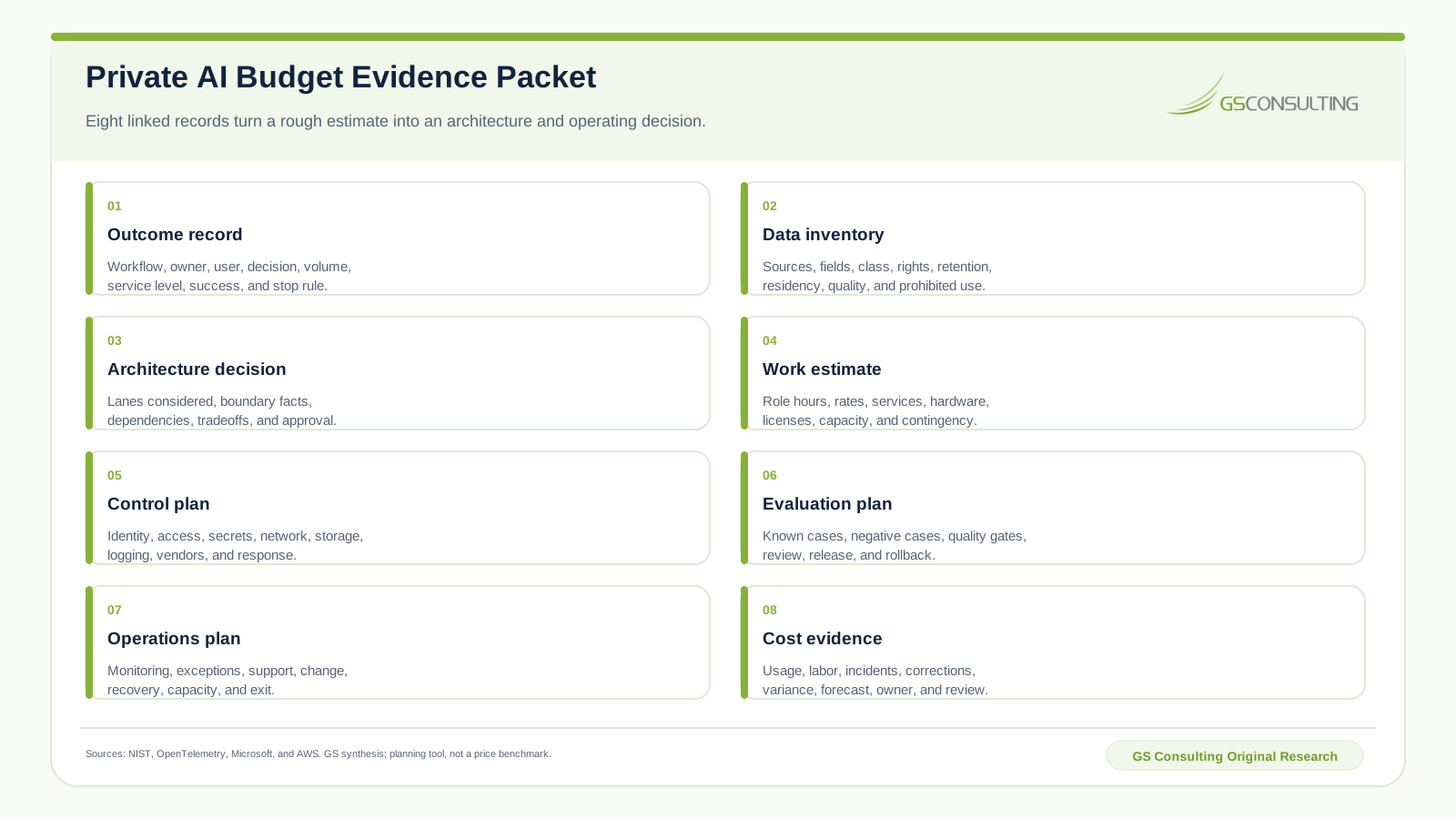
Keep the budget evidence live after approval. Compare forecast with actual usage, labor, reviewer correction, exceptions, incidents, capacity, support, and change. Cost evidence should influence architecture and scope. It should not wait for the annual finance exercise.
Research Sources and Caveat
The GS Private AI Integration Cost Pressure Index and Architecture Lane Burden Matrix are derived planning tools based on cited public sources and explicit analyst assumptions. They are not price benchmarks, provider rankings, quotes, legal advice, security approvals, or compliance determinations. No representative public dataset provides comparable implementation prices across these workstreams and lanes.
- NIST AI Risk Management Framework Playbook
- NIST SP 800-228 Update 1
- NIST SP 800-207A
- OpenTelemetry Signals
- Microsoft Well Architected Framework AI Design Principles
- AWS Generative AI Lens Cost Optimization Guidance
Frequently Asked Questions
How much does private AI integration cost?
There is no useful universal price. Start with workflow scope, data condition, connectors, identity, architecture, evaluation, and review. Then add service level, volume, support, change, recovery, vendor terms, hardware, and local labor rates.
What is included in private AI integration cost?
Include outcome design, data work, connectors, identity, workflow orchestration, review, evaluation, and observation. Also price exceptions, model hosting, environments, deployment, support, recovery, change, capacity, migration, and exit.
Is model hosting the largest private AI cost?
It can be material, especially with dedicated capacity or low utilization, but it is not always the largest program burden. In the GS planning model, exception handling, review, observation, data preparation, access, deployment, and support all score above model hosting. The result is illustrative, not a market benchmark.
Which private AI architecture is cheapest?
A controlled vendor API often carries less internal operating burden, but it may not satisfy the data, contract, residency, control, or continuity duty. The right choice is the least burdensome architecture that meets the actual obligation and can be operated with evidence.
How should a team estimate private AI integration?
Define one bounded workflow and estimate role hours by workstream. Apply local loaded rates, then add services, infrastructure, hardware, licenses, capacity, support, and contingency. Test low, expected, and high volume and quality cases. Keep every assumption and exclusion visible.
What usually gets missed in a private AI budget?
Common omissions begin with source cleanup, access decisions, schema drift, evaluation cases, and reviewer corrections. Teams also miss exceptions, retries, reconciliation, incident response, recovery tests, provider changes, capacity waste, migration, and exit work.
Suggested Future Reading
- Private LLM Cost
- Private AI and SIEM Integration Architecture
- Private AI vs Public AI vs Hybrid AI
- Private LLM Deployment Options
- Private AI Cyber Analysis Platform Case Study
Fund the system you intend to operate.
The operating standard is direct: define one outcome, map every responsibility, choose the least burdensome acceptable lane, prove the complete path, and budget support, recovery, change, and exit before production.
Explore Secure AI Automation