Enterprise AI Strategy | | 29 min read
Developing a Phased Secure AI Adoption Roadmap

Key Takeaways
A real AI roadmap gives leaders sequence, control, and evidence.
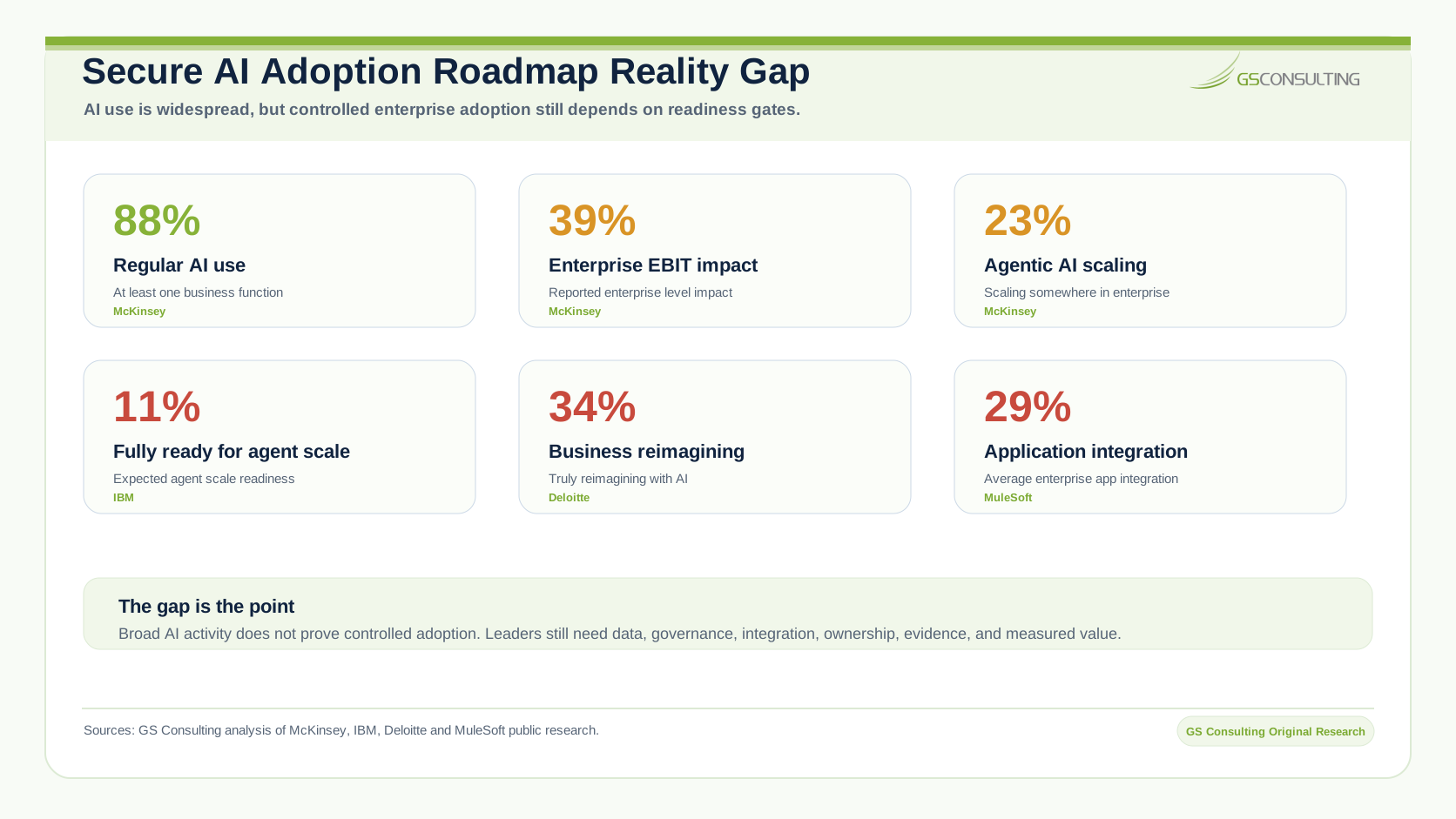
Activity Is Not Adoption
Tools, pilots, and experiments do not become strategy until leaders define sequence, owners, risk, measurement, and evidence.
Production Is the Hard Part
Pilots can survive on enthusiasm. Production needs owners, logs, support, training, monitoring, escalation, and a stop path.
Scale Reusable Patterns
The best roadmap reuses proven architecture, data, human review, logging, monitoring, and measurement patterns instead of reinventing AI for every team.
Most enterprise AI roadmaps are not roadmaps.
They are wish lists.
They list tools, pilots, departments, use cases, and big goals. But they do not explain what has to happen first, what should wait, what must be controlled, what needs budget, and what the board should expect at each stage.
That is how AI adoption gets messy.
One team buys a tool. Another team starts a pilot. Employees use public AI because the official process is too slow. Vendors add AI features inside existing software. Compliance hears about it late. Security tries to catch up. Executives ask for ROI, but no one defined the baseline.
A real roadmap gives leaders a controlled path from interest to execution. It moves logically from foundation work to pilots, then from pilots to production, and finally from production to enterprise wide adoption.
For regulated organizations, that sequence matters. You cannot scale AI safely if the data is not classified, the workflows are not mapped, the architecture is not secure, the governance is unclear, and nobody knows who owns the result.
Need a board ready AI adoption plan?
GS Consulting helps CIOs, program managers, and executive teams build phased secure AI adoption roadmaps with readiness assessment, data cleanup priorities, governance design, pilot planning, architecture sequencing, board reporting, and AI Center of Excellence planning.
Request an AI Roadmap AssessmentThe Point of a Secure AI Adoption Roadmap
A secure AI adoption roadmap should answer one question:
How do we adopt AI in a way that creates measurable value without losing control of data, decisions, systems, or compliance obligations?
That is the job. Not hype. Not theater. Not another innovation slide.
The roadmap should tell the board what the organization is doing first, why it matters, what risk it reduces, what business value is expected, what must be fixed before scale, how success will be measured, who owns the work, and when the organization is ready for the next phase.
This matters because AI adoption is not one project. It is a multi year operating change. The organization needs a sequence.
Why Phased AI Implementation Matters
Phased AI implementation is not about moving slowly. It is about moving in the right order.
If you skip the foundation, the pilots break. If you skip pilots, production becomes guesswork. If you skip governance, teams build their own versions. If you skip measurement, no one can defend the budget. If you skip security, the organization ends up with fast workflows and weak controls.
The board does not need a promise that AI will transform everything. It needs confidence that leadership knows how to introduce AI without creating new risk.
A phased roadmap provides that confidence.
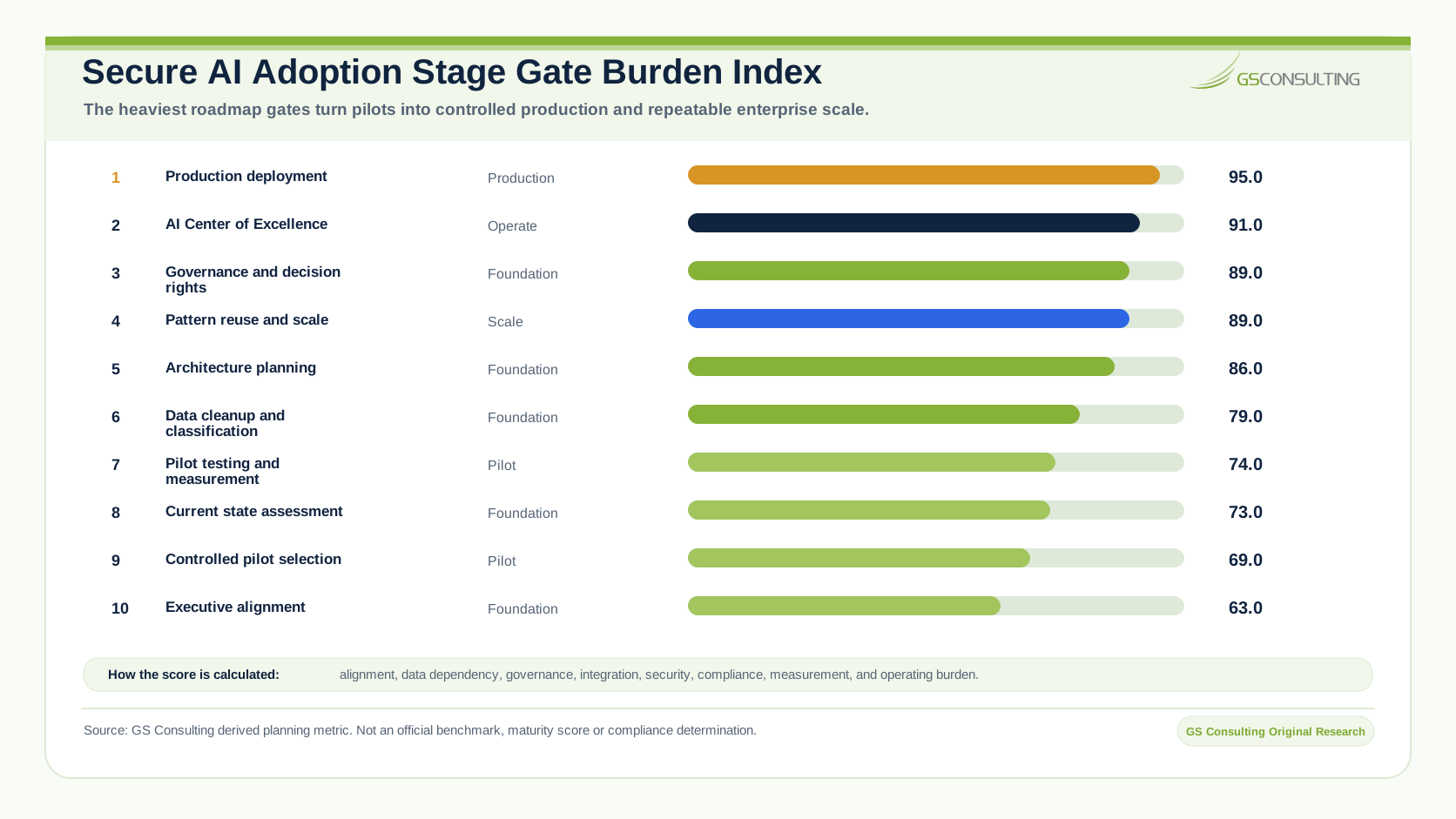
Original Research: The Secure AI Adoption Stage Gate Burden Index
Original GS Consulting research shows that secure AI adoption is a stage gate problem, not a pilot count problem.
GS Consulting analyzed public AI adoption, governance, integration, and AI management system sources against the roadmap stages in this guide. The highest burden stages were production deployment, AI Center of Excellence, governance and decision rights, pattern reuse and scale, architecture planning, and data cleanup and classification.
The research reinforces a simple point: AI activity is not the same as AI adoption. A real roadmap should prove that the organization can align leadership, assess the current environment, classify priority data, define governance, design secure architecture lanes, choose controlled pilots, test value and control, move successful pilots into production, reuse patterns, and operate AI through a durable management model.
The Stage Gate Burden Score, Pilot Portfolio Readiness Score, and roadmap evidence model are GS Consulting derived planning tools. They are not official NIST, ISO, CISA, Deloitte, IBM, McKinsey, MuleSoft, Gartner, legal, audit, compliance, maturity, or ROI determinations.
The Wrong Way to Roll Out AI
The wrong approach looks familiar. Executives say AI is a priority. Departments are told to find use cases. Teams test tools independently. Vendors pitch platform features. Some pilots work. Some do not.
Nobody knows what data was used. Nobody knows which outputs became records. Nobody knows what got measured. Nobody knows what can scale.
That approach creates activity, but not maturity. It also creates a false sense of progress. There may be a lot happening, but very little of it is connected to a secure enterprise AI strategy.
The Right Way to Roll Out AI
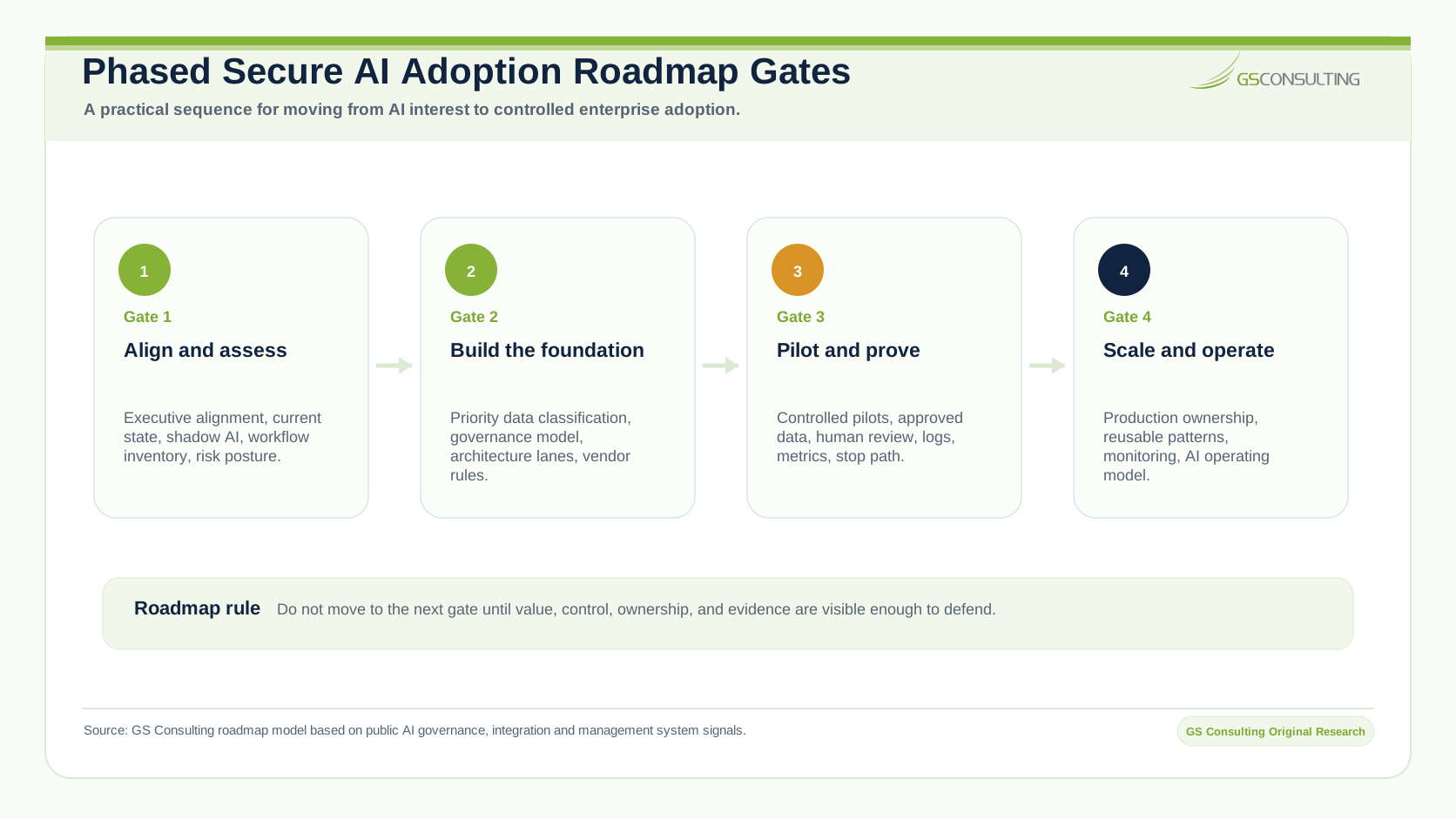
The right approach is staged.
First, understand the current environment. Then clean up the foundation. Then run controlled pilots. Then move successful pilots into production. Then scale the patterns that work. Then build the operating model that keeps AI controlled over time.
That is the roadmap. It is not complicated. It is disciplined.
The Ten Roadmap Phases
Phase 1: Executive Alignment
The first phase is not technical. It is leadership alignment.
Before the organization starts buying tools or launching pilots, leaders need to agree on what AI is supposed to accomplish. Why are we adopting AI? Which outcomes matter? Which risks are unacceptable? Which workflows are priorities? Which data types are off limits? Who owns the roadmap? Who approves high impact use cases? How will success be measured?
If executives do not agree on these questions, the AI program will drift. The CIO may focus on architecture. The CFO may focus on cost. The COO may focus on workflow efficiency. The CISO may focus on data exposure. Compliance may focus on audit and records. Business leaders may focus on speed. All of those are valid. The roadmap has to connect them.
Phase 2: Current State Assessment
Once leadership is aligned, assess the current state. This is where many organizations discover the gap between AI interest and AI readiness.
A good assessment should review current AI use, shadow AI, vendor AI features, priority workflows, data quality, data classification, legacy systems, integration readiness, security controls, compliance exposure, user readiness, governance gaps, and executive reporting.
The goal is not to embarrass anyone. The goal is to stop guessing. Most regulated organizations already have AI activity happening. The assessment tells leaders whether that activity is controlled, risky, useful, or disconnected.
Phase 3: Data Cleanup and Classification
This is where the roadmap starts to become real. AI depends on data. If the data is messy, the AI program will be messy.
Before AI connects to documents, tickets, records, reports, contracts, or operational systems, the organization needs to know what data exists and how it should be handled. Start with the repositories and workflows most likely to support early pilots: policy libraries, contract repositories, ticketing systems, compliance evidence folders, operations reports, customer support knowledge bases, security alert data, and HR policy content.
Phase 4: Governance and Decision Rights
Governance needs to be in place before pilots spread. Not a 60 page policy that nobody reads. A working governance model.
The organization needs approved tools, prohibited tools, use case intake, risk tiers, approval authority, data handling rules, vendor review, human review requirements, logging requirements, escalation paths, monitoring expectations, and clear pause authority.
A good governance model does not block AI adoption. It gives teams a clear path to move. If people do not know how to get approval, they will work around the process.
Phase 5: Architecture Planning
Architecture should come before production, not after.
A secure AI architecture defines where AI runs, what it can access, how it connects to systems, where prompts and outputs go, and how activity is logged. The roadmap should decide the public AI lane, internal AI lane, sensitive data AI lane, restricted workflow lane, private model needs, model gateway needs, RAG architecture, vector database controls, identity integration, secure connectors, API controls, output storage, audit logging, and monitoring.
The architecture should follow the data and the workflow. Do not build one giant AI environment and hope it fits everything.
Phase 6: Controlled Pilot Selection
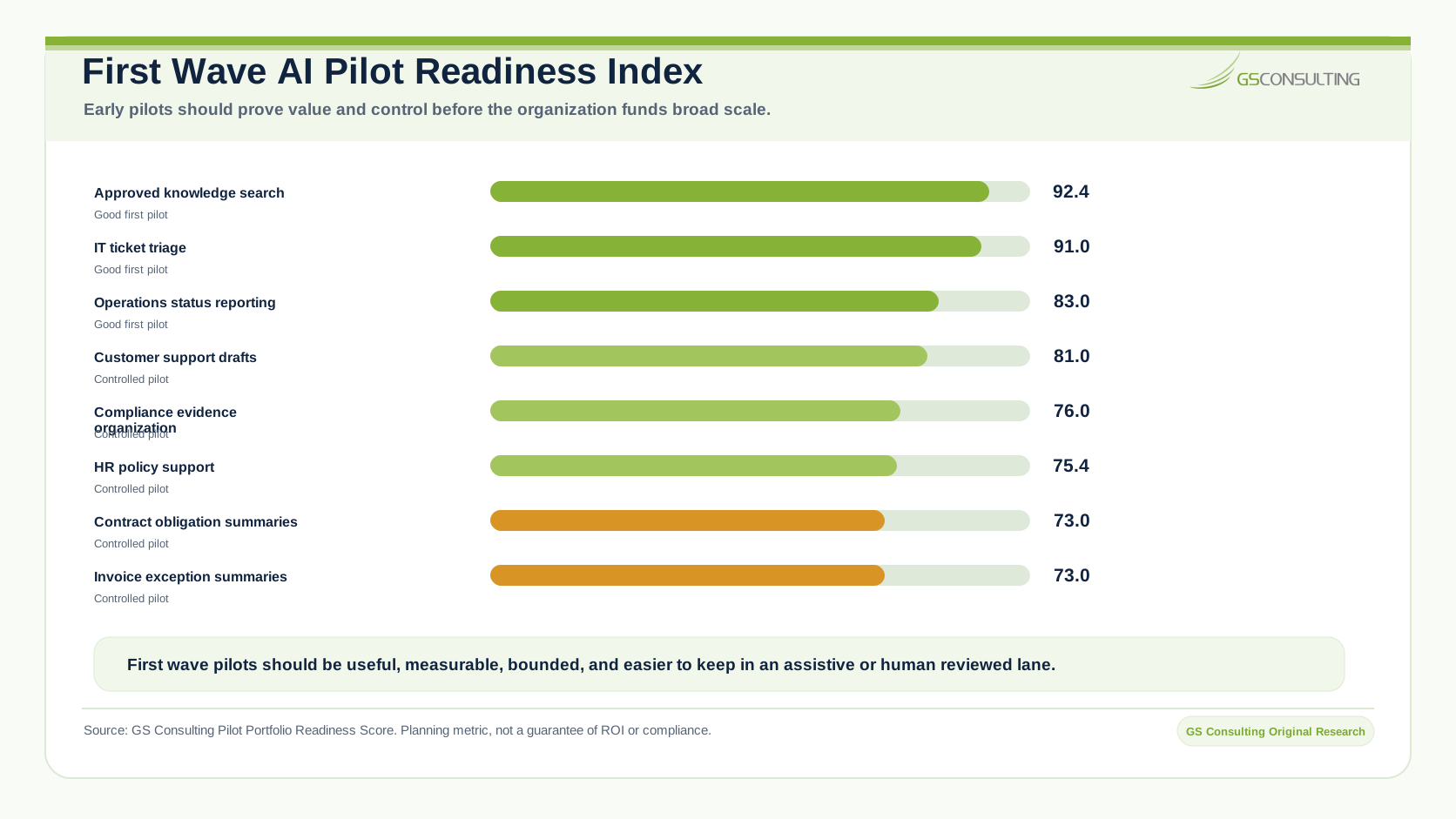
Now choose pilots. Not ten. Not every department. Start with two or three.
The best early pilots are valuable, measurable, and controlled. Good candidates include IT ticket triage, compliance evidence organization, contract obligation summaries, operations status reporting, customer support drafts, HR policy support, invoice exception summaries, and security alert summaries.
Avoid starting with final hiring decisions, payment approval, compliance certification, legal conclusions, production changes, privileged access, or customer commitments. Those may be future use cases. They should not be first wave projects unless the organization already has strong controls.
Phase 7: Pilot Testing and Measurement
A pilot should prove two things: value and control. Value means the workflow improves. Control means the organization can run it safely.
Measure time saved, cycle time reduced, errors reduced, routing accuracy, output quality, human override rate, user adoption, escalation rate, compliance issues, security issues, and audit trail completeness.
Do not scale a pilot because people liked it. Scale it because it improved the workflow and the control model held.
Phase 8: Production Deployment
A pilot becomes production only after it passes the value and control tests.
Production requires a named business owner, technical owner, and risk owner. It also requires support, training, working logs, active monitoring, documented data handling, defined human review, workflow approval, and a clear system of record.
Production is not just a bigger pilot. Production means the organization depends on the workflow. Ownership cannot be vague.
Phase 9: Scale by Reusing Patterns
Scaling AI does not mean rebuilding everything for every department. That gets expensive fast.
Scale by reusing patterns: secure document summary, ticket triage, compliance evidence, customer response drafts, contract review, knowledge assistant, and operations reporting. Each pattern should include architecture, data rules, human review, logging, monitoring, and success metrics.
That is how scaling AI in regulated industries becomes manageable. Do not let each team invent its own version.
Phase 10: Build the AI Center of Excellence
Once AI moves beyond pilots, the organization needs a durable operating model. That is where an AI Center of Excellence can help.
The AI Center of Excellence should not be a theoretical committee. It should be a working function that manages use case intake, roadmap management, architecture standards, data readiness support, vendor review, governance support, prompt and workflow standards, security review coordination, compliance documentation, training, measurement, reusable patterns, executive reporting, and production monitoring.
The Center of Excellence should help teams move faster with less risk. If it only creates paperwork, it will fail.
A Practical Multi Year Roadmap
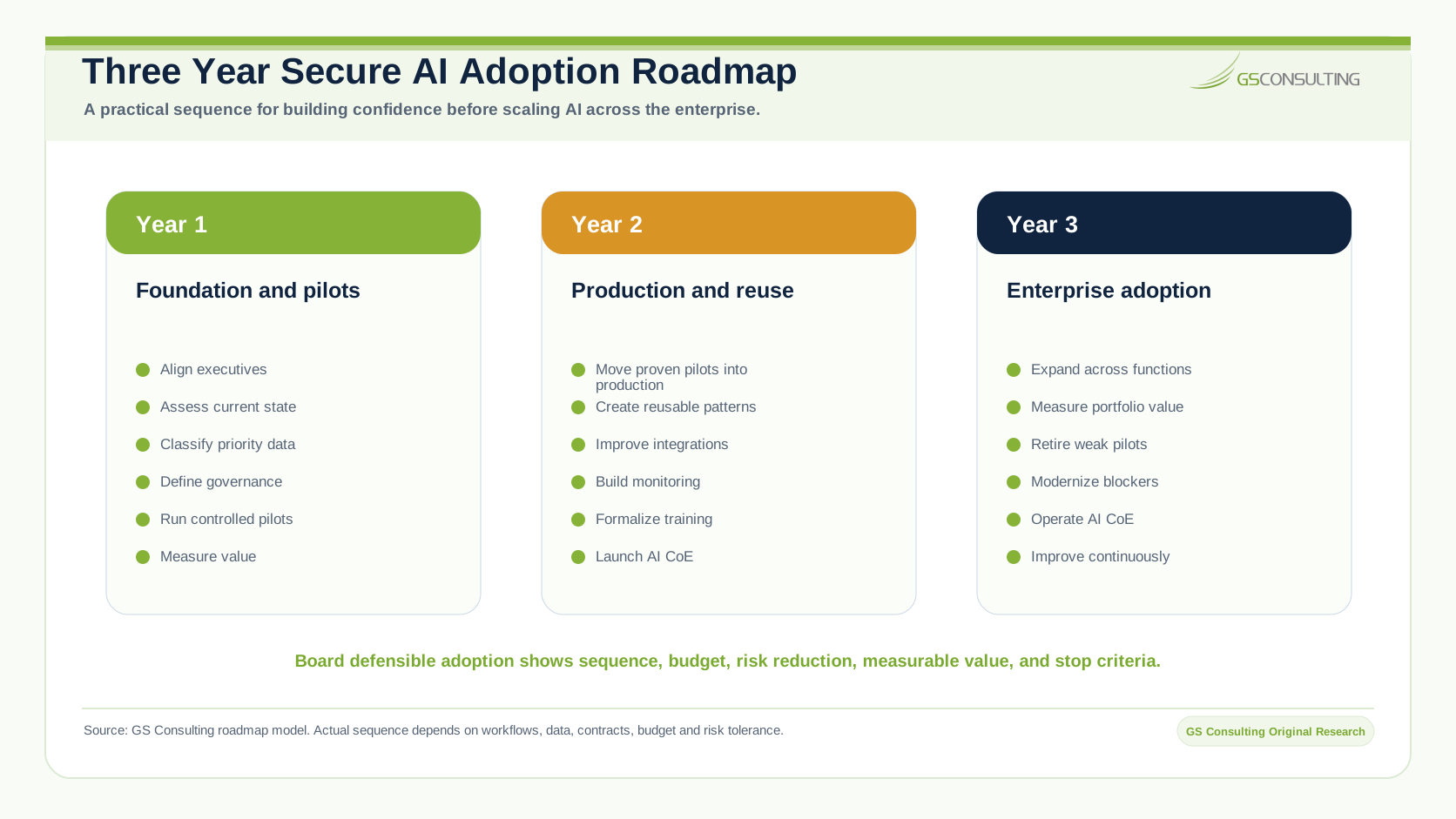
A phased secure AI adoption roadmap usually looks like this.
Year 1: Foundation and pilots
Focus on readiness. Assess the current state. Classify priority data. Define governance. Build the architecture. Select pilot workflows. Run controlled pilots. Measure value. Build executive confidence. The goal for year 1 is not enterprise wide adoption. The goal is to prove that AI can create value safely.
Year 2: Production and reuse
Move successful pilots into production. Create reusable architecture patterns. Expand to adjacent workflows. Improve data pipelines. Build monitoring dashboards. Strengthen vendor management. Formalize training. Start building the AI Center of Excellence. The goal for year 2 is controlled scaling.
Year 3: Enterprise adoption
Expand AI into more business functions. Use common patterns. Measure portfolio value. Improve operational reporting. Retire weak pilots. Invest in deeper integrations. Modernize systems that block AI value. Operate the AI Center of Excellence as a real business capability. The goal for year 3 is enterprise AI maturity.
What Program Managers and CIOs Need to Control
Program managers are critical because AI adoption crosses teams. They need to manage scope, workflow owners, data dependencies, security review, compliance review, vendor timelines, integration work, training, pilot metrics, risk register, executive reporting, change management, and production handoff.
AI adoption is not just a technical project. It is a program. If nobody manages it like a program, it becomes scattered activity.
CIOs should own the operating path. That includes architecture, systems integration, vendor governance, identity controls, data access, platform standards, security alignment, production support, budget sequencing, and technical debt reduction.
CIOs do not need to own every business use case. But they do need to make sure the enterprise can support AI safely.
What the Board Needs to See
The board does not need every technical detail. It needs a clear plan.
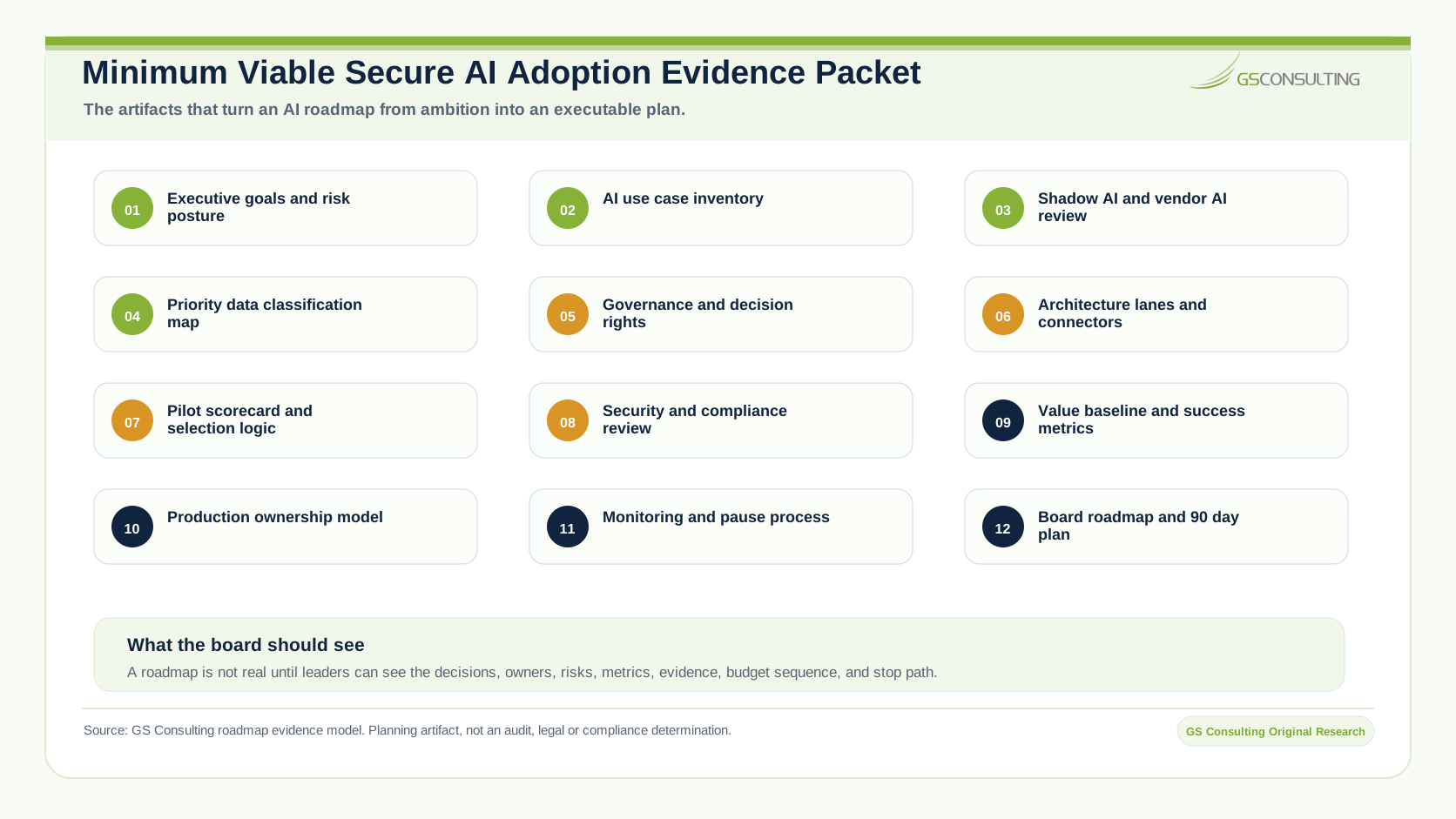
A board ready roadmap should show why AI matters, what risks exist today, what the first use cases are, what foundation work is required, what budget is needed, what milestones matter, what controls are in place, how ROI will be measured, how adoption will be governed, what happens if a pilot fails, and when the organization will scale.
The Roadmap Scorecard
Track progress with a simple scorecard. No vague progress. No AI theater.
| Area | What to measure |
|---|---|
| Use cases | Number approved, piloted, scaled, and retired |
| Data | Priority repositories classified and cleaned |
| Governance | Intake, approval, risk tiers, and policy adoption |
| Architecture | Approved AI lanes, connectors, logging, and monitoring |
| Security | Access tests, DLP rules, and incident process |
| Compliance | Evidence, records, review process, and audit readiness |
| Adoption | Active users, workflow usage, and training completion |
| Value | Time saved, cost avoided, and cycle time improved |
| Quality | Output acceptance, override rate, and error rate |
| Risk | Incidents, escalations, and blocked unsafe use |
Common Roadmap Mistakes
- Starting with too many pilots. Too many pilots create noise. Start with fewer and make them count.
- Skipping data cleanup. Bad data creates bad AI. Fix the priority sources first.
- Treating governance as cleanup. Governance belongs before pilots spread.
- Scaling before production ownership exists. If no one owns the workflow after launch, it is not production ready.
- Measuring activity instead of value. Prompt counts are not business impact. Measure workflow improvement.
- Ignoring legacy systems. AI will not fix fragmented architecture. It will reveal it.
- Letting departments build separate AI stacks. That creates more risk and higher cost. Create shared patterns.
- Having no stop criteria. Some pilots should be killed. Define what failure looks like before launch.
The First 90 Days
- Days 1 to 30Current state and alignment.
Identify executive goals, inventory AI use, find shadow AI, review sensitive data exposure, identify priority workflows, and assess governance gaps.
- Days 31 to 60Roadmap design.
Score use cases, classify priority data, define risk tiers, choose the first pilots, define architecture lanes, build the governance model, and estimate budget.
- Days 61 to 90Pilot readiness.
Map workflows, complete security review, complete compliance review, build pilot plans, define metrics, train users, and prepare executive reporting.
At the end of 90 days, the organization should have a real roadmap, not a collection of AI ideas.
How This Supports Secure Enterprise AI Strategy
Secure Enterprise AI Strategy explains how GS Consulting helps regulated organizations connect business goals, AI roadmap, data strategy, security, compliance, architecture, workforce adoption, and measurable outcomes.
This article answers the execution question: how do we structure AI adoption over multiple years so it is controlled, measurable, and board defensible?
That question connects directly to Managing Change and Adoption in Secure AI Rollouts, Enterprise AI Governance Frameworks for GovCon, Establishing Guardrails for Enterprise Generative AI, Enterprise AI Readiness Assessment, Building the Business Case for Secure Enterprise AI, Measuring Enterprise AI ROI in Mission Critical Environments, Total Cost of Ownership for Secure Enterprise AI, Aligning AI Strategy with Legacy IT Modernization, What Is an Enterprise AI Strategy?, Enterprise AI Maturity Assessment, Secure AI Automation Implementation Roadmap, and Secure AI Automation Readiness Assessment.
The Bottom Line
AI adoption does not need to be chaotic. But it will be chaotic if the organization tries to scale before it is ready.
A phased secure AI adoption roadmap gives leaders a controlled path. Start with alignment. Assess readiness. Clean the data. Define governance. Design architecture. Run controlled pilots. Measure results. Move proven workflows into production. Reuse patterns. Build the AI Center of Excellence. Then scale.
That is how regulated organizations move from AI interest to enterprise adoption without losing control.
Ready to give your board a defensible AI adoption plan?
Contact GS Consulting for Secure Enterprise AI Strategy and vCIO advisory support.
Contact GS ConsultingResearch Sources and Caveats
The Stage Gate Burden Score, Pilot Portfolio Readiness Score, and roadmap evidence model are GS Consulting derived planning tools. They are not official NIST, ISO, CISA, Deloitte, IBM, McKinsey, MuleSoft, Gartner, legal, audit, compliance, maturity, or ROI determinations.
Actual roadmap priority depends on the organization's workflows, data sensitivity, legacy systems, contracts, regulatory exposure, budget, leadership alignment, vendor stack, security posture, workforce readiness, and risk tolerance.
- McKinsey: The State of AI in 2025
- IBM: AI Control Gap Study
- Deloitte: State of AI in the Enterprise
- Salesforce MuleSoft: Connectivity Benchmark
- MuleSoft: Connectivity Benchmark
- NIST AI Resource Center: AI RMF Core
- ISO/IEC 42001: Artificial Intelligence Management System
- Reuters: Gartner Agentic AI Project Forecast
Frequently Asked Questions About Enterprise AI Adoption Roadmaps
What is an enterprise AI adoption roadmap?
An enterprise AI adoption roadmap is a sequenced plan for moving from AI interest to controlled AI execution. It defines executive alignment, current state assessment, data cleanup, governance, architecture, pilot selection, testing, production ownership, reusable patterns, and operating model maturity.
Why should regulated organizations use phased AI implementation?
Regulated organizations should use phased AI implementation because AI can touch sensitive data, records, contracts, systems, decisions, and compliance evidence. Phasing gives leaders a way to prove value and control before broad rollout.
What should happen before the first AI pilots?
Before the first AI pilots, leaders should align on business goals, risk posture, ownership, priority workflows, data restrictions, approval authority, success metrics, governance, and architecture lanes. Pilots should start only after the organization knows what data and controls are in scope.
What makes an AI pilot ready for production?
An AI pilot is ready for production when value and control are proven. The organization should have named business, technical, and risk owners; approved data handling; working logs; monitoring; training; human review; support procedures; success metrics; and a pause path.
Related Reading
- Secure Enterprise AI Strategy
- Enterprise AI Governance Frameworks for GovCon
- Establishing Guardrails for Enterprise Generative AI
- Managing Change and Adoption in Secure AI Rollouts
- Enterprise AI Readiness Assessment
- Building the Business Case for Secure Enterprise AI
- Measuring Enterprise AI ROI in Mission Critical Environments
- Total Cost of Ownership for Secure Enterprise AI
- Aligning AI Strategy with Legacy IT Modernization
- What Is an Enterprise AI Strategy?
- Enterprise AI Maturity Assessment
- Secure AI Automation Implementation Roadmap
- Secure AI Automation Readiness Assessment