AI Governance | | 24 min read
Implementing the NIST AI RMF: A Practical Walkthrough

Key Takeaways
The operator view
Four connected functions
Govern sets accountability. Map frames context. Measure tests claims. Manage makes and tracks risk decisions.
Testing evidence scores 100
Data provenance, test strategy, control results, and monitoring carry the highest evidence priority in the GS model.
No decision without proof
Each AI release, restriction, exception, or stop decision should cite current evidence and a named owner.
NIST AI RMF implementation is not a policy writing exercise. It is a decision and evidence system.
A polished policy can say the organization manages AI risk. It cannot show what the system is intended to do, who may be affected, which data it uses, how it was tested, which threshold failed, who accepted the risk, or what happens after a vendor changes the model. Those are operating facts. The NIST AI Risk Management Framework gives teams a common structure for connecting them.
The current public baseline is NIST AI RMF 1.0. NIST describes it as voluntary, rights preserving, nonsector specific, and use case agnostic. NIST has also announced that the framework is under revision. Use the current version named by your program and record what changes when a revision is published.
This walkthrough belongs to the AI Governance Insights hub and supports the AI governance, risk, and human oversight service. It complements the broader AI governance framework guide by showing how to operate the NIST functions around one real use case.
Start with one AI decision that needs evidence.
GS Consulting helps teams define the use case, map risk, build the test plan, make the decision, and retain a reviewable record.
Request an AI RMF Working SessionWhat the NIST AI RMF Is and Is Not
The framework organizes AI risk work around four functions: Govern, Map, Measure, and Manage. Govern is a crosscutting function. The other three repeat as context, evidence, performance, threats, people, and business conditions change. The Core contains categories and subcategories that describe outcomes. It does not prescribe one organization chart, technology stack, scoring formula, or document set.
The framework is not a certification. It does not make every subcategory equally important for every use case. It does not replace security, privacy, safety, civil rights, procurement, records, sector, or contract duties that apply from another authority.
For federal agencies, OMB Memorandum M-25-21 establishes agency requirements under its terms. That does not automatically turn every NIST AI RMF outcome into a blanket contractor obligation. Contractors should read the solicitation, award, clauses, customer direction, data terms, and system role.
A practical implementation has five properties:
- It names the use case and the decision owner.
- It maps outcomes to existing work and evidence.
- It sets measurable release and stop thresholds.
- It records risk treatment and remaining risk.
- It repeats when the system or context changes.
Turn the Four Functions Into an Operating Loop
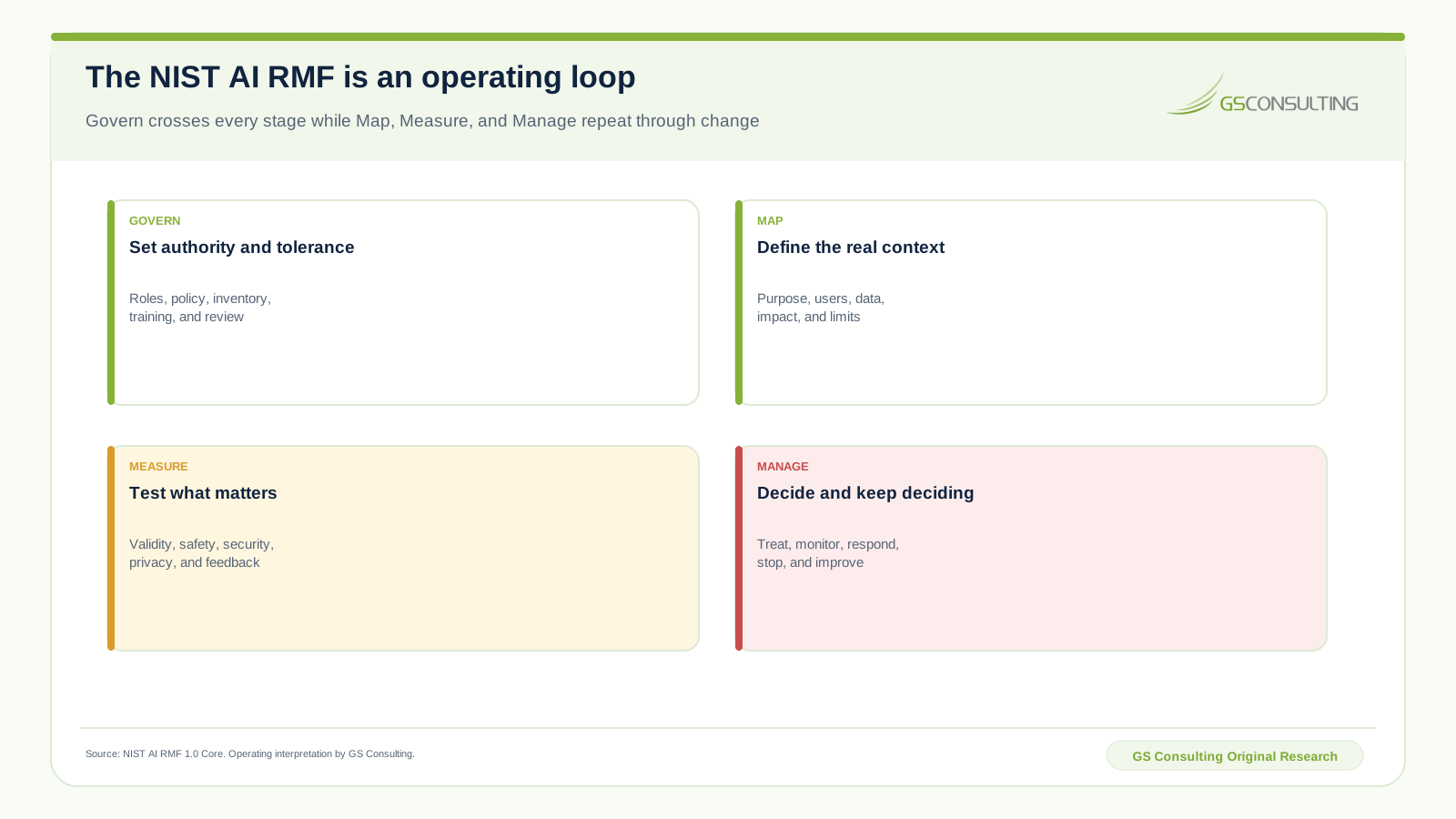
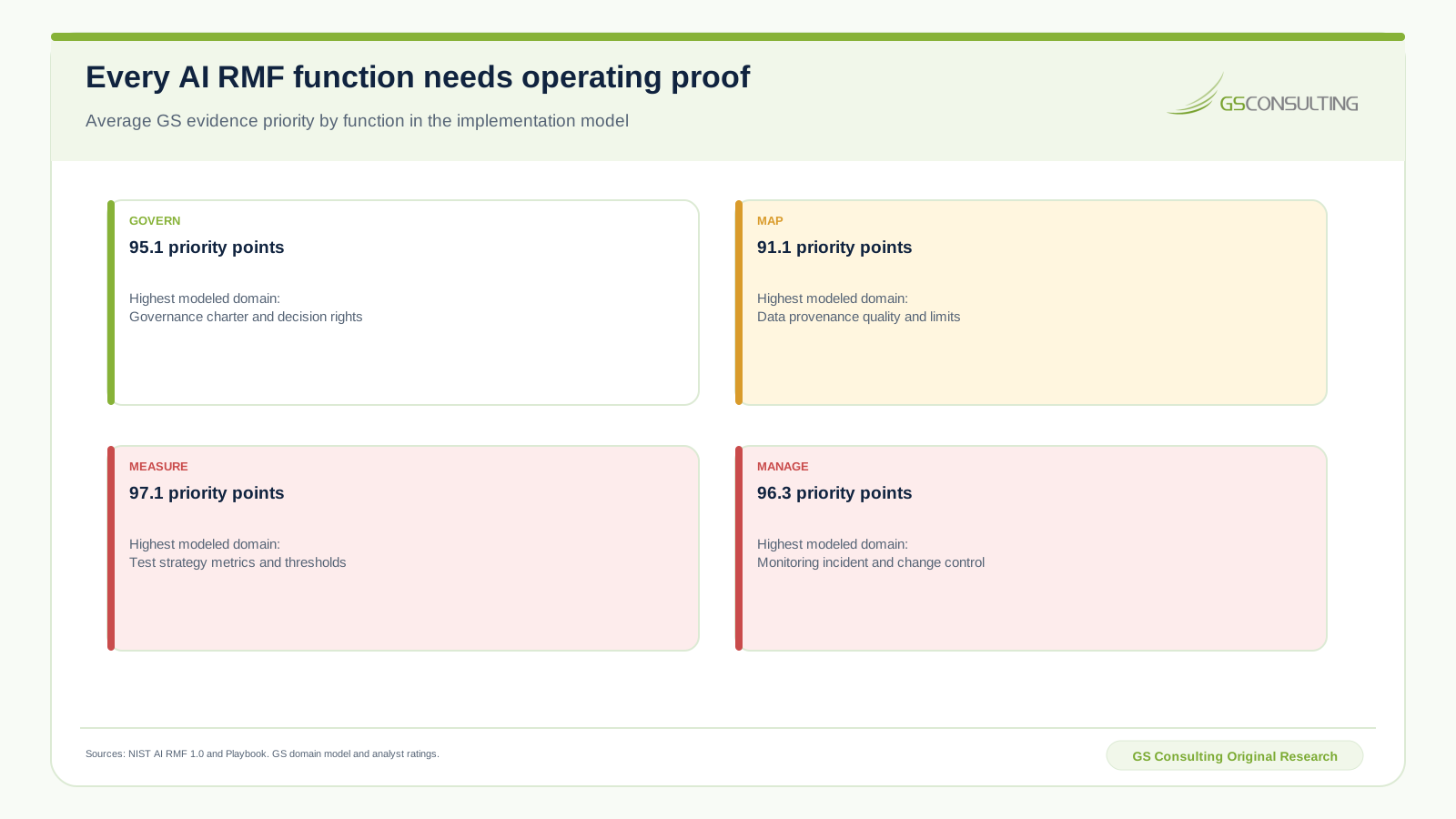
Govern defines accountability, policy, culture, resources, documentation, and oversight. Map establishes purpose, context, affected parties, impacts, data, assumptions, and dependencies. Measure selects methods and evaluates validity, reliability, safety, security, privacy, transparency, fairness, and other relevant characteristics. Manage prioritizes risk, chooses treatment, assigns action, monitors results, and determines whether the system proceeds, changes, pauses, or retires.
Do not force a straight line where the work is iterative. A failed test can reveal a missing affected party. A new vendor release can change data use. An incident can expose a weak escalation rule. A business expansion can move the system into a different consequence class. Each event should trigger a defined return through the relevant functions.
GS AI RMF Operating Evidence Priority Index
GS Consulting built a derived index for twelve evidence domains commonly needed to operate the framework. The model weights lifecycle reach at 25 percent, consequence at 22 percent, evidence dependency at 20 percent, change frequency at 18 percent, and scrutiny at 15 percent. Each factor uses a documented 1 to 5 rating and produces a score from 0 to 100.
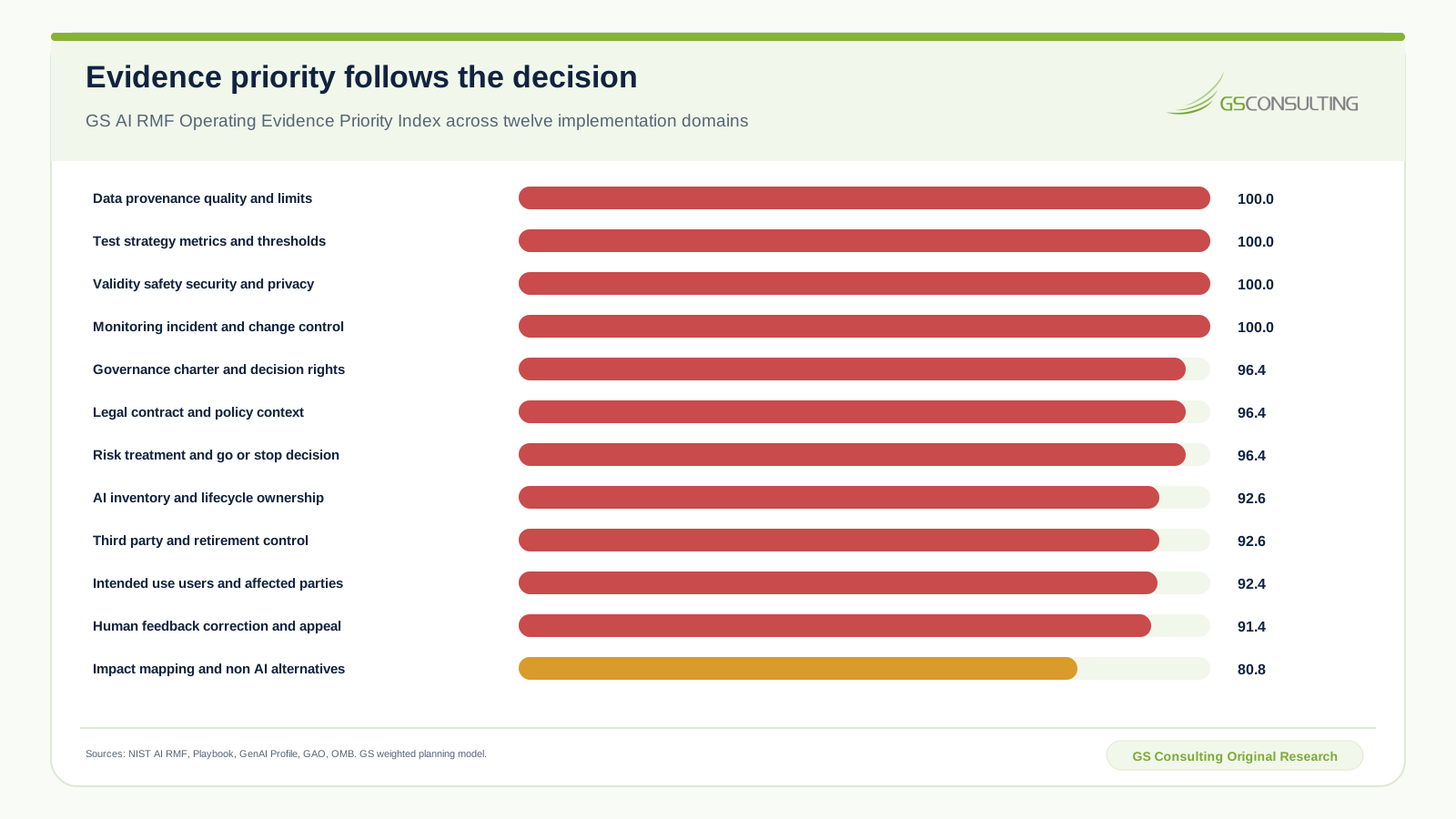
Four evidence domains score 100: data provenance, quality, and limits; test strategy, metrics, and thresholds; validity, safety, security, and privacy results; and monitoring, incident, and change records. The governance charter, legal and policy mapping, and risk treatment decision each score 96.4. Inventory and lifecycle, intended use and affected parties, and third party and retirement records score above 92.
The finding is not that teams should write four large documents first. It is that these domains influence repeated decisions and change often enough to require durable ownership. A stale data record or monitoring plan can invalidate several downstream claims at once.
A limited sensitivity test shifted weight toward scrutiny and consequence. No domain moved more than 0.8 points. The priority bands remained stable. Local facts can still change the order, especially when an AI system affects safety, benefits, employment, civil rights, security, healthcare, finance, or contract performance.
The index is a GS Consulting derived planning tool. It is not a NIST score, maturity rating, certification, compliance conclusion, or legal determination. Replace analyst ratings with evidence from the actual system and authority.
Govern: Establish the Decision System
Govern is not the opening chapter that a team finishes before technical work. It applies across the lifecycle. Start by naming executive accountability, business ownership, technical ownership, risk ownership, data ownership, security and privacy roles, affected party input, review forums, escalation, exception authority, and stop authority.
The AI governance roles and responsibilities guide turns that list into decision rights, delegated limits, evidence duties, backups, and one accountable owner for each consequential decision.
Build one inventory record per AI system or use case. Include purpose, owner, lifecycle stage, model and vendor, data, integrations, users, affected parties, consequence, current status, last review, next review, and retirement condition. Connect the inventory to procurement and change processes so new AI features do not appear outside review.
Use the AI model inventory guide to define the required fields, named owners, quality checks, material change triggers, and decision evidence behind that record.
Map the framework to existing controls instead of creating a parallel bureaucracy. Security testing may already produce part of the evidence. Privacy review, accessibility review, model evaluation, vendor due diligence, records management, internal audit, quality, and incident response may already own other parts. Name the source and gap.
Map: Define Context Before Scoring Risk
Start with the intended purpose in plain language. Name what the system does, what it does not do, who uses it, who experiences its output, which decision it supports, what a person can override, and what non AI alternative exists. A generic label such as “assistant” hides too much.
Map the boundary. Include models, prompts, retrieval, data stores, interfaces, tools, people, vendors, devices, networks, output destinations, logs, and feedback channels. Record upstream dependencies and downstream uses. If another team can repurpose output, include that path.
Identify beneficial and harmful impacts across people, groups, the organization, customers, the public, and the environment where relevant. Include normal use, foreseeable misuse, abuse, failure, and use outside the original context. The AI automation risk assessment guide provides a practical consequence lens.
Map is complete enough to continue when the team can explain whose outcome changes, what evidence would show harm, which assumptions remain uncertain, and which use is prohibited.
Measure: Turn Claims Into Tests and Thresholds
“The model is accurate” is not a test plan. Define the decision the output supports, the population and conditions, the metric, dataset, benchmark, expected range, minimum threshold, known limitation, owner, and response to failure.
Choose characteristics that matter to the use case. They may include validity, reliability, safety, security, resilience, privacy, transparency, explainability, fairness, accountability, uncertainty, accessibility, and human factors. Not every characteristic needs the same method or weight.
Separate development evidence from independent challenge where consequence warrants it. Test normal cases, difficult cases, protected or affected groups where applicable, malicious inputs, tool misuse, data leakage, model changes, and operator failure. Record negative results and limitations. A passed average can hide a dangerous subgroup or rare action.
The human oversight guide helps define what a reviewer needs to see and when override or escalation should occur. Human presence is not a control unless the person has time, information, authority, and a recordable action.
Manage: Make a Decision and Track the Treatment
Manage converts evidence into action. Rank identified risks using consequence, likelihood, exposure, uncertainty, affected parties, detectability, and reversibility. Choose whether to avoid, reduce, transfer, share, accept, monitor, restrict, pause, or retire the use case.
Every material treatment should name an owner, action, resource, completion rule, due date, validation method, remaining risk, and decision authority. If a control is not ready, state whether the use case can proceed under a narrow exception and what would end that exception.
Define release, scale, pause, rollback, incident, and retirement criteria before the system is under pressure. Monitor the metrics and conditions that support the original decision. A model update, data shift, new population, new tool, new country, new contract, or new failure can reopen the decision.
Use the AI audit trail guide to connect decisions to operating records. Evidence should let a reviewer see what was known, what was decided, who decided, what changed, and whether the treatment worked.
A Practical NIST AI RMF Implementation Path
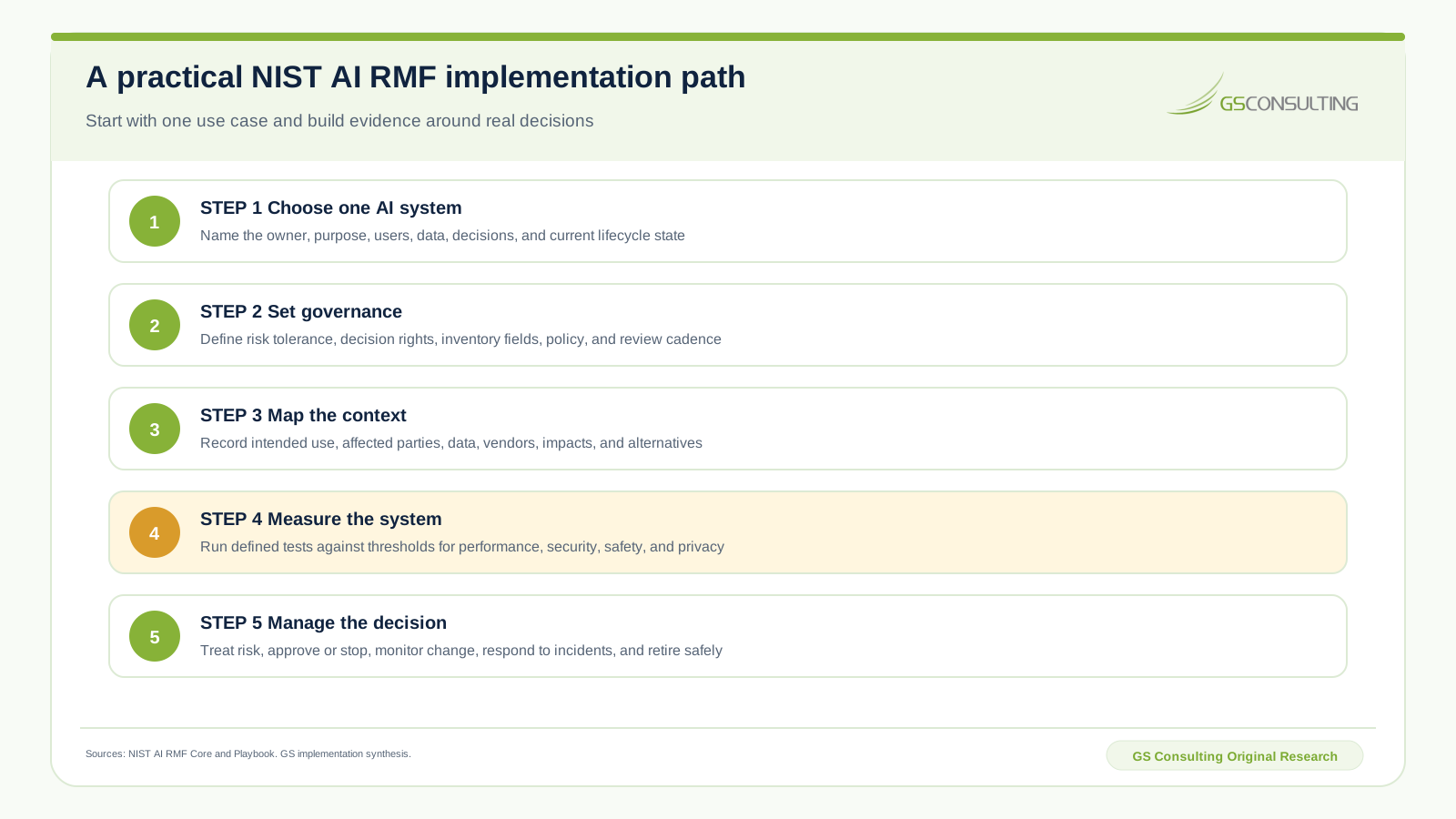
- Select one use case. Choose a live or near release system with a named owner and a real decision due.
- Confirm authority and scope. Record laws, regulation, contracts, policy, customer direction, data duties, and current framework version.
- Create the inventory record. Name purpose, system boundary, people, data, vendors, tools, owners, status, and review cycle.
- Map context and impact. Document intended use, affected parties, assumptions, benefits, harms, misuse, and prohibited use.
- Build the test plan. Tie each important claim to a metric, method, dataset, threshold, owner, and failure response.
- Make the risk decision. Record treatment, remaining risk, approval, restrictions, exceptions, and stop conditions.
- Release with monitoring. Watch performance, incidents, complaints, security, data, vendors, and context changes.
- Review and reuse. Capture the gap, improve the common process, and apply the pattern to the next use case.
The First 90 Days
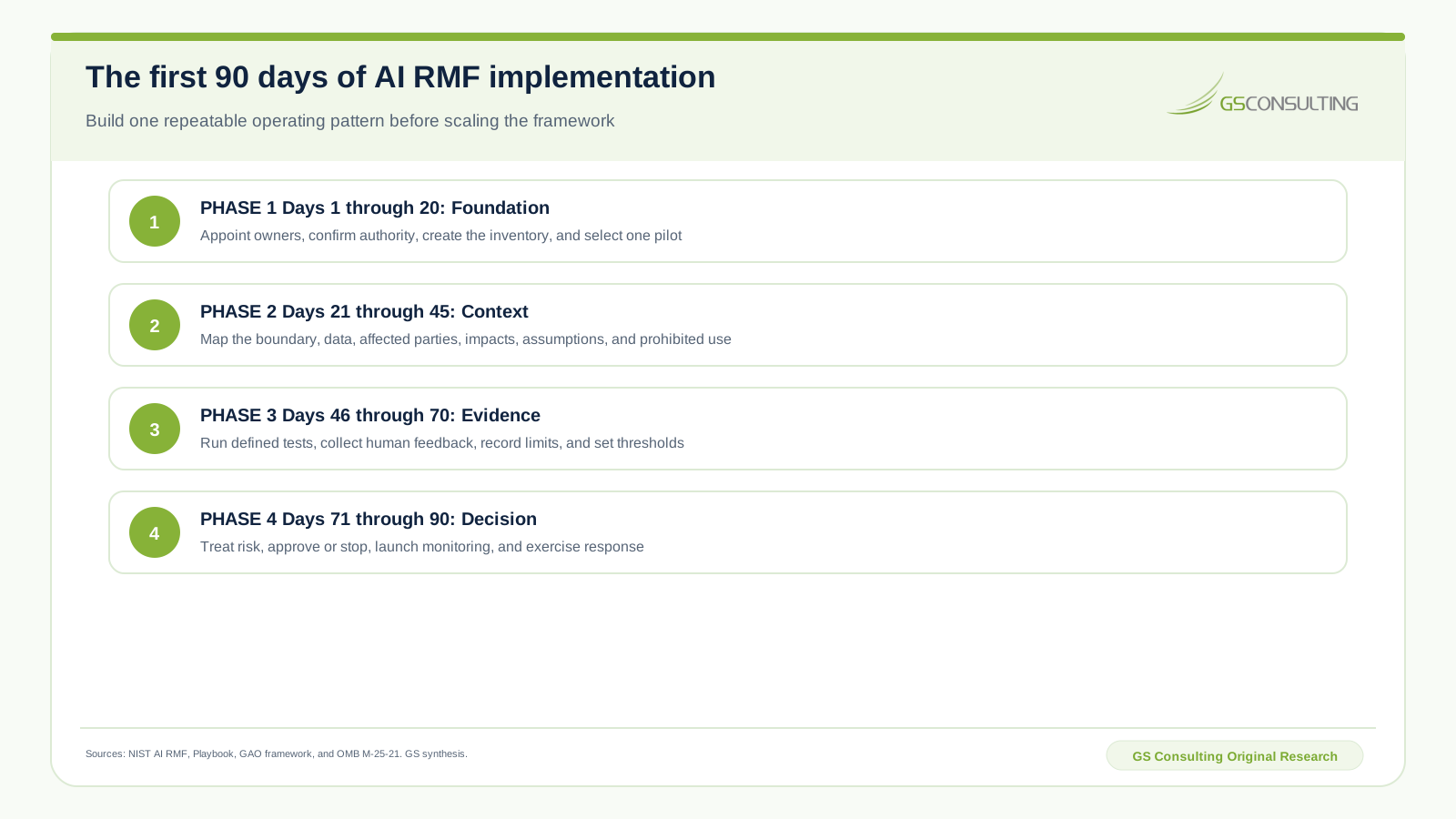
Days 1 through 20: appoint owners, confirm applicable authority, create the inventory schema, select the pilot, define review forums, and document decision rights.
Days 21 through 45: map the use case, boundary, data, affected parties, benefits, harms, assumptions, vendor dependencies, prohibited use, and non AI alternative.
Days 46 through 70: create and execute the test plan, review security and privacy, collect human feedback, record limitations, and set release and stop thresholds.
Days 71 through 90: make the risk decision, assign treatment, launch monitoring, exercise incident and rollback paths, review the evidence packet, and decide what can be standardized.
Do not judge the first 90 days by the number of templates produced. Judge it by whether the team can reconstruct one complete decision and repeat the process without heroic effort.
Use Profiles and the Playbook Without Turning Them Into a Checklist
The NIST AI RMF Playbook offers suggested actions for Core outcomes. Use it as a menu, not a universal set of mandatory controls. Select actions based on context and record why they fit.
A Current Profile describes how selected outcomes are addressed now. A Target Profile describes the outcomes and depth needed for a defined context. The gap between them can drive the roadmap. Keep the profile tied to a use case, portfolio, sector, or operating unit so the statements remain testable.
The NIST Generative AI Profile adds considerations for generative AI. It supplements the framework; it does not replace the Core. Other profiles and sector guidance can add context. Record which profile and version informed the decision.
For public sector programs, the GAO AI accountability framework can provide a complementary audit lens across governance, data, performance, and monitoring.
The Minimum NIST AI RMF Evidence Packet
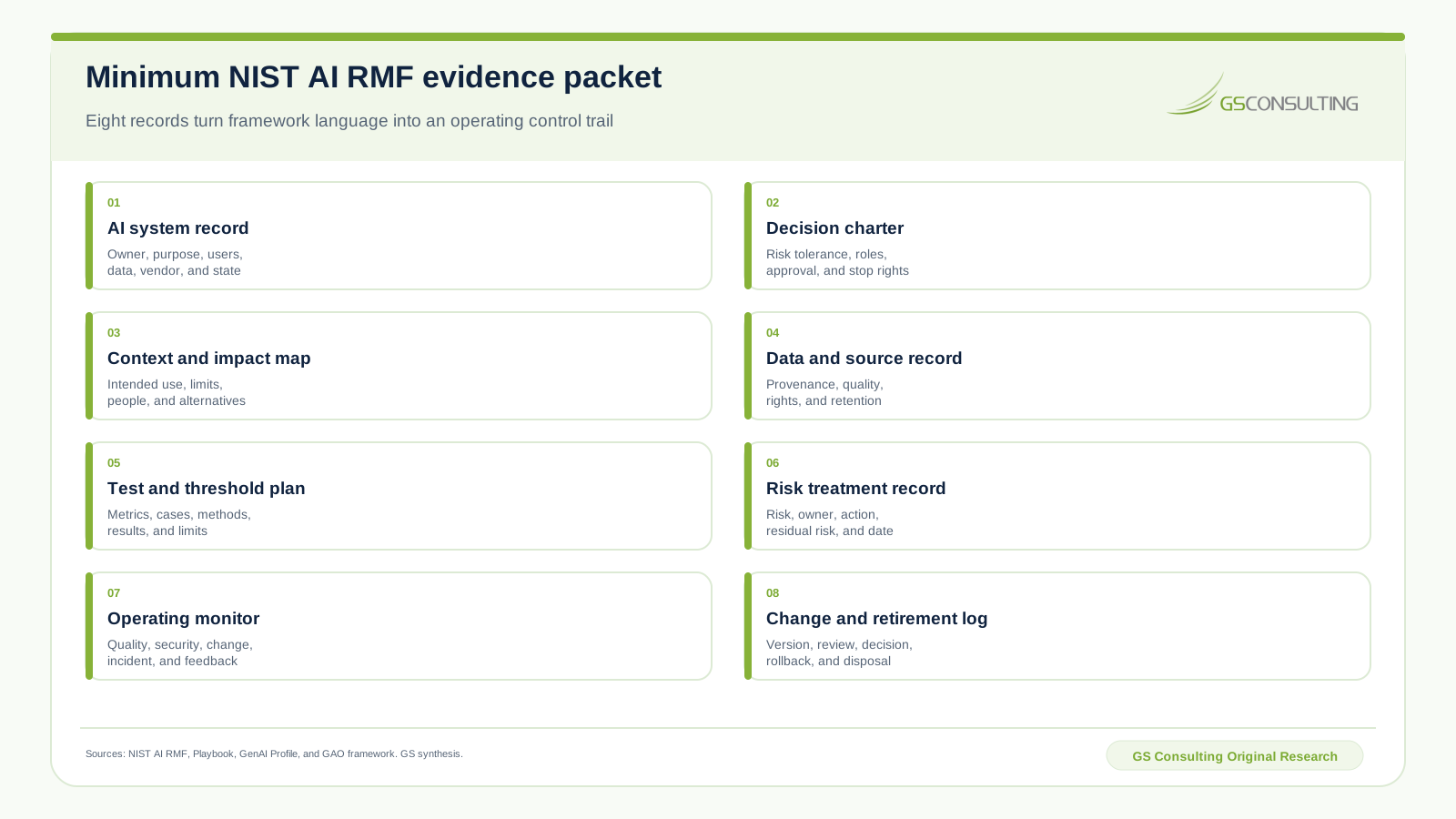
Keep the authority and scope record, system inventory, intended use and affected party analysis, data provenance and limits, impact map, test plan and results, human feedback, risk treatment decision, monitoring plan, incident record, exception record, change history, and retirement decision.
Reuse evidence by reference. Do not copy a security test, privacy review, vendor assessment, or data record into several documents that drift apart. Record the owner, current version, date, system scope, decision supported, and next review.
Sources, Version, and Planning Caveat
This guide uses NIST AI RMF 1.0 and public supporting resources available on July 30, 2026. The framework is voluntary and under revision. Confirm current NIST publications and the authority that governs the actual system before relying on this walkthrough.
- NIST AI Risk Management Framework 1.0
- NIST AI RMF Core
- NIST AI RMF Playbook
- NIST Generative AI Profile
- GAO Artificial Intelligence Accountability Framework
- OMB Memorandum M-25-21
Frequently Asked Questions About the NIST AI RMF
What is the NIST AI RMF?
The NIST AI Risk Management Framework is a voluntary framework for managing AI risks to people, organizations, and society across the lifecycle.
Is the NIST AI RMF mandatory?
The framework itself is voluntary. A separate law, regulation, contract, grant, customer direction, or agency policy may require particular outcomes or evidence.
Where should NIST AI RMF implementation start?
Start with one named use case, owner, intended purpose, affected parties, boundary, data, lifecycle stage, and decision that needs evidence.
Are Govern, Map, Measure, and Manage sequential?
No. Govern applies across the program, while Map, Measure, and Manage repeat as the system, evidence, people, and context change.
What evidence supports NIST AI RMF implementation?
Useful evidence includes the AI inventory, ownership record, context and risk map, data and impact analysis, test plan, results, thresholds, treatment decision, approval, monitoring, incidents, exceptions, and change history.
Related Reading
- AI Governance Insights hub
- What Is AI Governance?
- AI Governance Framework for Regulated Organizations
- Enterprise AI Governance Framework for GovCon
- AI Automation Risk Assessment Framework
- Human in the Loop AI Automation
- Enterprise AI Readiness Assessment
- AI Governance, Risk, and Human Oversight
No AI risk decision without current evidence.
Name the owner, test the claim, record the treatment, watch the change, and stop when the decision basis no longer holds.
Request an AI RMF Working Session