Cybersecurity | | 25 min read
NIST 800-171 Incident Response Requirements Explained

Key Takeaways
Incident response has to join command, contract, evidence, and recovery
Five requirements create one response capability
Handling, reporting, assistance, testing, training, and planning are not separate document tasks. They must work as one command process during a real event.
Monitoring and Reporting carry the highest pressure
The requirement scores 83.5 in the GS model because time, coordination, evidence, contract dependency, and formal assessment work converge there.
Open the clock before certainty arrives
Record discovery time, known facts, contract scope, incident lead, and next decision immediately. The team can refine facts. It cannot reconstruct a disciplined first hour later.
NIST 800-171 incident response is not an emergency document. It is the command process that has to work while the facts are incomplete, the clock is moving, and technical recovery can destroy evidence.
A policy that says the company will respond is not enough. The team needs a known incident lead, a discovery time, decision authority, technical procedures, contract review, reporting routes, evidence preservation, provider contacts, recovery criteria, trained roles, and a tested plan.
The operating standard is blunt: open command quickly, preserve facts before they disappear, evaluate duties from the current award, contain without guessing, report through the approved route when required, recover from a trusted state, and turn the review into tested corrective work.
The NIST 800-171 and CUI Security hub connects this guide to the full program. Use the complete NIST 800-171 guide for the baseline, the Access Control implementation guide to reduce unauthorized paths, and the NIST assessment guide to design proof. GS Consulting supports the operating layer through secure AI automation.
Containment and recovery depend on records created before the event. The Media Protection guide explains custody, backup, and sanitization proof. The Configuration Management guide explains trusted baselines, authorized change, deployed results, and drift correction.
Make the first hour executable.
GS Consulting helps contractors connect incident command, technical response, contract duties, providers, evidence, recovery, testing, and accountable corrective action.
Test the Response ProcessNIST 800-171 Incident Response: The Short Answer
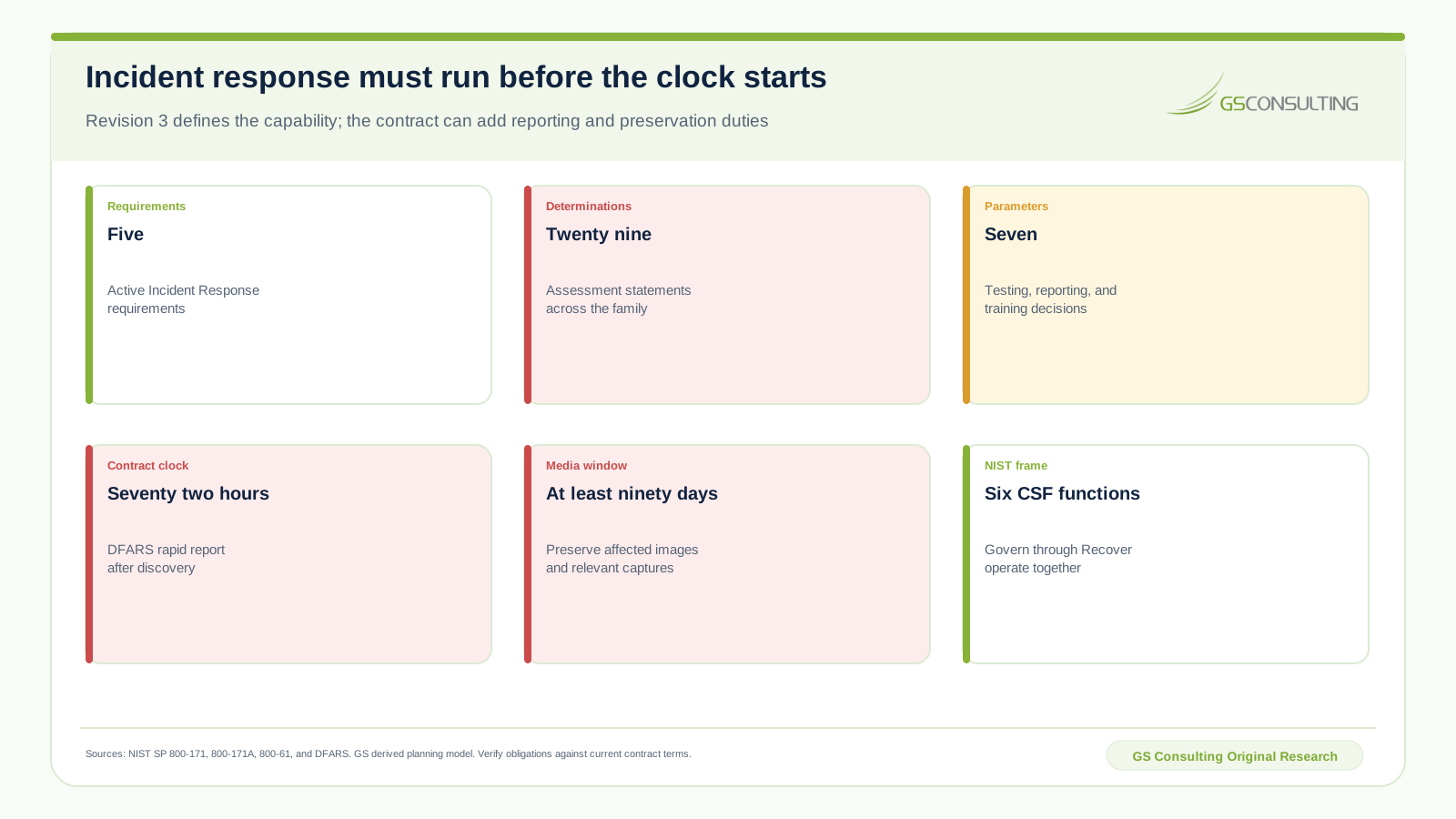
NIST SP 800-171 Revision 3 contains five active Incident Response requirements. They cover handling, monitoring and reporting, response assistance, testing, training, and the response plan.
GS counted twenty nine determination statements and seven organization defined parameters in the official NIST SP 800-171A Revision 3 assessment procedures. Those parameters force explicit choices about reporting time, reporting authorities, test frequency, test events, training time, training frequency, and training content.
The numbers do not create the operating sequence. Current NIST SP 800-61 Revision 3 places incident response across all six Cybersecurity Framework 2.0 functions: Govern, Identify, Protect, Detect, Respond, and Recover. Preparation, detection, response, recovery, and improvement are one risk process, not isolated phases owned by one security person.
Build an Obligation Map Before the Incident
NIST requirements, acquisition clauses, agency instructions, privacy laws, customer terms, insurance conditions, provider agreements, and other duties can apply to the same event. They can define different triggers, clocks, recipients, content, preservation, approval, and follow up.
Do not copy one reporting rule into every playbook. Create a contract and duty matrix with one row per governing source. Record the award or authority, affected information and system, trigger, discovery definition, clock, reporting route, required content, approval role, evidence duty, subcontract flow, provider action, and counsel contact.
The current DFARS 252.204-7012 clause defines rapid reporting as within 72 hours of discovery when a covered cyber incident meets the clause trigger. It also requires protected images of known affected systems and relevant monitoring or packet capture data to be preserved for at least 90 days from report submission. Those are exact contract concepts. Whether they apply depends on the actual award, clause, system, information, and facts.
Record uncertainty rather than hiding it. During an event, the incident lead should know who evaluates the trigger, who approves the report, which facts can be sent, and which route is authorized. Waiting for perfect certainty can consume the reporting window.
The Five Incident Response Requirements
| Requirement | What it demands | Evidence to expect |
|---|---|---|
| 03.06.01 Incident Handling | A capability for preparation, detection, analysis, containment, eradication, recovery, and documented activity | Incident records, technical timeline, decision log, actions, communications, recovery, and review |
| 03.06.02 Monitoring, Reporting, and Response Assistance | Track incidents, report through defined paths within defined time, and obtain help when needed | Incident register, approved parameters, reports, receipts, escalation, provider support, and assistance records |
| 03.06.03 Incident Response Testing | Test the capability at an approved frequency and for approved events | Exercise plan, scenario, participants, decisions, observations, actions, owners, and retests |
| 03.06.04 Incident Response Training | Train role holders at defined times and frequencies on approved content | Role map, curriculum, completion, exercise participation, exception, and refresher record |
| 03.06.05 Incident Response Plan | Maintain, distribute, review, approve, protect, and revise a plan for the system | Current plan, approval, distribution, access, review, revision history, contacts, and plan test |
A requirement can have a small title and a large operating surface. The Response Plan has ten determination statements. Training has seven statements and four parameter decisions. Monitoring and Reporting has fewer formal statements but the greatest modeled execution pressure because time and outside duties converge there.
GS Incident Response Execution Pressure Index
GS Consulting built a derived planning model across the five active Revision 3 Incident Response requirements. The public inputs are the NIST SP 800-171A determination statement count and organization defined parameter count. Five one to five analyst ratings capture time pressure, coordination demand, evidence demand, contract dependency, and recovery consequence.
The base model weights determination count at 15 percent, parameter count at 10 percent, time pressure at 20 percent, coordination at 15 percent, evidence at 15 percent, contract dependency at 15 percent, and recovery consequence at 10 percent. Counts are divided by the family maximums of ten statements and four parameters. The sensitivity case shifts five points from statement count to time pressure.
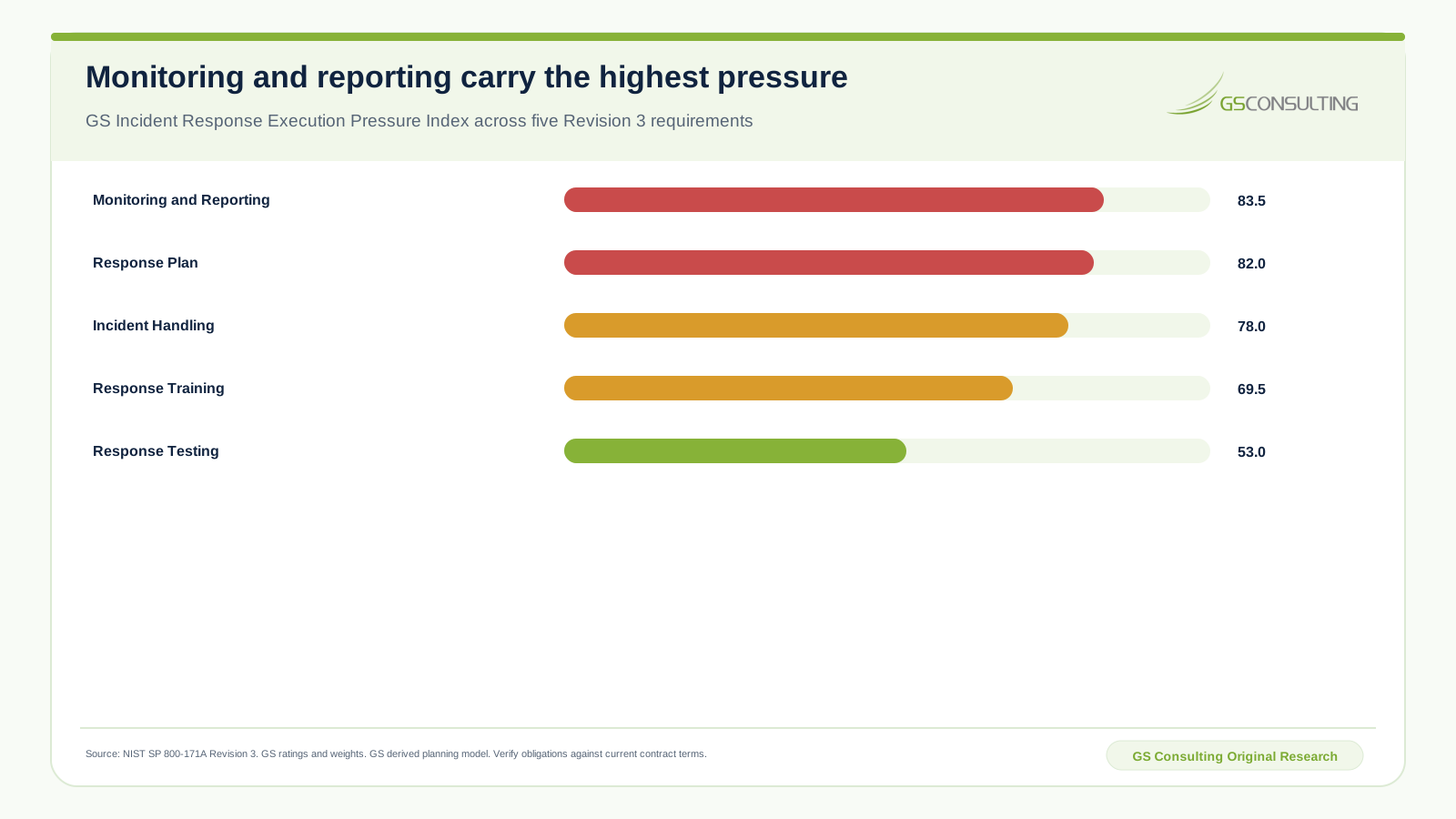
Monitoring and Reporting scores 83.5. The Response Plan scores 82.0. Incident Handling scores 78.0. Response Training scores 69.5, and Response Testing scores 53.0.
The ranking does not claim that one requirement is more legally important. It estimates where formal assessment work, decision time, coordination, evidence, contract dependency, and recovery consequence collide. Testing scores lower because its immediate time pressure is lower, not because exercises are optional or unimportant.
The alternate weights preserve the top three and move no score by more than three points. The practical conclusion is stable: build the plan and duty matrix together, rehearse monitoring and reporting under time pressure, then make handling, training, and testing operate from the same command process.
This is a GS Consulting derived planning model, not a NIST score, legal conclusion, or incident prediction. The source register, observations, ratings, formulas, sensitivity analysis, workbook, figure data, and editable SVGs are preserved in the article research package.
Write a Response Plan People Can Execute
The plan should answer operating questions, not repeat security language. Name the purpose, system and CUI scope, incident definition, severity model, discovery record, incident lead, decision authority, technical roles, business roles, contract review, reporting routes, evidence rules, communication approval, provider contacts, recovery authority, review process, and plan owner.
Keep the core plan compact. Put detailed procedures in controlled playbooks for common events such as account compromise, malware, exposed CUI, lost device, provider event, data transfer error, unauthorized remote access, application breach, and suspicious insider activity. Each playbook should state entry facts, containment choices, evidence risks, contract questions, approvals, communication needs, recovery criteria, and exit conditions.
The distribution list matters. People who carry incident duties need access when ordinary systems are unavailable or suspected. Protect the plan from unauthorized disclosure without making it unreachable during the event. Keep critical contacts and alternate communication routes current.
Review after material changes and incidents, not only on a calendar. A new provider, network path, CUI store, remote tool, contract, reporting route, executive role, or evidence platform can make the plan wrong overnight.
Run Response as Several Connected Tracks
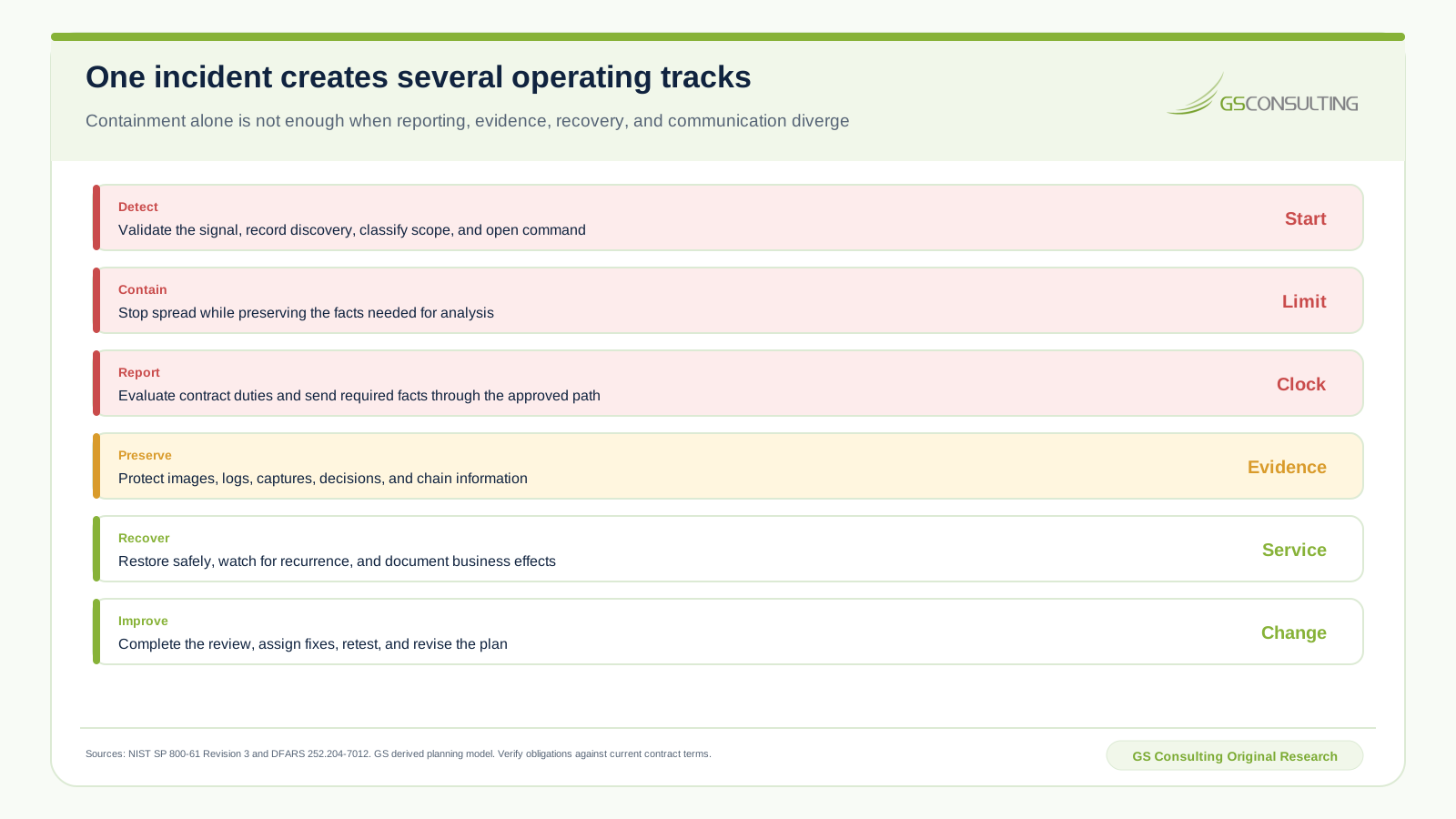
Detection and analysis: validate the signal, record discovery time, identify affected systems and accounts, determine whether CUI or operational support may be involved, set severity, and open the incident record. Separate facts, assumptions, and unanswered questions.
Containment: stop spread and continued exposure while preserving what the team will need to understand the event. Record who approved each action, the expected effect, what evidence may change, and the result.
Eradication: remove the cause, persistence, unauthorized access, malicious content, exposed secret, or flawed configuration. Do not declare eradication from a single clean scan. Define the coverage and confidence basis.
Recovery: restore from a trusted state, validate controls, monitor for recurrence, confirm service and data integrity, and record business effects. Recovery authority should be explicit. Pressure to resume work can otherwise outrun security evidence.
Improvement: complete the review, distinguish root cause from contributing conditions, assign corrective actions, approve risk decisions, update the plan and controls, and retest. A lessons document without owners and dates is not improvement.
Protect the Reporting and Evidence Path
Open a technical timeline and decision log at the start. The technical timeline records alerts, observations, commands, changes, affected assets, containment, eradication, recovery, and monitoring. The decision log records the fact available, decision, authority, rationale, action, next review, and remaining uncertainty.
Preserve volatile evidence before actions erase it when practical and authorized. Identify logs, memory, active connections, cloud events, endpoint state, affected system images, packet captures, identities, tokens, provider records, communication, and data movement evidence that may matter. Record source, collector, time, method, hash where appropriate, storage, access, retention, and transfer.
Reporting is a controlled operating task. Use the duty matrix to decide whether a trigger may be met. Use the approved route. Preserve submission time, content, approval, receipt, report number, follow up, and any direction received. Do not send malicious software or sensitive material through an unapproved channel.
Subcontract and provider paths need rehearsal. The prime may need a report number. A cloud or security provider may hold the only useful logs. A managed service provider may need authority to isolate a system. Put notice, access, evidence, preservation, and support duties in writing before an event.
Test Decisions and Train Roles
A useful exercise forces the team to make choices with imperfect facts. It should test discovery time, incident command, CUI scope, contract review, reporting approval, technical containment, evidence preservation, provider action, executive communication, recovery authority, and public response where relevant.
Do not announce every fact in advance. Inject a failed contact, missing log, uncertain CUI path, provider delay, executive request, active attacker, recovery pressure, or conflicting duty. The purpose is not theater. It is to expose where the process breaks.
Training should match the role. Analysts need evidence and escalation practice. System owners need containment and recovery authority. Contracts and counsel need trigger and route practice. Executives need decision and communication discipline. Providers need exact contact, access, action, and record duties.
Every exercise should end with observations, severity, corrective action, owner, due date, approval, and retest. Track the corrective work to closure. An annual exercise that finds the same gap twice is evidence that the testing program does not govern change.
A Five Stage Incident Response Path
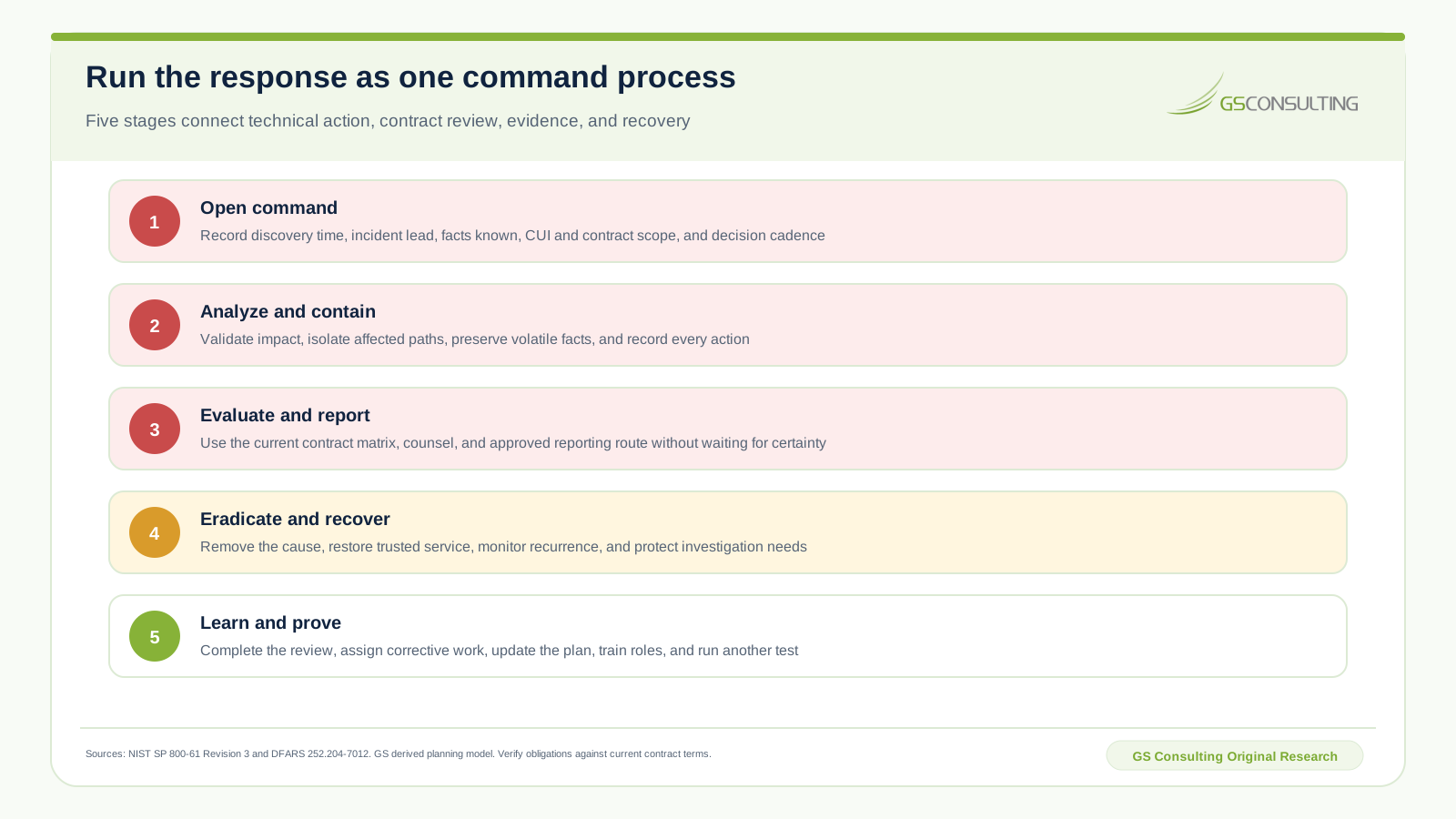
- Open command. Record discovery time, incident lead, facts known, CUI and contract scope, severity, decision cadence, and immediate evidence risks.
- Analyze and contain. Validate impact, isolate affected paths, preserve volatile facts, engage needed providers, and record every action and result.
- Evaluate and report. Use the current duty matrix, authorized reviewers, approved content, and official route. Refine facts after submission through the required process.
- Eradicate and recover. Remove the cause, restore trusted service, validate controls and data, monitor recurrence, and protect investigation needs.
- Learn and prove. Complete the review, assign corrective work, update the plan and controls, train affected roles, and run a focused retest.
Six Incident Response Failures to Stop
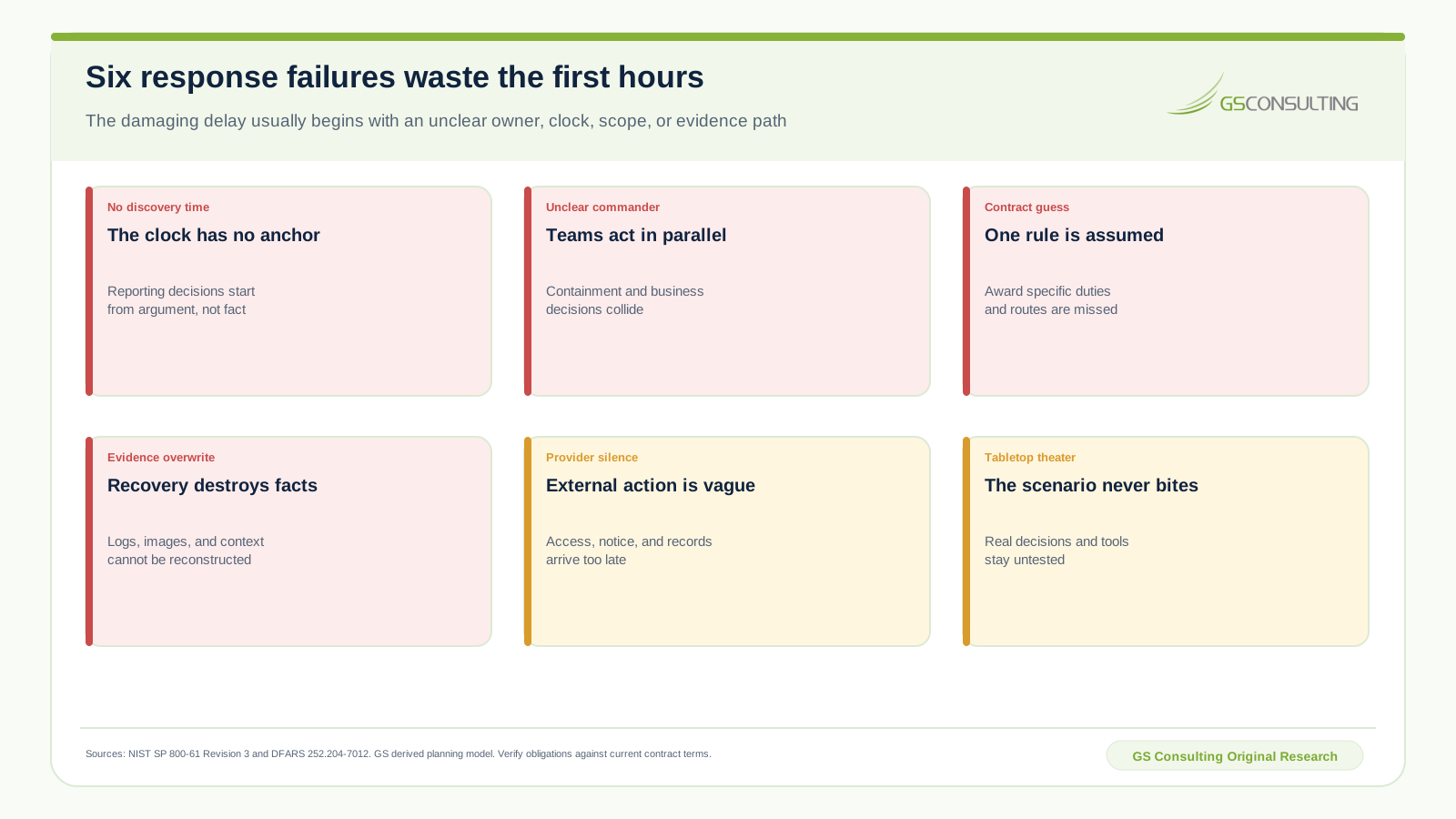
No discovery time. The team cannot anchor the response or evaluate a reporting clock because the first confirmed fact was never recorded.
Unclear commander. Security, legal, operations, communications, and executives act in parallel without one decision process.
Contract guess. The team assumes one universal rule and misses an award specific trigger, route, recipient, content item, or preservation duty.
Evidence overwrite. Recovery, reimaging, log rotation, token reset, or provider action destroys the facts needed for analysis and reporting.
Provider silence. The team discovers during the incident that contacts, authority, logs, evidence access, notice, and support timing were never defined.
Tabletop theater. The exercise follows a friendly script, avoids hard decisions, produces vague observations, and never retests corrective work.
A Practical 45 Day Response Readiness Plan
Days 1 through 7: confirm the governing NIST revision, collect contracts and reporting duties, define incident scope, assign the plan owner, identify the incident lead, and build the contact list.
Days 8 through 15: create the duty matrix, severity model, discovery record, decision log, technical timeline, evidence register, communication route, provider matrix, and recovery authority.
Days 16 through 25: write or repair playbooks for the most credible CUI events, confirm log and image access, test alternate communication, and close obvious provider and reporting route gaps.
Days 26 through 34: train each role on its actual decisions and tools. Run technical drills for containment, evidence collection, report preparation, provider escalation, and trusted recovery.
Days 35 through 45: conduct one hard exercise, preserve the evidence package, score observations, assign corrective actions, fix the critical defects, run focused retests, and approve the readiness decision.
Forty five days can expose and repair process defects. It cannot guarantee readiness when logging, architecture, provider access, staffing, or contract interpretation needs substantial work. Keep those dependencies visible and owned.
The Minimum Incident Response Evidence Packet
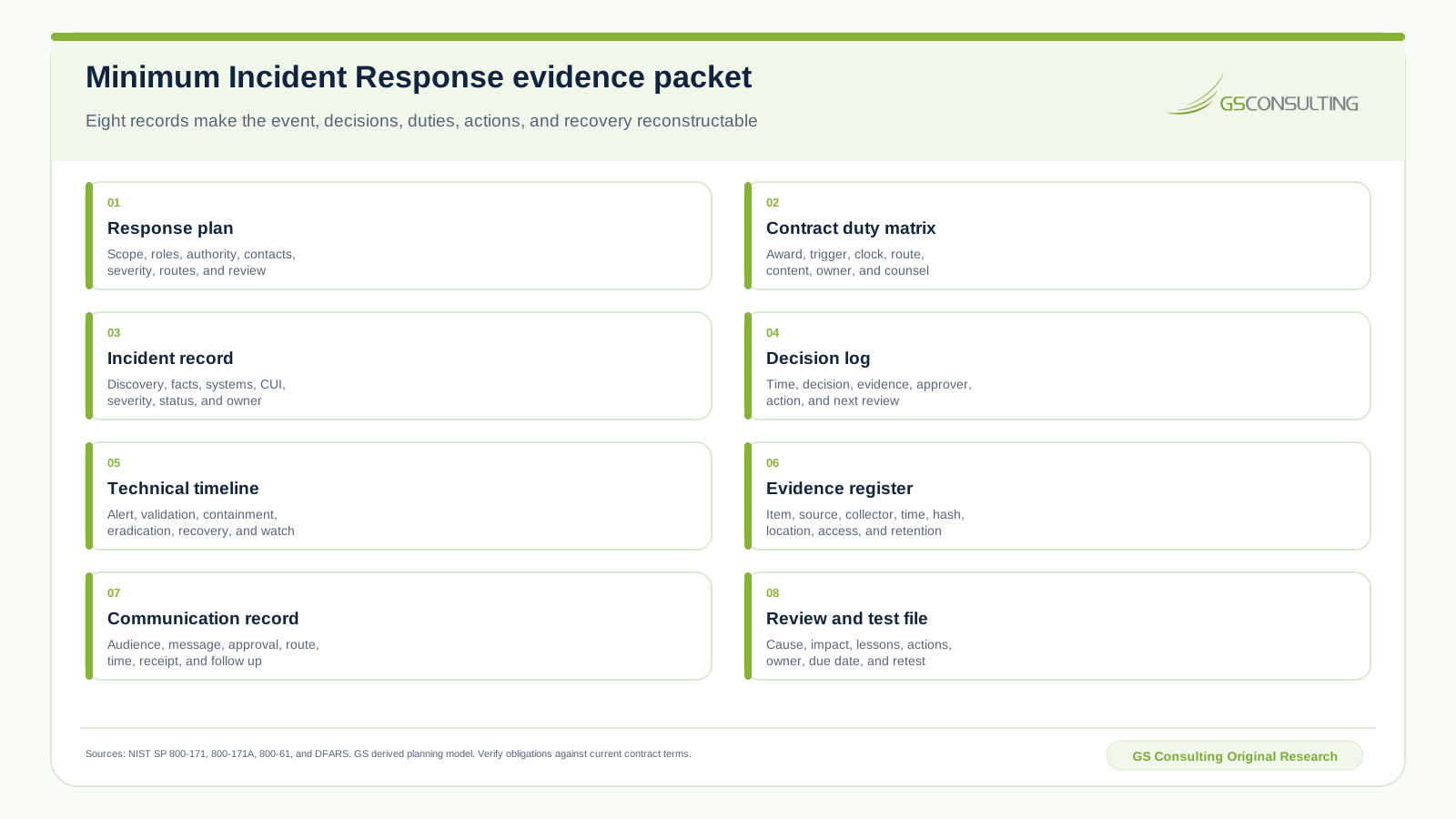
- Response plan: scope, definitions, roles, authority, severity, contacts, reporting, evidence, recovery, distribution, approval, and review.
- Contract duty matrix: award, authority, information, system, trigger, discovery, clock, recipient, route, content, evidence, owner, and counsel.
- Incident record: discovery time, reporter, known facts, affected systems, CUI, severity, lead, status, providers, and next decision.
- Decision log: time, fact, assumption, decision, authority, rationale, action, result, uncertainty, and next review.
- Technical timeline: alert, validation, asset, account, command, containment, eradication, recovery, monitoring, and operator.
- Evidence register: item, source, collector, time, method, hash where appropriate, storage, access, retention, transfer, and disposition.
- Communication record: audience, message, approval, route, time, receipt, report number, direction, follow up, and owner.
- Review and test file: cause, impact, decisions, lessons, corrective actions, owners, dates, approvals, and retest results.
Research Method and Sources
The research package separates public observations from GS analyst assumptions. It includes the source register, public signal table, model inputs, derived scores, sensitivity analysis, data dictionary, figure data, methodology, workbook, PNG renders, and editable SVG figures.
- NIST SP 800-171 Revision 3
- NIST SP 800-171A Revision 3
- NIST SP 800-61 Revision 3
- DFARS 252.204-7012
- CISA Incident and Vulnerability Response Playbooks
- DoD CMMC Program Information
GS Consulting Original Research. The GS Incident Response Execution Pressure Index is a derived planning tool based on cited public sources and documented assumptions. It is not a NIST score, legal advice, contract interpretation, incident finding, assessment result, security approval, or compliance determination. Verify obligations, clocks, routes, and preservation duties against current contract terms and agency direction.
Frequently Asked Questions
What are the NIST 800-171 incident response requirements?
NIST SP 800-171 Revision 3 has five active Incident Response requirements: Incident Handling, Incident Monitoring Reporting and Response Assistance, Incident Response Testing, Incident Response Training, and Incident Response Plan. Together they require an operating capability, defined reporting and support, exercises, role training, and a maintained plan.
How many incident response requirements are in NIST 800-171 Rev 3?
Revision 3 contains five active Incident Response requirements. GS counted twenty nine determination statements and seven organization defined parameters in the official NIST SP 800-171A Revision 3 procedures for the family.
Does DFARS require cyber incidents to be reported within 72 hours?
DFARS 252.204-7012 defines rapid reporting as within 72 hours of discovery for a cyber incident that meets the clause trigger. The duty depends on the clause, the actual award, the affected system or information, and the facts. Contractors should use the current contract matrix and approved reporting route rather than assume every event has the same clock.
What incident evidence should a contractor preserve?
Preserve the incident record, discovery time, technical timeline, decisions, alerts, logs, affected system images, relevant packet capture data, communications, reports, recovery records, corrective actions, and chain information. DFARS 252.204-7012 can require affected system images and relevant monitoring or packet capture data to be protected for at least 90 days after report submission when the clause applies.
How often should an incident response plan be tested?
Use the approved organization defined frequency and test events for the applicable baseline, contract, and environment. Also test after material architecture, provider, contract, role, threat, or process changes. A useful exercise forces decisions under time pressure and produces corrective work with owners and retests.
Is NIST SP 800-61 Rev 3 required by NIST 800-171?
NIST SP 800-61 Revision 3 provides current incident response recommendations and useful operating context. It does not automatically become a separate contract obligation merely because it is cited or useful. Apply the requirements and guidance that the governing contract, regulation, policy, or approved program actually makes applicable.
Related Reading
- NIST 800-171 and CUI Security Hub
- NIST SP 800-171 Explained
- NIST 800-171 Access Control Guide
- NIST 800-171 Audit and Accountability Guide
- NIST 800-171 Risk Assessment Guide
- NIST SP 800-171A Assessment Guide
- CMMC Assessment Evidence Guide
- AI Incident Response Workflows
- Secure AI Automation
Run one command process from discovery through proof.
The standard is decisive: record the clock, assign command, protect facts, evaluate the award, contain deliberately, report through the approved route, restore trust, and retest every corrective action.
Build the Response Evidence