AI Workflow Automation | | 23 min read
Measuring Workflow Automation ROI in GovCon

Key Takeaways
A credible automation business case proves what changed, what the full operating model cost, and what leadership should do next.
Freeze the Baseline
Record current demand, effort, cycle time, and quality before implementation. Include support burden, risk indicators, and available evidence.
Prove Realized Value
Adjust benefits for adoption, manual fallback, downstream cleanup, support burden, and the actual use of saved capacity.
Force a Decision
Use measured value and mandatory control results to expand, tune, pause, or retire each workflow.
Automation ROI does not come from saying, “AI saved time.”
That is not a business case. It is a guess with better branding.
Measuring workflow automation ROI requires evidence from the process before and after implementation. Leadership needs to know what changed, what the complete operating model cost, and what result the organization actually realized.
Real value can appear as labor capacity, lower rework, faster cycle time, better quality, stronger evidence, or reduced operational exposure. If the workflow does not improve an outcome that matters, it may be interesting. It is not yet valuable.
Need an automation business case that finance and operations can defend?
GS Consulting establishes workflow baselines, full cost models, measurement plans, value scorecards, and portfolio decisions for secure AI automation.
Request an Automation Value AssessmentThis guide supports our main AI workflow automation service and the Enterprise AI Process Transformation cluster. It connects directly to identifying workflows for AI automation, continuous monitoring for AI agents, and workflow orchestration for secure environments.
The Bad Assumption: AI ROI Is Obvious
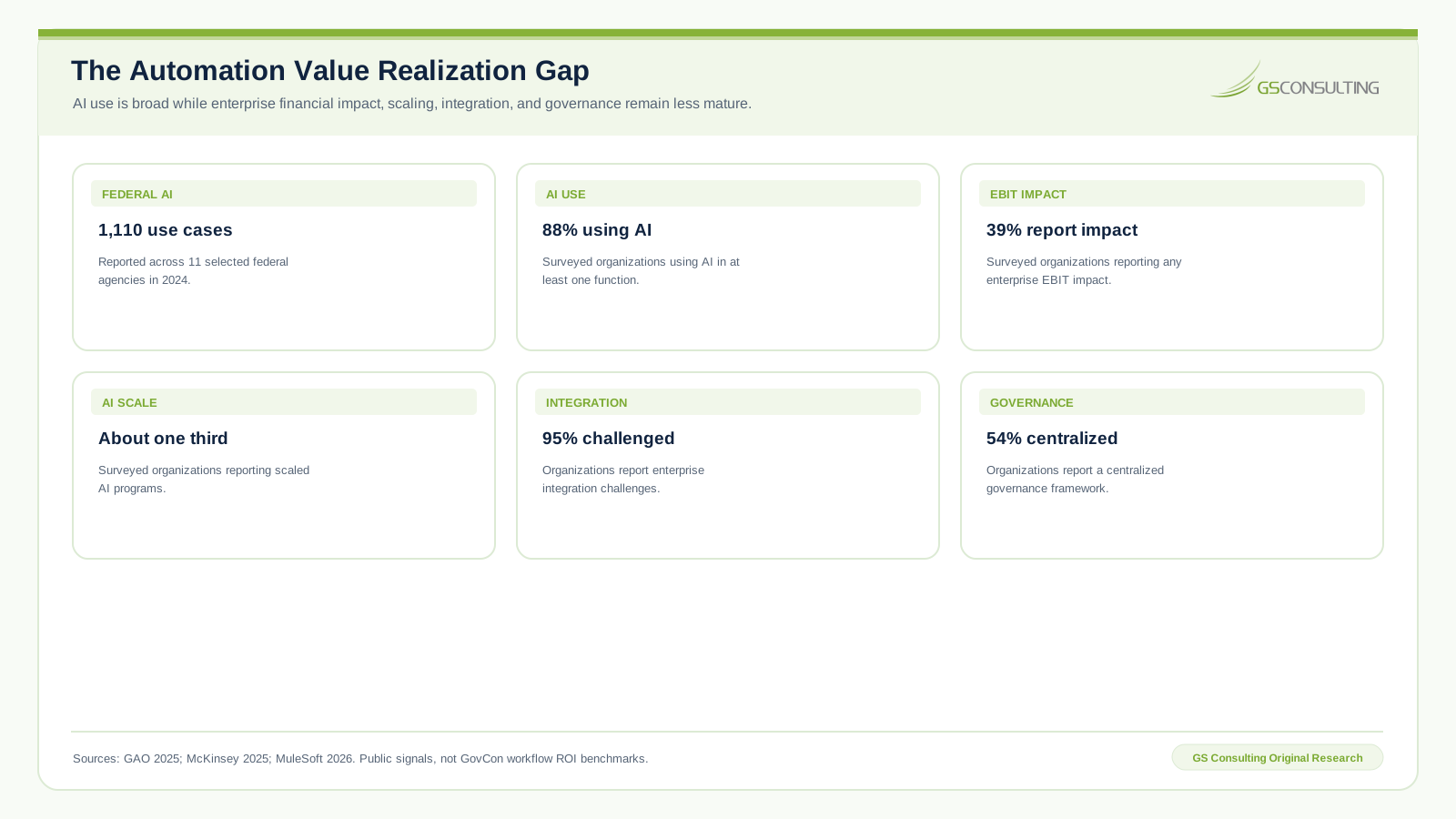
People may say the tool is helpful and the workflow feels faster. Usage may rise. A dashboard may show thousands of processed documents. None of those signals proves an economic or operational return.
Leaders need answers to seven questions:
- What did the organization spend?
- What manual work and rework disappeared?
- What capacity became available, and how was it used?
- Which process became faster or more reliable?
- Which risk indicators improved?
- What evidence proves the result?
- Should the organization expand, tune, pause, or retire the workflow?
Without those answers, automation becomes another technology initiative that cannot survive budget scrutiny.
GovCon Automation ROI Is Different
Government contractors do not operate like generic commercial companies. Contract execution, compliance, security boundaries, proposal operations, and customer evidence all affect the value case.
An automation may create value in several ways:
- Reduce missed contract obligations or proposal requirements.
- Collect CMMC and NIST evidence faster.
- Identify subcontractor risk earlier.
- Improve incident response and evidence preservation.
- Keep sensitive data inside approved systems.
- Reduce document review and audit preparation rework.
These outcomes do not always fit one clean dollar formula. They can still be measured through cycle time, error rates, evidence quality, exception volume, review coverage, and support burden.
Do not count every control improvement as avoided cash. Show the operating evidence first. Finance can decide whether an approved economic treatment also exists.
Start With the Process, Not the Tool
Before measuring ROI, define the workflow. Record the current state before implementation changes it.
A useful baseline covers five areas:
- Demand: Transaction volume, frequency, backlog, and seasonal variation.
- Effort: Roles, manual hours, handoffs, review time, and support work.
- Performance: Cycle time, throughput, service levels, and completion rate.
- Quality: Errors, rework, returned items, missed fields, and downstream cleanup.
- Control: Evidence gaps, exceptions, security concerns, and failure consequences.
No baseline means no credible attribution. The organization has a testimonial, not a measured result.
The Four ROI Buckets That Matter
- Labor capacity. Measure manual hours removed and the approved value of the capacity that becomes available.
- Cycle time. Measure how quickly work reaches a controlled outcome, not only how quickly AI produces a draft.
- Quality. Measure errors, rework, missed requirements, stale evidence, and downstream cleanup.
- Risk and readiness. Measure observable changes in evidence, traceability, review coverage, exceptions, and response time.
The buckets must remain distinct. Do not count the same hour as labor savings, cycle time value, and throughput value unless finance has an explicit reconciliation method.
Build the Automation ROI Formula
A practical formula begins with realized benefit and full cost:
Calculate realized benefit from approved components:
- Adoption adjusted labor capacity value.
- Rework and downstream cleanup avoided.
- Separately evidenced external spend reduction.
- Separately evidenced throughput contribution.
Then build a complete cost register:
- Build: Discovery, mapping, engineering, data work, and integration.
- Assurance: Security review, testing, compliance review, and evidence design.
- Adoption: Training, process change, documentation, and user support.
- Operations: Licensing, infrastructure, monitoring, support, and exception handling.
- Lifecycle: Maintenance, model or rule changes, connector changes, and retirement.
Do not hide support cost. A workflow that saves frontline time but creates constant operational work may have weak or negative ROI.
A Simple Example
Suppose a compliance team spends 25 hours each month collecting and checking NIST evidence. Automation reduces the work to eight hours. The gross reduction is 17 hours each month, or 204 hours each year.
At a finance approved loaded rate of 95 dollars per hour, the gross annual labor value is 19,380 dollars. That is not yet the final benefit. The calculation still needs adoption, capacity conversion, support burden, rework, and recurring cost.
A 68 percent time reduction can still produce a weak investment result. A dramatic productivity percentage does not answer whether the workflow is worth building.
Time Saved Is Not Automatically Money Saved
The organization must show what happened to the saved capacity:
- Overtime or external service cost fell.
- A planned hire was avoided.
- The team processed more proposals, contracts, incidents, or evidence packages.
- Backlog or customer response time improved.
- The capacity moved to higher value mission work.
If none of those outcomes occurred, report capacity created. Do not label it cash savings.
Measure Before, During, and After the Pilot
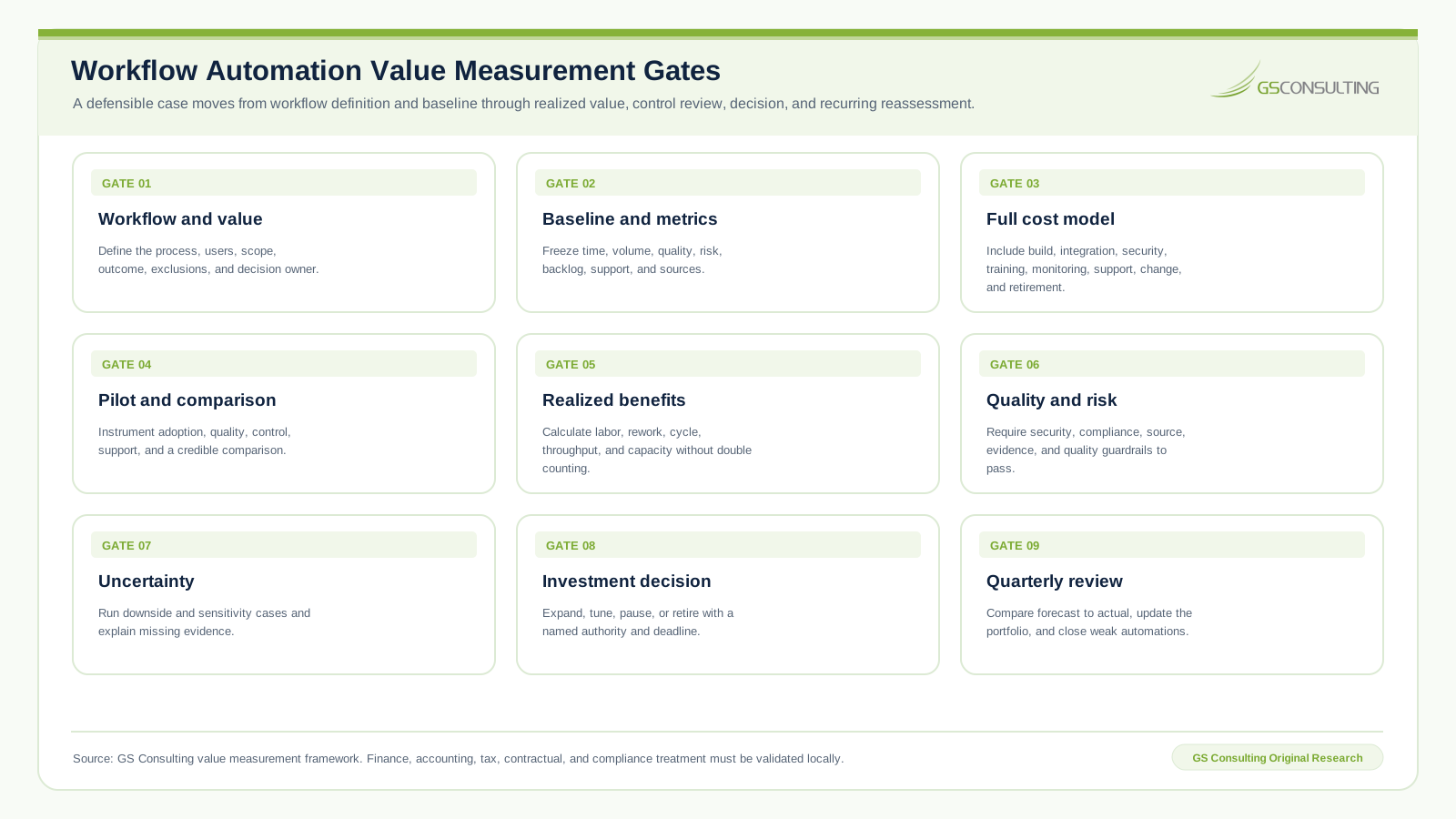
The measurement plan should exist before the workflow goes live. Use the same metric definitions across four periods:
- Baseline: Measure the current manual process.
- Pilot: Capture adoption, quality, exceptions, fallback, and support.
- Production: Measure realized benefits after users stabilize.
- Quarterly review: Compare forecast with actual results and revise the portfolio decision.
Use a matched comparison when possible. Compare similar proposals, evidence sets, contract teams, or review packages. A credible comparison helps separate automation impact from workload and staffing changes.
Operational Metrics for AI
Usage belongs on the dashboard, but it cannot carry the business case. Group operational metrics by what they prove:
- Adoption: Active use, abandonment, manual fallback, and duplicate processing.
- Quality: Acceptance, modification, rejection, false results, and source reference completeness.
- Flow: Completion time, approval aging, backlog, throughput, and escalation rate.
- Control: Tool success, audit completeness, data freshness, and exception closure.
- Operations: Support tickets, monitoring effort, incidents, maintenance, and recurring cost.
High usage with high correction rates may mean people are stuck with a weak tool. Low rejection with no source review may signal automatic approval. Metrics need interpretation.
Rework Is Often the Most Important Metric
Gross time savings can hide downstream cleanup. A workflow may save the first user ten minutes and create twenty minutes of correction work for another team.
Measure rework directly:
- Items returned, reopened, or manually corrected.
- Missing evidence, wrong routing, and duplicate actions.
- False positive and false negative handling.
- Exception effort and downstream cleanup time.
The useful number is net work removed across the complete process.
Compliance Speed and Audit Readiness Have Value
Slow compliance creates operational drag. Measure time to collect and review evidence. Track vendor package approval, document classification, redaction review, exception closure, and audit package preparation as separate workflows.
Audit readiness also has measurable operating outcomes:
- Evidence completeness and freshness.
- Time required to retrieve proof.
- Missing artifacts and unsupported control claims.
- Manual explanations required during review.
- Expired exceptions and incomplete approval records.
These indicators show control improvement. They should not become speculative claims that automation prevented a hypothetical multimillion dollar loss.
Original Research: The Workflow Automation Value Assurance System
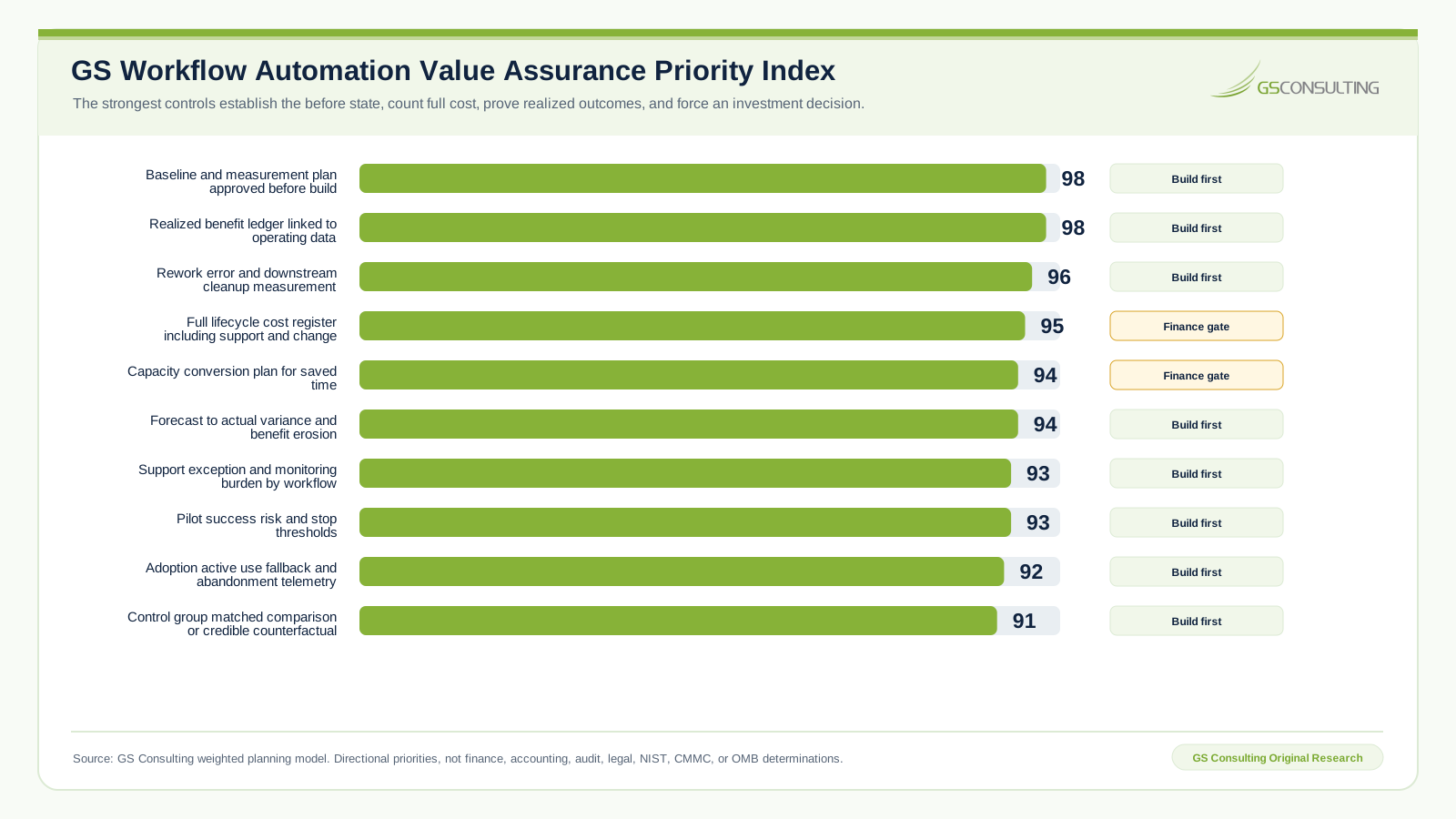
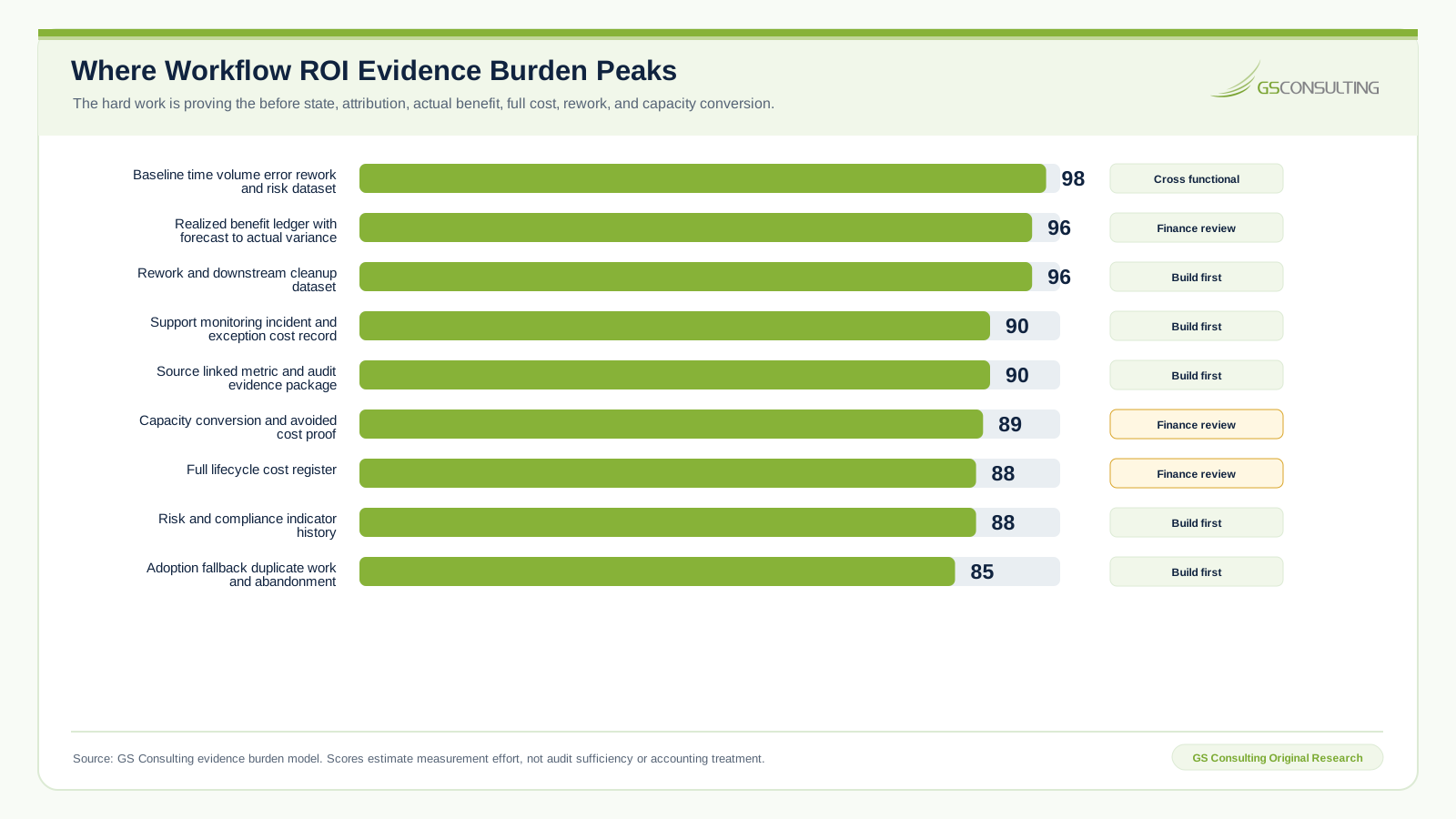
GS Consulting analyzed ROI as a value assurance problem, not a savings estimate problem. The strongest controls make the result harder to fake.
Two controls scored 98 out of 100:
- The baseline and measurement plan approved before implementation.
- The realized benefit ledger linked to actual operating data.
Rework and downstream cleanup measurement scored 96. Full lifecycle cost scored 95. Capacity conversion and forecast variance each scored 94.
Separate Year One From Steady State
The first workflow may fund reusable foundations such as secure APIs, data pipelines, approval components, audit event models, connectors, and monitoring services. Later workflows may reuse those assets.
Maintain a reusable asset register and an approved allocation method. Do not penalize the first workflow for every shared component. Do not let later workflows pretend shared infrastructure is free.
ROI Can Be Negative
Negative ROI is a valid result. Stopping a weak automation is not program failure. Continuing it because money was already spent is failure.
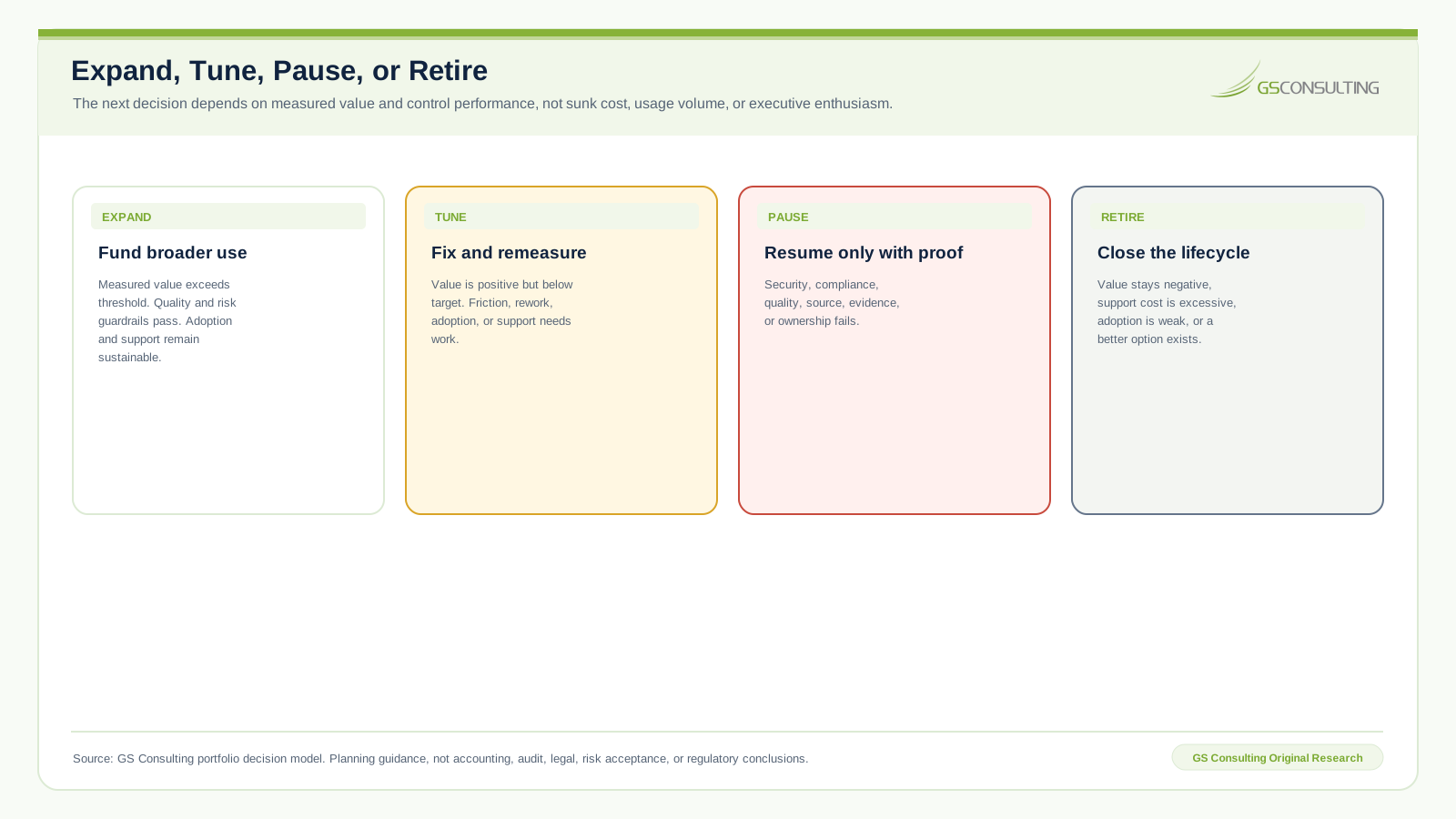
Every review should end in one of four states:
- Expand: Measured value passes and mandatory controls remain effective.
- Tune: Value is promising but adoption, quality, rework, or support needs improvement.
- Pause: Security, compliance, quality, source integrity, ownership, or evidence has failed.
- Retire: Value stays negative or a more sustainable alternative exists.
A positive financial estimate cannot override a failed control threshold.
A Practical First 90 Days
- Days 1 to 30Baseline the process.
Define the workflow and outcome. Measure volume, effort, cycle time, quality, rework, support, risk indicators, and current cost.
- Days 31 to 60Pilot with measurement.
Instrument adoption and fallback. Capture output quality, reviewer changes, exceptions, support work, and the complete pilot cost.
- Days 61 to 90Build the value case.
Compare baseline with realized results. Adjust for adoption and capacity use, run sensitivity cases, and issue an expand, tune, pause, or retire decision.
Use conservative assumptions. Show a base case, downside case, and upside case. Explain which inputs are observed, estimated, or still missing.
What Leadership Should Demand
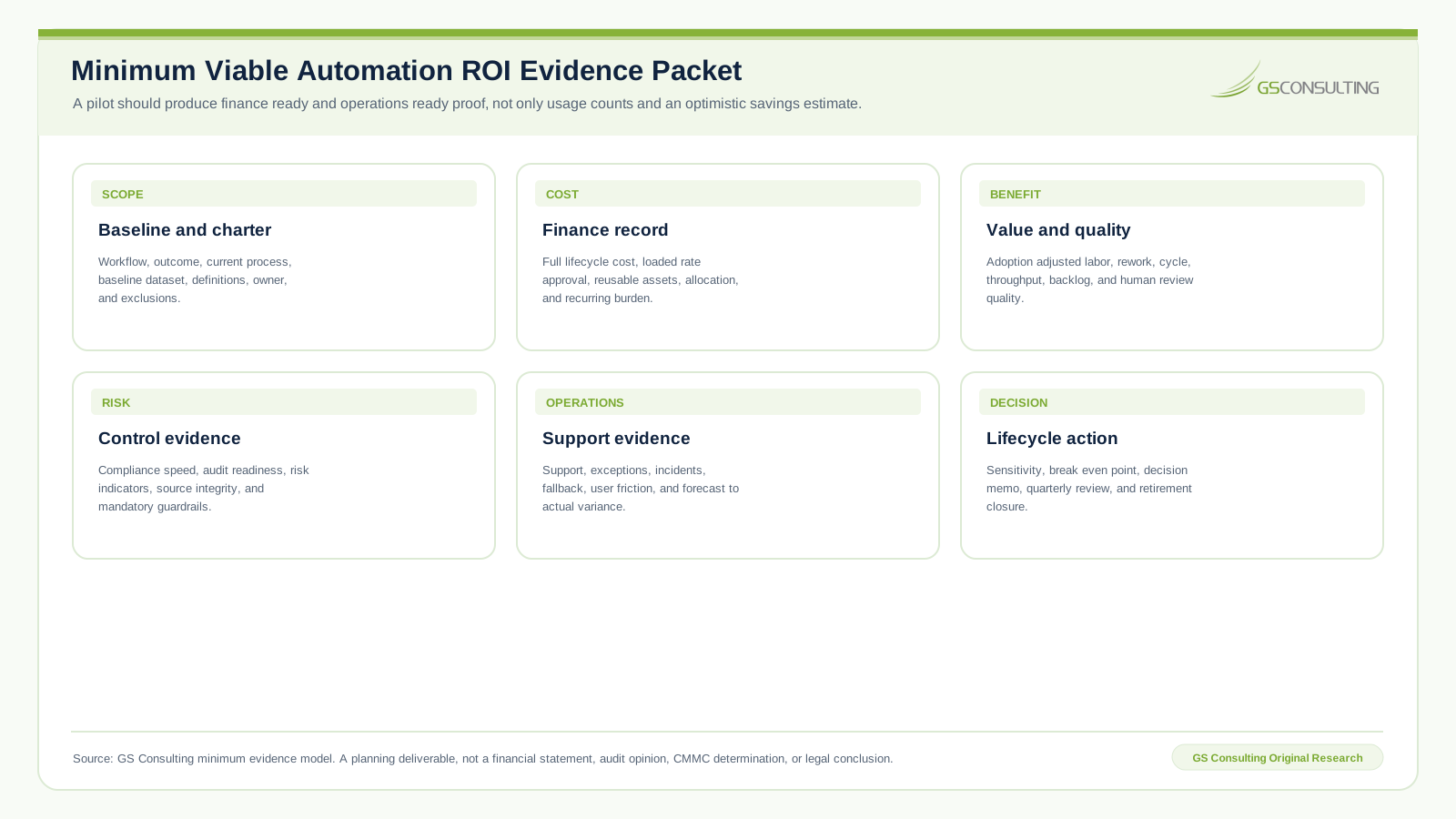
- A documented baseline approved before the build.
- A full lifecycle cost register reviewed by finance.
- Realized benefits adjusted for adoption and downstream rework.
- A clear plan for the capacity created by saved time.
- Quality, security, compliance, and evidence thresholds that cannot be traded away.
- Forecast variance, uncertainty, and the next portfolio decision.
If the team cannot show those elements, it has a forecast. It does not yet have a defensible automation result.
What GS Consulting Builds
GS Consulting helps GovCon firms turn automation activity into measurable operational value. Engagements can include:
- Workflow mapping and current state baselines.
- ROI models and finance review packages.
- Pilot scorecards and operational dashboards.
- Rework, quality, compliance, and risk indicators.
- Full lifecycle cost and reusable asset registers.
- Quarterly value reviews and portfolio decisions.
The Bottom Line
Workflow automation ROI is not how many documents the AI processed. It is the measurable change in the complete business process.
Establish the baseline. Count the full cost. Measure net work removed. Prove how saved capacity was used. Protect mandatory controls. Then make the portfolio decision.
That is how automation earns budget. Not with activity. With evidence.
Build an automation value case that survives budget review.
GS Consulting helps teams connect workflow engineering to finance approved assumptions, operational evidence, control performance, and clear investment decisions.
Request an Automation Value AssessmentResearch Sources and Caveats
The GS priority index, evidence burden model, measurement gates, decision model, and evidence packet are planning tools. They are not financial statements, accounting advice, audit opinions, legal conclusions, or official NIST, CMMC, DoD, or OMB determinations.
The workflow portfolio examples are synthetic and illustrative. They are not GovCon benchmarks, savings forecasts, or pricing guidance. Finance must approve labor rates, cost treatment, capacity conversion, and benefit allocation.
- U.S. GAO, Generative AI Use and Management at Federal Agencies
- McKinsey, The State of AI in 2025
- MuleSoft Connectivity Benchmark Report
- GAO Cost Estimating and Assessment Guide
- OMB Capital Programming Guide
- NIST AI Risk Management Framework Core
- 32 CFR Part 170, CMMC Program
Frequently Asked Questions
How do you measure workflow automation ROI?
Establish the current process baseline before implementation. Measure labor capacity, rework avoided, cycle time, and quality. Adjust the result for adoption and separately evidenced cost reductions. Subtract the full lifecycle cost, then compare the realized result with the original forecast.
Does time saved count as cash savings?
Not automatically. Saved time becomes economic value when it reduces overtime or external spend, avoids hiring, increases contribution from additional throughput, or supports another finance approved use. Otherwise it is useful capacity rather than cash savings.
What costs belong in an automation ROI calculation?
Include the cost to discover, map, engineer, and integrate the workflow. Add licensing, infrastructure, assurance, and training. Operations must also count monitoring, support, maintenance, change management, exception handling, and retirement. Finance should approve the treatment and allocation method.
How should GovCon firms measure automation risk reduction?
Use observable indicators instead of speculative loss claims. Track evidence freshness, exception age, source traceability, and review coverage. Also measure sensitive data issues, triage time, audit retrieval time, and unsupported compliance claims.
When should an automated workflow be retired?
Retire it when value remains negative or adoption stays weak. Retirement is also appropriate when support exceeds benefit, ownership disappears, or a better capability exists. Positive ROI should not override failed security, compliance, quality, or evidence controls.