Cybersecurity | | 27 min read
FedRAMP Incident Response Requirements: Reporting, Recovery, and Evidence

Key Takeaways
A FedRAMP incident is a customer event, not an internal ticket
The first report begins before certainty
Mark facts, estimates, assumptions, and unknowns clearly. Waiting for a perfect narrative wastes the reporting window.
Containment carries the highest pressure
The GS model scores containment and federal data protection at 100, followed by the initial report at 97.
Recovery needs proof
Restore service only with approved criteria, verified safeguards, customer communication, and a retained decision record.
FedRAMP incident response is not a help desk escalation. It is a customer communication and recovery system with a clock.
The hard part is not writing the plan. It is making a fast, defensible reportability decision while facts are incomplete, identifying every affected agency, protecting federal data, coordinating containment, sending useful updates, and proving that recovery was safe.
That work crosses security, cloud operations, legal, privacy, customer teams, engineering, executives, providers, and agencies. A ticket queue cannot command it. An operator needs named authority, tested communication paths, prepared evidence, and a common record of what is known, assumed, unknown, decided, and changed.
This guide belongs to the FedRAMP Compliance Hub and supports the secure AI and regulated automation service. Use it with the FedRAMP compliance guide, continuous monitoring guide, vulnerability management guide, and authorization package guide.
Test the reporting path before the incident.
GS Consulting helps cloud providers turn controls, agency duties, response actions, and evidence into one tested operating process.
Review Incident ReadinessFedRAMP Incident Response Requirements: The Short Answer
Build one command process that can evaluate reportability, estimate federal impact, identify affected agencies, assemble the initial report, protect data, contain the condition, preserve evidence, send ongoing updates, plan recovery, verify restoration, issue the final report, and improve the plan. Each step needs an owner, clock, decision authority, secure channel, record, and tested fallback.
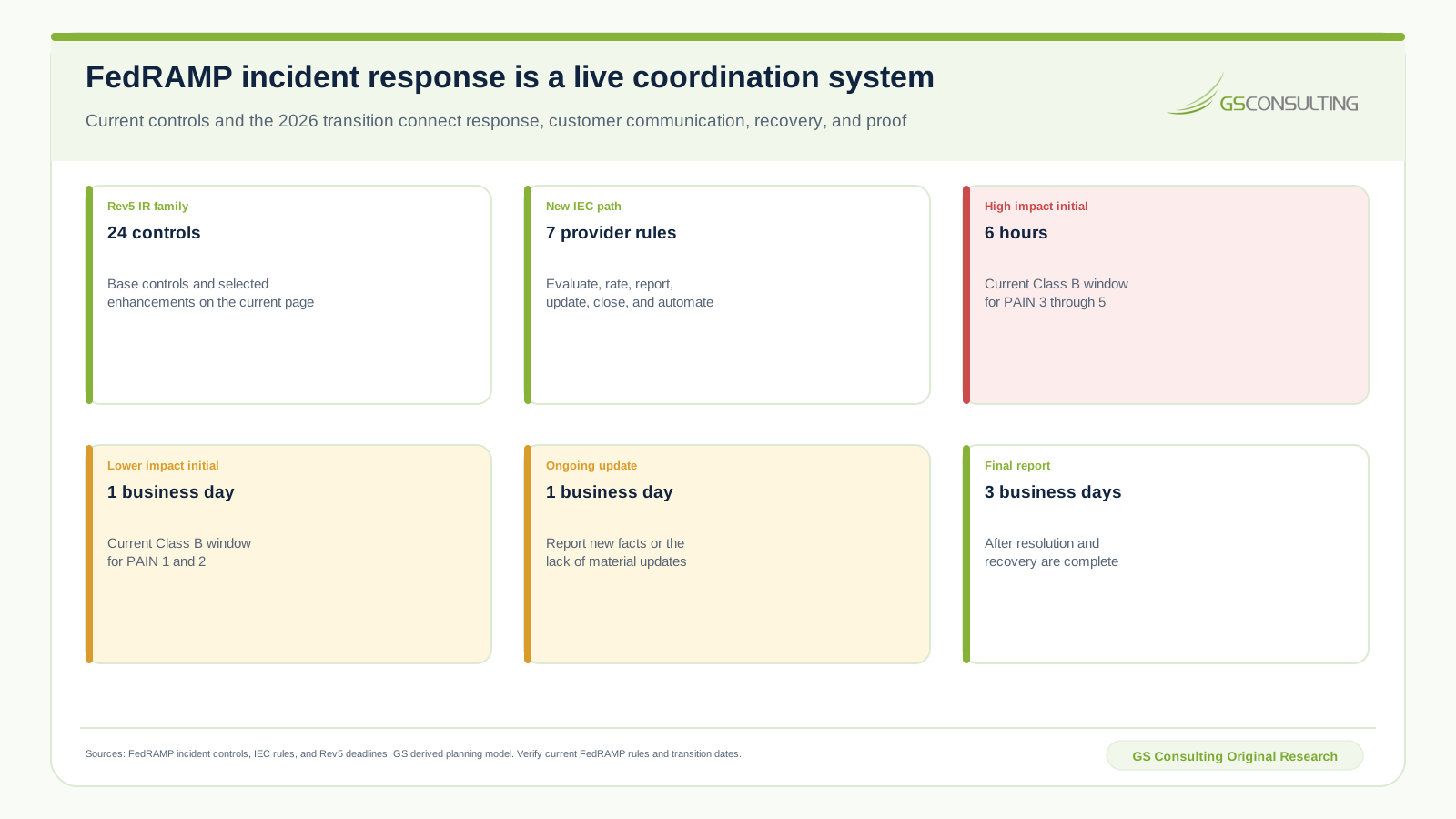
As of September 4, 2026, FedRAMP lists 24 controls and enhancements in the Revision 5 Incident Response family. The newer Incident Evaluation and Communication rules add seven provider rules for reportability, impact rating, initial reporting, ongoing reporting, final reporting, impact estimation, and automated communication. Their obtain and maintain date is January 1, 2027, followed by a grace period through June 1, 2027.
Read the Current Rule Set as One System
The FedRAMP Revision 5 Incident Response control family covers preparation, training, testing, handling, monitoring, reporting, assistance, planning, and response to information spills. The Incident Evaluation and Communication rules define the provider communication process in more operational detail.
Do not treat the newer rules as seven isolated documents. Reportability depends on monitoring and analysis. The initial report depends on current contacts and an incident record. Ongoing communication depends on command discipline. The final report depends on containment, recovery, causal analysis, and a complete timeline. Exercises and lessons learned feed the plan back into operations.
Transition status matters. A future obtain and maintain date is not permission to wait. Providers need lead time to connect tooling, contracts, contacts, evidence handling, privacy review, authority, and secure reporting paths. At the same time, no article can determine a provider's complete duty. Verify the authorization, agency instructions, contract, applicable law, current FedRAMP publication, and incident facts with responsible counsel and officials.
GS FedRAMP Incident Coordination Pressure Index
GS modeled 12 operating capabilities using five documented ratings: time pressure, federal customer impact, evidence complexity, coordination load, and recovery consequence. Base weights are 25, 20, 20, 20, and 15 percent. Each rating uses a one to five scale, and each calculated score runs from zero to 100.
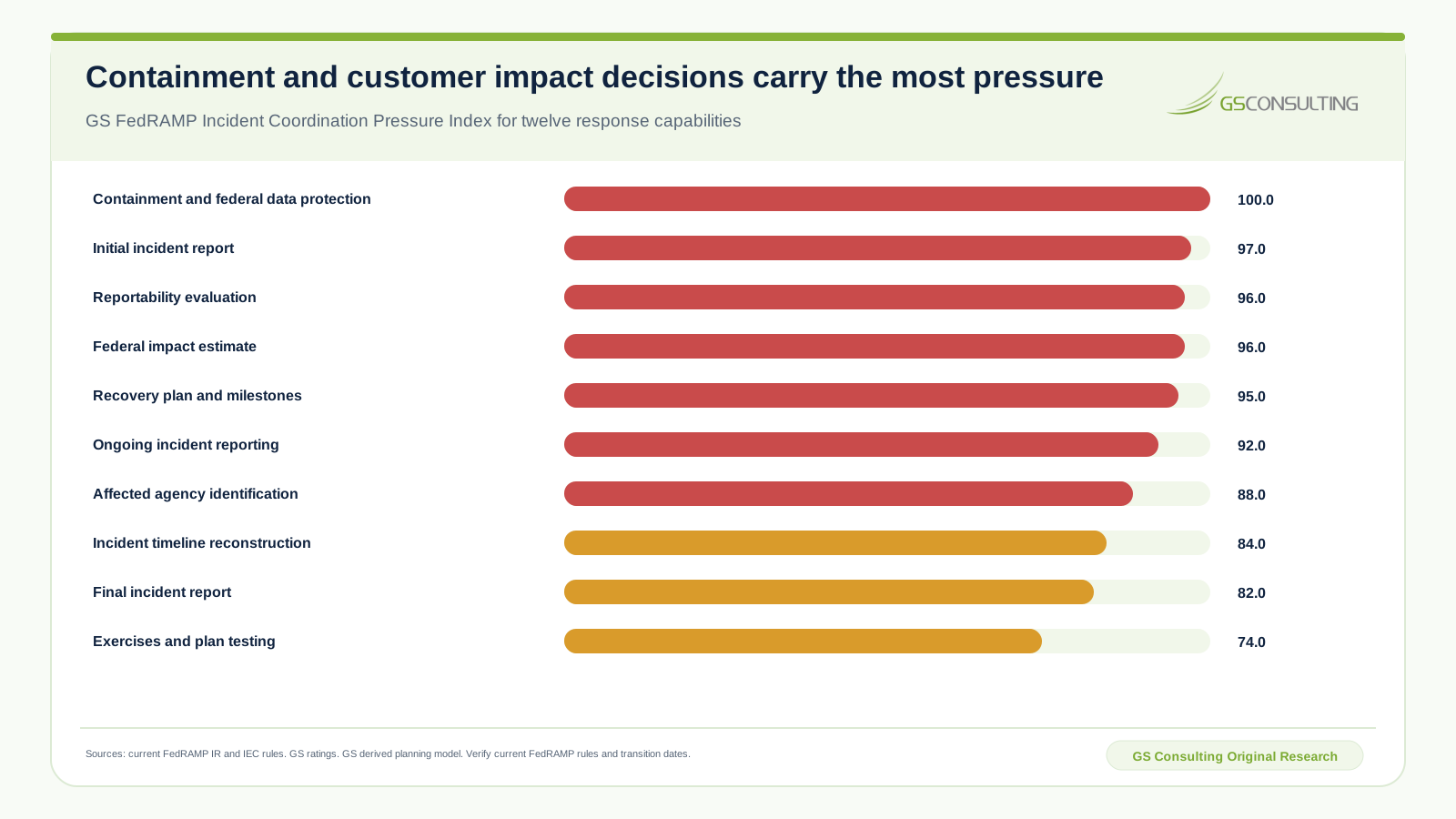
The ranking is a planning tool, not a statement of legal priority. Its practical lesson is simple: incident command fails at the junctions. Federal impact must inform the report. The report must inform agency coordination. Containment must preserve both data and evidence. Recovery must answer the customer question, not only the infrastructure question.
The sensitivity case moves five percentage points from time pressure to federal customer impact. It preserves the command priority group, and no capability moves by more than two points. That stability supports investment in shared decision records, prepared report fields, customer maps, secure communication, containment authority, and recovery criteria.
Make Reportability a Recorded Decision
A security signal is not automatically a reportable incident. It is also unsafe to leave reportability as an undocumented opinion in chat. Build a decision record that names the event, affected system, federal data path, known and likely effects, evidence, uncertainty, consulted roles, decision, approver, time, reporting trigger, and next review.
The current Incident Evaluation and Communication rule says an incident is reportable when it affects, or is likely to affect, the confidentiality or integrity of federal customer data. That threshold requires disciplined fact finding. Ask which data, account, key, service, log, backup, export, model, integration, tenant, and provider path may be involved. Identify affected agencies early. Do not wait for complete forensic certainty.
When an event is not reportable, preserve the reason and the trigger that would change the decision. When it is reportable, default to the highest potential agency impact rating until a prompt estimate supports a different rating. Separate confirmed facts from estimates and unknowns. A visible uncertainty is manageable. A hidden assumption is not.
Run the Reporting Clock as a Command Tool
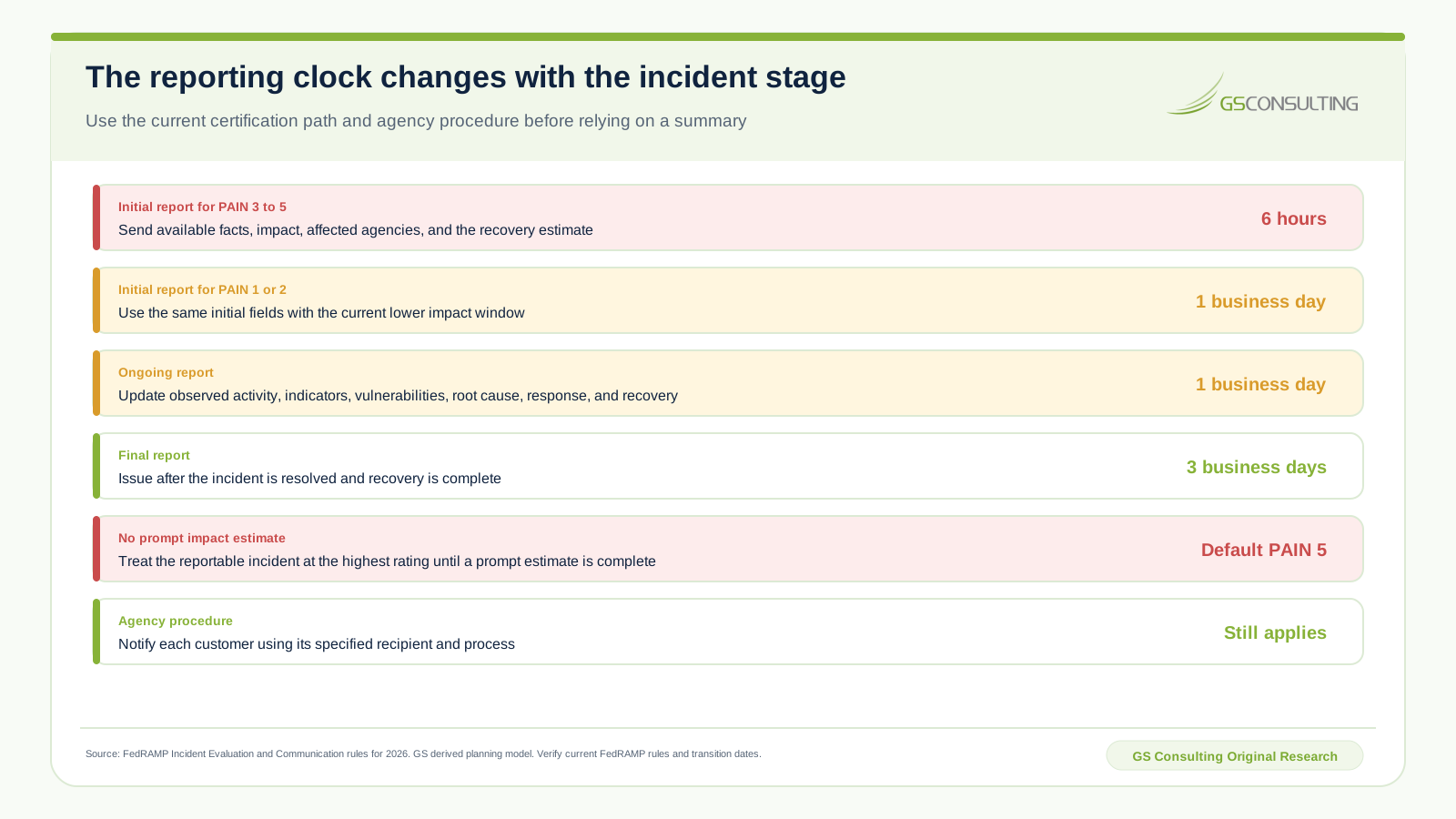
Under the 2026 rule, PAIN 3 through PAIN 5 incidents have a six hour initial report window. PAIN 1 and PAIN 2 incidents have a one business day window. Ongoing reports are due each business day. The final report is due within three business days after resolution and recovery.
Prepare the initial report record before an incident. The current procedure calls for eight information groups. Maintain fields for incident identity, provider details, affected agencies, timeline, impact, effect on federal customer data, status and response, and contact information. A field may be unknown at first. It should never be silently absent.
Ongoing updates should explain what changed since the last report: facts, scope, impact, containment, recovery, customer effect, milestones, blockers, and decisions. Keep one controlled timeline. If a timestamp changes, retain the previous value and the reason. If an estimate changes, show the evidence that changed it.
Build One Incident Command Path
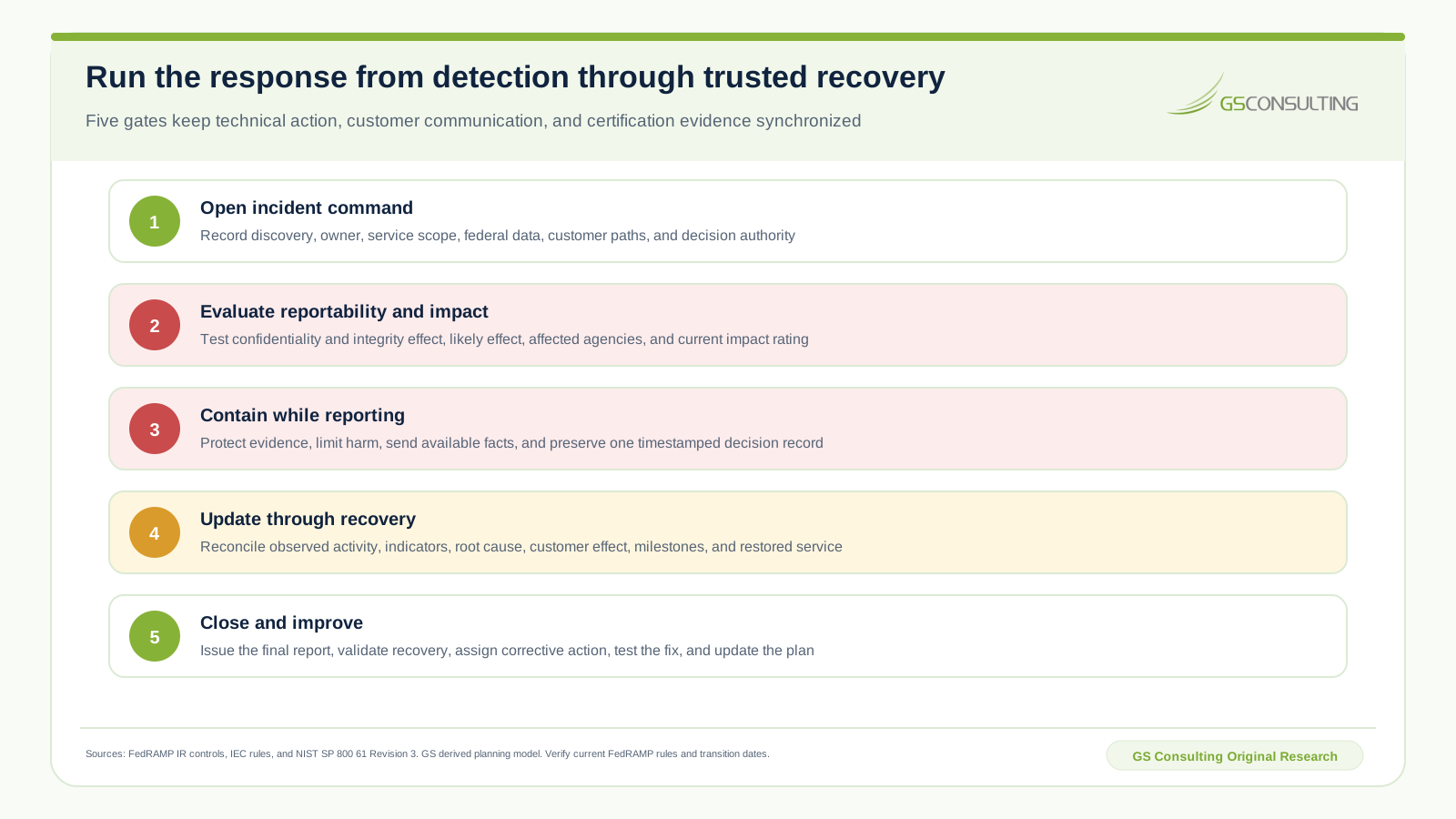
Use a command roster, not a distribution list. Name who can declare an incident, approve a reportability decision, rate impact, contact agencies, direct containment, suspend a service, isolate a tenant, preserve evidence, approve recovery, engage outside counsel, and communicate publicly. Give every primary role a deputy.
Map the customer and provider chain. A shared service may affect several agencies through different agreements, data paths, regions, or subcontractors. Keep current agency contacts, contract contacts, authorization officials, provider contacts, privacy contacts, and secure delivery methods. Test them. A phone number in a plan is not a communication capability.
Connect the incident process to the FedRAMP vulnerability management process when an exploitable condition or detection failure contributes to the event. Connect material architecture or boundary changes to the significant change process. Connect lasting control changes to the authorization package and continuous monitoring record.
Treat Recovery as a Federal Customer Decision
Recovery is not the moment the service turns green. Define entry criteria, safe restoration criteria, agency effect, data integrity checks, credential and key actions, configuration validation, enhanced monitoring, dependency readiness, rollback, executive authority, and customer communication.
Maintain a recovery plan with milestones, owners, evidence, risks, assumptions, dependencies, expected customer effect, validation, and actual result. If service returns in stages, state what is restored, what remains restricted, which safeguards apply, and what evidence supports the next stage.
After restoration, verify the original incident condition cannot still produce the same effect. Reconcile assets, identities, logs, alerts, data stores, backups, integrations, and provider records. The final report should connect the initial condition, response actions, customer impact, recovery proof, causal findings, and remaining work.
Exercise the Friction, Not the Slide Deck
A useful exercise forces decisions under incomplete information. Use a scenario that crosses an actual federal data path and includes at least one provider dependency, one uncertain fact, one failed communication path, one containment tradeoff, and one recovery decision.
Measure time to declare, time to evaluate reportability, time to identify affected agencies, time to produce the eight report groups, time to containment authority, time to evidence preservation, update quality, recovery decision quality, and closure of exercise defects. Include night, weekend, deputy, and unavailable vendor conditions.
Record the scenario, participants, decisions, timestamps, communications, evidence, failures, lessons, owner, due date, correction, and repeated test. Updating the plan is not closure. Closure requires proof that the operating path changed.
Avoid Six Incident Response Failures
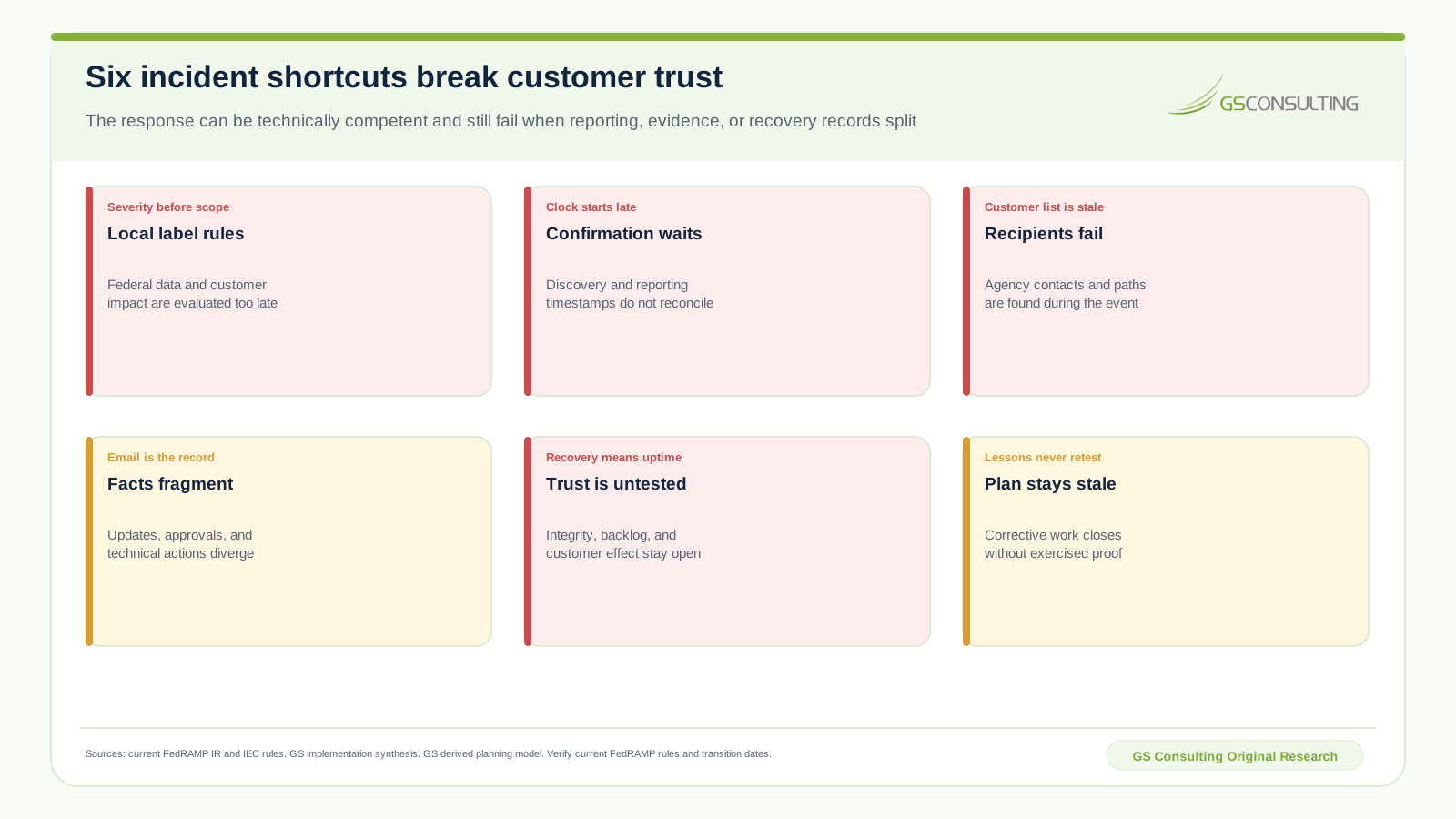
Reportability by debate. Facts move through chat while nobody owns the decision. Agency blind spot. The team knows the service but cannot identify every affected customer. Clock confusion. Detection, declaration, reportability, reporting, containment, and recovery times disagree.
Containment conflict. Security, operations, legal, and customer teams do not share authority or tradeoff rules. Update drift. Each report introduces a new timeline or impact story. Recovery by uptime. The service returns before data protection, safeguards, monitoring, and customer effect are verified.
Build a Minimum Incident Evidence Packet
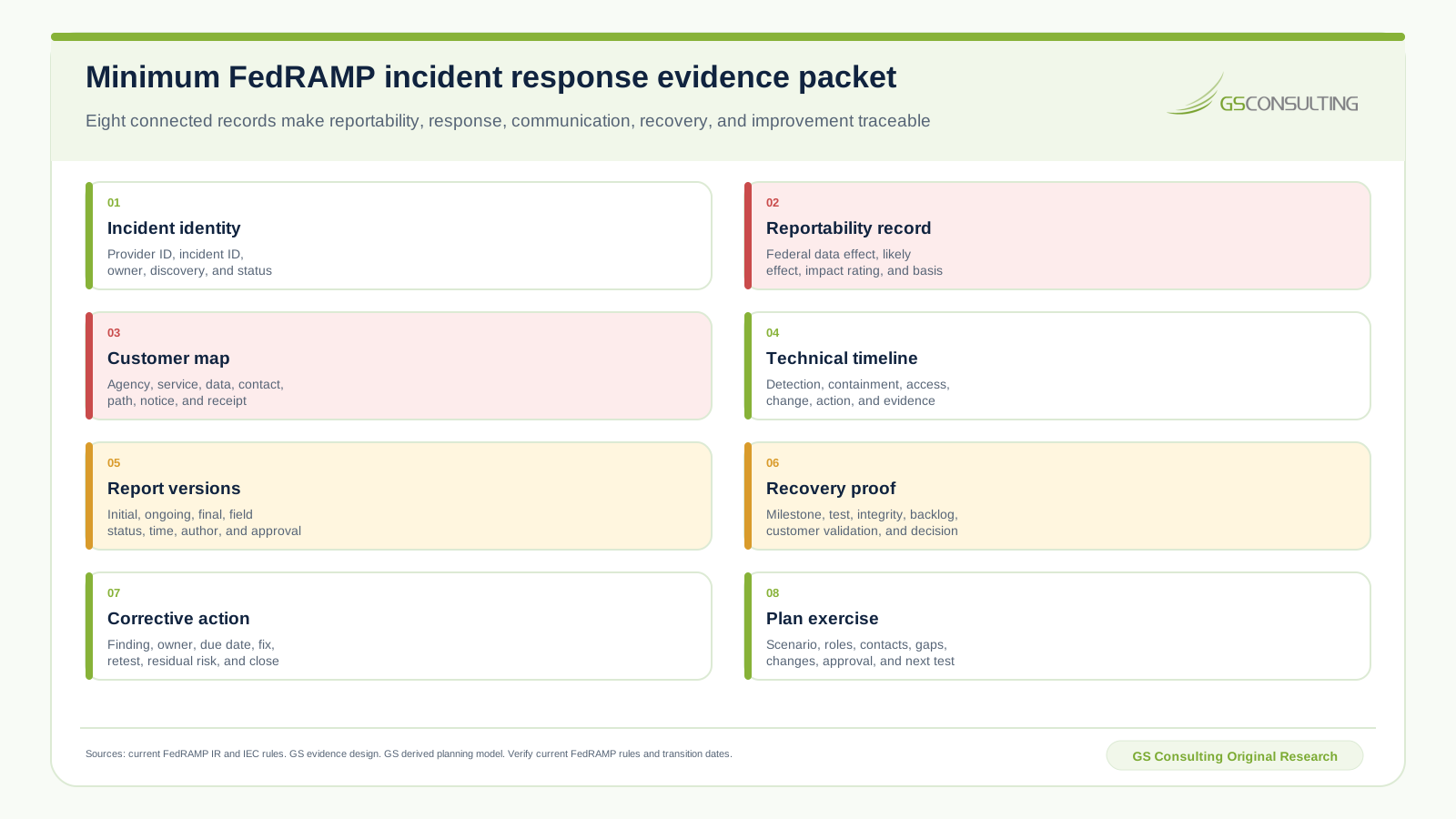
Keep the approved plan, role and contact roster, reportability record, incident record and timeline, agency reports and communications, containment and evidence record, recovery plan and verification, and exercise or lessons record. Preserve stable identifiers, versions, owners, approvals, operating period, access rules, retention, and links between records.
Evidence should show both design and operation. A polished plan cannot prove a contact works, a report can be assembled, an isolation action is authorized, or a restored service is safe. Sample actual events where available and controlled exercises where they are not. Protect sensitive incident information and use the approved secure channel.
A 45 Day Incident Readiness Plan
| Period | Operator action | Required output |
|---|---|---|
| Days one through seven | Confirm applicable rules, authorization, agency duties, boundary, federal data paths, provider dependencies, and current plan. | Obligation map, boundary map, gap register |
| Days eight through fifteen | Approve command roles, deputies, reportability rules, impact method, contacts, secure channels, report fields, and time sources. | Command roster, decision record, contact map, report template |
| Days sixteen through twenty five | Connect monitoring, evidence preservation, containment actions, customer mapping, reporting, recovery criteria, and record control. | Operating workflow, action catalog, recovery plan |
| Days twenty six through thirty five | Run a realistic exercise across security, operations, legal, privacy, customer teams, providers, and executive authority. | Exercise record, reports, timeline, defect list |
| Days thirty six through forty five | Correct defects, repeat failed actions, approve the evidence packet, and set recurring contact and exercise reviews. | Verified corrections, approved packet, review calendar |
Research Sources and Caveats
The research package uses sources accessed September 4, 2026:
- FedRAMP Revision 5 Incident Response controls for the current control family and enhancements.
- FedRAMP Incident Evaluation and Communication rules for reportability, fields, timing, updates, final reporting, impact, and automation.
- FedRAMP Revision 5 deadlines for the transition dates.
- FedRAMP Notice 0012 for the 2026 communication model and transition context.
- NIST SP 800-61 Revision 3 for incident response risk management guidance.
- FedRAMP 20x Incident Response indicators for automation focused operating context.
The research package contains a source register, public signals, model inputs, live workbook formulas, cached scores, sensitivity test, figure data, data dictionary, methodology, editable SVG files, browser rendered PNG files, and workbook. Public observations, GS ratings, and calculated outputs remain separate.
The GS FedRAMP Incident Coordination Pressure Index is a derived planning tool. It is not an official FedRAMP score, impact rating, legal opinion, incident determination, authorization decision, audit result, certification, or compliance determination. Verify the current rules, authorization, contract, agency direction, facts, and duties with the responsible authorities.
FedRAMP Incident Response FAQ
Suggested Future Reading
- FedRAMP Compliance Hub
- FedRAMP POA&M Management Guide
- FedRAMP Compliance Guide
- FedRAMP Vulnerability Management
- FedRAMP Continuous Monitoring
- FedRAMP Significant Change
- FedRAMP Authorization Package Guide
- NIST 800-171 Incident Response Guide
- Secure AI and Regulated Automation Services
Make every incident decision survive the clock.
The operating standard is direct: named authority, fast reportability, complete customer mapping, protected evidence, decisive containment, consistent updates, verified recovery, and a tested record from signal to closure.
Request an Incident Readiness Review