Agentic AI | | 26 min read
AI Agent Incident Response: Contain Authority, Preserve Evidence, Recover

Key Takeaways
Contain authority before the agent creates another effect
Three incident classes score 97
Unauthorized system action, identity compromise, and multi agent cascade share the highest base score because consequence, spread, authority, evidence loss, and recovery pressure can converge.
Stop the authority and keep the evidence
A destructive shutdown can erase memory, task state, or short lived records that are needed to explain the incident.
Repair includes external reconciliation
Restoring the agent is incomplete until affected tickets, messages, records, transactions, permissions, and downstream systems are checked and corrected.
AI agent incident response is not a chatbot support ticket. It is an authority, evidence, and recovery problem. Stop the agent from causing another effect, preserve what explains the event, and do not restore service until the external world is reconciled.
An agent can hold credentials, call tools, modify records, send messages, delegate work, and retain memory. That means a single bad instruction can survive beyond one answer. A retry can repeat the action. A peer can carry it forward. A stored memory can reintroduce it after restart. The response plan must follow authority and state, not just the conversation window.
The Agentic AI hub connects this response discipline to the broader control system. Use AI Agent Identity and Access Management to make revocation possible, AI Agent Memory Security to quarantine and repair persistent state, Continuous Monitoring for AI Agents to detect material signals, and AI Agent Change Management and Release Controls to turn incident lessons into a controlled repair. GS Consulting implements these controls through Secure Enterprise AI Strategy.
Build the response path before authority goes live.
GS Consulting helps teams map stop controls, evidence sources, decision rights, recovery tests, and notification paths for production AI agents.
Plan an Incident Readiness WorkshopAI Agent Incident Response: The Short Answer
Prepare an agent specific response record before deployment. It should name the owner, responder, security lead, privacy and legal contacts, customer contact path, and authority that can restrict, pause, restore, or retire the agent. It should also locate the credentials, tools, prompts, policies, model version, memory, retrieval data, logs, approvals, external targets, and recovery proof.
When an incident begins, run five connected moves. Stop the authority. Bound the effect. Preserve and investigate. Repair and reconcile. Retest and resume. These moves can overlap, but none can disappear. Speed matters, yet a fast reset that destroys evidence or leaves downstream effects untouched is not recovery.
Define the Incident Boundary Before the Alert
A strange answer is not automatically an incident. It may be a defect, a monitoring event, or a user error. The threshold should change when the event creates or threatens unauthorized action, material data exposure, security compromise, unsafe external effect, uncontrolled propagation, contractual harm, or failure of a required control.
Define severity from consequence and operating reach. Ask what authority remained live, which resources were reachable, what data was exposed, whether an action propagated, what can persist, and whether the evidence is complete. Do not use model confidence as incident severity. Confidence does not measure external impact.
Preserve the difference between the detection signal and the actual event. The alert may mention an odd response. The incident may be a credential that remained valid, a tool call that changed a record, or a poisoned memory that will affect the next task. Scope must follow the effect.
Public Guidance Points to a Full Response Lifecycle
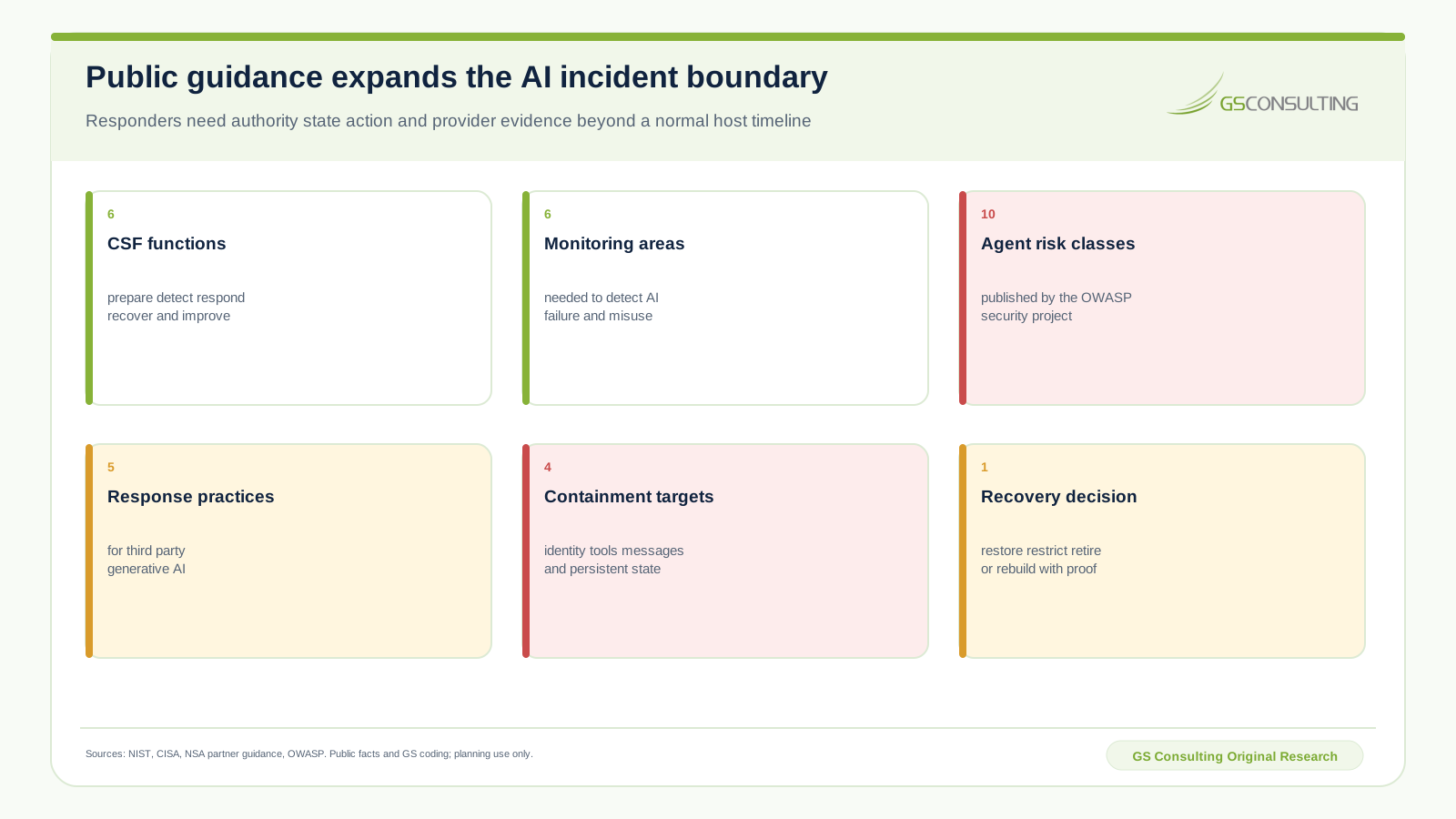
NIST SP 800-61 Revision 3 integrates incident response across all six Cybersecurity Framework functions and emphasizes preparation, detection, response, recovery, and improvement. The NIST AI RMF Manage function covers response, recovery, communication, incident response, decommissioning, and change management. Neither source supplies an agent specific severity table. Teams still need a local operating design.
The CISA JCDC AI Cybersecurity Collaboration Playbook adds voluntary coordination guidance. OWASP Top 10 for Agentic Applications 2026 organizes ten agent risk categories. The NIST agent security competition reported more than 250,000 attempts against 13 target models and at least one successful attack against every target. That is evidence of attack feasibility under competition conditions, not a production incident rate.
Original Research: GS Agent Incident Containment Priority Index
GS Consulting built a directional planning model to answer one question: which agent incident classes demand the fastest containment and strongest evidence preservation?
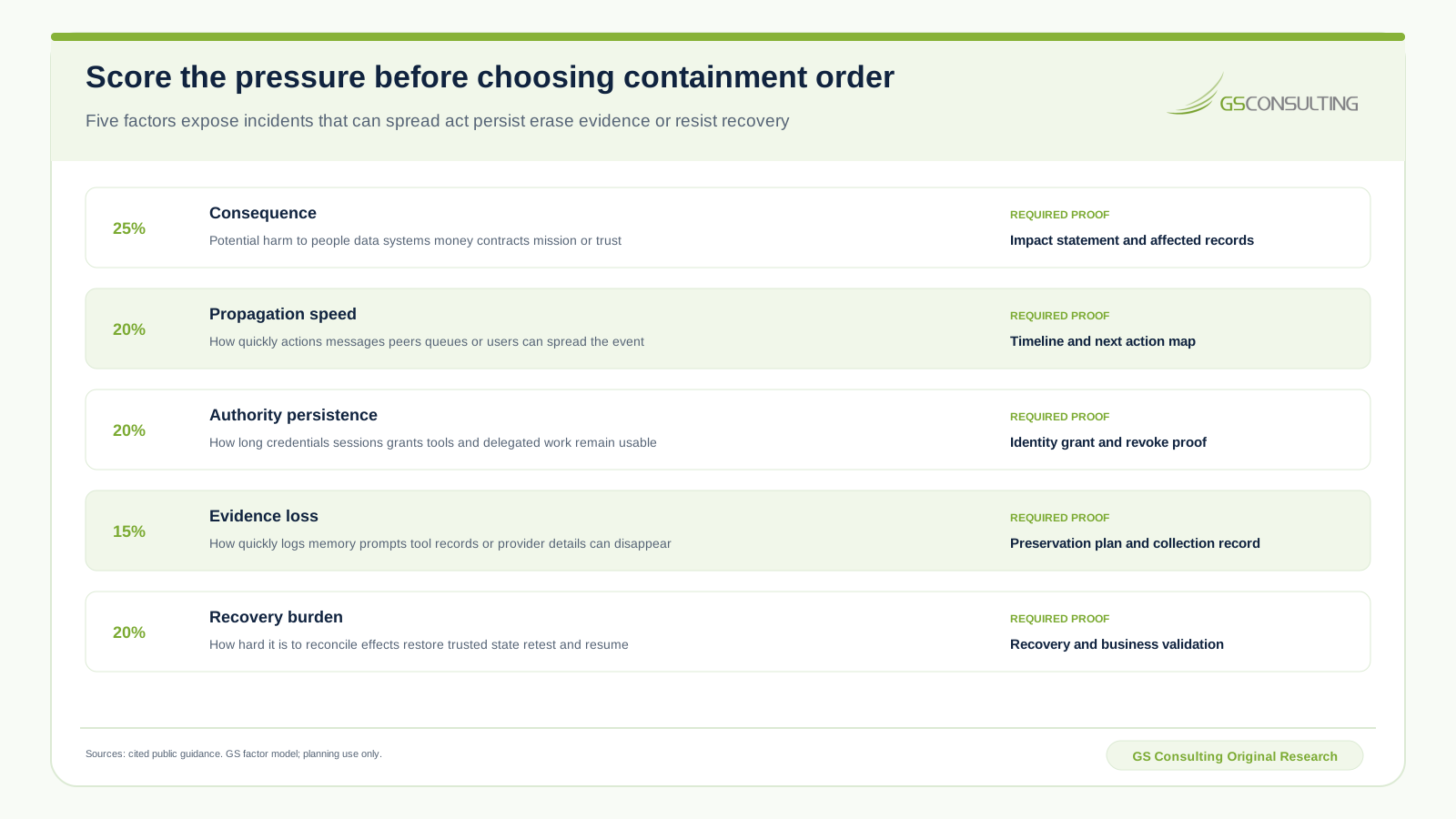
Twelve representative scenarios receive GS ratings from one to five across consequence, propagation speed, authority persistence, evidence loss, and recovery burden. The base case weights these factors at 25, 20, 20, 15, and 20 percent. The weighted result is scaled to 100.
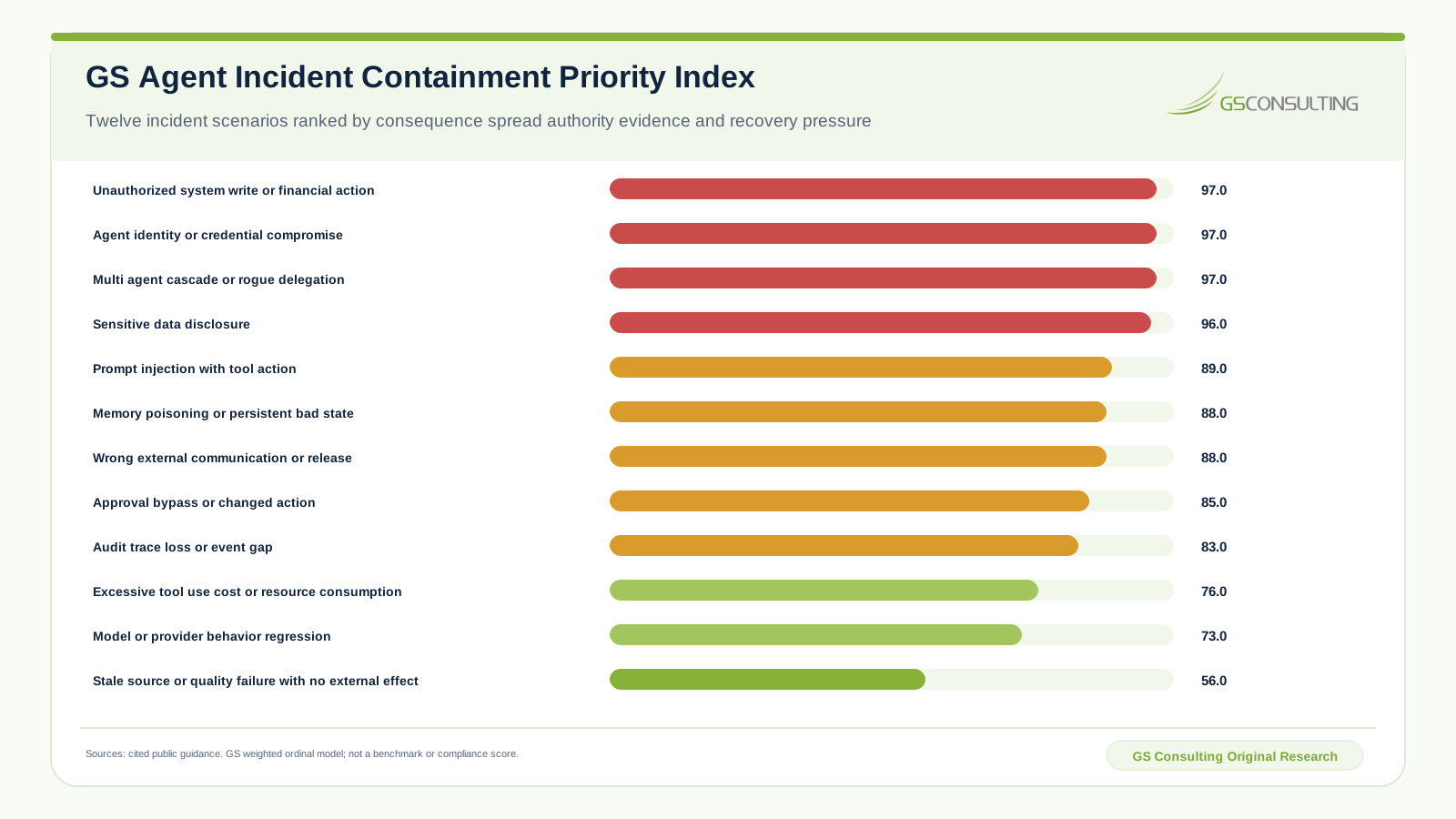
Unauthorized system write or financial action, agent identity or credential compromise, and multi agent cascade each score 97. Sensitive data disclosure scores 96. Prompt injection with tool action scores 89. Memory poisoning and wrong external communication each score 88. Approval bypass scores 85. Audit trace loss scores 83. Excessive tool use scores 76. Model or provider regression scores 73. A stale source or quality failure with no external effect scores 56.
The alternate case moves five points toward consequence and recovery burden and away from authority persistence and evidence loss. No score moves by more than two points. The leaders remain stable. This is a GS planning model based on public sources and documented assumptions. It is not an official severity rating, security certification, compliance result, or regulatory determination. Replace every rating with architecture facts, telemetry, incident history, contract duties, and approved risk decisions.
Prepare the Response System
Inventory the action path. Record the agent identity, human or service subject, delegation, effective permission, credentials, tools, targets, data classes, peer agents, model, prompt, policy, memory, retrieval stores, runtime, monitoring, and external dependencies. A response team cannot revoke an identity it cannot name.
Implement more than one stop control. Include task pause, credential revocation, policy denial, tool block, target isolation, queue quarantine, peer isolation, and provider restriction where the architecture allows them. Test which control stops new work, which interrupts work already running, and which leaves external transactions in an uncertain state.
Protect the evidence path. Centralize immutable or protected records outside the agent runtime. Synchronize time. Log policy decisions, approvals, denied actions, retries, peer messages, tool parameters, target results, and state changes. Set retention from actual contract, privacy, security, legal, and operational duties.
Exercise the runbook. Run table exercises and technical tests for compromised identity, prompt injection, unsafe tool use, disclosure, poisoned memory, peer propagation, provider failure, and monitoring loss. A contact list is not a tested response capability.
Contain Authority Without Destroying Proof
First pause new tasks and queued work. Revoke or narrow the agent credential and any delegated token. Deny the dangerous operation at the tool or target. Isolate peers that accepted messages or tasks. Freeze mutable state where possible and copy volatile records before they expire.
Containment must cover both the actor and the effect. If the agent opened a ticket, sent a message, changed a permission, updated a record, started a payment, or launched another process, stopping the original runtime does not reverse that outcome. Mark uncertain transactions for reconciliation.
Do not assume that deleting a conversation removes the condition. The cause may live in retrieval content, a policy, memory, connector configuration, model update, delegated authority, or a compromised target. Preserve the full version and context record before replacing components.
Preserve, Scope, and Investigate
Build a timeline from identity and action records. Start with the earliest known policy decision, retrieval event, prompt, peer message, credential use, tool call, target result, retry, alert, and human intervention. Record time quality and gaps rather than inventing precision.
Scope every place the agent could reach, not only the resources visible in the first alert. Review effective permissions, token audiences, target logs, peer exchanges, memory writes, retrieval changes, artifact stores, notifications, and downstream automation. Separate confirmed effects, likely effects, ruled out effects, and unknowns.
Preserve legal and notification decisions as explicit records. CISA offers a voluntary collaboration playbook, while contracts, customer terms, privacy rules, sector requirements, or government reporting clauses may create specific duties. Security, privacy, legal, contracts, and leadership should decide what applies. Do not turn a generic playbook into a legal conclusion.
Repair, Reconcile, Test, and Resume
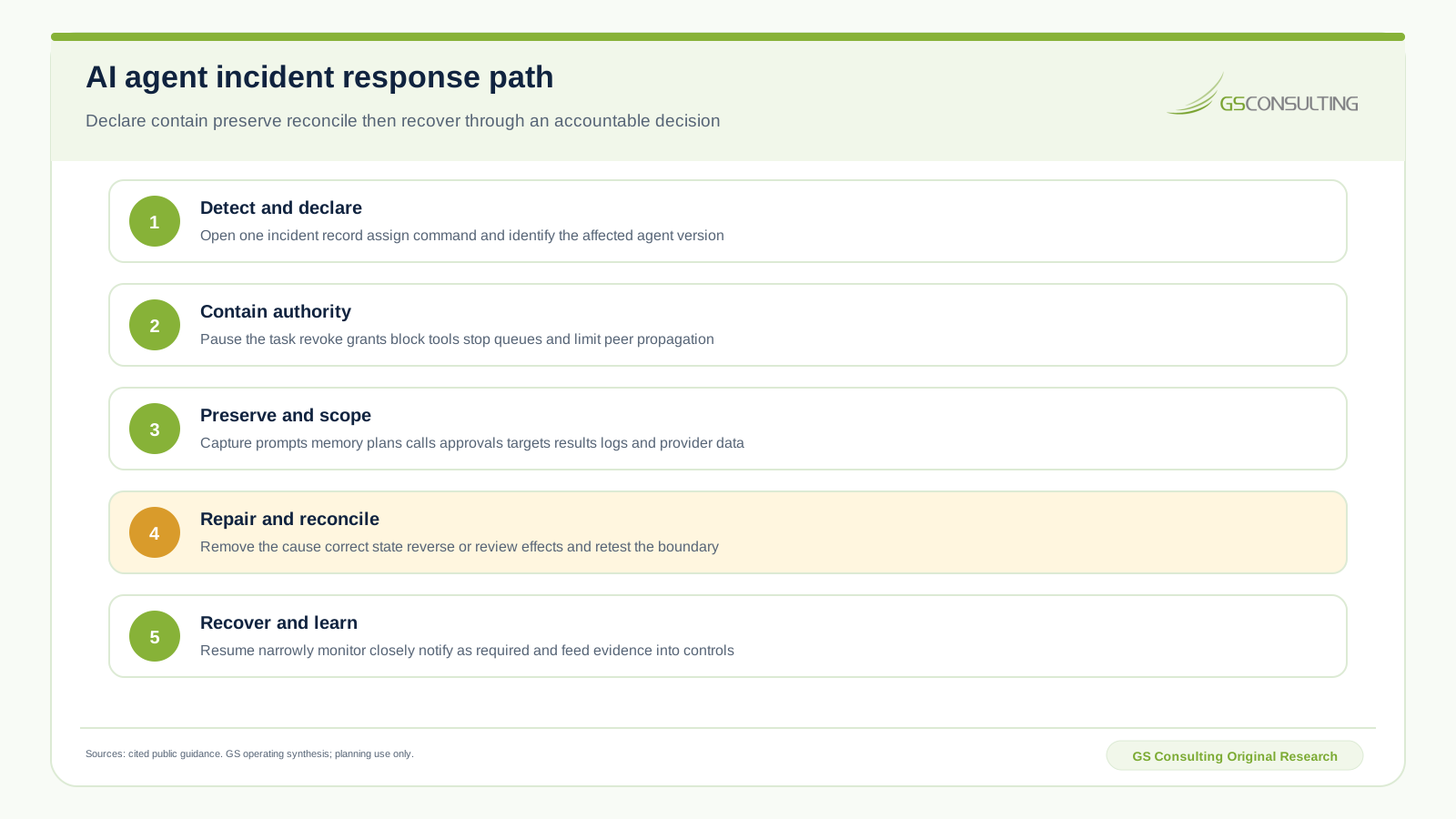
Remove persistence and rotate affected access. Correct the prompt, policy, connector, memory, retrieval source, orchestration, runtime, or target control that caused the failure. Reconcile every confirmed and uncertain external effect. Correction can mean restoring a record, cancelling a task, reversing a grant, informing a recipient, or documenting why reversal is impossible.
Build a focused regression suite from the incident. Repeat the harmful path under realistic retries and state. Test denied actions, alternate wording, adjacent targets, peer propagation, monitoring, containment, rollback, and recovery. A model update alone does not prove that the system control works.
The resume decision should identify the exact repaired version, approved authority, unresolved conditions, residual risk, monitoring window, owner, and next review. Restore in stages when consequence warrants it. Keep a rapid stop path during the observation period.
Six Incident Response Failures to Eliminate
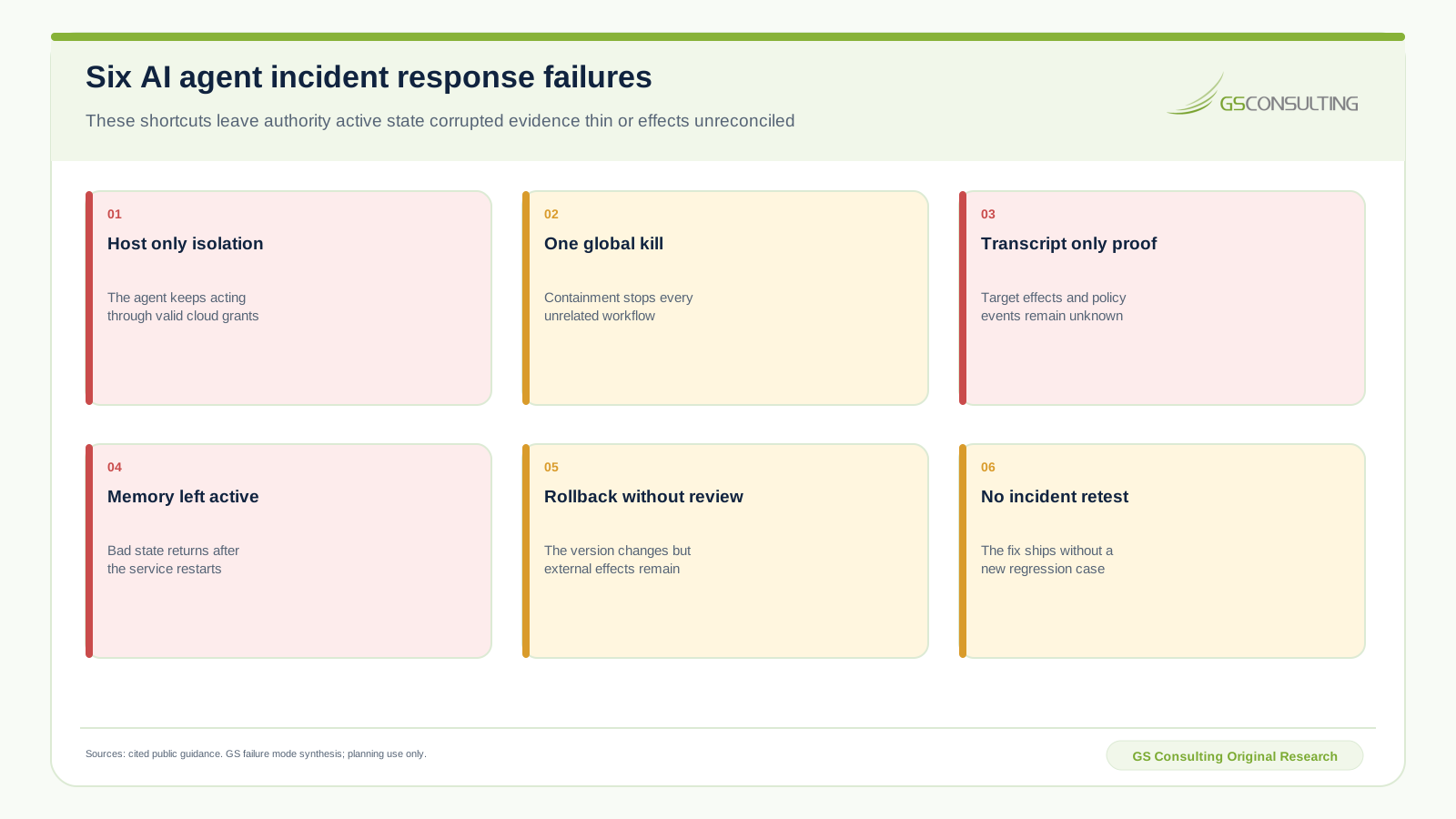
- Treating a strange answer as the entire incident. The actual effect and active credential remain live.
- Stopping the process but not the grant. Queued jobs and peer agents continue to act.
- Deleting state before collection. Policy, tool, target, and identity decisions disappear.
- Investigating only the agent runtime. Memory, retrieval, provider, and downstream effects escape review.
- Restoring before reconciliation. Duplicate or corrupt records become the new baseline.
- Closing without a new test. The same failure path returns in the next release.
The Minimum AI Agent Incident Evidence Packet
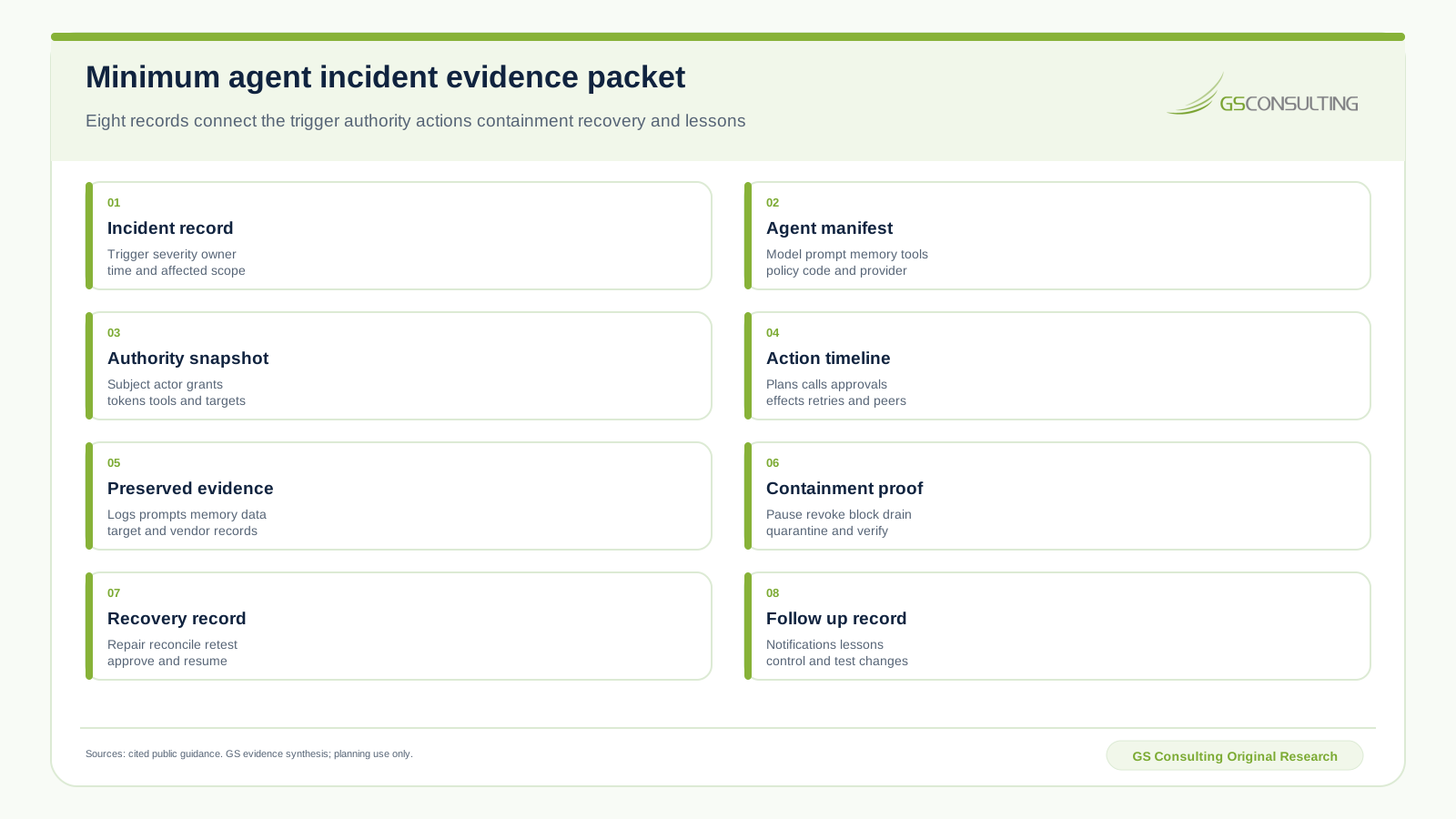
Keep eight linked records: incident intake; authority snapshot; version and context record; correlated event trail; containment record; impact and scope analysis; repair and recovery proof; and closure and improvement record. Use stable identifiers for the incident, agent, release, identity, task, tool action, external target, decision, and corrective action.
A useful packet can answer who or what acted, under whose authority, against which resource, with which version and input, what happened, which control decided, what evidence is missing, who contained it, which external effects were reconciled, what test now proves the correction, and who accepted residual risk.
A Practical Implementation Plan
- First, define thresholds and authority. Decide which conditions become incidents and who can declare, restrict, pause, restore, or retire the agent.
- Next, map reach and evidence. Inventory identities, permissions, tools, targets, peers, state, telemetry, obligations, and record locations.
- Then, implement stop controls. Test task pause, credential revocation, policy denial, tool blocks, target isolation, peer isolation, and evidence preservation.
- Exercise representative incidents. Measure time to detect, revoke, bound, preserve, decide, reconcile, test, and recover.
- Close the learning loop. Turn each event into a new test, control change, monitoring signal, owner, due date, and verified result.
Primary Sources
- NIST SP 800-61 Revision 3
- NIST AI RMF Core, Manage
- NIST AI Risk Management Framework 1.0
- NIST AI 600-1
- NIST SP 800-53 Revision 5
- CISA JCDC AI Cybersecurity Collaboration Playbook
- OWASP Top 10 for Agentic Applications 2026
- NSA, Careful Adoption of Agentic AI Services
- NIST, Insights from an AI Agent Security Competition
Suggested Future Reading
- Continuous Monitoring for AI Agents
- AI Agent Risk Assessment
- Multi Agent AI Security
- AI Audit Trails and Activity Logging
Frequently Asked Questions
What is AI agent incident response?
AI agent incident response is the coordinated process for detecting an agent related security or operational incident, stopping harmful authority, bounding the effect, preserving evidence, repairing the cause, reconciling external results, testing recovery, and documenting the decision to resume or retire the agent.
What should a team contain first during an AI agent incident?
Contain the live authority that can continue harm. Pause tasks, revoke or narrow credentials, block dangerous tools and targets, isolate affected peers, and preserve volatile records. Do not destroy the only evidence while stopping the effect.
Is a wrong AI agent answer always an incident?
No. A poor answer can be a quality defect. Treat the event as an incident when it creates or threatens material harm, unauthorized action, sensitive data exposure, security compromise, unsafe propagation, contractual impact, or a failure of required controls. Local policy should define the threshold.
What evidence matters in an AI agent incident?
Preserve the agent identity, delegated subject, credentials, effective permissions, prompt and policy versions, model, memory, retrieval sources, tool calls, parameters, targets, peer messages, approvals, results, retries, timestamps, logs, alerts, affected records, and containment decisions.
How should an AI agent return to service after an incident?
Remove persistence, rotate access, correct the root cause, reconcile external targets, run focused regression and denied action tests, verify monitoring and stop controls, document residual risk, and require an accountable authority to approve the exact repaired version and operating boundary.
Does one incident playbook cover every AI agent?
No. A common lifecycle helps, but each production agent needs local contacts, stop mechanisms, identities, tools, data stores, evidence locations, recovery steps, notification paths, and decision owners. The playbook must match the deployed architecture and obligations.
Bottom Line
Agent incidents cross model behavior, identity, tools, state, external systems, and human decisions. The response team needs one traceable operating picture across all of them.
The standard is firm: no active harmful authority, no discarded evidence, no unknown external effect, and no return to service without tested recovery and accountable approval.
Make containment and recovery executable.
GS Consulting helps organizations build agent response architecture, runbooks, exercises, evidence packets, and recovery gates for the systems they actually operate.
Start the Conversation