DevSecOps | | 25 min read
What Is DevSecOps? Definition, Pipeline, and Operating Model

Key Takeaways
Security belongs in the delivery decision, not in a report that arrives after it.
One delivery system
Development, security, and operations share the same flow, evidence, ownership, and response rules.
Protect source and build identity
The strongest early controls bind an approved change to the exact artifact and release decision.
Fast feedback beats late review
Checks create value when the person who introduced the change can act while its context is fresh.
DevSecOps is not a scanner added to a CI/CD pipeline.
It is a delivery operating model.
Security decisions move inside the same path that turns a source change into a running service. Requirements are set before code is written. Checks run while the change is still fresh. The exact artifact is approved. Deployment is observable. Production evidence returns to engineering.
When DevSecOps works, teams ship safer software with less rework because security is part of the work. When it fails, the organization buys more tools, produces more findings, and still cannot prove what source produced the artifact in production.
This guide gives a plain DevSecOps definition, maps the pipeline and operating model, explains the controls that matter first, and provides an implementation sequence. It also anchors the DevSecOps insights hub and connects to GS Consulting's DevSecOps and software supply chain solution.
The companion DevSecOps security gates guide turns this operating model into explicit hard block, context review, exception, and release evidence rules.
What Is DevSecOps?
DevSecOps is a way of running software delivery in which development, security, and operations share responsibility for security outcomes from planning through production. Security requirements, automated checks, approvals, evidence, and response rules are built into the delivery workflow.
The term does not mean every developer becomes a security specialist. It means security specialists turn important requirements into usable patterns, tests, guardrails, and decision rules. Developers receive feedback in the tools where they work. Platform teams make the secure path the easy path. Operations returns incidents, health, and exposure data to the people changing the software. Leaders define risk decisions and own exceptions.
The model is consistent with the NIST Secure Software Development Framework, or SSDF, which organizes practices around preparing the organization, protecting software, producing well secured software, and responding to vulnerabilities. NIST SP 800-204D applies software supply chain security strategies to cloud native CI/CD pipelines. The DoD Enterprise DevSecOps Fundamentals describes a software factory and a continuous lifecycle from planning through monitoring and feedback. These publications guide practice. They do not make a pipeline compliant by their mere adoption.
A useful DevSecOps definition therefore has four parts: shared ownership, decisions inside the workflow, evidence tied to the exact change, and feedback that returns from operations.
Why DevSecOps Exists
Traditional delivery separates the teams and the clocks. Development optimizes for feature completion. Security reviews a large batch near release. Operations inherits the result. Findings arrive when schedules are fixed and the author has moved on.
That model creates predictable waste. Developers wait for a report. Security repeats the same advice. Teams dispute whether a finding applies. Release managers approve an artifact that is not clearly bound to its source. Operations learns about unsafe behavior in production but has no clean path to feed it into the next change.
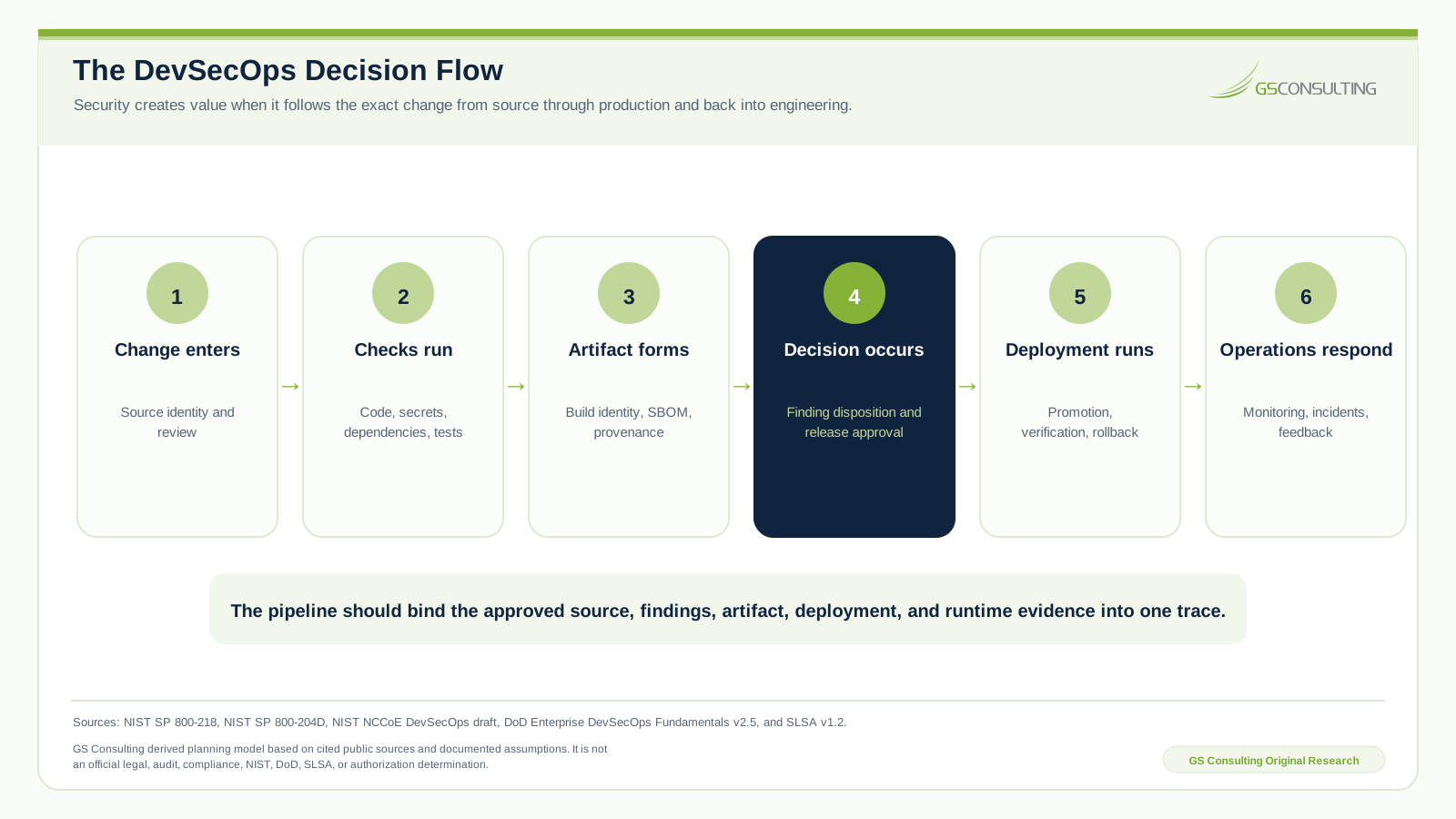
DevSecOps changes the location and timing of the decision. A secret check blocks the commit before a credential enters history. Dependency policy evaluates the component when it is selected. Code and infrastructure analysis return findings on the proposed change. Build provenance identifies how an artifact was made. Release approval applies to that exact artifact. Runtime evidence opens a source linked engineering task with an owner.
Faster feedback is not the same as weaker review. It is a way to make review specific, attributable, and timely. High consequence exceptions can still require a security owner. The difference is that the exception is a named decision in the system, not a message lost in a meeting.
The DevSecOps Delivery Lifecycle
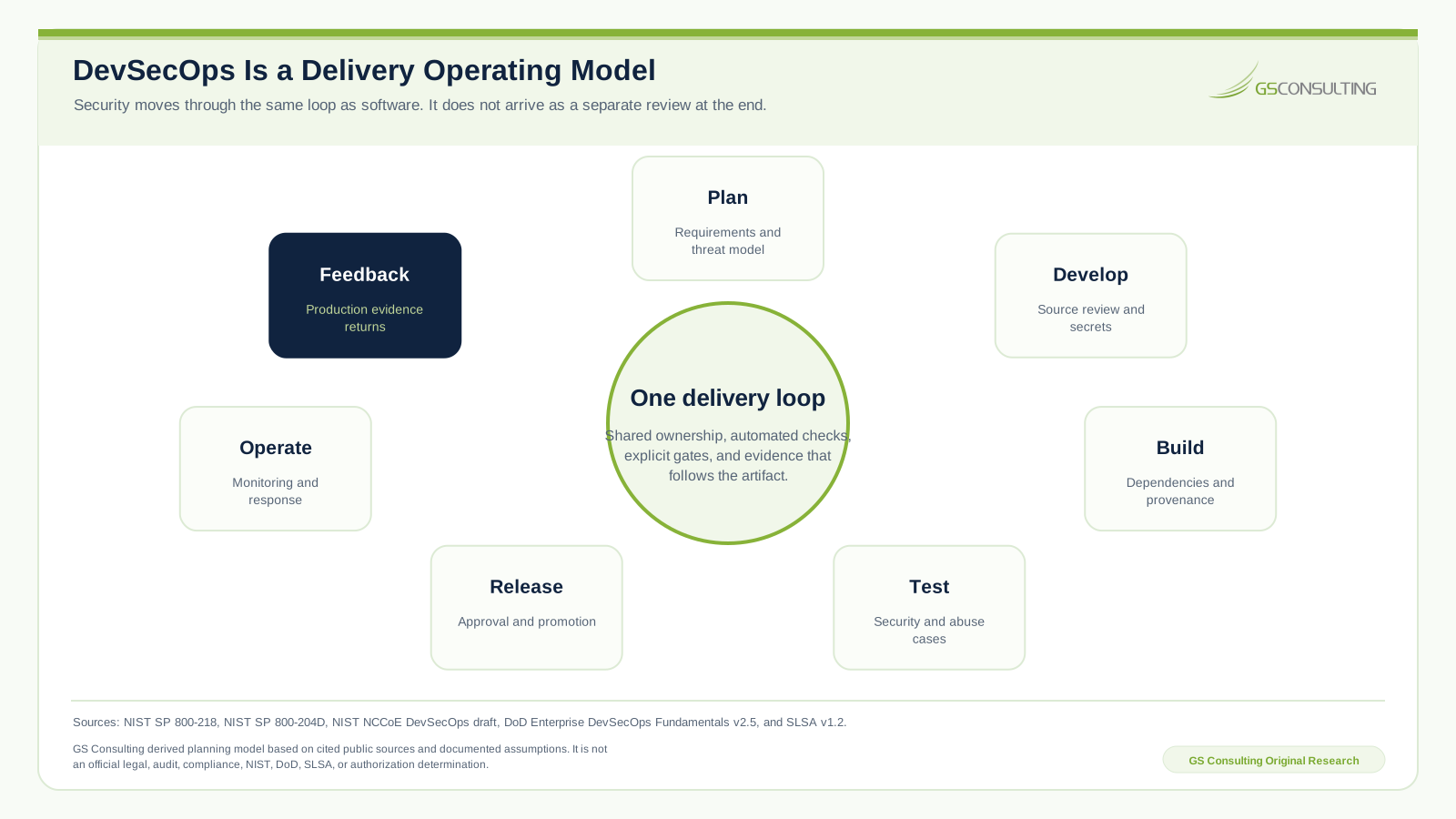
A practical lifecycle runs through plan, develop, build, test, release, deploy, operate, monitor, and feedback. Organizations draw the circle differently, but the operating questions remain stable.
Plan: What security outcome, abuse case, data duty, and acceptance condition applies?
Develop: Who changed the source, who reviewed it, and did the change expose a secret or violate an approved pattern?
Build: Which dependencies entered the artifact, where did the build run, and what provenance binds source to output?
Test: Did code, infrastructure, containers, interfaces, and failure paths meet the acceptance criteria?
Release: Who accepted the remaining findings and approved the exact artifact for promotion?
Deploy: Which target received the artifact, under which identity, with what verification and rollback path?
Operate and monitor: Is the service healthy, is behavior within expected bounds, and are new vulnerabilities or threats changing the decision?
Feedback: Did production evidence reach an accountable engineering owner with enough context to act?
Original Research: The GS DevSecOps Control Placement Index
GS Consulting's derived research points to source identity, build identity, and release authority as the foundation.
We reviewed five public source groups: NIST SP 800-218, NIST SP 800-204D, the March 2026 initial preliminary draft of the NIST NCCoE DevSecOps Practices project, DoD Enterprise DevSecOps Fundamentals version 2.5, and the open SLSA version 1.2 Build Track. We coded recurring public control signals, then scored ten pipeline control points across source convergence, prevention leverage, blast radius, evidence reuse, and feedback speed.
The GS DevSecOps Control Placement Index is a derived planning tool. It is not an official NIST, DoD, SLSA, legal, audit, authorization, or compliance determination. Ratings are documented GS analyst assumptions, and the public sources are not treated as statistical benchmarks.
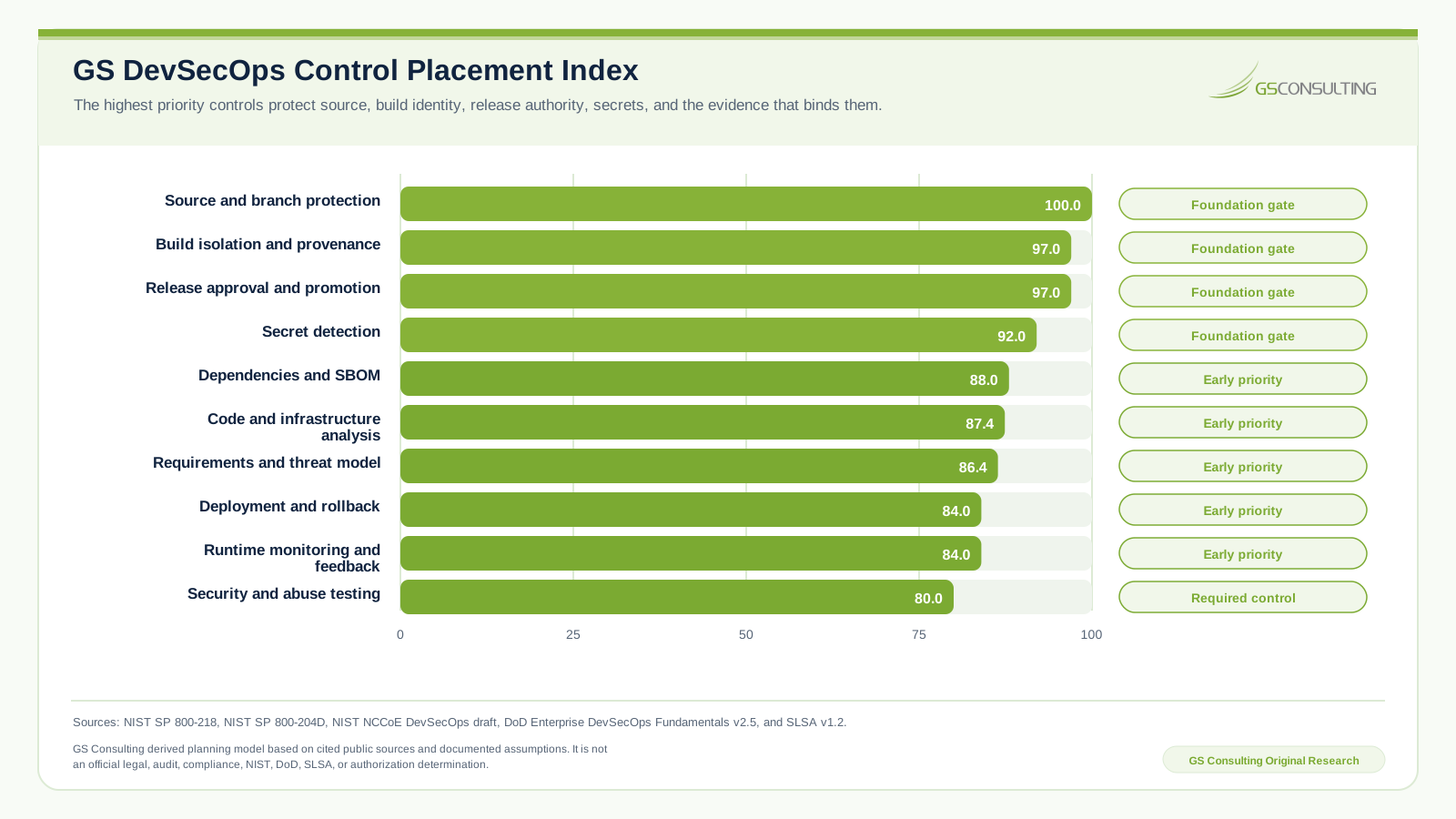
Source and branch protection scored 100. Build isolation and provenance scored 97. Release approval and promotion also scored 97. Secret detection followed at 92. These are foundation gates because they prevent unattributable or unapproved software from entering the delivery path.
Dependencies and software bills of materials scored 88.0. Code and infrastructure analysis scored 87.4. Requirements and threat modeling scored 86.4. Deployment and rollback scored 84.0, as did runtime monitoring and feedback. Security and abuse testing scored 80.0.
Testing did not score last because it is unimportant. It scored lower because tests cannot repair weak source identity, a floating artifact, or an approval that is not bound to what gets deployed. The model favors controls that prevent an untrusted release and create evidence that later stages can reuse.
How the Control Placement Model Works
The base model weights prevention leverage at 25 percent, source convergence at 22 percent, blast radius at 20 percent, evidence reuse at 18 percent, and feedback speed at 15 percent. Each control receives a rating from one to five. The score is the sum of each rating divided by five, multiplied by its weight, then multiplied by 100.
Source convergence asks whether multiple public sources point to the control. Prevention leverage asks how early it can stop a weak release. Blast radius asks what failure the control can contain. Evidence reuse asks whether its record supports later decisions. Feedback speed asks whether it reaches the person who can fix the issue while the change is fresh.
An alternate weighting increased emphasis on prevention and blast radius. The largest absolute score change was 2.0 points, and no control moved out of its broad priority group. That is a sensitivity check, not statistical validation. It supports the planning conclusion that a trustworthy change and artifact chain should precede tool sprawl.
The repository research package contains the source register, public signal coding, model inputs, weights, formulas, scores, sensitivity results, data dictionary, and figure data.
Put Each Control Where the Decision Happens
A pipeline should not run every tool at every stage. Put the control where it can change the decision with the least rework.
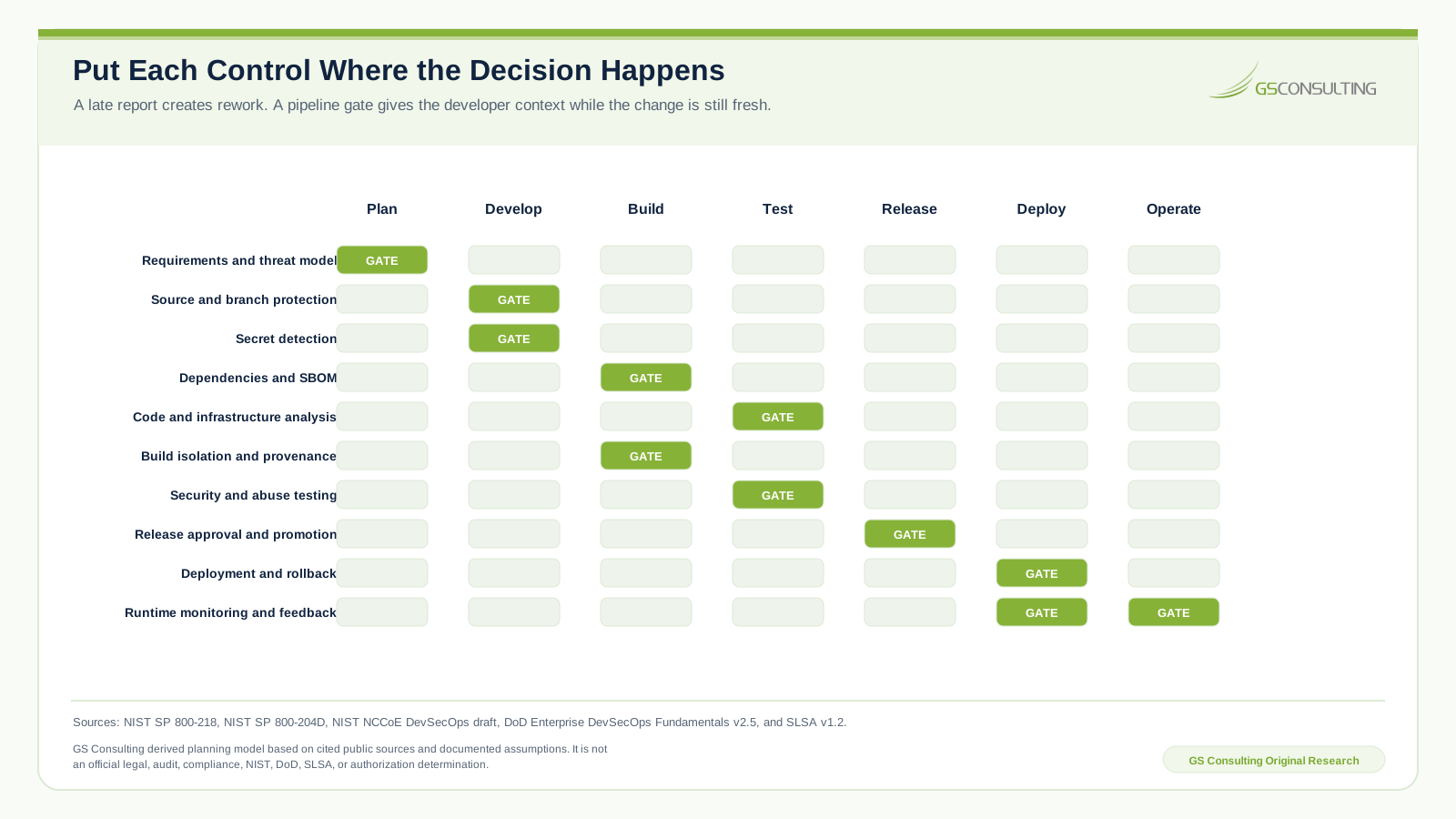
Requirements and threat models belong in planning. Source protection and secret detection belong in development. Dependency records and provenance belong in build. Code, infrastructure, and abuse tests belong where the proposed change is still easy to correct. Release approval belongs on the exact artifact. Deployment checks verify target, identity, promotion, and rollback. Runtime monitoring closes the loop.
This placement also clarifies ownership. Security defines policy and helps tune hard cases. Platform teams implement reusable controls. Developers fix source problems. Release owners accept residual risk. Operations verifies service behavior. No one can outsource their decision to the scanner.
The DoD DevSecOps reference design guide explains why the 2021 Kubernetes pattern must be read through the current Fundamentals and cATO evidence model. The companion guide on automating DevSecOps pipelines with AI goes deeper on where AI can summarize findings, propose fixes, and route evidence without receiving unchecked release authority. The secure API development guide applies the same principle to service interfaces and automation boundaries.
The DevSecOps Operating Model
Product teams own secure delivery. They do not wait for another team to make routine quality decisions. Their definition of done includes the applicable security acceptance criteria.
Security builds capability. Security engineers define patterns, threat methods, control intent, exception criteria, and high consequence review. Their job is to make the right decision repeatable, not to become a manual ticket queue.
Platform teams build the paved path. They provide approved templates, build environments, identities, signing, policy checks, evidence capture, and deployment controls. A paved path has to be easier than bypassing it.
Operations closes the loop. Health, alerts, exposure, incidents, and rollback results return to source linked work. Production is not the end of the pipeline. It is the source of the next decision.
Leadership owns exceptions. Risk acceptance needs a named owner, rationale, scope, conditions, expiration, and evidence. “Ship it and fix it later” is not a decision record.
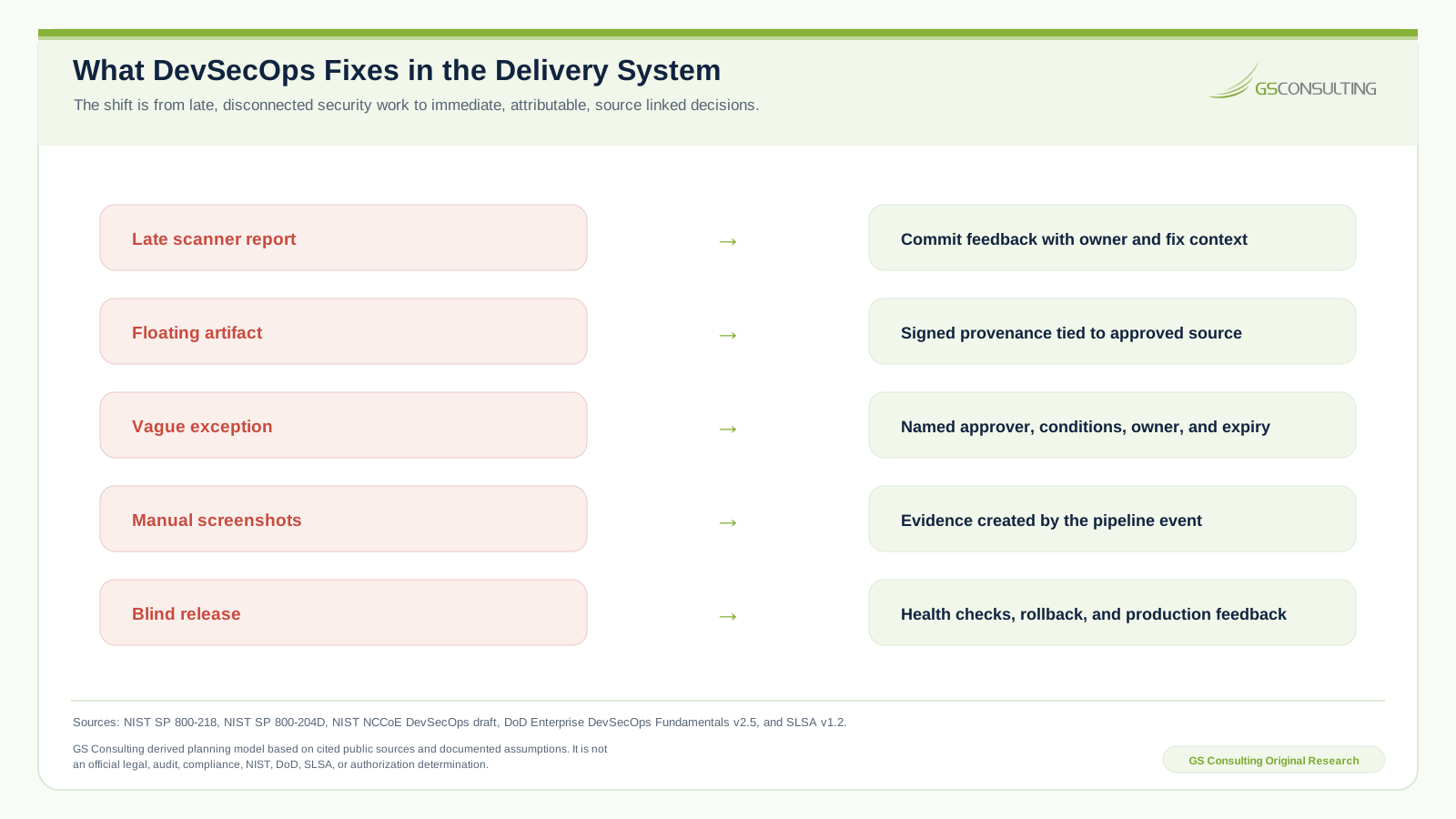
The shift can be seen in ordinary failure modes. A late scanner report becomes commit feedback with owner and fix context. A floating artifact becomes signed provenance tied to approved source. A vague exception becomes a named decision with conditions and expiry. Manual screenshots become evidence created by the pipeline event. A blind release becomes health checks, rollback, and production feedback.
Metrics That Reveal the Operating System
Do not count scans and call it maturity. Measure whether the delivery system prevents weak releases and helps teams recover.
The DevSecOps metrics guide defines a balanced scorecard for flow, stability, exposure, traceability, and decisions. Track the percentage of production artifacts with verifiable provenance. Track the percentage of releases tied to an approved source change and named approver. Track secret escape rate, time to actionable feedback, repeat finding rate, and exception age. Track deployment failure rate, rollback success, time from a production signal to an owned source task, and the share of evidence created automatically by the delivery event.
Pair security measures with delivery outcomes. If a control raises wait time without reducing meaningful exposure, fix the control. If teams bypass the paved path, examine the friction. If findings repeat, a report is not reaching the design pattern or owner that can prevent them.
Volume can mislead. A pipeline that reports ten thousand low value findings may be less useful than one that blocks an exposed credential, proves artifact identity, and gives a developer one fixable issue in minutes.
A Practical DevSecOps Implementation Roadmap
Step one: map the current release. Follow one real change from request through source, review, build, test, approval, deployment, and production. Record every manual handoff and evidence gap.
Step two: protect source. Require attributable identity, branch rules, review, and controlled automation accounts. Establish the source of truth.
Step three: bind the build. Use an approved build service, isolate jobs, record dependencies, create provenance, and identify the artifact immutably. SLSA offers a useful open model for progressively stronger build guarantees.
Step four: improve feedback. Put secret, dependency, code, infrastructure, and abuse checks where their results are actionable. Tune policy to consequence. Assign findings to the change owner with fix context.
Step five: control promotion. Approve the exact artifact, findings disposition, exception record, target, and rollback readiness. Separate preparation from release authority.
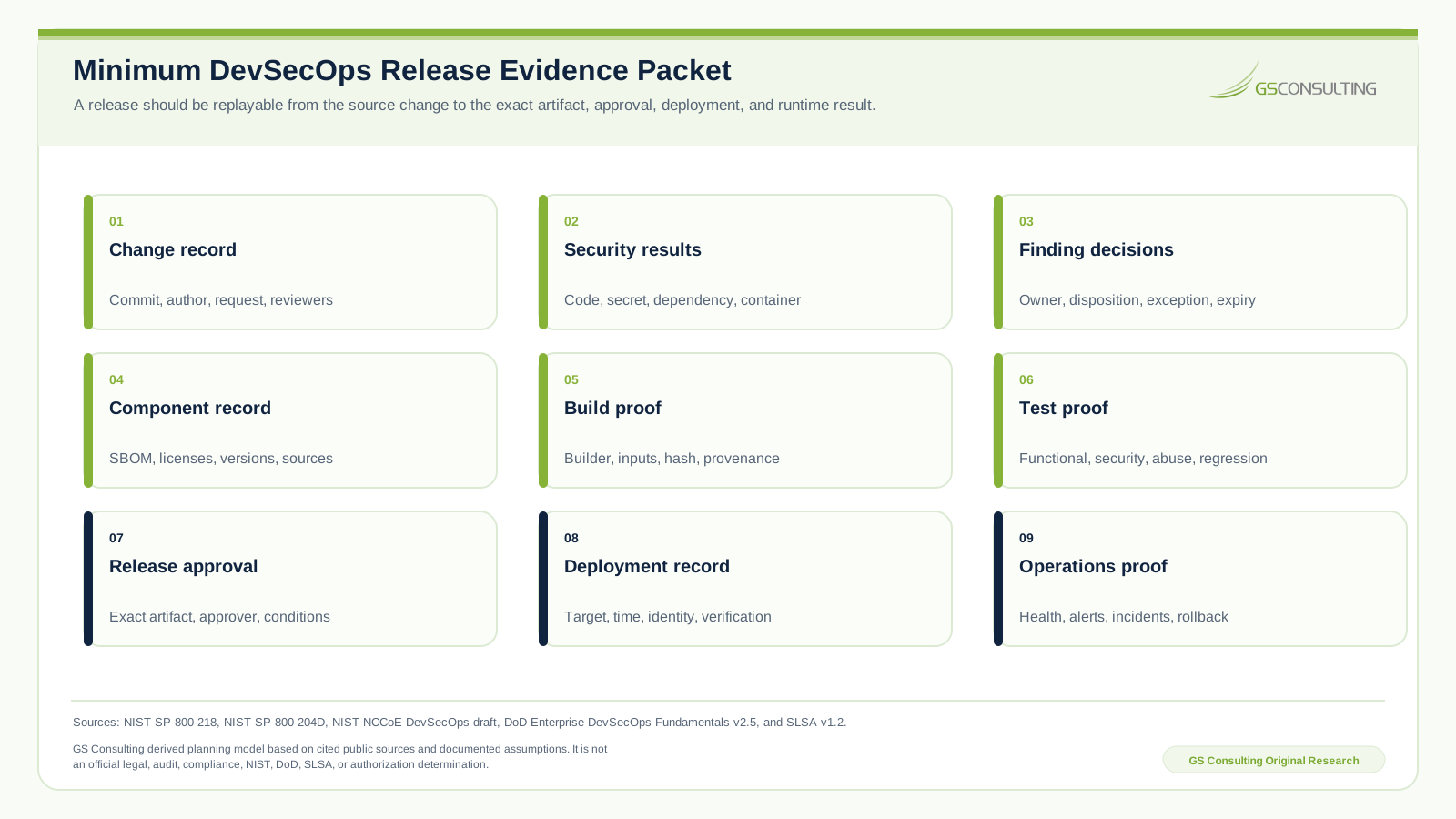
Step six: automate evidence. Capture the change, checks, components, build proof, test proof, approval, deployment, and operations result as structured records. Use the software bill of materials guide to bind component evidence to the exact release and response workflow.
Step seven: close the feedback loop. Connect runtime signals to source, owner, and next action. Exercise rollback and incident response. Retire controls that create noise without changing decisions.
Frequently Asked Questions
What does DevSecOps mean in plain English?
It means building security into the normal way software is planned, changed, tested, approved, deployed, and operated. The team gets useful feedback while it can still act, and the delivery system keeps evidence of the decision.
Is DevSecOps just shift left?
No. Earlier feedback matters, but production signals and response matter too. DevSecOps moves appropriate decisions earlier and also creates a continuous loop from operations back to engineering.
Who owns security in DevSecOps?
Product teams own secure delivery, security teams build policy and expertise, platform teams provide the paved path, operations returns evidence, and leaders own risk exceptions. Shared responsibility works only when each decision still has a named owner.
What should a team implement first?
Protect source and branch identity, then bind approved source to an isolated build and exact artifact. Add focused checks and release evidence around that chain. More scanners do not compensate for an artifact you cannot trace.
Does DevSecOps prove compliance?
No. It creates useful secure development and delivery evidence. Whether that evidence satisfies an obligation depends on the applicable contract, policy, standard, system boundary, and assessment.
Build a delivery system that can explain every release.
GS Consulting helps regulated teams map delivery risk, protect source and builds, place pipeline controls, automate evidence, and connect production feedback to engineering.
Request a DevSecOps AssessmentThe operating standard is direct: no artifact reaches production unless its source, checks, approval, deployment, and runtime result can be reconstructed.