Cybersecurity | | 22 min read
Vulnerability Scan vs Assessment vs Penetration Test: What Do You Need?

Key Takeaways
Choose the engagement by the answer you need
Use a vulnerability scan
Favor broad, repeatable discovery and measurable coverage across an authorized target set.
Use a vulnerability assessment
Add analyst validation, control evidence, business context, prioritization, and remediation sequence.
Use a penetration test
Validate selected attack paths under written authority, safety controls, and stop conditions.
A vulnerability scan finds known conditions at scale. A vulnerability assessment turns discovery and evidence into a broader risk decision. A penetration test uses authorized adversary actions to determine whether selected weaknesses or attack paths can be exploited. Choose the service by the answer, depth, safety boundary, evidence, and retest your organization needs.
The labels are often used loosely. One proposal may call a scanner export an assessment. Another may call manual validation a penetration test even though no exploitation is authorized. A third may promise a broad penetration test without naming the reachable targets, credentials, business paths, or prohibited actions. The title does not protect the buyer. The written scope does.
This guide connects service selection to the GovCon Cybersecurity and Compliance hub, the DevSecOps vulnerability management workflow, and the FedRAMP vulnerability management guide. GS Consulting applies the decision through cyber situational awareness and incident response services.
Buy the answer, not the service label.
GS Consulting can define the target set, testing depth, evidence requirements, safety boundaries, and closure path for a focused security review.
Request a Security Testing Fit CheckVulnerability Scan vs Assessment vs Penetration Test
The cleanest distinction is the question each service is designed to answer. A scan asks, “Which known conditions can the configured tools observe across the authorized target set?” An assessment asks, “What deficiencies exist, how credible and consequential are they, what do they reveal about security measures, and what should happen next?” A penetration test asks, “Can a tester reproduce an adversary path or demonstrate exploitability within the approved constraints?”
| Service | Best answer | Typical methods | Primary limitation |
|---|---|---|---|
| Vulnerability scan | Broad, repeatable discovery and change detection | Authenticated or unauthenticated scanners, version and configuration checks, exposed service discovery, application scanning | Tool coverage, access, signatures, configuration, false results, and analyst interpretation limit what the output proves |
| Vulnerability assessment | Broader risk picture, control context, priorities, and recommendations | Scanning, evidence review, configuration analysis, interviews, sampling, manual validation, and technical tests as scoped | The label has no single universal method; the proposal must define breadth, depth, evidence, and limitations |
| Penetration test | Exploitability, chained weaknesses, selected adversary paths, and resistance | Discovery, hypothesis development, manual testing, exploitation where authorized, control observation, cleanup, and reporting | A focused sample cannot prove the absence of vulnerabilities across the environment or over time |
| Assessment plus penetration test | Broad context plus deep validation of selected high consequence paths | Assessment methods followed by authorized exploitation against prioritized targets or hypotheses | Highest planning, specialist, safety, coordination, evidence, and repeatability burden |
These services are complementary. A scan may feed an assessment. An assessment may identify the path worth testing. A penetration test may expose an inventory or control problem that needs broader assessment. Keep the records connected, but do not collapse the methods into one vague deliverable.
Public Guidance Separates Discovery, Assessment, and Validation
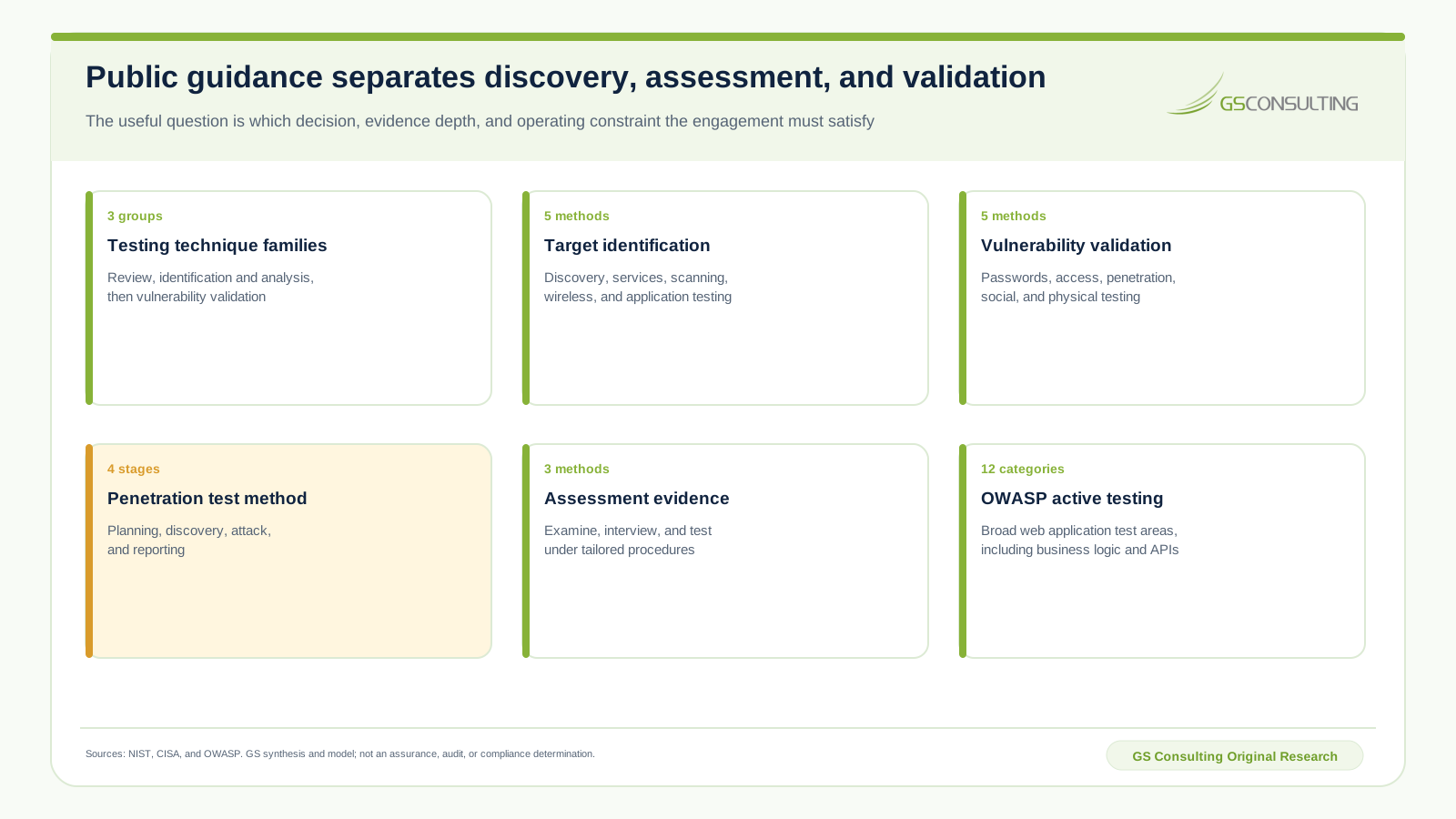
NIST SP 800-115 organizes technical security testing into three groups: review techniques, target identification and analysis, and target vulnerability validation. It lists vulnerability scanning under identification and analysis. Penetration testing appears under validation. The guide also says no single technique supplies a complete picture, which supports purposeful combinations rather than a contest between labels.
NIST describes vulnerability scanning as a way to identify hosts, host attributes, and associated vulnerabilities. The same guide warns that scans may see only the surface, miss combinations of weaknesses, apply generic risk labels that do not reflect local risk, produce false positive or false negative results, depend on updated signatures, and require human interpretation. Some scan actions can also disrupt operations.
NIST SP 800-53 Revision 5.1 reinforces the distinction. RA-5 addresses recurring vulnerability monitoring and scanning. CA-8 treats penetration testing as specialized work that validates vulnerabilities or evaluates resistance to adversaries within constraints and can use vulnerability analysis as an input.
NIST SP 800-53A Revision 5 uses examine, interview, and test methods in tailored control assessments. That does not define every commercial vulnerability assessment, but it shows why assessment evidence can extend beyond scanner output. The NIST vulnerability assessment glossary entry similarly describes a systematic examination that evaluates measures, identifies deficiencies, informs proposed measures, and confirms adequacy after implementation.
The CISA Cyber Hygiene service gives a concrete scan example: continuous monitoring of public static IPv4 assets with weekly reporting and urgent alerts. That is the service design for a specific public program, not a universal frequency benchmark. The OWASP Web Security Testing Guide organizes active application testing into 12 categories, showing how quickly application depth can expand beyond a generic scan.
Original GS Research: Security Testing Selection Utility Index
GS Consulting built the Security Testing Selection Utility Index to compare four service patterns across six buyer scenarios. The model rates coverage breadth, repeatable cadence, analyst context, control and process review, manual technical validation, exploit path validation, production safety, remediation prioritization, and retest evidence from one through five.
Each scenario assigns weights totaling 100. The resulting fit score is combined with the inverse of delivery burden. Burden covers planning and scope, access and setup, specialist labor, operational disruption, remediation collaboration, reporting and evidence, and repeatability cost. Fit receives 70 percent of utility for recurring exposure hygiene and up to 90 percent for a high consequence architecture change.
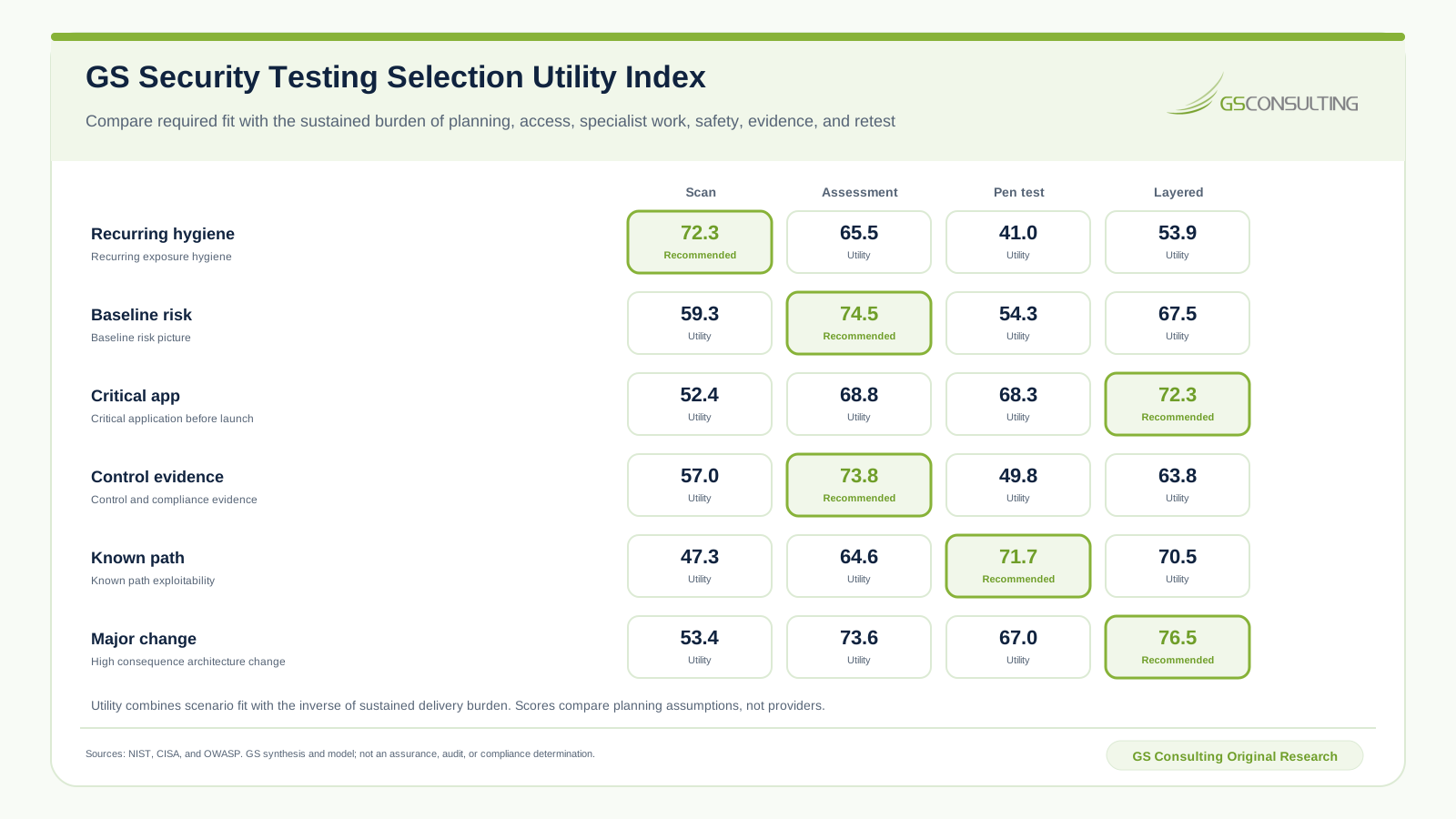
A vulnerability scan leads recurring exposure hygiene with a utility score of 72.3. A vulnerability assessment leads the baseline risk picture at 74.5 and control or compliance evidence at 73.8. A penetration test leads the known path exploitability question at 71.7. A layered assessment plus penetration test leads a critical application before launch at 72.3 and a high consequence architecture change at 76.5.
The differences matter. For the critical application scenario, the assessment scores 68.8, the penetration test 68.3, and the layered pattern 72.3. That is not a command to buy everything. It says the added breadth and exploit path validation justify the added burden only when both answers change the launch decision. For the known path scenario, the focused penetration test edges the layered pattern 71.7 to 70.5 because broader work adds burden without adding enough decision value.
The sensitivity case increases the share assigned to fit by five percentage points, capped at 95 percent. No scenario changes its recommended pattern, and the largest utility movement is 4.5 points. This is a limited stability check. It is not external validation.
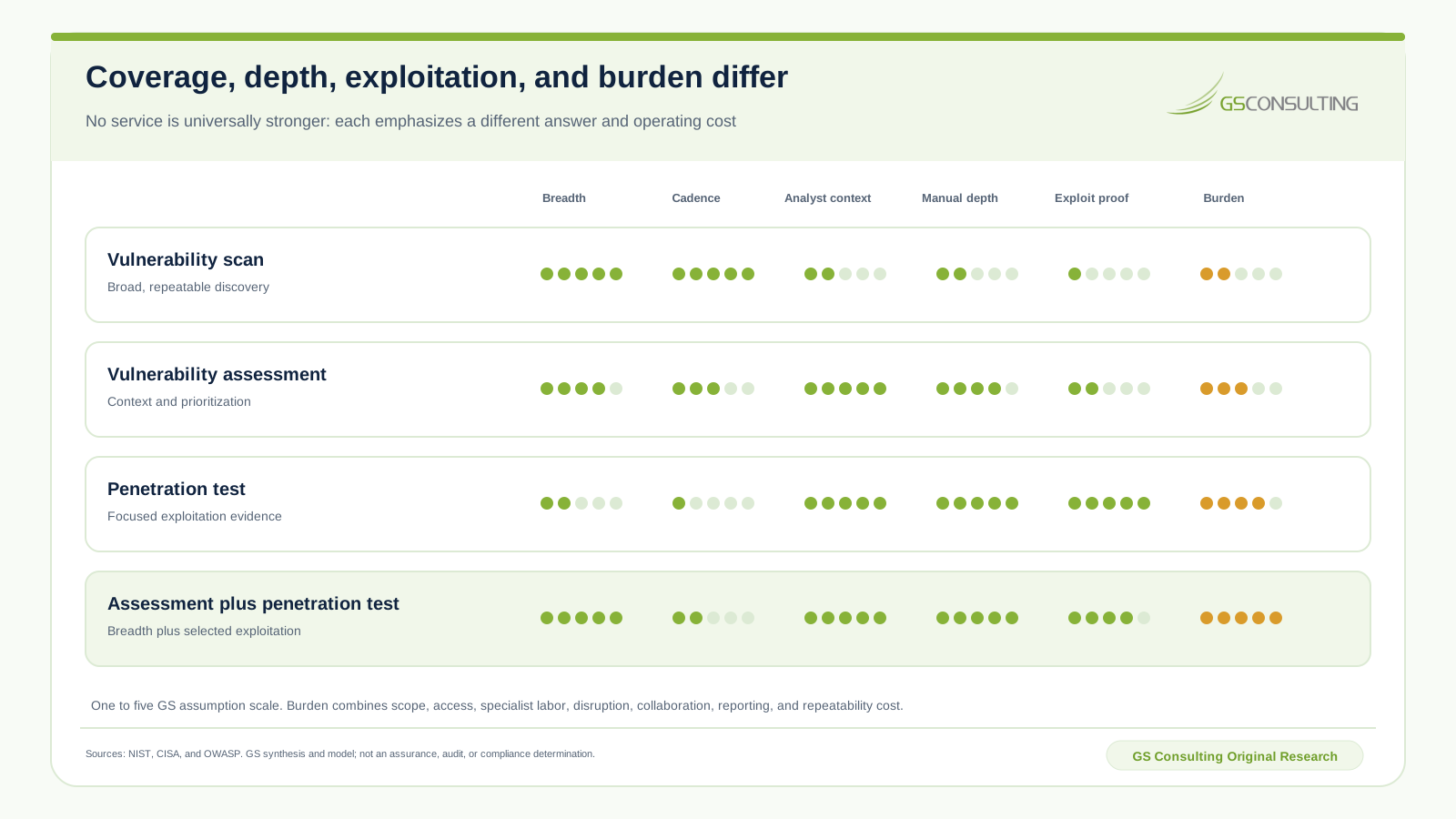
The complete source register, public observations, definitions, ratings, weights, formulas, cached results, sensitivity analysis, exact figure data, scoping checklist, retest matrix, and evidence packet are preserved in the research workbook. All ratings and service definitions are GS analyst assumptions. Replace them with local assets, architecture, threats, contracts, controls, safety requirements, provider evidence, and decision authority.
Use a Vulnerability Scan for Broad, Repeatable Discovery
Choose a scan when the organization needs recurring visibility across a defined target set. Common uses include external exposure discovery, host and service checks, operating system and application findings, configuration checks, web application scanning, cloud posture rules, container or dependency scanning, and verification after a known correction.
A useful scan deliverable proves coverage as well as findings. It should identify the expected target population, reached targets, authentication success, scanner policies, excluded checks, inaccessible assets, unsupported technology, signature or feed version, start and end time, disruptions, false result handling, and raw result traceability. “No critical findings” means little if the scanner never authenticated or half the inventory was absent.
Use several scan methods when the environment demands it. A network scanner, web application scanner, cloud control, code analyzer, and dependency tool observe different surfaces. Reconcile their targets to a shared asset, application, component, and owner identity. Do not interpret more tools as automatic completeness.
Use a Vulnerability Assessment for Context and Decisions
Choose an assessment when the buyer needs a broader picture than a scan can provide. The scope may combine automated discovery with architecture review, configuration analysis, interviews, document examination, manual validation, sampling, control evidence, business context, and remediation planning. The exact mixture must be written because “vulnerability assessment” is not one fixed commercial method.
An assessment should answer why a condition matters in this environment. Connect the finding to the affected asset, reachable path, identity, privilege, data, mission or business process, existing safeguard, confidence, uncertainty, owner, and plausible consequence. Distinguish observed fact from analyst interpretation and recommendation.
Assessment is also the better choice when systemic patterns matter. Repeated weak configuration, incomplete asset ownership, failed scanner access, unmanaged exceptions, missing secure development controls, poor remediation verification, and inconsistent evidence may be more important than the longest finding list. The assessment report should turn those patterns into an accountable sequence.
Use a Penetration Test for Exploitability and Attack Paths
Choose a penetration test when the decision depends on what an authorized tester can accomplish, not merely what a tool can identify. Useful questions include whether a weakness is exploitable, whether several moderate conditions can be chained, whether one trust boundary exposes another, whether a low privilege identity can reach a protected action, or whether preventive and detective controls behave as expected.
Depth depends on knowledge and access. A black box test may begin with little target knowledge. A gray box test may use selected accounts or architecture context. A white box test may use source, design, credentials, and detailed configuration to focus effort. These terms are still incomplete unless the scope names targets, user roles, data, techniques, test accounts, business paths, and evidence.
Penetration testing carries operational risk. Approve rate limits, production restrictions, test data, social or physical exclusions, persistence limits, data access boundaries, command and control restrictions, account creation, destructive action prohibitions, notification, emergency contacts, stop conditions, cleanup, restoration, evidence sensitivity, retention, and incident handling. The test should be realistic enough to answer the question and controlled enough to protect the organization.
Layer an Assessment and Penetration Test Only When Both Answers Matter
A layered engagement is useful when the buyer needs broad evidence and selected exploit path validation. A critical application launch, major identity redesign, network segmentation change, acquisition, exposed mission service, or control transformation can justify that sequence. The assessment maps the system, evidence, conditions, and priorities. The penetration test then turns selected concerns into approved hypotheses.
Do not pay twice for duplicate discovery. Use one target identity model, one scope authority, and one finding record. The assessment should state which findings or paths are candidates for exploitation. The penetration test should report which hypotheses were attempted, which succeeded, which were blocked, what controls responded, what remained untested, and how evidence returns to the broader assessment conclusion.
Set Scope, Authority, and Safety Before Selecting Depth
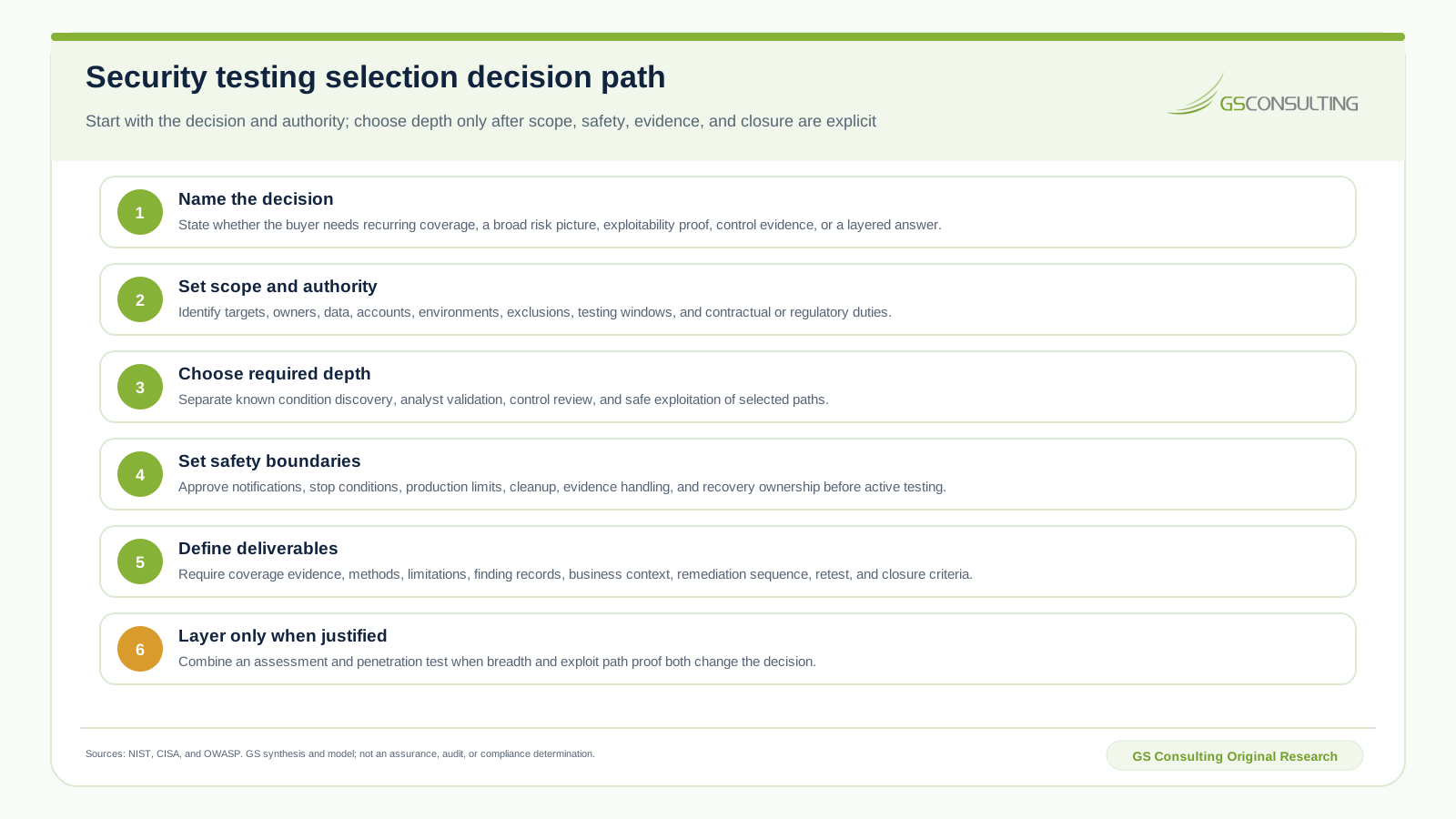
Start with the decision and the target set. Name the assets, applications, APIs, networks, facilities, identities, suppliers, environments, data, owners, versions, and business paths that may be tested. Separate production, test, corporate, customer, cloud, operational technology, and contractor boundaries. Record what is excluded and why.
Then define access. State whether testing is external or internal, authenticated or unauthenticated, and which credentials, roles, source code, architecture records, logs, scan appliances, agents, network paths, and test data will be available. An authenticated scan and a public view answer different questions. Both can be useful, but neither should be mislabeled.
Authority must match the target. Confirm asset owner consent, provider terms, cloud or hosting notification, customer obligations, contract clauses, law, privacy, insurance, data residency, and any special approval for social, physical, wireless, denial, persistence, or destructive techniques. This guide is not legal advice. The responsible authorities must approve the engagement.
Require Deliverables That Preserve Coverage and Limitations
Every engagement should produce a decision record, scope, target inventory, observed coverage, methods, tool and source versions, findings, evidence, limitations, prioritization, recommendations, owner responses, unresolved gaps, and an executive summary. A penetration test also needs the rules of engagement, hypotheses, exploitation results, access gained, control observations, cleanup, and any test artifact left behind.
Ask how the provider will handle duplicates, false positive decisions, uncertain findings, sensitive evidence, credentials, raw data, screenshots, logs, reproduction steps, proof of access, encryption, transfer, retention, deletion, and subcontractors. Decide who receives the technical record and what the executive audience needs to know without exposing unnecessary exploitation detail.
The vulnerability assessment report and retest guide defines the complete finding, owner response, validation, residual exposure, and closure record to require after selecting the service.
Limitations belong near the result, not in fine print. State untested targets, failed access, unstable systems, unavailable roles, blocked techniques, rate limits, time limits, incomplete evidence, provider dependencies, and conditions that changed during the work. A report should explain what the test could support and what it could not.
Match the Retest to the Original Evidence
A scan finding usually closes through an equivalent or stronger rescan against the exact corrected target, with coverage and authenticated depth confirmed. An assessment deficiency may require repeating the relevant examination, interview, or test procedure. A penetration test path may require repeating the exploit or a safe equivalent against the corrected deployment and checking practical alternate paths.
Write retest terms before the first test. Name the included findings, request window, deployment identity, method, access, evidence, failed retest treatment, partial correction, newly observed conditions, report format, cost, and acceptance authority. A provider attestation, ticket status, or code merge can support the record, but it does not replace evidence from the intended environment.
Closure is not the same as zero residual risk. A correction can remove the original condition while another path remains. A mitigation can reduce reachability without removing the weakness. An exception can authorize temporary exposure without changing the technical fact. Keep those outcomes distinct and preserve the accountable decision.
Avoid Six Security Testing Selection Failures
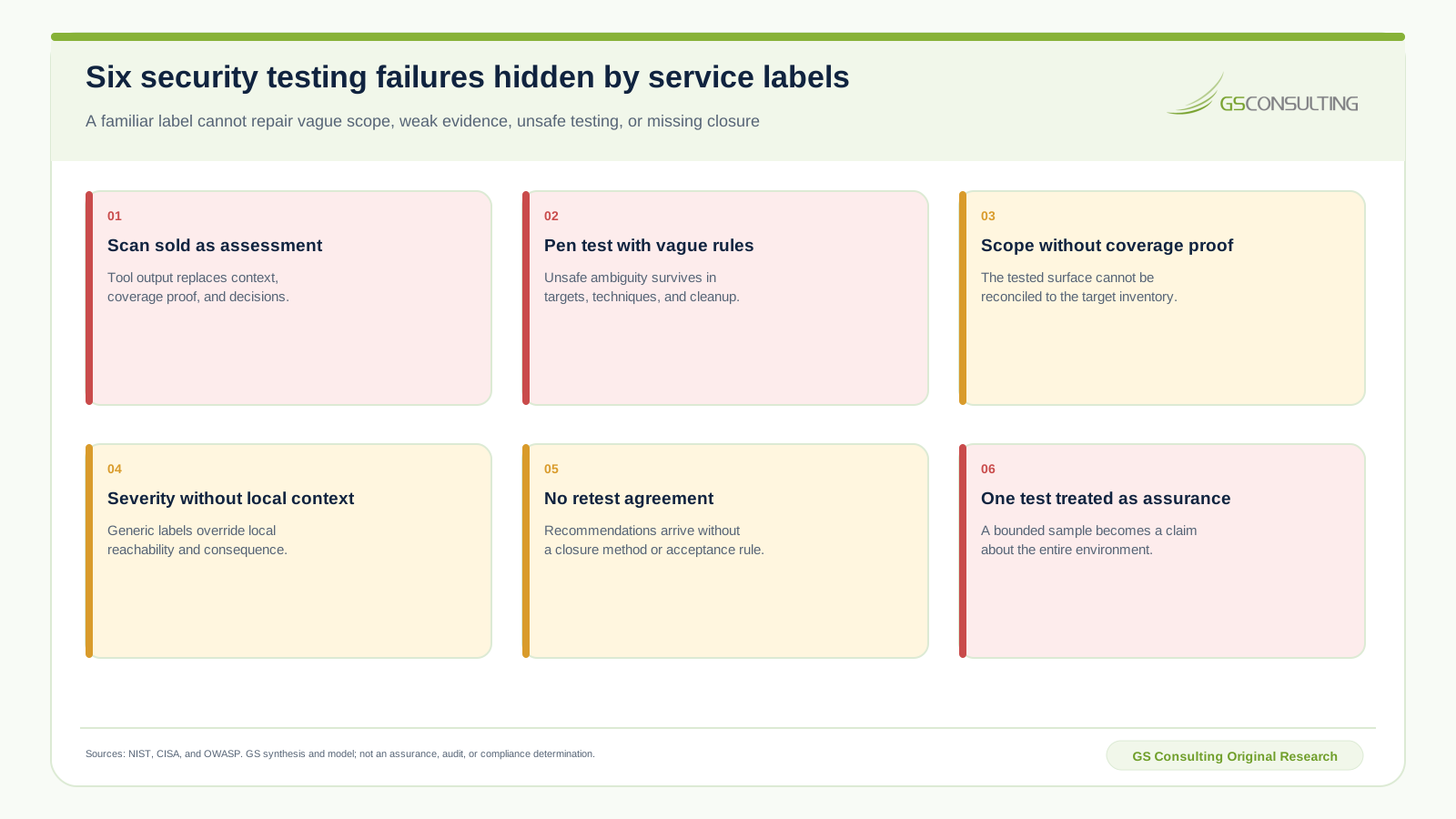
Scan sold as assessment. Tool output arrives without analyst context, control review, validated scope, or decision ready priority. Pen test with vague rules. Targets, techniques, notification, stop conditions, and cleanup remain ambiguous. Scope without coverage proof. The finding list cannot be reconciled to the expected assets, roles, paths, or test cases.
Severity without local context. Generic labels displace reachability, privilege, data, mission effect, existing controls, and confidence. No retest agreement. Recommendations arrive without a method or acceptance rule for closure. One test treated as assurance. A bounded sample becomes a claim that the wider environment is secure or will remain secure.
Build a Minimum Security Testing Evidence Packet
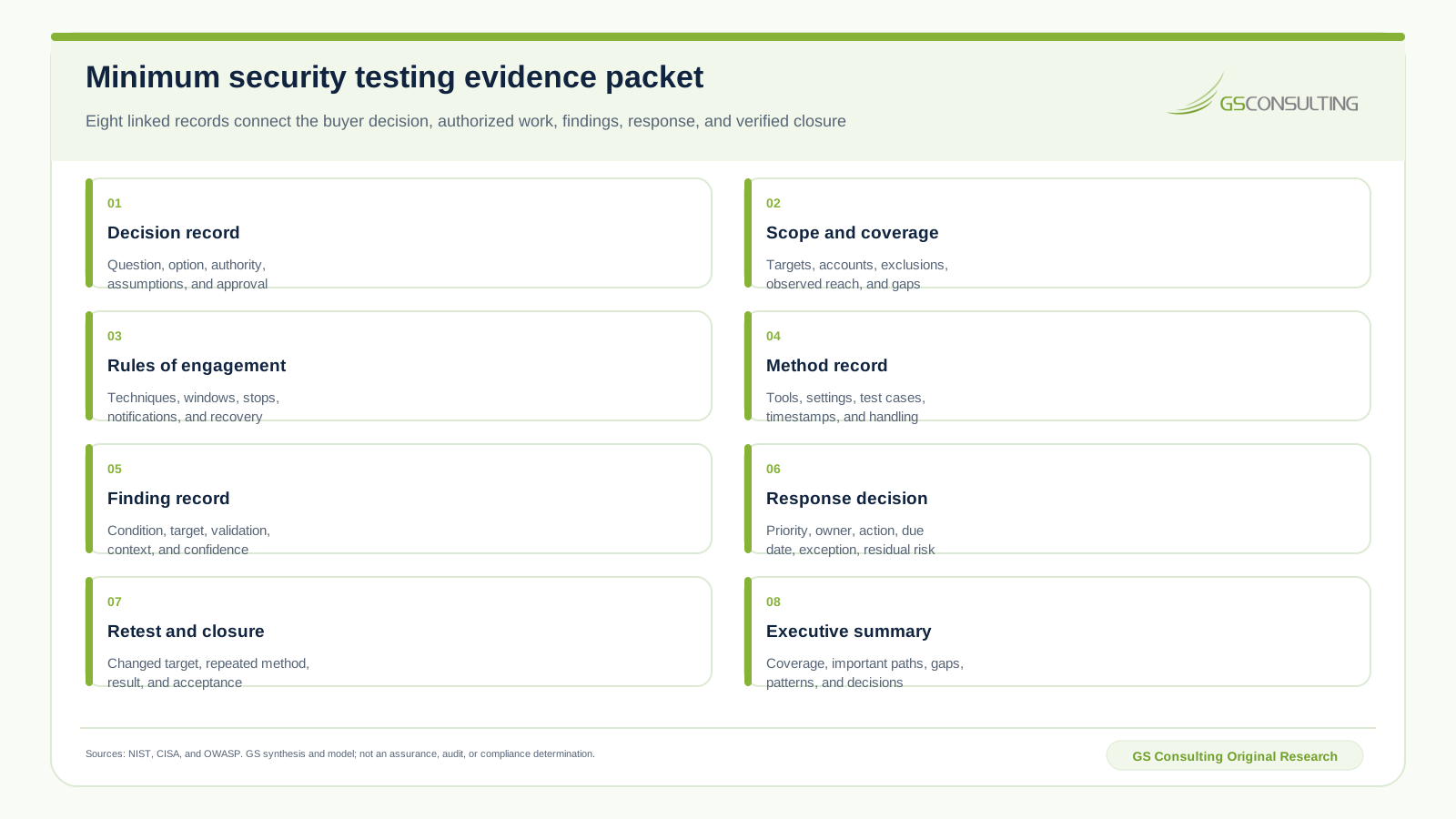
Keep the decision record, scope and coverage record, rules of engagement, method record, finding record, response decision, retest and closure evidence, and executive summary. Use stable identifiers for targets, applications, components, identities, findings, tests, changes, exceptions, and evidence so one condition can be followed from discovery through closure.
The packet should support operations, not only review. Operators need to know what remains exposed, which controls matter, where the test stopped, what could not be reached, which action is authorized, and what evidence will close the condition. Reviewers benefit when that operating record is already coherent.
A 30 Day Security Testing Selection Plan
| Period | Buyer action | Required output |
|---|---|---|
| Days one through five | Name the business decision, target owners, security and compliance duties, current evidence, known concerns, and selection authority. | Decision record and authority map |
| Days six through ten | Reconcile targets, environments, versions, data, identities, business paths, provider boundaries, exclusions, and access. | Target inventory and scope draft |
| Days eleven through fifteen | Select required discovery, assessment, validation, and exploitation depth; define production safety and stop conditions. | Method and rules of engagement |
| Days sixteen through twenty | Compare proposals against coverage proof, evidence handling, analyst work, reporting, limitations, retest, and accountable staffing. | Proposal comparison and open issues |
| Days twenty one through twenty five | Run a scope review with asset, application, network, security, operations, privacy, legal, contract, and customer authorities as applicable. | Approved scope, access, and safety record |
| Days twenty six through thirty | Approve the provider, schedule, communications, evidence path, remediation ownership, retest window, and acceptance criteria. | Signed work package and closure plan |
Research Sources and Caveats
The research package uses sources accessed September 9, 2026:
- NIST SP 800-115, Technical Guide to Information Security Testing and Assessment for testing technique groups, scanning, vulnerability validation, penetration testing, planning, rules of engagement, reporting, and limitations.
- NIST SP 800-53 Revision 5.1 for RA-5 vulnerability monitoring and scanning and CA-8 penetration testing.
- NIST SP 800-53A Revision 5 for tailored security and privacy control assessment procedures and the examine, interview, and test evidence methods.
- NIST vulnerability assessment glossary entry for the systematic examination definition and its underlying source references.
- CISA Cyber Hygiene Services for a concrete public service example of recurring external vulnerability scanning and web application scanning.
- OWASP Web Security Testing Guide for methodical web application testing and the 12 active testing categories.
The package separates public observations from GS definitions, ratings, weights, scenarios, decision logic, failure modes, and operating artifacts. No representative public dataset measures the four service patterns across the six modeled scenarios. The GS Security Testing Selection Utility Index is a planning aid. It is not a provider ranking, assurance statement, legal opinion, audit result, authorization, certification, or compliance determination.
Vulnerability Scan, Assessment, and Penetration Test FAQ
Suggested Future Reading
- GovCon Cybersecurity and Compliance Hub
- DevSecOps Vulnerability Management Workflow
- FedRAMP Vulnerability Management
- NIST SP 800-171A Assessments
- CMMC Assessment Evidence Guide
- Cyber Situational Awareness and Incident Response Services
- DevSecOps and Secure Software Supply Chain Services
Define the evidence before the testing begins.
The right engagement has a precise question, authorized target set, sufficient depth, safe methods, honest limitations, decision ready results, and a retest path that proves what changed.
Request a Security Testing Fit Check