Cybersecurity | | 24 min read
Vulnerability Assessment Report and Retest: What Good Evidence Looks Like

Key Takeaways
A report is useful only when it reaches closure
Make every result reproducible
Tie the condition to an affected target, method, evidence, context, coverage, and owner. A label alone cannot drive correction.
Residual exposure leads at 90
The planning model places residual exposure and acceptance first, followed by a retest tied to the original method.
Retest the deployed condition
A merged change is not closure. Repeat the method on the actual changed state and record what remains.
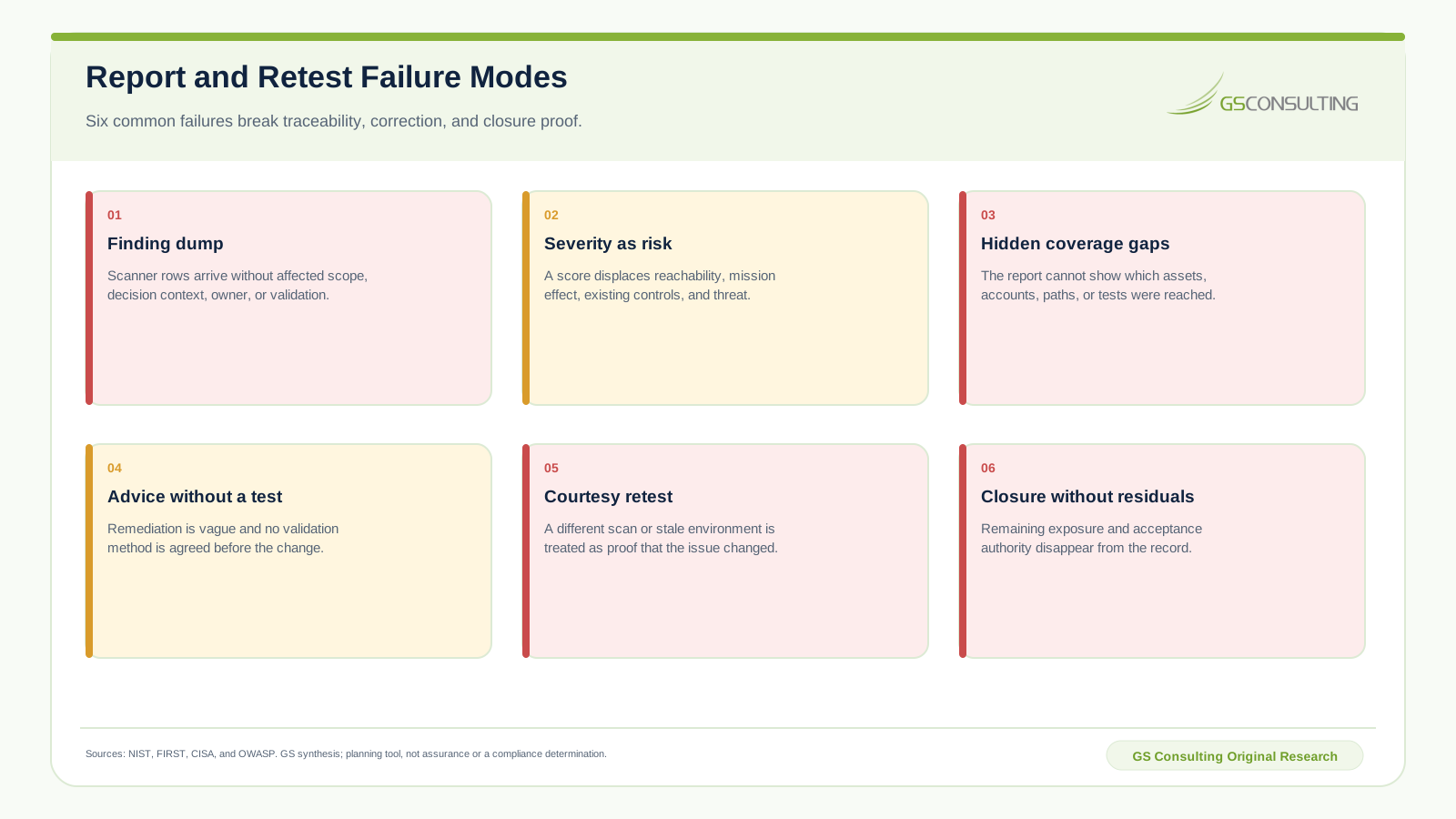
A vulnerability assessment report is not a finding dump. It is a decision record. The retest is not a courtesy scan. It is the proof that the deployed condition changed.
A strong vulnerability assessment report and retest connects the original question, authorized scope, observed coverage, method, and finding evidence. It then connects local consequence and owner response to the changed state, repeated test, residual exposure, and closure authority. Break that chain and the buyer is left with a list that cannot support correction or a clean result that cannot be defended.
This guide goes deeper than the vulnerability scan, assessment, and penetration test comparison. That guide helps buyers choose the right service. This one defines what the resulting report, response, retest, and closure record should contain. The GovCon Cybersecurity hub connects the work to wider program evidence, while the DevSecOps vulnerability management workflow carries findings through engineering and production.
Require evidence that survives the remediation meeting.
GS Consulting helps organizations set assessment scope, report acceptance criteria, response ownership, retest terms, and defensible closure records.
Request a Cybersecurity Fit CheckVulnerability Assessment Report and Retest: The Short Answer
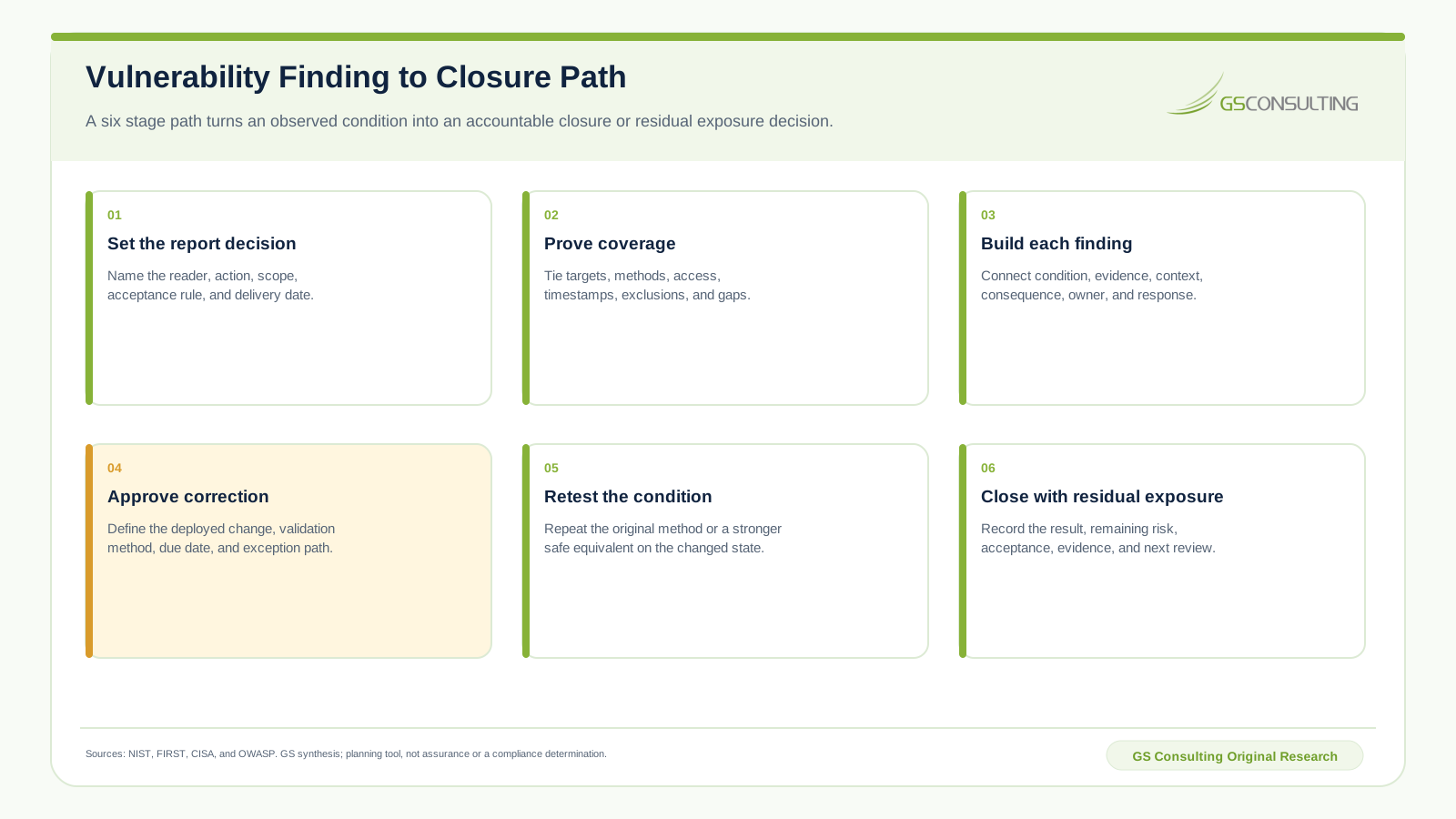
The report should answer five questions. What was authorized? What was actually reached? What condition was observed? What decision and corrective action follow? What evidence will prove closure? The retest should then repeat the relevant method on the exact changed state and record whether the condition is corrected, partly corrected, mitigated, unchanged, or not testable.
The engagement does not end when the document is delivered. Before work begins, agree on the report readers, finding fields, severity method, and local context. Set the evidence handling and delivery formats. Define the owner response, retest window, included rounds, material change rules, acceptance criteria, and residual decision authority.
A clean retest is bounded evidence. It supports a conclusion about the tested target, version, configuration, method, time, and access. It is not certification, proof that all risk is removed, or a guarantee that the condition will not return.
Make the Report a Decision Record
Start with the decision the report must support. A security leader may need to authorize correction. An engineering owner may need exact reproduction steps. A program leader may need to understand mission consequence and delivery risk. A customer or assessor may need evidence that the defined process operated. Those readers share facts, but they do not need the same view.
Use one source record for each finding and derive the executive and technical views from it. Do not create a polished leadership summary that cannot be traced to the technical evidence. Do not create a technical appendix so dense that no owner can see the required action, date, dependency, or open decision.
The first page should state the scope, assessment dates, authorized methods, observed coverage, and important limitations. Follow with material themes, urgent actions, unresolved decisions, and retest status. Put caveats beside the conclusion they limit. A limitation hidden at the back cannot correct an overbroad claim made at the front.
What Public Guidance Says About the Evidence Chain
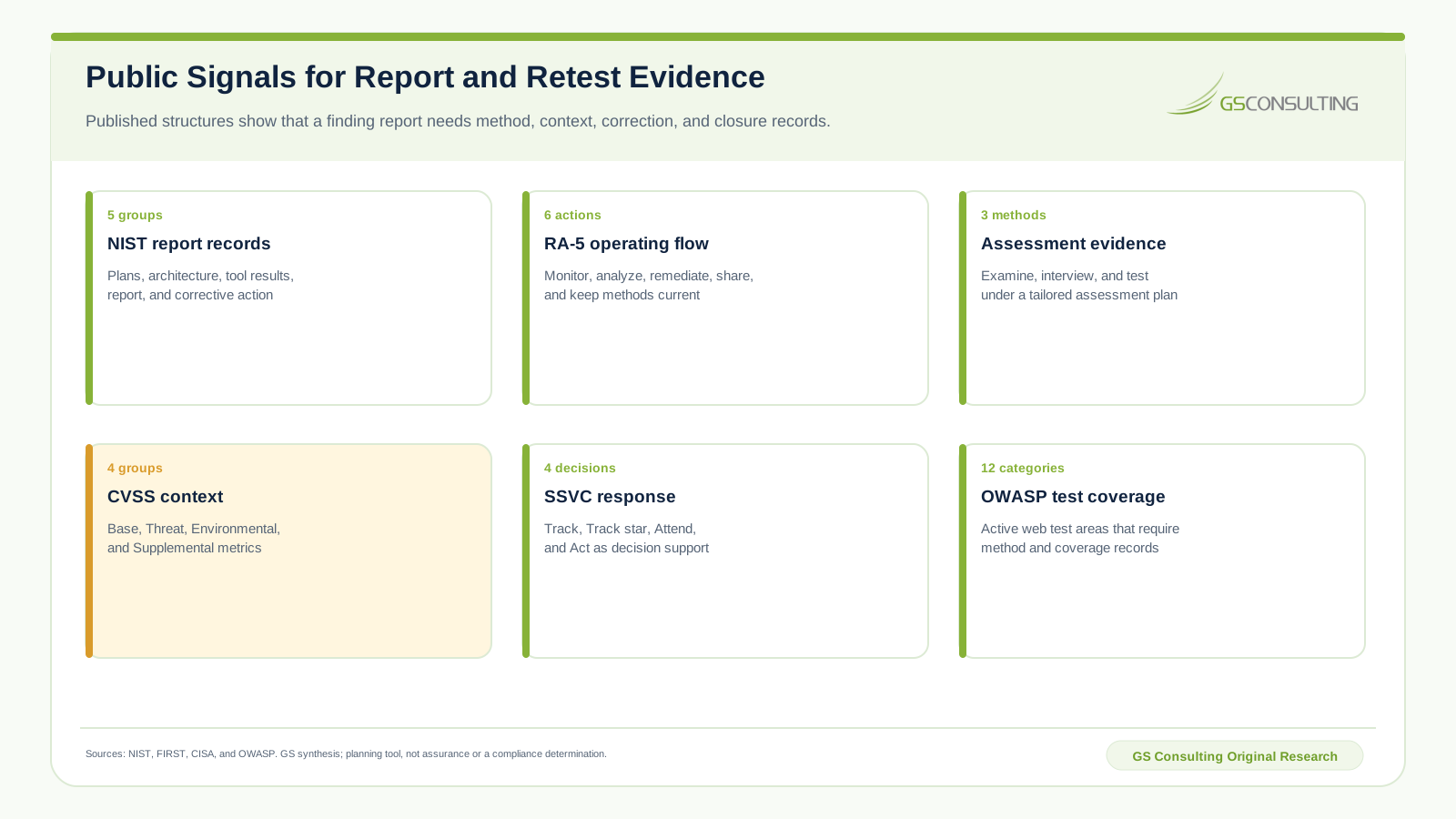
NIST SP 800-115 treats plans and rules, architecture and configuration records, tool results, findings, the results report, and corrective action material as part of the testing record. It also emphasizes analysis and mitigation, not just collection.
NIST SP 800-53 Revision 5.1 uses RA-5 to connect monitoring and scanning, tool standards, result analysis, remediation, information sharing, and tool updates. NIST SP 800-53A Revision 5 gives assessors three evidence methods: examine, interview, and test. A retest should repeat the method needed to confirm the original condition, not default to the easiest available tool.
The FIRST CVSS Version 4.0 specification separates Base, Threat, Environmental, and Supplemental metrics. That structure makes an important point: technical severity is an input to risk analysis, not the complete local decision. The CISA SSVC guide offers Track, Track*, Attend, and Act as response decisions. The OWASP Web Security Testing Guide shows why method and category coverage must be explicit for application work.
These sources do not create one universal commercial report format. They establish useful evidence structures. Contract terms, system duties, customer direction, applicable requirements, and local risk authority still govern the engagement.
Original GS Research: The Report Decision Quality Index
GS Consulting built a derived planning model for twelve report and closure components. Each component receives an ordinal rating from one through five on traceability, correction leverage, closure proof, local decision context, and executive utility. Base weights are 25, 25, 20, 20, and 10 percent. Ratings are divided by five, multiplied by the weights, and summed to a score from zero through 100.
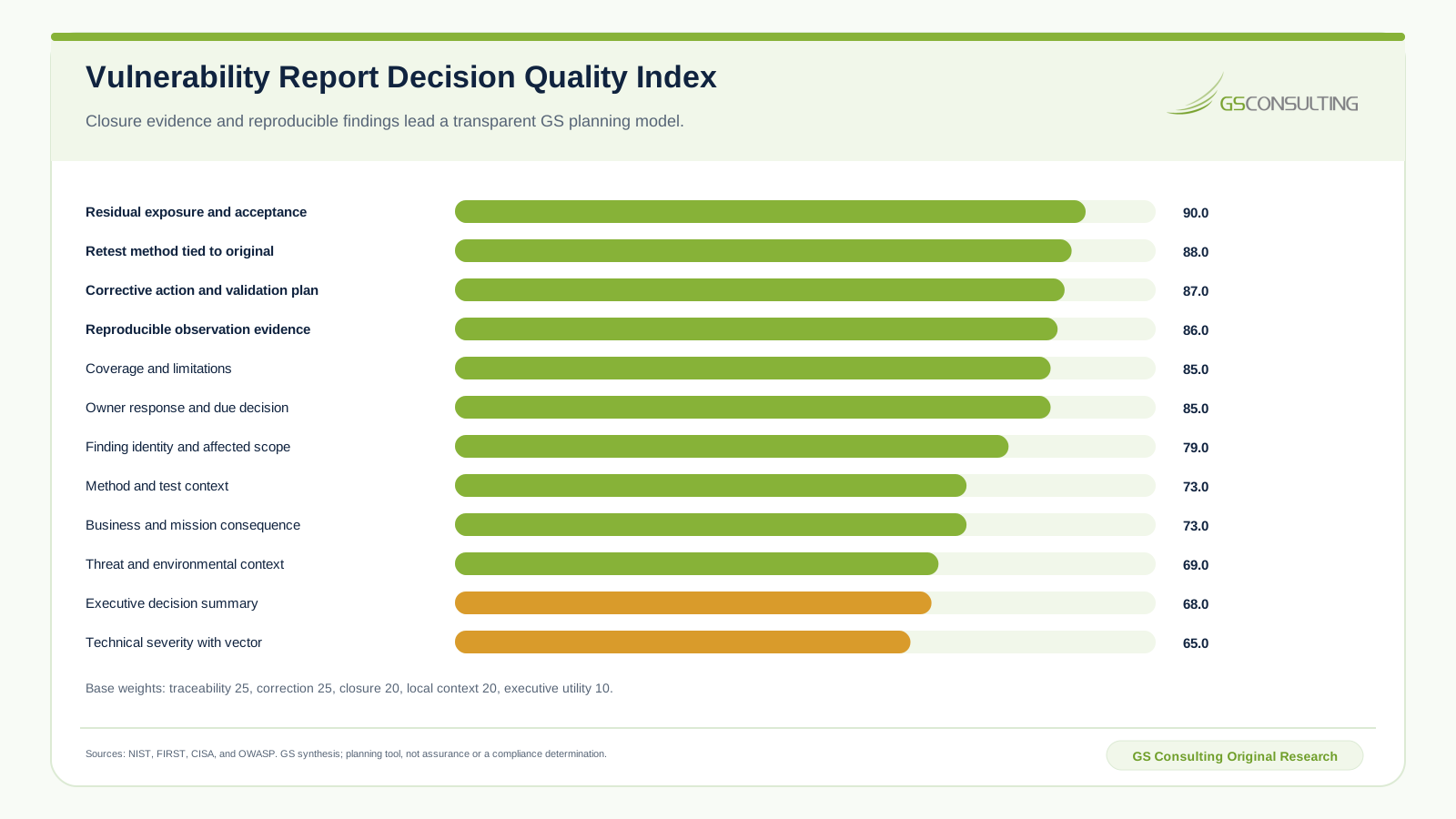
Reproducible observation evidence scores 86. Coverage and limitations and owner response each score 85. Technical severity with a vector scores 65, last in the model. The result does not make severity unimportant. It shows that a severity record without local context, correction, ownership, and closure proof has limited decision value.
The sensitivity case moves five weight points from traceability to closure proof. No component moves by more than two points. That is a narrow directional check, not external validation. The ratings, weights, retest states, decision path, failures, and evidence packet are GS assumptions. Replace them with local scope, incident, mission, contract, and acceptance facts.
Write an Executive Summary That Names Decisions
Lead with scope and limits, not a heat map. State which environments, assets, accounts, applications, paths, and evidence sources were included. State what could not be reached and why. Then name material themes, urgent conditions, systemic causes, accepted constraints, and the decisions needed from leadership.
Separate counts from consequence. Ten repeated findings caused by one base image or identity pattern may be one correction program. One finding on a public identity service may matter more than a long tail of internal hygiene. Show both the number of records and the concentration by root cause, owner, environment, and mission effect.
Do not announce that the organization passed. A vulnerability assessment can observe and analyze a defined scope. It may inform an assurance or compliance process, but it does not create certification unless a governing program explicitly says so and the work follows that program.
Build a Finding Record That Another Tester Can Reproduce
Assign a stable finding identifier. Record the affected asset, application, component, version, environment, and interface. Add the account or role, observed time, tester, method, and tool version where relevant. Preserve the input or request, observed response or state, and evidence location under an approved handling rule.
State the condition in plain language. Explain the expected condition, the observed difference, how the result was validated, and what remains uncertain. Include enough detail for an authorized technical owner to reproduce or verify the issue without exposing sensitive exploit material to readers who do not need it.
Keep identity stable through remediation. The ticket and change records should resolve to the same finding as the release, deployment, retest, exception, and closure records. If tools create different identifiers, maintain the cross reference rather than deleting the source history.
Keep Technical Severity and Business Context Separate
Preserve the CVSS version, vector, score, and any changed Threat or Environmental inputs when CVSS is used. A naked score is weak evidence. It hides how reachability, privilege, user interaction, and potential harm shaped the result. It also hides the threat and environment used in the calculation.
Add local context beside technical severity. Record exposure, reachability, known exploitation, affected prevalence, and the consequence to data or identity. Then document mission or customer effect, available controls, correction difficulty, time pressure, and any applicable contractual or policy duty. Name the source and date for facts such as CISA Known Exploited Vulnerabilities status.
Then record the response decision separately. Severity describes technical characteristics. Priority reflects what the organization will do and when. Risk acceptance belongs to the accountable owner, not a scanner and not an unreviewed formula.
Put Coverage and Limitations Beside the Result
Maintain a coverage ledger. For every target group, record the intended and observed population, method, credentials or role, configuration, and test time. Then record success, exclusions, errors, the sampling rule, and owner. Report source failures and access gaps as results, not footnotes.
Distinguish not found from not tested. A scanner may not reach an asset. An authenticated check may fail. A test account may lack the intended privilege. A web path may be excluded for production safety. Each condition limits what the report can conclude.
Write limitations in operational language. “No administrator credential was available for 42 of 180 servers” is useful. “Testing was limited” is not. The first statement lets the buyer correct the gap and understand the affected conclusion.
Require an Owner Response and Validation Plan
Every material finding needs an owner response. The owner can remediate, mitigate, contain, accept temporarily, challenge with evidence, or request more analysis. Record the chosen action, accountable owner, approving authority, due date, dependency, intended deployed state, and validation method.
Write correction advice against the observed condition. “Patch the server” is weak when several packages, base images, or releases could be involved. Name the target state, affected configuration or component, expected control behavior, deployment scope, and the test that should change after the fix.
A disputed finding should not vanish. Preserve the original observation, the challenge, supporting evidence, reviewer, final disposition, and any changed language. That record improves future methods and prevents the same argument from restarting at every review.
Tie the Retest to the Original Condition
Agree on retest terms before the assessment begins. Define eligible findings, the time window, included rounds, and material scope changes. Set the scheduling lead, required access, target environment, evidence handling, and output format. State how new or related findings discovered during retest will be handled.
For a scanner finding, rerun an equivalent or stronger check against the same authorized target and depth. For an assessment deficiency, repeat the relevant examine, interview, or test procedure. For a penetration test path, repeat the exploit or a safe equivalent against the exact corrected deployment and inspect reasonable alternate paths.
Record the changed artifact or configuration, version, deployment, target, and tester. Add the method, date, access, observed result, evidence, exceptions, and remaining condition. A screenshot of a code change or ticket closure is not a retest. A clean result in a test environment is not proof about production unless that environment is the agreed target.
Use Five Honest Closure Outcomes
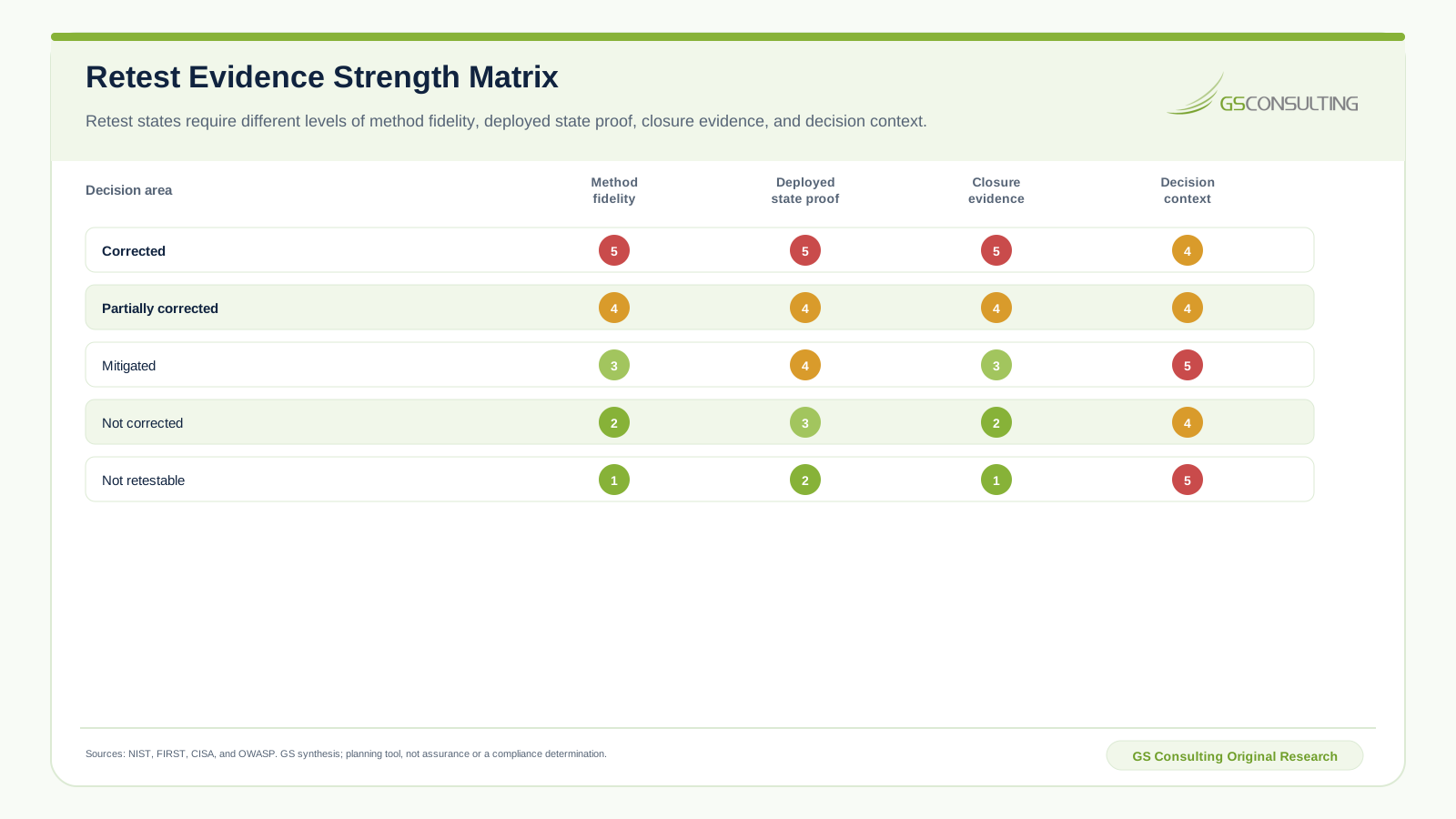
Corrected means the agreed repeated method no longer observes the original condition on the approved deployed state. Partly corrected means a portion changed and a portion remains. Mitigated means the condition remains but a tested measure reduces exposure or consequence.
Not corrected means the repeated method still observes the condition. Not testable means access, deployment, evidence, safety, or another blocker prevents a defensible conclusion. Do not translate not testable into passed.
Every outcome needs a residual decision. Record what remains, who accepted it, under which conditions, until when, with which monitoring, and when it returns to review. Even corrected findings retain bounded uncertainty about untested paths and later change.
Use a Buyer Review Before Accepting the Report
| Review area | Acceptance question | Reject or correct when |
|---|---|---|
| Scope | Can every conclusion be tied to an authorized target and time? | Targets, environments, identities, or dates are ambiguous |
| Coverage | Can the buyer see reached, failed, excluded, and sampled populations? | A clean result hides access failure or an unknown denominator |
| Findings | Can an authorized owner reproduce or independently verify the condition? | Evidence lacks target identity, method, expected state, or observed state |
| Context | Are severity, local consequence, and response authority distinct? | A scanner score silently becomes business priority or accepted risk |
| Correction | Does each material finding have an owner, action, date, and validation method? | Advice is generic or no deployed target state is defined |
| Retest | Was the original method or a stronger safe equivalent repeated? | A different tool, stale environment, or code change is treated as closure |
| Residuals | Are remaining exposure, authority, expiry, and next review visible? | Open uncertainty disappears behind a closed status |
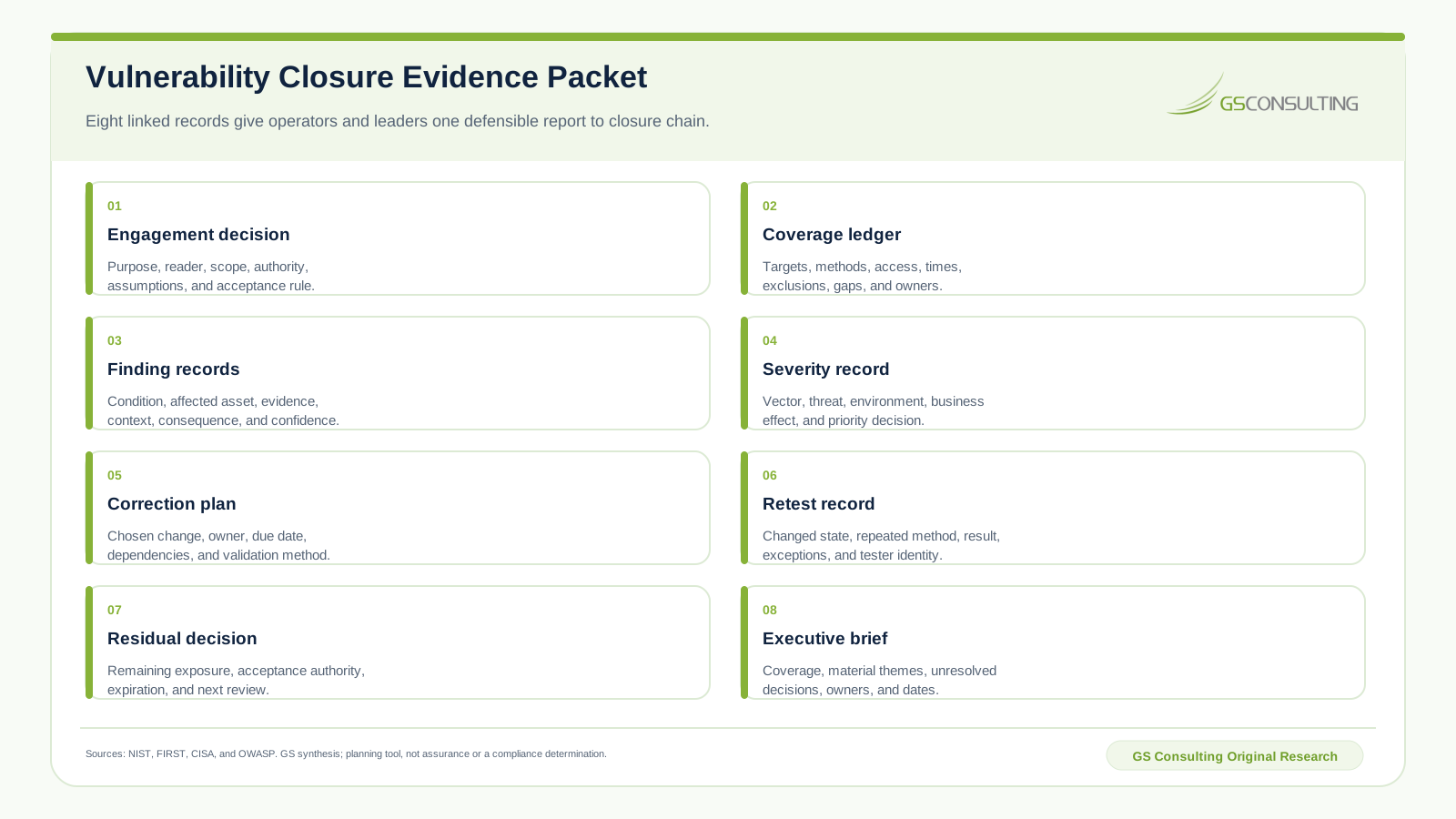
Keep the final evidence packet small enough to navigate and complete enough to reconstruct the decision. Sensitive proof can remain in a protected repository while the report carries stable references, handling marks, and access instructions.
Research Sources and Caveat
The GS Vulnerability Report Decision Quality Index is a derived planning model based on cited public sources and explicit analyst assumptions. It is not assurance, a certification, legal advice, an audit result, an authorization, or a compliance determination. The public counts describe published structures, not observed market performance.
- NIST SP 800-115: Technical Guide to Information Security Testing and Assessment
- NIST SP 800-53 Revision 5.1
- NIST SP 800-53A Revision 5
- FIRST CVSS Version 4.0 Specification
- CISA Stakeholder Specific Vulnerability Categorization Guide
- OWASP Web Security Testing Guide
Frequently Asked Questions
What should a vulnerability assessment report include?
Include the decision and scope, target and coverage ledger, methods, limitations, finding identity, reproducible evidence, technical severity, local threat and business context, correction options, owner response, retest terms, residual exposure, and an executive summary that names open decisions.
What is a vulnerability retest?
A vulnerability retest repeats the original method or a stronger safe equivalent against the exact changed and deployed condition. It records what changed, which target and version were tested, the result, remaining exposure, exceptions, and the closure authority.
Is a rescan the same as a retest?
Sometimes. A rescan can close a scanner finding when it reaches the same target with equivalent or stronger depth and complete coverage. An assessment deficiency or exploit path may require repeated examination, interview, manual testing, or a safe exploit equivalent.
Does a clean retest prove that the system is secure?
No. A clean retest supports a conclusion about the tested condition, method, scope, time, and deployed state. It does not prove that no other vulnerability exists or that the condition will not return after later change.
Should a vulnerability report use CVSS?
CVSS can preserve technical severity and its vector. It should not replace local analysis of threat, reachability, exposure, mission consequence, affected prevalence, existing controls, correction feasibility, and the accountable response decision.
Who should accept residual vulnerability risk?
The organization should name an authority with the business, mission, security, and contractual context needed for that decision. The record should state remaining exposure, conditions, compensating measures, expiry, monitoring, and the next review. The assessor should not silently make that decision for the owner.
Suggested Future Reading
- Vulnerability Scan vs Assessment vs Penetration Test
- DevSecOps Vulnerability Management Workflow
- CMMC Assessment Findings
- CMMC POA&M Rules
- Cybersecurity Workflow Automation Use Cases
Do not close the ticket. Close the condition.
The operating standard is simple: a report names the decision, a finding carries reproducible evidence, an owner approves the response, and a retest proves the deployed result with residual exposure still visible.
Explore Cyber Operations Services