AI Workflow Automation | | 24 min read
Transitioning AI Workflows from Pilot to Production

Key Takeaways
Production readiness replaces informal pilot supervision with controls the organization can operate, test, support, and defend.
Define the Capability
Set the production scope and prohibited uses. Name the owners and approved systems. Document authority, the support model, and the decision date.
Prove the Controls
Test real data and access. Verify quality and failure handling. Prove audit evidence, monitoring, pause controls, and recovery.
Limit the Launch
Start with a small user group and narrow authority. Expand only when live evidence passes promotion thresholds.
Most AI pilots do not fail because the demonstration was bad.
They stall because nobody built the operating bridge to production.
The sandbox uses limited data. A few users test it. Engineers watch every run and fix edge cases behind the scenes. Leadership sees potential. Then the production questions arrive.
- Who owns the business outcome and technical service?
- Which systems and sensitive data may the workflow use?
- What actions can it take without approval?
- Can it handle bad inputs and broken integrations?
- Can reviewers reject an output with enough context?
- Can operations monitor, pause, recover, and support it?
Scaling AI workflows to production is not about making the pilot larger. It turns a promising prototype into a controlled operating capability.
Before approving the production version, apply the AI workflow quality assurance guide to define mandatory tests, exception rules, release evidence, and the production feedback loop.
Need to move an AI pilot into secure production?
GS Consulting designs the production scope and architecture. We build the controls, evaluation, monitoring, support model, and evidence required for a defensible launch.
Request a Production Readiness AssessmentThis guide supports our main AI workflow automation service and the Enterprise AI Process Transformation cluster. It connects directly to workflow orchestration for secure environments, continuous monitoring for AI agents, and measuring workflow automation ROI.
The Bad Assumption: A Working Pilot Is Almost Production
A working pilot proves the concept can operate under limited conditions. That result matters. It does not prove the organization can depend on the workflow.
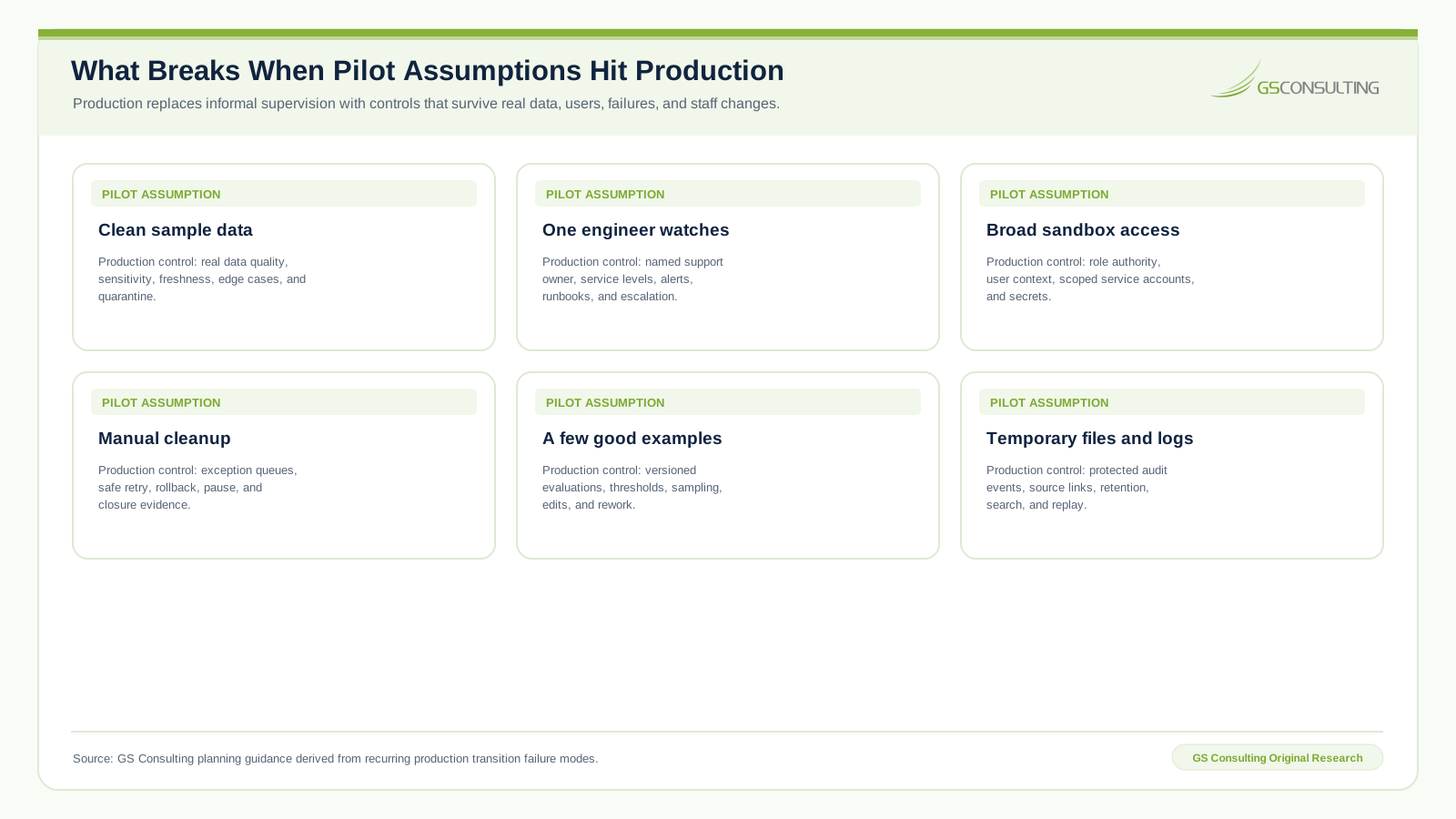
Production receives real records with missing fields, stale values, sensitive content, and unexpected formats.
Production needs named support, alerts, runbooks, service expectations, and an escalation path.
Production needs owned exceptions, safe retry, containment, rollback, and closure evidence.
Production needs enforced access, bounded approvals, source evidence, and audit reconstruction.
The distance between pilot and production is not technical polish. It is operational discipline.
Why GovCon Production Is Harder
Government contractors often apply AI to contract records, proposal material, compliance evidence, ERP data, security events, or public release packages. The workflow may enter a controlled environment when it processes CUI or supports components that protect CUI.
NIST SP 800 171 Revision 3 applies to relevant nonfederal system components that process, store, or transmit CUI. It also covers components that protect those systems. The CMMC Program raises related scoping and evidence questions for defense contractors.
Review more than the model. Depending on the architecture, the protected environment may include:
- The workflow engine and approval application.
- Prompt stores, queues, search indexes, and output repositories.
- Trace collectors, logs, monitoring platforms, and support tools.
- External providers that receive data or perform a security function.
Production must protect original records and derived data. Summaries, extracted fields, embeddings, notifications, and logs can retain sensitive meaning.
Production Starts With Scope and Ownership
Define the capability before selecting the deployment date. Production scope should state what is allowed and what remains out of bounds.
- Business process: The exact outcome and decision the workflow supports.
- Users and programs: Who may submit work and who may view results.
- Systems and data: Approved sources, targets, classifications, and environments.
- Authority: Permitted actions plus actions that require approval or remain prohibited.
- Operations: Support hours, service expectations, success metrics, and retirement conditions.
The workflow should reject requests outside scope. Tribal knowledge is not an access control.
Name Owners Before Launch
Every production workflow needs durable decision authority:
- Business owner: Defines the outcome, business rules, user needs, and success measures.
- Technical owner: Owns architecture, integration, deployment, and technical change.
- Data owner: Approves sources, classifications, access, quality, and retention.
- Security and compliance owners: Review boundaries, evidence, access, threats, and regulated handling.
- Support owner: Owns alerts, runbooks, defects, exceptions, and user escalation after launch.
No durable owner means no production promotion. Use the AI Workflow Automation Requirements Guide to define the accepted behavior and the AI Workflow Automation Operating Model to assign service ownership, decision rights, evidence, and stop authority.
Map Boundaries and Constrain Authority
A production data flow map shows where confidence becomes enforceable control. It should identify sources and targets. It should also show temporary storage, AI processing, human review, logging, retention, and deletion.
Classify the data before scaling:
- CUI and Federal Contract Information.
- Personally identifiable and contract sensitive information.
- Security, financial, proposal, and export controlled records.
- Derived outputs that preserve sensitive meaning.
A user who cannot view a source record should not receive its AI summary. The workflow must respect program and system boundaries across every connected tool.
Service Accounts Need Production Discipline
Replace pilot credentials with scoped service identities. Each identity needs an owner and approved purpose. Use least privilege and approved secrets management. Establish rotation, review, logging, and recertification.
Do not use shared administrator accounts or broad permanent access for convenience.
Make AI Authority Visible
Define whether the workflow may read, summarize, classify, route, draft, create a task, or update a record. External release and irreversible action require the strongest gates.
Human approval must be part of the workflow. The reviewer needs source evidence and a clear action scope. The system should record what the reviewer saw and what they authorized.
Validate With Real Cases and Failure Tests
A pilot usually proves the happy path. Production testing must show what happens when the workflow receives an unauthorized request or a broken input.
Build a versioned evaluation set from representative historical cases. Track missed items and false results. Measure reviewer edits, rejection, completeness, source accuracy, rework, and failure patterns as separate metrics.
Then test the conditions the demonstration avoided:
- Missing metadata, unreadable files, stale sources, and low quality extraction.
- Unauthorized users, wrong program access, expired credentials, and blocked tool calls.
- Broken APIs, duplicate events, delayed events, partial completion, and queue backlog.
- Rejected approvals, expired decisions, failed updates, rollback, and pause.
- Manipulated content, prompt injection, missing source references, and sensitive data in logs.
Define minimum quality gates before the readiness review. A production decision should not depend on enthusiasm.
Production Burden Should Determine What Scales First
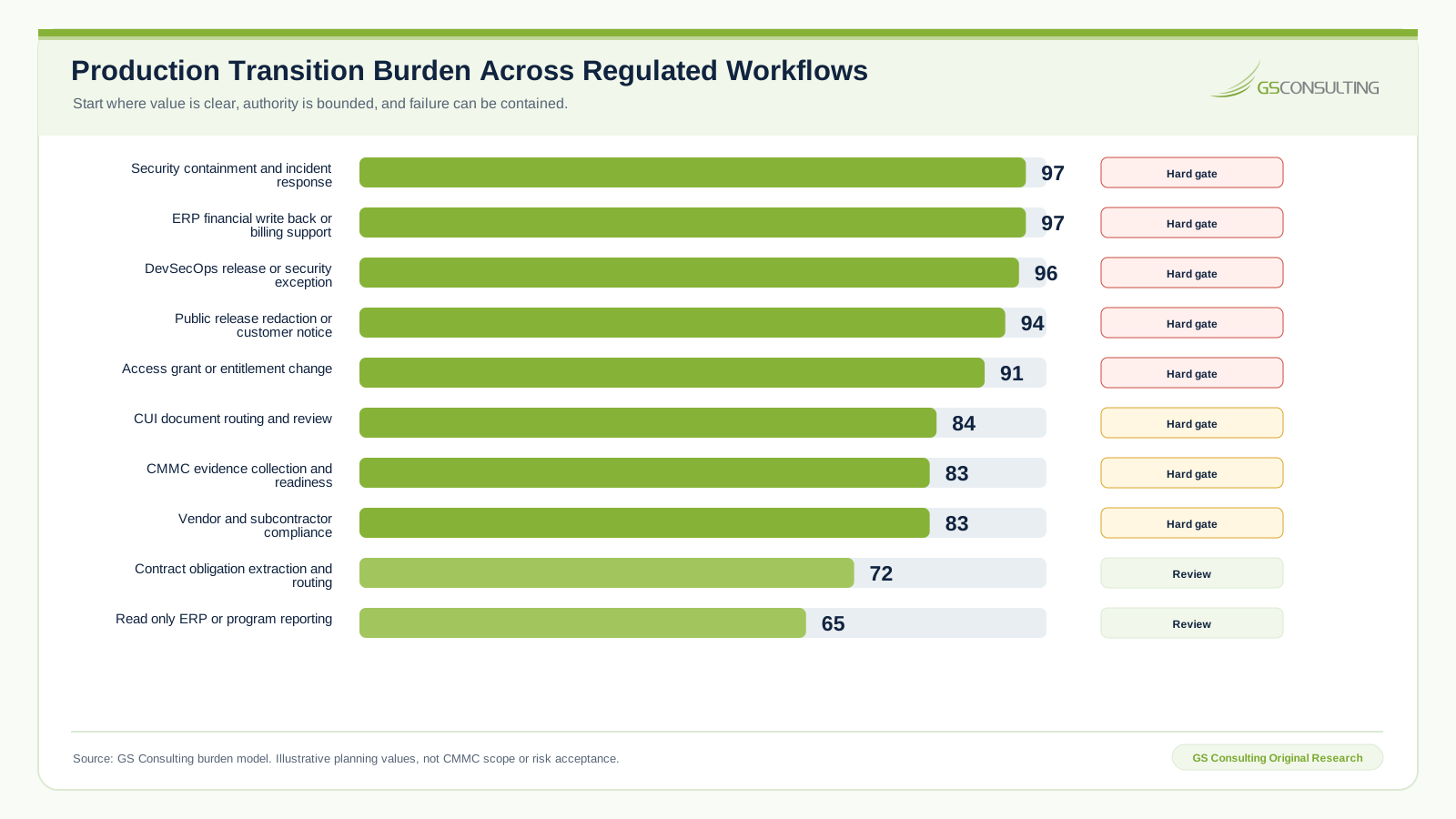
Read only reporting and reversible internal summarization can be strong early candidates. Actions involving containment, financial records, release decisions, public notices, or access changes require more evidence and stronger authority controls.
Separate Environments and Control Changes
Use distinct development, test, staging, and production environments. Do not test prompt changes with production authority. Do not reuse production service accounts in a sandbox.
Treat prompt, model, retrieval, rule, and connector changes as production changes. Version each component. Run regression cases and review security impact. Keep a tested rollback path.
NIST SP 800 228 reinforces the need to protect APIs across their lifecycle. Production support must account for changed schemas, webhooks, permissions, and source fields.
Monitoring, Recovery, and Support Are Part of the Product
Production monitoring begins on day one. Availability is only one dimension.
- Workflow health: Success, failure, partial completion, latency, backlog, and retry.
- Data and quality: Freshness, source coverage, acceptance, edits, rejection, and drift.
- Authority: Blocked tools, unauthorized requests, approval aging, and access anomalies.
- Evidence: Audit event completeness, correlation, retention, and reconstruction.
- Operations: Exceptions, support burden, manual fallback, cost, and business outcomes.
NIST research on deployed AI monitoring describes functionality, operations, human factors, security, compliance, and broad impact as distinct monitoring concerns.
Build a Real Pause and Recovery Plan
Name who may pause the workflow and which conditions require action. Define how work in progress is contained. Establish the review window for recent outputs and the authority required to resume.
Pause conditions can include sensitive data exposure or failed audit logging. Broken source references, stale critical data, abnormal tool behavior, and unavailable approvals also require a response.
Support Must Survive Staff Changes
The support model needs runbooks and escalation paths. It should define service expectations and known error procedures. Include an administration guide, user guidance, incident handling, change review, and an operating cadence.
A workflow without support will degrade quietly even when its model still responds.
Original Research: The AI Workflow Production Readiness System
GS Consulting analyzed production transition as a distinct engineering and operating phase. The research combines public adoption signals with production control requirements.
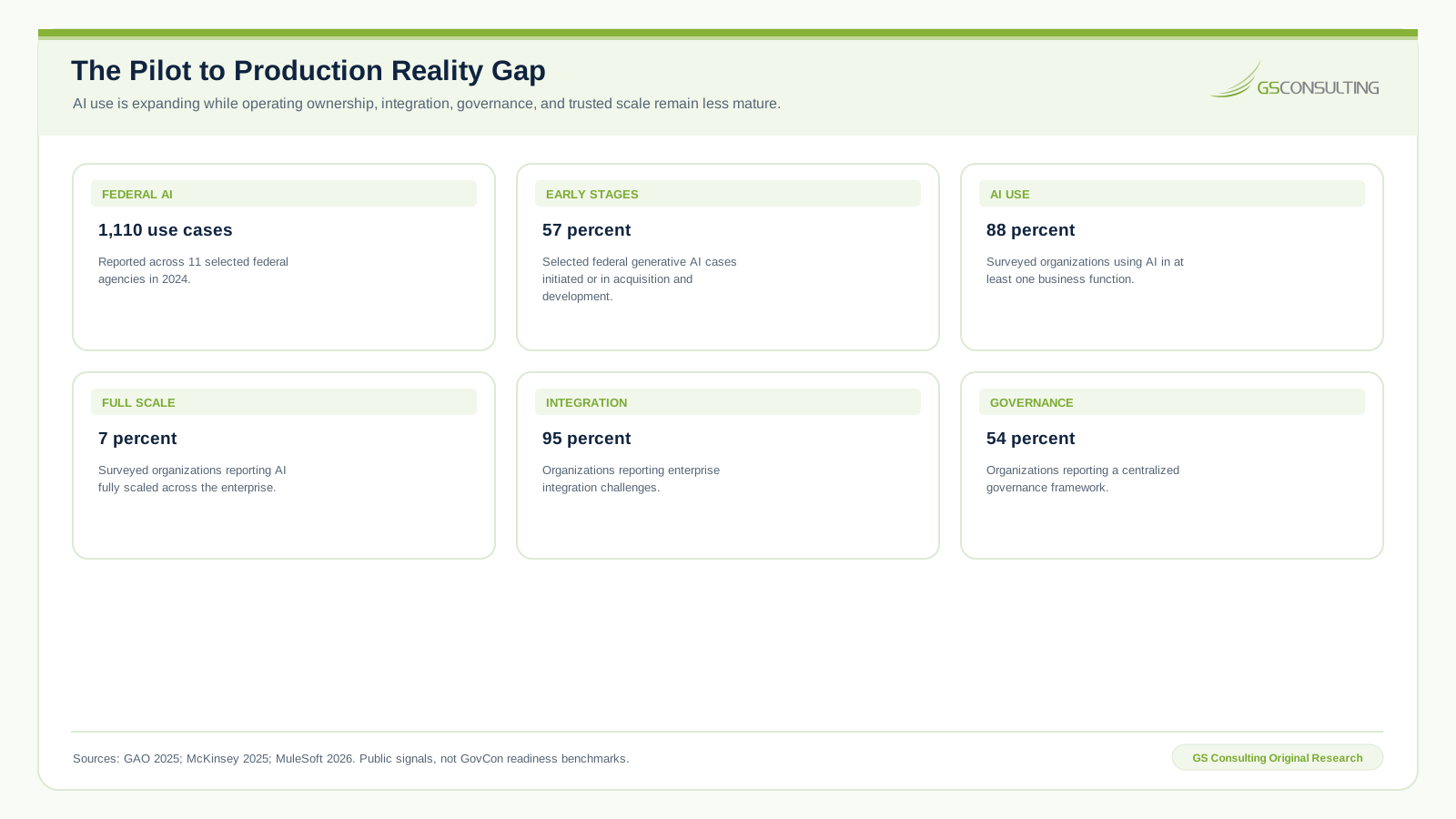
GAO reported 1,110 AI use cases across 11 selected federal agencies in 2024. Of 282 reported generative AI cases, 84 were initiated and 75 were in acquisition or development. GS Consulting calculated that roughly 57 percent remained in those two earlier stages.
This selected agency signal is not a contractor promotion rate. It shows why organizations need an explicit bridge from use case development to controlled operations.
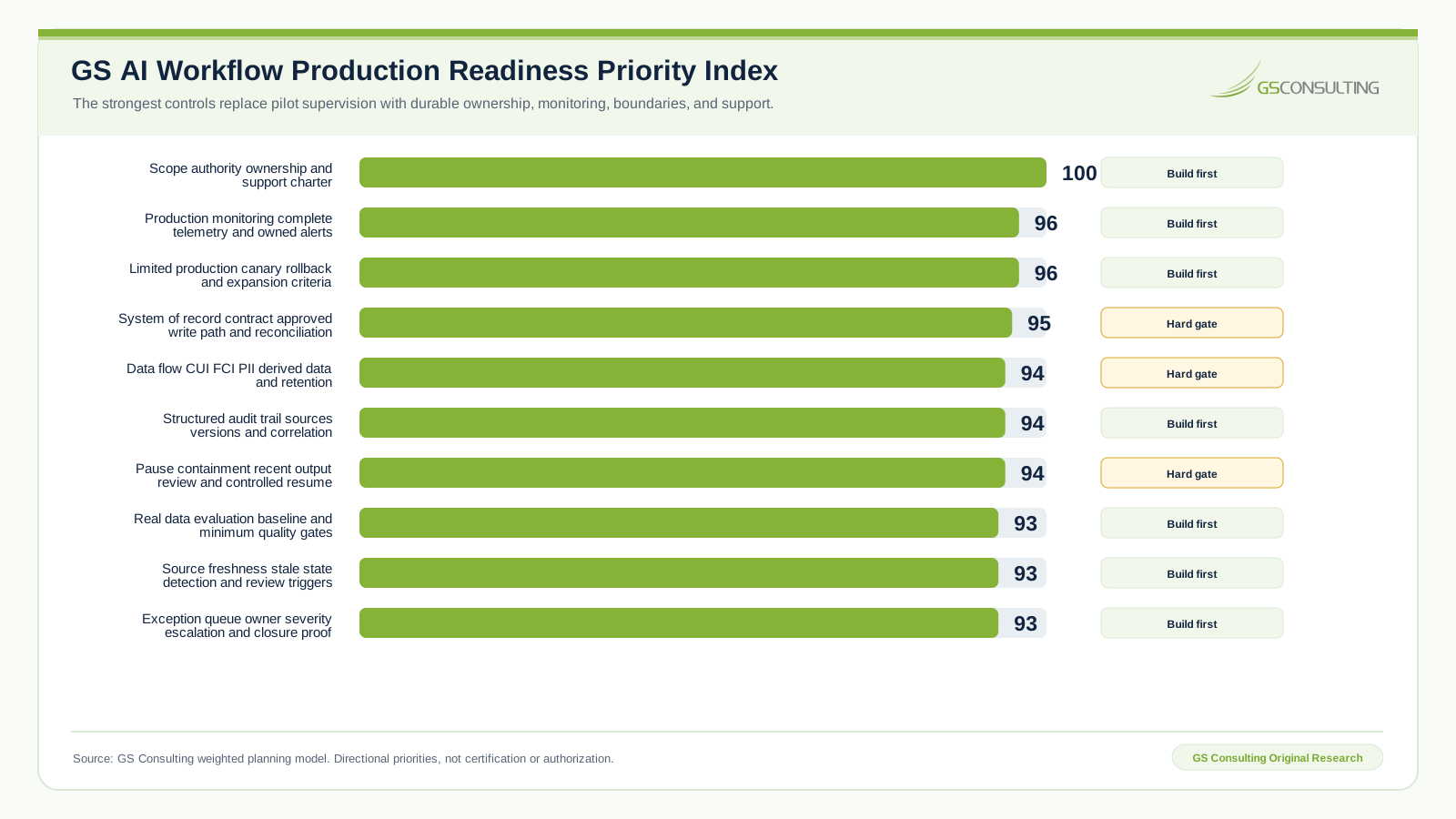
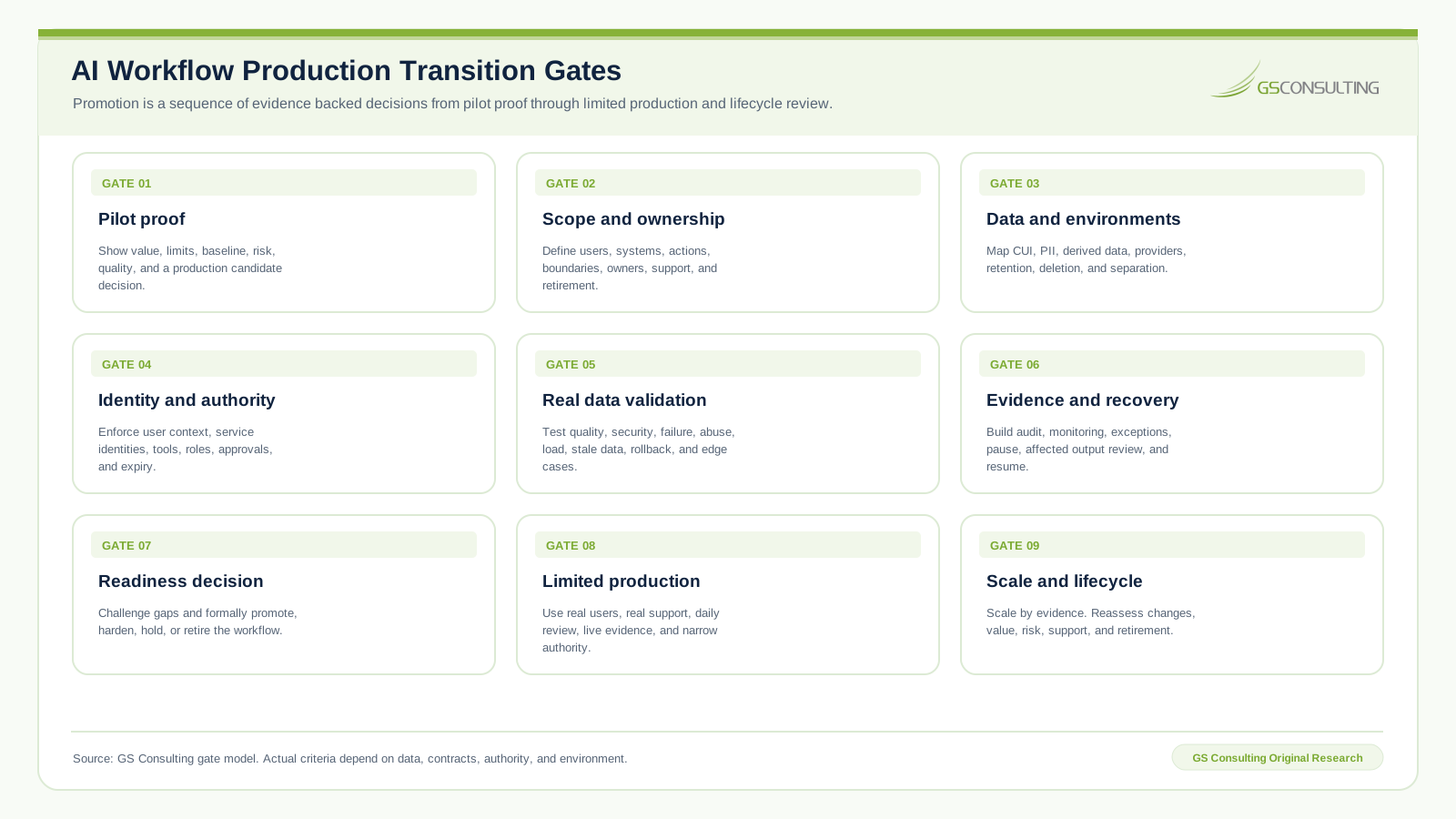
The GS priority model places scope, authority, ownership, and support first. Monitoring plus an owned alert catalog scored 96 out of 100. A limited production canary with rollback and expansion criteria also scored 96.
Launch a Canary, Not a Switch
The first production release should use real users and real support. Keep the user group small and action authority narrow. Review operations daily and establish a decision date.
Use promotion and stop thresholds for quality, freshness, security, evidence, support, and value. A strong user request cannot override a failed mandatory control.
Move Through Six Deployment Phases
- Controlled pilot: Prove feasibility and value under close supervision.
- Production design: Define scope, ownership, architecture, authority, and support.
- Staging validation: Test real conditions without broad production authority.
- Limited production: Use a small population with live monitoring and recovery.
- Scaled production: Expand only after evidence passes the promotion gates.
- Continuous improvement: Reassess quality, value, change, risk, and retirement.
A Practical First 90 Days
- Days 1 to 30Assess production readiness.
Freeze pilot evidence. Define scope and owners. Map data, systems, authority, current limitations, support needs, and promotion thresholds.
- Days 31 to 60Harden and validate.
Build access controls and approvals. Add audit events, monitoring, exception handling, and recovery. Test real cases and failures. Exercise abuse scenarios and rollback.
- Days 61 to 90Launch limited production.
Release to a small user group. Operate daily reviews, support, evidence collection, and a formal expand, harden, hold, or retire decision.
The outcome is not simply a deployed service. It is a reviewable production capability with named authority and a tested stop path.
What Leadership Should Demand
- Named owners with authority to support, pause, resume, and retire the workflow.
- Approved scope plus documented prohibited uses.
- A complete data flow and derived data boundary review.
- Real case quality results and failure testing.
- Enforceable approvals plus audit reconstruction.
- Live monitoring, exception ownership, recovery proof, and a support model.
- Limited production results plus an evidence based expansion decision.
What GS Consulting Builds
GS Consulting helps GovCon firms move AI workflows out of supervised pilots and into secure production. Engagements can include:
- Production scope, owner matrix, and authority model.
- Secure architecture, data flow, environment, and integration design.
- Real case evaluations plus quality and promotion gates.
- Human approval, audit, exception, pause, and recovery controls.
- Monitoring dashboards, alert catalogs, runbooks, and support design.
- Limited production launch plus lifecycle and value review.
The Bottom Line
The pilot proves the idea can work. Production readiness proves the organization can safely depend on it.
Define the capability. Name the owners. Protect the boundary. Limit authority. Test real failure. Build monitoring and recovery. Then launch with narrow exposure and scale by evidence.
That is the roadmap out of pilot purgatory.
Turn a promising AI pilot into a controlled production capability.
GS Consulting connects workflow engineering to security and compliance. The production model includes operations, support, and measurable promotion decisions.
Request a Production Readiness AssessmentResearch Sources and Caveats
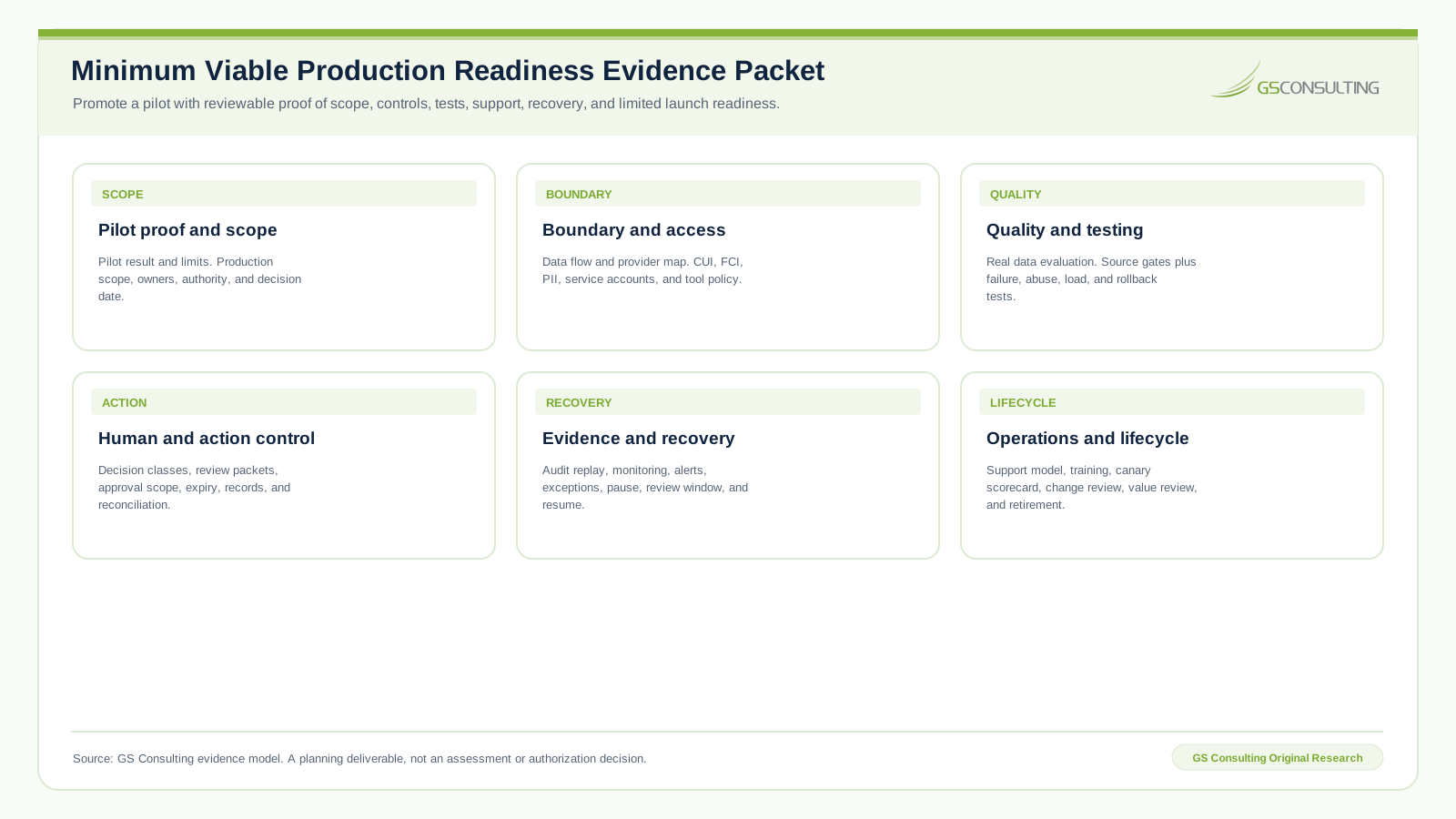
The GS priority index and transition burden model are derived planning tools. The same applies to the control gap, gate model, and evidence packet. They are not legal conclusions or audit opinions. They do not represent official agency determinations, authorization decisions, or risk acceptances.
The 57 percent figure is a GS calculation from selected agency counts reported by GAO. Cross industry survey figures provide scale context. They are not GovCon production readiness benchmarks.
- U.S. GAO, Generative AI Use and Management at Federal Agencies
- McKinsey, AI at Work but Not at Scale
- MuleSoft Connectivity Benchmark Report
- OMB Memorandum M 25 21
- NIST AI Risk Management Framework Playbook, Manage
- NIST, Challenges to the Monitoring of Deployed AI Systems
- NIST SP 800 171 Revision 3
- NIST SP 800 228, Guidelines for API Protection
- 32 CFR Part 170, CMMC Program
Frequently Asked Questions
What is required to move an AI pilot into production?
A production candidate needs defined scope and durable ownership. Approved data boundaries and constrained authority must be in place. Real case testing should prove monitoring, exception handling, recovery, and support before a formal promotion decision.
Why do AI pilots get stuck before production?
Pilots often depend on clean data and close engineering supervision. They may lack an owner, support model, approved access design, quality threshold, audit trail, or safe failure path. Production exposes those missing operating controls.
Should an AI workflow launch directly to all users?
No. Begin with limited production for a small user group and narrow authority. Use real support and live monitoring. Expand only after the workflow passes its quality, security, evidence, and recovery thresholds.
Can a production AI workflow process CUI?
Only when the actual architecture and contract requirements support that use. Review every component that processes CUI or protects the systems handling it. The assessment should cover derived data, queues, logs, approval tools, monitoring services, and external providers.
What evidence should support an AI production readiness decision?
The evidence packet should define scope and ownership. It should document data boundaries, access, and action authority. Real data evaluations and failure tests should prove quality. Audit replay and monitoring coverage should prove operational visibility. Pause exercises, support procedures, and limited production results complete the decision record.