GovCon Cybersecurity | | 24 min read
SPRS Score Explained: How to Calculate and Improve It

Key Takeaways
The operator view
Start at 110
Subtract the official value for every requirement that is not implemented. Intent and a plan of action do not recover points.
Access Control leads
Access Control carries 54 possible deduction points and scores 94.0 in the GS remediation leverage model.
Prove the system
Keep the scope, worksheet, evidence, plan, assessment facts, and SPRS submission record tied to the same covered system.
Not a compliance grade. An SPRS score is a weighted snapshot of what one covered system can support today.
That distinction matters. A contractor can post a number that is mathematically correct and still have weak scope, stale evidence, or the wrong system attached to an offer. Another contractor can have a low score because it used the official deductions honestly and documented every open requirement. The number needs context before it can guide a contract decision or a remediation plan.
The official calculation is simple enough to describe: start at 110 and subtract the assigned value for each NIST SP 800-171 requirement that is not implemented. The hard work is establishing the system boundary, deciding status consistently, applying the two special partial scoring rules correctly, preserving the assessment basis, and updating the SPRS record when facts change.
This guide explains that work. Use the CMMC Compliance hub for the broader certification path and the NIST 800-171 hub for requirement and evidence guidance. The detailed NIST SP 800-171A assessment guide explains how claims get examined, interviewed, and tested.
Recalculate the score before you build the remediation backlog.
GS Consulting helps defense contractors confirm scope, reperform the Basic Assessment, link evidence, and sequence work around contract need and system risk.
Request an SPRS Score ReviewWhat an SPRS Score Actually Means
SPRS is the Supplier Performance Risk System. For the NIST SP 800-171 assessment record, it stores facts such as the assessment date, summary score, scope, plan completion date, CAGE codes, System Security Plan name and version, and confidence level. SPRS stores the result. It does not perform the Basic Assessment for the contractor.
The relevant DFARS provision requires a current assessment for each covered contractor information system that will be used in contract performance when the provision applies. Current DFARS 252.204-7019 text generally treats an assessment as current for no more than three years unless the solicitation states a shorter period. Confirm the actual solicitation, award, system, and referenced clauses rather than relying on a generic calendar rule.
A Basic Assessment is contractor generated and has a Low confidence level under the DFARS 252.204-7020 structure. Medium and High Assessments involve government review and different confidence levels. The summary number alone does not tell the reader which assessment level produced it.
Four facts should travel with the score:
- System. Name the exact covered contractor information system and boundary.
- Requirement baseline. Identify the contract and assessment method used.
- Assessment facts. Keep the date, scope, score, plan date, CAGE codes, and confidence level.
- Evidence basis. Preserve the worksheet and support behind each implemented or open result.
How to Calculate an SPRS Score
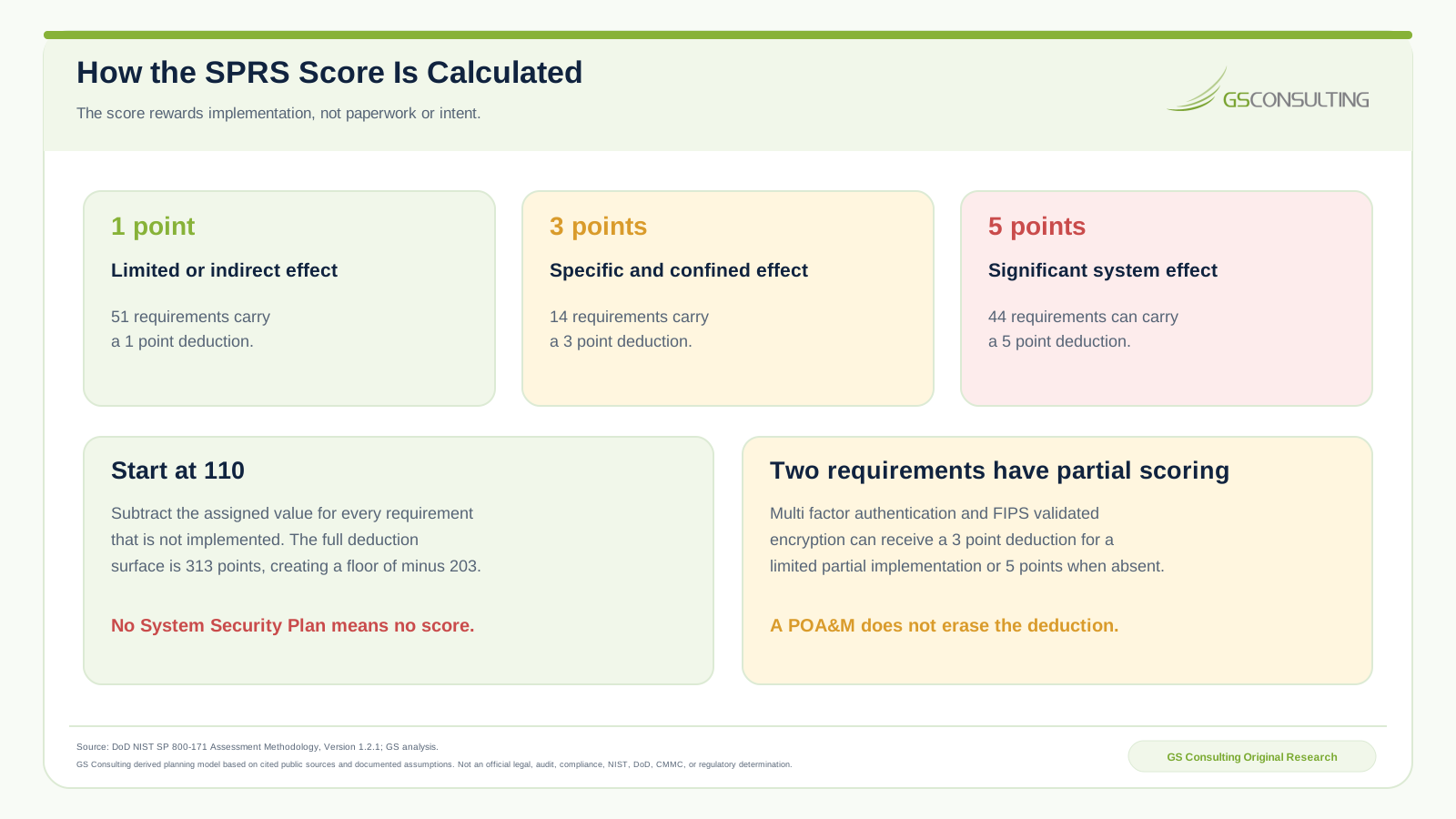
The current DoD scoring methodology used for this article is Version 1.2.1 dated June 24, 2020. It applies the NIST SP 800-171 Revision 2 requirement set used by the method. Contract and program baselines can change, so confirm the version named by the governing documents before using the worksheet.
- Confirm the assessment can be completed. Requirement 3.12.4 calls for a System Security Plan that describes the system boundary, operating environment, implementation of requirements, and relationships to other systems. The official method assigns no numeric deduction to this requirement because an assessment cannot be completed without it.
- List all 110 requirements. Keep one row per requirement, its official deduction value, implementation result, assessment basis, evidence link, owner, and plan reference.
- Start at 110. This represents every scored requirement implemented.
- Subtract the official value for each requirement that is not implemented. The table contains 51 requirements with a 1 point deduction, 14 with a 3 point deduction, and 44 that can carry a 5 point deduction.
- Use special partial scoring only where the method allows it. Multi factor authentication and FIPS validated encryption have defined limited implementation cases. Do not invent partial credit for other requirements.
- Reconcile the total. The 44 five point values, 14 three point values, and 51 one point values create a maximum deduction surface of 313 points. The numeric floor is therefore minus 203.
- Record the correct system facts in SPRS. The score is useful only when the assessment date, scope, CAGE codes, plan date, System Security Plan, and confidence facts match the assessment.
A Simple SPRS Score Calculation Example
Assume the assessment finds two open requirements worth 5 points each, three worth 3 points each, and four worth 1 point each. The calculation is 110 minus 10, minus 9, minus 4. The result is 87.
That arithmetic is not a claim that the system is safe, certified, or ready for a specific award. It says the assessment identified 23 weighted deduction points under the stated method and scope. The worksheet should still show which requirements are open, why, what evidence supports the decision, and what dependencies affect closure.
Do not collapse related gaps into one deduction or subtract a requirement twice. Score the requirement once based on its current implementation. If one technical cause affects several requirements, each requirement can still have its own official deduction while the remediation plan addresses the common cause.
GS SPRS Remediation Leverage Index
GS Consulting built a derived planning model across the fourteen NIST SP 800-171 Revision 2 families. It does not change the official score. It helps a team decide where detailed remediation planning should begin after the boundary and assessment results are accurate.
The model weights normalized potential deduction at 45 percent, normalized count of requirements that can carry 5 points at 25 percent, analyst rated implementation dependency at 20 percent, and analyst rated evidence closure speed at 10 percent. Dependency and closure speed use documented ratings from 1 to 5. Replace those assumptions with local architecture and staffing facts before planning work.
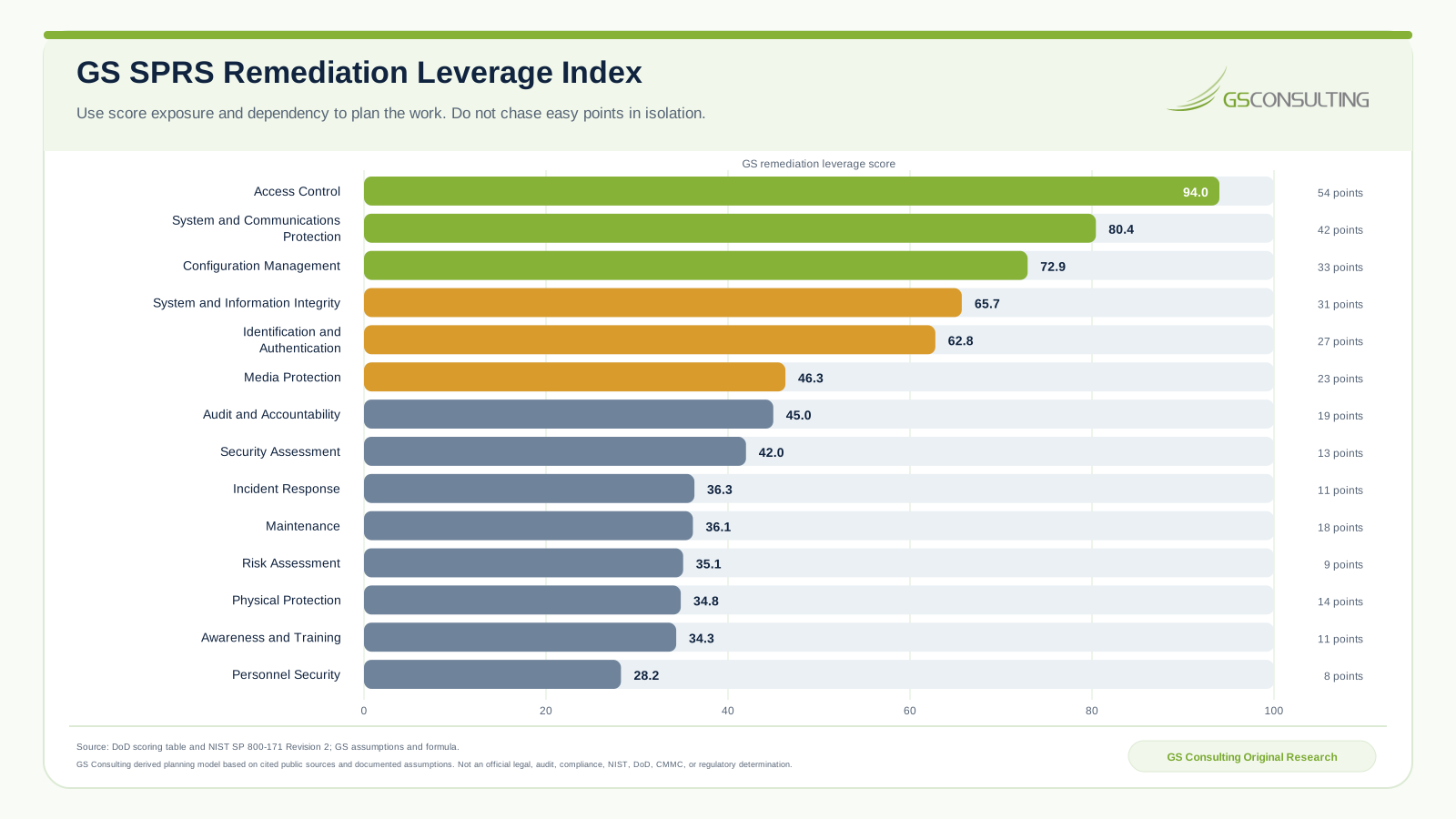
Access Control ranks first at 94.0. System and Communications Protection follows at 80.4. Configuration Management scores 72.9. System and Information Integrity reaches 65.7, and Identification and Authentication reaches 62.8.
The result is not a universal repair order. A missing high consequence safeguard, a contract milestone, an exposed boundary, or a dependency can override the index. The model says where leverage is concentrated. It does not say that every requirement in a high scoring family should be fixed before any other work.
An alternate weighting moves five percentage points from deduction exposure to the count of five point requirements. No family moves more than 1.2 points. No planning tier changes in that limited sensitivity check. That stability is useful, but it does not remove the need for system specific judgment.
Where the Official Deduction Exposure Sits
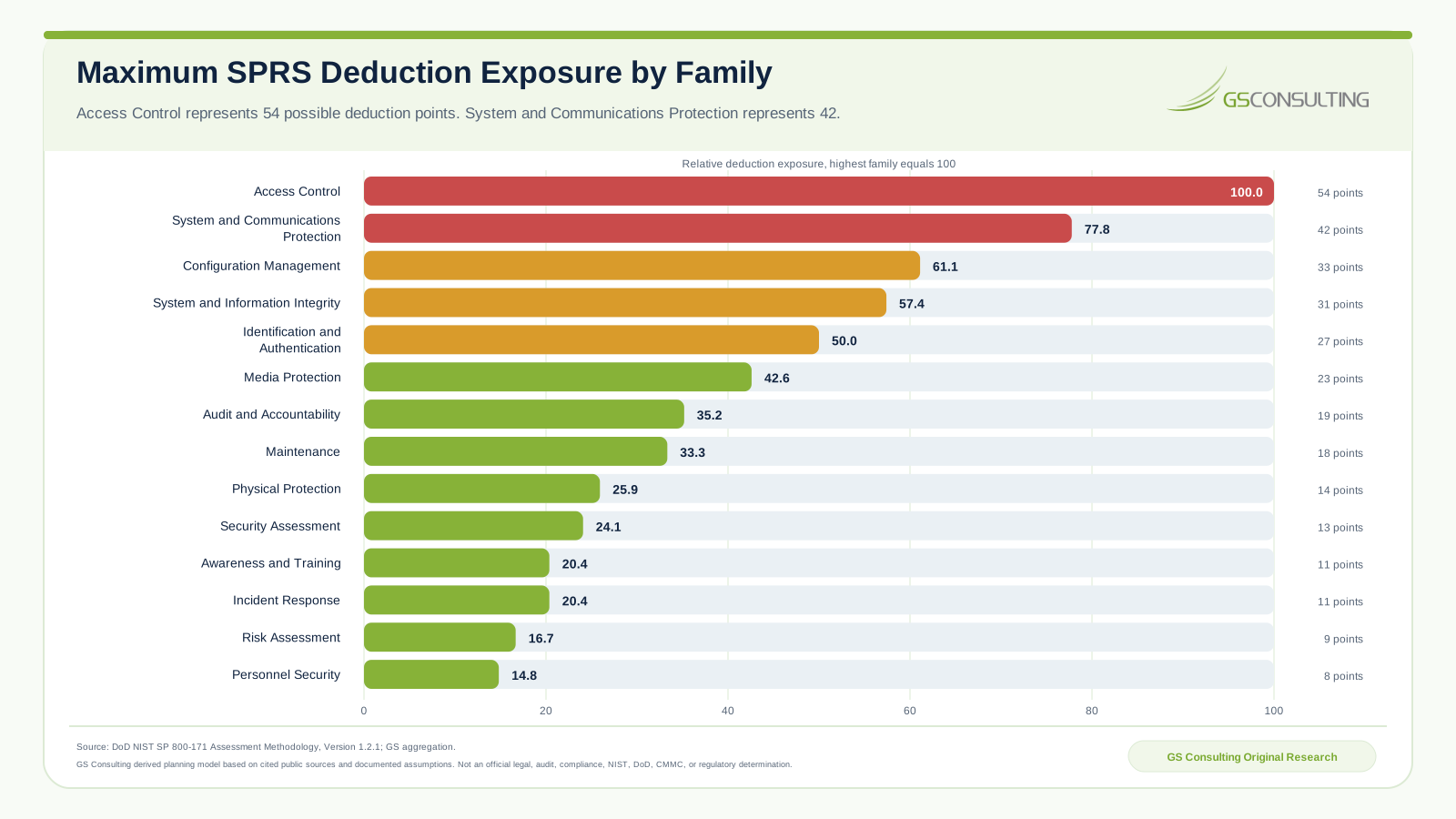
The family aggregation shows why simple requirement counts can mislead. Access Control has 22 requirements and 54 possible deduction points. System and Communications Protection has 16 requirements and 42 points. Configuration Management has only 9 requirements but 33 possible points. System and Information Integrity has 7 requirements and 31 points.
These totals describe maximum score exposure, not risk severity and not remediation cost. A one point requirement can still matter greatly to the system. A five point requirement can depend on identity, network, device, logging, and policy work that crosses several families. Use the totals to check the assessment and organize analysis, then use actual consequence and dependency to plan the work.
How to Improve an SPRS Score Without Chasing the Number
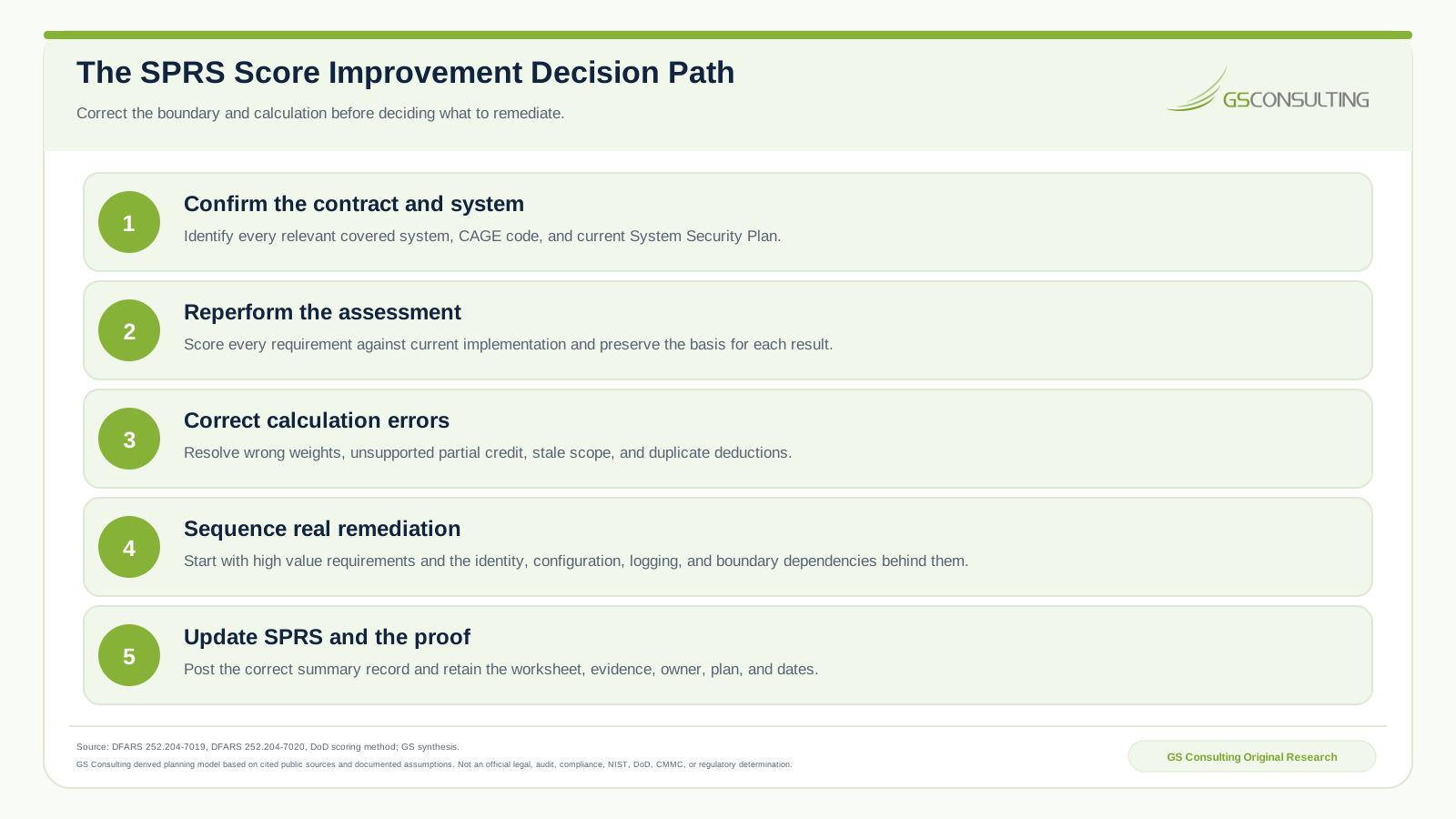
1. Confirm the contract and covered system
Map the solicitation or award, applicable clauses, CAGE codes, customer, covered information, locations, components, services, connections, and System Security Plan. A score for the wrong system is not improved by a cleaner worksheet.
2. Reperform the assessment
Use one requirement register and the official deduction table. Link each result to current policy, configuration, record, interview, or test support. The NIST SP 800-171A evidence guide explains how to separate claims from proof.
3. Correct calculation and record errors
Resolve wrong weights, unsupported partial credit, duplicate deductions, stale assessment dates, mismatched CAGE codes, and a System Security Plan version that does not match the evaluated boundary. This work can correct the score, but it is not remediation unless implementation also changed.
4. Sequence real remediation
Group gaps by common cause. Identity and permission design may support several Access Control requirements. Configuration standards, secure settings, and change records may close several Configuration Management gaps. Logging architecture may affect Audit and Accountability plus System and Information Integrity. Name the shared dependency, owner, evidence, test, and completion rule.
5. Update SPRS and retain the proof
Reassess the changed requirement, preserve the new evidence, recalculate the summary, obtain the required internal approvals, and update the record through the authorized process. Keep the prior result and change basis. Do not silently overwrite the history used for an earlier offer or review.
The Two Partial Scoring Rules
The DoD method generally does not award partial credit. A requirement is implemented or it takes the assigned deduction. Two requirements have defined treatment that can produce either a 3 point or 5 point deduction.
Multi factor authentication. The method distinguishes a limited partial implementation from absence. Confirm which privileged and nonprivileged access paths require multi factor authentication and test actual enforcement. A policy statement without operating enforcement is not enough.
FIPS validated cryptography. The method distinguishes use of encryption that is not FIPS validated from failure to encrypt where required. Preserve the module, mode, configuration, data path, and validation basis. A vendor brochure that mentions FIPS does not prove the deployed path uses the validated function.
Do not extend this logic to other requirements. A draft policy, partial rollout, future purchase, or open POA&M does not create a custom 2 point or 4 point deduction.
SPRS, CMMC, and Current Contract Nuance
An SPRS score is not a CMMC certificate and is not a substitute for current contract review. The CMMC compliance guide covers the broader path from scope through assessment and affirmation. The CMMC level guide explains how requirement sets and assessment types differ. The CMMC POA&M rules guide separates the score floor from the requirement by requirement eligibility test and the 180 day closeout.
Program timing can also change. The current DoD CMMC program page states that Phase II implementation was suspended on July 13, 2026 while Phase I remains in effect. The page also states that applicable DFARS safeguarding duties continue. Treat that as current program status, not permission to stop protecting CUI or maintaining an accurate assessment record.
For any live offer, confirm the solicitation, award, required CMMC level, assessment type, affirmation, SPRS status, system scope, and current DoD instructions. Legal and contracting teams should interpret obligations. Security and operations teams should make the evidence accurate now.
Six SPRS Score Failure Modes
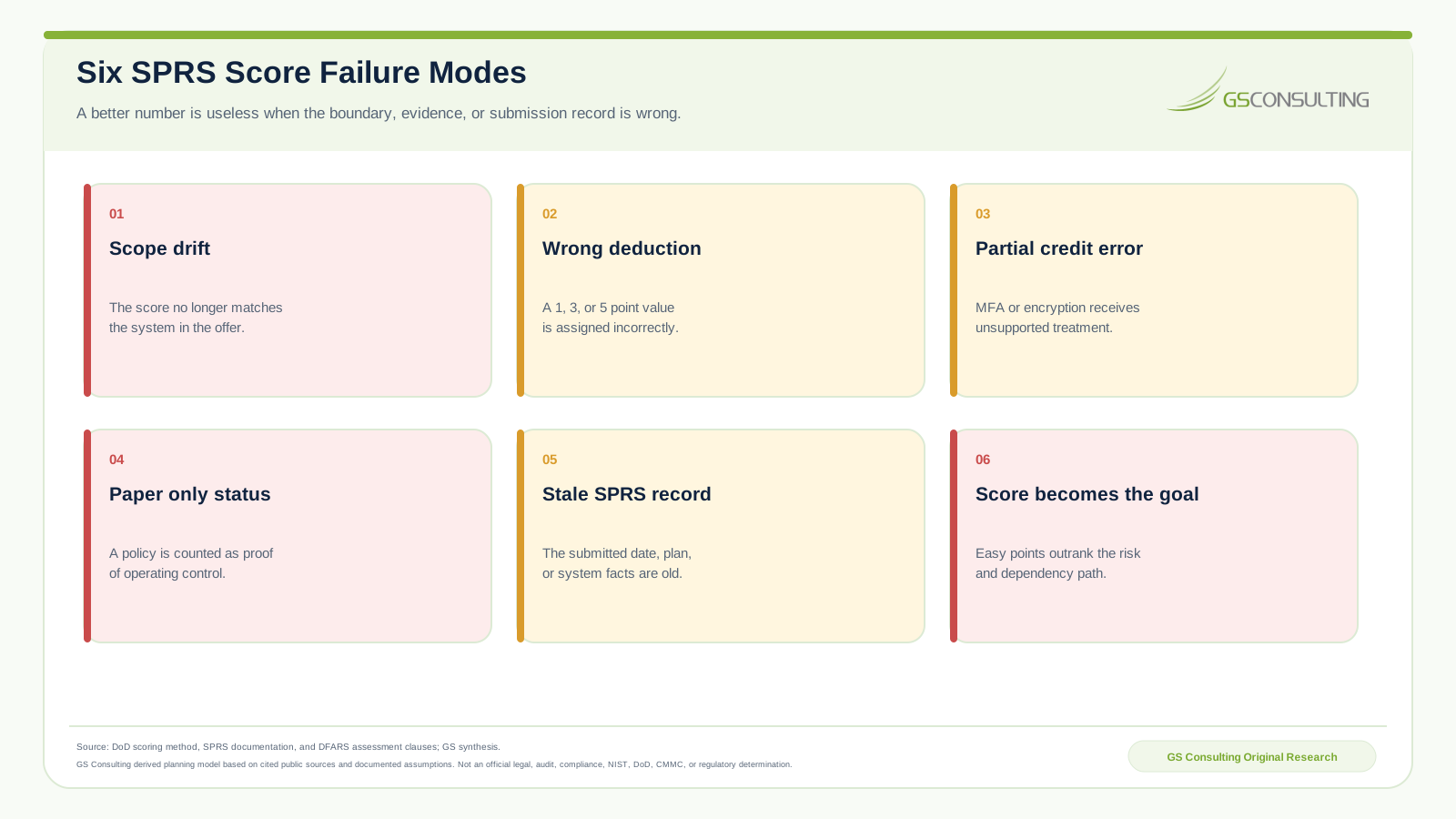
- Scope drift. The score no longer matches the system described in the offer or System Security Plan.
- Wrong deduction. The worksheet assigns the wrong official value to an open requirement.
- Partial credit error. The team gives custom credit or applies the two special cases without evidence.
- Paper only status. A policy or plan is counted as proof that the control operates.
- Stale SPRS record. The assessment date, plan date, CAGE codes, system facts, or score no longer reflect current conditions.
- Score becomes the goal. Easy points outrank risk, contract need, and the dependency path.
A 60 Day SPRS Score Improvement Plan
Days 1 through 15: scope and recalculate
- Confirm applicable contracts, clauses, CAGE codes, covered information, systems, locations, and service providers.
- Reconcile the System Security Plan to the actual boundary and current architecture.
- Reperform all 110 results with the official deduction table.
- Record evidence, uncertainty, open requirements, and every calculation correction.
Days 16 through 30: group the causes
- Group open requirements by shared technical or operating dependency.
- Identify exposed paths and high consequence gaps that cannot wait for score optimization.
- Assign one accountable owner, evidence target, test, milestone, and completion rule to each work package.
- Validate resources and dates with the people who will do the work.
Days 31 through 60: implement and prove
- Implement the highest consequence and highest leverage packages in dependency order.
- Test the operating mechanism, not only the policy or ticket.
- Update the requirement result only when the implementation and evidence support it.
- Recalculate, approve, submit, and retain the assessment change record.
The Minimum SPRS Score Evidence Packet
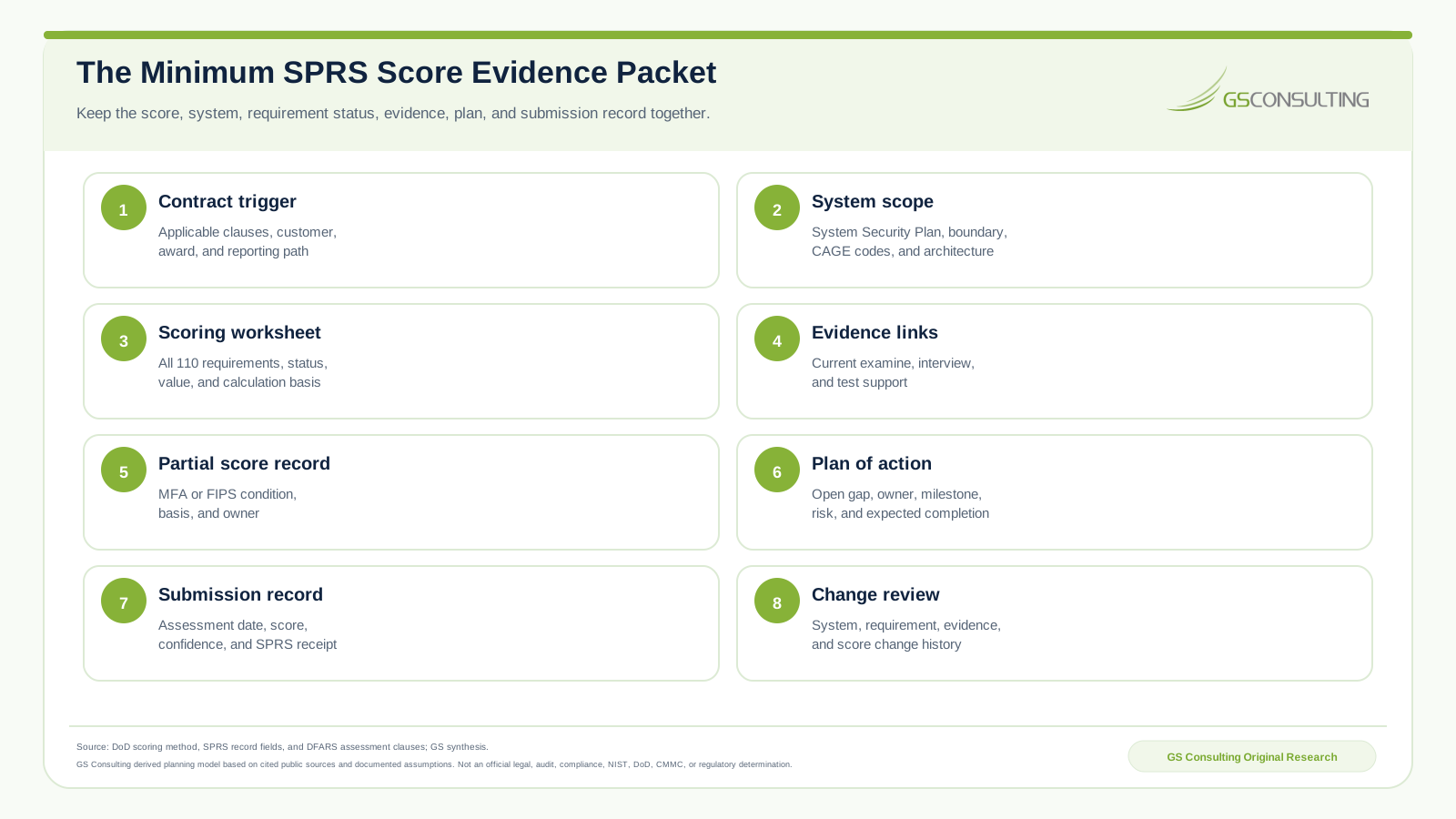
The packet should include the contract trigger, system scope record, all 110 requirement results, official deduction value, evidence links, partial scoring basis where applicable, plan of action, assessment summary, SPRS submission receipt, and change history. The public SPRS NIST SP 800-171 information page identifies the summary fields stored by the system.
Evidence should let a reviewer answer five questions without reconstructing the project. Which system was assessed? Which baseline and method applied? Why did each requirement receive its result? Which official deductions produced the total? Which facts were sent to SPRS and when?
Bottom Line
The SPRS score is useful because it forces a weighted statement about current implementation. It becomes dangerous when teams treat it as a certificate, reuse it across different systems, award invented partial credit, or improve the spreadsheet without improving the control.
That is the operating standard: one defined system, one current assessment, official deductions, evidence for every result, risk led remediation, and an SPRS record that matches the proof.
Sources and Method Note
- DoD NIST SP 800-171 Assessment Methodology, Version 1.2.1
- DFARS 252.204-7019
- DFARS 252.204-7020
- SPRS NIST SP 800-171 Information
- NIST SP 800-171 Revision 2
- DoD Cybersecurity Maturity Model Certification Program Status
GS Consulting Original Research. The remediation leverage index is a derived planning tool based on official deduction values and documented analyst assumptions. It is not an SPRS score, compliance determination, CMMC status, assessment result, contract interpretation, legal advice, or universal remediation order. Replace dependency and closure assumptions with the actual system, evidence, risk, and contract facts before use.
Frequently Asked Questions
What is an SPRS score?
An SPRS score is the summary result of a DoD NIST SP 800-171 assessment for a defined covered contractor information system.
What is the SPRS score range?
The numeric range starts at 110 and can fall to minus 203. Without the required System Security Plan, the assessment cannot be completed and no numeric score should be assigned.
How do you calculate an SPRS score?
Assess all 110 requirements, start at 110, and subtract the official 1, 3, or 5 point value for each requirement that is not implemented.
Does a POA&M restore SPRS points?
No. The deduction remains until implementation changes and a supported reassessment updates the result.
Is an SPRS score the same as CMMC status?
No. SPRS records an assessment result. CMMC status follows the applicable level, assessment type, affirmation, contract, and current program rules.
Related Reading
- CMMC Compliance Hub
- NIST 800-171 Hub
- CMMC Compliance Guide
- NIST SP 800-171 Explained
- NIST SP 800-171A Assessments
- NIST System Security Plan Guide
- CMMC Readiness Checklist
Make the score and the system agree.
GS Consulting helps contractors replace spreadsheet confidence with a scoped assessment, linked proof, and remediation work that changes the operating system.
Plan an SPRS Assessment Review