DevSecOps | | 26 min read
Software Bill of Materials Guide for Federal Delivery Teams

Key Takeaways
An SBOM is a release control record
Eleven minimum data fields
CISA expanded the 2025 baseline and added five operating practices for coverage, updates, and delivery.
Known unknowns score 92
Coverage disclosure ranks first because a precise inventory is only useful when its blind spots are explicit.
Read the actual contract
Current federal policy is risk based. Agency policy and contract language set the evidence duty.
A software bill of materials is not a component list. It is a release control record that must survive acquisition, vulnerability, and incident decisions.
Generating a file is the easy part. The hard part is proving which release it represents, what it covers, what it cannot see, who can retrieve it, how advisories are correlated, and who acts when a component matters.
Federal delivery teams need one more discipline: policy accuracy. The old claim that every federal supplier operates under one universal SBOM mandate is wrong. Current Office of Management and Budget policy gives agencies a risk based assurance framework and allows contractual evidence requirements. Read the agency policy, solicitation, award, data item, and service role before making an obligation claim.
The DevSecOps resource hub connects SBOM work to secure pipelines, provenance, metrics, and federal software factory evidence. Use the DevSecOps metrics guide to measure release binding and response, and the DoD DevSecOps reference design guide to place the record in current defense delivery context. GS Consulting supports the operating model through DevSecOps and software supply chain services.
Make the inventory useful after delivery.
GS Consulting helps federal teams define SBOM requirements, instrument generation, validate records, protect delivery, and connect component risk to accountable action.
Plan an SBOM Operating ReviewSoftware Bill of Materials: The Short Answer
An SBOM is a machine readable inventory of software components and their relationships. Build it in the trusted software delivery process, validate it, bind it to the exact artifact and release, deliver it through an authorized path, ingest it into the consumer inventory, correlate it with vulnerability and exploitability information, assign action, and update it when the software changes.
The 2025 CISA minimum elements define 11 data fields and five practices and processes. Treat those as a baseline, not the entire operating model. Federal buyers may need exact release identity, validation, protected distribution, advisory correlation, response ownership, retention, and supplier update terms to make the record useful.
Use SPDX or CycloneDX when either fits the requirement and consuming tools. Specify the version, profile, fields, identifiers, validation rules, and delivery method in the contract or interface. Do not accept “SBOM provided” as a testable requirement.
Current Federal Policy Is Risk Based
OMB Memorandum M-26-05, issued January 23, 2026, rescinded M-22-18 and M-23-16. Agencies must maintain inventories and develop risk based policies for software and hardware assurance. The memorandum gives agencies discretion to use evidence suited to risk rather than imposing one government wide evidence process for every purchase.
The memorandum says agencies may use the earlier secure software development attestation form if they choose. It also says an agency may contractually require a software producer to provide a current SBOM on request. For cloud platforms, an agency may require an SBOM that reflects the production runtime environment. Those are meaningful authorities. They are not a blanket statement that every contract contains the same SBOM deliverable.
DoD policy adds acquisition and data delivery context. DoD Manual 5010.12, dated November 21, 2025, lists an SBOM among software data that may be acquired and delivered under applicable data requirements. “May be acquired” is not “always required.” The contract, data item, rights, delivery schedule, and accepting authority still matter.
Older plans and guidance can still explain program direction, but verify them against M-26-05 and current agency instructions. When contract interpretation is material, involve acquisition counsel and the contracting officer. Strong preparation is mandatory. Unsupported legal certainty is not.
The 2025 CISA Minimum Elements
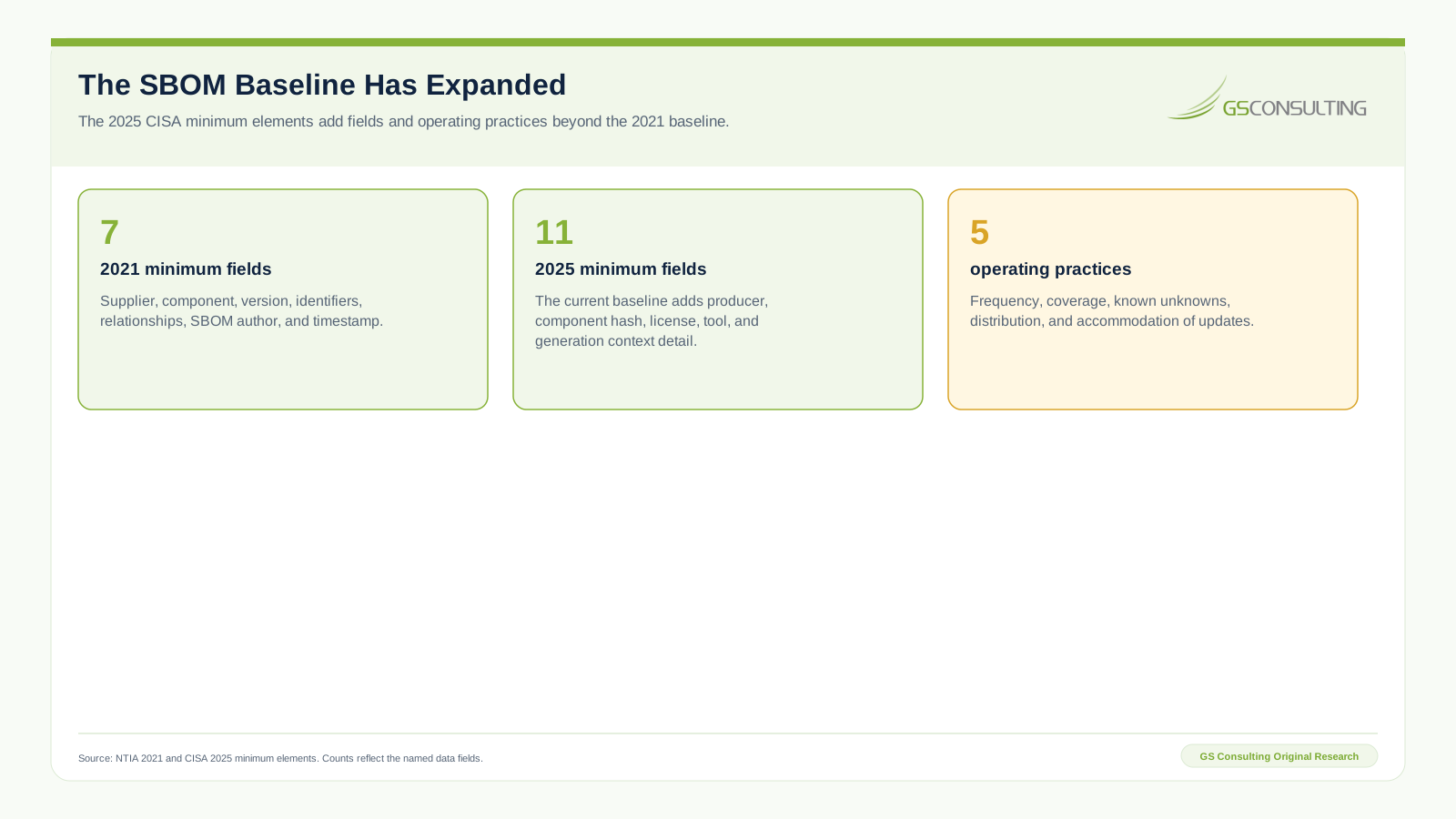
The 2021 NTIA minimum elements named seven baseline data fields: supplier name, component name, component version, other unique identifiers, dependency relationship, author of SBOM data, and timestamp. That work established a practical shared vocabulary.
The 2025 CISA minimum elements define 11 data fields:
- SBOM author: the entity that creates the SBOM data.
- Software producer: the entity that produces the software represented.
- Component name and component version: the name and version of every represented component.
- Software identifiers: identifiers that support matching across tools and sources.
- Component hash: a cryptographic value that strengthens identity and release binding.
- License: license information associated with the component.
- Dependency relationship: the relationship between components.
- Tool name: the tool used to create the SBOM.
- Timestamp: when the SBOM data was assembled.
- Generation context: how and where the SBOM was generated.
CISA also names five practices and processes: frequency, coverage, known unknowns, distribution and delivery, and accommodation of updates to SBOM data. These practices close an important gap. A syntactically valid record can still be stale, incomplete, inaccessible, or detached from the release.
The publication also discusses software as a service, AI software systems, validation, and correlation with security advisories. Federal teams should define the represented boundary instead of assuming every delivery looks like a packaged application.
Choose a Format by Consumer Need
SPDX lists version 3.0 as its current major specification family. SPDX also has an international standards lineage through ISO/IEC 5962:2021. It supports rich software, licensing, security, build, and supply chain relationships.
CycloneDX lists version 1.7 as current. It supports components, services, dependencies, vulnerabilities, evidence, formulations, and related supply chain use cases. Both ecosystems have mature tools. Neither format fixes weak source data.
Start with the consuming workflow. Does the buyer need license review, vulnerability correlation, build evidence, service dependencies, cryptographic verification, or tool interoperability? Which schema version and profile can the consumer ingest? Which identifiers does the advisory system understand? What validation errors cause rejection?
Specify the format in a testable way. Name the standard, version, serialization, profile if applicable, required fields, identifier rules, hash algorithms, dependency expectations, validation tool and version, signature or integrity method, and delivery interface. Preserve the original machine readable file. A PDF export can help a person read the record but should not replace it.
Original Research: The GS SBOM Operational Utility Index
Not all SBOM capabilities create equal operating value. Prioritize coverage, validation, provenance, and response before polishing a larger inventory.
GS Consulting scored 14 SBOM capabilities across five factors. Component identification and release binding each carry 25 percent. Vulnerability decision support carries 20 percent. Supplier and owner accountability carries 15 percent. Lifecycle maintainability carries 15 percent. Each capability receives an ordinal rating from one to five, and the weighted result is multiplied by 20.
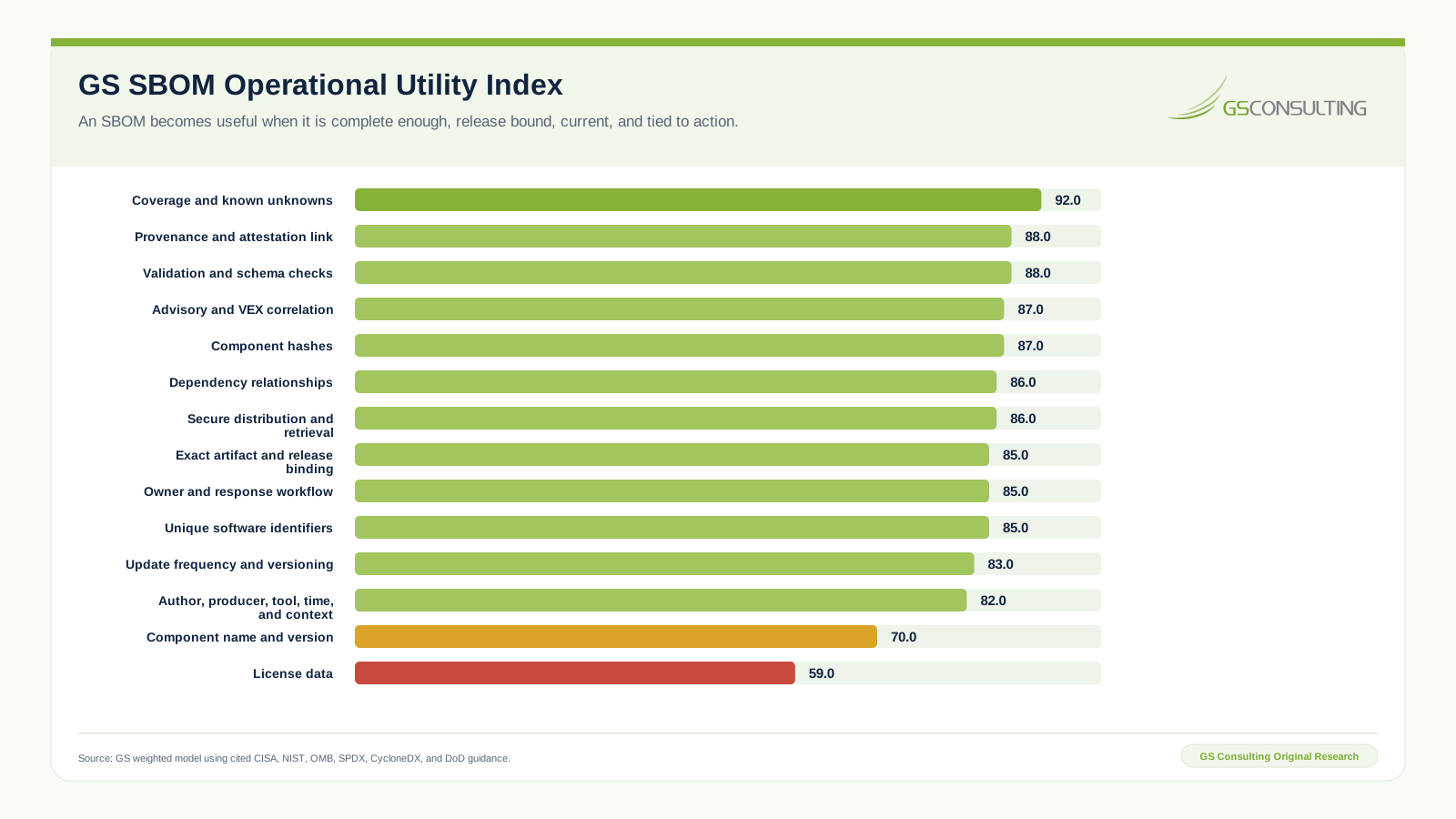
Coverage and known unknowns score 92, the only capability in the core decision tier. Provenance and attestation linkage and validation and schema checks each score 88. Advisory and VEX correlation and component hashes each score 87. Dependency relationships and secure distribution each score 86.
Exact artifact and release binding, owner and response workflow, and unique software identifiers each score 85. Update frequency scores 83. Author, producer, tool, time, and context score 82. Component name and version score 70. License data scores 59.
The lower score for a formal field does not make it optional. The model asks a narrower question: which capabilities most strongly create operational utility across release, vulnerability, supplier, and lifecycle decisions? A required record must still include every applicable minimum field and contractual field.
The sensitivity case moves five percentage points from component identification to release binding. No score moves more than two points. Coverage remains first and the leading operating capabilities remain stable.
The GS SBOM Operational Utility Index is a derived planning tool based on cited public sources and documented GS assumptions. It is not an official CISA, NTIA, NIST, OMB, DoD, SPDX, CycloneDX, legal, acquisition, audit, compliance, or regulatory determination. Formal requirements keep their own authority.
Four Layers Turn the File Into a Control
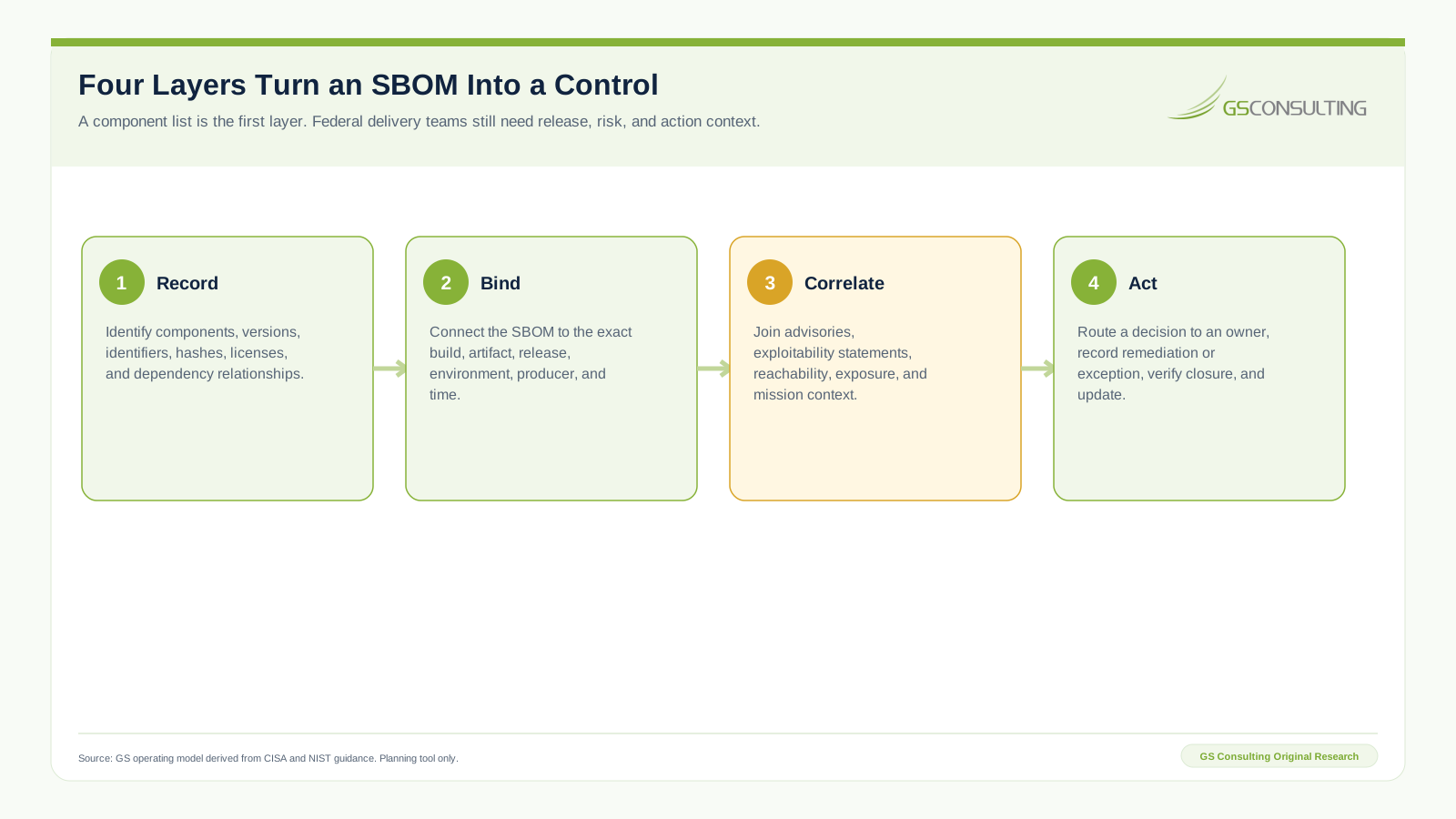
Record: identify components, versions, identifiers, hashes, licenses, authors, producers, tools, timestamps, context, and dependency relationships. This is the inventory layer.
Bind: connect the record to the exact build, artifact, release, environment, product, and producer. This is the configuration layer. It answers “what does this SBOM actually represent?”
Correlate: join components with advisories, vulnerability exploitability exchange statements, reachability, exposure, compensating controls, and mission consequence. This is the decision context layer.
Act: route the result to an owner who can remediate, investigate, monitor, block a release, or approve a time bound exception. Preserve closure and regenerate the SBOM when the software changes. This is the operating layer.
Generate the SBOM Inside the Trusted Build
Create the primary SBOM as close as practical to the authoritative build inputs and resolved dependencies. The generator should see the package lock files, source manifests, vendored components, container layers, operating system packages, build plugins, generated code inputs, and other software that enters the artifact.
Record the tool and version, command or configuration, timestamp, build identifier, source revision, artifact hash, and generation context. Protect the generator and its configuration as part of the software supply chain. A compromised or loosely governed generator can produce a confident but false inventory.
Retroactive generation can help when source build data is unavailable, but document the limitation. NIST SBOM guidance warns that generating from an existing artifact may miss dependencies used during build or other context that was not preserved in the binary.
For software as a service, define whether the record represents source inputs, deployed services, a release snapshot, or the current production runtime. OMB M-26-05 explicitly allows agencies to request production runtime SBOM context for cloud platforms. The representation needs a timestamp, environment, update rule, and retrieval contract.
For AI software systems, separate model, code, data, service, and infrastructure inventories where necessary, then link them. Do not force every dependency into one ambiguous list. CISA identifies AI software systems as an area that needs explicit treatment.
Validate Content, Not Just Syntax
A schema pass proves that the file follows structural rules. It does not prove that components are complete, identifiers are correct, dependency relationships are meaningful, or the file matches the released artifact.
Run four validation layers. First, validate syntax against the stated schema version. Second, validate required fields and identifier formats. Third, reconcile selected components against package managers, container manifests, artifact contents, and source evidence. Fourth, confirm that the artifact hash, build, product version, timestamp, and release record all refer to the same delivery.
Track validation errors with owners and dispositions. Do not silently drop malformed rows to obtain a green result. Report coverage and known unknowns beside the validation status. A valid file that admits a known gap is more trustworthy than a clean file with an invisible gap.
Test the consumer. Import representative SBOMs into the actual inventory, vulnerability, acquisition, or analysis platform. Confirm that component identifiers match, dependencies survive, versions remain distinct, and updates do not create duplicate products.
Protect Distribution and Retrieval
An SBOM can reveal component versions, architecture, supplier relationships, and potential attack paths. That does not make every SBOM classified or controlled. It does mean the owner should make a deliberate handling decision based on content, contract, system, and threat.
Define authorized recipients, transport, repository, access control, integrity protection, receipt confirmation, version history, retention, revocation, and update notification. Use stable product and release identifiers so a consumer can retrieve the right record later.
Delivery can occur with the release, through a supplier portal, from an authenticated interface, or on request. The method should fit the contract and operating use. Emailing one file at award time is weak if the software changes monthly and the consumer cannot identify the current record.
Decide who may share the record with incident responders, assessors, security operations, acquisition officials, downstream integrators, and subcontractors. Put the decision in the data handling and contract record rather than relying on an informal understanding.
Correlate, Decide, and Close the Loop
An SBOM is not a vulnerability report. A component can appear in the inventory without a known vulnerability. A known vulnerable component can be unreachable or not affected in the product configuration. A clean advisory scan can become stale tomorrow.
Correlate components with authoritative advisories, supplier notices, vulnerability exploitability exchange records, observed exploitation, reachability, deployment exposure, mission function, compensating controls, and asset ownership. Preserve the inputs and time of the decision.
VEX adds a supplier assertion about whether a vulnerability affects a product and under what conditions. It can reduce wasted triage when used carefully. It does not replace the SBOM, the advisory, local exposure evidence, or independent judgment. Validate issuer, product identity, status, justification, action statement, time, and update path.
Route confirmed risk to an owner with a due date and allowed actions. Record remediation, removal, upgrade, configuration change, monitoring, temporary exception, or acceptance under the applicable authority. Verify closure against the deployed artifact and update the inventory.
Run One Production and Consumption Workflow
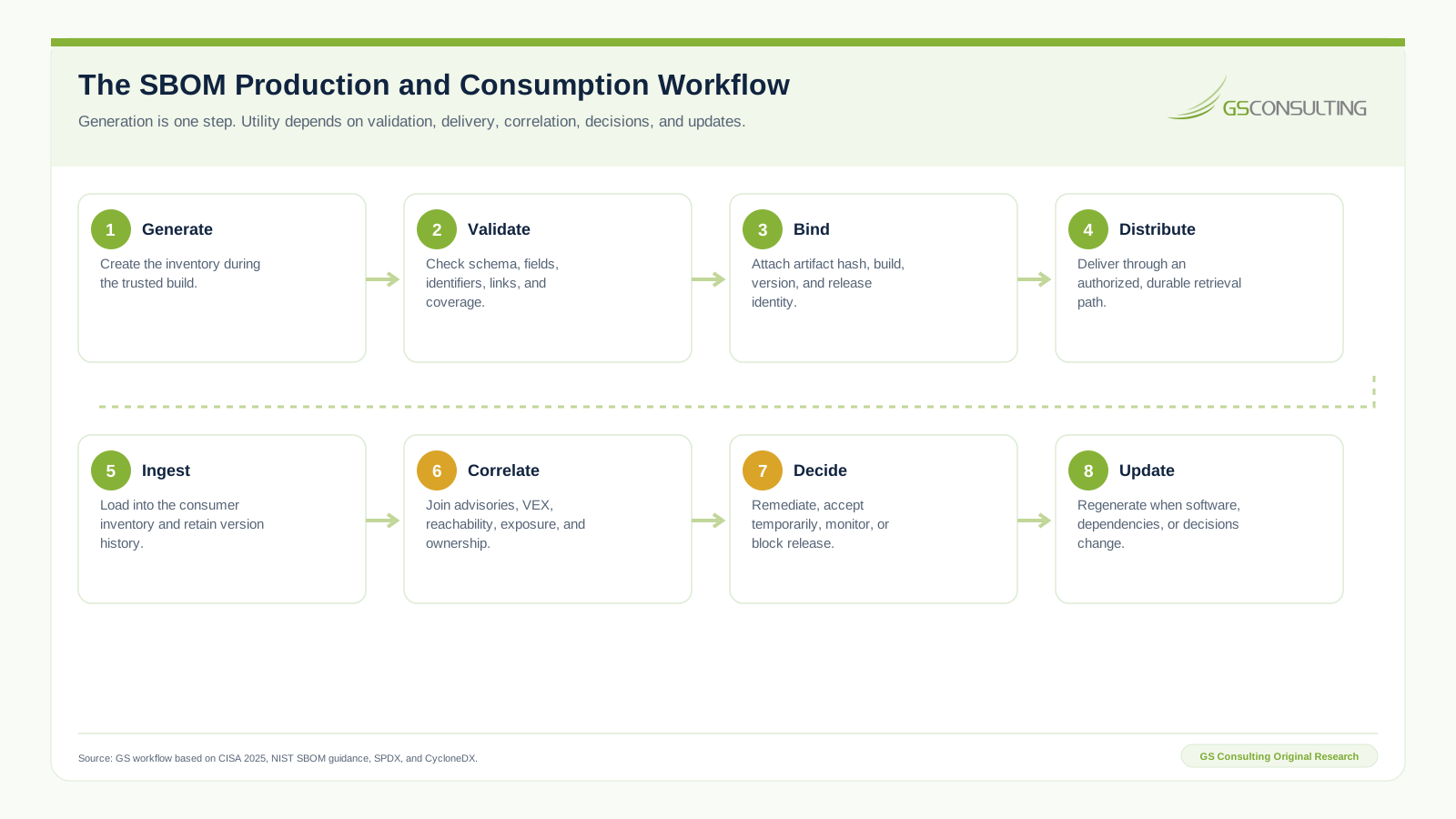
The producer generates, validates, binds, and distributes. The consumer ingests, correlates, decides, and updates its records. Responsibility can cross organizations, tools, and contracts, but the identifiers must remain stable.
Define acceptance at each handoff. The build should fail or route an exception when required fields or release identity are missing. Delivery should fail when integrity or authorized access cannot be established. Ingestion should quarantine malformed records. Correlation should flag ambiguous component matches. Response should not close until the deployed state is verified.
Measure the workflow. Useful signals include the share of releases with a validated SBOM, validation error rate, time from release to consumer ingestion, identifier match rate, advisory correlation coverage, age of unresolved component risk, update latency, and the share of response records with verified closure. The secure delivery metrics guide shows how to define those signals without turning activity counts into false outcomes.
Write a Six Question Federal Decision Record
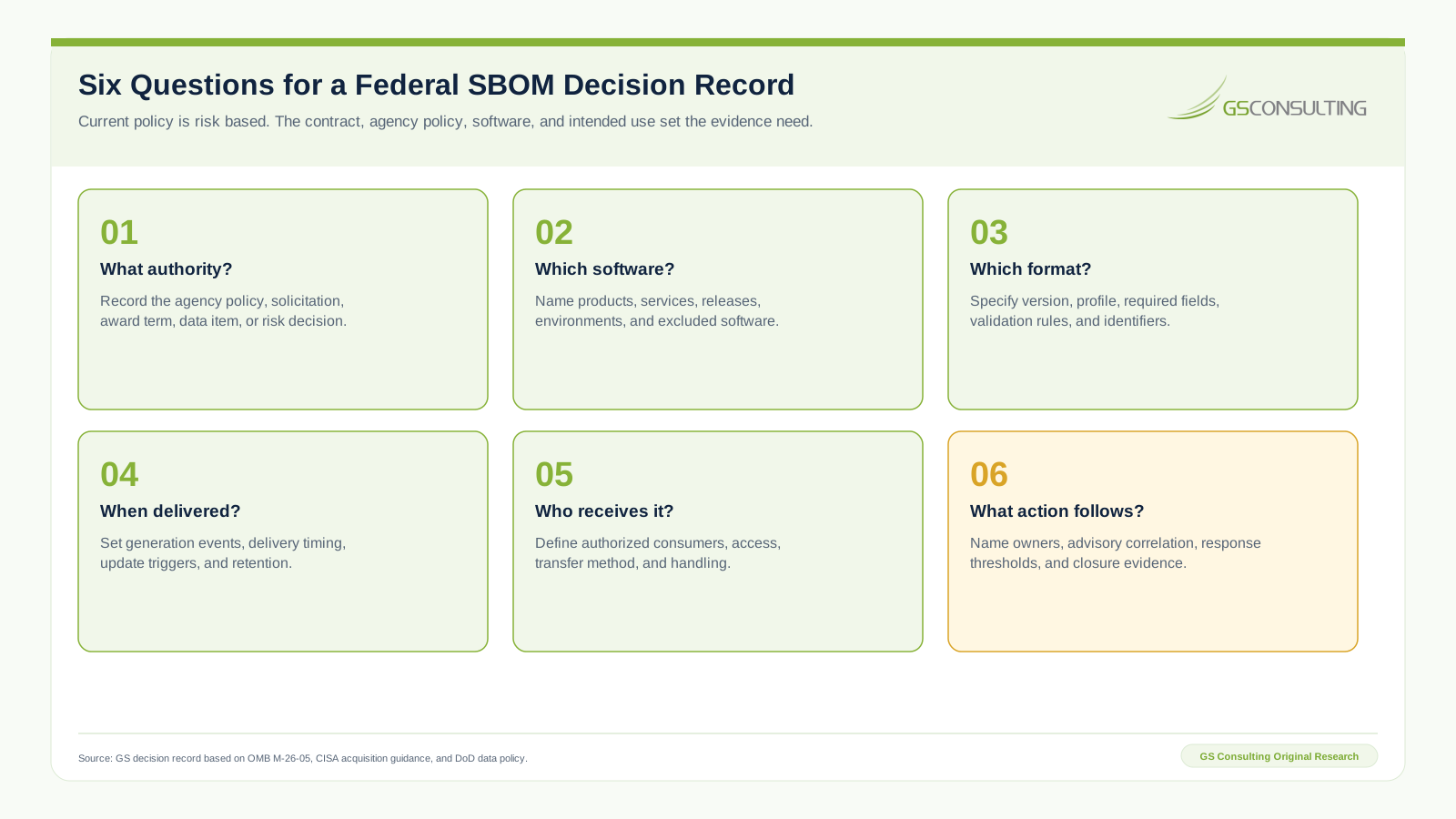
Record the authority. Cite the agency policy, solicitation, award term, data item, security plan, or risk decision that creates the need. Avoid vague references to a federal mandate.
Define the software scope. Name the products, services, releases, environments, and excluded software. State whether cloud production runtime information is expected.
Define the format and quality rule. Name the standard, version, serialization, required fields, identifiers, hash algorithms, profile, validation rules, and error process.
Define delivery and updates. Set generation events, delivery timing, update triggers, version history, notification, acceptance, and retention.
Define handling. Name authorized consumers, transfer method, access controls, permitted sharing, integrity checks, and storage expectations.
Define the action. Name the consumer system, advisory sources, correlation method, response thresholds, accountable owners, exception authority, and closure evidence. The CISA Software Acquisition Guide for Government Enterprise Consumers provides useful questions and contract considerations for software assurance evidence.
Keep a Minimum Viable SBOM Evidence Packet
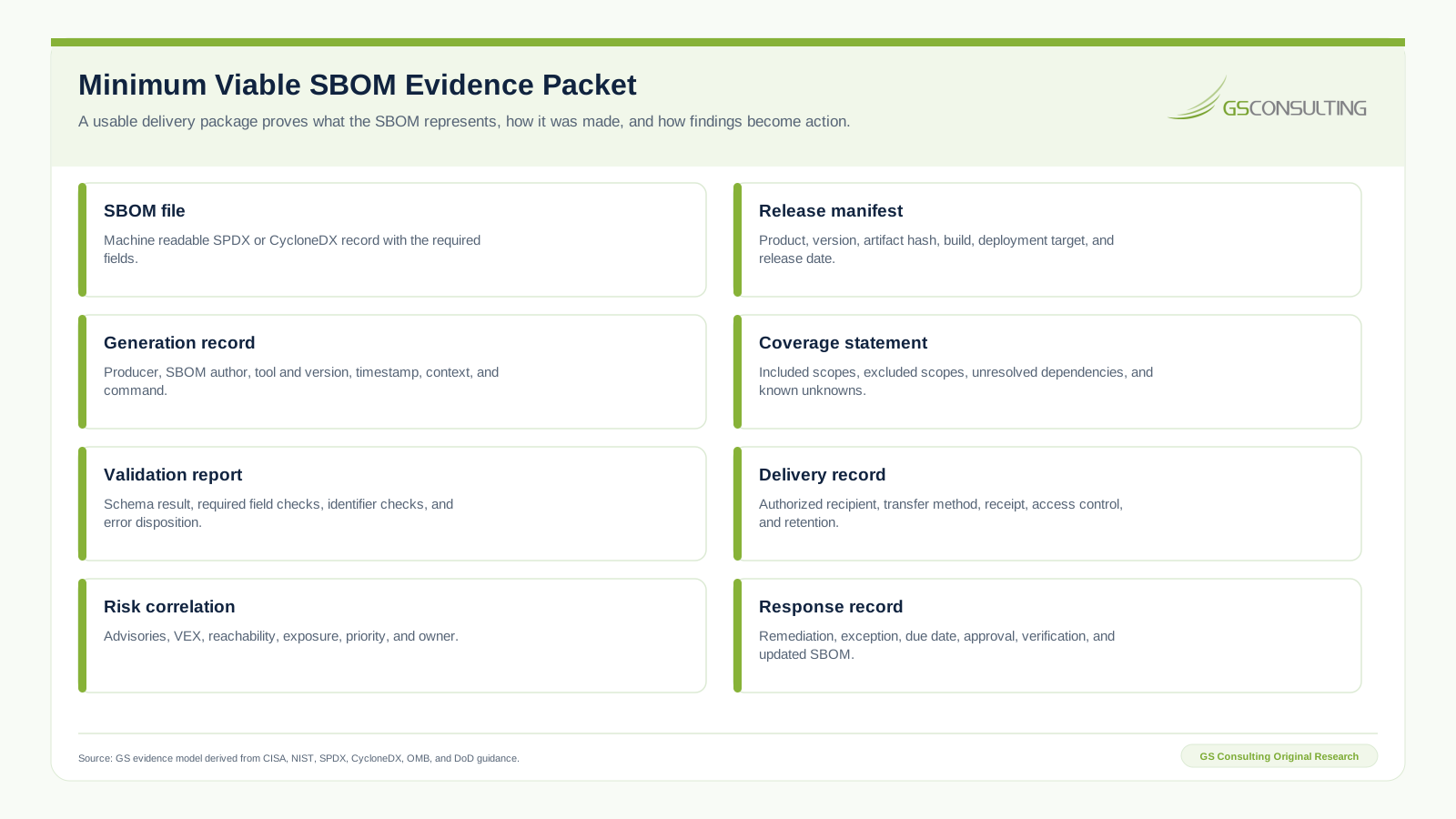
Keep the machine readable SBOM, release manifest, generation record, coverage statement, validation report, delivery record, risk correlation, and response record. Use stable identifiers across every part. The package can live in linked systems rather than one folder, but an authorized reviewer should be able to reconstruct it.
The release manifest should contain product, version, artifact hash, build, deployment target, and date. The generation record should contain producer, author, tool and version, timestamp, context, and command or configuration. The coverage statement should identify included scopes, exclusions, unresolved dependencies, and known unknowns.
The response record should show the advisory or issue, affected release, analysis, owner, priority, action, exception if any, due date, approval, verification, and updated state. This is where inventory becomes management.
A 90 Day SBOM Implementation Roadmap
Days 1 through 15: select one software product and one consuming decision. Confirm the agency and contract context. Map source manifests, build inputs, artifacts, registries, releases, advisory systems, owners, and existing inventories. Choose the format based on the real consumer.
Days 16 through 30: generate during the trusted build. Record tool, version, configuration, time, source revision, build, artifact hash, and context. Write the coverage statement and known unknowns. Validate schema and required fields.
Days 31 through 60: bind every SBOM to the release manifest. Establish protected delivery and receipt. Ingest into the consumer platform and test identifiers, relationships, updates, and duplicate handling. Define advisory and VEX correlation.
Days 61 through 90: run an incident drill with a component advisory. Find affected releases, confirm exposure, route a decision, record remediation or exception, verify the deployed state, and issue an updated SBOM. Review missed components, false matches, elapsed time, and unclear ownership.
Avoid the Common SBOM Mistakes
Generating once: a record produced for an assessment and never updated does not represent current software.
Naming the product but not the artifact: product and version can be ambiguous. Preserve build, artifact hash, release, and environment.
Passing schema and claiming completeness: structural validity does not prove component coverage or correct relationships.
Hiding known unknowns: unresolved dependencies and opaque components need an explicit coverage statement and response plan.
Sending a file without a consumer: define who ingests it, what tools use it, what decisions follow, and how updates arrive.
Treating every advisory as exposure: correlate product identity, reachability, configuration, runtime, supplier statements, and local evidence.
Claiming a universal federal mandate: current policy is risk based. The actual contract and agency policy govern the requirement.
Using VEX as a waiver: VEX is evidence for analysis. Validate the statement and retain accountable judgment.
Research Sources and Caveats
The GS index compares capabilities inside a derived planning model. It does not alter the CISA minimum elements, establish contract applicability, measure empirical breach reduction, or rank standards. Public sources define fields, practices, policy context, formats, and secure development concepts. GS Consulting supplied the ratings, weights, thresholds, and interpretation.
- CISA 2025 Minimum Elements for a Software Bill of Materials
- NTIA 2021 Minimum Elements for an SBOM
- NIST software supply chain security guidance on SBOMs
- OMB Memorandum M-26-05
- CISA Software Acquisition Guide for Government Enterprise Consumers
- CISA SBOM Resources Library
- SPDX specifications
- CycloneDX specification overview
- NIST SP 800-218 Secure Software Development Framework version 1.1
- NIST SP 800-204D
- DoD Manual 5010.12
- DoD Enterprise DevSecOps Fundamentals version 2.5
Frequently Asked Questions About a Software Bill of Materials
What is a software bill of materials?
A software bill of materials is a machine readable record of software components and their relationships. A useful SBOM also identifies the exact product, artifact, build, release, producer, generation context, coverage, and update state.
Is an SBOM required for every federal software contract?
No. OMB M-26-05 establishes a risk based federal assurance approach and permits agencies to require current SBOMs contractually. The agency policy, solicitation, award, software, service role, and risk decision determine the actual duty.
What are the current CISA SBOM minimum elements?
The 2025 CISA baseline names eleven data fields and five practices and processes. The fields cover authorship, production, component identity, hashes, licenses, relationships, tools, time, and generation context. The practices cover frequency, coverage, known unknowns, delivery, and updates.
Should a team use SPDX or CycloneDX?
Use the format and version required by the buyer or consuming system. Test actual fields, identifiers, dependency relationships, validation, profiles, integrity, and consumer compatibility. Either standard can produce weak data when the operating process is weak.
Does VEX replace an SBOM?
No. An SBOM identifies components and relationships. VEX communicates a supplier statement about vulnerability effect. Use both with advisories, reachability, exposure, configuration, and accountable response evidence.
How often should an SBOM be updated?
Update the SBOM whenever the represented software or dependency set changes, then bind it to the exact build or release. Preserve prior versions and follow any additional contract or agency timing requirements.
Related Software Supply Chain Guidance
- DevSecOps Resource Hub
- DevSecOps Metrics That Improve Secure Delivery
- What Is DevSecOps?
- DoD DevSecOps Reference Design Explained
- Automating DevSecOps Pipelines With AI
- DevSecOps and Software Supply Chain Services
No release identity, no trustworthy SBOM.
Generate the record in the delivery system, disclose its limits, protect its path, and require a named response when component risk becomes real.
Set the SBOM Operating Standard