Careers | | 24 min read
Security Clearance Reciprocity: What Transfers and What Does Not

Key Takeaways
Eligibility can transfer while the receiving authority still controls access
Qualifying prior decisions should be accepted
SEAD 7 supports acceptance of qualifying investigations and same or higher eligibility decisions when no listed exception applies.
A job and access do not transfer
The receiver still decides position need, suitability or fitness, SCI or program conditions, credentialing, and actual access.
Complete records decide whether the clock can work
GAO found widespread system and reporting gaps. Clean security office validation matters even when the prior decision qualifies.
Security clearance reciprocity is not a portable badge. It is a policy for accepting eligible prior investigations and adjudications while the receiving agency still controls the job, need, and access.
The phrase sounds simpler than the process. A person says a clearance is active. A recruiter says it should transfer. The receiving security office cannot find a complete record, the role needs SCI or a different polygraph, or a separate suitability review is still open. Everyone calls the delay a reciprocity failure even though several different decisions are moving on different clocks.
The fix is precision. Separate the background investigation, national security eligibility, suitability or fitness, and credentialing. Treat polygraph, program conditions, need, and access as distinct decisions too. Then give each item an authoritative record, a receiving owner, and a current status.
Make the transfer record precise before making a start date promise.
GS Consulting helps cleared professionals understand role requirements and present accurate, safe evidence for federal and contractor opportunities.
Explore Current OpportunitiesThis guide supports the security clearance jobs guide and the GS Consulting careers hub. Use it with the TS/SCI resume guide and TS/SCI interview preparation guide. Those articles explain how to state status accurately and turn public experience into evidence without exposing protected details.
Security Clearance Reciprocity: The Short Answer
Security Executive Agent Directive 7 tells executive branch agencies to accept qualifying prior investigations and national security eligibility decisions at the same or a higher level, subject to listed exceptions. When full reciprocity applies, the receiving agency should not require a new SF 86, repeat adjudication, or order new checks merely to redo work already accepted.
That does not mean every part of a job change transfers. The receiving organization still controls the real position, need, suitability or fitness, and credentialing. It also controls SCI or special program conditions, site access, briefings, and final access. A separate polygraph requirement can add processing.
The five business day policy target begins after the receiving personnel security element has the required information. It is not a promise that hiring, onboarding, credentialing, special access, or a polygraph will finish in five days.
What Security Clearance Reciprocity Can Transfer
Reciprocity can support acceptance of two central trust decisions:
- Background investigation: a prior investigation that satisfies all or part of the required scope can be accepted instead of repeated.
- National security eligibility: a qualifying same or higher adjudication can be accepted when no listed exception applies.
DCSA guidance also explains that Department of Energy L eligibility is equivalent to Secret eligibility and Q eligibility is equivalent to Top Secret eligibility for reciprocity purposes. In many moves from DoD to another federal agency, the national security eligibility can be accepted.
Use careful language. Eligibility is the government trust determination. Access is permission to receive specific classified information for a real need. A person can hold eligible status without current access. A person can have prior SCI access without current access to the receiving program.
The SEAD 7 Exceptions That Matter
SEAD 7 permits additional review or processing when the record presents a listed condition. The receiving security office applies the actual facts. Common conditions include:
- New relevant information: the receiver has adjudicatively relevant facts that were not part of the prior decision.
- Older investigation: the most recent investigation is more than seven years old. Case specific acceptance may still be possible, but the agency can require a new investigation.
- Adjudication with an exception: the prior decision records an exception that requires receiving review.
- Sensitive access issue: certain Bond Amendment disqualifying conditions matter for SCI, special access programs, and restricted data.
- Approved agency requirement: the Security Executive Agent has approved an agency specific additional requirement.
- Limited decision: the prior status is temporary, interim, limited, or one time eligibility rather than the qualifying final decision.
- Adverse status: eligibility was denied, revoked, or suspended.
An exception is not a prediction that the person will be denied. It means the receiving authority has work that cannot be resolved by simple acceptance of the prior record. Do not turn a policy screen into legal or adjudicative advice.
The Policy Clock Is Short, but the Data Handoff Can Fail
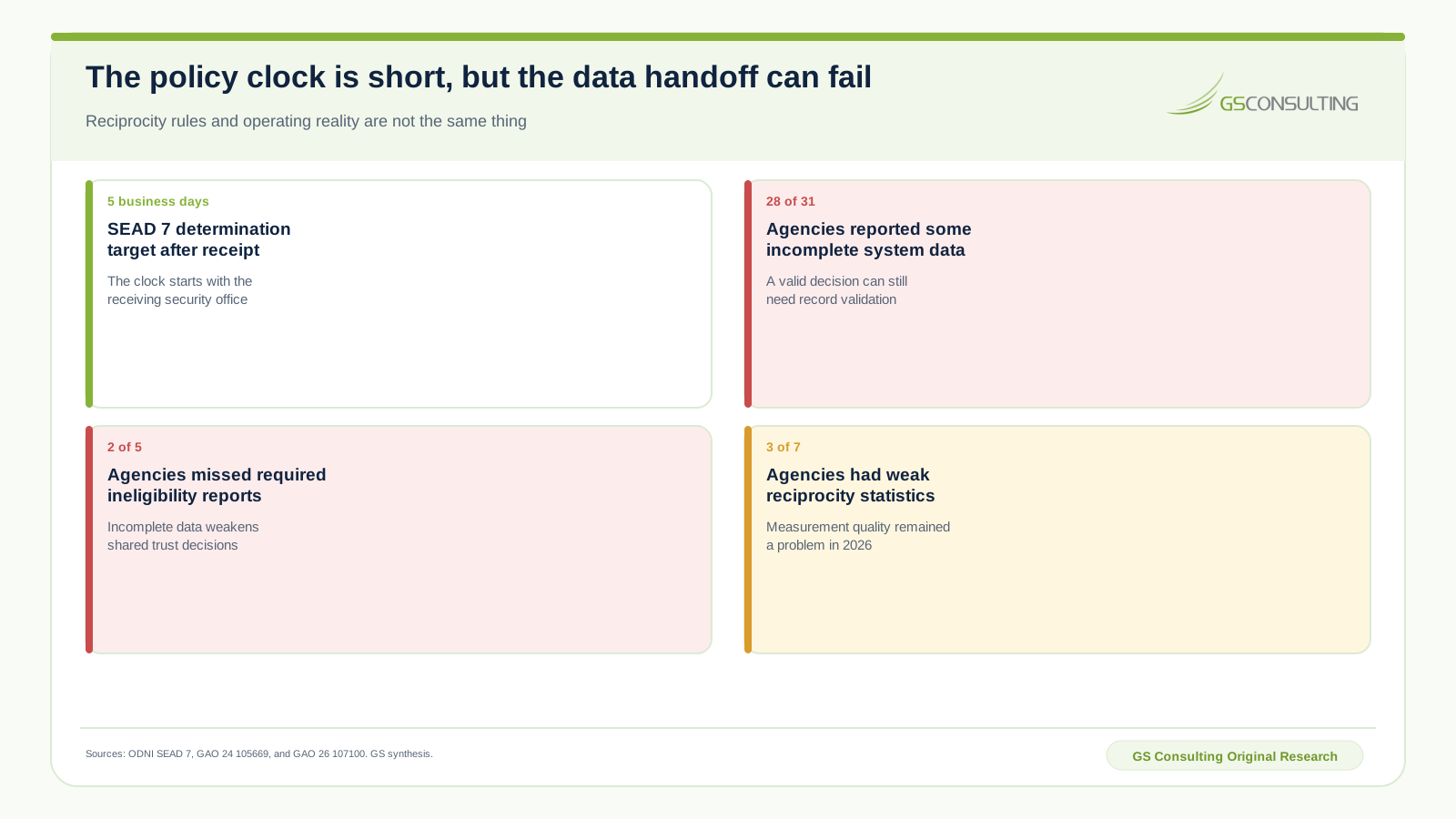
SEAD 7 sets a five business day target after receipt by the personnel security element. The operating evidence shows why transfers can still stall. In GAO 24 105669, 28 of 31 surveyed agencies said their information systems sometimes lacked complete information needed for reciprocity. Two of five agencies analyzed by GAO did not report required ineligibility information.
The problem did not disappear. GAO 26 107100 reported that three of seven analyzed agencies had inaccurate or incomplete reciprocity statistics. These findings do not predict one case. They show that policy can be sound while repository visibility, reporting, ownership, and measurement remain weak.
That distinction matters to candidates and employers. A valid prior decision can require record validation before the receiver can accept it. Calling that person uncleared is inaccurate. Calling the transfer complete before the receiver confirms it is also inaccurate.
GS Security Clearance Transfer Friction Index
GS Consulting built a derived planning model to compare twelve reciprocity conditions. Each condition receives a one to five analyst rating for policy exception exposure, added processing, and access dependence. Record visibility risk, receiving authority, and applicant control constraint complete the rating. The first three weights are 25, 20, and 20 percent. The remaining weights are 15, 10, and 10 percent.
The index estimates transfer work, not trustworthiness, eligibility, denial risk, or time. A higher score means the condition is more likely to require validation, receiving authority, or added processing before the organization can rely on the prior decision.
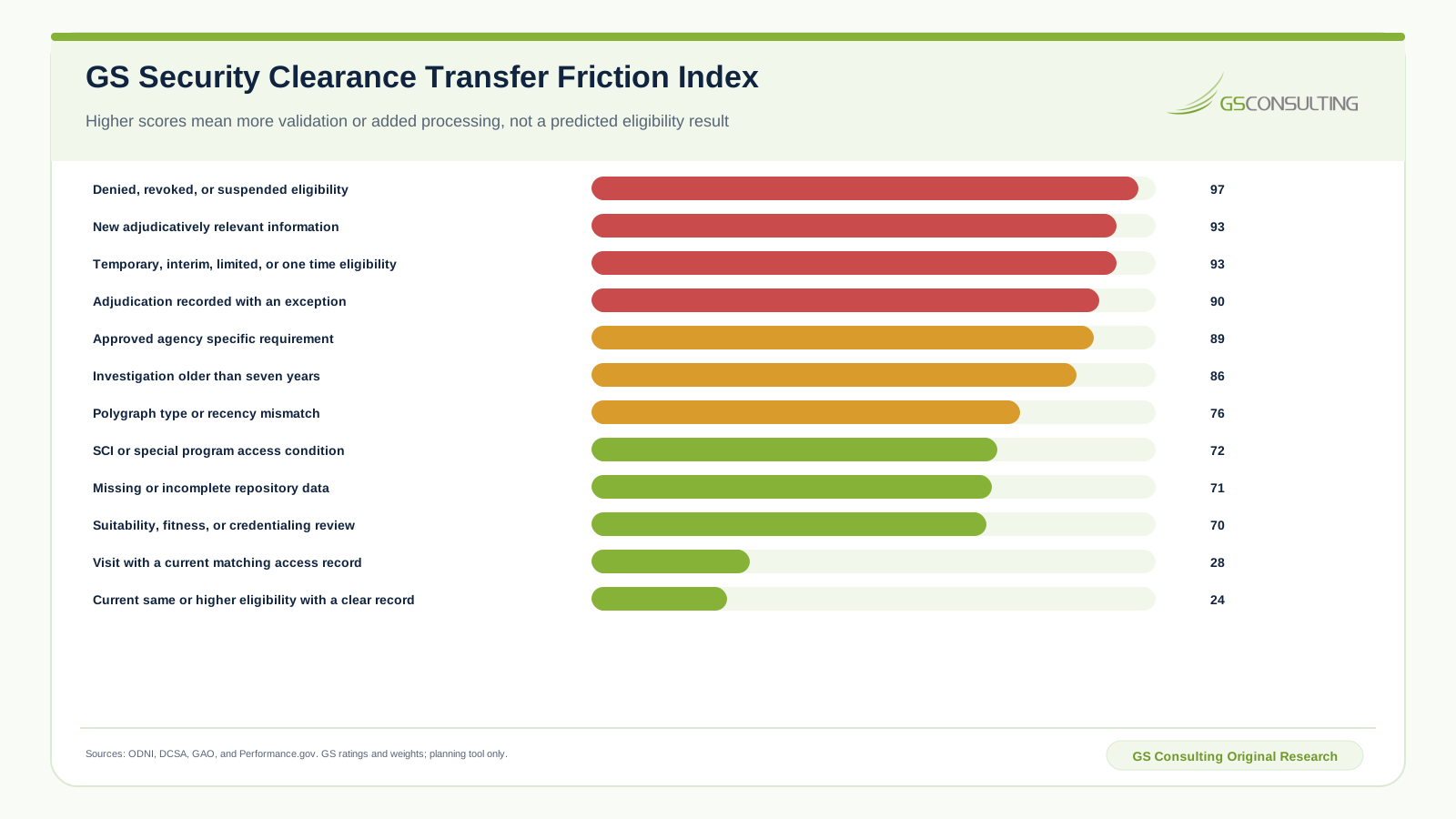
Denied, revoked, or suspended eligibility score 97. New adjudicatively relevant information and temporary, interim, limited, or one time eligibility each score 93. An adjudication recorded with an exception scores 90. An approved agency specific requirement scores 89, and an investigation older than seven years scores 86.
A polygraph type or recency mismatch scores 76. An SCI or special program condition scores 72. Missing or incomplete repository data score 71, and a separate suitability, fitness, or credentialing review scores 70. A visit with a current matching access record scores 28. Current same or higher eligibility with a clear record scores 24.
The alternate case moves five weight points from access dependence to added processing. No score changes by more than two points, and the highest friction conditions remain at the top. The model is stable enough for planning, but it is not a case decision.
What Transfers and What Still Belongs to the Receiver
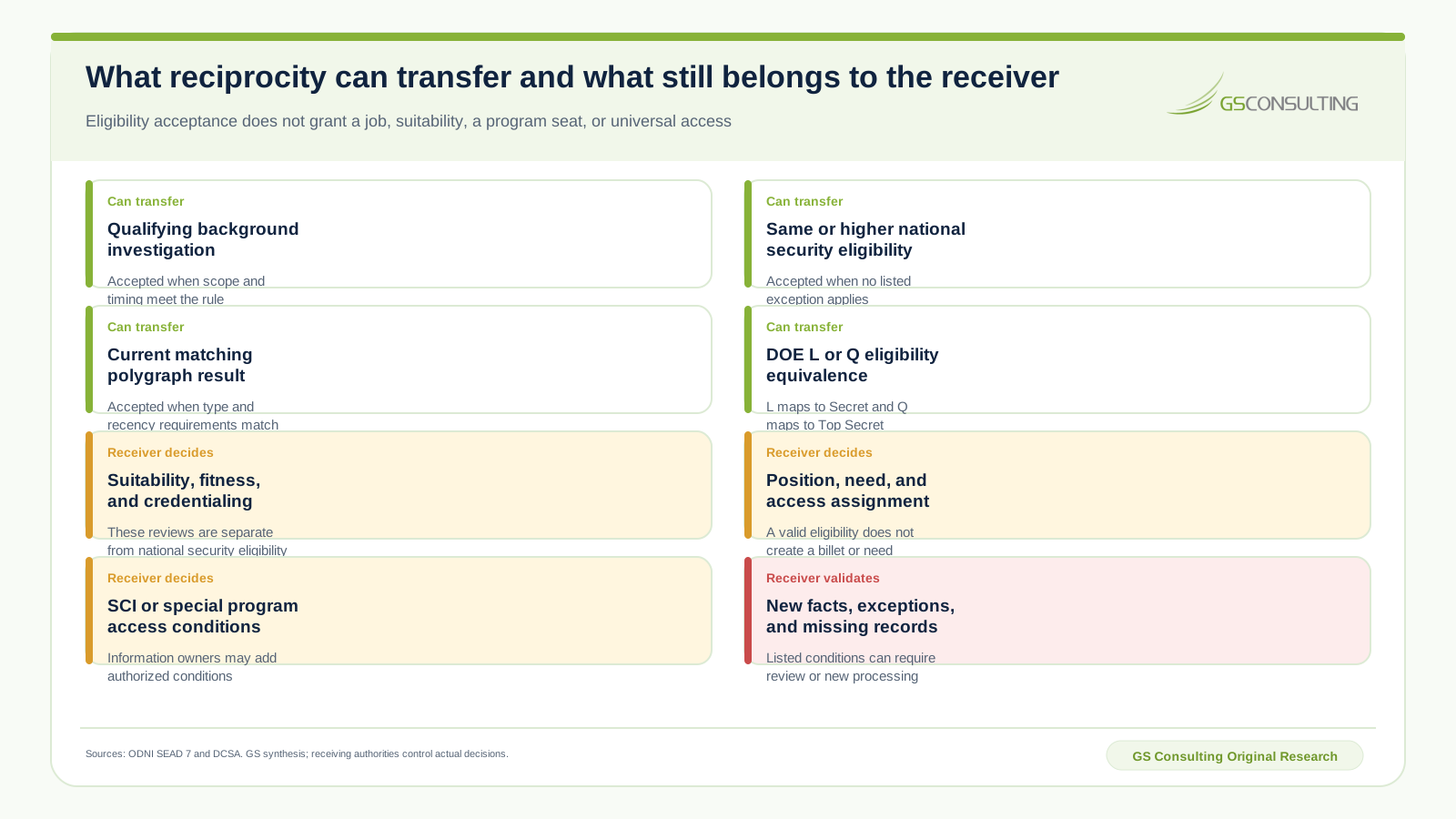
| Item | Reciprocity treatment | Who still decides |
|---|---|---|
| Qualifying investigation | Can be accepted for all or part of the required scope | Receiving personnel security element validates scope and exceptions |
| Same or higher eligibility | Can be accepted when no listed exception applies | Receiving personnel security element records the decision |
| Current matching polygraph | Can receive reciprocal acceptance under SEAD 7 | Receiving authority validates type, recency, and any added need |
| Suitability or fitness | Separate from national security eligibility reciprocity | Receiving employer or agency applies the relevant standard |
| Credentialing | Separate identity and physical or logical access work | Receiving credentialing and access authorities |
| SCI or special program access | Eligibility may transfer, but access conditions can remain | Information owner and receiving program |
| Position and need | Does not transfer as a trust decision | Receiving employer, agency, and program |
| Final access | Not granted by reciprocity alone | Receiving access authority after all required conditions |
Public trust is not a security clearance. A public trust position can involve suitability or fitness work without national security eligibility. Do not describe public trust as Secret or Top Secret, and do not assume a national security eligibility decision completes a public trust or credentialing review.
The Security Clearance Reciprocity Decision Path
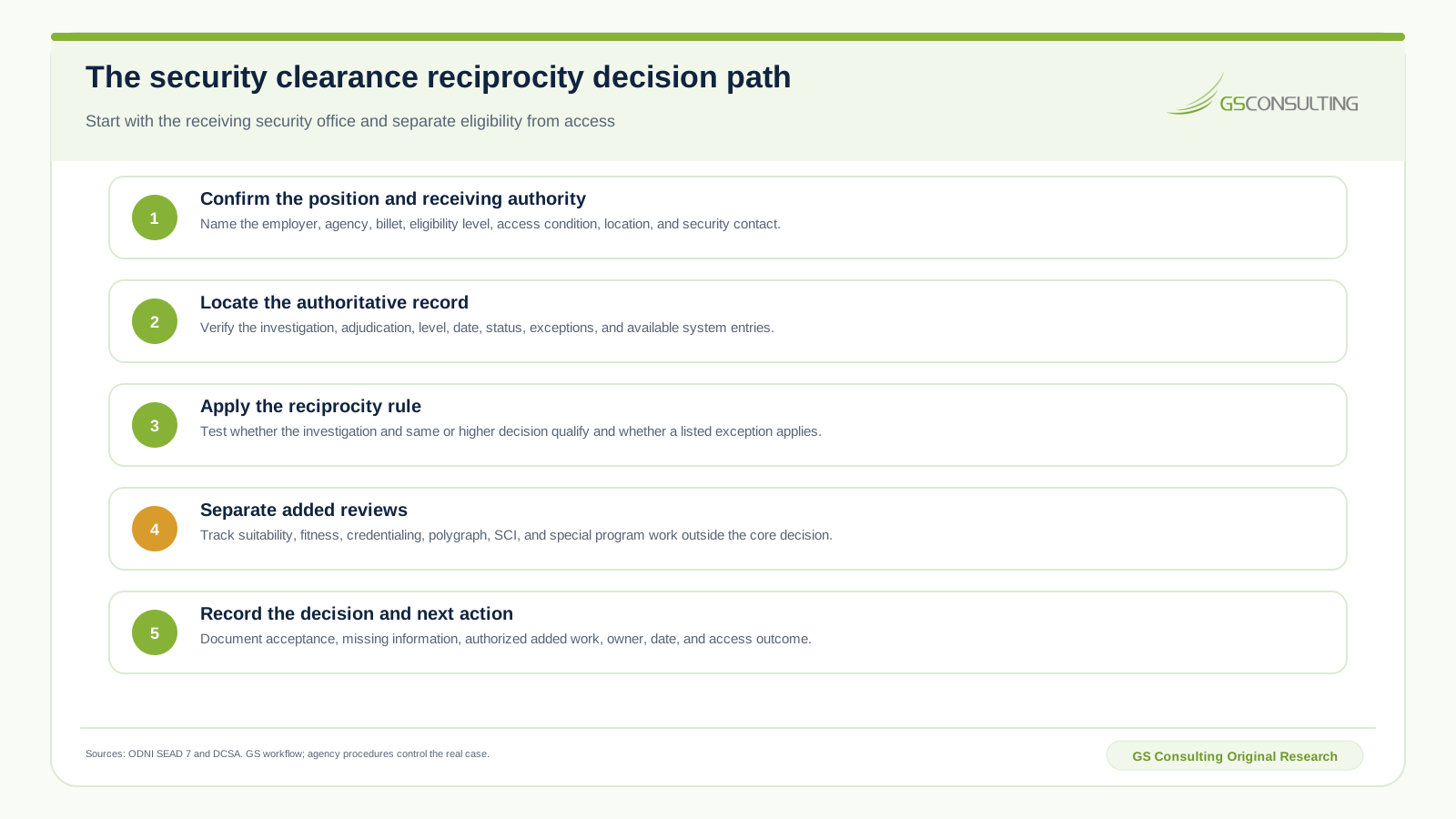
First confirm the real position and receiving authority. Name the employer, agency, billet, and location. Then record the eligibility level, access condition, and security contact. A person cannot create a reciprocity case without a receiving need.
Next locate the authoritative investigation and eligibility records. Validate the level, date, status, exceptions, and repository entries. Then apply the reciprocity rule. If the record qualifies, separate suitability, fitness, and credentialing work. Treat polygraph, SCI, and special program work as separate from the core acceptance decision too.
Finish with a written status. Record what was accepted, what information is missing, what added work is authorized, who owns it, and what the current access outcome is. Recruiters and managers should not translate an incomplete security office review into their own clearance conclusion.
What the Five Business Day Clock Covers
SEAD 7 says the personnel security element should make the reciprocity determination within five business days after receiving the required information. The start event matters. A recruiter receiving a resume is not the same as the personnel security element receiving a complete reciprocity request.
The directive excludes employment, suitability, fitness, and other investigations from that clock. It also treats additional polygraph processing separately. A candidate can therefore have a prompt reciprocity determination and still wait for another authorized condition. The reverse can also happen: the job process is ready while record validation delays the reciprocity decision.
Track clocks separately:
- Receipt: when the receiving personnel security element has the required record.
- Reciprocity determination: acceptance, exception review, or authorized next processing.
- Suitability or fitness: separate employment trust review when applicable.
- Polygraph or program work: added condition with its own owner and status.
- Access: the final receiving decision after need and all conditions are confirmed.
SCI, Special Programs, and Polygraphs
Top Secret eligibility and SCI access are different decisions. SCI is access to controlled intelligence information based on eligibility, need, and information owner rules. A receiving program can require current briefings, access validation, nondisclosure records, or other authorized conditions even when the underlying Top Secret eligibility receives reciprocal acceptance.
Special access programs can impose their own access conditions under authorized policy. Do not list compartments or nonpublic program names in a resume or public profile. State only accurate status that the security office permits for the hiring channel.
SEAD 7 provides for reciprocal acceptance of current and matching polygraph examinations. Type and recency matter. A different requirement can add processing, but the need for that work does not by itself defeat preliminary reciprocity. The additional polygraph time is outside the core reciprocity target.
What a Candidate Can Control
The receiving security office owns the official validation. The candidate owns factual accuracy and response speed. Prepare a short status note that separates eligibility, access, sponsor, and public program type. Add polygraph information when permitted and include the relevant dates. Use cautious language when a fact must be verified.
Do not resign from a current role, accept a start date, or make a relocation commitment solely because someone says the clearance should transfer. Those are separate personal and employment decisions. Ask the authorized receiving contact what has been verified, what remains, who owns it, and whether access is required before work begins.
Keep the resume status line accurate. In the interview, distinguish eligibility from access without speculating about adjudication. A strong answer is precise: prior level, last known status, prior access, date, and the statement that current records must be verified through authorized channels.
Six Reciprocity Failures That Create Avoidable Delay
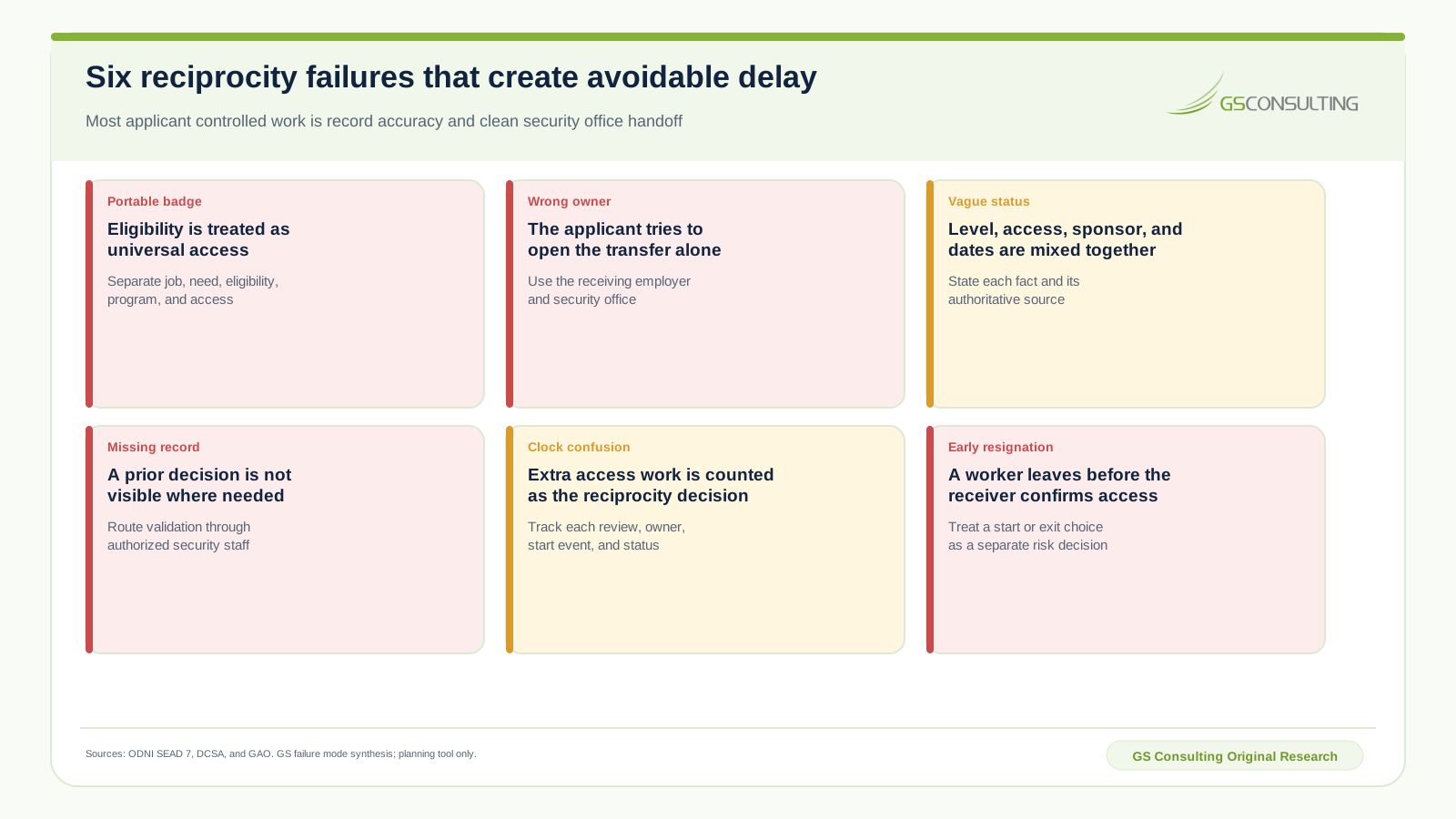
The portable badge error treats eligibility as universal access. The wrong owner error expects the applicant to open and decide the transfer. Vague status mixes clearance level, eligibility, and access. It also collapses the sponsor, program, and dates into one unsupported claim.
A missing record requires authorized validation. Clock confusion counts suitability, polygraph, or program access time as the reciprocity decision. Early resignation turns an expected transfer into a personal deadline before the receiving authority confirms access.
These are not solved by pushing harder on the applicant. They are solved by precise facts, named owners, authoritative systems, separate clocks, and written decisions.
Build the Minimum Viable Reciprocity Transfer Packet
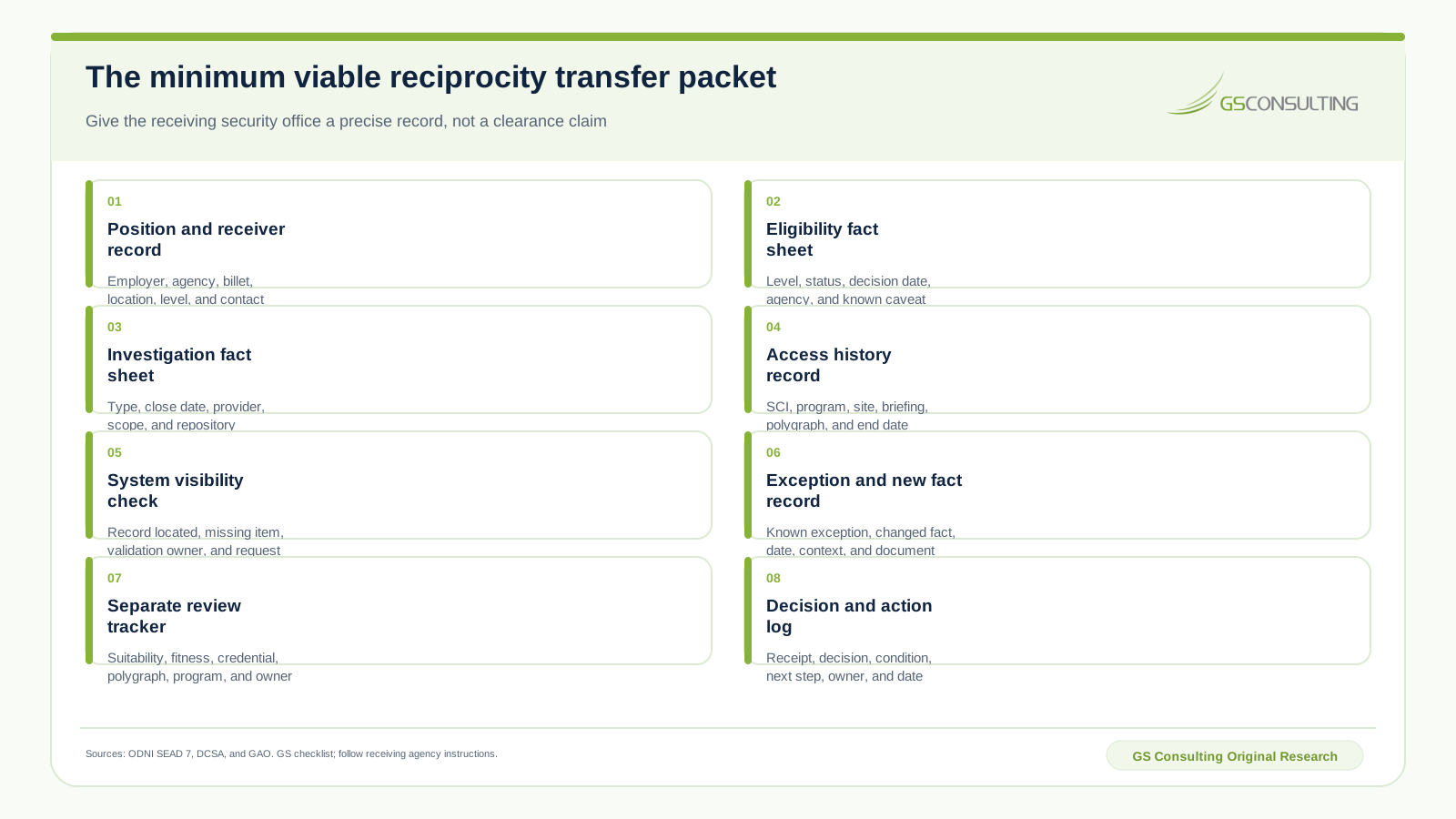
The packet is a working checklist. It is not a substitute for government systems and should not contain classified or otherwise protected material. Begin with the position and receiver record, eligibility fact sheet, investigation fact sheet, and approved access history.
Add the system visibility check, known exception or new fact record, separate review tracker, and decision log. The candidate may only know part of this information. Mark unknown fields for authorized verification rather than guessing.
DCSA DISS guidance explains that security offices use authoritative records to validate investigations, eligibility, and reciprocity. Applicants should route status questions through their sponsoring or receiving security office instead of seeking or sharing restricted system records directly.
A Practical Job Change Checklist
- Confirm the position requires a national security eligibility and identify the receiving security contact.
- State the prior eligibility and access facts separately. Mark the last known date and verification source.
- Ask whether the authoritative investigation and adjudication records are visible to the receiving office.
- Ask whether a SEAD 7 exception, suitability review, credential, polygraph, SCI condition, or special program condition applies.
- Record the owner and status of each separate item. Do not collapse them into one clearance pending label.
- Confirm whether work can begin before final access and who may make that decision.
- Keep protected program details out of email, resumes, public profiles, and informal status notes.
- Make employment and relocation decisions from written facts and your own risk tolerance, not an informal timeline promise.
The Bottom Line
Security clearance reciprocity can prevent duplicate investigation and adjudication work. It cannot create a job, erase an authorized exception, complete a separate suitability review, satisfy every program condition, or grant universal access.
The operating standard is plain: verify the record, separate eligibility from access, and let the receiving authority decide each remaining condition.
Present cleared experience with accuracy and discipline.
GS Consulting looks for professionals who can state what they know, protect what they cannot disclose, and work cleanly through federal security processes.
Explore GS Consulting CareersResearch Sources and Caveats
The GS Security Clearance Transfer Friction Index, transfer matrix, decision path, failure analysis, and transfer packet are GS Consulting derived planning tools. They are based on cited public sources and documented analyst assumptions. They are not official legal, employment, suitability, fitness, or access determinations. They are not clearance, DCSA, ODNI, agency, or adjudicative determinations.
Only authorized government and receiving organization personnel can determine how policy applies to an actual record. Procedures, systems, access conditions, and program requirements can change. Use the current official direction for the receiving agency and position.
- ODNI Security Executive Agent Directive 7
- DCSA Trust Decision Adjudications Frequently Asked Questions
- DCSA Defense Information System for Security Frequently Asked Questions
- GAO 24 105669 Personnel Vetting Reciprocity
- GAO 26 107100 Trusted Workforce 2.0 Implementation
- Performance.gov Trusted Workforce 2.0
- DCSA Service Provider Profile
Frequently Asked Questions
What is security clearance reciprocity?
Security clearance reciprocity is the executive branch policy for accepting qualifying prior background investigations and national security eligibility decisions instead of repeating the same work. The receiving agency still controls the position, need, suitability or fitness, access, and any authorized added requirements.
How long should security clearance reciprocity take?
SEAD 7 says the personnel security element should make the reciprocity determination within five business days after receiving the required information. That clock does not include employment, suitability, fitness, or credentialing. It also excludes polygraph work and separate access processing. The complete hiring or onboarding path can take longer.
What can prevent security clearance reciprocity?
SEAD 7 lists conditions that can require more review or new processing. These include new adjudicatively relevant information, an older investigation, and an adjudication with an exception. Certain disqualifying issues for sensitive access and approved agency specific requirements can also matter. Temporary, limited, denied, revoked, or suspended eligibility requires separate handling.
Does SCI access transfer with a Top Secret clearance?
Not automatically. A qualifying Top Secret eligibility decision may be accepted, but SCI is a separate access decision tied to need and information owner conditions. The receiving program can require current briefings, records, access validation, and other authorized conditions.
Do polygraph results transfer between agencies?
SEAD 7 provides for reciprocal acceptance of current and matching polygraph examinations. A receiving requirement for a different type or recency can add processing. The need for that work does not by itself defeat preliminary reciprocity, and the added polygraph time is outside the core reciprocity clock.
Can an applicant request clearance reciprocity directly?
The practical process normally runs through the receiving employer, agency, and authorized security office because reciprocity supports a real position and access need. An applicant can provide accurate facts and respond quickly, but cannot grant access, edit government records, or make the receiving decision.