Private LLM & Secure RAG | | 25 min read
Private LLM vs RAG: Architecture, Risk, and Cost

Key Takeaways
Choose the responsibility you are prepared to operate
Private LLM and RAG solve different problems
The private model controls the inference boundary. Retrieval connects the request to current approved sources.
The combined pattern carries the largest load
Private LLM with RAG scores 100 on the GS Architecture Responsibility Load Index because every major duty is owned together.
Do not buy architecture by adjective
Select the smallest pattern that meets the data, knowledge, authority, evidence, and recovery requirements of the workload.
Private LLM vs RAG is not a real either or decision. One sets the operating boundary. The other supplies current knowledge.
A team asking whether to choose a private LLM or retrieval augmented generation is mixing two architecture layers. A private LLM decision concerns where model inference runs, who operates it, where data may move, what the provider may retain, and which controls the organization owns. A RAG decision concerns how an application finds approved sources, preserves permissions, selects context, cites evidence, and keeps the answer tied to current information.
You can use a private LLM without RAG. You can use RAG with a managed model. You can use both. You can also need neither. The right answer comes from the workload, not from a preference for private infrastructure or a belief that retrieval cures model risk.
Use the Private LLM and Secure RAG hub to navigate the complete topic. Compare the operating boundary in private LLM deployment options, apply the private LLM security control guide, and test the economics with the private LLM cost model. GS Consulting supports implementation through private LLM and secure RAG consulting.
Choose the architecture from the workload backward.
GS Consulting helps teams define the data boundary, compare model and retrieval patterns, price the full operating system, and build the evidence needed for production approval.
Plan an Architecture ReviewPrivate LLM vs RAG: The Short Answer
Choose a private LLM when the workload needs tighter control over model inference, provider exposure, network paths, retention, administration, or deployment location. Choose RAG when answers must use current, authoritative, or access restricted sources. Choose both when both needs are real and the organization can operate the combined control surface.
Do not use a private model merely because the data is sensitive. A controlled model service with approved terms and a narrow data path may be the better fit. Do not add RAG merely because the answer must be accurate. Retrieval helps when the answer is source dependent, but it can still retrieve the wrong record, miss an important record, ignore current authority, or expose content the requester should not see.
The minimum sufficient architecture is usually the strongest starting point. Every added component creates an owner, a failure mode, a test requirement, a monitoring signal, a recovery step, and an evidence record.
The Core Difference Is Boundary vs Knowledge
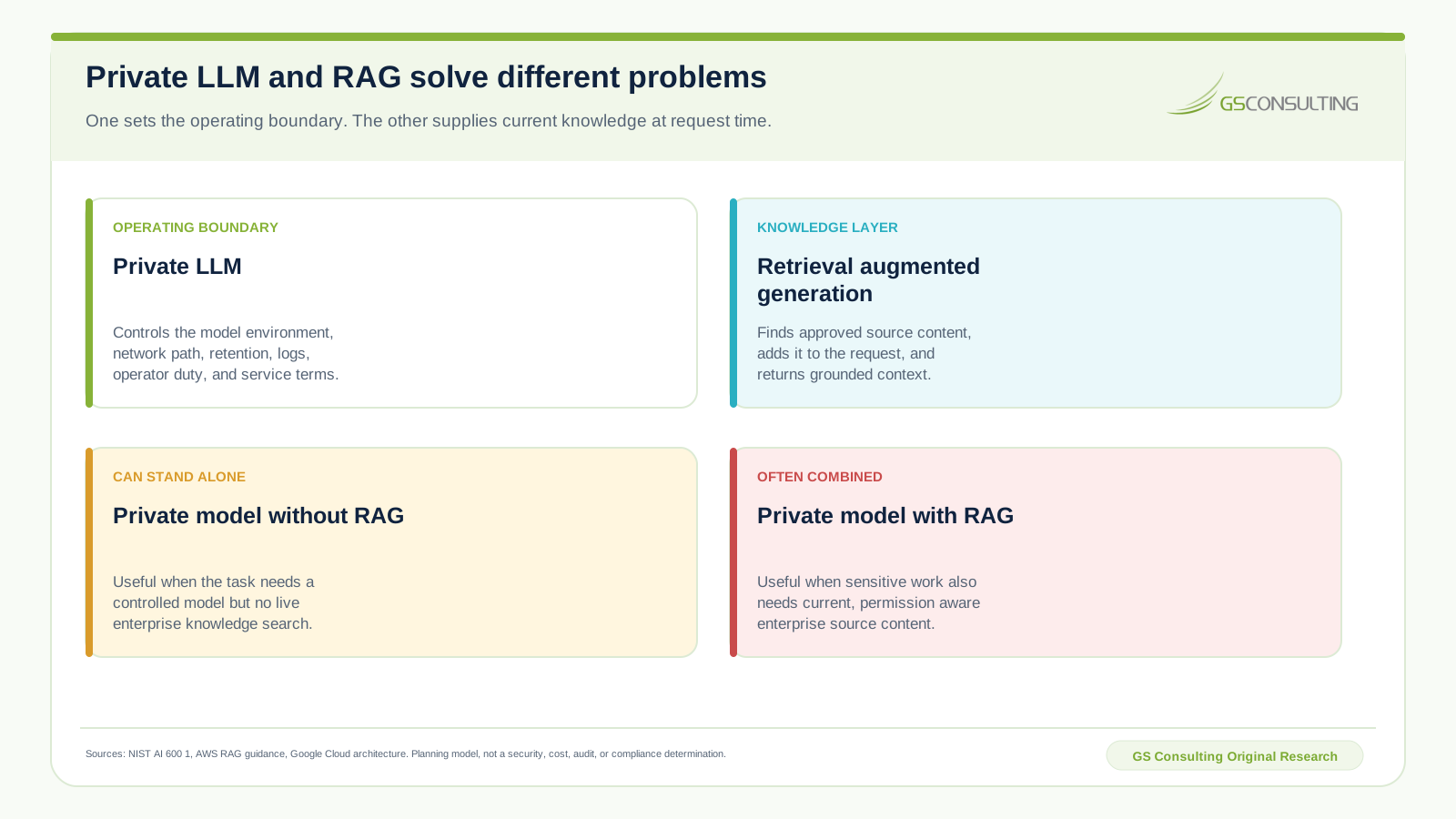
A private LLM can be an open model in infrastructure the organization administers, a dedicated model service inside a controlled tenant, or another deployment with defined privacy and operating boundaries. The word private is incomplete until it resolves to facts about identity, network access, storage, retention, provider access, training reuse, administrative control, logging, support, region, model change, and exit.
RAG is an application pattern. It ingests or connects to sources, creates searchable representations, accepts a query, enforces access, retrieves relevant content, adds that content to a model request, and returns an answer that should identify its sources. The model can be private or managed. The source system can be public, internal, regulated, or mixed.
Training and retrieval are also different. Fine tuning changes model behavior by updating model parameters or adapters. RAG supplies context at request time. Use fine tuning for stable behavior, format, tone, or task adaptation when justified. Use retrieval for changing knowledge and source traceability. Some workloads need both, but neither removes the need for evaluation.
Private LLM vs RAG Side by Side
| Decision | Private LLM | RAG | Private LLM with RAG |
|---|---|---|---|
| Primary purpose | Control model inference and its operating boundary | Ground answers in current approved sources | Control inference and current private knowledge together |
| Knowledge source | Model weights, prompt, and supplied inputs | Retrieved source records plus the model | Retrieved private sources plus the controlled model |
| Main control burden | Model service, infrastructure, retention, access, changes, and operations | Ingestion, source authority, indexes, permissions, retrieval, citations, and evaluation | Every burden in both columns and the seams between them |
| Freshness | Limited by model and input updates | Limited by source and index freshness | Limited by source, index, model, and release freshness |
| Evidence strength | Strong boundary evidence if operations are documented | Strong source evidence if retrieval and citations are reliable | Strongest potential reconstruction with the largest evidence workload |
| Cost pattern | Inference capacity plus model operations and assurance | Model use plus data services, connectors, retrieval, and evaluation | Model capacity, retrieval system, controls, integration, and combined operations |
| Common mistake | Calling a model private without tracing every data path | Treating citations as proof of permission or correctness | Building the maximum architecture before proving workload value |
GS Architecture Responsibility Load Index
GS Consulting built a derived index to compare the responsibility an operator must carry across four common patterns. The model rates six duties on a one to five scale: model boundary, source data, identity and permissions, quality evaluation, operating burden, and evidence burden. The base weights are 20 percent for model boundary, 20 percent for source data, 20 percent for identity and permissions, 15 percent for quality evaluation, 15 percent for operating burden, and 10 percent for evidence burden.
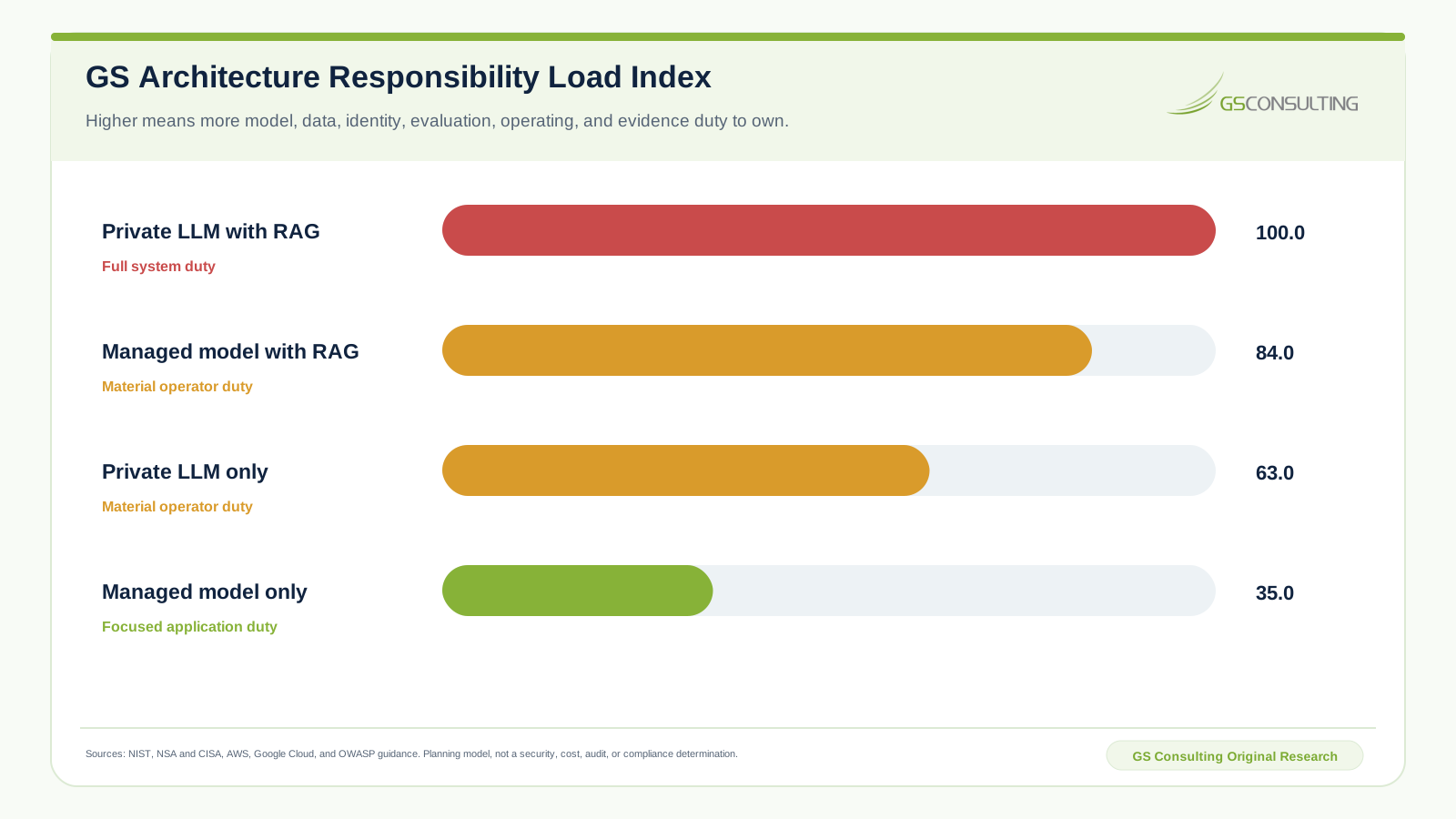
Managed model only scores 35. Private LLM only scores 63. Managed model with RAG scores 84. Private LLM with RAG scores 100. The result is not a product ranking. It measures how much technical, security, quality, operating, and evidence responsibility the organization must own.
The managed model with RAG result deserves attention. Teams sometimes describe it as the easy lane because they do not host the model. In practice, the application still owns source admission, permission enforcement, index separation, retrieval behavior, citations, quality tests, monitoring, and many evidence records. The provider operates inference. The customer still operates the knowledge system.
The sensitivity test moves five percentage points from model boundary to identity and permissions. The ranking does not change and no score moves more than four points. That stability supports the main conclusion: retrieval creates a large responsibility surface regardless of who hosts the model.
The GS Architecture Responsibility Load Index is a derived planning tool based on GS analyst ratings of cited public guidance. It is not an official NIST, NSA, CISA, AWS, Google, OWASP, legal, compliance, security, certification, or procurement determination. Validate the weights and decisions against the actual workload.
Four Architecture Choices That Actually Exist
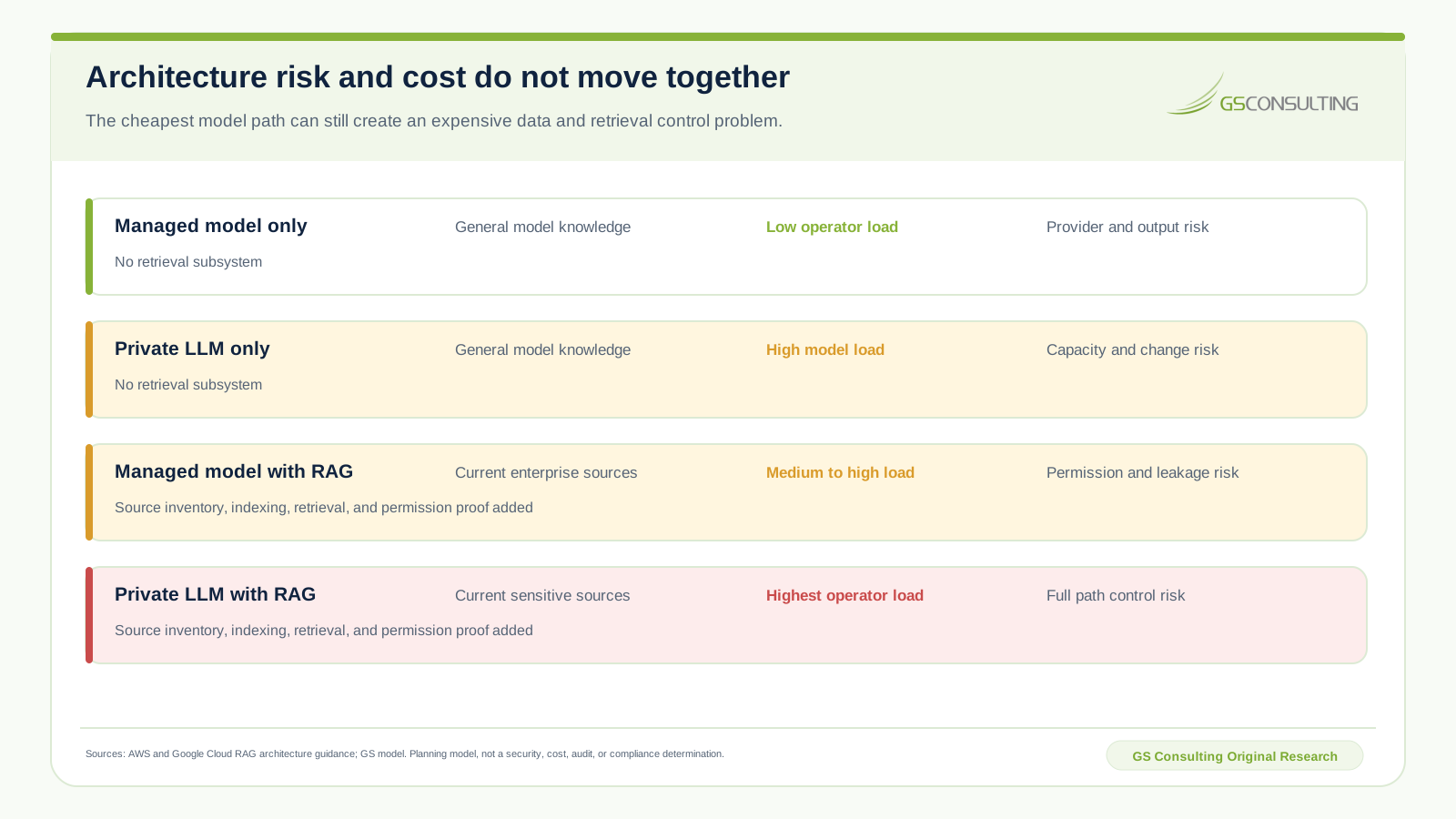
Managed model without RAG
This is the smallest pattern for drafting, classification, transformation, extraction, or other bounded tasks where the approved input contains the needed information. It can be appropriate when provider terms, retention, location, access, and security meet the workload need. Keep the input narrow and test the actual task.
Private LLM without RAG
This fits workloads that need a controlled inference boundary but do not depend on a changing document collection. Examples can include local transformation of approved records, structured extraction, code assistance inside a controlled environment, or analysis where the complete source arrives with each request. The team owns more model operation and must show why that burden is justified.
Managed model with RAG
This fits source dependent assistance where a managed inference service is acceptable. The application must preserve source permissions and keep sensitive content inside approved paths. The design can reduce infrastructure work, but the retrieval system remains a serious production service.
Private LLM with RAG
This is the maximum control pattern for workloads that need a tightly managed model boundary and current private sources. It may fit regulated operations, sensitive research, contract work, internal engineering, or mission support when the data and authority justify the cost. It is not the default. It is a deliberate operating commitment.
Risk Moves When the Architecture Moves
A managed model concentrates risk in provider terms, service access, retention, location, model changes, and outside dependence. A private model moves more of that risk into local configuration, patching, capacity, model artifacts, administrators, monitoring, support, recovery, and technical debt. Risk is redistributed, not erased.
RAG adds a second trust system. Source content must be admitted, classified, parsed, chunked, represented, indexed, refreshed, filtered, retrieved, cited, logged, and deleted. A user who loses access to a source should lose access through retrieval at the same time. A tenant boundary should survive ingestion and query. A document instruction should not gain authority merely because it was retrieved.
OWASP guidance on vector and embedding weaknesses identifies permission, data leakage, poisoning, cross context, and retrieval concerns. Google Cloud guidance for private RAG connectivity shows separate ingestion and inference flows. Those are not diagram details. They are separate control and failure paths.
For regulated data, architecture approval should stay cautious. Confirm the exact contract, data category, system boundary, provider terms, location, users, purpose, controls, evidence, and required authority. A private endpoint, a source citation, or a zero retention claim does not settle the legal or compliance answer.
Compare Full Cost, Not Model Price
Private LLM cost includes infrastructure, capacity headroom, model service engineering, security, evaluation, monitoring, support, incident response, upgrades, model change, and exit. RAG cost includes connectors, data preparation, indexes, embeddings, query services, permission enforcement, refresh, citations, quality tests, source operations, and investigation. The combined pattern pays both bills and the integration cost between them.
Use cost per accepted task, not cost per token, as the decision measure. An answer that is fast and cheap but cannot be trusted, traced, or used creates rework. An expensive answer that supports a high consequence workflow can still be worthwhile. Track total monthly cost, accepted outputs, review time, rejection causes, investigation time, and the work that the system actually replaces or improves.
Do not assume self hosting becomes cheaper at a certain token volume without a real utilization model. Reserved capacity can sit idle. Peak demand can require headroom. Skilled operators are not free. Data and assurance labor often dominate the difference between a demo and a dependable service.
A Decision Path That Starts With the Work
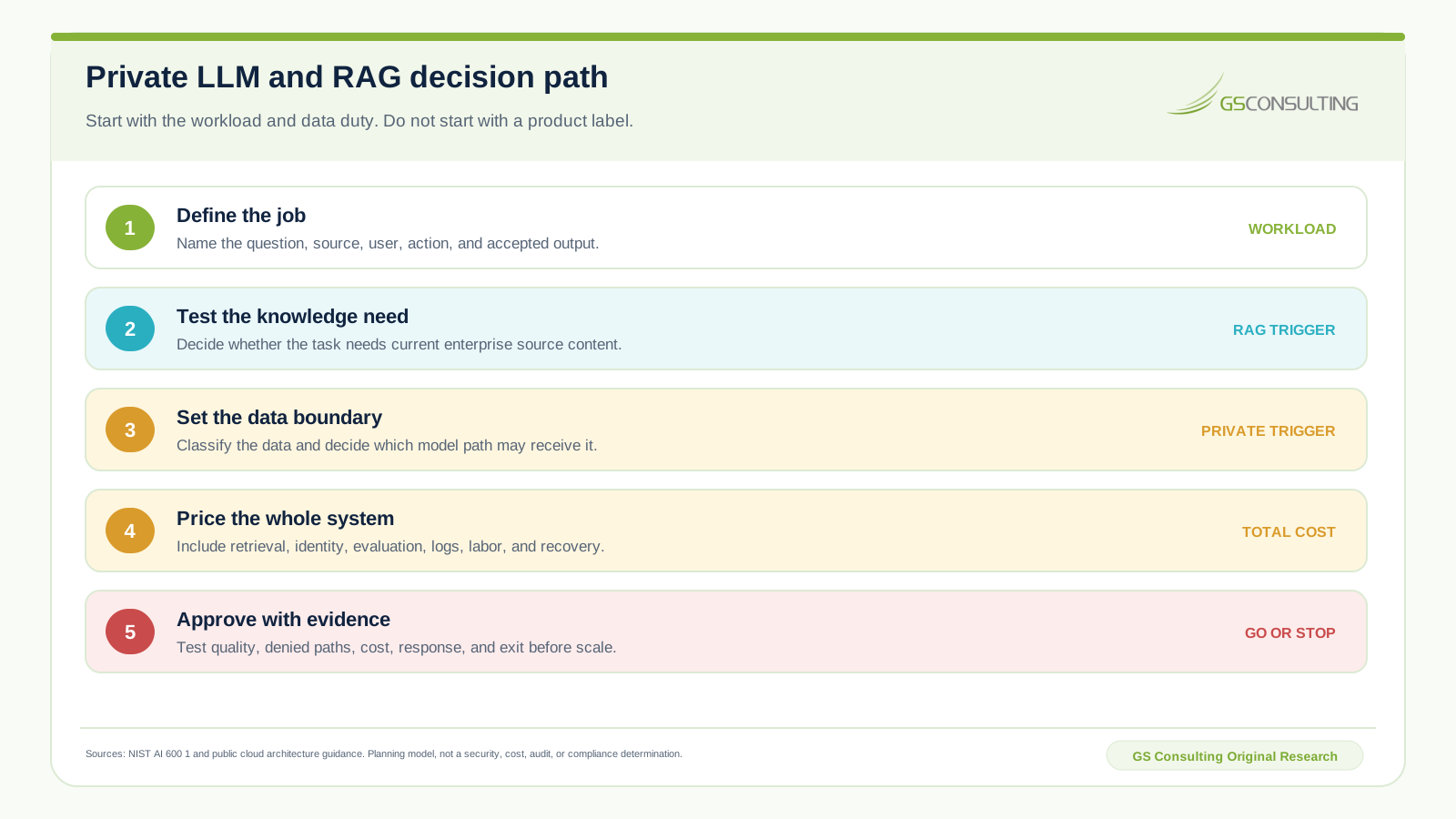
- Define the decision or task. Name the user, input, output, action, consequence, volume, latency, and acceptance test.
- Decide whether current sources are required. If the complete approved input carries the needed information, RAG may add little value.
- Define the model boundary requirement. Test provider terms, retention, location, network, access, support, and model change against the workload.
- Choose the minimum pattern. Avoid private infrastructure and retrieval components that do not resolve a stated requirement.
- Test denied paths and recovery. Prove that unauthorized sources stay out, revoked access stops, wrong answers are caught, and the service can be stopped and restored.
- Price the operating system. Include people, controls, quality, support, incidents, evidence, upgrades, and exit.
Six Ways the Decision Fails
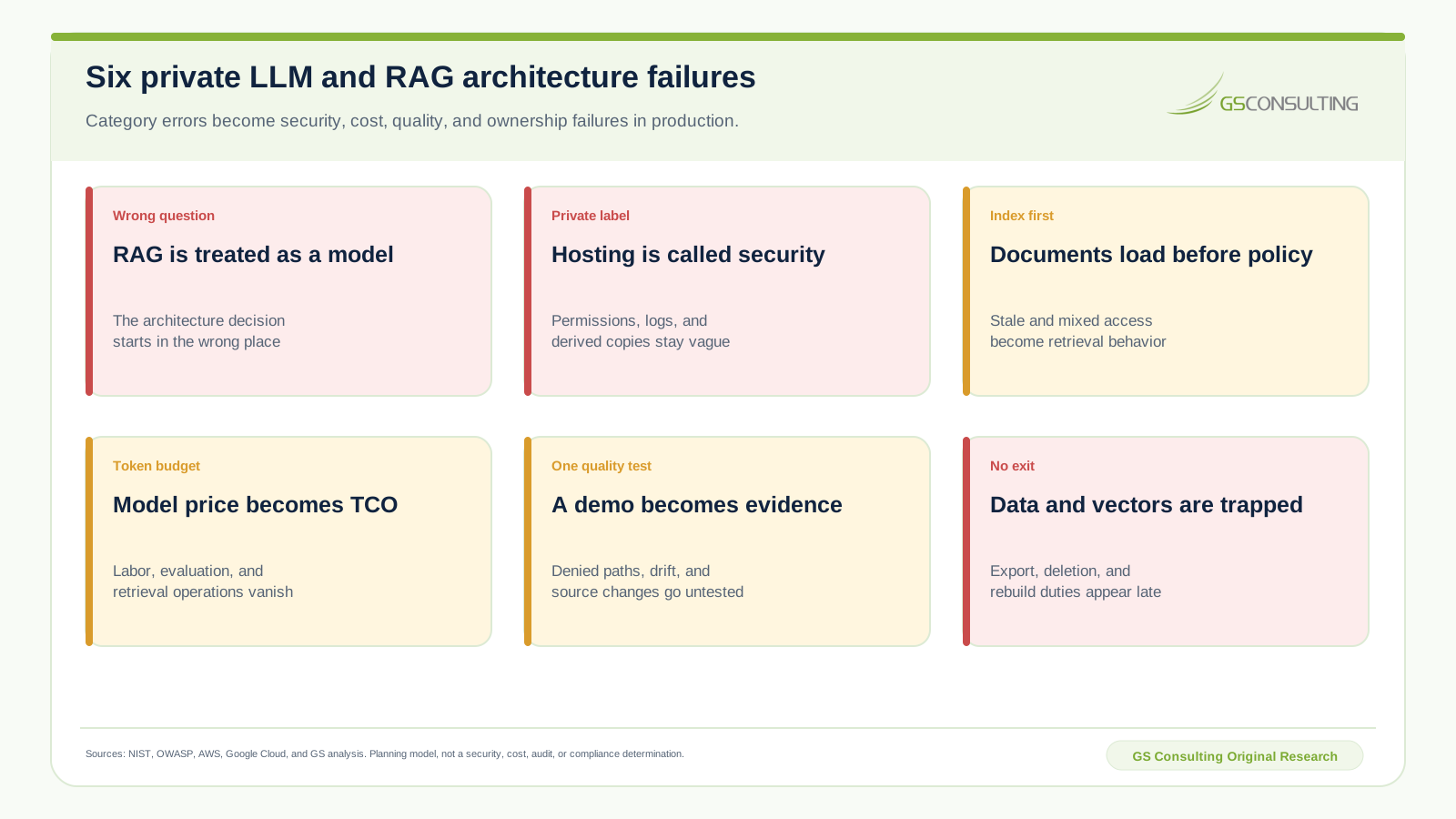
Private by label. The model endpoint is controlled, but prompts, traces, support records, evaluation files, or backups cross the stated boundary.
Retrieval without authority. The index returns content based on relevance while current source permissions are missing, stale, or too broad.
Citations without grounding. The answer lists sources that do not support the claim, or the model blends retrieved facts with unsupported content.
Maximum architecture first. The team builds private inference and RAG before proving that the workflow has enough value, volume, or approved demand.
Model price as total cost. The business case ignores data operations, evaluation, security, review, support, incident work, and unused capacity.
No exit or recovery. The system has no tested path for model replacement, index rebuild, source deletion, incident containment, or service restoration.
A Practical Implementation Plan
First 30 days: prove the boundary and task. Select one workflow. Classify its data. Map users, sources, actions, and consequences. Define acceptance and prohibited behavior. Compare provider and deployment facts. Decide whether current source retrieval is necessary.
Days 31 through 60: build the smallest working lane. Implement identity, source authority, data admission, retention, logging, and a representative evaluation set. Test expected use, denied access, source gaps, injection attempts, wrong answers, and recovery. Record full operating effort.
Days 61 through 90: make the production decision. Measure accepted task cost, review load, retrieval quality, security events, latency, and support. Close ownership gaps. Approve the architecture only when the evidence supports the stated boundary and the team accepts the recurring work.
The Architecture Evidence Packet
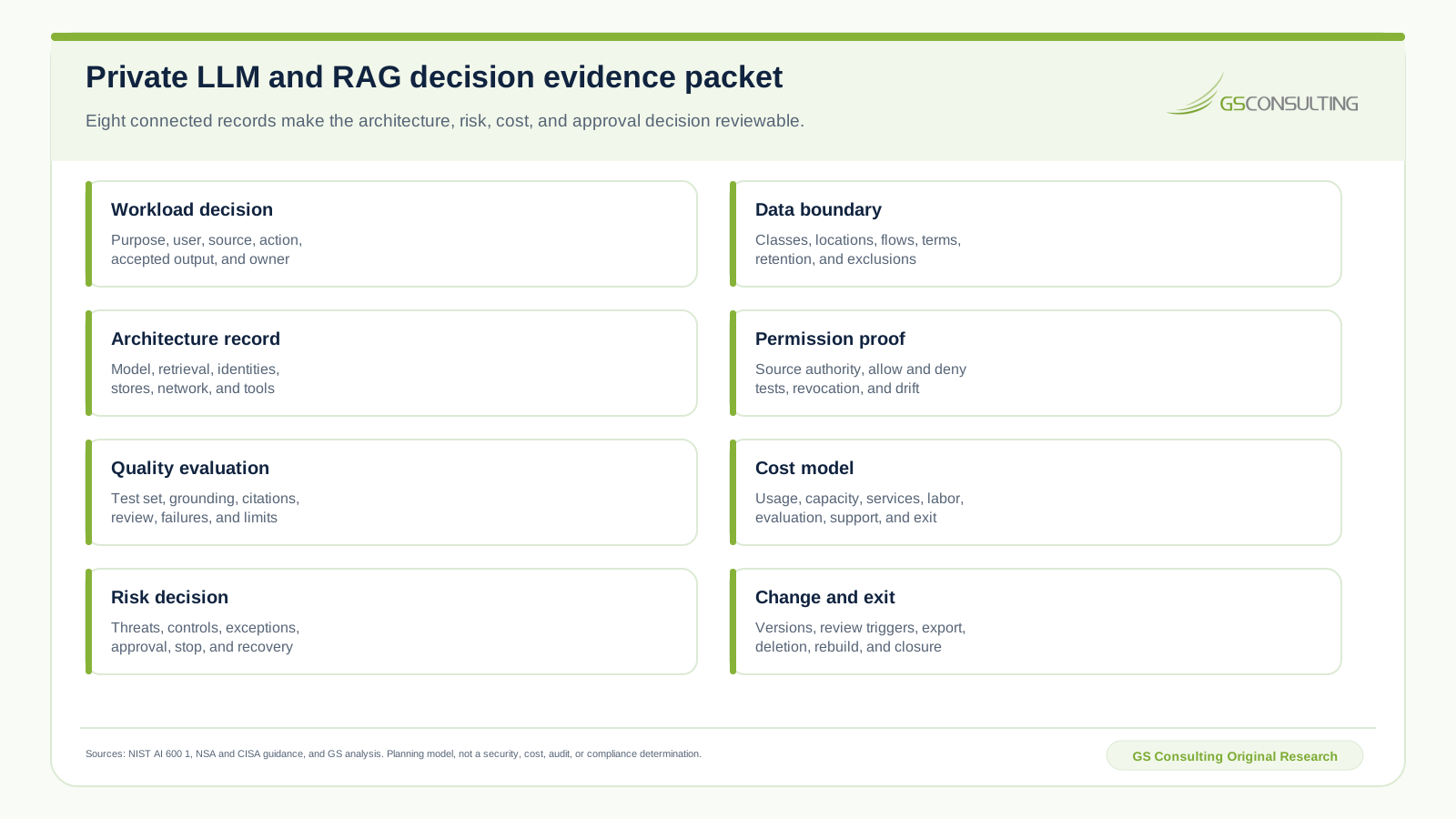
Retain the workload definition, data and authority map, provider and deployment decision, architecture and threat model, evaluation results, cost model, approval and exception record, and recovery and exit test. Connect every record to a named owner and current version.
The evidence packet should answer a blunt question: why is this the smallest architecture that can do the work within the approved boundary? If the answer depends on marketing terms, screenshots, or undocumented assumptions, the decision is not ready.
Sources and Research Method
- NIST AI 600-1, Generative Artificial Intelligence Profile
- NSA, CISA, and partner guidance on AI data security
- AWS Prescriptive Guidance on retrieval augmented generation options
- AWS security guidance for enterprise RAG capability
- Google Cloud private connectivity for RAG capable generative AI
- OWASP Top 10 for LLM applications
The research package includes the source register, public signal extraction, analyst ratings, model inputs, derived scores, sensitivity test, data dictionary, figure data, methodology, and editable figures. Scores are normalized to a 100 point scale. They are planning aids, not measurements of a specific product or deployment.
Private LLM vs RAG FAQ
What is the difference between a private LLM and RAG?
A private LLM is an operating boundary for model inference, data handling, access, retention, and administration. RAG is an application pattern that retrieves approved source content and supplies it to a model for a specific request. They solve different problems and can be used together.
Do you need RAG with a private LLM?
Not always. Use RAG when answers must depend on current, authoritative, or access restricted source material. A private LLM without RAG can fit bounded tasks that rely on the prompt, stable model behavior, and approved structured inputs.
Is RAG more secure than a private LLM?
Neither label proves security. RAG can improve source grounding and reduce the need to place knowledge in model weights, but it adds ingestion, index, permission, retrieval, and citation controls. A private LLM can narrow provider and network exposure, but the operator must secure the complete data and action path.
Is RAG cheaper than hosting a private LLM?
It can be, but the answer depends on usage, model service, source volume, connectors, indexing, permission complexity, evaluation, monitoring, labor, and assurance. RAG does not remove model cost, and private hosting does not remove retrieval cost when both are used.
When should an organization use a private LLM with RAG?
Use both when the model boundary must be tightly controlled and answers must use current private sources with enforceable permissions. The combined pattern carries the highest operating responsibility, so it should be reserved for workloads whose data, mission, or contractual needs justify it.
Can a private LLM with RAG process regulated data?
It may be able to, but that depends on the exact data, contract, law, agency direction, system boundary, provider terms, architecture, location, controls, approvals, and evidence. The architecture name does not establish compliance.
Related Private LLM and RAG Guides
- Private LLM Model Selection for Regulated Workloads
- Private LLM Disaster Recovery and Continuity Planning
- Private LLM Observability
- Private LLM Deployment Options
- Private LLM Security Controls for Regulated Data
- Secure RAG Design Patterns for Enterprise Data
Not private by label. Not grounded by citation. Use the smallest architecture that can preserve authority, pass the tests, recover cleanly, and produce evidence under normal operating pressure.