Private LLM & Secure RAG | | 24 min read
Private LLM Security Controls for Regulated Data

Key Takeaways
Private LLM security is a data path discipline
Identity and data admission both score 97
The highest priority controls decide who can ask and what regulated data the system can receive before the model runs.
Eight data paths need separate decisions
Prompts, retrieval, embeddings, outputs, logs, evaluation data, backups, and actions can each cross the intended boundary.
A boundary claim must resolve to evidence
Architecture, permissions, tests, audit records, response authority, change approval, and deletion proof must tell one consistent story.
Private LLM security is not proved by where the model runs. It is proved by whether the whole data path holds.
A model can sit in a dedicated environment and still expose regulated data through stale retrieval permissions, copied prompts, sensitive logs, support records, evaluation files, backups, injected instructions, overpowered tools, or an incident process with no stop authority. Private hosting narrows one part of the problem. It does not settle the problem.
The stronger standard is plain. Decide what data may enter. Enforce who may ask. Preserve source authority during retrieval. Control every derived copy. Limit what the model and its tools may do. Detect misuse, contain it, recover cleanly, and keep evidence that connects the design to actual operation.
The Private LLM and Secure RAG hub connects this control guide to architecture, deployment, and governance decisions. Start with what a private LLM is, use private LLM vs RAG to choose the architecture layer, apply the private LLM access control architecture to bind source and service authority, use the private LLM evaluation framework to test release gates, apply private LLM observability to reconstruct production decisions, and use the secure RAG design patterns for retrieval details. GS Consulting supports this work through secure AI automation.
Secure the data path before regulated data reaches the model.
GS Consulting helps teams define the boundary, engineer private LLM controls, test denied paths, and build the evidence needed for operational and compliance review.
Plan a Security ReviewPrivate LLM Security: The Short Answer
Secure a private LLM in five gates. First, classify the use case and admit only approved data. Second, bind every request to a current identity, tenant, program, purpose, and source permission. Third, isolate prompts, retrieval, embeddings, outputs, logs, evaluation data, backups, and support records under explicit retention and deletion rules. Fourth, test the model, prompt, retrieval, tools, and denied paths while monitoring for leakage and unusual authority. Fifth, preserve audit reconstruction, containment, recovery, change approval, and exit proof.
Do not begin with a generic control checklist. Begin with the exact data, consequence, user, system, provider, and action. A question answering assistant over public manuals does not need the same control burden as a system that reads controlled contract files and drafts decisions. The system boundary should reflect the real workload, not the ambition in a product brief.
For regulated data, cautious scope language matters. A private LLM may support a compliant design, but no hosting pattern establishes compliance by itself. Contract clauses, laws, agency direction, data location, service terms, system scope, control implementation, evidence, and assessment method still govern the answer.
Private Hosting Covers One Service, Not the Data Path
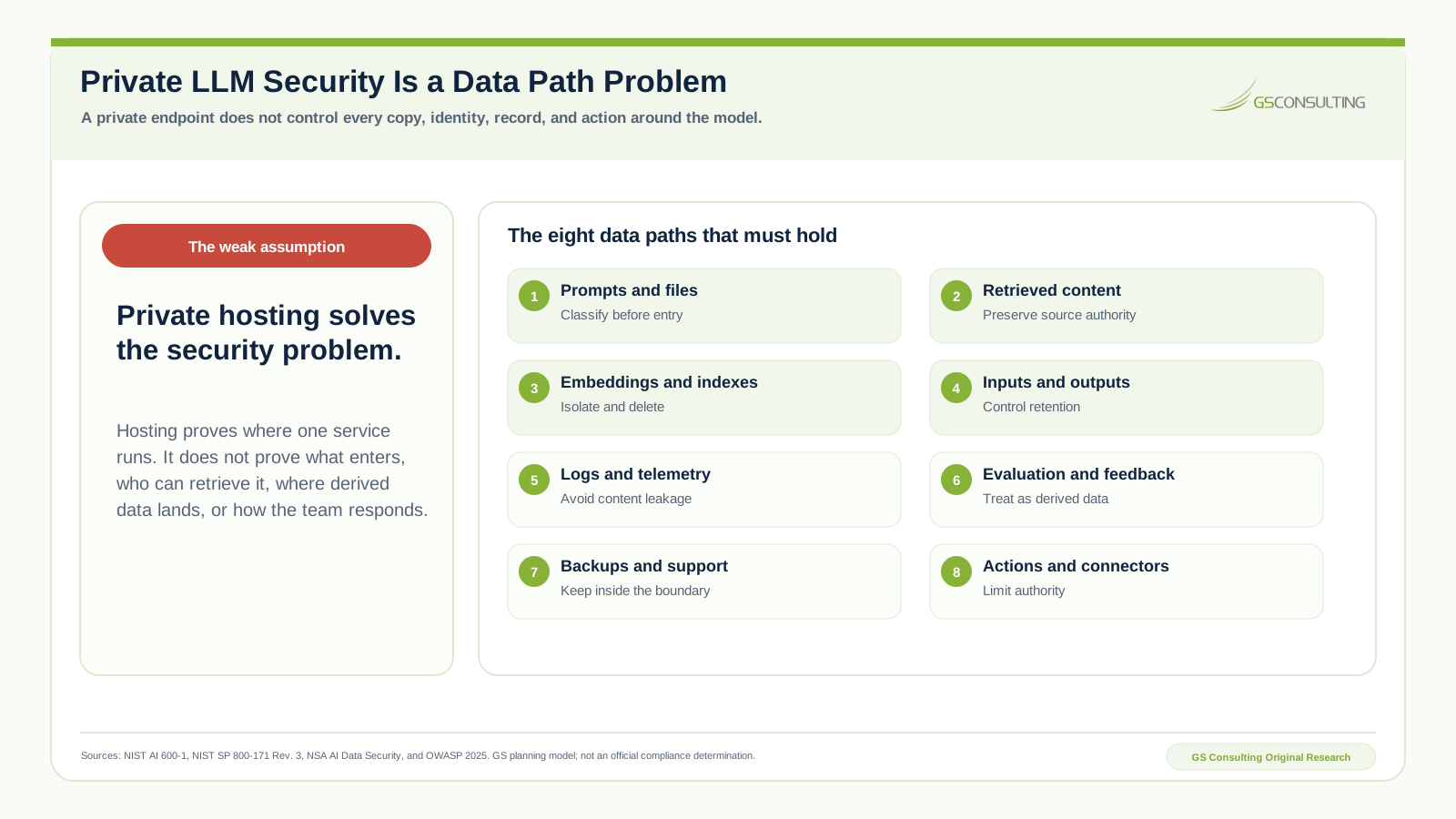
Draw the data flow from the user to the final action. Include uploaded files, system prompts, retrieval queries, source documents, chunks, embeddings, indexes, caches, model inputs, model outputs, traces, feedback, evaluation sets, backups, support records, connectors, and downstream actions. Mark every storage location, network path, service, identity, tenant, region, retention period, and owner.
Then test the boundary statement against that drawing. If the claim says data stays in an approved environment, ask whether traces, support artifacts, evaluation data, and backups also stay there. If the claim says source permissions are preserved, ask how an access revocation reaches the index. If the claim says prompts are not retained, ask what the application, model service, observability stack, and incident process each record.
NSA, CISA, and international partner guidance on AI data security treats data provenance, integrity, access, monitoring, and lifecycle protection as connected concerns. NIST AI 600-1 adds generative AI risks around privacy, information integrity, evaluation, incident response, and outside dependencies. Neither source says a private endpoint closes the data path.
GS Private LLM Control Priority Index
GS Consulting built a derived index to answer an operator question: which private LLM security controls should a regulated data program establish first? The model scores twelve control domains on source convergence at 30 percent, prevention leverage at 25 percent, detection and recovery value at 15 percent, evidence strength at 15 percent, and regulated data relevance at 15 percent. Each input is a one to five GS analyst rating tied to the public sources listed below.
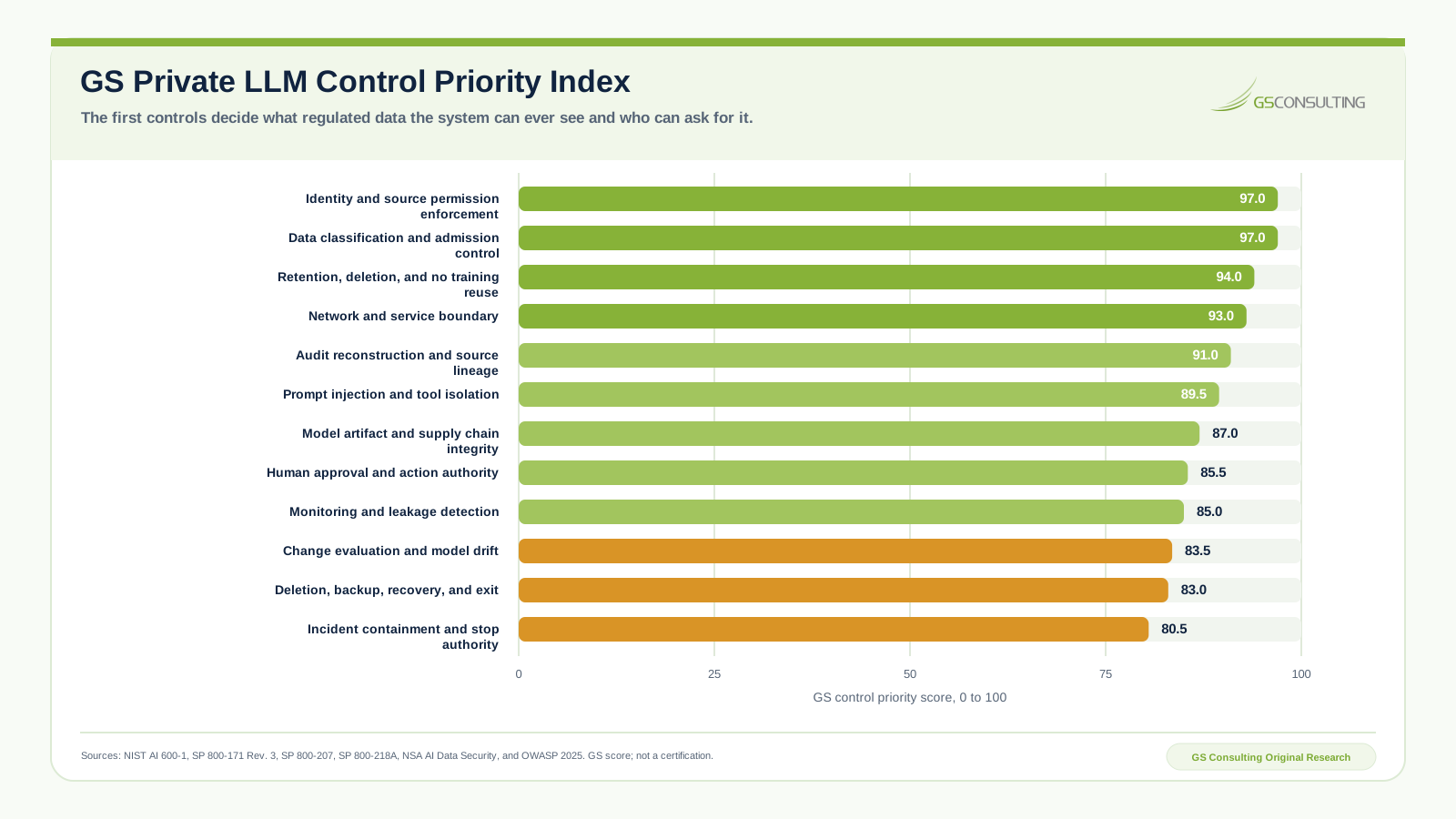
Identity and source permission enforcement scores 97. Data classification and admission control also scores 97. Retention, deletion, and no training reuse scores 94. The network and service boundary scores 93. These four controls form the first gate because they decide who can ask, what can enter, where the system can move it, and how long each copy may remain.
Audit reconstruction and source lineage scores 91. Prompt injection and tool isolation scores 89.5. Model artifact and supply chain integrity scores 87. Human approval and action authority scores 85.5. Monitoring and leakage detection scores 85. These controls make the system observable and keep an answer from becoming unreviewed authority.
Change evaluation, deletion and recovery, and incident stop authority score lower only in the sequence, not in importance. A production system needs all twelve. The index ranks implementation leverage. It does not assign a security grade.
The sensitivity test moves five percentage points from source convergence and prevention toward detection, recovery, and evidence. No score moves more than two points. The four gate controls stay at the top, while audit reconstruction moves slightly higher. The stable result supports sequencing without pretending the weights are universal.
The GS Private LLM Control Priority Index is a derived planning tool. It is not an official NIST, NSA, CISA, OWASP, legal, privacy, audit, compliance, certification, or regulatory determination. Replace analyst ratings with system evidence, contract facts, incident history, and approved risk decisions.
Five Control Gates for Regulated Data
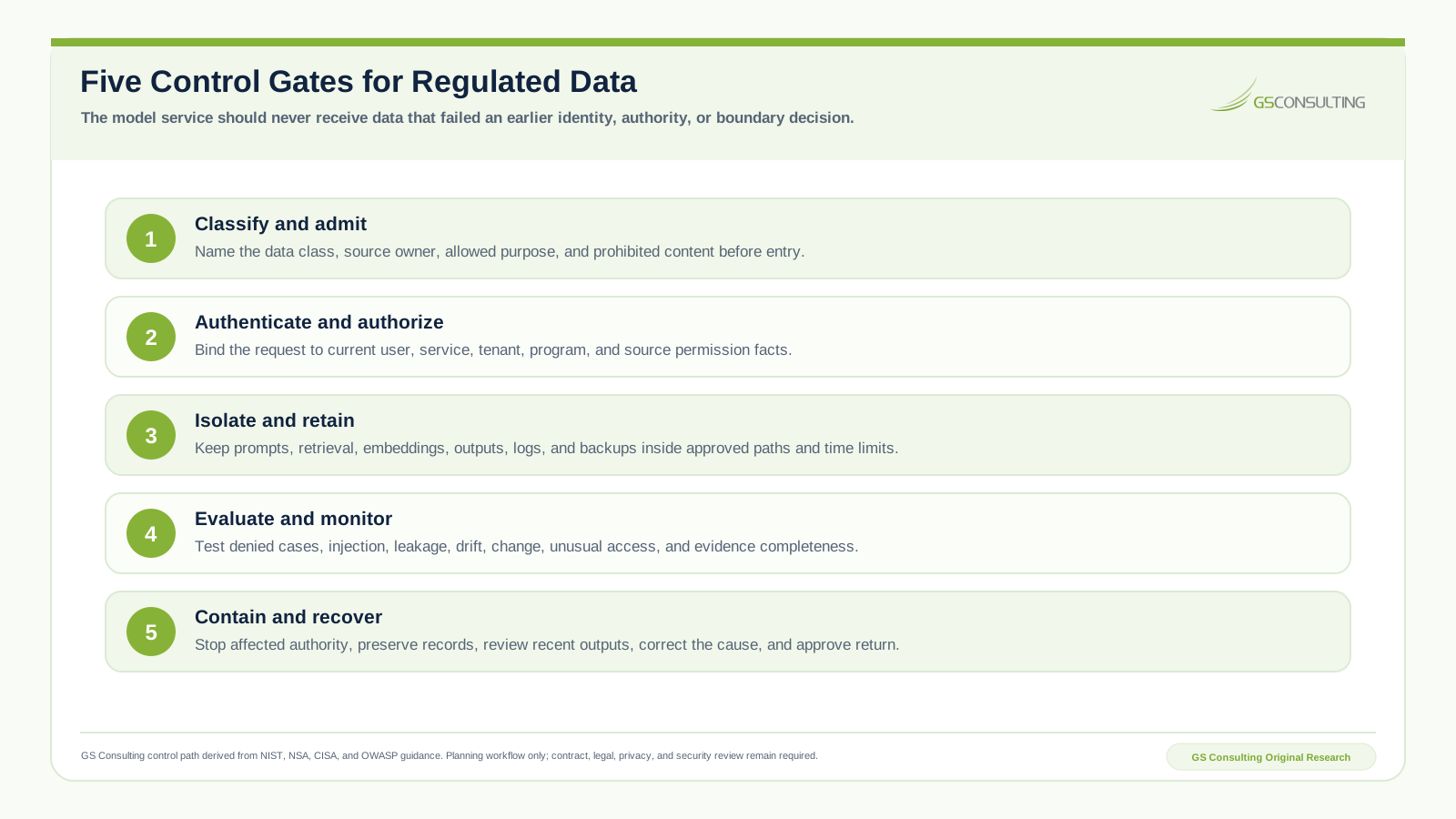
Classify and admit. Name the use, data owner, data classes, approved sources, prohibited content, purpose, output, and consequence before access begins. Admission rules should exist in the user experience and the service path. A warning banner alone is not an admission control.
Authenticate and authorize. Bind the request to a current user or service, tenant, program, role, purpose, and source permission. Recheck authority when the query runs and when a tool acts. Avoid broad shared identities that erase accountability.
Isolate and retain. Keep prompts, retrieval, embeddings, outputs, logs, backups, evaluation data, and support records inside approved services, regions, and time limits. The deletion rule should cover derived copies and recovery media, not only the application record.
Evaluate and monitor. Test useful answers and denied cases. Include prompt injection, sensitive disclosure, stale rights, tenant crossing, malformed content, unexpected tools, model change, unusual access, and incomplete evidence. Monitoring needs thresholds and owners, not a dashboard nobody watches.
Contain and recover. Give named people authority to stop access, disable connectors, quarantine an index, block affected output use, preserve records, correct the cause, and approve return. A provider status page is not the organization’s response plan.
Identity and Retrieval Must Preserve Source Authority
A secure retrieval system does not copy documents into a new permission universe. It preserves the source owner’s current decision. At query time, the retrieval layer should evaluate the requester, tenant, program, role, purpose, document permission, and any relevant data condition. A user who lost access at the source should not keep access through an old vector index.
Build a permission propagation test with representative allow and deny cases. Include new access, revoked access, transferred ownership, expired guest access, changed program assignment, separated staff, service identities, and documents with mixed permissions. Measure how long each change takes to affect retrieval. Record the maximum acceptable delay and what happens when synchronization fails.
Tenant isolation needs a negative test. Try a valid user in the wrong tenant, a service credential without the program claim, a manipulated retrieval filter, an old signed token, and a direct call around the application. The test should fail at more than one layer where practical. One application filter is a fragile boundary.
NIST SP 800-207 frames access as a resource and session decision, not a trusted network assumption. That is the useful private LLM lesson. Location can inform policy. It should not replace identity, resource authority, or continuous evaluation.
Control Every Derived Copy
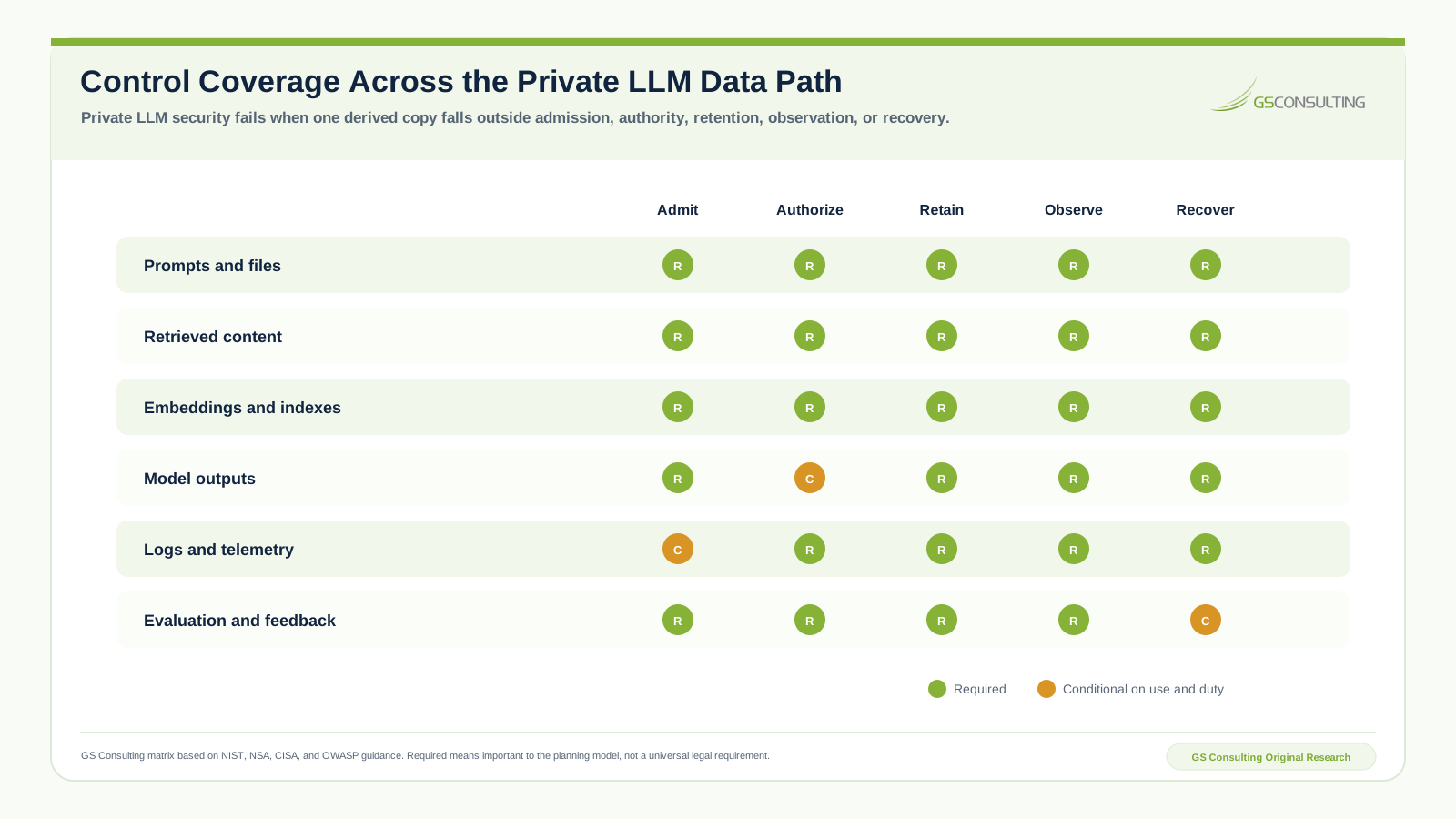
Prompts and files. Classify before entry. Limit file types and size. Scan for malicious content where appropriate. Separate user content from system instructions. Record the accepted purpose and reject content that the system is not approved to process.
Retrieved content. Preserve source identity, authority, version, and provenance. Keep enough lineage to explain which record supported an answer. Detect stale or deleted source material and rebuild affected index entries without widening access during the repair.
Embeddings and indexes. Treat them as controlled derived data. Their risk depends on source sensitivity, reversibility, linkage, tenant isolation, and access. Define location, encryption, identity, backup, deletion, and rebuild procedures. Do not assume that transformed data has lost its sensitivity.
Inputs and outputs. Set separate retention rules. A regulated input may require minimal retention, while a final approved output may become an official record. Name when an output is draft, who must review it, where it may be stored, and when it may drive a business action.
Logs and evaluation data. Prefer event facts, identifiers, policy outcomes, hashes, and bounded samples over routine full content capture. When content is needed for investigation or evaluation, establish the purpose, access, retention, approval, and deletion. Feedback is not harmless merely because a user clicked a rating.
Backups and support. Include them in the boundary and deletion plan. Confirm which parties can access support records, where they are stored, what diagnostic content they contain, and how export or deletion works at contract end.
Secure the Model, Prompt, Retrieval, and Tool Chain
Record the exact model, weights or service version, region, provider, endpoint, system prompt, retrieval configuration, connector set, tool permissions, and evaluation result approved for production. A generic model family name is not enough to reconstruct an outcome or review a change.
NIST SP 800-218A separates duties across model producers, system producers, and acquirers. Use that split in contracts and operating records. The provider may secure model development and service infrastructure while the customer still owns data admission, identity, retrieval, prompts, tools, review, evidence, and downstream action.
OWASP’s 2025 LLM risk list is useful for adverse testing. Prompt injection, sensitive disclosure, supply chain weakness, data and model poisoning, improper output handling, excessive agency, system prompt leakage, vector weakness, misinformation, and unbounded consumption appear in application paths that private hosting does not remove.
Treat retrieved documents and tool results as untrusted content. Separate instructions from data. Restrict tools by identity and purpose. Validate arguments and outputs outside the model. Require human approval before high consequence actions. Cap volume, time, spend, and authority. A model recommendation should not become an irreversible action because the connector accepted fluent text.
Monitor for Leakage, Misuse, Drift, and Broken Evidence
Monitoring should answer four questions. Is the wrong person asking? Is the system reaching the wrong data? Is the model revealing or acting beyond the approved purpose? Can the team reconstruct what happened? Build alerts around denied access, unusual query volume, rare sources, sensitive output patterns, permission synchronization failure, connector use, model or prompt change, and gaps in required records.
Do not send sensitive prompt and response bodies into a broad observability service by default. Log the minimum facts needed for security, quality, operation, and accountability. Escalate to controlled content capture only through an approved investigation or evaluation path.
Define stop authority before production. The response team should know how to block a user, service, tenant, document source, index, model version, prompt version, or connector. It should also know how to identify recent affected outputs, preserve evidence, notify the right owners, restore a clean state, and approve return.
Review change as a security event. A new model, prompt, retrieval setting, embedding method, source, permission mapping, tool, or provider term can change the boundary. Require a scoped evaluation, access test, evidence check, rollback path, and named approval before the change reaches regulated work.
Map Private LLM Security to the Actual Regulated Data Duty
For controlled unclassified information, NIST SP 800-171 Revision 3 is a central security reference for many nonfederal systems, but applicability depends on contracts, agreements, data, and the actual system boundary. Map relevant access, audit, configuration, incident, media, supply chain, and system protection requirements to the complete private LLM architecture.
Do not claim that the model itself is compliant. Assess the system that receives, retrieves, transforms, records, stores, transmits, and acts on the data. Include identity providers, user applications, model services, vector stores, data sources, logs, evaluation tools, connectors, support channels, backups, and administrators.
For privacy, export control, health, financial, law enforcement, or other regulated data, use the same discipline and different governing facts. Name the specific duty, covered data, person, purpose, location, retention, disclosure, decision, and evidence. Legal and compliance counsel should determine obligations. Engineering and operations should make the approved decision observable and repeatable.
A practical review table connects each control claim to five records: design, configuration, test, operating evidence, and exception history. If one record is missing, state the limitation. Preparation should be strong even when a legal conclusion remains cautious.
Six Failures That Break a Private Boundary
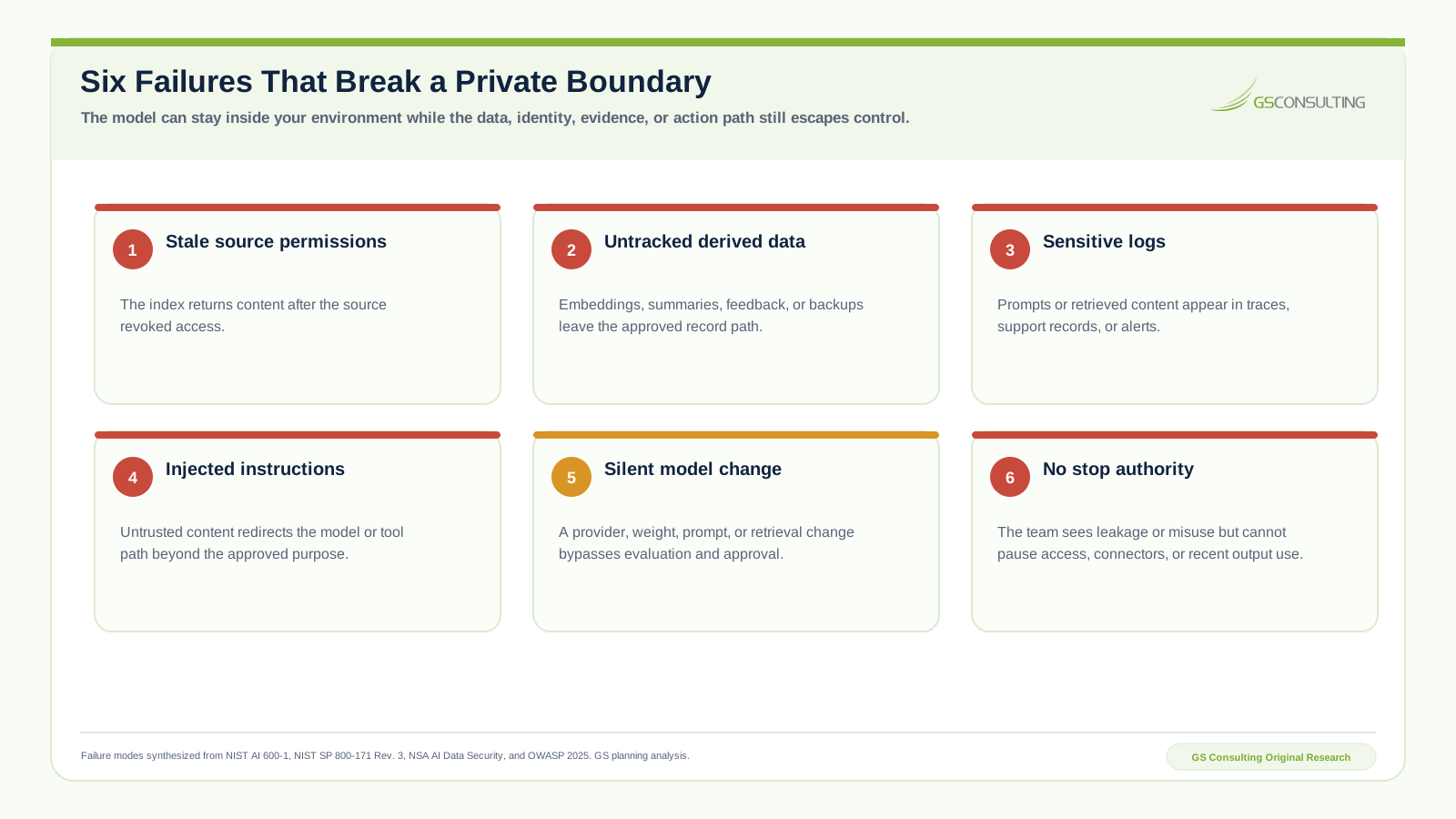
Stale source permissions. The index keeps returning content after the source revoked access. The application appears secure until a denied user asks through retrieval.
Untracked derived data. Embeddings, summaries, feedback, evaluation sets, or backups leave the approved record path. The original document is controlled while its useful derivatives are not.
Sensitive logs. Prompts or retrieved records land in traces, alerts, or support tickets that have broader access and longer retention than the main service.
Injected instructions. An untrusted document or tool result redirects the model beyond the approved purpose. The network stays private while the instruction boundary fails.
Silent model change. A provider, weight, prompt, retrieval, or connector change reaches production without evaluation, permission tests, evidence review, or approval.
No stop authority. The team sees leakage or misuse but cannot pause access, connectors, recent output use, or the affected index quickly enough to contain harm.
The Private LLM Security Evidence Packet
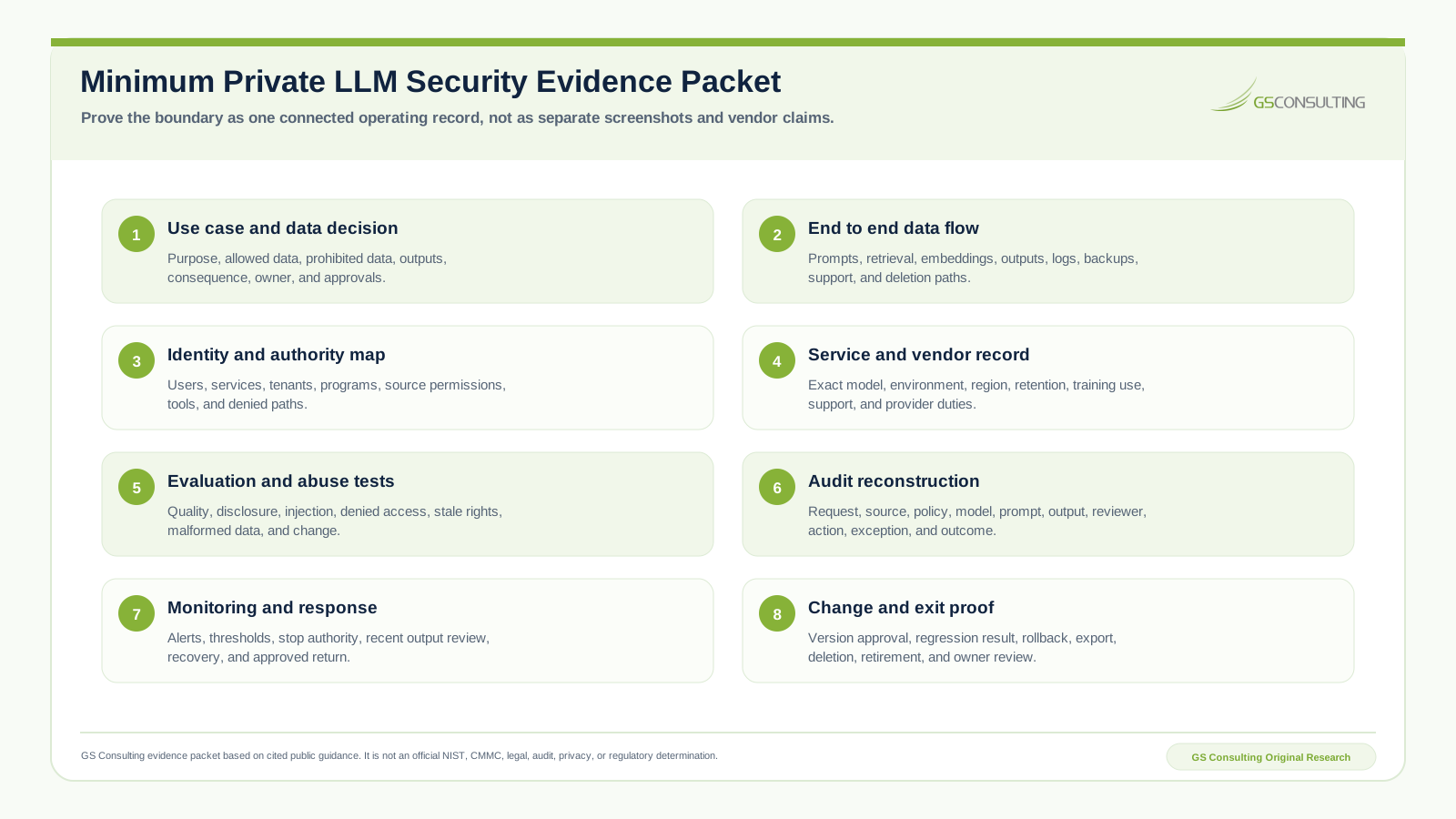
The minimum packet contains the use case and data decision, an end to end data flow, an identity and authority map, a service and vendor record, evaluation and abuse tests, audit reconstruction, monitoring and response records, and change and exit proof.
Every record needs an owner, date, scope, source, version, result, approval, and review trigger. Link them. A model change should resolve to its risk decision, evaluation, access test, configuration, approval, deployment record, monitoring period, rollback option, and updated evidence. A permission incident should resolve to the affected source, identity, index, requests, outputs, actions, containment, correction, and return decision.
Keep the evidence current through operation. A complete launch packet becomes stale when the model, prompt, source, provider term, permission design, connector, or retention rule changes. Review cadence should follow risk and change, not the calendar alone.
Bottom Line
Private deployment can be a valuable boundary choice. It is not a complete security result. The real control surface includes every identity, data copy, source permission, model artifact, prompt, tool, log, backup, response action, and change around the service.
The decisive standard is this: no regulated data enters without an approved purpose, no request bypasses current authority, no derived copy escapes its rule, no high consequence action runs without control, and no security claim survives without current evidence.
Make the private boundary real.
GS Consulting helps teams turn private LLM architecture into tested controls, bounded authority, disciplined operation, and evidence that can withstand scrutiny.
Request a Private LLM ReviewSources and Method Note
- NIST AI 600-1 Generative Artificial Intelligence Profile
- NIST SP 800-171 Revision 3
- NIST SP 800-207 Zero Trust Architecture
- NIST SP 800-218A Secure Software Development Practices for Generative AI
- NSA, CISA, and partner AI Data Security guidance
- OWASP Top 10 for LLMs and Generative AI Applications 2025
GS Consulting Original Research. The GS Private LLM Control Priority Index is a derived planning model based on cited public guidance and documented analyst assumptions. It is not an official legal, privacy, audit, certification, compliance, NIST, NSA, CISA, OWASP, or regulatory determination. Verify contracts, system scope, current guidance, provider terms, and implemented controls before use with regulated data.
Frequently Asked Questions
Is a private LLM automatically secure?
No. Private deployment can narrow some provider and network exposure, but security still depends on data admission, identity, source permissions, retention, logs, model artifacts, tools, monitoring, response, recovery, and evidence. The complete data path matters more than the hosting label.
What are the most important private LLM security controls?
Start with identity and source permission enforcement, data classification and admission control, retention and deletion rules, and the network and service boundary. Then add audit reconstruction, prompt injection and tool isolation, model artifact integrity, human approval, monitoring, change evaluation, recovery, and stop authority.
Can a private LLM process regulated data?
It may be able to, but the answer depends on the exact data, contract, law, service terms, architecture, system boundary, users, purpose, retention, location, control implementation, and required approvals. Private deployment alone does not establish that processing is permitted or compliant.
How should retrieval permissions work in a private LLM?
The retrieval layer should enforce current source authority for the requesting user or service at query time. Tenant, program, role, purpose, and document permissions should remain effective after indexing, and revoked access should stop retrieval without waiting for a broad rebuild.
What should private LLM audit logs contain?
A useful record connects the requester, service, tenant, policy decision, source records, retrieval result, model and prompt version, output, reviewer, tool action, exception, and outcome. Logs should avoid copying sensitive content unless the approved evidence need requires it.
How often should private LLM security be reviewed?
Review critical access, exceptions, incidents, and drift continuously or on a risk based cadence. Run focused review after model, prompt, retrieval, permission, connector, provider, retention, or architecture changes. Set formal recurring reviews based on contract, risk, and operating tempo.