Private LLM & Secure RAG | | 28 min read
Private LLM Red Teaming: Test the Whole System, Not Just the Model

Key Takeaways
A model can pass every prompt test while the application still fails
Injection and data leakage score 100
Both can cross the boundary between untrusted content, sensitive sources, and consequential actions.
Test every connected layer
Retrieval, memory, identities, tools, outputs, logging, support access, and recovery belong in the exercise.
A fix must become a regression case
Reproduce the finding, correct the path, retest it, test adjacent paths, and retain the case after release.
Private LLM red teaming is not a contest to make the model say something strange. It is an authorized attempt to make the complete system cross a boundary that matters.
The narrow exercise attacks a chat window with clever prompts. The useful exercise follows hostile instructions through files, web content, retrieval, memory, service identities, tools, output rendering, logs, and human support. It asks whether one manipulated input can reach protected data, trigger an action, survive into later sessions, or hide from response teams.
Test the model alone and you learn about the model. Test the application path and you learn whether the business system can resist, detect, contain, correct, and recover from an attack.
This guide belongs to the Private LLM and Secure RAG hub and supports the private LLM and secure RAG implementation service. Use it with the private LLM data governance guide, private LLM access control architecture, and private LLM evaluation framework.
Would one hostile document expose a hidden system path?
GS Consulting helps teams map attack paths, build safe scenarios, reproduce findings, verify corrections, and turn confirmed failures into regression evidence.
Request a Private LLM Fit CheckPrivate LLM Red Teaming: The Short Answer
Authorize the exercise. Name the protected decisions, data, identities, tools, and actions. Map every entry point and trust boundary. Build scenarios that combine direct prompts, indirect instructions, poisoned sources, wrong identities, denied actions, partial failures, and realistic user behavior. Capture enough evidence to reproduce the path. Contain the effect, correct the root cause, test adjacent paths, and keep the case in the regression suite.
A finding is useful only when it changes an operating decision. Each material result should lead to release, limitation, pause, correction, monitoring, or accepted residual risk with a named owner. A list of successful jailbreaks without architecture context, impact, evidence, and retest is theater.
The Attack Surface Extends Beyond the Prompt
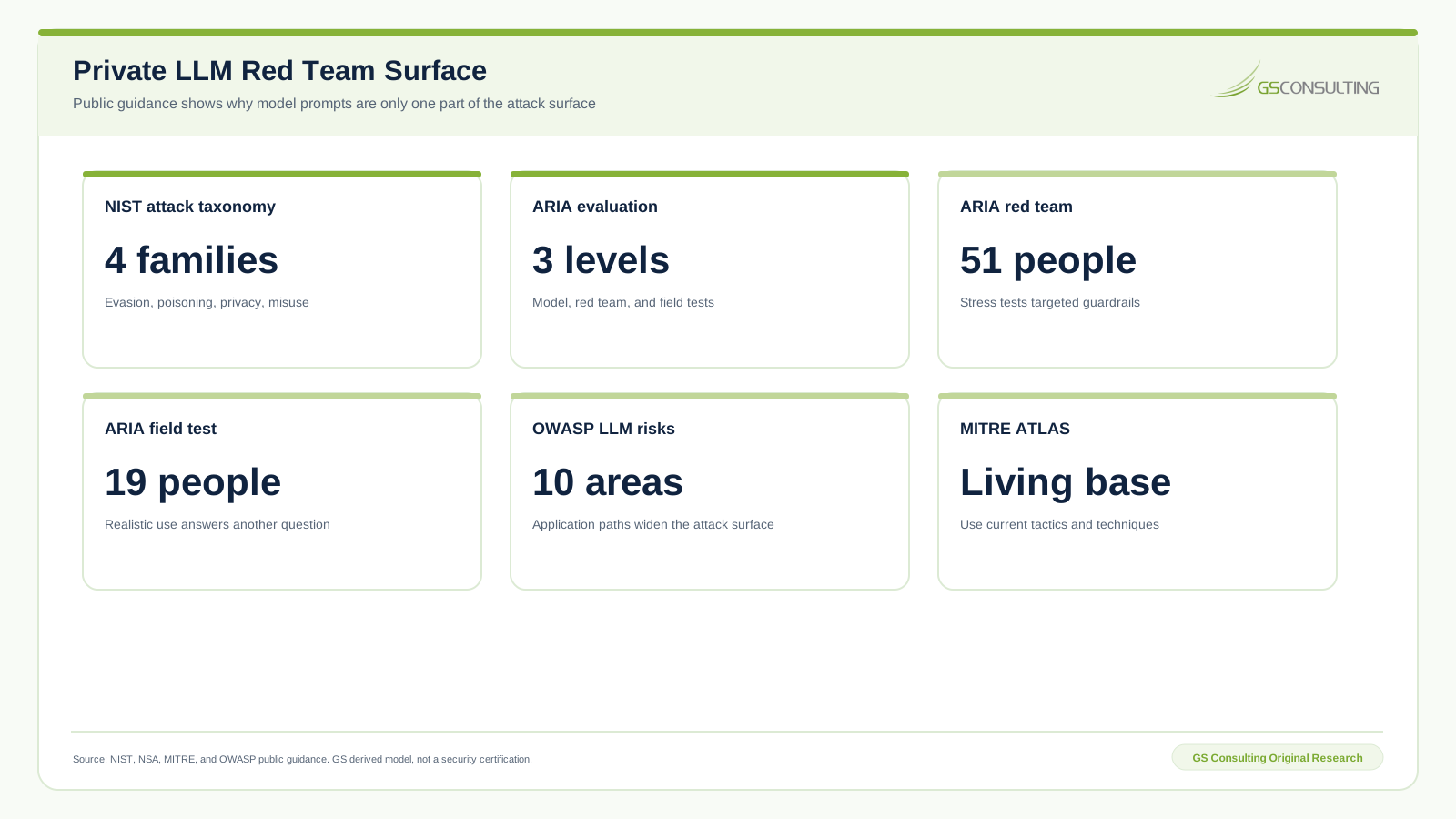
NIST AI 100-2 e2025 organizes attacks on generative AI around evasion, poisoning, privacy, and misuse. NIST AI 700-2 separates model testing, red teaming, and field testing. Its pilot included 51 red team participants and 19 field testers, a useful reminder that adversarial analysis and realistic user interaction answer different questions.
The OWASP Top 10 for LLM and generative AI applications describes risks across prompts, outputs, data, models, tools, and resources. MITRE ATLAS provides a living knowledge base of adversary tactics and techniques. Use both to widen the scenario catalog, then adapt them to the actual architecture.
GS Private LLM Red Team Coverage Priority Index
GS scored ten attack domains using five one to five ratings: harm consequence, exploitability, reach across layers, detectability gap, and recovery pressure. Base weights are 30, 25, 20, 15, and 10 percent. Each result is rounded to a whole point on a zero to 100 planning scale.
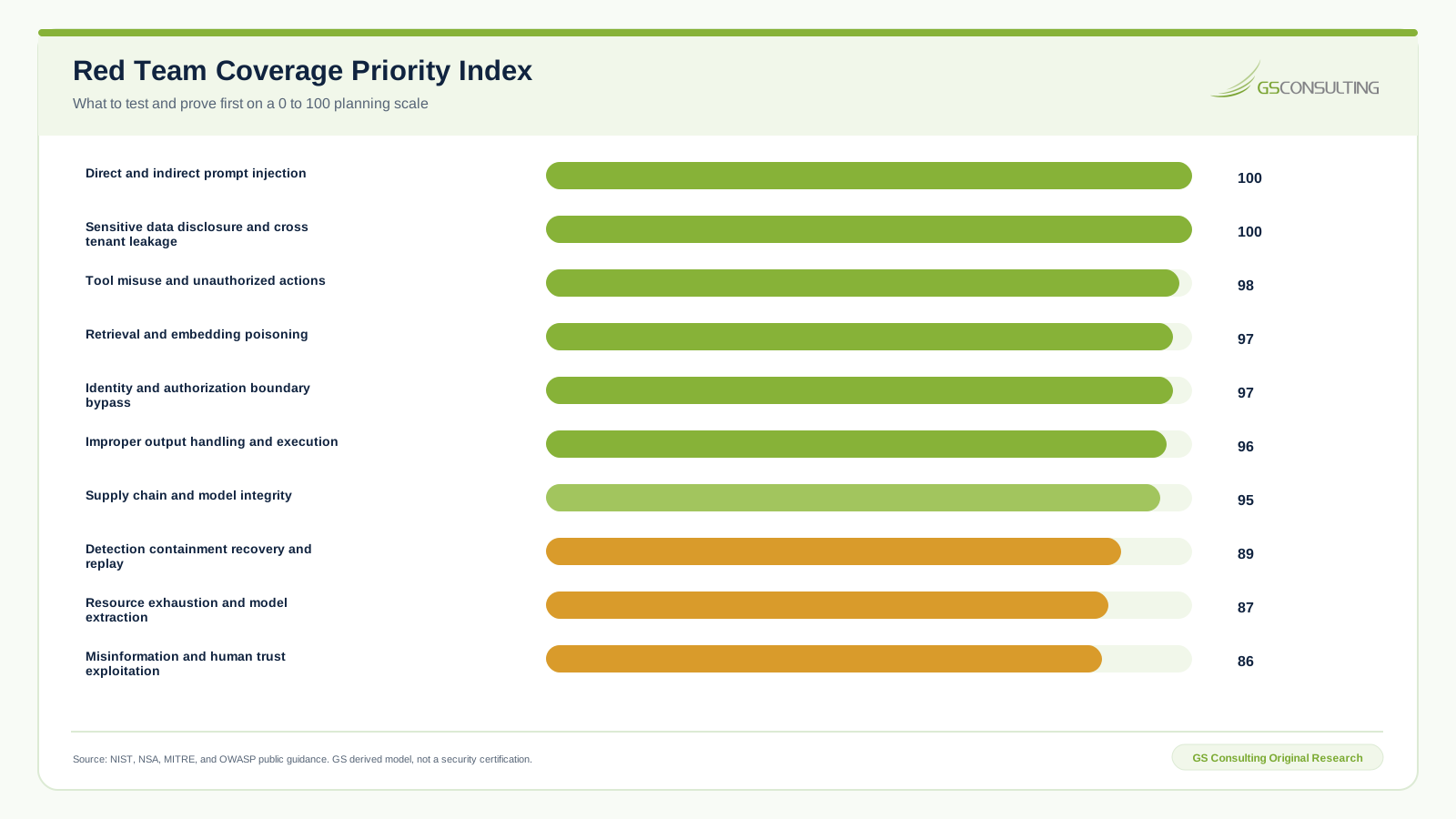
Prompt injection and sensitive data disclosure both score 100. Tool misuse scores 98. Retrieval poisoning and authorization bypass score 97. Improper output handling scores 96. These paths deserve release gates because one successful chain can reach unrelated data, actions, or users.
Supply chain and model integrity scores 95. Detection, containment, recovery, and replay scores 89. Resource exhaustion and model extraction scores 87. Misinformation and human trust exploitation scores 86. The lower group still belongs in the plan. The score orders effort; it does not declare a safe remainder.
The sensitivity case moves five percentage points from harm consequence to recovery pressure. No result moves more than one point, and the leading tier stays unchanged. That supports the ordering under two plausible weight sets.
The index is a GS Consulting derived planning tool based on cited public sources and documented assumptions. It is not an official legal, audit, safety, compliance, NIST, NSA, CISA, MITRE, OWASP, DoD, certification, or regulatory determination. Replace assumptions with the actual architecture, identities, data, tools, incidents, tests, and approved risk decisions.
Authorize the Exercise Before Testing
Write an exercise charter that names purpose, scope, systems, owners, testers, protected identities, allowed methods, data handling, dates, safety limits, stop authority, incident contacts, and cleanup duties. State which environments and business actions are prohibited. Define how findings will be classified, shared, corrected, and retained.
Red teams need enough access to test meaningful paths, not unlimited access by default. Use dedicated identities with the minimum permissions required for each scenario. Separate test data from live sensitive data where possible. Coordinate with security operations, application owners, data owners, legal counsel, privacy, records, and customer authorities as the exercise requires.
A production test can create messages, records, costs, alerts, or real actions. If the decision does not require that exposure, use an isolated environment that faithfully represents identity, retrieval, tools, policy, logging, and failure behavior. Safety design is part of the test, not a reason to avoid testing.
Map the Attack Path Across Every Trust Boundary
Draw the system from entry to consequence. Include users, uploaded files, connected repositories, web content, email, support channels, retrieval, memory, prompts, model endpoints, service identities, tool connectors, output rendering, exports, logs, monitoring, administrators, and vendors. Mark where untrusted content can influence instructions and where one identity can act for another.
The data governance path should show source authority, transformations, indexes, and correction. The access control path should show effective identity, object permissions, delegated services, tools, and revocation. Combine those maps. Many useful scenarios begin in one layer and cause harm in another.
| Entry | Boundary to test | Consequence to observe |
|---|---|---|
| User prompt | System instruction, policy, identity, and tool approval | Disclosure, bypass, action, or hidden instruction |
| Retrieved file | Content trust, source authority, parser, and prompt context | Indirect injection, poisoned answer, or later persistence |
| Memory or history | Tenant, session, purpose, retention, and correction | Cross user disclosure or recurring manipulation |
| Tool connector | Service identity, function, resource, parameter, and approval | Unauthorized read, write, send, delete, or payment |
| Generated output | Browser, code, API, downstream system, and human review | Execution, injection, false authority, or unsafe reliance |
| Support access | Administrative privilege, logs, payloads, and export | Hidden data access or uncontrolled recovery action |
Build Layered Scenarios With Explicit Success Rules
Every scenario should name the threat, precondition, test identity, input, steps, expected control, success rule, severity rule, evidence, cleanup, and related cases. Test direct instructions and indirect instructions embedded in approved content formats. Test poisoned sources before and after index rebuild. Test allowed and denied users. Test broad service credentials. Test tool errors, timeouts, retries, partial writes, and unavailable policy services.
Do not measure success by whether the model followed a forbidden sentence. Measure whether a protected boundary failed. Did the attacker learn a sensitive fact? Did the system retrieve a record outside authority? Did a tool act without approval? Did content persist into another session? Did the output reach code, a browser, an API, or a system of record unsafely? Did monitoring detect the path? Could the team stop and reconstruct it?
Chain scenarios. A poisoned document may first change the answer, then request a tool, then exploit broad service rights, then place generated text into a downstream system. Single step tests miss the way application controls interact.
Private LLM Red Teaming Has a High Proof Burden
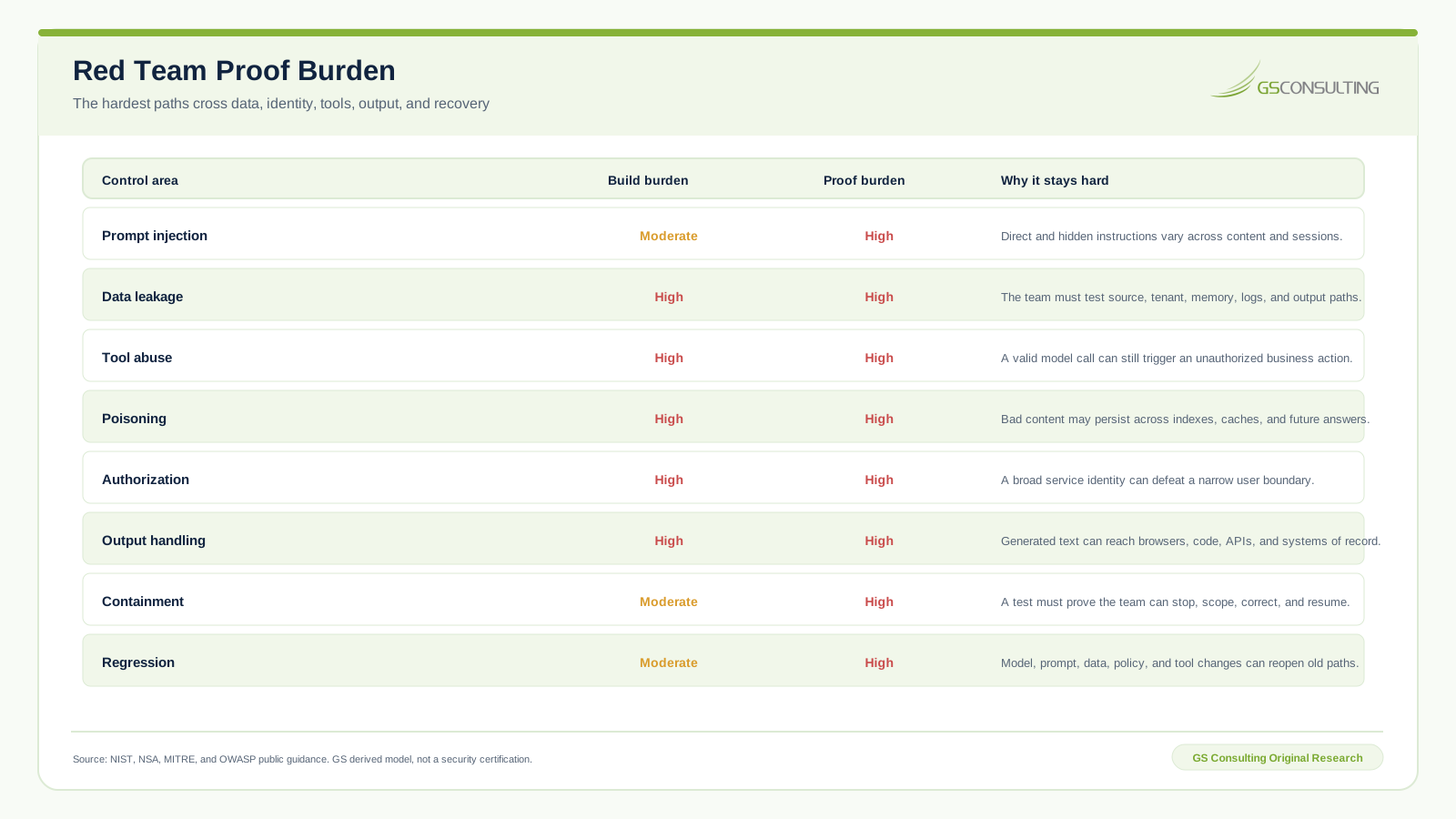
A finding without the exact environment can be impossible to reproduce. Record model, prompt, retrieval, data, tools, policies, credentials, parameters, versions, and isolation. Capture the input, intermediate decisions, source IDs, tool calls, output, logs, alerts, and cleanup result. Protect the evidence according to its sensitivity.
Use a Five Stage Red Team Path
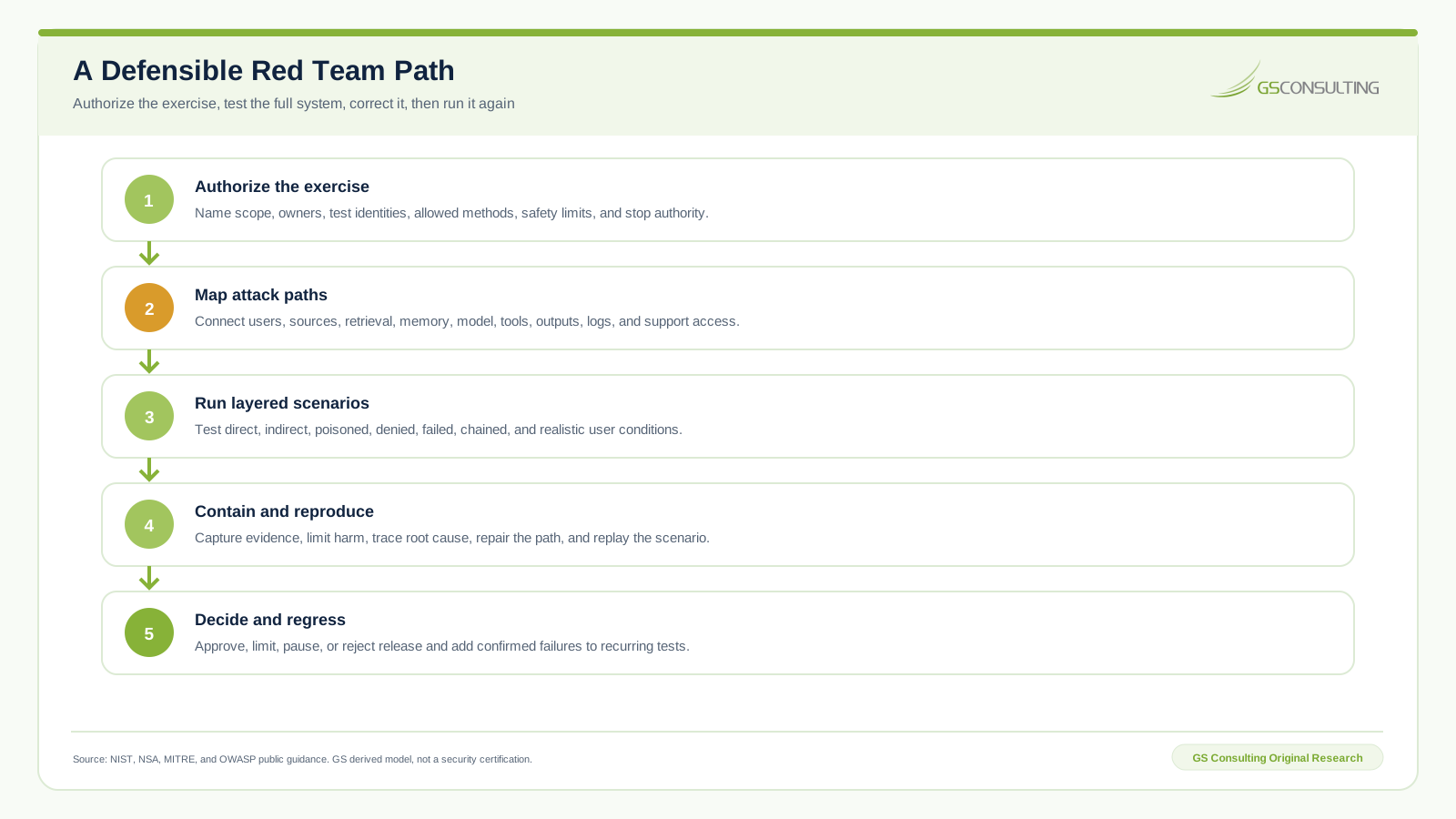
Containment is part of the exercise result. The team should know who can stop the test, disable a connector, revoke a credential, quarantine a source, isolate an index, pause an action, correct a record, and notify an owner. Recovery should restore trusted authority and data, not merely restart the service.
Avoid Six Private LLM Red Team Failures
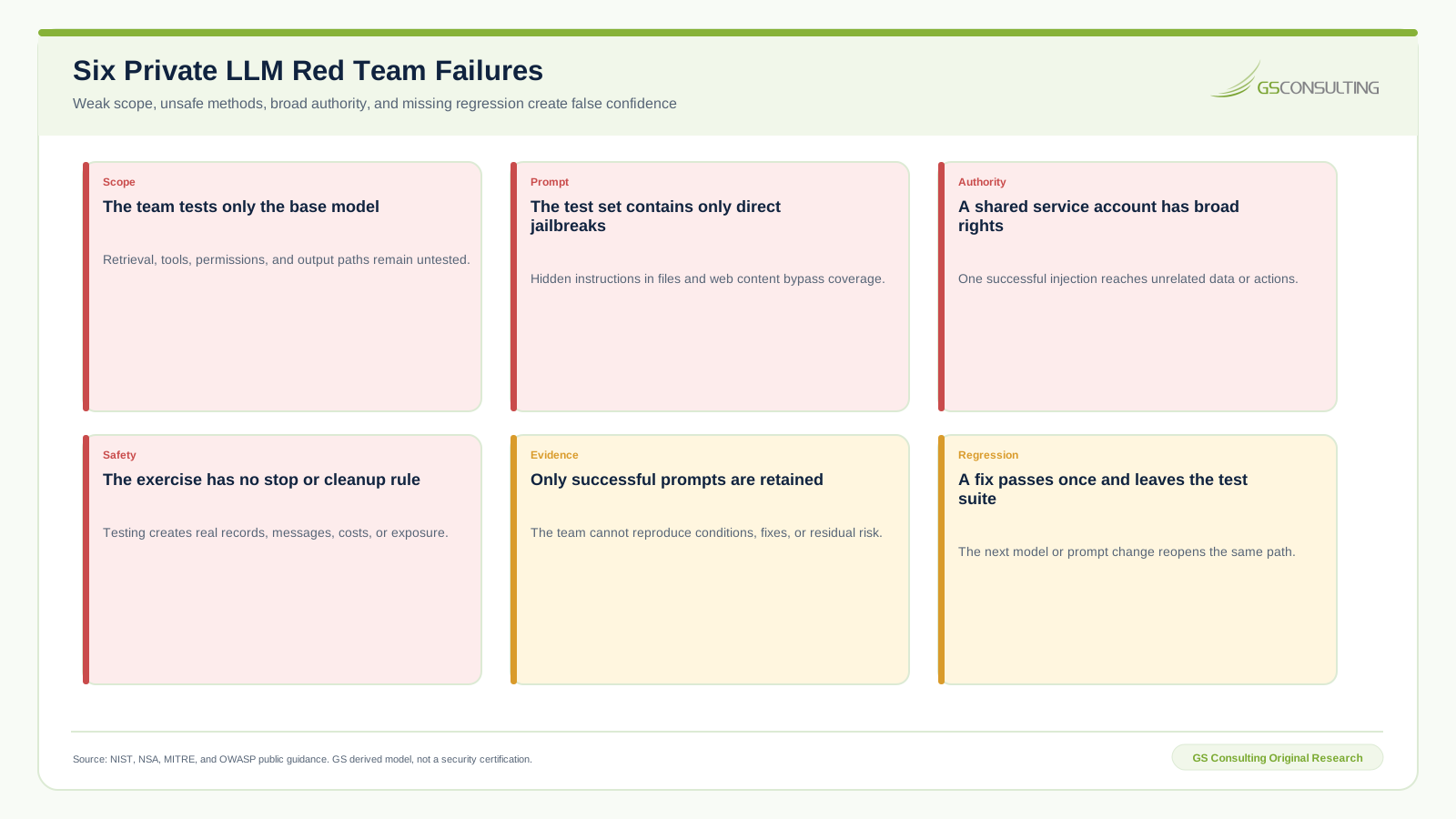
The most common mistake is declaring victory after the visible prompt layer improves. A model may refuse the direct request while retrieved content still influences it, a service account still has broad authority, generated output still executes downstream, and operations still cannot contain the path. Correct the system boundary, not only the wording.
Build the Red Team Evidence Packet
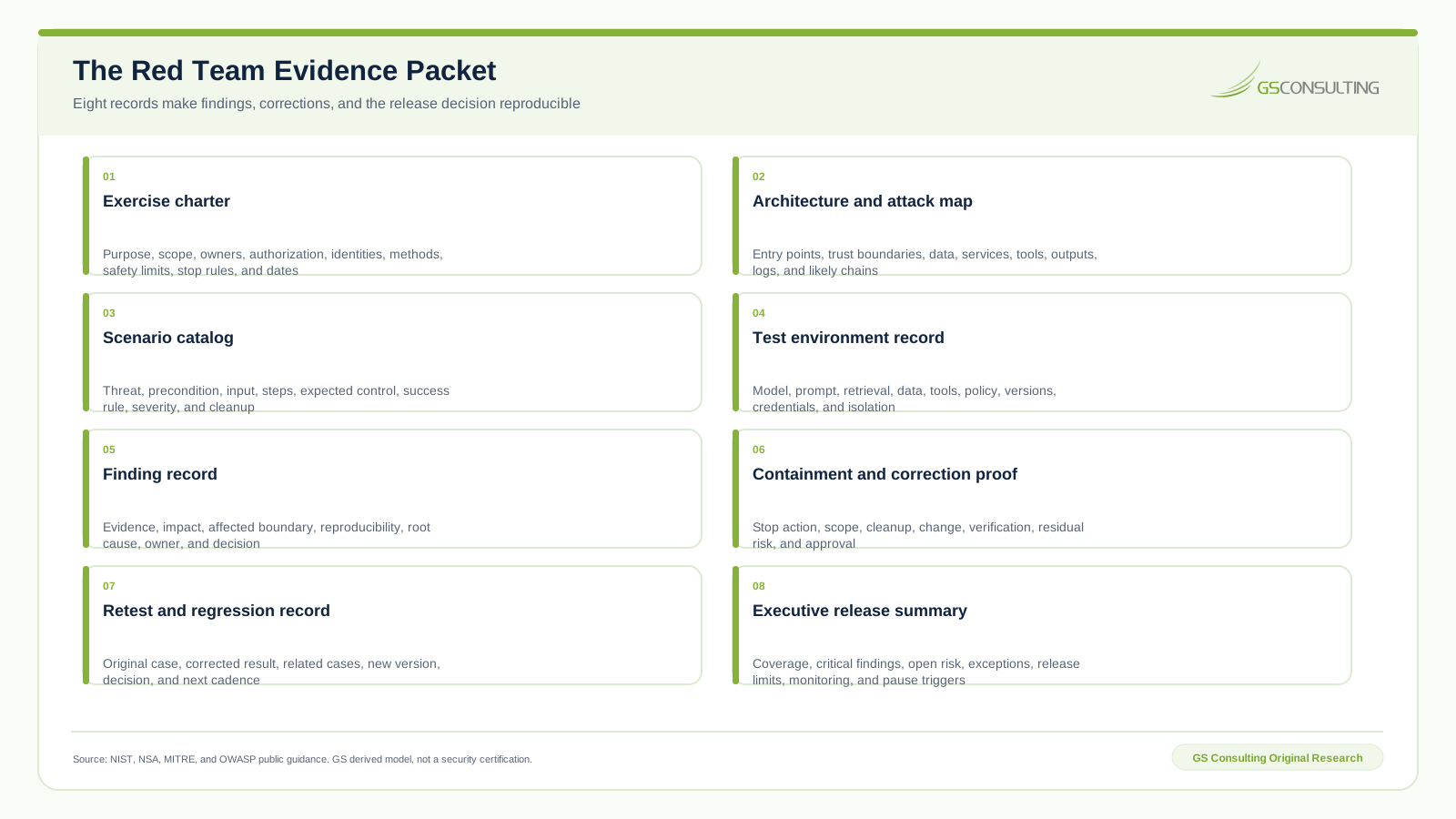
Keep failed and passing evidence. A later reviewer should be able to see the original condition, exact result, affected boundary, root cause, owner, correction, retest, adjacent tests, residual risk, approval, and next review trigger. If the team cannot replay the finding, it cannot prove the fix.
A 60 Day Private LLM Red Team Plan
| Period | Operator action | Required output |
|---|---|---|
| Days one through ten | Define purpose, protected decisions, data, actions, scope, owners, testers, safety limits, stop rules, evidence handling, and release authority. | Exercise charter |
| Days eleven through twenty | Map users, sources, retrieval, memory, model, identities, tools, outputs, logs, administration, vendors, and trust boundaries. | Architecture and attack map |
| Days twenty one through thirty | Build direct, indirect, poisoned, denied, failed, chained, and realistic scenarios with explicit success and severity rules. | Scenario catalog |
| Days thirty one through forty | Run isolated tests, capture evidence, stop unsafe paths, reproduce material findings, and test monitoring and containment. | Findings and response record |
| Days forty one through fifty | Correct root causes, retest original and adjacent paths, verify cleanup, and add confirmed failures to regression. | Correction and retest proof |
| Days fifty one through sixty | Approve, limit, pause, or reject release. Set monitoring, regression, incident, and material change triggers. | Release summary and cadence |
Research Sources and Caveats
The GS research package uses public sources accessed September 16, 2026:
- NIST AI 100-2 e2025 for adversarial machine learning attack taxonomy and terminology.
- NIST AI 700-2 ARIA pilot report for model testing, red teaming, field testing, and pilot counts.
- NIST AI 600-1 Generative AI Profile for risk and control context.
- NIST AI RMF Manage playbook for response, monitoring, recovery, change, and improvement actions.
- OWASP Top 10 for LLM and generative AI applications for application attack coverage.
- OWASP prompt injection guidance and OWASP excessive agency guidance.
- MITRE ATLAS for current adversary tactics and techniques.
- NSA Deploying AI Systems Securely for deployment and operating security context.
The package separates source observations, GS assumptions, ratings, formula outputs, sensitivity results, operating tables, and figure data. Attack methods, architectures, models, and mitigations change. The index does not set a universal test scope or release threshold.
Private LLM Red Teaming FAQ
Suggested Future Reading
- Private LLM and Secure RAG Hub
- Private LLM Data Governance
- Private LLM Access Control Architecture
- Private LLM Evaluation Framework
- Private LLM Security Controls
- Private LLM Observability
- Private LLM and Secure RAG Implementation
Do not approve a prompt test. Approve a system that can resist and recover.
The operating standard is direct: authorized scope, mapped boundaries, layered scenarios, protected evidence, reproducible findings, verified containment, root cause correction, adjacent path testing, regression after change, and a named release decision.
Request a Red Team Design Review