Private LLM & Secure RAG | | 26 min read
Private LLM Observability: Quality, Security, and Cost Signals

Key Takeaways
Build a decision record, not a metric wall
Identity and policy decisions rank first
The highest priority signal shows who asked, which policy applied, what was allowed or denied, and why.
One request needs one connected story
Identity, source, retrieval, model, output, tool, reviewer, cost, and incident facts must share durable identifiers.
More content is not better evidence
Collect the minimum facts needed to reconstruct decisions, then protect, retain, and delete them under explicit rules.
Private LLM observability is not a dashboard problem. It is the ability to replay why the system saw a source, produced an answer, took an action, cost money, and passed or failed review.
Infrastructure charts alone will tell you that a service is alive while the system returns stale sources, bypasses a permission, invents support for a claim, calls the wrong tool, leaks sensitive content into a trace, or spends more review labor than it saves. Model metrics alone are not enough either. The operating record must connect identity, policy, data, retrieval, model, prompt, output, action, reviewer, cost, change, incident, and outcome.
The goal is not to collect everything. Full prompts, outputs, and retrieved records can create a second sensitive data store inside the monitoring system. Collect the minimum structured facts needed to reconstruct decisions, keep protected content capture exceptional, and make every signal resolve to an owner and response.
The Private LLM and Secure RAG hub connects this operating guide to architecture and governance. Use private LLM vs RAG to select the pattern, the private LLM security guide to define the control path, the private LLM access control architecture to preserve authority across every hop, the private LLM evaluation framework to set release gates, the private LLM model update and rollback guide to control promotion and recovery, and the private LLM cost model to measure full operating economics. GS Consulting supports implementation through private LLM and secure RAG consulting.
Make every production answer reconstructable.
GS Consulting helps teams design private LLM traces, quality tests, security signals, cost measures, alert ownership, incident evidence, and production decision records.
Plan an Observability ReviewPrivate LLM Observability: The Short Answer
Build observability across four layers. First, record the request context: requester, tenant, purpose, policy decision, approved data class, and durable trace identifier. Second, record what the system used: source identifiers, permission result, retrieval query facts, model and prompt version, tools, and configuration. Third, record what happened: response status, citations, quality checks, tool actions, reviewer decision, latency, resource use, and accepted outcome. Fourth, record control state: incidents, exceptions, changes, rollbacks, recovery, and evidence review.
Each signal needs a definition, source, owner, threshold, response, retention period, access rule, and known limitation. A metric without a decision is noise. An alert without an owner is deferred failure. A trace that cannot survive a model, prompt, index, or permission change is not a useful production record.
Start with denied paths and high consequence actions. It matters more to know that a revoked user could not retrieve a controlled record than to know the average answer length. It matters more to know why a tool action executed than to know how many tokens the model produced.
The Private LLM Observability Signal Stack
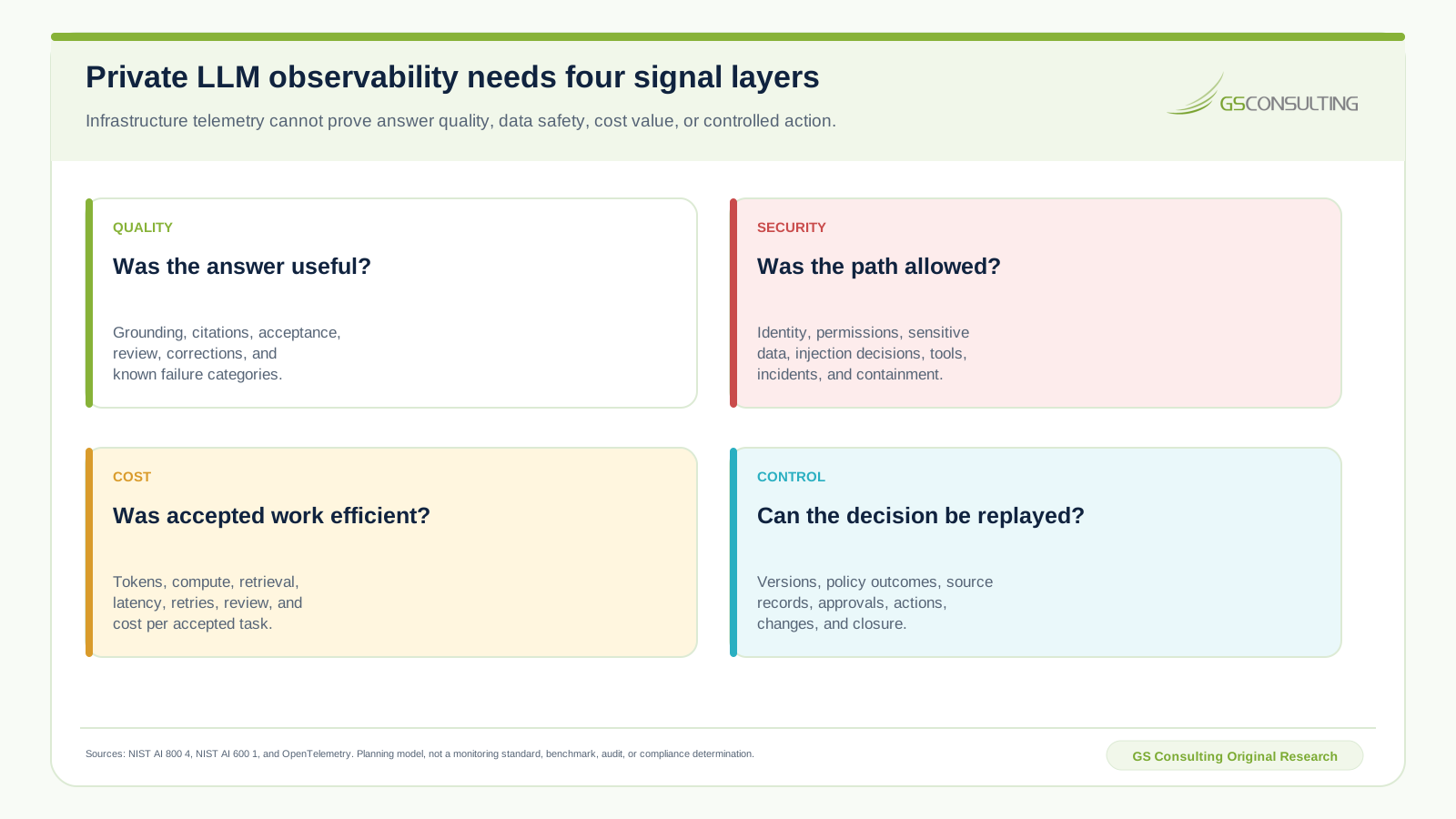
Request and policy. Capture a pseudonymous or approved requester identifier, service identity, tenant, purpose, role, policy version, allow or deny result, exception, session, and trace identifier. This layer establishes authority.
Knowledge and model. Capture source identifiers, permission decisions, retrieval status, source freshness, index version, model identifier, prompt version, configuration, tool definitions, and relevant evaluation version. This layer establishes what the system could see and how it was configured.
Execution and outcome. Capture status, supported citation result, safety and security checks, tool calls, action outcome, human acceptance, correction, latency, resource use, and cost. This layer establishes what happened and whether it created usable value.
Control and change. Capture alerts, incidents, stop decisions, containment, recovery, model changes, prompt changes, source and index changes, permission changes, exceptions, approvals, and closure evidence. This layer establishes whether the operation stayed inside its approved state.
GS Private LLM Observability Signal Priority Index
GS Consulting built a derived index to sequence twelve signal domains. Each domain receives a one to five analyst rating for source convergence, decision consequence, detection leverage, evidence value, and collection feasibility. The base model weights those dimensions at 25, 25, 20, 20, and 10 percent.
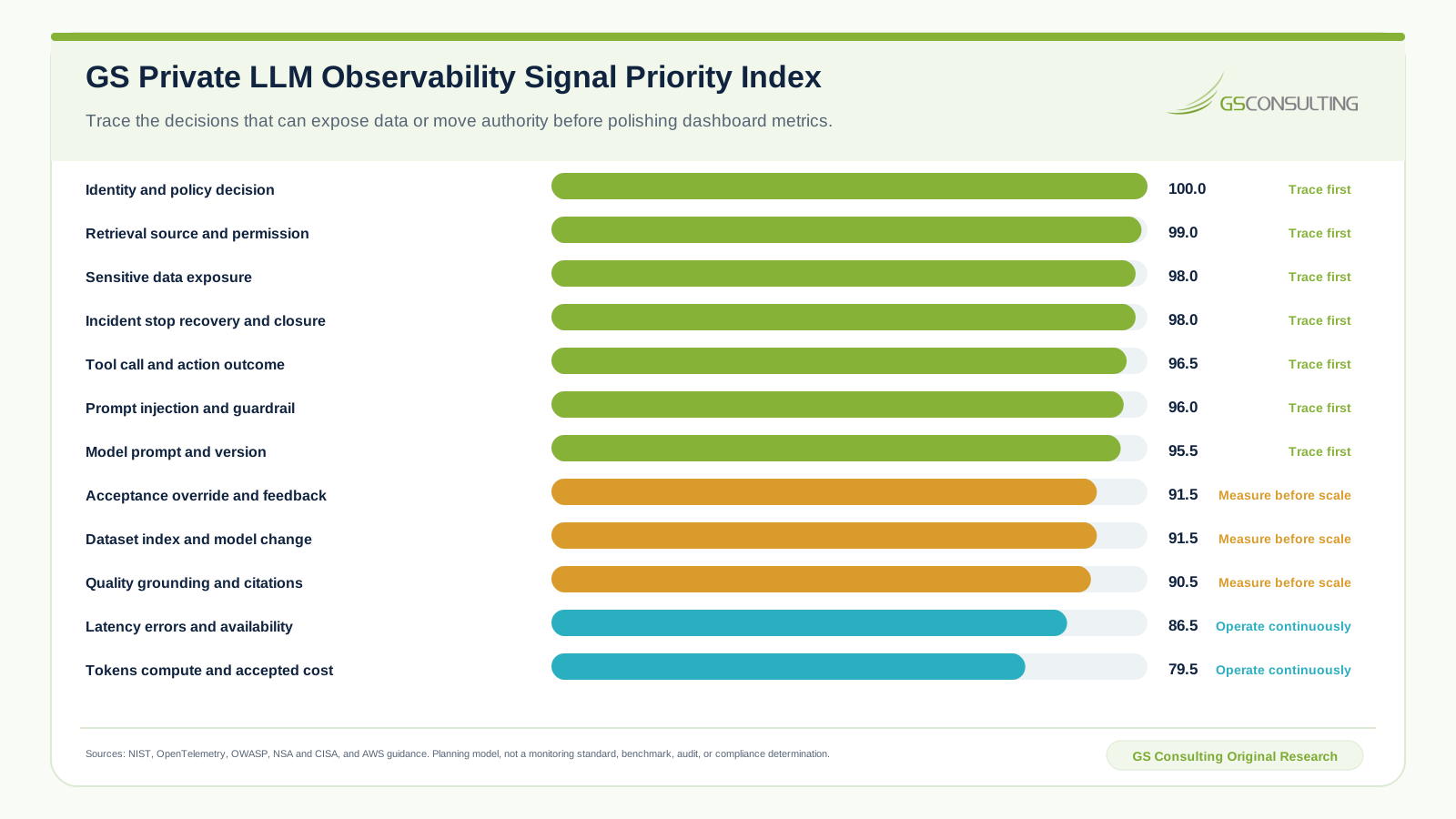
Identity and policy decision scores 100. Retrieval source and permission scores 99. Sensitive data exposure and incident stop, recovery, and closure each score 98. Tool call and action outcome scores 96.5. Prompt injection and guardrail scores 96. Model and prompt version scores 95.5.
Acceptance, override, and feedback scores 91.5. Dataset, index, and model change also scores 91.5. Quality, grounding, and citations scores 90.5. Latency, errors, and availability scores 86.5. Tokens, compute, and accepted cost scores 79.5. Cost ranks last only because the other signals have more direct security, authority, and incident consequence. It remains essential for production management.
The sensitivity test moves five percentage points from source convergence to decision consequence. The leading control tier stays stable and score changes are negligible. The result supports a simple sequence: instrument authority, data, action, and incident response before polishing broad adoption dashboards.
The GS Private LLM Observability Signal Priority Index is a derived planning tool based on GS analyst ratings of cited public guidance. It is not an official NIST, OpenTelemetry, NSA, CISA, OWASP, legal, compliance, audit, certification, or security determination. Adapt the signals and weights to the workload and approved evidence need.
Quality Signals Must Resolve to the Task
Do not start with one universal answer quality score. Define the task and its acceptance condition. Extraction may require field accuracy and completeness. Summarization may require source coverage and absence of unsupported claims. Question answering may require correct authority, citation support, and a useful refusal when the source is absent. An action recommendation may require human acceptance and a record of changed behavior.
Track representative evaluation results by use case, data class, source type, user group, model version, prompt version, retrieval version, and release. In production, track supported citations, empty retrieval, stale sources, conflicting sources, reviewer corrections, rejected answers, escalation, and accepted outcomes. Sample content review under an approved process rather than storing every answer indefinitely.
Grounding is not the same as citation presence. Test whether the cited source actually supports the claim, whether the source was authoritative for that user and date, and whether the answer omitted a controlling record. Retrieval recall, source authority, and answer support should remain separate measures.
Security Signals Must Show Authority and Exposure
Record allow and deny decisions at the point where identity and source authority are enforced. Keep enough structured detail to explain the policy, role, tenant, source, and reason. Track unusual retrieval volume, repeated denied access, cross tenant attempts, use of expired exceptions, changes in source permissions, and results of denied path tests.
Monitor prompt injection and untrusted content as an application security problem. Record which controls examined the request and retrieved content, which policy fired, what content was excluded, whether tools were available, and whether any action required human approval. Do not let an alert remain separate from the trace that produced it.
Monitor sensitive data exposure across prompts, retrieved context, outputs, traces, feedback, evaluation sets, support records, and exports. A system that blocks an answer but copies the content into a broadly accessible monitoring platform has not contained the exposure.
Cost Signals Need an Accepted Outcome
Tokens, graphics processor time, request count, storage, retrieval queries, and latency are useful engineering inputs. They do not answer whether the service is worth operating. Join those facts to accepted tasks, human review minutes, rejected outputs, corrected outputs, support work, incident work, and the business or mission outcome.
Use at least four views: total service cost, cost per attempted task, cost per accepted task, and cost by use case. Add peak capacity and idle capacity for private infrastructure. Add connector, index, and source operations for RAG. Add evaluation, security, review, support, change, and recovery work to both.
A rising token cost can be acceptable if acceptance and value rise faster. A falling token cost can conceal a failing system if users stop trusting it or reviewers redo the work. Accepted cost makes the trade visible.
The Blind Spot Map
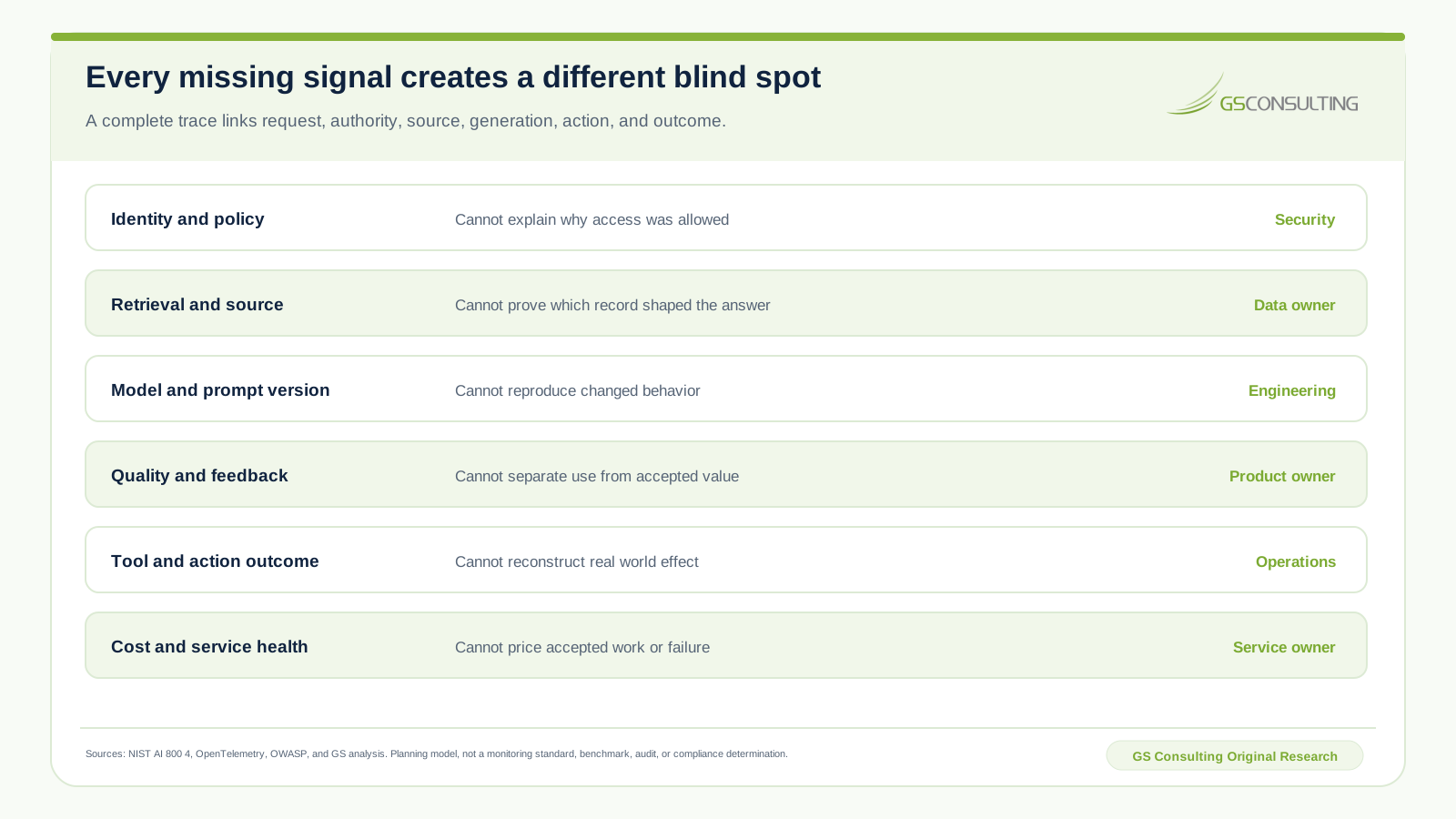
Infrastructure monitoring sees availability, latency, errors, saturation, and resource use. Application monitoring sees requests, routes, retrieval, models, tools, and outputs. Control monitoring sees permissions, data rules, exceptions, incidents, change, and evidence. Outcome monitoring sees acceptance, correction, escalation, time saved, and useful task completion.
The blind spots sit between those systems. An infrastructure platform may not know that a source permission was stale. An application trace may not know that the input data class was prohibited. A security platform may not know that a cited source failed to support the answer. A product dashboard may report adoption while cost per accepted task worsens.
Join the systems through durable identifiers and a small common schema. Do not create another warehouse of copied content. Preserve the facts needed for reconstruction and links to protected source records.
Build One Decision Trace
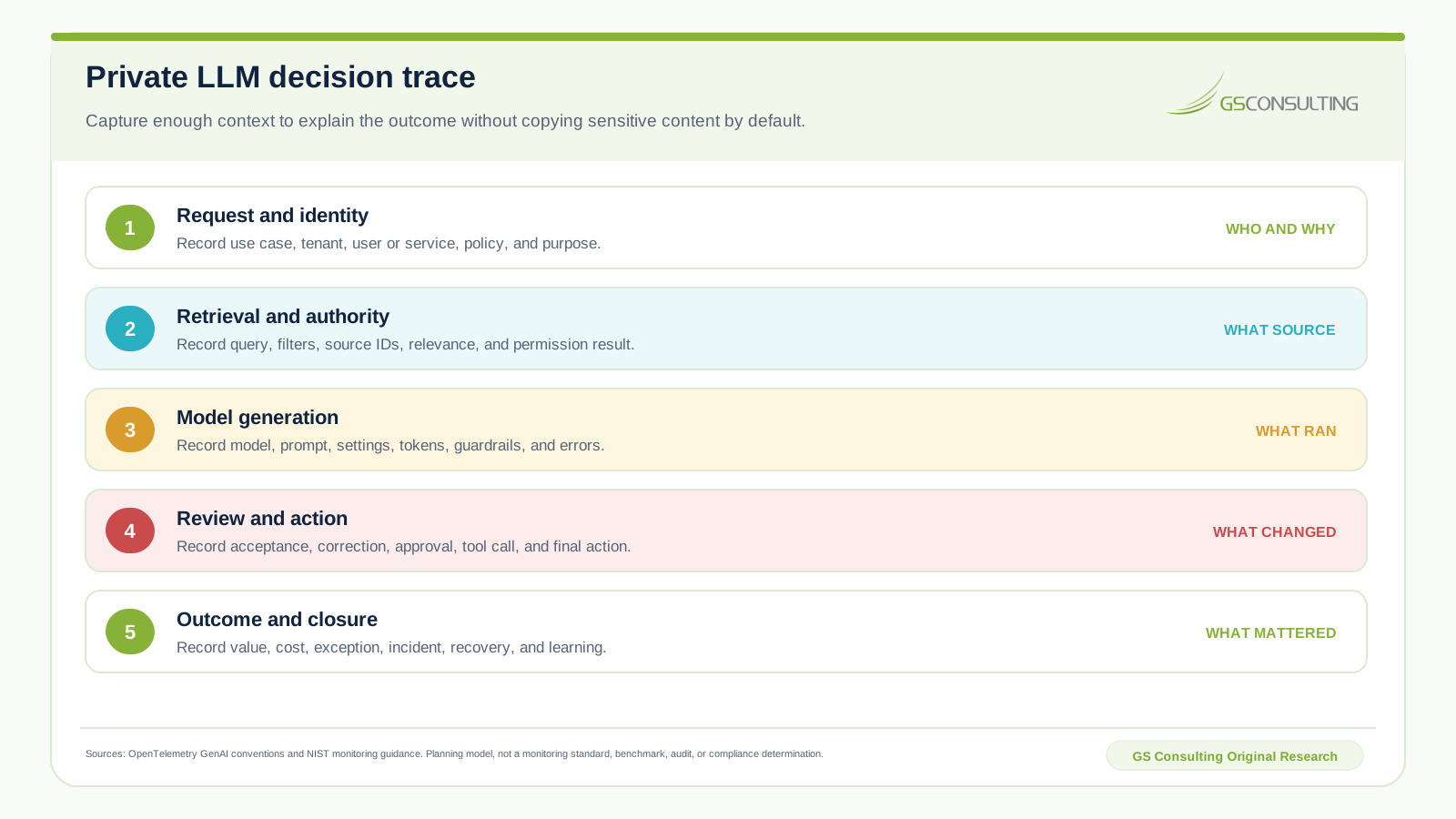
Assign a trace identifier when the request enters the approved application. Propagate it through the identity decision, retrieval service, model gateway, tool layer, human review, downstream action, cost record, alert, and incident. Use separate event identifiers and parent relationships when a request fans out.
Record versions, not just names. A model name is incomplete without the deployed revision or service version. A prompt label is incomplete without an immutable version. An index name is incomplete without source and build state. A policy result is incomplete without the policy version and authority facts used at that moment.
The trace should support a production investigation without requiring a team to search five systems by timestamp. It should also support aggregate analysis without exposing raw content to every analyst.
Observability Can Become the Largest Data Leak
OpenTelemetry generative AI semantic conventions cover model and provider facts, inputs and outputs, retrieval documents and queries, tools, usage, and evaluation. The specification also warns that some content can contain sensitive information. Treat conventions as a useful evolving schema, not permission to collect every field.
Default to identifiers, classifications, counts, hashes where appropriate, policy results, source references, versions, and structured outcomes. Store raw prompt, output, or retrieval content only under a documented need, approved access, encryption, limited retention, deletion, and investigation process. Redaction should be tested against real data and languages; it is not a universal safety guarantee.
Separate operational telemetry from protected evidence capture. The broad operations team may need latency and error facts. A small authorized investigation group may need controlled content samples for a defined case. Those are different access and retention profiles.
Every Alert Needs a Decision and an Owner
| Signal | Example trigger | Primary owner | Required response |
|---|---|---|---|
| Permission | Retrieved source lacks a current allow decision | Identity and data owner | Stop response, contain trace, test scope, correct authority |
| Sensitive data | Prohibited data class enters output or telemetry | Security and privacy owner | Contain, preserve approved evidence, assess exposure, delete safely |
| Quality | Supported citation rate drops below release threshold | Product and model owner | Limit use, inspect cases, fix source or configuration, reevaluate |
| Tool action | High consequence action lacks required approval | Workflow owner | Stop action path, review authority, restore only after test |
| Cost | Cost per accepted task exceeds approved range | Service owner | Inspect rejection, review, capacity, and use case mix |
| Change | Model, prompt, index, or policy changes without evaluation | Release owner | Hold release, restore approved version, complete change evidence |
Thresholds should come from consequence and operating capacity. A single unauthorized retrieval can justify immediate containment. A gradual latency increase may justify investigation during normal support. Define the difference before production.
Six Observability Failures
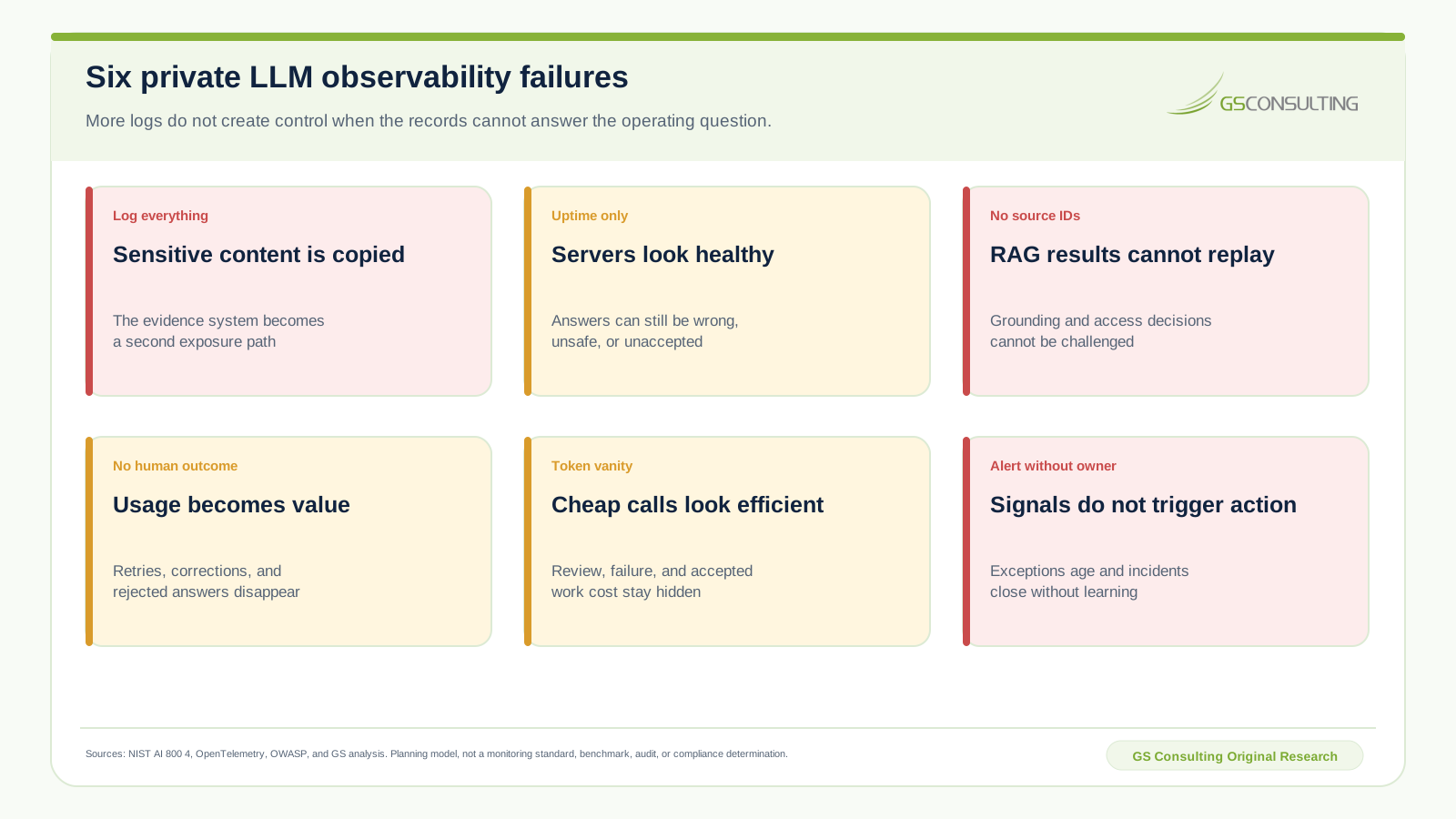
Metric wall. The team collects hundreds of charts, but none has a decision threshold, owner, or response.
Missing identity. The trace shows a request and answer but cannot establish the requester, service, tenant, purpose, or policy result.
Source ambiguity. The answer has citations, but the trace cannot prove source version, permission, freshness, or claim support.
Content copied everywhere. Prompts, outputs, and retrieved records spread across logs, traces, support tools, and exports with weak access and indefinite retention.
Alert without closure. Detection fires, but nobody owns containment, recovery, retest, or a closure record.
Cheap attempt, expensive outcome. Token cost falls while rejection, human review, support, and incident work rise.
A 90 Day Observability Plan
First 30 days: define the decisions. Inventory use cases, data classes, sources, actions, models, prompts, tools, reviewers, and incidents. Select the high consequence requests. Define the trace schema, identifiers, minimum content policy, owners, thresholds, retention, and access.
Days 31 through 60: instrument the control path. Connect identity, policy, retrieval, model, tool, review, cost, change, and incident events. Implement denied path tests. Create quality cases and citation support checks. Test trace completeness, access, redaction, deletion, alert routing, and stop authority.
Days 61 through 90: run the service under pressure. Exercise stale permissions, source changes, injection attempts, wrong answers, tool failures, cost spikes, model changes, incident containment, and recovery. Review false alerts and missing signals. Approve production only after the team can reconstruct cases and close them.
The Observability Evidence Packet
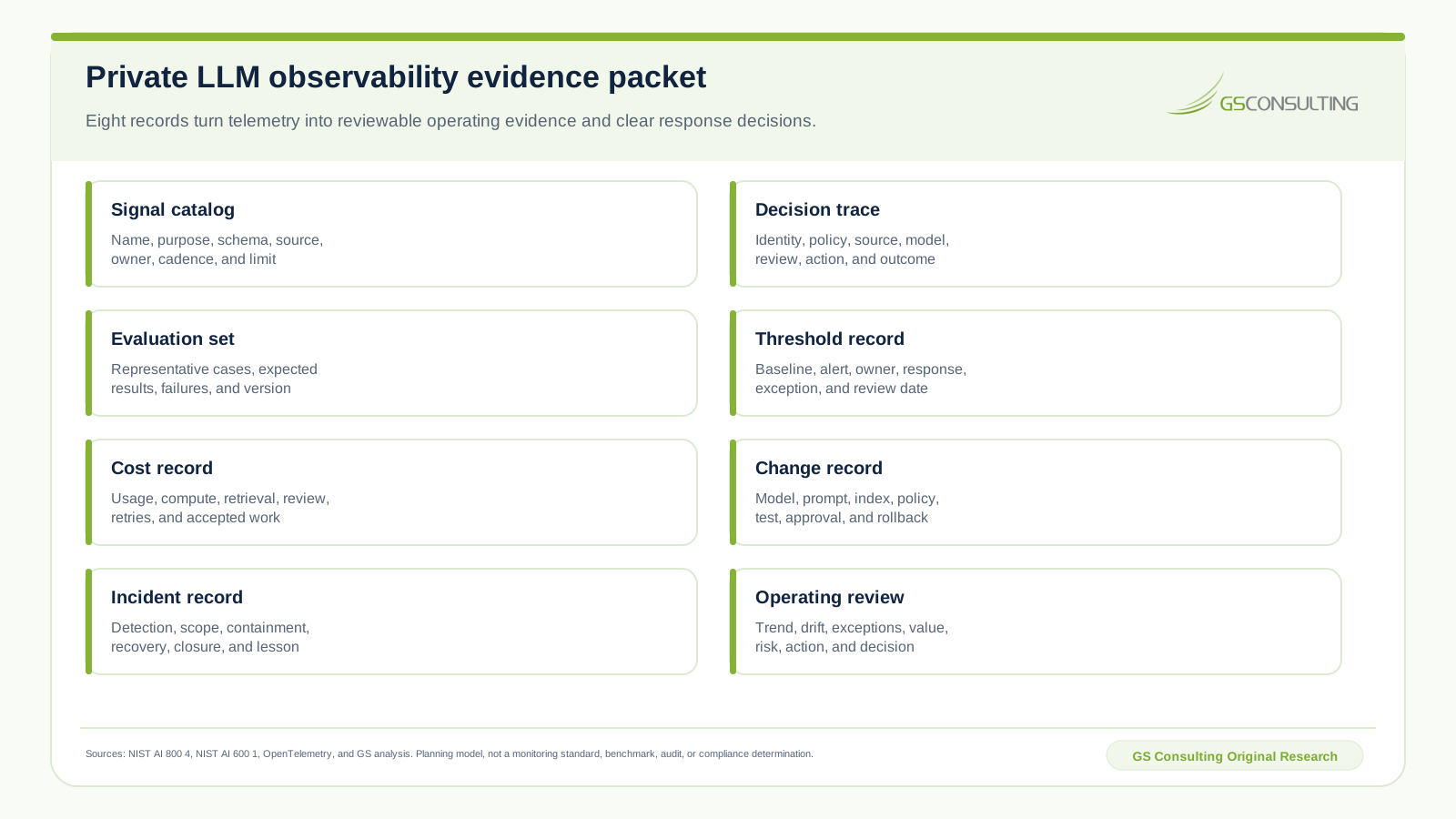
Retain the signal catalog, trace schema and sample, evaluation and denied path results, alert and ownership matrix, incident and recovery record, change and release record, content retention and deletion proof, and recurring operating review. Link each record to the approved use case, current architecture, owner, and version.
The packet should prove normal operation, not just policy intent. A dashboard screenshot can show a number. It cannot show whether the number was defined correctly, whether the source was complete, whether an owner acted, or whether the system returned to an approved state.
Sources and Research Method
- NIST AI 800-4, Challenges to Monitoring Deployed AI Systems
- NIST AI 600-1, Generative Artificial Intelligence Profile
- OpenTelemetry generative AI semantic conventions
- NSA, CISA, and partner guidance on AI data security
- OWASP Top 10 for LLM applications
The research package includes the source register, public signal extraction, analyst ratings, model inputs, derived scores, sensitivity test, data dictionary, figure data, methodology, and editable figures. Scores are normalized to a 100 point scale. They are planning aids, not measurements of a specific product or deployment.
Private LLM Observability FAQ
What is private LLM observability?
Private LLM observability is the ability to reconstruct and assess a model request across identity, policy, sources, retrieval, model and prompt version, output, tool actions, human review, cost, incidents, and change. It connects signals to decisions and owners rather than displaying isolated metrics.
Which metrics matter most for a private LLM?
Start with identity and policy decisions, retrieval sources and permissions, sensitive data exposure, incident stop and recovery, tool actions, prompt injection signals, model and prompt versions, human acceptance, change records, quality and citations, availability, and cost per accepted task.
Should private LLM prompts and outputs be logged?
Not by default in full. Prompt, output, and retrieved content can contain sensitive data. Define an approved evidence need, minimize content, prefer identifiers and structured facts, restrict access, set retention and deletion, and use protected investigation capture only when justified.
How do you monitor RAG quality?
Measure whether the correct sources were eligible, retrieved, current, and actually support the answer. Track citation support, source coverage, empty retrieval, stale content, permission denials, answer acceptance, reviewer corrections, and results on representative evaluation cases.
How should private LLM cost be monitored?
Track total service cost and cost per accepted task across model use, compute, retrieval, storage, evaluation, review, support, and incidents. Tokens are an input metric. Accepted operational value is the decision metric.
Does LLM observability establish compliance?
No. Observability can support security, governance, audit, and assessment evidence, but compliance depends on the applicable requirements, system boundary, contracts, implementation, records, and authorized determinations.
Related Private LLM Operating Guides
- Private LLM Model Selection for Regulated Workloads
- Private LLM Disaster Recovery and Continuity Planning
- Private LLM vs RAG
- Private LLM Security Controls for Regulated Data
- Private LLM Cost
- Secure RAG Design Patterns for Enterprise Data
Not more telemetry. Better reconstruction. Production is ready when the team can explain authority, sources, configuration, outcome, cost, response, and recovery from one controlled record.