Private LLM & Secure RAG | | 27 min read
Private LLM Model Updates: Release Gates, Rollback, and Proof

Key Takeaways
Treat every model change as a controlled substitution
Identity and rollback rank first
The exact release state and a reachable approved return path both score 100 in the GS priority model.
Critical cases override the average
A candidate does not pass because its overall score improved while one severe task family regressed.
Traffic routing is not closure
Rollback must include affected outputs, tool actions, users, records, corrections, and retained proof.
Private LLM model updates are not routine downloads. They are controlled substitutions inside a live decision system.
A newer model can improve reasoning and still break a JSON contract. It can reduce average error and still fail the one case that matters. It can preserve uptime while changing citations, refusals, tool calls, retrieval queries, latency, cost, or the words users rely on. The service can stay green while the operation moves outside its approved state.
That is the hard part. A model update changes more than weights. It changes the relationship among the model, prompt, runtime, retrieval layer, tool definitions, access rules, data, capacity, monitoring, reviewers, and users. Promotion must compare the complete operating release. Rollback must restore a known state and reconcile work already affected.
The Private LLM and Secure RAG hub connects this release guide to architecture and governance. Use the private LLM model selection guide to choose the model lane, the private LLM evaluation framework to build representative cases, the private LLM observability guide to define live signals, and the private LLM disaster recovery guide to restore the larger service. GS Consulting supports the full path through private LLM and secure RAG consulting.
Make the next model change reversible.
GS Consulting helps teams build release manifests, regression gates, controlled rollout, rollback tests, monitoring, reconciliation, and decision evidence for private LLM operations.
Plan a Model Change ReviewPrivate LLM Model Updates: The Short Answer
Start by naming the exact approved release and the exact candidate. The release is not only the model name. Record the model revision, weights or service version, runtime, API, prompt, retrieval configuration, embeddings, tool definitions, output schema, policies, data set, dependencies, capacity profile, monitoring rules, and approvals.
Freeze representative evaluation cases and critical error cases. Run the approved and candidate releases under the same conditions. Compare task quality, data handling, security behavior, citations, refusals, tool actions, schemas, capacity, latency, cost, and reviewer effort. A candidate passes only when every critical gate passes and the remaining trade is understood and accepted by a named authority.
Release to a bounded population. Watch explicit thresholds. Keep the prior approved path reachable while the new release earns trust. If a threshold fails, stop expansion, restore the approved path, contain the impact, and reconcile every affected request, output, action, and record. Then decide whether to fix, retest, replace, or retire the candidate.
Public Schedules Create Private Operating Pressure
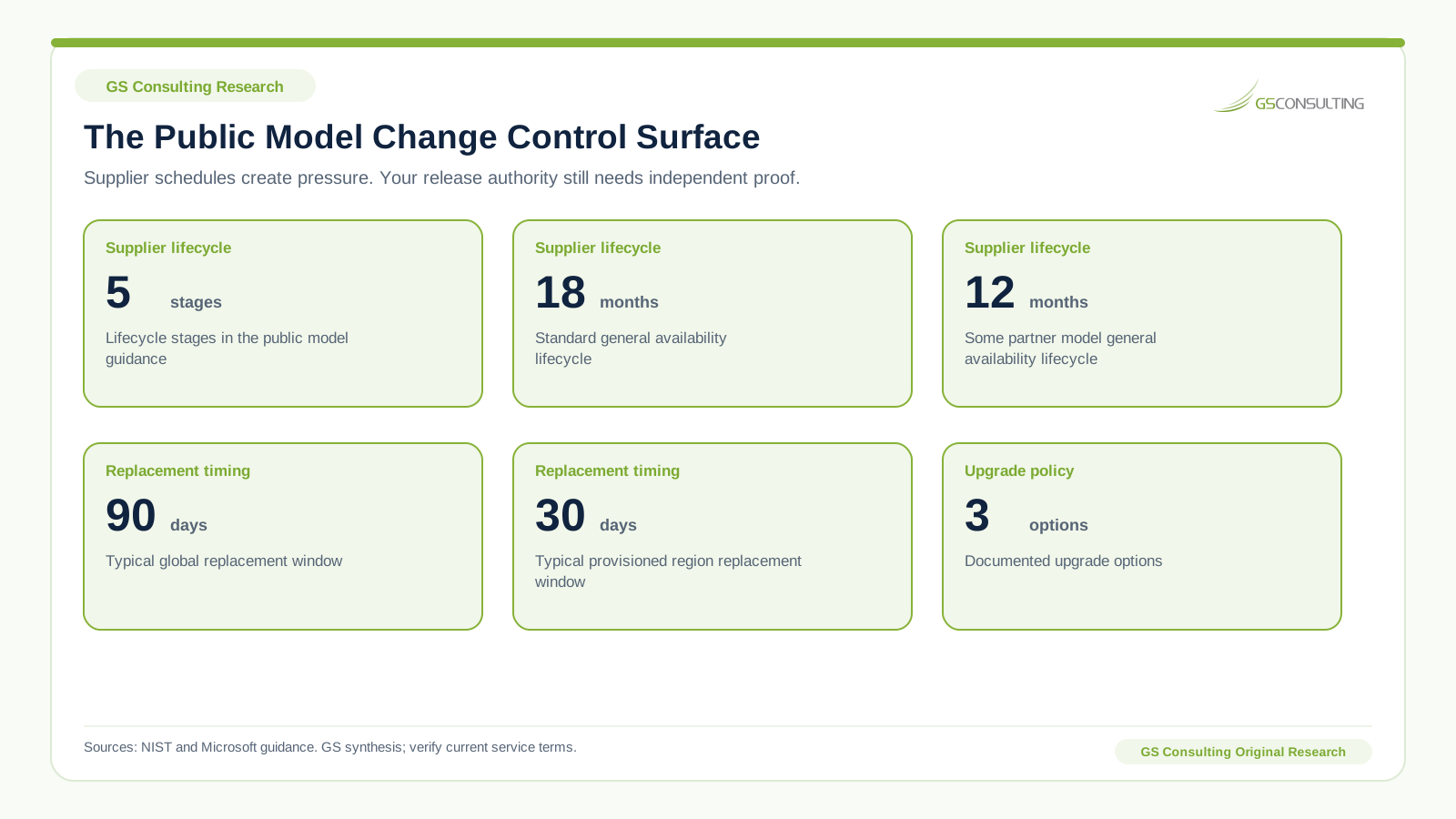
Microsoft model lifecycle guidance provides one useful public example. It describes five lifecycle stages, a standard general availability lifecycle of 18 months, three upgrade policy options, and replacement windows that can be as short as 30 days for some provisioned deployments. Other providers and self hosted model sources use different schedules.
The numbers are not a universal standard. They expose the planning problem. A team can have less time to evaluate a candidate than it took to approve the original service. The old release may disappear before the organization resolves every issue. Contract dates, region availability, capacity, and product policy can remove an assumed rollback target.
Track supplier notices, model availability, replacement dates, service versions, regional capacity, and dependencies as operating inputs. Do not let them become release approval. A deadline can justify faster evaluation. It cannot make a weak candidate safe.
GS Private LLM Model Change Control Priority Index
GS Consulting built a derived index to sequence ten control domains for private LLM model updates. Each domain receives a one to five analyst rating for impact consequence, dependency reach, silent regression risk, evidence value, and recovery pressure. The base model weights those factors at 30, 20, 20, 15, and 15 percent.
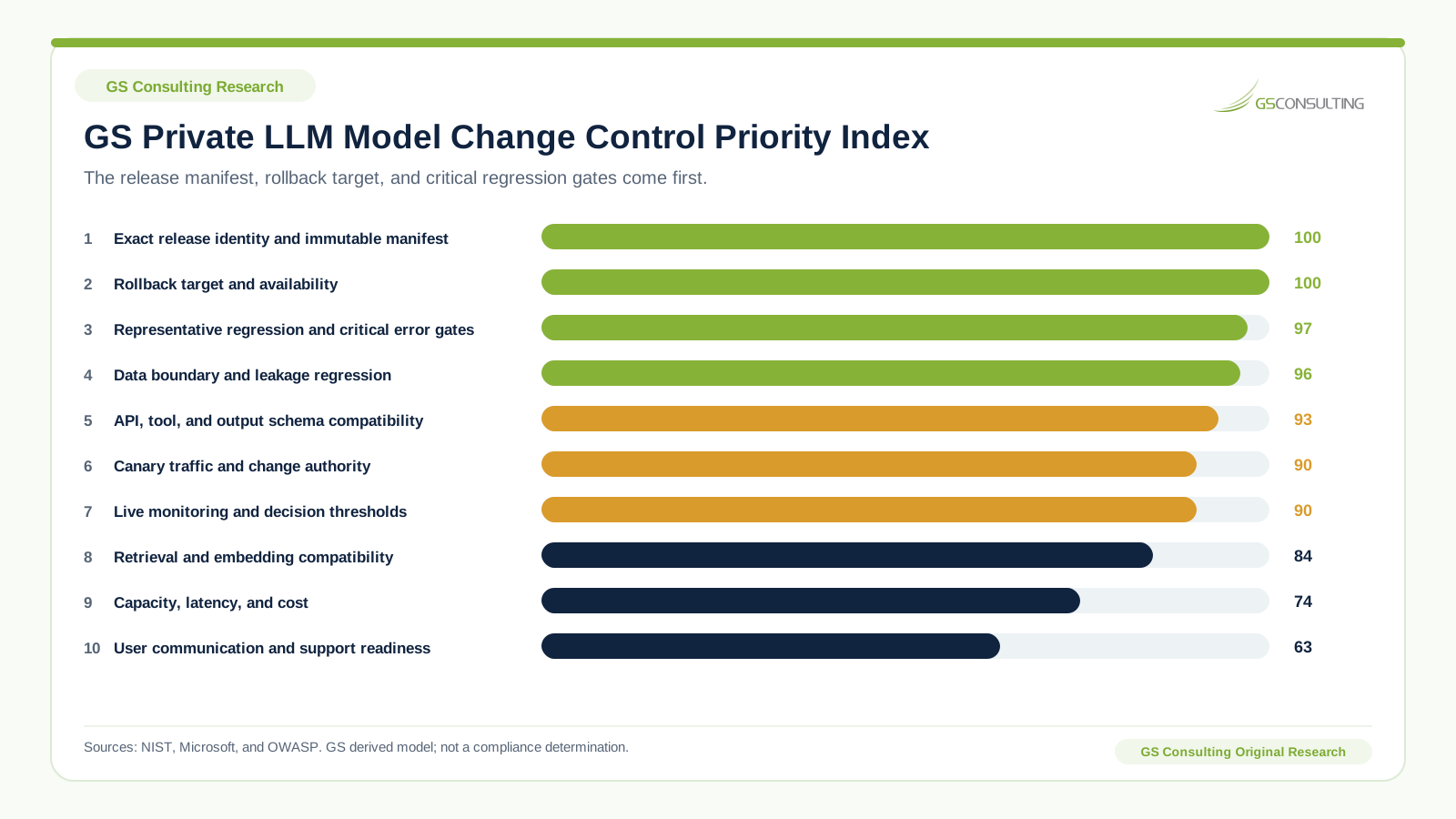
Exact release identity and a reachable rollback target both score 100. Representative regression and critical error gates score 97. Data boundary and leakage regression scores 96. API, tool, and output schema compatibility scores 93. Canary traffic and change authority, plus live monitoring and decision thresholds, each score 90.
Retrieval and embedding compatibility scores 84. Capacity, latency, and cost scores 74. User communication and support readiness scores 63. Lower rank does not mean optional. It means the first four domains can invalidate the entire release before broader operating concerns matter.
The sensitivity test moves five percentage points from impact consequence to recovery pressure. The top four domains remain unchanged, and no score moves by more than one point. The sequence is stable under that tested weight change.
The GS Private LLM Model Change Control Priority Index is a derived planning tool based on GS analyst ratings of cited public guidance. It is not an official NIST, Microsoft, OWASP, legal, audit, compliance, certification, security, or regulatory determination. Adapt the factors, ratings, weights, and thresholds to the workload.
The Release Manifest Is the Control Anchor
Write one immutable manifest for the approved release and one for the candidate. Include the model identifier and revision, model source, integrity value where available, runtime and library versions, API version, prompt and template versions, retrieval settings, embedding model, index version, tool definitions, output schema, policy versions, data set version, environment, capacity, monitoring rules, owners, approvals, and effective time.
NIST SP 800 218A extends secure software development practices to generative AI and foundation models. Its treatment of model lineage, versioning, model artifacts, secure storage, and development pipelines supports a basic rule: every operating result should resolve to the exact release that produced it.
A service label such as production or model latest is not identity. A provider model name may point to a changed revision. A prompt name may hide an edit. A RAG index may have been rebuilt from new sources. A tool can keep the same name while its schema changes. If the team cannot recreate the state, it cannot explain a regression or prove a return.
Link the manifest to evaluation results, change approval, deployment record, canary events, incident records, and rollback tests. Preserve the relationship even after a supplier retires the model. Historical reconstruction remains necessary after the binary disappears.
Compare the Candidate Against an Unchanged Baseline
Do not compare a candidate with last quarter's chart. Freeze a representative data set, scoring rules, prompt state, tool state, retrieval state, environment, and reviewer instructions. Run the approved release and candidate close enough together that the comparison means something.
Representative does not mean random. Divide the workload into task families, user groups, data classes, source types, languages where relevant, action paths, and failure conditions. Add rare cases with high consequence. Include expected refusals, empty retrieval, conflicting sources, revoked access, malformed tool results, long context, ambiguous questions, and requests that should require a person.
Keep critical cases separate from aggregate quality. A candidate can raise average task accuracy and still expose controlled data, omit a mandatory warning, call a tool without approval, or produce an invalid structure for a payment or case system. One severe miss can be a release stop even when every broad metric improved.
The Microsoft model migration guide uses a six phase sequence of Discover, Assess, Adapt, Validate, Roll out, and Retire. It also calls out changes in tone, formatting, JSON, latency, cost, and tool behavior. Those are useful reminders that model migration is an application change, not a file swap.
Release Gates Need Binary Stop Conditions
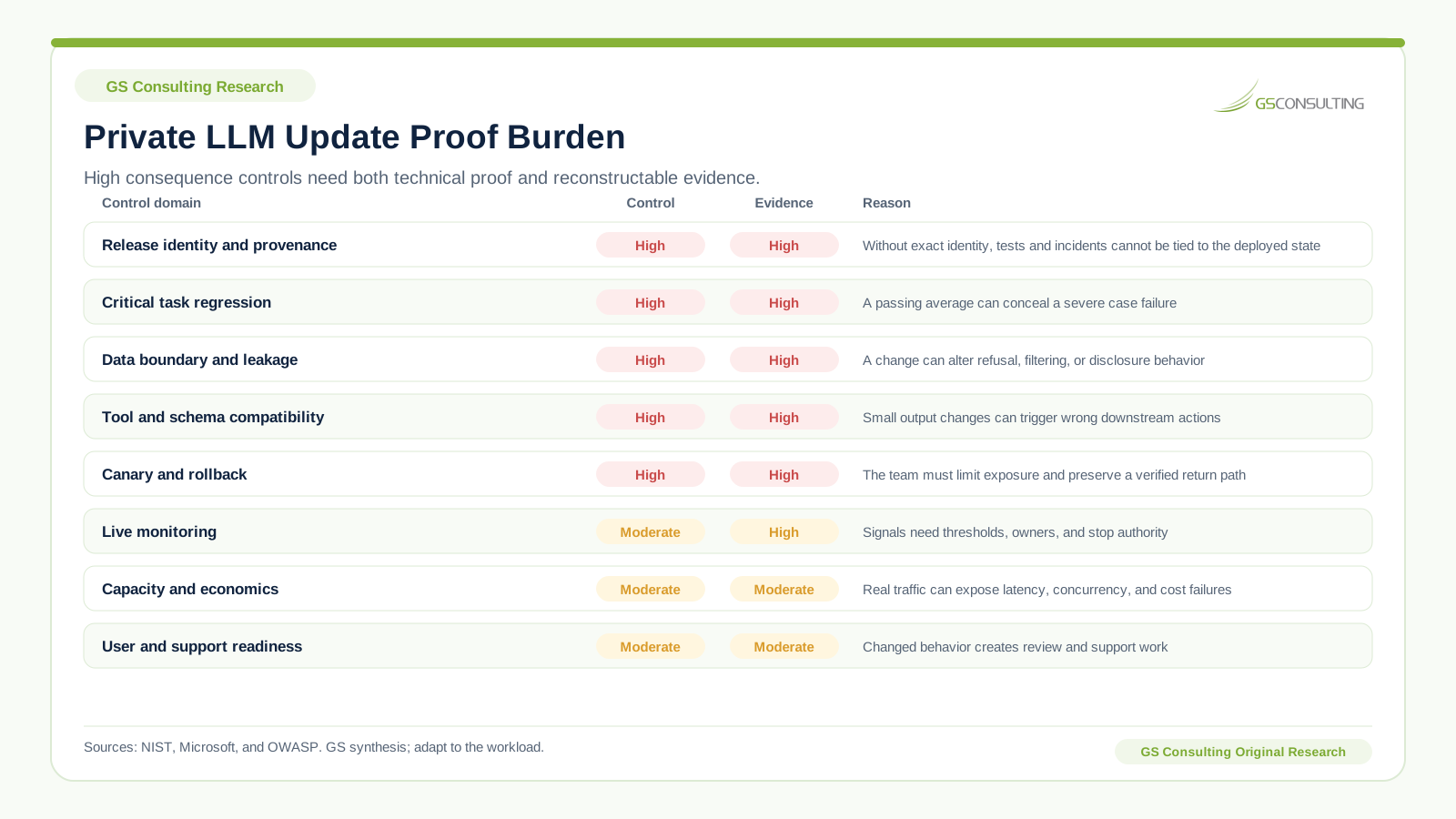
Define the stop conditions before the results arrive. Otherwise, the release meeting becomes a negotiation around whatever failed. Use a small number of gates that connect consequence to authority.
| Gate | Pass condition | Stop condition | Owner |
|---|---|---|---|
| Identity | Complete immutable manifest for approved and candidate states | Unknown model, prompt, tool, policy, data, or dependency state | Release owner |
| Critical behavior | Every critical case meets its explicit threshold | Any prohibited disclosure, action, or severe task failure | Workload and risk owners |
| Compatibility | APIs, schemas, tools, retrieval, and policies pass controlled tests | Downstream break, wrong action, or unbounded behavior change | Application owner |
| Operations | Capacity, latency, cost, alerts, owners, and support fit the approved envelope | Unowned alert, capacity failure, or unacceptable service trade | Service owner |
| Recovery | Rollback target is reachable and the return path passes a timed test | Former release, dependency, data state, or capacity cannot be restored | Recovery owner |
Exceptions need a named owner, reason, affected scope, compensating control, expiry, and retest date. An exception without expiry becomes the new baseline by accident. An exception that touches a critical stop condition should normally block release rather than become paperwork around a known failure.
Compatibility Extends Beyond the API
A candidate can accept the same request and still break the workflow. It may wrap JSON in prose, omit a field, rename a tool argument, reorder citations, change refusal language, increase context use, generate longer output, or call tools more often. Each change can alter downstream behavior, cost, review time, and security.
Test API contracts, output schemas, tool selection, tool arguments, retry behavior, timeouts, retrieval queries, embedding fit, citation support, source ordering, prompt assumptions, policy triggers, content filters, access decisions, log fields, and human review screens. Record whether the change is expected, accepted, corrected, or a release stop.
Model version and API version are different controls. Microsoft model version guidance makes that distinction and warns that model changes can affect behavior and compatibility. Apply the same reasoning to self hosted models: unchanged endpoints do not prove unchanged behavior.
Retrieval needs its own comparison. Observe query formation, source eligibility, source recall, source authority, citations, unsupported claims, empty results, and permission denials. A model improvement on general reasoning can still reduce fit with the index and source patterns the operation depends on.
A Canary Release Limits Consequence
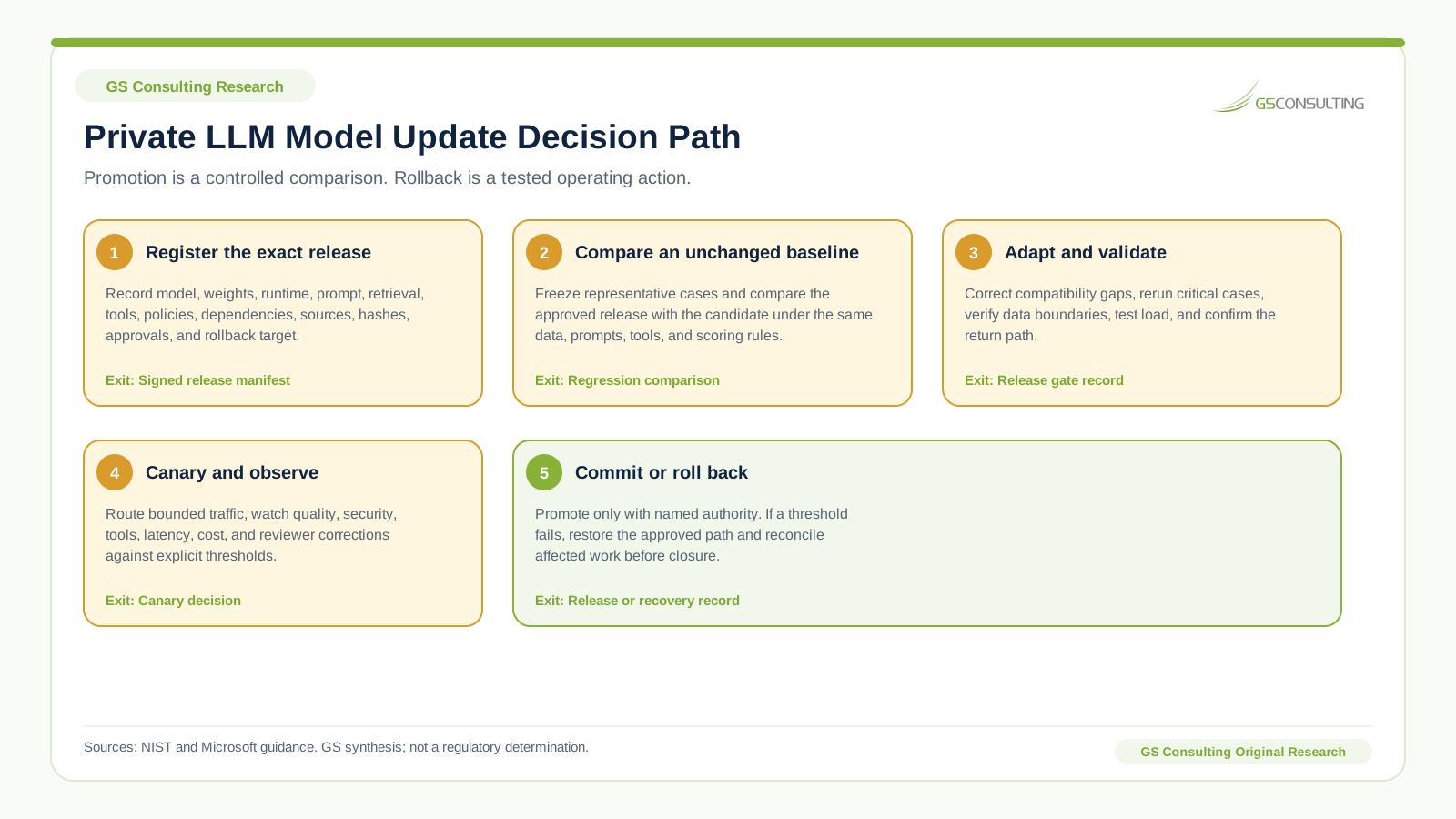
Choose canary scope by consequence, not convenience. A five percent traffic split can still expose the most sensitive cases if selection is random. Bound the release by use case, data class, user group, action authority, source set, geography, and reviewer capacity. Exclude actions the team cannot reverse until the candidate has earned enough evidence.
Define the observation window and decision thresholds before traffic moves. Watch critical task results, supported citations, prohibited disclosure, refusal changes, tool calls, schema errors, permission decisions, latency, failures, cost per accepted task, reviewer corrections, support volume, and incidents. Compare them with the approved release over the same period where practical.
Give one role authority to hold, expand, promote, or roll back. The role can depend on technical and business reviewers, but the decision should not become ownerless during an incident. Record the exact signal, threshold, decision, time, actor, scope, and result.
Shadow traffic can produce useful comparisons without exposing candidate output to users or tools. It still needs approved data handling, access, retention, and cost. Do not copy sensitive production requests into an unapproved evaluation lane merely because the output stays hidden.
Rollback Is a Tested Product Capability
Write the rollback trigger, target, authority, routing steps, dependency state, data state, capacity need, monitoring state, and validation test before release. Then exercise the path. A document that has never restored service is an assumption.
The target must include more than the former model. Restore compatible prompts, tool definitions, schemas, retrieval configuration, embeddings where relevant, policy versions, runtime, dependencies, monitoring, and capacity. If the candidate caused an index rebuild or data transformation, decide whether the prior model can use that state or whether another restore step is required.
Managed services can retire the prior model. Self hosted environments can preserve model artifacts but lose a compatible runtime, driver, library, or capacity profile. Keep an approved alternate lane when the original target will disappear. That lane may be a different model, a reduced function mode, a manual process, or a controlled service stop.
Measure rollback time from the decision to verified service, not from the command to traffic movement. Verification should include critical cases, data boundaries, tool controls, monitoring, capacity, and user access. Record what could not be restored and which temporary limits remain.
Rollback Does Not Undo Completed Work
A model may have already produced answers, summaries, classifications, recommendations, records, messages, code, or tool actions. Restoring the former release changes future traffic. It does not repair the past.
Use trace records to identify every request handled by the candidate. Classify the result by consequence. Some outputs can be left as is. Some need review. Some need correction and user notice. Tool actions may need reversal or a second approval. Records sent downstream may need replacement while preserving history.
Do not delete the failed release record to make the system look clean. Preserve the manifest, test results, canary scope, threshold breach, decision, affected population, containment, corrections, residual risk, and closure approval under appropriate access and retention. That evidence is necessary for learning and later inquiry.
Close the event only when service is verified, affected work is reconciled, owners accept remaining limits, and the next action is clear. The next action can be repair and retest, supplier escalation, candidate rejection, workload redesign, or service retirement.
Six Model Update Failures
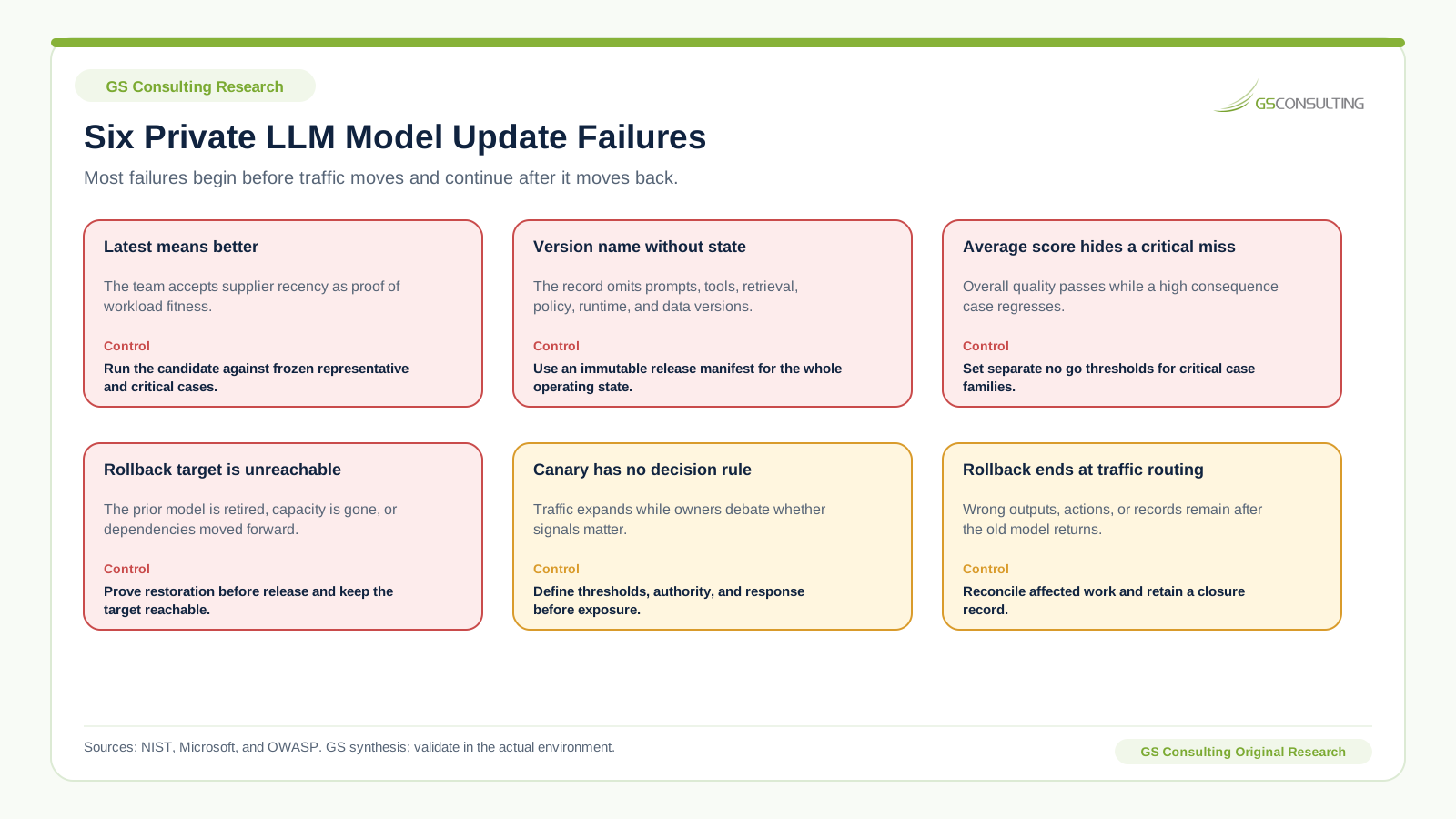
Latest means better. The team treats supplier recency or benchmark improvement as workload proof. Run the candidate against frozen representative cases and critical stop conditions.
Version name without state. The record names a model but omits prompts, tools, retrieval, policy, runtime, data, and dependencies. Use one immutable manifest for the entire operating release.
Average score hides a critical miss. Aggregate quality rises while a severe case regresses. Keep critical case families separate and give them binary stop thresholds.
Rollback target is unreachable. The prior model is retired, capacity was released, or dependencies moved forward. Prove restoration before promotion and maintain an alternate lane.
Canary has no decision rule. Traffic expands while owners debate whether a signal matters. Define thresholds, authority, and response before exposure.
Rollback ends at traffic routing. Wrong outputs, actions, and records remain after the old model returns. Reconcile affected work and retain a closure record.
A 90 Day Model Change Control Plan
First 30 days: establish identity and baseline. Inventory current models, prompts, retrieval, tools, schemas, policies, dependencies, data sets, environments, capacity, owners, approvals, and supplier dates. Create the release manifest. Freeze representative and critical cases. Define scoring rules and stop conditions.
Days 31 through 60: build gates and recovery. Automate repeatable comparisons where results are objective. Create human review rules where judgment is necessary. Test data boundaries, retrieval, schemas, tools, capacity, latency, cost, monitoring, and support. Restore the approved release in a timed rollback exercise.
Days 61 through 90: run a controlled release. Select a bounded canary population. Define signals, thresholds, owners, authority, and communication. Exercise a hold and rollback. Reconcile test outputs and actions. Review the evidence packet and approve the operating cadence before the next supplier deadline arrives.
After the first cycle, schedule recurring release reviews against supplier notices and internal needs. Keep the evaluation set current, but preserve historical cases so performance can be compared over time. Retest the rollback path after infrastructure, data, retrieval, tool, or policy changes.
The Model Update Evidence Packet
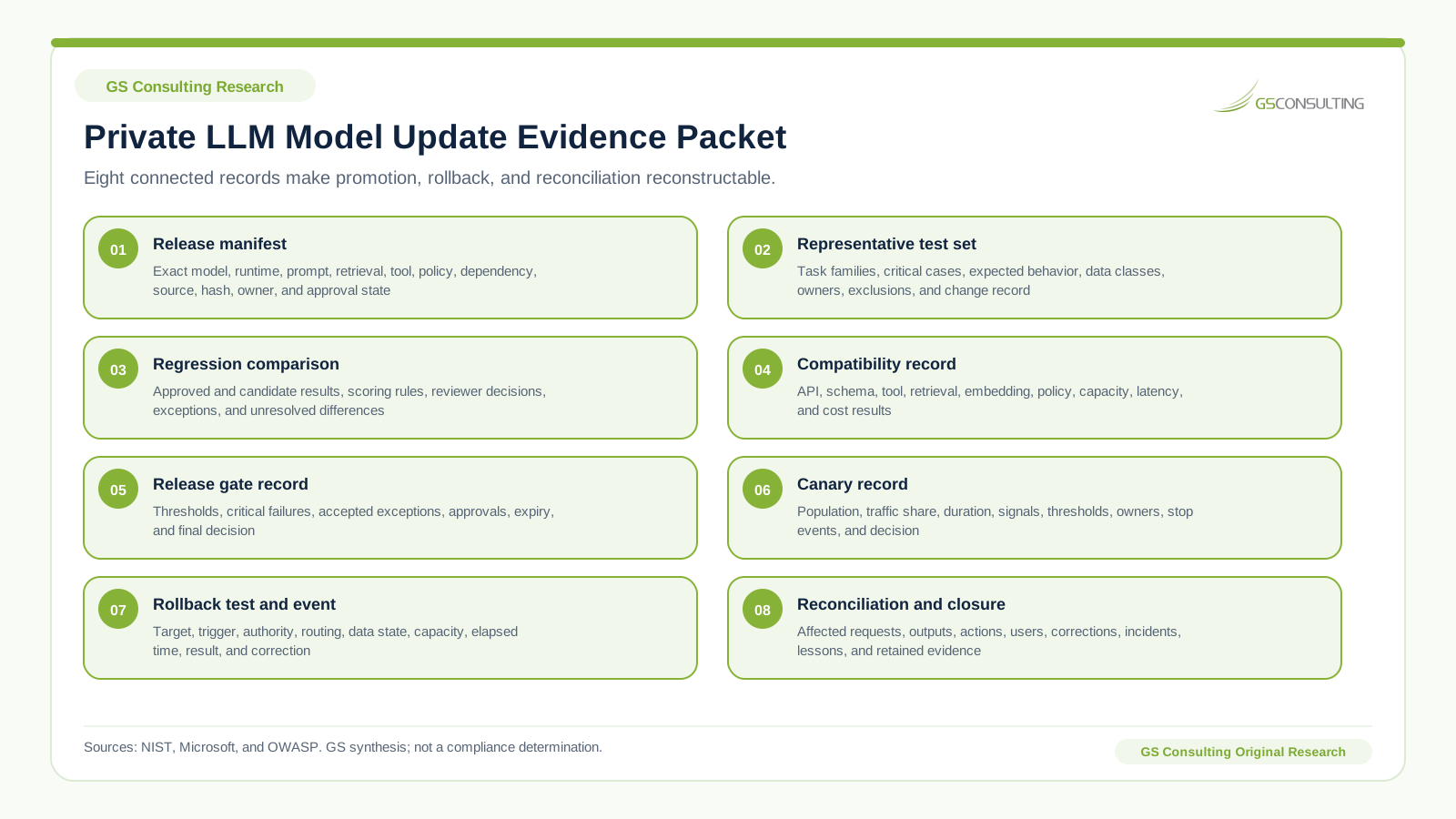
Retain the release manifest, representative test set, regression comparison, compatibility record, release gate decision, canary record, rollback test or event, and reconciliation closure. Link every artifact to the approved use case, current architecture, owners, source records, change identifier, and effective time.
The packet should prove action, not intent. A policy that says models are tested is not the test. A dashboard screenshot is not the threshold decision. A rollback document is not a successful restore. Keep the actual inputs, results, exceptions, decisions, and verified outcomes.
OWASP LLM supply chain guidance emphasizes model provenance, verifiable sources, integrity, component inventory, evaluation, and patching. Those concerns belong in the same operating record as release quality and recovery. A trustworthy source does not prove workload fit, and a strong evaluation does not excuse unknown provenance.
Sources and Research Method
GS Consulting reviewed public guidance from NIST, Microsoft, and OWASP, recorded eight public operating signals, scored ten control domains, tested an alternate weighting, and published the source register, assumptions, formulas, derived outputs, figures, and workbook with this article.
- NIST AI Risk Management Framework 1.0
- NIST SP 800 218A
- NIST AI RMF Playbook Manage
- NIST AI 800 4 on monitoring deployed AI systems
- Microsoft model lifecycle and retirements
- Microsoft model versions
- Microsoft model migration
- OWASP LLM03 2025 Supply Chain
The public product signals are examples, not promises for every service or deployment. Verify current provider terms, retirement dates, regional availability, model behavior, and the actual environment before making a release decision.
Frequently Asked Questions
How often should a private LLM model be updated?
Update when a candidate produces a measurable benefit, closes a material risk, or replaces a release that will lose support. Supplier recency alone is not a release reason. The schedule should reflect workload consequence, support deadlines, evaluation capacity, and rollback readiness.
What should be tested before a private LLM model update?
Test representative tasks, critical error cases, data boundaries, refusal behavior, retrieval, citations, prompt compatibility, output schemas, tools, access controls, capacity, latency, cost, monitoring, and the rollback path. Use the same baseline data and scoring rules for the approved and candidate releases.
What is the difference between rollback and failover?
Rollback restores an earlier approved release after a change fails. Failover moves service to another available component or environment during an outage. A design can require both, but they address different failure conditions and need separate tests.
Can a team roll back after a supplier retires the prior model?
Only if an approved and compatible target remains available. A managed service may remove the former release, while a self hosted system may preserve it but still lose compatible dependencies or capacity. Prove target availability before promotion and define an alternative recovery lane when retirement removes the old target.
How much traffic should a canary release receive?
There is no universal percentage. Start with the smallest population that can produce useful evidence while limiting consequence. Select by use case, data class, action authority, user group, and review capacity, then expand only after explicit thresholds pass.
Does a model update record establish compliance?
No. A release record can support security, governance, audit, and assessment evidence, but compliance depends on the applicable requirements, contract, system boundary, implementation, retained records, and authorized determinations.
Do not promote a model you cannot identify, compare, observe, and reverse.
The operating standard is simple: exact release state, representative proof, critical stop conditions, bounded exposure, a reachable return path, and complete reconciliation.
Plan a Model Change Review