Private LLM & Secure RAG | | 25 min read
Private LLM Model Selection for Regulated Workloads

Key Takeaways
Model selection is a production claim, not a leaderboard result
Prove the real task
Use representative cases, accepted outputs, refusals, sensitive data behavior, latency, review, and failure limits before trusting a generic score.
Task proof scores 100
The derived proof index ranks task criteria and representative evaluation first, followed by the data boundary, security, and identity at 98.
Approve a model lane
Record the workload, boundary, artifact, evaluation, operating duty, recovery, exit, exceptions, owner, and review trigger as one decision.
Private LLM model selection is not a search for the smartest model. It is a decision about which model lane can do a regulated job inside a boundary the organization can operate, test, recover, and defend.
A public leaderboard can narrow a candidate list. It cannot tell a defense contractor whether a model will refuse an unsafe request, preserve a data boundary, stay inside an approved network path, support a real latency target, survive a version change, or leave behind evidence an assessor can follow.
The practical unit of selection is not the model alone. It is the workload, artifact, runtime, data path, identity model, tool authority, evaluation set, monitoring plan, change process, recovery path, and accountable owner. If one of those is missing, the team has selected a demo.
The Private LLM and Secure RAG hub connects this guide to deployment options, security controls, observability, the private LLM and RAG architecture decision, and disaster recovery. GS Consulting supports the full path through Private LLM and Secure RAG implementation.
Do not buy a model before the acceptance test exists.
GS Consulting helps regulated teams define the workload, compare model lanes, build evaluation evidence, secure the operating boundary, and approve a production path with clear limits.
Review the Model DecisionPrivate LLM Model Selection: The Short Answer
Write the acceptance test first. Define who will use the system, which data it may receive, what task it performs, whether it retrieves enterprise sources, which tools it may call, what an accepted answer looks like, how humans review it, and what failure costs. Then compare a small set of model lanes under conditions that resemble production.
Score the lane on task quality, refusals, sensitive data handling, security, provenance, identity fit, latency, capacity, integration authority, observability, cost, change, recovery, and exit. Eliminate any lane that cannot meet a mandatory boundary or evidence condition, even if its quality score is higher.
Select the smallest practical operating burden that meets the workload. Approve a named artifact or managed service version with explicit limits, an owner, a release gate, a rollback path, and a review trigger. Selection ends when the team can support a production claim, not when procurement finishes.
Start With a Selection Brief, Not a Model List
The selection brief should fit on two pages. Its job is to make comparison possible before model marketing, internal preference, or sunk cost takes over.
- Work. Name the decision, document, analysis, answer, or action the model supports. Separate drafting from approval and advice from execution.
- Users. Name the user roles, administrators, reviewers, service accounts, and any external parties.
- Data. List allowed and prohibited classes, source systems, derived copies, prompts, outputs, logs, and retention.
- Authority. State whether the system reads, writes, sends, approves, schedules, changes a record, or only drafts for review.
- Acceptance. Define quality, citation, refusal, leakage, latency, capacity, review effort, and cost thresholds.
- Operations. Name the owner for releases, monitoring, incidents, recovery, exceptions, vendor changes, and retirement.
A broad statement such as “summarize contracts” is not enough. A useful brief says which contract sections, which source system, which users, which data categories, which citations, what level of completeness, what must be refused, who reviews the result, and whether the output can change a record.
Private LLM Selection Has Four Proof Surfaces
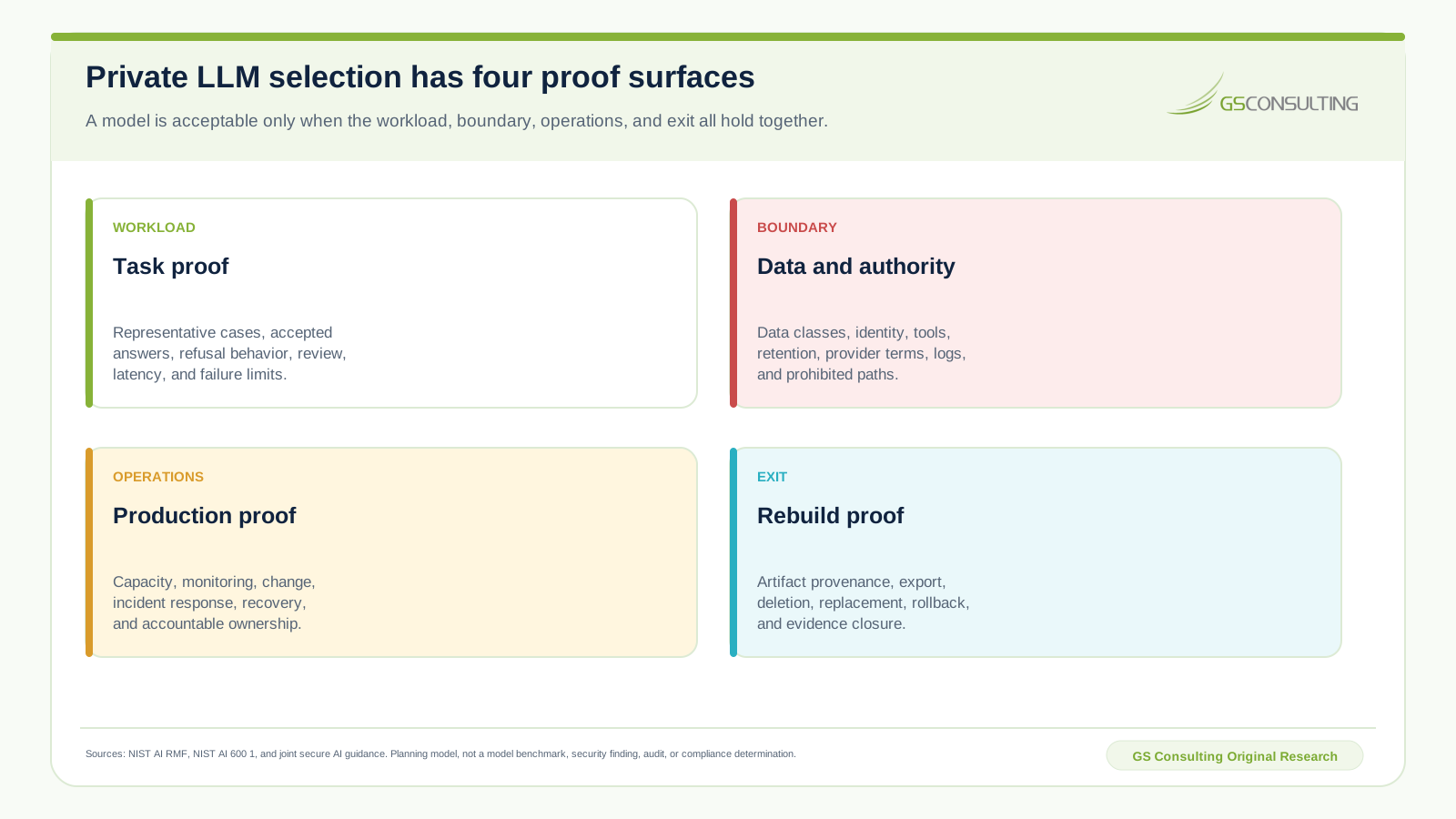
Workload proof answers whether the system does the actual job. Boundary proof answers where data, authority, artifacts, and telemetry may go. Production proof answers whether the lane can meet capacity, monitoring, incident, and change duties. Rebuild proof answers whether the organization can roll back, recover, replace, export, and delete.
These surfaces interact. A self hosted model can improve runtime control but increase patching, capacity, artifact, and recovery duty. A managed model can reduce infrastructure work but add dependence on provider terms, service changes, telemetry choices, and export. A smaller model can reduce capacity pressure but require narrower task design or more human review.
NIST AI RMF does not prescribe a product. It asks organizations to map the context, define tasks, document test methods, evaluate under conditions similar to deployment, understand limits, address security and resilience, and manage risk. That is the right frame for selection.
GS Regulated Workload Model Selection Proof Index
GS Consulting built the Model Selection Proof Index to prioritize the evidence that should exist before a private LLM moves from interest to pilot, production, and scale.
The model scores twelve decision domains from 0 to 100. The inputs are GS analyst ratings from one to five for source convergence, decision consequence, comparative leverage, evidence value, and execution feasibility. Base weights are 25, 25, 20, 20, and 10 percent. An alternate case moves five points from source convergence to decision consequence.
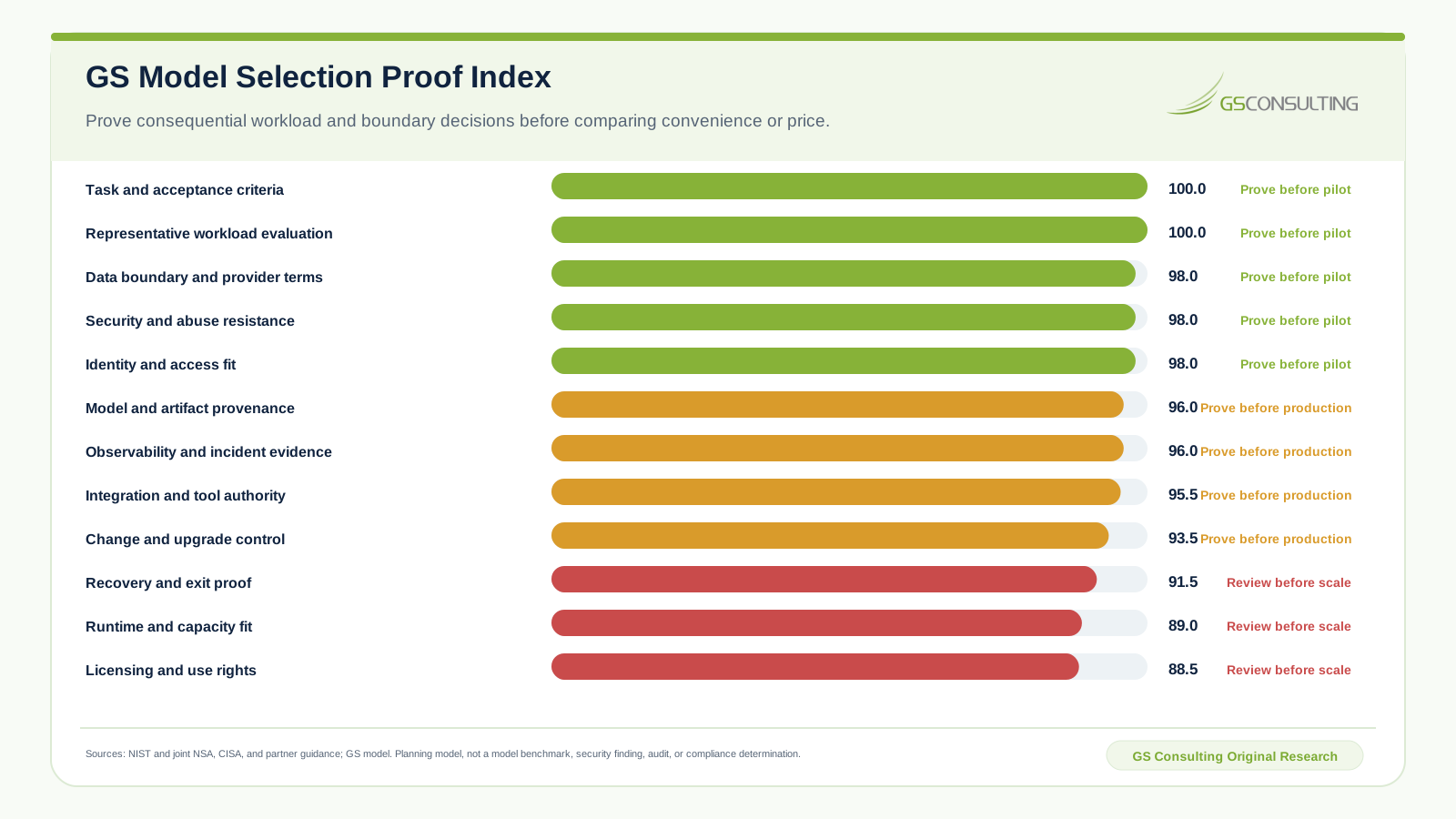
Two domains score 100: task and acceptance criteria, and representative workload evaluation. The data boundary, security and abuse resistance, and identity and access fit each score 98. Provenance and observability score 96. Integration and tool authority scores 95.5.
The lowest scores are still high: recovery and exit at 91.5, runtime and capacity at 89, and licensing and use rights at 88.5. Lower does not mean optional. It means these domains usually become discriminators after mandatory workload and boundary claims are clear.
The alternate weighting preserves every planning tier and changes no score by more than 0.5 points. That stability matters because the output is meant to sequence proof, not manufacture precision.
Model caveat: this is a GS Consulting derived planning tool based on cited public sources and documented assumptions. It is not an official model benchmark, security assessment, legal opinion, audit result, accounting opinion, compliance determination, NIST decision, NSA decision, CISA decision, provider assessment, or regulatory determination.
Compare Stable Model Lanes Before Product Names
Product names and model versions move quickly. Operating lanes move more slowly. Compare the lanes first, then test the strongest candidates inside the lane that fits the boundary.
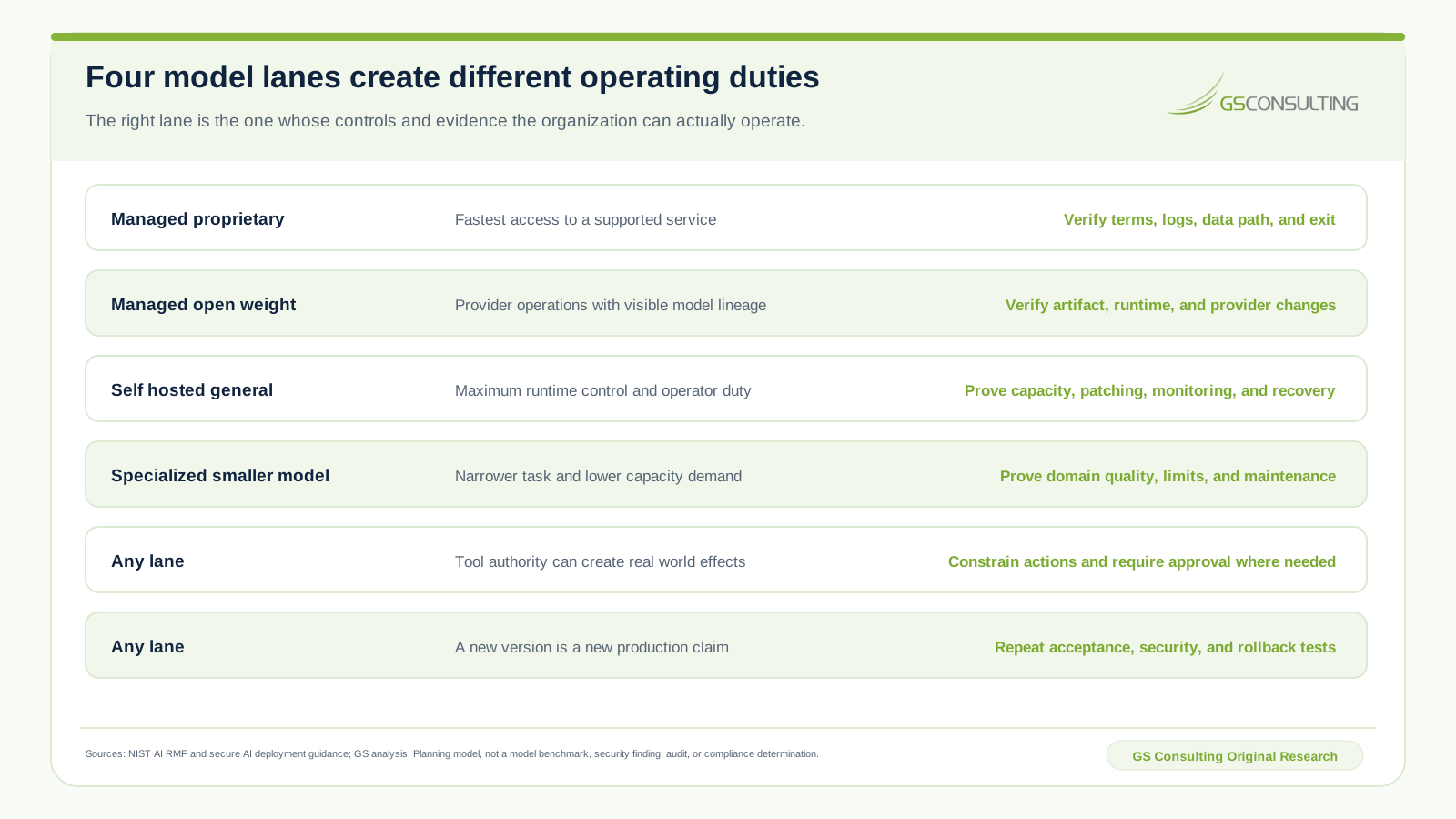
| Model lane | Useful when | Main proof burden | Common trap |
|---|---|---|---|
| Managed proprietary | A supported service can meet the approved boundary | Provider terms, data path, logs, change, service continuity, and exit | Assuming a private endpoint settles data use and retention |
| Managed open weight | The team wants provider operations with clearer artifact lineage | Artifact provenance plus provider runtime and version behavior | Calling weights open while the service path stays opaque |
| Self hosted general | The organization needs direct runtime control and can operate it | Capacity, hardening, patching, monitoring, incident response, and recovery | Confusing possession of weights with secure operations |
| Specialized smaller model | The task is narrow, repeatable, and supported by strong evaluation | Domain quality, refusal limits, maintenance, and change evidence | Stretching a narrow model into an untested general role |
Do not force every workload into one enterprise winner. The model that fits source code review may not fit contract interpretation, controlled document search, or tool assisted operations. A regulated portfolio can use several approved lanes if each lane has a clear purpose, boundary, evaluation set, and owner.
Build a Representative Workload Evaluation
Public benchmarks are useful filters. They are not the production test. The organization needs a private evaluation set drawn from the work it expects the system to perform, with approved handling for sensitive examples.
Use enough cases to expose variation, not just happy paths. Include short and long inputs, ambiguous language, incomplete sources, conflicting sources, stale facts, prohibited requests, prompt injection attempts, data a user should not see, unsupported tool actions, and cases that require a human decision.
- Expected result. Record the answer, citation, refusal, escalation, or action that should occur.
- Quality measure. Score correctness, completeness, grounding, citation quality, instruction following, and useful uncertainty.
- Safety measure. Test sensitive data exposure, denied sources, unsafe requests, prompt injection, tool limits, and output handling.
- Operating measure. Capture latency, throughput, capacity, failures, retries, human review time, and cost per accepted task.
- Reproduction. Record the model artifact or service version, prompt, configuration, retrieval state, tool version, and test date.
A single composite number hides too much. Keep hard gates for mandatory conditions. A model that exposes a prohibited record or takes an unauthorized action fails even if its average quality is excellent. A model that is safe but cannot complete the task at the required volume also fails.
NIST AI RMF Measure 2.3 calls for evaluation under conditions similar to deployment. That means the same data shape, context length, retrieval path, permissions, prompts, guardrails, tools, runtime, and human review pattern the production claim depends on.
Data, Security, and Provenance Can Eliminate a Candidate
Private does not describe one architecture. It can mean a managed tenant, a dedicated service, a private network path, organization controlled compute, self hosted weights, or a marketing label. Replace the word with a diagram and a contract record.
Trace prompts, retrieved context, uploaded files, training or adaptation data, outputs, embeddings, caches, logs, support access, abuse monitoring, backups, and deleted data. Record who can access each copy, where it resides, how long it remains, whether it can improve a provider service, and how deletion is proved.
For an open weight candidate, verify the source, version, license, checksums or signatures, dependency chain, known limitations, update path, and the party accountable for review. Joint NSA, CISA, and partner guidance recommends protecting models and data, controlling access to weights, using trusted data sources, hardening infrastructure, and maintaining secure incident procedures.
Threat model the complete path:
- Unauthorized prompt or source access.
- Sensitive information disclosure in output, telemetry, cache, or support paths.
- Prompt injection or poisoned source content that changes behavior.
- Unsafe tool use, excessive agency, or actions that bypass review.
- Altered model artifacts, dependencies, containers, drivers, or update channels.
- Capacity exhaustion, denial of service, unbounded consumption, or degraded fallback.
A candidate does not need to eliminate every risk. It needs a documented risk decision, tested controls, accepted residual exposure, an incident path, and an owner with authority to stop the service.
Price the Operating Model, Not the Token
Model price is one line in total cost. A managed service may charge for tokens or capacity. A self hosted lane adds accelerators, storage, networking, orchestration, licenses, engineering, security, monitoring, patching, support, evaluation, incident response, recovery, and idle headroom.
Measure cost per accepted task. Include model inference, retrieval, reranking, guardrails, retries, failed requests, human review, corrections, and operating labor. A cheap call that produces rejected work is not cheap. A larger model that reduces review may be economical. A smaller model that meets a narrow task at predictable capacity may be better still.
Capacity proof should cover normal volume, peak volume, long context, concurrent users, failure of a dependency, degraded operation, maintenance, and recovery. If the service is essential, test the alternate path. If no alternate exists, record the consequence and explicit risk acceptance.
Observability is part of selection. The chosen lane must supply enough information to connect user and service identity, policy, sources, model version, prompt or template version, tool calls, latency, token or compute use, quality result, human review, incident, and change. The private LLM observability guide gives that trace a concrete operating structure.
A New Model Version Is a New Production Claim
Managed providers change services. Open weight projects publish new artifacts. Infrastructure libraries, drivers, containers, prompts, guardrails, indexes, and tools also change behavior. The approval record should state which changes require focused review and which require the full evaluation set.
Keep a candidate and release register with artifact or service version, provider terms, license, source, checksum where applicable, runtime, prompt and policy versions, evaluation result, security result, exceptions, approver, release date, and rollback target.
Recovery and exit belong in selection because they expose hidden dependency. Can the organization restore a known artifact? Can it rebuild the retrieval index from authoritative sources? Can it rotate secrets, restore policy, test denied paths, reconcile tool effects, and reopen with approval? Can it export necessary records, delete provider copies, replace the model, and preserve audit evidence?
If those answers are vague, the model lane owns the organization. The companion private LLM disaster recovery guide turns the recovery claim into a dependency map and release packet.
Use a Five Stage Model Selection Decision
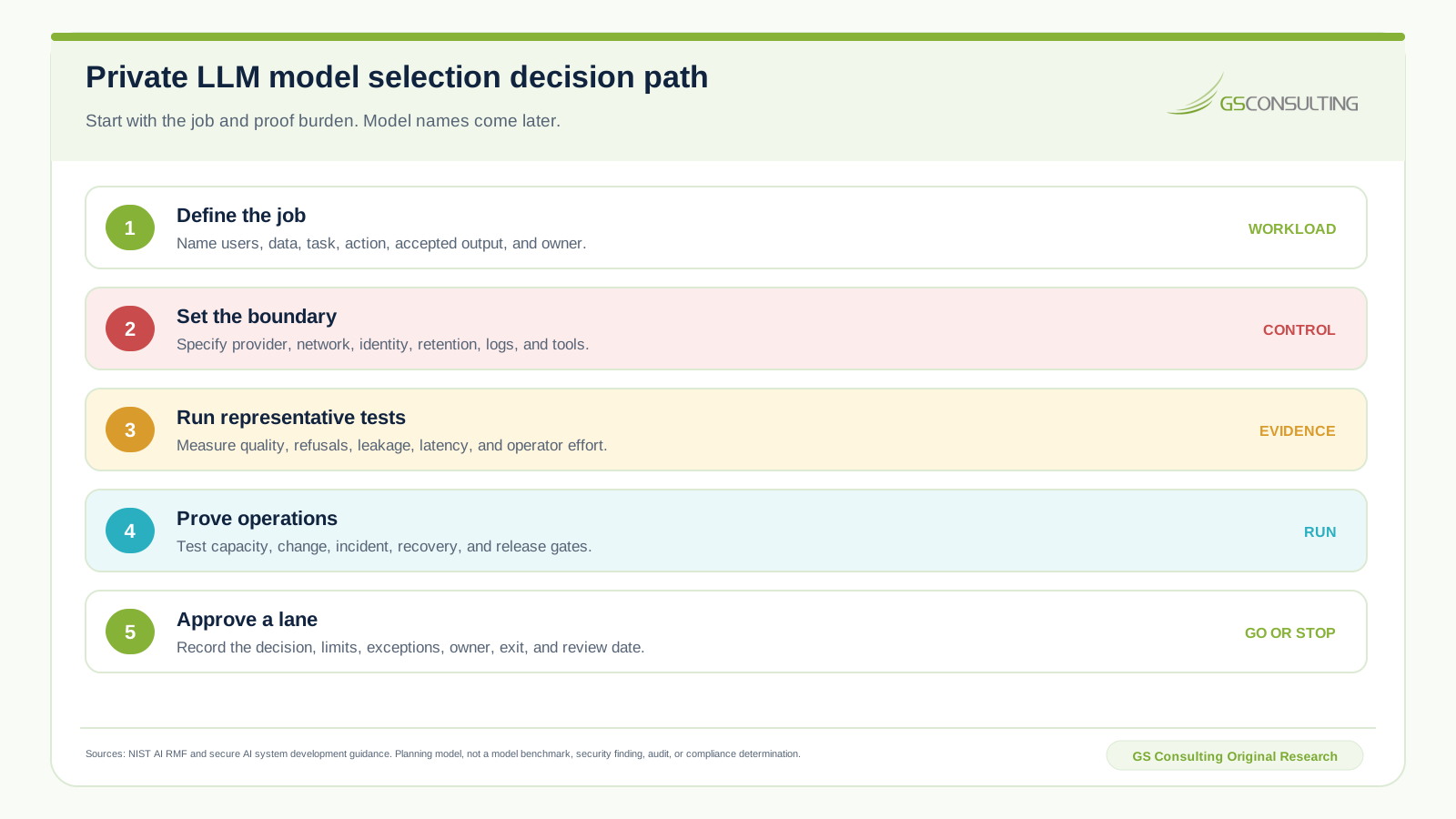
- Define the job. Approve the workload brief, users, data, task, action, accepted result, failure limits, and owner.
- Set the boundary. Record the allowed provider, network, identity, data, retention, telemetry, administration, and tool paths.
- Run representative tests. Compare the candidates on required quality, refusal, leakage, latency, review, capacity, and cost outcomes.
- Prove operations. Exercise monitoring, change, incident, fallback, recovery, and release gates with named owners.
- Approve a lane. Record the chosen artifact or service, evidence, limits, exceptions, review trigger, rollback, exit, and decision date.
Use gates, not averages. A failed mandatory boundary test stops the candidate. A failed quality target returns the design to workload, prompt, retrieval, or candidate selection. A missing recovery or exit proof can limit the pilot even when the model is otherwise strong.
Six Private LLM Model Selection Failures
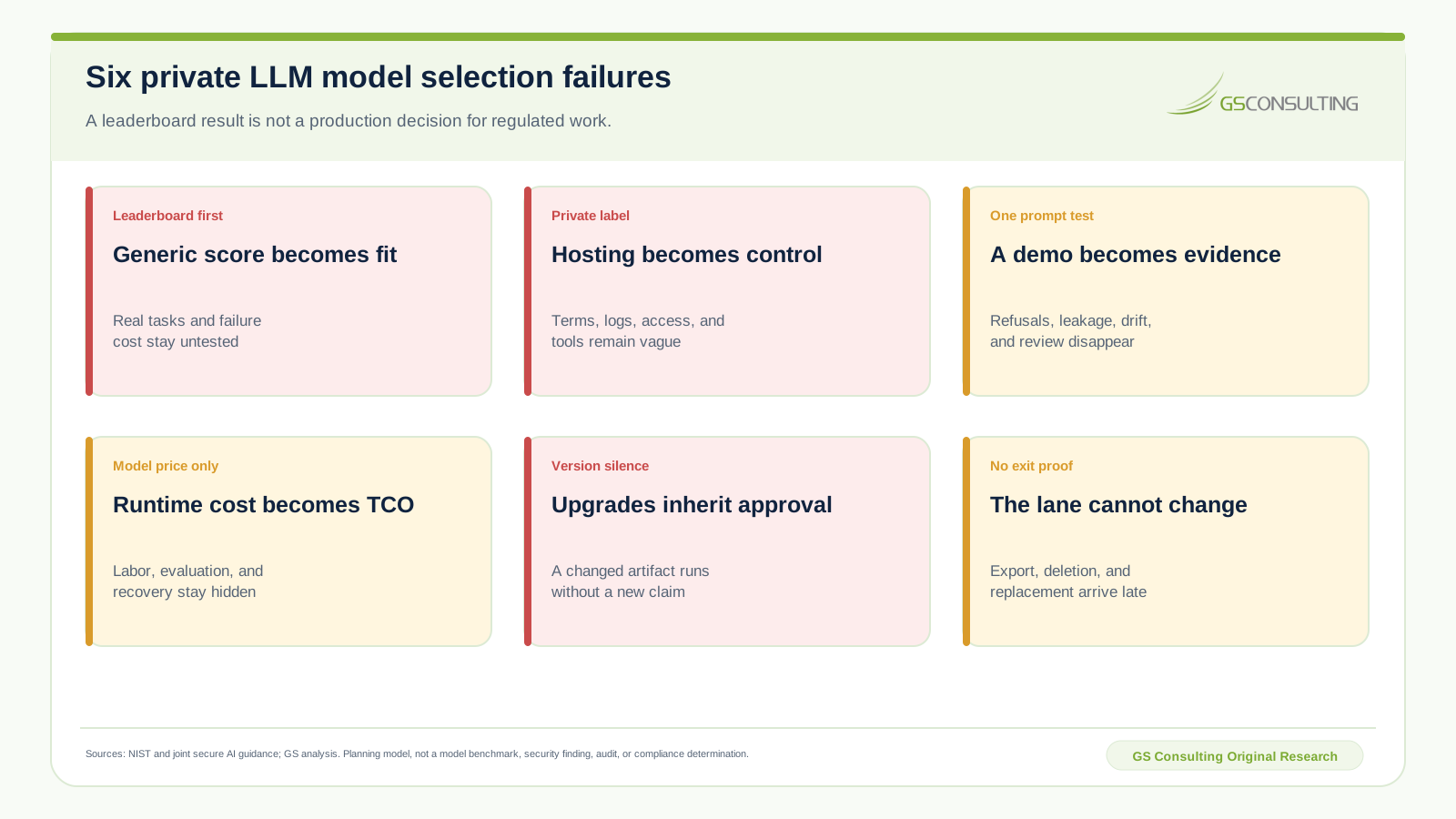
Leaderboard first. A broad score becomes task fit without representative cases. Private label. Hosting becomes proof while data, logs, administration, and tools remain unclear. One prompt test. A demo becomes evidence without refusals, sensitive cases, or drift.
Model price only. Runtime, evaluation, review, monitoring, recovery, and support disappear from cost. Version silence. A changed artifact or service inherits approval. No exit proof. Export, deletion, replacement, and evidence retention are discovered after dependency becomes expensive.
A 90 Day Private LLM Model Selection Plan
Days 1 through 15: define. Approve one or two narrow workloads. Build the data and authority map. Name mandatory conditions, evaluation owners, security owners, service owners, and decision authority. Select no more than four model lanes or candidates.
Days 16 through 35: build evidence. Create the representative evaluation set, expected results, refusal cases, sensitive data cases, tool limits, and scoring guide. Complete provider, license, provenance, data path, security, and supply chain diligence.
Days 36 through 55: test. Run candidates under production like conditions. Capture quality, grounding, refusal, leakage, latency, throughput, capacity, review, failures, and cost per accepted task. Record every configuration and artifact version.
Days 56 through 70: operate. Test monitoring, alert ownership, change, rollback, incident response, manual fallback, backup, restore, index rebuild, and exit. Close any mandatory gap before a broader pilot.
Days 71 through 90: approve and watch. Select a lane, document limits and exceptions, authorize a controlled release, monitor a defined watch period, review real user outcomes, and decide whether the evidence supports scale, redesign, or stop.
Keep the Selection Evidence as One Packet
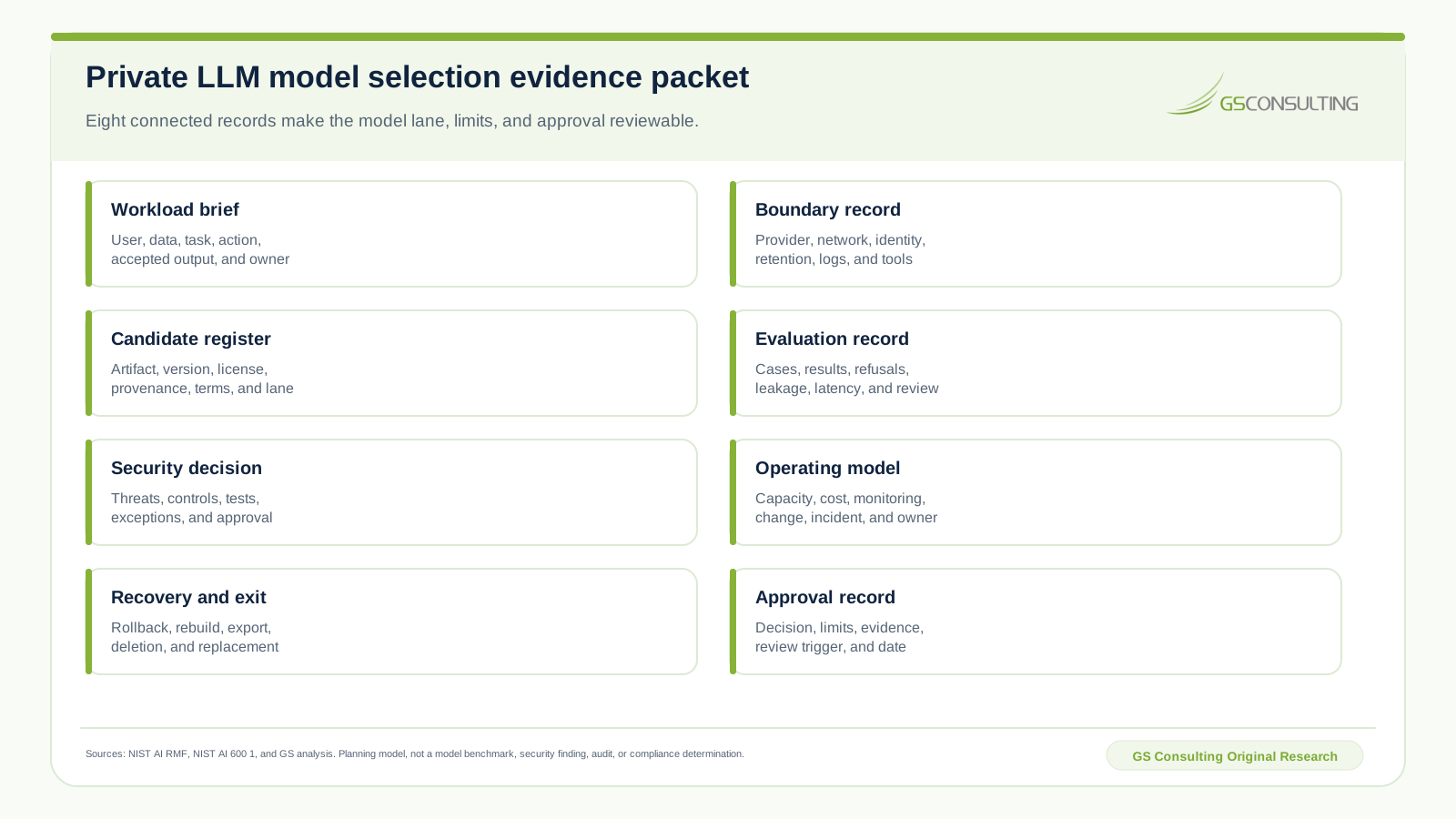
The packet should include a workload brief, boundary record, candidate register, evaluation record, security decision, operating model, recovery and exit record, and approval record. Store links to raw test results, configurations, contracts, diagrams, threat models, incident exercises, and decisions rather than copying sensitive evidence into an uncontrolled summary.
Give every record an owner, version, date, source, approval state, and review trigger. When the model or environment changes, update the connected records. That makes model governance an operating process instead of an annual document hunt.
Research Sources and Method
This guide uses primary public sources accessed August 28, 2026. The research package separates public observations, GS analyst inputs, derived scores, sensitivity results, figure data, and limitations.
- NIST AI Risk Management Framework Core for context, task definition, evaluation, validity, security, resilience, documentation, and risk response.
- NIST AI 600 1, Generative Artificial Intelligence Profile for generative AI risk, provenance, testing, monitoring, incident, and change practices.
- NIST AI RMF Playbook for suggested third party documentation, evaluation, monitoring, and accountable risk decisions.
- NIST SP 800-218A for secure development practices applied to generative AI and foundation models.
- Guidelines for Secure AI System Development from NSA, CISA, and international partners for lifecycle security, model and data protection, incident procedures, and backups.
- Deploying AI Systems Securely for threat models, protected model weights, trusted data, hardened infrastructure, and deployment responsibility.
- AI Data Security for provenance, integrity, access, encryption, storage, supply chain risk, poisoning, and drift.
- NIST SP 800-161 Revision 1 Update 1 for technology supply chain risk practices.
The source register, model inputs, formula specification, sensitivity analysis, figure data, model lane matrix, decision path, failure modes, evidence packet, data dictionary, methodology, and summaries are published in the repository research package.
Private LLM Model Selection FAQ
How should a regulated organization select a private LLM?
Start with a defined workload, data boundary, authority path, accepted output, and accountable owner. Compare a small set of model lanes on representative task quality, refusals, sensitive data behavior, latency, capacity, security, operating effort, change control, recovery, and exit. Approve the lane and limits with evidence, not a generic model rank.
Is an open weight model always more private?
No. Open weights can improve artifact visibility and deployment choice, but privacy depends on the whole operating path: hosting, network, identity, data use, telemetry, retention, tools, administration, support, updates, and deletion. A managed service can provide strong controls, while a poorly operated self hosted model can expose sensitive data.
Which benchmark should private LLM model selection use?
Public benchmarks can screen candidates, but the approval benchmark should be a versioned set of representative workload cases. It should cover accepted answers, refusals, source use, sensitive data, unsafe requests, latency, review effort, tool actions, and known failure categories under production like conditions.
Should a team choose the largest available private LLM?
Not by default. A larger model can improve some tasks, but it also increases capacity, cost, latency, and operating pressure. A smaller specialized model may be easier to constrain and operate if it meets the task. The decision should follow measured workload fit and control evidence.
How often should a private LLM selection decision be reviewed?
Review on a defined cadence and when the model, provider terms, hosting path, data sources, prompts, guardrails, tools, user population, workload, security conditions, or governing requirements materially change. A new model version should not inherit approval without focused retesting.
Does a private LLM make a regulated workload compliant?
No. A private LLM can support a controlled architecture, but compliance conclusions depend on the governing obligation, system boundary, implementation, operating evidence, contracts, and assessment method. The GS model in this guide is a planning tool, not a legal or compliance determination.
Choose the Model You Can Prove and Operate
Not the largest model. Not the newest model. Not the model with the cleanest demo.
The operating standard is a named model lane that meets a representative workload, stays inside an approved boundary, survives security and failure tests, fits the real capacity and cost envelope, produces reviewable evidence, and can be changed, recovered, replaced, and stopped by an accountable owner.