Private LLM & Secure RAG | | 30 min read
Private LLM Evaluation Framework: Tests, Release Gates, and Evidence

Key Takeaways
Evaluation is a release decision, not a leaderboard
Release authority and data boundary both score 100
The team must define who can accept risk and prove that sensitive data stays inside the approved path.
Evaluate the workflow in layers
Separate retrieval, response, security, tools, human review, latency, cost, and operating outcome so a failure can be located.
Past approval does not cover new behavior
Every material model, prompt, retrieval, data, tool, or policy change needs affected regression tests and a new release decision.
A private LLM evaluation framework is not a collection of clever metrics. It is the evidence used by a named owner to release, limit, reject, pause, or retire a real workflow.
The weak approach starts with a public benchmark, adds a few example prompts, asks another model to grade the answers, and reports one average. The result looks precise. It says almost nothing about the hard cases: unauthorized retrieval, unsupported claims, stale sources, wrong tool actions, failed refusals, reviewer disagreement, or a model change that breaks yesterday’s approval.
A model can score well and still fail the business. Evaluate the system that people will actually use: identity, data, retrieval, prompt, model, tools, human decisions, integrations, latency, cost, monitoring, and outcome.
This guide belongs to the Private LLM and Secure RAG hub and supports the private LLM and secure RAG implementation service. Read it with the private LLM data governance guide, private LLM red teaming guide, private LLM access control architecture, private LLM observability, and the private LLM model update and rollback guide.
Turn evaluation into a release decision.
GS Consulting helps teams define critical errors, build representative cases, test each workflow layer, set thresholds, calibrate reviewers, automate regression, and preserve approval evidence.
Design the Evaluation SystemPrivate LLM Evaluation: The Short Answer
Define the use and release authority first. Name the users, data, source systems, actions, expected benefit, failure consequences, critical error classes, and risk tolerance. Build a versioned case set that covers normal, difficult, denied, stale, malformed, malicious, and failure conditions. Measure retrieval, response, security, tools, human review, latency, cost, and business outcome separately. Apply release gates by critical error class, not one blended average. Monitor production and rerun affected tests after every material change.
The NIST AI RMF Measure function calls for documented testing in conditions similar to deployment. It covers validity, reliability, safety, security, accountability, explanation, privacy, fairness, and effectiveness. That is a useful scope. It does not give one universal metric or threshold because the decision depends on context.
The Evaluation Surface Is Wider Than Model Accuracy
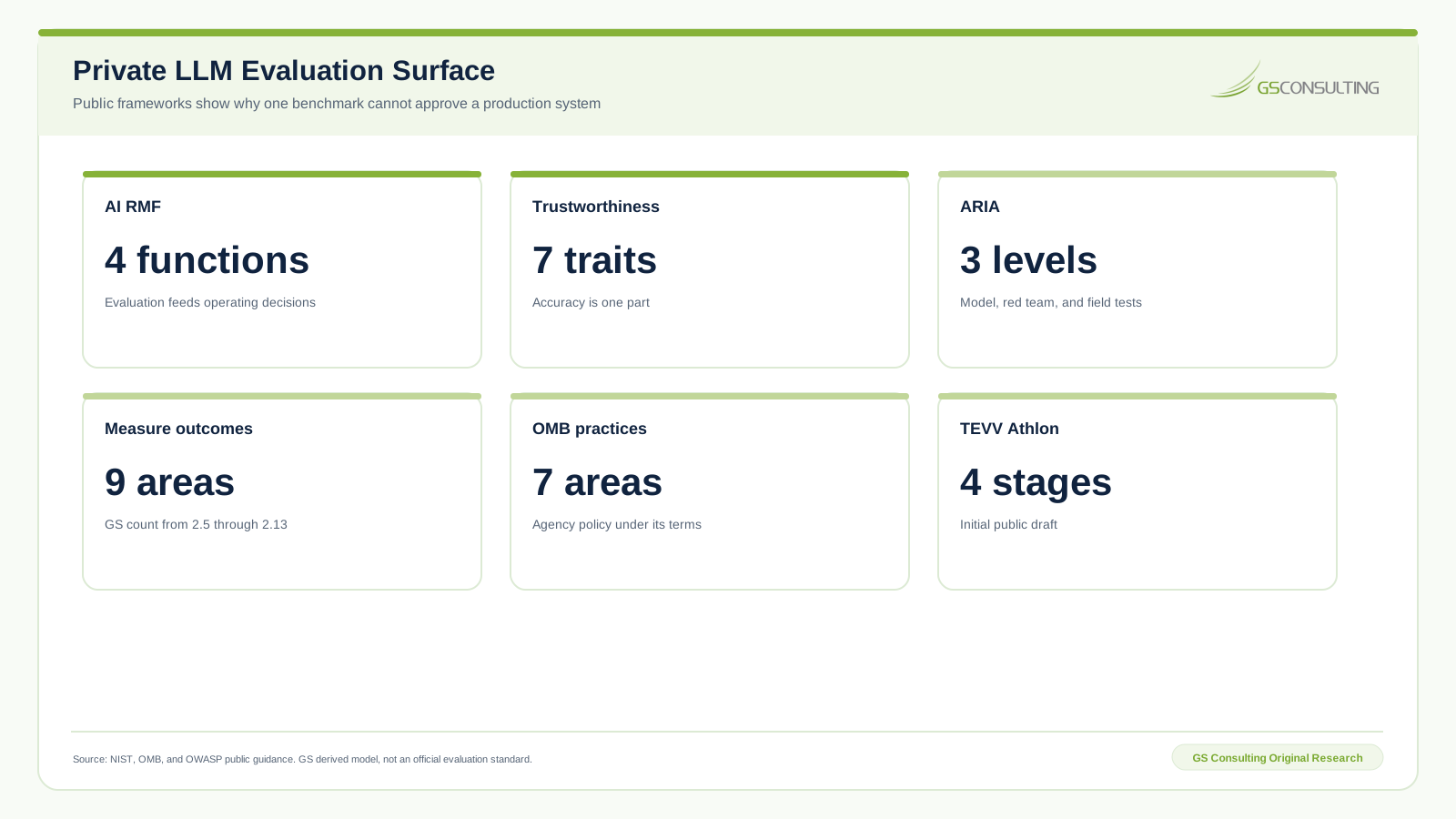
NIST AI RMF 1.0 identifies seven trustworthiness characteristics and four risk functions. NIST ARIA 0.1 adds three complementary evaluation levels: model testing, red teaming, and field testing. The lesson is practical. Laboratory prompts, adversarial testing, and realistic user interaction answer different questions.
The 2026 NIST TEVV Athlon initial public draft proposes a four stage method for customized assessments. It is open for comment through October 6, 2026 and should be treated as emerging work, not final guidance. It reinforces a sound point: the evaluation should be designed around the objective and context, not copied from a generic scorecard.
GS Private LLM Evaluation Gate Priority Index
GS scored ten evaluation domains using five one to five ratings: harm consequence, production exposure, silent failure risk, evidence value, and recovery pressure. Base weights are 30, 25, 20, 15, and 10 percent. Each result is rounded to a whole point on a zero to 100 planning scale.
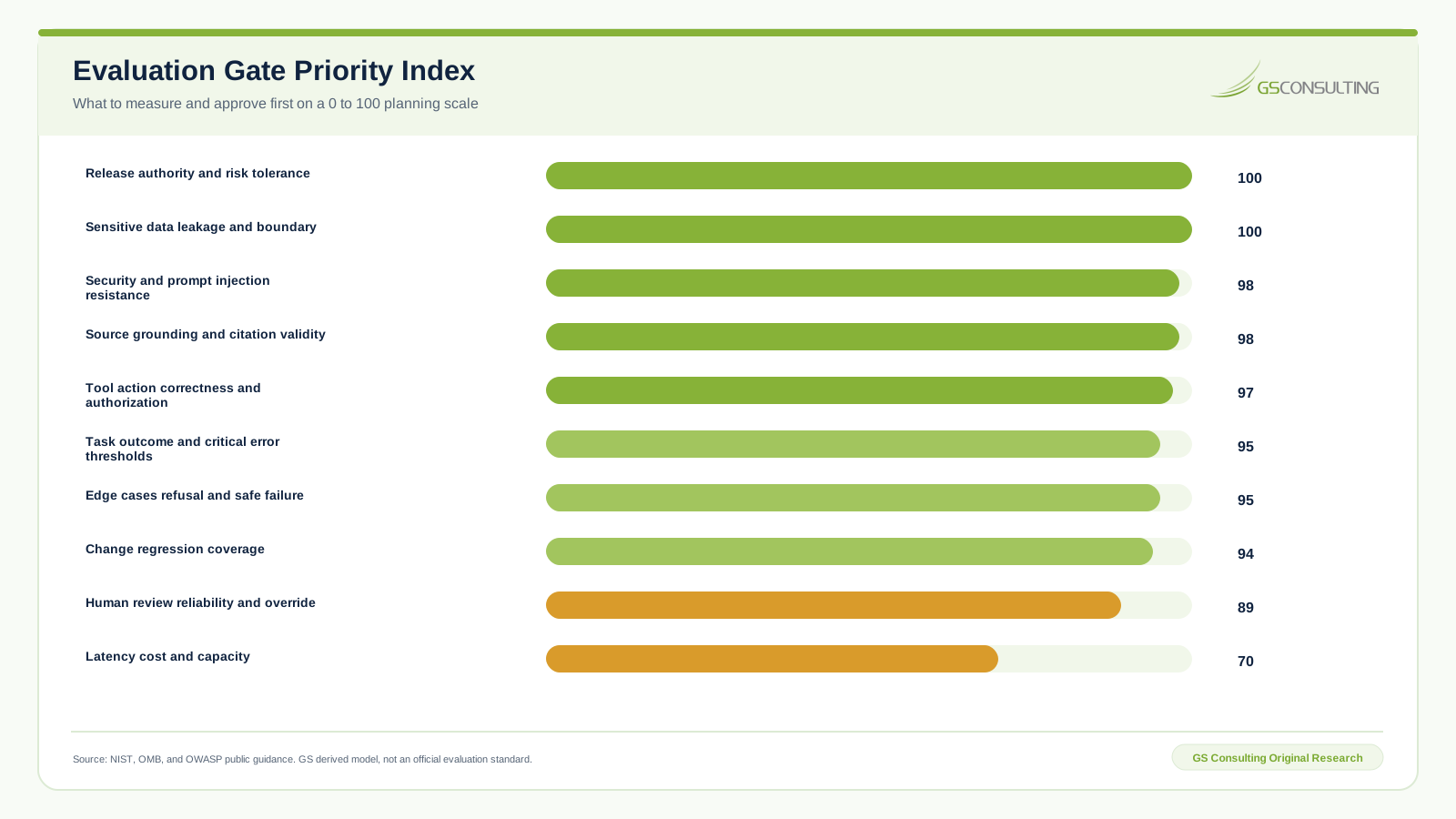
The model puts decision authority and data leakage ahead of convenience metrics. That is deliberate. A team can tolerate a slow answer during a pilot. It should not tolerate an unauthorized source, an unsupported claim that drives a contract decision, or a tool action outside approved authority.
Latency, cost, and capacity score 70. They still matter. They belong after critical risk gates because a fast, cheap system that leaks data or takes wrong actions is not a production success.
The sensitivity case moves five percentage points from harm consequence to recovery pressure. No score moves more than one point. The leading gate remains stable. The result is planning evidence, not statistical proof.
The index is a GS Consulting derived planning tool. It is not an official NIST, OMB, OWASP, DoD, legal, audit, compliance, safety, certification, or regulatory determination. Replace ratings with the real workflow, cases, results, incidents, contract duties, and approved risk tolerance.
Write the Evaluation Charter Before Writing Tests
Name the workflow and the decision. State who will use the system, what data it may process, which actions it may take, what benefit is expected, what failure could cause, who owns each layer, who approves release, and who can pause it. Define the model, prompt, retrieval, policy, tools, integrations, environment, and version in scope.
Then list critical errors. A critical error is not simply a low score. It is a result the organization has decided cannot pass: disclosure of a protected record, action without required approval, unsupported legal or contract claim, wrong program data, failed refusal, missing citation where source proof is required, or a system update that cannot be reconciled.
Set thresholds before the final evaluation. Otherwise the team will move the target after seeing the result. If uncertainty remains, release with a narrower population, smaller data boundary, read only authority, stronger review, or no production use.
Build a Case Set That Resembles the Real Work
A good case set is not a random pile of prompts. It is a controlled sample of the workflow. Use real historical cases when authorized, sanitized cases when sensitive data is not needed, and synthetic cases for rare or dangerous failures. Record the source, expected result, acceptable variation, critical error class, sensitivity, reviewer, and version.
- Routine cases. Common requests that should pass quickly and consistently.
- Difficult cases. Long documents, weak scans, ambiguous language, conflicting sources, and missing fields.
- Denied cases. Unauthorized records, wrong tenant, wrong program, prohibited tool, and restricted export.
- Stale cases. Changed policy, revoked access, old index content, and superseded records.
- Adversarial cases. Direct and indirect prompt injection, misleading context, hostile files, and tool abuse.
- Failure cases. Empty retrieval, timeout, partial write, broken connector, unavailable model, and overloaded review queue.
Coverage matters more than a round case count. Track which workflows, document types, users, data classes, actions, risks, and error classes appear. Add production failures and disputed outcomes to the regression set after review.
Evaluate Retrieval, Response, Security, Tools, and Human Review Separately
One end result can fail for several reasons. The correct source was not eligible. The retriever missed it. The model ignored it. The answer cited it but did not support the claim. The tool executed the wrong parameters. The reviewer approved without enough context. Separate the layers so the team can fix the right thing.
| Layer | Question | Useful evidence |
|---|---|---|
| Access and data | Did only approved data enter the case? | Policy decision, source IDs, deny results, leakage tests |
| Retrieval | Were the right current sources eligible and found? | Eligible set, retrieved set, rank, freshness, missing source |
| Response | Did the answer satisfy the task and follow the sources? | Required fields, claim support, citations, critical errors |
| Security | Did manipulated content change policy or expose data? | Attack case, blocked path, residual effect, recovery |
| Tools | Was the action correct, authorized, bounded, and reconciled? | Parameters, approval, prior state, result, rollback |
| Human review | Could reviewers detect, correct, reject, and explain errors? | Agreement, edits, rejection, time, escalation, rationale |
| Operations | Can the system meet the service need without hiding risk? | Latency, cost, capacity, exceptions, fallback, support |
Use model grading carefully. A model judge can scale structured review, but it brings its own prompt, model, bias, and failure modes. Calibrate it against qualified human decisions. Track agreement by error class. Use deterministic checks for fields, citations, permissions, formats, and tool parameters when the answer can be tested directly.
Use Critical Gates, Not One Blended Average
Report counts and rates by error class, not only an overall score. A 98 percent average can still hide one leaked record or one unapproved payment action. Define which errors block release regardless of the average.
- Data gate. No unauthorized source, protected output, or prohibited retention in the tested paths.
- Grounding gate. Required claims resolve to sources that actually support them.
- Action gate. Tools use approved functions, resources, parameters, credentials, and human decisions.
- Quality gate. Critical fields and workflow outcomes meet the threshold by case type.
- Failure gate. Empty, uncertain, malformed, stale, or unavailable conditions fail safely.
- Human gate. Reviewers receive enough context and show acceptable agreement on consequential decisions.
- Operating gate. Latency, cost, support, fallback, and capacity fit the limited production plan.
OMB Memorandum M-25-21 provides a useful public signal for covered high impact federal agency use: predeployment testing, impact assessment, ongoing monitoring, operator training, human oversight, remedies, and feedback. It applies to federal agencies under its terms. Contractor obligations depend on the contract, customer direction, data, system, and actual use.
Evaluation Proof Must Survive Change
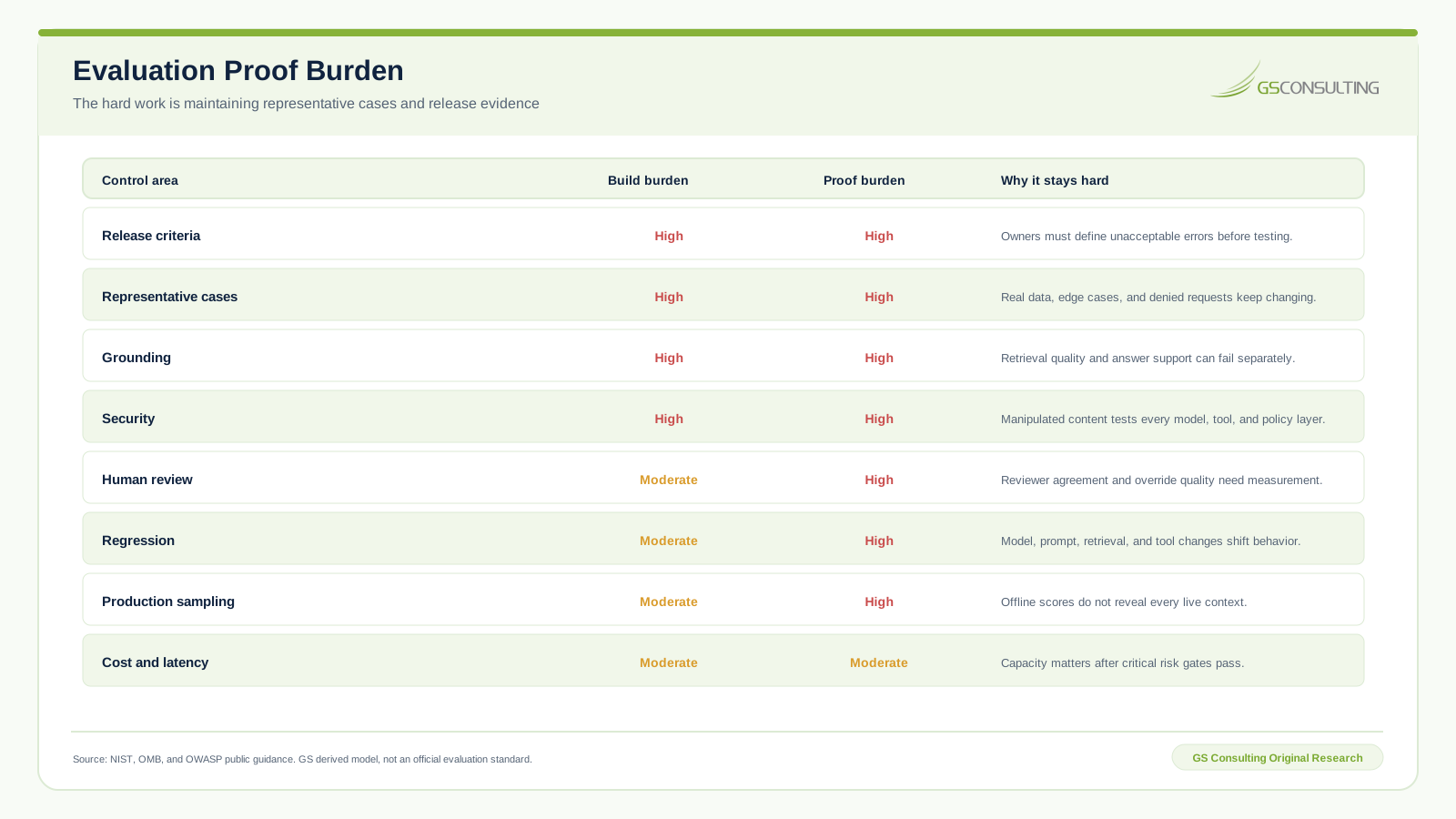
Version every evaluation input. Record the model, prompt, system instructions, retrieval configuration, embedding model, index snapshot, data sources, tool definitions, policy, judge, threshold, environment, and case set. A result without that context cannot support regression or explain why a later run changed.
Use a Five Stage Evaluation Path
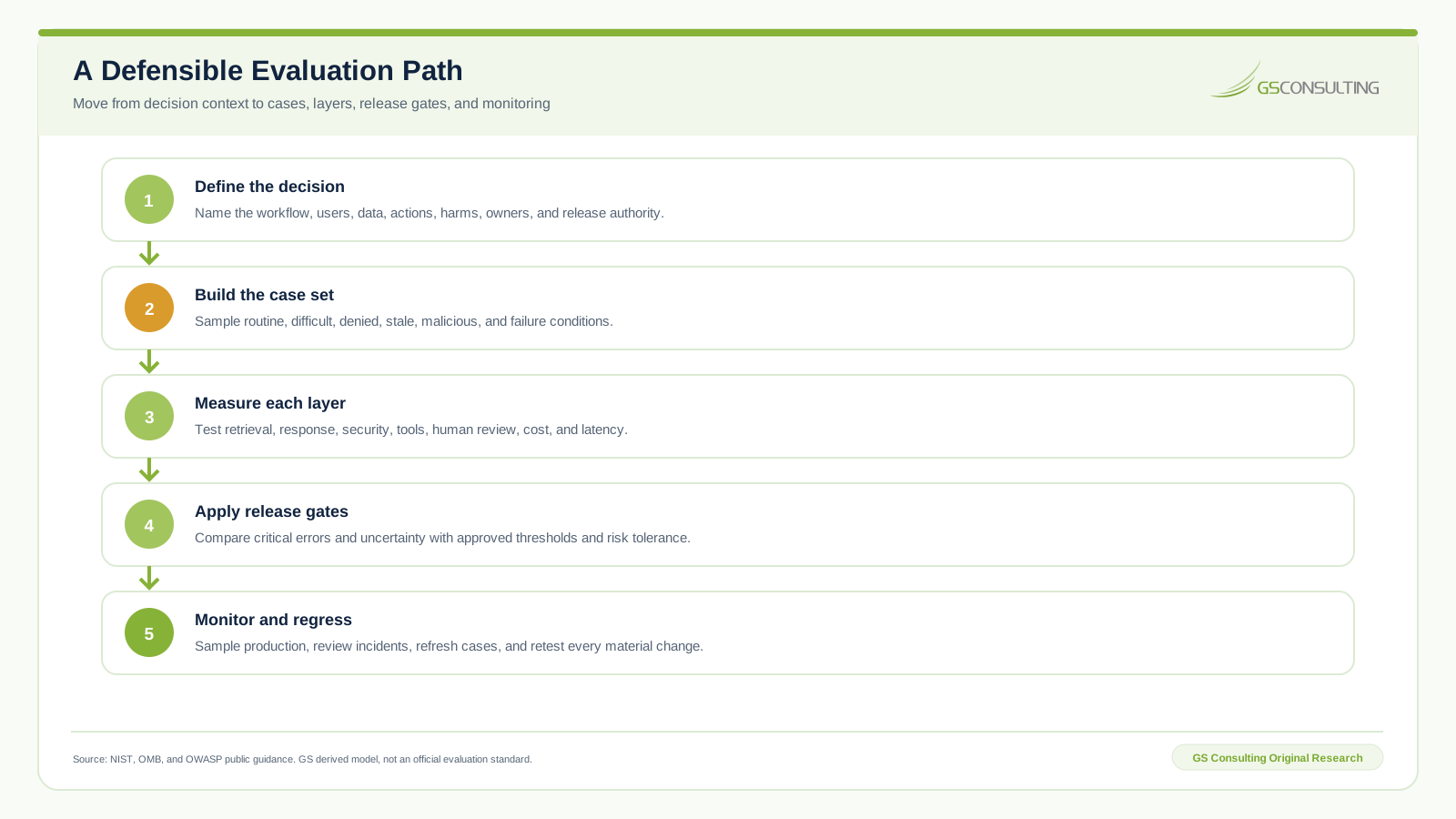
Production evaluation should sample the live distribution without turning monitoring into a second uncontrolled sensitive data store. Prefer structured facts and source identifiers. Use protected payload capture only when the approved investigation or quality need justifies it. Connect incidents, overrides, complaints, and manual fallback to new cases and owner actions.
Avoid Six Private LLM Evaluation Failures
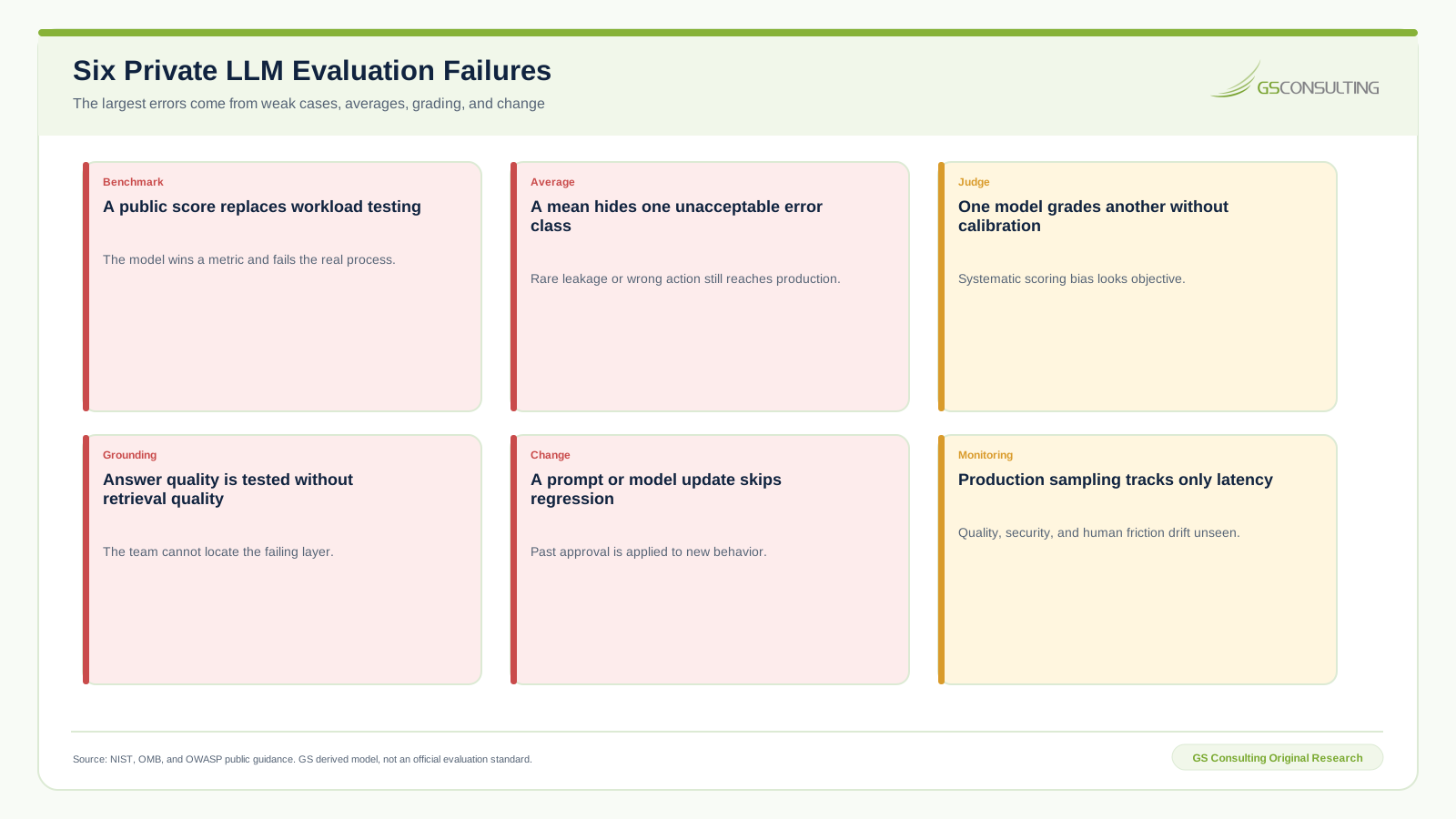
Do not celebrate a score until the team can name what was tested, what was not tested, which failures remain, who accepted the residual risk, and what production evidence will trigger pause. That is not paperwork. That is the actual release decision.
Build the Private LLM Evaluation Evidence Packet
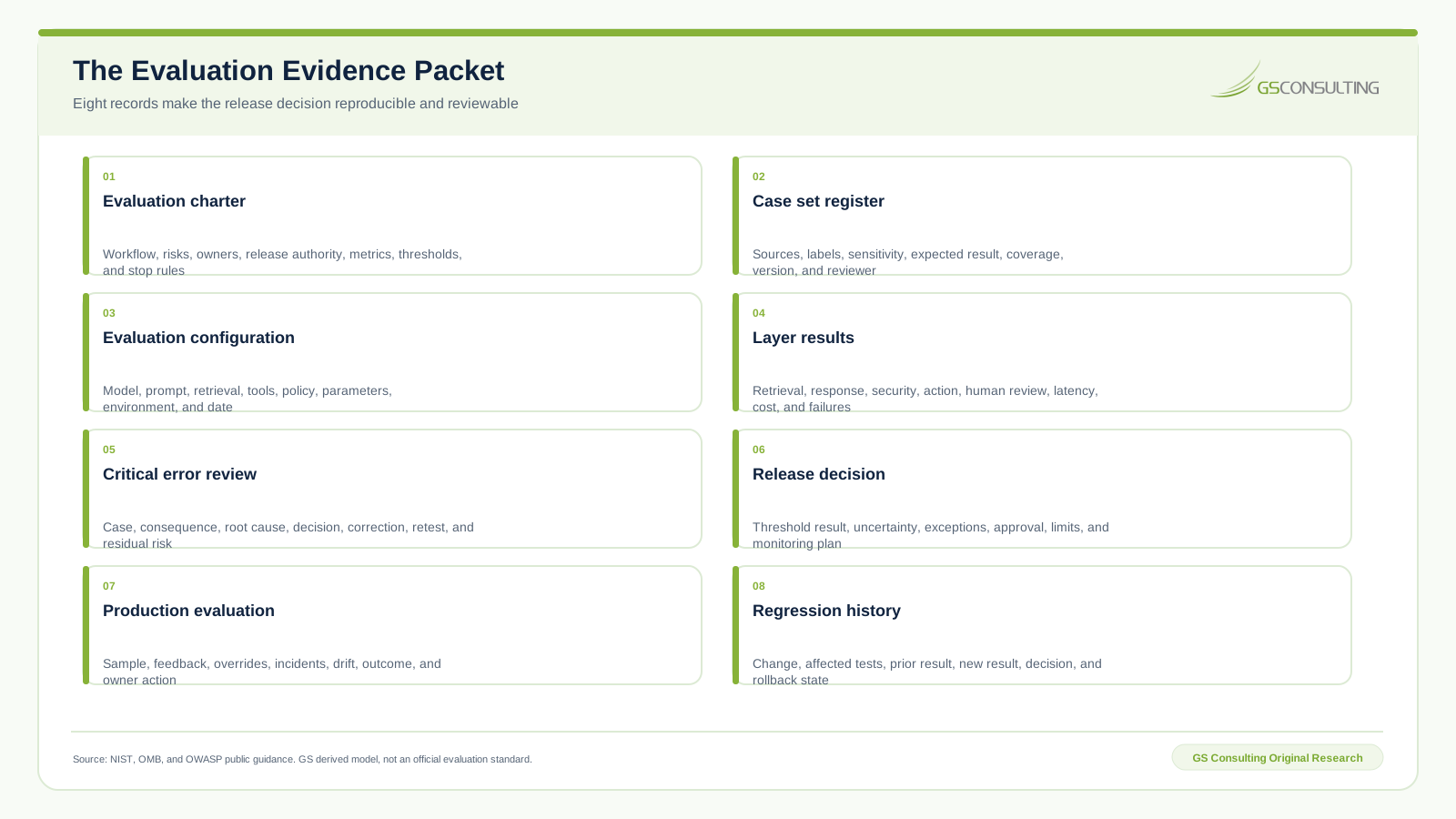
Keep the evaluation charter, case set register, configuration, layer results, critical error review, release decision, production evaluation, and regression history. Link each result to the exact version and owner decision. Retain failed tests and corrections, not only the final passing run.
A 60 Day Private LLM Evaluation Plan
| Period | Operator action | Required output |
|---|---|---|
| Days one through ten | Define workflow, users, data, actions, benefit, harms, critical errors, owners, release authority, and pause authority. | Evaluation charter and risk decisions |
| Days eleven through twenty | Build routine, difficult, denied, stale, malicious, and failure cases with expected results and coverage labels. | Versioned case set and data record |
| Days twenty one through thirty five | Implement retrieval, response, security, tool, human, performance, and outcome measures. Calibrate model grading. | Evaluation harness and reviewer guide |
| Days thirty six through forty five | Run the full configuration, investigate critical errors, correct the system, repeat affected tests, and quantify uncertainty. | Layer results and critical error review |
| Days forty six through sixty | Approve, limit, reject, or pause release. Define production sampling, incident triggers, change regression, and evidence retention. | Release packet and monitoring plan |
Research Sources and Caveats
The GS research package uses sources accessed September 5, 2026:
- NIST AI RMF 1.0 for risk functions and trustworthiness characteristics. NIST is revising the framework.
- NIST AI RMF Measure function for context based and documented evaluation outcomes.
- NIST AI 600-1 Generative AI Profile for generative AI risk management actions.
- NIST AI 700-2 ARIA pilot report for model testing, red teaming, and field testing.
- NIST Dioptra for reproducible and traceable AI experiments.
- OMB Memorandum M-25-21 for covered high impact agency practices and lifecycle review.
- OWASP Top 10 for LLM and generative AI applications for security test coverage.
- NIST TEVV Athlon initial public draft for the emerging four stage assessment method. It is not final guidance.
The package separates public observations, GS ratings, formula outputs, sensitivity results, operating tables, and figure data. I did not find a defensible public benchmark that sets universal private LLM release thresholds for regulated workflows. Local case coverage, critical errors, risk tolerance, and operating outcomes must determine release.
The GS Private LLM Evaluation Gate Priority Index is a derived planning tool. It does not prove future safety, legal compliance, system authorization, model suitability beyond the tested context, or acceptance by a customer, assessor, or regulator.
Private LLM Evaluation FAQ
Suggested Future Reading
- Private LLM and Secure RAG Hub
- Private LLM Data Governance
- Private LLM Red Teaming
- Private LLM Model Selection
- Private LLM Access Control Architecture
- Private LLM Observability
- Private LLM Security Controls
- AI Workflow Quality Assurance
- Private LLM and Secure RAG Implementation
Do not ship a score. Ship a decision the evidence can defend.
The operating standard is direct: defined use, representative cases, separate layer tests, critical error gates, calibrated review, approved residual risk, production sampling, and regression after every material change.
Request an Evaluation Design Review