Private LLM & Secure RAG | | 26 min read
Private LLM Disaster Recovery and Continuity Planning

Key Takeaways
Recovery ends with a verified release, not a green endpoint
Start with essential work
Set maximum tolerable downtime, recovery time, recovery point, fallback, and restoration priority from business impact rather than infrastructure preference.
Four domains score 100
Manual fallback, identity, authoritative data, and evaluation gates lead the derived dependency index because unsafe availability can deepen an incident.
Test normal and denied paths
Reopen only after authority, source integrity, model behavior, tools, reconciliation, monitoring, and accountable approval have been proved.
Private LLM disaster recovery is not the return of an endpoint. It is the controlled return of authority, trusted data, known model behavior, runtime capacity, constrained tools, and reviewable evidence.
A model server can answer while the identity policy is stale. A vector index can return while revoked access is still embedded in it. A tool connector can run with the wrong service account. A monitor can turn green before anyone proves that accepted and denied paths behave normally.
That is why a private LLM recovery plan must follow dependencies and integrity, not just infrastructure. The service is ready when the organization can explain what was restored, from which source, in which order, under whose authority, with which tests, and who approved release.
The Private LLM and Secure RAG hub connects this guide to model selection, security controls, observability, Secure RAG architecture, and private LLM cost. GS Consulting supports the full path through Private LLM and Secure RAG implementation.
Do not let uptime become release authority.
GS Consulting helps regulated teams map private LLM dependencies, set continuity objectives, build recovery and reconciliation runbooks, run exercises, and retain defensible release evidence.
Review the Recovery PlanPrivate LLM Disaster Recovery: The Short Answer
Begin with the business impact analysis. Identify the essential work the private LLM supports, how long that work can be unavailable, how much state can be lost, which manual or alternate process continues the mission, and who decides to invoke and end recovery.
Map the dependencies in release order: stop authority and manual fallback, identity and secrets, authoritative data, model artifacts, prompts and policy, runtime and network, retrieval indexes, orchestration state, tool connectors, monitoring, evaluation, and approval evidence.
Back up what must be restored. Make reproducible what is safer to rebuild. Verify integrity before use. Reconcile sources, indexes, queues, tool effects, and missed work. Test accepted and denied paths before reopening. Keep a watch period after release and close the event only when business service, security controls, evidence, and lessons are complete.
The Business Impact Analysis Comes Before Architecture
NIST SP 800-34 Revision 1 puts business impact analysis at the center of contingency planning. That discipline prevents a technical team from assigning aggressive recovery targets to a useful experiment while leaving an essential operational dependency vague.
For each private LLM use case, document:
- Essential function. Name the work, decision, record, or service that is impaired when the system is unavailable or untrusted.
- Business consequence. Describe the effect on safety, contract performance, customer service, finance, security, compliance, or mission delivery over time.
- Maximum tolerable downtime. State the longest disruption the organization can accept before the effect becomes unacceptable.
- Recovery time objective. Set the target for restoring an acceptable capability, including verification and approval.
- Recovery point objective. State how much data, queue state, feedback, audit evidence, or other change can be lost.
- Fallback. Define the manual, alternate, degraded, or stop process and the people authorized to use it.
- Priority. Place the workload in the restoration sequence relative to identity, source systems, collaboration, records, network, and other dependencies.
Do not assign one RTO and RPO to “the AI platform.” The answer interface, model runtime, retrieval source, vector index, queue, tool action, feedback store, audit record, and approval packet can require different targets.
Private LLM Recovery Has Four Control Surfaces
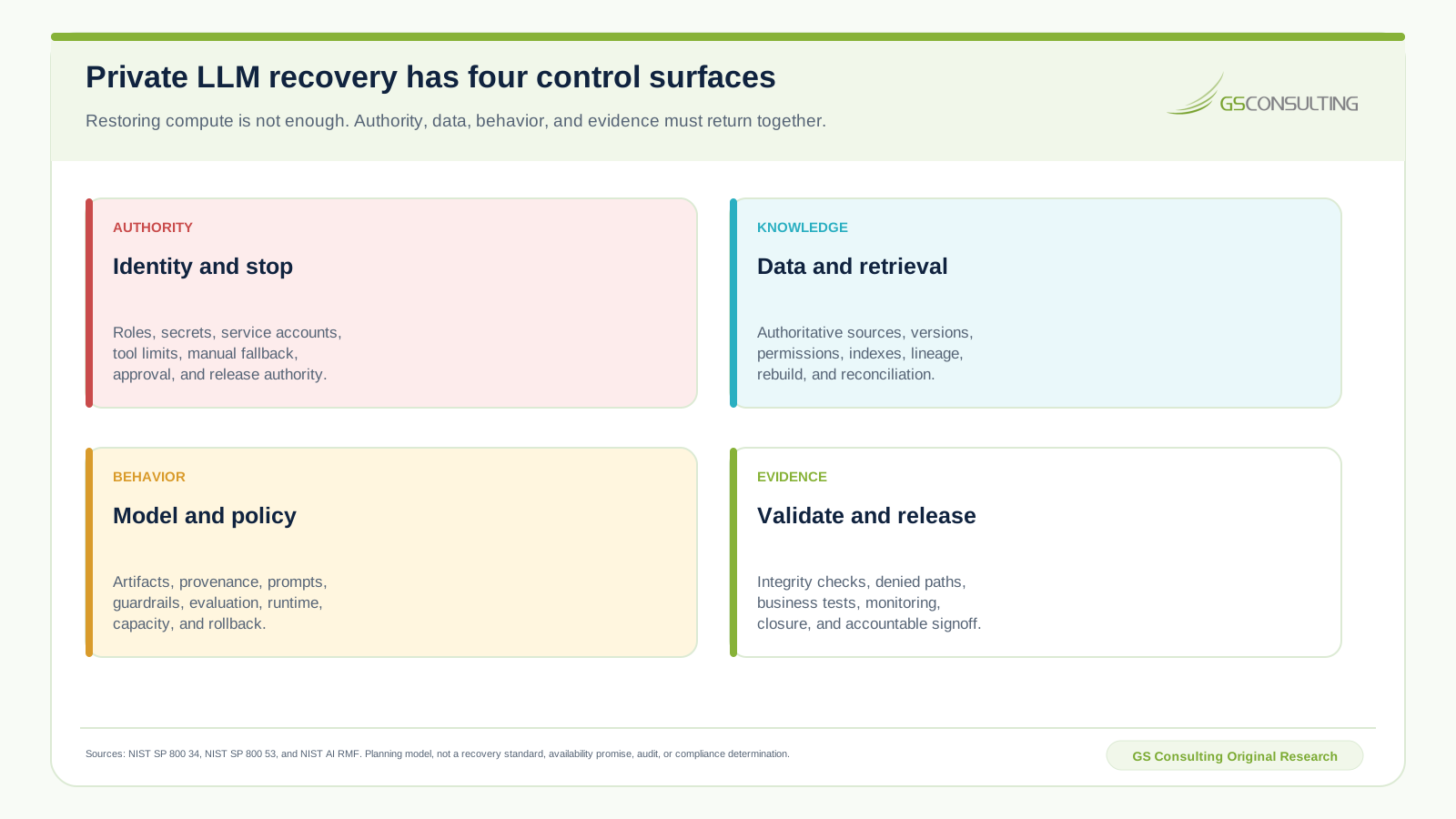
Authority includes identity, policy, secrets, service accounts, tool limits, manual fallback, and release authority. Knowledge includes authoritative sources, versions, permissions, indexes, lineage, and reconciliation. Behavior includes model artifacts, prompts, guardrails, evaluation, runtime, capacity, and rollback. Evidence includes integrity checks, normal and denied tests, monitoring, closure, and signoff.
A recovery plan that omits one surface can restore unsafe service. Lost identity state can overexpose data. A stale source manifest can rebuild incorrect knowledge. An unverified model artifact can change outputs. Missing denied tests can reopen an unauthorized tool path.
NIST SP 800-53 Revision 5 contingency controls call for plans, testing, backups, recovery, reconstitution, restoration priorities, roles, and full restoration without loss of controls. Private LLMs do not escape those fundamentals. They add model, retrieval, evaluation, and tool state that ordinary infrastructure runbooks often miss.
GS Private LLM Recovery Dependency Pressure Index
GS Consulting built the Recovery Dependency Pressure Index to help teams decide what must be restored or verified first before a private LLM service returns.
The model scores twelve recovery domains from 0 to 100. Inputs are GS analyst ratings from one to five for mission impact, upstream dependency, integrity risk, recovery complexity, and evidence need. Base weights are 25, 25, 20, 20, and 10 percent. The alternate case moves five points from mission impact to upstream dependency.
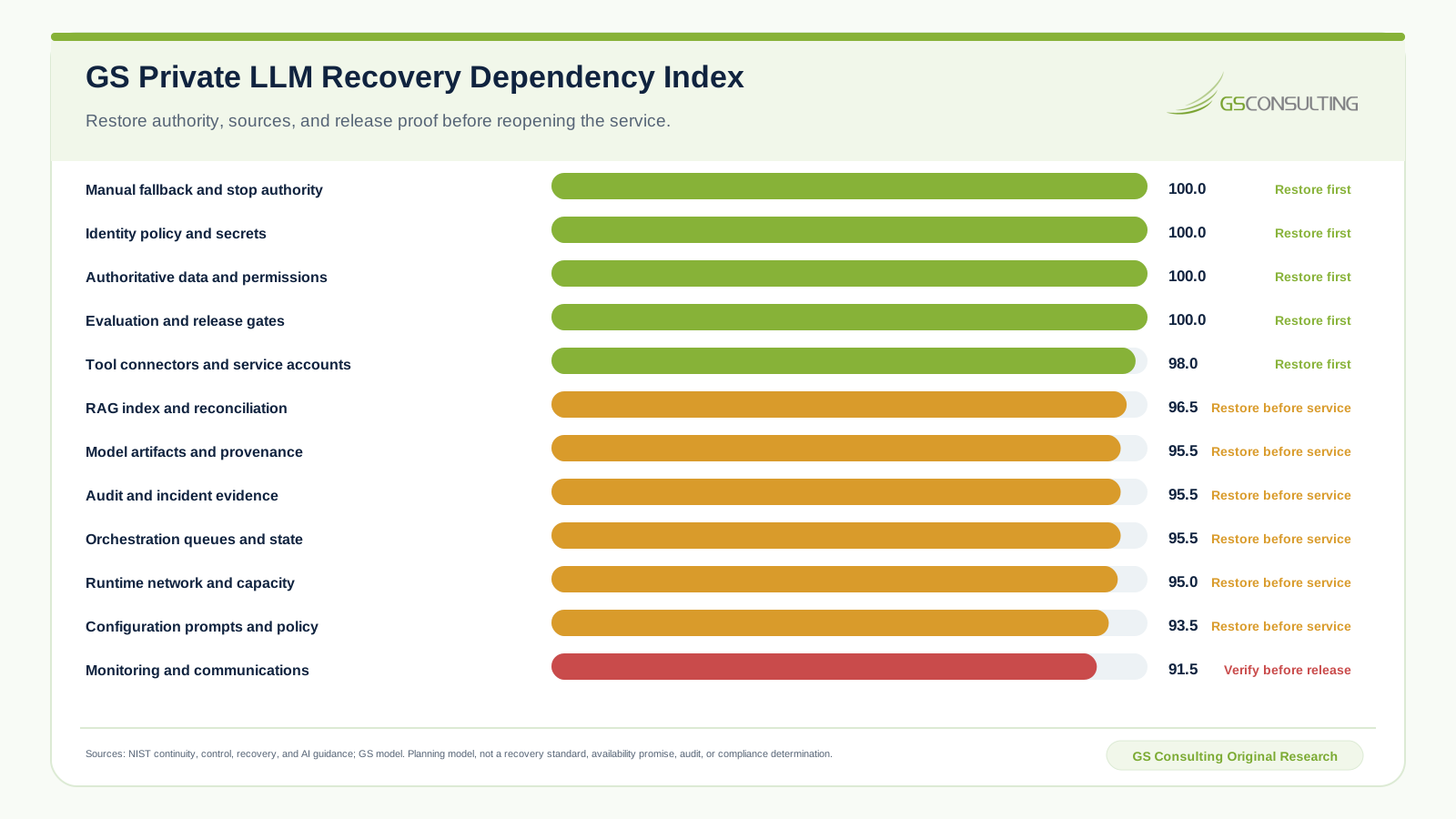
Four domains score 100: manual fallback and stop authority, identity policy and secrets, authoritative data and permissions, and evaluation and release gates. Tool connectors and service accounts score 98. Retrieval index reconciliation scores 96.5.
Model artifacts and provenance, audit and incident evidence, and orchestration queues and state each score 95.5. Runtime, network, and capacity score 95. Configuration, prompts, and policy score 93.5. Monitoring and communications score 91.5.
The order can surprise infrastructure teams. Evaluation and release gates lead because a restored component is not usable until the organization can prove normal and denied behavior. Manual fallback leads because essential work needs a safe path while recovery is incomplete. The alternate weighting preserves every planning tier and moves no score by more than 0.5 points.
Model caveat: this is a GS Consulting derived planning tool based on cited public sources and documented assumptions. It is not an official recovery standard, availability promise, legal opinion, audit result, accounting opinion, compliance determination, NIST decision, provider assessment, or regulatory determination.
Set Recovery Objectives by Service and State
Recovery time is not just boot time. It includes detection, declaration, assignment, access to recovery resources, restoration, integrity checks, reconciliation, validation, approval, and any required communications before an acceptable capability returns.
Recovery point depends on the state:
| State | Typical recovery question | Possible approach | Release concern |
|---|---|---|---|
| Model artifact | Which approved version can run? | Protected artifact plus checksum, signature, source, and runtime record | Wrong or altered artifact changes behavior |
| Prompt and policy | Which instructions and controls were approved? | Versioned configuration repository and release record | Service can return with weaker rules |
| Authoritative data | Which source versions and permissions are valid? | Recover source systems or verified exports first | Stale or altered content becomes truth |
| Retrieval index | Can the index be trusted or should it be rebuilt? | Restore then reconcile, or rebuild from verified sources | Deleted or unauthorized records can return |
| Queues and tool effects | Which actions completed, failed, or may repeat? | Durable state, transaction records, and reconciliation | Duplicate or missed actions create real world harm |
| Audit and approval | How much evidence loss is acceptable? | Protected records with independent retention and restore tests | Recovery cannot be explained or closed |
When state cannot be recovered to the objective, the runbook needs a decision. That can mean operating from an earlier point, restricting service, rebuilding, performing manual reconciliation, notifying affected owners, or holding release.
Back Up a Known State, Not a Folder
A private LLM recovery set should make the approved service reproducible. The exact contents depend on the architecture, but the register usually covers:
- Model artifact or managed service version, source, checksum or signature where applicable, license, provenance, and approval.
- Container images, dependencies, drivers, runtime definitions, infrastructure templates, network configuration, and capacity settings.
- Prompts, system instructions, policies, guardrails, routing, tool definitions, feature flags, and approval rules.
- Evaluation cases, expected results, scoring guides, denied path tests, baselines, and last approved results.
- Source manifests, data versions, permission mappings, embedding model, chunking and retrieval configuration, and reconciliation rules.
- Identity groups, service accounts, role mappings, secret references, certificate procedures, and controlled break access.
- Monitoring rules, dashboards as code where practical, alert ownership, runbooks, contacts, communications, and approval records.
Do not put active secrets into an ordinary backup just because the application needs them. Use the approved key and secret recovery process, separation of duty, logging, rotation, and emergency access control. Recovery is a privileged operation and a likely target during an incident.
NIST CSF 2.0 recovery outcomes call for backup integrity verification before restoration and verification of restored assets after recovery. A successful backup job is not proof. Restore samples, validate integrity, run the configuration, and record the result.
RAG Recovery Requires Source and Permission Reconciliation
A vector store is a derived knowledge system. It can contain embeddings, chunks, metadata, source identifiers, permission filters, deletion state, and references to an embedding model or retrieval configuration. Restoring it without the source and access context can reopen stale or unauthorized knowledge.
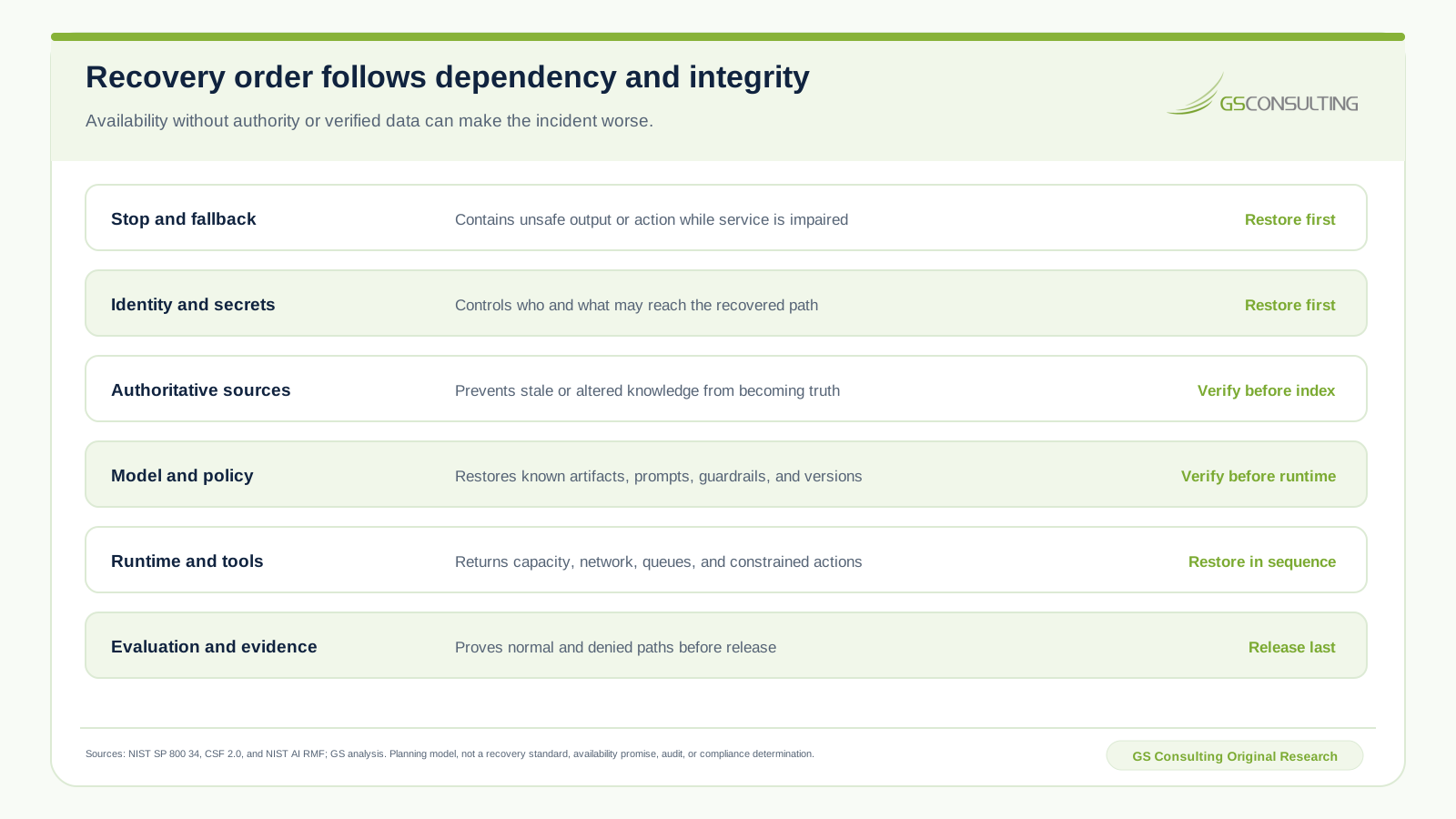
Choose restore, rebuild, or a combined approach deliberately. A restored index can meet a short recovery target, but it needs checks for source version, deleted content, revoked access, embedding version, chunking, metadata, encryption, tenancy, and all changes since the recovery point. A rebuild can provide cleaner lineage, but it may take longer and depend on source availability and capacity.
Keep a reconciliation log. For every source, record the authoritative version, last indexed change, permission state, deletion state, expected object count or other useful control total, rebuild or restore result, exceptions, owner, and approval. Reprocess changes that occurred after the recovery point.
Test denied paths after reconciliation. A valid answer to an authorized user is not enough. Confirm that an unauthorized user, revoked user, wrong tenant, wrong role, and prohibited query cannot retrieve the source or infer it through generated output.
Security Recovery Can Conflict With Fast Recovery
An incident may require the team to preserve evidence, rotate credentials, change network paths, rebuild from trusted media, block a provider integration, or replace an artifact. That can extend recovery time. The plan should state when integrity takes priority over speed and who can make that decision.
Protect recovery systems from the primary failure domain where practical. Separate backup credentials, restrict administrative access, encrypt stored and transferred artifacts, retain provenance, verify checksums or signatures, and log restore activity. Joint NSA, CISA, and partner guidance also stresses protected model weights, trusted data, hardened infrastructure, secure updates, offline backups, and incident procedures.
Assume the recovery path will be used under pressure. Build short decision points into the runbook:
- Is the incident still active?
- Which artifacts, sources, credentials, and logs are trusted?
- Must restoration use a clean environment or alternate provider?
- Which tools and external actions remain disabled?
- What evidence must be preserved before change?
- Who can accept residual uncertainty and authorize release?
The private LLM security controls guide provides the control domains. Recovery should restore those controls, not work around them indefinitely.
Manual Fallback and Stop Authority Come First
NIST AI RMF Manage guidance includes bypass, deactivation, redundant systems, continuity, recovery, and incident response. For a private LLM, the fallback can be as simple as returning to the source system and a human procedure. It can also require an alternate model lane, cached approved reference, limited read only mode, queued work, or a complete stop.
Define what the fallback can and cannot do. A manual reviewer may continue drafting but not approval. A read only search may continue while tool actions remain disabled. A cached reference may be used only until a stated age. A second model may operate on a narrower data set with stronger review.
Name stop authority. Operators need a direct path to suspend generation, retrieval, or tool actions when output is unsafe or recovery evidence is incomplete. The service owner, incident commander, security lead, data owner, and business owner should understand who makes which decision.
Exercise fallback long enough to discover capacity and process limits. Ten minutes of a tabletop will not show whether reviewers can handle a day of queued work, whether source access still functions, or whether business deadlines can be met.
Recover in Five Stages and Release Last
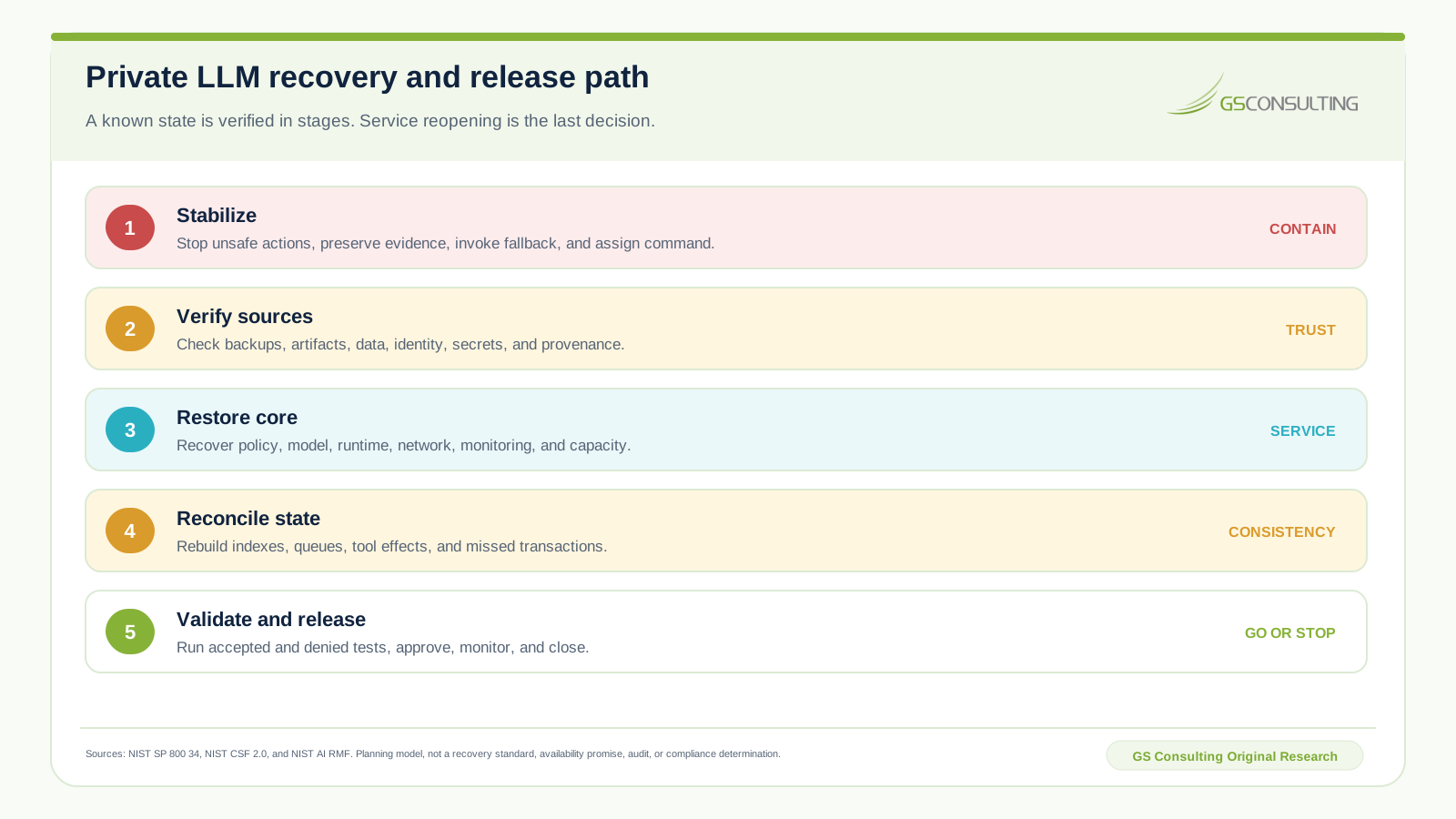
- Stabilize. Stop unsafe actions, preserve evidence, declare the event, assign command, invoke fallback, and set communication cadence.
- Verify sources. Establish trusted backups, model artifacts, authoritative data, identity, secrets, configurations, and provenance.
- Restore core. Recover policy, model, runtime, network, monitoring, capacity, and supporting services in dependency order.
- Reconcile state. Account for source changes, indexes, permissions, queues, tool effects, retries, missed transactions, and evidence gaps.
- Validate and release. Run accepted and denied tests, confirm business outcomes, obtain approval, monitor a watch period, and close with lessons.
Release can be staged. Begin with administrators or test users, then a limited user group, read only tasks, no tools, or a reduced data set. Expand only when monitoring and review show the restored path is stable.
Six Private LLM Recovery Failures
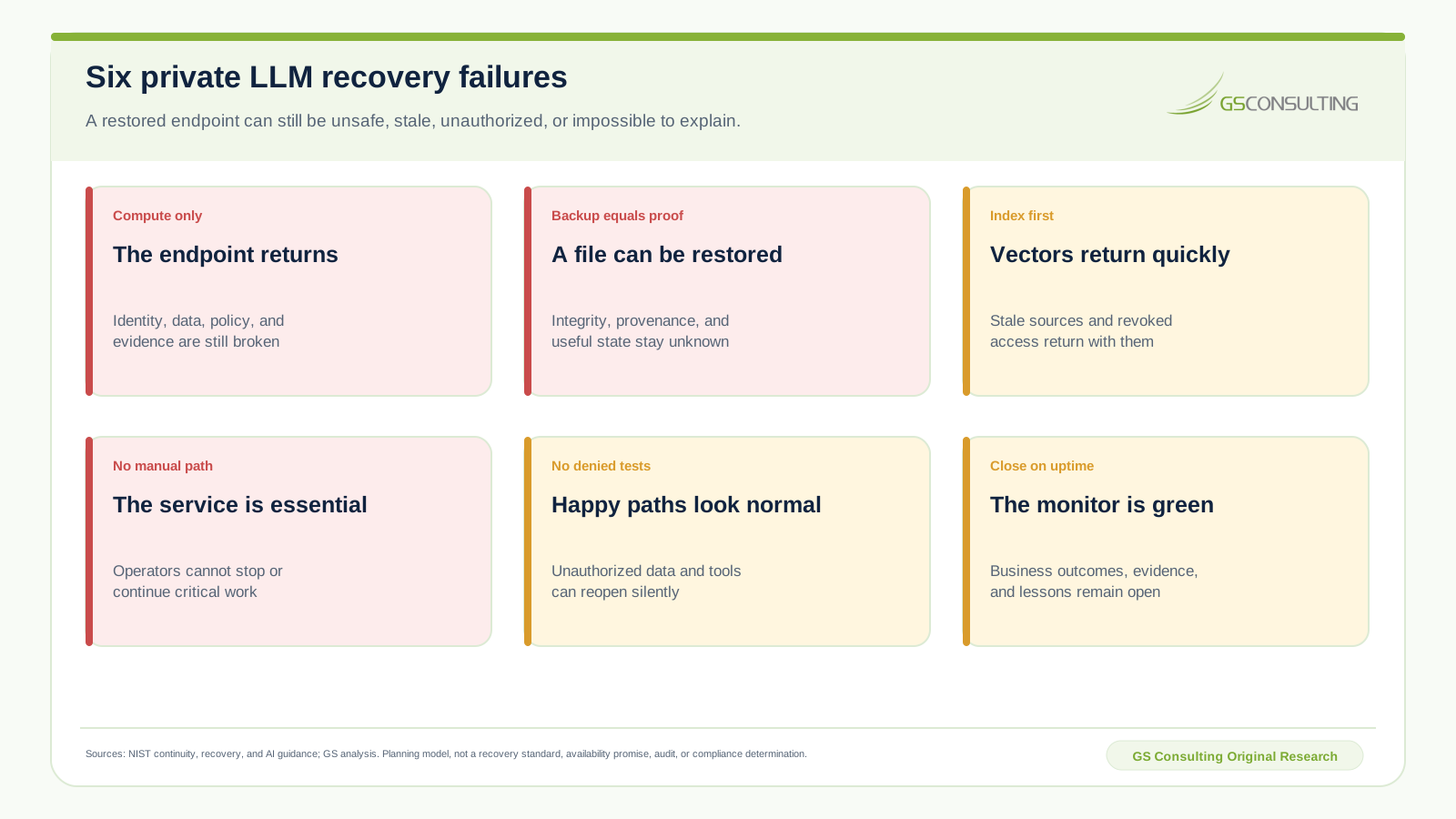
Compute only. The endpoint returns while identity, data, policy, and evidence remain broken. Backup equals proof. A file can be restored, but integrity, provenance, and useful state remain unknown. Index first. Vectors return with stale sources and revoked access.
No manual path. The system is called essential, but critical work cannot continue or stop safely. No denied tests. Happy paths look normal while unauthorized data or tools reopen. Close on uptime. Monitoring is green, but business outcomes, evidence, exceptions, and lessons remain open.
Build an Exercise Program, Not One Annual Test
Use several exercise types because they find different problems:
- Record review. Confirm contacts, dependencies, versions, backups, owners, contracts, and runbook steps are current.
- Tabletop. Walk leaders and operators through provider loss, corrupted sources, credential compromise, artifact tampering, capacity loss, or unsafe tool behavior.
- Component restore. Restore a model artifact, configuration, evaluation set, log set, source manifest, or other component and verify it.
- RAG reconciliation. Restore or rebuild an index, apply missed changes, revoke access, delete a source, and test accepted and denied retrieval.
- Technical recovery. Recover the service in an alternate or clean environment, rotate credentials, restore monitoring, and measure actual time.
- Full release exercise. Invoke fallback, recover dependencies, reconcile state, run business and security tests, approve release, and monitor the watch period.
Every exercise needs a scenario, objective, start state, expected result, actual result, recovery time, recovery point, gap, owner, due date, retest, and closure. An open issue list is not a completed exercise program.
Use the private LLM observability guide to define the signals required during recovery: identity, policy, source, model version, tool action, latency, errors, quality, incident, change, and closure.
A 90 Day Private LLM Recovery Plan
Days 1 through 15: scope. Inventory private LLM workloads and dependencies. Complete the business impact analysis. Set maximum tolerable downtime, recovery time, recovery point, fallback, priority, and accountable owners.
Days 16 through 35: map. Build the authority, data, model, configuration, runtime, retrieval, queue, tool, monitoring, and evidence dependency map. Assign restore, rebuild, reconcile, and do not restore decisions.
Days 36 through 55: protect. Create the backup and reproducibility register. Separate recovery access. Verify encryption, provenance, integrity, source control, retention, provider responsibilities, capacity, and alternate resources.
Days 56 through 75: run. Write the recovery and communications runbooks. Test manual fallback, component restoration, secret rotation, clean deployment, RAG rebuild or restore, state reconciliation, accepted paths, and denied paths.
Days 76 through 90: release and close. Run a complete exercise, measure actual objectives, use the formal release gate, monitor a watch period, assign gaps, retest high risk items, and obtain accountable closure.
Keep the Recovery Decision as One Evidence Packet
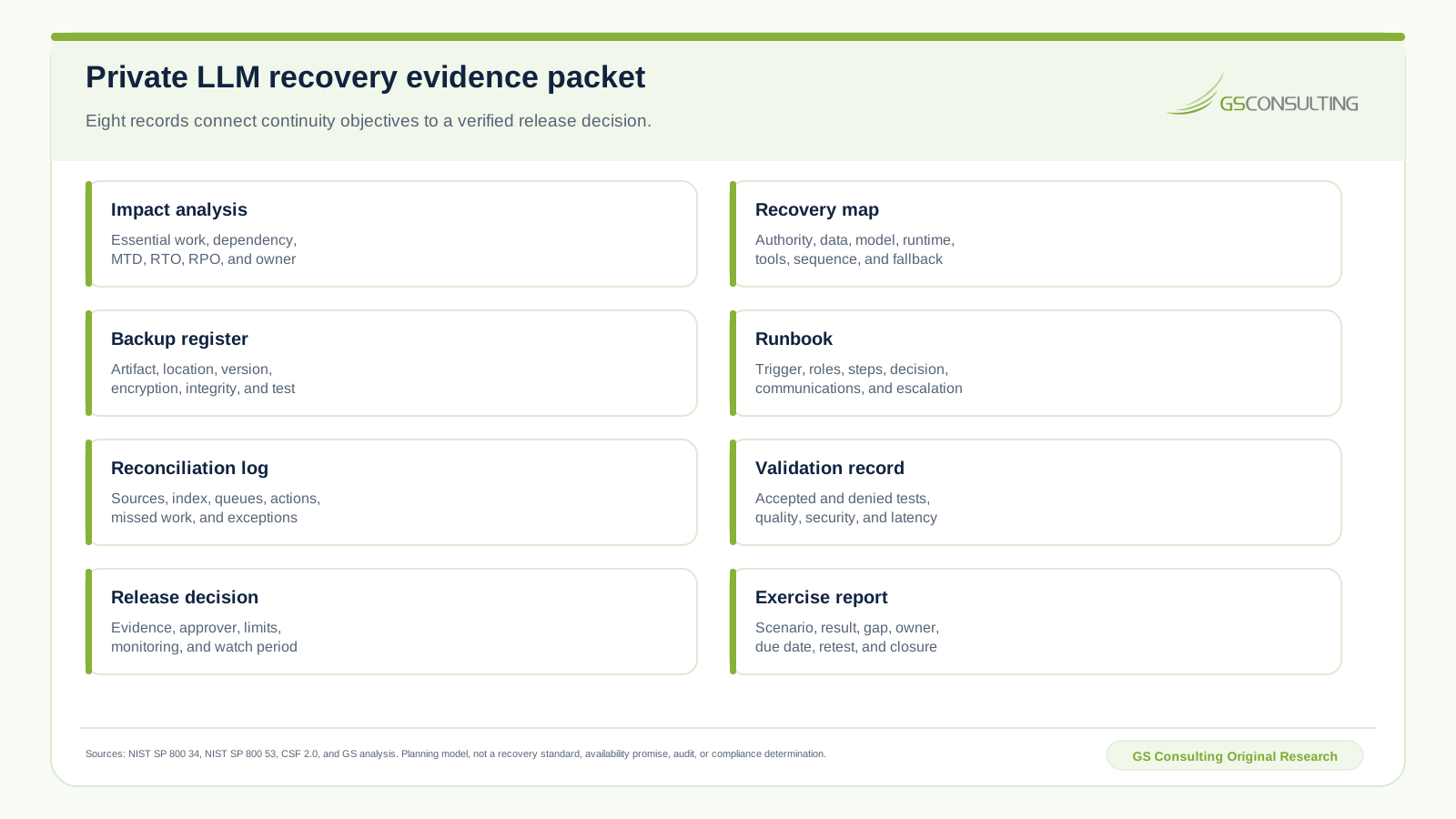
The packet should include the impact analysis, recovery map, backup register, runbook, reconciliation log, validation record, release decision, and exercise report. Link to diagrams, raw logs, restore outputs, test results, communications, exceptions, provider records, and ticket closure.
Preserve the difference between evidence and assertion. “Backup completed” is an assertion. A protected job record plus a sampled restore, integrity result, usable configuration, test result, date, and owner is evidence. “Service recovered” is an assertion. Accepted and denied test results plus business owner and security approval are evidence.
Research Sources and Method
This guide uses primary public sources accessed August 28, 2026. The research package separates public observations, GS analyst inputs, derived scores, sensitivity results, figure data, recovery mappings, and limitations.
- NIST SP 800-34 Revision 1 for contingency planning, business impact analysis, recovery objectives, restoration priorities, alternate processing, testing, and return to normal operations.
- NIST SP 800-53 Revision 5 for contingency plans, tests, alternate processing, backups, recovery, reconstitution, essential functions, and restoration without loss of controls.
- NIST Cybersecurity Framework 2.0 for recovery prioritization, backup integrity checks, restored asset verification, and closure.
- NIST SP 800-209 for storage protection, isolation, encryption, and restoration assurance.
- NIST AI RMF Manage Playbook for bypass, deactivation, redundant systems, continuity, recovery, incident response, and change.
- Guidelines for Secure AI System Development from NSA, CISA, and international partners for model and data protection, secure infrastructure, incident procedures, integrity, and offline backups.
- Deploying AI Systems Securely for trusted data, protected model weights, hardened infrastructure, patching, threat models, and deployment responsibility.
- AI Data Security for provenance, integrity, access, encryption, storage, poisoning, supply chain risk, and drift across the AI data lifecycle.
The source register, public signals, formula inputs, derived scores, sensitivity analysis, figure data, recovery dependency matrix, recovery path, failure modes, evidence packet, data dictionary, methodology, and summaries are published in the repository research package.
Private LLM Disaster Recovery FAQ
What should a private LLM disaster recovery plan include?
Include essential workloads, maximum tolerable downtime, recovery time and recovery point objectives, dependency order, manual fallback, roles, communications, model and data backups, identity and secret recovery, RAG rebuild and reconciliation, runtime restoration, accepted and denied tests, release authority, exercises, and evidence closure.
What should be backed up for a private LLM?
Depending on the architecture, back up or make reproducible the approved model artifact, checksums and provenance, runtime definitions, prompts, policies, guardrails, evaluation sets, source manifests, configuration, keys through an approved recovery process, vector store metadata, logs, runbooks, and approval records. Do not assume every cache or index should be restored rather than rebuilt.
Should a RAG vector index be restored or rebuilt?
The answer depends on size, recovery objectives, source integrity, index design, and permission behavior. A rebuild from verified authoritative sources can provide cleaner lineage. A restored index can be faster, but it must be checked for source version, deletions, revoked access, embedding version, configuration, and missed changes before release.
How do RTO and RPO apply to a private LLM?
Set them by service and dependency. The response interface, model runtime, identity path, authoritative sources, retrieval index, queues, logs, and approval records can have different recovery needs. Recovery time is how quickly an acceptable capability must return. Recovery point is how much state or evidence loss the organization can tolerate.
How often should private LLM recovery be tested?
Use a risk based cadence and test after material architecture, model, provider, data, identity, tool, or runbook changes. Include component restores, tabletop scenarios, technical recovery, security cases, RAG reconciliation, manual fallback, and a full release decision. Close every exercise gap through a dated retest.
Does cloud availability replace private LLM continuity planning?
No. Provider resilience can support the plan, but the organization still owns workload continuity, identity, data, model configuration, retrieval state, tools, incidents, evidence, release decisions, and any dependency that sits outside the provider service. Verify contractual and technical recovery responsibilities.
Recover the Controlled Service, Not Just the Stack
Not a green endpoint. Not a copied vector store. Not a restore job marked complete.
The operating standard is a private LLM service that can stop safely, continue essential work through a defined fallback, restore authority and trusted sources in dependency order, reconcile state, prove accepted and denied behavior, reopen under accountable approval, and close only when business service, controls, evidence, and lessons are complete.