Private LLM & Secure RAG | | 28 min read
Private LLM Data Residency Architecture: Boundaries You Can Prove

Key Takeaways
Treat residency as an operating boundary, not a purchase label
Two domains score 100
Source ingestion and operational records lead the index because they create early and often hidden copies.
Storage is one question of four
A defensible design answers where data is stored, processed, accessed, and transferred.
Recovery must stay in bounds
Backups, replicas, failover, deletion, and provider exit need the same scrutiny as the primary path.
Private LLM data residency is not a region setting. It is a provable boundary for every copy, processing event, support path, and recovery route.
A team can deploy a model in one region and still send prompts through broader inference capacity. It can keep uploaded files local while diagnostic records follow another service path. It can approve the primary store and forget the vector index, abuse review log, support ticket, replica, restore site, user export, or remote administrator. The location claim survives on a diagram while the real system leaves it.
The architecture must answer four separate questions for every data path: where the data is stored, where it is processed, who can access it, and when it becomes a transfer. Then it must prove that backup, recovery, deletion, change, and exit preserve those decisions.
Use this guide with the Private LLM and Secure RAG hub, the private LLM deployment options guide, the private LLM data governance guide, and the private LLM access control architecture. GS Consulting supports the full design through private LLM and secure RAG implementation.
Map the data path before approving the region.
GS Consulting helps regulated teams turn contract duties, data classes, provider behavior, recovery needs, and access paths into an architecture and evidence packet they can review.
Request a Residency Architecture ReviewPrivate LLM Data Residency: The Short Answer
Start with the duty, not the cloud console. Name the data and the rule that matters. The rule may come from a contract, customer direction, organizational policy, privacy analysis, export restriction, records duty, or another approved source. State the allowed geography for storage and processing, the access rule, the transfer rule, the recovery rule, and the person authorized to decide.
Map the full operating path. Include source systems, connectors, scanners, queues, prompt and response processing, managed model features, retrieval stores, embeddings, caches, evaluation sets, logs, abuse review, support, administrative access, subprocessors, backups, replicas, failover, exports, downstream systems, user copies, deletion, legal hold, and provider exit.
Select an architecture lane only after that map is complete. Record the provider, service, model, deployment type, routing scope, region, feature set, account, project, access model, retention setting, backup location, failover behavior, and external dependencies. Capture contract and product terms, but do not stop there. Test the configured path, retain evidence, and repeat the review when the provider, model, region, feature, subprocessor, recovery design, or legal conclusion changes.
Residency does not establish security or compliance by itself. A system can stay inside one geography and remain poorly secured. A secure system can still violate a location or transfer duty. Keep the questions connected, but do not collapse them.
Ask Four Separate Questions
1. Where is data stored?
List the primary data store and every material derivative. Uploaded files are only the beginning. Include stateful service records, retrieval chunks, embeddings, indexes, prompt history, caches, evaluation cases, logs, tickets, snapshots, replicas, exports, and retained deletion records. For each one, name the service, region or geography, retention behavior, encryption control, owner, and deletion path.
2. Where is data processed?
Processing can use capacity outside the location attached to the resource. Managed AI services now offer patterns described as regional, geographic, data zone, or global. Those labels are not interchangeable. Record where inference, tuning, content controls, retrieval, telemetry, abuse review, and support processing can occur for the exact model and feature combination.
3. Who can access it?
Access is not limited to end users. Include platform administrators, service identities, provider operations, support staff, subprocessors, incident responders, backup operators, and remote administrators. Record the authority, location, authentication path, approval rule, logs, and time limit. In some legal settings, remote access from another country can matter even when the bytes remain in the approved storage location.
4. When does the path become a transfer?
Transfer is a legal and contractual question, not a network diagram label. The European Union General Data Protection Regulation addresses transfers and onward transfers in Chapter V. European Data Protection Board guidance also calls for mapping remote access and onward movement. Other duties use different concepts. Obtain qualified counsel where the legal conclusion matters, then encode the approved conclusion in the architecture record and operating controls.
The Residency Control Surface Is Larger Than the Model
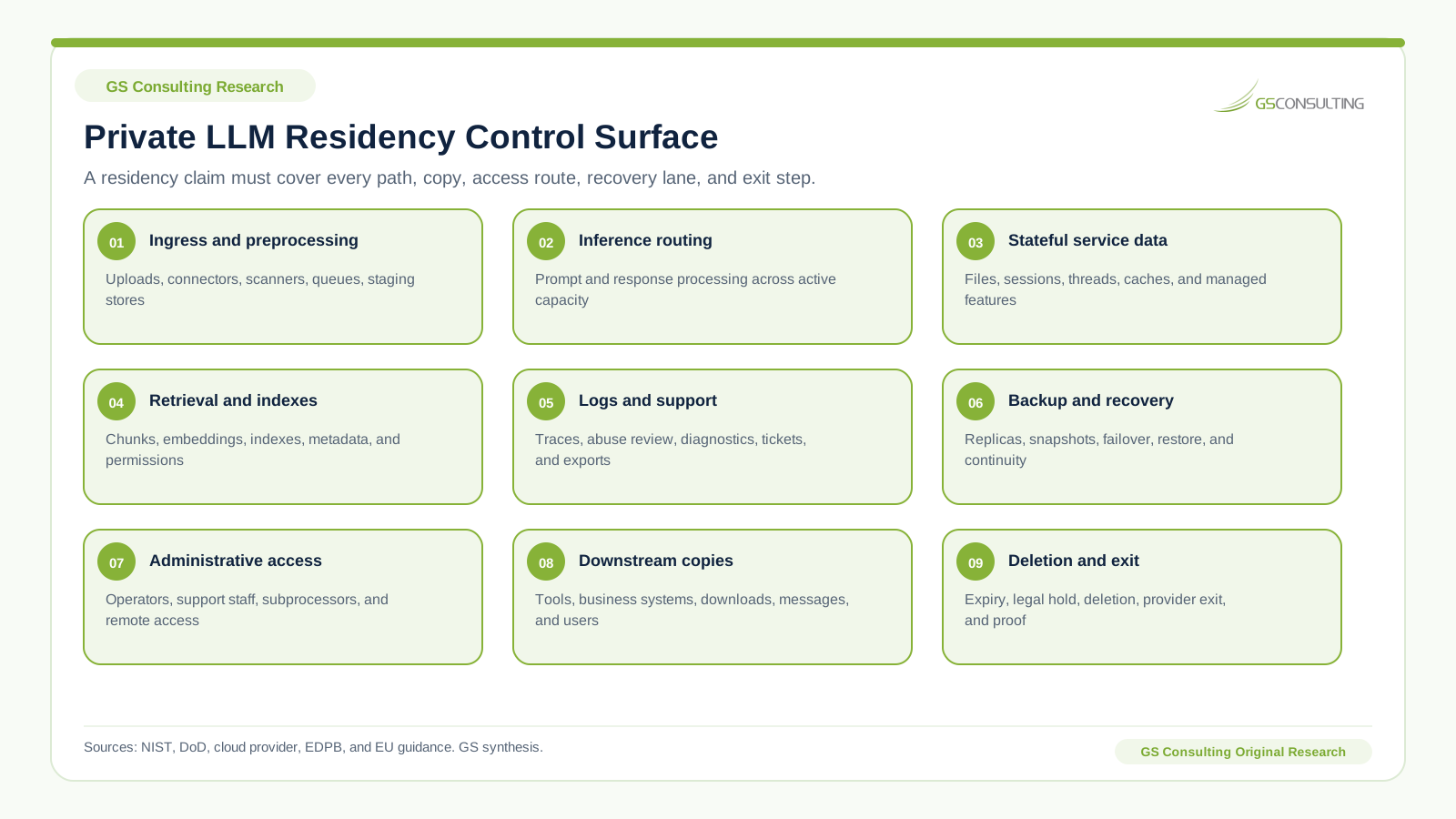
The control surface begins before inference. A source connector may read from one geography, stage content in another service, send it through malware inspection, and write transformed content to a retrieval store. Each copy needs an owner and an approved location. Temporary does not mean out of scope. Short lived queues and caches can still contain the data the requirement protects.
The surface continues after inference. Prompts and responses may enter tracing, abuse monitoring, support, quality sampling, analytics, or evaluation. A human reviewer may see content from another location. A connector may write the answer to a case system or email it to a user. A restore test may start an environment in a different region. A deletion request may clear the primary store while an index, cache, log, or backup persists.
This is where data residency and data governance meet. Governance answers who owns the source, why it may be used, how it changed, and how corrections propagate. Residency answers where each processing and storage event may occur and who may reach it from elsewhere. One record should reference the other.
Provider Region Labels Describe Different Things
Microsoft model service privacy guidance separates prompts and generated content, uploaded data, stateful service data, augmented data, and training data. It also distinguishes the geography used for stored data from the location used for inference processing. Microsoft deployment guidance describes Global, DataZone, and regional patterns. The lesson is not that one pattern is right. The lesson is that processing scope and stored data geography need separate records.
Amazon Bedrock guidance describes In Region, Geographic, and Global inference routing. Its retention guidance also explains that retention configuration can be specific to a Region and project and does not automatically propagate to other Regions. A copied deployment needs a copied control record and a fresh check.
Google Cloud zero data retention guidance describes feature specific actions, logging, and caching behavior. Some features can introduce distinct retention periods or conditions. A broad zero retention statement does not replace an inventory of the features actually enabled.
Provider documentation is evidence, not the entire proof. Preserve the relevant service terms and product pages with an access date. Tie them to the exact account, project, model, deployment, feature flags, region, routing scope, logging configuration, and contract. Then add runtime and administrative evidence from the active environment.
GS Private LLM Residency Boundary Priority Index
GS Consulting built a derived model to sequence which data paths deserve proof first. Ten boundary domains receive one to five analyst ratings for boundary consequence, movement opacity, third party reach, evidence value, and recovery and deletion pressure. The base weights are 30, 20, 20, 15, and 15 percent. The formula normalizes the ratings to a zero to 100 planning scale.
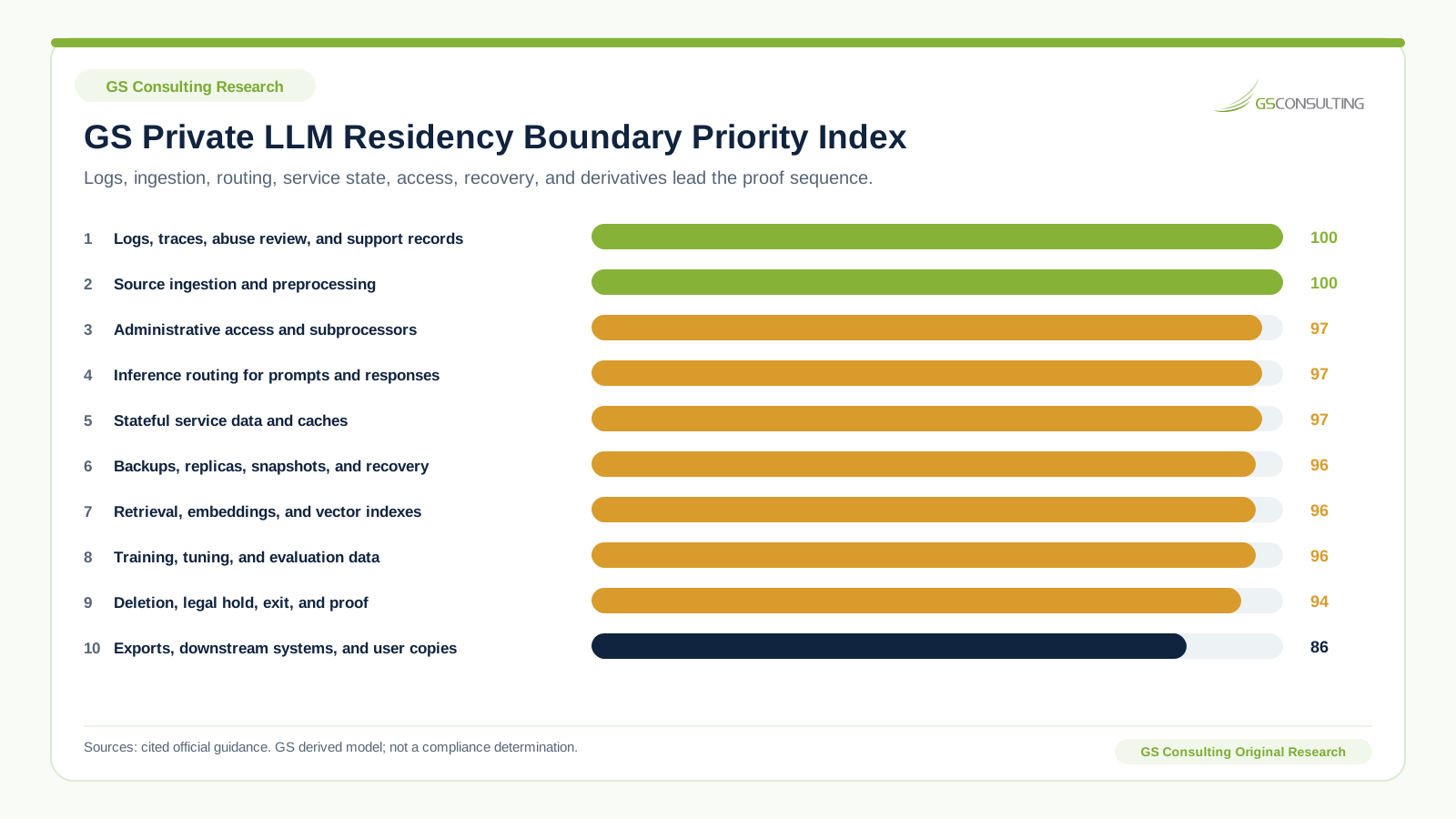
Source ingestion and preprocessing scores 100. Logs, traces, abuse review, and support records also score 100. Administrative access, inference routing, and stateful service data each score 97. Backups and recovery, retrieval and indexes, and training and evaluation data each score 96. Deletion and exit scores 94. Exports and user copies score 86.
The result does not say that exports are safe or optional. It sequences the first control work. Ingestion and operational records can create data outside the expected model path before the team has even examined user exports. They also affect nearly every later control.
The sensitivity case moves five percentage points from boundary consequence to recovery and deletion pressure. No domain moves more than one point. The two leading domains remain at 100. That stability supports the proof order under the tested change. It does not prove that the weights fit every organization.
The GS Private LLM Residency Boundary Priority Index is a derived planning tool based on GS analyst ratings of cited public sources. It is not an official legal, privacy, audit, compliance, NIST, DoD, CMMC, cloud provider, security, or regulatory determination. Replace the assumptions with the actual data, contract, architecture, provider terms, legal analysis, tests, incidents, and approved risk decisions.
Every Material Data Path Carries a Proof Burden
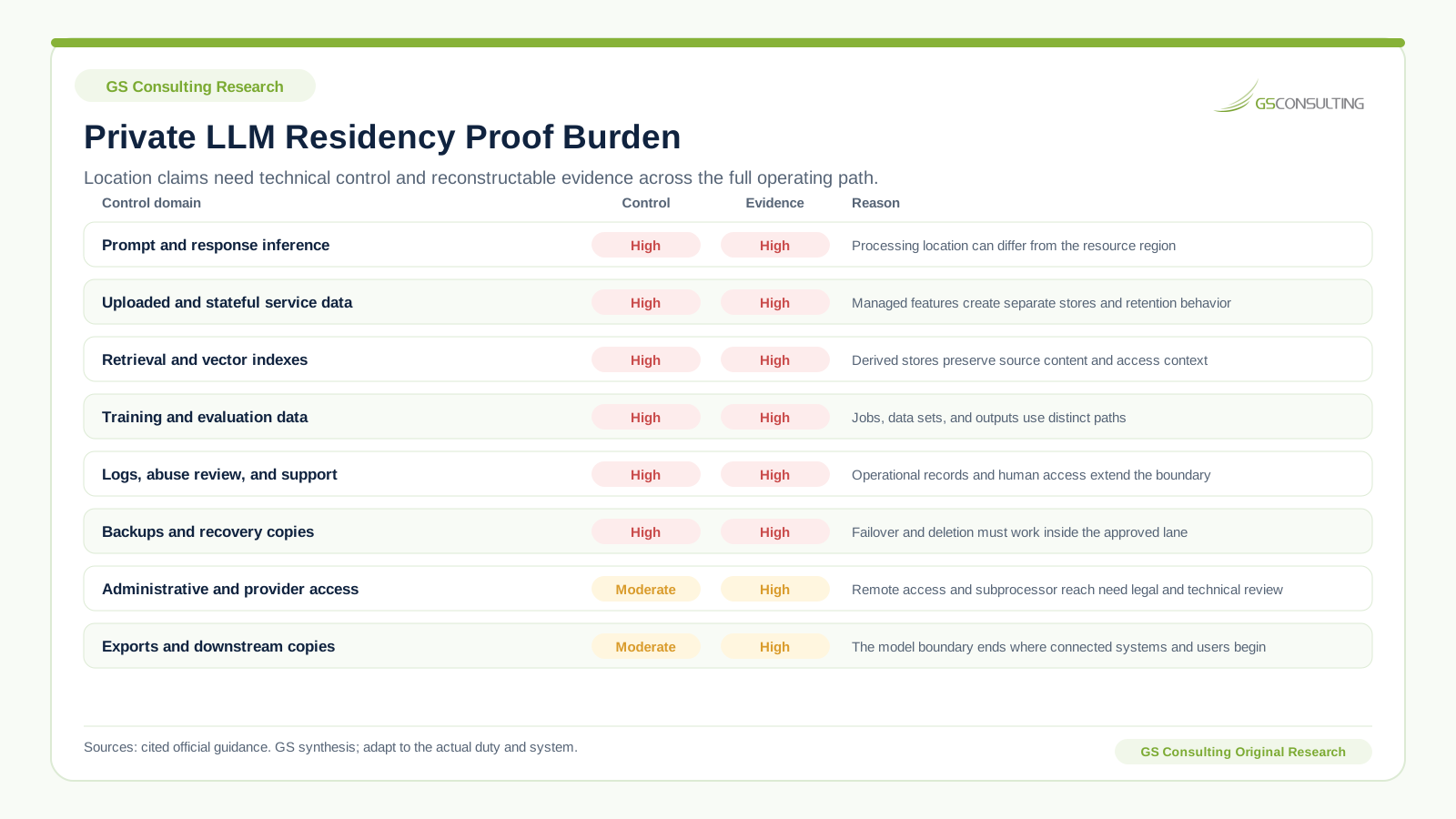
For prompt and response inference, the control is an approved processing scope. The proof is the deployment type, model availability, configuration, contract, endpoint, trace, and test result. For stateful service data, the control is an approved feature and storage location. The proof is the feature inventory, store location, retention setting, access record, deletion test, and provider terms.
For retrieval, training, evaluation, logs, and backups, the same pattern applies. A policy statement alone is weak. A screen capture alone is weak. A contract alone is weak. Strong evidence connects the requirement, design, current configuration, observed behavior, owner, exception, and review date.
Use evidence proportionate to consequence. Do not create a massive packet for a low sensitivity public information assistant. Do not approve a CUI or regulated path from a sales statement and a region dropdown. The data and duty set the proof burden.
Choose an Architecture Lane That Matches the Duty
| Architecture lane | What it can control | What still needs proof |
|---|---|---|
| Managed regional service | Resource location, supported stored data geography, network and identity controls | Inference scope, managed features, logs, support, subprocessors, backup, deletion, and failover |
| Managed geographic zone | Processing limited to a documented group of regions or geography | Exact model support, source region, at rest location, access, retention, recovery, and change behavior |
| Dedicated cloud environment | Account, network, keys, identity, service placement, and stronger isolation | Provider operations, managed control plane paths, dependencies, recovery, support, and external tools |
| Self operated private cloud | Inference, data services, network, logging, model artifacts, and operating choices | Cloud control plane, administrators, source systems, backups, dependencies, support, and exit |
| On prem or isolated | Local compute, storage, network, administrators, model artifacts, and physical location | Software supply, remote support, identity, telemetry, media, recovery site, exports, and user copies |
No lane is automatically compliant. A managed service may fit when its processing, storage, access, contract, and evidence meet the actual duty. A self operated or on prem design may fail when backups, administrators, connectors, or telemetry leave the approved boundary. Use the deployment options guide to compare control and operating burden, then use this residency method to approve the exact path.
For CUI, read the contract and applicable clauses. NIST SP 800-171 Revision 3 applies its requirements to components that process, store, or transmit CUI and components that protect them. The CMMC Program rule and DFARS 252.204-7012 can add scope and provider considerations when they apply. Do not turn this paragraph into a universal architecture conclusion. Confirm the award, data, provider, and current requirements with authorized experts.
Use a Five Stage Residency Decision Path
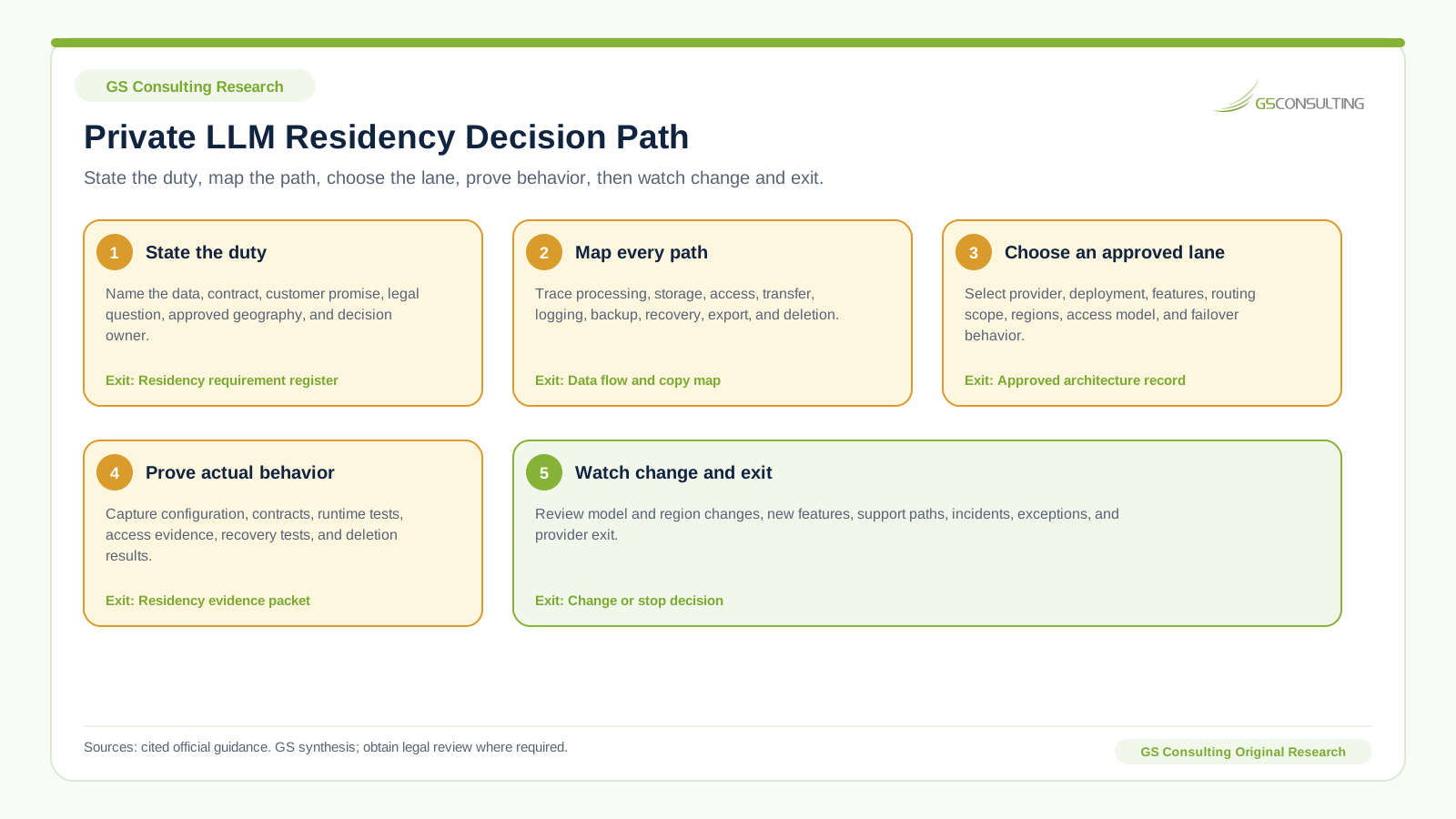
Stage one produces a requirement register. It should quote or reference the controlling source, identify the data and geography, separate storage from processing, state the access and transfer rules, define recovery and deletion needs, and name the decision owner.
Stage two produces a data flow and copy map. Stage three produces an approved architecture record for the exact provider, model, features, regions, routing, access, retention, logging, backups, failover, and dependencies. Stage four produces technical and administrative proof. Stage five makes the design a living control by reviewing changes, incidents, exceptions, and provider exit.
Stop when a material path cannot be reconciled with the requirement. Do not hide the gap under a broad statement such as data stays in our region. Narrow the feature, choose another routing scope, remove a dependency, isolate the workload, obtain an authorized exception, or select another lane.
Operate the Boundary Through Change and Recovery
Cloud model availability moves. A model can exist in a global deployment and not in the required region. Capacity can push a team toward a broader routing option. A new stateful feature can add storage. A supplier can change a subprocessor or support path. A logging integration can ship records to a central platform in another geography. A disaster recovery exercise can activate an unapproved region.
Create change triggers for new models, versions, deployment types, regions, features, APIs, source systems, logging tools, support terms, subprocessors, identity paths, backup targets, recovery designs, and legal conclusions. Link those triggers to the private LLM model update process. A model change is also a boundary change when the candidate is available through a different processing scope or requires a different feature.
Monitor the boundary with a small set of useful signals: deployed resources by region and routing scope, enabled stateful features, logging destinations, administrative access events, backup and replica locations, failover results, provider notices, exceptions, deletion test results, and unresolved evidence gaps. The private LLM observability guide shows how to connect those signals to owners and decisions.
Recovery needs a specific test. Restore the data, indexes, configuration, identity, keys, logs, model, and dependencies in the approved lane. Confirm that the recovery path does not silently use a broader service or a different region. Exercise deletion and exit as well. A boundary that works only while the primary environment is healthy is not an operating boundary.
Avoid Six Residency Architecture Failures
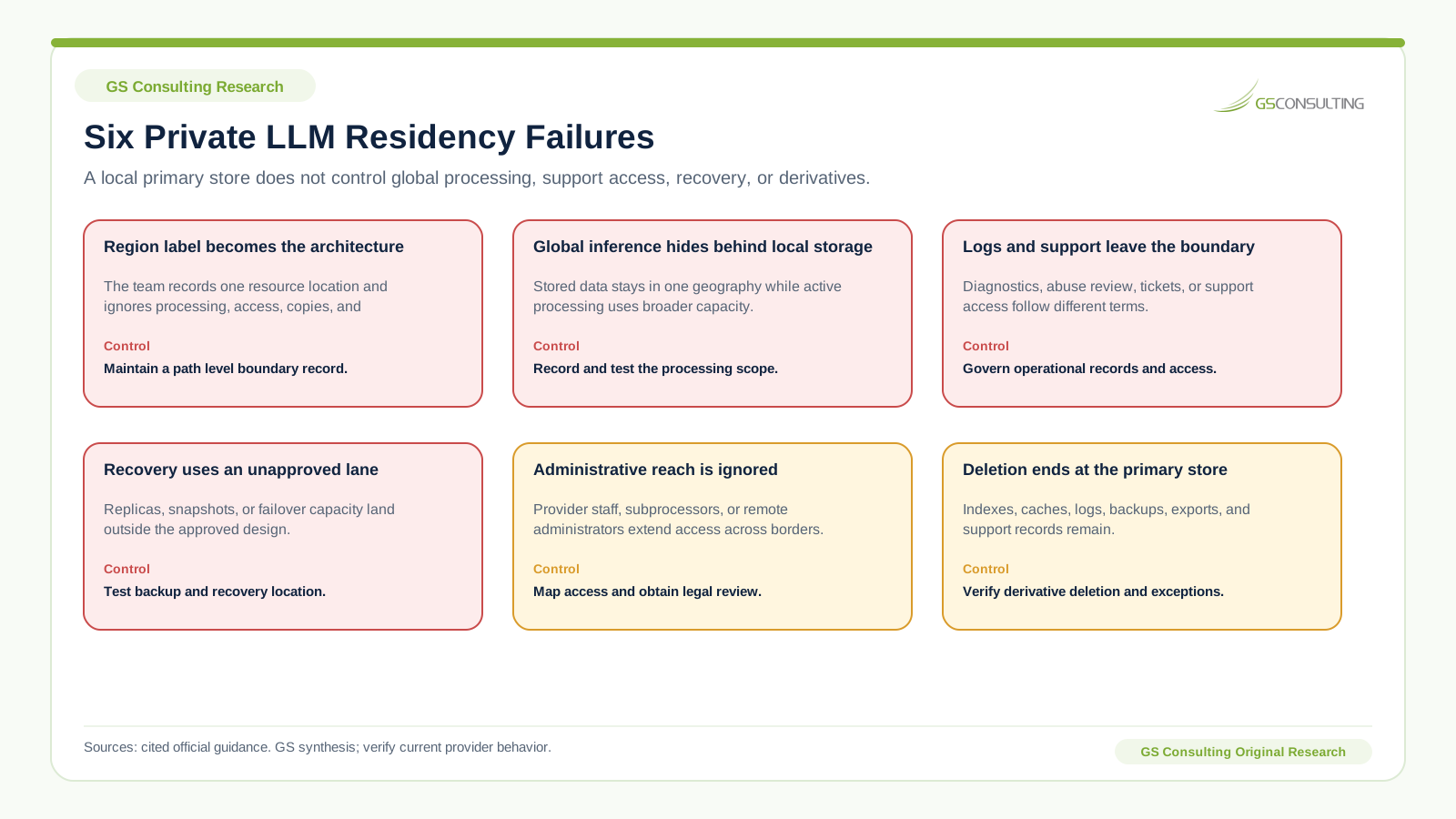
The first failure is architectural shorthand: one region label becomes the entire design. The second is a split between local storage and broader processing. The third is a separate operational path for logs, abuse review, diagnostics, support, or tickets. The fourth is an unapproved replica, snapshot, restore target, or failover lane.
The fifth failure ignores provider operators, subprocessors, or remote administrators. The sixth ends deletion at the primary store while indexes, caches, logs, backups, exports, tickets, or legal holds remain. None of these failures is fixed by adding another sentence to the policy. Each needs a named path, control, owner, test, and evidence record.
A 60 Day Residency Architecture Plan
| Period | Operator action | Required output |
|---|---|---|
| Days one through ten | Name the use case, data, contracts, customers, policies, legal questions, allowed geographies, access rules, recovery needs, and decision owners. | Residency requirement register |
| Days eleven through twenty | Trace ingestion, processing, state, retrieval, training, evaluation, logs, support, backups, access, exports, deletion, and exit. | Data flow and copy map |
| Days twenty one through thirty | Compare deployment and routing lanes, model and feature availability, contracts, retention, access, recovery, and operating burden. | Architecture decision record |
| Days thirty one through forty | Configure the selected lane and test endpoints, features, logs, access, backup, restore, failover, deletion, and blocked paths. | Runtime and recovery results |
| Days forty one through fifty | Resolve gaps, obtain legal and contract review where needed, approve exceptions, and assemble connected proof. | Residency evidence packet |
| Days fifty one through sixty | Approve, limit, or stop release. Set recurring checks for provider, model, feature, region, access, recovery, incident, and exit changes. | Release decision and review cadence |
Build the Residency Evidence Packet
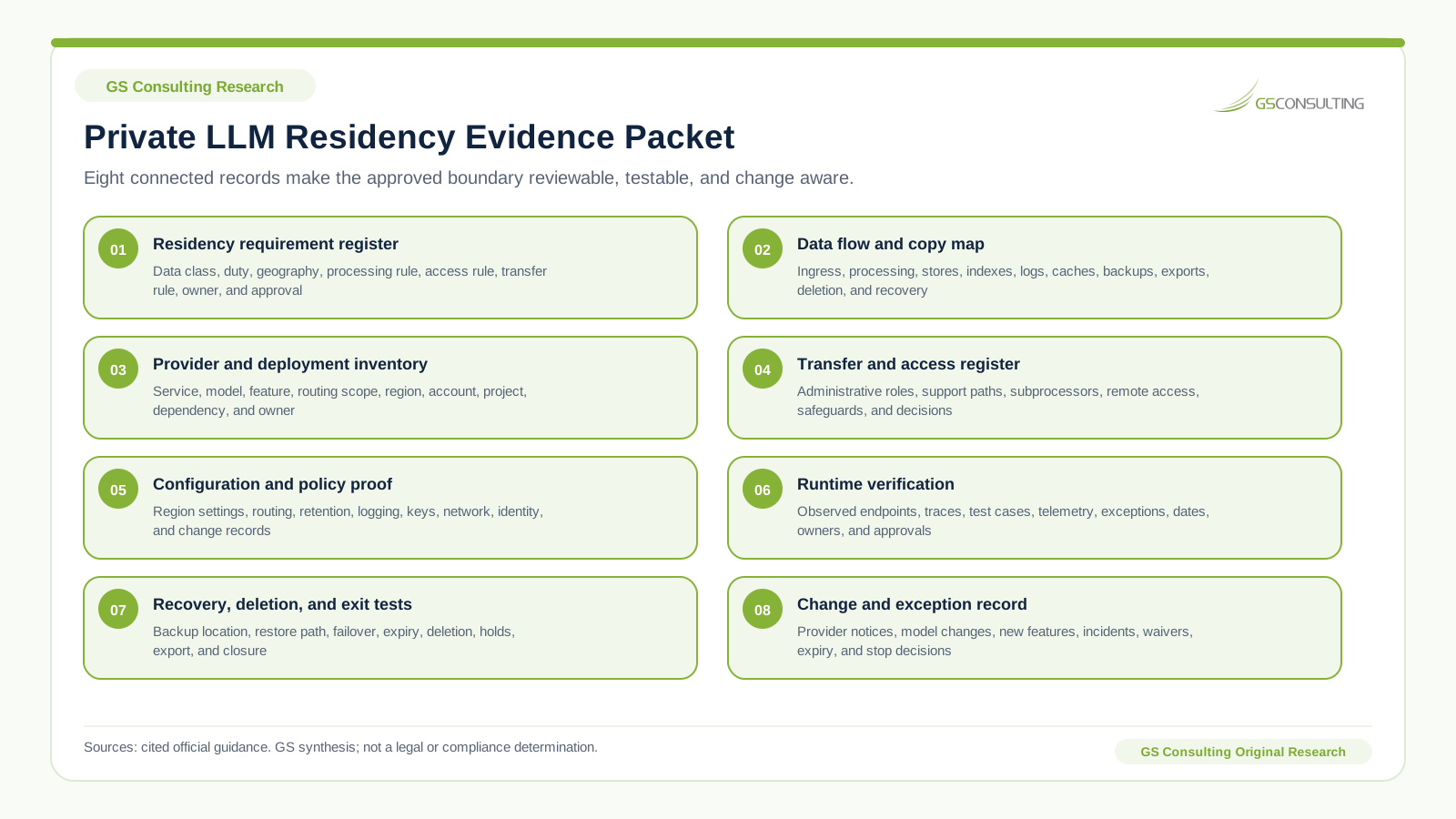
Keep the packet connected. The requirement register should point to the controlling source and approved interpretation. The data flow map should use the same service and data path identifiers as the provider inventory. The access register should name the administrative and support roles shown in the architecture. Configuration proof and runtime tests should reference the exact deployment. Recovery, deletion, and exit results should identify every affected store and exception.
Do not turn the packet into a screenshot archive. Screenshots age quickly and rarely explain why a setting mattered. Add structured fields for owner, evidence date, environment, source, decision, exception, expiry, and next review. Keep provider documentation with access dates because model, feature, and regional behavior changes.
The packet supports review. It does not replace legal advice, contract interpretation, security assessment, customer approval, or an authorized compliance determination.
Research Sources and Caveats
The GS research package uses official public sources accessed September 28, 2026:
- NIST SP 800-171 Revision 3 for the process, store, transmit, and protection scope language when it applies.
- 32 CFR Part 170, the CMMC Program rule, for current program scope and assessment context.
- DFARS 252.204-7012 for covered contractor system and external cloud service considerations where the clause applies.
- Microsoft model service data privacy guidance for public descriptions of data groups, processing, storage, and stateful features.
- Amazon Bedrock inference routing guidance and retention guidance.
- Google Cloud zero data retention guidance for feature specific logging, caching, and retention considerations.
- European Data Protection Board Recommendations 01 2020 for transfer mapping and remote access considerations.
- European Union General Data Protection Regulation for Chapter V transfer requirements.
The workbook separates public observations, GS assumptions, factor weights, ratings, formula outputs, sensitivity results, operating tables, and figure data. Public sources do not provide a universal private LLM residency score or architecture. The model is a transparent planning aid.
Private LLM Data Residency FAQ
Suggested Future Reading
- Private LLM and Secure RAG Hub
- Private LLM Deployment Options
- Private LLM Data Governance
- Private LLM Access Control Architecture
- Private LLM Disaster Recovery
- Private LLM Model Updates and Rollback
- Private LLM Observability
- Private LLM and Secure RAG Implementation
A region claim is not a boundary until the full path can be shown.
The operating standard is direct: know the duty, map every path, choose an approved lane, prove actual behavior, test recovery and deletion, review change, and stop when the boundary cannot be shown.
Request a Residency Architecture Review